
Состояние на 24 сентября 2026 года: MiniMax H3 указан в Генератор видео GlobalGPT. Официальный API MiniMax по-прежнему представляет собой отдельный маршрут, тарификация по которому осуществляется с учетом секунд вывода данных, тогда как рабочая область GlobalGPT предоставляет собственный тарифный план и правила начисления кредитов.
MiniMax H3 представляет интерес тем, что пытается решить задачу, более сложную, чем простое преобразование текста в видео: обеспечить соответствие творческому брифу, когда в него включены изображение объекта, ориентир движения, стиль съемки, звуковой сигнал или фиксированный заключительный кадр. Вопрос заключается не просто в том, может ли H3 создать красивый ролик. Вопрос в том, делают ли эти параметры результат более предсказуемым и полезным.
В этом обзоре MiniMax H3 подробно рассмотрены подтвержденные технические характеристики, официальные примеры использования, цены на API, ограничения производства, а также открытые вопросы, которые важно учесть, прежде чем тратить деньги. Компания MiniMax опубликовала достаточно информации, чтобы составить представление о продукте, однако независимых доказательств для общих утверждений о его надежности, скорости или превосходстве пока недостаточно.

Что такое MiniMax H3?
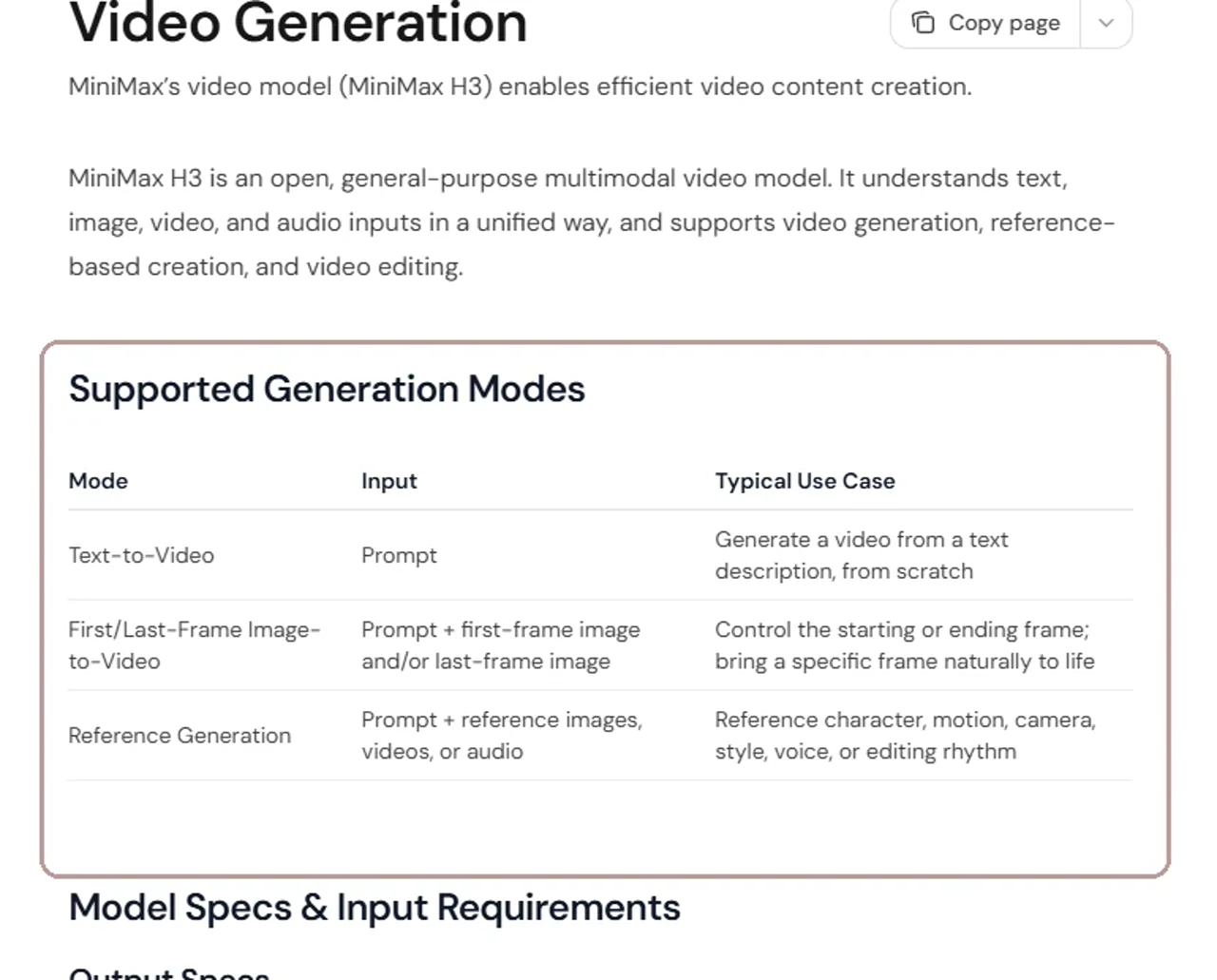
MiniMax H3 — это открытая мультимодальная видеомодель общего назначения от MiniMax. Согласно официальное руководство по созданию видео, он обрабатывает текстовые, графические, видео- и аудиоданные в рамках одного запроса и поддерживает генерацию видео, создание на основе эталонов и редактирование видео. Название модели в общедоступном API — MiniMax-H3.
Практическое отличие заключается в возможности управления. Простой генератор видео начинает работу с подсказки, а остальное придумывает самостоятельно. H3 также может использовать первый кадр, последний кадр, эталонные изображения, эталонные видеоролики или эталонный аудиоматериал. Это дает авторам больше возможностей определять, кто будет появляться в кадре, как будет двигаться камера, в каком стиле снимать и где должен заканчиваться кадр.
Краткий обзор технических характеристик MiniMax H3
| Спецификация | MiniMax H3 |
|---|---|
| Официальное название модели | MiniMax-H3 |
| Типы ввода | Текст, изображения, видео и аудио |
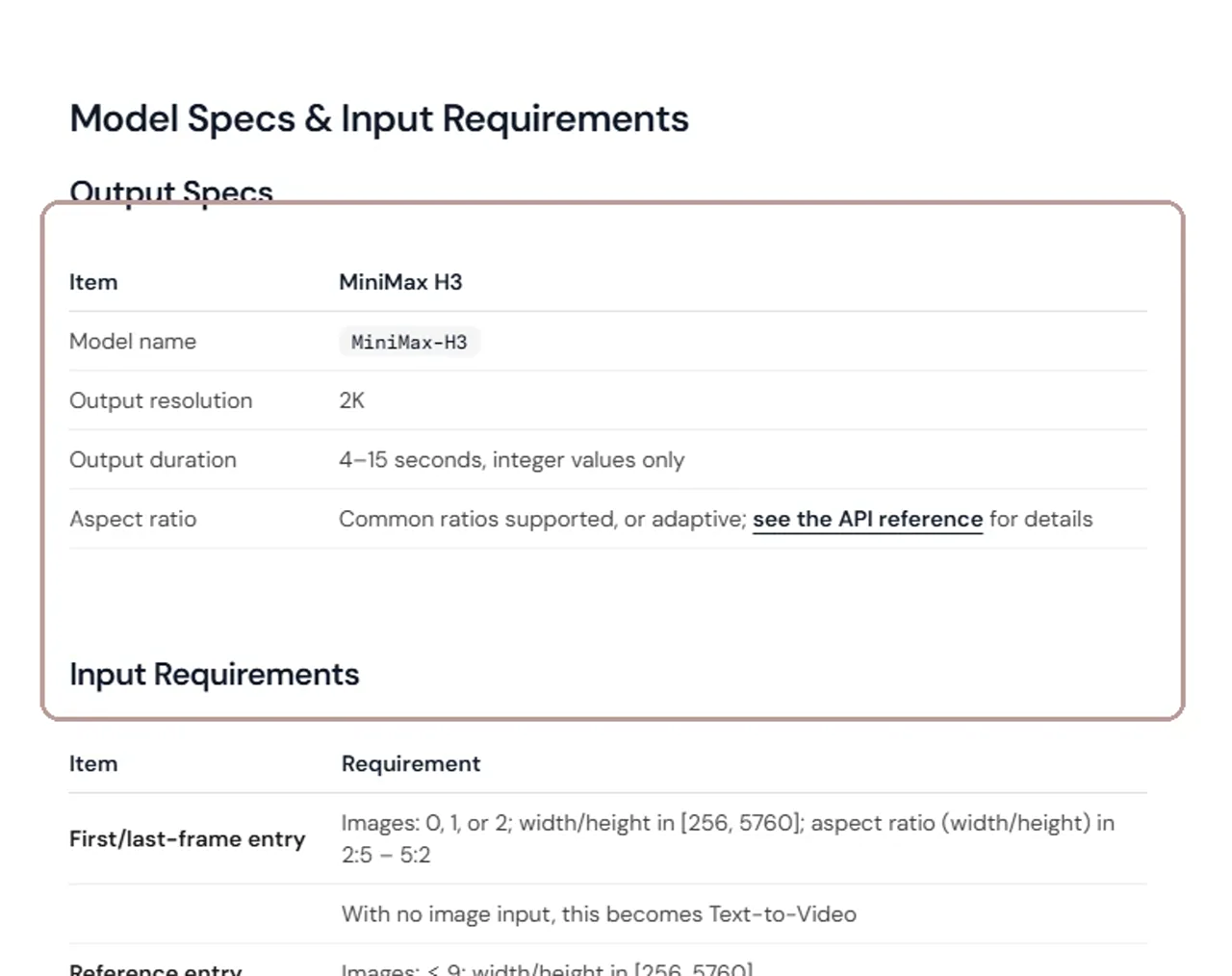
| Разрешение вывода | 2K |
| Продолжительность вывода | 4–15 секунд, целые числа |
| Режимы генерации | Преобразование текста в видео, преобразование изображения первого/последнего кадра в видео, генерация эталонных изображений |
| Соотношения сторон | 21:9, 16:9, 4:3, 1:1, 3:4, 9:16 или адаптивный режим (при наличии поддержки) |
| Ограничение длины запроса | До 7 000 символов |
| Референтные пределы | До 9 изображений, 3 видеоролика и 3 аудиофайла; всего 12 файлов различного типа |
Номинальная мощность
Один запрос может координировать четыре типа ввода
Для смешанных медиа-файлов установлено ограничение в 12 файлов. Для аудиофайлов требуется как минимум одно эталонное изображение или видео.
Эти технические характеристики взяты из MiniMax’s Справочник по видео-API V2. Для преобразования текста в видео требуется фиксированное соотношение сторон. При генерации первого или последнего кадра используется соотношение сторон исходного изображения, тогда как при генерации промежуточных кадров можно использовать адаптивное или заданное соотношение.
Маркировка «2K» представляет собой техническое требование к выводу изображения, а не гарантию того, что каждый кадр будет выглядеть одинаково детализированным. Разрешение, временная согласованность, точность воспроизведения и физическая достоверность — это отдельные аспекты качества. Их необходимо оценивать с помощью контролируемых тестов, а не на основании данных в техническом паспорте.
Особенности и преимущества MiniMax H3
Приведенные ниже официальные видеоролики представляют собой примеры, отобранные компанией MiniMax. Они полезны для того, чтобы понять, как должна работать каждая функция, однако тщательно подобранные примеры не заменяют независимых стресс-тестов.
Преобразование текста в видео с указанием ракурса камеры
H3 может сгенерировать видео, опираясь исключительно на текстовое описание. В MiniMax также рекомендуется указывать направления камеры, такие как [pan], [увеличить], или [статический] сразу после соответствующего описания. Таким образом, подсказка определяет как содержание сцены, так и поведение кадра.
В этом официальном примере стоит обратить внимание не только на детали на поверхности. Посмотрите, следует ли камера за описанным движением, сохраняется ли целостность объекта съемки от кадра к кадру и остается ли композиция гармоничной, когда действие становится более сложным.
Единые мультимодальные ссылки
Генерация эталонных материалов — это наиболее очевидная причина, по которой H3 отличается от обычного инструмента, работающего исключительно на основе подсказок. В одном запросе можно объединить текстовую инструкцию с эталонными изображениями, видео и аудио. Согласно MiniMax, модель может использовать эти материалы для воспроизведения сюжета, движения, стиля съемки, визуального стиля, голоса или ритма монтажа.
Этот подход подходит для рекламных роликов с участием персонажей, фотографий товаров, брендированных клипов и переноса движения, поскольку автор может предоставить примеры того, что следует понимать под “последовательностью”. Взамен требуется более тщательная настройка: качество исходных данных, метки ролей, ограничения по размеру файлов и ясность подсказки — все это влияет на запрос. Для более широкого выбора модели сравните Сравнение Veo 3.1 и Sora 2.
Если взаимодействие «видео-видео» занимает центральное место в вашем проекте, то более широкий Рабочий процесс преобразования видео с помощью ИИ объясняет, почему ссылки на движение и структуру могут иметь такое же значение, как и текстовый промпт.
Управление первым и последним кадром
H3 принимает в качестве входных данных первый кадр, последний кадр или оба. Это позволяет авторам определять, где начинается кадр и где он должен заканчиваться, а модель самостоятельно генерирует переход между этими точками.
В подобных примерах оцените, выглядит ли переход намеренным и остаются ли оба конечных изображения узнаваемыми. Этот инструмент может быть полезен для последовательностей «до и после», презентаций продуктов, трансформаций персонажей и коротких роликов, созданных на основе двух утвержденных ключевых кадров. Этот Руководство по доступу к Seedance 2.0 в качестве сравнения рассматривается другой рабочий процесс обработки видео.
Подобная производственная идея представлена в данном руководстве по создание короткометражного фильма из двух фотографий, хотя модель и конкретные элементы управления отличаются.
Разрешение 2K и гибкая продолжительность от 4 до 15 секунд
MiniMax H3 поддерживает выходной сигнал 2K и целочисленную продолжительность от 4 до 15 секунд. Этого диапазона вполне достаточно для съемки полноценного кадра из жизни, момента с продуктом, перехода или компактной кинематографической сцены, не принуждая при этом втискивать каждую идею в фиксированный шаблон длиной шесть или десять секунд.
Ограничения на входные ресурсы, ориентированные на производство
Модель принимает запросы длиной до 7 000 символов. При генерации на основе эталонных данных поддерживается использование до девяти изображений, трёх видеороликов и трёх аудиофайлов — всего двенадцати файлов различного типа. Продолжительность отдельных эталонных видео- и аудиоклипов может составлять от 2 до 15 секунд, при этом общая продолжительность эталонных видеороликов не должна превышать 15 секунд.
Эти ограничения предполагают структурированный подход к производству, однако большее количество исходных данных не всегда означает лучший результат. Небольшой набор четких ориентиров проще интерпретировать, чем перегруженный запрос, содержащий противоречивые темы, стили съемки и звуковые сигналы.
MiniMax H3: Ценообразование и реальная стоимость одного видео
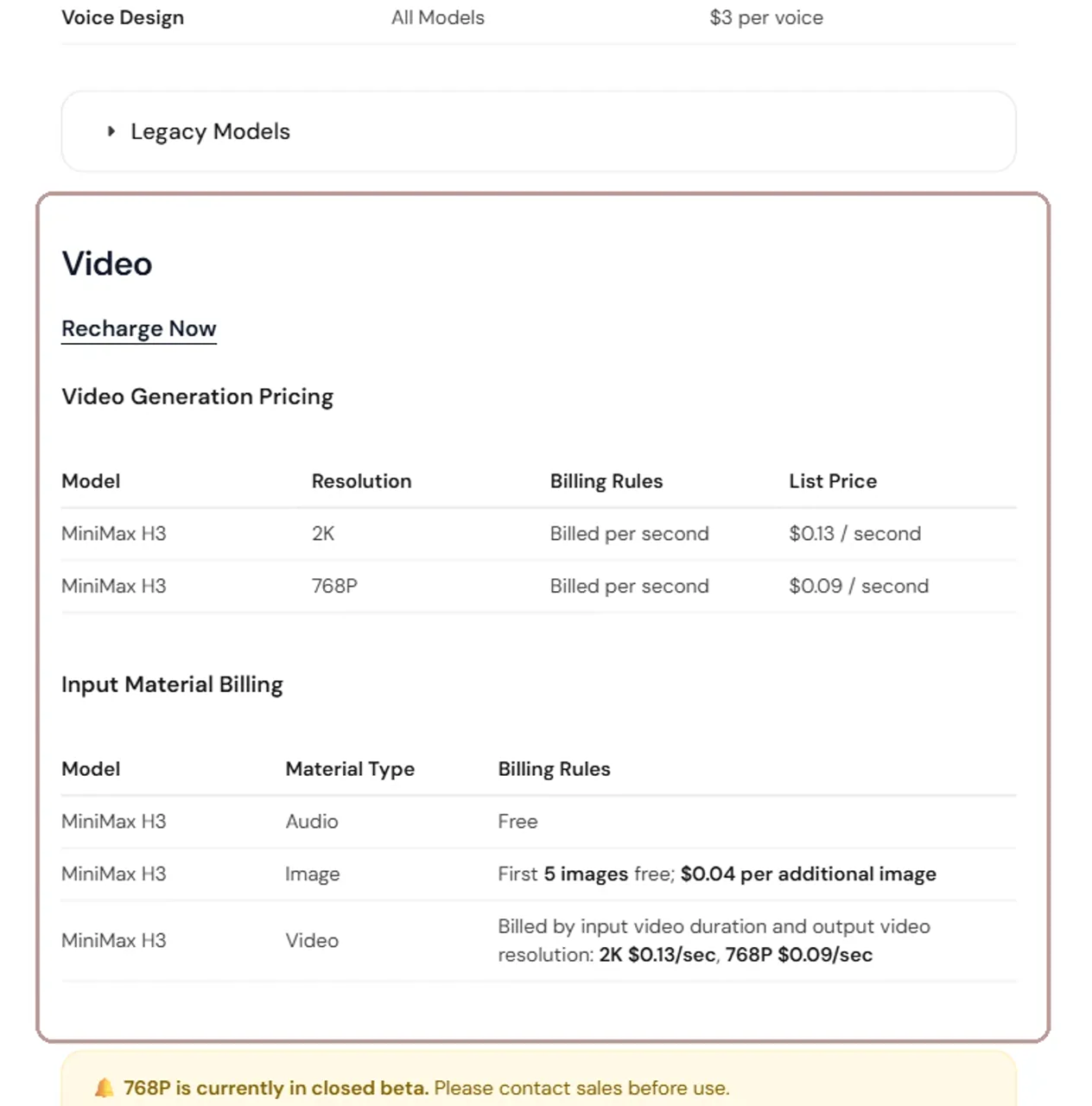
В документе MiniMax услуга H3 указана в разделе «Тарифы API с оплатой по факту использования». В официальная страница с ценами оплата взимается за каждую сгенерированную секунду, поэтому продолжительность напрямую и предсказуемо влияет на стоимость выработки.
| Выход | Официальный курс | 5 секунд | 10 секунд | 15 секунд | Доступность |
|---|---|---|---|---|---|
| 2K | $0,13/сек | $0.65 | $1.30 | $1.95 | Указано как «в наличии» |
| 768P | $0,09/сек | $0.45 | $0.90 | $1.35 | Закрытая бета-версия; обращайтесь в отдел продаж |
Стоимость производства 2K
Более длинные клипы масштабируются линейно со скоростью $0,13 в секунду
Рассчитано на основе официальной стоимости API-запросов за секунду, указанной в MiniMax.
Указанные суммы включают только стоимость сгенерированных результатов. Могут взиматься дополнительные сборы за эталонные изображения и эталонные видеоролики.
Приведенные выше итоговые суммы за 5, 10 и 15 секунд рассчитаны на основе секундных ставок MiniMax, а не отдельных цен на пакеты. При 2K формула проста: продолжительность × $0,13. Неудачный эксперимент всё равно может повлиять на экономику, если для получения пригодного результата потребуется несколько поколений.
- Образец аудиозаписи указан как бесплатный.
- Первые пять эталонных изображений предоставляются бесплатно; каждое последующее изображение стоит $0,04.
- Стоимость эталонного видео рассчитывается исходя из продолжительности входного материала с учетом выбранного коэффициента разрешения выходного сигнала.
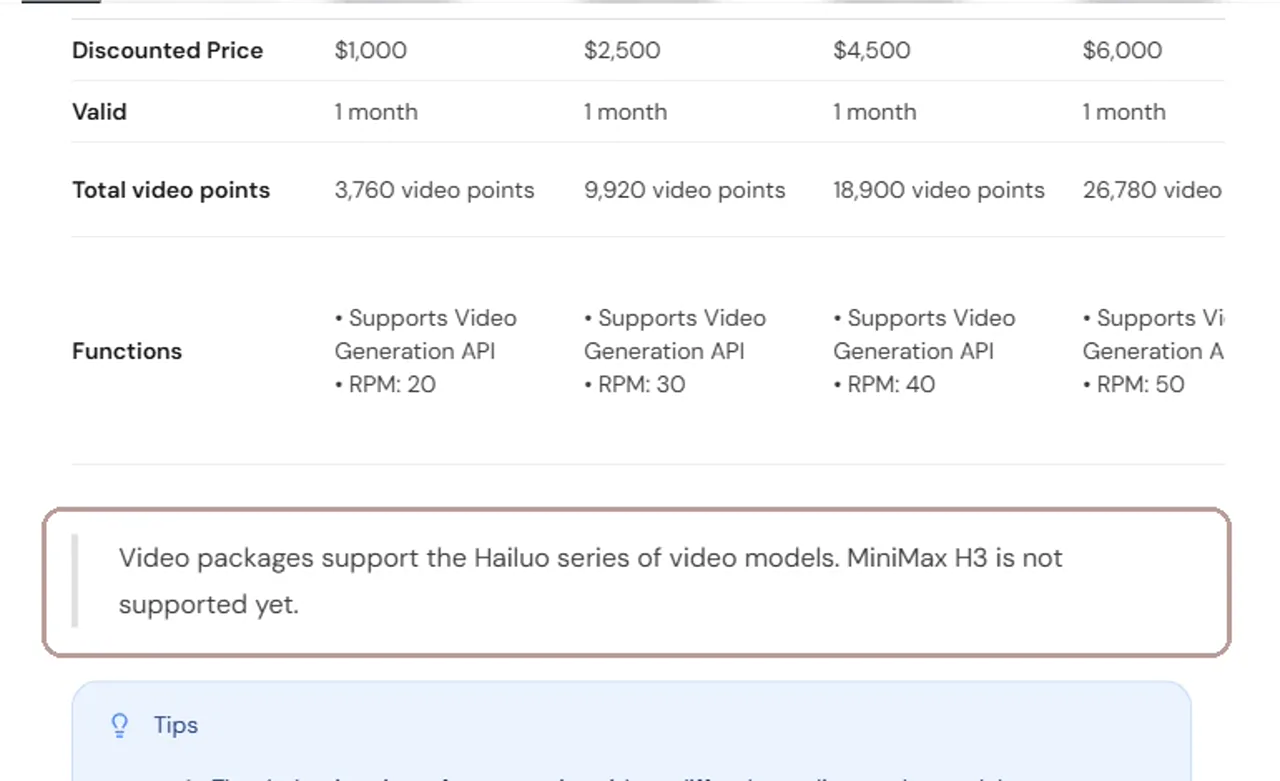
- Существующие предоплаченные видеопакеты MiniMax и Hailuo пока не поддерживают H3.
Исключения из пакета имеют значение. И официальная страница с видеоматериалами В нем говорится, что H3 пока не поддерживается, поэтому покупателям не следует полагать, что имеющийся набор точек Hailuo подходит для новой модели.
MiniMax H3 Ограничения и открытые вопросы
- Официальные примеры отобраны. Они отражают расчетные пределы прочности, а не нормальную частоту отказов.
- Пока что нет независимых результатов по GlobalGPT. Своевременность выполнения запросов, скорость, повторные попытки и использование кредитного лимита пока не подтверждены.
- В процессе итераций стоимость 2K может значительно возрасти. Один 15-секундный выходной сигнал соответствует значению $1.95 до добавления дополнительных зарядов эталонного материала.
- 768P по-прежнему находится в стадии закрытой бета-тестирования. Более низкая ставка не является общедоступной опцией.
- Существующие видеопакеты не включают канал H3. Доступ по системе «оплата по факту» и доступ по предоплаченным тарифным планам должны оставаться раздельными.
- Вопросы относительно качества по-прежнему остаются. Руки, лица, читаемый текст, физика, смены сцен, исходный звук и последовательность поведения персонажей требуют проведения повторяемых тестов.
Самым важным недостающим элементом является не очередное заявление о новых возможностях, а набор тестов с контролируемыми условиями, в котором для модели H3 и схожих моделей используются одинаковые промпты и входные данные. Пока такого набора нет, в объективном обзоре модели H3 по стандарту MiniMax следует рассматривать её как многообещающую, а не как проверенную.
MiniMax H3 против Hailuo 2.3: что изменилось?
| Точка принятия решения | MiniMax H3 | Семейство Hailuo 2.3 |
|---|---|---|
| Позиционирование | Мультимодальная видеомодель общего назначения | Предыдущее семейство устройств генерации видеосигналов Hailuo |
| Входные данные для справки | Изображения, видео и аудио в единой структуре контента | Зависит от конкретной модели Hailuo и конечного устройства |
| Продолжительность вывода | 4–15 секунд | Среди наиболее распространенных вариантов — 6 или 10 секунд |
| Разрешение вывода | 2K в API H3 V2 | В устаревших прайс-листах указаны варианты с разрешением 768P и 1080P |
| Выставление счетов | $0,13/сек для 2K | $0.19–$0.56 за клип в приведенных примерах устаревших моделей |
| Пакеты видеоуслуг с предоплатой | Пока не поддерживается | Поддерживается существующими пакетами Hailuo |
H3, по-видимому, разработан с учетом более обширных источников информации, более длительного и гибкого времени обработки, а также унифицированного мультимодального запроса. Hailuo 2.3 по-прежнему обладает преимуществом в виде налаженной поддержки пакетов. Это не доказывает, что H3 создает видео лучшего качества: ответить на вопрос о качестве могут только соответствующие исходные данные и подсказки.
Авторы, анализирующие рынок в целом, также могут ознакомиться с лучшие варианты генераторов видео на базе ИИ, Элементы управления Kling 3.0, и Маршруты доступа Seedance 2.0 прежде чем выбрать инструмент для долгосрочного использования.
Как получить доступ к MiniMax H3
Hailuo AI Web
Hailuo AI Web — это самый простой способ для авторов контента, желающих опробовать H3 без необходимости настраивать рабочий процесс с использованием API. Войдите в систему, откройте рабочую область для генерации видео и найдите модель MiniMax H3 в списке моделей. Доступность может варьироваться в зависимости от учетной записи или региона, поэтому ориентируйтесь на название модели, отображаемое в вашей текущей рабочей области, а не предполагайте, что у всех учетных записей меню одинаковое.
Официальный маршрут API
Официальный способ использует асинхронный API. Вы отправляете запрос на генерацию, получаете идентификатор задачи, проверяете статус задачи и, после успешного завершения задачи, загружаете результат по возвращенному URL-адресу. Разработчикам также необходимо подготовить действительные общедоступные URL-адреса медиафайлов или загруженные файлы для справочных ресурсов и соблюдать правила, касающиеся размера, формата и назначения, указанные в документации по API.
Маршрут GlobalGPT: уже доступен
Модель MiniMax H3 теперь доступна в Генератор видео GlobalGPT. В рабочей среде «Live» доступны рабочие процессы «Keyframes» и «References», а элементы управления моделью отображаются в интерфейсе учетной записи. Доступ к тарифным планам, кредиты и ограничения на генерацию данных остаются отдельными от системы биллинга API MiniMax.
Если для вас важно использовать более одной модели, ознакомьтесь с ними Альтернативы видео с искусственным интеллектом пока ведётся подготовка доступа к H3.
MiniMax H3: итоги обзора
MiniMax H3 отличается привлекательными первоначальными характеристиками: выходная мощность 2K, гибкая продолжительность клипов от 4 до 15 секунд, управление первым и последним кадрами, а также унифицированный подход к использованию ссылок на изображения, видео и аудио. Система ориентиров — это функция, которая, скорее всего, будет иметь наибольшее значение в реальной производственной практике, поскольку она предоставляет авторам больше возможностей для определения того, что должна сохранять модель.
Предостережение также очевидно. Официальные демо-версии не позволяют оценить обычное качество вывода, а стоимость в 2K за секунду может значительно увеличиться, если для съемки потребуется несколько дублей. Если в вашей работе важен контроль качества, стоит попробовать H3 на раннем этапе; пока еще слишком рано называть его лучшим выбором для массового производства.
Теперь MiniMax H3 можно тестировать в запросе GlobalGPT с повторяемыми запросами и эталонными входными данными. Рассматривайте маршрут рабочей среды и официальный API как отдельные пути с точки зрения затрат и доступа, а затем фиксируйте качество вывода, количество повторных попыток и кредиты для вашей собственной рабочей нагрузки.
Часто задаваемые вопросы
Что такое MiniMax H3?
MiniMax H3 — это мультимодальная видеомодель MiniMax. В официальном руководстве перечислены ссылки на текст, изображения, видео и аудио, а также режимы «текст-видео», «первый/последний кадр» и «генерация ссылок».
Выводит ли MiniMax H3 видео с разрешением 2K?
Да. В официальной таблице результатов указаны маршруты MiniMax-H3 768P и 2K с целочисленной продолжительностью от 4 до 15 секунд.
Сколько стоит MiniMax H3?
На официальной странице API указано значение $0,08 на секунду вывода для разрешения 768P и $0,13 на секунду вывода для разрешения 2K. Таким образом, 8-секундный клип составляет $0,64 при разрешении 768P или $1,04 при разрешении 2K до начисления других применимых сборов.
Может ли H3 использовать ссылки на аудио- и видеофайлы?
Да. В справочных правилах версии V2 перечислены текстовые, графические, видео- и аудиофайлы. Для аудиофайлов требуется как минимум одна ссылка на изображение или видео, а для смешанных входных файлов установлен указанный лимит.
Где можно опробовать MiniMax H3?
Вы можете воспользоваться официальным маршрутом API или открыть запись MiniMax H3 в рабочей области видео GlobalGPT, а затем перейти к редактированию и другим этапам работы с мультимедиа в рамках того же проекта.