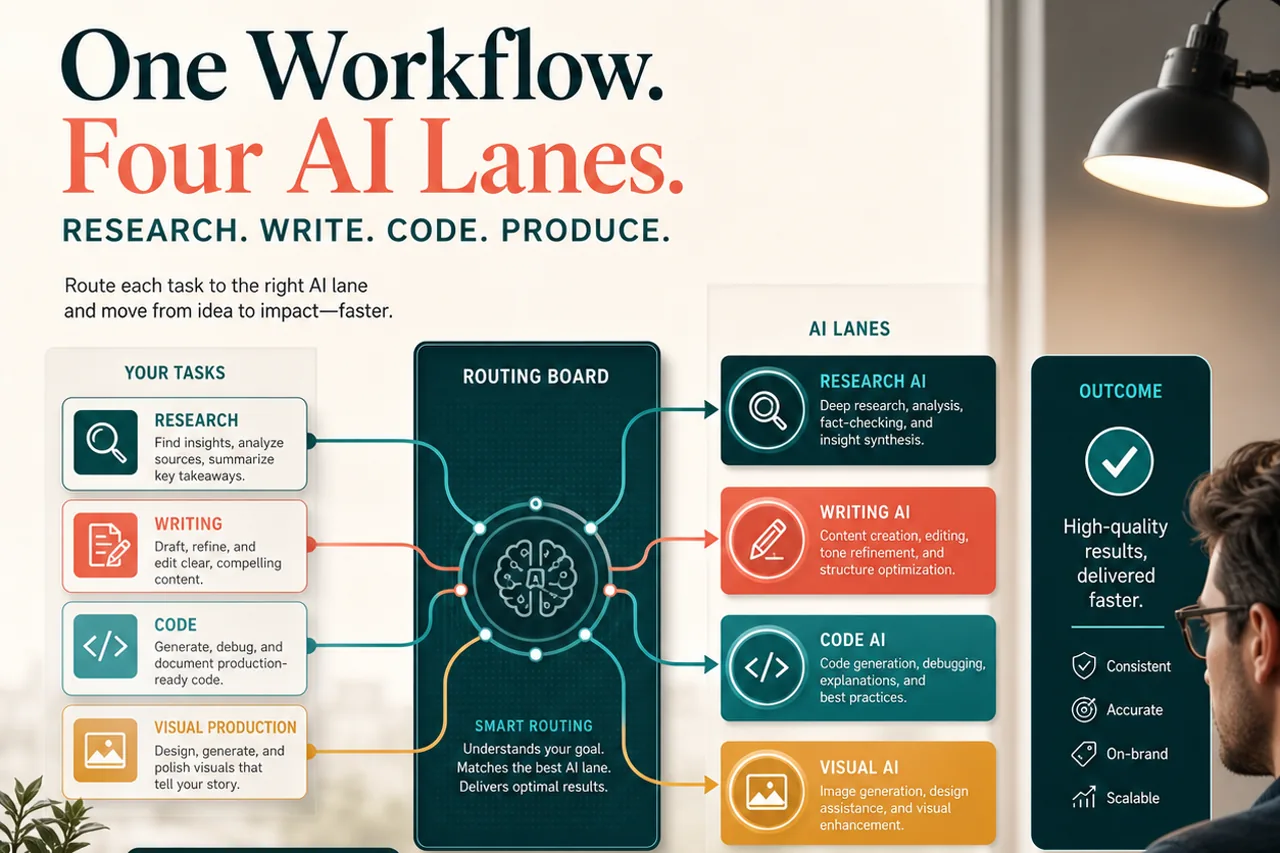
簡単な答え: オールインワンのAIモデル構成とは、1つのモデルですべてをこなすものではありません。それはマルチモデルによるワークフローです。共有ワークスペースを活用して、各ジョブを適切なデフォルト設定に割り当て、困難な作業は上位のモデルにエスカレーションし、フォールバックルートを確保し、どの選択が受け入れ可能な結果につながったかを記録します。こうした構造こそが、モデル群をチームが信頼できるものへと変えるのです。.

迅速で、日常的かつリスクの低い業務。.
曖昧で、リスクが高く、あるいは修正が頻繁に必要となる作業。.
研究、プログラミング、画像、動画、またはその他に定義された業務。.
優先ルートが利用できない場合の、記録済みのルート。.
オールインワンAIモデルが本当に意味するもの
「オールインワンAIモデル」という言葉は、1つのシステムがあらゆるタスクを処理すべきであるかのように聞こえます。実際には、実用的な形としては、仕事ごとにコンテキストやサブスクリプション、習慣を再構築する必要がなく、複数のモデルルートが利用可能なワークスペースのようなものです。このモデルは、より大規模なオペレーティングシステムにおける選択肢の1つに過ぎません。.
この区別が重要なのは、単にタブを集めただけではワークフローとは言えないからです。どのタスクがどこに属するかが誰にもわかっていなければ、大変な作業は手っ取り早いルートに回され、機密性の高い作業は単なる下書きのように扱われ、プロバイダーのサービス停止がプロジェクトの停滞を招くことになります。ワークフローがあれば、人々は指示を求める前に、繰り返し使える解決策を得ることができます。.
さまざまな汎用アシスタントが、それぞれの業務にどのように適しているかについて、より広い視野で把握するには、こちらをご利用ください ChatGPT、Claude、Geminiの比較. ここでの要点はもっと単純です。自分の仕事から模範となる役割を選び出し、それを証拠に基づいて再検討するのです。.
モデル名ではなく、仕事から始めよう
通常の1か月の中で実際に繰り返される業務を列挙してください。多くのチームでは、以下の4つのカテゴリーが有用であると考えています。すなわち、「資料に基づいた調査」、「草案作成と分析」、「コーディングまたは技術レビュー」、そして「クリエイティブな制作」です。これらは、失敗によるコストがそれぞれ異なる業務であり、恒久的な勝者を決定するための基準というわけではありません。.
| 求人 | デフォルトの役割 | 以下の場合にはエスカレーションを行う | 手動確認 |
|---|---|---|---|
| リサーチ | ソースを意識した研究アプローチ | 情報源によって矛盾があるか、あるいはその主張は間接的なものである | 引用と日付を確認する |
| 執筆と分析 | 迅速なジェネラリスト | 要件定義が曖昧であるか、修正コストが高騰する | 外部からの請求を承認する |
| コーディング | エディタまたはCLI統合型のコーディング方法 | セキュリティ、アーキテクチャ、または複数のファイルにわたる変更 | テストを実行し、差分を確認する |
| クリエイティブな仕事 | 関連する画像・動画の専門家 | ブランド、権利、あるいは制作上の制約が重要である | 最終的なアセットを確認する |
研究は、役割がなぜ重要なのかを示す良い例です。資料に基づいた回答と、洗練された文章を書くことは、同じ仕事ではありません。研究のワークフローを、以下のものと比べてみてください。 Gemini と Perplexity の比較, 、その後、自分の質問に対してどのルートがデフォルトの役割を獲得するかを決めてください。.
技術的な作業においては、ワークフローにはモデルだけでなくインターフェースも含まれるべきです。優れたチャットによる回答であっても、リポジトリのコンテキスト、テスト、あるいはレビューに取って代わるものではありません。その DeepSeek V4 Pro のレビューと価格比較 そしてこれ GLMコーディング計画のレビュー コーディングが日常業務の一部となっている場合、これらは有用なフォローアップとなります。.
4つのステップでマルチモデルワークフローを実行する
- 分類: その作業の内容、誤った場合の帰結、および必要な証拠を明記してください。.
- 速報: 指定されたエスカレーショントリガーを明記して、デフォルトのロールに送信する。.
- 検証する: 業務内容に応じて、事実確認、テストの実施、資産の点検、あるいは再確認を依頼します。.
- 記録: 結果が承認されたかどうか、どの程度の修正が必要だったか、そしてルートが変更された理由を記録しておく。.
記録こそが、ワークフローが単なる「感覚頼りの伝承」になるのを防ぐものです。デモでは見栄えが良くても、実際の案件では修正作業が増えるモデルもあります。最初の回答の速さだけでなく、承認された成果物や手直しも記録しておくようにしましょう。.
デフォルトを設定する前にテストを行う
代表性のあるタスクを、少数かつ固定のセットとして使用してください。プロンプト、受け入れ基準、およびレビュー方法は、すべてのルートで統一してください。実用的な初期セットとしては、資料に基づいたブリーフ1件、構造化された意思決定メモ1件、リポジトリ関連のタスク1件、およびクリエイティブ・ブリーフ1件が挙げられます。これにより、他者のベンチマーク表ではなく、自身の作業に基づいた判断が可能になります。.
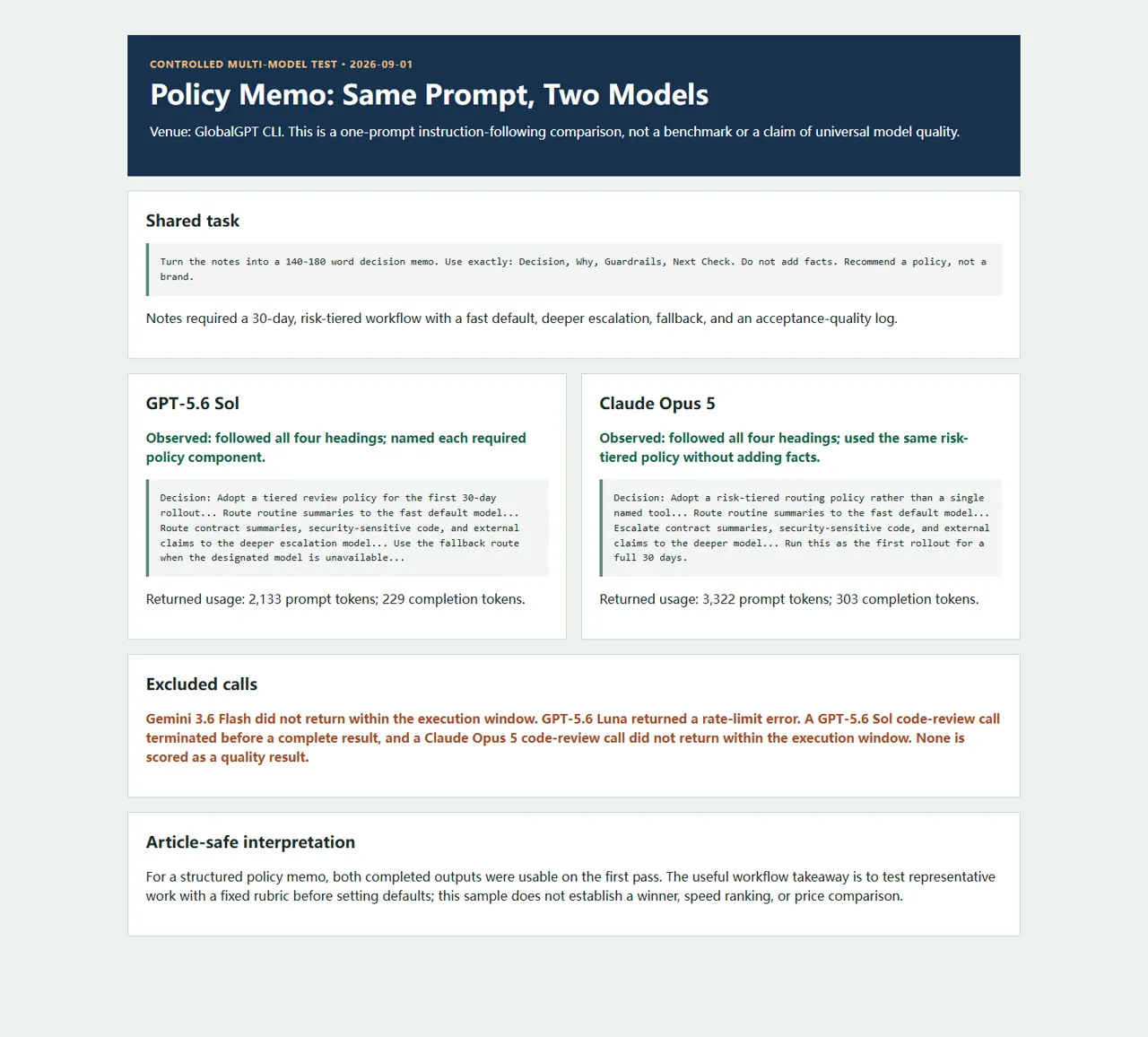
上記のテストでは、GPT-5.6 Sol と Claude Opus 5 の両方が、同じ固定見出しの下で実用的なリスク階層型ポリシーメモを生成しました。しかし、これだけでは、どちらが絶対的に優れているか、処理速度の順位、あるいはコスト面での優位性を証明するものではありません。 しかし、読者が採用すべき決定基準が示されています。それは、代表的な作業をテストし、生の出力を保持し、明確な承認基準が満たされた後にのみデフォルト設定を行うということです。.
受け入れルール:法的依存関係およびソースファイルの依存関係は保持する。指定されていない所有者や日付は作成しない。.
承認ルール:確認済みの事実のみを記載すること。回避策を「正常な出力が得られる」という約束に変えたり、納期をでっち上げたりしてはならない。.
再現可能なコード修正テスト
コードこそが、魅力的な解答と「採点済み」の解答を区別する最も明確な基準です。以下の元のフィクスチャは、次のように終了します。 失敗:重複が残っている なぜなら indexOf 顧客フィールドではなく、オブジェクト参照を比較します。GPT-5.6 SolとGLM 5.3はどちらもこの境界問題を特定しました。最小限のGPT候補は、別のファイル内で変更されていないというアサーションに合格しました。.
画像および動画のテストには、検証可能な出力が必要である
クリエイティブな作品は、単なる視覚的な完成度で評価されるのではなく、ブリーフに基づいて評価されるべきです。画像課題では、名前の付いたオブジェクト、設定、判読可能なテキストの有無、ロゴの有無が確認されました。動画課題では、同じ製品に関する制約に加え、再生時間、フォーマット、およびクリップ中盤のフレームが確認されました。 これらは、GlobalGPTのタスクID 1151396182505818112 および 1151396188444952576 からの単回観察データである。.

コストについても同様の厳格な姿勢が求められます。名目上の価格だけを答えとして扱うのではなく、再試行や編集時間を含めた、実際に承認された作業の価格を比較してください。これは GPT-5.6 価格およびプランガイド 推論の経路がスタックの一部となっている場合、有用な文脈を提供してくれます。.
信頼性の確保、予算の制限、および見直し
優れたマルチモデルワークフローには、適切なフェイルオーバー処理が必要です。ルートのタイムアウト、プロバイダーの利用不可、予算上限の到達、あるいは出力が評価基準を満たさない場合など、それぞれの状況でどう対応するかを決定してください。リスクの低い作業については、フェイルオーバーを自動的に行うことも可能です。 契約の概要、セキュリティ上機密性の高いコード、および外部からの主張については、フォールバック時においても、人間によるレビューという要件を維持する必要があります。.
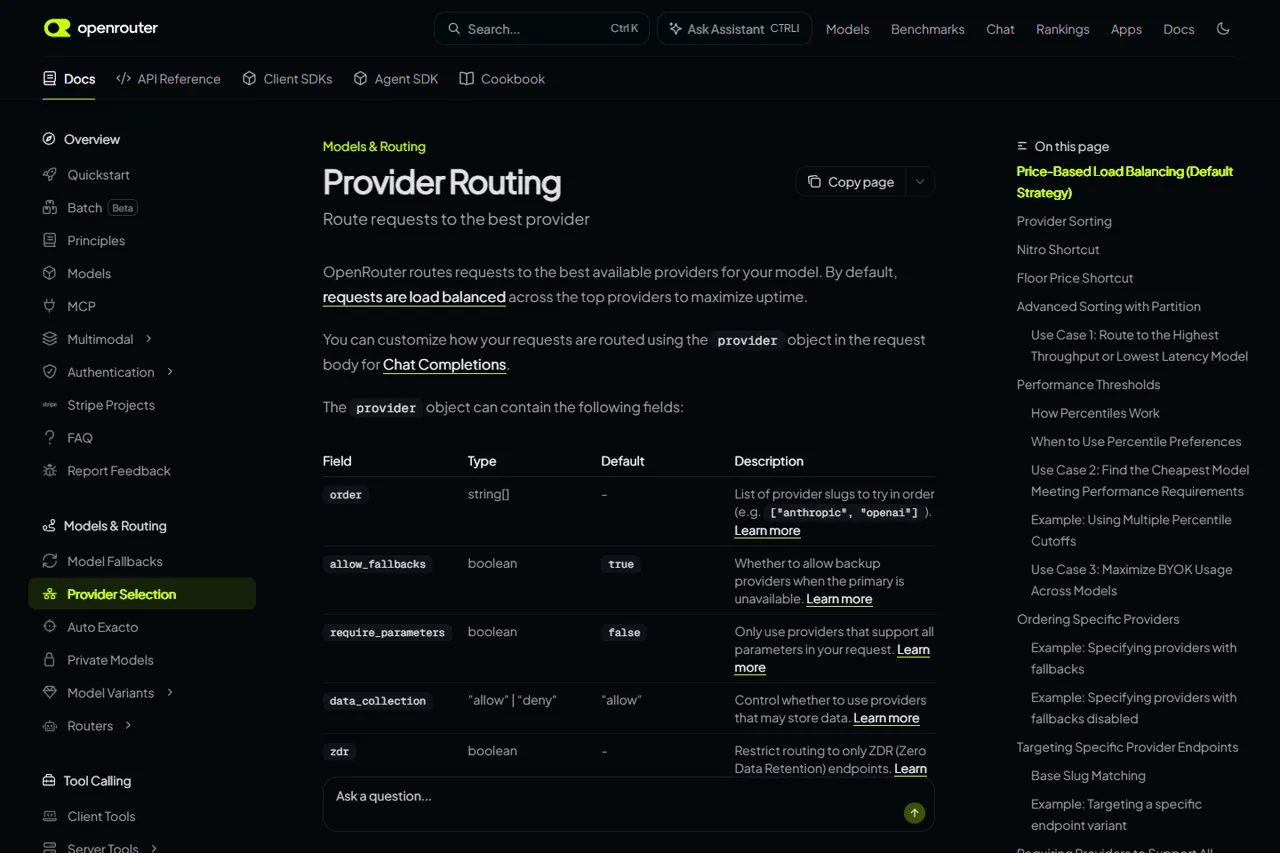
技術的な観点から見ると、プロバイダ・ルーティングは単なるマーケティング用語ではなく、実装上の真の課題です。OpenRouterの プロバイダー・ルーティングに関するドキュメント プロバイダーの選択、フォールバック、およびデータ処理に関する制御について説明しています。これらの制御は、チームが「どのジョブを自動的に移行できるか」「どのジョブには承認が必要か」「どのデータが特定の経路から外部へ送信可能か」といった、より単純なポリシーの決定を終えてから使用してください。.
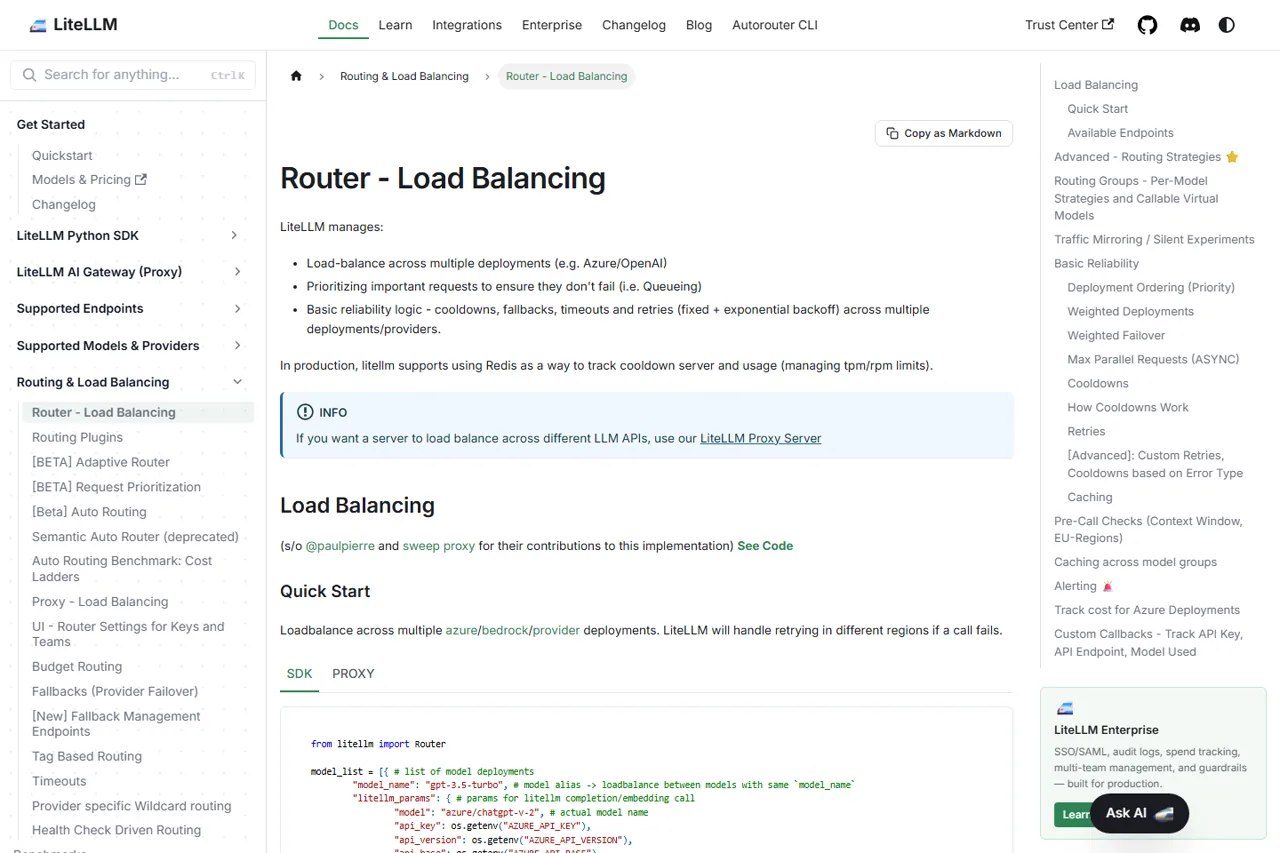
LiteLLMの ルーターおよびロードバランシングに関するドキュメント これは、リトライ、タイムアウト、および複数のデプロイを必要とするチームにとって有用な技術リファレンスです。ただし、プライバシーの境界を設定する必要性がなくなるわけではありません。デフォルトで、機密情報を利用可能なすべてのルートに送信しないでください。まず、組織のプロバイダー、保存期間、および承認に関するルールを適用してください。.
ワークフローの適合性に基づいて、オールインワンAIプラットフォームを選択する
- タスクの網羅範囲: 実際に繰り返し行っている業務に対応していますか?
- プロジェクトの継続性: 必要に応じて、有用な文脈を保持し、成果物をエクスポートすることは可能でしょうか?
- 評価: ルートの比較、プロンプトの保存、出力の確認はできますか?
- 信頼性: フォールバック動作や予算上限、あるいは文書化された手動ルートを設定することはできますか?
- ガバナンス: 業務を行う上で、サービス提供者、プライバシー、およびアクセス権限の境界は十分に明確になっていますか?
- 費用の透明性: ルーチン業務やエスカレーション対応にはどれくらいの時間がかかるか、お分かりになりますか?
プラットフォームは、単に利用可能なモデルを増やすだけでなく、比較基準や受け入れ基準を可視化することで、その存在意義を確立する。 GlobalGPT CLIを通じて実施された2つの小規模な日常業務の観察では、会議議事録作成タスクでは、承認ゲートを維持しつつ担当者を新たに設定する必要がないルートが確保できるかどうかが示され、カスタマーサポートタスクでは、厳格な事実に基づく範囲内で洗練された回答を維持できるかどうかが示されました。1件の未完了の通話については、証拠として扱うのではなく除外されました。.
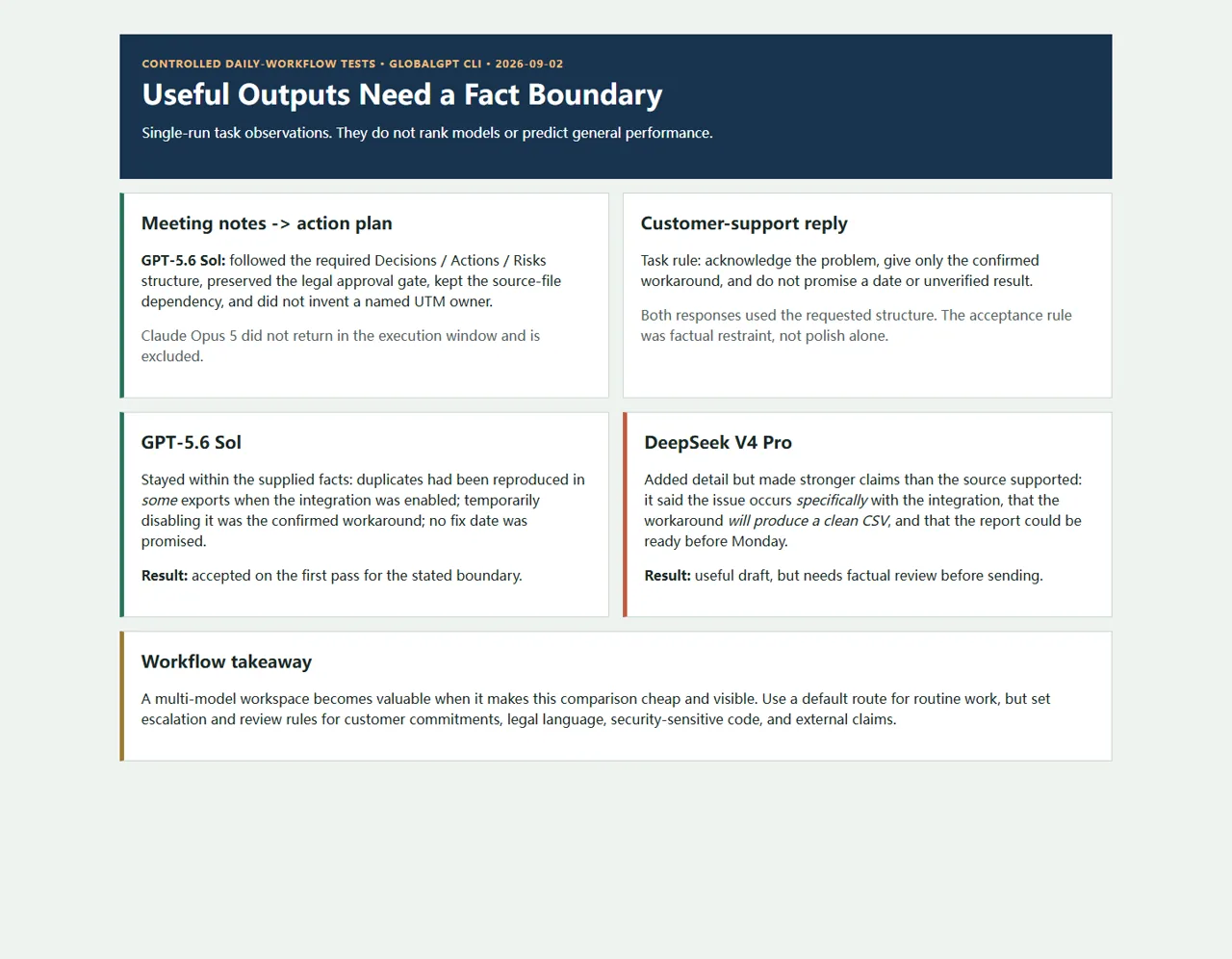
日常業務において、マルチモデル・プラットフォームは、チームが候補となる回答を明確な承認ルールと照らし合わせて比較できる場合に役立ちます。この小規模なテストでは、その違いは文法や流暢さではありませんでした。違いは、回答が確認済みの事実の範囲内に収まっているかどうかという点でした。そのため、ワークフローには、顧客への約束、法的文言、および外部への主張について、人間によるレビューをトリガーとする仕組みが必要です。.
GlobalGPTは、回答を比較したり、言語タスクとクリエイティブタスクを切り替えたり、実験ごとに個別のアカウントを管理する手間を省きたい場合に、よりスムーズな作業環境を提供します。ただし、これはプロバイダー独自のコンソール、リポジトリエディタ、あるいはネイティブなエンタープライズ制御プレーンの代わりになるものではありません。. GlobalGPTのマルチモデルワークスペースをお試しください 共有ワークスペースの特典が購入の理由である場合。.
クリエイティブ分野は、引き続き専門家主導であるべきです。ビジュアル制作が繰り返し行われる業務である場合は、一般的なチャットモデルだけで十分だと決めつけるのではなく、実際の案件要件と手法を比較検討し、成果物を精査してください。これらのガイドでは、 2026年にテストされた最高のAI画像生成ツール そして シーダンス2.0アクセス その方向性を明確にするのに役立ちます。.
試験の再現性を確保できるプラットフォームを選択してください
以上の証拠から、実用的な購入基準が導き出されます。チームがプロンプトを保持し、出力結果を比較し、生成された画像や動画のジョブをテキスト作業と並行して管理し、結果が承認された理由やエスカレーションされた理由を記録できるようなオールインワンAIプラットフォームを選択すべきです。これは、単にモデル名を表示するだけのダッシュボードよりも有用です。.
よくある質問
オールインワンAIモデルは単一のモデルなのでしょうか?
通常はそうではありません。有効な構成は、複数のモデルやプロバイダーを対象とした共有ワークスペースとポリシーです。これにより、定期的なジョブはデフォルトの設定に割り当てられ、困難な作業は上位の処理にエスカレーションされ、優先される処理経路が利用できない場合でも代替経路が確保されます。.
チームはいくつのモデルを使うべきでしょうか?
まずは業務に必要な最小限の数から始めましょう。具体的には、迅速に対応できるデフォルトの対応策を1つ、より詳細なエスカレーションの選択肢を1つ、必要な場面での専門家による対応を1つ、そして予備の手段を1つです。実際のタスクや信頼性の要件が正当化される場合にのみ、経路を追加してください。.
AIモデルを公平に比較するにはどうすればよいでしょうか?
すべてのルートについて、同じ代表的なプロンプト、承認基準、およびレビュー方法を適用してください。出力結果が承認されたかどうか、どの程度の編集が必要だったか、および失敗した呼び出しやレート制限がかかった呼び出しがあったかどうかを記録してください。関連性のないデモ同士を比較しないでください。.
フォールバックモデルは自動的に実行されるべきでしょうか?
リスクの低い業務においては、自動的なフォールバックが有効な場合があります。外部からのクレーム、契約、セキュリティ上重要なコード、または規制対象のデータについては、フォールバックにおいても、主要な処理経路と同じ審査およびプライバシーに関するルールを維持する必要があります。.
マルチモデルAIプラットフォームは、常にコストが安いのでしょうか?
いいえ。その価値は、サブスクリプションの重複、切り替えにかかる時間、および手戻りをどれだけ削減できるかによって決まります。単一のプランが最も安上がりだと決めつけるのではなく、通常のタスク全体にわたって承認された作業にかかるコストを測定してください。.
GlobalGPTをマルチモデルワークフローで使用することはできますか?
GlobalGPTは、言語モデルの出力を比較したり、1つのワークスペース内で研究、執筆、コーディング、画像、動画といったタスクを切り替えたりすることでメリットが得られるワークフローに適しています。本モデルを利用する前に、現在のモデルへのアクセス状況、利用条件、およびワークフロー固有の要件を確認してください。.
オールインワンAIモデルを実践的に活用する方法
最適なオールインワンAIモデルワークフローとは、次の判断が自明となるようなものです。すなわち、日常業務にはデフォルト処理を適用し、曖昧な場合は上位者へのエスカレーションを行い、特定の業務には専門家に任せ、信頼性が求められる場面ではフォールバック手段を用意する、という流れです。まずは小規模なテストセットから始め、受け入れ可能な結果を記録し、重大な結果を招く可能性のある場面では、人間が責任を負うようにします。.