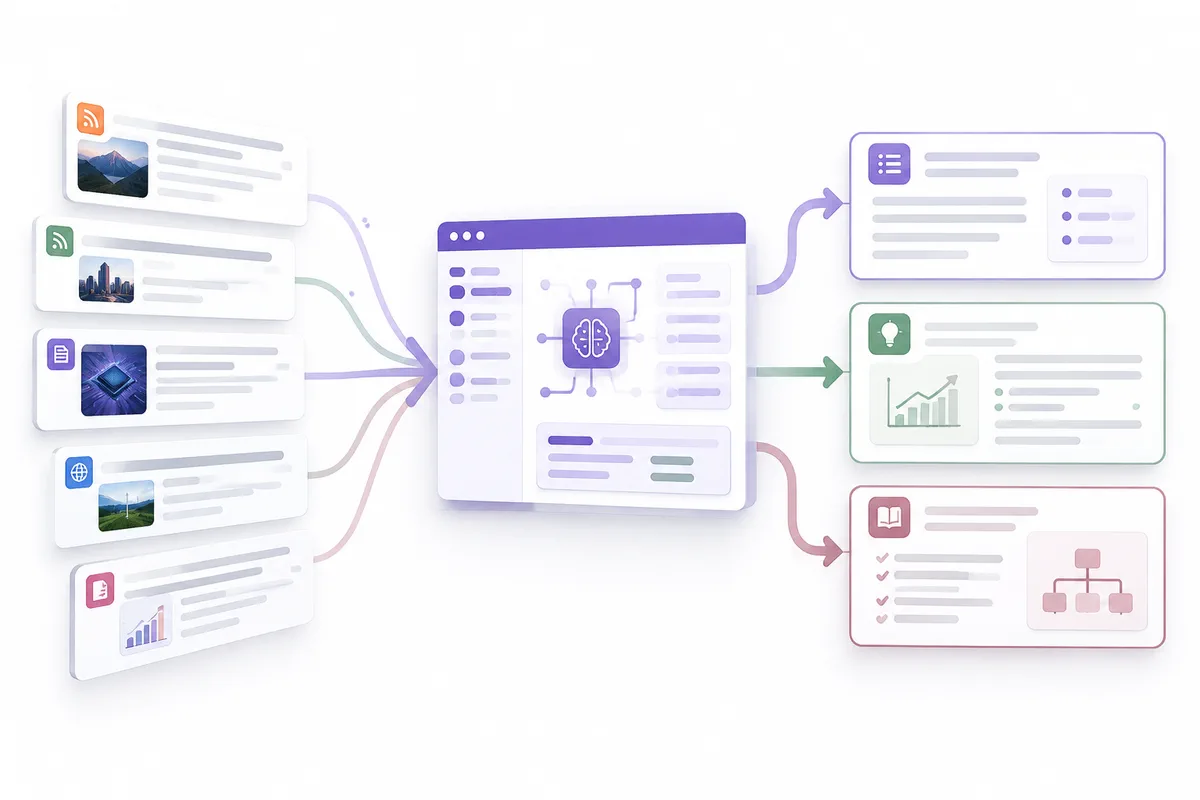
For researchers, creators, founders, and small teams, the hard part is rarely finding information. It is separating a meaningful change from another headline, then deciding what to do with it. A conventional feed reader helps collect updates. An AI RSS workflow adds a layer for focus, interpretation, and action.
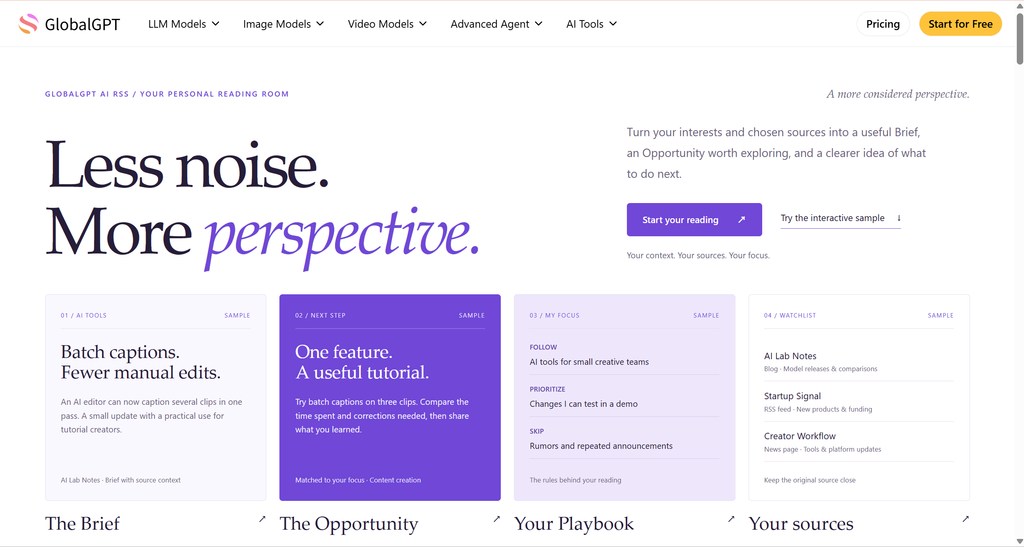
The useful distinction comes first: how AI RSS differs from ordinary RSS, what it can and cannot do, and how GlobalGPT organizes chosen sources into Briefs, Opportunities, and editable Playbooks.
What Is AI RSS?
AI RSS is a reading workflow that combines syndication or source monitoring with machine-assisted triage. The source layer brings updates together.
The AI layer can organize those updates around a topic. It can compress an item, explain why it may matter, and suggest a next step. The reader still decides what deserves attention.
The underlying idea starts with web syndication. The RSS 2.0 specification defines a channel made up of items.
について Atom Syndication Format defines feeds and entries for exchanging web content and metadata. Both standards give software a structured way to discover new material. A person does not need to revisit every site.
An ordinary summary answers, “What does this item say?” A useful AI RSS Brief should go one step further: “Why might this matter for my focus?” That is the bridge from aggregation to prioritization. If summarization is your main need, the separate guide to ChatGPT を使用して記事を要約する covers the document-level workflow in more detail.
Behind that reading experience is a short signal-processing pipeline. Collection comes first. The system checks the sources you selected and detects material that is available to review.
Normalization comes next. Titles, publication dates, links, and body text may arrive in different shapes. Putting those fields into a consistent structure makes comparison possible. Relevance filtering can then compare each item with the focus you defined.
The final stages create a Brief and frame an Opportunity. Neither stage should erase the original source. The output is useful only when you can trace the claim, inspect its context, and decide whether the suggested action fits your work.
From signal to decision
Read chosen sources.
Match the focus.
Explain the change.
Frame a next step.
Open the source.
AI RSS is best understood as a filter and decision aid, not a new feed format. It can sit on top of feeds, blogs, or selected news pages and turn a stream of updates into a smaller set of items worth reviewing.
How AI RSS Differs From a Traditional RSS Reader
A traditional RSS reader is primarily an inbox for published items. It is predictable: subscribe to a feed, receive entries, sort or tag them, and open what looks relevant. That transparency is valuable, especially when you want a complete chronological view.
| Comparison point | Traditional RSS reader | AI RSS workflow |
|---|---|---|
| Primary job | Collect new feed entries | Prioritize signals around a focus |
| Default view | Chronological or folder-based list | Briefs organized for relevance |
| Reading unit | Title, excerpt, and original item | Summary, context, and source |
| Action layer | Reader creates the next step | Opportunity can suggest a next step |
| 主なリスク | Information overload | Over-trusting a summary or ranking |
The tradeoff is straightforward. Traditional RSS gives you direct control over a full stream. AI RSS gives you compression and prioritization, but the ranking and summary add an interpretive layer. The strongest setup keeps the source attached so you can move from the Brief back to the original material.
What AI RSS Can and Cannot Do
AI RSS can reduce the first-pass reading burden. It can group selected sources around a focus, summarize what changed, highlight a possible implication, and help a reader choose between ignoring, saving, testing, researching, or publishing a response.
- It can prioritize. A clear focus helps move relevant updates above background noise.
- It can compress. A Brief makes the change and its possible significance easier to scan.
- It can connect a signal to action. An Opportunity can frame a useful question, experiment, or task.
- It can preserve context. The original source remains the place to confirm details and nuance.
It cannot guarantee that a source is correct, that a summary captured every qualifier, or that a suggested Opportunity fits your real priorities. Citation checking remains a separate job. The practical lessons in this citation accuracy and source-checking guide apply here too: open the source, inspect the relevant passage, and verify material claims before acting.
It also cannot make a vague focus precise on its own. “Technology” may produce a broad mix; “AI video editing tools for a weekly tutorial channel” gives the system a much clearer decision boundary. AI can help sort the stream, but the user still defines what useful means.
How GlobalGPT AI RSS Works
GlobalGPT organizes the experience around five connected ideas: Focus, Sources, Briefs, Opportunities, and Playbooks. Together they create a loop that starts with what you care about and ends with a decision you can review.
Define the topic and question.
Choose where signals come from.
See what changed and why it may matter.
Consider a useful next action.
Tune how future matches are shaped.
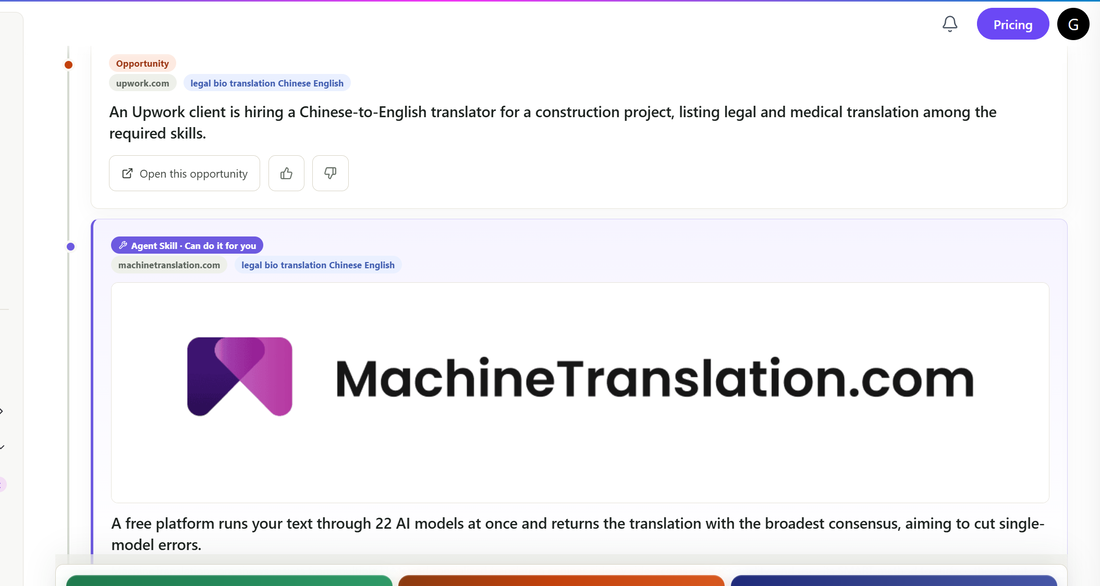
A Brief is the compact reading unit. It states the update, adds context, and explains why the item may deserve attention.
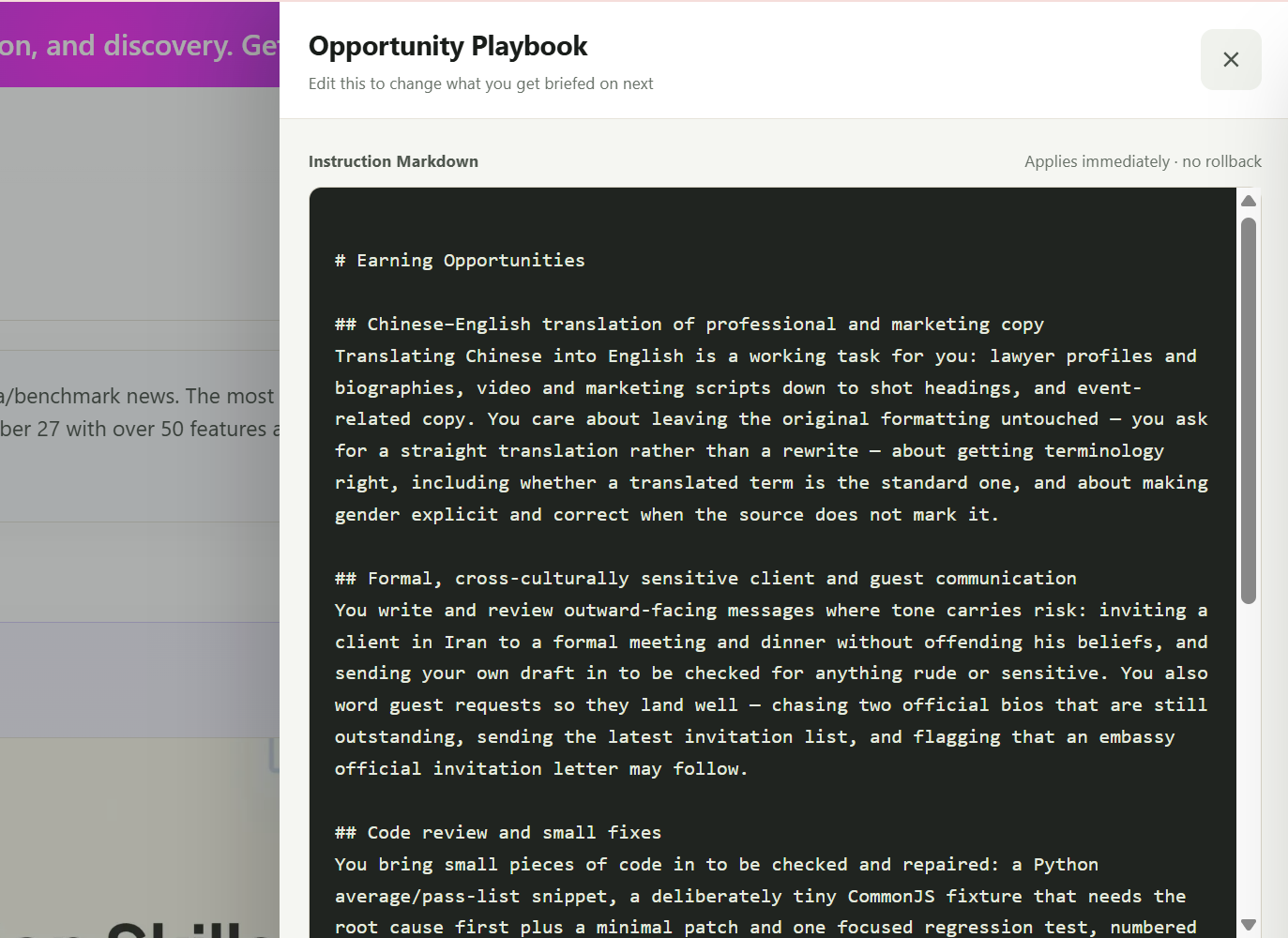
An Opportunity is the action layer. It may frame a test, research question, content angle, or workflow change. A Playbook keeps the matching logic visible and adjustable.
Three different jobs
何が変わったのでしょうか?
Output: a source-backed explanation.
What could you do?
Output: a small test or decision.
What should improve next?
Output: a reusable matching rule.
These units should not repeat the same sentence in three formats. Each one answers a different question. That separation keeps the workflow useful when the source stream becomes busy.
Relevance, novelty, and urgency are different signals. An update can match your topic without changing anything important. It can also be new but too minor to justify action. A good Brief makes those distinctions easier to see.
Brief quality improves when uncertainty stays visible. Look for dates, named entities, direct claims, and a traceable source. Be cautious when a summary uses words such as “major” or “breakthrough” without showing the underlying evidence.
Opportunity quality depends on scope. The first action should be small enough to complete and clear enough to evaluate. Define the expected output before starting: a comparison table, verified note, interview question, experiment result, or editorial decision.
- A strong Brief names the specific change, keeps the source traceable, and separates fact from interpretation.
- A weak Brief uses vague importance language but leaves the reader unsure what actually changed.
- A strong Opportunity proposes a small, timely action and states what evidence would make it worthwhile.
- A weak Opportunity says to “explore” a topic without defining a decision, test, or useful output.
Consider an illustrative example. A selected product blog announces a new citation feature. The source is the announcement itself, not a second-hand summary.
The Brief should name the feature and the affected workflow. It should also keep the announcement attached. A useful Brief avoids claiming that citation quality improved before anyone tests it.
The Opportunity could propose a small audit. Run the same research question before and after the change. Then compare citation coverage, source quality, and the time needed to verify each answer.
Verification closes the loop. Open the cited pages and inspect the relevant passages. If the test is useful, the Playbook can favor similar product changes in future Briefs. This example explains the workflow; it is not a live feed result or personal-history record.
How to Use GlobalGPT AI RSS
Step 1: Choose a specific focus
Start with a topic tied to a decision. “Startups” is a category. “Early-stage analytics products for small support teams” is a focus.
Include the audience, the kind of change you care about, and the decision you expect to make. A tighter focus gives both Briefs and Opportunities a better target.
Step 2: Review a Brief before opening everything
Scan the Brief for three things: what changed, why the change could matter, and which source supports it. If the item is routine, move on. If it affects a current project or decision, open the source context. This keeps speed without turning the summary into the final authority.
Step 3: Inspect the Opportunity
Ask whether the suggested action is concrete, timely, and small enough to test. A good Opportunity might become a comparison, an experiment, an interview question, or a research task. If you need a stronger investigation prompt, these research prompt templates for Grok show how to turn a broad topic into a structured request.
Step 4: Tune the Playbook
Adjust the focus and next-step preference when matches feel too broad, repetitive, or disconnected from your work. A creator might prefer publishable angles. A product team might prefer tests and competitor comparisons. A researcher might prefer claims that need verification. Treat the Playbook as an editorial rule set that improves through review.
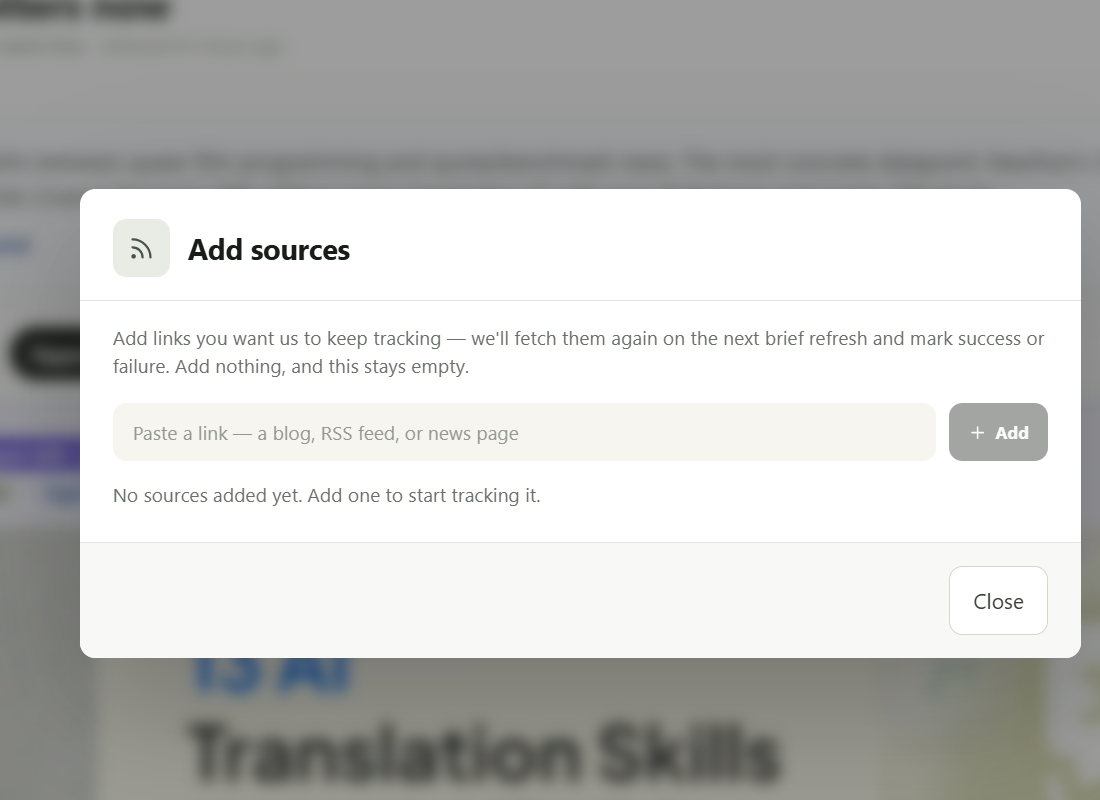
Step 5: Add high-signal sources
The current source flow supports blogs, RSS feeds, and news pages. Begin with sources you already trust: official product blogs, specialist publications, focused newsletters with public pages, or research outlets. The RSS Best Practices Profile is a useful reminder that feed implementation details can vary, so check that each source publishes complete, readable entries.
Add sources deliberately rather than building the largest possible list. After several review cycles, remove sources that produce repeated noise and keep those that regularly support a useful decision. Quality at the input stage makes every later step easier.
Practical AI RSS Use Cases
Research monitoring
Follow laboratories, standards groups, and specialist publications around a narrow question. Use Briefs to spot a new paper, release, or policy change, then move important items into a deeper workflow. The step-by-step guide to ChatGPTディープリサーチ is a useful next stop when a signal needs broader evidence.
Industry and competitor monitoring
Track product blogs, company newsrooms, and trade publications. A Brief can highlight a pricing change or launch; an Opportunity can frame a comparison or customer question. When the signal includes datasets or performance claims, the review of データ分析のためのAIツール can help plan the next analytical step.
Content planning
Use Opportunities as starting points for explainers, comparisons, and timely updates rather than as finished briefs. A signal should lead to a clear reader question. The roundup of AI writing tools for 2026 can help match the drafting tool to the format you choose.
When a topic becomes a full article, compare output quality instead of accepting the first draft. The hands-on ChatGPT vs Gemini blog-writing comparison offers a practical framework for evaluating structure, usefulness, and editing effort.
Startup and market tracking
Follow launch pages, investor blogs, and sector publications for one market thesis. Briefs help reduce the scanning load; Opportunities can turn a launch into a customer interview question or a feature comparison. For source-led follow-up, the guide to 研究におけるPerplexityの活用 shows how to expand an initial signal while keeping citations visible.
How to build a useful source mix
A strong source list mixes direct evidence with informed interpretation. Primary sources reveal what a company, laboratory, or standards body actually published. Specialist analysis can explain consequences, compare alternatives, or challenge the original framing.
Do not score a source only by reputation. Judge whether it consistently produces signals that match your focus. A famous general publication may add less value than a narrow technical blog with clear references.
Example source scorecard
Score sources from observed usefulness, then revisit the score after several review cycles.
Source quality is not permanent. A useful site can become repetitive or stop publishing. A new source may improve after several strong reports. Review the mix over time instead of treating the first list as final.
- Noisy source: many updates match the keyword, but few change a decision.
- Duplicate coverage: several sites repeat the same announcement without adding evidence.
- Stale page: an old article reappears without a meaningful update or new date context.
- Vague focus: broad wording makes unrelated items look relevant.
- Summary over-trust: a concise Brief sounds certain even when the source contains limits or caveats.
When results weaken, diagnose the stage that failed. If irrelevant items enter the stream, tighten the focus or source list. If the Brief loses nuance, inspect the source and adjust the matching rule. If an Opportunity is too large, rewrite it as the smallest useful test.
How to Get Better AI RSS Results
- Write the focus as a decision. State what you monitor, for whom, and what you may do when a relevant change appears.
- Balance primary and interpretive sources. Pair official blogs or documents with publications that add context, comparisons, or criticism.
- Open the source for consequential claims. Verify prices, dates, policy language, benchmarks, and quotations in the original page.
- Grade Opportunities by effort and value. Prefer a small test or clear research question over a vague suggestion to “explore more.”
- Refine the Playbook from misses. When a match is noisy, identify whether the problem came from the focus, the source mix, or the preferred action.
- Review the source list. Keep sources that repeatedly produce useful signals and remove those that add volume without decisions.
The useful habit is a short verification loop: scan the Brief, inspect the source, judge the Opportunity, then update the Playbook if the match was off. That loop makes the system more aligned with your work while keeping final judgment with you.
AI RSS FAQ
What is an AI RSS reader?
An AI RSS reader combines source tracking with AI-assisted prioritization and summarization. It helps you scan what changed, understand why an item may matter, and decide whether to open the original source or take a next step.
How is AI RSS different from a traditional RSS reader?
A traditional RSS reader mainly collects and orders feed entries. AI RSS adds an interpretation layer that can rank updates around a focus, summarize them, and suggest possible actions. The tradeoff is that AI output still needs source verification.
What sources can I add to GlobalGPT AI RSS?
The current GlobalGPT source flow supports blogs, RSS feeds, and news pages. Start with a small group of reliable, topic-specific sources, then keep or remove them based on whether their updates lead to useful Briefs and decisions.
What are Briefs and Opportunities?
A Brief is a compact view of an update, its context, and why it may deserve attention. An Opportunity connects that signal to a possible action, such as a test, research question, comparison, workflow change, or content angle.
Can I change how AI RSS matches updates to my interests?
GlobalGPT uses editable Playbooks to make the matching rules visible. You can refine the focus and preferred next-step direction when results feel too broad, repetitive, or disconnected from the decisions you actually need to make.
Should I trust an AI RSS summary without opening the source?
No. Use the summary to decide where to spend attention, not as proof of the underlying claim. Open the original source for important details, especially prices, dates, policies, benchmarks, quotations, and decisions with real consequences.
Conclusion: Turn AI RSS Signals Into Action
AI RSS is most useful when it narrows a noisy stream into a small number of decisions. Traditional feeds remain the dependable source layer. Focus, Briefs, Opportunities, and Playbooks add a practical reading layer that helps you understand what changed and choose what happens next.
Start with one specific focus and a small source set. Review the Brief, verify the source, inspect the Opportunity, and adjust the Playbook when a match misses. That simple loop keeps the system useful without giving up human judgment.