

Le meilleur substitut à Claude dépend de la tâche à accomplir. ChatGPT est un assistant polyvalent très performant, Gemini est adapté aux tâches centrées sur Google, et Perplexity est conçu pour la recherche de sources. Que ce soit pour l'écriture, le codage, la recherche ou la création, choisissez le produit qui vous permet d'accomplir vos tâches récurrentes avec le moins d'efforts possible, et non celui qui propose la liste de fonctionnalités la plus longue.
Commencez par identifier ce qui manque à votre flux de travail Claude : un outil de recherche de sources, un assistant intégré aux applications Google ou Microsoft, un modèle auto-hébergé ou une structure tarifaire différente pour les API. Vous obtiendrez ainsi une liste restreinte sans avoir à remplacer un outil qui gère déjà très bien vos tâches principales.
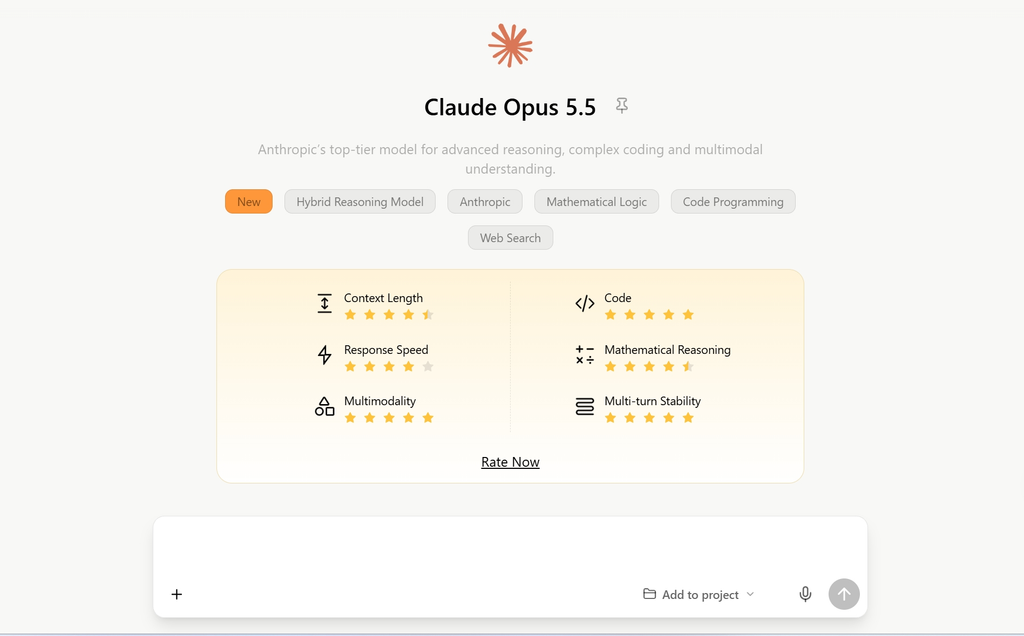
Pour un travail quotidien qui oscille entre l'écriture, la recherche, les images et la vidéo, GlobalGPT réunit des modèles de pointe et des outils créatifs au sein d'un seul abonnement abordable. Vous pouvez travailler avec Claude, GPT, Gemini et Perplexity dans un même espace de travail, puis faire passer le projet à la production visuelle sans avoir à gérer un abonnement distinct pour chaque étape.
Formule annuelle « Pro » de GlobalGPT soit l'équivalent de $10,80 par mois, ou $129,60 pour 12 mois, au 23 octobre 2026. Comparez cet engagement avec les abonnements que vous utilisez réellement ; l'achat d'un accès aux modèles dans un espace de travail n'inclut pas toutes les intégrations natives des fournisseurs.
Aperçu des alternatives au Claude
| Alternative | Meilleur pour | Pourquoi le préférer au Claude ? | Principal compromis |
|---|---|---|---|
| GlobalGPT | Flux de travail multimodèles au quotidien | Claude, GPT, Gemini, Grok, Perplexity, ainsi que des outils d'image et de vidéo, le tout dans un seul espace de travail | Particulièrement utile lorsque votre travail tire véritablement parti de plusieurs modèles ou outils multimédias |
| ChatGPT | Travail général avec un seul assistant | Une grande polyvalence en matière de productivité, de programmation, de fichiers, d'images et d'outils divers | L'accès aux meilleurs modèles et fonctionnalités dépend des limites de votre forfait |
| Google Gemini | Utilisateurs de Google | Une intégration parfaite avec Search, Gmail, Docs, Drive et le travail multimodal | Son principal atout réside dans son adéquation avec l'écosystème, et non dans sa capacité à exceller dans toutes les tâches. |
| Perplexité | Recherche à partir de sources | Les réponses basées sur la recherche facilitent la vérification des sources | Les résultats de la recherche doivent encore faire l'objet d'une synthèse et d'une mise au point pour aboutir à une version finale. |
| Microsoft Copilot | Microsoft 365 | Fonctionne de manière similaire à Word, Excel, PowerPoint, Outlook et Teams | Le prix dépend fortement des produits Microsoft inclus dans votre forfait |
| Grok | Signaux Live X | Utile pour les discussions animées et les découvertes liées à X | Les informations actuelles doivent encore faire l'objet d'une vérification des sources |
| DeepSeek | Travaux techniques à moindre coût | Tarification de l'API en fonction de l'utilisation pour les tâches que vous pouvez évaluer | Les exigences en matière de disponibilité, de gouvernance et de traitement des données varient |
| Mistral Vibe (anciennement Le Chat) | Équipes européennes | Option fournisseur européen avec des filières grand public et entreprise | Vérifier les modalités de travail, de codage et de déploiement prévues dans le plan concerné |
| Meta AI / Llama | Déploiement en poids libre | Plus de contrôle pour les équipes capables d'héberger ou de personnaliser des modèles | L'auto-hébergement nécessite des travaux d'ingénierie, de sécurité et de maintenance |
| Poe | Essayer plusieurs bots | Un accès pratique à un vaste catalogue de bots et de modèles | Le coût en points et les modèles disponibles varient selon le bot |
Comment nous avons sélectionné les meilleures alternatives à Claude
Dans cette liste, on entend par “ alternative ” un produit capable de remplacer au moins une partie importante des fonctions de Claude. La comparaison s'articule autour de six questions concrètes :
- Est-il capable de gérer la rédaction quotidienne, l'analyse, les fichiers et le raisonnement structuré ?
- Cela présente-t-il un avantage évident en matière de recherche, de programmation, de travail multimodal ou d'intégration dans l'entreprise ?
- Existe-t-il une solution grand public, gratuite ou payante, qui soit utilisable ?
- Le fournisseur a-t-il documenté ses modèles et ses limites actuels ?
- À quoi l'utilisateur doit-il renoncer par rapport au Claude ?
- Ce produit résout-il un véritable problème lié au flux de travail, ou se contente-t-il d'afficher des performances supérieures aux références du marché ?
Les recommandations ci-dessous s'appuient sur les caractéristiques documentées des produits, les options d'accès et la fonction de chaque outil. Il ne s'agit pas d'un test comparatif entre dix applications natives. Les images de référence historiques des fournisseurs conservent la portée initiale de leur modèle ; les forfaits grand public, les outils connectés et vos propres contributions peuvent modifier l’expérience. GlobalGPT publie ce guide et figure parmi les options commerciales proposées.
Itinéraires gratuits et payants
Pour commencer sans frais, consultez les plans gratuits proposés par Vibe : Gemini et Mistral. Les options présentées ci-dessous montrent les différences entre le chat gratuit, les abonnements, la facturation via API et l'auto-hébergement. Les sources officielles liées à ces options d'accès ont été vérifiées le 15 septembre 2026.
| Itinéraire | Type de coût initial | Ce que vous pouvez utiliser | Limite |
|---|---|---|---|
| Gémeaux | Entrée gratuite | 3.6 Flash, accès variable à la version 3.1 Pro, Deep Research, outils d'image et Canvas | Forfait public américain ; des limites d'utilisation s'appliquent. |
| Perplexité | Gratuit : $0/mois ; Pro : $20/mois ; Max : $200/mois | Recherche de base gratuite avec références ; 3 recherches « Pro » par jour et 1 requête de recherche par mois | Consulté le 15 septembre 2026. Nombre limité de téléchargements gratuits ; pas de modèles avancés ni de génération d'images. L'accès payant comporte également des limites. |
| Mistral Vibe | Entrée gratuite | Réponses rapides, recherche sur Internet et tâches simples | Le recours à des services d'agent plus étendus relève d'une décision distincte, liée à un forfait payant. |
| Poe | Points quotidiens pour les utilisateurs non payants | Découvrez les bots officiels et ceux créés par les utilisateurs grâce à vos points | Réinitialisation toutes les 24 heures ; pas de report. Les tarifs et les budgets par message permettent de contrôler l'utilisation. |
| ChatGPT Plus | Abonnement payant | $20 par mois, facturé mensuellement | Comprend les outils mentionnés, avec certaines limites ; l'API est facturée séparément. |
| API Flash DeepSeek V4.1 | Utilisation mesurée du révélateur | Payer pour les jetons d'entrée et de sortie | L'état du cache et les heures de pointe et de faible affluence ont une incidence sur la facture. |
| Llama auto-hébergé | Coûts d'infrastructure et d'exploitation | Exécuter les poids du modèle conformément à la licence qui s'y applique | Le matériel, l'hébergement, la sécurité et la maintenance ont toujours un coût. |
Les 10 meilleures alternatives à Claude en 2026
1. GlobalGPT — Idéal pour les flux de travail quotidiens impliquant plusieurs modèles
GlobalGPT mérite d'être pris en considération lorsque votre travail ne s'intègre pas parfaitement dans un seul assistant. Son espace de travail public rassemble des familles de modèles provenant de OpenAI, Anthropic, Google, xAI, Perplexity et d'autres sources au sein d'une seule et même interface. Vous pouvez rédiger un brouillon avec Claude, obtenir un autre point de vue grâce à GPT ou Gemini, effectuer des recherches avec Perplexity, puis passer à la création d’images ou de vidéos sans avoir à recréer le projet dans des outils distincts.
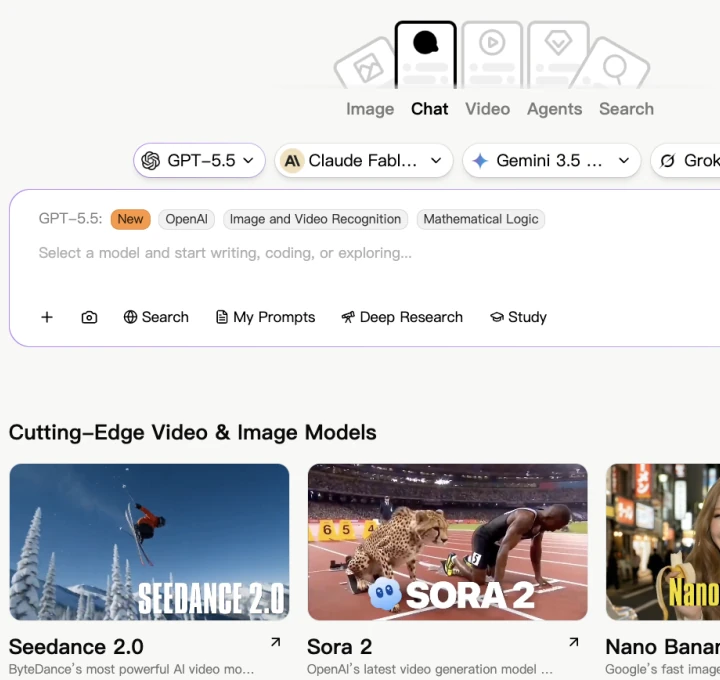
Autre option : un espace de travail multimodèle
Aucun modèle n'est le meilleur pour toutes les tâches. Si votre journée alterne entre la conception, la recherche, la demande d'un deuxième avis, les images et la vidéo, GlobalGPT vous permet de tirer parti de plusieurs familles de modèles de pointe au sein d'un même espace de travail. Son atout réside dans sa flexibilité : vous pouvez choisir un outil en fonction de la tâche à accomplir, plutôt que de considérer un seul assistant comme la solution universelle.
- Retrouvez les modèles Claude, GPT, Gemini, Grok, Perplexity et d'autres modèles phares, le tout au même endroit.
- Passez du chat et de la recherche à la génération d'images et de vidéos sans avoir à repenser le flux de travail.
- Réduisez le nombre d'abonnements distincts et les changements répétés d'onglet.
Un processus de travail type est plus utile qu’un simple décompte de modèles : effectuer des recherches sur un sujet, transformer les résultats en plan, rédiger et réviser le brouillon, puis créer les images ou la vidéo qui l’accompagnent. Pour les développeurs, l'interface CLI de GlobalGPT permet également d'intégrer le travail sur les modèles aux workflows existants du terminal et de production. Optez pour cette approche lorsque plusieurs de ces étapes s'inscrivent dans la même semaine ; une tâche récurrente très spécifique peut en revanche nécessiter un outil spécialisé.
Notre Comparaison des plateformes d'IA tout-en-un distingue l'accès au modèle, les crédits et les intégrations natives afin que vous puissiez comparer le coût récurrent total.
Prenez votre décision concernant l'abonnement en tenant compte de l'ensemble de votre projet : énumérez les outils de rédaction, de recherche et de création que vous devriez autrement acheter séparément. GlobalGPT est particulièrement pertinent lorsque vous en avez régulièrement besoin de plusieurs ; la section suivante traite de l'option consistant à faire appel à un seul assistant.
2. ChatGPT — La meilleure alternative à la Claude avec un seul assistant
ChatGPT est un choix judicieux lorsque vous recherchez un assistant capable de vous aider dans la rédaction, le codage, l'analyse de fichiers, le traitement d'images, la recherche et la productivité en général. Il s'avère particulièrement utile lorsque une tâche passe d'un format à un autre : transformer des notes en plan, examiner une feuille de calcul, rédiger un message destiné à un client, puis demander du code ou une image sans avoir à reconfigurer le flux de travail.
L'équipe d'OpenAI Page d'aide « Plus », consulté le 15 septembre 2026, indique un forfait mensuel de $20 facturé chaque mois. Il couvre la génération d’images, le téléchargement et l’analyse de fichiers, la voix et la fonction « Deep Research » lorsqu’elle est disponible. Le forfait « Plus » comporte des limites d’utilisation ; l’utilisation de l’API est facturée séparément. Commencez par la tâche que vous souhaitez débloquer grâce à la mise à niveau, plutôt que de payer uniquement pour le nom d’un modèle.
Ce qui compte concrètement, c’est le déroulement du travail, et pas seulement le nom du modèle. Pour une tâche de rédaction, précisez le public visé, donnez des exemples de votre ton et indiquez les faits qui doivent être respectés. Pour du code, fournissez un petit problème reproductible et vérifiez la modification proposée à l’aide de tests. Une réponse soignée n’a d’utilité que si les affirmations, les calculs ou le comportement résistent à cette vérification.
Utilisez le Comparaison des formules ChatGPT afin de distinguer les abonnements personnels, l'accès professionnel et l'utilisation de l'API facturée séparément.
- Bonne coupe : une charge de travail variée mêlant rédaction, gestion de dossiers, contenu visuel et questions techniques.
- Accès : ChatGPT est un assistant hébergé proposant des formules d'accès gratuites et payantes ; la formule choisie détermine les limites en matière de modèles et d'outils.
- Compromis : Une fonctionnalité étendue ne garantit pas pour autant que le style d'écriture ou le processus de développement vous convienne. Testez-les dans le cadre de votre travail quotidien avant de changer de solution.
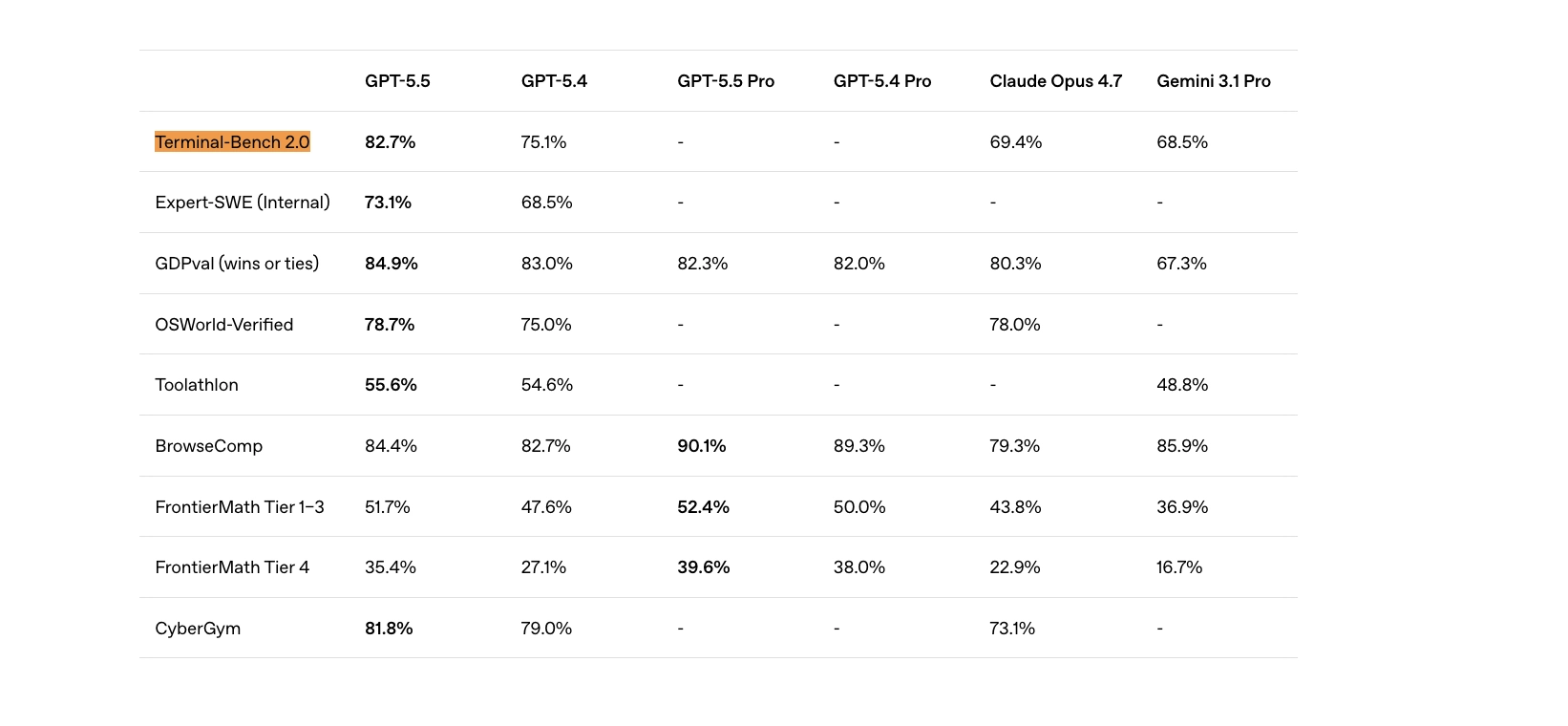
Choisissez ChatGPT si : vous recherchez un produit polyvalent et complet, et appréciez la programmation, la mise en forme soignée des documents, les outils de traitement d'images ou encore une large gamme de fonctionnalités. Conservez la configuration Claude si : que vous préfériez le style rédactionnel de Claude, la gestion des documents volumineux ou le flux de travail de Claude Code. Pour une comparaison ciblée, consultez notre Guide « Claude vs ChatGPT ».
3. Google Gemini — L'idéal pour les utilisateurs de Google
Gemini est particulièrement utile lorsque votre travail s'effectue déjà dans Google Search, Gmail, Docs, Drive, Sheets, Android ou Google Cloud. Son avantage ne réside pas uniquement dans la qualité du modèle. Il tient également à la proximité entre la réponse et l'environnement de travail.
Google Page d'abonnement aux États-Unis, consultée le 15 septembre 2026, présente une formule gratuite comprenant 3,6 Flash, un accès variable à 3,1 Pro, Deep Research, des outils d’image et Canvas. Google AI Pro est proposé à $19,99 par mois et inclut un accès étendu ainsi que Gemini dans Gmail, Docs et d’autres applications Google. Il s’agit d’une référence relative à une offre publique aux États-Unis ; ce n’est pas un devis valable pour tous les pays ou tous les comptes.
Pour accéder aux dernières fonctionnalités de Google, Google DeepMind identifie Gemini 4 Argon pour les abonnés à Google AI Pro et Ultra. La liste ci-dessus, qui concerne l'ancienne formule gratuite, conserve sa date de référence du 15 septembre ; elle ne définit pas le modèle gratuit actuel pour tous les comptes.
- Bonne coupe : Commencez par un rapport de recherche, puis transformez-le en contenu à l'aide des applications Google.
- Pour étudier : Posez des questions en lien avec vos notes et vérifiez que les explications correspondent au contenu fourni.
- Compromis : L'application, le compte Workspace et l'API développeur constituent des voies d'accès distinctes. Choisissez celle qui inclut l'intégration dont vous avez besoin.
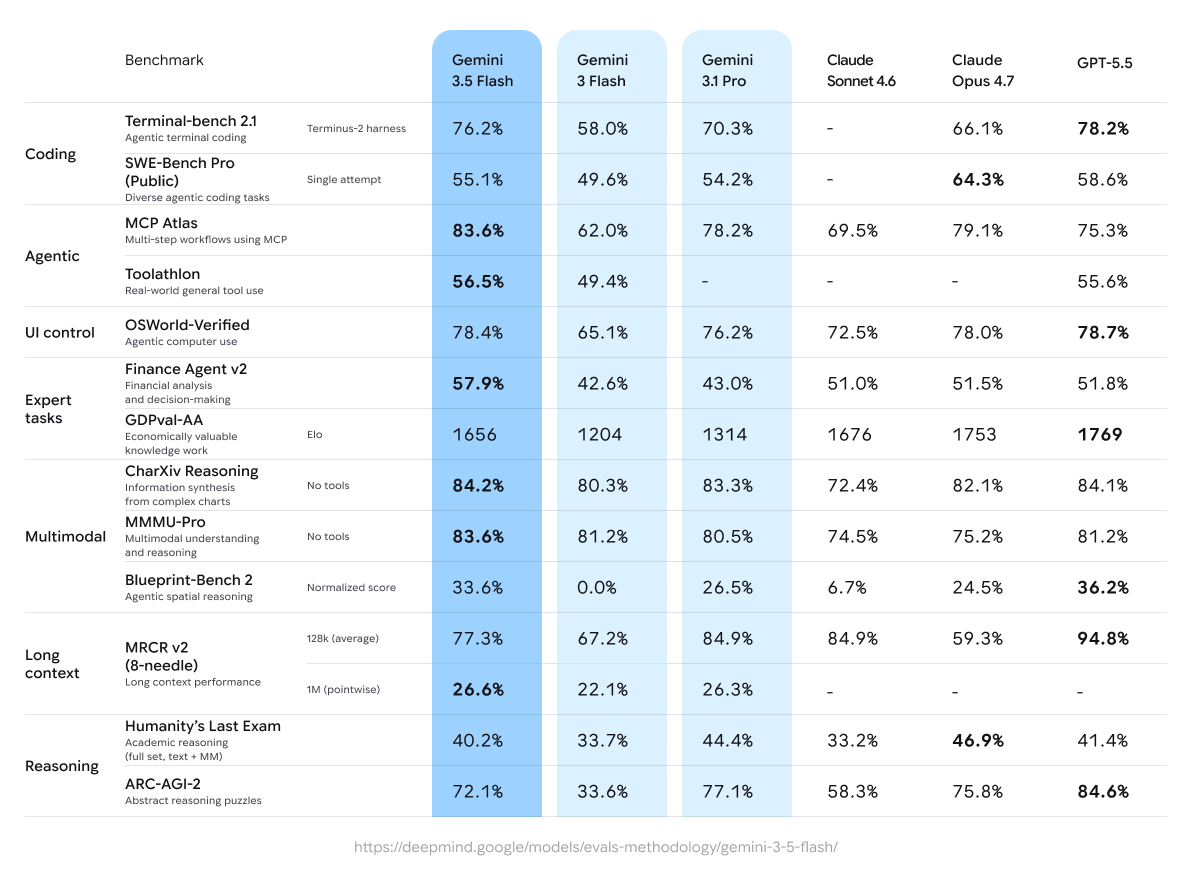
Pour une équipe axée sur Google, la question pertinente est de savoir où sera hébergé le travail finalisé. Si l'intégration requise avec Gmail ou Docs est incluse dans votre compte, cela peut supprimer une étape de transfert. Un workflow d'édition autonome ou Claude Code répond à des critères d'achat différents.
En ce qui concerne le raisonnement de référence, Gemini 4 Accès à l'argon dispose de parcours distincts pour les applications et les développeurs. Google DeepMind distingue l'accès aux applications Pro et Ultra ; un abonnement Google ne doit pas être considéré comme un solde API.
4. Perplexity — Idéal pour la recherche axée sur les sources
Perplexity constitue une excellente alternative à Claude lorsque l'objectif réel est de trouver, comparer et vérifier des sources. Il s'apparente davantage à un moteur de réponses qu'à une simple fenêtre de discussion vide : la recherche occupe une place centrale, les références sont visibles et les questions complémentaires restent liées au fil de recherche.
Perplexité Page des tarifs individuels, consulté le 15 septembre 2026, indique que la formule Free coûte $0 par mois, la formule Pro $20 par mois et la formule Max $200 par mois. La recherche gratuite avec références est idéale pour trouver rapidement des sources ; la version Pro ajoute une recherche étendue, des modèles avancés et davantage d’outils de recherche. Le tableau du plan d'urbanisme officiel offre aux utilisateurs de la version gratuite 3 recherches « Pro » par jour et 1 requête de recherche par mois, en plus de la recherche de base et d’un nombre limité de téléchargements de fichiers. La version gratuite n’inclut pas les modèles d’IA avancés ni la génération d’images. La version « Consumer Pro » comporte des limites hebdomadaires pour les recherches Pro et des limites mensuelles pour les requêtes de recherche, sans que le nombre exact ne soit indiqué dans les cellules du tableau. Il s’agit de prix mensuels en dollars américains ; la facturation annuelle, les prix de paiement TTC et les quotas exacts payants font l’objet de questions distinctes.
Par exemple, demandez quelles sont les sources primaires à l'origine d'un changement de politique, affinez la plage de dates, puis ouvrez les pages citées et lisez les passages qui étayent la réponse. Les références facilitent le démarrage de cette étape de vérification ; une référence doit toutefois toujours étayer la phrase exacte qui la précède. Pour un article abouti, prévoyez du temps pour la synthèse et la révision après la recherche.
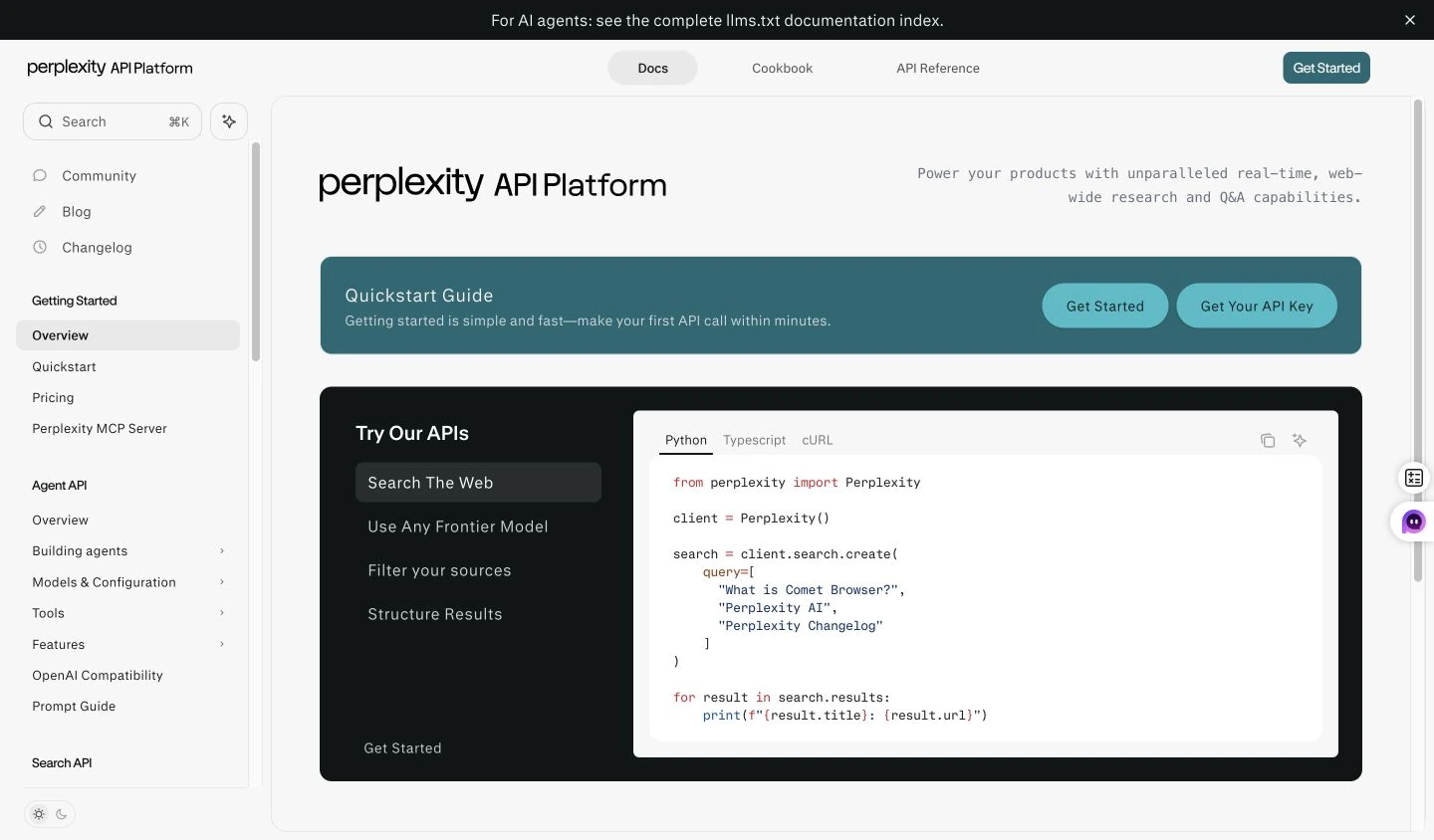
Les développeurs disposent d'une voie distincte : la Présentation de l'API Perplexity l'API de recherche de documents pour les résultats classés et l'API Agent pour les réponses fondées sur le Web et accompagnées de références. L'image de documentation ci-dessous fait partie de ce processus de développement, et non d'un test d'application grand public native.
Choisissez Perplexity si : Votre première question est : “ D'où vient cette affirmation ? ” Conservez la configuration Claude si : vous avez principalement besoin de services de rédaction de textes longs, de révision ou de collaboration prolongée sur des documents. Vous pouvez également comparer l'expérience en matière de recherche proposée par notre Comparaison entre le Perplexity et le ChatGPT.
Pour un document source dont vous disposez déjà, le Claude : outil de synthèse de fichiers PDF C'est une première étape plus directe qu'une recherche générale sur Internet.
5. Microsoft Copilot — Le meilleur choix pour Microsoft 365
Microsoft Copilot constitue une alternative pratique pour les entreprises qui s'appuient sur Word, Excel, PowerPoint, Outlook, Teams et la suite de solutions d'identité et de sécurité de Microsoft. Sa valeur réside dans l'intégration aux produits et dans le contexte organisationnel, plutôt que dans le fait d'être un modèle autonome.
Ce qui importe, c'est de savoir de quelle version de Copilot dispose réellement votre entreprise. Présentation de Microsoft distingue le chat accessible via le Web, l'accès standard depuis l'application et une expérience premium sous licence offrant une intégration plus poussée des données professionnelles. La présence d'un bouton « Copilot » ne signifie pas en soi que celui-ci peut effectuer des recherches dans tous les fichiers de votre entreprise ou utiliser toutes les fonctionnalités de l'application.
- Écriture : rédigez ou remaniez le document afin que vos collègues puissent le corriger.
- Excel : demandez une formule ou une explication concernant ces données, puis vérifiez les références de cellules et les valeurs obtenues.
- Réunions : résumer la discussion et en dégager les mesures à prendre lorsque les fonctionnalités de réunion correspondantes sont disponibles dans votre configuration sous licence.
- Décision d'achat : Vérifiez que l'application, les autorisations organisationnelles et la licence requises sont bien en place avant de considérer l'intégration comme la raison justifiant le changement.
Copilot mérite d'être retenu lorsque le résultat final doit être intégré à un document Microsoft, une réunion, une boîte mail ou une feuille de calcul. Si vous ne disposez pas de la licence ou des autorisations nécessaires au sein de votre organisation, il se peut que vous ne puissiez pas bénéficier de cet avantage lié à l'intégration.
6. Grok — Idéal pour les signaux de type X et les signaux à évolution rapide
Le modèle Grok se distingue particulièrement lorsque une tâche dépend d'une conversation se déroulant sur X ou de signaux publics évoluant rapidement. Il peut s'avérer utile pour le suivi de lancements, l'analyse des réactions du public, la découverte d'actualités et les questions pour lesquelles une limite statique des connaissances constitue un inconvénient évident.
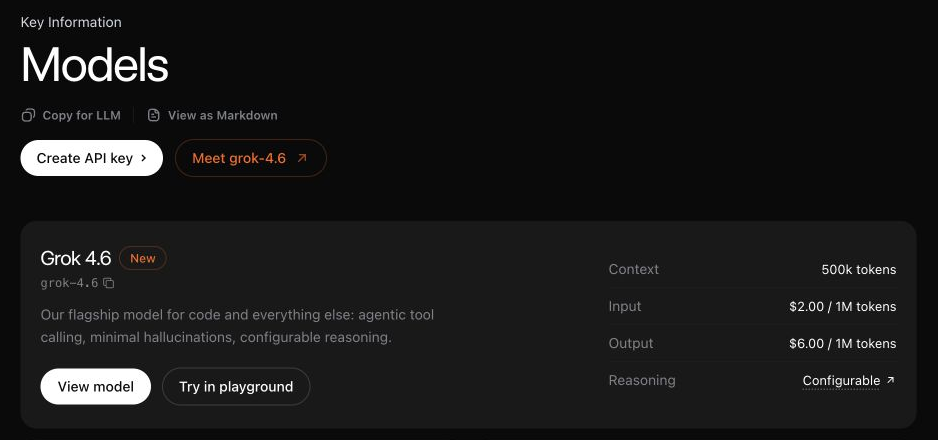
Le Documentation actuelle pour les développeurs Grok Points clés Grok 4.6. Il établit également une distinction essentielle : le modèle sous-jacent n'acquiert pas de connaissances sur l'actualité tant que les outils « Web Search » ou « X Search » ne sont pas activés. Cela revêt une importance particulière lorsqu'on compare l'intégration d'une API à une application grand public. Ce qui importe, c'est de pouvoir extraire les informations récentes pertinentes, et non pas simplement de fournir une réponse « sûre » à ce sujet.
La discussion relative à la version Grok 4.6 et l'image de l'API ci-dessous conservent leur périmètre du 15 septembre. Celles de la version GlobalGPT catalogue des modèles actuels mentionne également Grok 4.7 ; la présence d'une liste de chats hébergés ne permet pas de déterminer son tarif direct pour l'API xAI.
- Bonne coupe : Découvrez les réactions suscitées par un lancement, suivez l'évolution de la terminologie et identifiez les débats publics à analyser.
- Prochaine étape : remonter à l'annonce, au dépôt ou à toute autre source primaire à l'origine des réclamations indirectes.
- Compromis : Une conversation animée sur X peut constituer une piste utile sans pour autant être une preuve représentative.
Le modèle Grok doit figurer parmi les choix possibles lorsque le débat public sur X fait partie du sujet. Pour la révision de documents, évaluez-le plutôt en fonction du texte fourni et de vos exigences en matière de révision. Consultez notre Comparaison entre le Grok et le ChatGPT pour une vision plus globale des avantages et des inconvénients.
7. DeepSeek — Meilleure option technique à faible coût
DeepSeek mérite d'être pris en considération pour les charges de travail liées au raisonnement, au codage et aux API, lorsque le coût est un facteur déterminant. Cette option peut s'avérer intéressante pour les développeurs qui sont à l'aise pour évaluer eux-mêmes le comportement des modèles, les contraintes de déploiement, la gestion des données et la disponibilité par région.
Son tableau officiel des tarifs de l'API, consulté le 23 octobre 2026, identifie DeepSeek-V4.1-Flash-1017 comme étant à l'origine de deepseek-flash. Les tarifs en heures de pointe s'élèvent à $0,30 par million de jetons d'entrée non mis en cache et à $1,20 par million de jetons de sortie ; les tarifs en heures creuses sont deux fois moins élevés. Les heures de pointe correspondent aux périodes du lundi au vendredi, de 01 h 00 à 04 h 00 et de 06 h 00 à 10 h 00 UTC, à l'exception des jours fériés chinois. Il s'agit des tarifs des jetons pour les développeurs, et non d'un abonnement mensuel au service de chat.
Un premier projet utile consiste à réaliser une tâche répétable d’extraction ou de revue de code dont les réponses sont connues. Enregistrez l’intégralité de la demande facturable, soumettez le résultat à vos contrôles et comparez le coût d’un résultat accepté. Une réponse moins coûteuse mais nécessitant d’importantes retouches peut s’avérer être le processus le plus onéreux. Le lieu d’hébergement, le traitement des données et les exigences de validation de votre organisation restent des critères d’achat distincts.
Les tarifs API officialisés de DeepSeek justifient une analyse des coûts pour les tâches techniques récurrentes. Conservez votre workflow Code Claude actuel si ses intégrations et ses autorisations répondent déjà à vos besoins, à moins qu’un essai ne révèle une raison valable de changer. Comparez les résultats attendus et le coût total de la mise en place.
8. Mistral Vibe (anciennement Le Chat) — Meilleure alternative européenne au Claude
« Mistral Vibe » est le nouveau nom de l'assistant qui s'appelait auparavant « Le Chat ». Foire aux questions sur les produits Mistral précise que les conversations, les paramètres et les projets existants sont conservés. Vibe allie les fonctions d'assistant professionnel à celles d'agent de programmation ; ce candidat mérite donc désormais mieux qu'une simple étiquette de “ chatbot européen ”.
- Itinéraire pour se rendre au travail : effectuer des recherches dans différentes sources, analyser des dossiers, préparer un compte-rendu de réunion ou synthétiser les résultats dans un document.
- Parcours de programmation : Utilisez le terminal, l'IDE ou l'expérience de programmation à distance décrite dans le document Mistral.
- Accès gratuit : La formule gratuite prend en charge les réponses rapides, la recherche sur le Web et les tâches simples, avec certaines limites ; les interventions plus approfondies des agents relèvent de la formule payante.
- Déploiement : Les options de cloud privé et d'installation sur site sont des offres destinées aux entreprises ; elles ne font pas partie des fonctionnalités de toutes les applications de chat gratuites.
Envisagez Vibe lorsque ses offres de services et de développement, son statut de fournisseur européen ou ses options de déploiement en entreprise répondent à un besoin précis. Vérifiez que la formule choisie inclut bien la fonctionnalité dont vous avez besoin ; la localisation du fournisseur ne détermine pas à elle seule le lieu de stockage ou de traitement de vos données.
9. Meta AI et Llama — Les meilleures solutions pour un déploiement sans restriction de poids
Meta AI est un assistant grand public, tandis que Llama est une famille de modèles à poids ouverts utilisée dans de nombreux produits et environnements de déploiement différents. Cette distinction est importante. Un déploiement Llama auto-hébergé peut offrir davantage de contrôle, de personnalisation et d’isolation des données, mais il ne remplace pas à l’identique le site web Claude.
Le dépôt officiel Llama documente les poids des modèles, les licences, les fiches techniques des modèles et les exigences de déploiement. Les poids ouverts offrent à une équipe technique un autre type de contrôle, mais le coût peut passer d’un abonnement à du matériel, à l’hébergement, à l’évaluation et à la maintenance. Le terme “ poids ouvert ” ne signifie donc pas “ Claude gratuit et illimité dans un navigateur ”.”
- Assistant hébergé : Choisissez un produit grand public si vous souhaitez commencer à discuter immédiatement.
- Modèle auto-hébergé : Envisagez la solution Llama lorsque vous êtes en mesure de gérer l'infrastructure et de tester votre propre application.
- Avant l'adoption : Vérifiez la licence pour connaître le modèle exact et assurez-vous que vos exigences en matière de matériel et de gouvernance correspondent.
Choisissez Llama si : Votre équipe peut héberger, sécuriser, évaluer et assurer la maintenance de sa propre pile de modèles. Conservez la configuration Claude si : vous souhaitez que le fournisseur se charge du produit, des mises à jour de sécurité, de l'infrastructure et de l'expérience utilisateur.
10. Poe — L'idéal pour tester de nombreux bots et modèles
Poe est utile pour les personnes qui souhaitent explorer un vaste catalogue de bots officiels et communautaires à partir d'un seul compte. Il facilite l'essai de différentes personnalités de modèles et d'assistants spécialisés sans avoir à se rendre séparément sur le site de chaque fournisseur.
Si c'est le catalogue de bots lui-même que vous comparez, notre Guide des alternatives à Poe couvre ce choix plus restreint.
Commencez par Poe Explore pour découvrir les bots officiels et ceux créés par les utilisateurs. Poe’s FAQ officielle, consultée le 15 septembre 2026, indique que les utilisateurs non payants reçoivent des points chaque jour. Ceux-ci sont remis à zéro à la fin de chaque période de 24 heures et ne sont pas reportés. La FAQ ne précise pas de quota unique de points gratuits pour chaque compte.
- Avant l'envoi : ouvrir le bot Tarifs bouton. Une réponse peut avoir un coût fixe ou un coût variable, en fonction du texte qu'elle lit et écrit.
- Définissez un budget pour les messages : Utilisez les « Paramètres » pour définir un budget global par message, ou le nom du bot dans une conversation pour définir le budget de cette conversation. Poe précise qu’il vous demande votre accord avant qu’un message ne dépasse ce budget.
- Vérifiez vos dépenses : ouvrez le menu d'un message antérieur et sélectionnez info, ou utilisez Paramètres → Points → Afficher l'historique des points sur le web.
- Compromis : Les instructions d'un bot, son modèle sous-jacent et ses points peuvent offrir une expérience différente de celle proposée par l'application du fournisseur. Le budget par message ne correspond pas à un plafond de dépenses quotidien.
Le catalogue de bots de Poe est la raison pour laquelle il faut l'envisager. Pour un workflow récurrent, vérifiez le créateur du bot choisi, le modèle sous-jacent et le coût unitaire. L'accès direct à Claude constitue un choix distinct lorsque vous avez spécifiquement besoin d'une fonctionnalité de produit Anthropic.
Référence actuelle des coûts de l'API de Claude
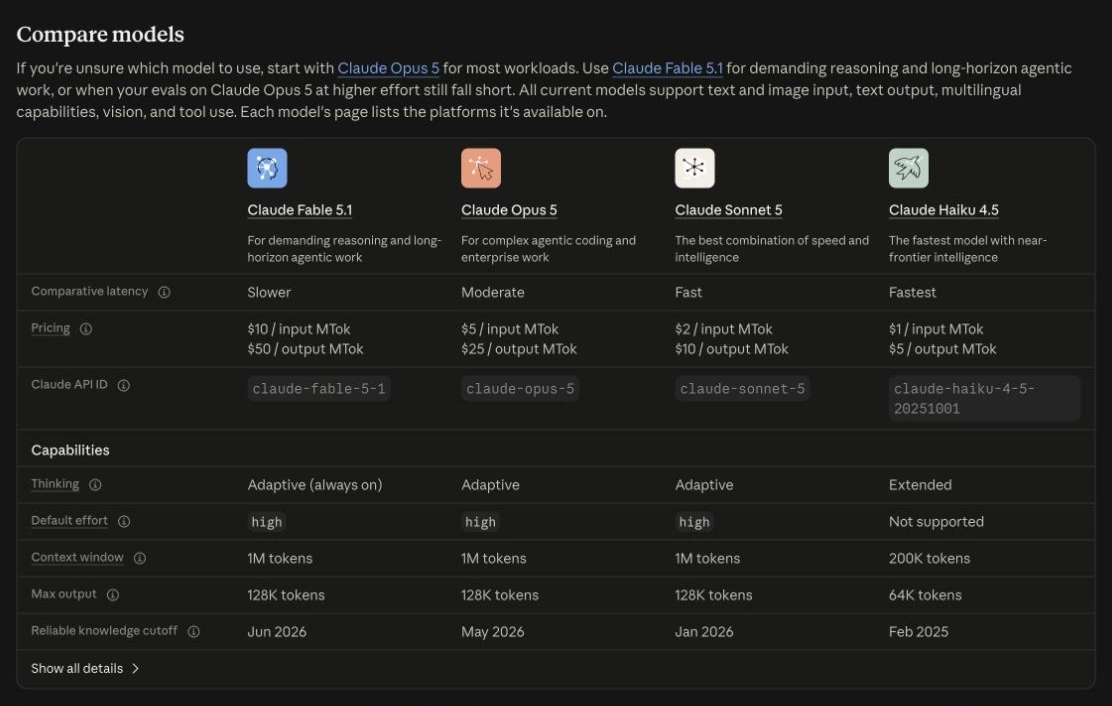
Claude n'est pas un prix unique. Les Anthropic tableau des prix API actuel, consulté le 23 octobre 2026, distingue les versions Fable 5.1, Opus 5.5, Sonnet 5.5 et Haiku 5.5. Les prix indiqués ci-dessous sont exprimés en dollars américains par million de jetons ; les abonnements Claude destinés aux particuliers et les frais liés aux outils supplémentaires sont facturés séparément.
| Modèle | Données d'entrée / 1 million de jetons | Résultat / 1 million de jetons |
|---|---|---|
| Haiku 5.5 — requêtes ≤ 100 000 | $0.10 | $0.50 |
| Haiku 5.5 — suggestions > 100 000 | $0.50 | $2.50 |
| Sonnet 5.5 | $2 | $10 |
| Opus 5.5 | $4 | $20 |
| Fable 5.1 | $10 | $50 |
Les tarifs standard par jeton n'incluent pas les outils, les taxes ni les autres conditions de facturation. Anthropic propose l'inférence réservée aux États-Unis à un tarif correspondant à 1,1 fois les tarifs d'entrée/sortie, et le mode rapide Opus 5.5 à un tarif correspondant à 2 fois le tarif standard. Comparez les coûts d'entrée et de sortie pour votre charge de travail.
Comparaison historique des coûts de l'API Claude · 15 septembre 2026
USD par million de jetons · 15 septembre 2026 · les entrées et les sorties partagent une échelle comprise entre $0 et $50
Entrée $1
Sortie $5
Entrée $2
Sortie $10
Entrée $5
Sortie $25
Entrée $10
Sortie $50
Comment choisir une alternative au Claude
Quand un workflow multimodèle est pertinent
Si différentes parties de votre travail requièrent des atouts différents, la question la plus pertinente serait peut-être de savoir quel modèle devrait prendre en charge chaque tâche, et non pas quel assistant l'emporte sur tous les plans.
Écrire et raisonnerUtilisez Claude ou GPT pour les brouillons, les analyses et les travaux structurés. Rechercher des sujets d'actualité
Passez au modèle Perplexity, Gemini ou à un autre modèle axé sur la recherche. Créer des ressources visuelles
Poursuivez la génération d'images et de vidéos dans le même espace de travail.
Un abonnement unique s'avère particulièrement utile lorsque ces étapes se répètent régulièrement. Découvrez l'espace de travail GlobalGPT pour l'ensemble du projet que vous devez mener à bien, plutôt que de souscrire à des abonnements séparés, un outil à la fois.
- Choisissez GlobalGPT lorsque vous souhaitez utiliser les modèles Claude, GPT, Gemini, Grok, Perplexity, ainsi que des modèles d'image et de vidéo au sein d'un même flux de travail, tout en réduisant le nombre d'abonnements distincts et les changements constants d'outils.
- Choisissez ChatGPT lorsque vous préférez disposer d'un assistant polyvalent plutôt que d'un espace de travail multimodèle.
- Choisissez Gemini lorsque les applications Google occupent une place centrale dans le flux de travail.
- Choisissez « Perplexity » lorsque la recherche des sources et la vérification des citations sont prioritaires.
- Choisissez Copilot pour les organisations Microsoft 365.
- Choisissez Grok pour les signaux publics à diffusion rapide et connectés via X.
- Choisissez DeepSeek pour des expérimentations techniques à moindre coût.
- Choisissez Mistral lorsqu'il est essentiel de faire appel à un prestataire européen.
- Choisissez Llama lorsque votre équipe a besoin d'un contrôle du poids libre et est capable de gérer la pile.
- Choisissez Poe lorsque l'exploration d'un vaste catalogue de bots prime sur un flux de travail ciblé.
Avant de payer, lancez les deux ou trois tâches représentatives sur vos finalistes. Comparez la rigueur factuelle, la facilité d'utilisation du résultat, le temps de révision, la qualité de la source, les limites et le coût de l'ensemble du processus — et pas seulement celui de la première réponse.
- Écriture : Présentez un bref résumé des faits et demandez un premier jet de 250 mots rédigé dans votre style habituel. Comptez les modifications factuelles et les passages que vous conserveriez réellement.
- Programmation ou analyse : Donnez un petit exemple qui échoue ou un tableau contenant les réponses connues. Vérifiez le résultat en exécutant le test ou en le recalculant.
- Recherche : Posez une question d'actualité qui nécessite des sources primaires. Ouvrez chaque référence et vérifiez si elle corrobore la réponse.
- Mesurez le frottement : notamment les invites de suivi, la gestion des fichiers, les limites de l'outil et la facture relative à l'abonnement ou à l'API — et pas seulement la première réponse.
Quand la configuration Claude reste le meilleur choix
Le modèle Claude mérite d'être conservé lorsqu'il accomplit déjà avec brio une tâche récurrente à forte valeur ajoutée. Le modèle Anthropic page publique des tarifs, consulté le 23 octobre 2026, indique que le forfait Pro est facturé à $20 par mois ou $200 par an, payable d'avance, hors taxes. L’offre Max commence à $100 par mois et propose désormais entre $100 et $200 par mois en crédits API de la plateforme Claude. Il s’agit d’un avantage spécifique à l’offre Max, et non d’une utilisation illimitée de l’API incluse dans tous les forfaits grand public.
Claude reste un excellent choix si vous appréciez son style rédactionnel, le soin apporté au traitement des documents, le contexte de codage cohérent ou l'accès direct aux dernières fonctionnalités d'agent de Anthropic. Si cela correspond à votre flux de travail, la meilleure solution serait peut-être de conserver Claude et d’y ajouter un outil de recherche ou un outil multimodal plutôt que de le remplacer complètement. Notre guide sur À quoi sert le Claude ? peut vous aider à prendre cette décision.
Questions fréquemment posées
Quelle est la meilleure alternative au Claude ?
Il n'existe pas de solution universelle idéale. ChatGPT est un excellent choix polyvalent, Gemini convient particulièrement aux tâches centrées sur Google, Perplexity met l'accent sur la recherche et les sources, et Copilot est adapté à Microsoft 365. GlobalGPT mérite d'être pris en considération si vous préférez accéder à plusieurs familles de modèles et à des outils créatifs au sein d'un même espace de travail.
Le modèle GlobalGPT constitue-t-il une bonne alternative au modèle Claude ?
C'est tout à fait possible, surtout si vous ne souhaitez pas dépendre d'un seul modèle pour chaque tâche. GlobalGPT rassemble les modèles Claude, GPT, Gemini, Grok, Perplexity et bien d’autres encore dans un seul espace de travail, puis les relie à des flux de travail dédiés à la recherche, aux images et aux vidéos. Cette solution s’avère particulièrement utile lorsque cette flexibilité vous évite de devoir passer d’un outil ou d’un abonnement à l’autre.
Existe-t-il une alternative gratuite à Claude ?
Oui. Les formules Gemini et Mistral Vibe proposent des fonctionnalités gratuites pour les questions et tâches quotidiennes. La formule Perplexity Free comprend une recherche de base, 3 recherches « Pro » par jour et 1 requête de recherche par mois, selon le tableau officiel des formules consulté le 15 septembre 2026. Les téléchargements de fichiers sont limités, et les modèles d’IA avancés ainsi que la génération d’images sont exclus. Poe attribue également des points quotidiens aux utilisateurs non payants ; ceux-ci sont réinitialisés toutes les 24 heures et ne sont pas reportés. L’accès gratuit ne signifie pas une utilisation illimitée ni l’accès à tous les modèles premium. Comparez les tâches que vous pouvez effectuer gratuitement et les limites qui s’y appliquent.
Quelle alternative au Claude est la mieux adaptée au codage ?
Pour obtenir de l'aide en matière de codage, sélectionnez parmi les modèles ChatGPT, Gemini, DeepSeek ou Mistral Vibe en fonction de votre façon de travailler. Si vous avez besoin d’un agent capable de modifier des fichiers et d’exécuter des tests, comparez le produit de codage lui-même ainsi que ses autorisations, ses intégrations et ses modalités de facturation — et ne vous contentez pas de la réponse d’un modèle de chat. Claude Code pourrait s’avérer plus adapté à un workflow Anthropic déjà bien établi.
Quelle alternative au Claude est la plus adaptée à la recherche ?
Perplexity est clairement l'alternative la plus axée sur la recherche, car la recherche et les citations visibles sont au cœur du produit. ChatGPT et Gemini permettent également d'effectuer des recherches sur le Web, mais le choix optimal dépend de la qualité des sources, de l'accès aux formules d'abonnement et de la question de savoir si le travail final sera publié sur Google ou dans un autre écosystème.
Le modèle Gemini est-il meilleur que le Claude ?
La configuration Gemini est généralement la plus adaptée à Google Search, Gmail, Docs, Drive, Android, le travail multimodal et Google Cloud. La configuration Claude peut toutefois s'avérer plus adaptée à la rédaction soignée, à la collaboration sur des documents volumineux, ainsi qu'aux outils de programmation et aux outils « agentiques » de la configuration Anthropic. Aucune des deux configurations n'est universellement supérieure.
Un seul abonnement peut-il remplacer plusieurs outils d'IA ?
GlobalGPT permet de réduire le nombre d'abonnements nécessaires en regroupant dans un seul espace de travail les discussions quotidiennes, la rédaction, la recherche, les images et les vidéos. Les économies réelles dépendent des modèles que vous utilisez, de vos limites d'utilisation et de votre forfait actuel ; il est donc préférable de comparer le coût global du flux de travail plutôt que de vous fier uniquement à un prix affiché.
Dois-je annuler le Claude ?
N'abandonnez Claude que si un autre produit permet de gérer vos tâches récurrentes avec moins de modifications, une meilleure intégration, des limites acceptables et un coût total inférieur. Si Claude reste la meilleure solution pour un flux de travail à forte valeur ajoutée, il peut être plus judicieux de le conserver et d'y ajouter un outil complémentaire de recherche ou multimodal.
Existe-t-il une alternative gratuite et illimitée à Claude ?
Il ne faut pas considérer qu'une formule gratuite est illimitée. Les outils hébergés peuvent imposer des limites concernant les messages, les modèles, les fichiers ou les fonctionnalités avancées. L'auto-hébergement transfère ces contraintes vers votre matériel, votre facture d'hébergement et la maintenance. Choisissez une solution gratuite qui vous permette d'accomplir votre tâche de manière fiable, et vérifiez les limites qui s'appliquent à cette tâche.
Verdict final
Le choix de l'alternative Claude la plus adaptée dépend du type de travail. ChatGPT est une excellente option par défaut pour ceux qui n'utilisent qu'un seul assistant, Gemini convient aux flux de travail fortement axés sur Google, Perplexity est un choix naturel pour la recherche, et les autres outils de cette liste répondent chacun à un besoin plus spécifique.
Si votre semaine mêle régulièrement écriture, recherche, images et vidéo, GlobalGPT est une autre option à envisager. Son avantage réside dans le fait de regrouper ces différentes options au sein d'un même flux de travail ; pour savoir si cela vous convient mieux, tout dépend de la fréquence à laquelle vous avez réellement besoin d'utiliser plusieurs modèles et outils multimédias.