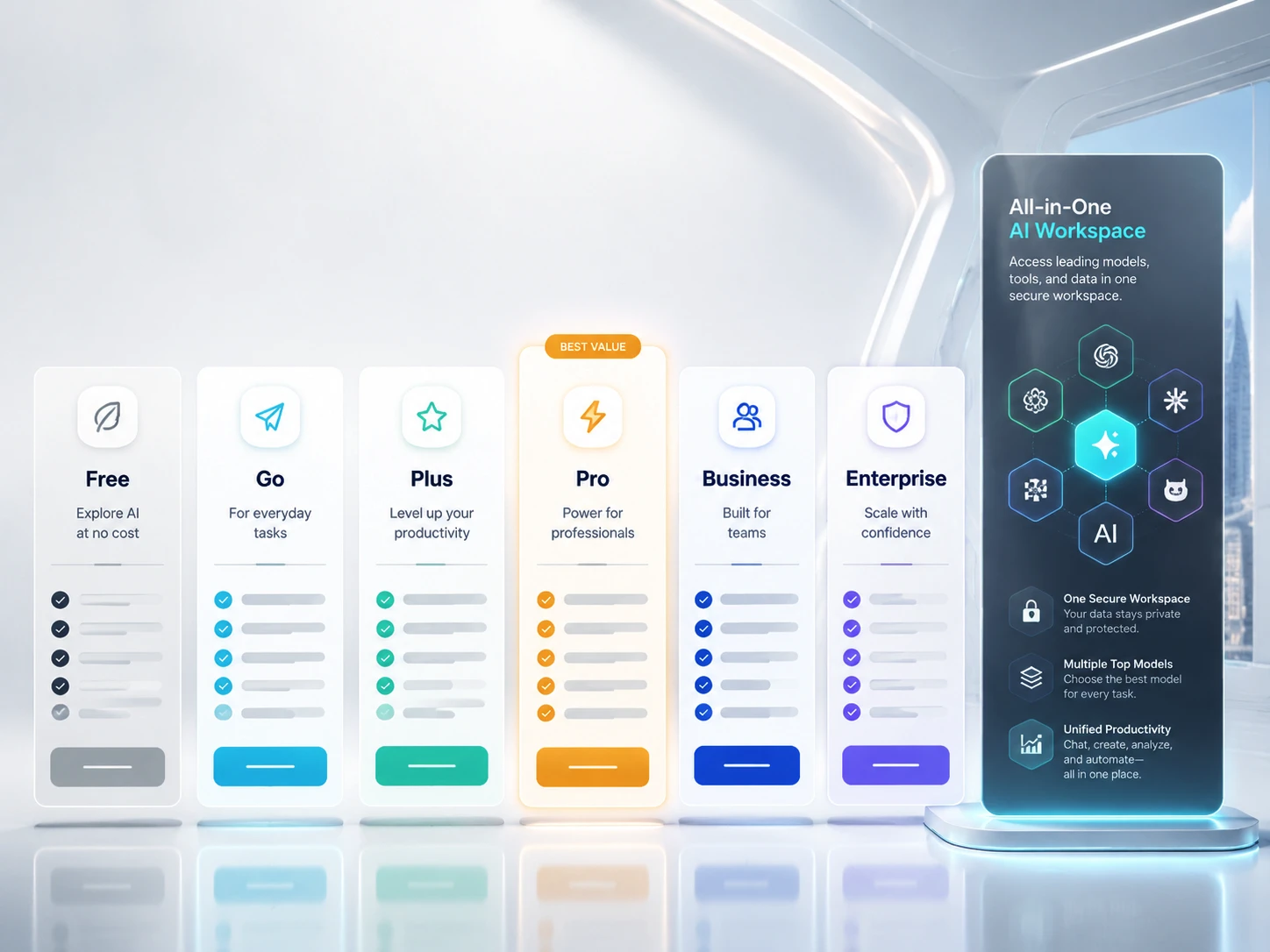
If you are choosing a ChatGPT subscription in 2026, the hard part is no longer just “free or paid.” The plans now differ by model access, usage allowance, context length, image creation, deep research, Codex access, team controls, and whether the account is meant for one person or an organization.
The simple answer is this: use Free for occasional questions, Go for low-cost longer chats where available, Plus for daily productivity, Pro for heavy research and coding, Business for team workspaces, and Enterprise for company-wide governance. The best plan depends less on the logo on the checkout page and more on the specific ceiling you hit first: messages, reasoning, files, Codex, privacy, or admin control.
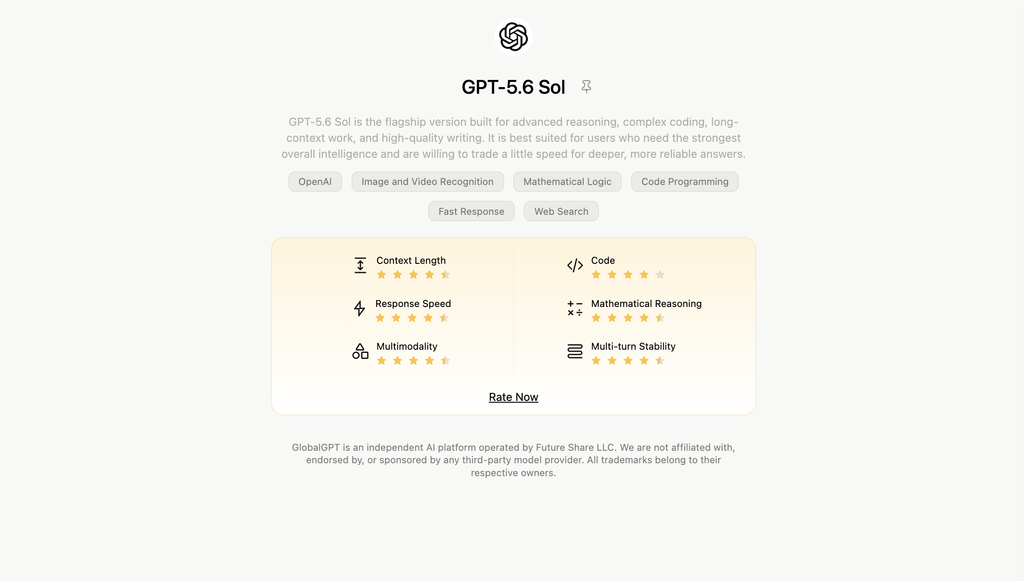
If your real workflow is broader than ChatGPT alone, a multi-model workspace can also make sense. GlobalGPT gives users one account for GPT 5.6, Claude Opus 4.5, Gemini 3.5, Perplexity, image tools, and video tools, with plans starting from $5.8/month. That does not make it a replacement for OpenAI’s official Business or Enterprise controls, but it can be a practical alternative for users who are tired of paying for several separate AI subscriptions.
Quick Navigation
- ChatGPT plans comparison table
- What changed in 2026
- ChatGPT Free
- ChatGPT Go
- ChatGPT Plus
- ChatGPT Pro
- Models and context
- Business vs Enterprise
- Sora and ChatGPT
- Subscription fatigue
- GlobalGPT alternative
- Which plan should you choose?
- FAQ
ChatGPT Plans Comparison Table 2026
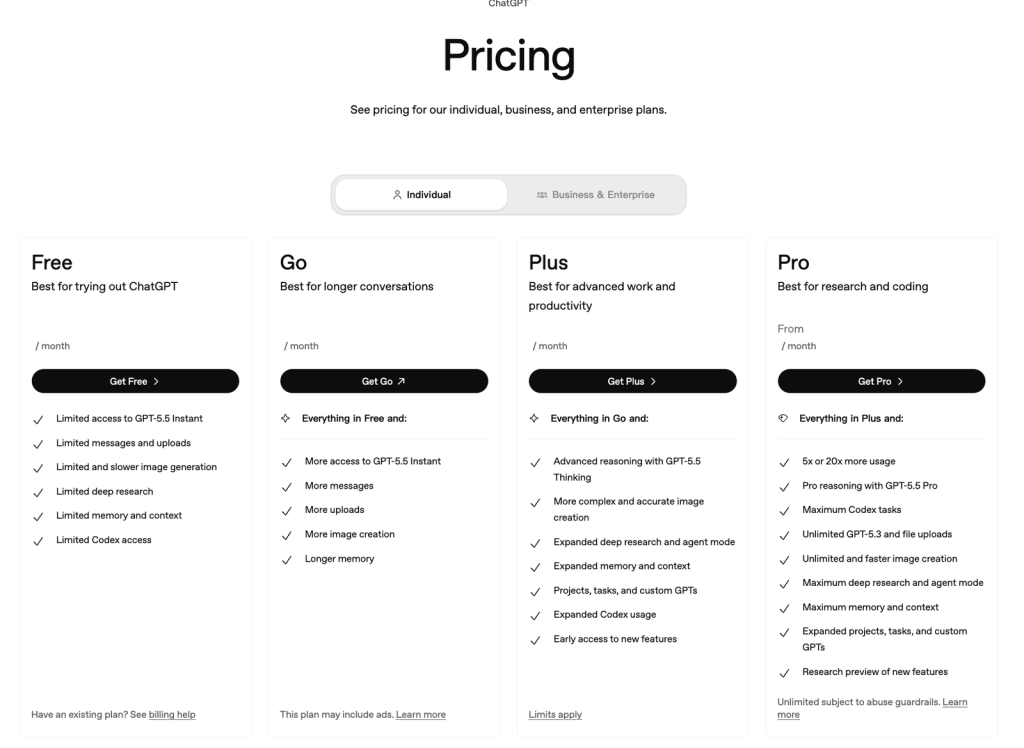
Here is the practical plan comparison before the detailed breakdown. Prices and currency can vary by country, billing route, and account type, so check the pricing page from your own account before purchasing.
| Plan | Best for | What you get | Watch out for |
|---|---|---|---|
| Free | Trying ChatGPT or asking occasional questions | Limited access to GPT-5.5 Instant, limited uploads, limited image creation, limited deep research, limited memory and Codex access | Usage caps arrive quickly, and Free accounts may see ads during OpenAI’s ad testing |
| Go | Budget users who want longer casual conversations | More GPT-5.5 Instant access than Free, more messages, more uploads, more image creation, and longer memory | It does not unlock the full reasoning tier, and Go accounts may also be included in ad testing |
| Plus | Daily writing, study, planning, light coding, and productivity | Advanced reasoning with GPT-5.5 Thinking, more complex image creation, expanded deep research and agent mode, Projects, Tasks, Custom GPTs, and expanded Codex usage | Limits still apply, so heavy research or coding sessions can still hit a ceiling |
| Pro | Heavy research, coding, long sessions, and high-volume personal use | Everything in Plus, more usage, GPT-5.5 Pro access, maximum Codex tasks, maximum deep research and agent mode, and larger context allowances | It is still an individual plan, not a full team governance product |
| Business | Teams that need shared workspace, billing, and admin controls | ChatGPT and Codex across apps, connectors, centralized billing, spend controls, SAML SSO and MFA, and business data not used for training by default | Pricing is per user and may appear in local currency; requires at least two users |
| Enterprise | Large organizations with security, compliance, and support requirements | Enterprise controls such as SCIM, EKM, analytics, domain verification, RBAC, data residency support, priority support, SLAs, custom terms, and invoicing | Custom pricing and sales contact are required |
What Changed In ChatGPT Subscriptions In 2026?
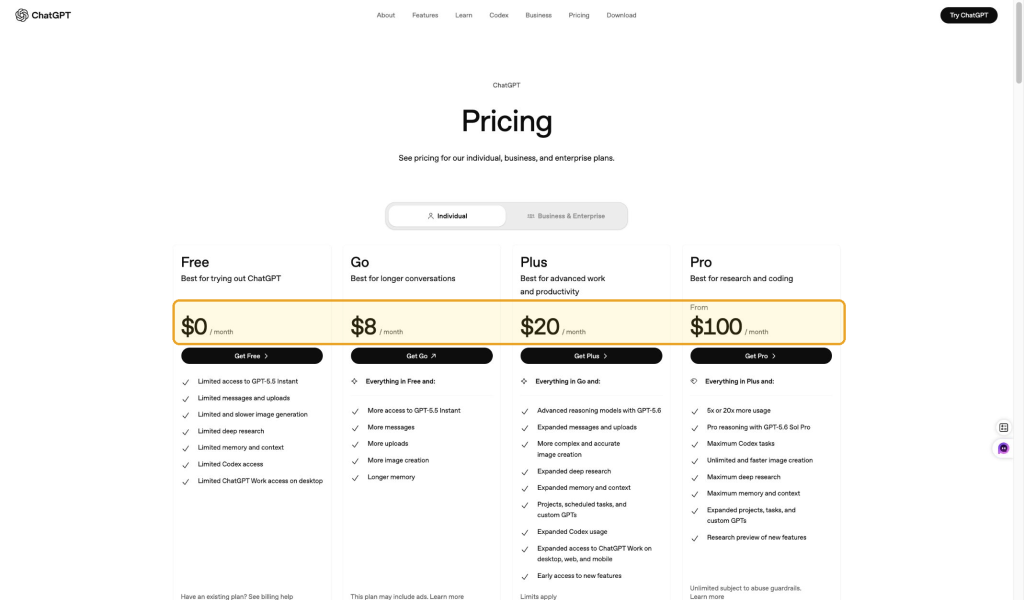
The biggest 2026 change is that ChatGPT plans are now more clearly separated by model depth and usage allowance. Free and Go sit closer to GPT-5.5 Instant access. Plus moves into daily advanced work with GPT-5.5 Thinking. Pro is for users who need far more usage and GPT-5.5 Pro access.
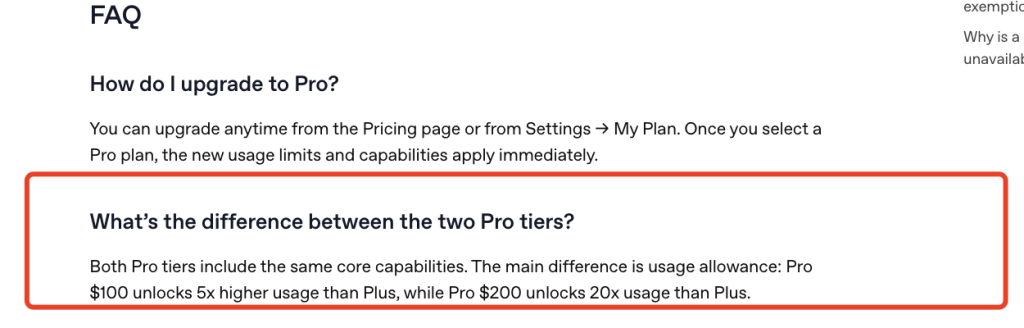
The second change is Pro itself. OpenAI’s Pro FAQ says the two Pro tiers include the same core capabilities, but differ by usage allowance: Pro $100 unlocks 5x higher usage than Plus, while Pro $200 unlocks 20x usage than Plus. That means Pro is no longer just a simple “$200 or nothing” decision.
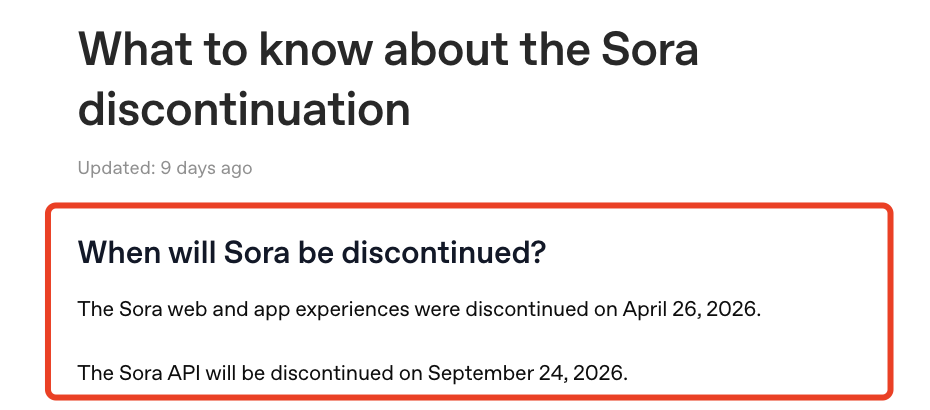
The third change is Sora. OpenAI’s help page says the Sora web and app experiences were discontinued on April 26, 2026, and the Sora API will be discontinued on September 24, 2026. That matters because older subscription comparisons often treated Sora as a reason to buy ChatGPT Plus or Pro. In 2026, the safer advice is to choose a ChatGPT plan for text, reasoning, research, files, image creation, Codex, and team controls – not because you expect Sora web/app access to be a standing subscription benefit.
ChatGPT Free: Best For Occasional Use
ChatGPT Free is still the right starting point if you only ask occasional questions, summarize short material, test prompts, or want to see whether ChatGPT fits your workflow. It gives limited access to GPT-5.5 Instant, limited messages and uploads, slower or more limited image generation, limited deep research, limited memory and context, and limited Codex access.
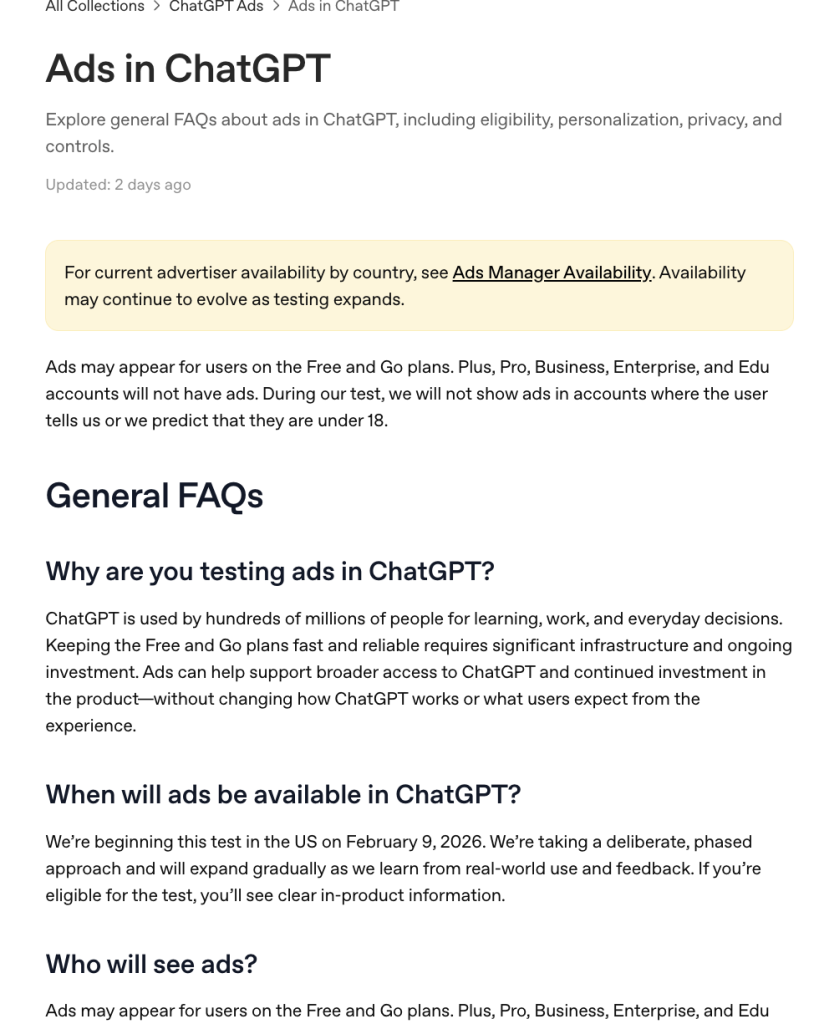
The tradeoff is simple: Free is useful until you run into limits. If ChatGPT is part of your daily work, study, writing, research, or coding, Free will usually feel narrow. OpenAI also says ads may appear for users on Free and Go plans during its ad testing, while Plus, Pro, Business, Enterprise, and Edu accounts will not have ads.
ChatGPT Go: A Budget Plan With Real Limits
ChatGPT Go is the budget step above Free in markets where it is available. It is best for users who want more messages, more uploads, more image creation, longer memory, and more access to GPT-5.5 Instant without moving straight to Plus. If you are mainly trying to decide whether the paid jump is justified, this ChatGPT Go vs Free comparison is the cleaner next read.
The important limit is model depth. Go is not the plan to choose if you need GPT-5.5 Thinking for complex reasoning, serious coding, long analytical work, or advanced research. It can be a good fit for students, casual writers, and everyday users who mainly want smoother chat access. If you are deciding between Go and other low-cost options, the separate ChatGPT Go review is a useful next read.
ChatGPT Plus: The Best Default For Daily Users
ChatGPT Plus is still the easiest recommendation for most individual users who want ChatGPT as a daily assistant. It adds advanced reasoning with GPT-5.5 Thinking, more complex and accurate image creation, expanded deep research and agent mode, expanded memory and context, Projects, Tasks, Custom GPTs, expanded Codex usage, and early access to new features.
Plus is the plan to choose if your work includes writing, planning, studying, data cleanup, brainstorming, light coding, or recurring research tasks. The weak point is that it is still a capped personal plan. If your day includes long coding sessions, repeated file analysis, or heavy research loops, Plus can feel strong but not unlimited. If you are hoping a yearly option will lower the monthly cost, check the separate ChatGPT Plus annual plan discount breakdown before you wait for a yearly deal.
ChatGPT Pro: For Heavy Research And Coding
ChatGPT Pro is for people who already know they hit Plus limits. It adds much higher usage, GPT-5.5 Pro access, maximum Codex tasks, unlimited GPT-5.3 and file uploads, unlimited and faster image creation, maximum deep research and agent mode, maximum memory and context, and expanded projects, tasks, and custom GPTs.
The Pro decision should be based on usage pressure, not status. If you only want better answers from time to time, Plus is usually enough. If ChatGPT is part of your professional research, coding, analysis, or client work all day, Pro can make sense. OpenAI’s FAQ says the $100 Pro tier gives 5x higher usage than Plus, while the $200 tier gives 20x higher usage than Plus. If you are comparing the cheapest paid tier with the top personal tier, the ChatGPT Go vs Pro breakdown is a more direct comparison.
Model Access And Context Differences
The model table is where the plan differences become clearest. Free and Go get GPT-5.5 Instant, but GPT-5.5 Thinking starts at Plus. GPT-5.5 Pro is reserved for Pro. Context windows also rise across the tiers, with Pro getting the largest limits shown in the captured pricing table.
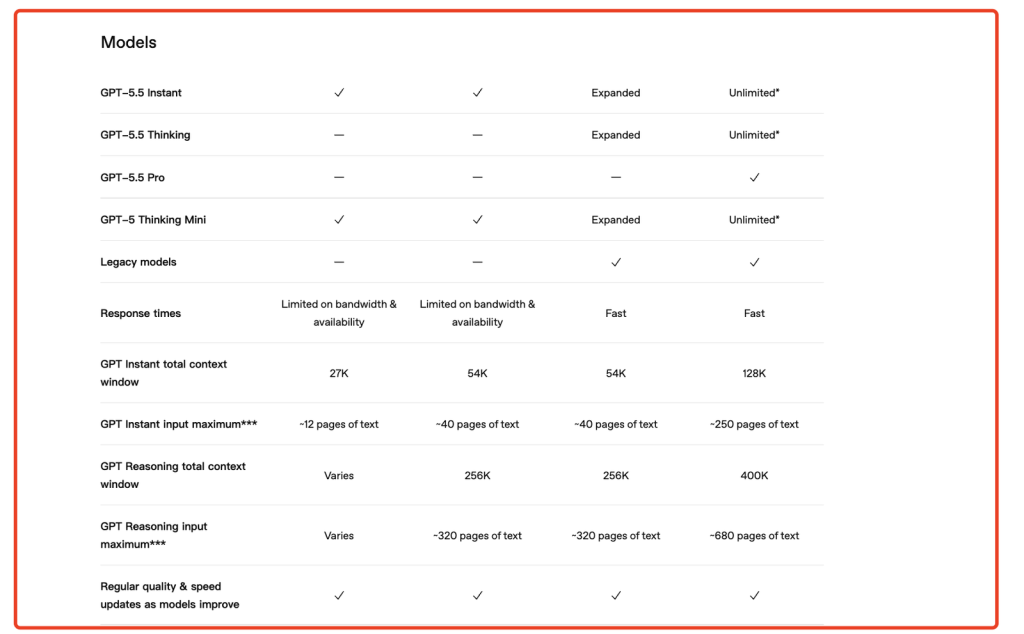
For everyday users, the key question is whether you need GPT-5.5 Thinking. If you mostly write emails, clean up notes, ask questions, and summarize short material, Instant may be enough. If you want stronger planning, coding help, mathematical reasoning, or multi-step analysis, Plus is the more practical floor.
ChatGPT Business Vs Enterprise
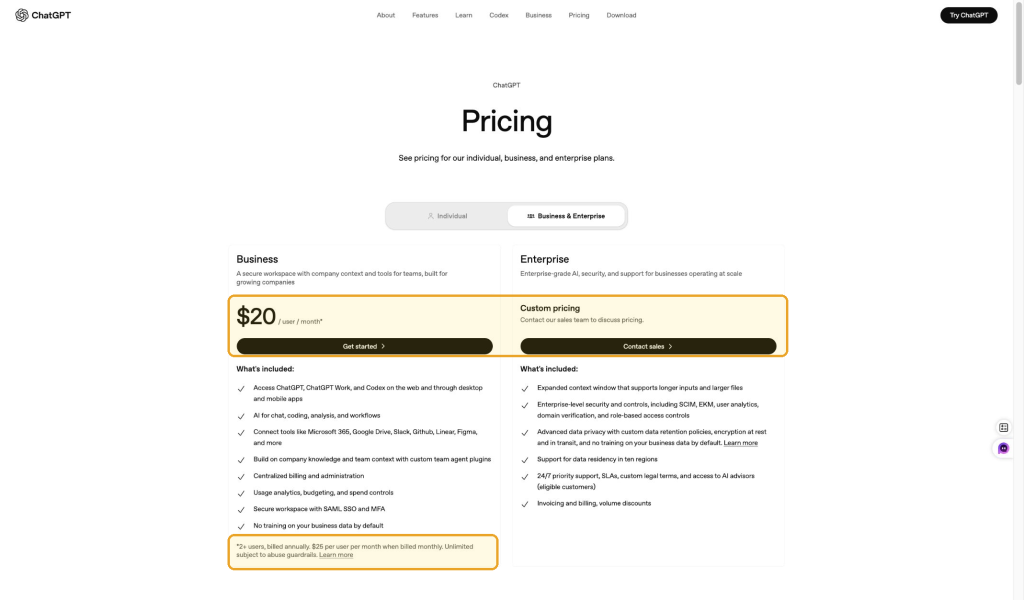
Business and Enterprise are not just “stronger Plus.” They are for organizations. Business is built for teams that need a secure shared workspace, company context, connectors, centralized billing, user management, SAML SSO and MFA, usage analytics, budgeting, spend controls, and business data not used for training by default.
Enterprise extends that with larger-scale governance: expanded context, enterprise security controls, SCIM, EKM, user analytics, domain verification, role-based access controls, data residency support, custom retention policies, encryption, priority support, SLAs, custom legal terms, volume discounts, and invoicing.
If you are choosing for a company, the better comparison is not Plus vs Pro. It is ChatGPT Plus vs Business, because the deciding factors are workspace control, data handling, billing, security, and administration.
Does ChatGPT Still Include Sora?
Do not choose a ChatGPT subscription in 2026 because you expect Sora web or app access. OpenAI’s help page says Sora web and app experiences were discontinued on April 26, 2026, and the Sora API will be discontinued on September 24, 2026. That makes Sora a separate availability question, not a clean Plus-vs-Pro selling point.
If your goal is AI video, check the available video tools in the product you plan to use at purchase time. GlobalGPT, for example, lists several video and image tools in its workspace, but model lineups and access rules can change. For background on the shift, see this explanation of why Sora disappeared from ChatGPT.
The Subscription Fatigue Problem
A growing problem in 2026 is subscription stacking. A serious user may pay for ChatGPT, Claude, Gemini, Perplexity, an image generator, and a video generator just to cover writing, coding, search, research, design, and creative work. The monthly cost adds up, and the workflow becomes scattered across tabs, logins, billing pages, and usage systems. If Claude is part of your stack, the separate Claude AI pricing guide helps you judge whether another standalone plan is worth adding.
That is why multi-model platforms are becoming more attractive. If you are comparing ChatGPT with other tools, a broader list of ChatGPT alternatives can help you decide whether you need one official subscription or a broader workspace.
GlobalGPT: A Lower-Friction All-In-One Alternative
GlobalGPT is useful when your work is not limited to ChatGPT. It gives users one workspace for GPT-5.5, Claude, Gemini, Perplexity-style search, image tools, video tools, and other AI models. In practical terms, that means you can switch between models for writing, research, coding, summarizing, image generation, and video workflows without buying every official subscription separately.
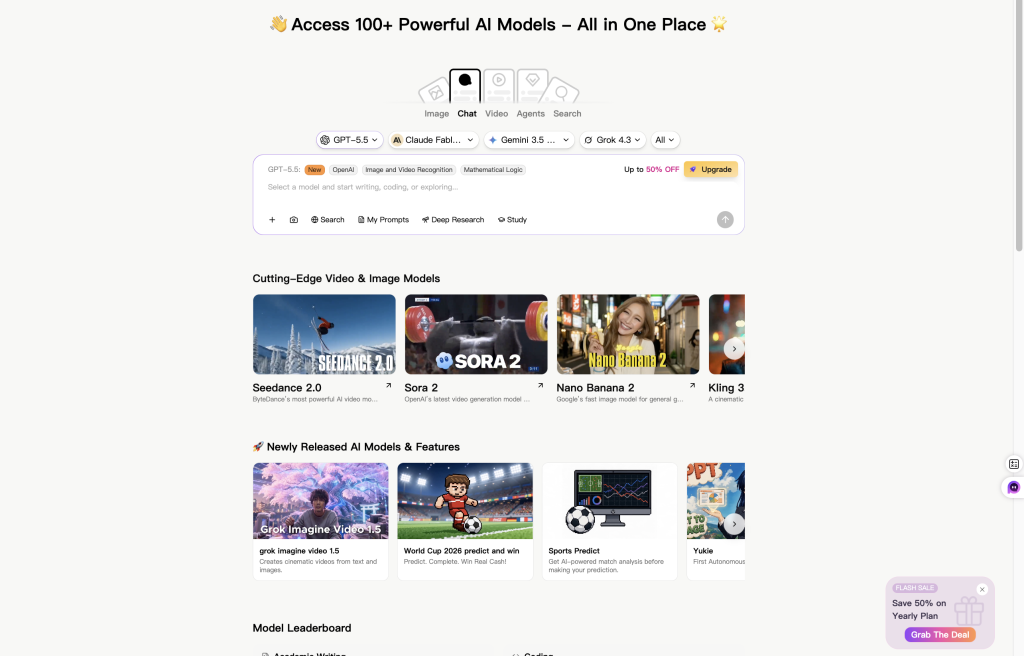
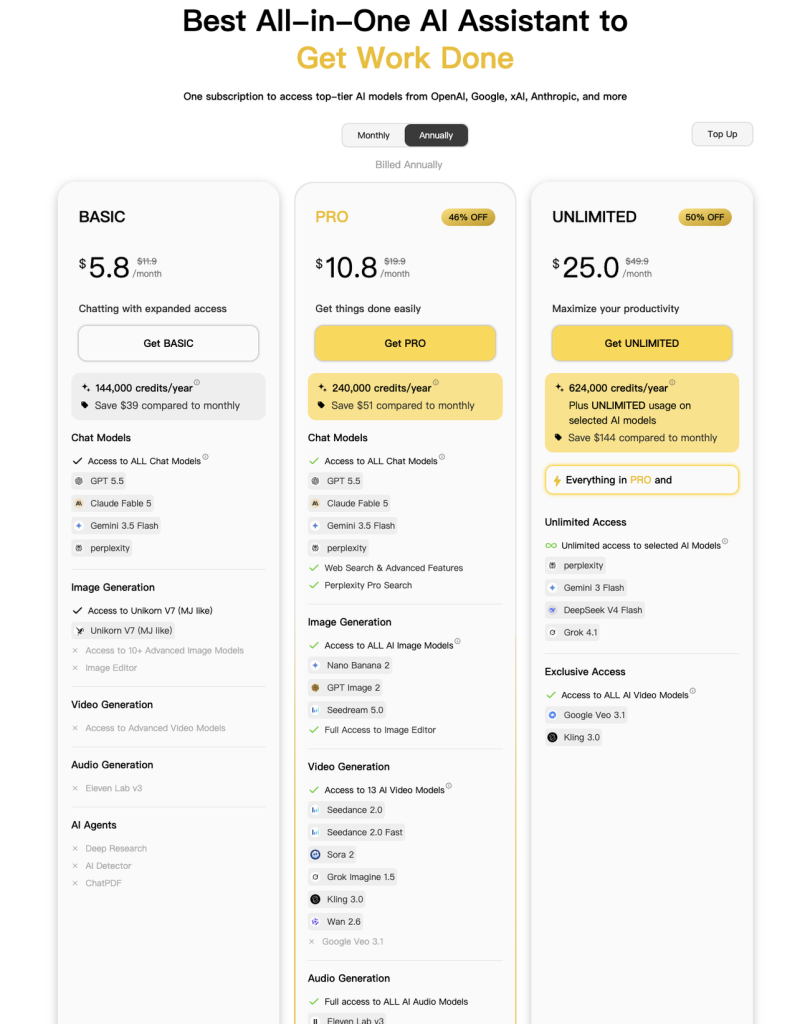
The pricing difference is the obvious hook. GlobalGPT lists a Basic plan from $5.8/month, a Pro plan at $10.8/month, and an Unlimited plan at $25/month on the captured pricing page. That can be more appealing than paying separately for ChatGPT, Claude, Perplexity, image tools, and video tools. If ChatGPT Go is your budget reference point, this list of cheaper ChatGPT Go alternatives gives more low-cost context
The boundary matters. GlobalGPT is not OpenAI, and it does not replace ChatGPT Business, Enterprise governance, official OpenAI API billing, or account-specific admin controls. It is better framed as a practical everyday workspace for people who want access to multiple leading models and creative tools from one subscription.
Which ChatGPT Plan Should You Choose?
- Choose Free if you only ask occasional questions and do not mind tight limits.
- Choose Go if you want a cheaper plan for longer casual chats, more uploads, and more image creation, but do not need full reasoning power.
- Choose Plus if you use ChatGPT daily for writing, study, planning, light coding, image creation, research, or productivity.
- Choose Pro if you already hit Plus limits and need much higher usage, GPT-5.5 Pro, large context, maximum Codex tasks, and heavier research or coding capacity.
- Choose Business if your team needs shared workspace controls, admin, connectors, billing, SSO, MFA, and business data not used for training by default.
- Choose Enterprise if your organization needs custom security, SCIM, EKM, data residency, role-based access, custom legal terms, SLAs, and procurement support.
- Choose GlobalGPT if your main problem is subscription sprawl and you want one lower-friction workspace for GPT, Claude, Gemini, Perplexity-style research, image, and video tools.
Frequently asked questions
Is ChatGPT Plus worth it in 2026?
Plus is usually worth considering when ChatGPT is used most days and Free limits interrupt real tasks. It is less compelling for occasional questions or for users who mainly need team administration rather than individual capability.
Is ChatGPT Pro unlimited?
Do not interpret a high-tier subscription as unrestricted use. Plans can still have fair-use, safety, abuse-prevention, feature-specific, and temporary capacity limits. Check the current official terms and plan card.
Does ChatGPT Plus include API credits?
No. ChatGPT subscriptions and API billing are separate. API usage is charged under the API account and pricing structure.
Can I get an annual ChatGPT Plus discount?
Check the checkout page shown to your account. Do not assume an annual option or discount exists because a third-party article mentions one; billing options can differ by plan, account, and region.
Which plan is best for a small team?
Business is the logical tier to evaluate when the need includes shared workspace, centralized billing, user administration, or business data controls. A set of personal Plus or Pro accounts does not provide the same management layer.