Tests run September 7 and 11, 2026; sources rechecked September 16, 2026.
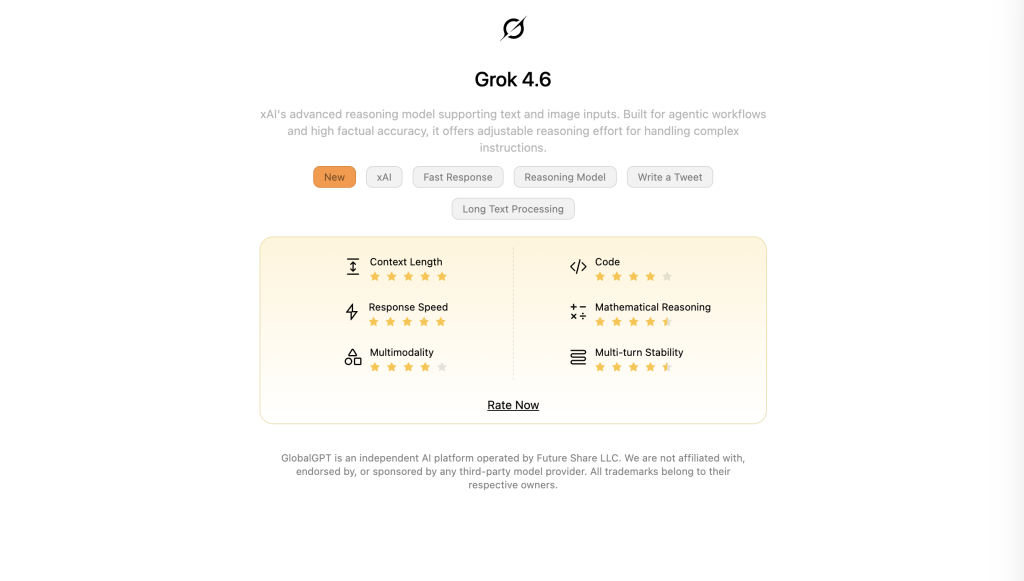
The name needs one clarification. People still search for “Grok 4,” but the model we tested was Grok 4,6, not the original July 2025 release. The current xAI model catalog recommends Grok 4.6 for code, while the original grok-4-0709 API name has been retired. I will keep those products and dates separate throughout this review.
If you are comparing several assistants before choosing one, start with the broader Meilleur modèle d'IA pour la comparaison de codes. Here, the narrower question is whether Grok can turn a precise coding brief into work you can actually verify.
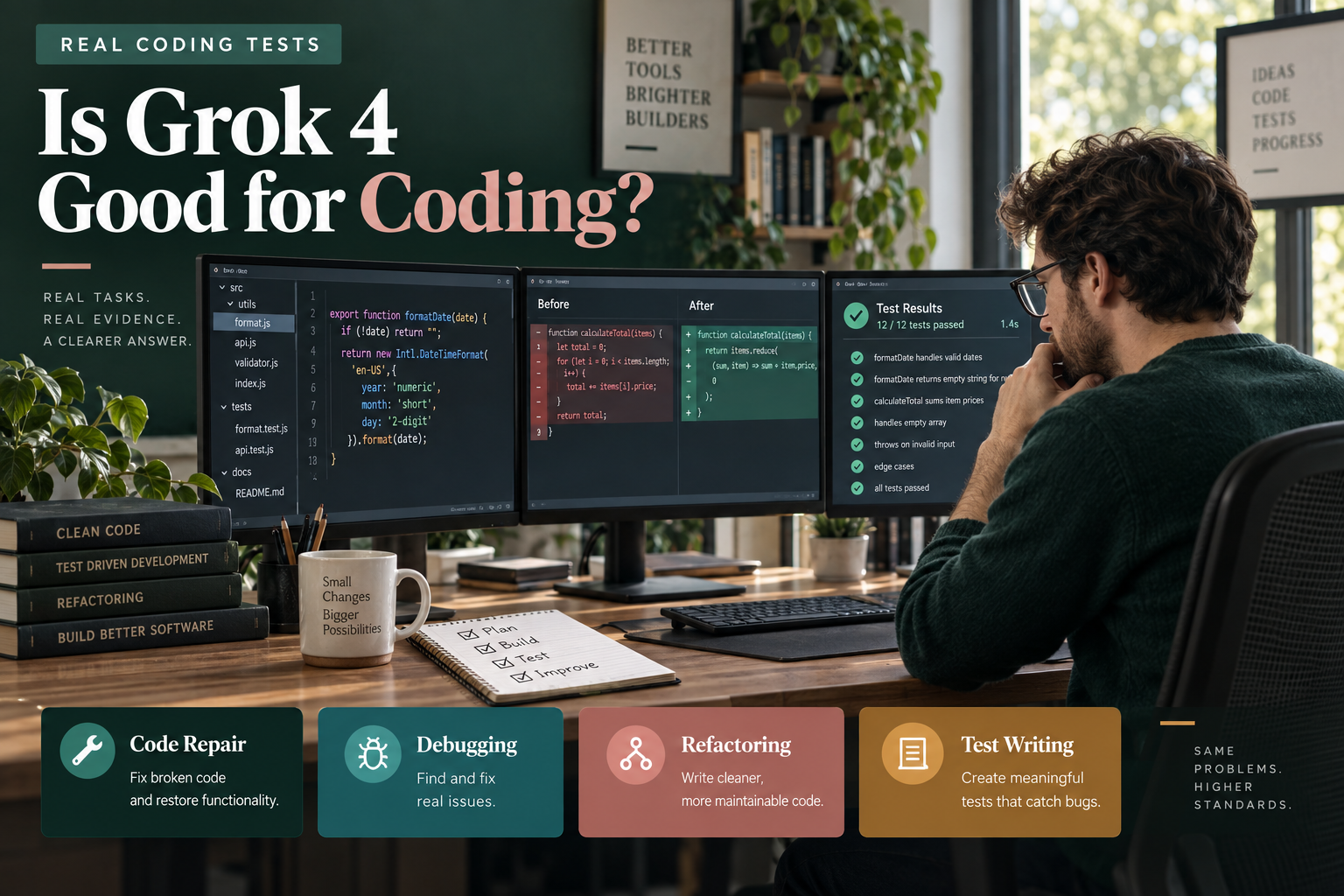
Quick answer: is Grok 4 good for coding?
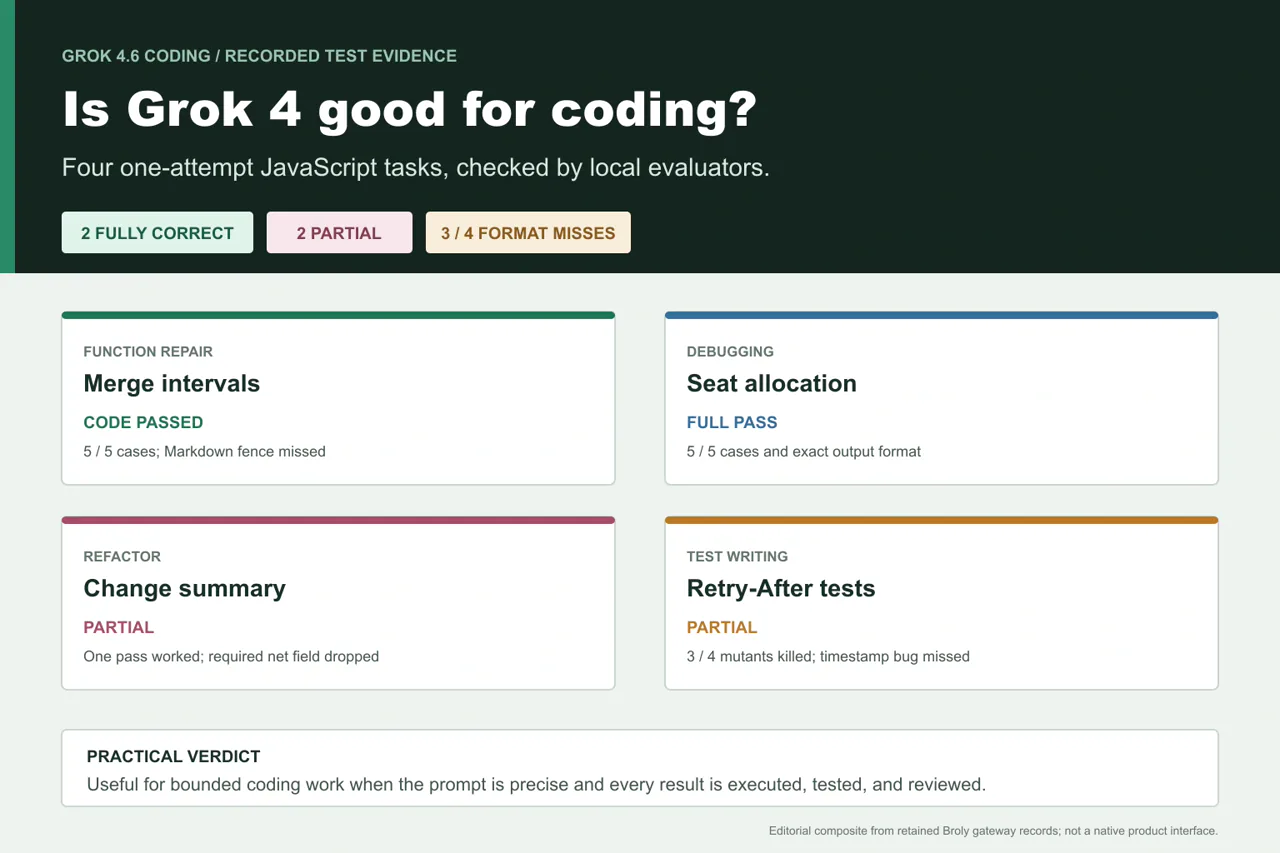
Grok 4.6 is good enough to be useful for debugging a contained function, generating a first implementation, explaining unfamiliar code, and drafting tests. It is not reliable enough to accept without execution. The misses in our small suite were not obscure style disagreements: one refactor dropped net from every non-empty result, and one generated test suite failed to distinguish a delay from an absolute timestamp.
The practical standard is simple: give it a narrow contract, ask for one change, and run independent checks. A model that produces plausible code quickly can still erase one field, weaken one invariant, or follow the code requirement while ignoring the response-format requirement.
Vous pouvez try Grok 4.6 on GlobalGPT for bounded prompts and side-by-side comparisons. GlobalGPT is an independent platform; it does not replace Grok Build, an IDE, repository access, xAI’s native API console, or your CI pipeline.
What we actually tested
We evaluated four small JavaScript tasks: repairing interval merging, debugging priority-based seat allocation, refactoring a change-summary function, and writing tests for a Retry-After parser. Each task had a frozen prompt and deterministic local evaluator. Three were run September 11, 2026; the interval task reused a September 7 run that we rechecked against its stored prompt, raw response and evaluator.
- Venue: user-authorized Broly aggregation API, Chat Completions.
- Requested and returned model:
grok-4.6. - Attempts: one request per task, with no retries.
- Execution: returned JavaScript was isolated and run locally against predeclared fixtures or mutants.
- Unavailable to the model: an IDE, repository, internet access, xAI tool execution and production systems.
The gateway label is useful provenance, but it does not independently prove the upstream deployment. Elapsed time includes network and gateway overhead, and the reported token counts do not establish official xAI billing. For a broader product-level view, see the separate Grok 4.6 review and real tests.
Coding test results at a glance
net.The best result was not the longest answer. It was the seat-allocation repair: concise, correctly formatted and behaviorally complete. The most instructive failure was the refactor, because the implementation looked clean and satisfied the one-pass requirement while silently changing the output contract.
Test 1: repairing a merge-interval function
The first function mutated its input, crashed on an empty array, failed to merge touching endpoints, and could shrink a larger interval when a nested interval appeared later. The prompt made those invariants explicit.
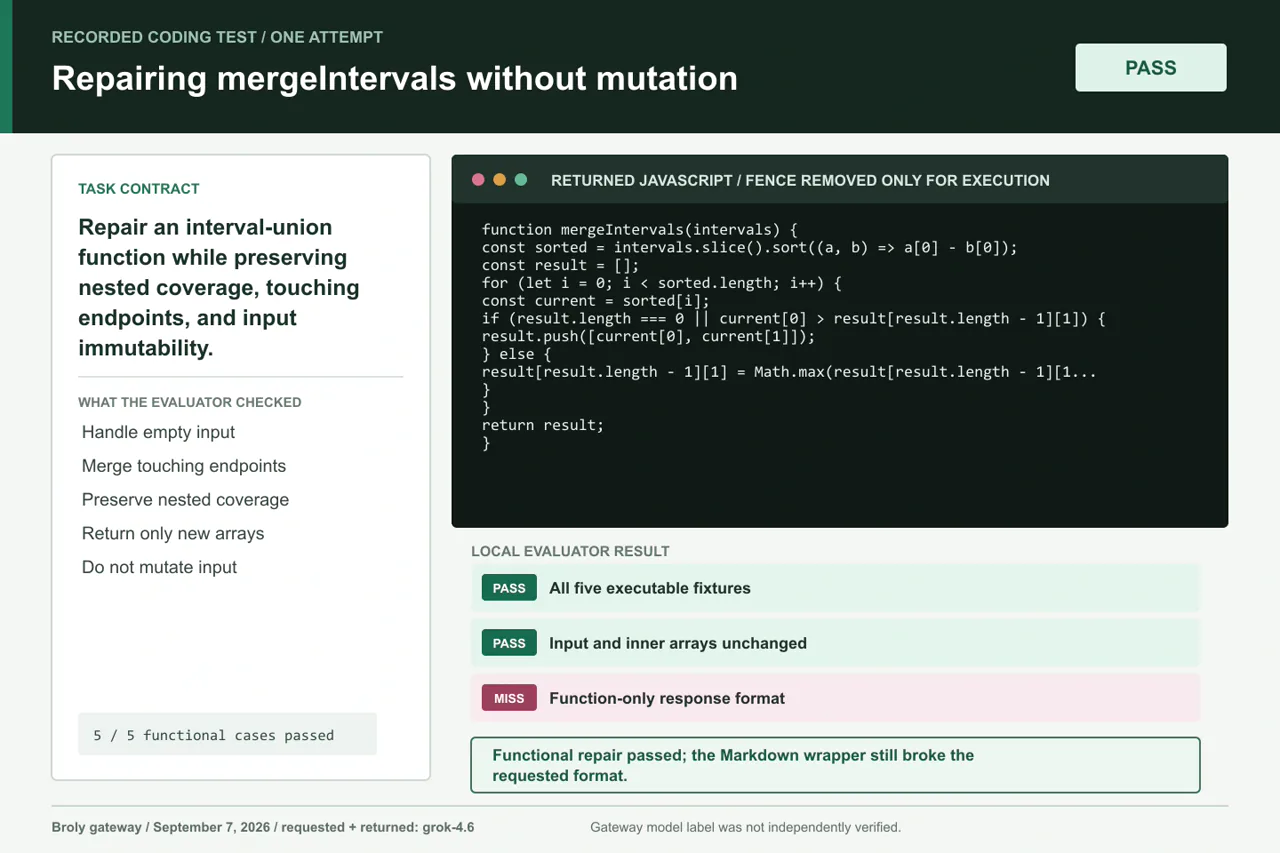
Key boundary: Functional repair passed after removing only the outer Markdown fence for execution.
Résultat : all five executable cases passed. The function returned new arrays, did not mutate input, preserved nested coverage and merged touching endpoints. It still failed one explicit instruction by wrapping the code in Markdown. After removing only that outer fence for execution, the functional result was correct.
Conclusion pratique : Grok handled a compact repair well when the prompt named the hidden edge cases. The format miss is small for a person, but it can break a pipeline that expects directly executable text.
Test 2: debugging priority-based seat allocation
This task combined stable tie handling, descending priority, nonmutation, exact capacity and a “skip and continue” rule. The original code sorted in the wrong direction, changed the input array and stopped too early when one request was oversized.
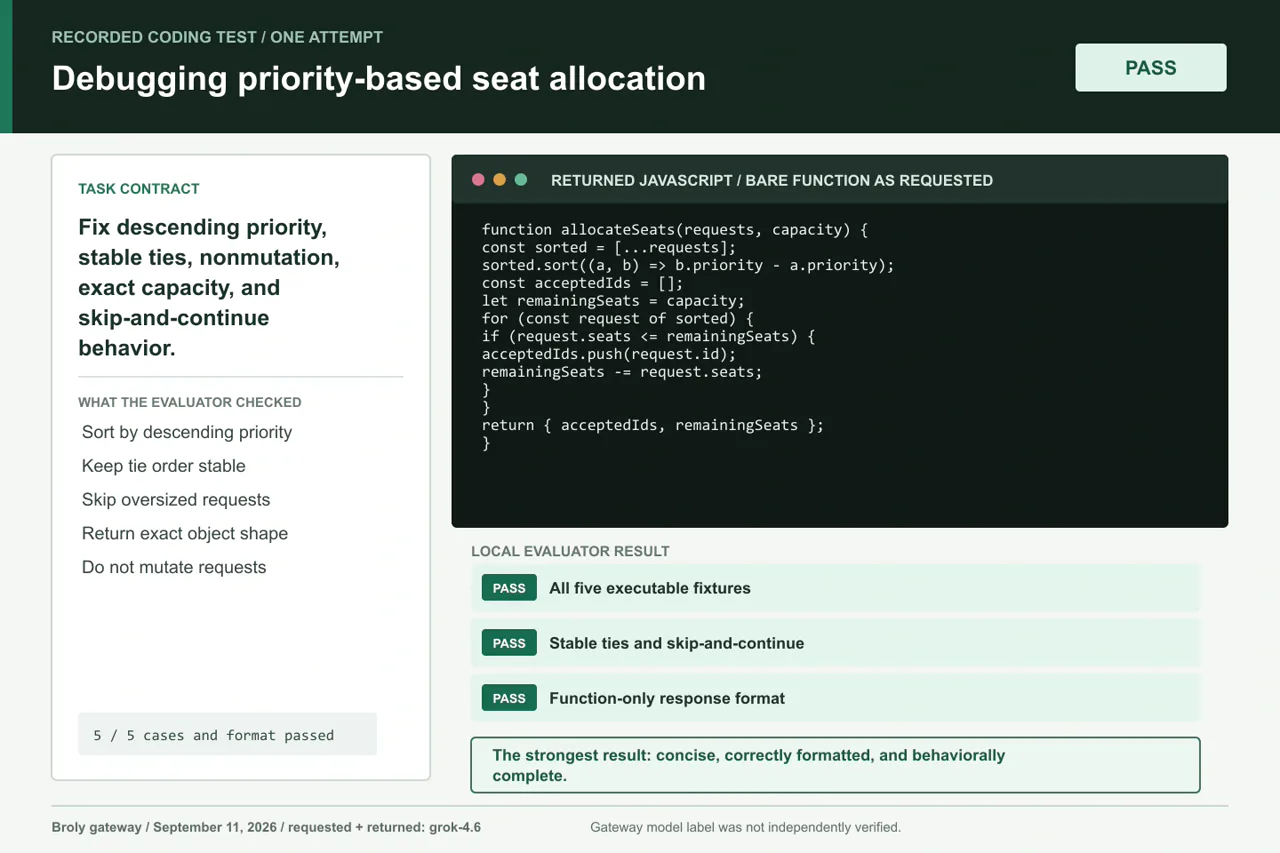
Key boundary: This was the only response that satisfied both the behavioral contract and the exact output format.
Résultat : all five cases passed, including equal-priority order, an oversized leading request, exact capacity, zero capacity and an empty list. The input remained unchanged, acceptedIds was a new array, and the model returned only the requested function.
Conclusion pratique : this is the kind of job Grok is well suited to: one function, a clear contract and boundary cases that can be executed immediately.
Test 3: refactoring without dropping behavior
The third prompt asked Grok to replace repeated scans with one aggregation pass while preserving order, unusual file names and the exact output shape. This is a realistic refactor risk: code can become faster and cleaner while losing behavior.
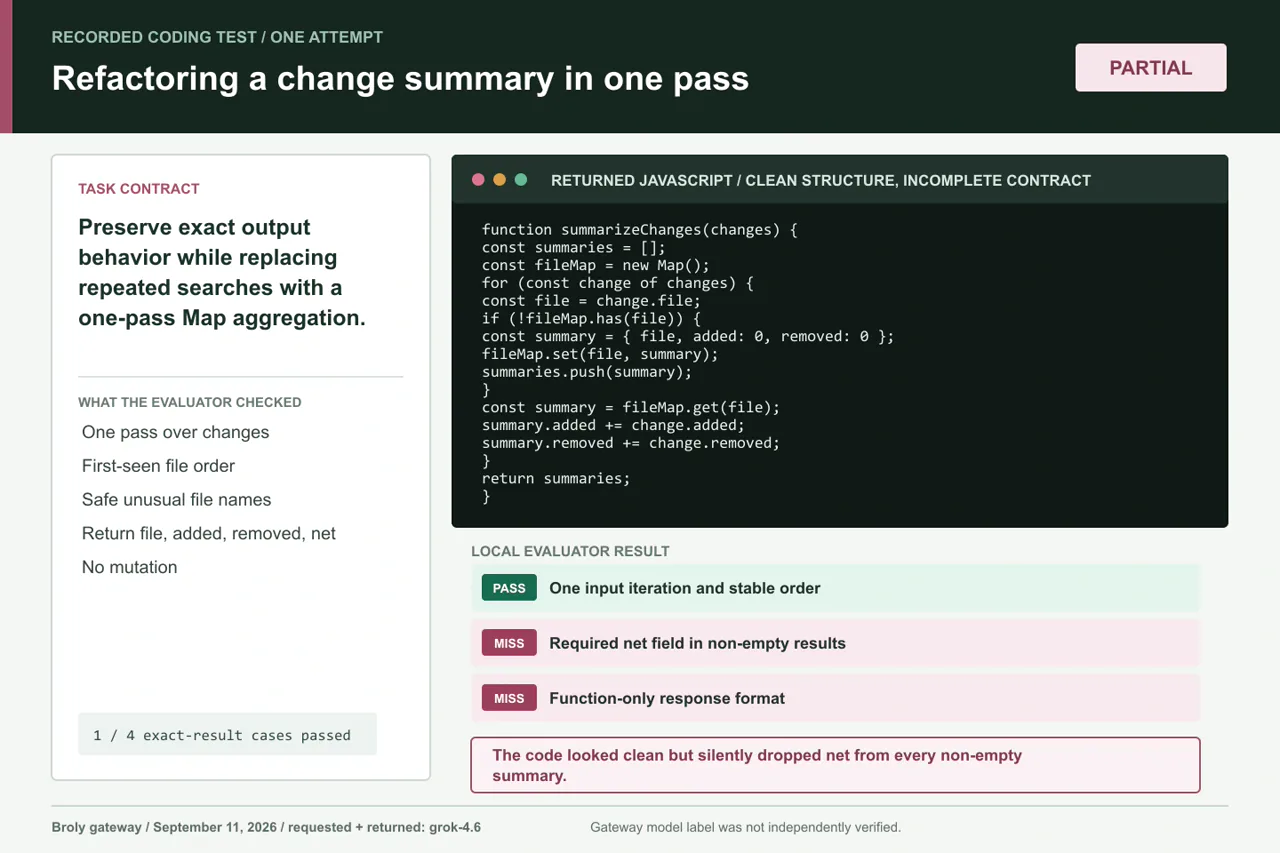
Key boundary: The one-pass Map approach looked correct but silently dropped the required net field.
Résultat : the response used one pass, a Carte, correct first-seen ordering, safe handling of __proto__ et constructor, and no input mutation. But it never calculated or returned net. The empty case passed because it had no result objects; all three non-empty cases failed exact comparison.
Conclusion pratique : never judge a refactor only by algorithmic complexity or code cleanliness. Snapshot the old outputs, assert every required field, and compare behavior before accepting the new version.
Test 4: writing tests that catch plausible bugs
The final task reversed the usual setup: Grok wrote the tests, and our harness ran them against one strict reference implementation plus four deliberately wrong implementations. The goal was not line coverage. It was whether the chosen inputs could distinguish similar-looking semantics.
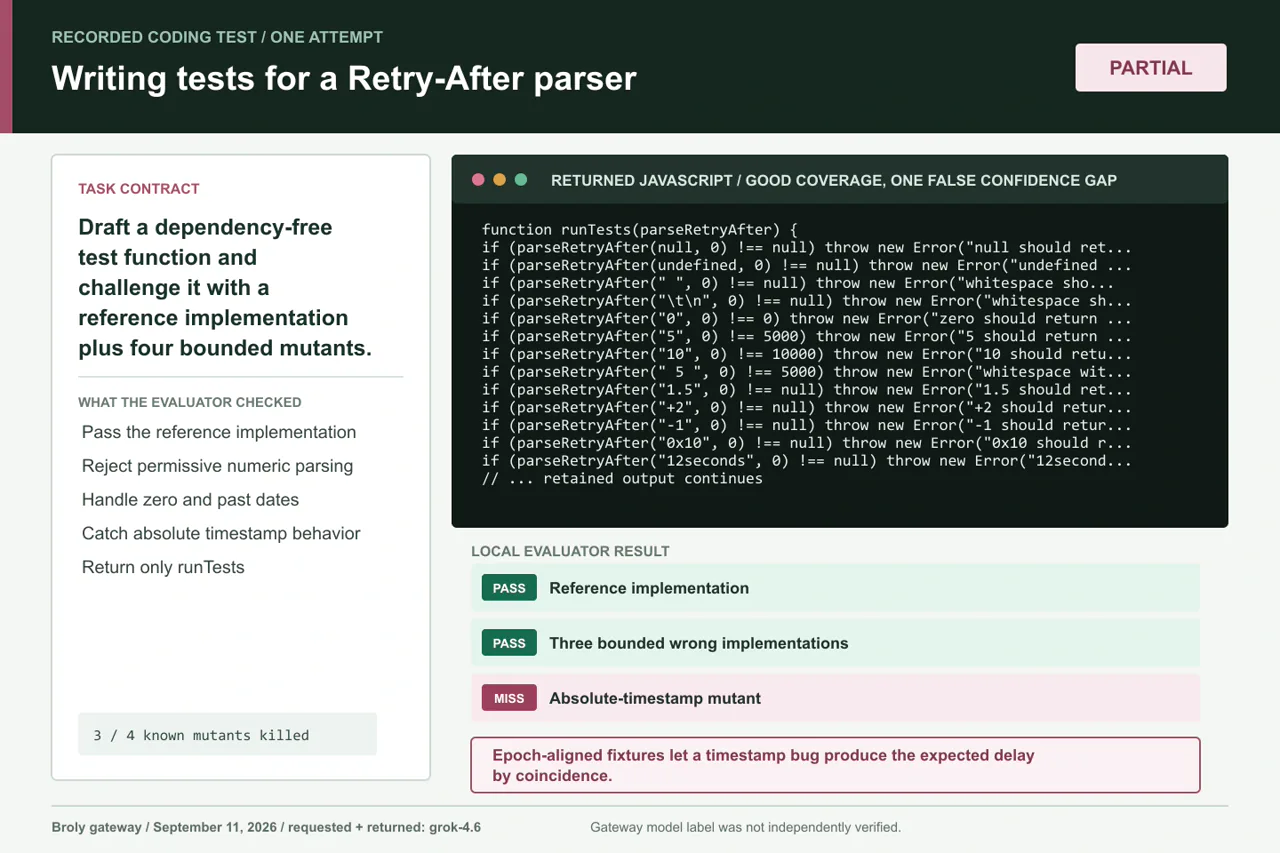
Key boundary: Epoch-aligned date fixtures let an absolute-timestamp bug survive by coincidence.
Résultat : the suite passed the reference and caught permissive numeric parsing, zero treated as falsy, and a negative delay for a past date. It missed the mutant that returned the parsed date’s absolute timestamp. Both date tests used epoch-aligned values, so the expected delay happened to equal the timestamp.
Conclusion pratique : AI-written tests are a useful first pass, not proof of correctness. Ask what each fixture distinguishes. Mutation testing, property tests and deliberately non-aligned values can expose a suite that only appears thorough.
Grok 4, Grok 4.6, and Grok Build are not the same thing
July 2025 launch context. The old API slug was later retired.
The label returned by the gateway in these four isolated tasks.
A separate agent that can work through an interactive or headless repository workflow.
A sandboxed Python tool that must be enabled in a supported request.
Le Annonce originale Grok 4 is historical launch context. It does not describe the model used in our 2026 tests.
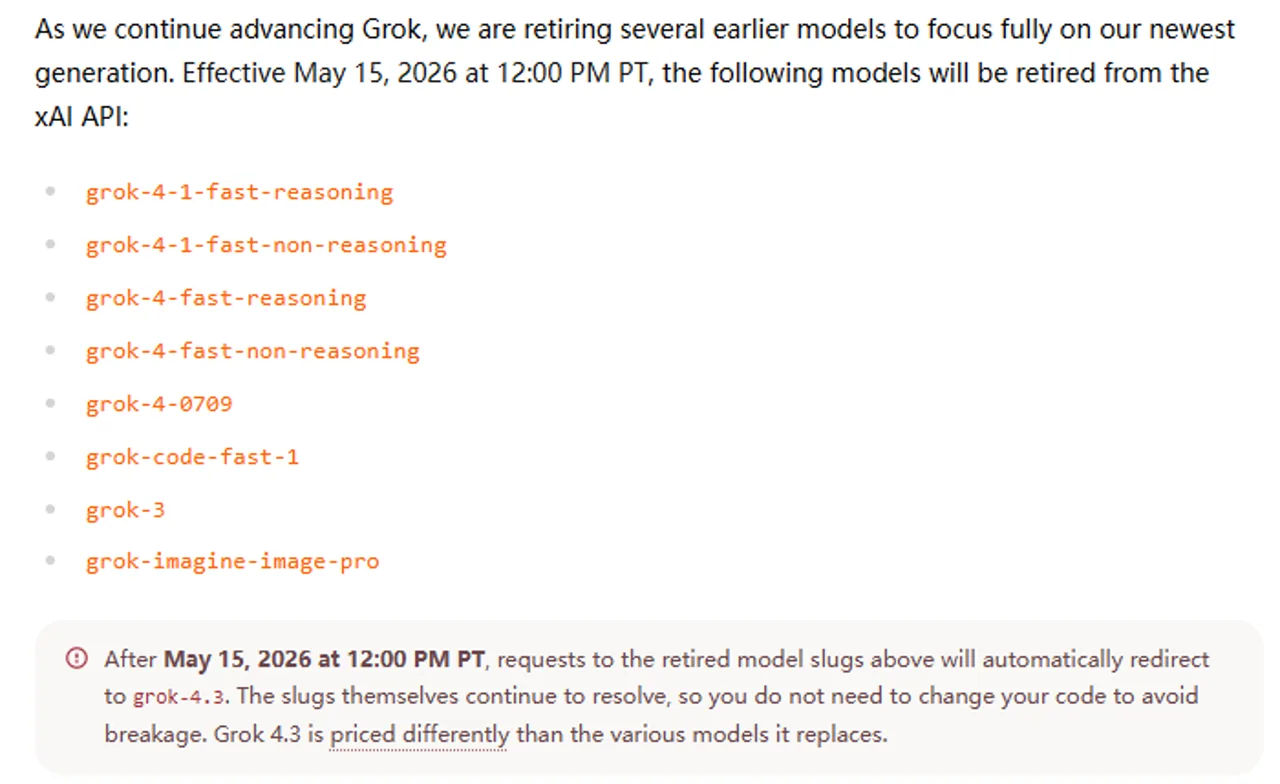
xAI’s Avis de migration du 15 mai 2026 dit grok-4-0709 now redirects to Grok 4.3 with low reasoning. That does not mean every product carrying the Grok 4 family name disappeared; it means the exact model ID matters.
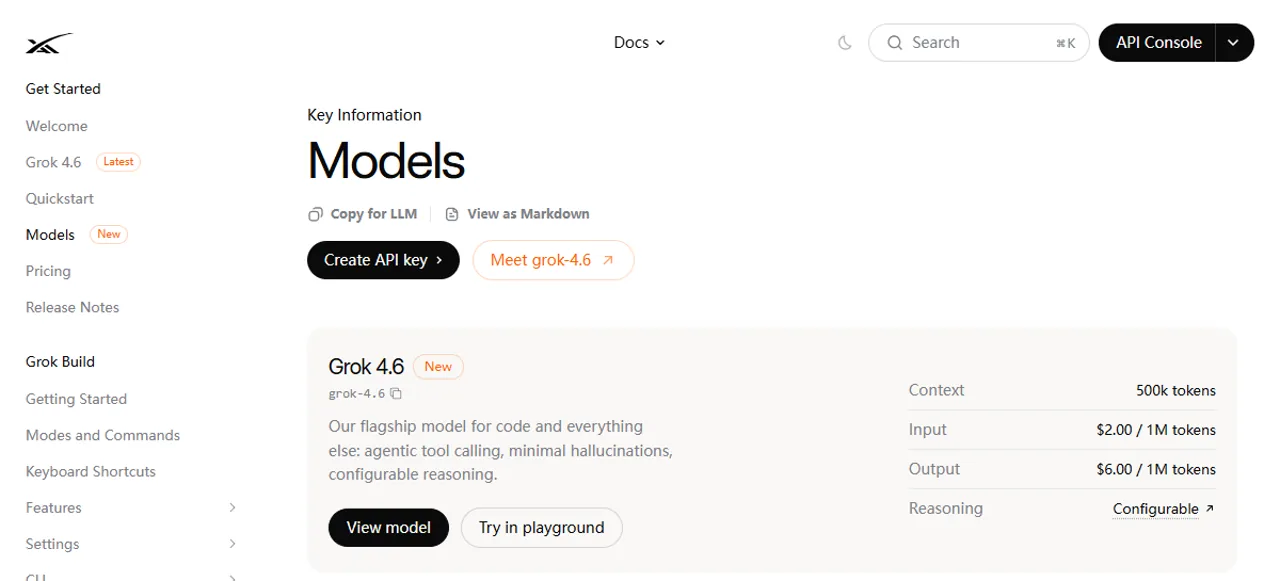
Grok 4.6 is the current model xAI recommends for code. The official Grok 4.6 specification lists function calling, web search, X search and code execution among supported tools. Support is not the same as automatic activation: the calling product or API request still determines what the model can see and do.
Le Grok 4.6 announcement positions the model for long-running agents and codebase work. That is an official product claim, not something our four isolated JavaScript tasks independently measured.
Version Grok is the separate coding agent. Its interactive terminal interface and headless mode can operate in a repository workflow. If you are choosing among model names rather than coding products, the best Grok model by task guide explains the current family.
Le xAI code execution tool is an optional sandboxed Python environment. It was not active in our Broly tests, so the model did not run its own JavaScript or inspect evaluator feedback before answering.
Best coding use cases for Grok
Debugging a contained failure
Grok is most useful when the failure can be reduced to a function, stack trace, failing fixture or short diff. Include what should happen, what actually happened and the boundary you do not want changed. The seat-allocation result shows how a precise edge case can turn a vague “fix this” request into a verifiable patch.
Generating a first implementation
For adapters, parsers, transformation functions and API examples, Grok can remove blank-page friction. Ask for the smallest complete unit, pin library versions, and run the snippet. The Guide d'intégration API Grok 4 is the next step when the work involves the API rather than an isolated code answer.
Reviewing or drafting tests
Ask Grok for missing boundary cases, invariants and candidate mutants. Then inspect whether each input distinguishes the behavior it claims to test. The Retry-After suite was broad on paper, yet one pair of aligned timestamps let a semantic bug survive.
Comparing alternative approaches
Grok is also useful as a second opinion on an algorithm, data structure or debugging hypothesis. When the decision is about assistant fit rather than one patch, the Grok versus ChatGPT coding comparison adds a cross-model view.
Where Grok coding needs supervision
Behavior-preserving refactors: the model can satisfy the requested algorithm while missing one output field. Run regression tests and compare serialized outputs, errors, ordering, mutation and side effects.
Multi-file repository changes: our evidence does not cover dependency discovery, build systems, code search, generated files, migrations or coordinated edits. Use a real coding agent with scoped repository access, then review its commands and diff. The Codex versus Claude Code agent comparison shows why the surrounding workflow matters as much as the model.
Security and production work: do not treat a confident response as a threat model, dependency audit or deployment approval. Keep CI, static analysis, secret scanning, staging, rollback and human review in the loop.
Strict machine-to-machine formats: three of four raw responses used a Markdown fence despite explicit no-Markdown instructions. Validate and parse output at the boundary; never pass model text directly into execution because it looks code-like.
Costs and long reasoning traces: our gateway reported 4,260 completion tokens for a request with max_tokens: 4096, mostly as reasoning tokens. That observation does not prove xAI billing or cap behavior. Check the current official venue and compare it with the Grok 4 API pricing and setup guide before estimating a production budget.
A practical workflow for using Grok on code
1. Reduce the problem
Give Grok the smallest reproduction that still fails. Include the error, relevant code and one expected result. Remove unrelated project history and secrets.
2. Write a contract, not a wish
State the function name, accepted inputs, exact return shape, ordering, mutation rules, dependency limits and output format. The how to use Grok 4 guide covers the broader account and prompting workflow.
3. Ask for a small change
Prefer one function or one focused diff over a sweeping rewrite. Ask it to preserve public behavior and name any assumption it had to make.
4. Run independent checks
Execute the code outside the model response. Add edge cases that distinguish nearby semantics, check input mutation, compare every output field, and test expected failures. For generated test suites, run known mutants when the risk justifies it.
5. Review the diff and own the decision
Read the final diff as if it came from a human contributor. Confirm dependency changes, security boundaries, observability and rollback. The person merging or deploying remains responsible for the result.
What developers report in public
Public experience is mixed and highly dependent on task, product, prompt and date. Two Hacker News comments illustrate the range, but neither is a benchmark or a representative survey.
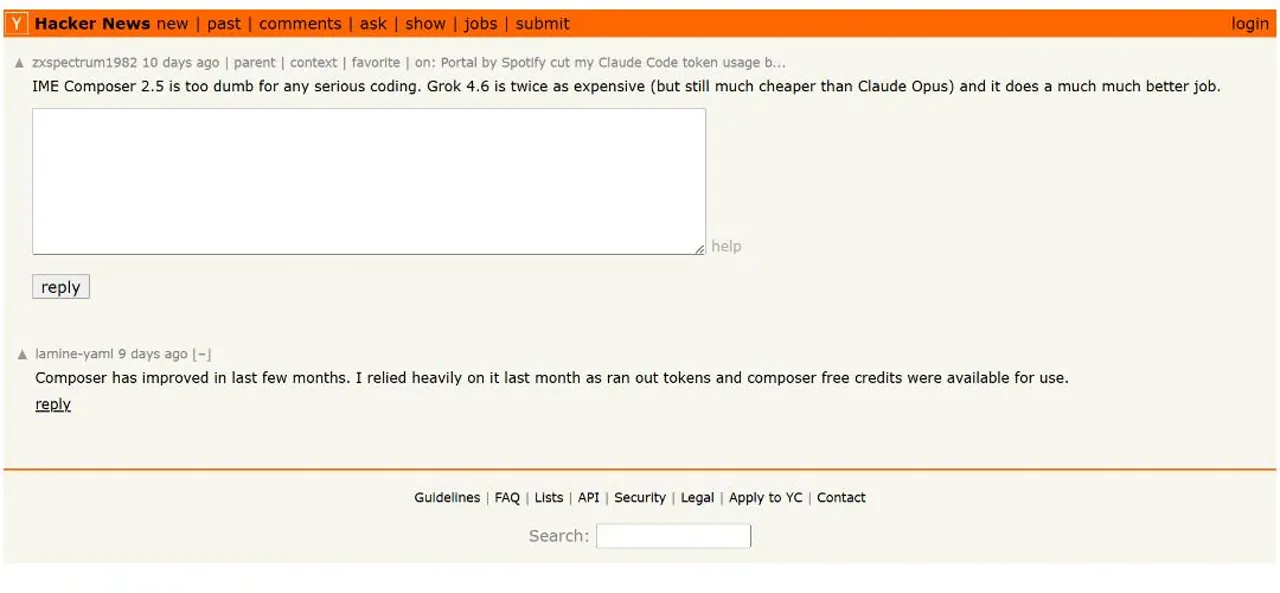
On September 5, 2026, Hacker News user zxspectrum1982 described Grok 4.6 as doing a much better job than Composer 2.5 on serious coding, while also saying it cost more. That is one user’s comparison, not a general performance claim.
On December 20, 2025, Hacker News user hiddendoom45 described finding a subtle Go/Fiber string-lifetime bug later with a debugger after code had been generated during a Grok-4-Code/Sonic experiment. That historical account supports manual debugging and lifetime-aware review; it does not establish a Grok 4.6 failure rate.
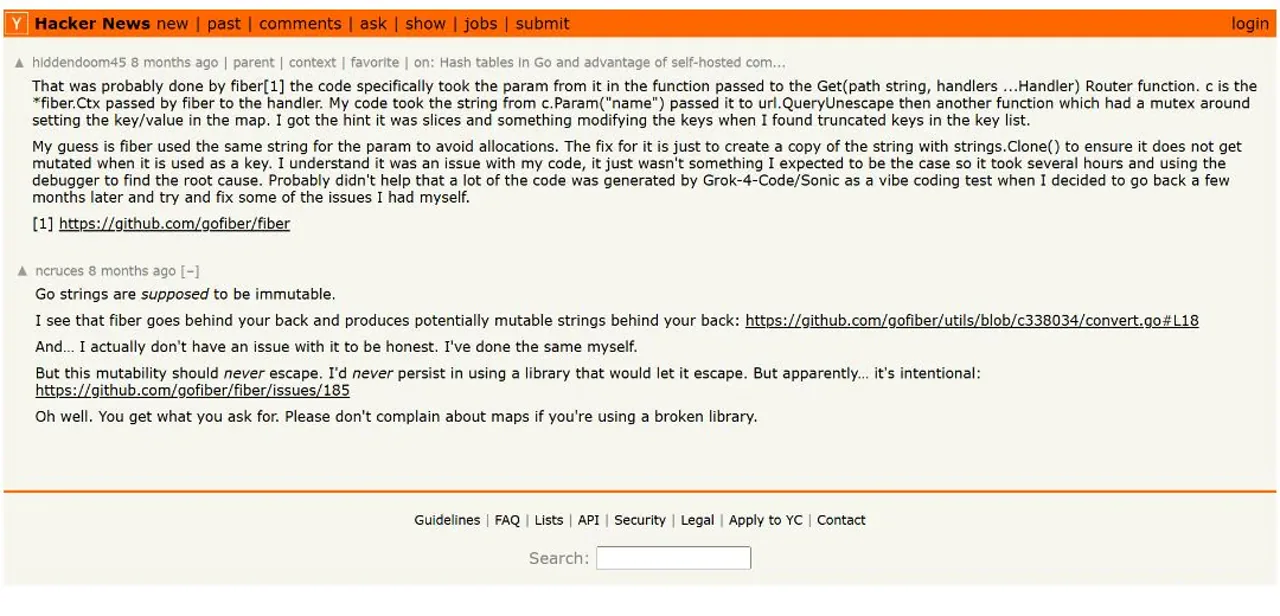
The common thread is not that Grok always succeeds or fails. It is that coding quality becomes visible only after the response meets a concrete task, toolchain and reviewer. The same is true in the separate ChatGPT coding reality check: assistant quality is inseparable from verification.
Foire aux questions
Is Grok 4 good for coding beginners?
Yes, for explanations, small examples and guided debugging. Beginners should still run every snippet, ask what each line changes, and avoid pasting secrets or deploying unfamiliar code without review.
Which Grok model should I use for coding?
As checked September 11, 2026, xAI recommends Grok 4.6 for code. Confirm the exact model ID in your product, because the original grok-4-0709 API slug has been retired.
Can Grok 4.6 edit an entire repository?
The model can support repository work when used inside an agent with scoped file and command access. Our tests were isolated prompts, so they do not establish autonomous multi-file or production readiness.
Is Grok Build the same as using Grok in chat?
No. Grok Build is a separate interactive or headless coding agent. A normal chat or API completion does not automatically receive its repository context, terminal, permissions or tool loop.
Can I use Grok 4.6 for coding on GlobalGPT?
Yes. GlobalGPT offers a verified Grok 4.6 route for bounded coding prompts and model comparisons. It is an independent platform and does not replace Grok Build, an IDE or xAI’s native API tooling.
Should I trust code generated by Grok without testing it?
No. Execute the code, add boundary cases, inspect the diff and run your normal lint, type, security and CI checks. Our refactor looked clean but omitted a required field in every non-empty result.
Verdict final
Is Grok 4 good for coding? The current Grok 4.6 model is a capable coding assistant for bounded repairs, small functions, explanations and first-pass tests. In our four-task suite it produced two fully correct solutions, one behavior-breaking refactor and one incomplete test suite. It also ignored a strict no-Markdown instruction in three responses.
Use it where failure is cheap to detect: narrow scope, explicit contracts, executable fixtures and human review. Do not treat this evidence as permission for unsupervised repository changes, security approval or production deployment.
For a practical trial, ouvrir Grok 4,6 sur GlobalGPT, run one of the complete prompts above, and compare the output with your own tests before you decide whether it belongs in your workflow.