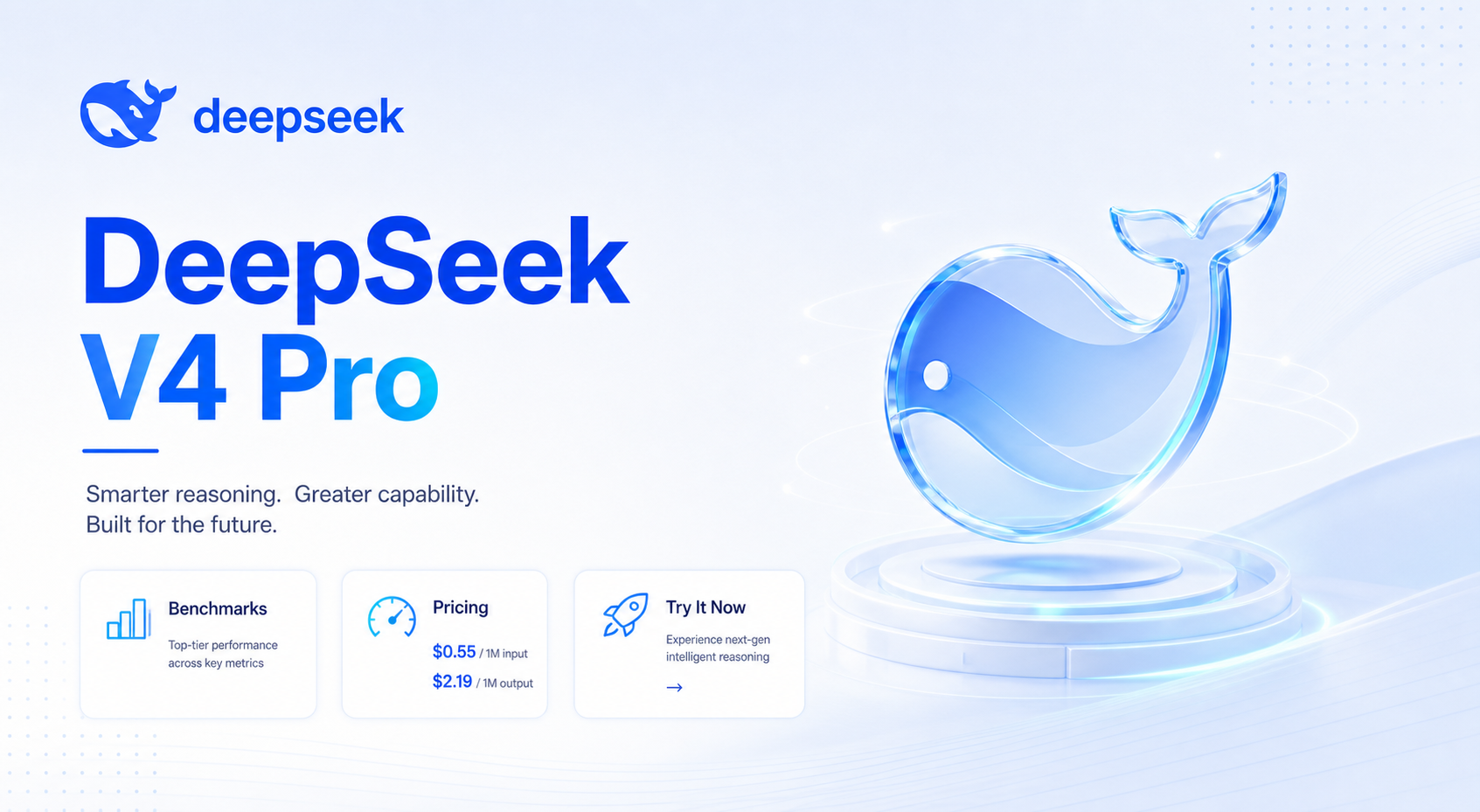
DeepSeek V4 Pro ได้ออกจำหน่ายเป็นรุ่นผลิตจริงแล้ว แต่การเลือกระหว่างรุ่น Pro, Flash และ Vision-Exp กลับกลายเป็นเรื่องที่ซับซ้อนขึ้นหลังการอัปเดตในเดือนสิงหาคม 2026 ทั้งสามรุ่นมีชื่อตระกูลเดียวกัน แต่เน้นจุดสำคัญที่แตกต่างกัน ได้แก่ ความน่าเชื่อถือภายใต้ข้อจำกัดที่ซับซ้อน ต้นทุนและปริมาณการผลิต หรือข้อมูลภาพที่ป้อนเข้า.
การตัดสินใจในทางปฏิบัติเริ่มจากปริมาณงาน Flash เป็นจุดเริ่มต้นที่เหมาะสมสำหรับข้อความปริมาณมากและระบบอัตโนมัติที่คำนึงถึงงบประมาณ Pro เป็นตัวเลือกที่เหมาะสมกว่าเมื่อคำตอบที่ไม่สม่ำเสมอทำให้เกิดงานแก้ไขซ้ำที่มีค่าใช้จ่ายสูง เมื่อข้อมูลนำเข้ามีภาพ ให้ใช้ deepseek-v4-flash-vision-exp แทนที่จะเป็นแบบใดแบบหนึ่งที่ใช้ข้อความเท่านั้น.
หากคุณต้องการรวมการวิจัย การเขียน การวิเคราะห์ และการสนับสนุนด้านการเขียนโค้ดไว้ในกระบวนการทำงานเดียว คุณสามารถเข้าถึง โกลบอลจีพีที. นอกจากนี้ยังมีเส้นทางเฉพาะสำหรับ ดีปซีค วี4 โปร. นี่เป็นตัวเลือกอินเทอร์เฟซทางเลือก; ระบบการเรียกเก็บเงิน API อย่างเป็นทางการ, ข้อจำกัด และการบูรณาการ ยังคงเป็นส่วนหนึ่งของสภาพแวดล้อมของ DeepSeek เอง.

DeepSeek V4 ได้ปล่อยออกมาอย่างเป็นทางการแล้วหรือไม่?
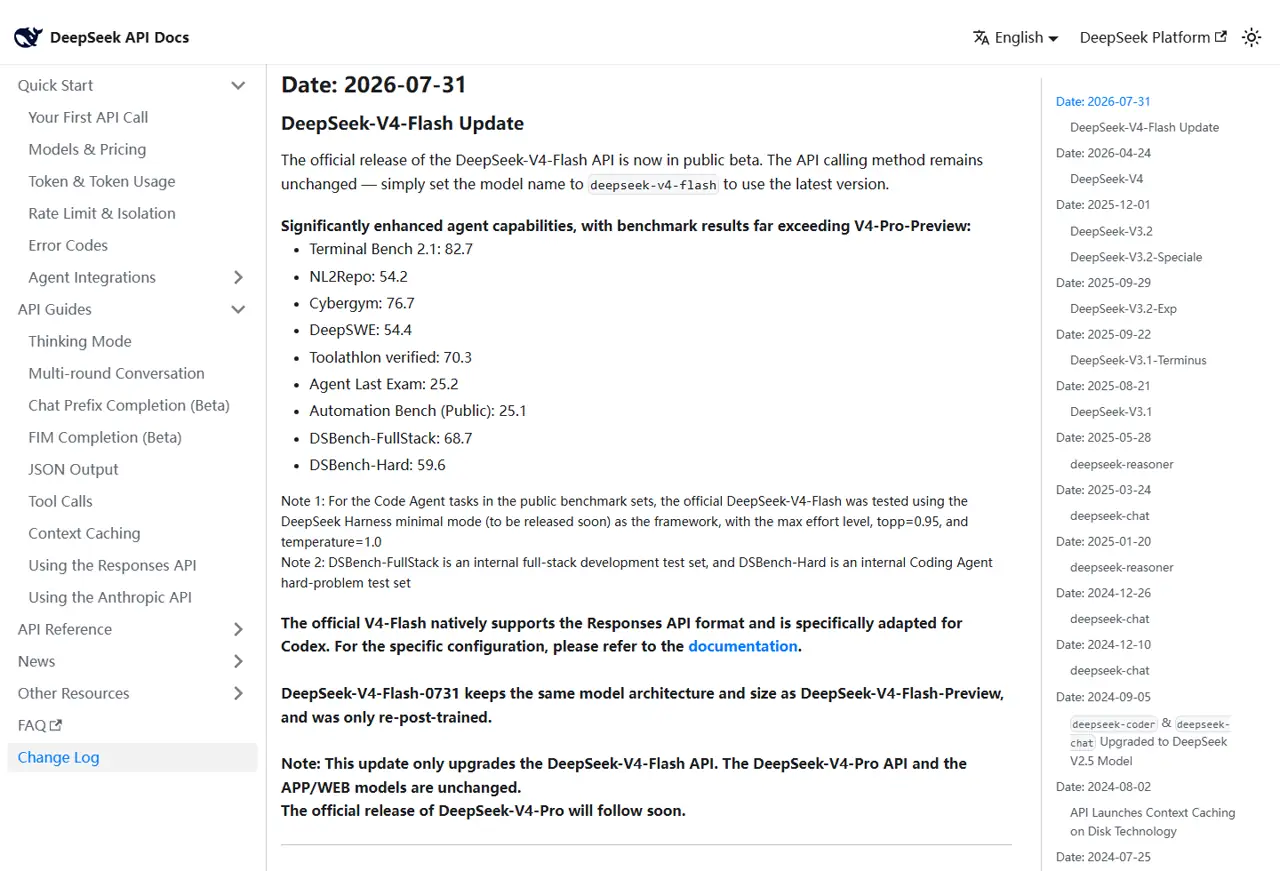
ใช่ครับ DeepSeek ได้ประกาศว่า V4 Pro พร้อมใช้งานทั่วไปแล้วเมื่อวันที่ 13 สิงหาคม 2026 เอกสารอย่างเป็นทางการระบุว่ารุ่นที่ผลิตจริงคือ DeepSeek-V4-Pro-0813. V4 Flash ปรากฏขึ้นในรูปของ DeepSeek-V4-Flash-0731, ส่วนแบบจำลองการมองเห็นเชิงทดลองที่เปิดตัวเมื่อวันที่ 21 สิงหาคม ในฐานะ deepseek-v4-flash-vision-exp.
- V4 Pro: โมเดลข้อความที่ออกแบบมาเพื่อทำงานกับงานที่มีความซับซ้อนมากขึ้น.
- V4 Flash: โมเดลข้อความที่ได้รับการปรับให้เหมาะสมทั้งด้านค่าใช้จ่ายและปริมาณ.
- V4 Flash Vision-Exp: เวอร์ชันทดลองที่รองรับรูปภาพ.
การเปิดให้บริการทั่วไปไม่ได้หมายความว่าทุกผลิตภัณฑ์หรือผู้ให้บริการจะมีอินเทอร์เฟซ ขีดจำกัด หรือการบูรณาการที่เหมือนกัน สำหรับการตัดสินใจเกี่ยวกับ API โปรดอ้างอิงจากข้อมูลอย่างเป็นทางการ รุ่นและราคา หน้าและ หมายเหตุการปล่อยเวอร์ชัน GA.
ดีปซีค วี4 โปร
เวอร์ชัน: Pro-0813
เหมาะสมที่สุด: การเขียนโค้ดที่ซับซ้อนมากขึ้น, ตัวแทน, การวิเคราะห์เหตุผล, และผลลัพธ์ที่มีข้อจำกัดมากมาย.
DeepSeek V4 Flash
เวอร์ชัน: Flash-0731
เหมาะสมที่สุด: การผลิตปริมาณสูง การเขียนโค้ดตามปกติ การค้นหาข้อมูล และงานที่ต้องคำนึงถึงค่าใช้จ่าย.
ชื่อเหล่านี้อาจก่อให้เกิดความสับสน เนื่องจากรายงานทางเทคนิค V4 อธิบายถึงรุ่น Preview ในขณะที่ API ที่ใช้งานจริงใช้เวอร์ชันการผลิตที่มีวันที่ระบุไว้ ตลอดการรีวิวนี้ “Pro” หมายถึง Pro-0813 และ “Flash” หมายถึง Flash-0731 เว้นแต่ในประโยคนั้นจะระบุอย่างชัดเจนว่า “V4 Preview”
มีอะไรที่เปลี่ยนแปลงใน DeepSeek V4 Pro?
การเปลี่ยนแปลงที่ชัดเจนที่สุดคือ ขนาด ความสามารถในการรองรับบริบท อินเทอร์เฟซที่เน้นผู้ใช้ และกลยุทธ์ผลิตภัณฑ์สองระดับ ของ DeepSeek’s บัตรรุ่น Pro อย่างเป็นทางการ ระบุโมเดลแบบผสมผสานผู้เชี่ยวชาญ (mixture-of-experts) ที่มีพารามิเตอร์รวม 1.6 ล้านล้านตัว และพารามิเตอร์ที่ใช้งานอยู่ 49 พันล้านตัว ซึ่งเผยแพร่ภายใต้ใบอนุญาต MIT เอกสาร V4 ที่มาพร้อมกันอธิบายงานวิจัยใหม่เกี่ยวกับระบบความสนใจ (attention) และการกำหนดเส้นทาง (routing) ที่มุ่งทำให้การประมวลผลข้อมูลที่มีโทเคนนับล้านเป็นไปได้ในทางปฏิบัติ.
- ระดับปัจจุบันมีสองระดับ: Pro สำหรับงานที่ต้องการคุณภาพสูง และ Flash สำหรับความเร็วในการประมวลผลและค่าใช้จ่าย.
- ความจำในการทำงานที่ยาวกว่ามาก: หน้าต่างบริบทที่มีโทเคน 1 ล้านตัว ซึ่งได้ระบุไว้สำหรับทั้งสองโมเดล.
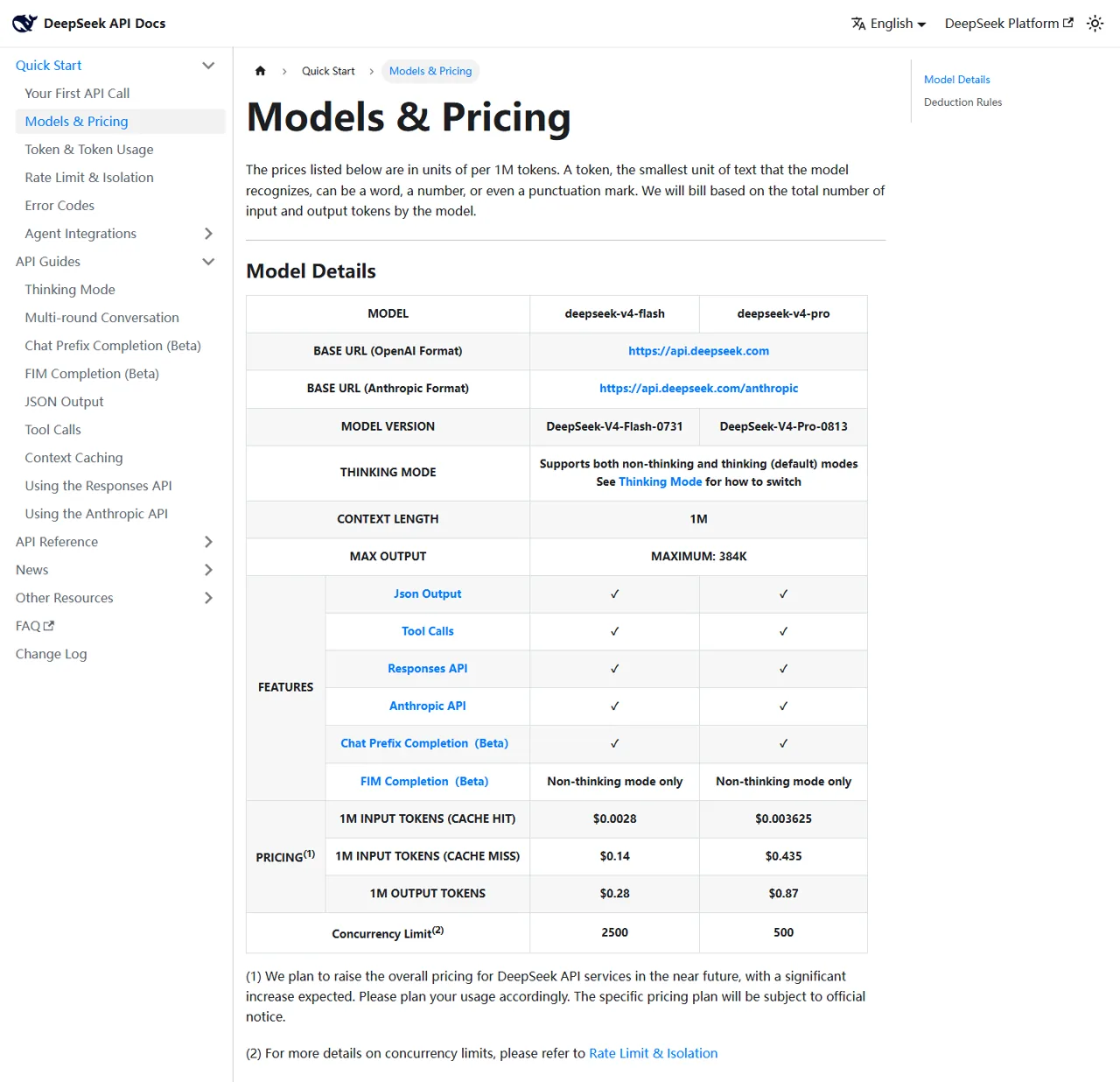
- ขีดจำกัดการผลิตไฟฟ้าสูงสุด: ตามข้อกำหนดอย่างเป็นทางการ สามารถสร้างโทเคนได้สูงสุด 384K โทเคน.
- อินเทอร์เฟซของเอเจนต์: การเรียกใช้เครื่องมือ, ผลลัพธ์ JSON, API ของการตอบสนอง และการเข้าถึงที่รองรับ Anthropic.
- น้ำหนักแบบเปิด: มีบัตรรุ่น V4 และไฟล์อย่างเป็นทางการแล้ว แต่การนำไปใช้ในท้องถิ่นอย่างจริงจังยังคงเป็นโครงการโครงสร้างพื้นฐานหลัก.
การผสมผสานดังกล่าวทำให้ V4 เหมาะสำหรับการเขียนโค้ดในระดับรีโพสิตอรี แพ็กเก็ตการวิจัยที่ยาว และการติดตามเอเจนต์หลายขั้นตอน นอกจากนี้ยังเปลี่ยนกรอบการแข่งขันด้วย: การประเมินที่มีประโยชน์ในปัจจุบันต้องมองไปไกลกว่าคุณภาพการสนทนา และต้องถามว่าโมเดลทำงานอย่างไรเมื่อใช้ร่วมกับเครื่องมือ รูปแบบที่เคร่งครัด และข้อมูลเข้าที่ยาว Our การเปรียบเทียบระหว่าง DeepSeek และ ChatGPT ให้ข้อมูลเพิ่มเติมเกี่ยวกับจุดที่ระบบนิเวศเหล่านั้นแตกต่างกัน.
DeepSeek V4 Pro vs Flash: ความแตกต่างในทางปฏิบัติ
ทั้งสองเวอร์ชันมีบริบทหัวข้อและขีดจำกัดการส่งออกที่เหมือนกัน ดังนั้นนี่จึงไม่ใช่การเลือกระหว่าง “โมเดลเต็มรูปแบบกับโมเดลบริบทสั้น” แต่เป็นการตัดสินใจที่เน้นไปที่คุณภาพ ราคา และการวางแผนความจุเป็นหลัก ขีดจำกัดการดำเนินการพร้อมกันอย่างเป็นทางการของ Flash สูงกว่า Pro ถึง 5 เท่า ส่วนค่าใช้จ่ายของโทเคนอินพุตและเอาต์พุตที่เกิดจากการพลาดแคช (cache-miss) ของ Pro สูงกว่าเล็กน้อยกว่า 3 เท่า.
Pro vs Flash: เปรียบเทียบแบบสรุป
ข้อมูลจำเพาะและราคาอย่างเป็นทางการได้รับการตรวจสอบเมื่อวันที่ 13 สิงหาคม 2569; ข้อมูลจากการทดสอบจริงมาจากการทดสอบหนึ่งครั้งต่อแต่ละงาน และไม่ใช่ผลการทดสอบประสิทธิภาพอย่างเป็นทางการ.
เลือก Flash เมื่อ…
คุณต้องการระบบที่มีค่าใช้จ่ายต่ำ การแก้ไขโค้ดแบบประจำ การสกัดข้อมูล การจัดประเภท หรือคำขอแบบขนานจำนวนมาก — และคุณยังสามารถตรวจสอบความถูกต้องของคำนวณที่มีความสำคัญสูงและข้อจำกัดด้านรูปแบบได้.
เลือก Pro เมื่อ…
ผลลัพธ์นี้รวมเอาโค้ด นโยบาย การเงิน หรือข้อจำกัดที่แม่นยำหลายประการเข้าด้วยกัน และค่าใช้จ่ายเพิ่มเติมนั้นน้อยกว่าต้นทุนที่เกิดจากความล้มเหลวเล็กน้อย.
การทดสอบแบบปฏิบัติจริง: การเขียนโค้ด การค้นหาข้อมูล และการปฏิบัติตามข้อจำกัด
เราได้ทดสอบ ID ของโมเดล API ทั้งสองผ่านจุดปลายทางเดียวกันที่รองรับ Broly Anywhere OpenAI เมื่อวันที่ 13 สิงหาคม 2026 อุณหภูมิอยู่ที่ 0 ผลคะแนนแต่ละรายการเป็นการทดสอบหนึ่งครั้งต่อโมเดลและงานหนึ่งอย่าง เวลาจริง (wall-clock time) รวมถึงความล่าช้าของเกตเวย์และส่วนต้นทาง จึงมีประโยชน์สำหรับการสังเกตการณ์ — ไม่ใช่การจัดอันดับความล่าช้าที่คงที่.
บัตรคะแนนแบบปฏิบัติจริง
ทั้ง Pro และ Flash ต่างก็ผ่านการทดสอบทุกข้อที่กำหนดไว้.
ทั้งคำตอบและแหล่งอ้างอิงที่จำเป็นทั้งหมดล้วนถูกต้อง.
Pro ปฏิบัติตามทุกกฎ; Flash ไม่ผ่านข้อจำกัดด้านคณิตศาสตร์และความยาว.
การทดสอบ 1: การดีบัก Python แบบ agentic
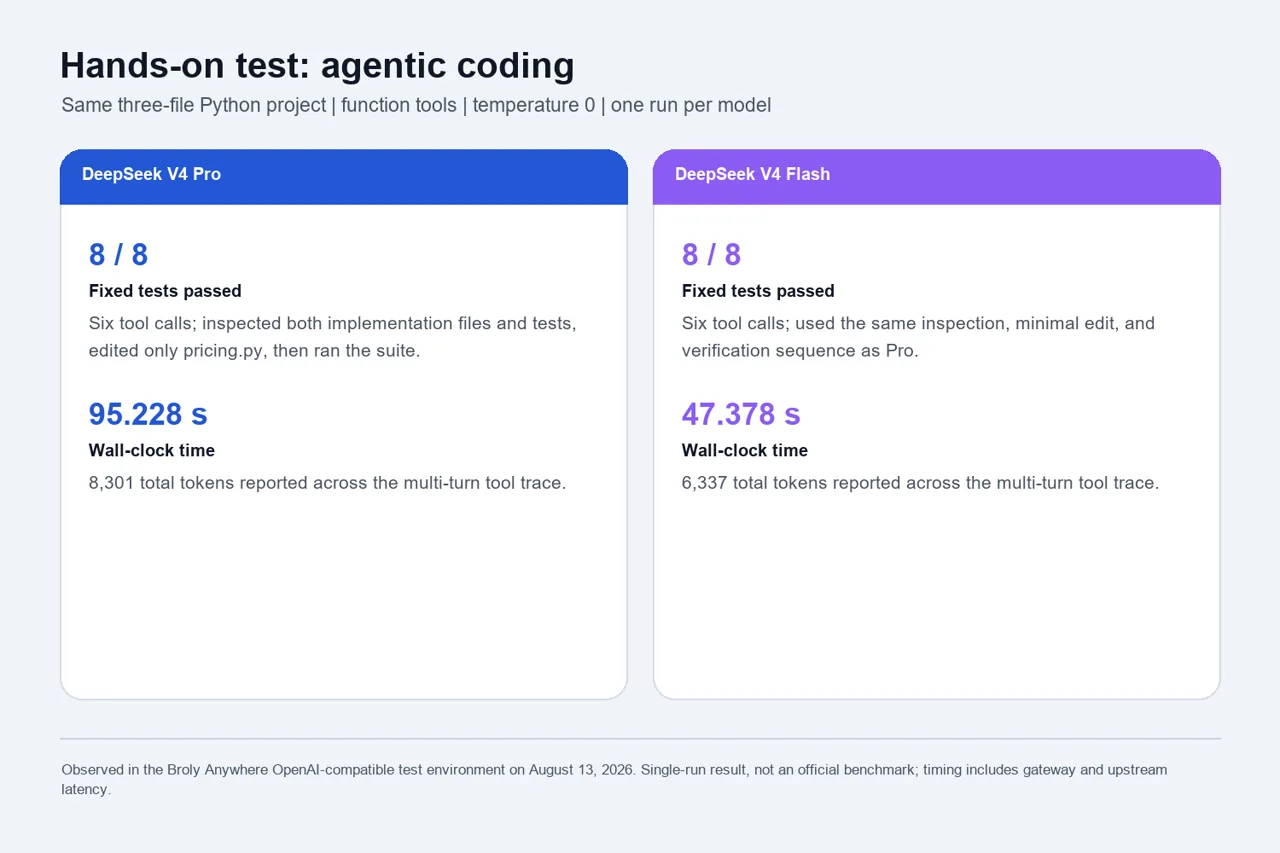
ระบบฮาร์เนสนี้ได้มอบเครื่องมือสี่อย่างให้กับแต่ละโมเดล — การสร้างไฟล์รายการ, การอ่านไฟล์, การเขียนไฟล์ และการรันการทดสอบ — ภายในโครงการกำหนดราคา Python ขนาดเล็กที่มีเพียงสามไฟล์เท่านั้น สิ่งนี้ใกล้เคียงกับกระบวนการทำงานของเอเจนต์มากกว่าการขอโค้ดตัวอย่างในแชท.
ตรวจสอบข้อผิดพลาด ปรับปรุง และตรวจสอบโครงการกำหนดราคาด้วย Python
ทั้งสองโมเดลใช้เส้นทางเรียกหกขั้นตอนเดียวกัน โดยปรับเปลี่ยนเพียงส่วนการดำเนินการเท่านั้น และให้ผลลัพธ์ 8 ผ่าน. Flash ใช้เวลา 47.378 วินาทีในการรันครั้งนี้ เทียบกับ Pro ที่ใช้เวลา 95.228 วินาที และใช้โทเคนที่ส่งคืนน้อยกว่า ไม่มีการตัดสินผู้ชนะด้านคุณภาพในครั้งนี้ สำหรับมุมมองที่เน้นด้านโค้ดเพิ่มเติม โปรดดูบทความของเรา การทดสอบการเขียนโค้ด Python: DeepSeek vs ChatGPT.
การทดสอบที่ 2: การค้นหาเอกสารที่มีประมาณ 20.7K โทเคน
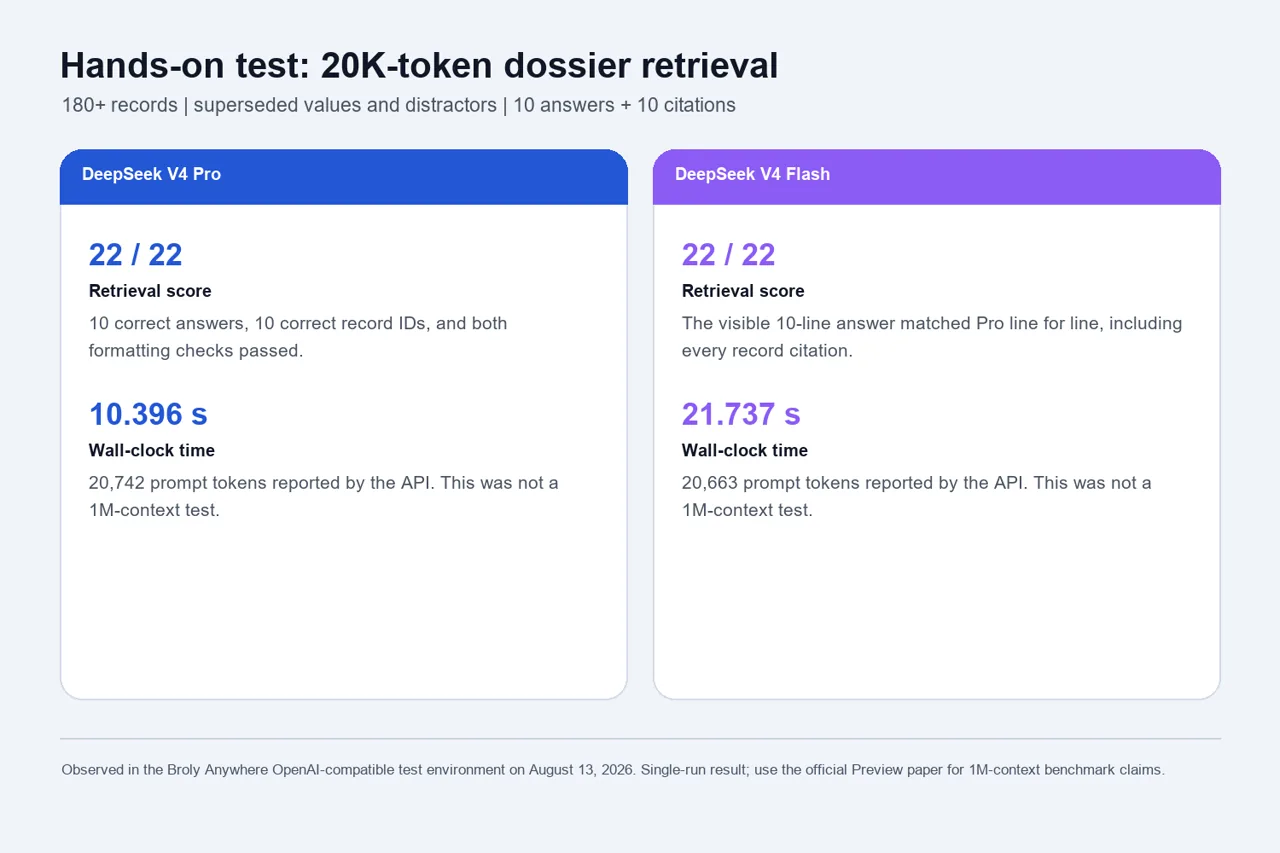
เราได้แนบแฟ้มข้อมูลที่ประกอบด้วยข้อมูลมากกว่า 180 รายการ ข้อมูลที่ซ้ำกัน ข้อมูลร่างที่ล้าสมัย และข้อเท็จจริง 10 ข้อที่กระจัดกระจาย โมเดลต้องตอบในรูปแบบ 10 บรรทัดอย่างแม่นยำ และต้องอ้างอิงข้อมูลหนึ่งรายการสำหรับทุกคำตอบ.
ตอบคำถามในเอกสารที่มีข้อมูลไม่ครบถ้วนด้วยการอ้างอิงที่ถูกต้อง
ทั้งสองโมเดลได้คะแนน 22/22: ตอบถูก 10 ข้อ, อ้างอิงถูกต้อง 10 ครั้ง และได้คะแนนรูปแบบ 2 คะแนน Pro ใช้เวลา 10.396 วินาทีในการทำรอบนี้ ส่วน Flash ใช้เวลา 21.737 วินาที ปริมาณข้อความที่ใช้จริงอยู่ที่ประมาณ 20.7K โทเคน ซึ่งทำให้การทดสอบนี้เป็นการทดสอบการค้นหาข้อมูลความยาวปานกลางที่มีประโยชน์ แต่ ไม่ ตรวจสอบความถูกต้องของหน้าต่างที่มีโทเคนทั้งหมด 1 ล้านโทเคน.
การทดสอบที่ 3: บันทึกการตัดสินใจเกี่ยวกับการปล่อยยานอย่างเคร่งครัด
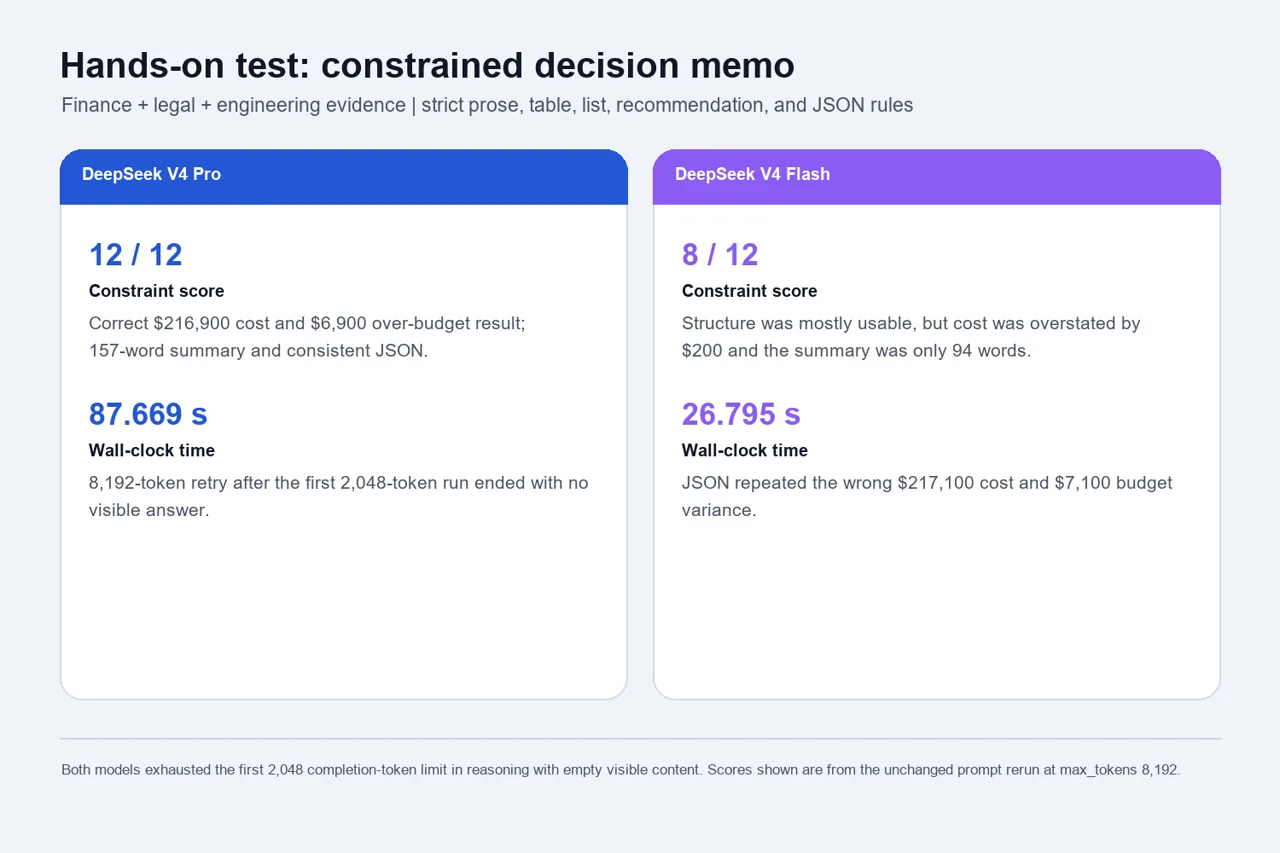
งานนี้รวมการสรุปเนื้อหา 120–180 คำ ตารางที่มีสี่แถวอย่างแม่นยำ ความเสี่ยงที่กำหนดไว้ล่วงหน้าและจำนวนที่ไม่ทราบ การตัดสินใจสั้นๆ JSON ที่ถูกต้อง และการคำนวณค่าใช้จ่ายในปีแรกจากข้อมูลด้านการเงิน กฎหมาย วิศวกรรม การขาย การสนับสนุน และความปลอดภัย.
สร้างบันทึกการเปิดตัวที่มีกฎการคำนวณและกฎการออกผลที่เคร่งครัด
ด้วยขีดจำกัด 2,048 โทเคนสำหรับการเติมเต็ม ทั้งสองโมเดลได้ใช้งบประมาณการเติมเต็มที่มีอยู่ในการให้เหตุผลที่ส่งกลับมา และไม่สร้างคำตอบที่มองเห็นได้ เราได้เก็บรักษาบันทึกเหล่านั้นไว้ แล้วรันคำสั่งเดิมอีกครั้งด้วยขีดจำกัด 8,192 โทเคน Pro ได้คะแนน 12/12 ส่วน Flash ได้คะแนน 8/12 เนื่องจากรายงานค่า $217,100 แทนที่จะเป็น $216,900 ทำให้ข้อผิดพลาด $200 ถูกนำเข้าไปในค่าความแปรปรวน และเขียนบทสรุป 94 คำ แทนที่จะเป็น 120–180 คำตามที่กำหนด.
บทเรียนนี้มีความเฉพาะเจาะจง ไม่ใช่แบบทั่วไป: Flash มีประสิทธิภาพยอดเยี่ยมอยู่แล้วในด้านการเขียนโค้ดและการค้นหาข้อมูล ส่วน Pro กลับมีความปลอดภัยมากกว่าเมื่อต้องรับมือกับการผสมผสานที่ซับซ้อนที่สุดระหว่างข้อจำกัดทางคณิตศาสตร์ โครงสร้าง และนโยบาย หากกระบวนการทำงานของคุณพึ่งพา shell ของเอเจนต์ ระบบของเรา การเปรียบเทียบระหว่าง OpenClaw กับ Claude Code และ OpenCode ช่วยให้ปรับแบบให้สอดคล้องกับเครื่องมือรอบข้าง.
ผลการทดสอบประสิทธิภาพ DeepSeek V4: ข้อมูลอย่างเป็นทางการชี้ให้เห็นอะไร
แหล่งข้อมูลมาตรฐานที่ปลอดภัยที่สุดคือ รายงานทางเทคนิค DeepSeek V4, แต่ตารางและแผนภูมิในเอกสารนี้อธิบายถึงรุ่น V4 Preview ซึ่งข้อมูลเหล่านี้มีประโยชน์ในการเข้าใจความสามารถที่ออกแบบไว้ของสถาปัตยกรรมและโครงสร้างการทดสอบ; แต่ไม่ใช่คะแนนที่แยกต่างหากสำหรับเวอร์ชัน API Pro-0813 ที่ออกเมื่อก่อน.
คะแนนตัวอย่างไม่ใช่คะแนน Pro-0813
ข้อมูลเกี่ยวกับสถาปัตยกรรมและผลการทดสอบประสิทธิภาพจาก DeepSeek.
เวอร์ชันการผลิตที่มีวันที่ระบุไว้ในเอกสาร API.
คะแนนแบบพรีวิวไม่สามารถเปลี่ยนชื่อเป็นคะแนน Pro-0813 ได้.
การอัปเดต Flash เมื่อวันที่ 31 กรกฎาคม ยังเผยแพร่ผลการทดสอบของเอเจนต์ พร้อมทั้งระบุชื่อฮาร์เนส การตั้งค่า และการสนับสนุนจาก Codex รายละเอียดเหล่านี้มีความสำคัญ เนื่องจากอันดับผู้นำระหว่างผู้จำหน่ายต่าง ๆ อาจเปลี่ยนแปลงได้ตามโครงสร้างการทดสอบ งบประมาณการวิเคราะห์ นิยามเครื่องมือ และกฎการลองใหม่ ผลลัพธ์ที่ไม่มีข้อมูลฮาร์เนสไม่เพียงพอที่จะประกาศผู้ชนะอย่างไม่มีเงื่อนไข.
ด้วยเหตุผลเดียวกันนี้ งานทั้งสามของเราจึงอยู่เคียงข้างหลักฐานอย่างเป็นทางการ แทนที่จะมาแทนที่มัน งานเหล่านี้จะบอกคุณว่าเกิดอะไรขึ้นภายใต้เงื่อนไขที่เปิดเผยไว้ หากคุณกำลังเปรียบเทียบผลิตภัณฑ์ของเอเจนต์ แทนที่จะเปรียบเทียบเพียง API ของโมเดลเท่านั้น งานของเรา คู่มือรหัส Codex vs Claude อธิบายว่าทำไมกระบวนการทำงานโดยรอบจึงสามารถส่งผลต่อประสบการณ์ของผู้ใช้ได้.
ราคา API DeepSeek V4
ราคา API ของ DeepSeek มีระดับที่ค่อนข้างก้าวร้าวอย่างผิดปกติในช่วงเปิดตัว ตารางด้านล่างนี้แสดงตัวเลขอย่างเป็นทางการต่อหนึ่งล้านโทเคนที่ตรวจสอบเมื่อวันที่ 13 สิงหาคม 2026 หน้าเว็บไซต์อย่างเป็นทางการยังเตือนว่าราคาจะเพิ่มขึ้นอย่างมีนัยสำคัญในอนาคต ดังนั้นควรพิจารณาตัวเลขเหล่านี้เป็นข้อมูลจากช่วงเปิดตัวเท่านั้น.
ราคาต่อ 1 ล้านโทเคน
งานที่ไม่ใช้แคชแบบง่ายๆ ที่มีโทเคนอินพุต 10 ล้านโทเคน และโทเคนเอาต์พุต 2 ล้านโทเคน จะมีค่า $1.96 บน Flash และ $6.09 บน Pro ตามอัตราดังกล่าว ตัวอย่างนี้ไม่รวมการเข้าถึงแคชที่สำเร็จ (cache hits), ค่าเพิ่มของผู้ให้บริการ, การลองใหม่ (retries), และการเปลี่ยนแปลงราคาในภายหลัง ทีมที่กำลังเปรียบเทียบผู้ให้บริการควรใช้ชุดโทเคนและเกณฑ์การคิดค่าบริการเดียวกัน; ของเรา คู่มือราคา API Claude Opus 4.6 แสดงให้เห็นว่าทำไมข้อมูลเข้า ข้อมูลออก และการเก็บไว้ในแคช จึงจำเป็นต้องมีแถวแยกกัน.
ความหมายของหน้าต่างบริบท 1M — และข้อจำกัดอยู่ที่ใด
หน้าต่างบริบทขนาด 1 ล้านโทเคนเป็นขีดความสามารถ ไม่ใช่คำสัญญาว่าจะสามารถเรียกคืนข้อมูลได้อย่างสมบูรณ์แบบในทุกตำแหน่ง มันให้พื้นที่แก่ API สำหรับคลังข้อมูลขนาดใหญ่ คอลเลกชันเอกสาร ชุดข้อมูลวิจัย หรือประวัติการทำงานของเอเจนต์ ส่วนคำถามเกี่ยวกับคุณภาพคือว่าโมเดลจะสามารถดึงข้อมูลรายละเอียดที่ถูกต้องออกมาได้หรือไม่ หลังจากที่หลักฐานที่เกี่ยวข้องถูกฝังอยู่ท่ามกลางโทเคนนับแสนที่อาจทำให้เสียสมาธิ.
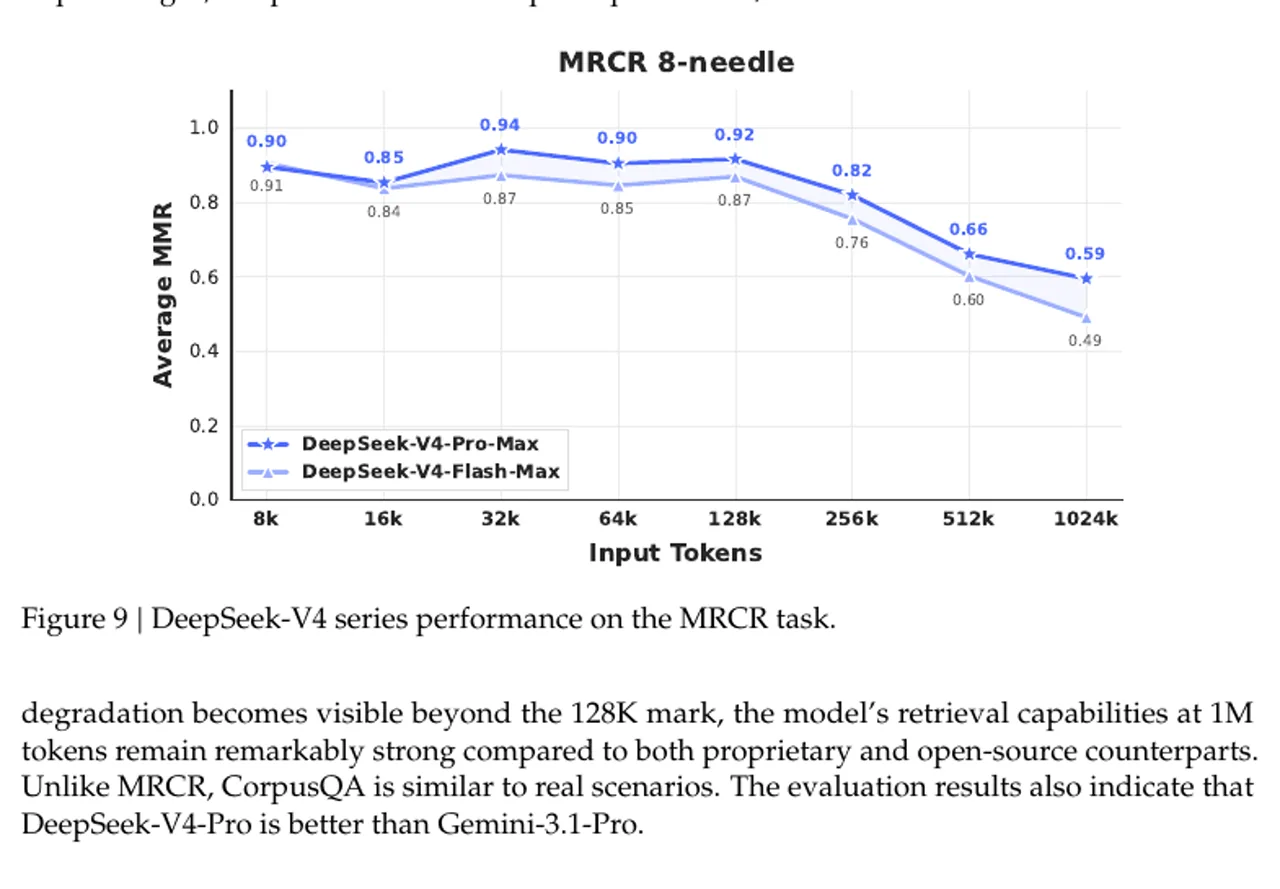
รายงาน Preview ของ DeepSeek มีแผนภูมิการแก้ไขการอ้างอิงหลายรอบ (MRCR) สำหรับจำนวนโทเคนอินพุตตั้งแต่ 8K ถึง 1M เส้นโค้งยังคงมีประสิทธิภาพดีสำหรับความยาวที่สั้นกว่า แต่จะลดลงหลังจาก 128K นี่เป็นหลักฐานปกติที่ชี้ให้เห็นถึงปัญหาของบริบทยาวที่แก้ไขได้ยาก และนี่คือเหตุผลที่คำว่า “รองรับ 1M” ไม่ควรถูกแปลว่า “ไม่มีสูญเสียข้อมูลที่ 1M”
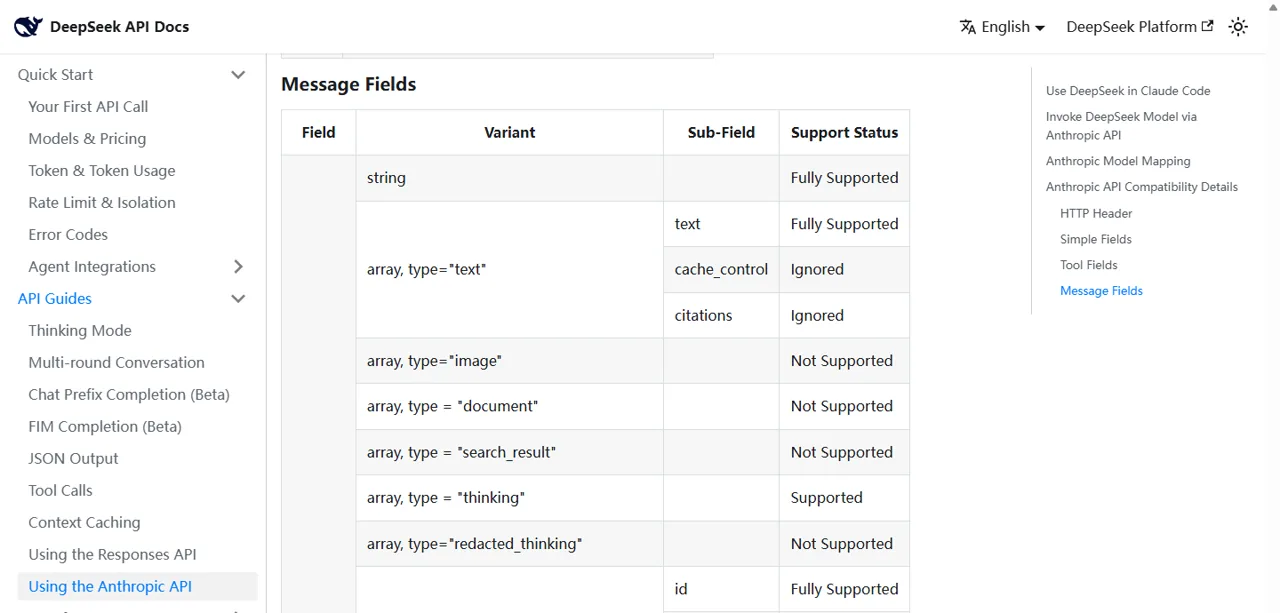
ส่วนต่อ API มีข้อจำกัดที่แยกต่างหาก DeepSeek’s คู่มือ API สำหรับการตอบสนอง อธิบายการนำไปใช้แบบไม่มีสถานะ: คุณสมบัติต่างๆ เช่น previous_response_id, การสนทนา, ร้านค้า และพื้นหลัง ไม่ได้รับการสนับสนุน นอกจากนี้ การป้อนข้อมูลรูปภาพและไฟล์ก็ไม่ได้รับการสนับสนุนเช่นกัน ดังนั้น คุณต้องแยกข้อความออกมา หรือสร้างชั้นสถานะ (state layer) นอกโมเดล.
The ตาราง API ที่รองรับ Anthropic นอกจากนี้ ยังระบุว่าเวอร์ชันของภาพและข้อความในเอกสารเป็นเวอร์ชันที่ไม่ได้รับการสนับสนุน ดังนั้น ความเข้ากันได้จึงหมายถึงรูปแบบคำขอและเครื่องมือที่คุ้นเคย — ไม่ใช่ความเท่าเทียมกันในทุกคุณสมบัติกับทุกโมเดลหรือไคลเอนต์ Anthropic.
วิธีทดลองใช้ DeepSeek V4 Pro และ Flash
คุณมีสามทางเลือกที่ใช้งานได้จริง ให้เลือกตามความต้องการของคุณว่าต้องการการสนทนาแบบรวดเร็ว การควบคุม API สำหรับการผลิต หรือพื้นที่ทำงานแบบหลายโมเดล.
เลือกเส้นทางเข้าถึง
DeepSeek เว็บ/แอป
เหมาะที่สุดสำหรับการทดลองใช้โมเดลผ่านอินเทอร์เฟซผู้ใช้ของ DeepSeek เอง.
API อย่างเป็นทางการ
เหมาะที่สุดสำหรับการเรียกเก็บเงินแบบโทเคน เครื่องมือ JSON เฟรมเวิร์กเอเจนต์ และการควบคุมการผลิต.
โกลบอลจีพีที
เหมาะที่สุดสำหรับการเปิดไฟล์ Pro หรือ Flash ในพื้นที่ทำงานแบบหลายรูปแบบที่กว้างขึ้น โดยไม่ต้องสร้างโปรแกรมไคลเอนต์ก่อน.
เส้นทาง 1: ห้องสนทนาอย่างเป็นทางการ DeepSeek
เริ่มจาก เว็บไซต์อย่างเป็นทางการของ DeepSeek หากคุณต้องการเพียงเพื่อดูประสบการณ์ของผู้ใช้ในปัจจุบันเท่านั้น การเข้าถึงของผู้ใช้และการเรียกเก็บค่าบริการ API เป็นสองเรื่องที่แยกกัน; การที่มีอินเทอร์เฟซแชทให้ใช้งานไม่ได้หมายความว่า API นั้นฟรี.
เส้นทางที่ 2: API อย่างเป็นทางการและตัวแทนด้านการเขียนโค้ด
ใช้ deepseek-v4-pro หรือ deepseek-v4-flash ด้วยอินเทอร์เฟซที่ได้รับการบันทึกไว้และรองรับ OpenAI ทั้งสองอินเทอร์เฟซนี้สนับสนุนทั้งโหมดคิดและโหมดไม่คิด การส่งออก JSON การเรียกใช้เครื่องมือ Responses API และการเข้าถึงที่รองรับ Anthropic FIM ใช้ได้เฉพาะในโหมดไม่คิดเท่านั้น.
DeepSeek ยังเผยแพร่ คู่มือการผสานรวม Codex อย่างเป็นทางการ. หากคุณกำลังตัดสินใจเลือกระหว่างเอเจนต์เชลล์ก่อน ให้เปรียบเทียบ Claude ข้อกำหนดเกี่ยวกับราคาและข้อจำกัดการใช้งาน ก่อนที่จะสมมติว่าค่าใช้จ่ายของโทเคนในโมเดลคือค่าใช้จ่ายทั้งหมด.
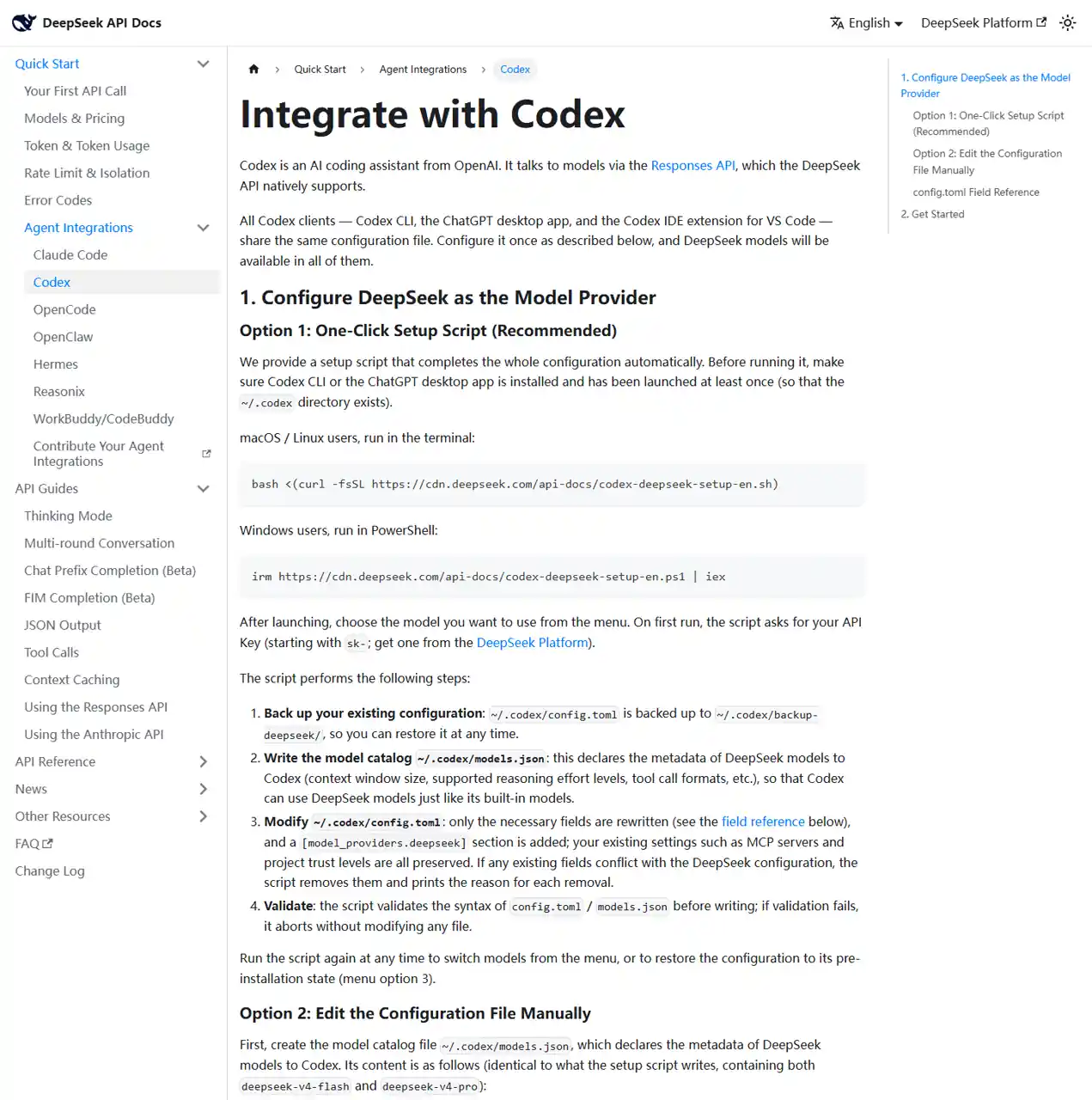
ผู้ใช้รหัส Claude สามารถทำตามหลักการของ endpoint และโมเดลที่อธิบายไว้ในคู่มือของเราเพื่อ การตั้งค่าโมเดลในโค้ด Claude, ขณะตรวจสอบตารางความเข้ากันได้แบบเรียลไทม์ของ DeepSeek เพื่อหาฟิลด์ที่ไม่ได้รับการสนับสนุน.
เส้นทาง 3: GlobalGPT
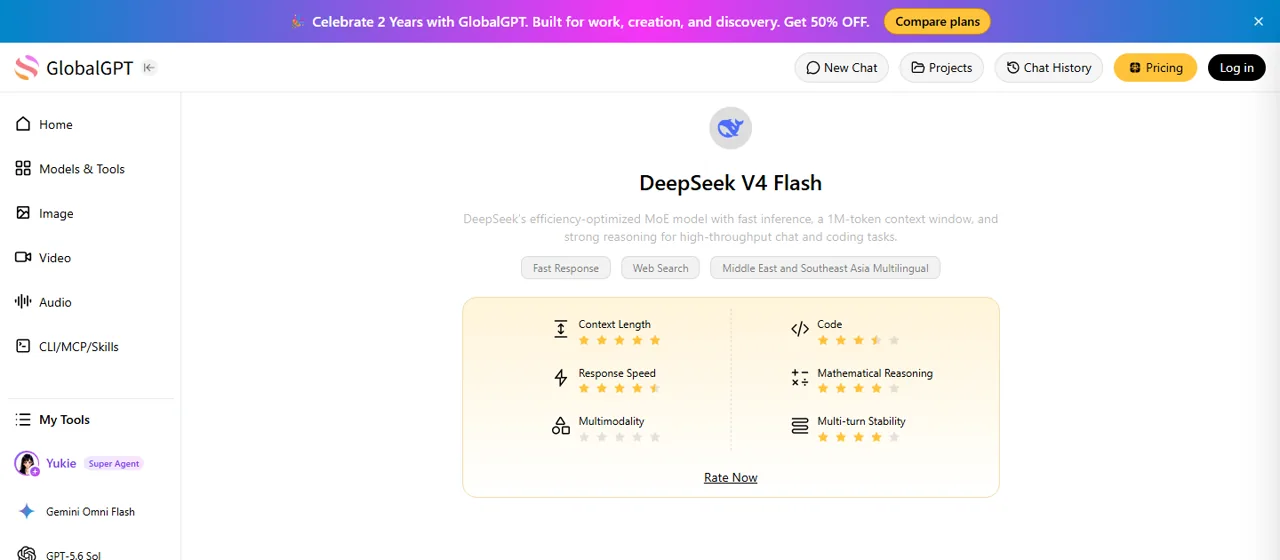
GlobalGPT มีรายการเฉพาะสำหรับทั้งสองรุ่น เส้นทางการแปลงที่ได้รับการยืนยันคือ DeepSeek V4 Pro บน GlobalGPT. มีหน้าผลิตภัณฑ์ Flash อยู่ด้วย แต่เราไม่พบพารามิเตอร์แคมเปญที่ได้รับการยืนยันและใช้เฉพาะกับ Flash ดังนั้นเราจึงไม่สร้างพารามิเตอร์ดังกล่าวขึ้นเอง.
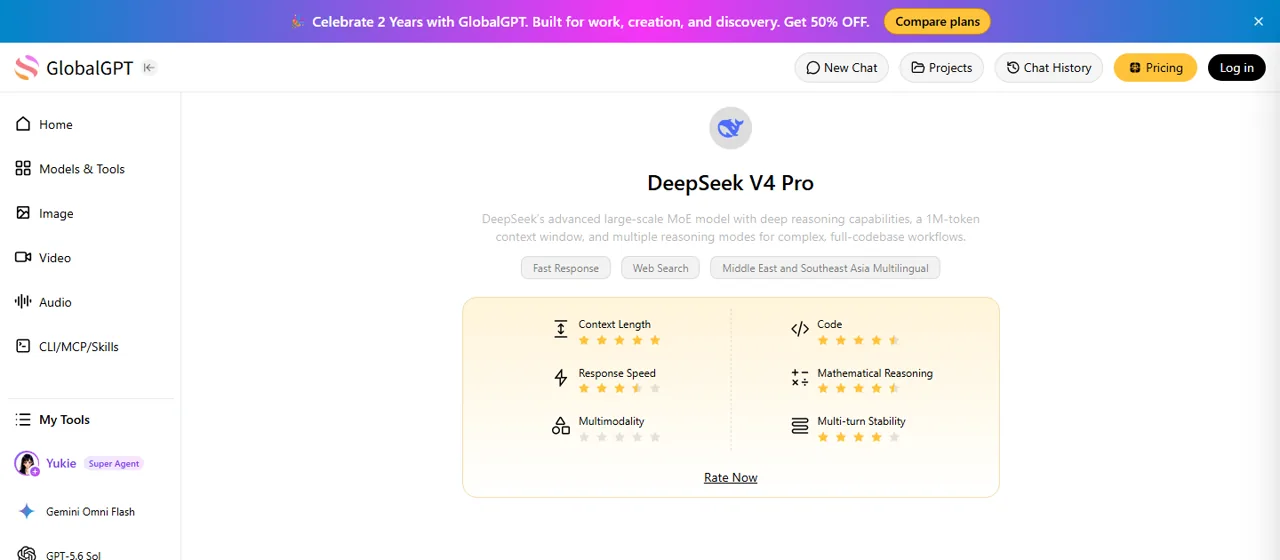
สำหรับกระบวนการทำงานในเทอร์มินัล, การตั้งค่า CLI ของ GlobalGPT ในระบบรหัส Claude อธิบายว่าแพลตฟอร์มแบบหลายโมเดลสามารถผสานเข้ากับกระบวนการเขียนโค้ดที่มีอยู่ได้อย่างไร มันไม่ได้มาแทนที่เครื่องมือจัดการรีโพสิตอรีที่มีอยู่ แต่เปลี่ยนวิธีที่คุณเข้าถึงและเปรียบเทียบโมเดล.
คุณควรเลือกรุ่น DeepSeek V4 รุ่นไหนดี?
ปรับแบบจำลองให้สอดคล้องกับต้นทุนของความล้มเหลว
แฟลช
เลือกบริการนี้สำหรับการสนทนาปริมาณมาก การสกัดข้อมูล การเขียนโค้ดตามขั้นตอนปกติ การค้นหาข้อมูล และเอเจนต์ที่มีระบบตรวจสอบความถูกต้องที่เข้มงวด บริการนี้ผ่านสองในสามภารกิจของเราได้อย่างสมบูรณ์แบบ ด้วยราคาอย่างเป็นทางการที่ต่ำที่สุด.
ข้อดี
เลือกใช้เมื่อการคำนวณที่เคร่งครัด การจัดรูปแบบ นโยบาย และการวิเคราะห์ข้ามโดเมนต่าง ๆ มารวมกันในผลลัพธ์เดียว นี่คือโมเดลเดียวที่ได้คะแนน 12/12 ในรายงานของเรา.
โกลบอลจีพีที
เลือกวิธีใช้แพลตฟอร์มเมื่อคุณต้องการทดลองใช้โมเดลหรือเปรียบเทียบตัวเลือกต่าง ๆ โดยไม่ต้องเขียนโปรแกรมไคลเอนต์ API ก่อน.
สำหรับทีมหลายทีม Flash เป็นตัวเลือกการปรับใช้ครั้งแรกที่ชาญฉลาดที่สุด: มีค่าใช้จ่ายต่ำกว่ามาก รองรับบริบทและขีดจำกัดผลลัพธ์ตามที่กำหนดไว้ และผ่านการทดสอบการเขียนโค้ดและการดึงข้อมูล 20.7K โดยไม่เกิดปัญหาด้านคุณภาพ เพิ่มการตรวจสอบแบบกำหนดค่าได้สำหรับตัวเลข โครงสร้างข้อมูล และส่วนที่จำเป็น.
เปลี่ยนไปใช้เวอร์ชัน Pro เมื่อเวลาที่ใช้ในการตรวจสอบหรือค่าใช้จ่ายจากการผิดพลาดมีน้ำหนักมากกว่าการประหยัดค่าใช้จ่ายจากโทเคน ความแตกต่างด้านราคานั้นมีอยู่จริง แต่คุณค่าของการทำเอกสารการปฏิบัติตามกฎระเบียบหรือเอกสารการเปิดตัวที่ละเอียดครบถ้วนให้ถูกต้องตั้งแต่ครั้งแรกก็สำคัญไม่แพ้กัน หากรายชื่อตัวเลือกของคุณมีผู้ช่วยอื่น ๆ ด้วย การพิจารณาในวงกว้าง คู่มือการเลือก DeepSeek vs ChatGPT สามารถช่วยแยกความคุณภาพของโมเดลออกจากระบบนิเวศของผลิตภัณฑ์ได้.
บทสรุป: DeepSeek V4 Pro คุ้มค่าหรือไม่?
DeepSeek V4 Pro เป็นตัวเลือกที่ควรพิจารณาเมื่องานต้องการการควบคุมมากกว่าปริมาณ นี่ไม่ใช่ตัวเลือกเริ่มต้นที่ประหยัดที่สุด: ใน API, Pro มีค่าใช้จ่ายสูงกว่า Flash ถึงสามเท่าในแถวข้อมูลเข้าและออกหลักที่เกิดการพลาดแคช (cache-miss) ทั้งในช่วงเวลาที่มีการใช้งานสูงสุดและช่วงนอกเวลาที่มีการใช้งานสูงสุด ค่าใช้จ่ายเพิ่มเติมนี้มีเหตุผลเมื่อคำตอบที่ผิดก่อให้เกิดการทำงานซ้ำ ค่าใช้จ่ายในการตรวจสอบ หรือความเสี่ยงในการดำเนินงาน.
สำหรับงานประจำ Flash ให้ความสมดุลที่ดีกว่าระหว่างค่าใช้จ่ายและขนาด สำหรับภาพ ให้ใช้ Vision-Exp หากเป้าหมายไม่ใช่การบริหารจัดการ API แต่เป็นการสลับไปมาระหว่างการวิจัย การเขียน และการสนับสนุนทางเทคนิค พื้นที่ทำงานแบบหลายโมเดลอาจมีความสะดวกกว่าการตั้งค่าบริการแต่ละอย่างแยกกัน.
ขั้นตอนต่อไป
เปิด DeepSeek V4 Pro ในพื้นที่ทำงานที่รวมโมเดลอื่น ๆ ไว้ด้วย เพื่อช่วยในการวิจัย การเขียน และการเขียนโค้ด.
ลองใช้ DeepSeek V4 Proคำถามที่มักถูกถามเกี่ยวกับ DeepSeek V4
DeepSeek V4 Pro ออกจำหน่ายแล้วหรือยัง?
ใช่ครับ DeepSeek V4 Pro ได้เริ่มจำหน่ายทั่วไปเมื่อวันที่ 13 สิงหาคม 2569 ด้วยรหัสการผลิต DeepSeek-V4-Pro-0813.
ความแตกต่างระหว่าง DeepSeek V4 Pro และ Flash คืออะไร?
Flash ให้ความสำคัญกับค่าใช้จ่ายและความสามารถในการทำงานพร้อมกัน ส่วน Pro ได้รับการออกแบบมาสำหรับงานที่เกี่ยวข้องกับข้อความที่มีข้อจำกัดมากขึ้น และค่าใช้จ่ายจากการล้มเหลวที่สูงขึ้น ทั้งสองเวอร์ชันมีหน้าต่างบริบทขนาด 1 ล้านโทเคน และปริมาณผลลัพธ์สูงสุด 384K โทเคน.
ราคาของ DeepSeek V4 Pro เป็นเท่าไร?
ต่อ 1 ล้านโทเคน ราคา Pro ในช่วงนอกชั่วโมงเร่งด่วนคือ $0.022 สำหรับข้อมูลเข้าที่ cache-hit, $0.66 สำหรับข้อมูลเข้าที่ cache-miss และ $1.98 สำหรับข้อมูลออก ราคาในช่วงเวลาพีคคือ $0.044, $1.32 และ $3.96.
เวลาที่ API มีการใช้งานสูงสุดคือเมื่อใด?
ช่วงเวลาชั่วโมงเร่งด่วนคือ 01:00-04:00 และ 06:00-10:00 UTC, วันจันทร์ถึงวันศุกร์ ส่วนช่วงเวลาอื่น ๆ จะใช้อัตราค่าบริการนอกชั่วโมงเร่งด่วน.
DeepSeek V4 รองรับภาพได้หรือไม่?
deepseek-v4-flash-vision-exp รองรับภาพต่างๆ คู่มืออย่างเป็นทางการระบุว่ารองรับรูปแบบ JPEG, PNG, GIF และ WebP ส่วนโมเดลข้อความ Pro และ Flash ควรได้รับการจัดการแยกกัน.
หน้าต่างบริบทที่มีโทเคน 1 ล้านตัวนั้น รับประกันการค้นหาข้อมูลได้อย่างสมบูรณ์หรือไม่?
ไม่ครับ ช่วง 1 ล้านโทเคนนี้ระบุถึงขีดความสามารถเท่านั้น การดึงข้อมูลยังคงขึ้นอยู่กับโครงสร้างเอกสาร ตำแหน่งของข้อมูล ข้อความคำสั่ง และวิธีการตรวจสอบ.
สามารถใช้ DeepSeek V4 กับ Codex ได้ไหม?
ใช่ครับ เอกสารอย่างเป็นทางการอธิบายถึงการบูรณาการผ่าน Responses API และระบุ Flash, Pro และ Vision-Exp เป็นตัวเลือกของโมเดล.
ฉันสามารถทดลองใช้ DeepSeek V4 Pro ได้อย่างไรโดยไม่ต้องตั้งค่า API?
คุณสามารถใช้อินเทอร์เฟซที่ให้บริการโมเดล เช่น GlobalGPT ได้ ทางเลือกนี้เหมาะสำหรับการแชท การวิจัย การเขียน และการสนับสนุนทางเทคนิค โดยระบบการคิดค่าบริการและคุณสมบัติของมันไม่เทียบเท่ากับคอนโซล API อย่างเป็นทางการ.