
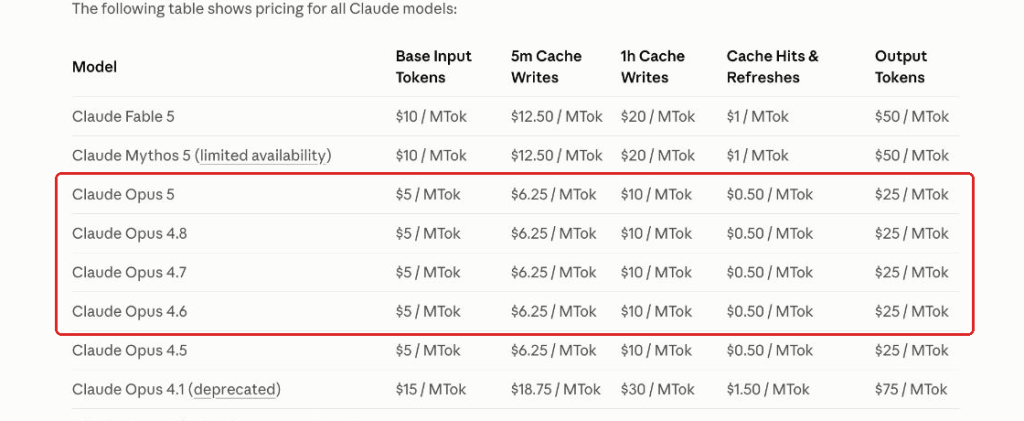
Claude Opus 4.6 costs $5 per million input tokens and $25 per million output tokens through Anthropic’s API. The same standard API rates also apply to Opus 4.7, Opus 4.8, and Opus 5. Claude Pro costs $20 when billed monthly, while Max starts at $100 per month. These prices cover different products: a Claude subscription is not the same thing as API usage.
The tricky part is no longer finding one headline price. You need to decide whether you want a chat subscription, usage-based API access, or a multi-model platform. Prompt caching, Batch processing, US-only inference, and the number of output tokens can all change the real bill.
GlobalGPT offers another route for users who want Claude Opus 4.6 without managing a separate API account or stacking several AI subscriptions. Plans start around $5.80, and the platform includes more than 100 models and tools. Opus 4.6 remains available alongside Opus 4.7, Opus 4.8, and Opus 5, so you can keep a familiar workflow and switch to a newer model when the task calls for it. GlobalGPT also supports access without a phone number or VPN in regions where direct sign-up can be difficult. Promotional discounts can reach 50% when an eligible offer is active.
Quick answer
- API: $5/MTok input and $25/MTok output.
- Claude Pro: $20 monthly, or $17 per month with $200 billed annually.
- Claude Max: from $100 per month.
- GlobalGPT: plans start around $5.80 with multiple Claude and non-Claude models in one workspace.
- Best default for a new API project: compare Opus 4.8 and Opus 5 first because they use the same standard token rates as Opus 4.6.

Claude Opus 4.6 API pricing
Anthropic charges for the tokens sent to the model and the tokens generated in its response. One MTok means one million tokens. For Opus 4.6, the base input rate is $5/MTok and the output rate is $25/MTok.
| Charge | Opus 4.6 price | What it covers |
|---|---|---|
| Base input | $5/MTok | Prompts, conversation history, documents, and other input |
| Output | $25/MTok | The model’s generated response, including billable reasoning output |
| 5-minute cache write | $6.25/MTok | Stores reusable prompt content for a short period |
| 1-hour cache write | $10/MTok | Stores reusable prompt content for one hour |
| Cache hit | $0.50/MTok | Reuses content already written to the prompt cache |
Opus 4.6 API price by charge type
US dollars per million tokens (MTok)
Cache hit$0.50
Batch input$2.50
Base input$5.00
5-minute cache write$6.25
1-hour cache write$10.00
Batch output$12.50
Standard output$25.00
Source: Anthropic API pricing, checked July 28, 2026. Batch rates are 50% below standard rates; US-only inference applies a separate 1.1× multiplier.
These are API rates, not monthly subscription prices. Developers who need implementation details can also review this focused guide to Claude Opus 4.6 API pricing.
How to calculate your real Opus 4.6 API cost
The simplest calculation is:
Input cost + output cost = total request cost
If one workload sends 100,000 input tokens and receives 10,000 output tokens, the standard-rate calculation is:
- Input: 0.1 × $5 = $0.50
- Output: 0.01 × $25 = $0.25
- Total: $0.75
Output is five times more expensive per token than input, so asking for long answers can move the bill faster than attaching a modest prompt. The useful habit is to control both context size and response length instead of watching only the input rate.
Same workload, three billing routes
Example: 100K input tokens + 10K output tokens
Batch API$0.375
Standard API$0.750
US-only inference$0.825
Batch cuts this eligible asynchronous job by 50%. US-only inference costs 10% more than standard global routing. Illustrative calculation from Anthropic’s published rates on July 28, 2026; taxes and separately priced tools are excluded.
Prompt caching
Prompt caching helps when the same large document, system prompt, policy library, or code context appears in repeated requests. A five-minute cache write costs more than normal input once, but a cache hit costs only $0.50/MTok for Opus 4.6. The saving comes from reusing that cached material, not from caching one prompt that will never be requested again.
Batch processing
Anthropic’s Batch API applies a 50% discount to asynchronous workloads. Opus 4.6 Batch pricing is $2.50/MTok for input and $12.50/MTok for output. It fits evaluations, classification, content processing, and other jobs that do not need an immediate response.
US-only inference
Using inference_geo: "us" applies a 1.1× multiplier across token and caching charges. Global routing uses the standard rate. This option matters when a data-residency requirement is more important than the extra 10% cost.
Subscription Breakdown: Is Claude Opus 4.6 Worth It?
If you don’t want to mess with API tokens, you can use a monthly subscription. However, the options are quite different in what they offer:

- Free Plan: Is Claude AI free in 2026? This is very limited. You might only get a few messages per day with Opus 4.6 before you hit a limit, which makes it hard to do serious work like coding or data analysis.
- Claude Pro ($20/month): This gives you about 5 times more usage than the free tier. It is good for general users looking for standard Claude AI plans, but if you work on very long conversations, you might still hit limits.
- Claude Max / Team Plans: To get the absolute best performance—specifically the “Max Effort” mode where the model tries its hardest—you typically need a higher-tier plan ($100+ range). These plans are expensive but unlock more consistent access to the smartest features.
- GlobalGPT Basic (~$5.8/month): This is a flexible alternative. Instead of paying a fixed $20 or $100, you pay a small base fee and access Opus 4.6 (plus other models) based on your actual usage. It is one of the best Claude AI alternatives that breaks the barrier of high monthly fees.

The “Cowork” Factor (Why it costs $100): The Max plan isn’t just about higher limits. It unlocks Cowork, a revolutionary feature that allows Claude to securely access local folders on your computer. Unlike a standard chat bot, Cowork can autonomously organize thousands of files, clean up datasets, and generate Excel reports directly on your hard drive—effectively turning Claude into a digital employee.
Does the 1M-token context window cost more?
No separate long-context premium applies to Claude 4.6 and later models under Anthropic’s current pricing. The official documentation says the full 1M-token context window uses standard per-token rates. A 900K-token request is expensive because it contains many tokens, not because those tokens move into a higher price tier.
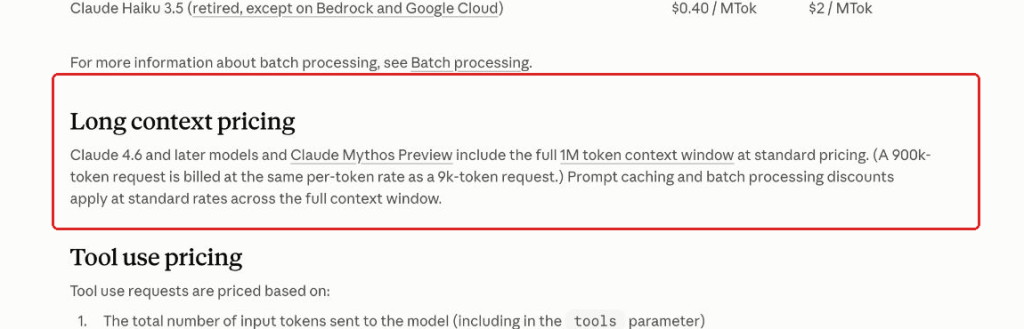
This distinction matters for budgeting. At the $5/MTok base input rate, 900,000 uncached input tokens cost $4.50 before any output or tool charges. Repeating that context many times can still become costly, which is where caching and context cleanup provide real savings.
Claude Free, Pro, Max, and Team pricing
A Claude subscription provides access through Anthropic’s consumer and workplace products. It does not give you an unlimited API allowance. Anthropic also does not promise a fixed message count: usage depends on model choice, conversation length, task complexity, and active limits.
| Plan | Price | Best fit |
|---|---|---|
| Free | $0 | Occasional questions and light personal use |
| Pro | $20 monthly; $17/month with $200 billed annually | Regular individual use, projects, Research, Claude Code, and Cowork |
| Max | From $100/month | Heavy individual use and longer uninterrupted sessions |
| Team Standard | $25 monthly or $20/month billed annually per seat | Teams needing central billing and collaboration |
| Team Premium | $125 monthly or $100/month billed annually per seat | Heavier team usage |
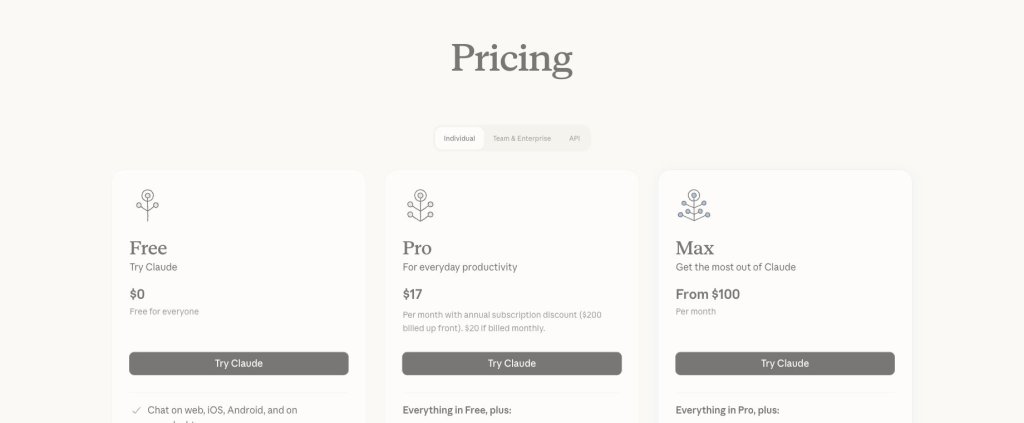
If you are deciding among Anthropic’s consumer options, see the broader guide to Claude AI plans and the explanation of what Claude’s free access includes.
How to Reduce Claude Opus 4.6 API Costs
While Opus 4.6 is powerful, it can be expensive. Here are official ways to lower your bill and find legitimate Claude AI discount codes strategies via usage efficiency:
Leveraging Prompt Caching for 90% Savings
According to GlobalGPT’s official guide, one of the most powerful tools in the developer toolkit is Prompt Caching.
- How it works: If you frequently use the same large documents (like a legal rulebook or a code library), you can “cache” (save) them.
- The Saving: You can reduce your input costs by up to 90% for subsequent requests because you don’t have to pay to re-upload the same data every time.
- Batch API: For tasks that aren’t urgent, using the Batch API can give you a 50% discount if you are willing to wait up to 24 hours for the result.

Claude Opus 4.6 vs. Opus 4.5: Is the Upgrade Worth the Cost?
Many users ask if they should switch to 4.6 or stick with the older 4.5. The data shows that for complex work, 4.6 is actually cheaper in the long run despite the lower Claude Opus 4.5 pricing because it makes fewer mistakes.

- It Fixes Mistakes Automatically: In tests, Opus 4.6 showed it could catch its own coding errors better than Opus 4.5. If you are using Claude AI for coding and Opus 4.5 takes 5 tries to fix a bug while Opus 4.6 does it in 1 try, Opus 4.6 saves you money even if the price per token is slightly higher.
- Huge Jump in Reasoning: On the “GDPval-AA” test, which measures how well AI does real economic work, Opus 4.6 beat Opus 4.5 by 190 points. This is a massive leap, meaning it handles complex instructions much better.
- Better Coding Scores: On the “Terminal-Bench 2.0” coding test, Opus 4.6 scored 65.4% compared to Opus 4.5’s 59.8%.

Is the 1M Token Context Window Worth the Premium Price?
The biggest (and most expensive) feature of Opus 4.6 is its ability to remember 1 million tokens of information—that’s like holding 10 novels in its memory at once.

What Is “Context Rot” and How Does Opus 4.6 Fix It?
“Context Rot” happens when an AI forgets the beginning of your conversation as it gets longer. This is a huge waste of money because you have to constantly remind the AI what to do.

- The “Needle in a Haystack” Test: When asked to find a tiny piece of information hidden in a massive pile of text (1M tokens), the older Sonnet 4.5 only found it 18.5% of the time.
- The Opus 4.6 Solution: In the exact same test, Opus 4.6 found the information 76% of the time.
- The Value: Even though the “Premium Context” costs $10/million tokens, it is worth it because the model actually remembers your instructions.

Real-World Cost Case Study: Building a C Compiler
To prove what this model can do, Anthropic ran a bold experiment. They asked a team of Opus 4.6 agents to build a piece of software (a C Compiler) from scratch without human help.
- The Result: The AI wrote over 100,000 lines of code and successfully built a working compiler for Linux.
- The Cost: This experiment cost about $20,000 in API fees.
- The Lesson: This proves Opus 4.6 is incredibly powerful, but it also serves as a warning. If you let “autonomous agents” run wild without checking on them, your bill can get very high, very fast.

How Do “Adaptive Thinking” and Effort Controls Impact Your Bill?
Opus 4.6 gives you a new control stick called “Effort”. You can tell the model how hard it should think about a problem.
- Low / Medium Effort: Use this for simple tasks like summarizing an email. It stops the model from “overthinking” and burning extra tokens.
- High (Default) / Max Effort: Use this for hard math or complex coding. The model will use “Adaptive Thinking” to pause and plan, which costs more but gives better answers.
- Context Compaction (Beta): Opus 4.6 can automatically summarize the old parts of your chat. This keeps your conversation running longer without hitting the expensive 200k+ premium tier as quickly.

Claude Opus 4.6 vs. GPT-5.3-Codex: Which Model Wins on Value?
Both models launched on the same day (Feb 5, 2026), making the choice difficult.

- Speed:GPT-5.3-Codex is significantly faster (>25% faster per token). If you need quick answers, it is cheaper.
- Coding Quality: On the “Terminal-Bench 2.0” test, GPT-5.3 scored 77.3%, while Opus 4.6 scored 65.4%.
- Research: Opus 4.6 is better at finding hard-to-get information, beating everyone on the “BrowseComp” search test.
- The GlobalGPT Strategy: Instead of guessing, you can check our Claude vs ChatGPT in 2025 comparison. Use GPT-5.3 for quick coding scripts (to save money) and switch to Opus 4.6 for complex research.

What Is the Cheapest Way to Use Claude Opus 4.6 Today?
Avoiding the “Subscription Trap”
If you buy everything separately, the costs add up fast: $20 for Claude + $20 for OpenAI + Image Tools = $50-$70/month.

Using Claude Opus 4.6 and newer models on GlobalGPT
GlobalGPT keeps Opus 4.6 available while also offering Opus 4.7, Opus 4.8, and Opus 5. That gives users a practical middle ground: keep 4.6 for a familiar task, then move to a newer Opus version without creating another standalone subscription or rebuilding the rest of the workflow.
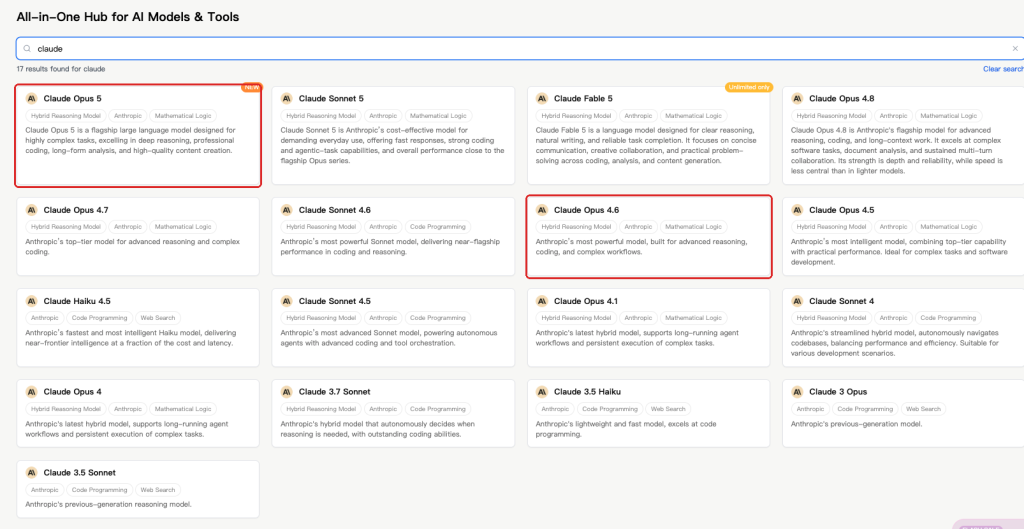
If Claude is not the right fit for a particular workload, compare the available Claude alternatives before adding another subscription.
Frequently asked questions
How much does Claude Opus 4.6 cost through the API?
Claude Opus 4.6 costs $5 per million input tokens and $25 per million output tokens at Anthropic’s standard API rate. Prompt caching, Batch processing, US-only inference, tool usage, and taxes can change the final bill.
Is Opus 4.6 included in Claude Pro?
Claude Pro provides access to more Claude models and more usage than the Free plan, but availability and usage limits can change. A Pro subscription is separate from API billing and does not provide unlimited API calls.
Does a 1M-token Opus 4.6 request use premium token rates?
No. Anthropic’s current documentation says Claude 4.6 and later models include the full 1M-token context window at standard per-token rates. The request can still be expensive because 1M tokens is a large quantity.
Is Opus 4.6 cheaper than Opus 5?
Not at the standard Anthropic API rate. Opus 4.6 and Opus 5 are both listed at $5/MTok for input and $25/MTok for output. Opus 4.6 is mainly a compatibility choice, while Opus 5 is the stronger starting point for many new complex workflows.
Can I use both Opus 4.6 and newer Opus models on GlobalGPT?
Yes. GlobalGPT lists Opus 4.6, 4.7, 4.8, and Opus 5 in the same model workspace. Availability and allowances depend on the active plan, so verify the live plan details before purchase.
What is the cheapest practical way to use Opus 4.6?
For light interactive use, a GlobalGPT plan starting around $5.80 can cost less than a separate Claude Pro subscription. For API workloads, Batch processing and prompt caching can reduce costs when the job fits those methods.