Quick answer: As of July 27, 2026, according to Anthropic’s July 24 launch announcement, Claude Opus 5 is the latest official Opus model. New Claude API integrations should use claude-opus-5, with a 1 million-token context window, up to 128,000 output tokens in synchronous Messages API calls, and standard pricing of $5 per million input tokens and $25 per million output tokens.
For no-code web access, GlobalGPT’s catalog lists Claude Opus 4.8 as its newest available Opus route on the same date. Use Anthropic’s API when you specifically need Opus 5; use the GlobalGPT route when fast browser access and multi-model switching matter more than having the newest first-party Opus release.
The Opus 4.6 setup remains below for teams maintaining that pinned model. Its screenshots are legacy references, so new requests should use the Opus 5 code samples added beside them.
To access the Claude Opus 4.6 API, developers must generate a unique API key via the Anthropic Console and target the specific claude-opus-4-6 model ID using the official Python SDK. While this offers direct integration for applications, the process requires navigating strict usage tiers, binding payment methods, and configuring complex local development environments just to send a “Hello World” request.
To see the full pricing guide for Claude Opus 4.6, check here.
These technical barriers often prevent users from quickly testing the model’s new 1M context window and reasoning capabilities. Fortunately, GlobalGPT provides an immediate alternative, allowing you to access the latest AI models directly through a web interface without any API configuration or coding setup.
GlobalGPT consolidates the world’s most powerful AI tools into one seamless platform, offering instant access to Claude Opus 4.8, GPT-5.6, and Gemini 3.6 Flash. The Claude Opus 4.8 web route is ready without API configuration or local development setup.
The GlobalGPT Basic Plan starts at $5.8 per month with 144,000 annual credits, so you can switch between model families in real time, bypassing region locks and the steep costs of maintaining multiple individual subscriptions.
| Access route | Current Opus | Price structure | Best for |
|---|---|---|---|
| Claude consumer app | Opus 5 is the default on Max and the strongest model on Pro | Pro: $20 monthly or $17/month annually; Max starts at $100/month | Chat, Claude Code, Cowork, and everyday use |
| Claude API | claude-opus-5 | $5 input / $25 output per million tokens | Applications, agents, and automation |
| GlobalGPT web access | Claude Opus 4.8 | Basic starts at $5.8/month with 144,000 annual credits | No-code access and multi-model switching |
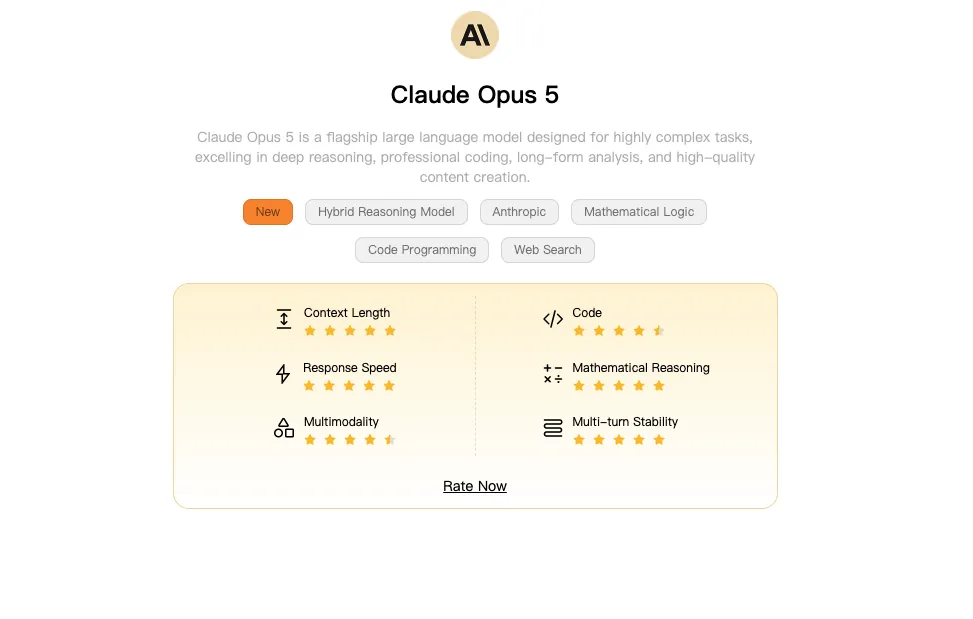
What is Claude Opus 4.6?
For new integrations, the important successor is Claude Opus 5. Anthropic’s current model table gives it a 1M-token context window, a 128K synchronous output limit, adaptive thinking, and the pinned API ID claude-opus-5.
| Claude Opus 5 API fact | Current value |
|---|---|
| Official release | July 24, 2026 |
| Claude API ID | claude-opus-5 |
| Context window | 1 million tokens |
| Maximum synchronous output | 128,000 tokens |
| Message Batches maximum output | Up to 300,000 tokens with the output-300k-2026-03-24 beta header |
| Standard token price | $5 input / $25 output per million tokens |
The next three paragraphs describe Opus 4.6 in its February 2026 release context. They remain useful for pinned 4.6 integrations, while Opus 5 is the current choice for new builds.
Claude Opus 4.6 represents the pinnacle of Anthropic’s “Next-Gen” model family, officially released in February 2026. This model is designed specifically for complex reasoning tasks, “Agentic” workflows, and deep coding challenges. Unlike its lighter predecessors, Opus 4.6 utilizes a massive architecture optimized to handle intricate instructions with higher fidelity.
The most significant upgrade is the 1M Token Context Window available natively through the API. This allows the model to process entire codebases, legal contracts, or full-length novels in a single prompt without losing coherence. For developers, the specific model ID required to access this version is claude-opus-4-6.
Regarding API pricing, Claude Opus 4.6 remains unchanged at $5/$25 per million tokens.
| Claude Opus 5 API usage | Input / cache price per MTok | Output price per MTok |
|---|---|---|
| Standard | $5 base input | $25 |
| 5-minute cache write | $6.25 | Standard output pricing |
| 1-hour cache write | $10 | Standard output pricing |
| Cache hit or refresh | $0.50 | Standard output pricing |
| Message Batches | $2.50 | $12.50 |
| Fast mode | $10 | $50 |

claude-opus-5; the standard $5/$25 Opus token price remains the same.What You Need Before You Start
For software engineers integrating AI into applications, accessing Opus 4.6 requires a formal setup with Anthropic. This route gives you granular control over parameters like temperature and max_tokens but requires technical proficiency.
Step-by-Step Setup:
- Account Creation: Open the Claude Console and create a developer organization. The Console is separate from a normal consumer Claude login.
- Billing Setup: Add billing in the Console. Anthropic’s current usage tiers are Start, Build, Scale, and Custom; the old “Tier 1 with a $5 minimum deposit” wording no longer applies.
- Key Generation: Go to the “API Keys” section, click “Create Key,” and copy the string starting with
sk-ant-. Store it securely; you cannot view it again.
Example (macOS/Linux):
export ANTHROPIC_API_KEY="your_key_here"Anthropic’s docs recommend the Messages API as the primary interface for Claude models.
If you are deciding between chat and developer access, the Claude AI plans and API access breakdown explains why a Pro or Max subscription does not include first-party API credits.
Step 1 Make Your First HTTP Request
Current Claude Opus 5 cURL request
Send new requests to the Messages endpoint with the current model ID:
curl https://api.anthropic.com/v1/messages \
  --header "x-api-key: $ANTHROPIC_API_KEY" \
  --header "anthropic-version: 2023-06-01" \
  --header "content-type: application/json" \
  --data '{
    "model": "claude-opus-5",
    "max_tokens": 1024,
    "messages": [{"role": "user", "content": "Hello, Claude"}]
  }'
Claude’s API is hosted at https://api.anthropic.com, and Opus 4.6 is called via the Messages endpoint

claude-opus-4-6 with claude-opus-5 for a new integration.
claude-opus-5 in the model field.Step 2 Python (Anthropic SDK)
For those proceeding with the API integration, you will need to install the official SDK. As of 2026, the library remains consistent, but the model parameter must be updated to target the new release.
Python Implementation:
First, install the library:
Bash

Then, run this script to send your first message:
Current Claude Opus 5 Python request
import os
import anthropic

client = anthropic.Anthropic(api_key=os.environ["ANTHROPIC_API_KEY"])

message = client.messages.create(
    model="claude-opus-5",
    max_tokens=2000,
    messages=[
        {"role": "user", "content": "Give me a short description of your capabilities."}
    ],
)

print(message.content[0].text)
model="claude-opus-5" in new SDK requests.For larger coding workflows, the Claude coding workflow guide covers prompt structure, file context, and practical model selection beyond the first request.
The Efficient Way (GlobalGPT All-in-One Platform)
If your goal is simply to start using Claude immediately—for writing, brainstorming, translation, summaries, or day-to-day work—API setup can be overkill. GlobalGPT offers a streamlined web interface that eliminates technical barriers.
Instead of managing API keys and usage tiers, you simply log in and select “Claude Opus 4.8” from the model dropdown menu. This method allows you to leverage the full 1M context window and reasoning capabilities immediately.
Why Choose the Web Interface?
- No developer console required (no Anthropic Console onboarding, no API key management)
- No code (open the web app, select Claude, start prompting)
- Cost Efficiency: The GlobalGPT Basic Plan ($5.8/mo with 144,000 annual credits) provides access to Opus 4.8, whereas direct API usage charges per million tokens, which can quickly exceed monthly budgets during heavy testing.
- Multi-Model Agility: You can draft a prompt in Claude Opus 4.8 and, with one click, re-run it in GPT-5.6 or Gemini 3.6 Flash to compare results.
If you want a current comparison inside the same model family, the Claude Fable 5 vs. Opus 4.8 guide explains the speed, reasoning, and cost trade-offs.
How it works (simple workflow)
- Open GlobalGPT in your browser
- Choose Claude Opus 4.8 from the model picker
- Start chatting—use your normal prompts, upload context, iterate
Comparison: API Integration vs. GlobalGPT Web Access
Choosing between the API and the Web Interface depends on your specific use case. The table below breaks down the key differences to help you decide.
| Feature | Official API (Anthropic) | GlobalGPT Web Access |
| Current Opus model | Claude Opus 5 | Claude Opus 4.8 |
| Primary Use Case | App Development & Automation | Content Creation, Coding Help, Research |
| Setup Time | 15-30 Minutes (Environment Setup) | Instant (Login & Chat) |
| Cost Model | $5 input / $25 output per MTok | Flat Subscription (Starts $5.8/month with annual credits) |
| Model Variety | Claude Models Only | 100+ Models (Claude, GPT, Gemini, Sora) |
| Technical Skills | API client or Workbench; code for integration | None Required |
When to choose GlobalGPT vs the Anthropic API
- Choose GlobalGPT if you want instant Claude Opus 4.8 usage, easy workflows, and minimal setup.
- Choose the Anthropic API if you’re building product features, automations, agent pipelines, or need strict infrastructure control.
- Choose the official Claude consumer app if you want Opus 5 in chat without writing API code and a Pro or Max subscription fits your usage.
For a workload-specific decision, the Claude vs. ChatGPT coding comparison shows where Claude’s long-context and agentic workflow strengths matter most.
References & Official Sources
The current Opus 5 facts in this page come from Anthropic’s official release, model, pricing, API, and consumer-plan pages:
- Current release: Introducing Claude Opus 5
- Model ID and limits: Claude models overview
- API pricing, cache, Batch, and Fast mode: Claude API pricing
- Official API access: How to access the Claude API
- Consumer subscriptions: Claude plans and pricing
Legacy Opus 4.6 source set
This guide is synthesized from the latest official technical documentation and product announcements released in February 2026. For further technical deep-dives, you can visit the following primary sources:
- Anthropic Official Release: Introducing Claude Opus 4.6: Our Smartest Model Yet – Detailed breakdown of model capabilities and performance benchmarks.
- Technical Documentation: What’s New in Claude 4.6 – Official API implementation guide, including the new
adaptive thinkingandeffortparameters. - OpenAI Competition: Introducing GPT-5.3 Codex – Comparative specs for the simultaneous release of OpenAI’s latest coding-centric model.
- Engineering Case Study: Building a C-Compiler with Claude Agent Teams – A look at how Opus 4.6 handles 100,000+ lines of code autonomously.
- Live Demonstrations: Claude 4.6 Launch Reveal (X.com) – Real-world video demonstrations of Adaptive Thinking in action.
Frequently Asked Questions
What is the latest Claude Opus model as of July 27, 2026?
As of July 27, 2026, Claude Opus 5 is Anthropic’s latest Opus model. Anthropic released it on July 24, 2026, replacing Opus 4.8 as the current official Opus choice.
What model ID should new Claude API integrations use?
Use claude-opus-5 for new first-party Claude API integrations. Model IDs from the 4.6 generation onward are pinned snapshots, so the ID does not silently move to a later model.
What are Claude Opus 5’s context window and maximum output?
Claude Opus 5 has a 1 million-token context window and supports up to 128,000 output tokens in synchronous Messages API calls. Eligible Message Batches can reach 300,000 output tokens with the required beta header.
How much does the Claude Opus 5 API cost?
Standard Claude API pricing is $5 per million input tokens and $25 per million output tokens. Consumer Claude subscriptions are separate and do not include API credits.
How do Message Batches and prompt caching reduce Opus 5 costs?
Message Batches cut input and output prices by 50% to $2.50 and $12.50 per million tokens. Prompt-cache writes cost $6.25 for 5 minutes or $10 for 1 hour, while cache hits cost $0.50 per million tokens.
Can I use Claude Opus 5 without the API?
Yes. Anthropic says Opus 5 is the default model on Claude Max and the strongest model on Claude Pro. Pro is $20 monthly or $17 per month with annual billing; Max starts at $100 per month.
Can I use Claude Opus 5 on GlobalGPT right now?
Not through a verified Opus 5 route as of July 27, 2026. GlobalGPT currently lists Claude Opus 4.8 as its newest Opus option, alongside other current models in the same web workspace.
Should I use Anthropic’s API or GlobalGPT?
Choose Anthropic’s API for application integration, automation, and infrastructure control. Choose GlobalGPT when you want fast no-code web access and easy switching among multiple model families.
Final Takeaway
Use claude-opus-5 when you need the latest official Opus model inside an application, agent, or automated workflow. If you want an immediate no-code route, GlobalGPT’s current Claude Opus 4.8 option keeps the original fast-access advantage and lets you compare other frontier models without the subscription maze.