Does Kling AI Allow NSFW Content and What Are the Limits? (2026 Guide)
Ariette Wynn
Last Updated 2026-08-30
No. Under Kling AI’s User Policy effective April 21, 2026, users may not promote sexually explicit material or submit obscene, offensive, or pornographic material. Kling does not publish an official “PG-13” rating or an adult-mode exception. If you want to use Kling 3.0 through a multi-model workspace, open Kling 3.0 on GlobalGPT, but the same principle applies: keep prompts lawful, consensual, and within the provider’s rules.
Cost warning to treat cautiously:
Dealing with these strict filters on standalone platforms is a fast way to drain your budget, because every blocked video still costs you paid credits. If your account gets suspended, you lose all your money. GlobalGPT offers a more flexible creative environment.
Billing outcomes for failed generations can vary by product and incident; Kling’s public terms do not promise that every blocked attempt will consume credits or that a suspension automatically forfeits every balance. Treat the paragraph above as a practical cost warning, not a published billing rule.
Before we begin, please note that this article is intended for lawful and responsible AI image/video creation only. The goal is to explain prompt writing, visual direction, style control, composition, lighting, character design, and creative editing techniques.
AI safety systems and prompt review mechanisms are dynamic and may change over time. The same prompt may produce different results depending on the model, region, account status, platform policy, or safety updates. We cannot control or override any model’s safety filters, and we do not guarantee that any prompt will produce a specific result.
Users are responsible for ensuring that their creations comply with applicable laws, platform policies, privacy rights, and ethical standards.
Verified July 28, 2026: Kling’s current public materials list Kling 3.0 Turbo, Kling 3.0, and Kling 3.0 Omni on the developer pricing page. Consumer memberships, API billing, and GlobalGPT access are separate products, so their prices and credits should not be compared as if they were interchangeable.
Standard: $6.99 first month, then $8.80/month for 660 credits; Pro: $25.99, then $32.56/month for 3,000 credits; Premier: $64.99, then $80.96/month for 8,000 credits; Ultra: $127.99, then $159.99/month for 26,000 credits
Monthly consumer plans shown on July 28, 2026; Basic is $0 and the public page does not promise monthly credits before login.
1 video unit = $0.14. Kling 3.0 Turbo starts at $0.112/second for 720p with native audio; Kling 3.0 starts at $0.084/second for 720p without native audio.
Developer billing, not a consumer subscription. Resolution, audio, and model selection change the rate.
The verified default was 700 GlobalGPT credits for a 3-second, 720p Kling 3.0 generation. GlobalGPT annual plans were advertised from $5.80/month equivalent.
GlobalGPT credits and plan prices are GlobalGPT fields, not official Kling credits or API units.
Those are the two practical questions this guide answers first: the official policy boundary and what to do when a harmless-looking request is rejected.
Does Kling AI Allow NSFW Content and What Are the Limits?
Common shorthand—not an official Kling rating:
No, Kling AI strictly forbids NSFW content and limits all video generations to a family-friendly, PG-13 standard to ensure professional safety.
“PG-13” is a useful creator shorthand here, not an official Kling rating. The controlling rule is broader: Kling’s current User Policy prohibits sexually explicit, obscene, offensive, and pornographic material, and it also restricts harmful conduct such as non-consensual imagery, harassment, privacy violations, and illegal content. For licensing questions separate from moderation, see Can I Use Kling AI for Commercial Use?
The Prohibited Core: Do not request explicit nudity, sexual acts, pornographic material, exploitative or non-consensual sexual content, or graphic violence. There is no published uncensored mode that overrides the User Policy.
The Practical PG-13 Benchmark: Mild action, ordinary affection, and everyday clothing are generally lower-risk creative directions. This is a practical benchmark rather than a guarantee; the policy and the model’s review decision control each generation.
How Does the Kling AI Content Filter Detect and Block Inappropriate Prompts?
Common but unverified technical explanation:
The Kling AI content filter detects inappropriate prompts by scanning your text in real-time before generation, and then blurring the video frames on the server while the video is actually rendering.
Kling does not publicly document that exact two-stage mechanism. What it does disclose is that it may scan, analyze, and review User Content to detect harmful or illegal content and fraud. A request can therefore be rejected or output can be moderated, but the company does not publish its keyword list, classifier thresholds, or a guaranteed frame-blurring workflow.
Prompt and input review: Text, images, and other inputs can be evaluated against safety rules before or during processing. Kling does not publish a comprehensive banned-word list.
Output review: Generated content may also be analyzed or removed. A blur, rejection, or failed render is an outcome creators may encounter, not proof of a publicly specified two-level system.
If you are new to the controls themselves, use the Kling AI tutorial for beginners before diagnosing a moderation error as a prompt-writing problem.
Where Is the Exact Line for Action, Horror, and Swimwear Videos?
The exact line is very thin; mild scratches or standard beach swimwear might pass, but extreme gore, excessive blood, or suggestive camera angles are completely blocked, often resulting in frustrating false positives.
There is no public matrix guaranteeing that a particular garment, camera angle, or amount of fictional blood will pass. Use the examples below as conservative creative guidance, keep all depicted people clearly adult where age could be ambiguous, and avoid sexualized framing, graphic injury detail, real-person misuse, or exploitative context.
Action and horror: Describe choreography, atmosphere, lighting, reaction, and implied danger rather than dismemberment, torture, open wounds, or pools of blood. The Kling camera movement guide can add intensity without relying on graphic detail.
Fashion and swimwear: State that the subject is an adult, use editorial or catalog context, choose neutral posing, and describe the garment precisely without sexualized anatomy or voyeuristic angles.
Content Category
Allowed (PG-13 Limit)
Blocked (Crosses the Line)
Action / Combat
Sword fighting, explosions, minor dirt
Decapitation, heavy bleeding, torture
Romance
Hugging, looking into eyes, holding hands
Explicit kissing, bedroom scenes
Clothing / Beach
One-piece swimsuits (sometimes), t-shirts
Lingerie, bare chests, suggestive angles
The table is a conservative editorial guide, not a contractual whitelist. Context matters, and the current User Policy—not a motion-picture rating—remains the authoritative boundary.
What Are the Penalties for Crossing the Line in Kling AI?
Myth to avoid:
The penalties for crossing the line in Kling AI include wasting your expensive generation credits on failed renders, receiving temporary lockouts, and facing permanent shadowbans.
Kling’s published terms do not confirm a fixed lockout duration or a “shadowban” program. The official enforcement language is more direct: Kling may remove content and suspend, block, delete, or terminate an account or access, in some cases without notice. Questions or appeals can be sent to support@kling.ai.
Generation and credit risk: A rejected or interrupted job can waste time and may have billing consequences, but Kling does not publish a universal rule saying every policy block is charged.
Published account actions: Under the current User Policy, Kling may remove content or suspend, block, delete, or terminate access. No official 24-hour timetable is stated.
Why Is Kling AI So Strict About Its Safety Standard?
Often-cited but unconfirmed business explanation:
Kling AI is strict about its safety standard to avoid major legal liabilities regarding deepfakes, and to maintain a clean brand image for its highly profitable B2B enterprise clients.
Kling’s public policies support the safety, rights, and compliance rationale, but they do not attribute moderation to specific Hollywood or soft-drink clients. The documented concerns include unlawful and harmful content, impersonation, privacy, intellectual property, harassment, discrimination, and fraud.
Preventing non-consensual and deceptive media: Restrictions on impersonation, privacy violations, sexual exploitation, and harmful content reduce risks to depicted people and viewers.
Protecting lawful creative use: Clear limits help creators plan commercial, educational, and entertainment workflows around consent, rights, and platform rules. For recurring actors, use Kling character consistency techniques with original or properly licensed references.
📺 Watch: Why AI Companies Censor Their Models
Understand the deep ethical and legal reasons behind strict AI limits from Google DeepMind’s safety team:
How Can You Safely Test Content Limits Without Risking Your Account?
Convenience claim—not a no-risk guarantee:
You can safely test content limits without risking your account by using an all-in-one platform like GlobalGPT, which gives you access to broader, more flexible models to experiment with before you ever touch Kling.
No platform removes policy or account risk entirely. The safer method is to test a clearly compliant version at low cost, change one creative variable at a time, save the rejected prompt and timestamp, and contact support when a benign request appears to be misclassified.
Start with neutral language: Specify adult subjects, ordinary clothing, non-graphic action, and a legitimate editorial or cinematic context.
Test one variable at a time: Change motion, camera, lighting, or wardrobe separately so you can identify the term or composition associated with a rejection.
Keep a record: Save prompt text, input provenance, consent or licenses, the time of the attempt, and the displayed error.
Use a compliant alternative when appropriate: Compare workflows in Seedance 2.0 vs Kling 3.0; do not move prohibited material between providers.
For a consolidated workspace, try the current Kling 3.0 route on GlobalGPT. GlobalGPT access and credit-refund handling are its own product terms, separate from Kling’s consumer membership and official API.
What Is the Best Workaround for Falsely Blocked Kling Prompts?
The best response to a falsely blocked Kling prompt is to preserve the creative intent while rewriting it in clear, neutral, policy-compliant language. Do not use image-to-video, coded wording, or another provider to conceal prohibited content from a safety system.
Step 1: Isolate the harmless intent: Keep the scene’s genre, adult subject, wardrobe category, lighting, and emotion, while removing ambiguous anatomy, fetish, graphic-injury, or age-related wording.
Step 2: Describe motion directly: Use ordinary camera and subject movement such as “Camera pans left slowly” or “Gentle breeze,” without implying that short motion text is a way to evade input review.
Step 3: Use a rights-cleared reference only: If image-to-video is appropriate, upload an original or licensed, policy-compliant image. See the Kling image-to-video guide for the legitimate workflow.
Some Image-to-Video Prompt Templates (Copy & Paste)
The following prompt examples are provided to demonstrate how to describe visual style, character appearance, clothing, lighting, camera angle, composition, mood, and artistic direction more clearly.
These examples are not intended to bypass safety systems or encourage the creation of illegal, non-consensual, privacy-invading, exploitative, or otherwise harmful content. If a prompt is blocked or does not generate the expected output, it may have triggered the model’s safety review system. In that case, users should revise the prompt toward a clearer, more neutral, and policy-compliant creative direction.
Generate the base image first, then use the safe motion prompt in Kling:
[Step 1 - Policy-Compliant Base Image Prompt]
A photorealistic editorial portrait of an adult fashion model at a sunny coastal resort, wearing an elegant one-piece swimsuit with a linen cover-up, neutral catalog pose, ocean waves in the background, golden-hour lighting, luxury travel magazine style, shallow depth of field.
[Step 2 - Motion Prompt for Kling AI]
Slow tracking shot pushing forward, fabric and hair moving gently in the breeze, warm sunlight reflecting on the water, stable camera.
No. Kling AI’s current official Terms list sexually explicit and pornographic material among prohibited content.
Does Kling AI use an official PG-13 standard?
Kling’s current Terms do not publish an official PG-13 rating. Treat PG-13 wording as unofficial shorthand, not a guaranteed moderation rule.
Does Kling publish a complete list of allowed prompts?
No complete official whitelist is published in the Terms reviewed for this update. A neutral prompt can still be reviewed in context.
Can Kling review prompts and generated output?
Kling’s Privacy Policy says it may scan, analyze, and review User Content for content safety. It does not publish a complete technical threshold or keyword list.
How old do you have to be to use Kling AI?
The general rule is at least 13 or the higher minimum age required locally. Users below the local age of majority need a parent or guardian to represent and consent for them, and some jurisdictions add specific rules.
Can Kling suspend or terminate an account?
The Terms describe actions that may include removing content and suspending, blocking, deleting, or terminating access or an account. They also describe a support appeal route.
What should I do if a compliant prompt is blocked?
Stop repeating the same request, remove ambiguous wording, review all uploaded inputs, record the non-sensitive error details, and use support or appeal if the block persists.
Conclusion
Kling AI maintains strict moderation standards designed around professional-safe cinematic generation and enterprise-friendly workflows.
While these systems can sometimes feel restrictive for creators working on fashion, action, or emotionally stylized cinematic content, the platform still offers powerful capabilities for:
cinematic motion
realistic camera movement
visual consistency
polished rendering
structured storytelling
Ultimately, the strongest AI creative workflows focus on:
cinematic clarity
visual storytelling
artistic direction
policy-aware prompting
structured scene design
By refining prompt language carefully and experimenting across multiple AI models, creators can achieve significantly stronger cinematic results while staying within responsible creative boundaries.
For a current all-in-one workflow, launch Kling 3.0 on GlobalGPT. Keep the original prompt, input rights, and safety context clear whichever access route you choose.
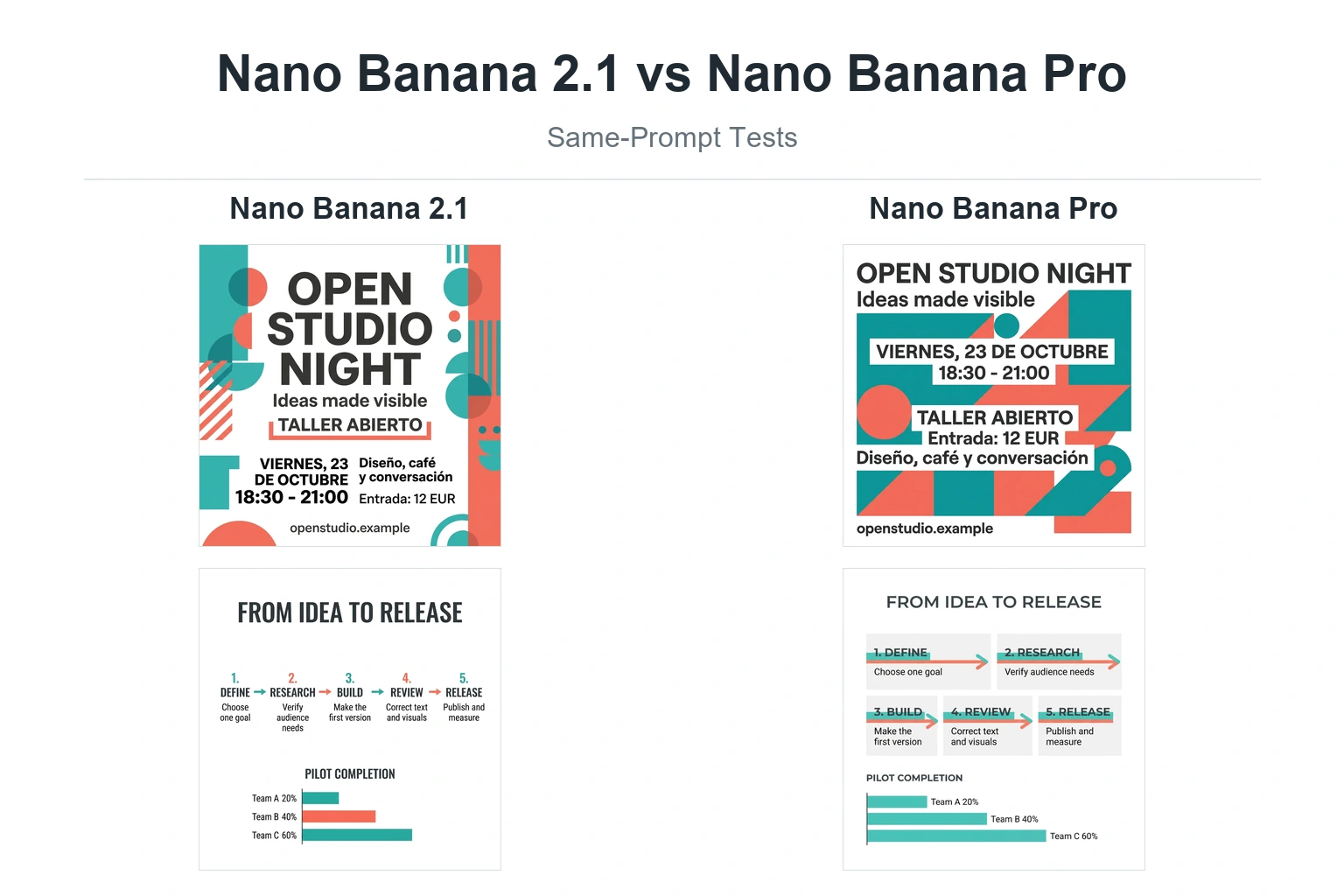
Nano Banana 2.1 vs Pro: compare same-prompt posters, charts, product images, and edits with official API pricing. See the results before choosing a model.