O Seedance 2.5 é a melhor opção para narrativas mais longas, produções com grande volume de referências e edição de vídeo controlada. O Seedance 2.0 continua sendo altamente relevante para clipes mais curtos, iterações de baixo custo, fluxos de trabalho de API já estabelecidos e resoluções de saída de até 4K. Em outras palavras, a escolha entre o Seedance 2.5 e o Seedance 2.0 não se resume simplesmente a uma comparação entre o novo e o antigo. Depende do que você está produzindo e de quais recursos você realmente utilizará.
Se você quiser experimentar a diferença com seu próprio prompt, Espaço de trabalho de vídeo com IA do GlobalGPT oferece os modelos Seedance 2.5 e Seedance 2.0 na mesma plataforma multimodelo. Isso facilita a transição da pesquisa comparativa para a geração efetiva, sem a necessidade de gerenciar sites separados para cada modelo. As configurações disponíveis e os limites de uso podem variar de acordo com o plano; portanto, verifique as opções de modelo exibidas em sua conta antes de iniciar um lote de produção.
A seguir, comparamos as especificações publicadas dos dois modelos, seus recursos, exemplos de preços oficiais, disponibilidade e um primeiro teste da geração Seedance 2.0. Como a demonstração oficial do Seedance 2.5 e nossa saída do Seedance 2.0 não foram criadas nas mesmas condições, elas são analisadas separadamente, em vez de serem transformadas em uma comparação direta artificial.
Seedance 2.5 x Seedance 2.0: Comparação rápida
| Categoria | Seedance 2,5 | Seedance 2.0 |
|---|---|---|
| Comprimento máximo da geração | Até 30 segundos em uma geração | 4 a 15 segundos |
| Extensão de vídeo | Pode ser prorrogado duas vezes | Suporta extensão para a frente e para trás |
| Resoluções de saída publicadas | 480p e 720p na tabela oficial de preços atual | 480p, 720p, 1080p e 4K no modelo padrão |
| Entrada multimodal | Fluxos de trabalho para referência de texto, imagem, vídeo e áudio | Texto, imagens, vídeo, áudio e referências combinadas |
| Áudio nativo | Sim | Sim |
| Principal vantagem | Narração mais extensa, controle mais preciso das referências e edição avançada | Resolução flexível, fluxo de trabalho maduro da API e iteração a menor custo |
| Preço de referência oficial para 720p | 7,56 RMB por 5 segundos sem vídeo de entrada | 4,97 RMB pelo mesmo modelo com especificações básicas |
| Mais adequado para | Anúncios de formato longo, narrativas controladas e produções repletas de referências | Clipes curtos, testes rápidos, pipelines de API e entrega em alta resolução |
Opinião rápida: O Seedance 2.5 é a melhor opção quando um projeto exige mais tempo, uma orientação mais cuidadosa ou uma edição mais complexa. O Seedance 2.0 é a escolha mais prática em termos de custo-benefício quando 15 segundos são suficientes, especialmente se você precisar de saída em 1080p ou 4K.
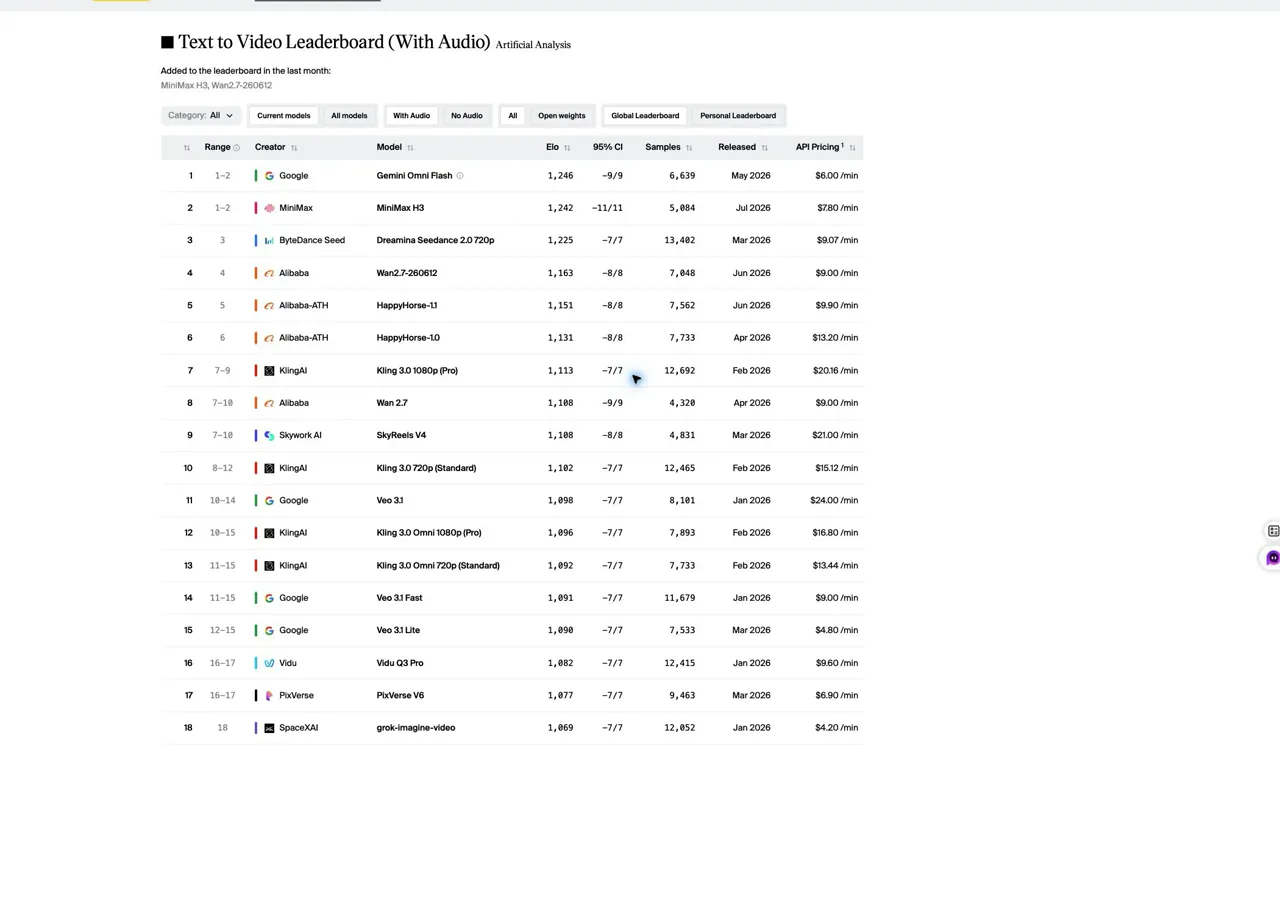
Contexto da Avaliação Comparativa Independente
Atualmente, a Artificial Analysis classifica o Dreamina Seedance 2.0 720p em terceiro lugar em seu ranking de “Texto para Vídeo” com áudio, com uma pontuação Elo de 1.225, baseada em 13.402 amostras. Essa é uma evidência independente útil de que o Seedance 2.0 continua competitivo em relação aos modelos de vídeo mais recentes.
O que é o Seedance 2.5?
O Seedance 2.5 é o modelo conjunto de áudio e vídeo de última geração da ByteDance. Sua principal novidade é a capacidade de criar vídeos de até 30 segundos em uma única geração. A ByteDance também afirma que um resultado pode ser estendido duas vezes, dando aos criadores mais espaço para construir uma cena completa, em vez de juntar várias gerações curtas.
A mudança mais significativa diz respeito ao controle. De acordo com o página oficial do modelo Seedance 2.5, o modelo foi projetado para interpretar a intenção, o enquadramento e a linguagem cinematográfica de um vídeo de referência. Esse é um objetivo mais ambicioso do que simplesmente copiar o movimento. O objetivo é compreender o que faz com que a referência funcione e traduzir essa direção em uma nova cena.
O Seedance 2.5 também apresenta ou destaca recursos voltados para a produção, incluindo controle de modelo branco, edição com tela verde, movimentos profissionais de câmera e planejamento de cena. Esses recursos do Seedance 2.5 tornam a atualização particularmente relevante para anunciantes, cineastas e criadores que precisam de uma direção previsível, em vez de um clipe visualmente impressionante, mas difícil de controlar.
O que é o Seedance 2.0?
O Seedance 2.0 é uma família de geração de vídeo multimodal com três variantes principais: Seedance 2.0, Seedance 2.0 Fast e Seedance 2.0 Mini. O modelo padrão prioriza a qualidade da saída, o Fast equilibra custo e velocidade de geração, e o Mini é destinado à produção de baixo custo.
O modelo padrão oferece suporte à conversão de texto em vídeo, à conversão de imagem em vídeo (primeiro quadro e primeiro e último quadros), à geração de referências multimodais, à edição de vídeo, à extensão de vídeo e à geração nativa de áudio. Ele pode usar imagens para preservar um personagem, estilo ou composição; vídeo para fazer referência ao tema, movimento da câmera, ação ou linguagem visual; e áudio para orientar vozes, música, diálogos ou sons.
Se você está decidindo se o Seedance deve ser seu único modelo de vídeo, nosso Comparação entre o Seedance 2.0 e o Sora 2 oferece um segundo critério útil para a tomada de decisão, especialmente para criadores que estão avaliando o controle multimodal em relação a um fluxo de trabalho de geração diferente.
O Seedance 2.0 gera clipes de 4 a 15 segundos e suporta as proporções de tela 21:9, 16:9, 4:3, 1:1, 3:4 e 9:16. A versão padrão suporta saída em 480p, 720p, 1080p e 4K. A documentação da ByteDance indica que sua saída em 4K utiliza codificação de 10 bits, o que é útil para gradientes mais suaves e produções que exigem precisão nas cores.
Seedance 2.5 x Seedance 2.0: Comparação detalhada dos recursos
Duração do vídeo e narrativa
A diferença mais evidente do Seedance 2.5 é a geração em 30 segundos. O Seedance 2.0 atinge um máximo de 15 segundos; portanto, uma cena mais longa geralmente requer clipes separados ou um fluxo de trabalho de extensão. O Seedance 2.5 oferece ao prompt mais tempo para definir um local, realizar várias ações interligadas e chegar a um final natural.
Isso é importante para demonstrações de produtos, publicidade narrativa, diálogos e cenas centradas na atuação. Um limite de 30 segundos não garante que todas as ações sejam coerentes, mas elimina uma das restrições estruturais da versão anterior.
Resolução e qualidade de saída
Atualmente, o Seedance 2.0 apresenta uma vantagem mais clara nas opções de resolução divulgadas. O modelo padrão lista 480p, 720p, 1080p e 4K. Em contrapartida, a tabela de preços pública atual do Seedance 2.5 lista 480p e 720p.
Isso não prova que o Seedance 2.5 nunca oferecerá suporte a resoluções mais altas. Significa que não se deve prometer uma saída do Seedance 2.5 com resolução mais alta até que isso conste na documentação do produto ou da API relevante. Se um fluxo de trabalho de produção atual exigir especificamente a entrega nativa em 1080p ou 4K, o Seedance 2.0 é a opção documentada mais segura.
Referências de imagem, vídeo e áudio
Ambas as gerações oferecem suporte à criação multimodal; portanto, a atualização não se resume simplesmente à adição de entradas de referência. O Seedance 2.0 já é capaz de combinar texto, imagens, vídeo e áudio. Ele pode herdar desses materiais a aparência dos personagens, o estilo, a composição, o movimento da câmera, a ação, a qualidade vocal, a música e o diálogo.
O Seedance 2.5 se concentra em interpretar referências com maior precisão. A ByteDance descreve essa funcionalidade como um passo além da transferência de movimentos, rumo a uma interpretação criativa da intenção e da linguagem cinematográfica de um vídeo de referência. Isso deve ser mais útil quando um criador deseja manter a mesma lógica de direção sem reproduzir literalmente a cena original.
As afirmações sobre os valores máximos exatos de contagem de referência devem ser consideradas com cautela. Esses limites podem variar de acordo com a superfície do produto e não foram indicados com clareza suficiente na documentação pública analisada para esta comparação a ponto de serem incluídos como especificações fixas.
Consistência dos personagens e das cenas
Clipes mais longos tornam a consistência mais difícil: um modelo precisa preservar rostos, roupas, adereços, disposição espacial e iluminação enquanto a cena continua mudando. A ByteDance destaca especificamente que o Seedance 2.5 produz movimentos mais suaves e consistentes, além de visuais mais realistas, em toda a sua janela de geração mais longa.
O Seedance 2.0 já conta com ferramentas robustas de preservação de referência e é capaz de manter as características dos caracteres e os detalhes dos objetos em muitos fluxos de trabalho de formato reduzido. A diferença prática, portanto, não é que a versão 2.0 careça de consistência, mas que a versão 2.5 foi projetada para manter o controle em sequências mais complexas e mais longas.
Controle de movimento e da câmera
O Seedance 2.5 dá maior ênfase aos movimentos profissionais da câmera e ao “performance blocking”. O “performance blocking” descreve onde os personagens se movem, param, olham e interagem dentro de uma cena. Isso torna o modelo mais relevante para prompts que contenham várias ações coordenadas, em vez de um único evento visual breve.
O Seedance 2.0 continua sendo capaz de seguir referências de câmera e de ação, além de poder reproduzir o movimento geral ou o estilo de um vídeo original. Para tomadas simples com dolly, revelações de produtos ou clipes para redes sociais, isso já pode ser suficiente.
Geração e sincronização de áudio
Ambas as versões podem gerar vídeo com áudio; portanto, o som nativo não é exclusivo do Seedance 2.5. O Seedance 2.0 pode utilizar áudio de referência para voz, música, diálogos e efeitos sonoros. A melhoria declarada do Seedance 2.5 é uma resposta mais confiável a uma variedade maior de solicitações de edição de áudio e vídeo.
Os criadores devem, mesmo assim, verificar os controles disponibilizados pela plataforma que utilizam. Um modelo pode oferecer um recurso no nível do modelo, sem que todas as interfaces apresentem as mesmas opções de referência, edição ou áudio.
Edição e extensão de vídeo
O Seedance 2.0 permite editar um vídeo existente, estendê-lo para frente ou para trás e conectar até três segmentos de vídeo em um resultado contínuo. Essas ferramentas continuam sendo úteis para fluxos de produção curtos e trabalhos criativos iterativos.
O Seedance 2.5 é posicionado como o modelo de edição mais avançado. Além de edições de áudio e vídeo mais confiáveis, a ByteDance destaca o controle de modelo branco e a edição com tela verde entre seus recursos de produção. O valor da atualização dependerá da disponibilidade desses controles na interface do produto que estiver sendo utilizada.
Preços do Seedance 2.5 vs Seedance 2.0
A plataforma Volcano Engine, da ByteDance, calcula o preço dos vídeos com base no preço dos tokens e no uso desses tokens. A resolução, a duração do vídeo final, a taxa de quadros e a duração do vídeo de entrada podem afetar o custo final. Os valores a seguir são exemplos oficiais publicados em 31 de julho de 2026, e não representam preços de varejo universais válidos para todas as plataformas.
| Saída de 5 segundos no formato 16:9 sem vídeo de entrada | Seedance 2,5 | Seedance 2.0 |
|---|---|---|
| 480p | 3,36 RMB, o que equivale a aproximadamente 0,67 RMB por segundo | 2,31 RMB, o que equivale a aproximadamente 0,46 RMB por segundo |
| 720p | 7,56 RMB, o que equivale a aproximadamente 1,51 RMB por segundo | 4,97 RMB, o que equivale a aproximadamente 0,99 RMB por segundo |
| 1080p | Não consta na tabela atual | 12,39 RMB, o que equivale a aproximadamente 2,48 RMB por segundo |
| 4K | Não consta na tabela atual | 25,27 RMB, o que equivale a aproximadamente 5,05 RMB por segundo |
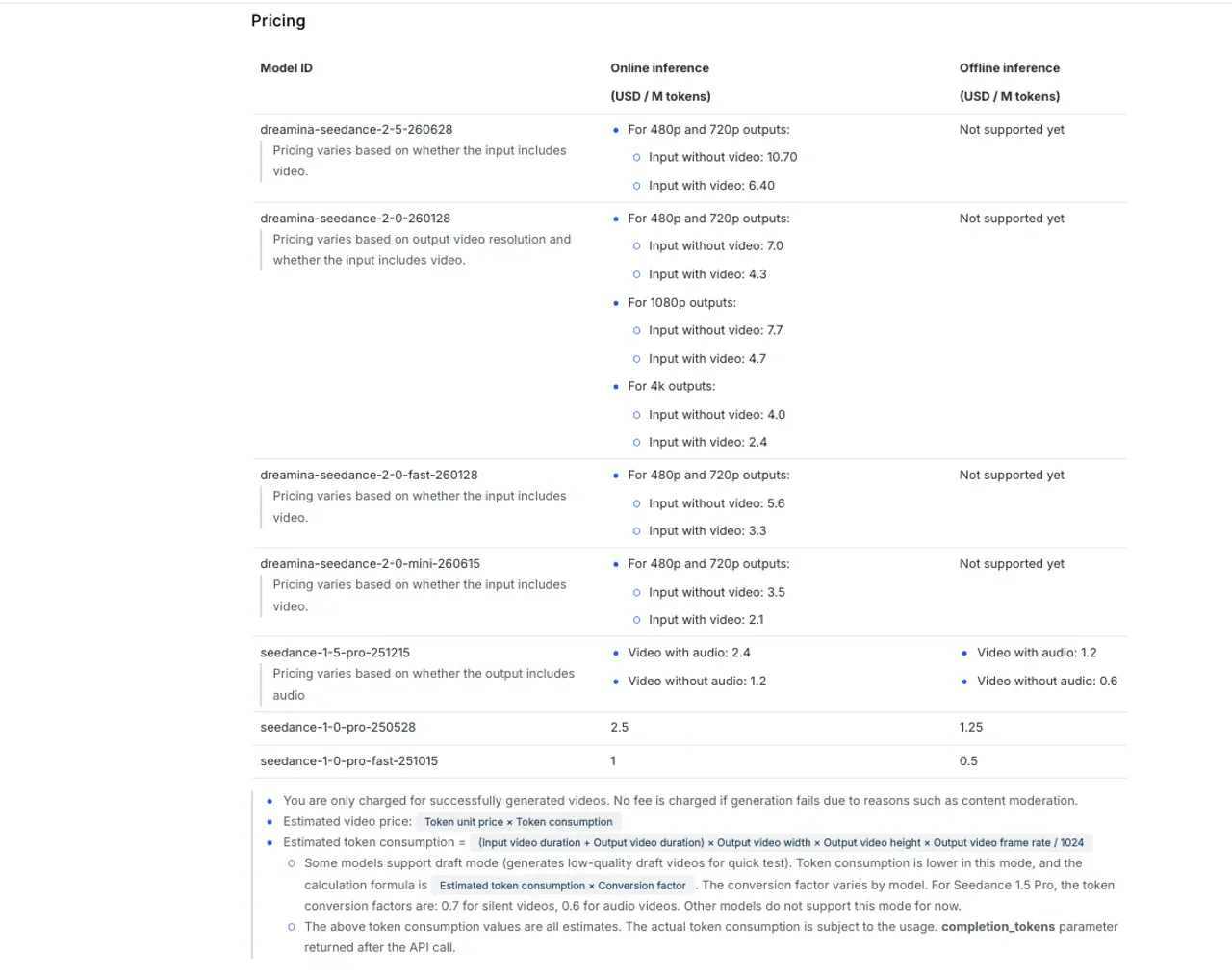
Exemplos oficiais correspondentes de 5 segundos
Saída em 16:9 sem vídeo de entrada · RMB por vídeo gerado
¥2,31
¥4,97
Nesses exemplos comparativos de 5 segundos, o Seedance 2.5 custa cerca de 45% a mais em 480p e cerca de 52% a mais em 720p. A diferença pode aumentar quando se inclui um vídeo de entrada, pois a duração dessa referência também contribui para o consumo de recursos.
Por exemplo, a ByteDance estima que uma saída de 5 segundos em 720p, no formato Seedance 2.5, a partir de um vídeo de entrada de 2 a 30 segundos, pode custar entre RMB 8,16 e RMB 31,75. Uma saída comparável em Seedance 2.0, com um vídeo de entrada de 2 a 15 segundos, está estimada entre 5,44 e 12,10 RMB.
Qual versão é mais econômica? O Seedance 2.0 é mais barato para gerações curtas correspondentes. O Seedance 2.5 ainda pode reduzir o custo total de uma produção se sua saída mais longa e seu controle mais preciso eliminarem várias gerações, extensões ou edições manuais. A comparação relevante é o custo para se chegar a um vídeo final aceitável, e não apenas o preço por segundo gerado.
A Volcano Engine afirma que apenas as gerações de vídeo bem-sucedidas são cobradas. As saídas que falham devido à moderação ou a falhas semelhantes na geração não são cobradas. Os preços podem sofrer alterações; portanto, as equipes de produção devem verificar o Página atual de preços do modelo Volcano Engine antes de fazer uma estimativa para um lote grande.
A estrutura de preços direta da API é mais útil para equipes que precisam de automação e de um controle preciso dos custos por trabalho. Criadores que preferem um ambiente de trabalho visual podem optar por uma abordagem diferente: o GlobalGPT reúne o Seedance com outros modelos de vídeo em uma única experiência de produto baseada em assinatura. Isso pode simplificar a concepção de ideias e a troca de modelos, embora não deva ser considerado idêntico à estrutura de preços da API da ByteDance ou aos controles completos para desenvolvedores. Compare a cota indicada no seu plano GlobalGPT com o número e a duração dos vídeos que você pretende produzir.
Disponibilidade e diferenças entre plataformas
O Seedance 2.0 possui um fluxo de trabalho documentado da API do Volcano Engine, incluindo IDs de modelos, exemplos de solicitações, sondagem de tarefas, edição, extensão e entradas de referência multimodais. Atualmente, é a opção mais consolidada para desenvolvedores que estão criando um pipeline automatizado.
O lançamento público do Seedance 2.5 não está sendo tão uniforme. A ByteDance publicou a página do modelo e os preços oficiais, enquanto outro tutorial oficial, atualizado em 31 de julho de 2026, ainda informa que a experiência online e o acesso à API estarão disponíveis em breve. Isso sugere um lançamento em etapas, no qual o acesso pode variar de acordo com a conta, a região e a área de atuação do produto.
Antes de escolher uma plataforma, não se limite a verificar se o nome do modelo aparece em um menu. Confirme a duração máxima, as resoluções disponíveis, os tipos de entrada de referência, os controles de edição, as opções de áudio e os preços apresentados por essa interface específica.
O que a apresentação oficial do Seedance 2.5 demonstra
A página 2.5 do Seedance da ByteDance inclui uma demonstração de 30 segundos e uma compilação mais longa. Assista ao vídeo oficial original abaixo antes de ler nossa interpretação.
O que os vídeos do Seedance 2.5 podem — e não podem — provar
| Evidências | Sinal visível ou divulgado | Status | Como a utilizamos |
|---|---|---|---|
| Apresentação de 30 segundos | Um exemplar oficial completo com o comprimento máximo de uma única geração publicado para a espécie. | Mídia oficial verificada | Apoia a discussão sobre narrativas mais longas. |
| Movimento e continuidade da cena | A página oficial destaca o modelo por seus movimentos mais suaves e consistentes e por seus visuais realistas. | Demonstração do fornecedor | Indica a capacidade prevista, e não a confiabilidade média da primeira produção. |
| Controle de referência e edição | A página oficial do site destaca a interpretação de vídeos de referência, edições mais abrangentes de áudio e vídeo, controle do modelo branco e edição com tela verde. | Declaração oficial do produto | Define as dimensões utilizadas para avaliar a atualização. |
| Contagem e seleção de corridas | A ByteDance não divulga quantas gerações foram testadas nem como os clipes foram selecionados. | Não divulgado | Isso nos impede de considerar a vitrine como um parâmetro de referência independente. |
Conclusão principal: Os vídeos oficiais são fortes indícios do limite máximo de produção previsto para o Seedance 2.5. Eles não constituem evidência da consistência na primeira tentativa, da latência ou do custo típico.
No entanto, esses são exemplos oficiais cuidadosamente selecionados. Eles não revelam quantas gerações foram testadas, se os clipes foram selecionados a partir de um lote maior ou quais etapas de pós-produção foram utilizadas. Devem ser analisados como demonstrações de capacidade, e não tratados como o resultado médio de uma primeira tentativa.
Nosso teste prático do Seedance 2.0
Executamos três tarefas Seedance 2.0 derivadas das principais características do Seedance 2.5: continuidade comercial, estrutura narrativa mais longa e divisão profissional do desempenho. Cada clipe abaixo é o primeiro resultado válido. Não refizemos nenhum resultado utilizável apenas para melhorar a aparência.
Três testes Seedance 2.0 de primeira saída
Teste 1: Continuidade de comercial de cinco segundos
Resultado: aparência refinada, sequência de ação concisa
O resultado apresentou um visual comercial marcante, com uma xícara preta reconhecível, o cenário de uma máquina de café expresso, o jato de leite, uma profundidade de campo reduzida e uma iluminação aconchegante. A principal limitação é a densidade das tarefas: várias ações sequenciais se sucedem em apenas cinco segundos, o que faz com que o fluxo de trabalho pareça comprimido.
Ver o prompt exato
Um comercial de café filmado em uma única tomada, em um café aconchegante e moderno. Um barista pega uma xícara de cerâmica preta fosca, coloca-a sob uma máquina de café expresso, prepara uma dose e, em seguida, despeja lentamente o leite vaporizado enquanto a câmera faz um movimento suave de dolly para frente. Mantenha a mesma xícara, as mesmas mãos, o mesmo layout do balcão, a mesma iluminação e a identidade do barista consistentes durante todo o comercial. Vapor natural, movimento realista do líquido, iluminação comercial de alta qualidade, sem cortes, sem texto na tela.
Teste 2: Continuidade narrativa de quinze segundos
Tabela de resultados: teste de estresse de duração máxima para o Seedance 2.0
Essa tarefa leva a geração anterior ao seu limite máximo de duração publicado. Ela exige uma tomada contínua que preserve a mulher, o casaco cor de mostarda, a mala vermelha, a carta, a geometria da carruagem, a transição de iluminação e a mudança emocional. É a referência prática mais relevante para decidir se a janela de 30 segundos do Seedance 2.5 resolve uma restrição narrativa real.
Ver o prompt exato
Uma história cinematográfica de 15 segundos, filmada em uma única tomada, dentro de um vagão de trem vintage em movimento. Uma mulher com um casaco amarelo-mostarda entra pela esquerda carregando uma pequena mala vermelha, coloca a mesma mala no compartimento superior, senta-se perto da janela, abre uma carta dobrada e sua expressão muda de esperançosa para discretamente desolada à medida que o trem atravessa um túnel escuro e retorna à luz quente do pôr do sol. A câmera recua lentamente e, em seguida, faz um arco suave ao redor dela. Mantenha a mesma mulher, o casaco, a mala vermelha, a carta, a disposição dos assentos, a posição da janela e a iluminação do vagão consistentes durante toda a cena. Ambiente natural de trem, música emocional sutil, sem cortes, sem texto na tela.
Teste 3: Bloqueio de desempenho e transferência de adereço
Balanço: ação coordenada no âmbito de um contrato de continuidade rigoroso
O prompt testa exatamente o tipo de bloqueio profissional destacado para o Seedance 2.5: dois atores distintos, entradas opostas, um cruzamento no centro do palco, um adereço recorrente, uma passagem de adereço, uma saída, um ponto final sob o holofote e um movimento ascendente da câmera. O vídeo é uma evidência de como o Seedance 2.0 lida com essa sequência em sua primeira tentativa válida — não substitui uma execução correspondente à versão 2.5.
Ver o prompt exato
Um plano geral contínuo de 10 segundos, em estilo cinematográfico, de um palco de teatro vazio. Dois atores claramente diferentes entram por lados opostos: o Ator A veste um terno branco e carrega um guarda-chuva azul fechado; o Ator B veste um vestido preto. Eles se cruzam no centro do palco; o Ator A entrega o mesmo guarda-chuva azul ao Ator B, a Atriz B o abre acima da cabeça, o Ator A sai em direção à cortina de fundo e a Atriz B permanece sob um único holofote enquanto a câmera faz um movimento lento de grua para cima. Preserve ambas as identidades, os figurinos, o guarda-chuva azul, a geometria do palco, a direção da tela e a continuidade da iluminação. Movimentos coordenados e realistas, sem cortes, sem pessoas extras, sem texto na tela.
É também aqui que um espaço de trabalho compartilhado se torna útil. No GlobalGPT, você pode manter o briefing criativo consistente, testar o mesmo prompt principal com o Seedance 2.5 e o Seedance 2.0, e avaliar os resultados com base em uma única meta de produção, em vez de depender apenas dos vídeos oficiais. Mantenha a duração, a resolução e os controles disponíveis de cada modelo visíveis em suas anotações — as interfaces podem apresentar opções diferentes, de modo que um teste com o mesmo prompt é informativo sem ser automaticamente um parâmetro de referência perfeitamente controlado. Se você posteriormente expandir o teste para o Sora, isso Guia de prompts do Sora 2 oferece formas reutilizáveis de estruturar instruções sobre o tema, a ação, a câmera, a iluminação e o tempo.
Qual versão você deve usar?
| Caso de uso | Modelo recomendado | Por que |
|---|---|---|
| Vídeos curtos para redes sociais | Seedance 2.0 | Quinze segundos costumam ser suficientes, com preços mais baixos para exemplos correspondentes. |
| Iteração rápida de anúncios | Seedance 2.0, Fast ou Mini | A família de modelos oferece opções mais claras em termos de custo e velocidade. |
| Anúncios narrativos de trinta e dois segundos | Seedance 2,5 | Ele consegue criar uma cena mais longa em uma única geração. |
| Trabalho criativo com grande volume de referências | Seedance 2,5 | Uma interpretação mais precisa e um controle mais rigoroso são melhorias fundamentais. |
| Bloqueio complexo de personagens ou movimento de câmera | Seedance 2,5 | Ele foi projetado para proporcionar um desempenho coordenado e um controle profissional da câmera. |
| Saída documentada em 1080p ou 4K | Padrão Seedance 2.0 | Essas resoluções estão listadas em suas especificações oficiais atuais. |
| API de produção existente | Seedance 2.0 | Seu fluxo de trabalho da API já está documentado em detalhes. |
Escolha o Seedance 2.5 se o projeto envolver cenas longas e contínuas, interpretação de referência, direção complexa ou edição voltada para a produção. Escolha o Seedance 2.0 se você criar principalmente clipes curtos, precisar de resultados documentados em alta resolução, já tiver uma integração de API em funcionamento ou quiser testar ideias a um custo menor.
Para ter uma visão mais ampla de como as principais alternativas equilibram qualidade cinematográfica, rapidez na entrega e fluxo de trabalho, consulte nosso guia prático Comparação entre o Veo 3.1 e o Sora 2. É uma boa leitura a seguir, caso o Seedance seja apenas um dos candidatos na sua lista final.
Vale a pena atualizar para o Seedance 2.5?
Vale a pena atualizar para o Seedance 2.5 quando sua duração de 30 segundos e seus controles avançados eliminarem um verdadeiro gargalo na produção. Uma equipe que cria anúncios narrativos, performances em várias etapas ou cenas complexas baseadas em referências tem um motivo claro para mudar. A atualização é menos urgente para criadores cujo trabalho atual se encaixa perfeitamente em 15 segundos.
O Seedance 2.0 também mantém vantagens importantes: preços oficiais de referência mais baixos, saída documentada em 1080p e 4K, três níveis de custo e qualidade e um fluxo de trabalho de API mais consolidado. Se ele já produz resultados aceitáveis para o seu projeto, não há necessidade de migrar simplesmente porque existe uma versão mais recente.
A abordagem mais sensata é adequar o modelo a cada trabalho. Utilize o Seedance 2.5 nos casos em que o controle e a duração justifiquem seu custo mais elevado, e mantenha o Seedance 2.0 para volumes de trabalhos curtos, iterações rápidas e entrega em alta resolução.
Perguntas frequentes
O Seedance 2.5 é melhor do que o Seedance 2.0?
O Seedance 2.5 é mais adequado para narrativas de 30 segundos, interpretação precisa de referências, edição avançada, movimentos de câmera e planejamento de cena. O Seedance 2.0 pode ser a melhor opção prática para clipes de até 15 segundos, iterações de menor custo, saída documentada em 1080p ou 4K e fluxos de trabalho de API existentes.
O que mudou na versão Seedance 2.5?
A versão Seedance 2.5 aumenta a duração de uma única geração para 30 segundos e aprimora a consistência dos movimentos, a compreensão do vídeo de referência e a edição de áudio e vídeo. A ByteDance também destaca o controle de modelos em branco, a edição com tela verde, os movimentos profissionais de câmera e o planejamento de performance como recursos voltados para a produção.
O Seedance 2.5 suporta vídeos de 30 segundos?
Sim. A página oficial do modelo da ByteDance informa que o Seedance 2.5 pode gerar vídeos de até 30 segundos em uma única geração e que um vídeo pode ser estendido duas vezes. Os limites e controles exatos de extensão ainda podem variar de acordo com a plataforma que fornece o acesso.
O Seedance 2.0 é compatível com vídeo 4K?
Sim. O modelo padrão Seedance 2.0 apresenta saídas de 480p, 720p, 1080p e 4K na documentação do Volcano Engine. Sua saída em 4K utiliza codificação de 10 bits. Atualmente, as versões Seedance 2.0 Fast e Mini listam apenas 480p e 720p.
O Seedance 2.5 é mais caro que o Seedance 2.0?
Sim, nos exemplos oficiais correspondentes da ByteDance. Um vídeo de 5 segundos em 720p sem vídeo de entrada tem um custo estimado de 7,56 RMB com o Seedance 2.5 e de 4,97 RMB com o Seedance 2.0. O custo real varia de acordo com a resolução, a duração, a taxa de quadros e o uso de vídeo de referência.
A API Seedance 2.5 está disponível?
A ByteDance divulgou informações sobre o modelo Seedance 2.5 e os preços oficiais, mas sua documentação pública indicou um lançamento em etapas a partir de 31 de julho de 2026. O acesso à API pode depender da conta, da região e da plataforma. Verifique a disponibilidade no produto que você pretende usar antes de planejar uma integração em produção.
Devo atualizar do Seedance 2.0 para o Seedance 2.5?
Faça o upgrade se precisar de vídeos contínuos mais longos, controle de referência complexo ou edição avançada. Continue usando o Seedance 2.0 se seus clipes tiverem menos de 15 segundos, se o custo for mais importante, se você precisar de saída documentada em 1080p ou 4K, ou se seu fluxo de trabalho de API atual já atender aos requisitos de produção.
Veredicto final
A comparação entre o Seedance 2.5 e o Seedance 2.0 não tem um vencedor definitivo. O Seedance 2.5 é o modelo de produção mais ambicioso, com o dobro da duração de uma única geração e maior ênfase na direção, na compreensão de referências e na edição. O Seedance 2.0 continua sendo uma ferramenta de produção capaz e, muitas vezes, mais econômica, com opções mais amplas de resolução para publicação.
Para trabalhos narrativos longos e controle complexo, comece com o Seedance 2.5. Para volumes de formato curto, estabilidade da API, saída de alta resolução ou iterações com foco no custo, o Seedance 2.0 ainda é uma boa opção.