Quick answer: Perplexity is one of the best AI tools for fast web research with visible citations. Free is enough for occasional questions; Pro at $20/month is the sensible paid starting point for most people; Max at $200/month is for sustained heavy use, Perplexity Computer credits, early features, and higher limits. It is less convincing as your only tool for polished writing, coding, or open-ended reasoning. Prices and product details were checked on August 5, 2026.
Perplexity has moved well beyond its original “answer engine” pitch. It now combines cited search, Research, file analysis, model choice, asset creation, Comet, and Perplexity Computer. The useful part has not changed: it can turn a messy search task into a readable, sourced first pass much faster than opening ten tabs and building the summary yourself.
The trade-off is also clearer in 2026. Perplexity is strongest when fresh sources are central to the job. Its value drops when the work needs sustained creative judgment, repository-level coding, or a polished final deliverable. Citations make verification easier, but they do not remove the need to open the source.
If your workflow continues from research into writing, planning, coding help, images, or video, GlobalGPT offers Perplexity access alongside multiple leading AI models in one workspace. That is the practical alternative for users who would otherwise manage several separate subscriptions.
Quick Verdict: Who Should Use Perplexity AI?
Perplexity is a strong fit for researchers, journalists, marketers, students, analysts, and shoppers who repeatedly ask: “What is true now, and where did that claim come from?” Its cleanest advantage is not that it writes a magical answer. It is that it combines retrieval, synthesis, and source links in one pass.
| User | Best starting point | Why |
|---|---|---|
| Occasional searcher | Perplexity Free | Direct answers and citations without another monthly bill. |
| Frequent solo researcher | Perplexity Pro | Higher limits, model choice, premium sources, files, Research, and Computer access. |
| Heavy power user | Perplexity Max | Much higher credits and limits, Max Assistant, Brain preview, and early features. |
| Team with governance needs | Enterprise Pro or Max | No training on customer data, administration, compliance, and security controls. |
| Research plus writing and creation | GlobalGPT | A broader multi-model workflow instead of a search-first product alone. |
How Perplexity Works in Practice
Perplexity retrieves web pages, sends the relevant context through an AI model, writes a direct answer, and attaches inline citations. That gives it a different rhythm from both Google and a normal chatbot: Google gives you the discovery surface; a chatbot gives you generation; Perplexity tries to handle discovery and synthesis together.
That workflow is genuinely useful for recent product changes. In the retained comparison below, the same current-fact question produced a sourced, up-to-date answer in Perplexity while a non-browsing ChatGPT session relied on older internal knowledge. The model labels shown belong to that test session, so this image demonstrates the workflow difference rather than today’s model lineup.

The right habit is to treat Perplexity as a fast research assistant, not an automatic truth layer. Start with its answer, then open the citations that matter. The beginner guide to how to use Perplexity AI covers the basic search and follow-up flow.
Pro, Max, Enterprise, and the Current Model Mix
Perplexity Pro: the default paid choice
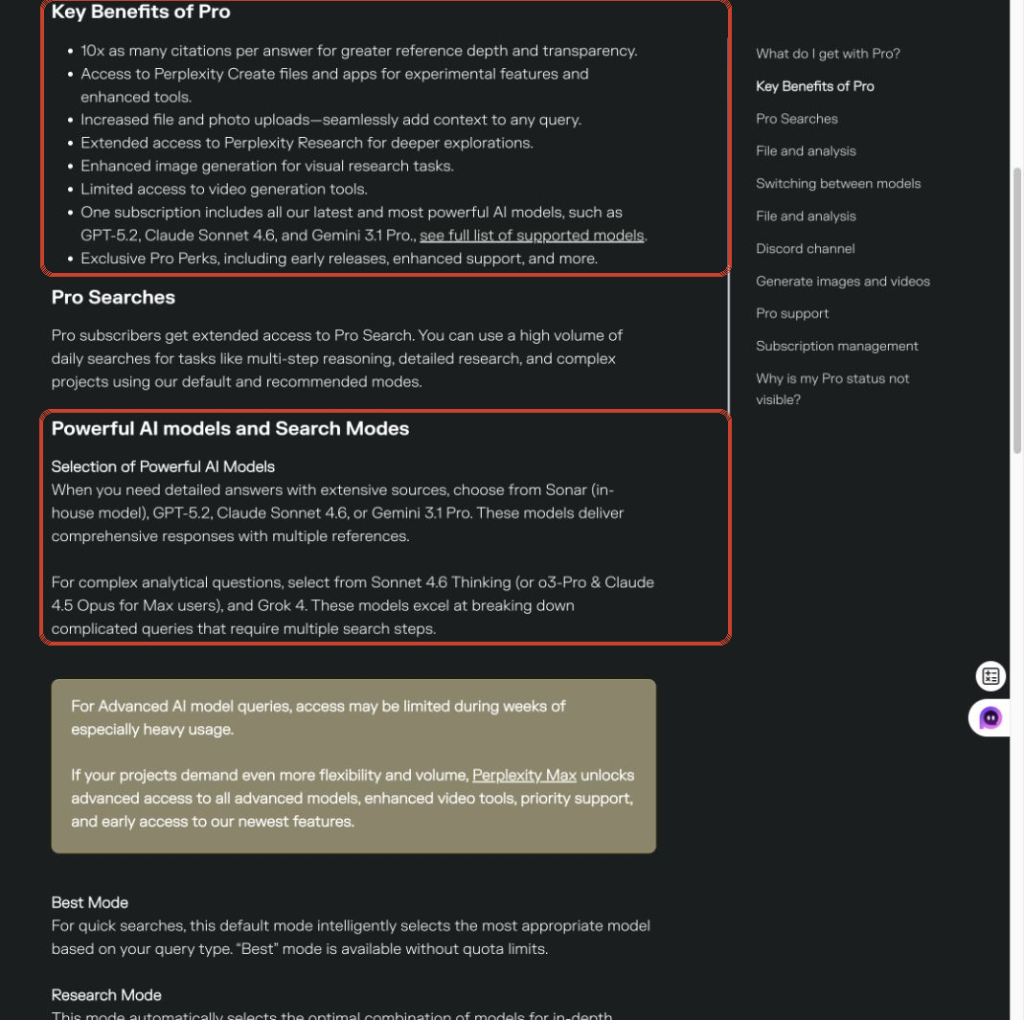
Perplexity’s Help Center, updated July 21, 2026 and checked again on August 5, lists 10x as many citations per answer, Create files and apps, more uploads, extended Research, image generation, limited video generation, Pro Search, and access to current models. The page names GPT-5.2, Claude Sonnet 4.6, Gemini 3.1 Pro, Sonar, Sonnet 4.6 Thinking, Grok 4, and some Max-only reasoning options. Perplexity also warns that advanced-model access can be limited during unusually heavy usage.
Perplexity Max: higher access, not automatic better value
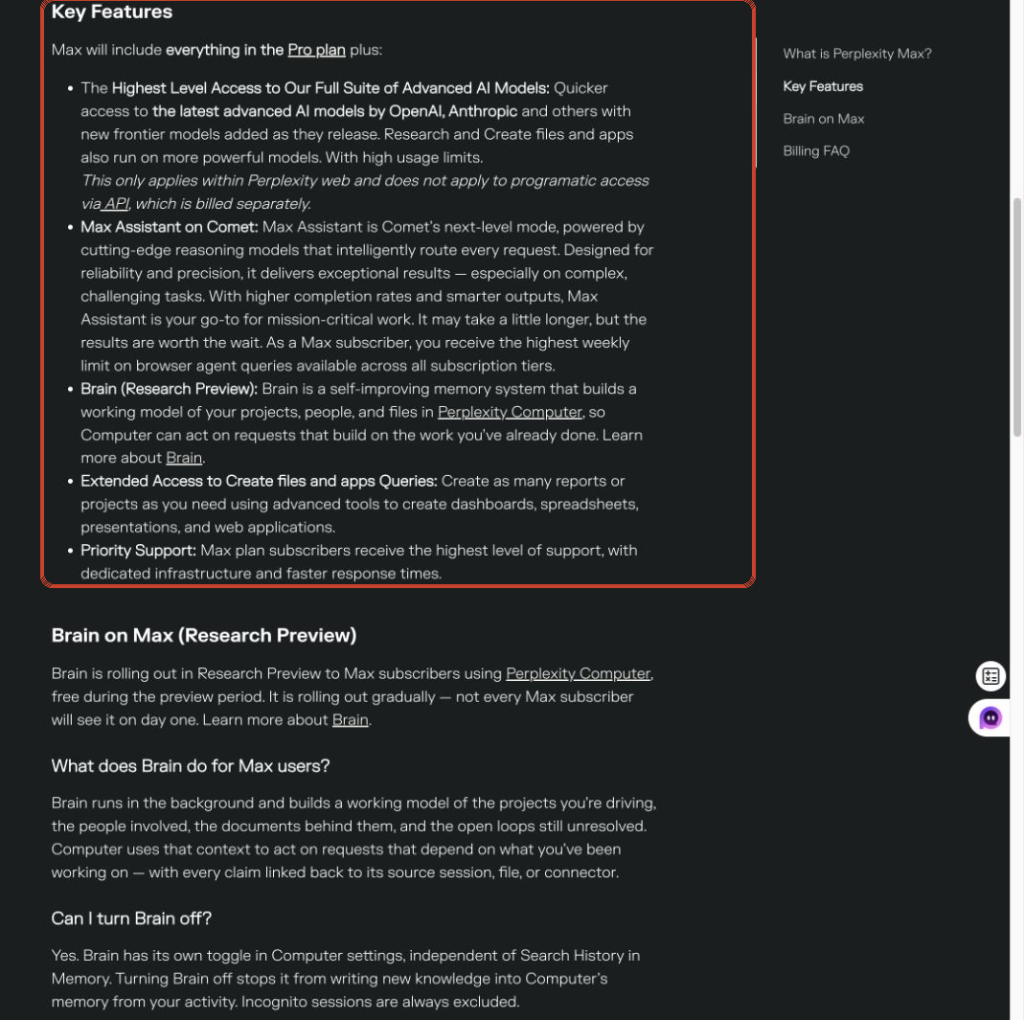
Max includes Pro features with the highest individual access to advanced models, more Computer credits, Max Assistant in Comet, Brain in Research Preview, more Create files and apps usage, priority support, and earlier product access. The important boundary is easy to miss: this higher access applies inside Perplexity’s consumer product. API usage is billed separately.
Enterprise Pro and Enterprise Max: organization controls
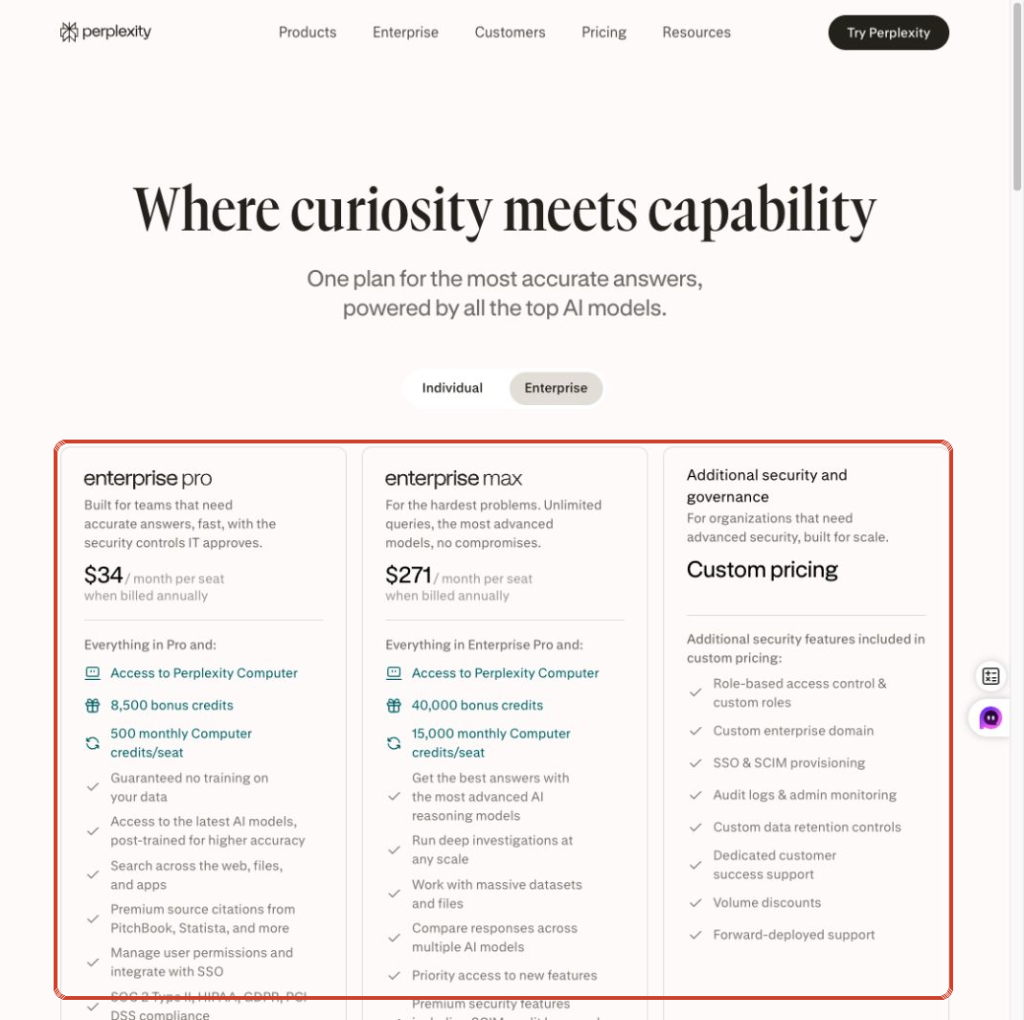
Enterprise tiers add no-training commitments for customer data, seat administration, SSO, compliance controls, premium sources, support, and higher team-level credits. Enterprise Max increases Computer credits from 500 to 15,000 per seat per month and raises access for deep investigations, large files, and multi-model comparison. Perplexity also offers custom security and governance pricing for features such as SCIM, audit logs, custom retention, and role-based access control.
For a dedicated procurement view, read the Enterprise Pro vs Enterprise Max pricing guide.
Perplexity Pricing and Plan Choice
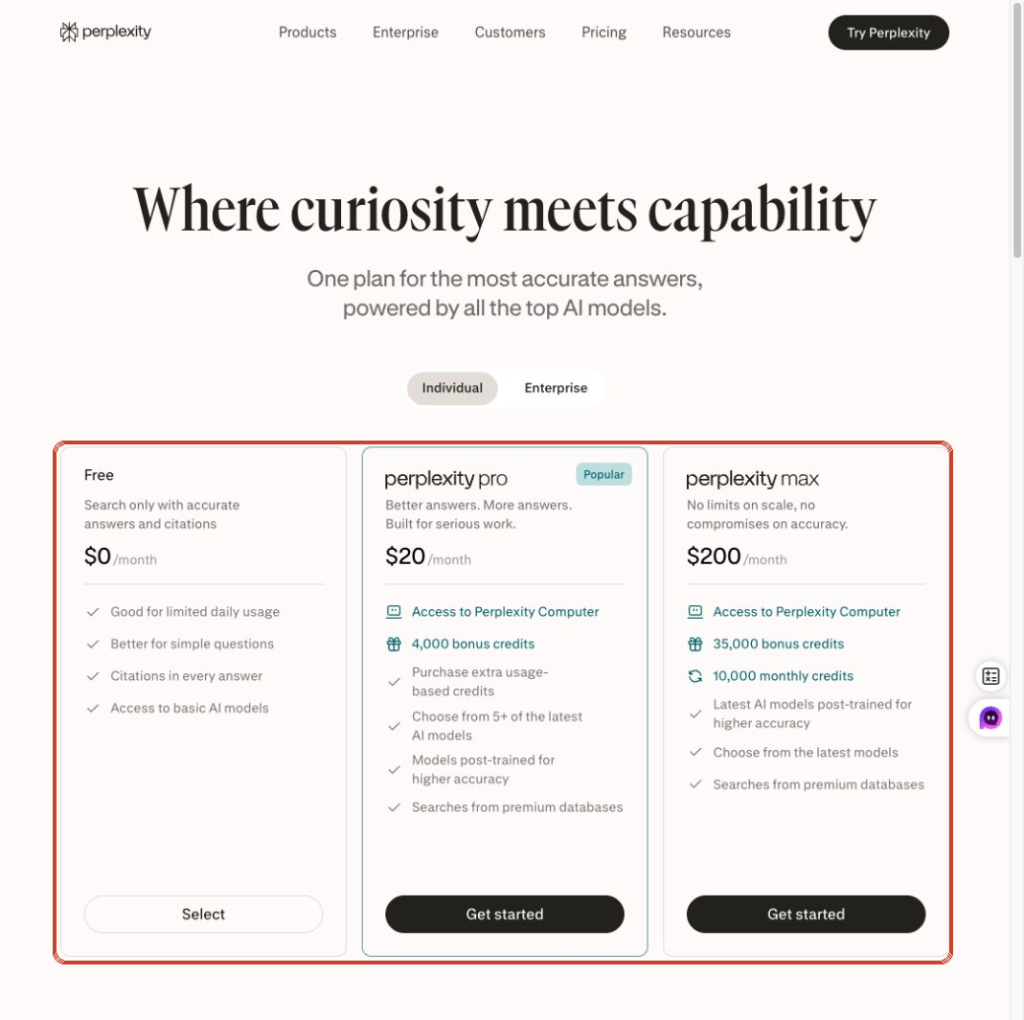
On August 5, 2026, the official individual pricing page listed Free at $0/month, Pro at $20/month, and Max at $200/month. The Max help page also lists $2,000/year through the web app. Enterprise Pro and Enterprise Max were shown at $34 and $271 per seat per month when billed annually. These Enterprise figures are not consumer-plan equivalents; they include organization controls and use a different billing scope.
Monthly sticker price: where the jump happens
Consumer and Enterprise scopes differ; Enterprise prices below are per seat with annual billing.
Source: Perplexity official pricing and Max Help Center; checked August 5, 2026. Bar lengths use $271 as the scale maximum.
Reader takeaway: Pro is the low-risk paid test. Max costs ten times as much per month, so it needs a repeatable, high-value workload to make sense.
Choose by the job, not the feature count
Start with Free.
Pro is the default paid choice.
Consider Max.
Choose Enterprise.
Use the API, billed separately.
Compare a multi-model workspace.
Decision logic based on official plan boundaries and pricing checked August 5, 2026.
The full Perplexity subscription plans guide goes deeper on billing. If you are deciding only between the two paid individual tiers, use the focused Perplexity Pro vs Max comparison.
Perplexity API Pricing: Sonar, Agent, and Search
The API is no longer one simple Sonar table. Perplexity now separates Gateway API, Agent API, Search API, Sonar API, and Embeddings. A consumer Pro or Max plan does not include these developer charges.
- Gateway API: token pricing at each requested model’s published rate, with no per-request fee.
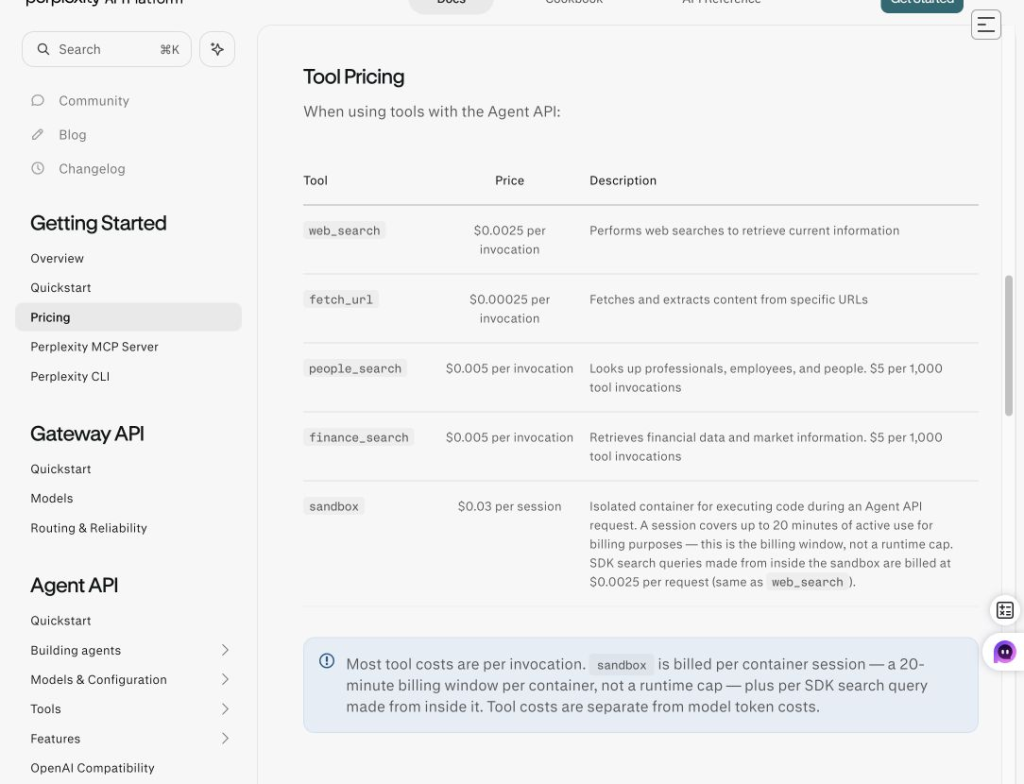
- Agent API: third-party models at provider rates, plus tool charges such as web search, URL fetching, people/finance search, or sandbox sessions.
- Search API: $5 per 1,000 successful requests for raw web results; one successful request can include up to five queries.
- Sonar API: token prices plus a request fee for Sonar, Sonar Pro, and Sonar Reasoning Pro; Sonar Deep Research has additional citation, search-query, and reasoning-token rates.
| Sonar model | Input / 1M tokens | Output / 1M tokens | Other listed charges |
|---|---|---|---|
| Sonar | $1 | $1 | Request fee varies by search context. |
| Sonar Pro | $3 | $15 | Request fee varies by search context. |
| Sonar Reasoning Pro | $2 | $8 | Request fee varies by search context. |
| Sonar Deep Research | $2 | $8 | $2 citation, $5/1K search queries, and $3 reasoning per 1M tokens. |
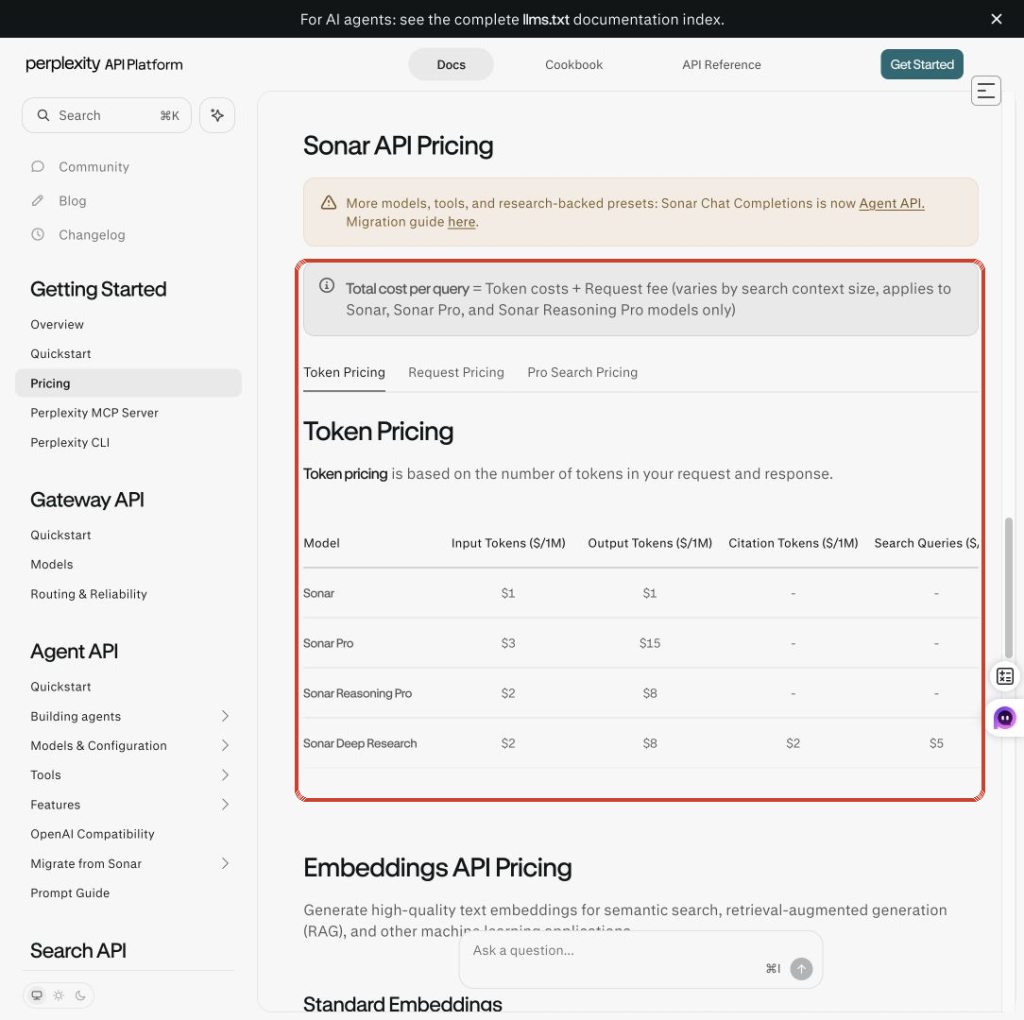
For production cost estimates, continue with the Perplexity API cost guide and confirm the live rate card before launch.
Perplexity Accuracy and Citation Quality
Perplexity’s accuracy advantage is conditional. It is often more useful than a closed-book chatbot on current questions because it retrieves live pages. But the answer can still fail in three ways: it can retrieve a weak source, compress a nuanced source too aggressively, or attach a citation that supports the general topic but not every detail in the sentence.
- Use official pages for prices, policies, eligibility, and model availability.
- Open at least the decisive citations before publishing.
- Check dates and geography when an answer depends on a regional offer.
- For health, legal, or financial decisions, use Perplexity to locate sources—not to replace qualified advice.
Google’s current “is Perplexity Pro worth it” results emphasize the same buyer split: Pro fits daily deep research and files, while casual users can often stay on Free. The People Also Ask box focuses on value for money, Pro vs ChatGPT Plus, Pro’s advantage, and why Perplexity is controversial. Those are decision questions, not proof of product facts.
Perplexity vs ChatGPT, Google, and GlobalGPT
Perplexity is easiest to understand as a research-first layer. ChatGPT and Claude are stronger general-purpose environments for writing, reasoning, and coding. Google remains broader for discovery, local information, forums, images, shopping, and obscure pages. GlobalGPT is the multi-model route when you want to keep research and downstream AI work in one workspace.

| Task | Best first choice | Reason |
|---|---|---|
| Current fact with sources | Perplexity | Fast cited synthesis. |
| Polished writing or complex reasoning | ChatGPT or Claude | Better control over structure and extended thinking. |
| Broad discovery | More result types and manual control. | |
| Research plus multiple model families | GlobalGPT | Move from cited search to writing, planning, coding help, and media tools in one workflow. |
The direct Perplexity vs ChatGPT test covers the model comparison in more depth, while the guide to how Perplexity differs from Google explains the search workflow.
When the broader workflow matters: Perplexity is compelling when research is the main job. GlobalGPT is more practical when the same subscription also needs to cover drafting, reasoning, coding help, images, video, and access to several model families.
For a focused research route, open Perplexity access inside GlobalGPT. If you are consolidating multiple AI subscriptions, compare GlobalGPT plan options before adding another standalone plan.
Exact model availability and usage rules can change, so check the live workspace and plan page before paying.
Best Use Cases for Perplexity AI
Market and competitor research
Perplexity is good at building the first version of a market map: major companies, current announcements, pricing pages, and recent sources. In the earlier comparison below, its web-backed response included current figures and source chips, while the non-browsing answer offered a cleaner but less current overview. That is a real workflow difference, not proof that every cited number is correct.

Academic and document research
Perplexity is useful for finding a source trail, summarizing a public paper, comparing claims, and extracting questions for deeper reading. It should not replace library databases, the original paper, or a careful methods review.
Fact-checking and content updates
Writers and marketers can use it to locate official plan pages, release notes, policy wording, and competing claims. Ask for official sources first, then verify the exact line that supports the copy.
File and app-connected work
Pro and Max support files, images, audio, video, and connected apps. This is useful when the task begins with documents or a working set of sources. Large archives, sensitive data, and strict compliance workflows still need plan-specific review.
Developer search products
Search API is useful for raw results, Sonar for cited answers, Agent API for tool-using workflows, and Gateway for third-party model access. Developers should prototype with the exact product they plan to ship, because the pricing units differ.
Privacy and Enterprise Controls
Consumer and Enterprise privacy should not be collapsed into one promise. Consumer users need to review their own data settings and the current privacy notice. The Enterprise pricing page explicitly says Enterprise customer data is not used to train AI models and lists controls such as SSO, SCIM, audit logs, compliance standards, and configurable retention under the relevant tiers or contracts.
The practical rule is conservative: do not upload sensitive material until the plan, organization policy, retention terms, and connected-provider rules fit the work. A consumer Pro or Max account is not the same governance product as Enterprise.
Real Limitations
- Citations still require reading. The source can be credible while the summary overreaches.
- Limits and model access move. Perplexity’s own Pro page warns that advanced-model use may be limited during heavy weeks.
- Writing and coding are secondary strengths. Research may be excellent while the final prose or technical plan needs another model.
- The product surface changes quickly. Current user discussions repeatedly mention changing models, UI, uploads, and usage limits as renewal friction.
- Plan names hide different products. Consumer subscriptions, Enterprise seats, and APIs use different billing and control models.
Community comments are useful here only as language for the buyer’s anxiety—not as evidence of a price or official limit. A recent Reddit thread repeatedly framed the concern as confidence: users liked Perplexity for relevant search, but were unsure how model availability, UI, and limits would change before renewal. That is why this review recommends paying for a proven weekly workflow rather than a long feature list.
Final Verdict: Is Perplexity AI Worth It in 2026?
Yes—if cited research is a recurring job. Perplexity remains one of the fastest ways to turn a current question into a readable source trail. Free is good enough to test the habit. Pro is worth $20/month when it saves real research time every week. Max only makes sense after Pro’s limits or Computer credits repeatedly block valuable work.
It is a weaker purchase as your only AI subscription if most of your time goes into polished writing, complex coding, creative development, or model experimentation. In that case, pair Perplexity with a stronger general model or choose a multi-model workspace.
If none of the plans fit, compare the best Perplexity alternatives in 2026.
Frequently Asked Questions
Is Perplexity AI Pro worth the money?
Perplexity Pro is worth $20/month for people who use cited web research, files, premium sources, Research, or model choice every week. Casual users should stay on Free until the lower limits create a real problem.
Is Perplexity Pro better than ChatGPT Plus?
Perplexity Pro is usually better for fast current research with visible citations. ChatGPT Plus is usually better for broad reasoning, writing, coding, and longer creative workflows. The better plan depends on which task fills most of your week.
What is the main advantage of Perplexity Pro?
The main advantage is a higher-capacity research workflow: more citations, Pro Search, Research, model choice, files, premium databases, and Perplexity Computer access in one search-first interface.
Why is Perplexity controversial?
Criticism usually focuses on source and publisher relationships, citation quality, product changes, data questions, and whether an AI summary fairly represents the underlying page. Users should verify important citations and review current policies rather than treating the answer as final.
Is Perplexity Max worth $200 per month?
Only for heavy users who get repeatable value from higher limits, more Computer credits, Max Assistant, Brain preview, advanced models, and early features. Most individuals should begin with Pro.
Does Perplexity Pro include API access?
No. Gateway, Agent, Search, Sonar, and Embeddings API usage is billed separately from the Free, Pro, Max, and Enterprise app subscriptions.
Which AI models are included in Perplexity Pro?
Perplexity’s Pro help page checked on August 5, 2026 names Sonar, GPT-5.2, Claude Sonnet 4.6, Gemini 3.1 Pro, Sonnet 4.6 Thinking, and Grok 4 among the available or task-specific options. Model availability and limits can change.