

Perplexity can be a useful coding assistant,, especially for debugging, explaining unfamiliar code, and researching APIs with real-time citations. It performs well on small and medium code tasks, but it is less reliable for complex UI, multi-file logic, or production-ready code. Developers typically get the best results when they treat Perplexity as a research and reasoning companion rather than a full code generator.
Perplexity is strong in some coding tasks and noticeably weaker in others, and these gaps only become clear when you compare it with more specialized reasoning and coding models.
GlobalGPT gives developers a clearer picture by letting them compare Perplexity’s coding performance directly against GPT-5.1, Claude 4.5, Gemini models, and 100+ alternatives in one place—making it easy to identify which model handles generation, debugging, or translation best for your specific project without juggling multiple subscriptions.
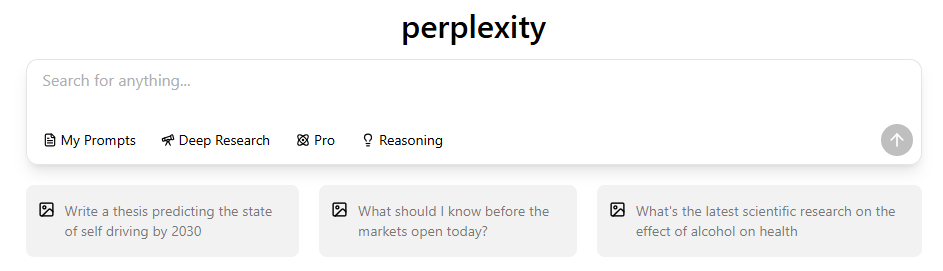
What Can PerplexityActually Do for Coding in 2025?
Perplexity acts as a reasoning-first assistant that helps developers understand, analyze, and refine code through a combination of search-backed insights and model reasoning.
- Perplexity helps developers debug issues by combining real-time search results with structured reasoning, which improves clarity when diagnosing logic or dependency problems.
- It can explain unfamiliar codebases by breaking functions into conceptual steps, making it useful for onboarding or reviewing third-party scripts.
- Developers frequently use Perplexity to translate code across languages, especially for Python and JavaScript, because it mirrors common idioms and syntax patterns.
- It assists with API and framework research by summarizing documentation and showing citation-backed usage examples pulled from official sources.
- While not a full coding assistant, Perplexity supplements IDE workflows by giving external verification and context that code-only models may miss.
How Well Does PerplexityGenerate Code? (Real Examples & Limits)

Perplexity can generate functional snippets for simple or moderately complex tasks, but its reliability drops when handling UI, multi-file logic, or architectural consistency.
- Perplexity performs well on short algorithmic problems, utility functions, and data-parsing tasks because these require minimal structural awareness.
- Its generated code often lacks robustness in UI components, state management, or advanced JavaScript frameworks, making the output unsuitable for production use without heavy edits.
- Developers frequently report variability in code quality because Perplexity optimizes for explanation rather than structural correctness.
- Code from Perplexity should be reviewed for missing error handling, outdated patterns, or assumptions that do not align with real-world project architectures.
- Compared with Perplexity vs ChatGPT, Claude, and Gemini, Perplexity’s generation accuracy is less consistent, especially when complexity or context increases.
How Strong Is Perplexity at Debugging Code?

Debugging is one of Perplexity’s strongest capabilities because it excels at identifying underlying logic problems and explaining error sources clearly.
- Perplexity often pinpoints logical flaws more accurately than code-focused models because it complements reasoning with search-based verification.
- It produces detailed explanations that help developers understand why a bug occurs, not just what the fix should be.
- The model is particularly adept at diagnosing type mismatches, loop errors, missing conditions, and boundary-case failures in small to medium codebases.
- Its debugging suggestions remain reliable as long as the code is self-contained and does not require knowledge of a larger project structure.
- While effective at identifying root causes, Perplexity’s proposed fixes should still be validated manually, especially in production environments.
How Good Is Perplexity at Explaining Code?

Code explanation is where Perplexity consistently outperforms many coding assistants due to its structured reasoning style.
- Perplexity transforms complex functions into step-by-step explanations that clarify how data flows through the program.
- It helps beginners understand algorithmic design choices by describing them in natural language rather than abstract patterns.
- The model excels at teaching-oriented tasks because it frames logic in a way that mirrors human explanations rather than compiler behavior.
- Developers often use Perplexity to review unfamiliar open-source code or legacy scripts, where context is limited but reasoning is essential.
- Its explanations tend to be more accurate and less error-prone than its generated code, making this one of its safest use cases.
Does Perplexity Handle Cross-Language Code Translation Well?

Perplexity translates code effectively across major languages, especially for short scripts or function-level logic.
- The model produces idiomatic translations for common patterns between Python, JavaScript, and Java because it references up-to-date documentation.
- It can detect language-specific mistakes and adjust syntax accordingly, which improves reliability over simple rule-based translation.
- Translated code may still require refactoring to match best practices or idioms in the target language.
- Perplexity is less reliable for translating complex classes, multi-file structures, or framework-specific patterns due to lack of contextual awareness.
- Developers often use it as a first-pass translator before refining structure in their IDE.
How Well Does Perplexity Assist With API and Framework Research?

Perplexity’s search-backed reasoning makes it highly effective for researching APIs, libraries, and framework behaviors.
- Perplexity summarizes official documentation into concise explanations, reducing the time developers spend navigating APIs manually.
- It provides citation-backed examples, giving developers direct references to confirm correctness rather than relying on guesswork.
- The model performs particularly well when answering questions about syntax changes, breaking updates, or version differences across frameworks.
- Perplexity helps developers evaluate trade-offs between libraries by pulling comparisons from multiple sources in real time.
- Its research summaries are often more reliable than its generated code because they rely on official documentation and retrieved evidence.
Where Does PerplexityStruggle in Coding Workflows?
Despite strong reasoning, Perplexity has notable limitations that developers must account for before relying on it in production environments.
- Perplexity struggles with large or multi-file codebases because it cannot maintain a full architectural understanding across components.
- It sometimes produces incomplete or outdated syntax for frontend frameworks such as React or Vue, requiring manual correction.
- The tool lacks IDE integration, making it less convenient for iterative coding workflows compared to assistants embedded in VS Code or JetBrains.
- Perplexity’s reasoning can be correct while its code output remains flawed, creating a mismatch developers must manually resolve.
- When tasks require long-term memory, state tracking, or multi-step execution, Perplexity’s performance becomes inconsistent.

Perplexity vs ChatGPT vs Claude vs Gemini for Coding

Developers often compare Perplexity with leading reasoning and coding models to understand where each model fits within a realistic workflow.
- ChatGPT (especially GPT-5.1) tends to produce the cleanest UI code and is highly reliable for multi-step feature builds. Users often ask does Perplexity use ChatGPT, and while it accesses similar underlying models, its tuning is different.
- Claude excels at structured reasoning, producing safer and more modular code in scenario-based problems.
- Gemini models are strong in multimodal and data-backed reasoning but inconsistent in advanced frontend patterns. Check out Perplexity vs Gemini for a detailed feature breakdown.
- Perplexity distinguishes itself with citations, research-driven debugging, and strong explanations rather than raw generation quality.
- The most effective 2025 coding workflows often combine models, using Perplexity for research / explanation and another model for clean implementation.
Best Use Cases for Perplexityin Modern Development

Perplexity is most effective when leveraged as a reasoning companion rather than a full code-generation engine.
- Developers frequently use Perplexity for onboarding because it explains unfamiliar code in natural, multi-layered reasoning steps.
- It accelerates research-heavy tasks—such as comparing frameworks, reviewing patterns, or interpreting documentation—by summarizing authoritative sources.
- Its debugging clarity makes it an excellent “second opinion” for difficult errors or unexpected edge cases in small modules.
- Perplexity allows beginners to learn more effectively by framing algorithmic logic in a human-readable format.
- Advanced users employ Perplexity to validate assumptions, discover best practices, or identify missing constraints in their code design.
When Should You Not Use Perplexityfor Coding?
There are scenarios where Perplexity is not the right choice, especially when accuracy and architectural consistency are required.
- Perplexity is not reliable for complex UI or state-driven applications because it lacks framework-specific optimization.
- It should not be used as the sole tool for production code since its output often lacks validation, error handling, and modern best practices.
- For large repositories, Perplexity struggles to maintain context and cannot reason across multi-file dependencies.
- Tasks requiring long-form reasoning or end-to-end workflows—such as full-stack scaffolds—perform better in models designed for multi-step planning.
- Developers needing deterministic outputs should avoid Perplexity’s variability and instead use coding-specialized models.
How Much Does PerplexityCost Compared With Coding-Focused AI Tools?
| Platform / Tier | Monthly Price | Models Included | Limits / Notes | Ideal For |
| Perplexity Free | $0 | Nano (limited) | No GPT-4/5, no Claude, soft limits | Basic search & simple Q&A |
| Perplexity Pro | $20 | GPT-4.1 / Claude 3.5 (via search) | No direct model selection | Research-first workflows |
| Perplexity Max | $200 | GPT-4.1 / Claude 3.5 (priority) | Highest search depth | Heavy researchers |
| ChatGPT Plus | $20 | GPT-4o mini / GPT-4o | Basic limits on file size | General-purpose coding |
| ChatGPT Pro | $200 | GPT-5.1 / GPT-4.1 & high limits | Best for enterprise-grade dev tasks | Professionals & teams |
| Claude Pro | $20 | Claude 3.5 Sonnet | Large context window | Writing & structured reasoning |
| Gemini Advanced | $20 | Gemini 2.0 / 1.5 Pro | Great multimodal, unstable coding | Multimodal research |
| GlobalGPT Basic | $5.75 | GPT-5.1, Claude 4.5, Gemini 3, Sora 2, Veo 3.1, 100+ models | Unified workspace | Students & indie devs |
| GlobalGPT Pro | $12.50 | All above models with higher limits | Replaces multiple separate subscriptions | Full-stack developers |

Perplexity price affects workflow decisions, especially for developers evaluating multiple tool subscriptions.
- The Perplexity Free plan is useful for API research and code explanation but limited for heavy coding tasks.
- The Perplexity Pro tier offers faster models suitable for debugging, research, and translation-heavy workflows.
- Perplexity Max remains expensive relative to coding assistants and does not yet justify its price purely for development work.
- Tools such as ChatGPT Plus, Claude Pro, or Gemini Advanced often provide stronger coding output at lower or similar price points.
- Evaluating Perplexity purely as a coding tool often shows diminishing returns unless paired with other models.
Final Thought
Perplexity is excellent when your workflow depends on clarity—explaining code, researching APIs, or validating ideas with evidence. But when it comes to generating full features, structuring architectures, or writing production-ready code, most developers still rely on stronger reasoning models.
That’s why many teams now use blended workflows. And if you want to compare models without paying for multiple subscriptions, GlobalGPT brings GPT-5.1, Claude 4.5, Gemini 3, Sora 2 Pro, Veo 3.1, and 100+ AI models together in one place—making it easier to choose the right model for every stage of development.

