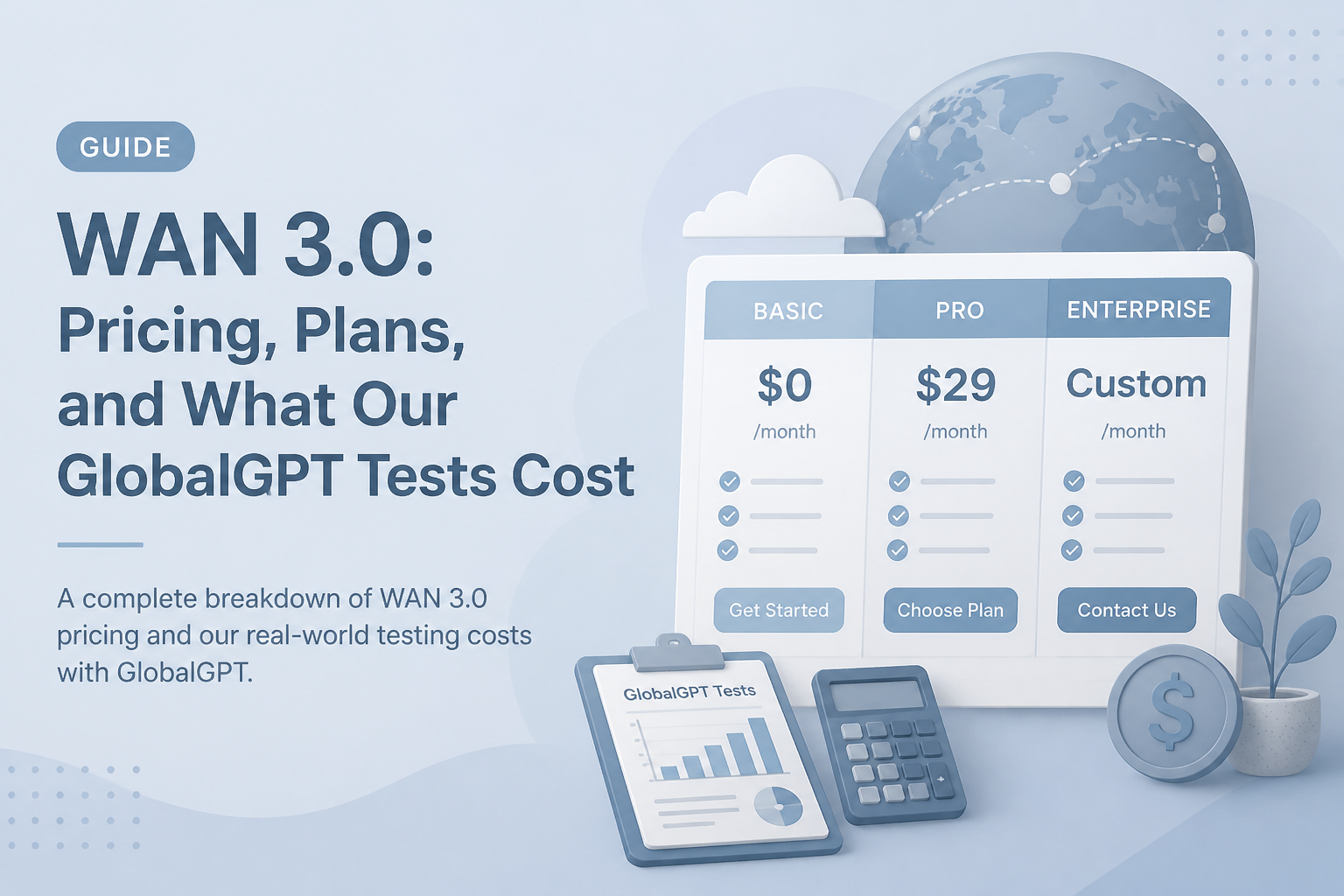
Harga WAN 3.0 terdiri dari tiga tingkatan yang berbeda, dan mencampurkannya adalah cara tercepat untuk mendapatkan jawaban yang salah. Resmi Halaman harga Wan mencantumkan paket-paket untuk konsumen; pihak resmi halaman kredit mencantumkan paket kredit; dan API yang dihosting atau platform pihak ketiga dapat menetapkan harga yang berbeda untuk model yang sama.
Sebagai acuan praktis, kami menjalankan dua tugas konversi teks ke video WAN 3.0 yang telah selesai melalui API tugas langsung GlobalGPT pada tanggal 24 Agustus 2026. Pada resolusi 480P dan rasio aspek 16:9, harga yang ditampilkan platform adalah $0,70 selama 5 detik dan $1.40 selama 10 detik. Permukaan pembentukan GlobalGPT yang bersangkutan menunjukkan 700 kredit dan 1.400 kredit untuk kedua konfigurasi tersebut.
Itu adalah uji coba platform, bukan kutipan resmi dari API Alibaba. Jika Anda masih mempertimbangkan apakah WAN 3.0 sesuai dengan alur kerja Anda, mulailah dengan yang lebih luas Rilis WAN 3.0, fitur, dan panduan akses dan gunakan halaman ini untuk rincian biayanya.

Platform AI all-in-one untuk menulis, membuat gambar & video dengan GPT-5, Nano Banana, dan banyak lagi
Sekilas tentang harga WAN 3.0
Berbagai sistem penagihan ditampilkan berdampingan untuk keperluan perencanaan, tanpa dikonversi ke mata uang yang setara. Paket resmi Wan dan pekerjaan API GlobalGPT yang telah diselesaikan merupakan jalur yang berbeda.
| Rute | Apa yang telah diverifikasi | Harga | Batas yang penting |
|---|---|---|---|
| Wan.video Gratis | Paket resmi untuk konsumen | $0 per bulan | Produk konsumen, bukan tarif API |
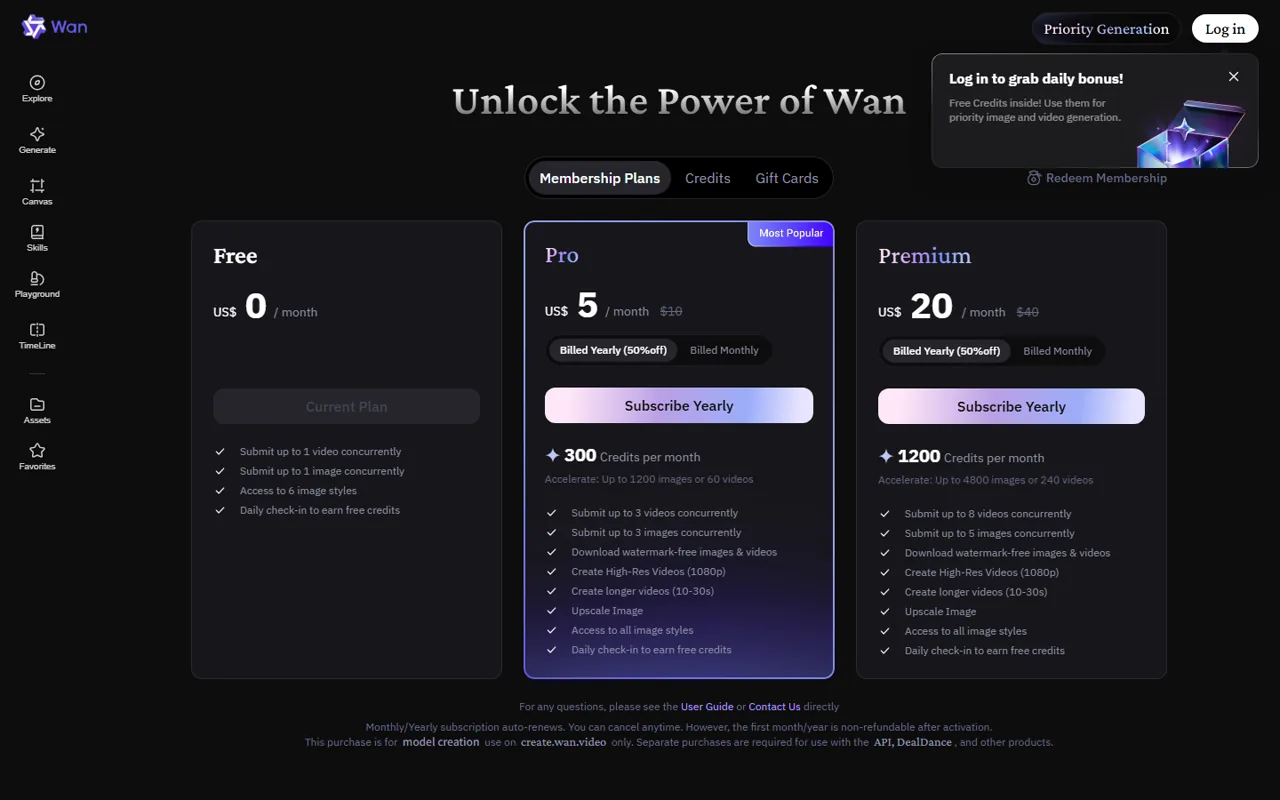
| Wan.video Pro - Penagihan Tahunan | Paket resmi untuk konsumen | $5 per bulan; 300 kredit per bulan | Halaman ini juga menampilkan harga acuan $10 |
| Wan.video Premium dengan tagihan tahunan | Paket resmi untuk konsumen | $20 per bulan; 1.200 kredit per bulan | Halaman tersebut juga menampilkan harga acuan $40 |
| Paket pulsa Wan | Kredit konsumen resmi | $1.50 setara dengan 30 kredit hingga $100 setara dengan 3.900 kredit | Berlaku ketentuan paket kredit |
| Uji API langsung GlobalGPT | Uji teks-ke-video dengan resolusi 480P dan rasio aspek 16:9 telah diselesaikan | $0,70 / 5 detik; $1,40 / 10 detik | Hasil dari platform yang telah diuji, bukan tarif API resmi Alibaba |
Kartu paket resmi menyebutkan bahwa paket Pro dengan penagihan tahunan mencakup 300 kredit per bulan, sedangkan paket Premium mencakup 1.200 kredit. Sebelum menggunakan keterangan paket sebagai acuan anggaran produksi, periksa model dan pengaturan yang ditampilkan di layar pembuatan: perkiraan umum “hingga sejumlah video” bukanlah jumlah keluaran WAN 3.0 yang dijamin.
Kredit resmi Wan dan paket keanggotaan
Wan.video saat ini menawarkan paket Gratis serta paket Pro dan Premium dengan tagihan tahunan. Halaman produk resmi menampilkan harga paket Pro sebesar $5 per bulan jika ditagih per tahun dan paket Premium sebesar $20 per bulan jika ditagih per tahun. Kartu-kartu tersebut menunjukkan 300 dan 1.200 kredit per bulan masing-masing. Lihat halaman harga resmi untuk presentasi rencana saat ini dan tunjangan yang tercantum di dalamnya.
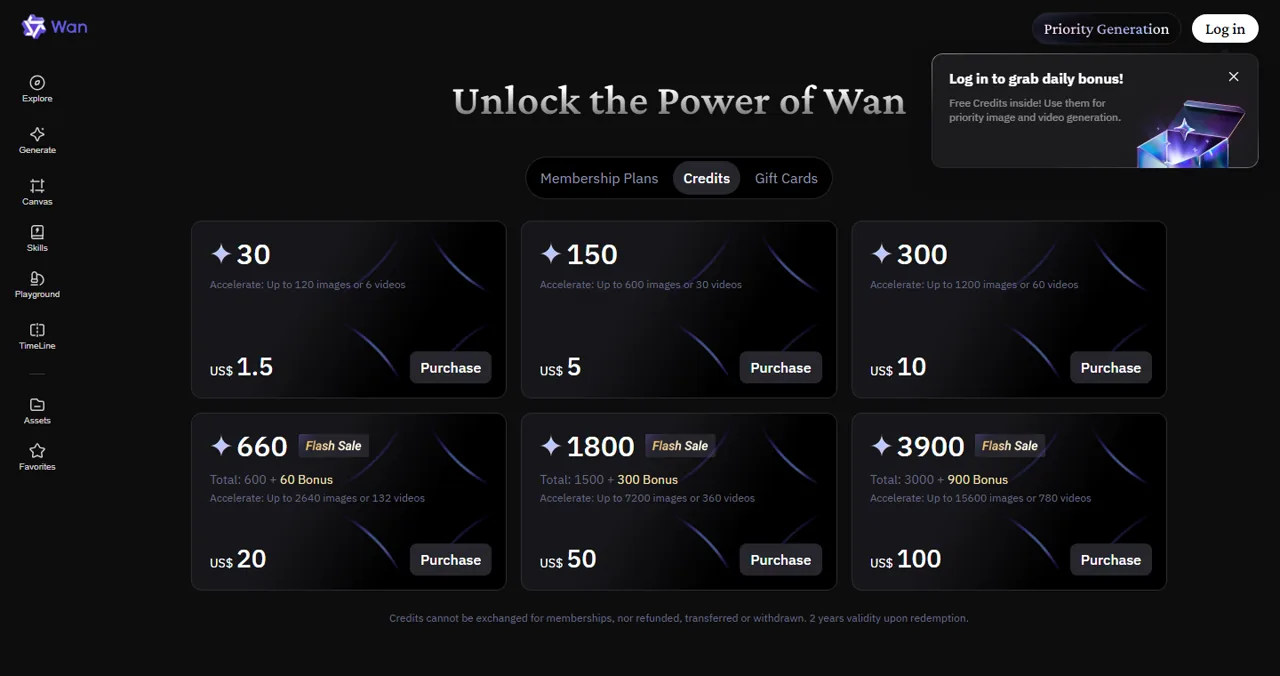
Jika Anda lebih suka melakukan pembelian sekali saja, situs resmi Halaman ucapan terima kasih Wan mencantumkan paket-paket berikut ini:
| Jumlah kredit | Harga yang tertera |
|---|---|
| 30 | $1.50 |
| 150 | $5 |
| 300 | $10 |
| 660 | $20 |
| 1,800 | $50 |
| 3,900 | $100 |
Halaman yang sama menyebutkan bahwa kredit yang telah ditebus tidak dapat dikembalikan, dialihkan, atau ditarik, serta memiliki masa berlaku selama dua tahun. Ketentuan-ketentuan tersebut penting untuk diperhatikan jika Anda membeli kredit untuk kampanye yang dilakukan sesekali, bukan untuk menjalankan antrian produksi yang berkelanjutan.
Berapa biaya pengujian API GlobalGPT WAN 3.0 kami?
Kami menggunakan prompt bahasa Inggris yang tetap, mode teks-ke-video, resolusi 480P, rasio aspek 16:9, dan audio dinonaktifkan. Pada pengujian kedua, hanya durasi yang diminta yang diubah. Kedua tugas tersebut berhasil diselesaikan melalui WanAli rute hulu.
| Uji | Durasi yang diminta | Durasi keluaran yang telah diverifikasi | Harga platform API yang dikembalikan | Harga UI yang sesuai dengan GlobalGPT |
|---|---|---|---|---|
| T1 | 5 detik | 5,04 detik | $0.70 | 700 kredit |
| T2 | 10 detik | 10,03 detik | $1.40 | 1.400 kredit |
Untuk konfigurasi yang telah diuji ini, harga platform yang teramati ternyata sebesar $0.14 per detik yang diminta, atau 140 kredit per detik yang diminta. Hal itu berguna untuk perencanaan awal konversi teks ke video dengan resolusi 480P, tetapi bukan merupakan laju WAN 3.0 yang berlaku secara universal. Resolusi, audio, masukan referensi, upaya ulang, jenis rencana, dan perubahan harga di masa mendatang dapat memengaruhi hasilnya.
Hasil akhir 5,04 detik
$0.70 harga yang dikembalikan
700 kredit di permukaan kreasi
Hasil akhir 10,03 detik
Harga yang dikembalikan $1.40
1.400 kredit di bidang kreasi
Pola yang terlihat dalam pengujian terbatas ini bersifat linier: semakin lama durasi yang diminta, semakin tinggi pula harga platform yang ditampilkan. Resolusi, audio, aset referensi, dan mode pengeditan tidak dimasukkan dalam perbandingan ini.
Untuk memahami mengapa berlangganan satu model video bisa lebih mudah dianggarkan daripada menggunakan berbagai alat secara terpisah, bandingkan alur kerja lainnya di panduan terbaik untuk generator video berbasis AI dan penjelasan kami mengenai Alur kerja video-ke-video berbasis AI.
Apakah GlobalGPT lebih murah daripada rute resmi?
Tidak ada perbandingan langsung yang akurat: kredit Wan.video dan kredit GlobalGPT berada di bawah sistem penagihan yang berbeda. Yang bisa kami sampaikan adalah hal yang lebih spesifik dan lebih berguna:
- Saluran resmi Wan untuk konsumen menjual keanggotaan dan kredit Wan.
- Hasil pengujian GlobalGPT yang telah kami selesaikan menunjukkan nilai $0,70 dan $1,40 untuk dua pekerjaan WAN 3.0 konkret, dengan harga pembuatan permukaan yang sesuai ditampilkan sebesar 700 dan 1.400 kredit.
- GlobalGPT memungkinkan seorang kreator menggunakan model video lain dari akun yang sama, sehingga sebuah tim tidak perlu mengisi saldo penyedia layanan terpisah hanya untuk membandingkan hasil pengambilan gambar WAN dengan alur kerja lainnya.
Fleksibilitas itu penting ketika arahan berubah. Anda mungkin memulai dengan WAN 3.0 untuk pengambilan gambar yang mengacu pada referensi, lalu membandingkannya dengan sebuah Alur kerja penetapan harga Seedance 2.0, sebuah Veo 3.1 jalur akses, atau sebuah Uji Banding Gemini Omni Flash vs. Veo 3.1. Nilai yang ditawarkan terletak pada alur kerja platform bersama—bukan pernyataan bahwa kredit dari satu penyedia setara dengan kredit dari penyedia lainnya.
Coba GlobalGPT jika Anda ingin menjalankan WAN 3.0 bersamaan dengan model video lainnya dari satu akun.
Bagaimana dengan harga resmi API WAN 3.0?
Jangan menganggap tabel keanggotaan resmi Wan sebagai daftar harga API. Kami telah memverifikasi paket konsumen dan paket kredit resmi di atas, namun tidak menemukan baris resmi Alibaba Model Studio terkini yang mencantumkan harga satuan API WAN 3.0 untuk konfigurasi yang diuji secara tepat. Sampai Alibaba mempublikasikan tarif untuk bidang yang sama, artikel ini tidak mengonversi kredit Wan.video menjadi harga API atau menyajikan harga uji GlobalGPT sebagai harga resmi Alibaba.
Jika Anda membutuhkan anggaran API hari ini, gunakan harga yang ditampilkan saat Anda mengirimkan tugas, kunci pengaturan yang tepat dalam pekerjaan uji coba, dan catat tanggalnya. Hal ini sangat penting terutama untuk klip yang lebih panjang: ikhtisar produk WAN 3.0 saat ini membahas pembuatan klip berdurasi 30 detik secara native, namun klaim kemampuan 30 detik itu sendiri tidak secara otomatis menjamin tagihan API sebesar 30 detik.
Model biaya praktis untuk proyek-proyek nyata
Klip termurah belum tentu berarti proyek termurah. Sebuah uji coba berbayar yang singkat bisa menjadi mahal jika tim belum menentukan daftar pengambilan gambar, rasio aspek, dan proses persetujuan sebelum memulai produksi. Mulailah dengan membagi anggaran menjadi tiga bagian:
- Anggaran eksplorasi. Ini adalah anggaran untuk menguji ide-ide gerakan, gaya pengambilan gambar, dan konsistensi subjek. Dalam pengaturan pengujian kami, satu pengambilan gambar berdurasi 5 detik dengan resolusi 480P memberikan nilai acuan yang jelas pada $0.70. Gunakan jumlah percobaan tetap yang terbatas sebelum dilakukan tinjauan kreatif, alih-alih terus-menerus menghasilkan materi tanpa henti.
- Anggaran seleksi. Pertahankan prompt dan pengaturan agar tetap konsisten saat membandingkan varian. Dengan begitu, Anda dapat mengetahui apakah hasil yang lebih baik berasal dari model, prompt, atau sekadar durasi yang berbeda.
- Anggaran pengiriman. Baru setelah memilih sebuah adegan, Anda sebaiknya membayar untuk durasi yang lebih lama, resolusi yang lebih tinggi, atau versi berbasis referensi. Di sinilah durasi 10 detik menjadi berguna: hasil uji perbandingan kami menunjukkan $1.40, tepat dua kali lipat dari harga durasi lima detik.
Jika proyek Anda membutuhkan serangkaian adegan alih-alih satu adegan utama, rencanakan klip-klip tersebut sebagai satu kesatuan. Video media sosial berdurasi 30 detik mungkin lebih murah untuk dikendalikan jika dibagi menjadi tiga adegan berdurasi sepuluh detik yang disetujui secara terpisah daripada satu adegan panjang pada percobaan pertama—terutama ketika klien mengubah bagian pembuka, ajakan bertindak (CTA), atau sudut pengambilan gambar produk pada tahap akhir proses. Pilihan yang tepat bergantung pada persyaratan kontinuitas, jadi lakukan uji coba singkat Anda sendiri sebelum memutuskan untuk melakukan rendering yang memakan waktu lama.
Gunakan paket kredit resmi atau uji coba pada satu platform yang terkendali.
Gunakan satu akun dan pertahankan prompt, durasi, serta rasio tetap sama.
Uji resolusi akhir, pilihan audio, dan sumber referensi Anda sebelum melakukan rendering massal.
Biaya tersembunyi yang perlu diantisipasi
Renderan pertama jarang mencakup seluruh anggaran. Sisakan ruang untuk:
- Iterasi cepat dan arah kreatif yang gagal.
- Resolusi yang lebih tinggi daripada konfigurasi 480P yang diuji di sini.
- Alur kerja yang mendukung audio, referensi gambar, referensi video, atau pengeditan.
- Varian tambahan untuk tahap persetujuan klien.
- Ekspor dari model kedua saat Anda membutuhkan gaya gerakan yang berbeda.
Untuk membandingkan harga, situs kami Panduan Biaya Sora 2 dan Panduan Alternatif Sora 2 membantu menyusun kerangka anggaran yang lebih luas untuk produksi video.
Apakah WAN 3.0 sebanding dengan harganya?
WAN 3.0 paling mudah dibenarkan jika alur kerjanya yang berdurasi lebih lama, sensitif terhadap audio, atau berorientasi pada referensi sesuai dengan adegan yang Anda butuhkan. Untuk eksplorasi berisiko rendah, gunakan kredit konsumen resmi atau lakukan uji platform yang terkontrol ketat terlebih dahulu. Untuk produksi berulang, bandingkan total biaya dari berbagai varian, revisi, dan model terkait—bukan hanya hasil pertama yang paling murah.
Dua pengujian kami memberikan perkiraan awal yang jelas untuk satu konfigurasi terbatas: 480P, 16:9, teks-ke-video, tanpa audio. Pada pengaturan tersebut, durasi lima detik menghasilkan harga platform $0.70, sedangkan durasi sepuluh detik menghasilkan $1.40. Gunakan hasil tersebut sebagai patokan biaya yang dapat direproduksi, lalu jalankan kembali pengujian dengan resolusi dan input yang Anda inginkan sebelum memutuskan untuk menjalankan kampanye.
PERTANYAAN YANG SERING DIAJUKAN
Berapa harga WAN 3.0?
Paket resmi Wan untuk konsumen dimulai dari $0 per bulan. Paket resmi dengan penagihan tahunan menampilkan tarif $5 per bulan untuk paket Pro dan $20 per bulan untuk paket Premium, sedangkan paket kredit berkisar dari $1,50 untuk 30 kredit hingga $100 untuk 3.900 kredit. Biaya generasi tergantung pada rute dan pengaturan.
Berapa biaya pengujian WAN 3.0 Anda pada GlobalGPT?
Uji coba konversi teks ke video dengan resolusi 480P, rasio aspek 16:9, dan audio dinonaktifkan yang telah kami selesaikan menunjukkan harga platform API GlobalGPT sebesar $0,70 untuk durasi lima detik yang diminta dan $1,40 untuk durasi sepuluh detik yang diminta. Hasil pengujian selesai pada 5,04 dan 10,03 detik.
Berapa banyak kredit GlobalGPT yang digunakan dalam ujian-ujian tersebut?
Permukaan pembuatan GlobalGPT yang sesuai menunjukkan 700 kredit untuk konfigurasi 480P selama lima detik dan 1.400 kredit untuk konfigurasi selama sepuluh detik. Respons API langsung menampilkan harga dalam dolar, sehingga artikel ini secara eksplisit memisahkan tampilan kredit di antarmuka pengguna (UI) dengan respons harga dari API.
Apakah $0.14 per detik merupakan harga resmi API WAN 3.0?
Tidak. Ini adalah hasil yang teramati dari platform GlobalGPT untuk dua uji coba konversi teks ke video dengan resolusi 480P yang kami lakukan. Ini bukanlah harga resmi dari API Alibaba, dan tidak boleh diterapkan pada resolusi lain, pengaturan audio, atau alur kerja referensi lainnya.
Apakah kredit Wan.video sama dengan kredit GlobalGPT?
Tidak. Keduanya merupakan mata uang platform yang terpisah dengan paket dan ketentuan masing-masing. Jangan membandingkan angka-angkanya secara langsung tanpa terlebih dahulu membandingkan pengaturan output yang mendasarinya serta dasar penetapan harga masing-masing platform.
Apakah saldo kredit resmi Wan memiliki masa berlaku?
Halaman kredit resmi menyebutkan bahwa kredit yang telah ditebus memiliki masa berlaku dua tahun. Disebutkan pula bahwa kredit tersebut tidak dapat dikembalikan, dialihkan, ditarik, atau ditukar dengan keanggotaan.
Apakah saya bisa menggunakan WAN 3.0 pada GlobalGPT?
Ya. Dua tugas API langsung yang telah kami selesaikan tersebut menggunakan wan3.0-video model dan diselesaikan melalui penyedia hulu WanAli. Ketersediaan dan harga dapat berubah, jadi periksa pengaturan pembuatan terkini sebelum mengirimkan batch produksi.
Apa saja yang sebaiknya saya periksa sebelum membeli paket kredit dalam jumlah besar?
Jalankan satu klip terkontrol dengan durasi, resolusi, rasio aspek, pengaturan audio, dan aset referensi yang Anda inginkan. Pertahankan prompt yang sama untuk pengujian kedua agar Anda dapat mengidentifikasi pengaturan mana yang memengaruhi biaya atau kualitas hasil.