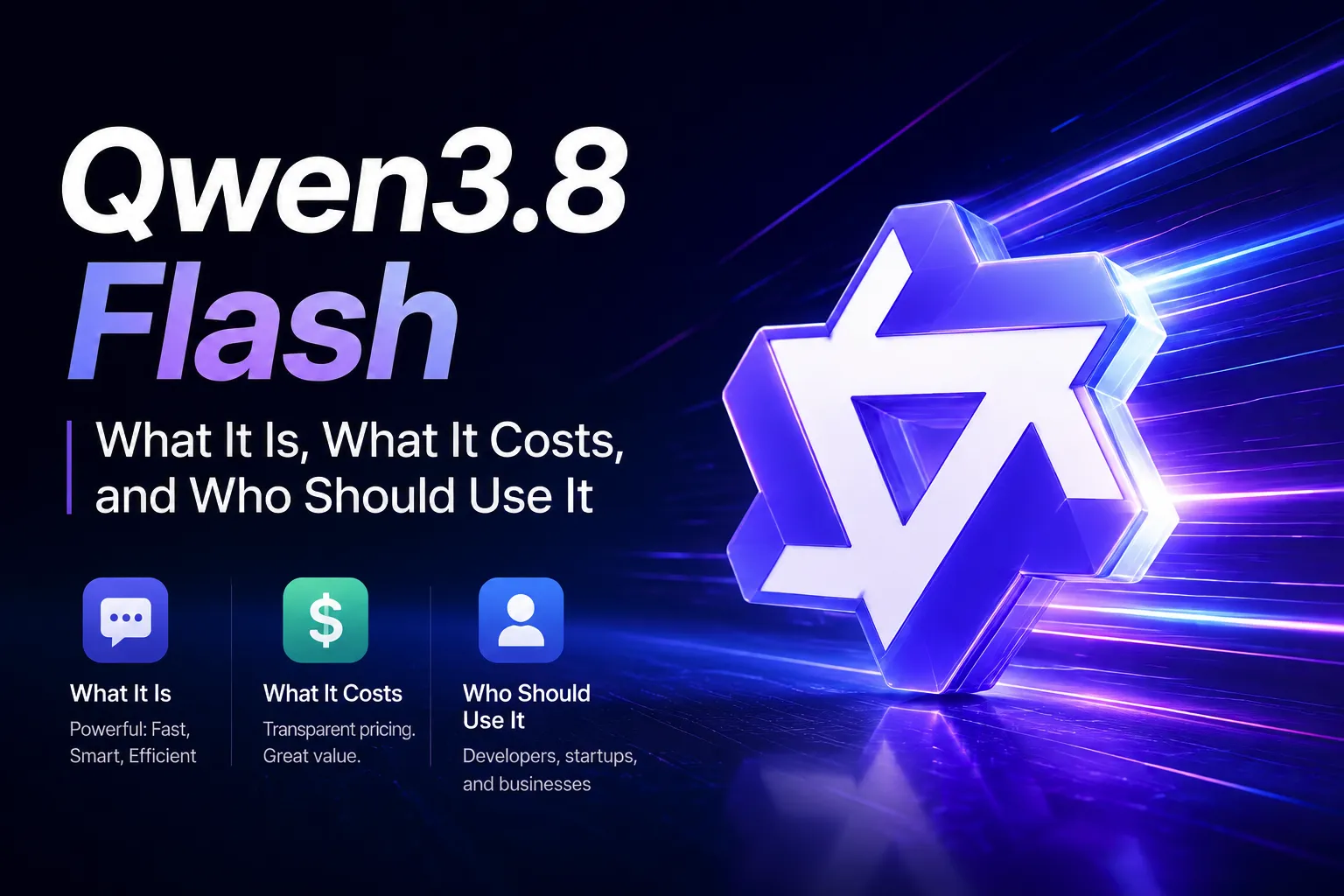
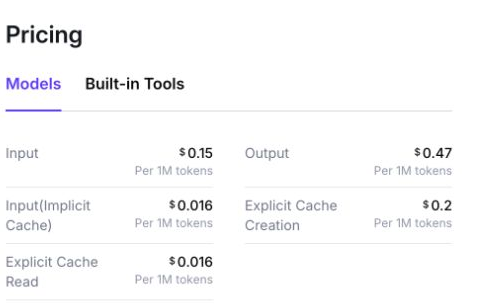
Consultado el 27 de agosto de 2026. Qwen3.8 Flash es el modelo de producción gestionado de Qwen con el ID de API qwen3.8-flash. Se diferencia del artefacto Qwen3.8-Flash-Next de peso abierto. Qwen Cloud indica unas tasas base de $0,15 por millón de tokens de entrada y $0,47 por millón de tokens de salida. En resumen, merece la pena realizar una prueba controlada cuando se necesite un procesamiento multimodal de bajo coste y una ventana de contexto amplia, pero se deben verificar los límites de las rutas y la calidad de la evidencia antes de confiar en él en un entorno de producción.
Su atractivo práctico es evidente: una ventana de contexto de 1 millón de tokens, entrada de texto, imágenes y vídeo, salida estructurada y funciones de herramientas, además de tarifas básicas por token reducidas. Es ideal para la síntesis de documentos largos, el análisis multimodal y el trabajo operativo estructurado; en el caso de un flujo de trabajo de gran importancia, empieza con una tarea representativa y decide en función de los resultados que realmente puedas utilizar.
GlobalGPT es un entorno de trabajo independiente y multimodelo—no es un canal oficial de Alibaba ni de Qwen—, pero resulta útil si tu trabajo no encaja en un solo modelo. En una sola página web, puedes comparar Qwen3.8 Flash con familias de modelos muy utilizadas, como ChatGPT, Claude, Gemini y Grok, y luego mantener la investigación, la redacción, la ayuda con la programación, el análisis de documentos y las pruebas de prompts en el mismo flujo de trabajo. Esto resulta especialmente práctico cuando una tarea requiere las fortalezas del Qwen en cuanto a contexto extenso o multimodalidad, mientras que otra se beneficia del estilo de redacción, razonamiento o programación de un modelo diferente.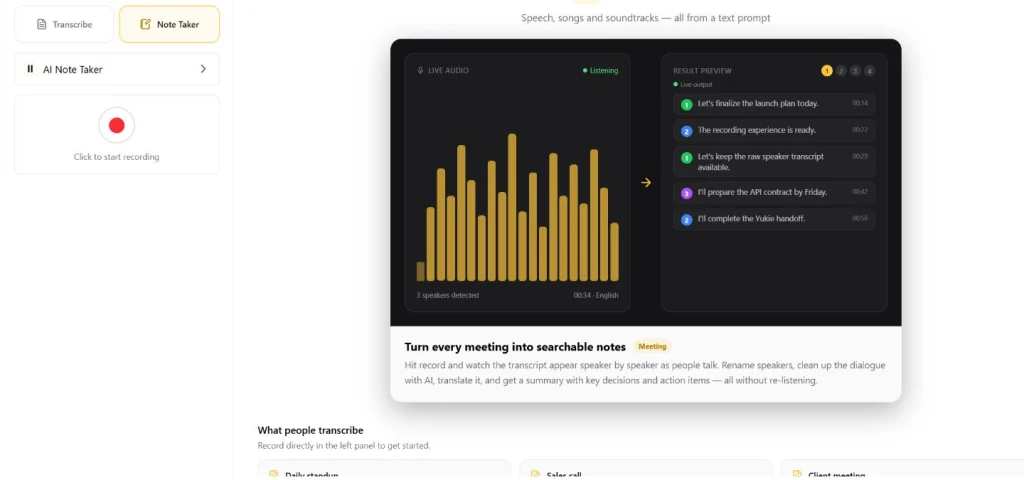
¿Qué es el flash Qwen3.8?
Qwen3.8 Flash es un modelo multimodal alojado que ofrece Qwen Cloud para trabajos rápidos y de gran volumen. La página oficial indica que las entradas son texto, imágenes y vídeo, y que la salida es texto. También menciona la llamada a funciones, las salidas estructuradas, el almacenamiento en caché de indicaciones, el procesamiento por lotes, la búsqueda en la web y el ajuste fino. Esas son las capacidades oficiales del servicio; es posible que una interfaz de terceros solo ofrezca una parte de esas funciones.
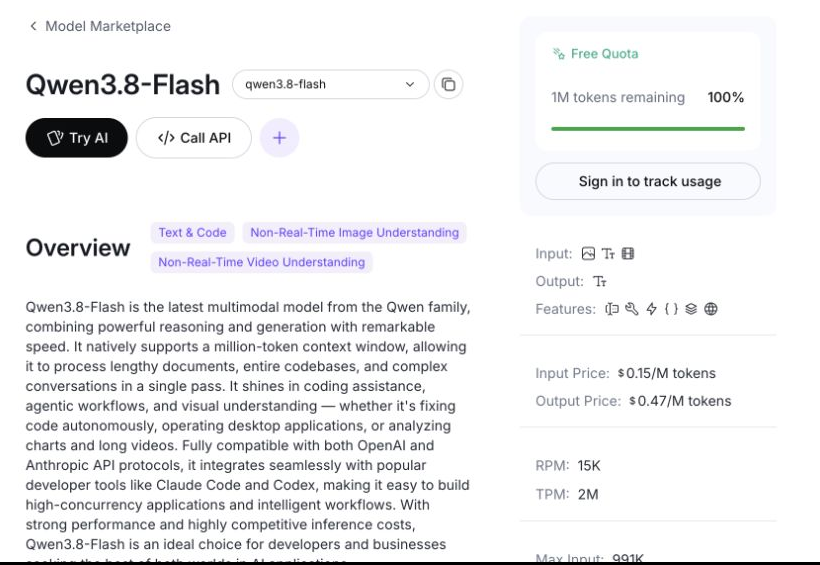
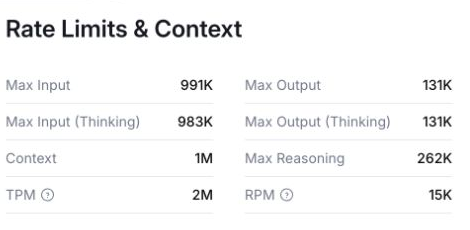
La ventana de contexto indicada es de 1 millón de tokens. Qwen Cloud también muestra límites específicos para cada ruta, en lugar de un único espacio ilimitado: la ruta estándar indica un máximo de 991 000 tokens de entrada y un máximo de 131 000 tokens de salida, mientras que el modo de reflexión tiene su propio límite de entrada. Una ventana de contexto amplia solo resulta útil cuando la ruta acepta el archivo, la estructura de recuperación es sólida y el modelo puede rastrear las pruebas relevantes.
- Considera el ID exacto de la API como parte de la reproducibilidad.
- Distingue entre las capacidades documentadas del modelo base y las herramientas que ofrece la plataforma que hayas elegido.
- Utiliza un contexto extenso para los trabajos con abundante documentación, pero exige citas o comprobaciones estructuradas en lugar de fiarte únicamente de una subida de gran volumen.
Qwen3.8 Flash frente a Qwen3.8 Flash-Next
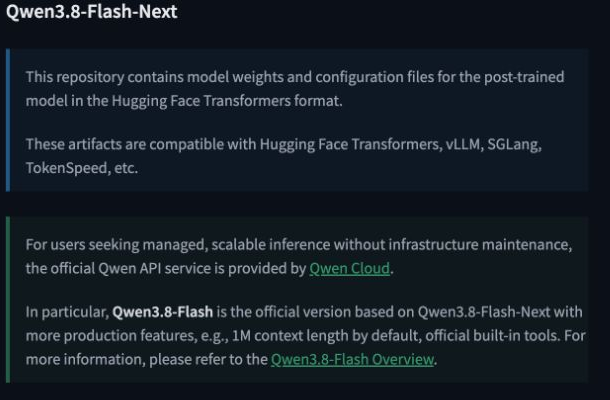
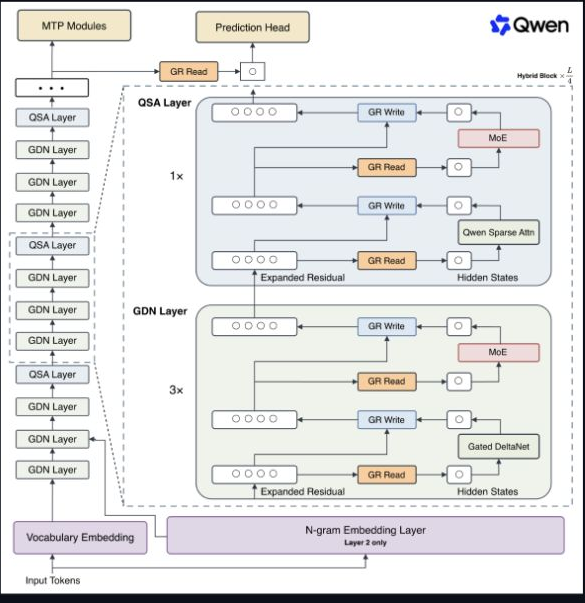
Aunque resulte fácil simplificar la denominación y considerarlo un único producto, la distinción es importante. La ficha técnica oficial del Qwen describe el Qwen3.8-Flash como la versión de producción basada en el Qwen3.8-Flash-Next. Flash-Next es el artefacto de peso abierto, cuyos detalles de arquitectura y pesos son públicos; Flash es el servicio de producción gestionado, que cuenta con herramientas oficiales integradas y una ventana de contexto predeterminada de 1M.
| Pregunta | Qwen3.8 Flash | Qwen3.8 Flash-Next |
|---|---|---|
| ¿Qué es? | Modelo de producción gestionado y API | Lanzamiento técnico y de artefactos de peso libre |
| Identificador exacto | qwen3.8-flash | Qwen3.8-Flash-Next |
| Pesos | No se muestran como pesos descargables en la página de producción | Artefacto de modelo público |
| Herramientas integradas | Publicado por Qwen Cloud; depende de la ruta | No es equivalente a un conjunto de herramientas alojadas |
| Datos comparativos | No se ha encontrado ninguna clasificación independiente y verificada de resultados exactos de producción | Tablas facilitadas por el fabricante en la ficha técnica del modelo |
Esto significa que una puntuación de Flash-Next puede explicar la orientación técnica del Qwen, pero no debe recualificarse como un resultado independiente del modelo de producción. El lugar, el arnés y el nombre exacto del modelo deben figurar junto a cada cifra.
¿Dónde se puede utilizar el chip Flash Qwen3.8?
En este proyecto hay tres rutas verificadas, y cada una de ellas cumple una función diferente. Solo «Qwen Cloud» es la ruta oficial de la API de Qwen. «GlobalGPT» es una plataforma de suscripción multimodelo independiente. «Anywhere» fue la ruta de la API utilizada para la comprobación de preparación y las tareas prácticas; es una prueba de que la disponibilidad se ha comprobado, pero no es un destino oficial para los usuarios.
| Ruta | Estado | Lo que se comprobó | Límite importante |
|---|---|---|---|
| Qwen Cloud | Oficial | Página del modelo, ID de la API, precios, contexto y lista de características | Se siguen aplicando las condiciones del servicio local y la disponibilidad regional. |
| GlobalGPT | Plataforma independiente | Página del modelo Visible Qwen3.8 Flash y precios del plan anual | Aún queda por definir la correspondencia exacta entre el plano y el modelo |
| En cualquier lugar | Ruta de la API probada | Se ha indicado el ID exacto del modelo y se han obtenido respuestas satisfactorias | La semántica del coste público en dólares y del límite de uso sigue sin estar verificada |
GlobalGPT es la opción más adecuada para quien desee cambiar de modelo dentro de un mismo espacio de trabajo, en lugar de utilizar cuentas de API independientes. Utiliza el Página actual de precios de GlobalGPT para confirmar el paquete en tiempo real antes de realizar el pago; durante la búsqueda, la página mostraba los precios de los planes anuales, pero la lista de planes visible no asignaba explícitamente el plan «Qwen3.8 Flash» a un nivel concreto.
Qwen3.8: Precios y valor de Flash
La página oficial de Qwen Cloud indica unas tarifas base de $0,15 por cada millón de tokens de entrada y $0,47 por cada millón de tokens de salida. También indica tarifas más bajas para la lectura de caché y precios específicos para la creación explícita de caché. Por lo tanto, las estimaciones de costes deberían indicar qué tarifa se está utilizando y evitar dar a entender que se incluyen las tarifas de herramientas, búsquedas en la web o de otras plataformas.
Qué significan los tipos básicos de los tokens
100 000 de entrada + 10 000 de salida según las tarifas básicas indicadas.
1 M de entrada + 100 K de salida a las tarifas básicas indicadas.
Los ejemplos de cálculo no incluyen herramientas, opciones de almacenamiento en caché, tarifas de la plataforma ni ningún cargo específico de la ruta.
El primer ejemplo es una solicitud de análisis de un documento extenso: 100 000 tokens de entrada cuestan $0,015 y 10 000 tokens de salida cuestan $0,0047, lo que supone un total de $0,0197 según las tarifas base publicadas. El segundo utiliza 1 millón de tokens de entrada y 100 000 de salida: $0,15 más $0,047, es decir, $0,197. Se trata de ejemplos aritméticos, no de facturas ni de compromisos sobre una ruta de terceros.
El precio por token es solo una parte del valor. Una tarifa baja cobra mayor importancia cuando el resultado es lo suficientemente fiable como para reducir el tiempo de revisión, y cuando el almacenamiento en caché o el procesamiento por lotes se adaptan a la carga de trabajo. En el caso de un proceso de extracción, hay que calcular el coste de los reintentos, la validación y la corrección manual, además del coste por token. En el caso de un equipo interactivo, compara la suscripción mensual con el tiempo que se ahorra al mantener varios modelos en un mismo espacio de trabajo. El indicador de decisión más honesto es el coste por resultado aceptado, no el coste por token generado. Dado que esta revisión no se ha realizado con una carga de trabajo de producción ni ha verificado la semántica pública del dólar de Anywhere, no pretende determinar un ganador universal en cuanto a costes.
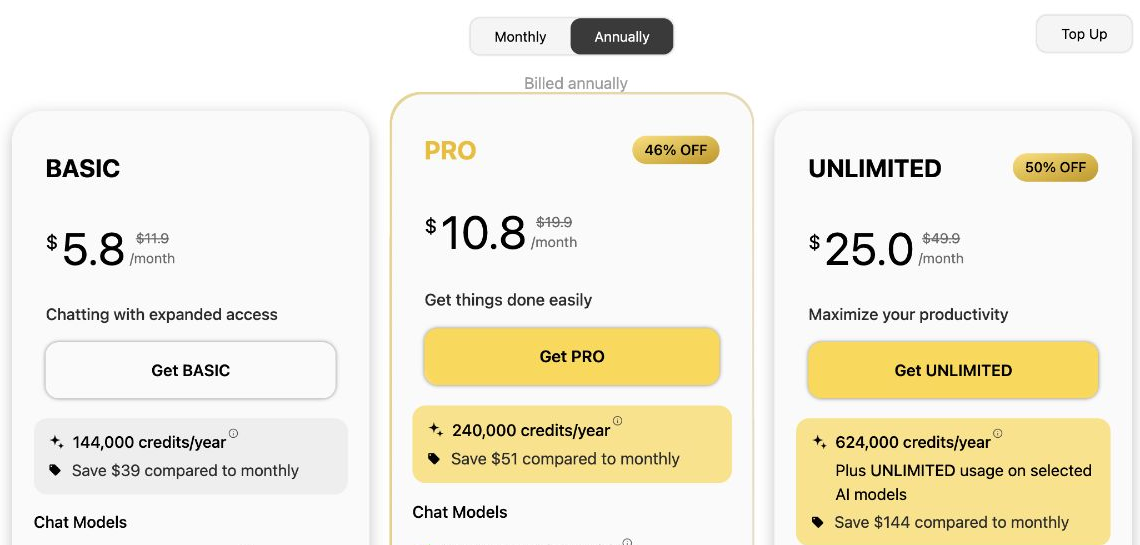
GlobalGPT utiliza un modelo de suscripción en lugar de una facturación directa por token. En su presentación anual, el 27 de agosto de 2026, el plan Basic costaba $5,8 al mes, el Pro, $10,8, y el Unlimited, $25. Una suscripción puede resultar más fácil de presupuestar cuando se alterna entre varios modelos, pero no es directamente comparable con los precios de los tokens de API, ya que los créditos, el acceso a los modelos y los controles de la plataforma difieren.
- Elige la facturación por tokens cuando necesites volumen programático, registros y controles nativos de la API.
- Elige una suscripción multimodelo cuando lo más importante sea el acceso interactivo y la posibilidad de cambiar de modelo.
- No calcules el coste en dólares de «Anywhere» a partir de ratios de precios no documentados; la semántica del dólar público no se ha verificado.
Habilidades que marcan la diferencia en el trabajo diario
Documentos extensos y bases de código
La capacidad de procesar archivos de 1 millón de tokens hace que Qwen3.8 Flash resulte interesante para revisiones de repositorios, colecciones de documentos y transcripciones extensas. La pregunta relevante no es si cabe un archivo de gran tamaño, sino si el modelo es capaz de identificar conflictos, conservar los datos desconocidos y remitir a la fuente. La tarea de trazabilidad de 15 páginas que aparece más adelante en esta revisión evalúa ese comportamiento más específico, no la ventana máxima.
Programación y flujos de trabajo de los agentes
Qwen posiciona el modelo para tareas de codificación y de agencia, y la ficha Flash-Next presenta resultados sólidos en varios conjuntos de pruebas de codificación. Esos resultados son indicaciones útiles sobre qué probar a continuación, pero no sustituyen a la gestión de tu propio repositorio, tu política de herramientas ni tus pruebas de aceptación. Para disponer de una base de decisión más amplia, consulta nuestra guía sobre el mejores modelos de IA para codificación.
Análisis multimodal
El servicio oficial admite archivos de imagen y vídeo. En la práctica, esto permite revisar historiales clínicos, interpretar imágenes en pantalla, examinar imágenes de documentos y responder a preguntas con vídeos de larga duración. El tamaño de los archivos, la duración, la calidad de la extracción y los límites de la interfaz de usuario específicos de cada ruta siguen siendo importantes. Nuestra pequeña tarea de imágenes revisa un historial clínico que presenta un conflicto deliberado en el informe; no evalúa la calidad general del razonamiento visual.
Herramientas y resultados estructurados
Las llamadas a funciones y la salida estructurada son especialmente relevantes para el trabajo en producción, ya que proporcionan a la aplicación elementos que se pueden someter a prueba. Las funciones de caché y de procesamiento por lotes pueden influir en la rentabilidad a gran escala. La búsqueda en la web puede aportar actualidad, pero los datos buscados deben contar con su propia cadena de fuentes. Verifica cada función en la ruta que realmente tengas previsto utilizar.
Lo que realmente revelan los datos comparativos
La prueba de referencia más sólida que se aprecia en el conjunto de fuentes actual es la propia ficha del modelo Flash-Next de Qwen. En ella se indican 58,7 en DeepSWE 1.1, 62,5 en SWE-bench Pro y 81,0 en la fila de ingeniería de software multilingüe que se muestra. La ficha también incluye notas sobre el marco de trabajo y el contexto. Estos detalles hacen que la tabla resulte más útil, pero no convierten los datos facilitados por el proveedor en una validación independiente.
Resultados de la codificación de Flash-Next comunicados por el proveedor
Estos tres valores proceden de la ficha técnica del modelo Flash-Next de Qwen. No se trata de resultados independientes para el modelo de producción gestionado.
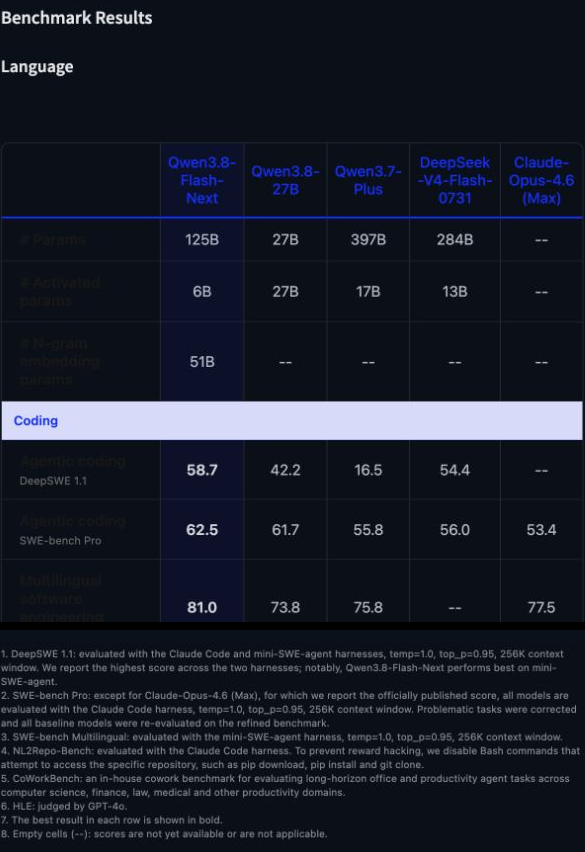
El 27 de agosto no se verificó ninguna entrada fiable y contrastada en la clasificación independiente para el modelo exacto Qwen3.8-Flash. Esa laguna debería seguir siendo visible. Una actualización responsable añadiría un resultado independiente únicamente cuando la clasificación mencione el modelo exacto y revele el equipo utilizado, la fecha y la ruta.
- No transfieras los valores de Flash-Next al Flash de producción sin una declaración de equivalencia.
- No compares las cifras de distintas versiones de arneses como si todas utilizaran la misma escala.
- Utiliza la tabla de proveedores para seleccionar los casos de prueba y, a continuación, valídalos con tu propia carga de trabajo.
Nuestra pequeña comprobación práctica
Cómo se llevó a cabo la comprobación
- Modelo exacto:
qwen3.8-flasha través de la vía probada de autocompletado de chat de Anywhere. - Se devuelve un único resultado por cada tarea activa; no se realizan repeticiones de calidad ni pruebas de estabilidad.
- Las comprobaciones automáticas exhaustivas se realizan independientemente de la revisión que lleva a cabo el coordinador de los requisitos que aparecen en cada indicación.
- El uso registrado superó los límites de salida solicitados, por lo que la semántica de los límites de uso y el coste público en dólares siguen sin verificarse.
Las tres primeras tareas de salida abarcan la auditoría estructurada, la evaluación de gráficos y la trazabilidad. Sirven de base para observaciones concretas, no como referencia general.
Una tarea de JavaScript retirada superó el tiempo de espera dos veces sin estado HTTP, contenido ni uso. No obtuvo puntuación alguna y no constituye prueba de capacidad.
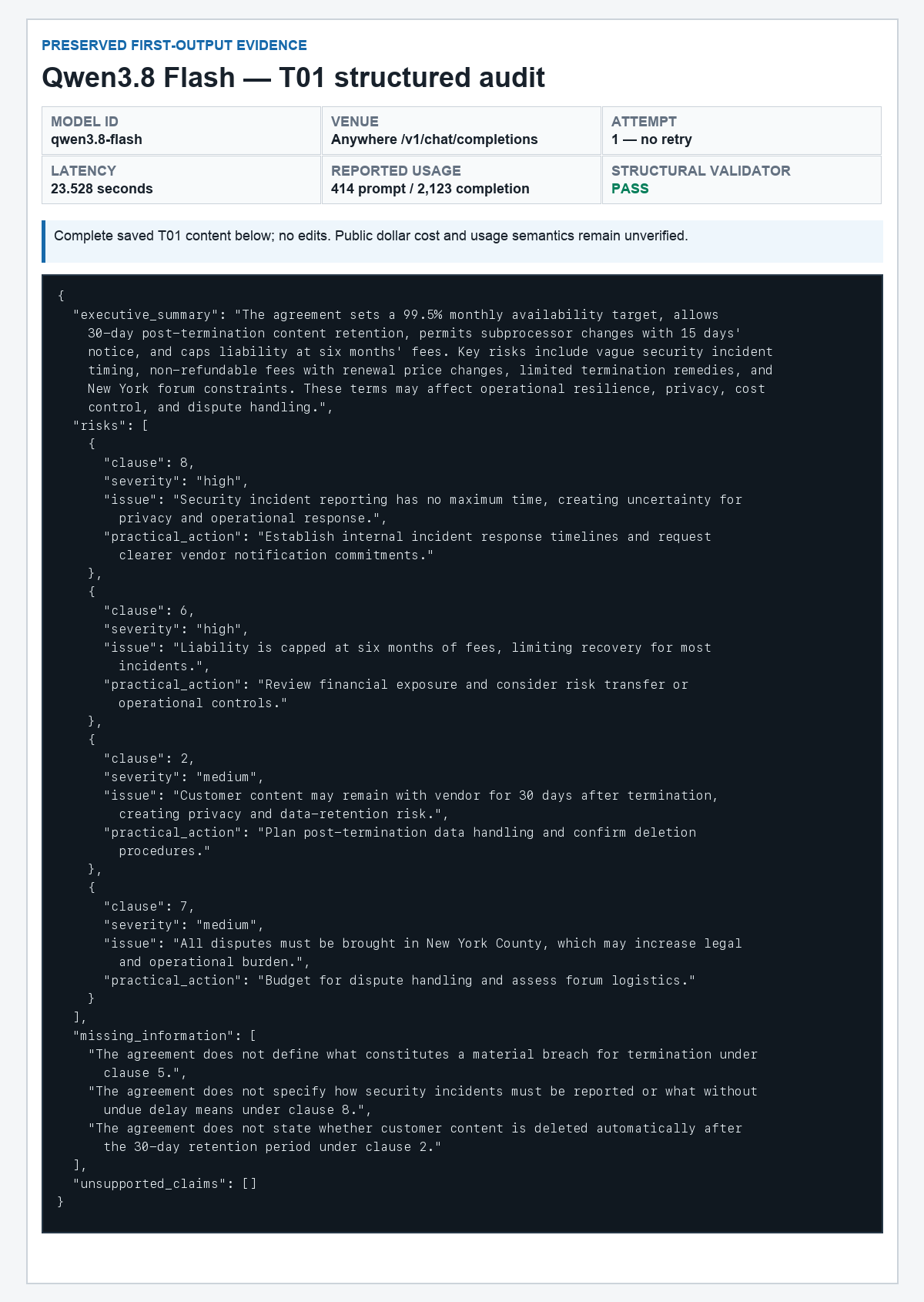
T01 · Auditoría estructurada de acuerdos y riesgos
Ha superado la prueba de riesgo contractual «congelado»; no se trata de una puntuación general de calidad.
Validador automático: PASS. Revisión de tareas en espera: 10/10. Semántica de los límites de uso y coste en dólares: sin verificar.
Ver el mensaje exacto
Estás revisando un contrato ficticio de un proveedor de SaaS. Utiliza únicamente las cláusulas numeradas que figuran a continuación. No añadas datos ajenos al texto.

[1] El objetivo de disponibilidad del servicio es del 99,51 % (TP40T) por mes natural. Quedan excluidos los mantenimientos programados anunciados con 48 horas de antelación.
[2] El contenido del cliente podrá conservarse hasta 30 días tras la cancelación de la cuenta con fines de restauración de copias de seguridad.
[3] El proveedor podrá recurrir a subencargados del tratamiento y publicará los cambios sustanciales relativos a los mismos al menos 15 días antes de que entren en vigor.
[4] Las tarifas no son reembolsables, salvo que lo exija la ley. El proveedor podrá modificar los precios de renovación con un preaviso de 30 días.
[5] Cualquiera de las partes podrá rescindir el contrato por incumplimiento sustancial no subsanado tras un preaviso por escrito de 20 días.
[6] La responsabilidad total del proveedor se limita al importe de las tarifas abonadas en los seis meses anteriores al suceso, salvo en caso de fraude o conducta dolosa.
[7] El contrato se rige por la legislación de Nueva York. Las controversias deberán someterse a los tribunales estatales o federales del condado de Nueva York.
[8] Los incidentes de seguridad que afecten al contenido del cliente deberán notificarse sin demora indebida, aunque no se especifica un número máximo de horas.

Devuelve un objeto JSON válido con exactamente estas claves:
- executive_summary: cadena de caracteres, máximo 70 palabras
- risks: matriz de exactamente 4 objetos, cada uno con: cláusula (entero), gravedad ('alta'|"media"|"baja"), problema (cadena de caracteres), acción_práctica (cadena de caracteres)
- missing_information: matriz de exactamente 3 cadenas
- unsupported_claims: matriz vacía

Da prioridad a los riesgos concretos de carácter comercial, de privacidad, operativos y jurídicos. Cada riesgo debe citar uno de los números de cláusula. No proporciones asesoramiento jurídico y no utilices Markdown.
Ver el JSON completo tal y como se ha conservado
{
  "resumen_ejecutivo": "El acuerdo establece un objetivo de disponibilidad mensual del 99,51 TP40T, permite la retención de contenidos durante 30 días tras la rescisión, autoriza cambios en los subencargados del tratamiento con un preaviso de 15 días y limita la responsabilidad al importe de seis meses de cuotas. Entre los principales riesgos se incluyen la vaguedad en cuanto a los plazos de notificación de incidentes de seguridad, las cuotas no reembolsables con variaciones en el precio de renovación, las limitadas medidas correctivas en caso de rescisión y las restricciones del foro de Nueva York. Estas condiciones pueden afectar a la resiliencia operativa, la privacidad, el control de costes y la gestión de litigios.',
  'riesgos": [
    {
 "cláusula": 8,
 "gravedad": "alta",
 "problema": "La notificación de incidentes de seguridad no tiene un plazo máximo, lo que genera incertidumbre en cuanto a la privacidad y la respuesta operativa.",
      "medida_práctica": "Establecer plazos internos de respuesta ante incidentes y solicitar compromisos más claros por parte del proveedor en materia de notificación."
    },
    {
 "cláusula": 6,
 "gravedad": "alta",
 "problema": "La responsabilidad está limitada a seis meses de tarifas, lo que restringe la indemnización en la mayoría de los incidentes.",
      "medida_práctica": "Revisar la exposición financiera y considerar la transferencia de riesgos o controles operativos."
    },
    {
 "cláusula": 2,
 "gravedad": "media",
 "problema": "El contenido de los clientes puede permanecer en poder del proveedor durante 30 días tras la rescisión, lo que genera un riesgo para la privacidad y la retención de datos.",
      "medida_práctica": "Planificar el tratamiento de los datos tras la rescisión y confirmar los procedimientos de supresión."
    },
    {
 "cláusula": 7,
 "gravedad": "media",
 "problema": "Todas las controversias deben resolverse en el condado de Nueva York, lo que puede aumentar la carga jurídica y operativa.",
      "medida_práctica": "Presupuestar la gestión de litigios y evaluar la logística del foro."
    }
  ],
  "información_faltante": [
    "El contrato no define qué constituye un incumplimiento sustancial que justifique la rescisión según la cláusula 5.",
    "El acuerdo no especifica cómo deben notificarse los incidentes de seguridad ni qué significa "sin demora indebida" según la cláusula 8.",
    "El acuerdo no indica si el contenido del cliente se elimina automáticamente tras el periodo de retención de 30 días previsto en la cláusula 2."
  ],
  "unsupported_claims": []
}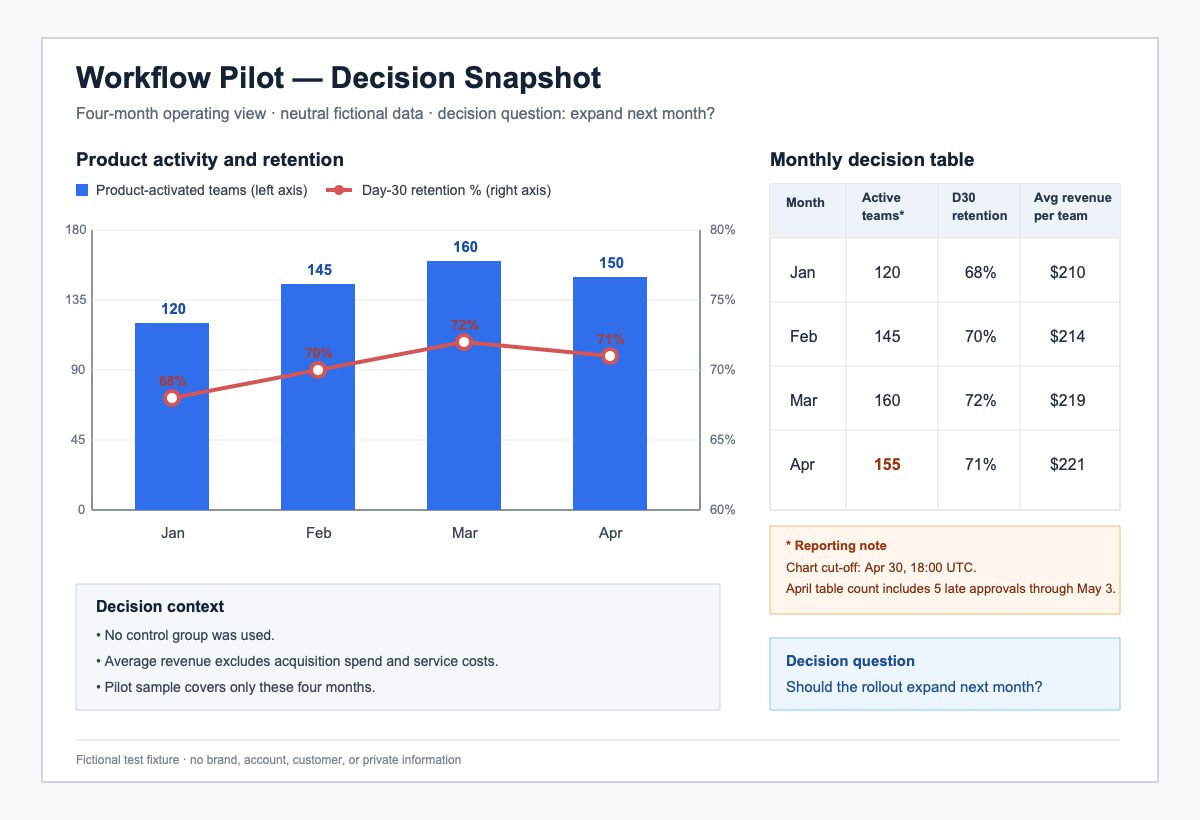
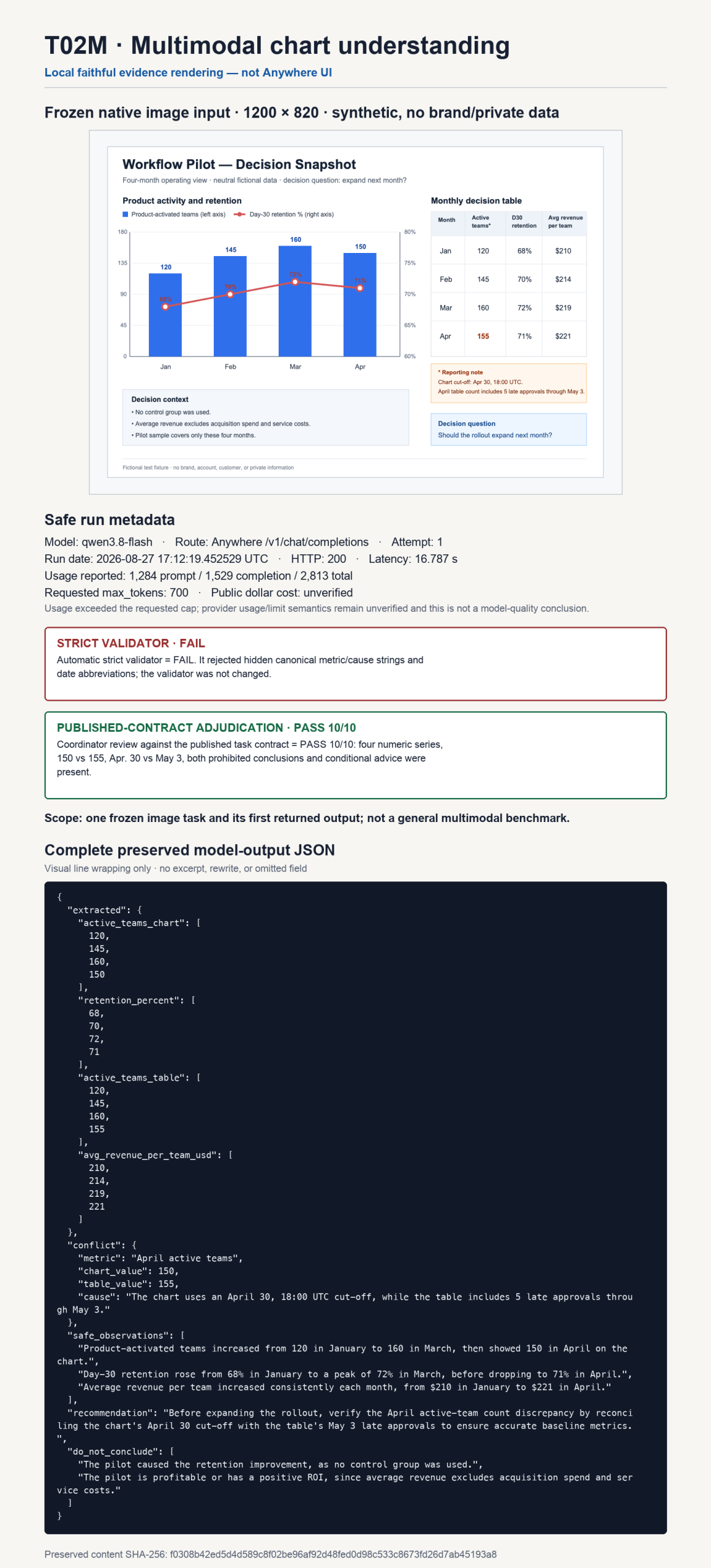
T02M · Extracción de gráficos y criterio empresarial limitado
Detectó todas las series, el conflicto de corte entre 150 y 155, y mantuvo la recomendación condicional.
Validador automático estricto: FALLO sobre las preferencias ocultas relativas a cadenas canónicas y fechas. Revisión del coordinador con respecto al contrato de tareas publicado: APROBADO 10/10. El resultado estricto no se sobrescribe.
Ver el mensaje exacto
Utiliza únicamente la imagen adjunta. No añadas datos externos. La imagen contiene un gráfico de barras/líneas de cuatro meses, una tabla de decisión, una nota informativa y el contexto de la decisión.

Devuelve un objeto JSON válido con exactamente estas claves de primer nivel:
- extracted: objeto que contenga exactamente active_teams_chart, retention_percent, active_teams_table y avg_revenue_per_team_usd; cada valor es una matriz de exactamente cuatro números en el orden: enero, febrero, marzo y abril
- conflict: objeto que contenga exactamente metric, chart_value, table_value y cause
- safe_observations: matriz de exactamente 3 cadenas de texto
- recommendation: cadena de texto, máximo 60 palabras
- do_not_conclude: matriz de exactamente 2 cadenas de texto

Requisitos:
1. Transcribe cada serie numérica exactamente tal y como se muestra.
2. Identifica el conflicto de equipos activos de abril y explica los dos cortes de datos del informe.
3. Las observaciones deben ser descriptivas y estar respaldadas por la imagen.
4. La recomendación debe indicar qué hay que verificar antes de ampliar la implantación.
5. Los dos elementos «do_not_conclude» deben abarcar la mejora de la retención causal y la rentabilidad/ROI.
6. El resultado debe ser únicamente en formato JSON, sin Markdown. La respuesta completa debe tener una extensión máxima de 700 tokens de salida.
Ver el JSON completo tal y como se ha conservado
{
  "extracted": {
    "active_teams_chart": [
 120,
 145,
 160,
 150
    ],
    "retention_percent": [
 68,
 70,
 72,
 71
    ],
    "active_teams_table": [
 120,
 145,
 160,
 155
    ],
    "ingresos_medios_por_equipo_usd": [
 210,
 214,
 219,
 221
    ]
  },
  "conflicto": {
    "métrica": "Equipos activos en abril",
    "valor_del_gráfico": 150,
    "valor_de_la_tabla": 155,
    "causa": "El gráfico utiliza como fecha límite el 30 de abril a las 18:00 UTC, mientras que la tabla incluye 5 aprobaciones tardías hasta el 3 de mayo."
  },
  "observaciones_seguras": [
    "Los equipos activados por el producto aumentaron de 120 en enero a 160 en marzo, y luego mostraron 150 en abril en el gráfico.",
    "La retención a los 30 días subió de 68% en enero a un máximo de 72% en marzo, antes de descender a 71% en abril.",
    "Los ingresos medios por equipo aumentaron de forma constante cada mes, pasando de $210 en enero a $221 en abril."
  ],
  "recomendación": "Antes de ampliar el lanzamiento, verifica la discrepancia en el recuento de equipos activos de abril cotejando la fecha límite del 30 de abril del gráfico con las aprobaciones tardías del 3 de mayo de la tabla, para garantizar la precisión de las métricas de referencia.",
  "no_sacar_conclusiones": [
    "La prueba piloto provocó la mejora en la retención, ya que no se utilizó ningún grupo de control.",
    "La prueba piloto es rentable o tiene un ROI positivo, ya que los ingresos medios excluyen los gastos de adquisición y los costes de servicio."
  ]
}
Paquete de entrada: 3 archivos sintéticos · 15 páginas lógicas · 60 identificadores de párrafo direccionables
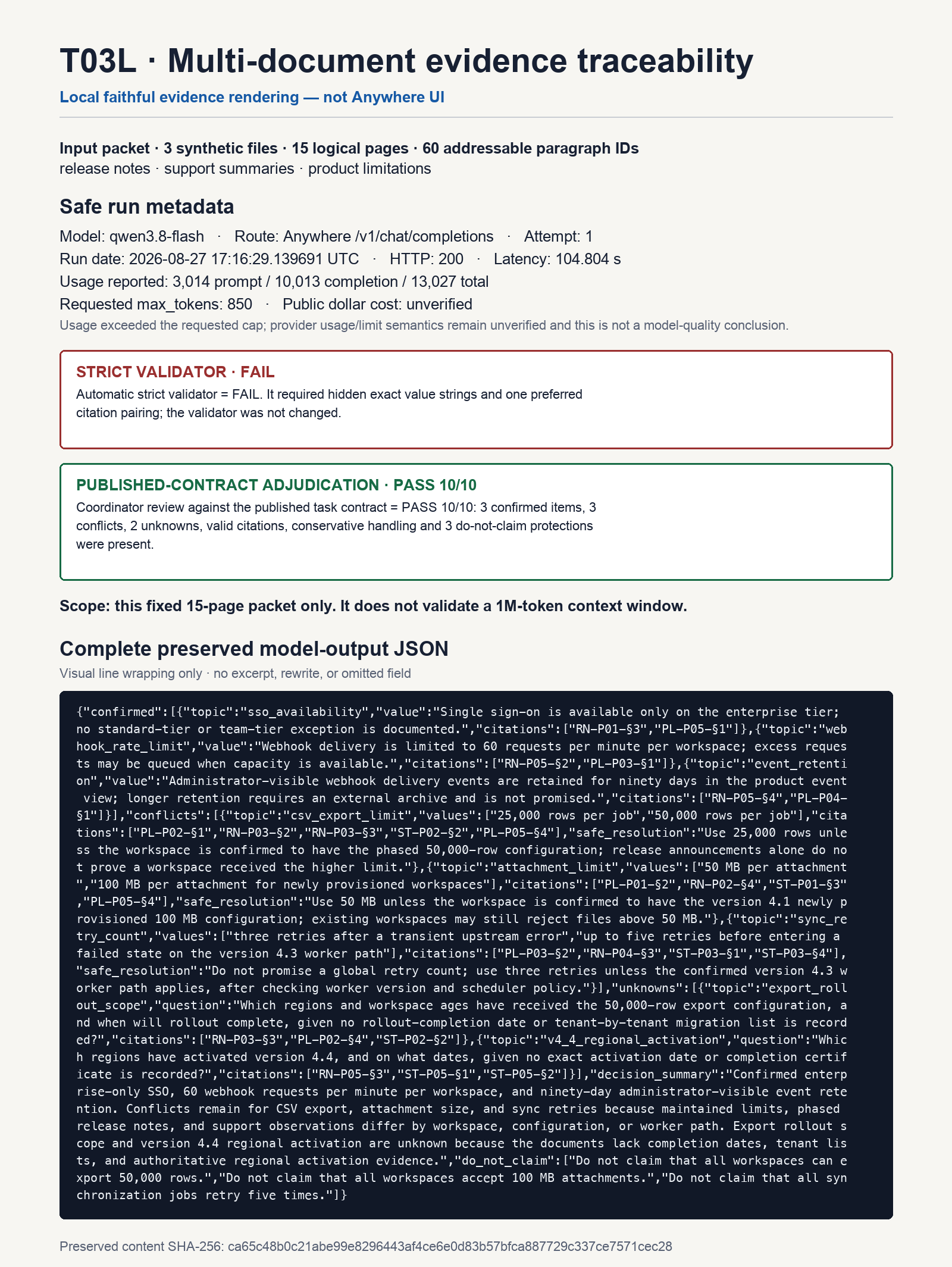
T03L · Trazabilidad de múltiples documentos y síntesis de conflictos
Recogía hechos confirmados, conflictos e incógnitas; no analiza el contexto de 1M.
Validador automático estricto: FALLO sobre las preferencias ocultas relativas a cadenas de texto exactas y citas. Revisión del coordinador en relación con el contrato de tareas publicado: APROBADO 10/10. Ambos estados siguen siendo visibles.
Ver el mensaje exacto
Utiliza únicamente los tres documentos sintéticos adjuntos al final de esta indicación. Cada afirmación factual debe poder rastrearse hasta los identificadores de párrafo facilitados. No resuelvas un conflicto eligiendo el valor más reciente, mayor o más favorable, a menos que los documentos justifiquen explícitamente esa elección.

Devuelve un objeto JSON válido con exactamente estas claves de primer nivel:
- confirmed: matriz de exactamente 3 objetos con los campos exactos: topic, value, citations
- conflicts: matriz de exactamente 3 objetos con los campos exactos: topic, values, citations, safe_resolution
- unknowns: matriz de exactamente 2 objetos con los campos exactos: topic, question, citations
- decision_summary: cadena de caracteres, máximo 100 palabras
- do_not_claim: matriz de exactamente 3 cadenas

Utiliza exactamente estos nombres de temas:
- confirmed: sso_availability, webhook_rate_limit, event_retention
- conflicts: csv_export_limit, attachment_limit, sync_retry_count
- incógnitas: export_rollout_scope, v4_4_regional_activation

Normas de citación:
1. Cada citación debe reproducir exactamente el ID de un párrafo real.
2. Cada elemento confirmado necesita al menos dos citas de respaldo procedentes de documentos diferentes.
3. Cada conflicto debe conservar ambos valores incompatibles y citar cada una de las partes implicadas.
4. Los elementos desconocidos deben seguir sin conocerse; indica qué pruebas faltan.
5. «do_not_claim» debe bloquear las afirmaciones generales sobre exportaciones de 50 000 filas, archivos adjuntos de 100 MB y cinco reintentos.
6. Genera únicamente JSON, sin Markdown. Mantén la respuesta completa dentro de los 850 tokens de salida.

No afirmes que esta tarea valida ninguna ventana de contexto máxima. Mide la trazabilidad únicamente en este paquete fijo de longitud media.
Ver el JSON completo tal y como se ha conservado
{"confirmed":[{"topic":"sso_availability","value":"El inicio de sesión único solo está disponible en el nivel Enterprise; no se ha documentado ninguna excepción para los niveles Standard o Team.","citations":["RN-P01-§3","PL-P05-§1"]},{"topic":"webhook_rate_limit","value":"El envío de webhooks está limitado a 60 solicitudes por minuto por espacio de trabajo; las solicitudes excedentes pueden ponerse en cola cuando haya capacidad disponible.","citations":["RN-P05-§2","PL-P03-§1"]},{"topic":"event_retention","value":"Los eventos de entrega de webhooks visibles para el administrador se conservan durante noventa días en la vista de eventos del producto; una retención más prolongada requiere un archivo externo y no está garantizada.","citations":["RN-P05-§4","PL-P04-§1"]}],"conflicts":[{"topic":"csv_export_limit","values":["25 000 filas por tarea","50 000 filas por tarea"],"citaciones":["PL-P02-§1","RN-P03-§2","RN-P03-§3","ST-P02-§2","PL-P05-§4"],"solución_segura":"Utiliza 25 000 filas a menos que se confirme que el espacio de trabajo cuenta con la configuración escalonada de 50 000 filas; los anuncios de lanzamiento por sí solos no demuestran que un espacio de trabajo haya recibido el límite superior."},{"tema":"límite_de_archivos_adjuntos","valores":["50 MB por archivo adjunto","100 MB por archivo adjunto para espacios de trabajo recién provisionados"],"referencias":["PL-P01-§2","RN-P02-§4","ST-P01-§3","PL-P05-§4"],"safe_resolution":"Utilice 50 MB a menos que se confirme que el espacio de trabajo cuenta con la configuración de 100 MB para los espacios de trabajo de la versión 4.1 recién aprovisionados; los espacios de trabajo existentes pueden seguir rechazando archivos de más de 50 MB."},{"tema":"sync_retry_count","valores":["tres reintentos tras un error transitorio en el servidor de origen","hasta cinco reintentos antes de entrar en estado de fallo en la ruta del trabajador de la versión 4.3"],"referencias":["PL-P03-§2","RN-P04-§3","ST-P03-§1","ST-P03-§4"],"safe_resolution":"No se debe prometer un recuento global de reintentos; utilícese un máximo de tres reintentos, salvo que se aplique la ruta del trabajador de la versión 4.3 confirmada, tras comprobar la versión del trabajador y la política del programador."}],"unknowns":[{"topic":"export_rollout_scope","question":"¿Qué regiones y edades de los espacios de trabajo han recibido la configuración de exportación de 50 000 filas, y cuándo se completará el despliegue, dado que no se ha registrado ninguna fecha de finalización del despliegue ni una lista de migración por inquilino?","citations":["RN-P03-§3","PL-P02-§4","ST-P02-§2"]},{"topic":"v4_4_regional_activation","question":"¿Qué regiones han activado la versión 4.4 y en qué fechas, dado que no se ha registrado ninguna fecha exacta de activación ni ningún certificado de finalización?","citaciones":["RN-P05-§3","ST-P05-§1","ST-P05-§2"]}],"resumen_de_la_decisión":"Se ha confirmado el SSO exclusivo para empresas, 60 solicitudes de webhook por minuto por espacio de trabajo y una retención de eventos visible para el administrador de noventa días. Persisten los conflictos en cuanto a la exportación a CSV, el tamaño de los archivos adjuntos y los reintentos de sincronización, ya que los límites mantenidos, las notas de lanzamiento por fases y las observaciones del servicio de asistencia difieren según el espacio de trabajo, la configuración o la ruta del trabajador. Se desconocen el alcance del despliegue de la exportación y la activación regional de la versión 4.4, ya que los documentos carecen de fechas de finalización, listas de clientes y pruebas fehacientes de la activación regional.","do_not_claim":["No afirmes que todos los espacios de trabajo pueden exportar 50 000 filas.","No afirmes que todos los espacios de trabajo admiten archivos adjuntos de 100 MB.","No afirmes que todas las tareas de sincronización realizan cinco reintentos."]}T01 superó la validación. T02M y T03L superaron la validación de sus contratos publicados, pero no superaron las pruebas más estrictas de preferencias de representación ocultas. El uso de finalización notificado superó todos los límites máximos solicitados, por lo que la contabilidad de rutas sigue sin resolverse.
Puntos fuertes, limitaciones y consideraciones prácticas
Donde el argumento es más sólido
- Tarifas oficiales básicas reducidas para flujos de trabajo de texto de gran volumen.
- Una ventana de contexto amplia con lista desplegable para trabajar con documentos y código fuente.
- Envío de texto, imágenes y vídeos a través del servicio oficial.
- Salida estructurada, herramientas, almacenamiento en caché y funciones por lotes en la ruta Qwen documentada.
- Una opción de Flash-Next de peso abierto para equipos que puedan gestionar su propia infraestructura.
Ámbitos en los que sigue siendo necesario actuar con cautela
- No se ha verificado la cobertura de pruebas de rendimiento independientes para la memoria Flash de producción exacta.
- Los resultados de los proveedores de Flash-Next deben conservar su denominación exacta y la nota sobre la metodología.
- Las rutas de terceros pueden presentar diferentes límites, herramientas y sistemas de contabilización del uso.
- Aún está pendiente la correspondencia exacta del plan Flash GlobalGPT con el Qwen3.8.
- Tres pequeñas tareas iniciales no garantizan la fiabilidad, el rendimiento en condiciones reales ni la seguridad en la producción.
Una secuencia de evaluación práctica
Empieza con una tarea recurrente, en lugar de un concurso de belleza a gran escala. Establece los datos de entrada, los criterios de éxito y el formato de salida antes de la primera ejecución. En el caso de un flujo de trabajo de documentos, exige citas bibliográficas y una lista de cuestiones sin resolver. Para el código, utiliza pruebas ejecutables. En el análisis visual, incluye al menos un conflicto o una ambigüedad deliberados, de modo que el modelo tenga que hacer algo más que transcribir etiquetas.
A continuación, prueba tanto la ruta como el modelo. Anota el ID exacto, la latencia, el consumo, las herramientas disponibles y cualquier límite de archivos. Una plataforma alojada puede aportar funciones útiles de búsqueda, almacenamiento o colaboración, pero también puede alterar la contabilidad de tokens y los límites máximos de salida. Por eso, la anomalía en el límite de uso observada en nuestras ejecuciones de Anywhere debe atribuirse a las limitaciones de la ruta, y no a una afirmación sobre la inteligencia de Qwen.
Por último, no se debe repetir el proceso hasta que se hayan conservado los datos de la primera salida. Un estudio de estabilidad debe mostrar todas las ejecuciones, los tipos de fallo y la dispersión; nunca debe sustituir un primer resultado poco sólido por la muestra más atractiva. En esta revisión no se ha realizado un lote de estabilidad, por lo que la fiabilidad sigue siendo una cuestión pendiente en la producción.
Utiliza Qwen3.8 Flash cuando el precio, el contexto y los datos multimodales justifiquen una prueba controlada. No realices la migración a producción si necesitas una clasificación de rendimiento establecida de forma independiente, certeza en la facturación a nivel de ruta o una función que no se haya confirmado en la plataforma elegida.
¿Qué vía de acceso deberías elegir?
| Tu prioridad | La mejor ruta para empezar | Por qué |
|---|---|---|
| Controles de la API nativa y facturación por tokens | Qwen Cloud | Documentación oficial, tarifas básicas y características del servicio |
| Una suscripción para varias modelos de chat | GlobalGPT | Cambio más sencillo entre modelos interactivos; plataforma independiente |
| Autohospedaje y control del nivel de peso | Flash-Next | Artefacto de peso variable, con responsabilidad en materia de infraestructuras |
| Reproducir las recomendaciones de esta reseña | En cualquier lugar | Solo ruta probada; semántica sin resolver sobre «dólar» y «límite» en el ámbito público |
Una regla de ruta sencilla
- ¿Necesitas controles de API nativos? Empieza con Qwen Cloud.
- ¿Necesitas un único espacio de trabajo para varios modelos? Ten en cuenta el GlobalGPT, al tiempo que confirmas el acceso al plan actual.
- ¿Necesitas pesas con las que puedas entrenar por tu cuenta? Evaluar Flash-Next y elaborar el presupuesto para la infraestructura.
- ¿Necesitas pruebas reproducibles? Anota la ruta exacta, ya que los límites de las plataformas y las herramientas pueden variar.
Si estás dudando entre un modelo más rápido y con una buena relación calidad-precio y su modelo insignia, lee el Reseña de Qwen3.8 Max. Si quieres una selección más amplia de proveedores, consulta nuestra guía sobre el los mejores modelos de IA para tareas del mundo real.
Preguntas frecuentes
¿Es el Qwen3.8 Flash lo mismo que el Qwen3.8 Flash-Next?
El n.º Qwen describe Qwen3.8 Flash como la versión de producción gestionada basada en el artefacto Qwen3.8-Flash-Next de peso abierto. Mantén los nombres separados cuando hables de pesos, herramientas o pruebas de rendimiento.
¿Cuánto cuesta la API Flash Qwen3.8?
El 27 de agosto de 2026, Qwen Cloud publicó unas tarifas base de $0,15 por cada millón de tokens de entrada y de $0,47 por cada millón de tokens de salida. Es posible que se apliquen tarifas diferentes en relación con la caché, las herramientas y los cargos de plataformas de terceros.
¿El dispositivo Qwen3.8 Flash es compatible con imágenes y vídeos?
Sí. En la página oficial de Qwen Cloud se indican las entradas de texto, imagen y vídeo, así como la salida de texto. Las limitaciones en cuanto a la gestión de archivos y la interfaz de usuario pueden variar según la ruta.
¿Qué es la ventana de contexto «Qwen3.8 Flash»?
Qwen Cloud indica una ventana de contexto de 1 millón de tokens, con límites máximos de entrada y salida específicos para cada ruta. La prueba de 15 páginas de esta reseña no valida el rendimiento con el contexto máximo.
¿Dónde puedo probar el Qwen3.8 Flash?
Qwen Cloud es la ruta oficial de la API. GlobalGPT ofrece un espacio de trabajo multimodelo independiente; abierto GlobalGPT y comprueba el acceso al modelo actual de tu plan. «Anywhere» se utilizó únicamente como ruta de la API probada para esta revisión.
Conclusión
Qwen3.8 Flash presenta una combinación convincente y documentada: bajas tasas de tokens base, un listado de contexto de 1 millón, entrada multimodal y un amplio conjunto de funciones de producción. La conclusión responsable no es que sea la mejor opción en todos los casos. Las pruebas independientes sobre el modelo gestionado concreto siguen siendo escasas, el comportamiento de las rutas de terceros varía y las pruebas prácticas aquí presentadas solo abarcan tres primeras salidas delimitadas.
Para los desarrolladores, Qwen Cloud es el punto de partida más sencillo. Para quienes deseen comparar varios modelos de chat sin tener que gestionar API independientes, GlobalGPT es la opción independiente más práctica, tras confirmar el acceso al plan en producción. En cualquier caso, prueba una instrucción con una regla de aceptación que puedas verificar.
Comprueba la decisión, no el nombre del modelo
Utiliza una instrucción de tu flujo de trabajo real, mantén fijos los datos de entrada y los criterios de aceptación, y compara el resultado con el modelo que ya utilizas.
Prueba tu comando en GlobalGPT