
Claude Opus 5 vs Fable 5 vs Sonnet 5: Which Claude Model Is Best?

claude-opus-5-vs-fable-5-vs-sonnet-5- hero

Opus 5 is the best default for high-value professional work, Fable 5 is the strongest choice when maximum capability matters more than price, and Sonnet 5 is the best value for fast, clearly scoped tasks. Our 15-call API test reinforced that split: no model won every workflow.

BEST OVERALLClaude Opus 5Deep analysis and strong editorial judgment at half Fable’s API price.
HIGHEST CEILING克劳德·法布尔 5Best completion in our planning and contract-analysis tests.
BEST VALUE克劳德·桑内特 5Fastest average response and the cleanest coding result in our test.

That answer changes with the job. Fable can justify its premium on difficult autonomous work. Opus offers a more practical balance for advanced everyday use. Sonnet is easier to scale when latency and cost dominate.

You do not necessarily have to commit to one model. GlobalGPT 包括 Claude Opus 5, Fable 5, and Sonnet 5 in its Basic plan, so you can use Sonnet for fast execution, switch to Opus for deeper review, and bring in Fable for the hardest planning tasks—all within the same multi-model workspace.

Claude Opus 5 vs Fable 5 vs Sonnet 5: Quick Comparison

模型最适合Input / output per 1M tokens背景Relative speed
《Fable 5》Hard autonomous work, ambiguous planning, maximum capability$10 / $501M较慢
Opus 5Advanced coding, analysis, enterprise knowledge work$5 / $251M中度
第5首十四行诗High-volume coding, tool use, fast production tasks$2 / $10 introductory; $3 / $15 from Sep. 1, 20261M快速

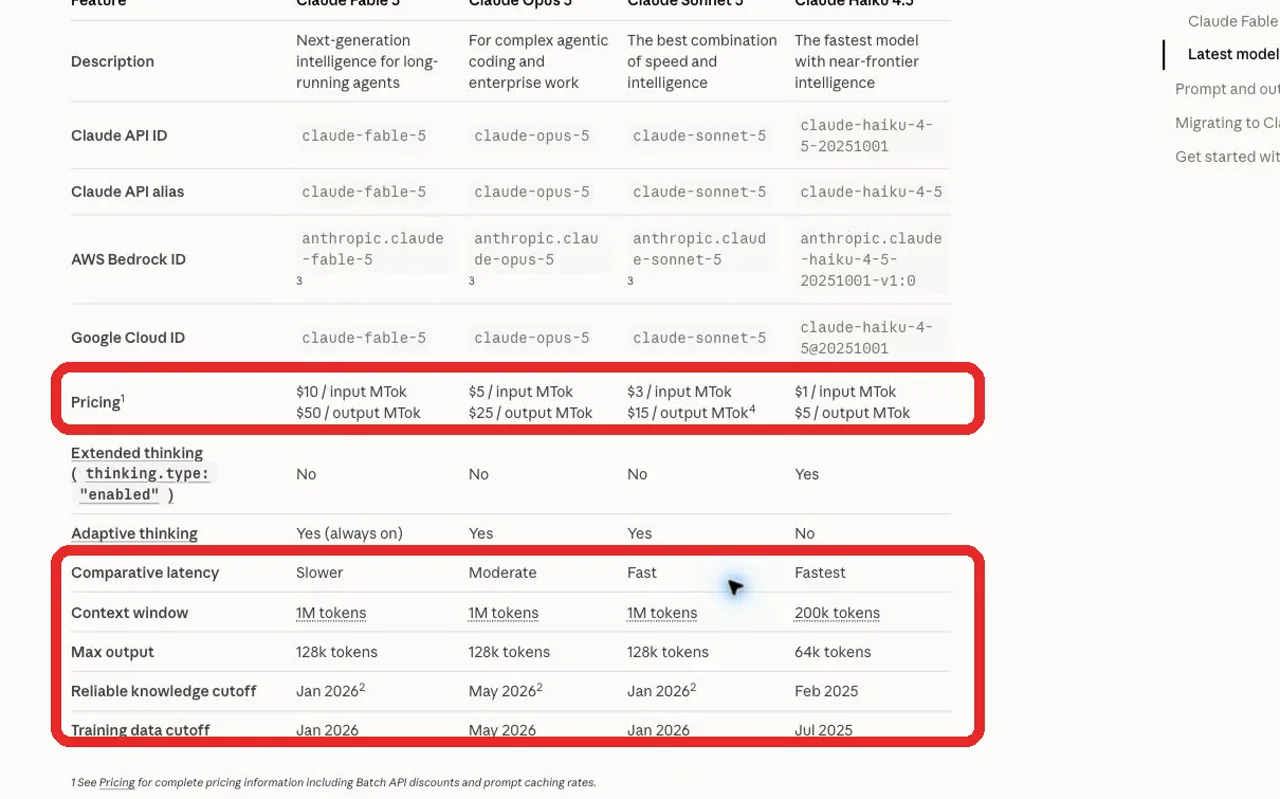
All three support a 1-million-token context window and a standard maximum output of 128K tokens. The meaningful differences are how much reasoning you need, how quickly you need it, and how much each completed task costs.

Claude Fable 5 vs Opus 5 vs Sonnet 5 model comparison
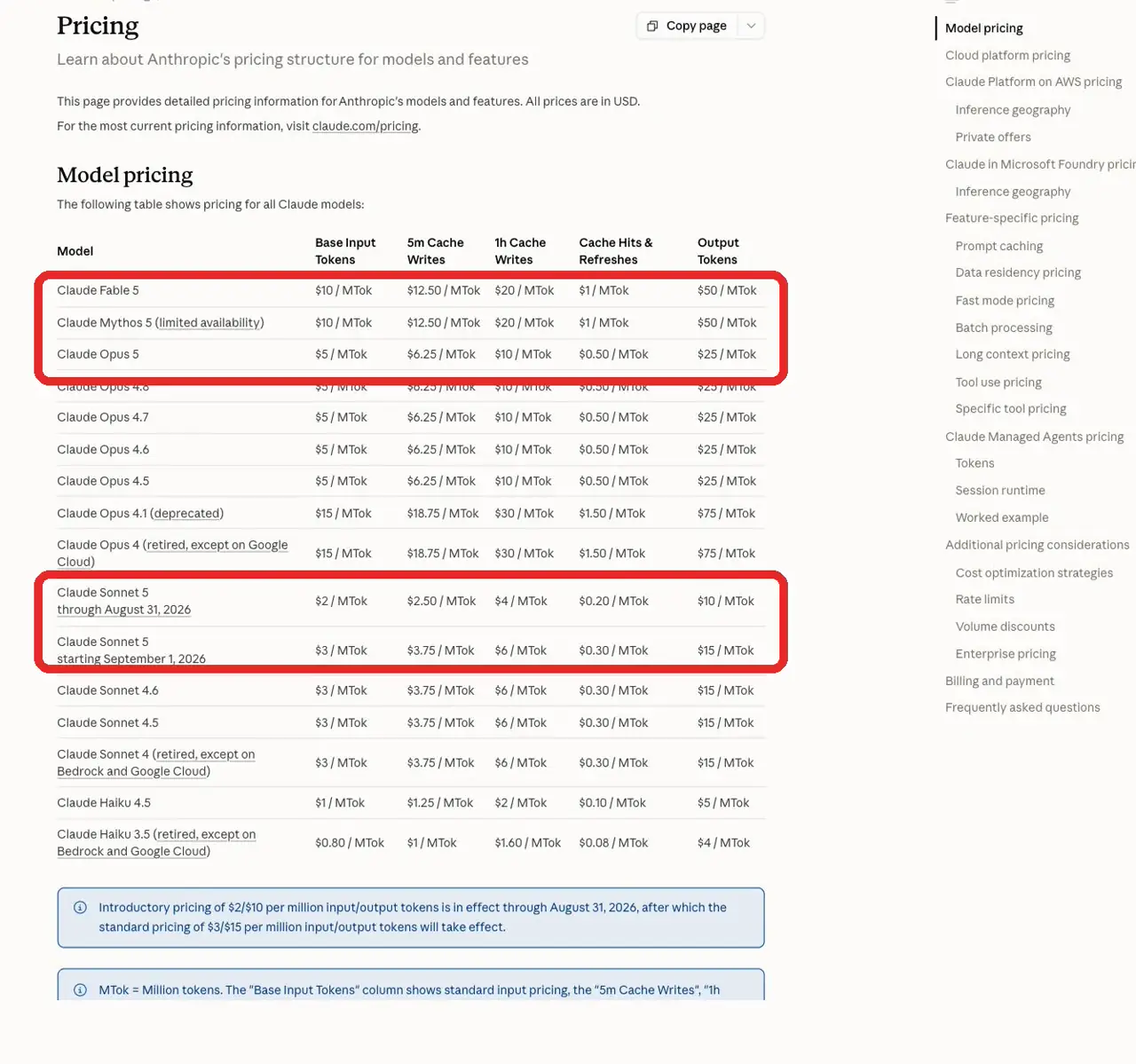
Anthropic’s model table compares pricing, latency, context windows, and output limits.

Key Differences Between Fable 5, Opus 5, and Sonnet 5

Fable 5 prioritizes the capability ceiling

Choose Fable when the prompt is underspecified, the plan spans many dependent steps, or a mistake is more expensive than extra inference cost. In our test it was the only model to finish both the full ten-step agent plan and every requested part of the contract analysis.

Opus 5 is the practical premium model

Opus is designed to approach Fable-level intelligence at half its token price. It tends to inspect more edge cases and impose stronger editorial guardrails, but that depth can become verbosity. Four of its five tested answers reached our 1,800-token ceiling.

Sonnet 5 turns clarity into speed

Sonnet works best when the acceptance criteria are explicit. It delivered the fastest average response and the most usable first-pass coding answer. The trade-off is less headroom when a task requires extended planning or broad judgment.

Opus 5 vs Opus 4.8: What Changed?

Opus 5 keeps the same standard API rate as Opus 4.8 while pushing further into agentic coding, computer use, and professional knowledge work. Anthropic’s launch claims include a greater than twofold improvement on Frontier-Bench v0.1 and stronger cost efficiency on OSWorld 2.0 and Zapier AutomationBench.

  • Upgrade for: difficult coding agents, tool-rich workflows, research synthesis, and self-verifying work.
  • Keep Opus 4.8 when: an existing production workflow is stable and the migration benefit has not been measured.
  • Test before switching: Opus 5 can spend more tokens exploring edge cases, so quality gains do not automatically reduce total cost.
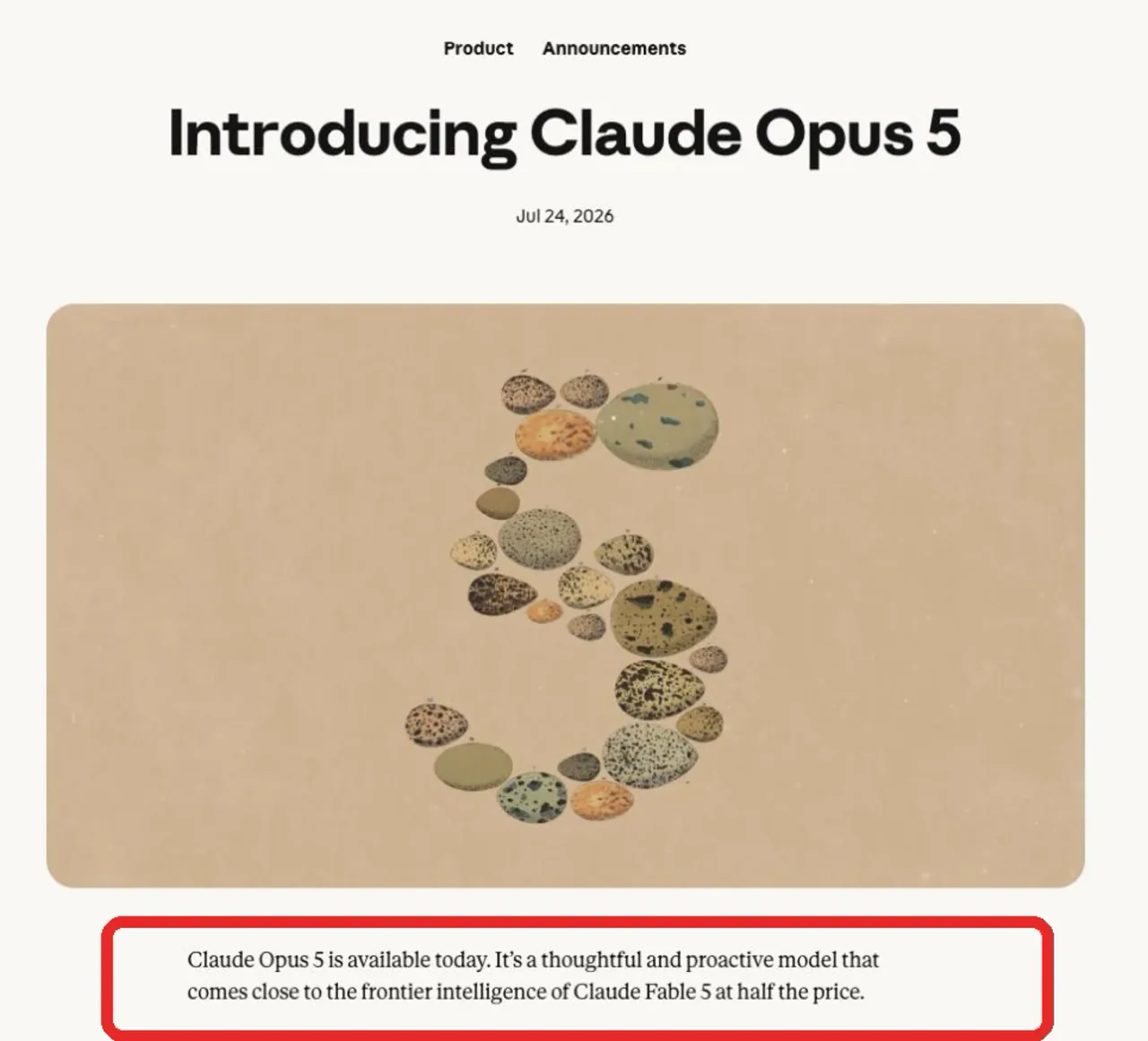
Anthropic Claude Opus 5 launch announcement
Anthropic positions Opus 5 near Fable 5’s frontier intelligence at half the API price.

Opus 5 vs Fable 5 vs Sonnet 5 Benchmarks

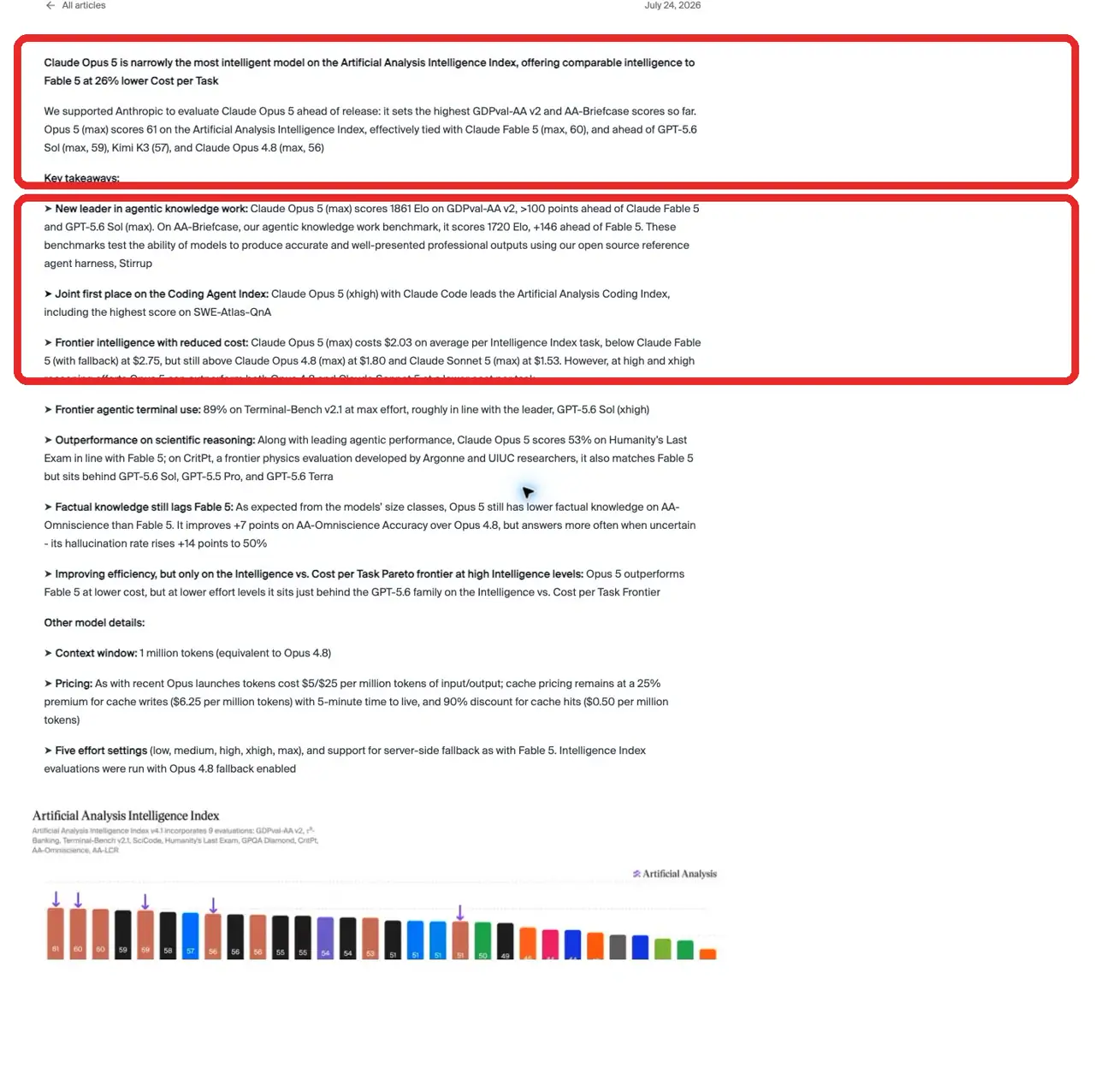
Artificial Analysis scored Opus 5 at 61 and Fable 5 at 60 on its Intelligence Index. A one-point difference is better read as a near tie than proof that Opus is universally smarter. Sonnet 5 scored 53, leaving a clearer capability gap on the composite test.

人工智能分析指数
Opus 5
61
《Fable 5》
60
第5首十四行诗
53

On professional-agent evaluations reported on the same Opus 5 analysis page, Opus reached 1,861 Elo on GDPval-AA v2 and 1,720 Elo on AA-Briefcase. Fable recorded 1,747 and 1,574 respectively; Sonnet’s listed AA-Briefcase result was 1,391. These tests favor particular agent configurations, so they are inputs to a decision—not a universal ranking.

Claude Opus 5 Artificial Analysis benchmark results
Artificial Analysis reported Opus 5 at 61 on its Intelligence Index, effectively tied with Fable 5 at 60.

Opus 5 vs Fable 5 vs Sonnet 5 Pricing

模型输入 / 1M输出 / 1M1M input + 200K output
《Fable 5》$10$50$20
Opus 5$5$25$10
Sonnet 5 introductory$2$10$4
Sonnet 5 from Sep. 1, 2026$3$15$6

Fable costs twice as much as Opus at the same token volume, while Sonnet costs 60% less than Opus during its introductory period. Real cost still depends on output length, retries, effort settings, caching, batch discounts, and whether the first answer is usable.

Claude Fable 5 Opus 5 and Sonnet 5 API pricing
Anthropic lists Fable 5 at $10/$50, Opus 5 at $5/$25, and Sonnet 5 introductory pricing at $2/$10 per million input/output tokens.
Pricing shortcut: use Sonnet for repeatable high-volume work, Opus for expensive-to-review professional work, and Fable only where its extra planning or completion quality can repay the premium.

Our Hands-On API Test: 15 Calls Across Five Workflows

FIVE-TASK FIRST-OUTPUT TEST

Where Each Claude Model Performed Best

15 / 15 CALLS SUCCEEDED

Task performance in our API test · 1–5 scale

Claude Opus 5, Fable 5, and Sonnet 5 performance across five tested workflows Sonnet led coding, Fable led planning and contract analysis, Opus led SEO editorial judgment, and all three struggled with strict JSON output. 编码 规划 Contract JSON 搜索引擎优化
Opus 5 《Fable 5》 第5首十四行诗

Scale: 5 = best complete result; 4 = strong result with a trade-off; 3 = useful but partial; 2 = missed a key requirement; 1 = unusable.

编码第5首十四行诗

Fastest complete repair with exactly six requested tests.

规划《Fable 5》

The only model to finish the full ten-step workflow.

Contract《Fable 5》

Completed every requested analysis component and reference index.

搜索引擎优化Opus 5

Best editorial structure and factual guardrails.

Strict JSONNo clean winner

All three broke the JSON-only requirement; schema validation is essential.

One first output per task and model, using temperature 0 and a 1,800-token output limit. The radar summarizes these five tested workflows only; it is not a universal model benchmark.

CODING DEBUG

Coding Debug

Winner: Sonnet 5
Opus 526.00s · 1,800 tokens

Found the broadest set of edge cases, including invalid scores and deterministic ties, but the answer ended before the corrected function appeared.

《Fable 5》21.15s · 1,324 tokens

Delivered a complete repair and the six requested tests, then added a bonus test beyond scope.

第5首十四行诗15.97s · 1,088 tokens

Delivered a complete function and exactly six runnable tests while staying focused on the requested scope.

Task-specific checkOpus 5《Fable 5》第5首十四行诗
Complete repaired functionNo — output capped
Six requested testsNo — output cappedYes + bonusYes, exactly six
Input mutation handledDiagnosed固定式固定式
Scope controlDeep but incompleteSlight overdelivery最佳

Sonnet 5 produced the most usable first answer: complete, fast, and correctly scoped. Opus showed the deepest diagnosis, but depth did not help when the answer ended before the repair.

查看确切的提示语
Diagnose and fix the JavaScript topN function. It must not mutate input, must sort numeric scores descending, handle ties and decimal scores, return [] for negative n, and include exactly six runnable tests.
View full-run evidence
First valid outputs and metadata are preserved in api-test/results.jsonl. No retry was used to replace a valid output.
AGENT PLANNING

Agent Planning

Winner: Fable 5
Opus 529.84s · 1,800 tokens

Designed the most detailed governance controls, rollback triggers, and measurable checks, but stopped at the beginning of step six.

《Fable 5》32.90s · 1,800 tokens

The only model to complete the full ten-step migration table, including human gates, verification thresholds, and rollback rules.

第5首十四行诗23.94s · 1,800 tokens

Reached the answer fastest and kept the plan readable, but stopped during step seven.

Task-specific checkOpus 5《Fable 5》第5首十四行诗
All 10 steps visible没有没有
Human checkpoints强大强大强大
Measurable verification强大Strong and complete良好
Rollback conditionsStrong but partial完成部分

Fable 5 won on deliverable completion. Opus had the strongest control design, but an unfinished workflow is harder to execute. Sonnet is attractive when speed matters and a shorter plan is acceptable.

查看确切的提示语
Create a 10-step agent workflow for migrating a 200-article AI blog to a new CMS. Include owners, human checkpoints, measurable verification, rollback conditions, and the top three failure modes.
View full-run evidence
First valid outputs and metadata are preserved in api-test/results.jsonl. No retry was used to replace a valid output.
CONTRACT ANALYSIS

Contract Analysis

Winner: Fable 5
Opus 525.69s · 1,800 tokens

Identified the deepest legal and commercial issues, then stopped during the first detailed risk item.

《Fable 5》25.54s · 1,569 tokens

Completed the executive summary, obligations, payment terms, termination, five risks, and clause-reference index.

第5首十四行诗20.35s · 1,800 tokens

Produced a clear summary and customer obligations, then ended near the start of vendor obligations.

Task-specific checkOpus 5《Fable 5》第5首十四行诗
Executive summary
Both parties’ obligations部分完成部分
Five risksNo — capped完成No — capped
Reference indexNo — capped完成No — capped

Fable 5 was the only complete answer under the shared limit. Opus is promising for deep issue spotting, but this run would have required continuation. The input was a 417-token contract excerpt, not a long-context stress test.

查看确切的提示语
Analyze the supplied SaaS contract excerpt. Return an executive summary, obligations by party, payment and termination terms, five prioritized risks with clause references, and a citation index.
View full-run evidence
First valid outputs and metadata are preserved in api-test/results.jsonl. No retry was used to replace a valid output.
STRUCTURED OUTPUT AUDIT

Strict JSON Extraction

检查Opus 5《Fable 5》第5首十四行诗
Valid JSON onlyFail — code fenceFail — code fenceFail — code fence
Schema disciplineAdded incorrect model warningAdded incorrect model warningPut “all chat models” inside model array
Uncertainty fieldPresentPresentMissing for Pro
延迟11.07s12.48s8.32s

No clean winner. All three broke the strict “JSON only” contract. Sonnet was fastest, but speed does not compensate for a schema error. Production automation should validate the response against a schema and retry or reject invalid output.

查看确切的提示语
Extract the supplied GlobalGPT plan facts into the requested JSON schema. Return JSON only, without Markdown fences. Preserve uncertainty instead of inventing missing facts.
SEO WORKFLOW

Seo Workflow

Best editorial judgment: Opus 5
Opus 528.55s · 1,800 tokens

Built the strongest structure and editorial safeguards and did not invent an incorrect publication year. The pricing section was cut off.

《Fable 5》30.18s · 1,800 tokens

Produced a useful commercial outline but inserted 2025 into a fresh 2026 topic and hit the output limit.

第5首十四行诗26.62s · 1,800 tokens

Created a clear outline and product-access section, but also inserted 2025 and stopped before completing the brief.

Task-specific checkOpus 5《Fable 5》第5首十四行诗
Correct year handling通过Fail — added 2025Fail — added 2025
Search intent强大强大强大
Editorial safeguards最佳良好良好
Complete deliverableNo — cappedNo — cappedNo — capped

Opus 5 showed the best editorial judgment, but none completed the full brief under the output ceiling. For publishable SEO work, use a fact checklist and section-by-section generation instead of assuming one long answer will finish cleanly.

查看确切的提示语
Create a detailed SEO content brief for Claude Opus 5 vs Fable 5 vs Sonnet 5 using the supplied keywords, product facts, pricing requirements, test plan, and evidence boundaries. Do not invent dates or unverified data.
View full-run evidence
First valid outputs and metadata are preserved in api-test/results.jsonl. No retry was used to replace a valid output.
FIVE-TASK RESULT

No Single Model Won Every Workflow

编码第5首十四行诗
规划《Fable 5》
Contract《Fable 5》
SEO judgmentOpus 5

Best fit: Sonnet for fast, scoped execution; Fable for completion-heavy planning and analysis; Opus for deep professional judgment. Strict structured output needs validation regardless of model.

15/15 calls succeeded. This was one first output per task and model, with a 1,800-token ceiling—not a repeat-run stability study.

Opus 5 vs Fable 5 vs Sonnet 5 for Coding and Agents

Our coding result favored Sonnet for a tightly defined repair, while Fable won the broader agent plan. That is the clearest reason to choose by workflow instead of model prestige.

  • Sonnet 5: use for frequent edits, tests, tool calls, and clear tickets where latency matters.
  • Opus 5: use for difficult debugging, architecture review, ambiguous repositories, and work requiring careful self-checks.
  • Fable 5: use for long, loosely specified, multi-file or multi-agent projects where completing the plan matters more than speed.

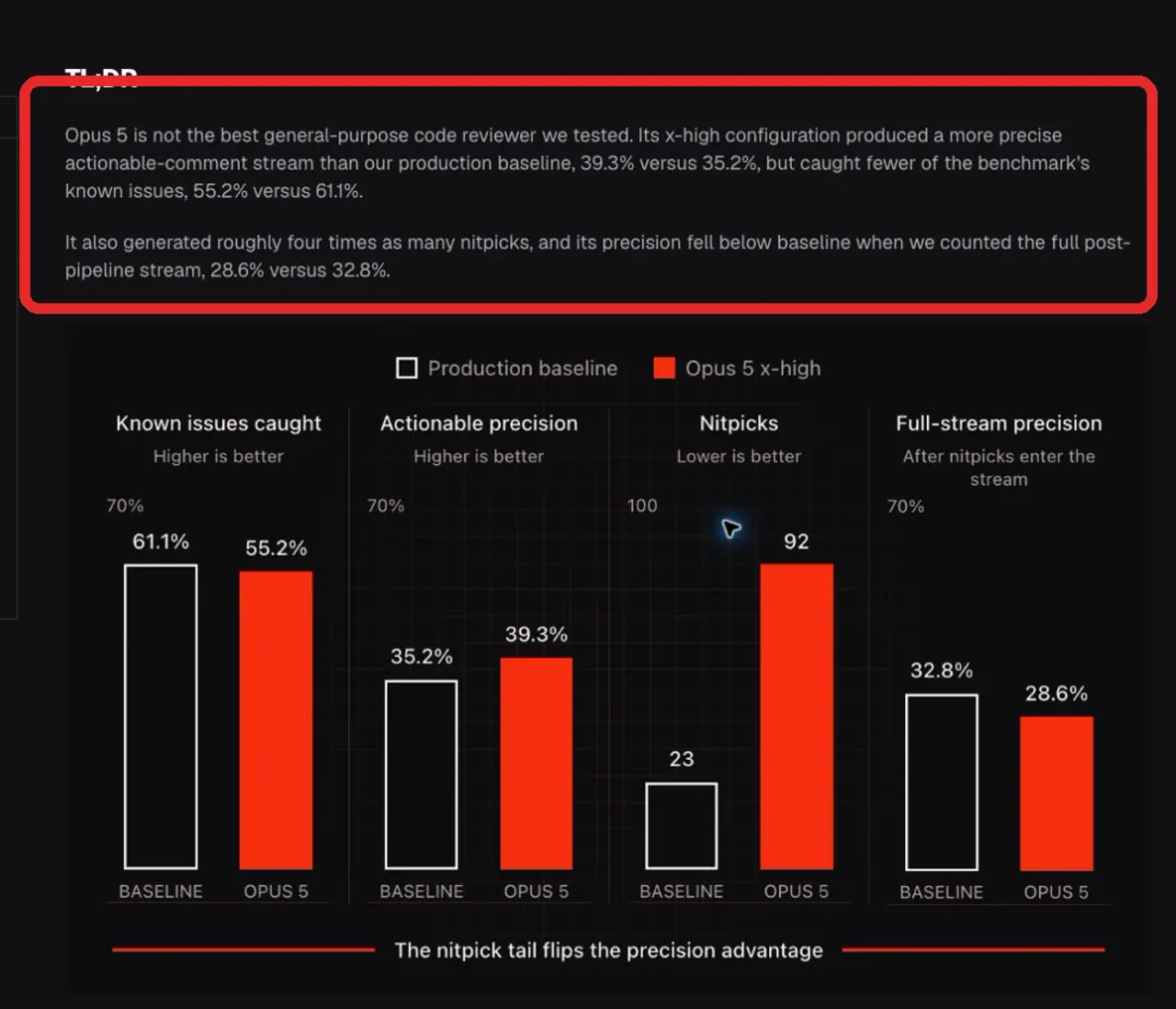
CodeRabbit’s Opus 5 review illustrates another trade-off. Actionable precision reached 39.3% versus a 35.2% production baseline, but known-issue coverage was 55.2% versus 61.1%. It also generated 92 nitpicks versus 23. More comments can reveal subtle issues, but they also increase review load.

Claude Opus 5 code review benchmark by CodeRabbit
CodeRabbit found a trade-off between actionable precision, issue coverage, and nitpick volume.

What Early Users Are Saying on Reddit and X

Early reports are mixed in a useful way: they describe different model personalities rather than a unanimous winner.

  • A Claude Code user found Opus capable at implementation but said it needed clearer goals than Fable to reach the right conclusion.
  • A MineBench poster reported that Opus took more attempts and longer than Fable on a specific build set, although the final construction quality remained competitive.
  • Several Claude Code discussions describe a practical split: Fable for planning or unusually complex bugs, Opus for direct advanced coding.
  • Box reported private partner gains for Opus 5 over Opus 4.8 across legal, technical, medical, life-science, and due-diligence work. Those results are useful signals, not public reproducible benchmarks.

Because Opus 5 was released only days before this comparison, these reports should guide what you test—not replace testing on your own repository, documents, or prompts.

Which Claude Model Should You Choose?

选择何时Avoid paying extra when
《Fable 5》The task is ambiguous, long-running, high-stakes, and hard to review manuallyA clear prompt can be completed reliably by Opus or Sonnet
Opus 5You need deep professional analysis or advanced coding without Fable’s full premiumThe work is high-volume and acceptance criteria are simple
第5首十四行诗You need speed, low token rates, clear execution, or large production volumeFailure would require expensive human review or repeated replanning

Is Opus 5 better than Fable 5? Not universally. Opus is the better value and leads some independent professional-agent results; Fable remains the safer bet for the hardest planning and completion-heavy tasks.

Is Opus 5 better than Sonnet 5? In capability ceiling, generally yes. For a clear coding ticket or large-volume workflow, Sonnet may deliver a better business result because it is faster and cheaper.

Build a Complete AI Workflow with Claude, Image, and Video Models in GlobalGPT

The test suggests a more useful strategy than choosing one permanent winner: use the best model for each stage. GlobalGPT’s Basic plan includes Claude Opus 5, Fable 5, and Sonnet 5, so you can move from fast execution to deeper review and complex planning without switching between separate subscriptions.

The workflow does not have to stop at text. GlobalGPT also brings image and video generation into the same workspace, with access to model families such as GPT Image, Nano Banana, Sora, Kling, Seedance, Wan, and Grok Imagine depending on the current catalog and plan. That means one project can move from research and scripting to visual concepts, production images, and finished video without rebuilding the workflow in a different platform.

1 · Plan 克劳德·法布尔 5

Resolve ambiguity, dependencies, and the hardest strategic decisions.

2 · Execute 克劳德·桑内特 5

Handle fast coding, drafting, tool use, and repeatable production work.

3 · Review Claude Opus 5

Apply deeper analysis, fact checks, and professional editorial judgment.

4 · Produce Image + video models

Turn the approved concept into visuals, clips, and final creative assets.

One workspace, task-based routing: use the strongest model for each step instead of forcing one model to handle the entire project.

GlobalGPT Pro extends the workspace to almost every available video model such as seedance 2.0, sora 2, flux and so on. You can also connect the CLI after registration and call supported models from Claude Code, Codex, or Cursor/MCP-style agent workflows; successful calls consume credits.

Explore the GlobalGPT multi-model workspace and test the same project across text, image, video, and agent workflows.

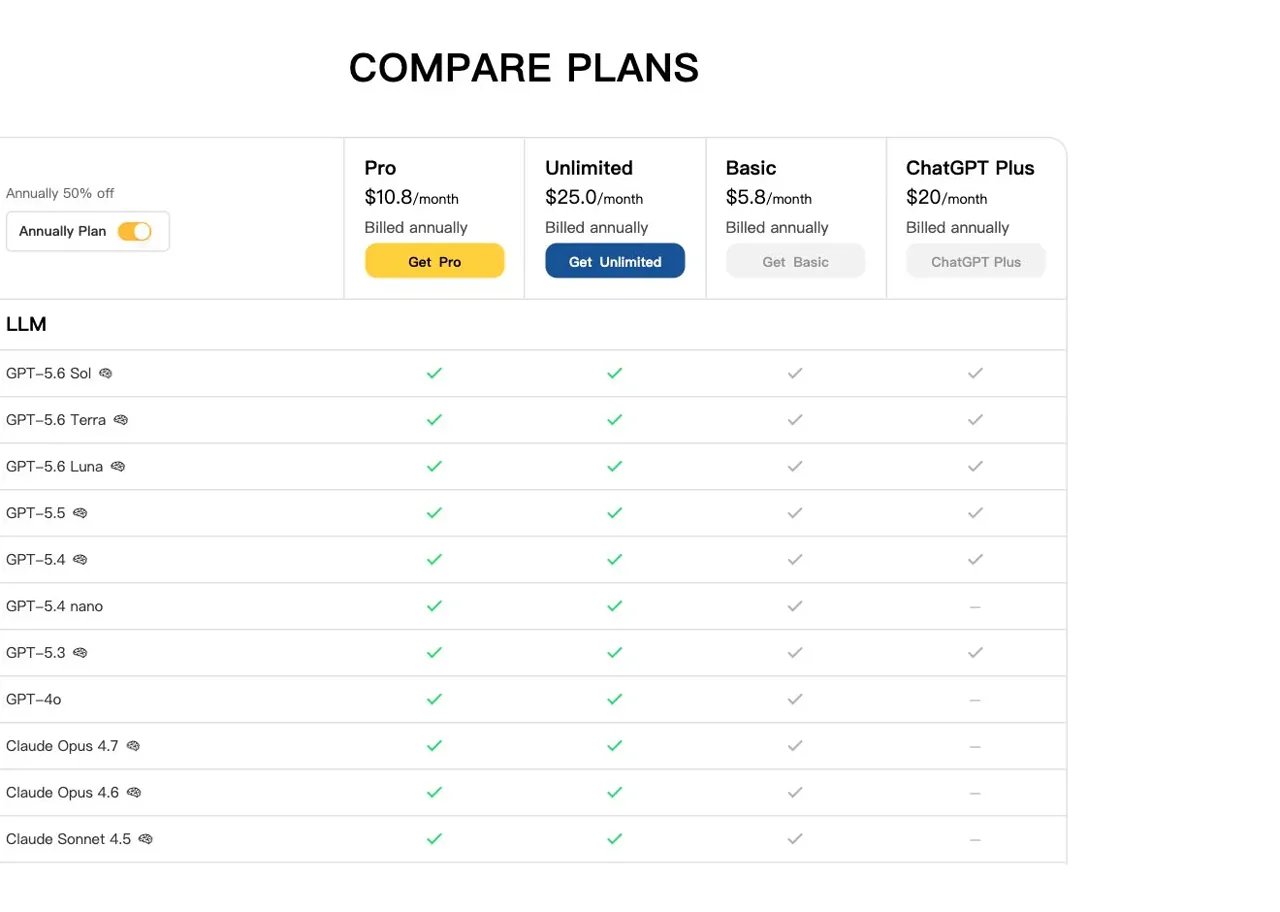
GlobalGPT Basic and Pro pricing comparison
GlobalGPT Basic focuses on LLM access, while Pro extends the workspace to almost every video model except Veo 3.1.

Claude Code, Codex, Cursor, and CLI access

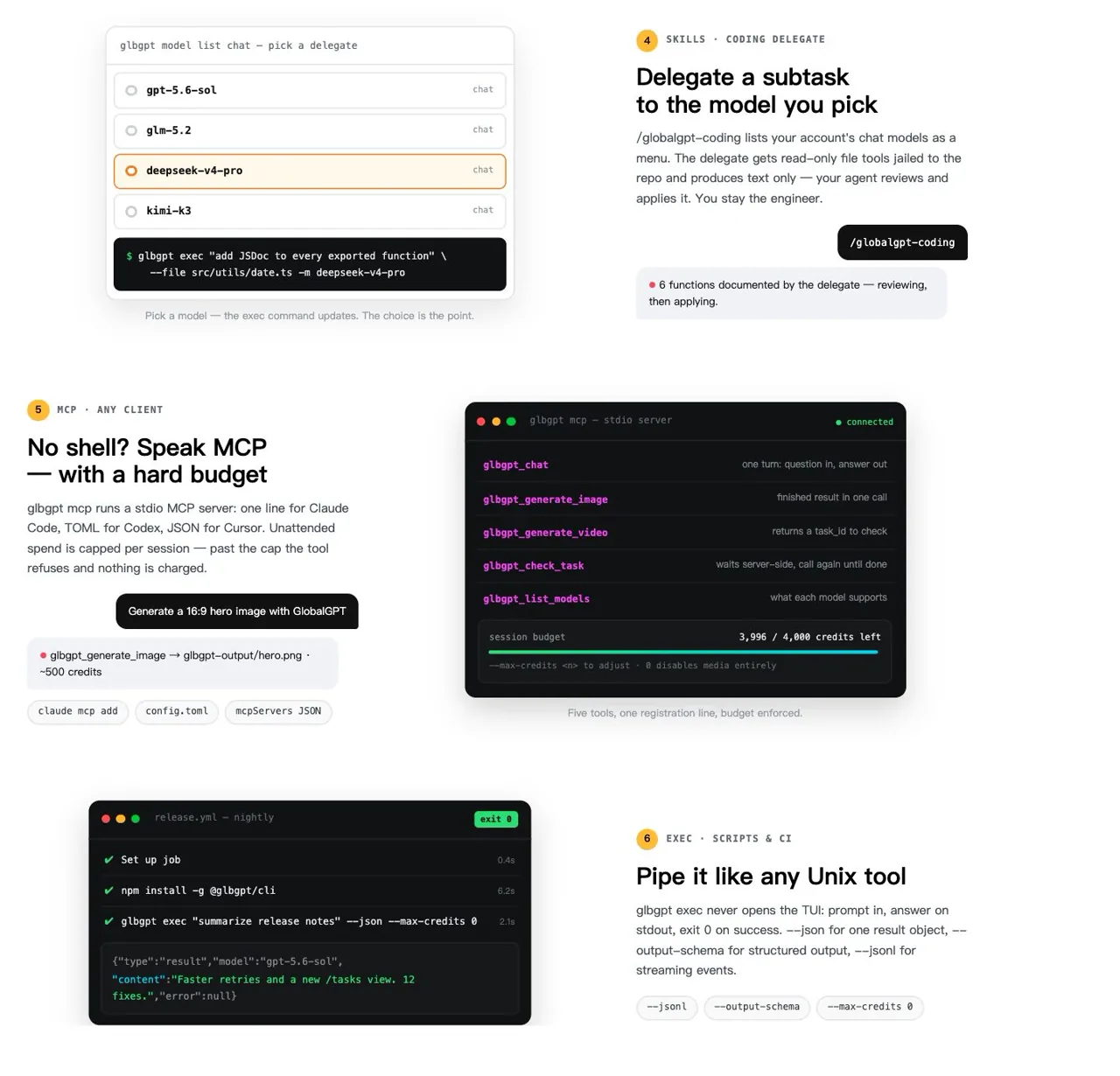
You can connect the GlobalGPT CLI after registration, even without purchasing a plan. Successful model calls consume credits: the subscription controls the available model range, while credits pay for actual calls. That makes it possible to select models inside Claude Code, Codex, or Cursor/MCP-style agent workflows without treating GlobalGPT as a replacement for every feature in those native products.

GlobalGPT CLI integration with Claude Code Codex and Cursor
GlobalGPT CLI and MCP let users select models inside coding-agent and automation workflows.

Test the same prompt across models

Start with Sonnet for speed, move to Opus when judgment matters, and call Fable when the task becomes genuinely difficult.

Try the multi-model workspace

最终结论

Choose Opus 5 for the best overall balance, Fable 5 for the hardest autonomous work, and Sonnet 5 for speed and scale. Public benchmarks make Opus and Fable look close, while our hands-on test exposed meaningful workflow differences: Sonnet won coding, Fable won planning and contract completion, and Opus showed the strongest SEO editorial judgment.

The most cost-effective answer is not always the cheapest model or the highest benchmark score. Start with the lowest-cost model that reliably completes the task, then escalate only when better reasoning saves more than it costs.

Updated July 27, 2026. API pricing and model availability can change; Sonnet 5’s introductory API pricing is scheduled to end August 31, 2026.

常见问题

Is Opus 5 better than Fable 5?

Opus 5 is a better value for many professional tasks and leads Fable 5 on some independent agent benchmarks. Fable 5 still has the higher capability positioning and completed our planning and contract-analysis tests more fully. Choose Opus as the premium default; choose Fable for the hardest ambiguous work.

Is Opus 5 better than Sonnet 5?

Opus 5 has a higher capability ceiling and is better suited to difficult analysis, advanced coding, and high-value professional work. Sonnet 5 is faster and cheaper, and it won our tightly scoped coding test. Sonnet can be the better choice when the task is clear and volume matters.

Is Fable 5 worth twice the price of Opus 5?

Only when its extra planning depth or completion quality prevents expensive failure or rework. Fable’s API token rates are twice Opus 5’s. For routine advanced work, Opus usually offers the stronger price-to-capability balance; test Fable on the small set of tasks where Opus falls short.

Which Claude model is best for coding?

Sonnet 5 is excellent for fast, clearly scoped coding and produced the best complete result in our debug test. Opus 5 is the stronger default for difficult debugging and architectural judgment. Fable 5 fits long autonomous builds and complex multi-step orchestration where cost and latency are secondary.

Which Claude model is fastest?

Sonnet 5 is the fastest of the three. It averaged 19.04 seconds across our five API tasks, compared with 24.23 seconds for Opus 5 and 24.45 seconds for Fable 5. Actual latency varies with prompt length, output length, effort, provider load, and tools.

Which Claude model is best overall?

Opus 5 is the best overall choice for users who want premium Claude capability without paying Fable 5 rates on every call. Fable 5 has the highest ceiling, while Sonnet 5 offers the best speed and value. The best operational setup uses different models for different task stages.

Is Opus 5 better than Opus 4.8?

Opus 5 improves agentic coding, computer use, and professional-work performance while retaining Opus 4.8’s standard API price. That makes it the more capable option on paper. Production teams should still test their own prompts because higher reasoning depth can change output length, latency, and workflow behavior.

Can I use Opus 5, Fable 5, and Sonnet 5 in GlobalGPT?

Yes. GlobalGPT Basic includes all three latest Claude models and focuses on LLM access. Registration also lets you connect the CLI; successful calls require credits. Pro extends access to almost every video model except Veo 3.1, creating a broader text, coding, image, and video workflow.

分享帖子:

相关帖子