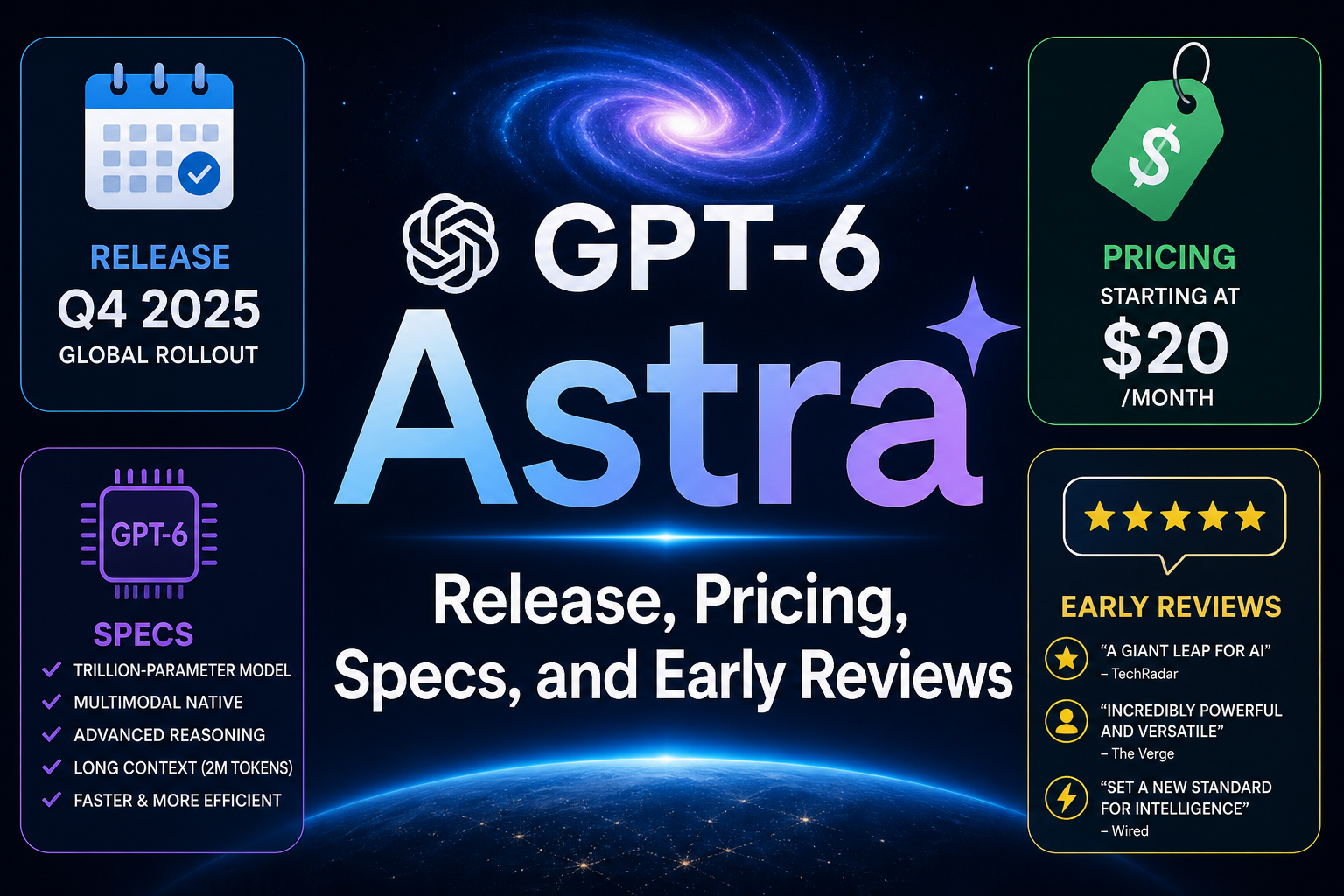
อัปเดตเมื่อวันที่ 18 กันยายน 2026.
ความเห็นของเรา: GPT-6 Astra ได้ให้คำตอบที่ใช้งานได้ในทั้งสามการทดสอบของเรา ได้แก่ การตรวจสอบความสอดคล้องของคำสั่งซื้อ ฟังก์ชันการรวมข้อมูลใน Python และการค้นหานโยบายที่มี 500 ข้อ มันจัดการกับค่าที่ขาดหายไปและกฎที่ขัดแย้งกันได้อย่างถูกต้อง และฟังก์ชันที่มันสร้างขึ้นผ่านการตรวจสอบแบบออฟไลน์ 10 ครั้ง สิ่งนี้ทำให้มันเป็นตัวเลือกที่ควรพิจารณาสำหรับงานวิเคราะห์ที่ต้องการความละเอียดรอบคอบ — แต่การทดสอบเพียงสามครั้งยังไม่สามารถยืนยันความน่าเชื่อถือในการใช้งานจริงหรือความเหนือกว่าเมื่อเทียบกับโมเดลอื่นได้.
เราได้โทรไป gpt-6-astra ผ่านบริการโมเดลที่ได้รับการสนับสนุนจาก CLI ของ GlobalGPT, โดยใช้ข้อมูลป้อนเข้าที่สร้างขึ้นและบันทึกผลตอบกลับแบบดิบ นี่ไม่ใช่การทดสอบ API OpenAI แบบตรงหรือการทดสอบการสมัครสมาชิก ChatGPT การเรียกใช้แบบ end-to-end ในชุดนี้ใช้เวลา 4.87–9.07 วินาที และยอดเงินในบัญชีลดลง 391.08 เครดิต.
บทวิเคราะห์นี้แสดงให้เห็นว่าเราได้ถามอะไร Astra ให้คำตอบอย่างไร ข้อมูลใดผ่านการตรวจสอบ และจุดที่หลักฐานสิ้นสุดลง ข้อมูลจำเพาะและราคาอย่างเป็นทางการจะแสดงแยกต่างหากจากการวัดผลของเรา.
สารบัญ
- ผลการทดลองใช้ GPT-6 Astra
- วิธีที่เราทดสอบ Astra ผ่าน API
- การทดสอบที่ 1: Astra สามารถปรับให้ข้อมูลคำสั่งซื้อที่สับสนตรงกันได้หรือไม่?
- การทดสอบที่ 2: โค้ดที่สร้างขึ้นนั้นทำงานได้จริงหรือไม่?
- การทดสอบที่ 3: มันสามารถแก้ไขกฎที่ขัดแย้งกันในแพ็กเก็ตที่ยาวได้หรือไม่?
- ค่าใช้จ่ายของการทดสอบ API-Route เหล่านี้
- GPT-6 Astra มีให้บริการแล้วหรือไม่?
- ข้อมูลทางเทคนิคของ GPT-6 Astra
- ราคา API GPT-6 Astra
- มีอะไรใหม่จริงๆ ใน GPT-6 Astra?
- ทำไม Astra จึงเปลี่ยนการตัดสินใจซื้อ
- ความคิดเห็นจากผู้อ่านกลุ่มแรก
- ข้อจำกัดในระยะแรกและคำถามที่ยังไม่มีคำตอบ
- ใครควรใช้ GPT-6 Astra?
- เลือก Astra หรือรุ่นที่มีขนาดเล็กกว่าตามงานที่ต้องการ
- สิ่งที่บทวิจารณ์นี้ยังไม่สามารถพิสูจน์ได้
- คำถามที่มักถูกถาม
ผลการทดลองใช้ GPT-6 Astra
| ทดสอบ | ผลการสังเกต | เวลาเดินทาง | โทเคนเข้า / ออก | ยอดเครดิตในสมุดบัญชี |
|---|---|---|---|---|
| การปรับยอดคำสั่งซื้อ | ผ่านการตรวจสอบคำตอบ 5/5 | 5.663 วินาที | 2,171 / 144 | 67 |
| ฟังก์ชันการรวมข้อมูลใน Python | ผ่าน 10/10 กรณีแบบออฟไลน์ | 9.065 วินาที | 2,091 / 486 | 105 |
| ชุดเอกสารนโยบาย 500 หน้า | 6/6 คำตอบถูกต้อง; มีแหล่งอ้างอิงตามที่กำหนดสำหรับทั้งหกข้อ | 4.868 วินาที | 17,445 / 160 | 219 |
นี่คือสามงานที่แตกต่างกัน โดยแต่ละงานใช้การเรียกโมเดลเพียงครั้งเดียว ไม่ใช่การทดลองซ้ำหรืออัตราการสำเร็จที่วัดได้ 100% เวลาที่วัดครอบคลุมตั้งแต่การส่งคำขอ CLI/ผู้ให้บริการจนกระทั่งได้รับผลลัพธ์กลับมา; เราไม่ได้วัดเวลาจนถึงโทเคนแรก สมุดบัญชีแสดงเครดิตเป็นจำนวนเต็ม ส่วนการเปลี่ยนแปลงยอดคงเหลือรวมถึงเศษส่วนด้วย.
วิธีที่เราทดสอบ Astra ผ่าน API
เราใช้บัญชี GlobalGPT ที่มีอยู่เดิมเดียวกันสำหรับทั้งสามครั้งของการเรียกใช้ แต่ละครั้งเป็นการขอข้อมูลใหม่ที่ไม่มีข้อมูลสถานะ (stateless) โดยส่งงานไปในรูปแบบไฟล์ข้อความ ป้ายกำกับของโมเดลที่ขอและที่ได้รับกลับมาคือ gpt-6-astra. บริการดังกล่าวได้ส่งคืนข้อความตอบกลับ ข้อมูลการใช้โทเคนอินพุต/เอาต์พุต และฟิลด์ข้อผิดพลาด; ไม่มีผลลัพธ์ใดในสามผลลัพธ์ดังกล่าวที่รายงานข้อผิดพลาด การติดป้ายกำกับของผู้ให้บริการไม่ใช่การตรวจสอบอิสระของเส้นทางโมเดลต้นทาง.
เราได้เตรียมคำตอบสำหรับคำสั่งและคำตอบสำหรับแพ็กเก็ตนโยบายไว้ก่อนการโทร จากนั้นเราได้ตรวจสอบความถูกต้องของโค้ดที่สร้างขึ้นในระบบท้องถิ่นด้วย 10 กรณีที่สร้างขึ้นหลังจากรับโค้ดมา ซึ่งกรณีเหล่านี้ไม่ใช่ชุดข้อมูลมาตรฐานสำหรับการทดสอบการเขียนโค้ดที่ลงทะเบียนไว้ล่วงหน้า เราได้ขอข้อมูลในรูปแบบ JSON ในคำสั่งและตรวจสอบว่าสามารถวิเคราะห์ข้อมูลได้หรือไม่ แทนที่จะเปิดใช้งานสคีมาผลลัพธ์ที่มีโครงสร้างแบบเนทีฟ.
ข้อมูลทั้งหมดเป็นข้อมูลที่สร้างขึ้น ไม่มีข้อมูลลูกค้า ไฟล์บริษัท ข้อมูลลับของบัญชี หรือข้อมูลส่วนบุคคลใดที่ถูกส่งไป เราไม่ได้จัดหาเครื่องมือสำหรับการท่องเว็บหรือควบคุมคอมพิวเตอร์มาใช้ในภารกิจเหล่านี้ และไม่ได้ลองตอบใหม่เพื่อปรับปรุงคะแนน CLI ไม่ได้เปิดเผยการตั้งค่าความพยายามในการให้เหตุผลหรือรายละเอียดการแบ่งโทเค็นที่เก็บไว้ในแคช สำหรับการรันเหล่านี้.
การทดสอบที่ 1: Astra สามารถปรับให้ข้อมูลคำสั่งซื้อที่สับสนตรงกันได้หรือไม่?
ข้อสอบและคำตอบ
ไฟล์ CSV ที่มี 8 แถวนี้ประกอบด้วยข้อมูลซ้ำที่เก่ากว่า ข้อมูลใหม่ที่มาแทนที่ คำสั่งซื้อที่ยังอยู่ระหว่างการดำเนินการ การคืนเงิน และคำสั่งซื้อหนึ่งรายการที่ไม่มีมูลค่ารวม กฎการประมวลผลคือให้เก็บเวอร์ชันล่าสุดของแต่ละคำสั่งซื้อ ยกเว้นการชำระเงินที่ยังอยู่ระหว่างการดำเนินการ หักการคืนเงินออก และเก็บรายได้ที่ขาดหายไปไว้เป็น "ไม่ทราบ".
รายได้สุทธิที่คาดการณ์ไว้คือ $275: ค้นหา $170, อีเมล $75, และโซเชียลมีเดีย $30. ตัว A ต้องผ่านขั้นตอนการกำจัดข้อมูลซ้ำ, ตัว C ต้องผ่านขั้นตอนการยกเว้น, และตัว F ต้องยังคงเป็นค่าที่ไม่ทราบ. การมีผลรวมที่ถูกต้องเพียงอย่างเดียวไม่เพียงพอที่จะผ่านการตรวจสอบทั้งห้าข้อ.
สิ่งที่ Astra ส่งคืนมา
{"known_net_usd":275,"channel_known_net_usd":{"Search":170,"Email":75,"Social":30},"unknown_order_ids":["F"],"excluded_order_ids":["C"],"replaced_order_ids":["A"]}
ทั้งห้าข้อตรวจสอบผ่านทั้งหมด นอกจากนี้ ในส่วนสรุปยังระบุว่า: “รายได้สุทธิรวมยังไม่ทราบ เนื่องจากคำสั่งซื้อ F ไม่มีข้อมูลรายได้รวม” มันได้ระบุอย่างถูกต้องว่า "Search" เป็นที่ใหญ่ที่สุด ที่รู้จัก ยอดรวมย่อย โดยไม่ระบุว่าคำสั่งซื้อที่ขาดอีเมลนั้นมีมูลค่าเป็นศูนย์.
การประเมินของเรา: นี่เป็นผลลัพธ์ที่ดีสำหรับงานปรับยอดบัญชีแบบเรียบง่าย โมเดลนี้ปฏิบัติตามกฎการบัญชีและรักษาความไม่แน่นอนไว้ แต่การทดสอบนี้ไม่ได้มุ่งเน้นไปที่การเชื่อมต่อกับสเปรดชีตแบบเรียลไทม์ การประมวลผลธุรกรรมนับพันรายการ การปฏิบัติตามกฎภาษี หรือการตัดสินใจทางการเงินแบบอัตโนมัติ.
การทดสอบที่ 2: โค้ดที่สร้างขึ้นนั้นทำงานได้จริงหรือไม่?
แก้ไขการคำนวณรายได้ที่ผิดพลาด
เราได้ส่งแบบที่มีข้อผิดพลาดไปแล้ว sum(float(r.get('gross_usd') or 0) for r in records) และขอให้สร้างฟังก์ชัน Python แบบบริสุทธิ์ ที่สามารถจัดการกับการอัปเดตข้อมูลซ้ำ สถานะการชำระเงิน การคืนเงิน ค่าที่ขาดหายไป รายการ ID ที่จัดเรียงแล้ว และข้อมูลนำเข้าที่ว่าง โดยต้องใช้ค่าเซนต์แบบจำนวนเต็มภายใน และไม่เปลี่ยนแปลงข้อมูลนำเข้าเดิม.
Astra ได้ส่งคืนฟังก์ชันที่ใช้ ระบบทศนิยม เพื่อแปลงจำนวนเงินเป็นเซนต์ เก็บบันทึกล่าสุดสำหรับแต่ละคำสั่งซื้อ และข้ามจำนวนเงินรวมที่ไม่ทราบแทนที่จะใส่ค่าศูนย์ เราได้ถอดรหัสตัวหลบหลีกบรรทัดใหม่ในสตริงโค้ดที่ส่งกลับมา ตรวจสอบการนำเข้าและกระบวนการทำงานของมัน และรันมันในเครื่องท้องถิ่นโดยไม่เปลี่ยนแปลงตรรกะของมัน.
การตรวจสอบแบบออฟไลน์ 10 ครั้ง
| กรณี | ผลลัพธ์ |
|---|---|
| การปรับยอดแบบเดิม 8 แถว | ผ่าน |
| ข้อมูลที่ป้อนเข้าว่าง | ผ่าน |
| บันทึกที่ใหม่กว่าจะปรากฏก่อนบันทึกที่เก่ากว่า | ผ่าน |
| การอัปเดตล่าสุดได้เปลี่ยนสถานะคำสั่งซื้อเป็น "กำลังรอการดำเนินการ" | ผ่าน |
| จำนวนรวมที่ว่างและค่า null | ผ่าน |
| หากไม่มีการคืนเงิน ระบบจะตั้งค่าเริ่มต้นเป็นศูนย์ | ผ่าน |
| 0.10 + 0.20 เซนต์ (การคำนวณแบบเลขคณิต) | ผ่าน |
| การคืนเงินเต็มจำนวนและส่วนหนึ่ง | ผ่าน |
| ช่องที่มีรายได้ที่ไม่ทราบเท่านั้น | ผ่าน |
| จัดเรียง ID ที่ไม่ทราบและถูกยกเว้น | ผ่าน |
ความไม่เปลี่ยนแปลงของข้อมูลเข้ายังคงเป็นจริงในทั้ง 10 กรณี. การประเมินของเรา: ฟังก์ชันดังกล่าวสามารถใช้งานได้สำหรับสัญญาที่ระบุไว้ และการทดสอบในสภาพแวดล้อมท้องถิ่นให้หลักฐานที่ชัดเจนกว่าการดูตัวอย่างโค้ดที่น่าเชื่อถือเพียงอย่างเดียว เราไม่ได้ทดสอบกรณีของ timestamp ที่ผิดรูปแบบ สกุลเงินหลายชนิด การปรับใช้ ระบบเก็บข้อมูลจริง การทำธุรกรรมในฐานข้อมูล หรือประสิทธิภาพในการทำงานกับระบบขนาดใหญ่.
การทดสอบที่ 3: มันสามารถแก้ไขกฎที่ขัดแย้งกันในแพ็กเก็ตที่ยาวได้หรือไม่?
5 ข้อสังเกตสำคัญจากทั้งหมด 500 ข้อ
เราได้สร้างแพ็กเก็ตที่มี 73,252 ตัวอักษร พร้อมด้วยบันทึก 500 ฉบับที่มีหมายเลข ข้อเท็จจริงที่เกี่ยวข้องถูกกระจายอยู่ในบันทึกหมายเลข 037, 114, 261, 398 และ 477: กฎการคืนเงินเดิม 30 วัน, กฎมาตรฐานใหม่ 14 วัน, ข้อยกเว้นสำหรับองค์กร 30 วัน, การเปลี่ยนเจ้าของ, การเปรียบเทียบราคาแบบรายปีกับแบบรายเดือน, และคำถามที่ขาดหลักฐาน.
รายงานคำขอทั้งหมด 17,445 โทเคนข้อมูลเข้า. นี่เป็นการตรวจสอบเอกสารยาวแบบเรียบง่าย ซึ่งต่ำกว่าความจุ 1.05 ล้านโทเคนที่ Astra ประกาศไว้มาก ข้อมูลพื้นหลังเป็นเพียงตัวเบี่ยงเบนความสนใจที่เรียบง่าย จึงทำให้การตรวจสอบนี้ง่ายกว่าการรวบรวมเอกสารจากโลกจริงที่ซับซ้อน.
กฎเกณฑ์ที่ถูกต้อง ราคา และความไม่แน่นอน
| คำถาม | คำตอบของ Astra | หลักฐานที่จำเป็น |
|---|---|---|
| ช่วงเวลาคืนเงินตามมาตรฐานภาคเหนือ | 14 วัน | 114 |
| ช่วงเวลาการคืนเงินสำหรับบริษัทในภาคเหนือ | 30 วัน | 477 |
| เจ้าของ North ในปัจจุบัน | ลิน | 114 |
| การชำระค่าบริการรายปีของ Atlas | $129.60 | 261 |
| เทียบเท่าฉบับรายเดือนของ Atlas | $10.80 | 261 |
| สิทธิในการรับเงินคืนในภาคใต้ | null / ไม่ทราบ | 398 |
คำตอบทั้งหกข้อถูกต้องทั้งหมด และรวมถึงหมายเหตุสนับสนุนที่จำเป็นด้วย สำหรับคำตอบเกี่ยวกับการคืนเงินตามมาตรฐาน ยังได้อ้างอิงถึงหมายเหตุเกี่ยวกับข้อยกเว้นขององค์กร ซึ่งเป็นบริบทที่เกี่ยวข้องด้วย ระบบได้ส่งคืนตัวระบุหมายเหตุในรูปแบบสตริง โดยไม่จำเป็นต้องใช้โครงสร้าง ID แบบตัวเลข.
การประเมินของเรา: Astra ได้แก้ไขการแก้ไขและข้อยกเว้นอย่างถูกต้อง และไม่ได้สร้างสิทธิ์ที่ขาดหายไปขึ้นมาเอง ซึ่งถือเป็นหลักฐานที่มีประโยชน์สำหรับการสังเคราะห์นโยบายแบบมีขอบเขต อย่างไรก็ตาม สิ่งนี้ไม่ได้ยืนยันความถูกต้องของการวิจัยที่กำลังดำเนินอยู่ เอกสารทางกฎหมายที่ถูกกำหนดขึ้นตามอำเภอใจ การค้นหาข้อมูลที่ละเอียดอ่อนในชุดข้อมูลที่มีขนาดเกือบหนึ่งล้านโทเคน หรือความต้านทานต่อคำสั่งที่เป็นอันตรายที่ฝังอยู่ในแหล่งข้อมูล.
ค่าใช้จ่ายของการทดสอบ API-Route เหล่านี้
สามครั้งที่มีการรายงาน 21,707 โทเคนข้อมูลเข้า และ 790 โทเคนข้อมูลออก. บัญชีของ GlobalGPT แสดงจำนวนเครดิต 67, 105 และ 219 เครดิต; ยอดเงินในบัญชีลดลงจาก 15,477.71 เป็น 15,086.63 เครดิต ซึ่งลดลง 391.08 เครดิต. เราไม่แปลงเครดิตเหล่านั้นเป็นค่าใช้จ่ายเงินสดที่สร้างขึ้น.
เพื่อแสดงตัวอย่างการจัดงบประมาณแบบแยกต่างหาก การนำอัตราค่ามาตรฐานในบริบทสั้นของ OpenAI คือ $10 ต่อหนึ่งล้านโทเคนอินพุตที่ไม่ได้เก็บไว้ในแคช และ $50 ต่อหนึ่งล้านโทเคนเอาต์พุต มาใช้กับจำนวนที่รายงานไว้ จะให้ผลลัพธ์ประมาณ $0.2566: $0.0289 สำหรับคำสั่ง, $0.0452 สำหรับรหัส และ $0.1825 สำหรับแพ็กเก็ต โดยสมมติว่าข้อมูลเข้าไม่ถูกเก็บไว้ในแคช และไม่มีค่าใช้จ่ายเพิ่มเติม นี่ไม่ใช่ใบเรียกเก็บเงินสำหรับการโทร GlobalGPT ของเรา หรือค่าใช้จ่าย OpenAI แบบวัดโดยตรง.
การรันแพ็กเก็ตในชุดนี้เร็วกว่าการรันโค้ด แม้จะมีโทเคนอินพุตมากขึ้น การรันเพียงครั้งเดียวต่อแต่ละงานไม่สามารถกำหนดอันดับความล่าช้าได้ เนื่องจากความยาวของผลลัพธ์ การกำหนดเส้นทาง การจัดคิว และเงื่อนไขการประมวลผลอาจแตกต่างกันทั้งหมด เราไม่ได้ดำเนินการเปรียบเทียบกับคู่แข่งที่เหมาะสม.
GPT-6 Astra มีให้บริการแล้วหรือไม่?
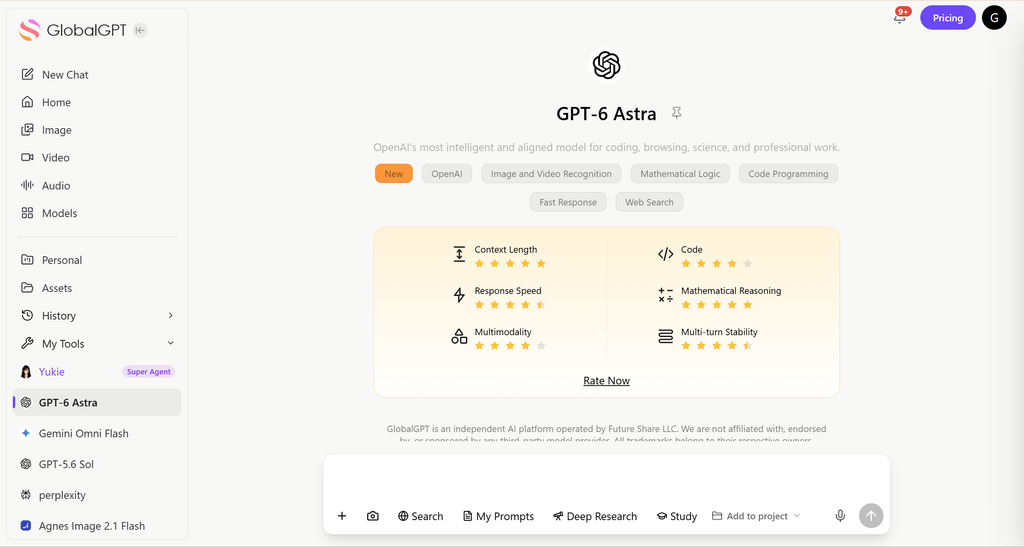
ใช่ครับ Astra ปรากฏอยู่ในแคตตาล็อกของ GlobalGPT และทั้งสามคำสั่งเรียกใหม่ล้วนให้ผลลัพธ์ที่มีชื่อ gpt-6-astra OpenAI ยังเผยแพร่เอกสารอธิบายโมเดล API ด้วย; การเข้าถึง Chat, Work และ Codex เป็นสิทธิ์การใช้งานผลิตภัณฑ์ที่แยกกัน.
ภาพหน้าจอวันที่ 4 กันยายนด้านล่างนี้เป็นภาพจากช่วงเปิดตัว คำอธิบายในการปล่อยเวอร์ชันดังกล่าวเป็นข้อมูลในอดีต ไม่ใช่หลักฐานที่แสดงว่าข้อมูล GlobalGPT ในปัจจุบันไม่สามารถใช้งานได้.
ข้อมูลทางเทคนิคของ GPT-6 Astra
Astra รับข้อมูลเข้าทั้งข้อความและภาพ และสร้างข้อความออก ผลลัพธ์จากหน้าต่างบริบทขนาด 1.05M-token ของมันสอดคล้องกับขนาดที่จำเป็นสำหรับคลังข้อมูลขนาดใหญ่ ชุดเอกสาร หรือประวัติการสนทนาของเอเจนต์ที่ยาว ส่วนขีดจำกัดผลลัพธ์ที่ 128K ให้พื้นที่เพียงพอสำหรับโค้ดหรือรายงานที่มีปริมาณมาก.
ความจุไม่เท่ากันกับคุณภาพ หน้าต่างที่มีโทเคนหนึ่งล้านตัว ไม่รับประกันว่าทุกรายละเอียดจะถูกเรียกคืนได้อย่างเท่าเทียมกัน และการส่งบริบทในปริมาณสูงสุดอาจทำให้ทั้งค่าใช้จ่ายและสัญญาณรบกวนเพิ่มขึ้น สำหรับงานที่ใช้บริบทยาวในทางปฏิบัติ ให้เรียกใช้ไฟล์ที่เกี่ยวข้องมากที่สุดก่อน และให้คำสั่งของงานชัดเจน.
หากต้องการข้อมูลพื้นฐานเกี่ยวกับวิธีที่รุ่นก่อนจัดการกับคำสั่งที่มีข้อความยาว ให้ดูที่ คู่มือราคาและบริบทของ GPT-5.5. เพื่อมุมมองที่กว้างขึ้นและเน้นไปที่งาน คู่มือกรณีการใช้งาน GPT-5.5 จะช่วยระบุงานที่อาจเหมาะสมกับการใช้รุ่นเรือธง.
ราคา API GPT-6 Astra
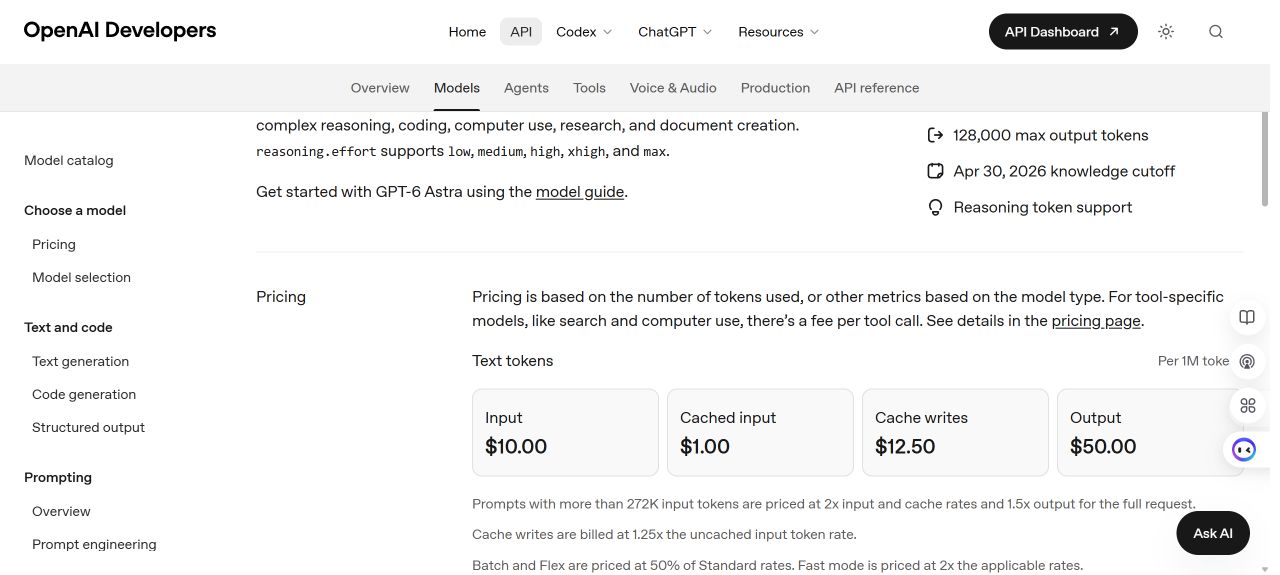
OpenAI ระบุอัตราค่าบริการมาตรฐานดังต่อไปนี้ สำหรับคำสั่งที่มีจำนวนโทเคนอินพุตสูงสุด 272,000 โทเคน:
ได้ตรวจสอบอัตราอีกครั้งเมื่อวันที่ 18 กันยายน 2569 โดยเปรียบเทียบกับ ราคา API OpenAI. นี่คืออัตราค่าบริการโทเคน API มาตรฐาน ไม่ใช่ราคาสมัครสมาชิก ChatGPT หรือค่าเครดิต GlobalGPT.
| ประเภทโทเคน | ราคาต่อ 1 ล้านโทเคน | หมายความว่า |
|---|---|---|
| อินพุต | $10.00 | เนื้อหาคำสั่งใหม่ ประวัติ ข้อมูลที่ค้นหาได้ และข้อมูลอื่น ๆ ที่สามารถคิดค่าบริการได้. |
| ข้อมูลที่เก็บไว้ในแคช | $1.00 | ข้อมูลที่ป้อนซ้ำและมีคุณสมบัติตรงตามเงื่อนไข จะถูกส่งผ่านระบบแคชคำสั่ง. |
| การเขียนข้อมูลลงในแคช | $12.50 | ข้อมูลที่เขียนเข้าแคชตามอัตราค่าบริการการเขียนแคชที่บังคับใช้. |
| ผลลัพธ์ | $50.00 | คำตอบที่สร้างขึ้นและเหตุผลที่ใช้ในการคิดค่าบริการ. |
เมื่อคำขอมีจำนวนโทเคนอินพุตเกิน 272,000 โทเคน OpenAI จะใช้ ตัวคูณ 2 เท่า สำหรับอัตราการรับข้อมูลและอัตราการรับข้อมูลที่เก็บไว้ในแคช และ a ตัวคูณ 1.5 เท่าสำหรับอัตราผลผลิต สำหรับคำขอทั้งหมด ตามอัตรา Standard ที่ระบุไว้ นั่นหมายความว่า $20 ต่อหนึ่งล้านโทเคนเข้า และ $75 ต่อหนึ่งล้านโทเคนออก.
ขอบเขตราคา:
นี่คืออัตราค่าบริการของโทเคน API OpenAI ไม่ใช่ราคาสมัครสมาชิกรายเดือนของ ChatGPT และไม่ใช่เครดิตของ GlobalGPT ค่าบริการเครื่องมือ ระดับการประมวลผล การตั้งค่าตามภูมิภาค และค่าธรรมเนียมอื่น ๆ อาจส่งผลให้ค่าใช้จ่ายสุดท้ายเปลี่ยนแปลงได้.
เพื่อดูบริบทของตารางราคาในอดีต โปรดดู ราคา GPT-5.6 และราคาของ GPT-5.4 ให้เปรียบเทียบภาระงานทั้งหมด ไม่ใช่เพียงอัตราข้อมูลเข้าเท่านั้น: ความยาวของผลลัพธ์ พฤติกรรมของแคช การใช้เครื่องมือ และอัตราความล้มเหลวหรือการลองใหม่ อาจมีความสำคัญมากกว่าราคาที่ประกาศไว้.
มีอะไรใหม่จริงๆ ใน GPT-6 Astra?
OpenAI's คู่มือรุ่นล่าสุด เน้นย้ำชุดคุณสมบัติที่ออกแบบมาเพื่อการทำงานของเอเจนต์แบบโต้ตอบในระยะยาว.
การเรียกใช้เครื่องมือแบบไม่พร้อมกัน
Astra สามารถดำเนินการต่อไปได้แม้เครื่องมืออื่น ๆ ที่ทำงานช้ากว่ายังคงกำลังทำงานอยู่ แทนที่จะถือว่าการเรียกใช้เครื่องมือแต่ละครั้งเป็นการหยุดทำงานอย่างสมบูรณ์ สิ่งนี้สามารถช่วยในการวิจัย การเขียนโค้ด และงานปฏิบัติการที่ต้องรวมระบบภายนอกหลายระบบที่มีเวลาตอบสนองต่างกัน.
คำสั่งระหว่างการทำงาน
ผู้ใช้สามารถเพิ่มทิศทางได้ขณะที่งานกำลังดำเนินการอยู่ สิ่งนี้มีประโยชน์เมื่อผู้ดำเนินการกำลังดำเนินการตามแผนโดยทั่วไป แต่จำเป็นต้องเพิ่มข้อจำกัดใหม่ เปลี่ยนแปลงลำดับความสำคัญ หรือปรับขอบเขตให้แคบลง ซึ่งจะช่วยลดความจำเป็นในการยกเลิกงานที่กำลังดำเนินการมานานแล้วและเริ่มใหม่ตั้งแต่ต้น.
ความพยายามในการคิดวิเคราะห์แบบไดนามิก
Astra สามารถปรับระดับการใช้กระบวนการคิดวิเคราะห์ระหว่างการทำงานได้ โดยหลักการแล้ว สิ่งนี้ช่วยให้ระบบสามารถทุ่มเทความพยายามมากขึ้นกับขั้นตอนที่ยาก และน้อยลงกับขั้นตอนที่เป็นงานประจำ ทีมควรยังคงทดสอบว่า การปรับปรุงคุณภาพนั้นคุ้มค่ากับค่าใช้จ่ายเพิ่มเติมในรูปของจำนวนโทเคนผลลัพธ์ สำหรับปริมาณงานของตนเองหรือไม่.
การใช้คอมพิวเตอร์และการทำงานต่อเนื่องเป็นเวลานาน
OpenAI ช่วยให้ Astra พร้อมสำหรับการโต้ตอบกับคอมพิวเตอร์และงานที่ดำเนินไปผ่านหลายขั้นตอน คำถามในทางปฏิบัติไม่ใช่ว่ามันสามารถคลิกผ่านเดโมได้หรือไม่ แต่คือมันสามารถฟื้นตัวจากสถานการณ์ที่ไม่คาดคิดได้หรือไม่ รักษาเจตนาของผู้ใช้ไว้ได้หรือไม่ และอธิบายได้ว่ามันได้เปลี่ยนแปลงอะไรไปบ้าง นี่คือด้านๆ ที่ผู้ใช้งานกลุ่มแรกควรประเมิน.
ผู้อ่านที่สนใจในกระบวนการพัฒนาจากระบบสนทนาแบบพิจารณาไปสู่ระบบที่ใช้เครื่องมือ สามารถอ่านเพิ่มเติมได้ GPT-5.4 การคิด และคู่มือนี้เกี่ยวกับการใช้ ChatGPT Agent.
ทำไม Astra จึงเปลี่ยนการตัดสินใจซื้อ
ความเปลี่ยนแปลงสำคัญคือการเปลี่ยนจากการประเมิน AI โดยพิจารณาจากคุณภาพของคำตอบเดียว มาเป็นการประเมินว่ามันสามารถทำงานทั้งกระบวนการได้หรือไม่ ตัวแทนที่มีประโยชน์อาจจำเป็นต้องตรวจสอบไฟล์ ใช้งานซอฟต์แวร์ รอเครื่องมือ ฟื้นฟูจากข้อผิดพลาด นำการเปลี่ยนแปลงไปใช้ ดำเนินการตรวจสอบ และอธิบายผลลัพธ์ คำตอบสุดท้ายเป็นเพียงส่วนหนึ่งของกระบวนการนั้นเท่านั้น.
สิ่งนี้ยังส่งผลต่อประเด็นเรื่องค่าใช้จ่ายด้วย อัตราค่าธรรมเนียมของ Astra นั้นสูง แต่ราคาโทเคนเพียงอย่างเดียวไม่สามารถบอกได้ว่ามันคุ้มค่าหรือไม่ การเปรียบเทียบที่ดีกว่าคือ ค่าใช้จ่ายต่องานที่เสร็จสิ้นอย่างสำเร็จ: ค่าใช้จ่ายของโมเดลและเครื่องมือ, การลองใหม่, เวลาที่ใช้ไป, การกำกับดูแลโดยมนุษย์ และการทำความสะอาด ล้วนถูกนับรวมทั้งหมด โมเดลที่มีราคาถูกกว่าอาจมีค่าใช้จ่ายรวมสูงกว่าหากต้องปรับแก้ซ้ำๆ; การรันที่มีราคาแพงก็ยังคงเป็นการสิ้นเปลืองหากผลลัพธ์เบี่ยงเบนไปจากเป้าหมายหรือสร้างงานที่ต้องทำใหม่.
ตัวชี้วัดเชิงปฏิบัติ:
ติดตามค่าใช้จ่ายรวม อัตราการเสร็จสิ้น จำนวนนาทีการทำงานของพนักงาน จำนวนครั้งที่ลองใหม่ และข้อบกพร่อง สำหรับงานตัวอย่างเดียวกัน อย่าเปรียบเทียบโมเดลกันโดยอิงจากอัตราโทเคนหรือการสาธิตที่ได้รับการปรับแต่งให้สมบูรณ์เพียงครั้งเดียว.
การมีอิสระในการทำงานมากขึ้นยังทำให้มาตรฐานการควบคุมต้องสูงขึ้นด้วย คู่มือรุ่นล่าสุดของ OpenAI ระบุว่า Astra ต้องอยู่ภายใต้การตรวจสอบการไม่ตรงกันแบบไม่พร้อมกัน ทีมงานควรยังคงให้สิทธิ์ขั้นต่ำที่จำเป็นแก่เอเจนต์ ขอการยืนยันก่อนดำเนินการที่ส่งผลสำคัญ เก็บบันทึกการดำเนินการ และสร้างจุดตรวจสอบเพื่อให้สามารถย้อนกลับการเปลี่ยนแปลงได้ การใช้คอมพิวเตอร์อย่างเต็มประสิทธิภาพจะมีประโยชน์ก็ต่อเมื่อระบบรอบข้างจำกัดสิ่งที่อาจเกิดข้อผิดพลาดได้.
ความคิดเห็นจากผู้อ่านกลุ่มแรก
ประสบการณ์ในวัยเด็กที่ได้รับการบันทึกไว้
ของแมตต์ ชูเมอร์ บทวิจารณ์ Astra ฉบับแรก เป็นหนึ่งในรายงานสาธารณะที่มีรายละเอียดมากที่สุดที่มีอยู่ตั้งแต่ช่วงเปิดตัว เขาอธิบายว่าโมเดลนี้มีความแข็งแกร่งด้านวิศวกรรมระบบหลังบ้าน การใช้คอมพิวเตอร์ การเข้าใจคำขอที่ไม่ชัดเจน การรายงานงานอย่างชัดเจน และการรักษาความต่อเนื่องในการสนทนาที่ยาวนาน.
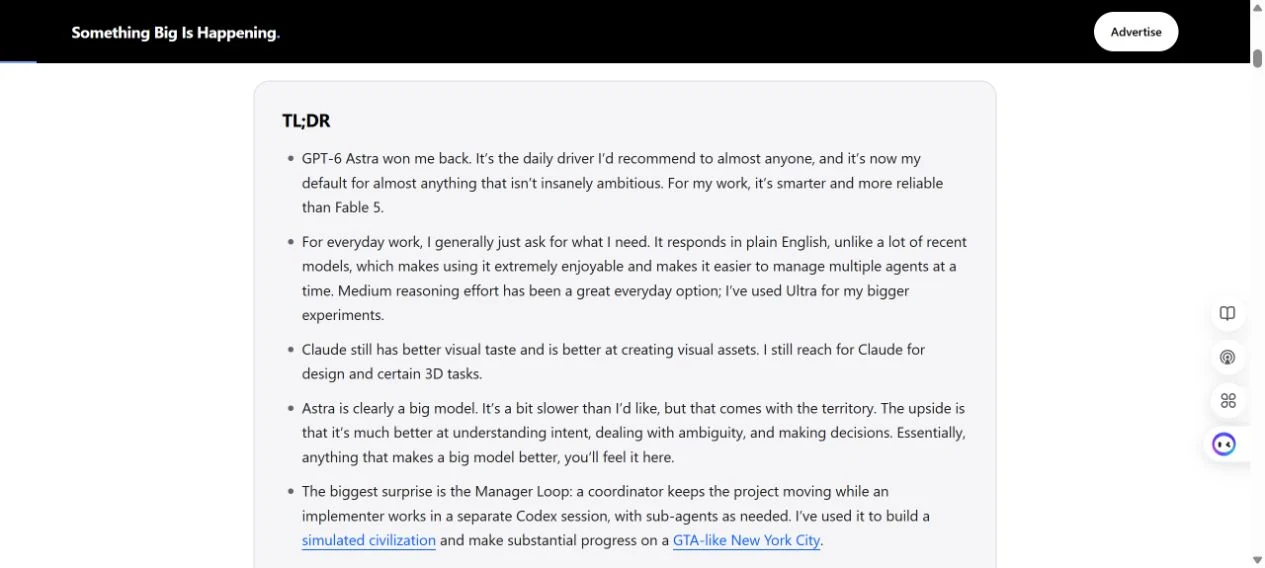
วิศวกรรมระบบหลังบ้าน
รายงานการประเมินนี้เน้นย้ำถึงประสิทธิภาพที่มีประโยชน์ในการทำงานด้านการนำไปใช้จริงที่ซับซ้อน โดยเฉพาะอย่างยิ่งเมื่อโมเดลต้องเข้าใจระบบอย่างแท้จริง แทนที่จะสร้างโค้ดตัวอย่างเล็กๆ ที่แยกตัวออกมา.
การใช้คอมพิวเตอร์
ตามรายงาน Astra สามารถจัดการงานแบบเบราว์เซอร์และเดสก์ท็อปได้โดยมีความตระหนักถึงเป้าหมายโดยรวมมากขึ้น แต่สิ่งนี้ไม่ได้ทำให้ไม่จำเป็นต้องมีสิทธิ์และการตรวจสอบ.
เจตนาที่ไม่ชัดเจน
โมเดลนี้ถูกอธิบายว่ามีความสามารถที่ดีกว่าในการคาดการณ์ว่าผู้ใช้กำลังพยายามทำอะไร จากคำสั่งที่ไม่ครบถ้วน.
ความต่อเนื่องและการรายงาน
บทความรีวิวนี้ยกย่อง Astra ที่สามารถรักษาบริบทไว้ได้ตลอดการเซสชันที่ยาวนาน และให้คำอธิบายที่ชัดเจนยิ่งขึ้นเกี่ยวกับสิ่งที่ได้ดำเนินการไปแล้ว.
นี่คือข้อสังเกตเชิงคุณภาพจากผู้ประเมินอีกคนหนึ่ง ข้อสังเกตเหล่านี้ช่วยระบุความสามารถที่ควรนำไปทดสอบ แต่ไม่ใช่ผลการวัดของเรา และไม่สามารถยืนยันความน่าเชื่อถือโดยทั่วไปได้.
ข้อจำกัดในระยะแรกและคำถามที่ยังไม่มีคำตอบ
การประเมินเดียวกันนี้ยังชี้ให้เห็นถึงข้อกังวลสำคัญด้วย Astra อาจทำงานช้า ใช้โทเคนในปริมาณมาก และยังคงติดอยู่กับรายละเอียดเล็กๆ น้อยๆ ระหว่างการทำงานแบบอัตโนมัติที่ยาวนาน Shumer ยังรายงานว่าผลลัพธ์ด้านการออกแบบภาพของระบบนี้อาจตามหลัง Claude แม้การทำงานของระบบหลังจะมีความแข็งแกร่งก็ตาม.
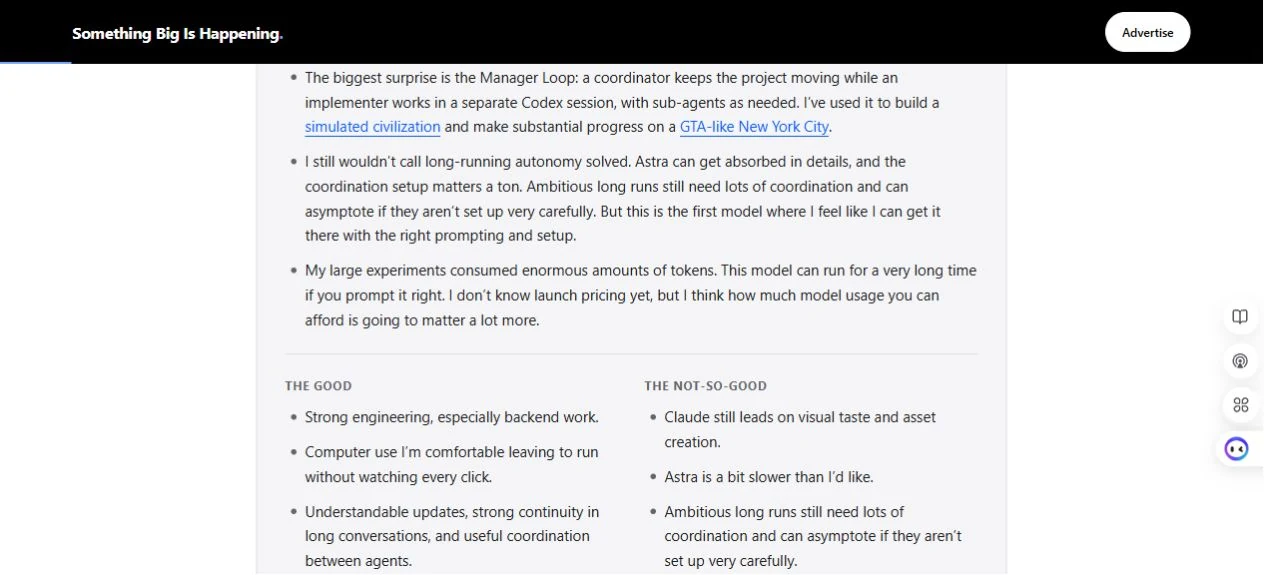
- ความเร็ว: โมเดลที่สามารถวิเคราะห์ ใช้เครื่องมือ และตรวจสอบผลลัพธ์การทำงานของตัวเอง อาจใช้เวลานานกว่าโมเดลแชทแบบเบา.
- ความเป็นอิสระ: การดำเนินการเป็นเวลานานไม่ได้หมายความว่าไม่มีการกำกับดูแล ผู้ประเมินยังคงพบช่วงเวลาที่โมเดลจำเป็นต้องได้รับการประสานงานหรือการปรับทิศทางใหม่.
- การใช้โทเคน: บริบทที่กว้างและการวิเคราะห์ที่ซับซ้อนอาจทำให้ค่าใช้จ่ายเพิ่มขึ้นอย่างรวดเร็ว โดยเฉพาะเมื่อเกินขีดจำกัด 272K.
- การออกแบบทางภาพ: ประสิทธิภาพการเขียนโค้ดที่ดีไม่ได้หมายความว่าจะสร้างอินเทอร์เฟซที่มีรูปลักษณ์สวยงามที่สุดได้โดยอัตโนมัติ.
- ความลึกของหลักฐาน: ยังไม่มีผลการทดสอบอิสระที่ได้รับการจับคู่กันเพียงพอ เพื่อสามารถสรุปอย่างกว้างขวางเกี่ยวกับความน่าเชื่อถือหรือความเหนือกว่าได้.
ดังนั้น การทดสอบการนำไปใช้ที่สำคัญที่สุดคือประสิทธิภาพ ไม่ใช่ความสามารถสูงสุด ให้วัดว่า Astra ทำงานทั้งกระบวนการได้ถูกต้องบ่อยเพียงใด ต้องการการกำกับดูแลมากเพียงใด ใช้โทเคนจำนวนเท่าใด และยังมีงานทำความสะอาดเหลืออยู่เท่าใด การทำงานที่ช้าและใช้ค่าใช้จ่ายสูงก็อาจคุ้มค่าได้ หากมันช่วยลดเวลาการทำงานของผู้เชี่ยวชาญลงได้หลายชั่วโมง แต่จะไม่คุ้มค่าหากมันทำงานผิดพลาดซ้ำแล้วซ้ำเล่า.
ใครควรใช้ GPT-6 Astra?
| ความเหมาะสมที่อาจมี | ทำไม Astra อาจช่วยได้ | สิ่งที่ควรตรวจสอบก่อน |
|---|---|---|
| งานที่เกี่ยวข้องกับฐานโค้ดขนาดใหญ่ | บริบทที่ยาว การใช้เครื่องมือ และความต่อเนื่องในการเปลี่ยนแปลงระหว่างไฟล์หลายไฟล์ | อัตราการถดถอย, ความเคร่งครัดในการทดสอบ, เวลาในการตรวจสอบ และค่าใช้จ่ายต่อโทเคน |
| การวิจัยและการสังเคราะห์ | สามารถจัดการการรวบรวมข้อมูล การวิเคราะห์ และผลออกในรูปแบบบทความยาวได้ | ความแม่นยำในการอ้างอิง, ความครอบคลุมของแหล่งข้อมูล และการสรุปที่ไม่มีหลักฐานสนับสนุน |
| ตัวแทนการใช้คอมพิวเตอร์ | ออกแบบมาเพื่อการทำงานร่วมกับซอฟต์แวร์ในหลายขั้นตอน | ขอบเขตสิทธิ์, การกู้คืนหลังการเปลี่ยนแปลง UI และบันทึกการดำเนินการ |
| การวิเคราะห์เอกสารขนาดใหญ่ | บริบทขนาด 1.05M สามารถเก็บเนื้อหาต้นฉบับในปริมาณมากได้ | การเรียกคืนข้อมูลในบริบททั้งหมด และตรวจสอบว่าการเรียกคืนข้อมูลนั้นมีค่าใช้จ่ายต่ำกว่าหรือไม่ |
| การดำเนินงานที่ดำเนินมาอย่างยาวนาน | การปรับทิศทางระหว่างการทำงานและเครื่องมือแบบไม่พร้อมกันสามารถช่วยลดการต้องเริ่มใหม่ | พฤติกรรมการยกระดับ, จุดตรวจสอบ และการคืนค่าอย่างปลอดภัย |
Astra อาจไม่ใช่ตัวเลือกเริ่มต้นที่เหมาะสมสำหรับการปรับแก้ข้อความสั้นๆ การจัดประเภทตามขั้นตอนปกติ การสกัดข้อมูลแบบง่ายๆ หรือการทำงานในปริมาณมาก ซึ่งในกรณีเหล่านี้ โมเดลที่มีขนาดเล็กกว่าก็เพียงพอที่จะตอบสนองมาตรฐานคุณภาพแล้ว บทวิจารณ์ GPT-5.4 และ Nano แสดงให้เห็นว่าทำไมการกำหนดเส้นทางโมเดลตามงานจึงอาจประหยัดกว่าการส่งข้อมูลทั้งหมดไปยังโมเดลหลัก.
รายการตรวจสอบการประเมินผลแบบปฏิบัติ
- เลือกงานจริงสามงานที่มีเกณฑ์วัดความสำเร็จที่ชัดเจน.
- ลองใช้ข้อมูลนำเข้าและข้อจำกัดเดียวกันกับ Astra และโมเดลปัจจุบันของคุณ.
- บันทึกเวลาทั้งหมดที่ผ่านไป จำนวนโทเคนเข้าและออก จำนวนครั้งที่ลองใหม่ และการแก้ไขโดยมนุษย์.
- ให้ประเมินการเสร็จสิ้นงานสุดท้ายอย่างแยกต่างหากจากสไตล์การเขียนหรือการนำเสนอ.
- การหยุดการทดสอบ การปรับทิศทางระหว่างการทำงาน และการกู้คืนหลังจากเครื่องมือหนึ่งเกิดข้อผิดพลาดโดยเจตนา.
- ควรใช้ Astra เฉพาะในกรณีที่การปรับปรุงนั้นสามารถทำซ้ำได้และคุ้มค่ากับค่าใช้จ่ายเพิ่มเติม.
เลือก Astra หรือรุ่นที่มีขนาดเล็กกว่าตามงานที่ต้องการ
ใช้ Astra สำหรับการสังเคราะห์ที่ซับซ้อนและงานที่ความถูกต้องมีความสำคัญมากกว่าราคาโทเคนต่ำสุด โมเดลที่มีขนาดเล็กกว่าอาจเพียงพอสำหรับการสกัดข้อมูลแบบปกติหรือการเขียนใหม่สั้นๆ เปรียบเทียบอัตราความสำเร็จ การกำกับดูแล และค่าใช้จ่ายรวมบนข้อมูลนำเข้าเดียวกัน.
สำหรับกระบวนการทำงานแบบหลายโมเดล, GPT-6 Astra, Claude Opus 5, Claude Sonnet 5 และ Gemini 3.8 Flash ปรากฏอยู่ในแคตตาล็อกปัจจุบันของ GlobalGPT GlobalGPT เป็นบริการสมัครสมาชิกแยกต่างหาก; มันไม่ช่วยเปิดใช้งานบัญชีแบบชำระเงินของผู้ให้บริการอื่น.
The หน้าแผนประจำปี GlobalGPT แสดงราคาแพ็กเกจ Basic ที่ $5.80/เดือน, Pro ที่ $10.80/เดือน และ Unlimited ที่ $25/เดือน เมื่อชำระแบบรายปี ตรวจสอบเมื่อวันที่ 18 กันยายน 2026 เปรียบเทียบการผูกมัดล่วงหน้าและปริมาณการใช้งานโมเดลที่รวมอยู่ในแพ็กเกจ ไม่ใช่เพียงค่าเทียบเท่าต่อเดือนที่ดูน้อยกว่า.
สิ่งที่บทวิจารณ์นี้ยังไม่สามารถพิสูจน์ได้
การลองใช้ Astra ครั้งก่อนผ่านเส้นทาง CLI เดียวกันนั้นได้สิ้นสุดลงโดยไม่ได้รับคำตอบ เราได้เก็บข้อมูลความล้มเหลวนั้นไว้ในคลังข้อมูลการทดสอบ; มันไม่ใช่คะแนนคุณภาพ การเรียกสามครั้งที่ประสบความสำเร็จในที่นี้แสดงให้เห็นว่าเส้นทางดังกล่าวทำงานได้สำหรับชุดข้อมูลนี้ แต่ไม่ได้หมายความว่าความล้มเหลวครั้งก่อนจะไม่เกิดขึ้นอีก.
เราไม่ได้ทดสอบการใช้คอมพิวเตอร์ การเรียกใช้เครื่องมือแบบไม่พร้อมกัน การปรับทิศทางระหว่างการทำงาน การเรียกคืนข้อมูลจำนวนล้านโทเคน การเข้าถึงแผน ChatGPT แบบดั้งเดิม หรือการทำงานในสภาพแวดล้อมการผลิตแบบไม่มีการกำกับดูแล ไม่มีพื้นฐานใดที่นี่ที่จะอ้างว่า Astra ดีกว่า Claude, Gemini หรือโมเดล OpenAI ที่มีขนาดเล็กกว่า การเปรียบเทียบดังกล่าวจำเป็นต้องมีงานที่เทียบเท่ากันและการทดลองซ้ำหลายครั้ง.
คำแนะนำในการซื้อ: ลองใช้ Astra ในงานที่การตรวจสอบกฎเกณฑ์ ค่าที่ขาด และข้อยกเว้นเป็นสิ่งสำคัญ เก็บโมเดลขนาดเล็กไว้สำหรับงานประจำที่ตรงกับเป้าหมายคุณภาพของคุณแล้ว ประเมินค่าใช้จ่ายเพิ่มเติมจากจำนวนการแก้ไขที่ลดลงและงานที่เสร็จสมบูรณ์และสามารถใช้งานได้ ไม่ใช่เพียงจากชื่อโมเดลเท่านั้น.
คำถามที่มักถูกถาม
นี่เป็นการทดสอบ API OpenAI แบบตรงๆ หรือไม่?
ไม่ครับ เราใช้บริการโมเดลที่รองรับ CLI ของ GlobalGPT ด้วย gpt-6-astra จำนวนโทเคนและเครดิตที่รายงานนั้นเป็นของเส้นทางนั้น ส่วนการคำนวณค่าในหน่วยดอลลาร์ของ OpenAI เป็นตัวอย่างจากตารางอัตราค่าบริการที่แยกต่างหาก.
GPT-6 Astra มีให้บริการบน GlobalGPT หรือไม่?
ใช่ครับ บทรีวิวนี้รวมถึงการเรียกใช้ gpt-6-astra ที่ประสบความสำเร็จสามครั้ง ผ่านบริการโมเดลของ GlobalGPT การสมัครใช้แพลตฟอร์มดังกล่าวเป็นบริการที่แยกต่างหากจากระบบการคิดค่าบริการ API ของ OpenAI และแพ็กเกจของ ChatGPT.
หน้าต่างบริบทคืออะไร?
OpenAI กำหนดจำนวนโทเคนบริบทไว้ที่ 1,050,000 โทเคน โดยจำนวนโทเคนอินพุตสูงสุดคือ 922,000 โทเคน และจำนวนโทเคนเอาต์พุตสูงสุดคือ 128,000 โทเคน.
Plus มี GPT-6 Pro ในฟีเจอร์ Chat หรือไม่?
ตามข้อมูลแนะนำรุ่นวันที่ 10 กันยายน GPT-6 Pro ถูกจัดอยู่ในแผนบริการ Chat ประเภท Pro, Business และ Enterprise ที่มีสิทธิ์ใช้งาน นอกจากนี้ ยังรวมถึง Astra ในแผน Work และ Codex ซึ่งทั้งสองแผนนี้เป็นสิทธิ์การใช้งานผลิตภัณฑ์ที่แยกกัน.
ระบบกำหนดราคาสำหรับข้อมูลป้อนเข้าที่ยาวทำงานอย่างไร?
หน้าโมเดลอย่างเป็นทางการจะใช้อัตราที่สูงขึ้นสำหรับคำขอทั้งหมดที่มีจำนวนโทเคนอินพุตเกิน 272,000: อัตราอินพุตและแคชเป็น 2 เท่า และอัตราเอาต์พุตเป็น 1.5 เท่า.
การทดสอบใหม่มีเนื้อหาเกี่ยวกับการใช้คอมพิวเตอร์ด้วยหรือไม่?
ไม่ครับ เราได้ทดสอบการวิเคราะห์ลำดับสังเคราะห์ การสร้างโค้ดพร้อมการดำเนินการแบบท้องถิ่น และแพ็กเกจข้อความที่มี 500 โน้ต แต่ยังไม่มีการทดสอบการใช้งานคอมพิวเตอร์ เครื่องมือแบบไม่พร้อมกัน และความน่าเชื่อถือสำหรับข้อมูลที่มีจำนวนล้านโทเคน.
ผมควรเปลี่ยนทุกรุ่นเป็น Astra หรือไม่?
ไม่ครับ ลองเปรียบเทียบคุณภาพผลลัพธ์ การตรวจสอบด้วยมือ ความล่าช้า และค่าใช้จ่ายสำหรับงานของคุณเองดูครับ โมเดลขนาดเล็กอาจเป็นตัวเลือกที่ดีกว่า หากมันสามารถให้คำตอบที่ใช้งานได้เหมือนกันอย่างเชื่อถือได้.