
DeepSeek V4.1 Flash เป็นเวอร์ชันที่ DeepSeek ปล่อยออกมาเมื่อวันที่ 10 กันยายน 2026 ซึ่งเพิ่มคุณสมบัติการรับภาพแบบเนทีฟ พื้นที่แคชที่เล็กลง คะแนนเอเจนต์ที่รายงานโดยผู้ผลิตที่สูงขึ้น และอัตรา API ที่ต่ำลง. มันเหมาะที่สุดสำหรับนักพัฒนาที่ใช้งานเอเจนต์ที่มีปริมาณงานสูงหรือต้องรับข้อมูลเข้าจำนวนมาก ข้อควรระวังหลักคือ: DeepSeek ได้ดำเนินการทดสอบประสิทธิภาพตามมาตรฐานที่เผยแพร่แล้ว และ V4 Pro ยังคงนำหน้าในการทดสอบการให้เหตุผลแบบฟรอนเทียร์บางประเภท.

DeepSeek V4.1 Flash คืออะไร?
DeepSeek V4.1 Flash เป็นโมเดลแบบมัลติโมดัลที่มีน้ำหนักเปิด ซึ่งถูกพัฒนาขึ้นเพื่อใช้ในการเขียนโค้ด การใช้เครื่องมือ การเข้าใจภาพ และกระบวนการทำงานของเอเจนต์ในบริบทที่ยาว DeepSeek ได้เปิดตัวโมเดลนี้เมื่อวันที่ 10 กันยายน 2026 และเผยแพร่ค่าน้ำหนักของโมเดลดังกล่าวเป็น DeepSeek-V4.1-Flash, และเปิดเผยโมเดลที่ถูกโฮสต์ผ่าน deepseek-flash ชื่อ API.
การปล่อยเวอร์ชันนี้มีความสำคัญเพราะมันไม่เพียงแต่เปลี่ยนแปลงคะแนนการทดสอบประสิทธิภาพเท่านั้น Flash สามารถรับข้อความและภาพได้ มีหน้าต่างบริบทขนาดหนึ่งล้านโทเคน และลดปริมาณหน่วยความจำที่จำเป็นสำหรับแคชคีย์-ค่าลงอย่างมีนัยสำคัญ นอกจากนี้ DeepSeek ยังลดอัตราค่าบริการ API ที่โฮสต์ไว้เมื่อเทียบกับอัตราค่าบริการ V4 Pro ที่กำลังจะเลิกใช้ การรวมคุณสมบัติเหล่านี้มาเพื่อแก้ไขจุดคอขวดในทางปฏิบัติ: การรักษาให้เอเจนต์ที่ทำงานต่อเนื่องเป็นเวลานานมีค่าใช้จ่ายที่สมเหตุสมผล เมื่อคำสั่ง (prompts) ข้อมูลบริบทในรีโพสิตอรี ภาพหน้าจอ และประวัติการใช้งานเครื่องมือเริ่มสะสมมากขึ้น.
deepseek-flashโหมดการคิดถูกเปิดใช้งานโดยค่าเริ่มต้น แต่ยังมีโหมดที่ไม่คิดให้เลือกใช้ด้วย รองรับการส่งออก JSON และการเรียกใช้เครื่องมือ DeepSeek ยังรองรับ API ของ Responses และมีความเข้ากันได้กับ API ของ Anthropic ซึ่งช่วยลดงานการย้ายระบบสำหรับแอปพลิเคชันที่มีโครงสร้างอยู่แล้วตามอินเทอร์เฟซเหล่านั้น.
มีอะไรใหม่ใน DeepSeek V4.1 Flash?
ระบบโครงข่ายหลัก MoE 552B ที่ใช้การประมวลผลแบบไม่สมมาตร
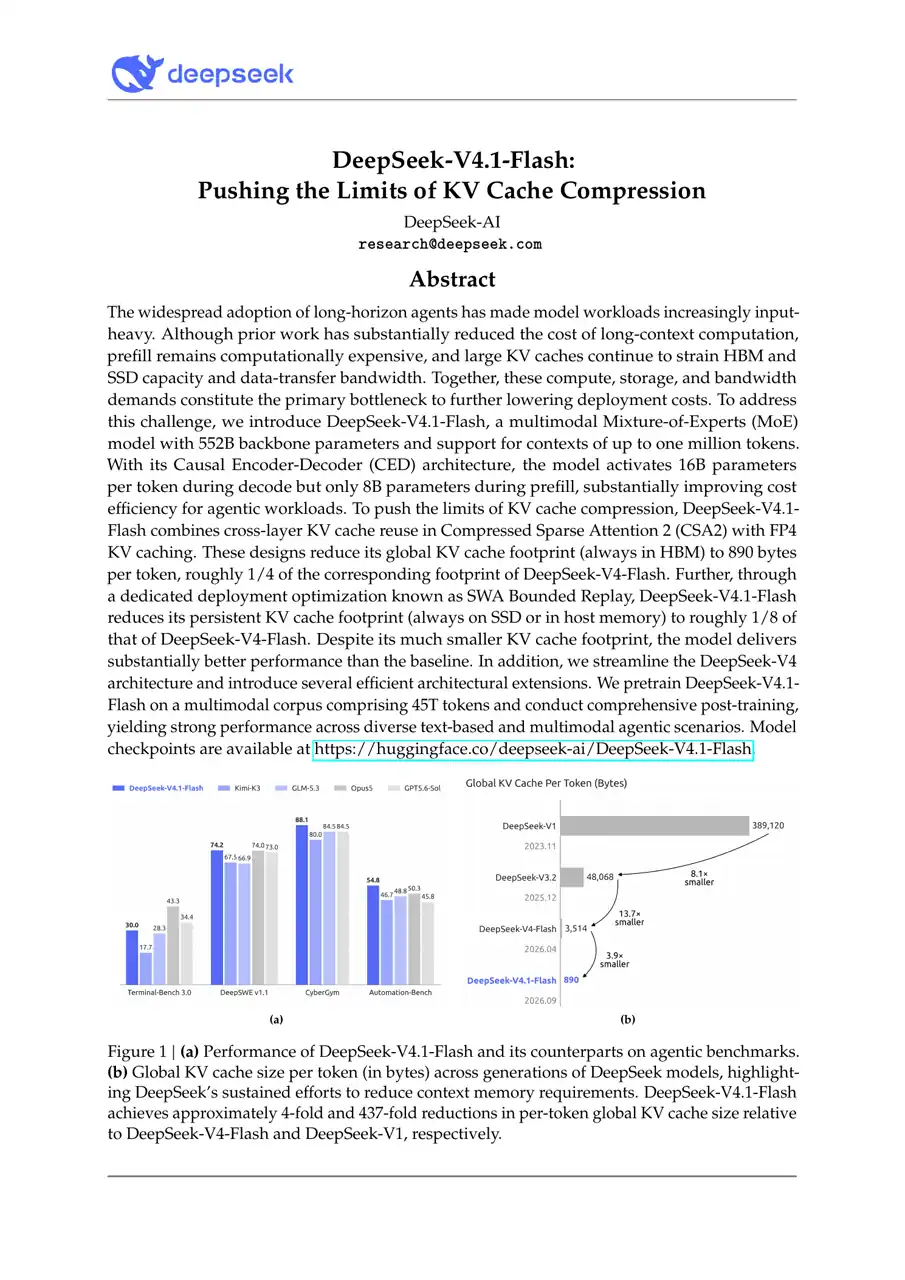
ตามที่ได้ระบุไว้ รายงานทางเทคนิค DeepSeek V4.1, โมเดลนี้ใช้โครงสร้างหลักแบบ mixture-of-experts ที่มีพารามิเตอร์ 552 พันล้าน พร้อมด้วย encoder แบบ causal 20 ชั้น และ decoder 20 ชั้น จำนวนพารามิเตอร์ทั้งหมดไม่ใช่จำนวนที่ใช้สำหรับทุกโทเคน: DeepSeek รายงานว่ามีพารามิเตอร์ที่ใช้งานอยู่ประมาณ 8 พันล้านตัวในช่วงการเติมข้อมูลล่วงหน้า (prefill) และ 16 พันล้านตัวในช่วงการถอดรหัส (decoding).
การออกแบบแบบไม่สมมาตรนี้ทำให้ขั้นตอนการเติมข้อมูลล่วงหน้า (prefill) และขั้นตอนการสร้างผลลัพธ์ (generation) มีงบประมาณการคำนวณที่แตกต่างกัน ขั้นตอนการเติมข้อมูลล่วงหน้าคือขั้นตอนที่รับข้อมูลจากคำสั่ง (prompt) เอกสาร รูปภาพ และการสนทนาที่ผ่านมา ส่วนขั้นตอนการถอดรหัสจะสร้างคำตอบทีละโทเคน การใช้ทรัพยากรการคำนวณที่ต่ำลงในช่วงการเติมข้อมูลล่วงหน้านั้นมีความสำคัญเป็นพิเศษสำหรับงานในระดับคลังข้อมูล (repository-scale) และงานของเอเจนต์วิจัย (research-agent) ซึ่งใช้ทรัพยากรในการอ่านข้อมูลเป็นจำนวนมากก่อนที่จะเขียนข้อมูล.
แคช KV ที่มีขนาดเล็กกว่ามาก
รายงานนี้ระบุขนาดแคช KV ทั่วโลกอยู่ที่ 890 ไบต์ต่อโทเคน, ซึ่งประมาณหนึ่งในสี่ของแคชของ V4 Flash ในหน่วยความจำแบนด์วิธสูง DeepSeek ระบุว่าความต้องการของแคชแบบถาวรนั้นอยู่ที่ประมาณหนึ่งในแปดของรุ่นก่อน สำหรับบริบทที่มีโทเคนหนึ่งล้านตัว นี่เป็นคุณสมบัติในการปรับใช้มากกว่าที่จะเป็นรายละเอียดทางสถาปัตยกรรมเชิงนามธรรม: ขนาดแคชส่งผลต่อจำนวนเซสชันระยะยาวที่เซิร์ฟเวอร์สามารถรองรับได้ และปริมาณหน่วยความจำที่แต่ละเซสชันใช้.
การรับข้อมูลภาพแบบเนทีฟและการฝึกอบรมล่วงหน้าแบบมัลติโมดัล
V4.1 Flash รองรับภาพโดยตรงโดยไม่ต้องใช้จุดปลายทาง (endpoint) แยกต่างหากของ Vision DeepSeek ระบุว่าโมเดลนี้ได้รับการฝึกอบรมล่วงหน้าบนชุดข้อมูลมัลติโมดัลที่มีขนาด 45 ล้านล้านโทเคน ในทางปฏิบัติ สิ่งนี้ทำให้ภาพหน้าจอ แผนภูมิ ตารางที่สแกน สถานะของอินเทอร์เฟซ และข้อมูลการดีบักแบบภาพ เป็นส่วนหนึ่งของการสนทนาของเอเจนต์เดียวกันกับโค้ดและข้อความ.
บริบทที่มีโทเคน 1 ล้านตัวสามารถเก็บข้อมูลจากรีโพสิตอรีขนาดใหญ่ ชุดเอกสารที่ยาว และประวัติการทำงานของเอเจนต์ที่ขยายออกไปได้ โดยต้องอยู่ภายใต้ขีดจำกัดรวมของข้อมูลเข้าและข้อมูลออก.
ข้อมูลเข้าแบบ JPEG, PNG, GIF และ WebP สามารถรวมกับข้อความได้ เพื่อการสกัดข้อมูลจากตาราง การวิเคราะห์ภาพหน้าจอ และการตอบคำถามแบบภาพ.
การเรียกใช้เครื่องมือ การสร้างผลลัพธ์ JSON ที่มีโครงสร้าง และการฝึกอบรมที่เน้นเอเจนต์ ทำให้โมเดลนี้เหมาะสำหรับกระบวนการทำงานที่จำเป็นต้องตรวจสอบ ตัดสินใจ และเปลี่ยนแปลงสถานะ.
ผลการทดสอบประสิทธิภาพ DeepSeek V4.1: สิ่งที่ผลการทดสอบอย่างเป็นทางการแสดงให้เห็น
ข้ออ้างที่แข็งแกร่งที่สุดของ Flash V4.1 จาก DeepSeek มุ่งเน้นไปที่การทดสอบประสิทธิภาพด้านการเขียนโค้ดและเอเจนต์ ผู้ผลิตได้ประเมินโมเดลคำสั่งด้วยระดับความพยายามในการทดลอง 100 ซึ่งเปิดเผยต่อสาธารณะว่าเป็นระดับความพยายามในการให้เหตุผลสูงสุด โดยใช้ อุณหภูมิ=1.0 และ top_p=0.95. การทดสอบสำหรับตัวแทนโค้ดใช้ชุดทดสอบที่มีชื่อและบริบทขนาดหนึ่งล้านโทเคน ส่วนการทดสอบสำหรับตัวแทนภาพใช้โค้ด Claude พร้อมบริบทขนาด 512K โทเคน.
| เกณฑ์มาตรฐาน | V4.1 Flash | V4 Pro | V4 Flash | ผู้นำ |
|---|---|---|---|---|
| Codeforces คะแนน | 3471 | 3348 | 3289 | V4.1 Flash |
| เทอร์มินอล-เบนช์ 2.1 ผ่าน@1 | 90.6 | 87.9 | 82.7 | V4.1 Flash |
| DeepSWE เวอร์ชัน 1.1 แก้ไขแล้ว | 74.2 | 62.7 | 54.4 | V4.1 Flash |
| ไซเบอร์ยิม ผ่าน@1 | 88.1 | 83.3 | 76.7 | V4.1 Flash |
| Automation-Bench ผ่าน@1 | 54.8 | 43.2 | 37.7 | V4.1 Flash |
| GPQA ไดมอนด์ ผ่าน@1 | 90.9 | 92.4 | 89.9 | V4 Pro |
| HLE (ข้อความเท่านั้น) ผ่าน@1 | 39.1 | 42.7 | 37.8 | V4 Pro |
แหล่งที่มา: รายงานทางเทคนิค DeepSeek V4.1, ตาราง 3. ค่าที่สูงกว่าถือว่าดีกว่าในแต่ละแถว Codeforces เป็นระบบจัดอันดับ ส่วนค่าอื่น ๆ ที่แสดงใช้ตัวชี้วัดแบบเปอร์เซ็นต์ตามชื่อที่กำหนดในรายงาน อย่าเปรียบเทียบขนาดของค่าระหว่างแถวต่าง ๆ.

รูปแบบนี้มีประโยชน์ แต่มีขอบเขตที่แคบกว่าการอ้างแบบทั่วไปว่า “เป็นโมเดลที่ดีกว่า” V4.1 Flash นำหน้า V4 Pro ในห้าแถวที่แสดงด้านบน ได้แก่ การเขียนโค้ด เทอร์มินัล ความปลอดภัย และการอัตโนมัติ V4 Pro ยังคงนำหน้าใน GPQA Diamond และชุดย่อยแบบข้อความเท่านั้นของ Humanity’s Last Exam ผู้พัฒนาที่เปรียบเทียบรายชื่อสั้นด้านการเขียนโค้ดที่กว้างขึ้นสามารถใช้ของเรา คู่มือเลือกรุ่น AI ที่ดีที่สุดสำหรับการเขียนโค้ด, แต่การประเมินในระดับแอปพลิเคชันยังคงมีความสำคัญมากกว่าการประเมินจากตารางเดียว.
ระดับความพยายามในการวิเคราะห์ก็ส่งผลต่อค่าใช้จ่ายและผลลัพธ์ด้วย ในรายงานของ DeepSeek การเพิ่มระดับความพยายามในการทดลองจาก 25 เป็น 100 ทำให้คะแนนของ DeepSWE v1.1 เพิ่มขึ้นจาก 66.0 เป็น 74.2 และคะแนนของ Terminal-Bench 2.1 เพิ่มขึ้นจาก 82.4 เป็น 90.6, โดยใช้โทเคนเอาต์พุตมากขึ้นประมาณ 2.5 เท่า นอกจากนี้ การตั้งค่าเอเจนต์ทั้ง 8 แบบในรายงานยังให้ผลลัพธ์ที่แตกต่างอย่างมีนัยสำคัญจากจุดตรวจสอบเดียวกัน ดังนั้น การเลือกเฟรมเวิร์กจึงเป็นส่วนหนึ่งของระบบที่วัดผล.
DeepSeek ระบุว่า ความทนทานต่อข้อมูลเข้าที่รุนแรงยังไม่ได้รับการวิเคราะห์อย่างครบถ้วน รายงานดังกล่าวชี้ว่า ข้อผิดพลาดในการเลือก CSA2 และการสร้างสถานะใหม่แบบประมาณการโดยใช้เทคนิค sliding-window-attention อาจทำให้ความสามารถลดลงในกรณีขอบเขตที่อยู่นอกชุดการทดสอบ นอกจากนี้ ยังยอมรับว่ายังมีช่องว่างที่ยังไม่ได้แก้ไขในด้านการให้เหตุผลที่ซับซ้อนที่สุดและงานในกรณีขอบเขต รายละเอียดเหล่านี้ควรถูกระบุไว้พร้อมกับคะแนนหลัก.
สองงานที่สามารถทำซ้ำได้เพื่อประเมิน Flash V4.1
งานต่อไปนี้ใช้เพื่อทดสอบพฤติกรรมที่ชัดเจน โดยไม่นำข้อความคำสั่งที่ยังไม่ถูกประมวลผลมาใช้เป็นหลักฐาน ให้ใช้ข้อความคำสั่งที่ระบุไว้อย่างถูกต้อง เก็บข้อมูลการตั้งค่าโมเดลและระดับความพยายามไว้ในบันทึก และให้คะแนนคำตอบตามเกณฑ์ที่ระบุไว้ ผลลัพธ์จากการรันแต่ละครั้งควรรายงานเป็นการสังเกตการณ์ที่มีวันที่ระบุ ไม่ใช่เป็นเกณฑ์มาตรฐานทั่วไป.
ราคา Flash DeepSeek V4.1
การกำหนดราคา API ของ DeepSeek ใช้สองตารางราคา และตัวเลขทั้งหมดด้านล่างนี้แสดงเป็นดอลลาร์สหรัฐต่อหนึ่งล้านโทเคน ช่วงที่มีการใช้งานสูงสุดคือ 01:00-04:00 UTC และ 06:00-10:00 UTC, วันจันทร์ถึงวันศุกร์. เวลาอื่นทั้งหมดถือเป็นช่วงนอกชั่วโมงเร่งด่วน การใช้ข้อมูลที่เก็บไว้ในแคช การใช้ข้อมูลที่ไม่ได้เก็บไว้ในแคช และข้อมูลที่ส่งออก จะถูกคิดค่าบริการตามอัตราที่แตกต่างกัน.
อัตราค่าบริการ API ที่ถูกที่สุด
- ข้อมูลที่เก็บไว้ในแคช
- $0.003
- ข้อมูลที่ยังไม่ถูกเก็บไว้ในแคช
- $0.15
- ผลลัพธ์
- $0.60
ต่อ 1 ล้านโทเคน; นอกช่วงเวลา peak ในวันธรรมดา.
สองเท่าของอัตราค่าไฟฟ้าในช่วงนอกชั่วโมงเร่งด่วน
- ข้อมูลที่เก็บไว้ในแคช
- $0.006
- ข้อมูลที่ยังไม่ถูกเก็บไว้ในแคช
- $0.30
- ผลลัพธ์
- $1.20
ต่อ 1 ล้านโทเคน; เวลา 01:00-04:00 และ 06:00-10:00 UTC ในวันทำงาน.
เพื่อยกตัวอย่างการคำนวณที่เรียบง่าย คำขอในช่วงนอกชั่วโมงเร่งด่วนที่มีโทเคนอินพุต 800,000 โทเคนที่ยังไม่ได้เก็บไว้ในแคช และโทเคนเอาต์พุต 20,000 โทเคน จะมีค่าใช้จ่ายประมาณ $0.132: $0.12 สำหรับข้อมูลเข้า และ $0.012 สำหรับข้อมูลออก หากใช้โทเคนเดียวกันที่อัตราสูงสุด จะมีค่าใช้จ่ายประมาณ $0.264 การคำนวณนี้เป็นการยกตัวอย่างเท่านั้น ไม่ใช่ใบเรียกเก็บเงินจากปริมาณงานที่วัดได้จริง; การเข้าถึงแคชที่ตรงเป้า (cache hits), การลองใหม่ (retries), การเปลี่ยนเครื่องมือ (tool turns), และความยาวของการให้เหตุผล (reasoning length) จะส่งผลให้ยอดรวมเปลี่ยนแปลงได้.
ข้อมูลที่เก็บไว้ในแคชมีค่าใช้จ่ายต่ำกว่าข้อมูลที่ไม่ได้เก็บไว้ในแคชถึง 50 เท่า ในทั้งสองตารางเวลา ซึ่งทำให้การใช้คำนำหน้าคำสั่งที่เสถียรและบริบทที่สามารถนำกลับมาใช้ใหม่ได้มีความสำคัญทางเศรษฐกิจ อัตราค่าบริการ API DeepSeek สำหรับสาธารณะนั้นแยกต่างหากจากสิทธิ์การเข้าถึงและการเรียกเก็บเงินของ GlobalGPT อย่าตีความราคาโทเคนเหล่านี้ว่าเป็นราคาการสมัครสมาชิกหรือราคาเครดิตของ GlobalGPT.
API, Vision และข้อจำกัดของ DeepSeek V4.1
API DeepSeek แบบตรงใช้ deepseek-flash. ผู้พัฒนาสามารถเรียกใช้จุดปลายทางมาตรฐานได้ที่ https://api.deepseek.com, API Responses ที่ฐานเดียวกัน หรือฐานที่รองรับ Anthropic ที่ https://api.deepseek.com/anthropic. เครื่องมือฟังก์ชันได้รับการสนับสนุนใน Responses. DeepSeek ยังบันทึกไว้ว่า apply_patch เครื่องมือที่กำหนดเอง; ประเภทเครื่องมืออื่น ๆ ที่มาพร้อมระบบจะถูกเพิกเฉยแทนที่จะถูกดำเนินการ.
deepseek-flashโหมดคิดถูกเปิดไว้โดยอัตโนมัติ; มีตัวเลือกความพยายามระดับต่ำ ระดับสูง และระดับสูงสุดให้เลือกใช้.
เลือกระดับความเข้ากันได้ที่เหมาะสมกับแอปพลิเคชันที่มีอยู่.
ให้ปริมาณข้อมูลเข้าและออกทั้งหมดอยู่ภายในหน้าต่างบริบท 1 ล้านโทเคน.
รูปแบบภาพและกฎการจัดวาง
DeepSeek รองรับภาพในรูปแบบ JPEG, PNG, GIF และ WebP ภาพแบบฝังใน (inline image) มีขนาดสูงสุด 32 MiB ส่วนภาพแบบไฟล์ (file image) มีขนาดสูงสุด 64 MiB ขีดจำกัดร่วมที่ระบุไว้ในเอกสารอนุญาตให้มีภาพได้สูงสุด 600 ภาพในคำขอหนึ่งครั้ง ขีดจำกัดดังกล่าวไม่ใช่คำแนะนำ: การส่งชุดข้อมูลขนาดใหญ่จะเพิ่มขนาดพรอมต์ ความล่าช้า และความยากในการติดตามว่าภาพใดเป็นพื้นฐานของคำตอบ.
สำหรับ API Responses เนื้อหาภาพควรอยู่ในข้อความของผู้ใช้ ภาพที่วางไว้ใน ระบบ หรือ ผู้ช่วย ข้อความส่งคืน HTTP 400 ชั้นความเข้ากันได้ไม่ยอมรับไฟล์ทั่วไปเป็นข้อมูลนำเข้า ดังนั้นแอปพลิเคชันควรปฏิบัติตามรูปแบบการส่งข้อมูลภาพที่ระบุไว้ในเอกสาร แทนที่จะสมมติว่ามีความสอดคล้องกันของฟีเจอร์การตอบสนอง OpenAI อย่างสมบูรณ์.
บริบท ผลลัพธ์ และข้อจำกัดในการทำงานพร้อมกัน
ขนาดบริบทสูงสุดคือหนึ่งล้านโทเคน และขนาดผลลัพธ์สูงสุดคือ 384,000 โทเคน ข้อมูลเข้าและข้อมูลออกรวมกันต้องอยู่ในขอบเขตของหน้าต่างบริบท Flash อนุญาตให้มีการเชื่อมต่อพร้อมกัน 2,500 ครั้งต่อบัญชี; คำขอที่เกินขีดจำกัดของบัญชีดังกล่าวจะได้รับรหัสข้อผิดพลาด HTTP 429 ดังนั้น การวางแผนความจุควรติดตามการใช้งานการเชื่อมต่อที่ใช้งานอยู่และพฤติกรรมการลองใหม่.
DeepSeek V4.1 Flash เทียบกับ V4 Pro
V4.1 Flash เป็นตัวเลือกเริ่มต้นที่ใช้งานได้จริงมากขึ้นสำหรับเอเจนต์การเขียนโค้ดปริมาณสูง ข้อมูลเข้าแบบภาพ และแอปพลิเคชันที่มีบริบทยาว V4 Pro ยังคงมีความสำคัญในฐานะมาตรฐานพื้นฐานสำหรับการให้เหตุผลในช่วงระยะเวลาการเปลี่ยนผ่านที่สั้น แต่ไม่สนับสนุนระบบการมองเห็น และมีความสามารถในการทำงานพร้อมกันที่ต่ำกว่าตามที่บันทึกไว้ เวอร์ชันก่อนหน้าของเรา รีวิว DeepSeek V4 Pro ได้ครอบคลุมจุดตรวจสอบนั้นตามเงื่อนไขของตัวเอง; ผลลัพธ์จากการทดลองจริงไม่ควรถูกจัดประเภทใหม่เป็นหลักฐานของ V4.1.
| ปัจจัยในการตัดสินใจ | V4.1 Flash | V4 Pro ก่อนการเปลี่ยนแปลงเส้นทาง |
|---|---|---|
| เหมาะสมที่สุด | เอเจนต์, การเขียนโค้ด, ข้อมูลเข้าที่ยาว, การมองเห็น | งานวิเคราะห์เชิงเหตุผลในสาขาใหม่ที่ได้รับการคัดเลือก |
| การป้อนภาพ | ได้รับการสนับสนุน | ไม่รองรับ |
| การทำงานพร้อมกัน/บัญชี | 2,500 การเชื่อมต่อ | 500 การเชื่อมต่อ |
| ข้อมูลเข้าที่ไม่ได้เก็บไว้ในแคชในช่วงนอกเวลาเร่งด่วน | $0.15 / 1M | $0.66 / 1M |
| กำลังผลิตในช่วงนอกชั่วโมงเร่งด่วน | $0.60 / 1M | $1.98 / 1M |
| รูปแบบคะแนนอย่างเป็นทางการ | แสดงรายชื่อลูกค้าที่เชื่อมโยงกับตัวแทน/แถวรหัส | นำ GPQA Diamond และ HLE แบบข้อความเท่านั้น |
ราคาดังกล่าวเป็นอัตรา API ของ DeepSeek ไม่ใช่ราคาของ GlobalGPT อัตราสำหรับลูกค้า Pro จะมีผลก่อนการเปลี่ยนแปลงเส้นทางที่ประกาศเมื่อวันที่ 14 กันยายน.
ตามอัตราค่าบริการนอกช่วงเวลาพีค ข้อมูลเข้าของ Flash ที่ไม่ถูกเก็บในแคชมีราคาถูกกว่าอัตราค่าบริการ Pro ที่ระบุไว้ประมาณ 77% ส่วนข้อมูลออกของ Flash มีราคาถูกกว่าประมาณ 70% เปอร์เซ็นต์ดังกล่าวเป็นผลคำนวณจากอัตราค่าบริการอย่างเป็นทางการ ไม่ใช่การประหยัดที่วัดได้จริง การประหยัดค่าใช้จ่ายจริงขึ้นอยู่กับระดับการใช้ซ้ำของแคช ความยาวของผลลัพธ์ จำนวนการลองใหม่ และว่างานนั้นต้องการผลลัพธ์ที่แข็งแกร่งกว่าของ Pro บนแถวการให้เหตุผลที่เลือกไว้หรือไม่.
ความแตกต่างที่สำคัญกว่าคือด้านปฏิบัติการ DeepSeek กำลังรักษา deepseek-v4-pro ชื่อ API ในขณะที่เปลี่ยนโมเดลที่อยู่เบื้องหลังอย่างชั่วคราว ชื่อ API ที่เสถียรไม่รับประกันว่าพฤติกรรมผลลัพธ์จะเสถียร ให้เก็บรักษาคำตอบ V4 Pro ที่เป็นตัวแทน, ข้อมูลติดตามเครื่องมือ, ความล่าช้า และกรณีความล้มเหลว ก่อนวันที่ 14 กันยายน แล้วรันชุดการทดสอบการยอมรับเดียวกันหลังจากมีการเปลี่ยนแปลงการกำหนดเส้นทาง สำหรับกรอบงานการเปรียบเทียบจุดตรวจสอบเวอร์ชันเก่า ให้ดูที่ DeepSeek V4 Pro vs Flash.
ความคิดเห็นจากนักพัฒนา
ปฏิกิริยาเบื้องต้นเป็นไปในทางบวกเกี่ยวกับปริมาณงาน ประสิทธิภาพของแคช และคะแนนของเอเจนต์ แต่หลักฐานยังไม่สม่ำเสมอ บางความคิดเห็นมุ่งเน้นไปที่จุดสิ้นสุดของเวอร์ชันทดลองใช้มากกว่าจุดตรวจสอบในเวอร์ชันผลิตสุดท้าย และบางรายงานสรุปผลการสาธิตแทนการทดสอบที่มีการควบคุม ดังนั้น การอภิปรายสาธารณะที่มีประโยชน์ที่สุดจึงเป็นเรื่องเกี่ยวกับสถานที่ที่ควรทำการทดสอบ ไม่ใช่ว่าตัวเลขในวันเปิดตัวเพียงอย่างเดียวจะสามารถตัดสินได้.
การวิเคราะห์การเปิดตัวแนะนำให้รักษาฐานข้อมูล V4 Pro ไว้ และทดสอบรุ่น Flash ที่ได้ปล่อยออกมาก่อนการเปลี่ยนแปลงเส้นทางในวันที่ 14 กันยายน นอกจากนี้ยังเน้นย้ำว่าผลการปรับปรุงจะแตกต่างกันไปตามเกณฑ์การวัดประสิทธิภาพ กรอบงาน และการตั้งค่าความพยายาม.
อ่านการวิเคราะห์ในการสรุปผลการสาธิตตัวอย่างของ World of AI บทความดังกล่าวได้เน้นย้ำถึงความเร็วสูงสุดที่วัดได้อยู่ที่ 427 โทเคนต่อวินาที และชี้ให้เห็นถึงปัญหาการคิดมากเกินไป รวมถึงพฤติกรรมในการจำลองฟิสิกส์ที่ยังไม่สมบูรณ์ นี่ไม่ใช่การรับประกันความเร็วอย่างเป็นทางการ.
อ่านบทความตัวอย่างในหัวข้อการเปิดตัว ผู้แสดงความคิดเห็นได้คัดค้านการส่งเวิร์กโฟลว์ Pro ที่ผ่านการตรวจสอบแล้วไปยังโมเดลอื่นโดยไม่แจ้งให้ทราบ และเสนอให้กำหนดช่วงเวลาการเลิกใช้อย่างชัดเจน นี่เป็นความคิดเห็นของชุมชนหนึ่งเท่านั้น ไม่ใช่ความเห็นพ้องต้องกัน.
เปิดความคิดเห็นหัวหน้าทีมทดสอบความปลอดภัยด้วย AI ของ Aikido ได้รายงานว่ามีการปรับปรุงในด้านอัตราการเรียกคืนข้อมูลในครั้งเดียว (single-run recall), อัตราการเรียกคืนข้อมูลที่ผ่านเกณฑ์ 3 ครั้ง (pass@3 recall), ความแม่นยำ (precision) และอัตราการเข้าถึงแคช (cache hit rate) บนมาตรฐานการวัดประสิทธิภาพด้านความปลอดภัยไซเบอร์ ในโพสต์ของเขาได้ระบุถึงจุดปลายทาง (endpoint) ของเวอร์ชันทดลองที่กำลังจะหมดอายุ ดังนั้นจึงไม่สามารถถือเป็นหลักฐานสำหรับจุดตรวจสอบขั้นสุดท้ายได้.
ดูรายงานตัวอย่างปฏิกิริยาเหล่านี้ชี้ให้เห็นถึงการตรวจสอบสามประการที่ควรดำเนินการในทุกการปรับใช้จริง: เปรียบเทียบคุณภาพผลลัพธ์ที่ระดับความพยายามคงที่, สังเกตว่าการให้เหตุผลที่ยาวนานทำให้ต้นทุนผลลัพธ์เพิ่มขึ้นหรือไม่, และรันกรณีการทดสอบการถดถอยใหม่เมื่อ alias เปลี่ยนแปลงโมเดลที่อยู่เบื้องหลังจุดปลายทาง ผลการแสดงตัวอย่างด้านความเร็วในการประมวลผลและด้านความปลอดภัยสามารถช่วยในการออกแบบการทดสอบได้ แต่ไม่ควรนำผลเหล่านี้มารวมกับตาราง 3 ของ DeepSeek ราวกับว่าผลเหล่านั้นมาจากมาตรฐานการทดสอบที่ควบคุมได้เพียงหนึ่งเดียว.
วิธีเข้าถึงไฟล์แฟลช DeepSeek V4.1
มีสามวิธีเข้าถึงที่แตกต่างกัน คุณสามารถเลือกได้ตามความต้องการว่าต้องการควบคุม API แบบตรงๆ น้ำหนักโมเดลที่โฮสต์เอง หรือพื้นที่ทำงานในเบราว์เซอร์ที่ช่วยให้การเปลี่ยนโมเดลง่ายขึ้น เงื่อนไข ราคา และความรับผิดชอบในการดำเนินงานจะแตกต่างกันไปตามวิธีที่เลือก.
DeepSeek API
ใช้เว็บไซต์อย่างเป็นทางการ deepseek-flash แบบจำลองสำหรับการผสานระบบแบบเนทีฟ, Responses หรือระบบที่รองรับ Anthropic.
น้ำหนักแบบเปิด
ดาวน์โหลดบัตรโมเดลและน้ำหนักที่ได้รับการอนุญาตตามใบอนุญาต MIT ตรวจสอบความรองรับของ serving stack และข้อกำหนดด้านโครงสร้างพื้นฐานก่อนดำเนินการ.
เปิดคลังเก็บแบบจำลองโกลบอลจีพีที
ใช้ช่อง V4.1 Flash ที่จัดไว้โดยเฉพาะภายในพื้นที่ทำงานแบบหลายโมเดล การคิดค่าบริการ GlobalGPT แยกต่างหากจากอัตราค่าบริการ API ของ DeepSeek.
ลองใช้ DeepSeek V4.1 Flash
API แบบตรงเป็นตัวเลือกที่ชัดเจนที่สุดเมื่อคุณต้องการควบคุมแบบโปรแกรม การบันทึกการใช้งาน และการเข้าถึงอินเทอร์เฟซที่ได้รับการบันทึกไว้ของ DeepSeek Open weights เหมาะสำหรับทีมที่สามารถตรวจสอบการสนับสนุนการอนุมานและดำเนินการกับโมเดล MoE ขนาดใหญ่มาก GlobalGPT เป็นทางเลือกที่สะดวกและง่ายขึ้นสำหรับการใช้งานแบบโต้ตอบและการเปรียบเทียบภายใน กระบวนการทำงานของโมเดล AI แบบครบวงจร.
โพสต์ประกาศเปิดตัวอย่างเป็นทางการของ DeepSeek ระบุว่า บริษัทจะร่วมมือกับชุมชนโอเพนซอร์สในการสนับสนุนการอนุมาน และสำรวจตัวเลือกการปรับใช้เพิ่มเติม ให้ถือว่านี่เป็นคำชี้แจงเกี่ยวกับแผนงาน (roadmap) ไม่ใช่หลักฐานว่าทุกชุดระบบให้บริการในท้องถิ่น (local serving stack) ได้สนับสนุน V4.1 Flash อย่างมีประสิทธิภาพแล้ว.
ใครควรใช้ DeepSeek V4.1 Flash?
ให้จัดลำดับความสำคัญของ V4.1 Flash เมื่อการทำงานกับเทอร์มินัล การนำทางในรีโพสิตอรี การทำงานอัตโนมัติ การใช้เครื่องมือ และคำสั่งที่ยาวนานเป็นส่วนใหญ่ คะแนนของเอเจนต์อย่างเป็นทางการและอัตราการป้อนข้อมูลที่ต่ำลง เป็นเหตุผลที่เพียงพอสำหรับการทดลองใช้ตามลักษณะงานเฉพาะ.
การนำเข้าภาพแบบดั้งเดิมทำให้ Flash เป็นตัวเลือกที่เหมาะสมกว่า V4 Pro สำหรับภาพหน้าจอ แผนภูมิ ตาราง และหลักฐานจากอินเทอร์เฟซ ตรวจสอบความแม่นยำของการสกัดข้อมูลเทียบกับคำตอบที่ทราบแล้ว.
V4 Pro นำหน้าในแถวที่แสดงผล GPQA Diamond และ HLE ที่มีเพียงข้อความเท่านั้น โปรดเปรียบเทียบคำสั่งที่ตั้งค่าไว้คงที่และการตั้งค่าความพยายามก่อนที่จะแทนที่กระบวนการทำงานการให้เหตุผลที่ได้รับการตรวจสอบแล้ว.
ใบอนุญาต MIT เป็นใบอนุญาตที่ให้สิทธิ์อย่างกว้างขวาง แต่โครงข่ายหลัก MoE ขนาด 552B ไม่ใช่โมเดลท้องถิ่นที่มีขนาดเบา ควรตรวจสอบอุปกรณ์ กลยุทธ์การเก็บแคช การควอนไทเซชัน และการสนับสนุนการให้บริการ.
เพื่อเลือกแบบจำลองที่กว้างขึ้น, การเปรียบเทียบ GPT-5.5 กับ DeepSeek V4 วางบริบทของโทเคนหนึ่งล้านและตำแหน่งราคาไว้ข้างตัวเลือกแนวหน้าอีกตัว ทีมที่เน้นสไตล์การเขียนโค้ดยังสามารถอ้างอิงจาก การทดสอบโค้ด Python DeepSeek vs ChatGPT. บทความเหล่านั้นตอบคำถามที่เกี่ยวข้องกัน แต่ไม่มีบทความใดที่สามารถแทนที่การทดสอบจุดปลายทาง Flash V4.1 ที่ใช้จริงในระบบการผลิตได้.
ผู้ใช้ทั่วไปที่กำลังตัดสินใจเลือกระหว่างระบบนิเวศต่าง ๆ อาจพบว่า... การเปรียบเทียบระหว่าง DeepSeek และ ChatGPT มีประโยชน์มากกว่าการประเมินในระดับสถาปัตยกรรม V4.1 Flash จะมีความน่าสนใจที่สุดเมื่อข้อได้เปรียบเฉพาะของมัน – ข้อมูลเข้าที่ยาว การเข้าใจภาพ เครื่องมือ และค่าใช้จ่ายต่อโทเคนที่ต่ำ – สามารถนำไปใช้กับกระบวนการทำงานจริงได้.
คำตัดสิน
อัตรา API ที่ต่ำกว่า, ความยาวบริบท 1 ล้าน, การรับข้อมูลภาพแบบเนทีฟ, ขีดจำกัดการเชื่อมต่อ 2,500 ครั้ง และผลการปรับปรุงประสิทธิภาพของเอเจนต์ที่รายงานเป็น DeepSeek เป็นเหตุผลที่หนักแน่นสำหรับการประเมิน แต่มันไม่ใช่ตัวเลือกทดแทน Pro ที่เหมาะสมในทุกกรณี: V4 Pro ยังคงนำหน้าในบางแถวการให้เหตุผลที่เลือกไว้ คะแนนแบบความพยายามสูงสุด (maximum-effort scores) ใช้โทเคนผลลัพธ์มากขึ้น และการเปลี่ยนแปลงการกำหนดเส้นทางของจุดปลาย (endpoint routing) อาจส่งผลให้พฤติกรรมที่ได้รับการตรวจสอบแล้วเปลี่ยนแปลงไป.
เปิดไฟล์ Flash DeepSeek V4.1 ใน GlobalGPTเริ่มด้วยชุดทดสอบการยอมรับขนาดเล็ก: งานเขียนโค้ดตัวอย่างหนึ่งงาน งานสกัดข้อมูลจากภาพหนึ่งงาน กรณีที่มีบริบทยาวหนึ่งกรณี และกระบวนการทำงานของเครื่องมือหนึ่งกระบวนการ กำหนดการตั้งค่าการให้เหตุผลไว้ให้คงที่ บันทึกเส้นทางการทำงานของโมเดล และเปรียบเทียบรูปแบบความล้มเหลวรวมถึงคุณภาพเฉลี่ย สิ่งนี้จะช่วยให้คุณได้ข้อสรุปที่สามารถอธิบายได้อย่างชัดเจน โดยไม่ต้องถือว่าผลการทดสอบมาตรฐานของผู้จำหน่ายหรือปฏิกิริยาในวันเปิดตัวเป็นหลักฐานที่รับประกันประสิทธิภาพการใช้งานจริง.
คำถามที่พบบ่อย
DeepSeek V4.1 Flash คืออะไร?
DeepSeek V4.1 Flash เป็นโมเดลแบบผสมผู้เชี่ยวชาญ (Mixture-of-Experts) แบบหลายโหมดและน้ำหนักเปิด ที่เปิดตัวเมื่อวันที่ 10 กันยายน 2026 โมเดลนี้รองรับการป้อนข้อมูลแบบข้อความและภาพ การออกผลเป็นข้อความ หน้าต่างบริบทขนาดหนึ่งล้านโทเคน โหมดคิดและโหมดไม่คิด การออกผลเป็น JSON และการเรียกใช้เครื่องมือ.
ราคาของ Flash API DeepSeek V4.1 เป็นเท่าไร?
อัตรา API ของ DeepSeek ในช่วงนอกชั่วโมงเร่งด่วนคือ $0.003 ต่อ 1M โทเคนอินพุตที่เก็บไว้ในแคช, $0.15 ต่อ 1M โทเคนอินพุตที่ไม่ได้เก็บไว้ในแคช, และ $0.60 ต่อ 1M โทเคนเอาต์พุต อัตราในช่วงเวลาพีคคือ $0.006, $0.30 และ $1.20 ตามลำดับ นี่คือราคา API DeepSeek ไม่ใช่ราคา GlobalGPT.
ควรใช้ชื่อโมเดล API ใดสำหรับ Flash DeepSeek V4.1?
ใช้ deepseek-flash ด้วย API DeepSeek อย่างเป็นทางการ DeepSeek ยังสนับสนุนการเรียกใช้ API Responses ที่ https://api.deepseek.com และบริการโทรที่รองรับ Anthropic ที่ https://api.deepseek.com/anthropic.
ข้อจำกัดด้านบริบท ผลลัพธ์ และการทำงานพร้อมกันมีอะไรบ้าง?
DeepSeek V4.1 Flash มีหน้าต่างบริบทขนาด 1 ล้านโทเคน และปริมาณข้อมูลออกสูงสุด 384,000 โทเคน; ข้อมูลเข้าและข้อมูลออกต้องอยู่ในขอบเขตของหน้าต่างบริบทนี้ DeepSeek รองรับการเชื่อมต่อพร้อมกัน 2,500 การเชื่อมต่อต่อบัญชี โดยหากเกินขีดจำกัดนี้จะส่งคืนรหัสข้อผิดพลาด HTTP 429.
เวอร์ชัน DeepSeek V4.1 Flash ดีกว่า V4 Pro หรือไม่?
ขึ้นอยู่กับงานที่ทำ ในตารางที่จัดทำโดยผู้จำหน่ายของ DeepSeek V4.1 Flash มีผลการทดสอบที่ดีกว่า V4 Pro ในด้านรหัสที่แสดงผล เทอร์มินัล ความปลอดภัย และระบบอัตโนมัติ ส่วน V4 Pro มีผลการทดสอบที่ดีกว่า GPQA Diamond และ HLE (แบบข้อความเท่านั้น) นอกจากนี้ Flash ยังมีราคาถูกกว่า รองรับระบบวิชัน และรองรับการเชื่อมต่อพร้อมกันมากขึ้น.
เวอร์ชัน DeepSeek V4.1 Flash รองรับภาพหรือไม่?
ใช่ครับ ระบบนี้รับไฟล์รูปแบบ JPEG, PNG, GIF และ WebP เป็นข้อมูลเข้า และสร้างข้อความออกมา เอกสาร DeepSeek รองรับภาพในตัวข้อความสูงสุด 32 MiB ภาพจากไฟล์สูงสุด 64 MiB และภาพสูงสุด 600 ภาพต่อคำขอ ตามขีดจำกัดที่ใช้ร่วมกัน ภาพใน API ต้องถูกใส่ไว้ในข้อความของผู้ใช้.
สามารถดาวน์โหลดไฟล์ Flash weights ของ DeepSeek V4.1 ได้หรือไม่?
ใช่ครับ DeepSeek ได้เผยแพร่ค่าถ่วงน้ำหนักของโมเดล DeepSeek-V4.1-Flash บน Hugging Face ภายใต้ใบอนุญาต MIT ใบอนุญาตที่ให้สิทธิ์อย่างกว้างขวางนี้ไม่ได้ยกเลิกข้อกำหนดด้านโครงสร้างพื้นฐาน: ทีมต่าง ๆ ยังคงต้องใช้ซอฟต์แวร์ให้บริการที่เข้ากันได้ และฮาร์ดแวร์ที่เพียงพอสำหรับโครงข่ายหลัก MoE ขนาด 552B.
สามารถใช้ DeepSeek V4.1 Flash บน GlobalGPT ได้หรือไม่?
ใช่ครับ GlobalGPT มีช่องทาง Flash เฉพาะสำหรับ DeepSeek V4.1 เพื่อใช้งานผ่านเบราว์เซอร์ การเข้าถึงและระบบการคิดค่าบริการของช่องทางนี้แยกต่างหากจากอัตราค่าบริการ API โดยตรงของ DeepSeek และความพร้อมใช้งานของแพลตฟอร์มนี้ไม่ถือเป็นการยืนยันอย่างอิสระต่อผลการทดสอบประสิทธิภาพที่ DeepSeek ได้เผยแพร่.