DeepSeek now offers two V4 models with the same million-token context window but very different compute profiles. Should you pay more for V4 Pro, or can the smaller V4 Flash handle the work you actually do?
This comparison examines official specifications, API price, coding and agent benchmarks, speed, concurrency, and controlled same-prompt tests. It separates DeepSeek’s published results from independent measurements and our own API runs.
Quick answer: V4 Flash is the practical starting point when latency, throughput, and cost matter. V4 Pro provides more active capacity and stronger official results on difficult knowledge, long-context, coding, and multi-step agent tasks.
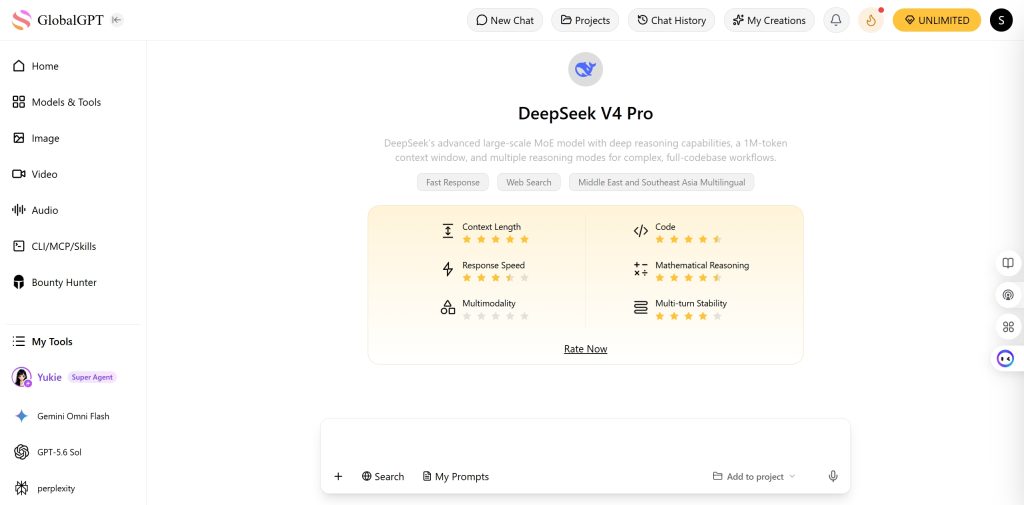
Both models are listed in GlobalGPT, which makes them easier to compare without maintaining separate integrations.
DeepSeek V4 is an open-weight mixture-of-experts family. The official model card lists V4 Pro at 1.6T total / 49B active parameters and V4 Flash at 284B total / 13B active parameters. Both support a 1M-token context window and use the MIT license.
DeepSeek V4 Pro vs Flash: Specifications
Specification
V4 Flash
V4 Pro
Version
Flash-0731
Pro-0813
Parameters
284B / 13B active
1.6T / 49B active
Context / output
1M / 384K
1M / 384K
Concurrency
2,500
500
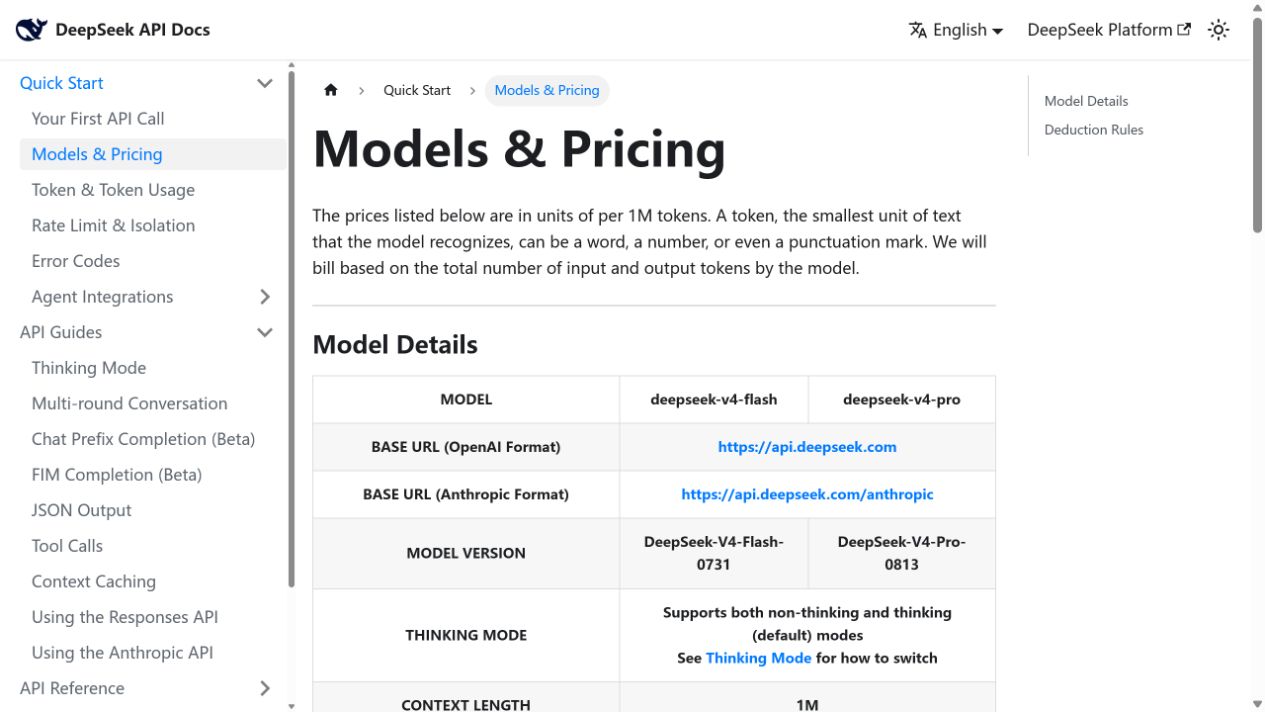
The official models and pricing page lists tool calls, JSON output, Responses API, and Anthropic-compatible API support for both.
DeepSeek’s official API documentation confirms the current V4 Flash and V4 Pro versions, limits, features, and pricing.
Price and Throughput
Flash costs $0.14 per million cache-miss input tokens and $0.28 per million output tokens. Pro costs $0.435 and $0.87 respectively. Flash is about 68% cheaper for ordinary uncached traffic.
Price warning: DeepSeek says it plans to raise overall API pricing. Recheck the official page before budgeting.
What the Benchmarks Actually Show
At Max effort, DeepSeek reports Pro ahead of Flash on LiveCodeBench (93.5 vs 91.6), Codeforces rating (3206 vs 3052), Terminal Bench 2.0 (67.9 vs 56.9), SWE Verified (80.6 vs 79.0), BrowseComp (83.4 vs 73.2), and MRCR 1M (83.5 vs 78.7).
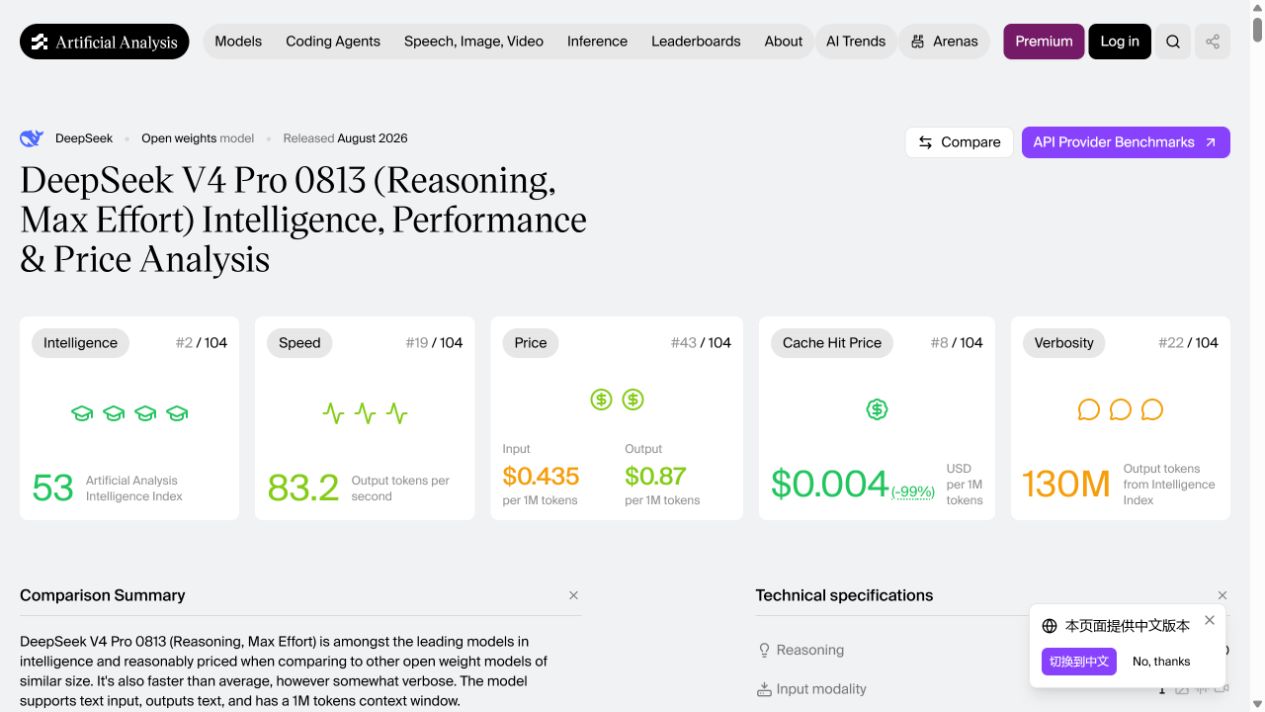
Artificial Analysis independently lists V4 Pro 0813 at 53 on Intelligence Index v4.1.1 and about 83.2 output tokens per second. No separate Flash-0731 detail page was available during our check, so this is not an independent head-to-head result.
Official DeepSeek · Max effort
Selected benchmark results
LiveCodeBench93.5 vs 91.6Pro vs Flash
Terminal Bench 2.067.9 vs 56.9Pro vs Flash
BrowseComp83.4 vs 73.2Pro vs Flash
MRCR 1M83.5 vs 78.7Pro vs Flash
Provider-reported results; settings and sample scope follow DeepSeek’s published table. They are not our hands-on scores.
Artificial Analysis53Intelligence Index v4.1.1 · Pro only
Measured output speed83.2 t/sArtificial Analysis · Pro only
Evidence limitNo Flash detail pageThis is not an independent head-to-head.
Artificial Analysis reports Pro-only intelligence and speed metrics; this is not an independent Flash comparison.
DeepSeek V4 Pro vs Flash: Hands-On Tests
Both models receive the same prompt, temperature, input, and API route. Local elapsed time includes network and platform overhead.
Hands-on test 01 · Coding
Multi-File Pricing Debug
Winner: V4 Pro
V4 Flash18.5s · 519 tokens
Found early rounding, but missed percent conversion and left the faulty rounding function unchanged.
V4 Pro84.9s · 6,857 tokens
Found all three defects and returned corrected files plus the requested regression tests.
Task setup: Diagnose a TypeScript pricing bug across multiple files, preserve the public API, correct discount and currency rounding behavior, and propose regression tests.
What this shows: Flash identified one important symptom, while Pro traced the interacting defects across all three files.
Editorial verdict: V4 Pro met the full acceptance criteria. Flash required material correction before the patch was safe to use.
Hands-on test 02 · Agents
Incident Triage and Structured Planning
Split decision
V4 Flash51.6s · 1,656 tokens
Produced a usable guarded plan, but wrapped the requested JSON in a Markdown code fence.
V4 Pro111.6s · 9,172 tokens
Returned valid JSON only, with a clearer evidence gate and stricter constraint following.
Task setup: Triage an incident from read-only evidence, separate facts from assumptions, identify approval-gated actions, produce a verification plan, and return strict structured output.
What this shows: Both models respected the read-only safety boundary. The practical difference was format discipline versus speed and output economy.
Editorial verdict: Choose V4 Pro when strict machine-readable output matters; choose V4 Flash when a human can review the plan and efficiency is the priority.
Hands-on test 03 · Everyday work
Meeting Memo to Strict JSON
Split decision
V4 Flash · 18.6s · 418 tokens
Valid JSON and faster, but mislabeled a confirmed budget state as uncertain.
V4 Pro · 220.9s · 17,244 tokens
Valid JSON with more accurate fact-versus-uncertainty labeling.
Task setup: Convert a dated project memo into a fixed JSON schema without adding facts.
What this shows: Flash was far more efficient; Pro labeled risk states more accurately.
Editorial verdict: Pro for automated risk decisions; Flash for human-reviewed extraction.
Hands-on test 04 · Research
Evidence-Bounded Decision Memo
Both passed
V4 Flash · 9.9s · 333 tokens
Stayed within the source pack and produced task-based routing.
V4 Pro · 60.4s · 4,189 tokens
Same recommendation with clearer evidence limits and safeguards.
Task setup: Write a 180–230 word memo using only a controlled source pack and exactly three evidence-gap bullets.
What this shows: Both resisted unsupported claims and reached the same recommendation.
Editorial verdict: Both passed; Pro was marginally more precise, Flash much more efficient.
Hands-on test 05 · Reasoning
Constraint Scheduling with Self-Checks
Winner: V4 Pro
V4 Flash · 6.3s · 173 tokens
Put E in PM despite the AM-only rule, then marked the schedule valid.
V4 Pro · 31.5s · 2,118 tokens
Returned a valid schedule and accurately checked every constraint.
Task setup: Assign five dependent tasks to five slots, obey six constraints, return JSON only, and self-check every rule.
What this shows: Flash’s own validation contradicted its schedule.
Editorial verdict: V4 Pro wins because both its schedule and checks were correct.
Which DeepSeek V4 Model Should You Use?
Coding
Start with Flash for isolated functions, tests, SQL, and well-scoped fixes.
Move to Pro for multi-file ambiguity.
Prefer Pro for terminal-heavy recovery.
Agents
Start with Flash for short, guarded tool chains.
Use Pro for longer dependent steps.
Keep permissions outside the model.
Everyday Tasks
Start with Flash for summaries, extraction, and email drafts.
Use Pro for conflicting documents.
Verify high-stakes claims externally.
DeepSeek V4 Pro vs Flash: How to Choose
Decision dashboard · 5 matched tests
Route by correction cost, not by model name
Flash advantage5 / 5 faster
Pro quality wins2 clear wins
Official price gap~3.11×
Workload
Start
Evidence
Escalate when
Batch extraction
Flash
Faster in 5/5; 2,500 concurrency
Risk labels drive automation
Repository debugging
Pro
Found all seeded defects
Flash only for triage
Short guarded agents
Flash
Usable with lower cost
Strict JSON is mandatory
Constraint automation
Pro
Valid schedule and checks
Human correction is cheap
Evidence synthesis
Either
Both passed
Choose by latency budget
Bottom line: Default to Flash for bounded volume. Pay for Pro when correction cost exceeds token cost.
Frequently Asked Questions
Is DeepSeek V4 Flash good for coding?
Yes. Official results place Flash close to Pro on some coding tests. Pro has a clearer advantage when coding expands into terminal use, browsing, or repository reasoning.
Do V4 Pro and Flash have the same context window?
Yes. DeepSeek lists a 1M-token context window and maximum 384K-token output for both.
Is V4 Pro always more accurate?
No model is always more accurate. Pro has more active capacity and leads most difficult official comparisons, but tightly specified routine tasks can show little practical difference.
How much cheaper is V4 Flash?
At the prices checked August 13, 2026, Flash costs about 68% less for cache-miss input and output tokens.
Can both models use tools?
Yes. The official API table lists tool calls, JSON output, Responses API, and Anthropic-compatible API support for both.
Which model was faster in the hands-on tests?
V4 Flash was faster in all five local API runs. These times include network and platform overhead, so they are not provider-side latency.
Why does V4 Pro use so many more completion tokens?
The tested Pro route reported substantial internal reasoning tokens inside its completion budget. This can help on difficult tasks, but increases elapsed time and token use.
Should I use V4 Pro for every agent workflow?
No. Start with Flash for short, bounded, reviewable tool chains. Escalate to Pro when errors or interacting constraints carry a high correction cost.
Are these official DeepSeek benchmark results?
No. The five cards report controlled API tests for this article. Official DeepSeek benchmarks and third-party Artificial Analysis data are labeled separately.
Compare the same prompt in GlobalGPT before committing to one route.
Understand Cart GPT, compare supplied product facts against your budget, and turn a shortlist into useful copy. Try a practical AI workflow with GlobalGPT.