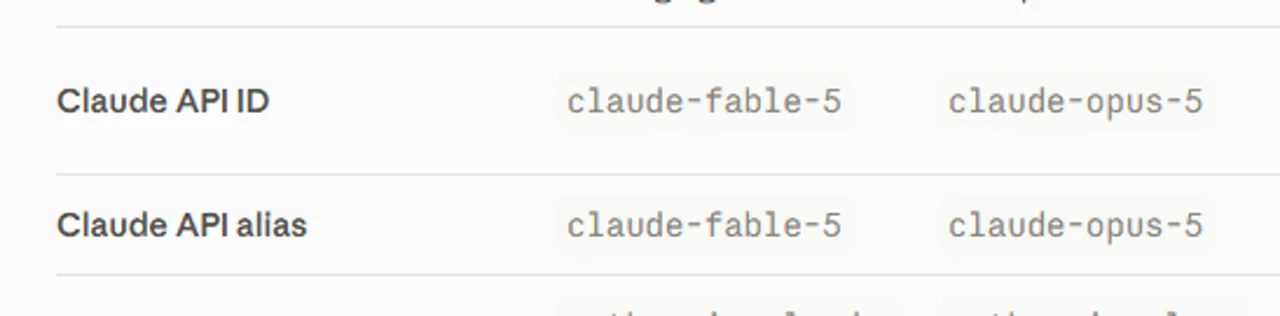
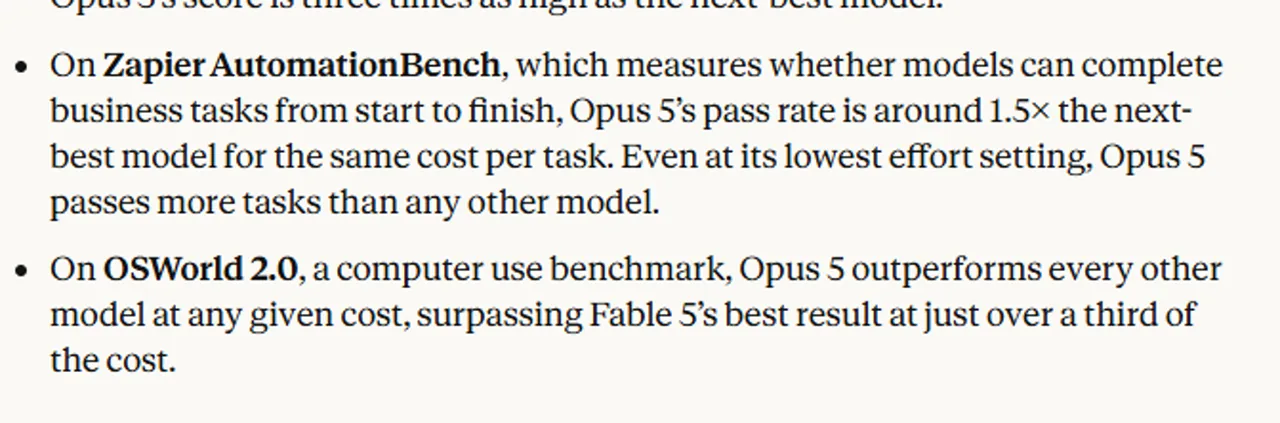
Claude Opus 5 เป็นรุ่นพรีเมียมสำหรับใช้งานประจำวันของ Anthropic ที่ออกแบบมาเพื่อการเข้ารหัสแบบเอเจนต์ที่ซับซ้อนและงานระดับองค์กร. Anthropic ได้ประกาศเรื่องนี้เมื่อวันที่ 24 กรกฎาคม 2569, โดยอธิบายว่าโมเดลนี้มีความรอบคอบ มีความเป็นเชิงรุก และมีประสิทธิภาพสูงกว่าโมเดลอื่น ๆ มันได้แทนที่โมเดล Claude Opus 4.8 กลายเป็นโมเดลเริ่มต้นบน Claude Max และกลายเป็นโมเดลที่มีประสิทธิภาพสูงสุดที่มีอยู่บน Claude Pro.
Anthropic ได้ประกาศเปิดตัว Claude Opus 5 เมื่อวันที่ 24 กรกฎาคม 2569 และระบุว่าผลิตภัณฑ์ดังกล่าวมีจำหน่ายตั้งแต่วันนั้น.
การเข้าถึงขึ้นอยู่กับช่องทาง ผู้ใช้ทั่วไปสามารถใช้งาน Opus 5 ได้ผ่านแพ็กเกจ Claude ที่ตรงตามเงื่อนไข ส่วนผู้พัฒนาสามารถเรียกใช้งานผ่าน API ของ Claude และแพลตฟอร์มคลาวด์ที่รองรับ GlobalGPT ยังมีหน้าผลิตภัณฑ์เฉพาะด้วย ผู้อ่านที่ต้องการเปรียบเทียบระดับการสมัครสมาชิกของ Anthropic สามารถใช้ การเปรียบเทียบแพ็กเกจ Free, Pro และ Max ของ Claude ก่อนที่จะเลือกวิธีการเรียกเก็บเงิน.
Claude Opus 5 ราคา, API และคุณสมบัติหลัก
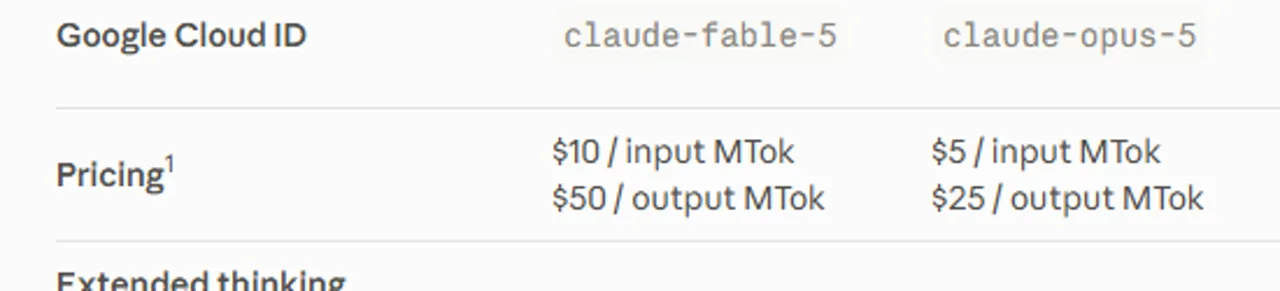
เจ้าหน้าที่ ราคา API Claude คือ $5 ต่อหนึ่งล้านโทเคนเข้า และ $25 ต่อหนึ่งล้านโทเคนออกสู่ตลาด. นี่คืออัตราค่าบริการ API พื้นฐาน ไม่ใช่ราคาของแพ็กเกจสมัครสมาชิก Claude สำหรับผู้ใช้ทั่วไป หรือแพ็กเกจแพลตฟอร์มของฝ่ายที่สาม การเก็บแคชแบบทันทีและการประมวลผลแบบกลุ่มมีอัตราค่าบริการแยกต่างหาก ดังนั้นควรเปรียบเทียบรูปแบบการขอข้อมูลทั้งหมด แทนที่จะนำราคาค่าบริการหลักมาคูณเพียงอย่างเดียว.
สนาม
Claude Opus 5
หมายความว่า
Claude API ID
claude-opus-5
ใช้ค่าของรุ่นนี้อย่างถูกต้องในคำขอ API Claude อย่างเป็นทางการ.
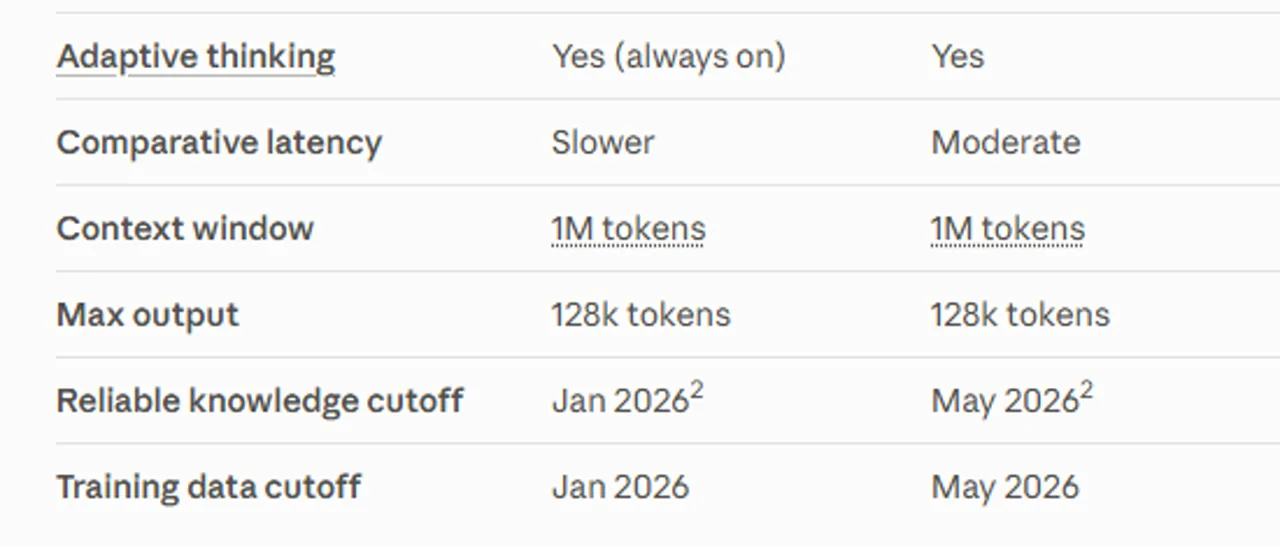
แพลตฟอร์ม Claude ระบุว่า claude-opus-5 เป็น ID API และชื่อเรียกแทนของ Opus 5 ในปัจจุบัน.แพลตฟอร์ม Claude ระบุค่า Opus 5 อยู่ที่ $5/$25 ต่อหนึ่งล้านโทเคนอินพุต/เอาต์พุต โดยมีหน้าต่างบริบทขนาด 1 ล้านโทเคน ปริมาณเอาต์พุตสูงสุด 128k โทเคน และกำหนดเส้นตายในเดือนพฤษภาคม 2026.แพลตฟอร์ม Claude ระบุว่ามีหน้าต่างบริบทขนาด 1M, ปริมาณผลลัพธ์สูงสุด 128k และกำหนดวันตัดรอบในเดือนพฤษภาคม 2026.
เพื่อให้ผู้บริโภคสามารถเข้าถึงได้, Anthropic ระบุ Claude Pro ที่ $20 สำหรับการชำระรายเดือน หรือ $17 ต่อเดือน เมื่อ $200 ถูกเรียกเก็บเงินรายปี; Claude Max เริ่มต้นที่ $100 ต่อเดือน Anthropic ระบุว่า Opus 5 เป็นรุ่นที่ทรงพลังที่สุดบน Pro และเป็นค่าเริ่มต้นบน Max แต่โควตาของแพ็กเกจและคุณสมบัติของผลิตภัณฑ์นั้นแยกต่างหากจากการใช้งาน API ที่ถูกวัดตามปริมาณ.
หากท่านต้องการรายละเอียดค่าใช้จ่ายที่ละเอียดยิ่งขึ้น, แผน AI Claude และคู่มือราคา API แยกการสมัครสมาชิกของผู้ใช้ทั่วไป การคิดค่าบริการ API และขีดจำกัดการใช้งาน การแยกแยะนี้มีความสำคัญ: “รวมอยู่ในแพ็กเกจ” ไม่ได้หมายความว่าการเรียก API ไม่จำกัด และอัตราค่าบริการ API ก็ไม่ได้บอกคุณว่าคุณจะได้รับสิทธิ์การเข้าถึงแชทของผู้ใช้ทั่วไปเท่าใด.
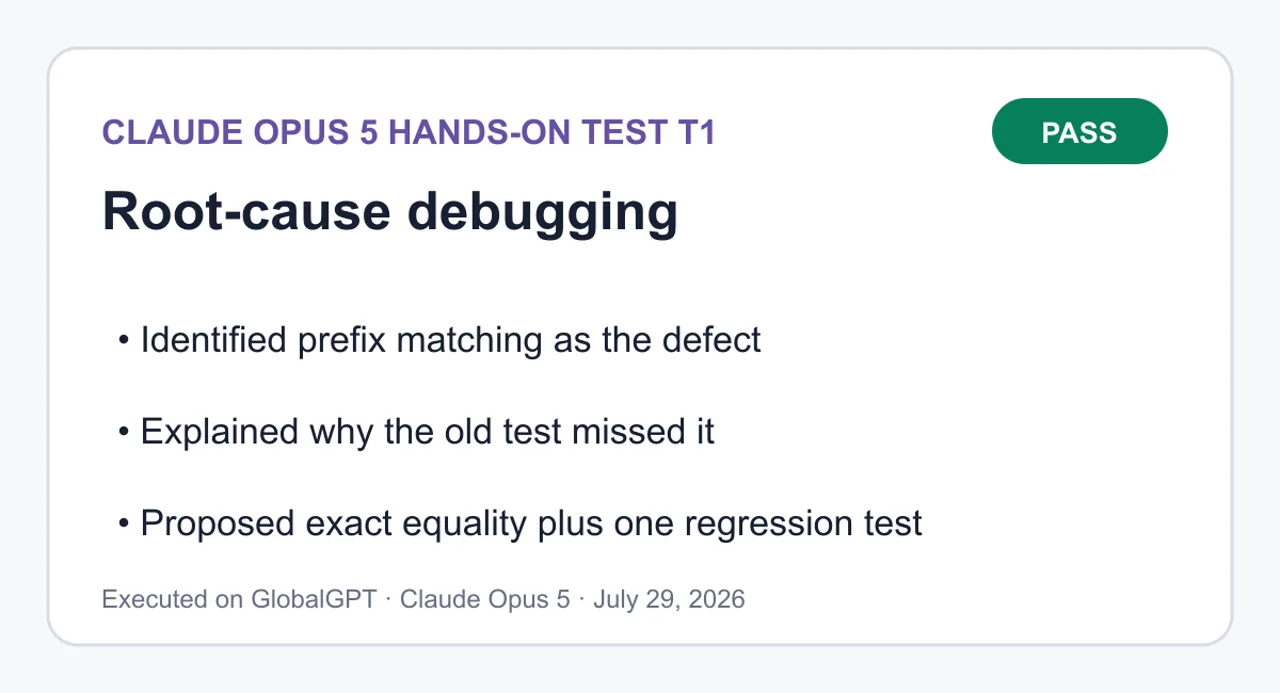
ROOT CAUSE
findAccount matches by prefix, not by equality:

```js
normalizedQuery.startsWith(account.id.toLowerCase())
```

Array.prototype.find returns the first element satisfying the predicate. For ' ACCT-10 ' the normalized query is 'acct-10', and the first account's ID 'acct-1' is a prefix of it, so startsWith is true and acct-1 short-circuits the search before acct-10 is ever tested.
The trim().toLowerCase() normalization is correct — whitespace and casing are not the problem. summarizeAccount is a pass-through and is not at fault.
The existing test cannot catch this: 'acct-1' is a prefix of itself and is the first element, so prefix matching and exact matching are indistinguishable for that input.
PATCH

```diff
--- a/src/find-account.cjs
+++ b/src/find-account.cjs
@@ -1,8 +1,8 @@
 function findAccount(accounts, query) {
   const normalizedQuery = query.trim().toLowerCase();
-  return accounts.find((account) =>
-    normalizedQuery.startsWith(account.id.toLowerCase()),
-  );
+  return accounts.find(
+    (account) => account.id.toLowerCase() === normalizedQuery,
+  );
 }

 module.exports = { findAccount };
--- a/test/account-summary.test.cjs
+++ b/test/account-summary.test.cjs
@@ -14,3 +14,11 @@
 test('summarizes an exact account ID', () => {
     seats: 5,
   });
 });
+
+test('matches the full ID rather than a prefix, with padding and mixed case', () => {
+  assert.deepEqual(summarizeAccount(accounts, ' ACCT-10 '), {
+    id: 'acct-10',
+    name: 'Nimbus',
+    seats: 24,
+  });
+});
```

Before the fix the new test fails with the acct-1 / Atlas / 5 object; after the fix it passes.
VERIFICATION

```text
node --test test/account-summary.test.cjs
```

LIMITATIONS
• Scope: one operator changed. No renames, no new dependencies, and findAccount / summarizeAccount signatures and return shapes are unchanged.
• Pre-existing behavior left alone (out of scope for this bug):
• A non-string requestedId (null, a number) still throws on .trim().
• Account IDs themselves are not trimmed, so a stored ' acct-10' still will not match — only the query is normalized.
• Casing uses plain toLowerCase(); no Unicode normalization or locale-aware folding.
• Duplicate IDs still resolve to the first match, and lookup remains O(n).
• Test coverage: the single regression test targets exactly the reported reproduction. The not-found (null) path and malformed input remain untested.
```html
<!DOCTYPE html>
<html lang="en">
<head>
<meta charset="utf-8">
<meta name="viewport" content="width=device-width, initial-scale=1">
<title>Compare plans — Atlas, Beacon, Cove</title>
<style>
:root
{
--bg: #f6f7f9
;
--surface: #ffffff
;
--ink: #16191f
;
--ink-soft: #4a515c
;
--line: #d3d8df
;
--line-strong: #b6bdc7
;
--accent: #10457e
;
--accent-soft: #e8f0f9
;
--focus: #0b2f56
;
--radius: 10px
;
}
* {
box-sizing
: border-box; }
html { -webkit-text-size-adjust: 100%
; }
body
{
margin: 0
;
padding: 0
;
background: var
(--bg);
color: var
(--ink);
font-family: system-ui, -apple-system, "Segoe UI"
, Roboto, Helvetica, Arial, sans-serif;
font-size: 16px
;
line-height: 1.5
;
overflow-x
: hidden;
}
.wrap
{
width: 100%
;
max-width: 1120px
;
margin: 0
auto;
padding: 32px 24px 64px
;
}
/* ---------- Header ---------- */
.page-header { margin-bottom: 24px
; }
.page-header h1
{
margin: 0 0 8px
;
font-size: 1.75rem
;
line-height: 1.25
;
letter-spacing: -0.01em
;
}
.page-header p
{
margin: 0
;
max-width: 60ch
;
color: var
(--ink-soft);
}
/* ---------- Recommendation ---------- */
.recommendation
{
display
: flex;
flex-wrap
: wrap;
gap: 4px 10px
;
align-items
: baseline;
margin: 0 0 28px
;
padding: 14px 16px
;
background: var
(--accent-soft);
border: 1px solid #c2d5e8
;
border-left: 4px solid var
(--accent);
border-radius: var
(--radius);
}
.recommendation strong { color: var
(--accent); }
.recommendation span { color: #23405e
; }
/* ---------- Tabs ---------- */
.tabs
{
display
: flex;
flex-wrap
: wrap;
gap: 8px
;
margin: 0 0 20px
;
padding: 0
;
border-bottom: 1px solid var
(--line);
}
[role="tab"]
{
appearance
: none;
min-height: 44px
;
padding: 10px 18px
;
font
: inherit;
font-weight: 600
;
color: var
(--ink-soft);
background
: transparent;
border: 1px
solid transparent;
border-bottom: 3px
solid transparent;
border-radius: 8px 8px 0 0
;
cursor
: pointer;
}
[role="tab"]:hover { color: var(--ink); background: #eceff3
; }
[role="tab"][aria-selected="true"]
{
color: var
(--accent);
background: var
(--surface);
border-color: var(--line) var(--line) var
(--accent);
border-bottom-width: 3px
;
}
:focus-visible
{
outline: 3px solid var
(--focus);
outline-offset: 2px
;
}
[role="tabpanel"] { outline
: none; }
[role="tabpanel"]:focus-visible
{
outline: 3px solid var
(--focus);
outline-offset: 4px
;
border-radius: var
(--radius);
}
[hidden] { display: none !important
; }
.panel-intro
{
margin: 0 0 20px
;
max-width: 62ch
;
color: var
(--ink-soft);
}
/* ---------- Cards ---------- */
.card-grid
{
display
: grid;
grid-template-columns: repeat(3, minmax(0, 1
fr));
gap: 20px
;
margin: 0
;
padding: 0
;
list-style
: none;
align-items
: start;
}
.card
{
display
: flex;
flex-direction
: column;
height: 100%
;
padding: 20px
;
background: var
(--surface);
border: 1px solid var
(--line);
border-radius: var
(--radius);
}
.card.is-featured
{
border-color: var
(--accent);
border-width: 2px
;
padding: 19px
;
}
.card-head
{
display
: flex;
flex-wrap
: wrap;
gap: 8px
;
align-items
: center;
justify-content
: space-between;
margin-bottom: 4px
;
}
.card h3
{
margin: 0
;
font-size: 1.2rem
;
}
.badge
{
padding: 3px 10px
;
font-size: 0.75rem
;
font-weight: 700
;
letter-spacing: 0.02em
;
text-transform
: uppercase;
color: #ffffff
;
background: var
(--accent);
border-radius: 999px
;
white-space
: nowrap;
}
.price
{
margin: 8px 0 2px
;
font-size: 1.6rem
;
font-weight: 700
;
letter-spacing: -0.02em
;
}
.best-for
{
margin: 0 0 14px
;
font-size: 0.9375rem
;
color: var
(--ink-soft);
}
.spec-list
{
margin: 0
;
padding: 14px 0 0
;
border-top: 1px solid var
(--line);
font-size: 0.9375rem
;
}
.spec-list div
{
display
: flex;
gap: 12px
;
justify-content
: space-between;
padding: 5px 0
;
}
.spec-list dt { color: var
(--ink-soft); }
.spec-list dd
{
margin: 0
;
font-weight: 600
;
text-align
: right;
}
/* ---------- Table ---------- */
.table-section { margin-top: 36px
; }
.table-section h2
{
margin: 0 0 12px
;
font-size: 1.125rem
;
}
.table-scroll
{
max-width: 100%
;
overflow-x
: auto;
background: var
(--surface);
border: 1px solid var
(--line);
border-radius: var
(--radius);
}
table
{
width: 100%
;
border-collapse
: collapse;
font-size: 0.9375rem
;
}
caption
{
padding: 12px 14px
;
text-align
: left;
color: var
(--ink-soft);
font-size: 0.875rem
;
}
th, td
{
padding: 10px 14px
;
text-align
: left;
border-top: 1px solid var
(--line);
white-space
: nowrap;
}
thead th
{
background: #eef1f5
;
border-top
: none;
font-weight: 700
;
}
tbody th { font-weight: 600; color: var
(--ink-soft); }
th[scope="col"].is-featured { color: var
(--accent); }
/* ---------- Mobile ---------- */
@media (max-width: 720px
) {
.wrap { padding: 20px 16px 48px
; }
.page-header h1 { font-size: 1.4rem
; }
.tabs
{
gap: 4px
;
overflow-x
: auto;
-webkit-
overflow
-scrolling: touch;
flex-wrap
: nowrap;
}
[role="tab"]
{
flex: 1 0
auto;
padding: 10px 12px
;
font-size: 0.9375rem
;
}
.card-grid { grid-template-columns: minmax(0, 1
fr); }
th, td { padding: 10px 12px
; }
}
@media (prefers-reduced-motion
: reduce) {
* {
transition: none !important; animation: none !important
; }
}
</style>
</head>
<body>
<main class="wrap">
<header class="page-header">
<h1>Compare plans</h1>
<p>Three plans across projects, storage, and support. Pick a tab to focus on the details that matter to you.</p>
</header>
<p class="recommendation">
<strong>Recommended: Beacon</strong>
<span>Best overall for growing teams — $49/mo, unlimited projects, 100 GB, priority support.</span>
</p>
<div class="tabs" role="tablist" aria-label="Plan comparison views">
<button type="button" role="tab" id="tab-overview" aria-controls="panel-overview" aria-selected="true" tabindex="0">Overview</button>
<button type="button" role="tab" id="tab-pricing" aria-controls="panel-pricing" aria-selected="false" tabindex="-1">Pricing</button>
<button type="button" role="tab" id="tab-limits" aria-controls="panel-limits" aria-selected="false" tabindex="-1">Limits</button>
</div>
<!-- Overview -->
<section role="tabpanel" id="panel-overview" aria-labelledby="tab-overview" tabindex="0">
<p class="panel-intro">Every plan side by side, with the full set of published facts for each one.</p>
<ul class="card-grid">
<li class="card">
<div class="card-head"><h3>Atlas</h3></div>
<p class="price">$19/mo</p>
<p class="best-for">Best for solo work</p>
<dl class="spec-list">
<div><dt>Projects</dt><dd>20 projects</dd></div>
<div><dt>Storage</dt><dd>10 GB</dd></div>
<div><dt>Support</dt><dd>Email support</dd></div>
</dl>
</li>
<li class="card is-featured">
<div class="card-head">
<h3>Beacon</h3>
<span class="badge">Best overall</span>
</div>
<p class="price">$49/mo</p>
<p class="best-for">Best overall for growing teams</p>
<dl class="spec-list">
<div><dt>Projects</dt><dd>Unlimited projects</dd></div>
<div><dt>Storage</dt><dd>100 GB</dd></div>
<div><dt>Support</dt><dd>Priority support</dd></div>
</dl>
</li>
<li class="card">
<div class="card-head"><h3>Cove</h3></div>
<p class="price">$99/mo</p>
<p class="best-for">Best for regulated operations</p>
<dl class="spec-list">
<div><dt>Projects</dt><dd>Unlimited projects</dd></div>
<div><dt>Storage</dt><dd>1 TB</dd></div>
<div><dt>Support</dt><dd>Dedicated support</dd></div>
</dl>
</li>
</ul>
<section class="table-section">
<h2>All plans at a glance</h2>
<div class="table-scroll" tabindex="0" role="region" aria-label="Full plan comparison table, scrollable">
<table>
<caption>Published facts for Atlas, Beacon, and Cove.</caption>
<thead>
<tr>
<th scope="col">Plan</th>
<th scope="col">Price</th>
<th scope="col">Projects</th>
<th scope="col">Storage</th>
<th scope="col">Support</th>
<th scope="col">Best for</th>
</tr>
</thead>
<tbody>
<tr>
<th scope="row">Atlas</th>
<td>$19/mo</td><td>20 projects</td><td>10 GB</td><td>Email support</td><td>Solo work</td>
</tr>
<tr>
<th scope="row">Beacon</th>
<td>$49/mo</td><td>Unlimited projects</td><td>100 GB</td><td>Priority support</td><td>Growing teams</td>
</tr>
<tr>
<th scope="row">Cove</th>
<td>$99/mo</td><td>Unlimited projects</td><td>1 TB</td><td>Dedicated support</td><td>Regulated operations</td>
</tr>
</tbody>
</table>
</div>
</section>
</section>
<!-- Pricing -->
<section role="tabpanel" id="panel-pricing" aria-labelledby="tab-pricing" tabindex="0" hidden>
<p class="panel-intro">Monthly price and the audience each plan is built for.</p>
<ul class="card-grid">
<li class="card">
<div class="card-head"><h3>Atlas</h3></div>
<p class="price">$19/mo</p>
<p class="best-for">Best for solo work</p>
<dl class="spec-list">
<div><dt>Support</dt><dd>Email support</dd></div>
</dl>
</li>
<li class="card is-featured">
<div class="card-head">
<h3>Beacon</h3>
<span class="badge">Best overall</span>
</div>
<p class="price">$49/mo</p>
<p class="best-for">Best overall for growing teams</p>
<dl class="spec-list">
<div><dt>Support</dt><dd>Priority support</dd></div>
</dl>
</li>
<li class="card">
<div class="card-head"><h3>Cove</h3></div>
<p class="price">$99/mo</p>
<p class="best-for">Best for regulated operations</p>
<dl class="spec-list">
<div><dt>Support</dt><dd>Dedicated support</dd></div>
</dl>
</li>
</ul>
<section class="table-section">
<h2>Price and support</h2>
<div class="table-scroll" tabindex="0" role="region" aria-label="Pricing comparison table, scrollable">
<table>
<caption>Monthly price, support tier, and intended fit.</caption>
<thead>
<tr>
<th scope="col">Plan</th>
<th scope="col">Price</th>
<th scope="col">Support</th>
<th scope="col">Best for</th>
</tr>
</thead>
<tbody>
<tr><th scope="row">Atlas</th><td>$19/mo</td><td>Email support</td><td>Solo work</td></tr>
<tr><th scope="row">Beacon</th><td>$49/mo</td><td>Priority support</td><td>Growing teams</td></tr>
<tr><th scope="row">Cove</th><td>$99/mo</td><td>Dedicated support</td><td>Regulated operations</td></tr>
</tbody>
</table>
</div>
</section>
</section>
<!-- Limits -->
<section role="tabpanel" id="panel-limits" aria-labelledby="tab-limits" tabindex="0" hidden>
<p class="panel-intro">Project counts and storage allowances for each plan.</p>
<ul class="card-grid">
<li class="card">
<div class="card-head"><h3>Atlas</h3></div>
<p class="price">$19/mo</p>
<p class="best-for">Best for solo work</p>
<dl class="spec-list">
<div><dt>Projects</dt><dd>20 projects</dd></div>
<div><dt>Storage</dt><dd>10 GB</dd></div>
</dl>
</li>
<li class="card is-featured">
<div class="card-head">
<h3>Beacon</h3>
<span class="badge">Best overall</span>
</div>
<p class="price">$49/mo</p>
<p class="best-for">Best overall for growing teams</p>
<dl class="spec-list">
<div><dt>Projects</dt><dd>Unlimited projects</dd></div>
<div><dt>Storage</dt><dd>100 GB</dd></div>
</dl>
</li>
<li class="card">
<div class="card-head"><h3>Cove</h3></div>
<p class="price">$99/mo</p>
<p class="best-for">Best for regulated operations</p>
<dl class="spec-list">
<div><dt>Projects</dt><dd>Unlimited projects</dd></div>
<div><dt>Storage</dt><dd>1 TB</dd></div>
</dl>
</li>
</ul>
<section class="table-section">
<h2>Projects and storage</h2>
<div class="table-scroll" tabindex="0" role="region" aria-label="Limits comparison table, scrollable">
<table>
<caption>Project allowance and storage per plan.</caption>
<thead>
<tr>
<th scope="col">Plan</th>
<th scope="col">Projects</th>
<th scope="col">Storage</th>
</tr>
</thead>
<tbody>
<tr><th scope="row">Atlas</th><td>20 projects</td><td>10 GB</td></tr>
<tr><th scope="row">Beacon</th><td>Unlimited projects</td><td>100 GB</td></tr>
<tr><th scope="row">Cove</th><td>Unlimited projects</td><td>1 TB</td></tr>
</tbody>
</table>
</div>
</section>
</section>
</main>
<script>
(
function (
) {
'use strict'
;
var tablist = document.querySelector('[role="tablist"]'
);
if (!tablist) return
;
var tabs = Array.prototype.slice.call(tablist.querySelectorAll('[role="tab"]'
));
function panelFor(tab
) {
return document.getElementById(tab.getAttribute('aria-controls'
));
}
function activate(index, moveFocus
) {
if (index < 0 || index >= tabs.length) return
;
tabs.
forEach(function (tab, i
) {
var
selected = i === index;
var panel = panelFor
(tab);
tab.
setAttribute('aria-selected', selected ? 'true' : 'false'
);
tab.
setAttribute('tabindex', selected ? '0' : '-1'
);
if
(panel) {
if
(selected) {
panel.
removeAttribute('hidden'
);
}
else
{
panel.
setAttribute('hidden', ''
);
}
}
});
if (moveFocus !== false) tabs[index].focus
();
}
function currentIndex(
) {
var i = tabs.findIndex(function (tab
) {
return tab.getAttribute('aria-selected') === 'true'
;
});
return i === -1 ? 0
: i;
}
tabs.
forEach(function (tab, i
) {
tab.
addEventListener('click', function (
) {
activate
(i);
});
});
tablist.
addEventListener('keydown', function (event
) {
var last = tabs.length - 1
;
var i = currentIndex
();
var next = null
;
switch (event.key
) {
case 'ArrowRight'
:
next = i === last ?
0 : i + 1
;
break
;
case 'ArrowLeft'
:
next = i ===
0 ? last : i - 1
;
break
;
case 'Home'
:
next =
0
;
break
;
case 'End'
:
next = last;
break
;
default
:
return
;
}
event.
preventDefault
();
activate
(next);
});
// Normalize initial state from markup.
activate(currentIndex(), false
);
}());
</script>
</body>
</html>
```
SELF-CHECK
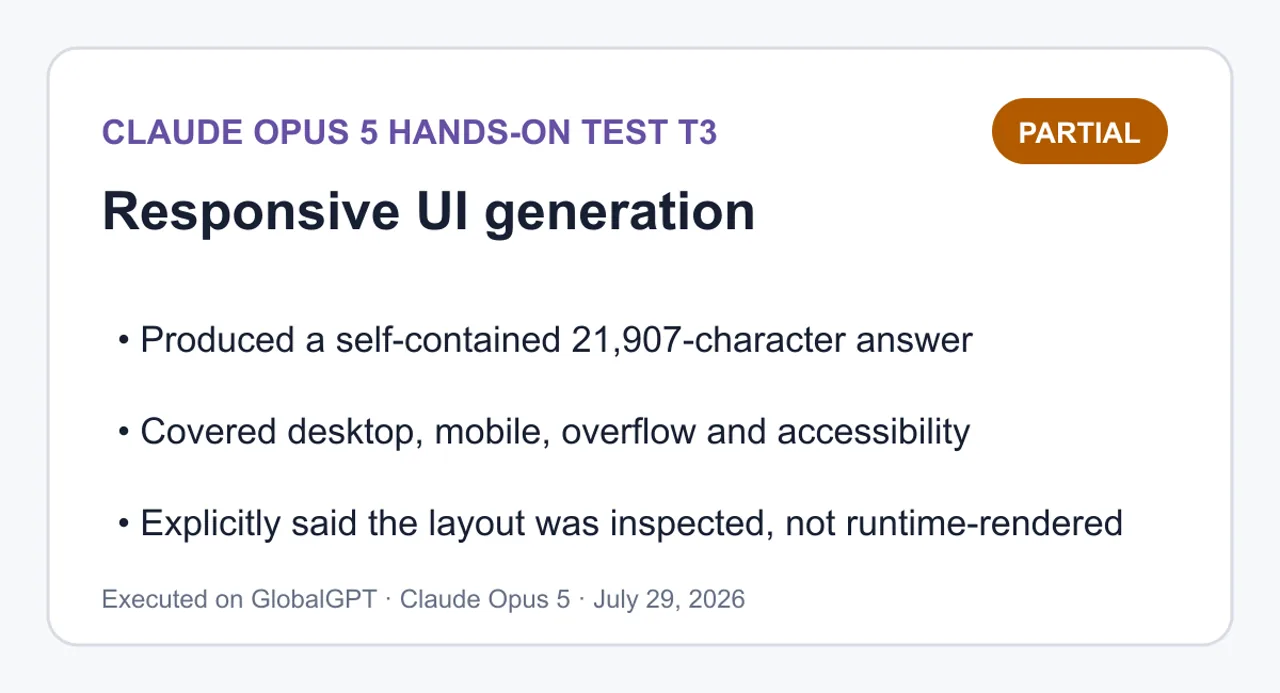
All statements below come from code inspection only. I did not open a browser, render a viewport, run a screen reader, or execute the keyboard handlers, so nothing here is runtime-verified. Where a claim depends on layout engine behavior, I say so.
Semantic tabs — inspected, consistent
One div[role="tablist"] with aria-label="Plan comparison views" holds three button[type="button"][role="tab"]. Each tab has a unique id and an aria-controls pointing at a section[role="tabpanel"]; each panel carries aria-labelledby pointing back at its tab. I traced all three pairs by hand: tab-overview/panel-overview, tab-pricing/panel-pricing, tab-limits/panel-limits. No duplicate IDs, no dangling references. Panels use tabindex="0" so the panel body is reachable after the tab.
Keyboard behavior — inspected, not executed
A single keydown listener on the tablist handles ArrowRight, ArrowLeft, Home, and End, calls event.preventDefault() for those four keys only, and returns early otherwise. Arrow keys wrap at both ends. Because activate() both updates aria-selected/tabindex/hidden and moves focus, arrow and Home/End keys move andactivate in one step, which is the automatic-activation pattern the requirement asks for. Tab/Shift+Tab traversal relies on roving tabindex: exactly one tab is tabindex="0", the rest -1, maintained by activate(). Focus visibility comes from a global :focus-visible rule with a 3px outline and 2px offset; I did not override or remove any default outline. I have not confirmed key handling in a real browser.
Selected-state reflection — inspected
activate() sets all three signals in the same loop, so aria-selected="true", tabindex="0", and the absence of hidden cannot drift apart. Inactive panels get the hidden attribute, and [hidden] { display: none !important; } guards against the display rules that would otherwise defeat it — that guard matters because the panels contain display: grid children. activate(currentIndex(), false) runs on load to normalize state from markup without stealing focus. If JavaScript does not run, the markup ships with Overview selected and the other two panels hidden, so the page degrades to one readable panel.
1440px layout — inspected, not rendered
.wrap is max-width: 1120px with margin: 0 auto, so at 1440px the content centers with roughly 160px gutters rather than stretching. Cards use grid-template-columns: repeat(3, minmax(0, 1fr)) with a 20px gap, giving three equal columns; align-items: start keeps cards from stretching to a shared height while .card { height: 100% } is neutralized by that. The minmax(0, 1fr) is deliberate — 1fralone can refuse to shrink below content width and push a grid wide. I did not measure actual pixel output.
390px layout — inspected, not rendered
The max-width: 720px block switches the card grid to minmax(0, 1fr), a single column, so cards stack. Padding drops to 16px per side, leaving about 358px of content width. Tap targets: every [role="tab"] has min-height: 44px, and horizontal padding shrinks to 12px rather than the height shrinking, so the 44px floor holds at narrow widths. The tablist becomes flex-wrap: nowrap with overflow-x: auto and flex: 1 0 auto children, so three tabs either fit or scroll within the tablist itself instead of being clipped or wrapped mid-control. <meta name="viewport" content="width=device-width, initial-scale=1"> is present. Not verified at an actual 390px viewport.
Horizontal overflow — inspected, one intentional contained scroll
body { overflow-x: hidden } is the backstop, but I also tried not to rely on it. * { box-sizing: border-box } keeps padding inside declared widths. The comparison tables use white-space: nowrap on cells, so the six-column Overview table will exceed 358px on mobile; that is contained by .table-scroll { max-width: 100%; overflow-x: auto }, which scrolls the table region rather than the page. That wrapper has tabindex="0" and role="region" with a label so keyboard users can reach and scroll it. Flex and grid children that could otherwise refuse to shrink are handled with minmax(0, 1fr) on the grid and flex-wrap: wrap on .card-head and .recommendation. The one remaining risk I cannot rule out without rendering is a long unbroken string in a table cell, but all fixture values are short.
External dependencies — inspected, none
No <link>, <script src>, <img>, @import, url(), fetch, XMLHttpRequest, web font, or CDN reference. Fonts are a system-ui stack. The badge and featured border are CSS only, no icon assets. Everything is inline in one file, so it runs from file:// with no build step.
Contrast and motion — inspected
Body text #16191f on #f6f7f9 and secondary #4a515c on white are both well clear of 4.5:1; the badge is white on #10457e, and the active tab is #10457e on white. I computed these by ratio estimate from the hex values, not with a contrast tool. There are no transitions, animations, or transforms anywhere; the prefers-reduced-motion block is a no-op safety net rather than a fix for existing motion.
Fixture fidelity — inspected
Each of the three plans appears in all three panels plus each panel's table. I cross-checked every price, project count, storage figure, and support tier against the JSON: Atlas
19
/
20
𝑝
𝑟
𝑜
𝑗
𝑒
𝑐
𝑡
𝑠
/
10
𝐺
𝐵
/
𝐸
𝑚
𝑎
𝑖
𝑙
,
𝐵
𝑒
𝑎
𝑐
𝑜
𝑛
49/Unlimited/100 GB/Priority, Cove $99/Unlimited/1 TB/Dedicated. Beacon carries the Best overall badge and a 2px accent border; Atlas and Cove keep full-opacity text, normal borders, and identical type treatment, so they read as available rather than disabled. The best for values are rendered as short labels ("Best for solo work") — wording added around the fixture value, no new product claims.
Known gaps
No runtime verification of any kind. Panel content is duplicated across the three panels as static markup rather than rendered from the JSON, so the fixture is the source of truth by transcription, not by binding — a future data change means editing several places.
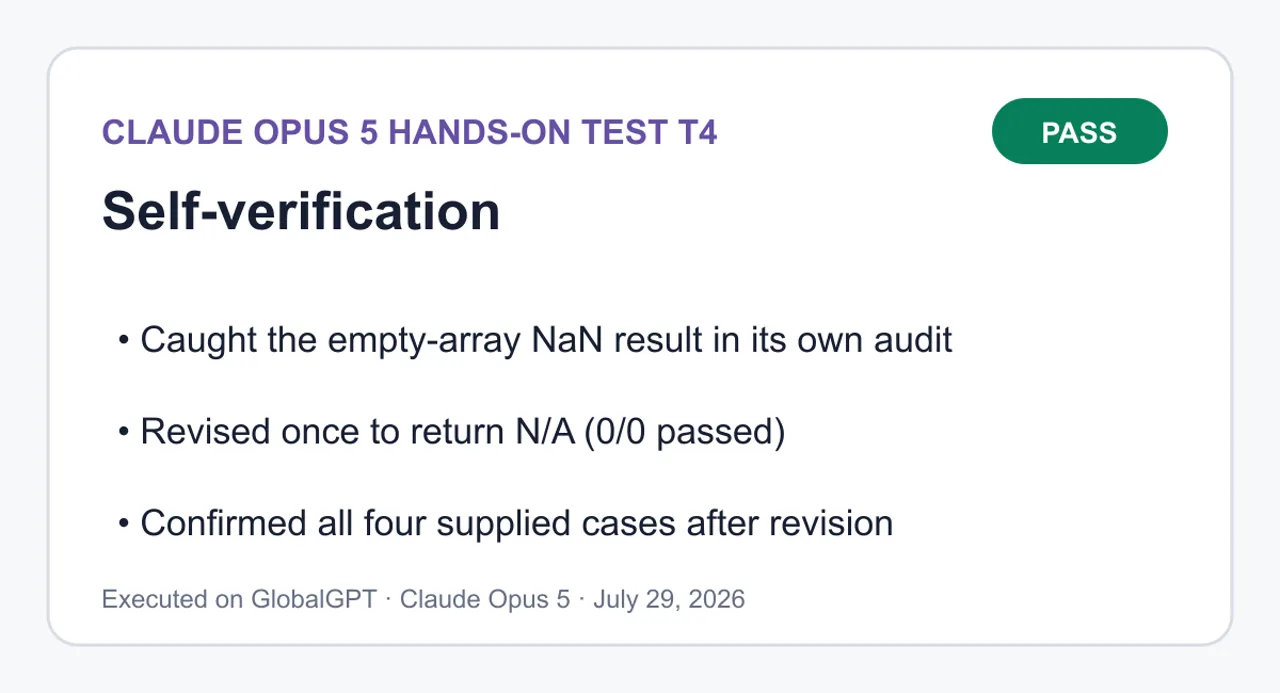
T4: การตรวจสอบด้วยตนเอง
ผ่าน — พบข้อผิดพลาด NaN ในอาร์เรย์ว่างระหว่างการตรวจสอบภายใน ได้แก้ไขหนึ่งครั้ง และยืนยันว่าทุกกรณีที่ให้มาถูกต้อง.
พบผลลัพธ์ NaN จากอาร์เรย์ว่างในกระบวนการตรวจสอบของตัวเอง; ได้แก้ไขครั้งหนึ่งเพื่อคืนค่า N/A (ผ่านการทดสอบ 0/0); ยืนยันว่าทั้งสี่กรณีที่ให้มาผ่านการตรวจสอบหลังการแก้ไขแล้ว.
เลือก Opus 5 แทน Opus 4.8 เมื่อคุณสามารถทำการทดสอบการถดถอย (regression testing) สำหรับการย้ายระบบ และต้องการใช้โมเดลที่ใหม่กว่าโดยไม่เพิ่มอัตรา API พื้นฐาน เลือก Fable 5 เมื่อผลการประเมินของคุณเองแสดงให้เห็นว่าความสามารถเพิ่มเติมของมันส่งผลต่อผลลัพธ์มากพอที่จะคุ้มค่ากับค่าใช้จ่ายเพิ่มเติม เพื่อดูรายละเอียดระดับกลุ่มผลิตภัณฑ์ปัจจุบันที่รวมถึง Sonnet 5 ด้วย ให้ใช้ การเปรียบเทียบระหว่าง Claude Opus 5 กับ Fable 5 และ Sonnet 5.
ปฏิกิริยาจากผู้พัฒนาและภาคอุตสาหกรรม
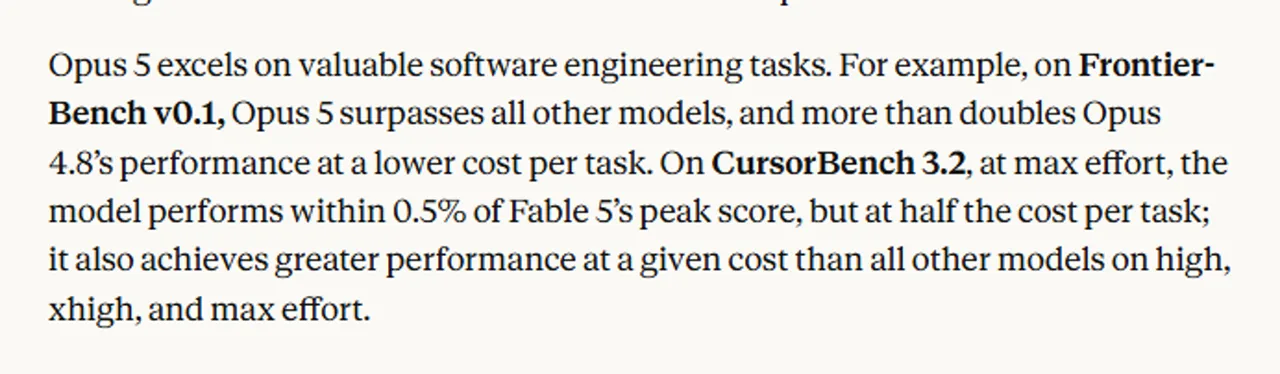
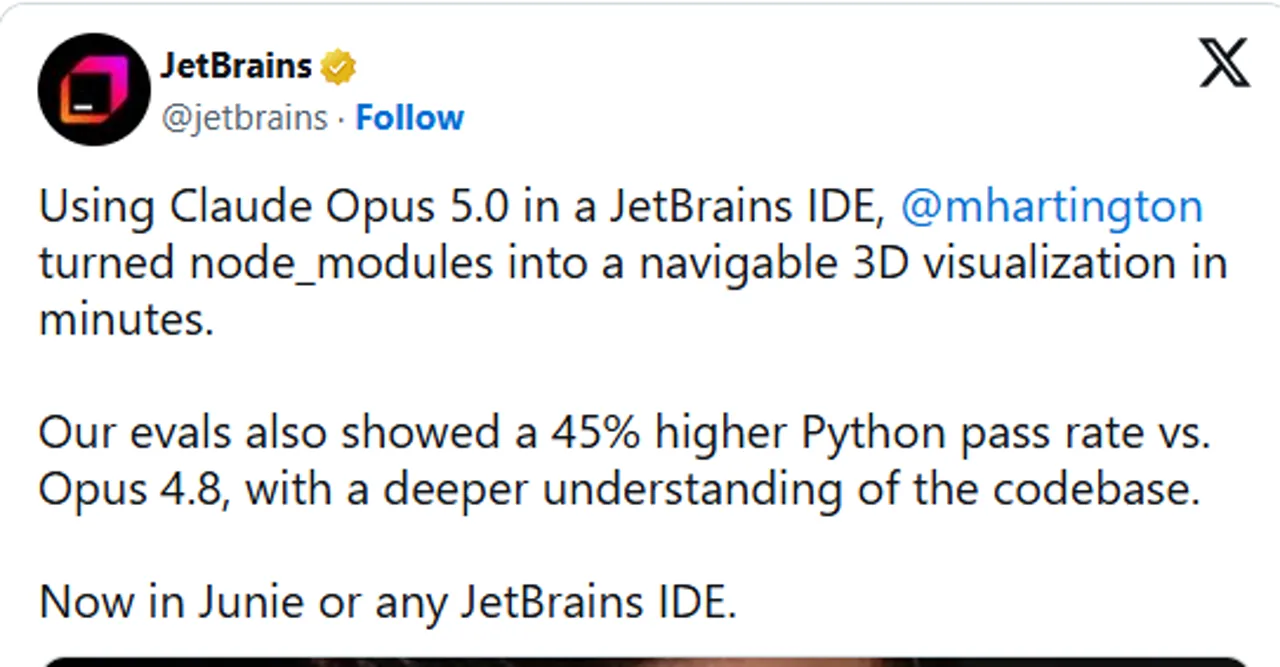
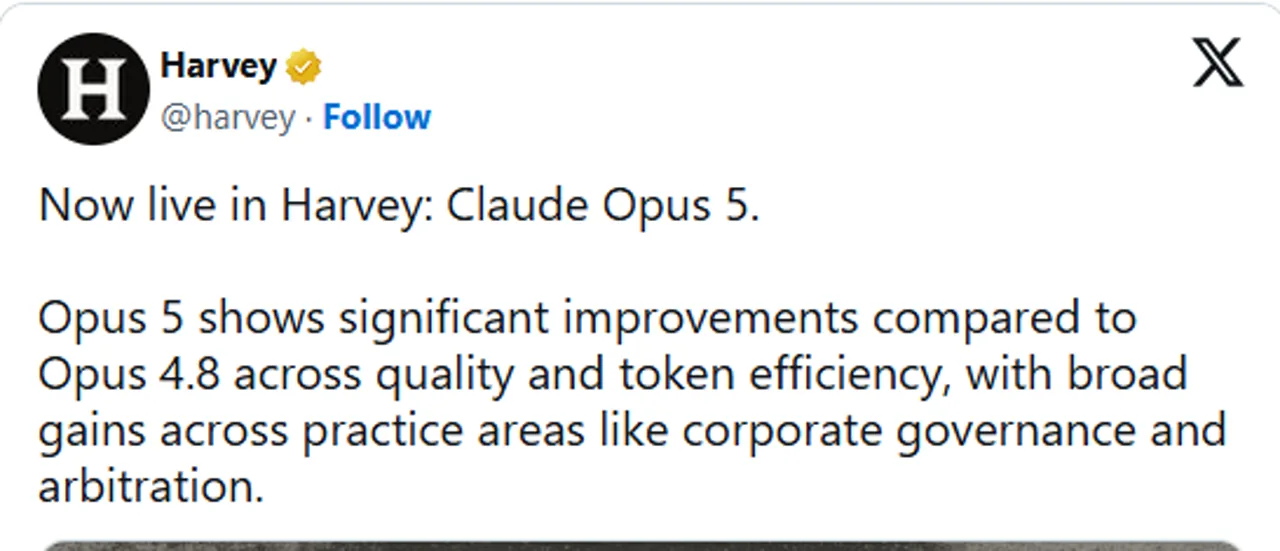
โพสต์บนโซเชียลมีเดียให้ข้อมูลที่เป็นประโยชน์เกี่ยวกับการใช้งานในช่วงแรก แต่ไม่ใช่เกณฑ์วัดผลที่เป็นกลาง บัญชีทางการของ Claude ได้อธิบาย Opus 5 ว่ามีแนวคิดที่รอบคอบและเชิงรุก ใกล้เคียงกับเทคโนโลยีล้ำสมัยของ Fable 5 แต่มีราคาเพียงครึ่งหนึ่ง นั่นคือกลยุทธ์การเปิดตัวของ Anthropic เอง ไม่ใช่การยืนยันจากแหล่งอิสระ.
Claude ได้ประกาศเปิดตัว Opus 5 บน X โดยระบุว่าเป็นโมเดลที่ได้รับการออกแบบอย่างพิถีพิถันและมีความริเริ่ม ซึ่งอยู่ในระดับใกล้เคียงกับระบบปัญญาประดิษฐ์ Fable 5 แต่มีราคาเพียงครึ่งหนึ่ง.
Claude Opus 5 API: รหัสแบบจำลอง, ตัวอย่าง และหมายเหตุเกี่ยวกับการย้ายข้อมูล
ID แบบจำลอง API Claude อย่างเป็นทางการและชื่อเรียกแทนทั้งสองคือ claude-opus-5. ต่อไปนี้คือตัวอย่างที่เรียบง่ายที่สุด Anthropic API ตัวอย่างคำขอ ตัวอย่างนี้แสดงเพียงจุดปลายทาง Messages อย่างเป็นทางการเท่านั้น; ไม่มีการอธิบายหรือรับประกันเกี่ยวกับการพัฒนาส่วนหลังของ GlobalGPT.
ผู้ซื้อระบบการเขียนโค้ดควรเปรียบเทียบตัวเลือกที่มีอยู่ก่อนที่จะกำหนดมาตรฐานกระบวนการทำงานของทีม; โมเดล AI ที่ดีที่สุดสำหรับการเขียนโค้ดในปี 2026 นำความสามารถและราคาเข้ามาพิจารณาในบริบทที่กว้างขึ้น.
คำตัดสินสุดท้าย: Claude Opus 5 คุ้มค่าที่จะลองใช้สำหรับงานการเขียนโค้ดแบบแข็ง (hard coding) การทำงานอัตโนมัติ และงานที่ใช้ความรู้ ซึ่งผลลัพธ์ที่ดีขึ้นสามารถชดเชยค่าใช้จ่ายของโทเคนระดับพรีเมียมได้ สเปกอย่างเป็นทางการของมันมีความแข็งแกร่ง ผลการทดสอบประสิทธิภาพของ Anthropic แสดงให้เห็นถึงความประหยัดค่าใช้จ่ายอย่างน่าประหลาดใจ และผลการดีบักที่เราตรวจสอบแล้วมีความแม่นยำและเป็นระบบ ซื้อมันมาใช้สำหรับงานที่ยากและมีผลลัพธ์ที่วัดได้ — ไม่ใช่เพราะทุกงานจำเป็นต้องใช้โมเดลระดับ Opus.
Claude Opus 5 คำถามที่พบบ่อย
ราคาของ Claude Opus 5 เป็นเท่าไร?
ราคาพื้นฐานอย่างเป็นทางการของ API Claude คือ $5 ต่อหนึ่งล้านโทเคนเข้า และ $25 ต่อหนึ่งล้านโทเคนออก แพ็กเกจ Claude สำหรับผู้ใช้ทั่วไปมีราคาแยกต่างหาก: แพ็กเกจ Pro มีราคา $20 ต่อเดือน หรือ $17 ต่อเดือนเมื่อชำระแบบรายปี ส่วนแพ็กเกจ Max เริ่มต้นที่ $100 ต่อเดือน.
ทำอย่างไรถึงจะเข้าถึง Claude Opus 5 ได้?
Anthropic ระบุว่า Opus 5 เป็นรุ่นมาตรฐานบน Claude Max และเป็นรุ่นที่ทรงพลังที่สุดบน Claude Pro ผู้พัฒนาสามารถใช้ API ของ Claude ได้ ส่วนเส้นทางคลาวด์ที่ได้รับการสนับสนุน ได้แก่ Amazon Bedrock และ Google Cloud ซึ่งมีข้อกำหนดการเข้าถึงเฉพาะของผู้ให้บริการ.
ID ของโมเดล API Claude Opus 5 คืออะไร?
ID แบบจำลองและชื่อเรียกแทนอย่างเป็นทางการของ API Claude คือ claude-opus-5 ทั้งสองค่า ให้ใช้ค่าดังกล่าวอย่างถูกต้องในช่อง model สำหรับคำขอ API Anthropic Messages จากนั้นให้ดำเนินการทดสอบการถดถอยและการประเมินความปลอดภัยของคุณเองอีกครั้ง ก่อนที่จะย้ายไปยังระบบผลิต.
ข้อจำกัดด้านบริบทและผลลัพธ์ของ Claude Opus 5 คืออะไร?
Claude Opus 5 มีหน้าต่างบริบทขนาด 1 ล้านโทเคน และปริมาณผลลัพธ์สูงสุด 128,000 โทเคน ใน Messages API แบบซิงโครนัส ส่วน Anthropic ระบุไว้อย่างแยกต่างหากว่าสามารถให้ผลลัพธ์ได้สูงสุด 300,000 โทเคน สำหรับ Message Batches ที่มีส่วนหัวแบบเบต้า.
ผลการทดสอบมาตรฐาน Claude Opus 5 ได้รับการตรวจสอบอย่างอิสระหรือไม่?
Claude Opus 5 ดีกว่า Opus 4.8 หรือ Fable 5 หรือไม่?
Opus 5 เป็นรุ่นต่อมาที่ใหม่กว่าของ Opus 4.8 ด้วยราคาพื้นฐานที่เท่ากัน ทำให้มันเป็นตัวเลือกที่เหมาะสมที่สุดสำหรับการเปลี่ยนระบบหลังการทดสอบการถดถอย ส่วน Fable 5 ยังคงเป็นมาตรฐานอ้างอิงระดับสูงที่สุด; ให้เลือกใช้รุ่นนี้เฉพาะเมื่อผลการประเมินของคุณแสดงให้เห็นว่าความสามารถเพิ่มเติมของมันคุ้มค่ากับค่าใช้จ่ายที่สูงขึ้น.
Claude Opus 5 มีให้ใช้บน GlobalGPT ได้หรือไม่?
ใช่ครับ GlobalGPT มีหน้า 5 ที่จัดไว้เฉพาะสำหรับ Claude Opus ความพร้อมใช้งานอาจขึ้นอยู่กับสถานะบัญชีและเงื่อนไขของแพลตฟอร์ม ดังนั้นควรตรวจสอบสิทธิ์การเข้าถึงก่อนดำเนินการกับกระบวนการทำงานที่มีเวลาจำกัด และควรแยกสิทธิ์การเข้าถึงแพลตฟอร์มออกจากระบบการเรียกเก็บเงินอย่างเป็นทางการของ API Anthropic.
ใครควรจ่ายค่าบริการ Claude Opus 5?
Opus 5 เหมาะที่สุดสำหรับทีมที่ดำเนินการงานเขียนโค้ดที่ซับซ้อน งานอัตโนมัติ หรืองานที่ต้องใช้ความรู้ในบริบทที่กว้าง ซึ่งคำตอบที่ดีกว่าสามารถช่วยประหยัดเวลาของมนุษย์ได้อย่างมีนัยสำคัญ ส่วนงานที่เรียบง่ายกว่า มีปริมาณมาก หรือต้องคำนึงถึงความหน่วงเวลา มักจะเหมาะกับการใช้โมเดลที่มีราคาถูกกว่าและทำงานได้เร็วกว่า.
กำลังหาเครื่องมือสร้างบล็อกด้วย AI ที่ใช้ฟรีและไม่จำกัดจำนวนครั้งหรือไม่? มาเปรียบเทียบ Yukie กับตัวเลือกอื่นอีก 5 ตัวเลือก สำหรับการเขียนเนื้อหา SEO ภาพ AI กระบวนการทำงาน และข้อจำกัดในการใช้งาน.