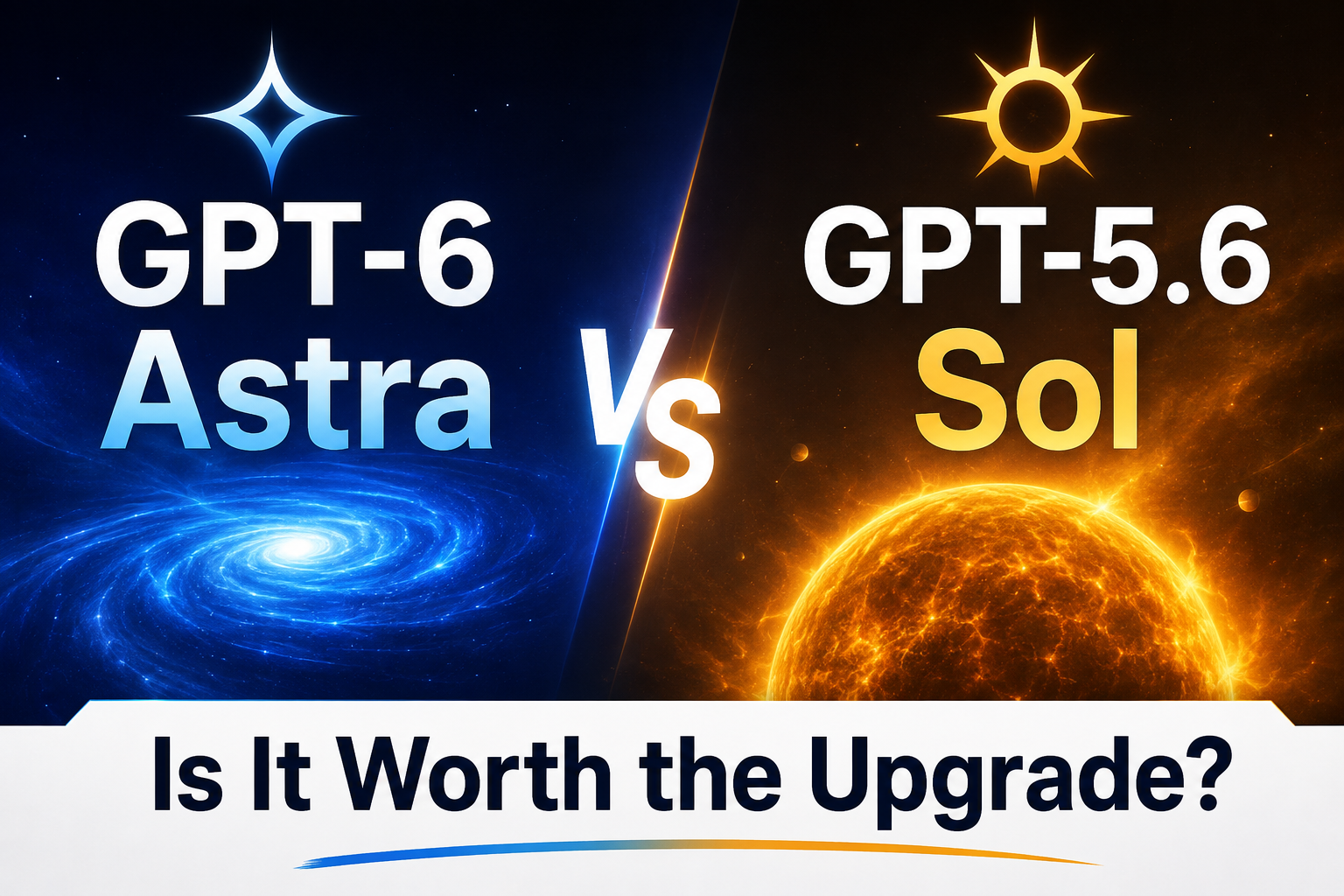
GPT-6 Astra is de moeite waard om naar te upgraden als je werk afhankelijk is van computergebruik, langdurige programmeeropdrachten of een professioneel eindproduct dat uit meerdere stappen bestaat en waarbij een verkeerde keuze hoge kosten met zich meebrengt. Voor dagelijkse schrijfwerkzaamheden, gericht onderzoek en eenvoudiger redeneerwerk blijft de GPT-5.6 Sol een verstandige keuze.
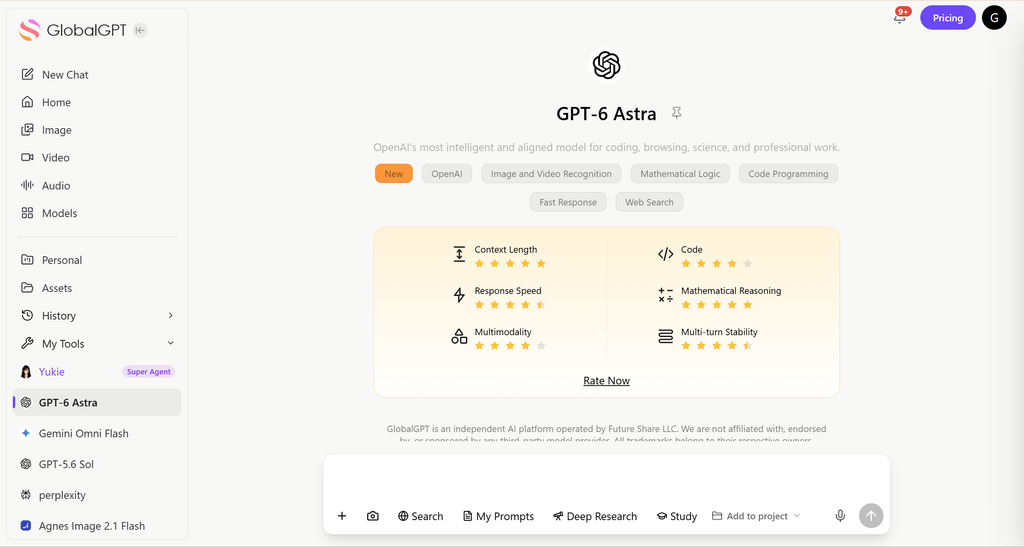
Mijn duidelijke advies is om gebruik te maken van GlobalGPT Voor deze vergelijking: GPT-6 Astra en GPT-5.6 Sol zijn beide beschikbaar in dezelfde werkruimte, naast Claude, Gemini, DeepSeek en speciale modellen voor afbeeldingen en video’s. Begin met Sol als de taak beperkt is; schakel over naar Astra als de uitvoeringsdiepte van belang is.
GPT-6 Astra is een heel ander soort upgrade
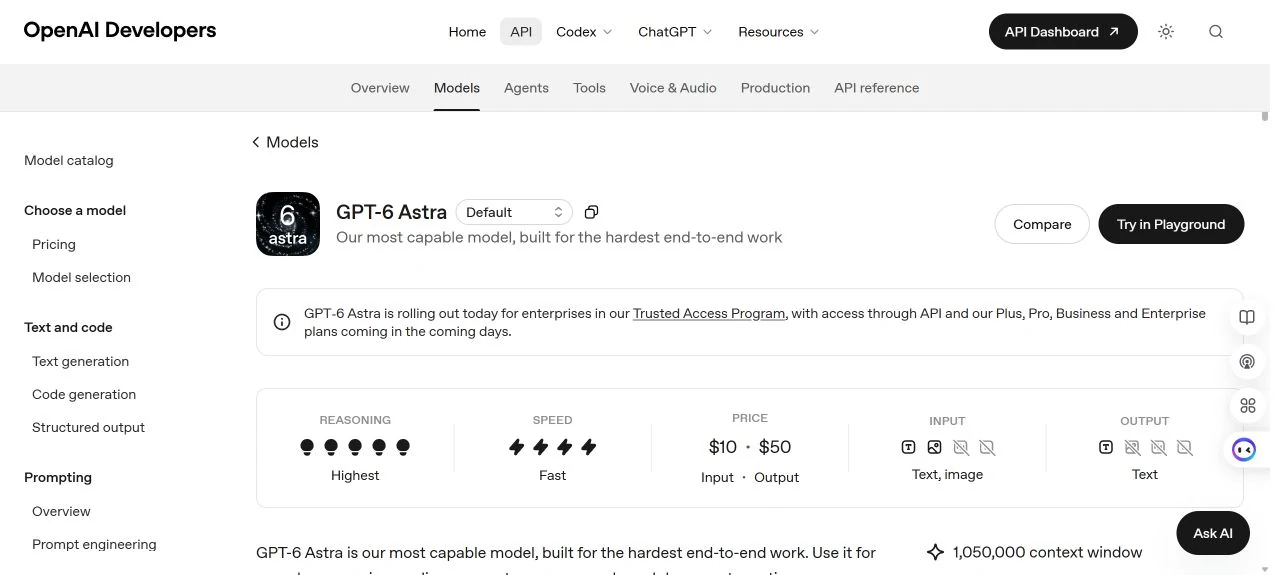
OpenAI maakt GPT-6 Astra geschikt voor veeleisende end-to-end-taken: complex redeneren, programmeren, computergebruik, onderzoek en het opstellen van documenten. De uitrol is in eerste instantie beperkt, maar de toegang wordt geleidelijk uitgebreid naar ChatGPT-abonnementen, de API, Azure en Bedrock.
GPT-6 Astra versus GPT-5.6 Sol in één oogopslag
OpenAI laat een grotere kloof zien bij taken die een langdurige uitvoering vereisen in plaats van een eenmalig antwoord. Dit zijn door leveranciers gerapporteerde resultaten, geen onafhankelijke ranglijst.
OpenAI-gerapporteerde scores, procent
| Taaksituatie | Aanbevolen eerste route | Waarom |
|---|---|---|
| Eén beknopte samenvatting, bewerking of toelichting | GPT-5.6 Sol | Het resultaat kan snel worden gecontroleerd en de workflow kent een duidelijk eindpunt. |
| Lange reeks van codering of computergebruik | GPT-6 Astra | De door OpenAI gepubliceerde vergelijking komt het best tot zijn recht bij uitvoeringsgerichte taken. |
| Gemengde werklast met wisselende complexiteit | Route per taak | Gebruik eerst de beproefde snelle route; ga pas een stap verder als er een grondigere aanpak nodig is. |
Wanneer GPT-6 Astra de investering waard is
- Werkprocessen voor computergebruik: taken waarbij je naar een scherm moet kijken, de volgende stap moet uitvoeren en moet herstellen van een onverwachte situatie.
- Langdurig coderen: wijzigingen op repository-niveau en foutopsporingsketens.
- Professioneel onderzoek en documenten: een overzicht waarin een onderscheid wordt gemaakt tussen geverifieerde feiten, aannames en vervolgstappen.
- Werk met een brede context: projecten met veel documenten, beperkingen of eerdere beslissingen.
Voor een gerelateerd artikel over de eerdere modelkeuze voor OpenAI, zie deze handleiding over GPT-5.4 Thinking.
Wanneer GPT-5.6 Sol nog steeds de slimste keuze is
Sol blijft een uitstekende standaardkeuze wanneer snelheid, een bekend promptformaat en een afgebakend resultaat belangrijker zijn dan uitgebreide autonome uitvoering. Houd het in gedachten voor routinematig opstellen van documenten, gerichte uitleg, korte onderzoeksverslagen en code-reviews met een afgebakende reikwijdte.
Praktische toegangscontrole: wat de huidige Anywhere-route daadwerkelijk heeft opgeleverd
T01: gestructureerde vragenlijst om de beslissingsgereedheid te peilen
Vul alle gegevens in
Opmerking bij het product: De wettelijke goedkeuring is nog in behandeling. Het budget bedraagt naar schatting ongeveer $200.000. De lanceringsdatum is nog niet bevestigd.

Resultaat: (1) één geverifieerd feit, (2) één aanname en (3) precies één volgende stap.
Volledige uitvoer: GPT-5.6 Sol
1. Geverifieerd feit: De wettelijke goedkeuring is nog in behandeling.
2. Aanname: Het budget bedraagt waarschijnlijk ongeveer $200.000.
3. Volgende stap: Bevestig het budget en voer een haalbaarheidsonderzoek uit alvorens een lanceringsdatum vast te stellen.
Beschikbaarheidsoverzicht
GPT-6 Astra stond niet vermeld in dezelfde live Anywhere-modelcatalogus, dus het werd niet aangeroepen onder een veronderstelde alias. Dit is een toegangsresultaat, geen kwaliteitsresultaat.
Uit drie aanvullende controles van de eerste output blijkt hoe de beschikbare Sol-route verschillende werkopdrachten verwerkte zonder dat er onmiddellijk aanpassingen nodig waren of herhalingspogingen moesten worden ondernomen. Dit dient als ondersteunend bewijs voor de workflow en is geen benchmark of vervanging voor een gepaarde Astra-test.
T02: onderzoekstriage
GPT-5.6 Sol · eerste geldige uitvoer · 323 tokens
Het behield de bevestigde opmerkingen, liet de niet-gecantificeerde verkoopopmerking als een open vraag staan en zette de discrepantie om in een verzoek om gegevens.
Volledige invoer en uitvoer
Invoer
Je stelt een onderzoeksrapport op. Bronvermeldingen: “Het aantal klanten nam in het tweede kwartaal toe” (dashboard, datum bevestigd); “De vraag vanuit het bedrijfsleven lijkt af te nemen” (opmerking van de verkoopafdeling, niet gekwantificeerd); “Een concurrent heeft een nieuw API-abonnement gelanceerd” (persbericht, datum bevestigd). Lever het volgende in: (1) de geverifieerde feiten, (2) de openstaande vragen en (3) precies één volgende onderzoeksstap.

Uitgang
### 1. Geverifieerde feiten
- Volgens het dashboard is de klantacceptatie in het tweede kwartaal gestegen; de datum is bevestigd.
- Volgens een persbericht heeft een concurrent een nieuw API-abonnement gelanceerd; de datum is bevestigd.

### 2. Open vragen
- In hoeverre is het gebruik door klanten toegenomen en welke klantsegmenten hebben deze verandering aangestuurd?
- Neemt de vraag vanuit het bedrijfsleven daadwerkelijk af en welk kwantitatief bewijs ondersteunt of weerlegt deze opmerking van de verkoopafdeling?
- Wat zijn de prijzen, mogelijkheden, lanceringsdatum en verwachte impact van het API-abonnement van de concurrent op de klantacceptatie of de vraag vanuit de zakelijke markt?

### 3. Volgende onderzoeksstap
- Verzamel en analyseer kwantitatieve gegevens over de vraag vanuit de zakelijke markt voor de huidige en voorgaande periodes om te toetsen of de vraag afneemt.
T03: overdracht aan de technische afdeling
GPT-5.6 Sol · eerste geldige uitvoer · 467 tokens · 22,3 seconden
De diagnose blijft voorlopig; er wordt eerst het bewijsmateriaal gecontroleerd voordat de code wordt gewijzigd, en er wordt aanbevolen om de wijziging eerst in de testomgeving te reproduceren in plaats van deze direct in de productieomgeving door te voeren.
Volledige invoer en uitvoer
Invoer
Een release-dashboard meldt: “Het aantal fouten bij het afrekenen is gestegen na de implementatie van dinsdag. De waarschuwing wijst op time-outs bij de betalingsautorisatie. De release heeft ook de logboekregistratie gewijzigd.” Geef: (1) een diagnose die als hypothese wordt aangemerkt, (2) precies twee controles, gerangschikt op prioriteit, en (3) één minimale volgende stap waarmee wijzigingen in de productie worden vermeden.

Uitgang
1. **Hypothese:** De release van dinsdag heeft een regressie veroorzaakt die de vertraging bij betalingsautorisaties vergroot en time-outs bij het afrekenen veroorzaakt. De wijzigingen in de logboekregistratie kunnen ook de waarschuwingen hebben beïnvloed of ervoor hebben gezorgd dat de toename groter lijkt dan hij in werkelijkheid is.

2. **Controles, in volgorde van prioriteit:**
1. Vergelijk de autorisatietijd, het aantal time-outs en de reacties van betalingsproviders vóór en na de implementatie aan de hand van ruwe verzoek-/tracegegevens, niet alleen de nieuwe logbestanden.
2. Bekijk de release-diff voor wijzigingen in de betalingsclient, time-outs, herhalingspogingen en logboekregistratie/metrieken; controleer of de logging-overhead of gewijzigde parsing de waarschuwing zou kunnen verklaren.

3. **Minimale volgende stap:** Reproduceer de autorisatiestroom bij het afrekenen in de staging-omgeving met de release van dinsdag en een gelijkwaardige configuratie, zonder de productieomgeving te wijzigen.
T04: presentatie voor het management
GPT-5.6 Sol · eerste geldige uitvoer · 278 tokens · 8,0 seconden
In het antwoord wordt de afweging tussen de verschillende doelstellingen duidelijk gemaakt: de kernlancering doorzetten, de analyse uitstellen en de wettelijke goedkeuring als een daadwerkelijke toetssteen handhaven.
Volledige invoer en uitvoer
Invoer
Projectstatus: de beoogde lanceringsdatum is 30 september; de juridische goedkeuring is nog in behandeling; het technische team kan tegen die datum de kernworkflow opleveren, maar niet de optionele analysefunctie. Te leveren: (1) een besluit in één zin, (2) één belangrijk risico en (3) precies drie gerangschikte actiepunten.

Uitgang
1. **Besluit:** Ga door met de lancering op 30 september met alleen de kernworkflow, stel optionele analyses uit en maak de lancering afhankelijk van juridische goedkeuring.
2. **Belangrijkste risico:** Het uitblijven van juridische goedkeuring zou de lancering op 30 september kunnen vertragen of verhinderen.
3. **Acties:**
1. Geef de juridische beoordeling prioriteit en stel een vaste deadline voor goedkeuring vast.
2. Verwijder de analysefuncties uit de lanceringsomvang en breng de belanghebbenden op de hoogte van de aangepaste omvang.
3. Rond de kernworkflow af, test deze en breng deze uit, terwijl de analysefuncties worden voorbereid voor een update na de lancering.
API-kostencalculator: maak een schatting van de kosten voor Astra voordat u overstapt
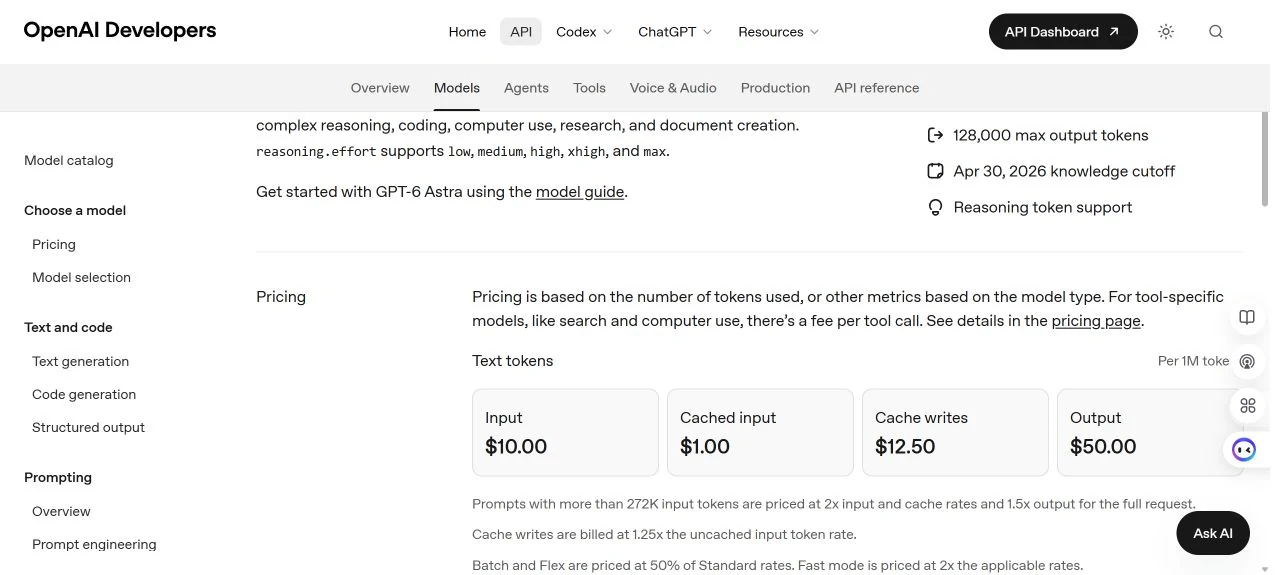
In OpenAI worden de prijzen voor de GPT-6 Astra Standard API vermeld op $10 per miljoen ingevoerde tokens en $50 per miljoen uitgegeven tokens.
Schatting van de GPT-6 Astra Standard API
Tarieven: $10/M-token voor invoer en $50/M-token voor uitvoer.
Probeer de upgrade zonder je workflow opnieuw op te zetten
Begin met Sol voor de eerste opdracht, behoud de prompt en het bronmateriaal, en schakel vervolgens over op een krachtigere aanpak wanneer het werk uitmondt in een lange reeks beslissingen. GlobalGPT houdt verschillende modeltypen binnen één werkruimte bij, in plaats van voor elk experiment een nieuw product te moeten aanmaken.

- Gebruik Sol om een globaal verzoek om te zetten in een gestructureerde opdrachtomschrijving, een concept of een eerste onderzoeksplan.
- Houd de taakcontext vast wanneer je een ander model vergelijkt.
- Stuur afbeeldingen, video’s of specialistisch werk door naar een speciaal daarvoor bestemd model wanneer het eindproduct dit vereist.
Open GlobalGPT om met Astra, Sol en andere beschikbare modellen op één plek te werken, waarbij de prompt en het bronmateriaal consistent blijven.
Eindoordeel: upgrade op basis van taak, niet op basis van releasedatum
GPT-6 Astra lijkt een zinvolle upgrade te zijn voor taken waarbij een agent betrouwbaar moet blijven bij het gebruik van verschillende tools, bij lange contexten en bij het nemen van meerdere beslissingen. Dit is echter geen automatische reden om GPT-5.6 Sol buiten gebruik te stellen. Gebruik Sol voor herhaalbare taken en zet Astra in wanneer de uitvoeringsdiepte het knelpunt vormt.
Kies de route die bij het werk past
Computergebruik, codering op repository-schaal, meerfasig onderzoek en kostbare fouten.
Beknopte teksten, gerichte analyse, snelle feedback en zorgvuldige beoordeling door mensen.
Begin met de beproefde aanpak; schaal pas op wanneer de uitvoeringsdiepte een knelpunt wordt.
FAQ
Is GPT-6 Astra beter dan GPT-5.6 Sol?
Voor de taken die OpenAI benadrukt, laat Astra de betere resultaten zien, met name bij agentische taken, taken waarbij een computer wordt gebruikt en langdurige taken. Wat nog beter is, hangt af van de taak: Sol kan de efficiëntere keuze zijn voor een afgebakende taak met een grondige evaluatiefase.
Wat is het grootste praktische verschil tussen de Astra en de Sol?
Astra is ontworpen voor een grondigere end-to-end-uitvoering waarbij meerdere beslissingen, tools en artefacten aan bod komen. Sol blijft geschikt voor geavanceerde redeneringen en het schrijven van teksten wanneer het om kleinere opdrachten gaat of wanneer er meer begeleiding nodig is.
Hoeveel kost GPT-6 Astra via de API?
In OpenAI worden de standaard API-tarieven vermeld: $10 per miljoen invoertokens en $50 per miljoen uitvoertokens. Voor toolspecifieke aanroepen en alternatieve API-modi kunnen andere tarieven gelden.
Moet ik alle prompts naar Astra verplaatsen?
Nee. Pak eerst de taken aan waarvan de reparatie veel kost. Bij een korte briefing, een routinematige herschrijving of een beperkte beoordeling levert een ingrijpender aanpak wellicht niet genoeg voordeel op om een aanpassing van het werkpatroon te rechtvaardigen.
Is GPT-6 Astra hier rechtstreeks vergeleken met Sol?
Nee. De goedgekeurde Anywhere-route vermeldde GPT-5.6 Sol en leverde een geldige Sol-probe op, maar het exacte Astra-model-ID werd niet vermeld. Er werd geen bijbehorende kwaliteitsscore toegekend.
Kan ik modellen in GlobalGPT met elkaar vergelijken?
GlobalGPT is een werkruimte voor meerdere modellen waarmee je op een praktische manier een prompt en bronmateriaal op één plek kunt bewaren terwijl je de beschikbare routes vergelijkt. Bekijk de actuele modellenlijst en het pakket voordat je op een bepaald model vertrouwt.