
Qual è l'IA migliore di ChatGPT per gli studenti? Scegli in base all'attività di studio

Qual è l'IA migliore di ChatGPT per gli studenti? Scegli in base all'attività di studio

No single AI is better than ChatGPT for every student. ChatGPT remains a strong starting point for guided practice, explanations, and quick feedback. Another option becomes the better fit when your next task needs a different explanation style, a source-checking plan, a visual memory aid, or a second opinion before you rely on an answer.

That is why I would recommend GlobalGPT when a study session needs more than text. With Sora shut down, a GPT subscription no longer gives you a video-generation tool; GlobalGPT still does.

Su GlobalGPT, use GPT-5.6 Sol, Claude, Gemini, or DeepSeek for explanation and feedback; use Midjourney, Nano Banana, or GPT Image for diagrams; then use Seedance or Veo for a short visual study sequence, all from the same workspace.

Start with the task, not a leaderboard. Before using any AI on graded work, check your instructor’s or school’s policy. The safest use is to make your thinking clearer, not to hand in work you cannot explain or support yourself.

The quick answer: choose the AI that helps with the next study step

For a difficult concept, start with a guided tutor. For a research project, start with a question-and-source plan. For a paragraph you wrote yourself, ask for feedback rather than a replacement draft. For a visual topic, a diagram or short animation can make the idea easier to recall. And for an important claim, compare a second explanation, then open the original source yourself.

A DECISION MAP, NOT MARKET SHARE

Five study jobs that benefit from different AI behavior

  • Explain and check understanding
  • Plan research and verify sources
  • Get writing feedback
  • Create a visual memory aid
  • Cross-check an explanation

Each equal slice is an editorial workflow category, not a statistic about model use or quality.

When ChatGPT is still the practical student choice

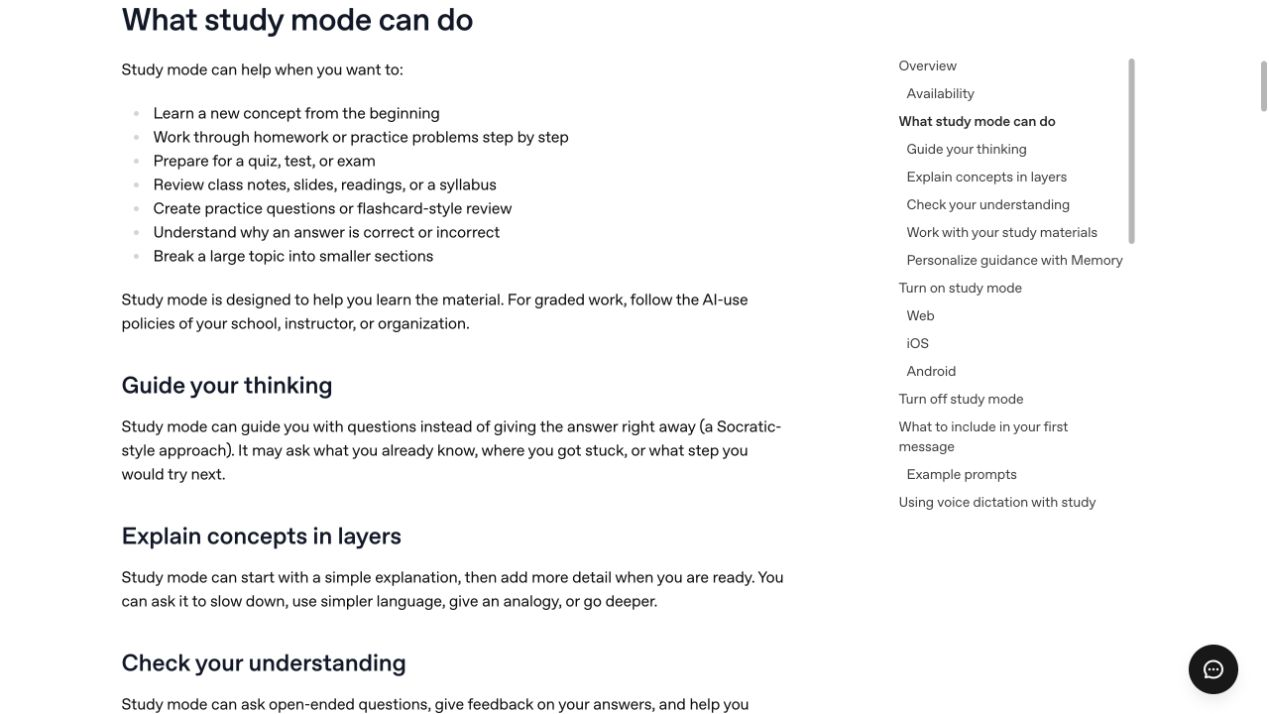
ChatGPT remains a sensible first stop when you want a conversation that teaches rather than simply returns an answer. OpenAI describes Study mode as guided learning: it can work through a topic in steps, ask questions, support practice and review, and work with uploaded learning materials.

OpenAI also says students should follow their school, instructor, or organization’s AI-use policies for graded work. Use the conversation to expose a gap in your reasoning, then do the reading, calculations, and final writing yourself.

Official ChatGPT feature
OpenAI Help page listing Study mode learning uses and the academic-policy reminder
OpenAI describes Study mode as guided learning, practice, review, and policy-aware support for graded work.
Official feature note

Study mode is presented by OpenAI as guided learning, practice, review, and policy-aware support for graded work.

What about the ChatGPT student offer?

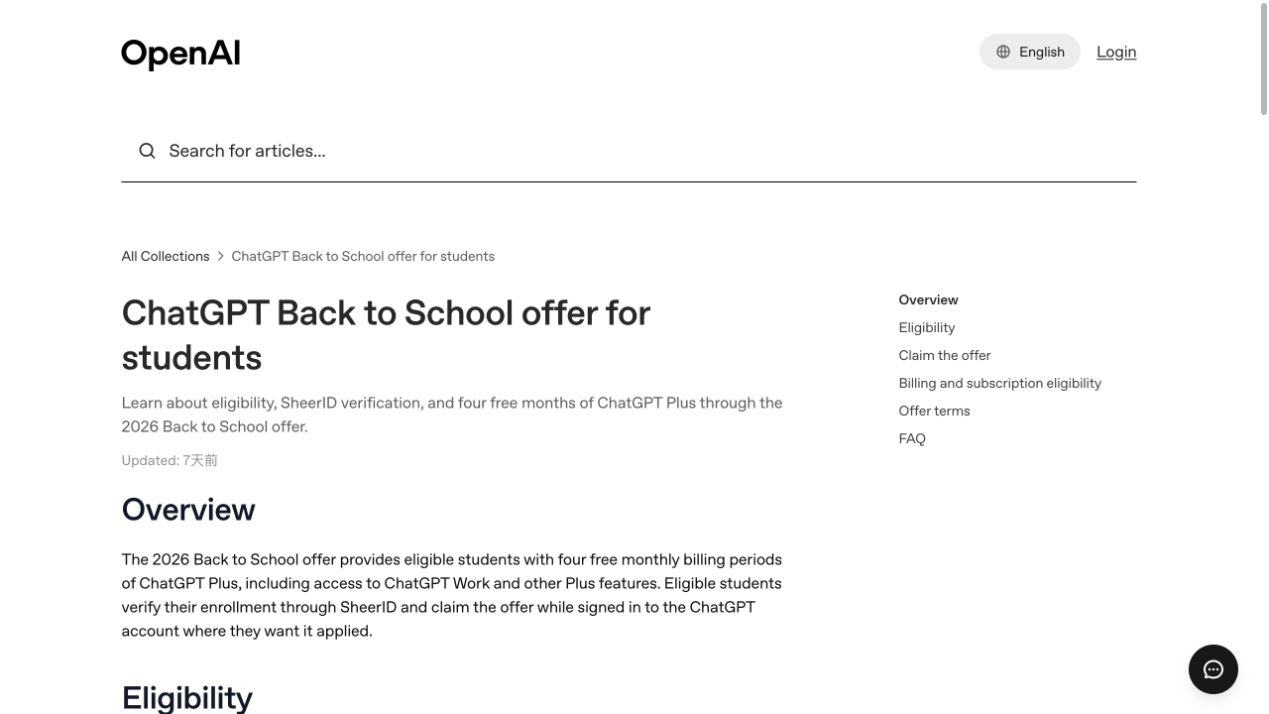
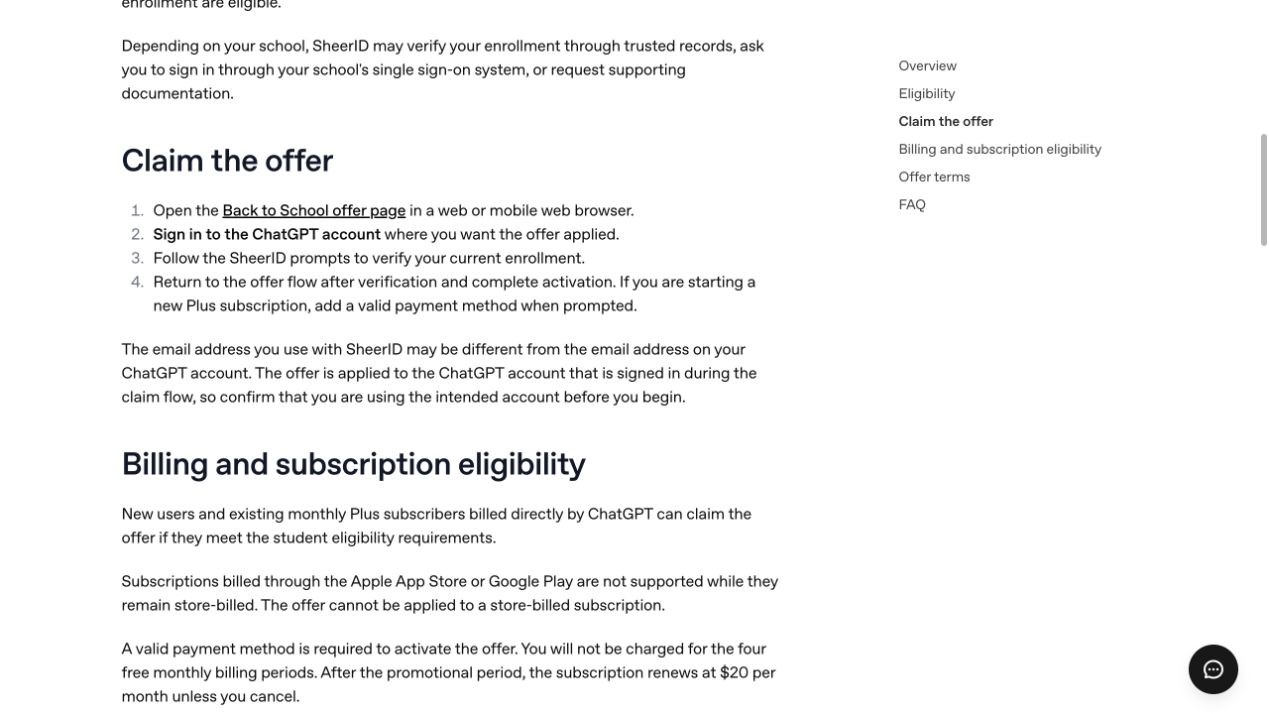
OpenAI 2026 Back to School offer is not a global student price. It is limited to current full-time and part-time college and graduate students at eligible U.S. degree-granting institutions, with enrollment verified by SheerID. Eligible students can receive four free monthly billing periods of ChatGPT Plus if they claim it by October 31, 2026. A valid payment method may be required, and the subscription renews at $20 per month after the promotion unless cancelled.

Official student offer
OpenAI Help overview of the 2026 Back to School offer
Official offer overview and eligible U.S. student scope.
Official billing terms
OpenAI Help billing section for the 2026 student offer
Official billing terms and renewal information.
Official offer boundary
  • Eligible U.S. degree-granting college and graduate students only
  • SheerID verification; claim by October 31, 2026
  • Four free monthly periods, then $20/month unless cancelled

What is better than ChatGPT for a student task?

The useful comparison is not “which model wins?” It is “what should I use before I take the next responsible action?”

STARTING-POINT FIT: 1 LOW TO 5 HIGH

Pick the starting tool by the learning job

Guided practice
ChatGPT Study mode
Research path
AI plan, then source check
Revision feedback
Feedback, not ghostwriting
Visual recall
Image or video generator
Cross-checking
Second model + original source

Editorial workflow guidance, not a benchmark or provider comparison.

A student workflow that uses AI without handing over the work

  • Explain: ask for a plain-language explanation and one check question.
  • Piano: turn a broad topic into a question, subquestions, and a source-verification list.
  • Revise: ask for weaknesses in your draft, then decide which changes are supported.
  • Visualize: create a diagram only when it improves recall or explanation.
  • Cross-check: compare a second explanation, then open the original source before making a factual claim.
DECLARED WORKFLOW COVERAGE, NOT A QUALITY SCORE

Where the evidence is strongest and where it stops

TutorRicercaRevisionVisivoVideo*
  • Tutor: four retained text outputs completed T01.
  • Ricerca: four retained outputs completed T02.
  • Revision: useful feedback, but sample claims needed support.
  • Visual: two first-run image outputs passed declared checks.
  • Video*: only file and first-frame evidence, not a motion-quality verdict.

When a multi-model workspace is the better fit

GlobalGPT is useful when one explanation is not enough and you want to compare approaches without moving among separate model sites. Its main workspace groups a chosen chat model with writing, analysis, image, video, and audio entry points. The value is simple: one workspace can reduce tool-switching when different AI behaviors are useful in the same study session.

It is not a replacement for official ChatGPT education features, a university’s rules, or original sources.

Captured desktop-workspace note

The verified desktop capture shows a selected chat-model control plus writing, analysis, image, video, and audio entry points. A separate wide capture shows the image-model choices. No new paid prompt was submitted to take either screenshot.

What the retained student tests showed

T01 · first valid output

Explain a concept, then check understanding

CompitoExplain correlation versus causation in plain language, with one everyday example and one check question.
RisultatoGPT-5.6 Sol, Claude Opus 5, Gemini 3.6 Flash, and DeepSeek V4 Pro each met the declared checks.
Student moveAnswer the check question yourself. If you cannot, ask for a different example rather than collecting more text.

Perché è importante: this is a tutor use case, not a shortcut for an assignment. The retained outputs were evaluated only against this prompt and date.

What this tells a student

The useful difference is not which explanation sounds most polished. One response foregrounds a confounding variable, another gives a compact decision question, and another spells out the checks behind a causal claim. That gives a student several ways to test understanding: explain the third factor in their own words, answer the follow-up question without help, and then apply the same check to an example from class. The output becomes useful only when the student can reproduce the reasoning away from the screen.

Full retained outputs for T01

Exact frozen input and all four retained valid outputs. Gemini is labeled where its valid output followed the documented recovery rule.

Exact input
I am a first-year college student studying introductory statistics. I keep confusing correlation with causation. Teach the difference in plain language, use one original everyday example, then ask me one short question to check my understanding. Do not write an assignment for me. Keep the answer under 350 words.
Open all T01 run records
GPT-5.6 Sol · first valid output
**Correlation** means two things are related: when one changes, the other often changes too. It does **not** prove that one causes the other.

**Causation** means that changing one thing directly produces a change in the other.

**Everyday example:**  
Suppose students who carry umbrellas are more likely to arrive late to class. There is a correlation between carrying an umbrella and being late. But carrying the umbrella probably does not cause lateness. A third factor—**rain**—may cause both: rain leads students to carry umbrellas and can slow down traffic or walking.

This is why we should be cautious when we observe a relationship. Other explanations might exist, such as:

- a third variable affecting both things,
- the direction of influence being reversed, or
- the pattern occurring by coincidence.

A controlled experiment, especially one that randomly assigns people to groups, gives stronger evidence for causation than simply observing a correlation.

**Check your understanding:**  
If people who eat more ice cream also experience more sunburns, does eating ice cream necessarily cause sunburns? Explain why or why not.
Claude Opus 5 · first valid output
## Correlation vs. causation

**Correlation** means two things move together. When one goes up, the other tends to go up (or down) in a predictable way. That's it. It's a description of a pattern.

**Causation** means one thing actually *makes* the other happen. Change the first, and the second changes as a result.

Correlation is what you can see in the data. Causation is a claim about how the world works, and it needs more than a pattern to support it.

### An everyday example

Imagine you track two numbers on your campus for every week of the semester: how many packs of instant noodles the campus store sells, and how many students are sitting in the library at 11 p.m.

You'd probably find these rise and fall together almost perfectly. Strong correlation.

But noodles don't drive people to the library, and studying late doesn't magically empty the noodle shelf. A third thing is pushing both: **exam season**. When midterms hit, students study later *and* eat faster, cheaper food. That hidden third factor is called a **confounding variable**.

Notice the trap: if you only saw the two numbers, "noodles cause studying" would look like a reasonable story. Data patterns are happy to support stories that aren't true.

### Three things to check before believing a causal claim

1. **Is there a lurking third variable?** (Exam season, income, age, weather, season.)
2. **Could the direction be reversed?** Maybe B causes A, not A causes B.
3. **Was there a controlled experiment?** Randomly assigning people to conditions is the cleanest way to rule out confounders. Observational data alone rarely settles causation.

A useful habit: when you read "X is linked to Y," mentally translate it to "X and Y appear together" and then hunt for the third variable.

### Quick check for you

A study finds that people who own more books tend to live longer. Name one confounding variable that could explain this correlation without books causing longevity.
Gemini 3.6 Flash · first valid output
**Correlation** means two things happen together or follow a similar pattern. When variable A changes, variable B tends to change too.

**Causation** means one thing *directly causes* the other to happen. Action A actually creates Result B.

The key rule in statistics is: **Just because two things happen together doesn't mean one causes the other.** Often, a hidden third factor (a *confounding variable*) causes both!

### Everyday Example: Umbrellas & Hot Soup

Imagine a grocery store notices that on days when more customers carry **umbrellas**, sales of **hot soup** go up.

* **Correlation:** Umbrella use and hot soup sales increase together.
* **Incorrect Causation:** Opening an umbrella does *not* make people hungry for soup.
* **The Real Cause:** Cold, rainy weather (the hidden third factor) makes people carry umbrellas **and** makes them want warm soup.

### Quick Check

A study finds that cities with higher sales of air conditioners also have higher sales of sunblock. Does buying an air conditioner cause someone to buy sunblock? Why or why not?
DeepSeek V4 Pro · first valid output
Here's the distinction in plain language:

**Correlation** means two things tend to happen together — when one goes up, the other tends to go up (or down). It's a pattern, nothing more.

**Causation** means one thing *directly makes* the other happen. Changing the first thing changes the second.

The trap? Correlation is easy to spot. Causation is much harder to prove. Just because A and B move together doesn't mean A caused B. It could be:

- **B caused A** (reverse causation)
- **A third factor C caused both** (confounding)
- **Pure coincidence** (random chance)

**Everyday example:** Every morning you notice that the more coffee shops are open near campus, the more students you see walking to class. These two things are *correlated* — they rise and fall together. But do open coffee shops *cause* students to go to class? No. A third factor — the time of day — drives both. Early morning means coffee shops open *and* students head to class. That's confounding, not causation.

**Quick check:** A city notices that neighborhoods with more ice cream trucks also report more sunburns. What's the most likely explanation: (a) ice cream trucks cause sunburn, (b) sunburns attract ice cream trucks, or (c) something else is at play — and if so, what?
T02 · first valid output

Build a research path, not a paper

CompitoTurn a question about later high-school start times and sleep into one research question, three subquestions, and a source-checklist.
RisultatoAll four retained outputs passed. Gemini’s first response was incomplete and the documented recovery produced the retained valid output.
Student moveUse the checklist to find and read the original studies. Do not turn the plan into a citation without opening the source.

Perché è importante: a model can structure the next search. It cannot make a research claim true merely by sounding confident.

What this tells a student

The four answers do not frame the project at exactly the same scope. Some keep the question tightly on sleep duration; others add alertness, school outcomes, or implementation trade-offs. That is a useful research lesson: choose one primary outcome before searching, then keep a separate note for adjacent outcomes instead of letting a promising-looking answer expand the paper. The checklist matters because an AI-generated research path is a map of what to verify, not evidence itself.

Full retained outputs for T02

Exact frozen input and all four retained valid outputs. Gemini is labeled where its valid output followed the documented recovery rule.

Exact input
I am planning a college research project about whether later high-school start times affect student sleep. Do not write the paper or invent sources. Give me one focused research question, three research subquestions, and a short checklist for verifying primary or authoritative sources before I make claims.
Open all T02 run records
GPT-5.6 Sol · first valid output
### Focused research question

**Among high-school students, does moving the school start time later increase average weeknight sleep duration compared with maintaining an earlier start time?**

### Research subquestions

1. **How much does average student weeknight sleep change after a school start time is moved later?**
2. **Do effects differ according to factors such as grade level, chronotype, socioeconomic background, or commute time?**
3. **Are changes in sleep duration accompanied by changes in attendance, tardiness, academic performance, or student well-being?**

### Source-verification checklist

Before making a claim, check that the source:

- **Is primary or authoritative:** Prefer an original study, official school or district data, government/public-health agency report, or systematic review from a reputable academic organization.
- **Clearly describes its methods:** Confirm the sample, setting, dates, comparison group, measures of sleep, and duration of follow-up.
- **Measures the relevant outcome directly:** Distinguish objectively measured sleep—such as actigraphy—from self-reported sleep, and note which one was used.
- **Supports the strength of the claim:** Check whether the study establishes an association or can reasonably support a causal claim; look for confounding factors and alternative explanations.
- **Reports limitations and uncertainty:** Review sample size, missing data, statistical uncertainty, generalizability, and possible selection or measurement bias.
- **Can be independently verified:** Confirm the authors, publication venue, DOI or stable URL, date, and whether the source’s findings are accurately represented rather than inferred from an abstract or headline.
Claude Opus 5 · first valid output
## Research question

Does delaying high-school start times increase students' total nightly sleep duration, and does any gain persist beyond the first few months after the change?

That framing is narrow enough to answer with evidence: one intervention (start-time delay), one primary outcome (sleep duration), one qualifier that most weak studies skip (durability over time).

## Subquestions

1. **Magnitude and mechanism.** When start times are delayed, how much does sleep duration change, and does the gain come from later wake times, earlier bedtimes, or both? (Bedtime drift is the main threat to the whole premise, so it needs its own question.)
2. **Measurement validity.** Do results differ between self-reported sleep (surveys, diaries) and objective measures (actigraphy, wearables)? Effect sizes often shrink when measurement gets stricter.
3. **Who benefits and who doesn't.** Do effects vary by student subgroup — age/pubertal stage, chronotype, commute distance and transport mode, employment, or extracurricular and athletic load?

A caution on scope: the literature is heavy on secondary outcomes (grades, attendance, mood, crash rates). Those are interesting but they are a different paper. If you widen to them, you inherit a much bigger and messier evidence base.

## Source verification checklist

Before any claim goes into your draft, run it through this:

- **Locate the primary source.** If you found the number in a news article, review, or another paper's literature section, trace it to the original study or dataset. Cite what you actually read.
- **Confirm the study design.** Pre/post at a single school, staggered rollout across districts, quasi-experiment, cross-sectional survey — each supports a different strength of claim. Record the design next to the finding in your notes.
- **Check the sample and setting.** N, age range, country, school type, response rate, attrition. A 20-minute delay at one suburban school does not generalize to a district-wide 60-minute shift.
- **Verify how sleep was measured.** Self-report versus actigraphy versus polysomnography; weeknight versus weekend; how many nights of data. Note the exact wording of survey items if that's the instrument.
- **Check timing of follow-up.** Was the measurement weeks or months after the change? Short follow-up windows can't speak to durability.
- **Assess the publisher and review status.** Peer-reviewed journal, government agency, preprint, advocacy organization, or district report. Advocacy sources aren't disqualified, but flag them and check whether they commissioned the research.
- **Look for conflicts and funding.** Who paid, who benefits from the result, whether the authors disclose anything.
- **Confirm the source still says what it said.** Check for retractions, corrections, or updated editions. Follow the DOI, not a cached PDF.
- **Quote or paraphrase from the source in front of you.** Never reconstruct a finding from memory or from a summary.
- **Record the exact locator.** DOI or permanent URL, page or table number, access date. If you can't produce that, the claim isn't ready to use.

Two practical starting points for authoritative material: government statistical agencies and public-health bodies for population sleep data, and sleep-medicine professional societies for position statements. Search their sites directly rather than relying on secondhand summaries, and read the primary studies their statements cite rather than citing the statement as evidence for a number.
Gemini 3.6 Flash · documented valid recovery
### Primary Research Question

**How does delaying high-school start times by 30 to 60 minutes impact total weeknight sleep duration and self-reported daytime alertness among adolescent public high-school students?**

### Research Subquestions

1. Does delaying school start times result in a net increase in total sleep duration, or do students compensate by delaying their bedtimes due to biological circadian shifts or evening activities?
2. How do changes in student sleep duration following a start-time shift correlate with measurable indicators of daytime functioning, such as classroom engagement, attendance, and self-reported mood or fatigue?
3. How do non-academic variables—such as transportation/bus schedules, athletic schedules, employment, and household environment—moderate the relationship between school start times and adolescent sleep patterns?

### Checklist for Verifying Primary & Authoritative Sources

- Peer-reviewed status or institutional authority.
- Methodological rigor, including empirical data and clearly defined metrics.
- Sample size and representativeness.
- Contextual relevance, including specific start-time changes and setting.
- Objectivity and transparency, including funding, affiliations, methods, and limitations.
DeepSeek V4 Pro · first valid output
## Focused Research Question

**To what extent do later high school start times (8:30 AM or later) produce measurable, sustained improvements in total sleep duration and daytime sleepiness among adolescents, compared to schools with start times before 8:00 AM?**

## Three Research Subquestions

1. What is the size and durability of the effect?
2. Are the benefits distributed evenly across subgroups?
3. How do schools that successfully delayed start times manage operational trade-offs?

## Source Verification Checklist

1. Peer review and venue.
2. Authors and affiliations.
3. Study design.
4. Sample and generalizability.
5. Funding and conflicts of interest.

The response advised starting with meta-analyses and systematic reviews, then checking the primary studies they cite.
T03 · first valid output

Ask for revision feedback without ghostwriting

CompitoIdentify two specific weaknesses in a purpose-written paragraph and give one short stronger-sentence example without rewriting the whole draft.
RisultatoAll four outputs were partial passes: the feedback was useful, but their example claims still needed independent student support.
Student moveKeep the diagnosis, then write your own supported revision in your own voice.

Perché è importante: feedback can teach. Pasting a polished-sounding example into assessed work is a different, and riskier, action.

What this tells a student

The strongest shared lesson is that revision feedback can diagnose a missing link in an argument, but it cannot supply the evidence that makes the claim defensible. Here the models consistently noticed vague terms and an unexplained jump from uniforms to focus. A good next step is to decide what the writer actually means by “serious,” find support if the claim stays, and then write a narrower sentence in the student’s own voice. That keeps the student responsible for both the position and its proof.

Full retained outputs for T03

Exact frozen input and all four retained valid outputs. Gemini is labeled where its valid output followed the documented recovery rule.

Exact input
Here is a purpose-written draft paragraph from a student: "School uniforms are good because they make everyone look the same. This means students will not worry as much about clothes and they can focus. Also, uniforms make schools more serious." Give revision feedback that helps the student improve the paragraph. Identify two specific weaknesses, explain why each matters, and show one short example of a stronger sentence. Do not rewrite the whole paragraph or add unsupported facts.
Open all T03 run records
GPT-5.6 Sol · first valid output
1. **Weakness: The claims are too general.**  
   Phrases such as “make everyone look the same” and “make schools more serious” do not explain how or why uniforms have these effects. Adding a clearer explanation would make the argument more convincing.

   **Example stronger sentence:**  
   *Uniforms may reduce distractions about clothing by giving students fewer daily outfit decisions to make.*

2. **Weakness: The paragraph needs more precise, formal wording.**  
   “School uniforms are good” is vague, and “make schools more serious” is unclear because it does not specify what “serious” means. More exact language will help readers understand the main point.

   **Example stronger sentence:**  
   *Uniforms can create a more consistent and focused atmosphere at school.*
Claude Opus 5 · first valid output
Two things are holding this paragraph back.

**1. The reasoning is asserted, not explained.**
"They make everyone look the same" is offered as the reason uniforms are good, but looking the same is a description of uniforms, not a benefit. The paragraph then jumps to "students will not worry as much about clothes and they can focus" without showing how one leads to the other. This matters because a reader who disagrees has nothing to push against — there's no logic to follow, just a conclusion. The middle step is where your argument actually lives.

A stronger version of that sentence makes the link visible:

> Because a uniform settles what everyone wears before the day starts, students have one less thing to compare each morning, and that attention is available for class instead.

Same idea you already had, but now the cause and the effect are connected.

**2. "Uniforms make schools more serious" is too vague to evaluate.**
"Serious" could mean stricter discipline, harder academics, better behavior, or just a different atmosphere — the reader has to guess, and each of those would need different support. Vague evaluative words like "good" and "serious" feel like claims but carry no content, so they weaken the paragraph even though they sound confident. Pick the one meaning you actually intend, say it in concrete terms, and then give the observation or example behind it. If you can't point to something specific, that's a signal the sentence may not be earning its place.

One structural note while you revise: your three sentences currently sit side by side as separate points. Deciding which is your main claim and which are support will tell you what order they belong in.
Gemini 3.6 Flash · documented valid recovery
### 1. Weakness: Vague and General Word Choice

Words like **"good"** and **"serious"** are overly broad. The response explained that precise language helps the reader understand the argument.

### 2. Weakness: Underdeveloped Ideas and Unclear Focus

The response identified that the draft does not complete the reasoning behind students focusing less on clothes.

### Example of a Stronger Sentence

> "By standardizing daily attire, uniforms eliminate peer pressure over clothing choices, allowing students to concentrate on their academic work."

The result is useful feedback but this sentence introduces a broad causal claim that the student would need to support or soften.
DeepSeek V4 Pro · first valid output
### Weakness 1: "make schools more serious" is a claim without support

The response asked the student to define what "serious" means and explain the connection.

### Weakness 2: "make everyone look the same" is imprecise and risks undermining the argument

The response suggested replacing the phrase with language about social comparison around clothing.

### Suggested revision focus

- Replace "look the same" with a more precise phrase.
- Expand the "serious" sentence with a brief because-clause.

The example sentences themselves include generalized claims about uniforms and schoolwork, so they require the student's own evidence check before use.

Use visual generators for recall, not as a substitute for explanation

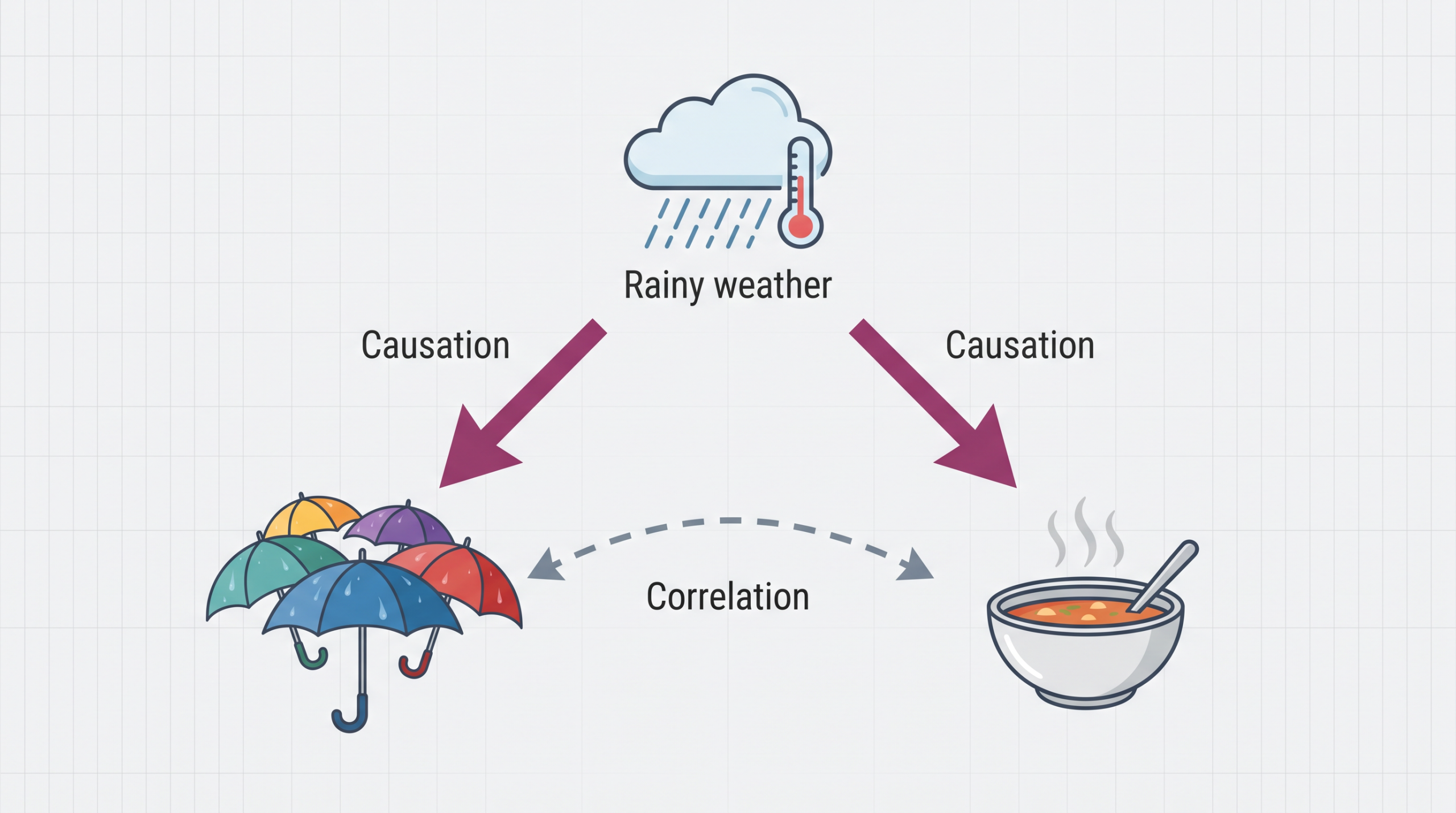
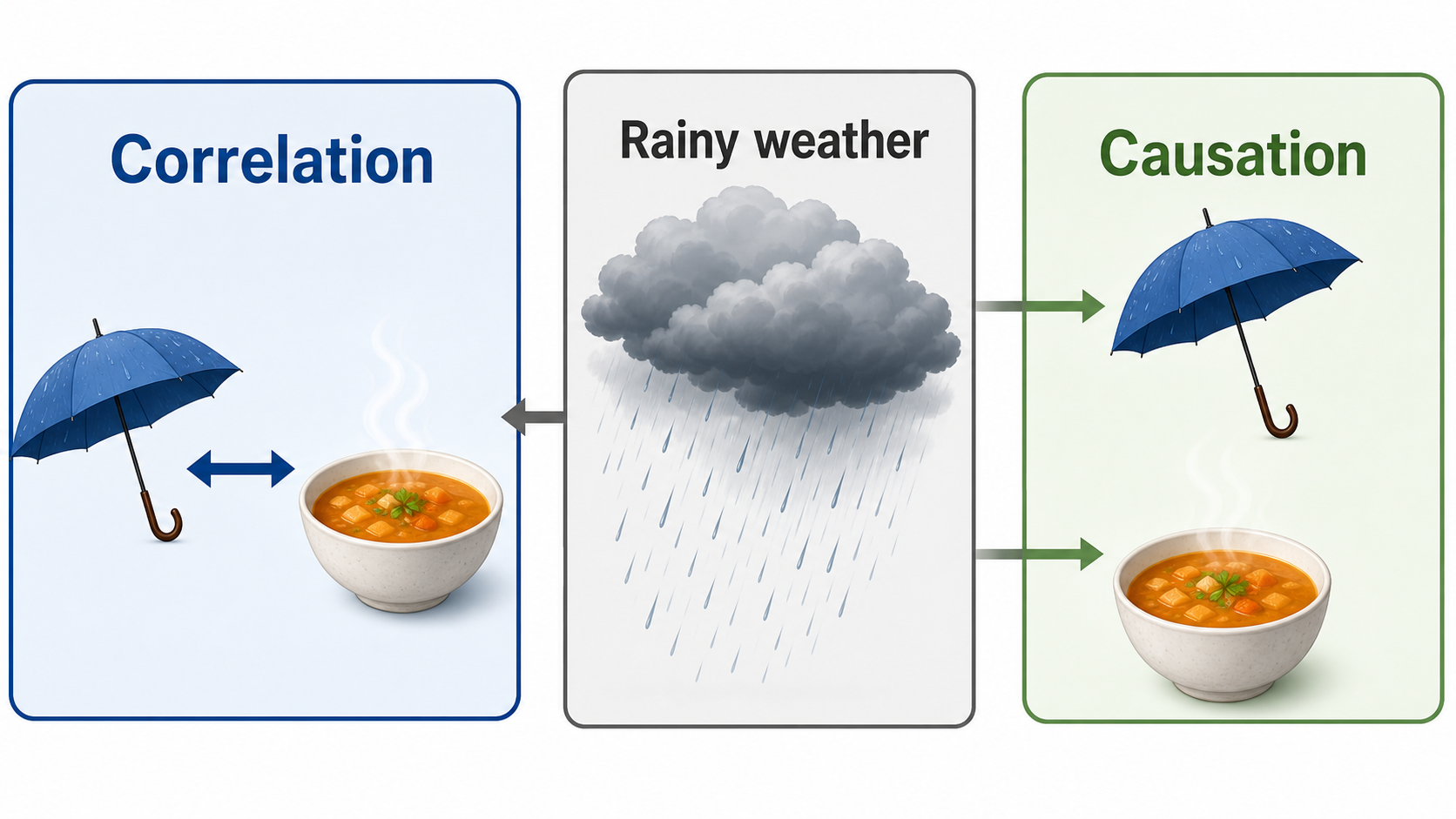
Two first-run image models were asked to create a statistics infographic about correlation and causation. Both saved images were decodable, showed the requested rainy-weather relationship, included the specified labels, and had no logo or personal data in the reviewed output. That is a result for this one declared task, not a universal educational-quality claim.

T04 · Nano Banana Pro
Generated study infographic linking rainy weather to umbrellas and hot soup
First retained image output for the declared statistics study prompt.
T04 · GPT Image 2
Generated three-panel study visual distinguishing correlation from a shared rainy-weather cause
First retained image output for the same prompt.
T05 · Seedance 2.0
First retained MP4: 864 × 496, 6.042 seconds.
T05 · Veo 3.1
First retained MP4: 1920 × 1080, 8.000 seconds.
T05 · RETAINED FIRST OUTPUTS

Video test status: partial verification

File: both MP4s decoded.
Checked: saved files and first frames.
Not scored: full motion, later frames, or audio quality.

A better AI workflow still needs your judgment

So, what AI is better than ChatGPT for students?

For guided learning, ChatGPT and its Study mode remain a practical answer. For a workflow that needs different explanations, research planning, feedback, visual aids, and a second check, a multi-model workspace such as GlobalGPT can be more useful because it keeps those starting points together. For a broader task-by-task comparison, see our guide to i migliori modelli di intelligenza artificiale. The better choice is the one that helps you learn the next step while leaving the evidence, the judgment, and the submitted work with you.

Domande frequenti

Is there one best AI for college students?

No. Choose by task and verify important claims.

Can I use ChatGPT’s student offer anywhere in the world?

No. The verified 2026 offer is limited to eligible students at U.S. degree-granting institutions and requires SheerID verification.

Can AI write my assignment for me?

That depends on your course rules, but it is a poor learning workflow even when permitted. Use AI to understand, plan, and improve your work; keep the source checking and final reasoning in your hands.

What is the best free AI for college students?

There is no single best free AI for every college student. Start with the study job: guided practice, a research plan, feedback on your own draft, or a visual memory aid. Free access, limits, and available models can change, so check the current plan before basing a course workflow on it.

Can ChatGPT help with homework?

It can help explain a concept, generate practice questions, outline a research path, or point out weaknesses in a draft you wrote. It should not replace the reading, calculations, source checking, or final work your course expects you to do yourself.

Is ChatGPT accurate enough for studying?

Use it as a starting explanation, not as the final authority for a factual claim. For important facts, definitions, quotations, and citations, open the original course material or primary source and check that it supports the wording you plan to use.

Which AI is best for writing essays?

The most useful AI role is often feedback rather than authorship. Ask it to identify a vague claim, a missing reason, or an unclear paragraph structure, then decide what you mean, find support, and write the revision in your own voice.

How can students use AI without plagiarism problems?

Follow the course policy first. Keep notes on what you read, cite the sources you actually used, do not present AI-generated prose or invented citations as your own research, and make sure you can explain every claim in submitted work.

Condividi il post:

Messaggi correlati