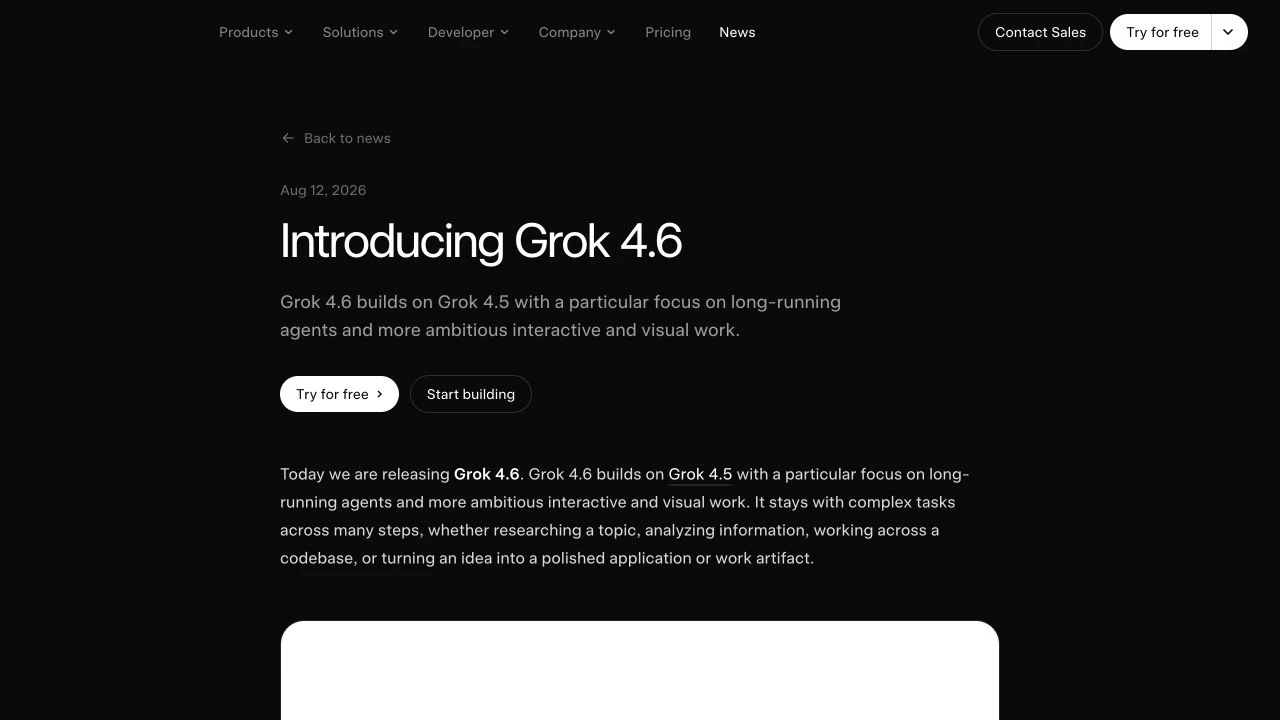
Sí, Grok 4.6 es un modelo oficial de xAI, lanzado el 12 de agosto de 2026, y merece toda tu atención si tu trabajo implica largos paquetes de investigación, programación, análisis de varios pasos o tareas basadas en imágenes. Su ventana de contexto de 500 000 tokens y su razonamiento configurable le confieren la capacidad necesaria para proyectos exigentes, aunque no es necesariamente la opción más rápida ni la mejor para todas las instrucciones. La verdadera pregunta ya no es si Grok 4.6 existe, sino si sus puntos fuertes se ajustan al trabajo que realmente necesitas realizar.
Si quieres responder a esa pregunta sin vincular todo tu flujo de trabajo a un único proveedor, GlobalGPT es un punto de partida excelente. Su espacio de trabajo en el navegador te permite utilizar Grok 4.6 junto con otros modelos líderes, ejecutar la misma instrucción de investigación, redacción, análisis o programación, y comparar los resultados en un mismo lugar. Es una forma práctica y sorprendentemente sencilla de ver en qué aspectos destaca realmente el Grok 4.6 —y en cuáles otro modelo se adapta mejor a tu tarea— antes de elegir la configuración o la suscripción que más te convenga.
¿Qué es exactamente Grok 4.6?
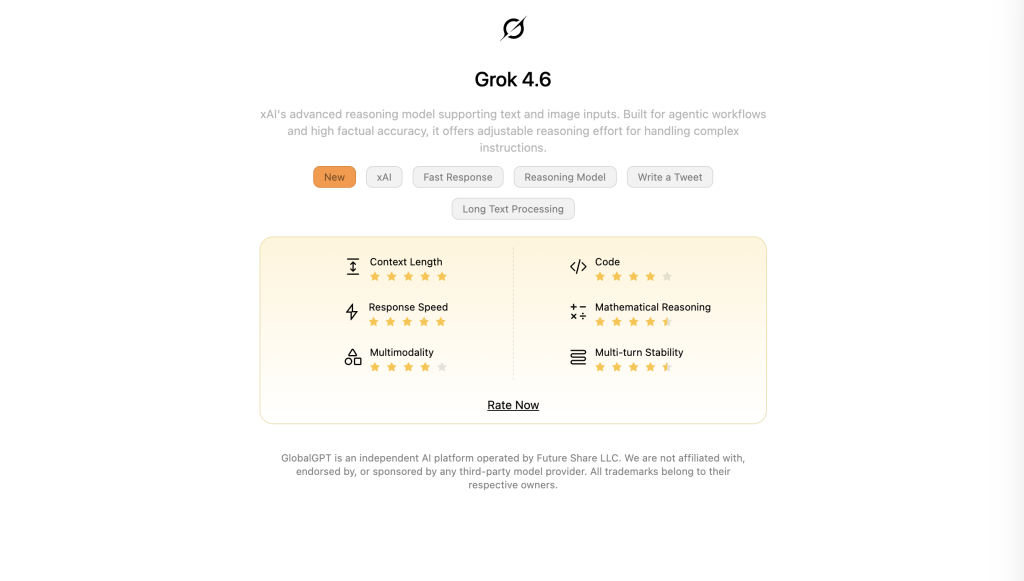
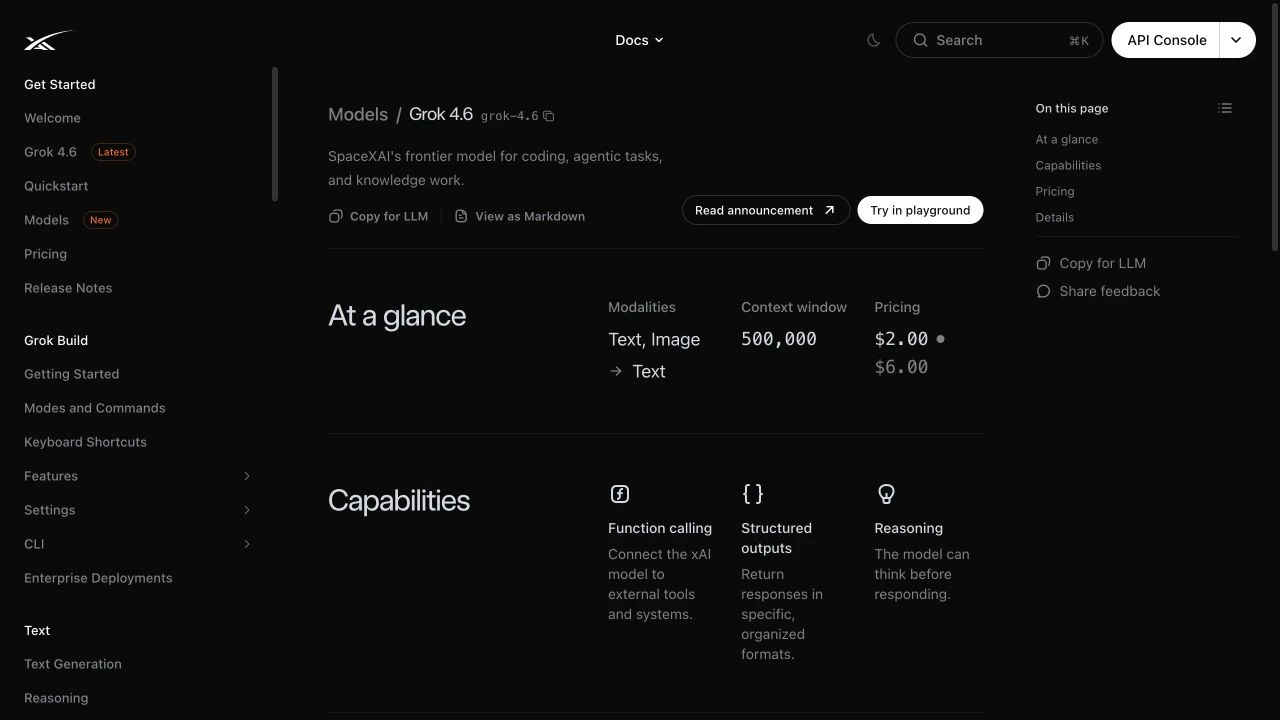
El Grok 4.6 es el modelo estrella de xAI para 2026 dentro de la gama Grok. La página oficial del modelo describe la entrada de texto e imágenes, la salida de texto, el razonamiento configurable y una ventana de contexto de 500 000 tokens. El identificador de la API es grok-4.6; ese es el valor que los desarrolladores deben utilizar en una solicitud.
El lenguaje de presentación de xAI es muy concreto: la versión Grok 4.6 se centra en agentes de larga duración y trabajos interactivos y visuales más ambiciosos. La documentación oficial lo posiciona para la programación, las tareas de tipo «agente» y el trabajo intelectual, con llamadas a funciones y resultados estructurados para flujos de trabajo que requieren herramientas o formatos de respuesta predecibles.
La ficha del modelo indica una fecha límite de preentrenamiento en enero de 2026. Esa distinción es importante. Una ventana de contexto de 500 000 permite introducir un paquete de datos de origen muy grande, pero eso no convierte automáticamente al modelo en un motor de búsqueda en tiempo real. Para conocer los precios actuales, las noticias o los cambios en las políticas de los productos, hay que consultar las fuentes y verificar la respuesta.
¿Cuáles son las especificaciones oficiales del Grok 4.6?
| Especificación | Valor documentado oficialmente | Por qué es importante |
|---|---|---|
| Fecha de publicación | 12 de agosto de 2026 | Confirma que se trata de una versión oficial de xAI. |
| ID del modelo de API | grok-4.6 | Utiliza exactamente este slug en las solicitudes a la API. |
| Ventana de contexto | 500 000 tokens | Útil para informes extensos, bases de código e investigaciones con gran cantidad de código fuente. |
| Entrada / salida | Entrada de texto e imágenes; salida de texto | Admite indicaciones multimodales, pero no la generación de imágenes. |
| Razonamiento | Configurable | Permite que un flujo de trabajo priorice la rapidez frente a un análisis más profundo. |
| Llamada a funciones | Compatible | Conecta el modelo con herramientas y sistemas externos. |
| Resultados estructurados | Compatible | Útil para JSON, extracción y flujos de trabajo predecibles. |
| Límite de preentrenamiento | Enero de 2026 | No des por sentado que el modelo básico está automáticamente actualizado. |
Fuente: comunicado de xAI, documentación del modelo y ficha técnica del modelo Grok 4.6. Las especificaciones oficiales no coinciden con los resultados de rendimiento obtenidos por terceros.
¿Qué puede hacer el Grok 4.6?
Razonamiento y análisis estructurado
El razonamiento configurable hace que Grok 4.6 sea adecuado para tareas en las que resulta útil obtener una respuesta meditada: comparar pruebas, elaborar tablas de decisión, planificar una implementación o verificar un cálculo con restricciones. Un mayor nivel de razonamiento no es automáticamente mejor para todas las consultas, por lo que la extracción y la reescritura rutinarias deben realizarse con una configuración adecuada.
Trabajo que requiere mucha investigación y consulta de fuentes
La ventana de contexto de 500 000 palabras ofrece al modelo margen suficiente para informes extensos, transcripciones, documentos normativos y paquetes de fuentes. El flujo de trabajo más eficaz consiste en la recuperación mediante localizadores explícitos y normas de citación, seguida de la apertura de la fuente original para su verificación.
Codificación y depuración
Las evaluaciones publicadas sobre ingeniería de software y nuestra pequeña prueba de depuración respaldan su uso para la revisión de código, la corrección de errores y las tareas estructuradas de los agentes. No obstante, los desarrolladores deben seguir ejecutando pruebas de forma local y revisar los parches antes de la implementación.
Comprensión de la imagen
xAI procesa entradas de texto e imágenes y genera texto como resultado. Esto permite la interpretación de capturas de pantalla, el análisis de documentos e imágenes y la respuesta visual a preguntas, pero no debe confundirse con la generación de imágenes.
Agentes de larga duración y uso de herramientas
Esta es la capacidad más estrechamente vinculada al posicionamiento de lanzamiento de xAI. La llamada a funciones permite que Grok 4.6 se conecte a herramientas externas, mientras que las salidas estructuradas facilitan el paso del resultado a otro paso. Esa combinación se adapta a los agentes que recopilan contexto, trabajan con un código fuente, invocan una herramienta, comprueban un resultado y devuelven un artefacto terminado. El modelo sigue necesitando un entorno de ejecución externo, permisos y comprobaciones de objetivos; “agentic” no significa que el modelo base actúe de forma independiente.
Obra interactiva y visual
xAI también destaca trabajos interactivos y visuales más ambiciosos. Una prueba adecuada consiste en un resumen del producto con numerosas capturas de pantalla o un informe respaldado por gráficos, en el que el modelo debe relacionar la evidencia visual con una recomendación escrita. Comprueba las etiquetas, los ejes, las unidades y los detalles omitidos antes de dar por definitivo el resultado.
¿Qué ha cambiado en el modelo Grok 4.6 con respecto a los modelos anteriores de la serie Grok?
El posicionamiento de xAI hace hincapié en un razonamiento más sólido, el trabajo con agentes de programación y el rendimiento en contextos extensos. La mejora práctica no consiste en una única característica llamativa, sino en la combinación de un espacio de trabajo más amplio, un razonamiento ajustable y un modelo optimizado para tareas complejas de varios pasos.
Aún hay que someterlo a una prueba de flujo de trabajo. Un modelo puede obtener una buena puntuación en una prueba de rendimiento y, sin embargo, resultar poco adecuado para tu estilo de redacción, tus requisitos de citación o tu código fuente. La mejor forma de evaluar Grok 4.6 es con las tareas que repites cada semana, no con una simple cifra de la clasificación.
¿Cómo se comporta el Grok 4.6 en las pruebas de rendimiento más reconocidas?
La tabla que figura a continuación distingue los resultados de las fichas de modelo de xAI de las mediciones independientes. Esto es fundamental, ya que las dos cifras de Terminal-Bench corresponden a versiones diferentes y no deben presentarse como una comparación directa entre ambas.
| Evaluador | Tarea / indicador | Resultado comunicado | Clasificación y prescripción de las pruebas |
|---|---|---|---|
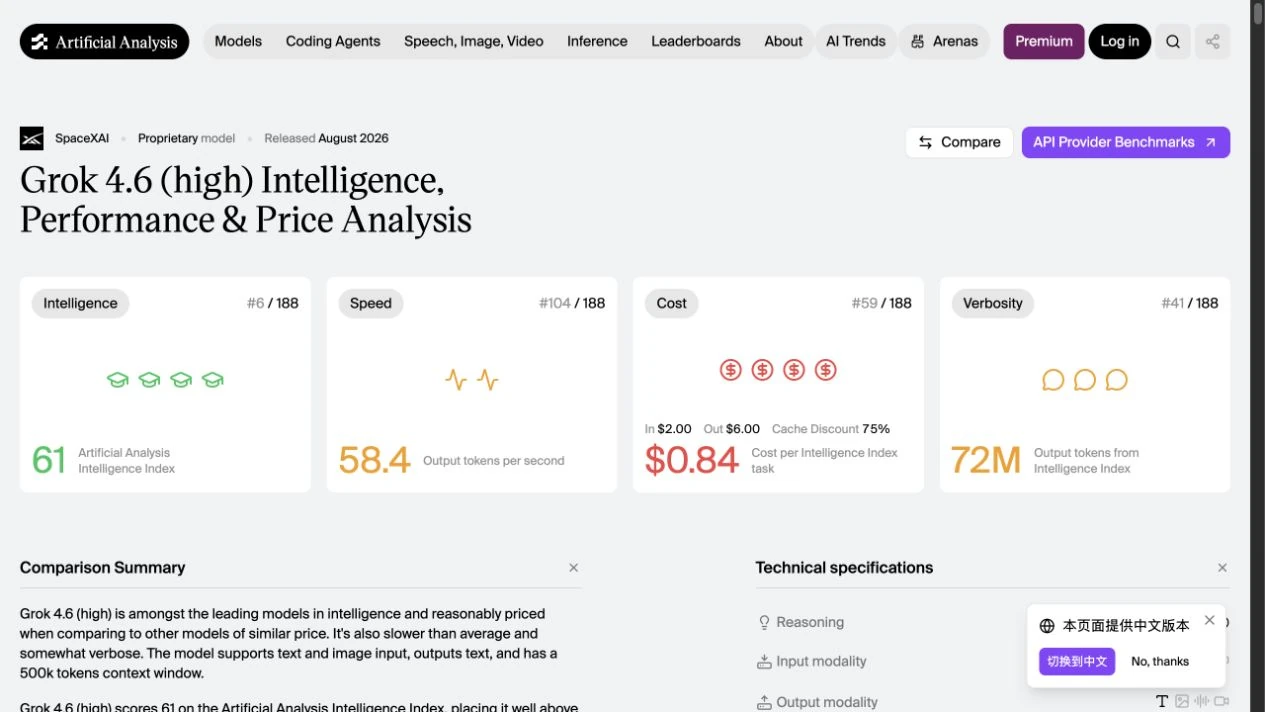
| Análisis artificial | Índice de inteligencia | 61 (#6 / 188 en el momento de la captura) | Compuesto independiente; utilice la metodología y la fecha de AA. |
| Análisis artificial | Velocidad de salida | 58,4 tokens por segundo | Medición independiente de la velocidad; la ruta y el hardware influyen en la latencia. |
| Análisis artificial | Coste por tarea de inteligencia | $0.84 | Se trata de una estimación de AA basada en su propia combinación de tareas; no es una factura de xAI. |
| Análisis artificial | GDPval-AA v2 | 1753 | Evaluación independiente de los resultados del trabajo. |
| Análisis artificial | AA-Maletín | 1577 | Evaluación independiente del estilo de trabajo intelectual. |
| Análisis artificial | Terminal-Bench v2.1 | 88.4% | Resultado de Independent v2.1; no es comparable con Terminal-Bench 3.0. |
| Ficha del modelo xAI | Terminal-Bench 3.0 | 26% | Resultado oficial de la ficha técnica en una versión diferente. |
| Mercor APEX-SWE | Ingeniería de software | 56,41 TP40T ± 6,21 TP40T | 200 tareas; debe mantenerse el intervalo de incertidumbre. |
| Agentes de Mercor APEX | Tareas de los agentes | 57,51 TP40T ± 3,51 TP40T | 33 mundos / 480 tareas; una evaluación específica del agente. |
| Ficha del modelo xAI | DeepSearchQA | 81.6% | Condición de control de calidad de la investigación comunicada por el proveedor. |
| Ficha del modelo xAI | Índice de alucinaciones sobre la realidad | 1.7% | Condición de prueba del modelo de tarjeta; no se trata de una tasa de error universal. |
Fuentes: Artificial Analysis, las tablas de clasificación de Mercor APEX y la ficha del modelo de xAI. No se deben combinar puntuaciones de diferentes conjuntos de datos, versiones, ajustes de esfuerzo o evaluadores.
¿Es el Grok 4.6 mejor que el Grok 4.5?
La ficha técnica oficial ofrece una respuesta ambigua, en lugar de un simple “sí”. La Grok 4.6 presenta un resultado de DeepSearchQA mucho más alto, mientras que esa misma ficha indica una tasa de alucinaciones sobre hechos más elevada que la de la Grok 4.5. Una revisión rigurosa no debería convertir un único punto de referencia sólido en una afirmación de fiabilidad universal.
| Evaluación oficial | Grok 4,6 | Grok 4,5 | Cómo interpretarlo |
|---|---|---|---|
| DeepSearchQA | 81.6% | 38.4% | Se ha registrado un gran avance en esta evaluación centrada en la búsqueda. |
| Índice de alucinaciones sobre la realidad | 1.7% | 0.98% | Cuanto más bajo, mejor; Grok 4,5 es mejor en esta situación descrita. |
Fuente: Ficha técnica del modelo xAI Grok 4.6. Estas evaluaciones responden a diferentes preguntas y no determinan un ganador absoluto.
¿Qué rendimiento, fiabilidad y capacidad tiene el modelo Grok 4.6 en la práctica?
Los datos publicados apuntan a un modelo de alta capacidad, pero el “rendimiento” se compone de varios aspectos: calidad de las respuestas, latencia, retención del contexto, cumplimiento de las instrucciones y recuperación ante fallos. En nuestra ruta directa, la prueba de disponibilidad devolvió un código HTTP 200 y LISTO. Los primeros resultados válidos de las demás tareas se obtuvieron correctamente, mientras que una solicitud de edición con restricciones provocó un fallo en la infraestructura del lado del cliente.
Artificial Analysis aporta una útil perspectiva realista que va más allá de las prestaciones más destacadas: la página capturada muestra un índice de inteligencia de 61, una velocidad de salida de 58,4 tokens por segundo y un coste estimado de $0,84 por tarea de inteligencia. Esa combinación apunta a un modelo competente, aunque no ultrarrápido, más adecuado para un trabajo significativo que para respuestas de una sola línea sin valor.
Ese resultado mixto resulta útil. Grok 4.6 puede ofrecer un buen rendimiento en trabajos estructurados, pero los usuarios de producción deben mantener reglas de reintento, tiempos de espera y un modelo de respaldo, en lugar de dar por sentado que todas las rutas se comportarán de la misma manera.
¿En qué contexto resulta más útil el Grok 4.6?
Trabajo de programación y desarrollo de productos a largo plazo
El ejemplo de puesta en marcha de xAI abarca desde la investigación de un tema, pasando por el análisis de la información y el trabajo en un código fuente, hasta la transformación de una idea en una aplicación o un producto final pulido. Por eso, un trabajo del tamaño de una función es una mejor forma de evaluación que una prueba sencilla de una sola función. Proporciona al modelo un objetivo delimitado, archivos relevantes, pruebas y una definición de «trabajo finalizado».
Síntesis de investigaciones y trabajo del conocimiento
La ventana de 500K, los resultados estructurados y el sólido resultado de DeepSearchQA convierten a Grok 4.6 en un candidato ideal para convertir un paquete de fuentes en un resumen, identificar discrepancias o extraer una tabla de decisiones. La prueba de verificación de fuentes respalda ese uso cuando las normas de citación son explícitas.
Informes extensos y análisis de múltiples documentos
Utiliza la ventana de contexto para los informes anuales, las transcripciones, los paquetes de políticas y los historiales de proyectos que, de otro modo, requerirían una división en fragmentos muy exhaustiva. Solicita los indicadores de página o sección y, a continuación, verifica las cifras más relevantes en los documentos originales.
Análisis basado en imágenes
La introducción de texto e imágenes resulta útil para capturas de pantalla, gráficos y diagramas. Esto resulta muy valioso cuando el elemento visual forma parte de una tarea de razonamiento más amplia, como analizar un panel de control junto con el contexto empresarial descrito por escrito.
Flujos de trabajo basados en agentes con objetivos claros
Las llamadas a funciones y los resultados estructurados facilitan flujos de trabajo como investigar un problema, activar una herramienta, actualizar un plan y devolver un resultado legible por máquina. El punto de partida más seguro es una tarea con permisos limitados, una condición de finalización clara y un verificador de objetivos.
| Flujo de trabajo | Por qué el modelo Grok 4.6 es el adecuado | La mejor tarea para empezar |
|---|---|---|
| Codificación | Posicionamiento de xAI, además de los datos de APEX-SWE y CursorBench | Un cambio real, ya sea un error o una mejora de funcionalidad, con pruebas |
| Investigación | Contexto de 500 000, salida estructurada y DeepSearchQA | Una sesión informativa respaldada por fuentes con referencias de página |
| Documentos largos | Ventana grande de contexto oficial | Un informe anual o un paquete normativo compuesto por varios documentos |
| Análisis visual | Entrada de imágenes más posicionamiento visual de xAI | Un informe con gran cantidad de gráficos y contexto escrito |
| Agentes | Llamadas a funciones y salidas estructuradas | Una investigación acotada con un verificador claro |
¿Es capaz el Grok 4.6 de realizar investigaciones y comprobaciones de datos?
La prueba del paquete de origen pidió a Grok 4.6 que clasificara seis afirmaciones, citara únicamente direcciones URL aprobadas y rechazara dos inferencias tentadoras.
(1) Confirmado: el comunicado de xAI tiene fecha del 12 de agosto de 2026 e indica que ese mismo día lanzará la versión Grok 4.6.
(2) Confirmado: la documentación oficial de xAI sobre el modelo indica que el ID del modelo es «grok-4.6».
(3) Confirmado: la documentación oficial indica una ventana de contexto de 500 000.
(5) Contradicho: se trata de versiones diferentes de Terminal-Bench y no es la misma métrica.
(6) Contradicho: la página solo muestra una entrada sobre el espacio de trabajo, no que esté incluido en todos los planes.
Mostrar la salida completa de Grok 4,6
| Afirmación | Veredicto | Respuesta en una frase | URL(s) de la fuente | Limitación exacta |
|---|---|---|---|---|
| (1) xAI anunció Grok 4.6 el 12 de agosto de 2026 | corroborado | El anuncio de xAI está fechado el 12 de agosto de 2026 y afirma que ese mismo día lanzará Grok 4.6. | https://x.ai/news/grok-4-6 | El paquete solo cita la fecha y la línea de lanzamiento, no la publicación completa. |
| (2) El ID oficial del modelo de la API es grok-4.6 | Confirmado | La documentación oficial de los modelos de xAI indica que el ID del modelo es grok-4.6. | https://docs.x.ai/developers/models/grok-4.6 | El resumen de Packet no incluye alias ni otros identificadores. |
| (3) la ventana de contexto oficial es de 500 000 tokens | compatible | La documentación oficial indica una ventana de contexto de 500 000 tokens. | https://docs.x.ai/developers/models/grok-4.6 | El paquete indica “500 000 de contexto”, sin mencionar explícitamente la palabra “tokens”. |
| (4) Artificial Analysis midió de forma independiente un índice de inteligencia de 61 | compatible | AA publica un índice de inteligencia de 61 para Grok 4.6. | https://artificialanalysis.ai/models/grok-4-6 | Packet recoge la puntuación de AA, no una auditoría independiente del método de AA. |
| (5) Terminal-Bench 3.0 26% y v2.1 88,4% son directamente comparables | contradicho | Se trata de versiones diferentes de Terminal-Bench y no utilizan la misma métrica. | https://artificialanalysis.ai/models/grok-4-6 ; https://media.x.ai/v1/website/card-4p6-4cd2dc57.pdf | Packet ofrece ambas puntuaciones, pero no indica ninguna equivalencia ni correspondencia. |
| (6) Una página GlobalGPT Grok 4,6 demuestra que todos los planes incluyen el modelo | contradicho | La página solo muestra una entrada del espacio de trabajo, no que esté incluido en todos los planes. | https://www.glbgpt.com/home/grok-4-6 | El propio Packet indica que se trata de una entrada de interfaz, no de todos los planes. |
Conclusión de la reseña: Se ajustaba bien a los límites de la evidencia cuando el paquete de origen y el formato de la respuesta eran explícitos. Esto resulta útil para los flujos de trabajo de investigación, pero la respuesta del modelo sigue siendo una ayuda para la investigación, no la propia evidencia externa.
Mostrar el texto exacto de la prueba
Utiliza únicamente el paquete de fuentes adjunto. Para cada una de las seis reivindicaciones, indica si está respaldada, contradicha o no establecida, con una respuesta de una sola frase, las URL de las fuentes y la limitación exacta.
¿Es el Grok 4.6 adecuado para programar y depurar?
La tarea de JavaScript requería un «diff» mínimo, ordenación numérica, tratamiento correcto de la mediana en casos pares e impares, inmutabilidad y dos condiciones de error exactas.
```diff
--- a/median.js
+++ b/median.js
@@ -1 +1,12 @@
-function median(values) { values.sort(); return values[Math.floor(values.length / 2)]; }
+function median(values) {
+  if (!Array.isArray(values)) throw new TypeError();
+  if (values.length === 0) throw new Error("empty input");
+  const sorted = values.slice().sort((a, b) => a - b);
+  const mid = Math.floor(sorted.length / 2);
+  if (sorted.length % 2 === 0) {
+    return (sorted[mid - 1] + sorted[mid]) / 2;
+  }
+  return sorted[mid];
+}Mostrar la explicación devuelta por Grok 4.6
La función original modificaba su argumento y utilizaba la función de ordenación lexicográfica por defecto (sort()), por lo que se toma una copia con slice() y se ordena numéricamente mediante (a, b) => a - b. Tras descartar los elementos que no son matrices con un TypeError y las matrices vacías con el error "entrada vacía", si el resultado tiene una longitud impar, se toma como resultado el único elemento central; si tiene una longitud par, se toma como resultado la media de los dos valores centrales, que es la mediana convencional.
Uso recomendado: Depuración de proyectos pequeños y medianos, redacción de pruebas, revisión de código y explicación de una función desconocida. En el caso de un repositorio grande, combina el modelo con tu propio ejecutor de pruebas y revisa el diff antes de fusionar.
Mostrar el alcance de la prueba
Corregir la mediana (valores) sin modificar su firma. No modificar los datos de entrada; lanzar un TypeError si no se trata de una matriz y un Error("entrada vacía") si la matriz está vacía; devolver una diferencia unificada mínima.¿Resulta útil la ventana de contexto de 500 000 caracteres con documentos largos?
Una consulta de recuperación de más de 220.000 tokens requería siete campos, localizadores de sección/página y una explicación de las dos versiones de «Terminal-Bench».
{
  "fecha_de_lanzamiento": {"valor": "12 de agosto de 2026", "localizador": "p.1"},
  "api_model_id": {"value": "grok-4.6", "locator": "p.2"},
  "ventana_de_contexto": {"valor": "500 000 tokens", "localizador": "p.2"},
  "long_context_input_price": {"value": "$4 por millón de tokens (solicitudes de más de 200 000 tokens)", "locator": "p.3"},
  "terminal_bench_version": ["3.0", "v2.1"],
  "terminal_bench_score": ["26%", "88,4%"]
}Mostrar la salida completa en formato JSON de Grok 4.6
{
  "fecha_de_lanzamiento": {"valor": "12 de agosto de 2026", "sección": "lanzamiento de xAI", "localizador": "p.1"},
  "api_model_id": {"value": "grok-4.6", "section": "Modelo de API", "locator": "p.2"},
  "ventana_de_contexto": {"valor": "500 000 tokens", "sección": "modelo de API", "localizador": "p.2"},
  "long_context_input_price": {"value": "$4 por millón de tokens (solicitudes de más de 200 000 tokens)", "section": "precios", "locator": "p.3"},
  "terminal_bench_version": [{"value": "3.0", "section": "ficha de referencia", "locator": "p.4"},{"value": "v2.1", "section": "referencia independiente", "locator": "p.5"}],
  "puntuación_de_pruebas_del_terminal": [{"valor": "26%", "sección": "ficha de referencia", "localizador": "p. 4"},{"value": "88,4%", "section": "prueba de rendimiento independiente", "locator": "p.5"}],
  "evidence_limits": {"value": "No se pueden comparar los dos resultados de Terminal-Bench porque corresponden a versiones diferentes de la prueba de rendimiento. No se indica la disponibilidad en tiempo real.", "section": "prueba de rendimiento independiente", "locator": "p.5"}
}
Lo que esto demuestra: El modelo es capaz de extraer y estructurar información de un paquete grande y con ruido siguiendo un esquema estricto. Lo que no demuestra: que cada solicitud de 500 000 tokens sea igual de rápida, económica o precisa en un documento de cliente cualquiera.
¿Es capaz el Grok 4.6 de seguir instrucciones estrictas y razonar de forma transparente?
En el caso de un problema de asignación con restricciones, arrojó la solución única: 7 horas de investigación, 9 horas de programación y 8 horas de control de calidad.
{"R":7,"C":9,"Q":8,"total":24,"check":"Los valores cumplen la ecuación R+C+Q=24, siendo C=R+2 y Q=R+1."}Mostrar el mensaje exacto
Distribuye 24 horas entre Investigación (R), Programación (C) y Control de calidad (Q). Devuelve únicamente JSON con claves enteras R, C, Q, total y una frase de comprobación. Restricciones: R + C + Q = 24; C = R + 2; Q = R + 1. No incluyas el razonamiento oculto.
La tarea independiente de reescritura con restricciones no devolvió ninguna respuesta de la API en dos intentos del cliente. Esto se registra como una anomalía de la infraestructura, no como una puntuación de calidad. La lección práctica que se desprende es que conviene mantener una vía alternativa para la producción editorial.
¿Cuánto cuesta el Grok 4.6?
| Opción | Precio actual publicado | Lo mejor para | Límite importante |
|---|---|---|---|
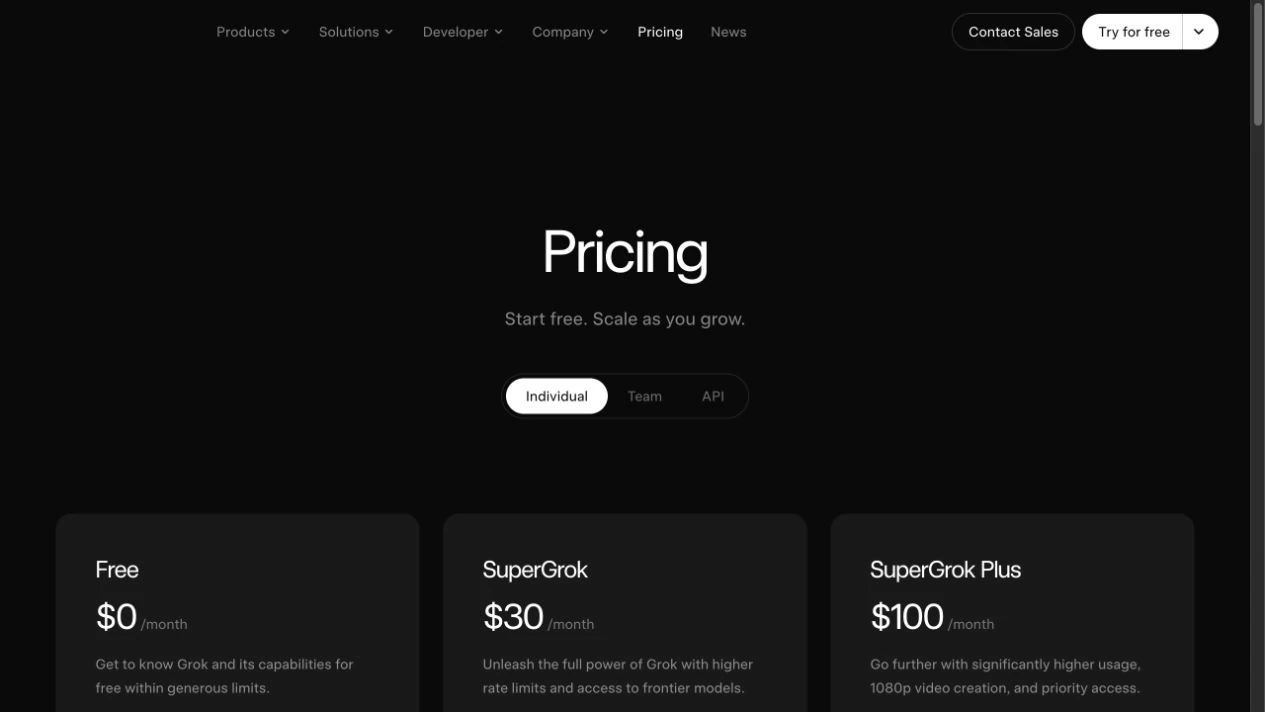
| xAI para consumidores: Gratis | $0/mes | Probando la experiencia de usuario nativa. | El acceso y los límites del modelo de plan gratuito pueden sufrir cambios. |
| SuperGrok | $30 al mes | Uso habitual por parte de los consumidores; en la página actual figura Grok 4.6. | Comprueba los derechos actuales antes de publicar. |
| SuperGrok Plus | $100/mes | Uso intensivo por parte de los consumidores; en la página actual figura Grok 4.6. | No se debe dar por sentado que otros planes tengan acceso. |
| Nivel básico de la API de xAI | Entrada $2/M; salida $6/M; entrada almacenada en caché $0,50/M | Desarrolladores que crean integraciones basadas en el uso. | Las herramientas se facturan por separado cuando procede. |
| Nivel de contexto extenso de la API de xAI | Por encima de 200 000: entrada $4/M; $1/M en caché; salida $12/M | Textos y documentos de gran tamaño. | No utilices el precio base para una solicitud de más de 200 000. |
| GlobalGPT | Consulta los planes actuales de GlobalGPT | Comparación del Grok con varios modelos líderes en un mismo espacio de trabajo. | No des por sentado que todos los planes incluyen Grok 4.6; consulta la página del plan. |
¿Cuánto costaría una solicitud API Grok 4.6?
| Ejemplo de solicitud | Cálculo | Coste estimado por token del modelo |
|---|---|---|
| 50 K de entrada + 5 K de salida | 50 000 × $2/M + 5 000 × $6/M | $0.13 |
| 100 000 de entrada + 10 000 de salida | 100 000 × $2/M + 10 000 × $6/M | $0.26 |
| 250 K de entrada + 10 K de salida | 250 000 × $4/M + 10 000 × $12/M | $1.12 |
| 400 K de entrada + 20 K de salida | 400 000 × $4/M + 20 000 × $12/M | $1.84 |
Ejemplos aritméticos basados en los precios de catálogo de xAI. No incluyen los descuentos por entradas almacenadas en caché, los impuestos, los gastos de desplazamiento de la herramienta ni el margen de beneficio de los proveedores externos.
GlobalGPT es una opción ideal cuando la pregunta es “¿qué modelo funciona mejor para esta tarea?”, en lugar de “¿cómo puedo asignar cada tarea a una sola API?”. Puedes comparar indicaciones de redacción, investigación, programación y análisis en un único espacio de trabajo y, a continuación, utilizar el Página de precios de GlobalGPT para seleccionar la suscripción que mejor se adapte a tu uso. Se trata de una recomendación de suscripción con varios modelos, no de una conversión de créditos GlobalGPT a precios de tokens xAI.
¿Cómo se puede acceder a Grok 4.6?
Los consumidores pueden empezar con las opciones de suscripción actuales de xAI para Grok. Los desarrolladores deben utilizar la documentación oficial de la API de xAI y el ID exacto del modelo. grok-4.6. Los lectores que deseen comparar modelos sin tener que crear varias cuentas de API pueden utilizar la entrada verificada del espacio de trabajo Grok 4.6 en GlobalGPT; no hay que confundir el acceso a la interfaz de usuario de la plataforma con todas y cada una de las funciones nativas de xAI.
¿Cuáles son las principales limitaciones del Grok 4.6?
- La información actual aún debe respaldarse con pruebas: La fecha límite de formación previa de enero de 2026 no garantiza que se posean conocimientos prácticos.
- Los titulares sobre pruebas comparativas pueden llevar a confusión: La versión, el evaluador, el esfuerzo de razonamiento y el conjunto de datos deben figurar siempre junto a cada puntuación.
- Un contexto extenso sale más caro: Las consultas de más de 200 000 tokens utilizan el nivel superior de la API de contexto largo.
- La fiabilidad de las rutas varía: Nuestra solicitud de edición restringida se ha visto afectada por un fallo en la infraestructura, aunque el resto de tareas se han completado con éxito.
- El acceso a la plataforma no es el mismo: Una entrada en el espacio de trabajo GlobalGPT no implica todas las funciones nativas de xAI ni todos los derechos de suscripción.
¿Deberías elegir el modelo Grok 4.6 u otro modelo de IA?
Elige Grok 4.6 cuando el contexto extenso, la codificación y el razonamiento estructurado sean fundamentales para el trabajo. Elige un modelo diferente cuando tu prioridad principal sea un ecosistema de herramientas específico, un coste predecible más bajo, un resultado multimodal concreto o un flujo de trabajo con el que tu equipo ya esté familiarizado. La comparación más justa es utilizar la misma indicación, el mismo paquete de datos de origen y el mismo verificador en todos los modelos, algo que GlobalGPT facilita enormemente.
¿Quién debería utilizar el Grok 4.6?
- Investigadores y analistas: paquetes fuente, tablas de pruebas y escritos extensos.
- Desarrolladores: depuración, revisión de código y planes de implementación estructurados.
- Creadores y editores: la redacción de textos extensos cuando se proporciona un briefing claro y una guía de estilo.
- Equipos que comparan modelos: evaluaciones repetibles con el mismo mensaje de solicitud en un único espacio de trabajo.
¿Qué suelen preguntar los lectores sobre el Grok 4.6?
¿Se ha lanzado oficialmente la versión Grok 4.6?
Sí. El anuncio del lanzamiento de xAI tiene fecha del 12 de agosto de 2026.
¿Cuál es el ID oficial del modelo de la API?
grok-4.6.
¿Qué es la ventana de contexto?
xAI utiliza una ventana de contexto de 500 000 tokens.
¿El modelo Grok 4.6 admite imágenes?
Sí. La documentación oficial del modelo indica que la entrada es una imagen y la salida, texto.
¿Cuánto cuesta el Grok 4.6?
La página actual para consumidores muestra el plan «Free» a $0 al mes, el plan «SuperGrok» a $30 al mes y el plan «SuperGrok Plus» a $100 al mes. Los precios de la API se basan en el uso y cuentan con un nivel de contexto largo independiente a partir de 200 000 tokens.
¿Es el Grok 4.6 mejor que el Grok 4.5?
Es más reciente y ofrece un excelente rendimiento en varias evaluaciones citadas, pero las tareas y las versiones de las pruebas de rendimiento difieren. Prueba tu propio flujo de trabajo recurrente.
¿Puedo utilizar un Grok 4,6 en un GlobalGPT?
GlobalGPT tiene una entrada de espacio de trabajo Grok 4.6 generada. Confirma los derechos actuales del plan en la página de precios.
¿Es fiable el modelo Grok 4.6 para la investigación?
Obtuvo buenos resultados en la prueba de paquetes de origen restringidos, pero las afirmaciones importantes siempre deben contrastarse con la fuente citada.
¿Merece la pena utilizar el Grok 4.6 en 2026?
Grok 4.6 es un modelo fiable y lanzado oficialmente que cuenta con una útil ventana de contexto de 500 000, un razonamiento configurable, sólidos resultados en pruebas de rendimiento publicadas y buenos resultados en la primera ronda en tareas de investigación estructurada y de documentos largos. Sus puntos débiles son igualmente prácticos: las cifras de las pruebas de rendimiento deben ir acompañadas de etiquetas de versión precisas, los datos en tiempo real aún necesitan fuentes y la fiabilidad de las rutas puede variar.
Si deseas acceder a la aplicación de forma nativa o desarrollar una API, empieza por consultar la documentación actual de xAI. Si prefieres un flujo de trabajo basado en comparativas, Prueba con Grok 4,6 en GlobalGPT junto con otros modelos destacados, elige el plan que mejor se adapte a tu volumen de trabajo de redacción, investigación, análisis o programación.
Fuentes primarias: Lanzamiento de xAI, Documentación del modelo xAI, Precios de la API de xAI, Precios de xAI para consumidores, Análisis artificial, Mercor APEX-SWE y el Ficha del modelo xAI.