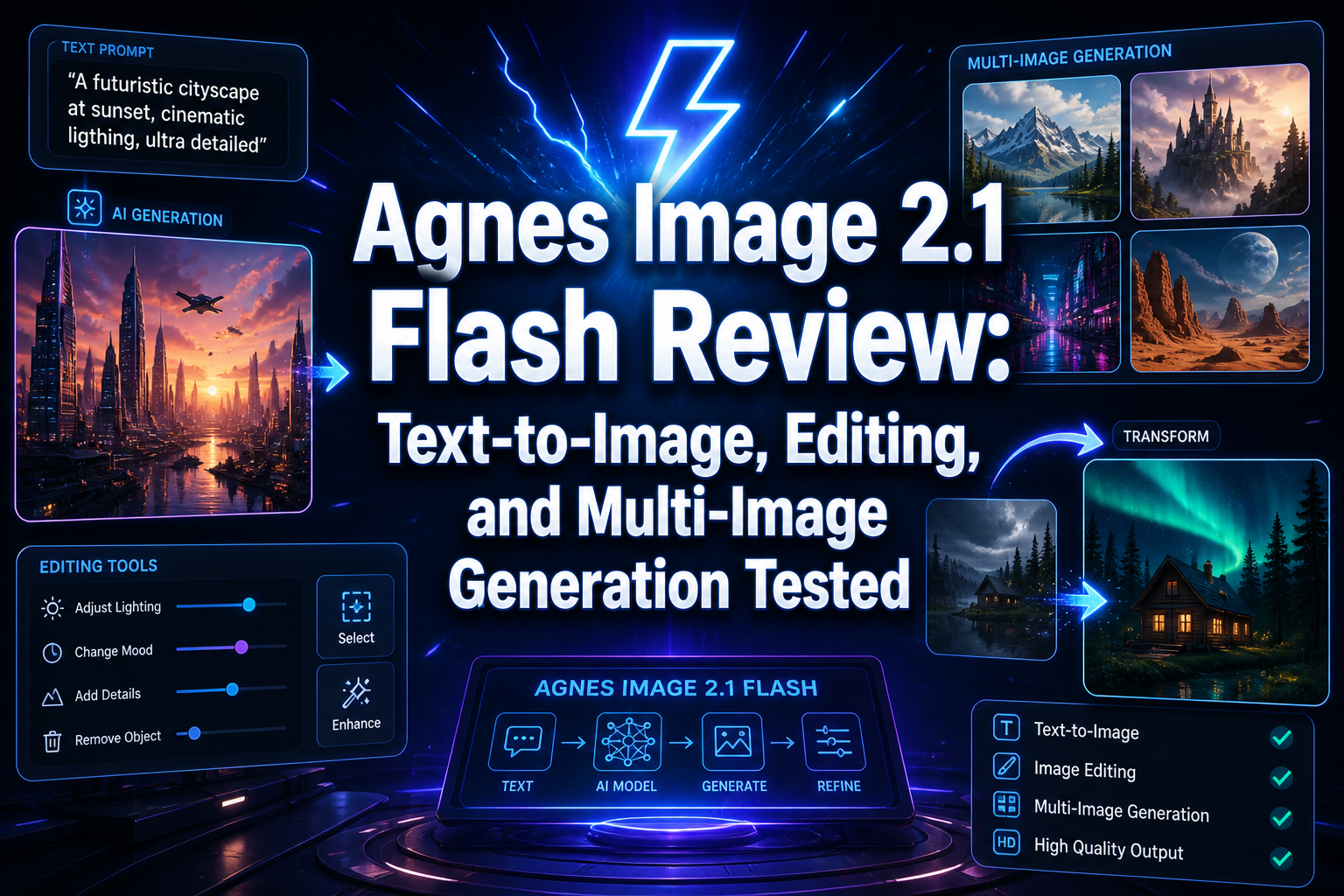
Agnes Image 2.1 Flash promises an unusually practical combination: create an image from a prompt, revise an existing asset, and build a new composition from several references. The interesting question is not whether it can make one attractive picture. It is whether it can follow a commercial brief without losing readable text, approved product details, or the separate roles assigned to reference images.
We designed three controlled tasks around those decisions: a text-to-image product ad, a targeted background edit, and a campaign visual assembled from multiple references. The exact API model identifier agnes-image-2.1-flash has been accepted by the test route. The first task returned a usable image; the editing and multi-image tests remain pending.
If you want one place to try image models without setting up a different account for each provider, GLBGPT makes comparison simpler. You can start with Agnes when it appears in the product interface, then use the same brief with another image model if the first result does not fit.
Quick Answer
Agnes Image 2.1 Flash produced a strong first text-to-image result in about 19 seconds, with both requested text lines spelled correctly. That is encouraging evidence for product-ad generation, not a final verdict on editing or multi-image consistency. Two of the three planned tests are still pending.
What Is Agnes Image 2.1 Flash?
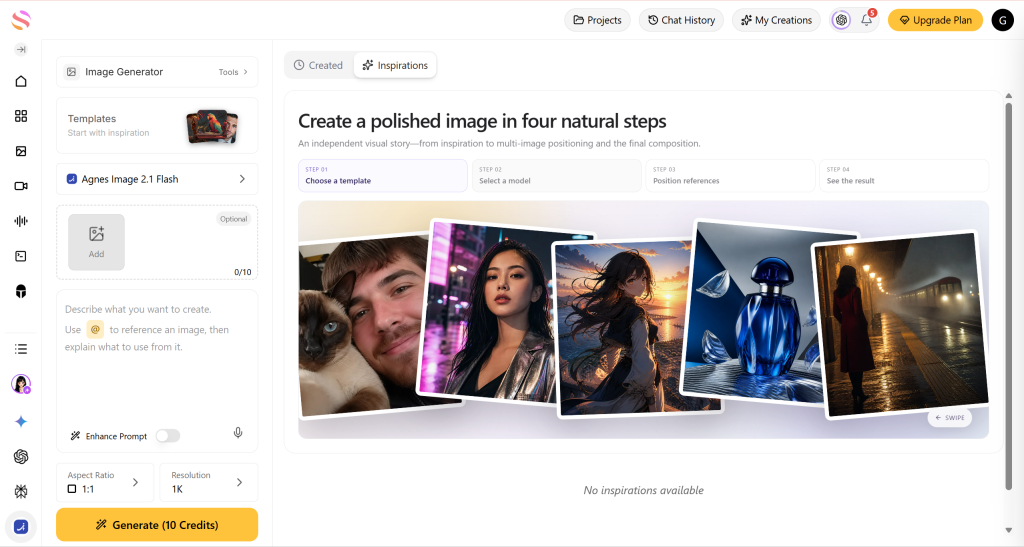
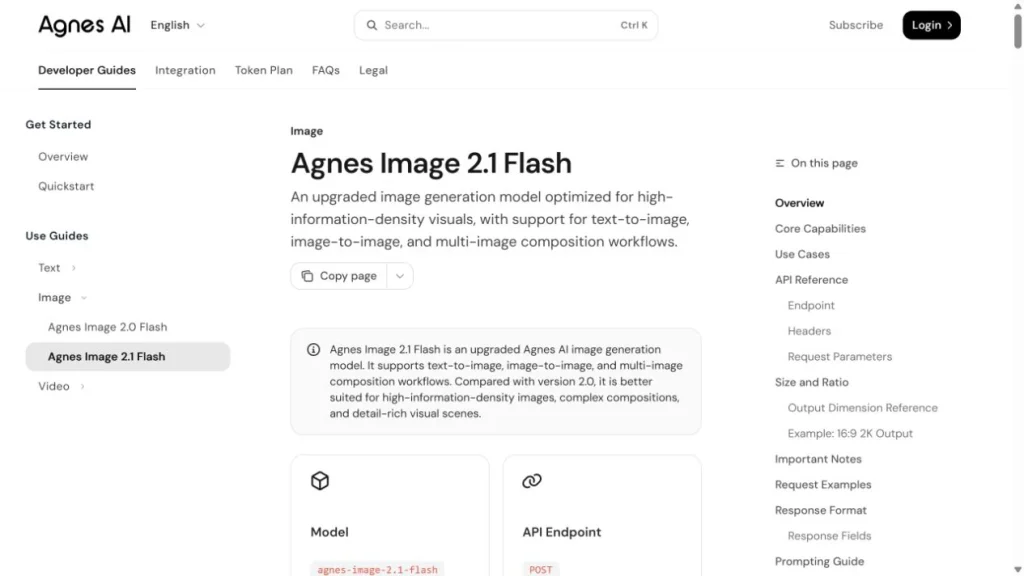
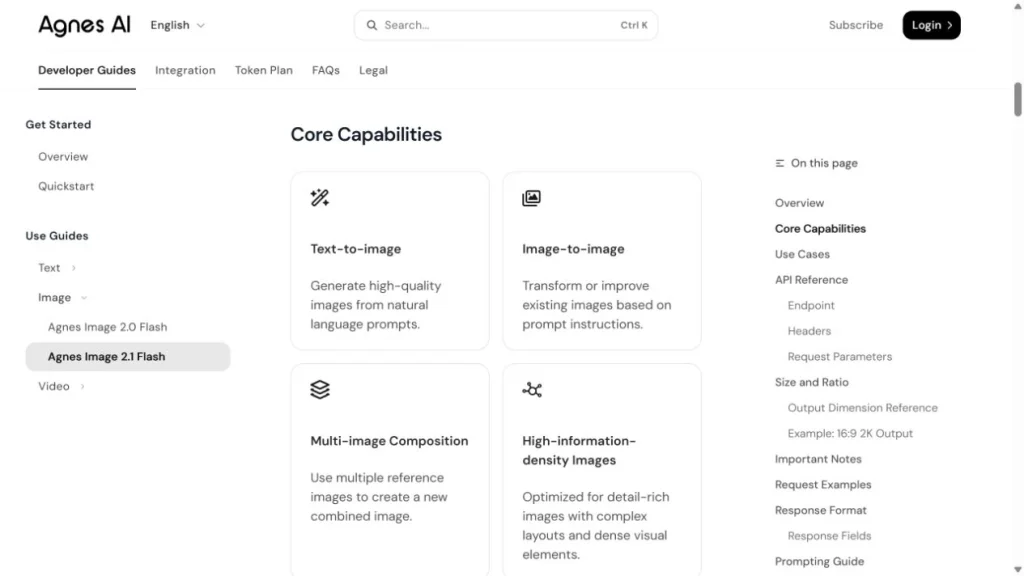
Agnes AI describes Agnes Image 2.1 Flash as an upgraded image model for text-to-image generation, image-to-image editing, and multi-image composition. The official page lists 1K, 2K, 3K, and 4K output options plus 1:1, 3:4, 4:3, 16:9, 9:16, 2:3, 3:2, and 21:9 aspect ratios.
For this review, the functional split matters more than the label. Text-to-image asks the model to interpret a complete visual brief. Editing tests whether it can change a specified region while preserving approved content. Multi-image generation tests whether it understands that one reference may define identity, another geometry, and a third only visual style.
How We Tested Agnes Image 2.1 Flash
Each task requests one 3:2 landscape image at the same available resolution tier. We record the first completed output rather than rerolling until the model looks good. The test log separates objective execution facts—completion status, returned file, local end-to-end time, and charge—from visual judgment such as prompt adherence, text accuracy, edit precision, subject preservation, and practical usability. Agnes AI documents a POST /v1/images/generations endpoint; our controlled run used a connected task route. A rejected, failed, or charged-but-outputless request is disclosed but never scored as an image-quality loss.
Test 1: Text-to-Image Generation
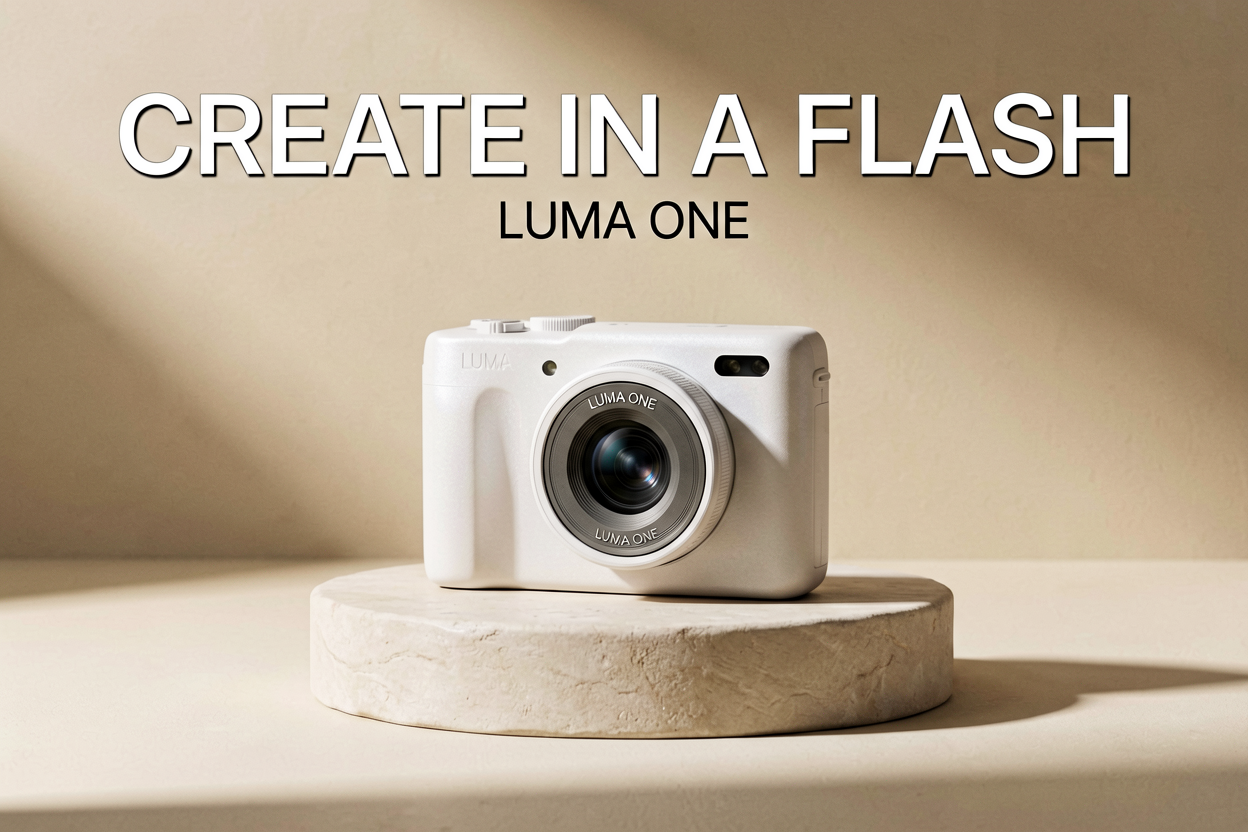
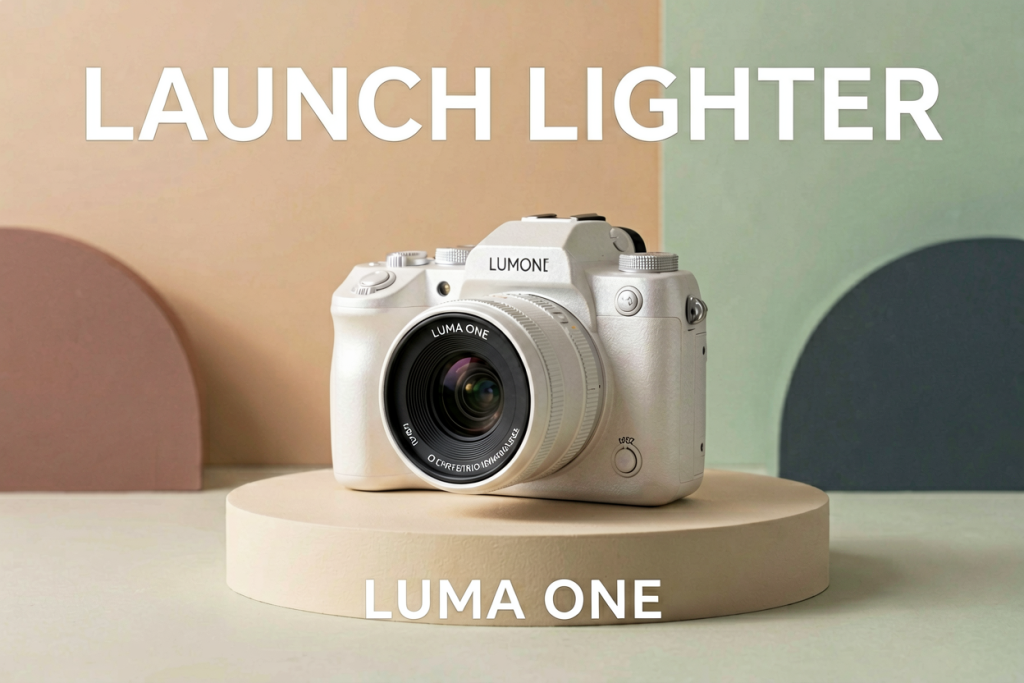
The first prompt asked for a polished advertisement for a fictional LUMA ONE instant camera: an ivory product body, realistic lens glass, controlled studio lighting, a muted clay palette, and two exact lines of English copy. The first and only run returned a 1248 × 832 image in about 19 seconds, with no retry. It rendered “CREATE IN A FLASH” and “LUMA ONE” correctly, while maintaining a convincing product finish, balanced composition, and coherent studio lighting. One successful ad does not establish a normal success rate, but this output was usable as a campaign draft without rebuilding the central product or headline.
Test 2: Image Editing
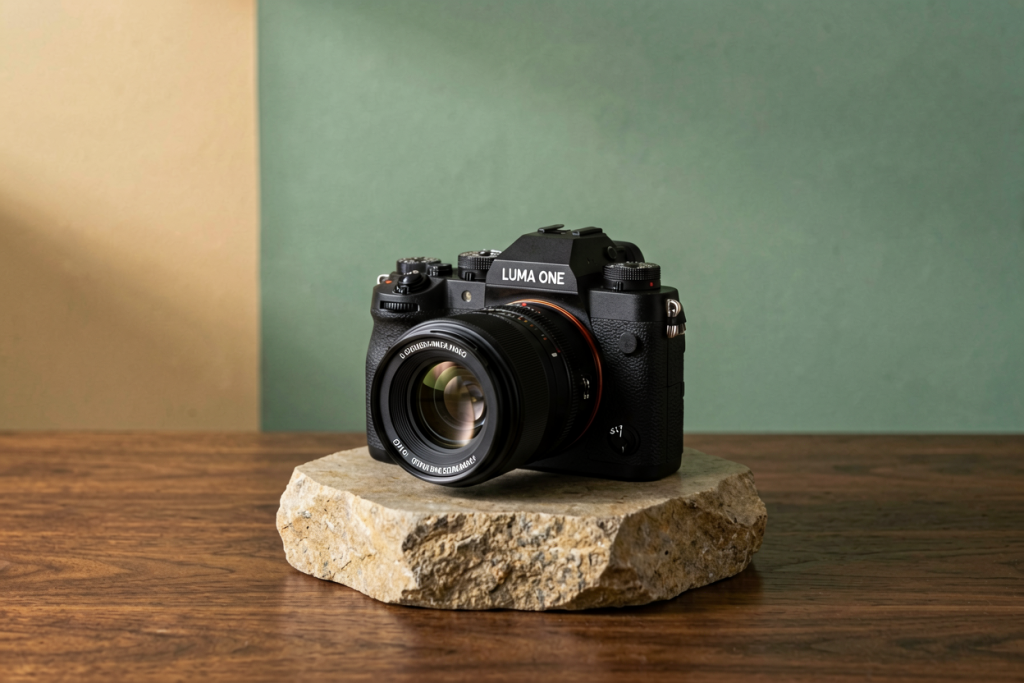
The editing task starts from an original LUMA ONE product image and requests only two changes: replace the background with a coastal-blue studio wall and replace the surface with pale limestone. The camera shape, lens, buttons, proportions, printed marks, position, and framing must stay intact. We will inspect whether Agnes performs a targeted edit or quietly redraws the entire product, with particular attention to edges, shadows, small controls, and changes outside the requested area. This task remains pending until its licensed source image and returned output are available.
Test 3: Multi-Image Generation
The multi-image task assigns three original references different jobs: a front product image defines identity, a side detail defines geometry, and a moodboard supplies palette, light, and set design only. The requested output is one three-quarter-view campaign image. We will evaluate whether the model respects those roles, keeps the product recognizable, resolves conflicting cues, transfers style without copying unrelated objects, and produces a coherent scene rather than a collage. The supported reference count and visual result remain pending verification.
What Makes Agnes Image 2.1 Flash Stand Out?
The potential advantage is continuity across creation, revision, and reference-driven generation. Many image tools can make a striking first draft; fewer can preserve the parts a team has already approved when the brief changes. If Agnes handles readable ad copy, local edits, and role-aware reference fusion in one model, it could reduce the handoffs between a generator, an editor, and a compositing tool.
The “Flash” name also creates a testable expectation. We will consider speed useful only when the first output follows the brief closely enough to save correction time. A fast image with broken text or redesigned product details is not automatically the faster choice for real work.
Agnes Image 2.1 Flash Limitations
The first test handled two short English lines correctly, but that does not prove reliable performance with dense copy, small legal text, or complex typography. The remaining risks are exact product geometry, accidental changes outside an edit, identity drift between references, invented branding, reference-role confusion, and a returned aspect ratio that differs from the request. We will also record safety rejections and technical failures separately, because a failed request says nothing about the visual quality of an image that was never returned.
Agnes Image 2.1 Flash Pricing and Access
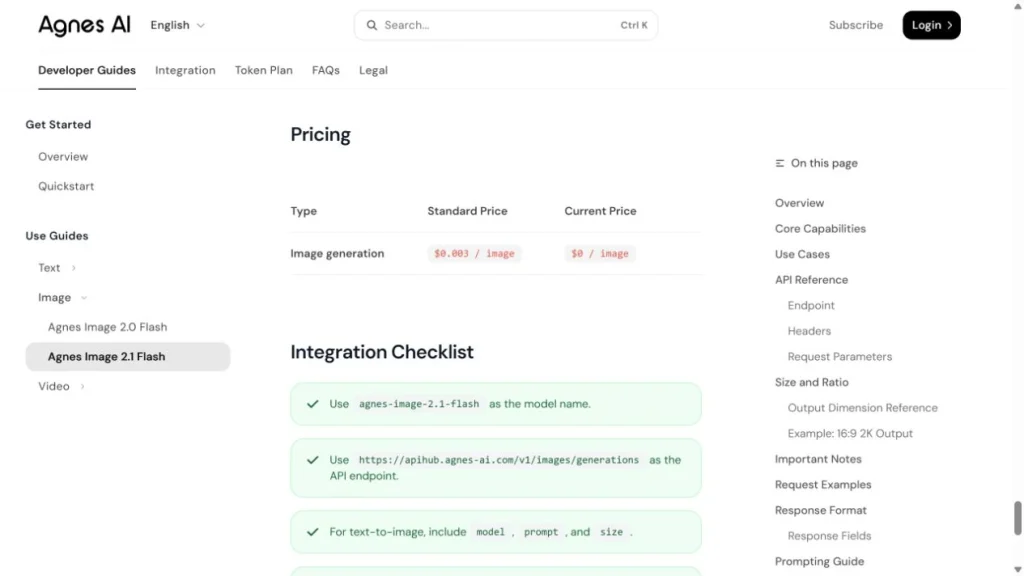
The exact model identifier is accepted by the tested task route, and Agnes AI documents programmatic generation through POST /v1/images/generations. The official page lists a standard price of $0.003 per image and currently displays $0 per image. Treat the latter as a dynamic promotional price, not a permanent promise, and verify it again before publishing. GLBGPT interface availability, regional availability, and platform credit usage still need separate confirmation.
Agnes Image 2.1 Flash vs Other Image Models
| Model | Best reason to consider it | What must be tested before comparing |
|---|---|---|
| Agnes Image 2.1 Flash | One route for generation, editing, and multi-reference work | Original outputs, elapsed time, input limits, and cost |
| GPT Image 2 | Useful alternative for instruction-heavy generation and editing | Same prompt, inputs, ratio, resolution, and output count |
| Nano Banana Pro | Useful alternative for reference-led image creation and edits | Same prompt, inputs, ratio, resolution, and output count |
| Seedream | Useful alternative for design-focused generation and editing | Same prompt, inputs, ratio, resolution, and output count |
This is a choice framework, not a ranking. A fair winner requires matched tasks and original outputs from every model; recycled demos or different resolution tiers cannot support a head-to-head conclusion.
Agnes Image 2.1 Flash Review Verdict
The first result is promising, but the full verdict is not ready. Agnes produced a polished product-ad draft in about 19 seconds and spelled both requested text lines correctly on the first run. Editing precision and multi-image control are still untested, so the current evidence supports text-to-image experimentation—not a blanket recommendation for every advertised feature.
Want to compare before committing? Try the task in GLBGPT when Agnes becomes visible, and keep the prompt and settings identical across models. That gives you a decision based on your own brief rather than a curated demo.
Frequently Asked Questions
What is Agnes Image 2.1 Flash?
It is an upgraded Agnes AI image model for text-to-image generation, image-to-image editing, and multi-image composition.
Can Agnes Image 2.1 Flash edit existing images?
Editing is part of the verified test scope, but the review will not judge precision until the original input and returned image can be compared.
Does Agnes Image 2.1 Flash support multiple reference images?
Multi-image generation is part of the planned test. The exact supported input count and file limits are still pending official confirmation.
Is Agnes Image 2.1 Flash good at generating text?
In our first product-ad test, it rendered “CREATE IN A FLASH” and “LUMA ONE” correctly. More demanding typography still needs testing.
How much does Agnes Image 2.1 Flash cost?
The official page lists $0.003 per image as the standard price and currently shows $0 per image. The free rate appears promotional and should be rechecked before use.
Is Agnes Image 2.1 Flash available on GLBGPT?
The exact model identifier is accepted by a connected task route, but its appearance in the GLBGPT product interface still needs verification before publication.