

استخدم الإصدار Claude Free للأعمال العرضية، والإصدار Pro للاستخدام الفردي المنتظم، والإصدار Max عندما تؤدي قيود الإصدار Pro إلى مقاطعة الجلسات المهمة بشكل متكرر، والإصدار Team للتعاون المُدار، والإصدار Enterprise للاستخدام المقيس أو لضمان ضوابط مؤسسية أكثر صرامة.
إذا كنت تستخدم Claude في البرمجة، فإن اللحظة المحرجة هي الوصول إلى الحد الأقصى في منتصف عملية التصحيح. تبلغ تكلفة باقة Pro $20 شهريًّا؛ بينما تبدأ الفئة الفردية التالية من $100. قبل الانتقال إلى هذه الفئة، حدد ما إذا كنت بحاجة إلى جلسات برمجة أطول بـ Claude، أو استدعاءات واجهة برمجة التطبيقات (API) لتطبيقك، أو مجموعة أوسع من أدوات التطوير.
للمطورين الذين يرغبون في الحصول على أدوات البرمجة، وتكامل التطبيقات، وإنشاء المواقع الإلكترونية في مكان واحد،, GlobalGPT هو اختيارنا الأفضل من حيث القيمة. استخدم واجهة سطر الأوامر (CLI) في مشروع محلي، وواجهة برمجة التطبيقات (API) في تطبيقك الخاص، وMCP مع المساعد الذي تستخدمه بالفعل، ووكيل Yukie لإنشاء موقع ويب. تبدأ باقة Pro من $15 على أساس الفوترة الشهرية، مع تخصيص ميزانية منفصلة لطلبات واجهة برمجة التطبيقات (API) من خلال أرصدة مدفوعة. وهذا يوفر لك طريقة ميسورة التكلفة لإنشاء سير عمل أوسع نطاقًا قبل الالتزام باشتراك أكبر بكثير في خدمات الذكاء الاصطناعي.
أي خطة من خطط «كلود» يجب أن تختار؟
| مهمتك التالية | ابدأ من هنا | لماذا يناسب هذا |
|---|---|---|
| اكتب الكود محليًّا، واربط استدعاءات النموذج، وقم بإنشاء موقع ويب | جلوبال جي بي تي تي | تدعم CLI وAPI وMCP وYukie مراحل مختلفة من نفس المشروع، مع سعر اشتراك أولي أقل. |
| استخدم الرمز Claude في إطار اشتراك شخصي في خدمة Claude | Claude Pro؛ Max إذا تسببت الحدود في توقف العمل بشكل متكرر | اختر سير العمل الأصلي Claude وسعة كافية من الخطة المشتركة لجلسات البرمجة الخاصة بك. |
| إنشاء تطبيق يعتمد على استخدام واجهة برمجة التطبيقات (API) Anthropic | منصة Claude؛ التحقق من رصيد واجهة برمجة التطبيقات (API) لـ Max / Team | استخدام الرموز المخصصة للميزانية والائتمانات المؤهلة في مؤسستك على Console. |
| جرب Claude للإجابة على أسئلة البرمجة من حين لآخر | كلود فري | قم بتقييم الإجابات قبل الدفع مقابل الجلسات العادية. |
ابدأ بالخطة الأقل تكلفة التي تفي باحتياجاتك الفعلية دون انقطاعات متكررة. ويكون اختيار خطة أعلى مستوى مجديًّا عندما يتجاوز الوقت المهدر بسبب القيود أو النماذج الناقصة أو تكاليف الإدارة تكلفة الترقية.
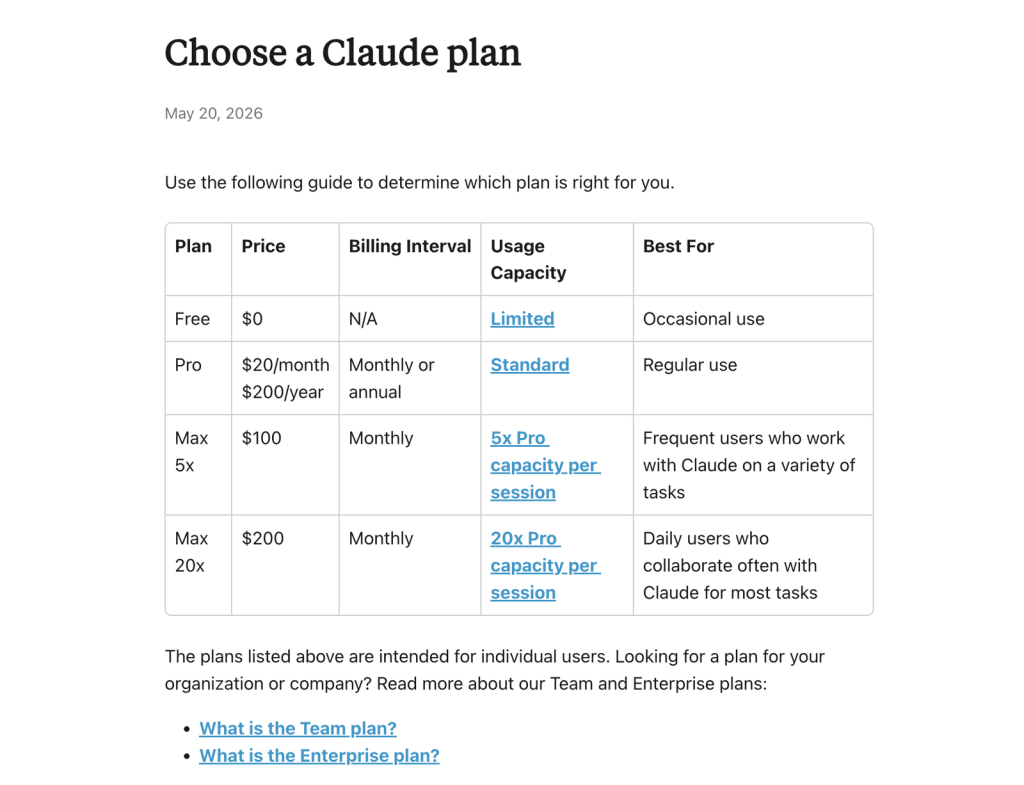
| الخطة | السعر المعلن | أفضل ملاءمة | الحدود الرئيسية |
|---|---|---|---|
| مجاناً | $0 | محادثات من حين لآخر، وكتابة بسيطة، وتقييم | استخدام محدود؛ لا يشمل «Research» أو «Opus» أو «Fable» |
| محترف | $20/شهرياً أو $200/سنوياً | العمل الفردي المنتظم | لا تزال حدود الخطة المشتركة سارية على كل من Claude وClaude Code |
| 5 أضعاف كحد أقصى | $100/شهر | المستخدمون الدائمون الذين يصلون مرارًا وتكرارًا إلى الحدود القصوى لخدمة Pro | سعة تبلغ 5 أضعاف السعة الاحترافية لكل جلسة، وليست غير محدودة |
| 20 ضعفاً كحد أقصى | $200/شهر | المستخدمون اليوميون الكثيفون | 20 ضعف سعة «Pro» لكل جلسة، بالإضافة إلى الحدود الأسبوعية وغيرها من الحدود |
| معيار الفريق | $25 لكل مقعد شهريًّا أو $20 لكل مقعد شهريًّا سنويًّا | فرق تتألف من 2 إلى 150 فردًا | السعة القائمة على المقاعد وإدارة المنظمة |
| فريق بريميوم | $125 لكل مقعد شهريًّا أو $100 لكل مقعد شهريًّا سنويًّا | المستخدمون الكثيفون للفريق | 5 أضعاف الاستخدام القياسي بسعر مقعد أعلى بكثير |
| الخدمة الذاتية للمؤسسات | $20 لكل مقعد شهريًّا، تُفوتر سنويًّا، بالإضافة إلى تكلفة الاستخدام وفقًا لأسعار واجهة برمجة التطبيقات (API) | المنظمات التي تفضل نظام الاستخدام المدفوع حسب الاستهلاك | رسوم المقعد لا تمثل التكلفة الكاملة |
| مدعومة بمبيعات المؤسسات | اتصل بالمبيعات | المسائل المعقدة المتعلقة بالأمن أو الامتثال أو المشتريات | تختلف الشروط حسب الاتفاقية |
يتطلب تطوير التطبيق حسابًا منفصلاً للتكاليف: حيث تحدد الرموز النموذجية والتخزين المؤقت والأدوات نفقات واجهة برمجة التطبيقات (API). و دليل واجهة برمجة التطبيقات (API) لـ Claude يغطي هذا الإعداد؛ وفيما يلي شرح لحد الائتمان المخصص لـ«ماكس» و«فريق».
Claude الإصدار المجاني مقابل الإصدار الاحترافي: متى يكون الترقية مجدية؟
تُعد «Claude Free» فئة تقييمية جيدة وخيارًا معقولاً لإعداد الملخصات من حين لآخر، والكتابة البسيطة، وطرح الأسئلة، والأعمال الأساسية المتعلقة بالمستندات. تتضمن النسخة المجانية خدمات «Sonnet» و«Haiku»، والبحث على الويب، وإنشاء الملفات، و«Artifacts»، و«Docs» و«Slides». أما خدمات «Opus» و«Fable» و«Research» فتخضع لقواعد وصول خاصة بالخطط المدفوعة.
تُعد باقة Claude Pro أول باقة مدفوعة معقولة لمن يستخدم Claude كأداة عمل أسبوعية. فهي تضيف خدمة Opus، وتتيح استخدام Fable من خلال رصيد الاستخدام، وتشمل خدمة Research وClaude Code والمشاريع وميزات الإنتاجية المدفوعة الأخرى. اختر الخيار الشهري $20 أثناء تقييمك للاستخدام المنتظم؛ أما الخيار السنوي $200 فيُدفع مقدمًا. يُقرب Anthropic مكافئه الشهري السنوي إلى $17، بينما يبلغ $200 مقسومًا على 12 حوالي $16.67.
- اختر «مجانًا» إذا كان الحد المفروض يمثل إزعاجًا لك وليس تكلفة باهظة.
- اختر الإصدار «Pro» إذا كان كود Claude جزءًا من روتينك الأسبوعي، أو إذا كنت تحتاج بانتظام إلى المساعدة في البرمجة، أو في الأبحاث، أو في المشاريع القابلة للتكرار.
- لا تقم بالترقية لمجرد اسم الطراز؛ بل قم بالترقية من أجل سير العمل أو السعة التي ستستخدمها فعليًّا.
للحصول على شرح أكثر تفصيلاً عن الفئة المجانية، انظر هل سيكون برنامج «كلود AI» مجانيًا في عام 2026؟.
Claude Pro مقابل Max: ادفع مقابل السعة، لا مقابل المكانة
يحتوي باقة Claude Max على مستويين منفصلين: Max 5x بسعة $100 شهريًّا، وMax 20x بسعة $200 شهريًّا. تصف التسميتان «5x» و«20x» السعة مقارنةً بخطة Pro لكل جلسة. ولا تعنيان رسائل غير محدودة أو رمز Claude غير محدود.
سلم الأسعار الشهري الفردي · بالدولار الأمريكي · تم التحقق منه في 10 أكتوبر 2026
جهاز Max هو إصدار تم شراؤه بكامل سعته، وليس مجرد ترقية بسيطة من طراز Pro
المصدر: أسعار Claude و تفاصيل باقة «ماكس».
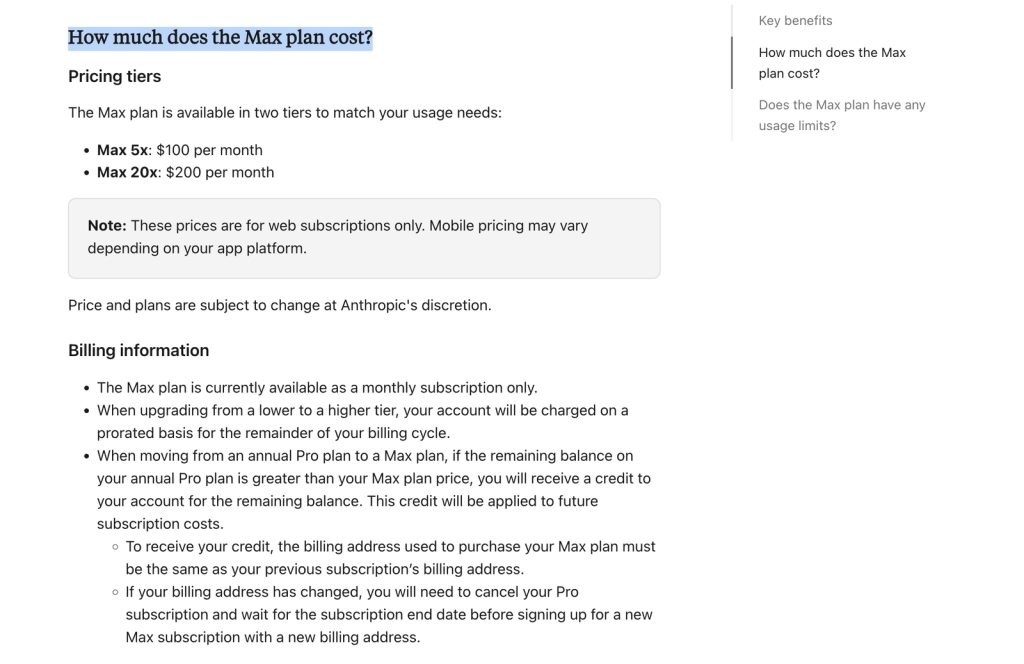
تشير صفحة المساعدة الخاصة بـ Anthropic's Max إلى أن حدود الجلسات تُعاد ضبطها كل خمس ساعات. كما يضع Max حدًا أسبوعيًا مشتركًا لجميع النماذج، بالإضافة إلى حد أسبوعي منفصل لـ Fable. تحقق من «الإعدادات > الاستخدام» لمعرفة وقت إعادة الضبط لحسابك. تؤثر مدة المحادثة، والمرفقات، واختيار النموذج، و«البحث» على سرعة استهلاك السعة؛ وقد تُطبق حدود إضافية على النماذج أو الميزات.
- يُعد برنامج «Max 5x» مناسبًا للأشخاص الذين يكادون يشعرون بالرضا عن برنامج «Pro»، لكنهم يفقدون زخمهم بانتظام بسبب القيود.
- يُعد خيار «Max 20x» مناسبًا للأشخاص الذين يستخدمون Claude خلال معظم ساعات العمل، ويمكنهم تبرير تكلفة $200 شهريًّا بفضل الوقت الذي يوفرونه.
- إذا كانت نسخة «Pro» لا تعيق سير العمل إلا نادرًا، فإن نسخة «Max» عادةً ما تكون غير مجدية من حيث القيمة، حتى عندما تبدو قائمة ميزاتها أكثر شمولاً.
ما هي الطرازات والميزات التي تتضمنها كل خطة؟
يعد اختيار الخطة الحالية قرارًا يتعلق جزئيًا بإمكانية الوصول إلى الطرازات. تضم قائمة طرازات Anthropic ليوم 10 أكتوبر كلًّا من Fable 5.1 و Opus 5.5 و Sonnet 5.5 و Haiku 5.5. يقارن الجدول أدناه إمكانية الوصول حسب عائلة الطرازات؛ ولا يمنح اسم الطراز نفسه كل خطة نفس حصة الاستخدام.
| الخطة | حكاية | أوبوس | سوناتة | هايكو | نافذة السياق |
|---|---|---|---|---|---|
| مجاناً | لا يوجد | لا يوجد | نعم | نعم | يصل إلى 1M؛ يختلف حسب الطراز |
| محترف | عن طريق رصيد الاستخدام | نعم | نعم | نعم | يصل إلى 1M؛ يختلف حسب الطراز |
| بحد أقصى 5x / 20x | حدود أسبوعية تصل إلى 50% | نعم | نعم | نعم | يصل إلى 1M؛ يختلف حسب الطراز |
| الفريق | المقاعد المميزة: 50% من الحدود الأسبوعية | نعم | نعم | نعم | يصل إلى 1M؛ يختلف حسب الطراز |
| المؤسسة | نعم | نعم | نعم | نعم | يصل إلى 1M؛ يختلف حسب الطراز |
بشأن الدور الذي تلعبه كل أسرة، قارن بين Claude Haiku، وسونيت، وأوبوس، وفابل. قم بمطابقة النموذج مع العمل، ثم اختر سعة خطة كافية لاستخدامها براحة.
نافذة السياق تشير إلى حجم البيانات التي يمكن للنموذج معالجتها في محادثة واحدة، وليس إلى الحد الأقصى المسموح به لعدد الرسائل في حسابك. يوضح جدول الأسعار الحالي ما يصل إلى مليون توكن، ويختلف هذا العدد باختلاف النموذج. في حالة وجود قاعدة كود كبيرة أو سجل طويل، ضع في اعتبارك الملفات التي تحتاجها المهمة فعليًّا، ثم خصص ميزانية للجولات اللاحقة والاختبارات.
Claude: البرمجة والبحث: مفيدان، لكنهما يعانيان من قيود مشتركة
وظيفتان في إطار برنامج مدفوع الأجر
كلود كود
متضمنة في اشتراكات Pro وMax وTeam وEnterprise الحالية. تعمل هذه الميزة في المحطة الطرفية وبيئات تطوير التطبيقات المدعومة (IDE)، لكن نشاطها يخضع لقواعد الاستخدام والفوترة الخاصة بالخطة.
الأبحاث
متوفر في باقات Claude المدفوعة. تقوم ميزة «البحث» بإجراء عمليات بحث واستشهادات متعددة، وتخضع لنفس حدود الباقة المطبقة على المحادثات العادية، وقد تستهلك السعة بشكل أسرع.
بالنسبة للأفراد، يتوفر «Claude Code» من خلال إصداري «Pro» أو «Max»، ويعمل في المحطة الطرفية وبيئات تطوير البرامج (IDE) المدعومة. ويشير مركز المساعدة إلى أن «Claude» و«Claude Code» وأنشطة بيئات تطوير البرامج (IDE) تستخدم نفس حدود الخطة. إذا قمت بتحويل Claude Code إلى بيانات اعتماد واجهة برمجة التطبيقات (API)، فسيخضع الاستخدام لنظام الفوترة الخاص بواجهة برمجة التطبيقات لحساب Console. تحقق من الحساب النشط قبل الشروع في جلسة برمجة طويلة. فقد تستهلك جلسة تصحيح الأخطاء التي تقرأ الملفات وتقترح إصلاحًا وتعيد تشغيل الاختبارات حصة أكبر من تلك المخصصة لمهمة برمجة قصيرة. قم بتتبع هذه الانقطاعات قبل الدفع مقابل باقة Max.
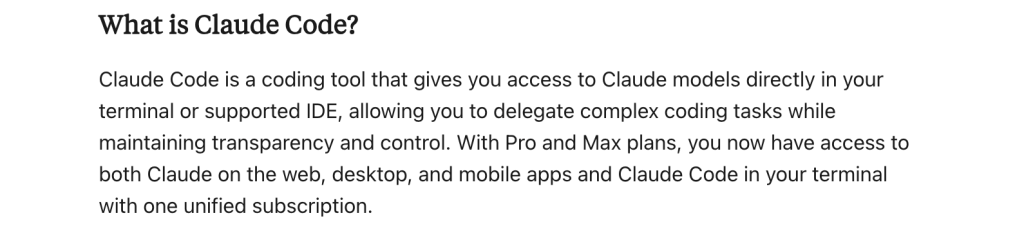
تتوفر ميزة «البحث» في إصدارات Pro وMax وTeam وEnterprise. وهي تُجري البحث عبر مصادر متعددة وتُرجع نتائج الاستشهادات، لكنها تخضع لنفس القيود المطبقة على المحادثات العادية، وقد تستهلك السعة بشكل أسرع لأن مهمة بحث واحدة قد تتطلب إجراء العديد من عمليات البحث.
للاطلاع على ميزانية البرمجة الكاملة، انظر أسعار الرمز Claude. إذا كنت تقوم بإعداد مسار عمل، فاحرص على أن يكون عمليًّا شرح تفصيلي لكتابة الكود Claude و مقارنة الترميز بين Claude وChatGPT في الجوار.
رصيد API الشهري لـ «ماكس» و«فريق»
تقدم «ماكس» و«تيم» الآن ميزة إضافية مخصصة لتطوير التطبيقات والوكلاء: أرصدة شهرية لاستخدام واجهة برمجة تطبيقات منصة Claude. ووفقًا لـ شروط الائتمان الخاصة بـ API, ، تتوفر هذه الميزة في باقات «ماكس» و«تيم» المؤهلة، بما في ذلك باقات «تيم» المخفضة.
| الخطة المؤهلة | رصيد API الشهري | أين يذهب الرصيد |
|---|---|---|
| 5 أضعاف كحد أقصى | $100 | منظمة واحدة مرتبطة بـ Console |
| 20 ضعفاً كحد أقصى | $200 | منظمة واحدة مرتبطة بـ Console |
| فئة «قياسي» / «بريميوم» | $20 لكل مقعد «قياسي» + $100 لكل مقعد «مميز»؛ بحد أقصى $500 | رصيد موحد لمنظمة واحدة |
يمكنك المطالبة بالعرض بعد مرور سبعة أيام من تفعيل اشتراك مؤهل، وذلك من خلال ربط مؤسسة واحدة في «كونسول». يقوم المشتركون ذوو الصلاحيات القصوى ومالكو الفرق بالمطالبة من خلال إعدادات الفوترة الخاصة بهم؛ ويجب أن يكون الشخص الذي يقوم بربط «كونسول» حاصلاً على دور «مالك» أو «مسؤول» أو «مسؤول الفوترة» في تلك المؤسسة. يمكن لكل مؤسسة Console تلقي أرصدة من خطة واحدة فقط، ويتطلب تغيير المؤسسة المرتبطة الحصول على دعم فني. يتم طرح العرض تدريجيًّا، لذا قد لا يظهر في كل حساب مؤهل على الفور.
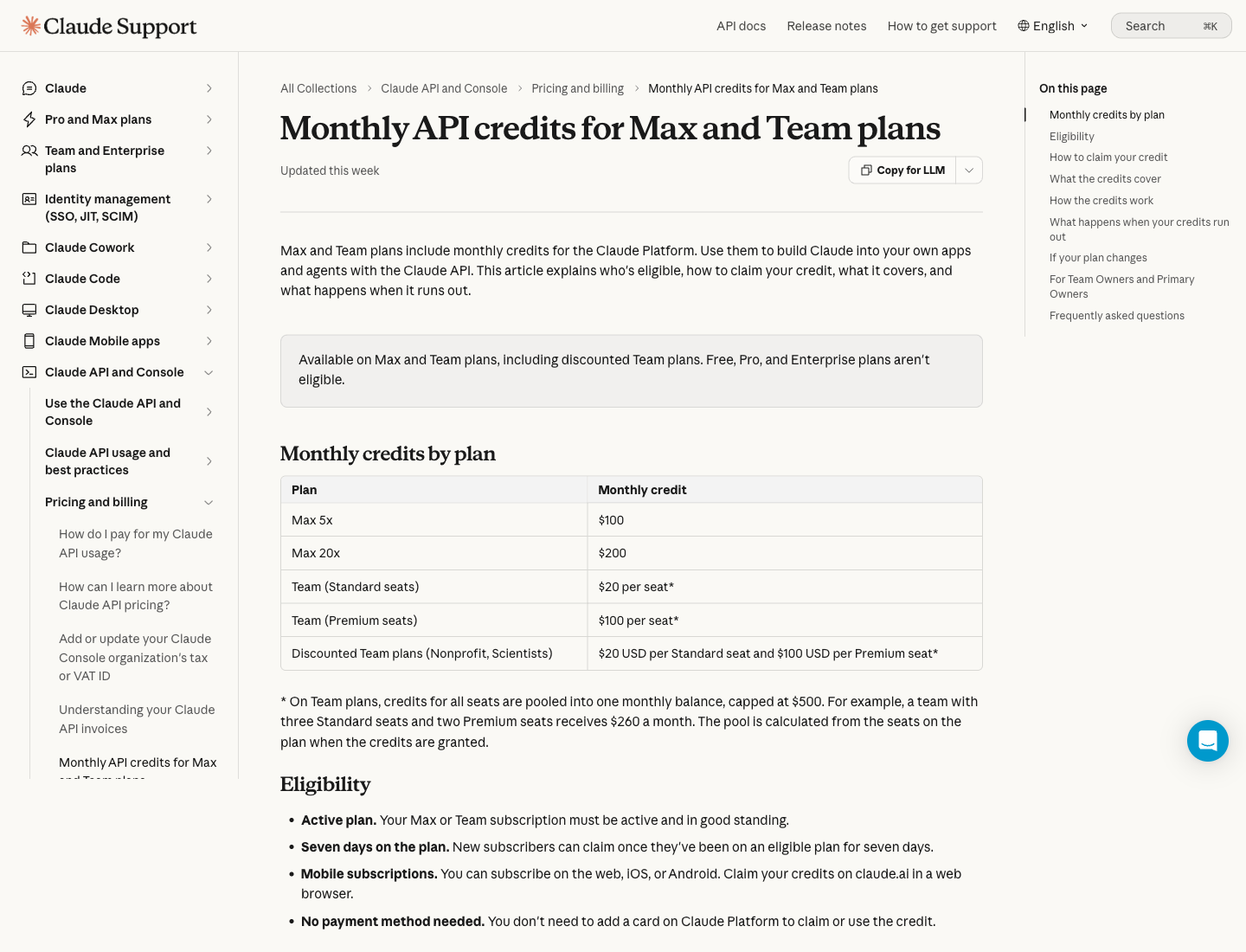
تحقق من المؤسسة التابعة لـ Console التي ستتلقى المخصصات قبل وضع ميزانية التطبيق بناءً على ذلك. احسب رصيد الفريق مرة واحدة للمؤسسة، واحتفظ بميزانية واجهة برمجة التطبيقات (API) هذه منفصلةً عن مخصصات الدردشة التفاعلية.
- استخدم الرصيد المتاح لـ «واجهة برمجة تطبيقات الرسائل» (Messages API)، والطلبات المجمعة، و«Console Playground»، و«الوكلاء المُدارون»، و«حزمة تطوير البرامج الخاصة بالوكلاء» (Agent SDK).
- يتم تقاسم الرصيد بين مفاتيح واجهة برمجة التطبيقات (API) في المؤسسة المرتبطة، ويتم تحديثه في كل دورة فوترة ولا يتم ترحيله إلى الدورة التالية.
- ولا يشمل هذا العرض رمز Claude التفاعلي، أو الاستخدام الإضافي لتطبيق Claude، أو منصات السحابة التابعة لأطراف ثالثة، كما أنه لا يزيد من رصيد الدردشة المتاح لك.
- يحصل الفريق الذي يضم ثلاثة مقاعد من الفئة «القياسية» ومقعدين من الفئة «المميزة» على $260 شهريًّا — وليس $500 لكل شخص.
بالنسبة للمطورين الذين يقومون بتشغيل الأمر claude -p أو حزمة أدوات تطوير البرامج (SDK) الخاصة بالوكيل بأنفسهم، يمكن لمفتاح من المؤسسة المرتبطة بـ Console استخدام رصيد واجهة برمجة التطبيقات (API) هذا. أما عند تسجيل الدخول عبر اشتراك Claude، فيتم استخدام الحصة المخصصة للخطة بدلاً من ذلك. بالنسبة للمؤسسات التي تستخدم نظام الدفع المسبق، يمكن للرصيد المشتراة أو إعادة الشحن التلقائي تمويل المزيد من الاستخدام بعد نفاد الرصيد الشهري؛ وفي حالة عدم وجود رصيد آخر، تتوقف طلبات واجهة برمجة التطبيقات (API). أما المؤسسات التي يتم إصدار فواتيرها من خلال مبيعات Anthropic، فتستمر وفقًا لشروط الفوترة الخاصة بها.
GlobalGPT للمطورين: واجهة سطر الأوامر (CLI)، واجهة برمجة التطبيقات (API)، برنامج MCP، ويوكي
من المنطقي دفع مبلغ إضافي مقابل Claude عندما تكون السعة الإضافية من Claude هي ما تحتاجه. أما المشكلة الأخرى فهي أن يكون لديك اشتراكًا واحدًا للبرمجة، ومكانًا آخر لاستدعاء النماذج، وأداة أخرى للموقع الإلكتروني. جلوبال جي بي تي تي يُقرب بين هذه الوظائف. تُشكل نماذج Claude وGPT وغيرها الأساس؛ أما الجزء المفيد فهو كيفية الاستفادة منها.
| تريد أن… | الاستخدام | ما ستكسبه |
|---|---|---|
| إصلاح اختبار فاشل في مشروع موجود | GlobalGPT CLI | قراءة ملفات المشروع، ومراجعة التغييرات في الكود، وإجراء عمليات الفحص من خلال شاشة الأوامر. |
| زوّد مساعدك في البرمجة بمزيد من النماذج والأدوات | GlobalGPT MCP | اطلب رأي نموذج آخر أو قم بإنشاء موارد الموقع داخل مساعد متوافق. |
| أضف ميزات الذكاء الاصطناعي إلى تطبيقك الخاص | واجهة برمجة التطبيقات GlobalGPT | استخدم واجهة برمجة تطبيقات (API) للدردشة مألوفة، بالإضافة إلى نقاط نهاية المهام الخاصة بالصور والفيديو والصوت. |
| حوّل موجز موقع الويب إلى نموذج أولي يمكنك تحسينه | وكيل يوكي | قم بتطوير الموقع، وراجع المعاينة والكود المصدري، واطلب إجراء التغييرات، ثم قم بتصدير الكود. |
CLI: إصلاح الكود في مكانه الأصلي
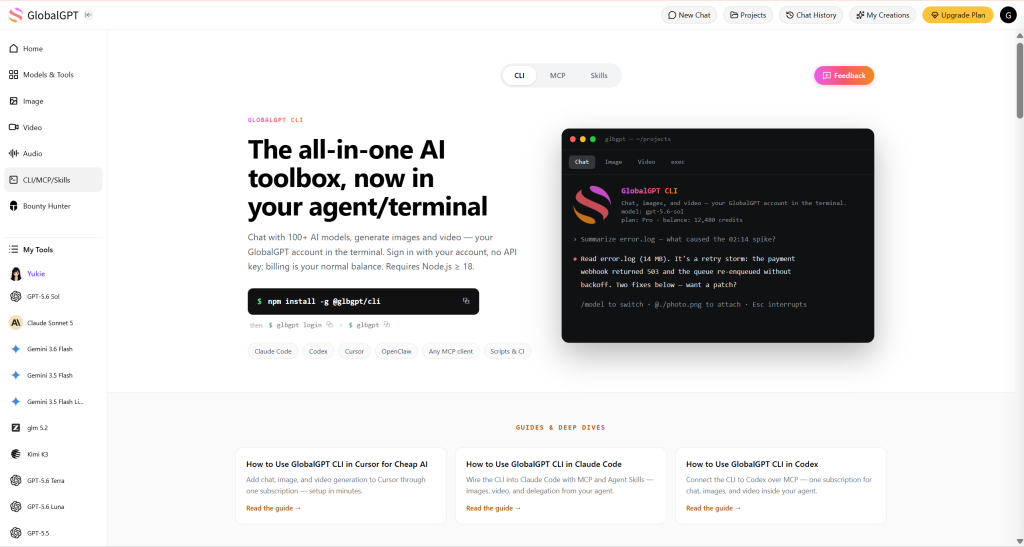
يجب أن يكون مساعد البرمجة المفيد قادرًا على العمل مع المشروع، لا أن يجعلك تضطر إلى نسخ مقتطفات البرمجة بين النوافذ. الـ GlobalGPT CLI يمكنه فحص الملفات والبحث فيها، واقتراح التعديلات وتنفيذها، وتشغيل الأوامر في حدود الصلاحيات التي تمنحها له. راجع الفروق وقم بتشغيل الاختبارات في نفس المشروع.
في حالة فشل الاختبار، قم بتزويده بالخطأ والملفات ذات الصلة، واطلب إصلاحًا محددًا، ثم افحص التغيير قبل قبوله. بالنسبة للمهام القابلة للتكرار، تدعم واجهة سطر الأوامر (CLI) أيضًا الطلبات المكتوبة في نصوص برمجية والمخرجات المنظمة. يمكنك اختيار النموذج المناسب للمهمة: استدلال أعمق لخطأ صعب، أو خيار أبسط للتحويل الروتيني.
MCP: احتفظ بمساعدك وأضف الأدوات التي يحتاجها
هل أنت معتاد بالفعل على استخدام Claude Code أو Cursor أو أي مساعد آخر متوافق مع MCP؟ قم بتوصيل GlobalGPT عبر MCP لإضافة أوامر النماذج وأدوات الصور أو الفيديو إلى مسار العمل هذا. اطلب من نموذج آخر دراسة نهج معقد، أو قم بإنشاء صورة رئيسية لصفحة الهبوط ومقطع فيديو قصير عن المنتج أثناء عملك على الموقع.
وتكمن الميزة في الاحتفاظ بمساعدك المألوف كنقطة انطلاق. فيمكنه طلب أداة ما، والتحقق من المهمة، وإحضار النتيجة لك لاستخدامها في المشروع. استخدم دليل إعداد MCP بالنسبة لخطوات التوصيل؛ ضع ميزانية لاستخدام أداة GlobalGPT إلى جانب المساعد الذي تدفع له بالفعل.
واجهة برمجة التطبيقات (API): دمج النموذج في منتجك الخاص
إذا كنت تضيف مساعدًا إلى تطبيق SaaS أو أداة داخلية، فابدأ بـ واجهة برمجة التطبيقات GlobalGPT. تدعم نقطة نهاية الدردشة المتوافقة مع OpenAI البث المباشر واستدعاءات الوظائف، مع إخراج منظم في النماذج التي تدعم هذه الميزة. بالنسبة لاستدعاءات Claude، استخدم مسار chat/completions الموثق. اختر النموذج بناءً على المهمة وتكلفة الطلب.
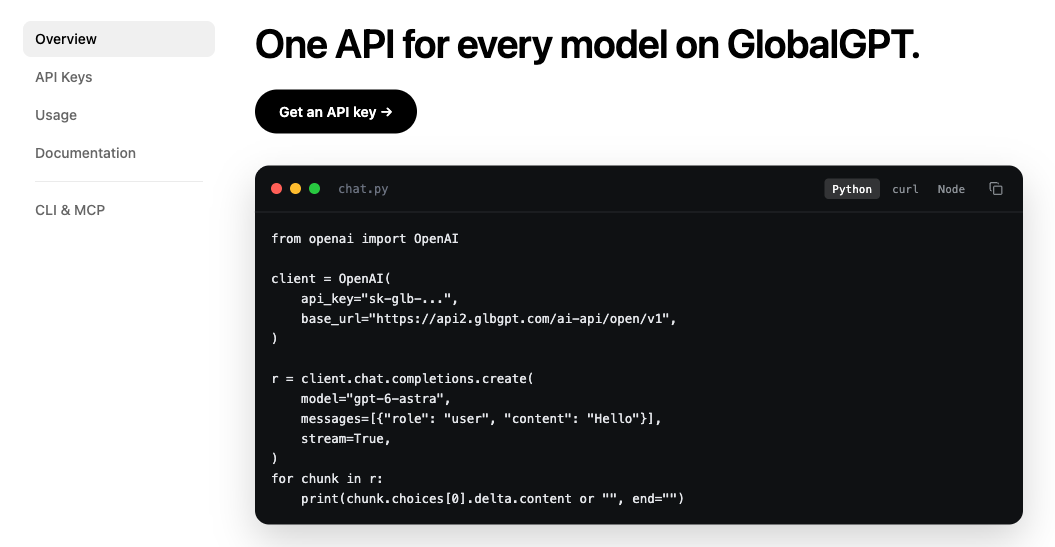
يُعد إدخال الكود والوثائق مفيدًا عندما تكون مستعدًا للانتقال إلى ما هو أبعد من المطالبة في نافذة الدردشة. قم أولاً بربط ميزة صغيرة، مثل مساعد الدعم داخل التطبيق أو خطوة استخراج منظمة، ثم قم بقياس عدد الرموز المستخدمة لكل طلب ناجح. تغطي الوثائق نفسها الخاصة بالمطورين مهام الصور والفيديو والصوت: قم بتقدير رصيد الوسائط، وأرسل المهمة، واحصل على ناتجها عند الانتهاء.
وكيل Yukie: أنشئ موقعًا إلكترونيًّا يمكنك مواصلة تطويره
بمجرد أن يتحول الحديث إلى “إنشاء هذا الموقع الإلكتروني”، فإن الإجابة المطولة لا تمثل سوى جزء من المهمة. افتح توصية الموقع الإلكتروني ذات الصلة أو ابدأ مهمة إنشاء موقع إلكتروني في يوكي. حدد الفئة المستهدفة، وعدد الصفحات، والمحتوى، والتوجه البصري، ثم قم بتطوير الموقع من خلال سير عمل الوكيل.
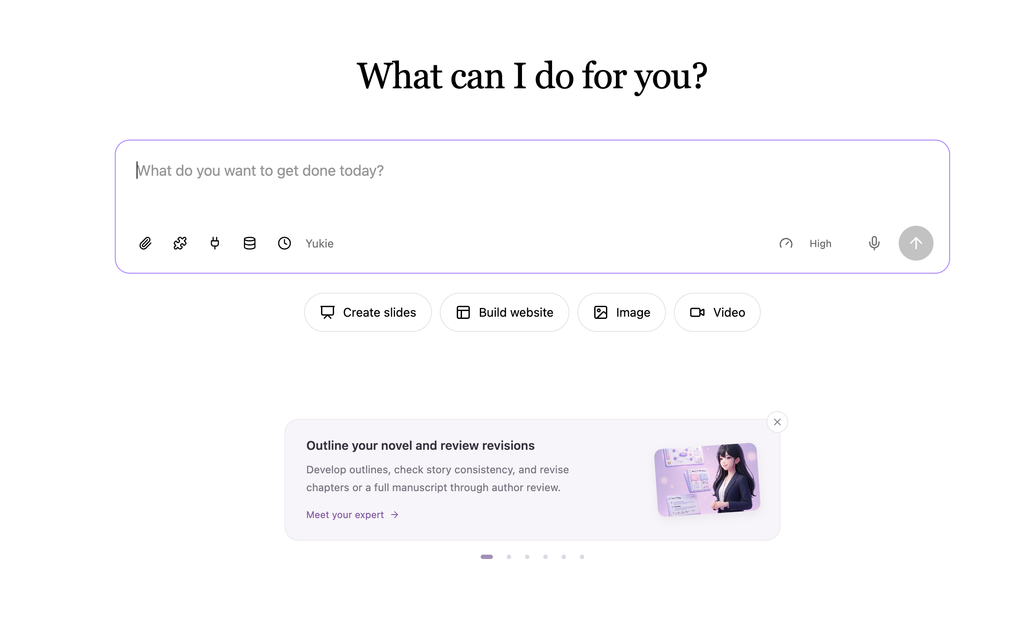
بالنسبة لصفحة عرض المنتج، يرجى توفير العرض والأقسام المطلوبة وأصول العلامة التجارية المتوفرة. راجع معاينة الموقع ومصدره، واطلب من يوكي إجراء أي تغييرات على التصميم أو التفاعل عبر الدردشة، ثم قم بتصدير الكود عندما تكون مستعدًا لمواصلة التطوير. وهذا يجعلها طريقة عملية تبدأ من مناقشة البرمجة وصولاً إلى موقع إلكتروني يمكنك فحصه وصقله.
ما هي تكلفة سير عمل المطور؟
تبلغ تكلفة باقة GlobalGPT Pro $15 شهريًّا عند الدفع الشهري، وهي أقل من الاشتراك الشهري لباقة Claude Pro البالغ $20. أما الخيار السنوي، فتبلغ تكلفته $10.80 شهريًّا، تُدفع سنويًّا. بالنسبة للمطور الفردي الذي يستخدم عدة نماذج وأدوات مواقع ويب، فإن هذا السعر المنخفض يتيح له تخصيص ميزانية أكبر للمشروع الفعلي.
| الخطة | الدفع شهريًّا | المكافئ الشهري، يُفوتر سنويًّا | رصيد الخطة الشهرية |
|---|---|---|---|
| أساسي | $8.90 | $5.80 | 12,000 |
| محترف | $15.00 | $10.80 | 20,000 |
| غير محدود | $37.00 | $25.00 | 52,000؛ كما تتوفر ميزة «الوصول غير المحدود» في بعض الطرازات المختارة |
هذه هي العروض العامة بالدولار الأمريكي التي تم التحقق منها في 12 أكتوبر 2026. تظهر أعلاه مبالغ الائتمان الخاصة بالخطط الشهرية؛ أما الخطط السنوية فتعرض 144,000 و240,000 و624,000 وحدة ائتمان سنويًا على التوالي، مع توضيح في الأسعار يفيد بأن الوحدات الائتمانية تُخصص عادةً شهريًّا. راجع المبلغ الإجمالي المفوتر وشروط التجديد في صفحة أسعار GlobalGPT.
اختر خطة مساحة العمل وميزانية واجهة برمجة التطبيقات (API) بشكل منفصل. تستهلك طلبات واجهة برمجة التطبيقات (API) لـ GlobalGPT الرصيد المدفوع. يتصل كل من واجهة سطر الأوامر (CLI) وبرنامج MCP عبر حسابك في GlobalGPT، وتستهلك مكالمات النماذج ومهام التوليد الرصيد وفقًا للخدمة المستخدمة. أما الحد الأقصى المخصص لواجهة برمجة التطبيقات (API) لـ Anthropic لكل فريق، فينتمي إلى المؤسسة المرتبطة بها في وحدة التحكم (Console). يجب الفصل بين هذه الأرصدة عند حساب تكلفة التطبيق.
يغطي «الوصول غير المحدود» النماذج المحددة لهذه الخدمة؛ أما المكالمات المميزة والمهام الأخرى التي تعتمد على الرصيد، فلا تزال تتطلب ميزانية. بالنسبة للمشروع الجديد، ابدأ بمهمة صغيرة تمثيلية وقم بقياس استهلاكها قبل التوسع.
ميزانية لإجراء إصلاح أو إضافة ميزة أو إنشاء موقع إلكتروني كامل
“يُعد مصطلح ”المستخدم الكثيف» تقديرًا ماليًّا غير دقيق. فالمطور الذي يعمل على تصحيح أخطاء جلسة طويلة واحدة سيكون حسابه مختلفًا عن تطبيق يخدم آلاف الطلبات القصيرة. قم بتسجيل تكلفة المهمة الناجحة الواحدة، بما في ذلك المحاولات المتكررة والمراجعات. إذا كانت تكلفة المهمة النموذجية C وحدة ائتمانية وتوقعت وجود N مهام مماثلة، فابدأ بحساب N × C، ثم ضع في اعتبارك العمل الإضافي الذي تلاحظه فعليًّا.
| العمل المطلوب قياسه | ما الذي يجب تسجيله | استخدم النتيجة لاتخاذ القرار |
|---|---|---|
| تصحيح خطأ واحد | النموذج، الملفات التي تمت قراءتها، دورات المتابعة، الاختبارات والاعتمادات | ما هو الطراز الذي يتيح إجراء الإصلاحات الروتينية بتكلفة معقولة؟ |
| إحدى ميزات واجهة برمجة التطبيقات (API) | رموز الإدخال/الإخراج، ومعدل النموذج، وعدد الطلبات المتوقع | ما هو مقدار الائتمان المدفوع الذي يجب تخصيصه للاستخدام الفعلي للتطبيق؟ |
| مهمة واحدة على موقع إلكتروني | تعديلات يوكي، والأصول المُولَّدة، وإجمالي استخدام الائتمان | هل تغطي مساحة العمل الواحدة الأدوات التي تحتاجها فعليًّا؟ |
| جلسة البرمجة الأكثر انشغالاً لديك | الحدود التي تم بلوغها، ووقت إعادة الضبط، والدقائق المفقودة | هل تستحق زيادة السعة الأصلية لنظام Claude هذا الارتفاع في تكلفة الاشتراك؟ |
Claude: الإصدار "Team" مقابل الإصدار "Enterprise": اختر بناءً على الإدارة والفوترة
تم تصميم باقة «Claude Team» لتلبية احتياجات الفرق التي يتراوح عدد أعضائها بين 2 و150 شخصًا. تغطي التراخيص القياسية الاستخدام العادي للفريق، بينما توفر التراخيص المميزة سعة استخدام تبلغ خمسة أضعاف التراخيص القياسية للمستخدمين الأكثر نشاطًا. ويُضمّن رمز «Claude» مع كل ترخيص من تراخيص «Team»، لذا لا يحتاج الفريق إلى شراء ترخيص برمجة منفصل في إطار هيكل الخطة الحالي.
| الخيار | السعر المعلن | نهج الاستخدام | اختره عندما |
|---|---|---|---|
| معيار الفريق | $20 لكل مقعد في الشهر سنويًّا؛ $25 شهريًّا | سعة المقاعد المشمولة | يحتاج ما بين 2 و150 شخصًا إلى مساحة عمل مشتركة مُدارة |
| فريق بريميوم | $100 لكل مقعد شهريًّا، على أساس سنوي؛ $125 شهريًّا | 5 أضعاف الاستخدام العادي | تتحمل مجموعة فرعية من الفريق أحمال عمل أثقل من نوع Claude أو Claude Code |
| الخدمة الذاتية للمؤسسات | $20 لكل مقعد شهريًّا، تُفوتر سنويًّا، بالإضافة إلى تكلفة الاستخدام وفقًا لأسعار واجهة برمجة التطبيقات (API) | يعتمد على الاستهلاك؛ لا يوجد حد للاستخدام لكل مقعد | تريد ضوابط مؤسسية مع نظام الاستخدام المدفوع حسب الاستهلاك |
| مدعومة بمبيعات المؤسسات | اتصل بالمبيعات | خاص بالعقد | تتطلب شروط الأمن، أو الامتثال، أو المشتريات، أو الخدمات التفاوض |
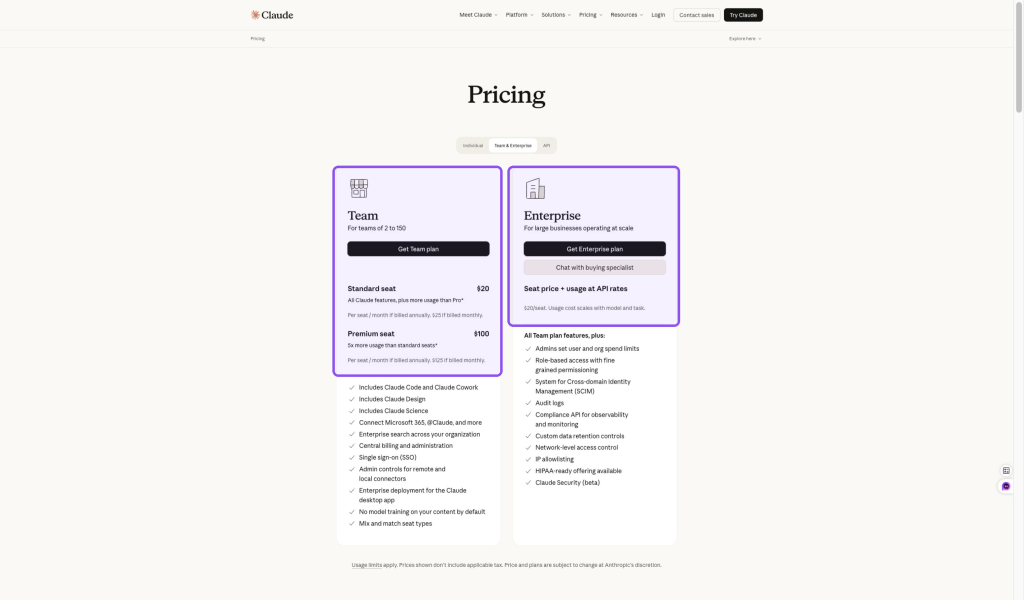
تتضمن التراخيص الجديدة وتلك المخصصة للخدمة الذاتية في فئة «Enterprise» الرمز Claude. وقد تستخدم الاتفاقيات القديمة لفئة «Enterprise» أنواعًا مختلفة من التراخيص؛ لذا، ينبغي على أي مؤسسة تعمل بموجب عقد قديم التحقق من الشروط الخاصة بها بدلاً من تطبيق الجدول الأحدث تلقائيًّا.
لا يوجد حد للاستخدام لكل مستخدم في إصدار «Enterprise» القائم على الاستخدام، حيث يتم احتساب الاستهلاك وفقًا لأسعار واجهة برمجة التطبيقات (API). أما إصدارا «Team» و«Enterprise» القائمان على عدد المستخدمين، فيستمران في استخدام السعة المضمنة ويمكنهما تفعيل أرصدة الاستخدام. يجب على المؤسسات الخاضعة للتنظيم الالتزام بالشروط ومتطلبات التكوين الواردة في اتفاقياتها الخاصة عند اختيار مكان تشغيل Code.
Claude للمؤسسات التعليمية والمنظمات غير الربحية: تحقق أولاً من أهليتك
برامج المؤسسات ليست رموز قسائم شخصية
التعليم
تعد مبادرة «Claude للتعليم» خطة مؤسسية تشمل الجامعة بأكملها وتستهدف الطلاب وأعضاء هيئة التدريس والموظفين. ولا تنشر مبادرة «Anthropic» سعرًا شخصيًا موحدًا للطلاب على صفحة الخطة.
المنظمات غير الربحية
يبلغ سعر باقة «Nonprofit Standard» $8 لكل مستخدم شهريًّا. أما باقة «Nonprofit Access» فتبلغ $3 لكل مستخدم شهريًّا للمنظمات المؤهلة التي يقع مقرها في البلدان ذات الدخل المنخفض أو المتوسط. يغطي البرنامج عددًا من التراخيص يتراوح بين 2 و150، ويتطلب التحقق من صحة المنظمة؛ حيث تستخدم المنظمات الأصغر حجمًا خدمة Goodstack، بينما تتصل المنظمات الأكبر حجمًا بقسم المبيعات.
هذه البرامج هي مسارات شراء خاصة بالمؤسسات. لا ينبغي للطالب أن يفترض أن برنامجًا جامعيًّا ما يمنح خصمًا شخصيًّا، كما لا ينبغي لأي فرد أن يتعامل مع السعر المخصص للمنظمات غير الربحية كقسيمة خصم للمستهلكين.
إذا كان هدفك الرئيسي هو الترويج العام بدلاً من وضع خطة تنظيمية، فراجع الوضع الحالي دليل الخصومات على طراز Claude قبل الدفع.
قائمة مراجعة القرار النهائي
| وضعك | ابدأ من هنا | لا تقم بالترقية إلا عندما |
|---|---|---|
| تستخدم Claude من حين لآخر | مجاناً | تصبح انقطاعات الخدمة مصدر إزعاج |
| أنت تعتمد على Claude كل أسبوع | محترف | تؤدي حدود رموز Claude وClaude المشتركة إلى مقاطعة العمل الهام |
| تقوم حدود «Pro» بإيقاف الجلسات الطويلة بشكل متكرر | 5 أضعاف كحد أقصى | يمكنك توثيق أن السعة التي تبلغ 5 أضعاف لا تزال غير كافية |
| يظل Claude مفتوحًا معظم ساعات العمل | 20 ضعفاً كحد أقصى | التكلفة الشهرية لطراز $200 تبررها الوقت الذي يتم توفيره |
| تدير فريقًا يتألف من 2 إلى 150 شخصًا | معيار الفريق | يحتاج المستخدمون الكثيفون إلى مقاعد «بريميوم» |
| تحتاج إلى نظام حوكمة مؤسسية أو نظام الاستخدام المقنن | المؤسسة | يلزم استخدام المصطلحات المتعلقة بالمبيعات |
| تريد البرمجة عبر واجهة الأوامر (CLI) وتكامل التطبيقات وإنشاء المواقع الإلكترونية | جلوبال جي بي تي تي | إن قياس استخدام المشروع وواجهة برمجة التطبيقات (API) يبرر تخصيص ميزانية ائتمانية أكبر |
إن أكثر مؤشرات الحاجة إلى الترقية موثوقيةً هي تواتر الانقطاعات. راقب المرات التي تؤدي فيها القيود إلى توقف العمل الفعلي لمدة أسبوع أو أسبوعين. إذا كانت هذه الانقطاعات نادرة، فاستمر في استخدام الباقة الأرخص. أما إذا كانت تؤدي مرارًا وتكرارًا إلى تأخير الأعمال المدفوعة أو التي تتطلب إنجازها في وقت محدد، فقم بالترقية لمستوى واحد، ثم أعد تقييم الوضع قبل الانتقال إلى أعلى فئة.
قبل الشراء، تحقق من فترة الفوترة وتاريخ التجديد. يتم تجديد اشتراكات Claude تلقائيًّا؛ ويمكن إلغاؤها عبر الموقع الإلكتروني الأصلي أو من خلال متجر التطبيقات قبل 24 ساعة على الأقل من آخر يوم في فترة الاشتراك. وتُعتبر شروط الإلغاء واسترداد الأموال مسألتين منفصلتين. انظر شروط الاستخدام الخاصة بالمستهلكين في Anthropic.
سواء كانت مهمتك التالية هي إصلاح خلل، أو تطوير ميزة تعتمد على الذكاء الاصطناعي، أو إنشاء موقع إلكتروني جديد،, ابدأ باستخدام أدوات المطور الخاصة بـ GlobalGPT. اجعل المهمة صغيرة بما يكفي لتتمكن من فحصها: راجع التصحيح، أو قم بقياس طلب واجهة برمجة التطبيقات (API)، أو قم بتحسين إحدى الصفحات في يوكي. اختر الخطة بناءً على العمل الذي تنجزه والتكاليف اللازمة لمواصلة العمل.
الأسئلة المتداولة
ما هي خطة Claude الأفضل لمعظم الأفراد؟
تُعد باقة «Pro» الخيار المدفوع الأكثر عملية للمستخدمين الأفراد العاديين: $20 شهريًّا أو $200 مدفوعة مسبقًا سنويًّا. أما الباقة المجانية فهي مناسبة للأعمال غير المنتظمة. انتقل إلى باقة «Max» عندما تؤدي قيود باقة «Pro» إلى مقاطعة جلسات العمل المهمة بشكل متكرر.
كم سيكون سعر جهاز Claude Pro في عام 2026؟
تبلغ تكلفة Claude Pro $20 شهريًّا أو $200 تُدفع مقدمًا لمدة عام، قبل الضريبة المطبقة. ويُظهر Anthropic الخيار السنوي بحوالي $17 شهريًّا. هذه هي الأسعار العامة بالدولار الأمريكي على الويب التي تم التحقق منها في 10 أكتوبر 2026؛ وقد تختلف الأسعار في متاجر التطبيقات والأسعار الإقليمية.
هل كلود ماكس غير محدود؟
توفر باقتا «No. Max 5x» و«Max 20x» إمكانية استخدام الإصدار الاحترافي خمس أو عشرين مرة في كل جلسة. ولا تزال حدود مدة الجلسة البالغة خمس ساعات والحدود الأسبوعية سارية، بما في ذلك حد منفصل خاص بـ«Fable»؛ وقد تنطبق أيضًا حدود إضافية على النماذج أو الميزات.
هل تتوفر خدمة «Claude Max» بنظام الفوترة السنوية؟
لا. اعتبارًا من 10 أكتوبر 2026، يُتاح برنامج «ماكس» كاشتراك شهري فقط: $100 لبرنامج «ماكس 5x» أو $200 لبرنامج «ماكس 20x».
هل يتضمن برنامج Claude Pro مكوني «Claude Code» و«Research»؟
نعم. تتضمن باقة «Pro» ميزة «Claude Code» وميزة «Research». تتقاسم ميزة «Code» الحصة المخصصة للخطة مع ميزة «Claude»، بينما تستخدم ميزة «Research» نفس الحدود المطبقة على المحادثات العادية. وقد تستهلك ميزة «Research» السعة بشكل أسرع لأنها تستقي المعلومات من مصادر متعددة.
ما هي باقات Claude التي تتضمن رصيدًا شهريًّا لاستخدام واجهة برمجة التطبيقات (API)؟
يمكن للمشتركين المؤهلين في باقة «Max 5x» الحصول على $100 شهريًّا، بينما يمكن للمشتركين في باقة «Max 20x» الحصول على $200. تجمع الفرق $20 لكل مقعد قياسي و$100 لكل مقعد مميز، بحد أقصى $500 شهريًا. يتطلب الحصول على الرصيد وجود خطة مؤهلة نشطة لمدة سبعة أيام ومنظمة واحدة مرتبطة بوحدة التحكم. لا تنطبق هذه الميزة على باقات «Free» و«Pro» و«Enterprise»؛ وتنتهي صلاحية الرصيد غير المستخدم ولا تزيد من حدود الدردشة أو رموز Claude التفاعلية.
ما الفرق بين باقة «Team» وباقة «Enterprise»؟
يستوعب هذا الفريق ما بين 2 و150 مستخدمًا مع تراخيص «Standard» و«Premium» واستخدامات مضمنة. تضيف باقة «Enterprise» عناصر تحكم مثل SCIM وسجلات التدقيق والاحتفاظ المخصص. يبلغ سعر الخدمة العامة الذاتية $20 لكل مقعد شهريًا، تُفوتر سنويًّا، بالإضافة إلى تكلفة استخدام النموذج التي تُفوتر وفقًا لأسعار واجهة برمجة التطبيقات (API)؛ وقد تخضع الاتفاقيات المدعومة من قسم المبيعات لشروطها الخاصة.
هل هناك خصم لطلاب برنامج Claude أو للمنظمات غير الربحية؟
يتم شراء باقة «Claude للتعليم» من قِبل المؤسسة لطلابها وأعضاء هيئة التدريس وموظفيها. يمكن للمنظمات غير الربحية المعتمدة التقدم بطلب للحصول على باقة «Nonprofit Standard» الشهرية $8 لكل مستخدم، أو باقة «Nonprofit Access» $3 لكل مستخدم للبلدان المؤهلة ذات الدخل المنخفض أو المتوسط. وهذه برامج مخصصة للمنظمات، وليست قسائم شخصية عامة.
هل يمكن لعائلة واحدة مشاركة حساب واحد من نوع Claude Pro؟
تحظر شروط الاستخدام الخاصة بـ Anthropic مشاركة بيانات اعتماد الحساب الشخصية. يجب أن يكون لكل فرد مؤهل حسابه الخاص؛ وتوفر خدمة «Team» مقاعد مخصصة بشكل منفصل للمؤسسات. تتطلب خدمة Claude للمستهلكين أن يكون عمر المستخدمين 18 عامًا على الأقل أو أن يبلغوا الحد الأدنى للسن المسموح به محليًّا، أيًا كان أعلى منه.
متى يُعد طراز GlobalGPT خيارًا جيدًا لمستخدم نظام الترميز Claude؟
يُعد GlobalGPT خيارًا ذا قيمة عالية عندما يشمل عملك البرمجة المحلية وتكامل التطبيقات والمواقع الإلكترونية. استخدم واجهة سطر الأوامر (CLI) لملفات المشاريع، وواجهة برمجة التطبيقات (API) لتطبيقك الخاص، وMCP للأدوات الموجودة في مساعد قائم، وYukie لإنشاء موقع إلكتروني وتحسينه. تبلغ تكلفة الإصدار Pro $15 شهريًّا أو $10.80 شهريًّا تُفوتر سنويًّا وفقًا لما تم التحقق منه في 12 أكتوبر 2026؛ وتستهلك طلبات واجهة برمجة التطبيقات (API) رصيدًا مدفوعًا.
هل يجب أن أختار واجهة برمجة التطبيقات (API) أم واجهة سطر الأوامر (CLI) أم MCP لـ GlobalGPT؟
استخدم واجهة برمجة التطبيقات (API) عند دمج استدعاءات النماذج في برامجك الخاصة. اختر واجهة سطر الأوامر (CLI) عندما ترغب في العمل من خلال محطة طرفية باستخدام ملفات المشروع المحلية أو البرامج النصية. استخدم MCP لإضافة نماذج وأدوات GlobalGPT إلى مساعد متوافق تستخدمه بالفعل. إذا كان لديك موجز لموقع ويب تريد أن يقوم وكيل بتطويره، فابدأ باستخدام Yukie.
تم التحقق من المصادر الرسمية
- أسعار Claude
- ما هي باقة «ماكس»؟
- استخدم الرمز Claude مع إصدار Pro أو Max
- استخدم الرمز Claude مع باقة «Team» أو «Enterprise»
- استخدام الأبحاث المتعلقة بـ Claude
- أسعار باقة Claude للمنظمات غير الربحية
- رصيد API الشهري لـ «ماكس» و«فريق»
- خطط GlobalGPT
قد تتغير الأسعار وأسماء الباقات وإمكانية الوصول إلى الطرز ونوافذ السياق وسياسات الاستخدام والعروض الترويجية وشروط الأهلية. يرجى مراجعة الشروط المعروضة لحسابك قبل الشراء.