Midjourney Prompts Guide: Logo, Product & Art Examples
Chloe Murphy
Last Updated 2026-07-29
Midjourney images can look polished while still missing the point of your brief. A logo becomes a packaging mockup, a product ad leaves no room for copy, or a character changes clothes as soon as the scene changes. The prompt does not need more decorative adjectives; it needs clearer decisions.
This Midjourney prompts guide starts with logo generation, then moves through product photography, portraits, character work, illustration, and cinematic scenes. All 17 core Prompt cards now include reviewed result imagery, and the harder composition and consistency cases were rerun with focused revisions. The examples keep the visible limits that changed the advice instead of presenting every output as a clean success.
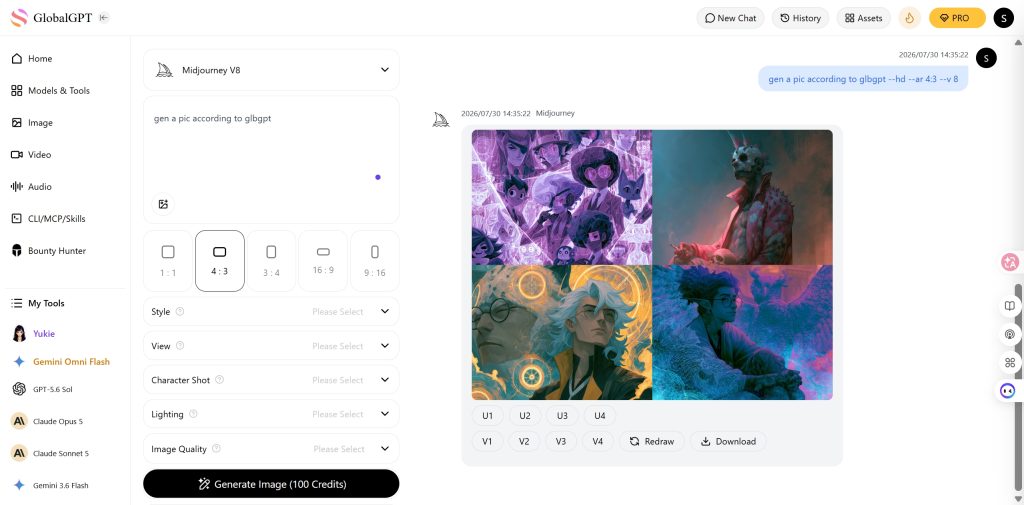
If one model keeps fighting the task, you do not have to keep rewriting the same prompt forever. GLBGPT gives you one place to try different supported image models, which is useful when a job needs stronger text rendering, editing, or reference control than your first choice provides.
快速回答: A useful Midjourney prompt usually contains six parts:
What to create + Main subject + Visual direction + Composition + Constraints + Parameters
You do not need every possible detail. Include the decisions that change whether the output is usable.
The controlled API test did not expose the exact Midjourney version. Treat the observations below as dated practical evidence, not a promise that every model version or rerun will behave identically.
Midjourney 的 official prompt guidance separates the descriptive prompt from optional image inputs and parameters. Parameters belong at the end of the prompt and begin with two hyphens.
提示部分
Question to answer
Logo example
What to create
What asset do you need?
A minimal geometric logo symbol
Main subject
What should it show?
A pine tree combined with a coffee bean
Visual direction
What should it look and feel like?
Modern, organic, simple
成分
How should the elements be arranged?
Centered and symmetrical
限制條件
What must stay simple or absent?
Two colors, no text, no mockup
Parameters
What format or model control matters?
Square aspect ratio
The strongest prompt is not always the longest. It is the one that removes the uncertainty most likely to ruin the result. If you are new to the interface as well as prompting, the complete Midjourney beginner guide covers the broader creation process.
Midjourney Logo Prompts
Logo intent deserves to come first because a generic request such as “make a modern logo” leaves too many decisions open. Midjourney may choose the symbol, typography, presentation surface, color count, and level of detail for you.
Use Midjourney as a concept generator for symbols, mascots, monograms, and emblems. A vector-style appearance is not the same as an editable SVG, and an attractive mark is not automatically unique or safe to register.
Minimal Geometric Logo Prompt
最適合 app icons, website marks, simple brand symbols, and early identity exploration.
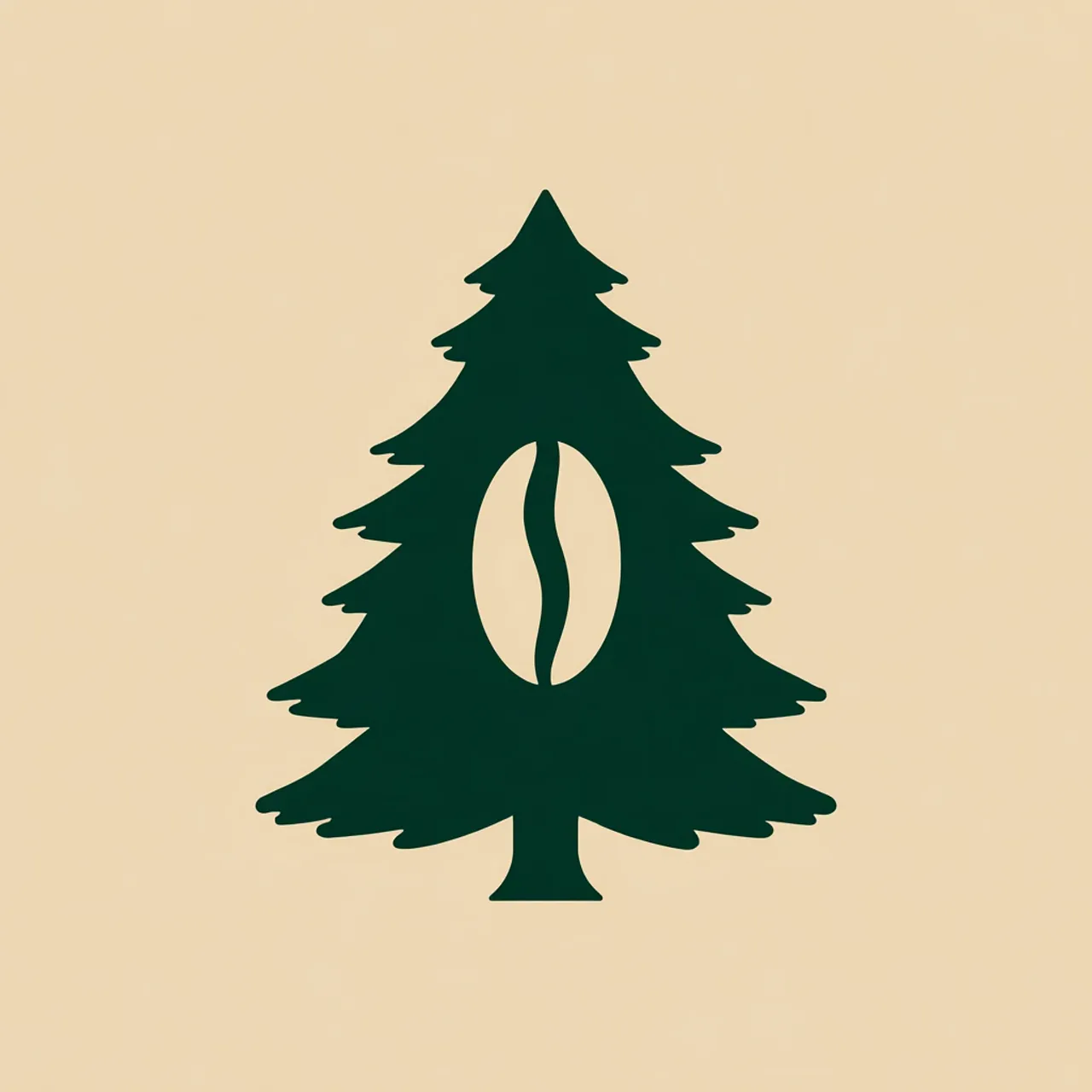
The revised construction produced a true cutout instead of a separate bean object.
Minimal geometric logo
Create a minimal geometric logo symbol for a fictional sustainable coffee brand. Use one single contiguous forest-green pine-tree silhouette. Carve one bean-shaped negative-space cutout through the center of the pine silhouette so the cutout exposes the warm cream background; the coffee bean must exist only as empty negative space inside the tree, never as a separate, filled, outlined, floating, or overlaid bean object. Centered symmetrical composition, simple recognizable geometry, exactly two flat solid colors: forest green and warm cream. The symbol must remain recognizable at small app-icon size. Clean edges, isolated on a plain warm cream background. Symbol only, no letters, no words, no packaging, no mockup, no gradients, no shadows --ar 1:1
Key ingredients
Negative-space cutout
One contiguous silhouette
Exactly two solid colors
Small-size readability
What the test showed
The first prompt treated the bean as a separate object inside the tree.
“Carve a cutout through the silhouette” produced true negative space in all four revised outputs.
Construction language was more useful than adding more style adjectives.
Mascot Logo Prompt
最適合 delivery services, pet brands, games, community products, and friendly consumer brands.
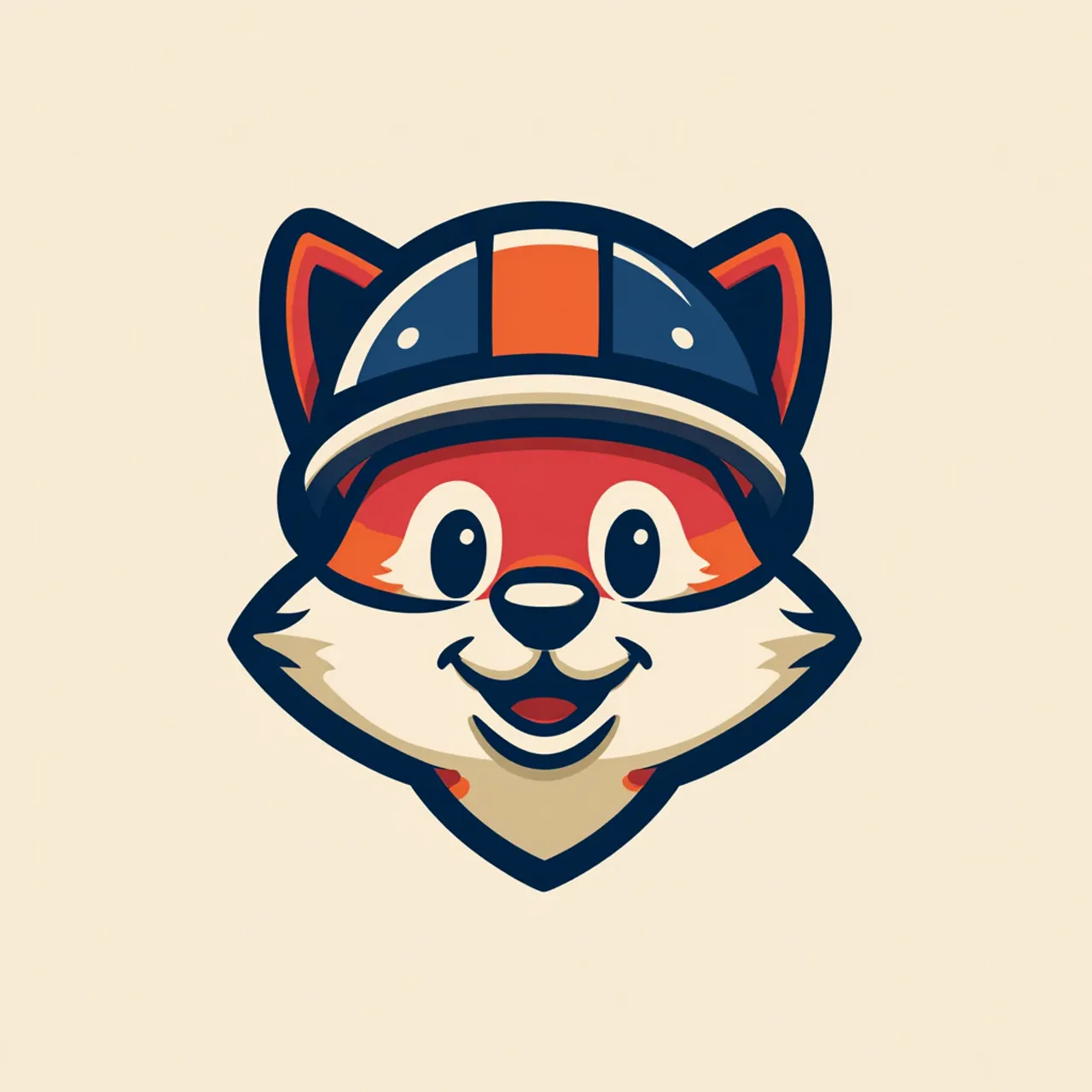
The fox, helmet, compact silhouette, and limited palette stayed readable at icon scale.
Mascot logo
Create a friendly mascot logo for a fictional bicycle delivery service. Show a cheerful red fox wearing a simple courier helmet, designed with bold rounded shapes and thick clean outlines. Use a compact badge-style composition and a limited orange, navy, and cream color palette. The mascot must remain clear and recognizable at app-icon size. Flat graphic style, centered on a plain background. No letters, no words, no realistic fur, no detailed scenery, no 3D effect, no product mockup --ar 1:1
Key ingredients
Rounded mascot shapes
Thick clean outlines
Limited color palette
App-icon silhouette
What the test showed
All four outputs kept the red fox, courier helmet, bold outlines, and limited palette.
The strongest options stayed clear and recognizable at app-icon size.
Only one included a bicycle, so brand context did not force every related object into the mark.
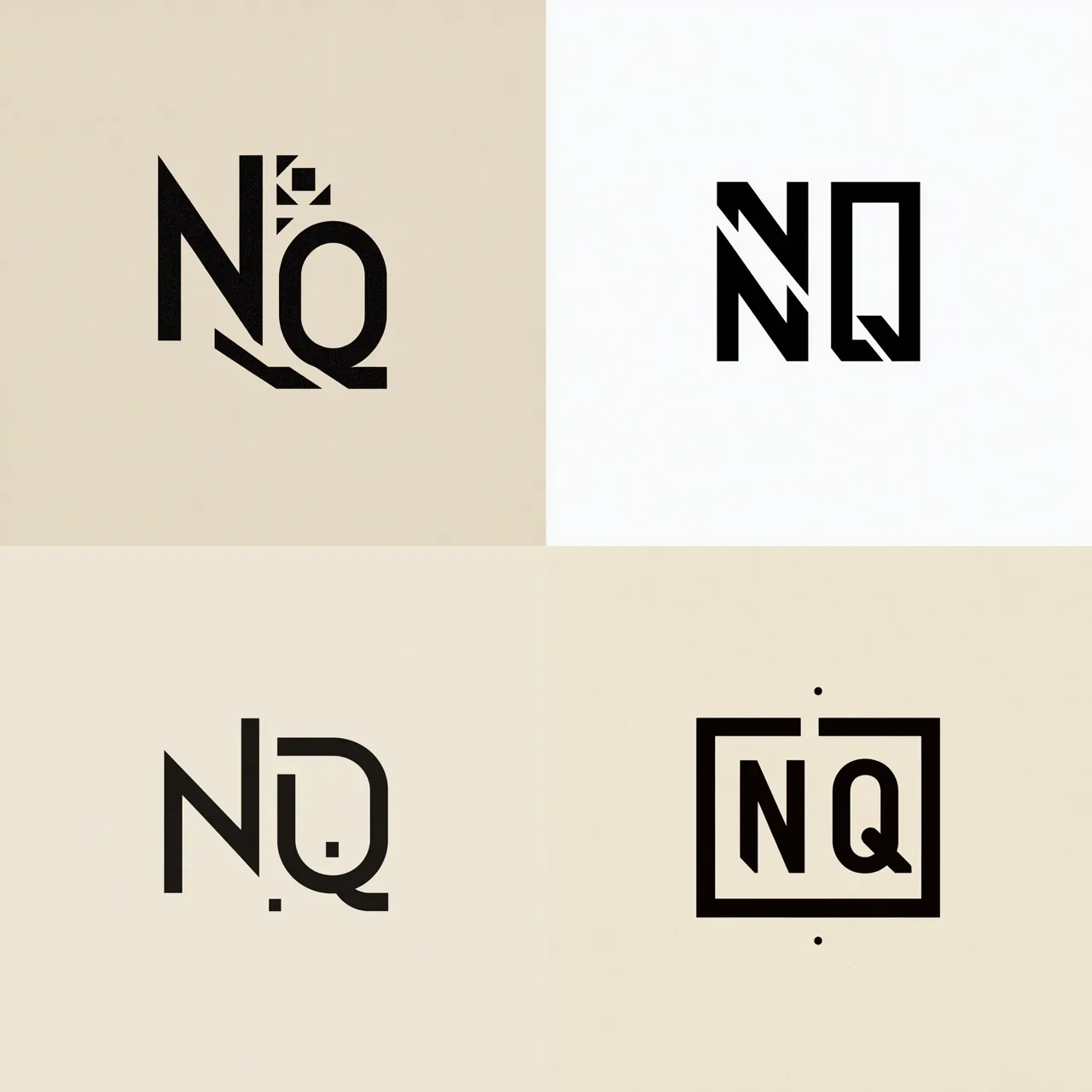
Monogram Logo Prompt
最適合 letter-based identity concepts and testing how reliably the model follows exact initials.
All four concepts read as NQ, but several added fragments, frames, or decorative marks.
Monogram logo
Create a minimal monogram logo using the fictional initials "NQ". Interlock the two letters into one balanced geometric symbol. Use strong negative space, consistent line thickness, a centered square composition, and a black-and-ivory color palette. The letters should remain clearly readable when the logo is displayed at a small size. Flat graphic appearance, plain background, no additional letters, no words, no mockup, no gradients, no shadows --ar 1:1
Key ingredients
Interlocked initials
Strong negative space
Consistent line weight
Small-size legibility
What the test showed
All four outputs preserved the NQ initials in this run.
Extra fragments, frames, and decorative points still appeared.
Readable letters in one grid do not guarantee repeatable typography.
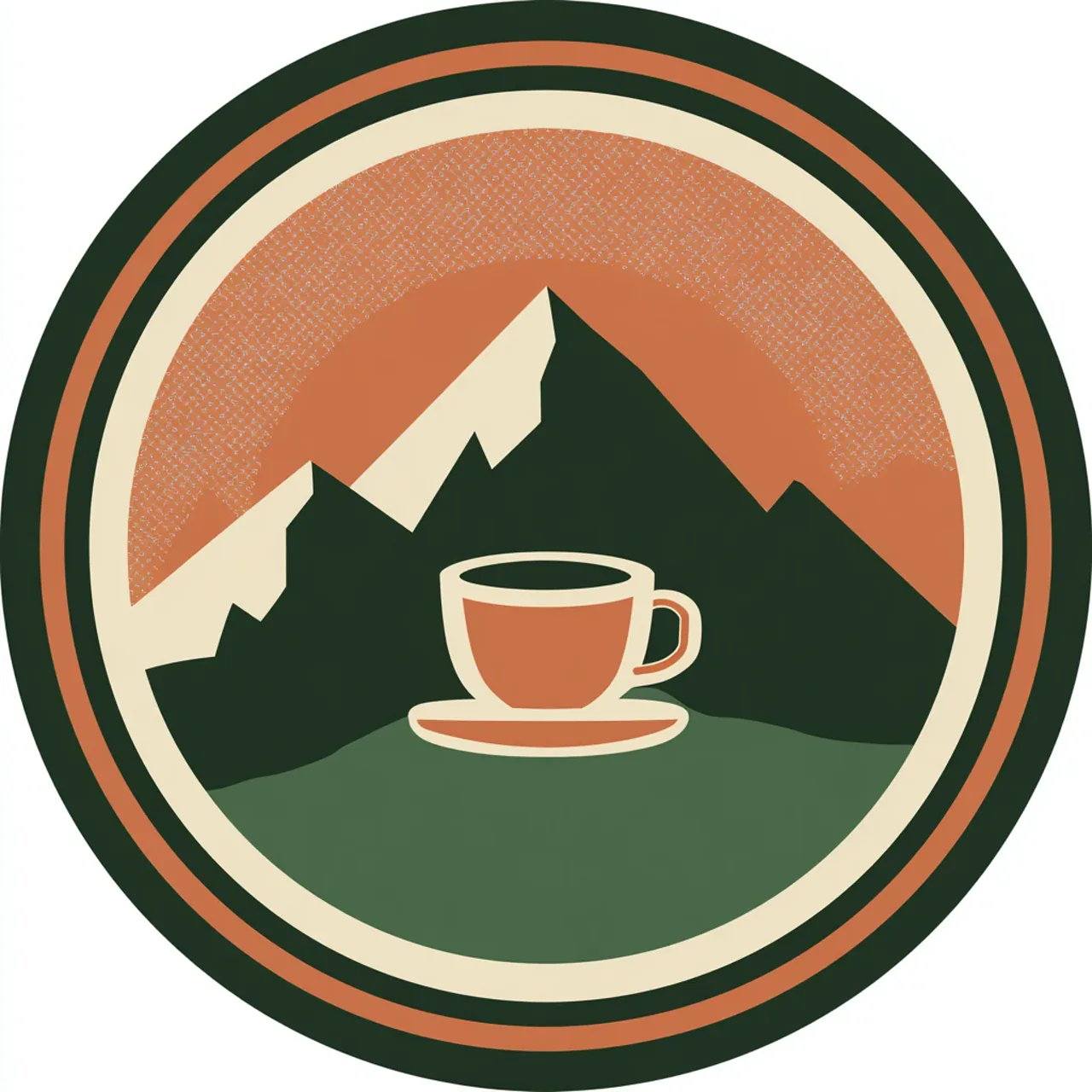
Badge and Emblem Logo Prompt
最適合 outdoor brands, cafés, clubs, patches, stickers, and heritage-style concepts.
The ring, mountain-over-cup hierarchy, and limited palette remained clear, with visible grain added to the upper field.
Badge and emblem logo
Create a circular emblem logo for a fictional outdoor coffee brand. Place a simplified mountain peak above a small coffee cup in the center, surrounded by a clean double-ring border. Use bold shapes, balanced spacing, and a limited dark green, rust orange, and cream palette. Keep the design readable at small size and suitable for a sticker or embroidered patch. Flat graphic appearance, isolated on a plain background. No words, no letters, no realistic landscape, no tiny decorative details, no mockup, no shadows --ar 1:1
Key ingredients
Circular double border
Simplified central icon
Embroidery-friendly detail
Three-color palette
What the test showed
All four outputs kept the circular emblem, mountain-and-cup hierarchy, and ring border.
The best variation was readable and well balanced.
Some versions added grain, subtle depth, or an extra color tone, so flatness and palette limits still need review.
What Midjourney Logo Prompts Cannot Guarantee
Correct and repeatable brand spelling.
Native SVG, AI, or editable vector delivery.
A unique or registrable trademark.
A complete brand identity system.
Automatic copyright or trademark clearance.
A production-ready asset without cleanup or redrawing.
Midjourney can accelerate symbol and art-direction exploration. Before adopting a mark, review its originality, rebuild it as a clean vector, verify the typography, and run the appropriate trademark checks. If accurate text and branding are the main task, compare the process with a more text-focused method such as this guide to adding text, logos, and branding with Nano Banana.
Midjourney Product and Advertising Prompts
A useful product prompt defines more than the object. It also says where the product sits, what material needs to look believable, how much empty space the layout needs, and which props should stay out.
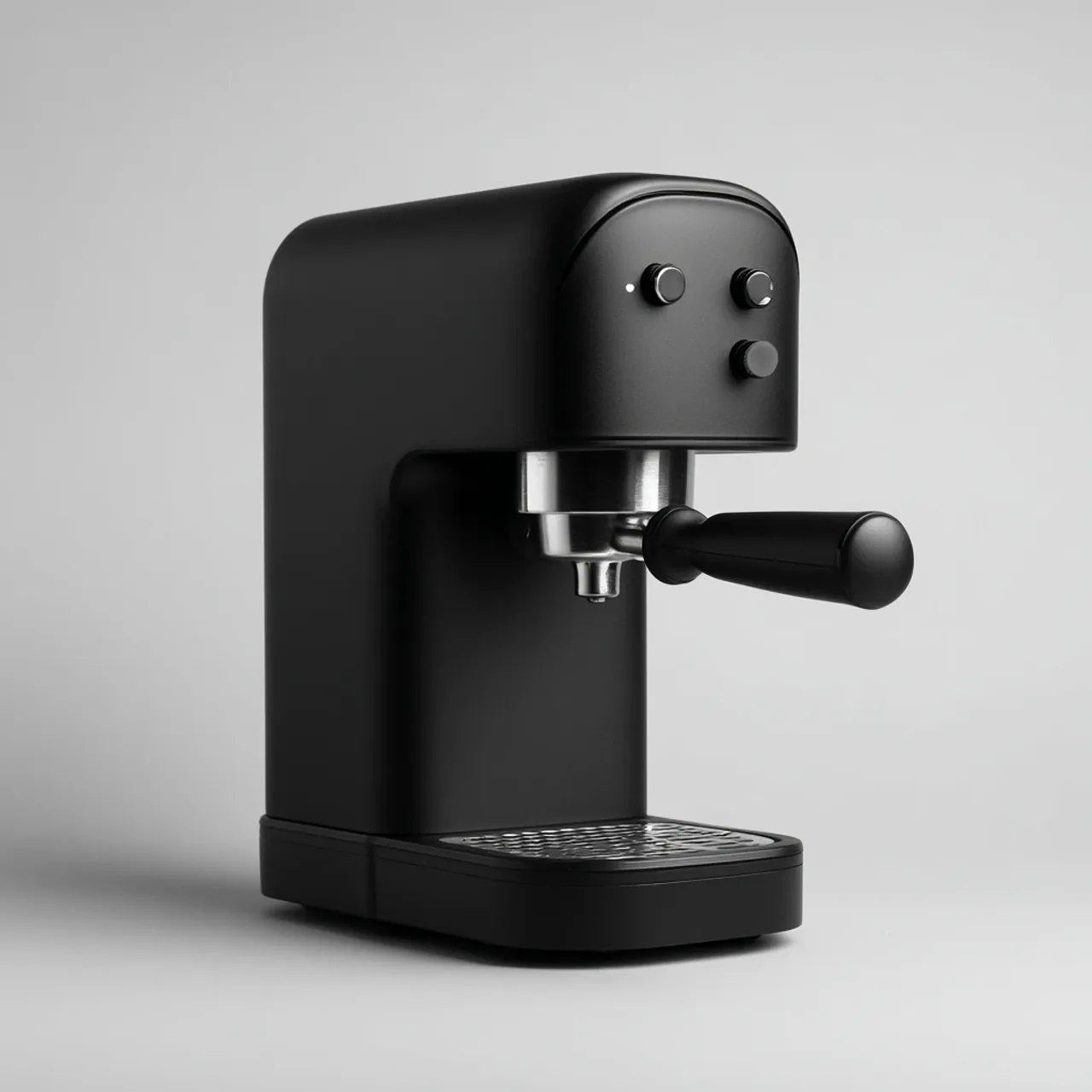
Clean E-commerce Product Photography Prompt
最適合 product listings, catalog images, marketplace thumbnails, and clean presentations.
The complete product, three-quarter view, clean background, and contact shadow created a usable catalog concept.
E-commerce product image
Create a clean e-commerce product photograph of a compact matte-black countertop espresso machine. Show the complete product from a three-quarter front angle on a light neutral background. Use soft studio lighting, accurate metal and plastic textures, a subtle natural shadow beneath the product, and sharp readable product edges. Keep the composition simple and suitable for an online product listing. No people, no cups, no coffee beans, no kitchen scenery, no text, no logo, no additional appliances --ar 1:1
Key ingredients
Three-quarter product view
Soft studio lighting
Complete product visible
Clean neutral background
What the test showed
All four outputs kept the complete machine visible on a clean neutral background.
The housing, brew head, water tank, and contact shadow read clearly as a catalog concept.
The original word “portable” did not produce visible portability, so the copyable Prompt now says “compact countertop.”
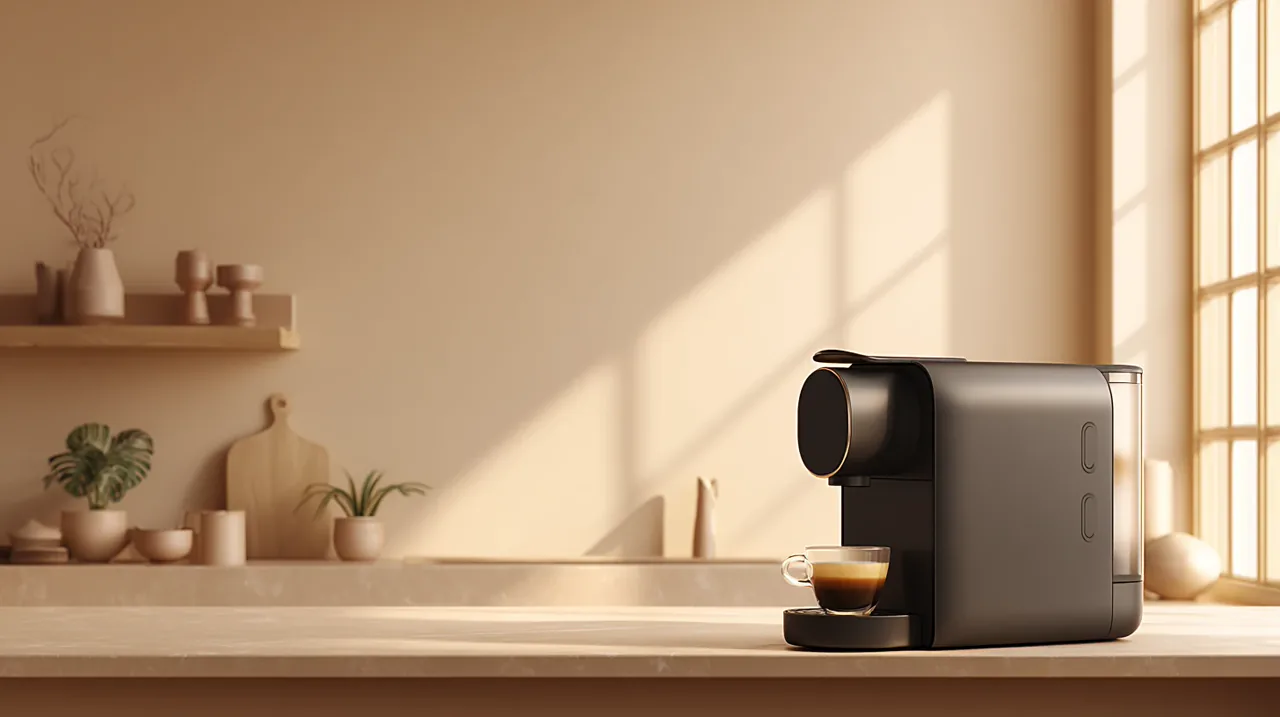
Lifestyle Product Advertisement Prompt
最適合 landing-page heroes, display ads, campaign concepts, and social advertising.
Explicit frame zones improved the left copy area, although small props and shadows still drifted into it.
Lifestyle product advertisement
Create a premium lifestyle advertisement for a compact matte-black espresso machine in a warm contemporary apartment kitchen. Use a strict advertising layout: keep the left 45 percent of the entire image completely empty, showing only a clean cream wall and uncluttered counter for advertising copy. Confine the complete espresso machine to the right third of the frame. Use soft morning window light, realistic matte-black metal and warm stone textures, a cream and warm-brown palette, and subtle steam from one espresso cup placed beside the machine within the right third. The machine must remain the main visual focus. No objects, props, plants, cups, appliances, strong shadows, window frames, or visual details may cross into the empty left 45 percent. No visible words, no added logo, no people, no clutter, no extra appliances --ar 16:9
Key ingredients
Left 45% reserved
Product in right third
Props kept to product zone
No strong shadow in copy area
What the test showed
The original “product right, space left” wording worked clearly in about one of four outputs.
Explicit frame zones improved the layout to about three of four outputs.
The reserved area was still not pixel-exact; props and shadows sometimes drifted into it.
Vertical Social Media Advertisement Prompt
最適合 Stories, Reels covers, mobile ads, and vertical campaign layouts.
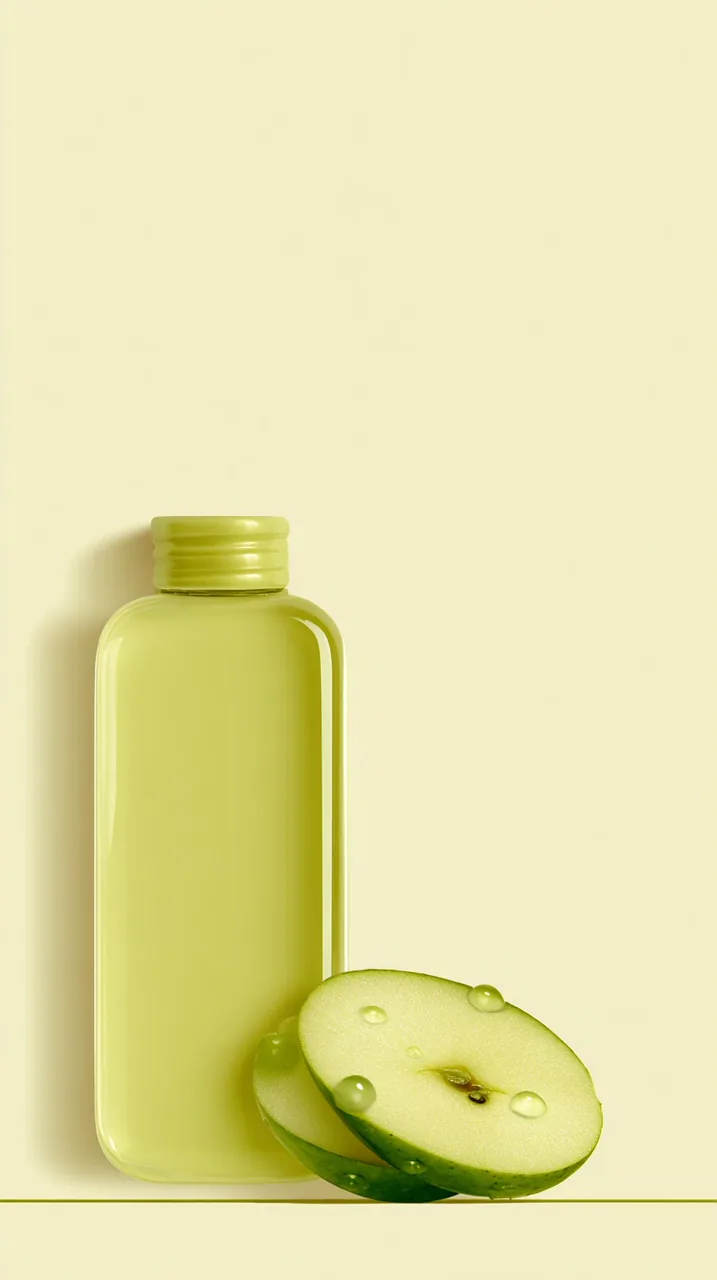
The third revision finally produced a usable empty upper zone in one variation, but the layout was not stable across the grid.
Vertical social advertisement
Create a vertical 9:16 product advertisement divided into two clearly separated horizontal zones. The entire upper half must be one unbroken empty pale-cream rectangle with no bottle, fruit, shadow, reflection, highlight, texture, object, or visual detail. Place one small translucent green sparkling-tea bottle fully below the horizontal midpoint, centered in the bottom third, with two apple slices beside its base. The bottle must occupy less than 40 percent of the total image height. Keep all backlighting, condensation, reflections, shadows, highlights, and props below the midpoint. Premium commercial product photography, realistic green glass and liquid. No text, no logo, no extra bottles, no hands, no scenery --ar 9:16
Key ingredients
Top 40% completely empty
Product confined below boundary
Backlight kept in lower zone
Vertical 9:16 layout
What the test showed
A stricter half-and-half layout created a useful empty upper field in one third-revision variation.
Other variations still enlarged the bottle or pushed detail into the reserved zone.
Use output selection or post-layout work when the ad boundary must be exact.
If you are deciding whether Midjourney is the right model for commercial image work, the Nano Banana Pro vs Midjourney comparison provides a broader model-level view.
Midjourney Portrait and Character Prompts
Portrait prompts become easier to control when the subject, action, placement, environment, and light support one visual goal. Camera language is useful only when it changes the image you need.
Photorealistic Portrait Prompt
最適合 editorial portraits, campaign concepts, character mood boards, and cinematic photography.
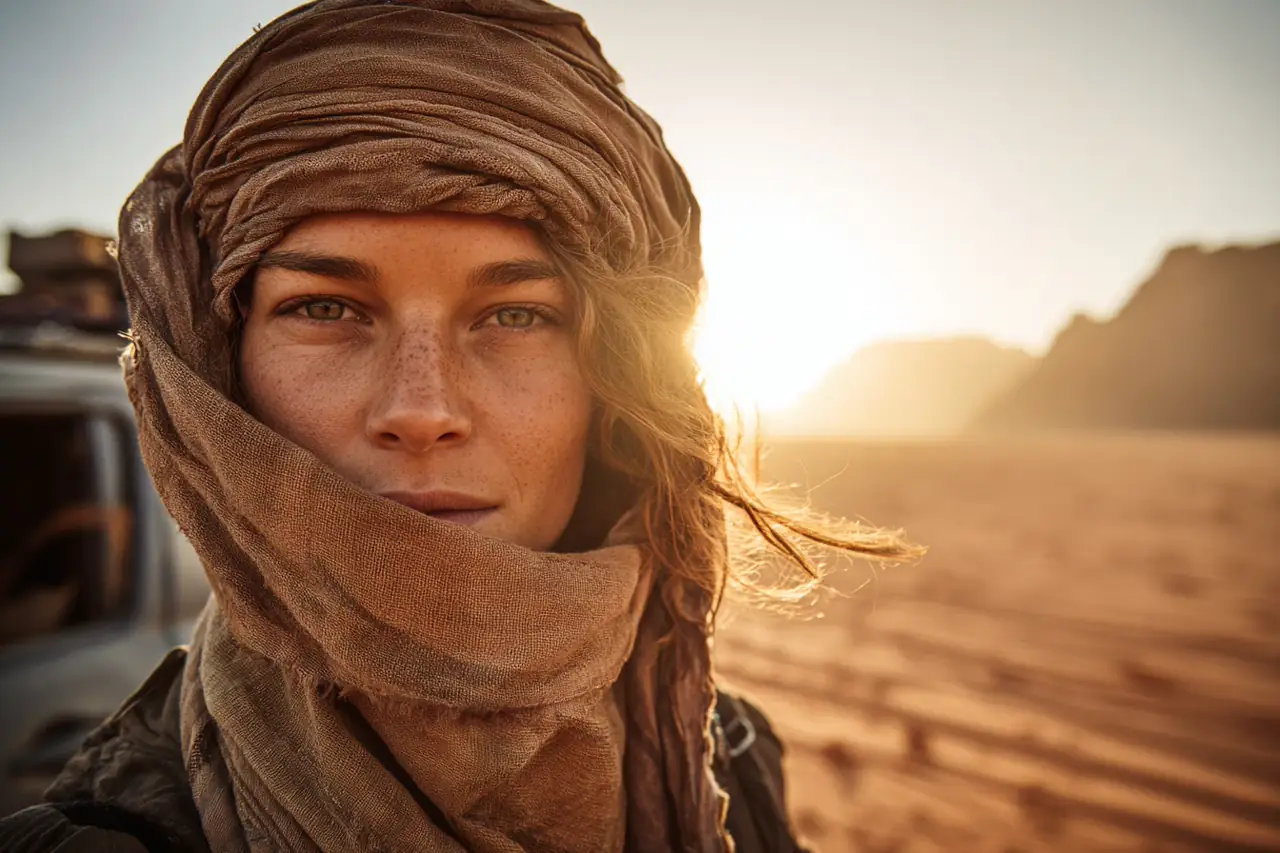
The wide canvas created useful space on the right, but the requested waist-up environmental context and approaching sand wall did not clearly appear.
Photorealistic portrait
Create a wide environmental editorial portrait of one adult female desert explorer. Place her at the far left, with her head and upper body occupying only the left third of the frame. Use the right two-thirds to show open desert, layered ridges, and a large clearly visible wall of airborne sand approaching from the distance. Include only a narrow cropped sliver of a weathered research vehicle behind her at the left edge. Her windblown scarf does not cover her face. Warm sunset rim light, cool natural shadows, restrained earth tones, realistic weathered fabric and skin, moderate background blur, subtle documentary film grain. No centered subject, no close-up crop, no text, no logo, no fantasy armor --ar 3:2
Key ingredients
Subject confined left
Visible sand wall on right
Vehicle reduced to context
Documentary texture
What the test showed
The 4:5 attempts repeatedly recentered the subject and reduced the environmental space.
Switching to a 3:2 canvas produced the intended subject-left, open-right composition.
The distant sand wall remained weak, but the aspect-ratio change helped more than extra camera terms.
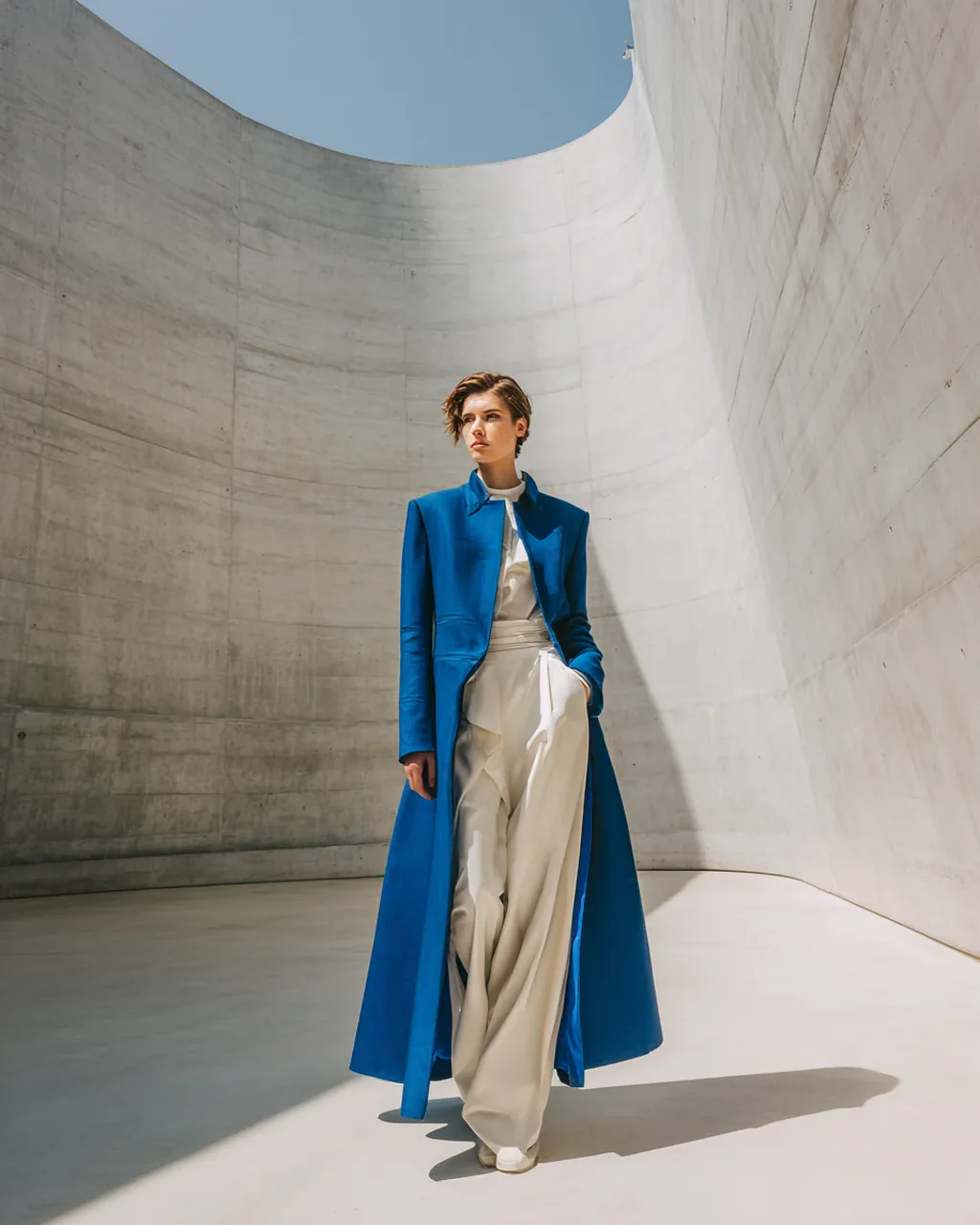
The full outfit, curved architecture, low viewpoint, and diagonal light stayed coherent across the run.
Fashion editorial
Create a full-length fashion editorial portrait of an adult model wearing a structured cobalt-blue coat over a monochrome cream outfit. Place the model in a minimalist concrete gallery with one curved wall and a long diagonal shadow. Use a low, slightly off-center camera position, restrained movement in the coat fabric, crisp directional light, a limited blue, cream, and gray palette, and refined magazine photography. Keep the face natural and the outfit fully visible. No text, no logo, no crowd, no extra garments --ar 4:5
Key ingredients
Full-length outfit
Low camera position
Diagonal hard shadow
Limited color palette
What the test showed
All four outputs kept the full-length model, cobalt coat, cream outfit, and curved concrete setting.
Diagonal light and the low viewpoint produced a strong magazine composition.
The best frame preserved natural facial anatomy and clean clothing structure.
Consistent Character Prompt
最適合 character series, storyboards, game concepts, and recurring campaign subjects.
Start with a baseline image:
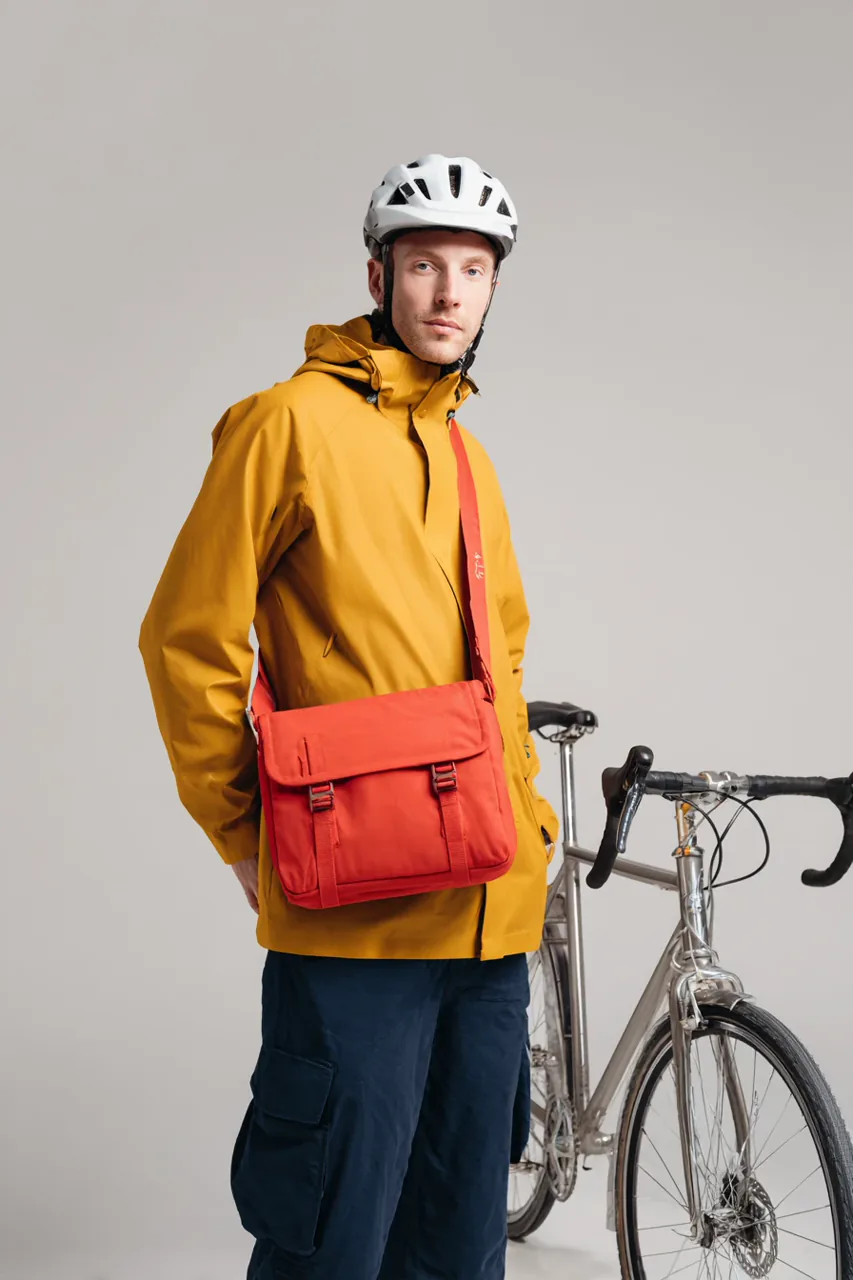
The third wording produced one clear hip-level messenger satchel without a medical symbol.
Character baseline
Create a full-body character design of an adult bicycle courier wearing a mustard-yellow rain jacket, navy cargo trousers, and a white bicycle helmet. Add one small flat rectangular red messenger satchel resting at the courier's right hip, supported by one narrow strap running diagonally from the left shoulder to the right hip. The satchel has one flap, a blank red surface, and no symbols, emblems, lettering, medical marks, backpack straps, or shoulder harness. It must never be worn as a backpack. The courier stands beside one silver city bicycle. Clean neutral studio background, realistic editorial photography, full outfit, satchel, and bicycle visible. No text, no logo, no additional people --ar 2:3
Key ingredients
Full-body baseline
Fixed outfit colors
Neutral background
Named accessories
What the test showed
Explicit hip placement, a single diagonal strap, and a flat rectangular form produced one clear messenger satchel.
Earlier versions often turned the bag into a backpack or added a medical-style mark.
One successful frame does not make the accessory repeatable across later scenes.
Then move the same character into a new scene:
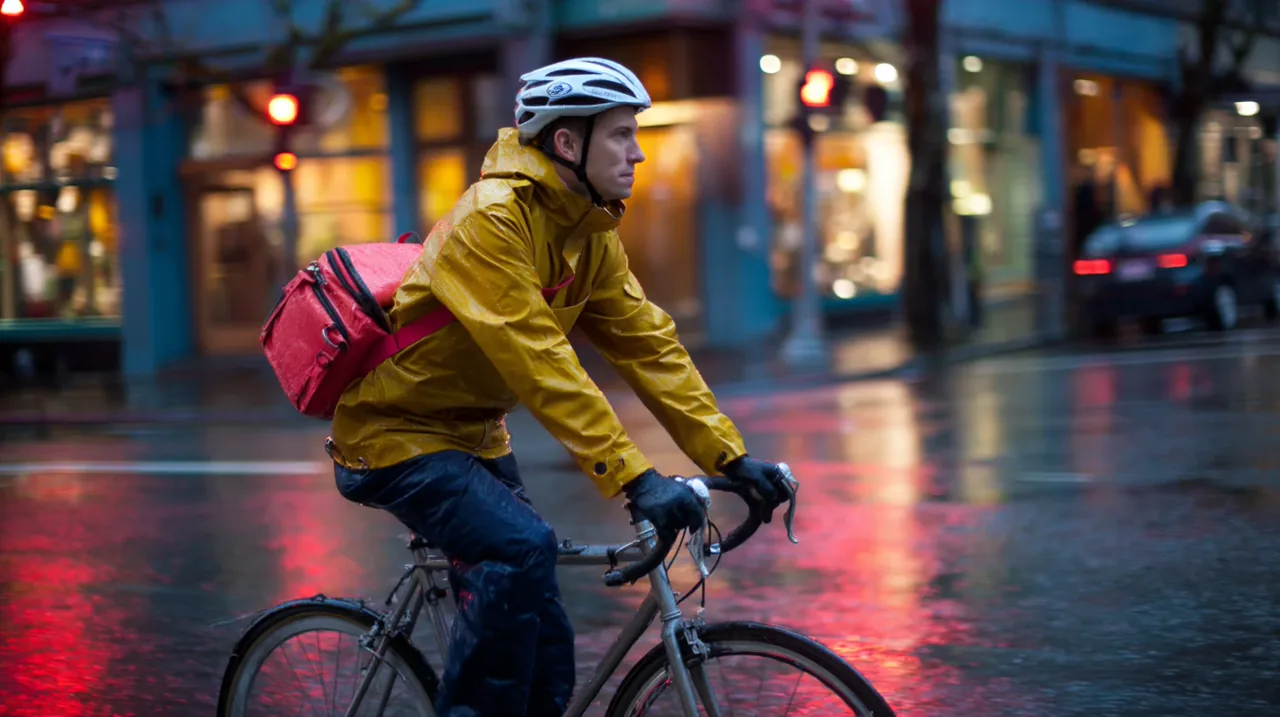
The scene and colors carried over, but the satchel became a backpack again and identity still changed without a subject reference.
Character follow-up scene
Show the same adult bicycle courier riding through a rainy downtown street at dusk, wearing the same mustard-yellow rain jacket, navy cargo trousers, and white bicycle helmet. Show one small flat rectangular red messenger satchel resting at the courier's right hip, supported by one narrow strap running diagonally from the left shoulder to the right hip. The satchel has one flap, a blank red surface, and no symbols, emblems, lettering, medical marks, backpack straps, or shoulder harness. It must never be worn as a backpack. The courier rides one silver city bicycle. Side view, wet asphalt reflections, cool city light with warm storefront accents, realistic editorial photography. No text, no logo, no additional cyclists --ar 16:9
Key ingredients
Same outfit and bicycle
Side-view action
Rain reflections
Cool-warm dusk palette
What the test showed
The yellow-and-navy outfit and rainy riding action carried into the new scene.
The satchel became a backpack again, while the face and bicycle identity also changed.
Use a subject reference when identity and accessory continuity matter.
Text alone does not prove identity consistency. Use the appropriate subject reference for the current Midjourney model, then compare the face, clothing, accessories, proportions, and key objects across several outputs. Keep Image Prompts separate from Style References.
Midjourney Illustration and Art Prompts
“Beautiful,” “creative,” and “artistic” do not describe visible design decisions. Medium, shape language, texture, palette, detail level, and negative space give the model a clearer art direction.
Editorial Illustration Prompt
最適合 article headers, magazine illustrations, cultural commentary, and atmospheric storytelling.
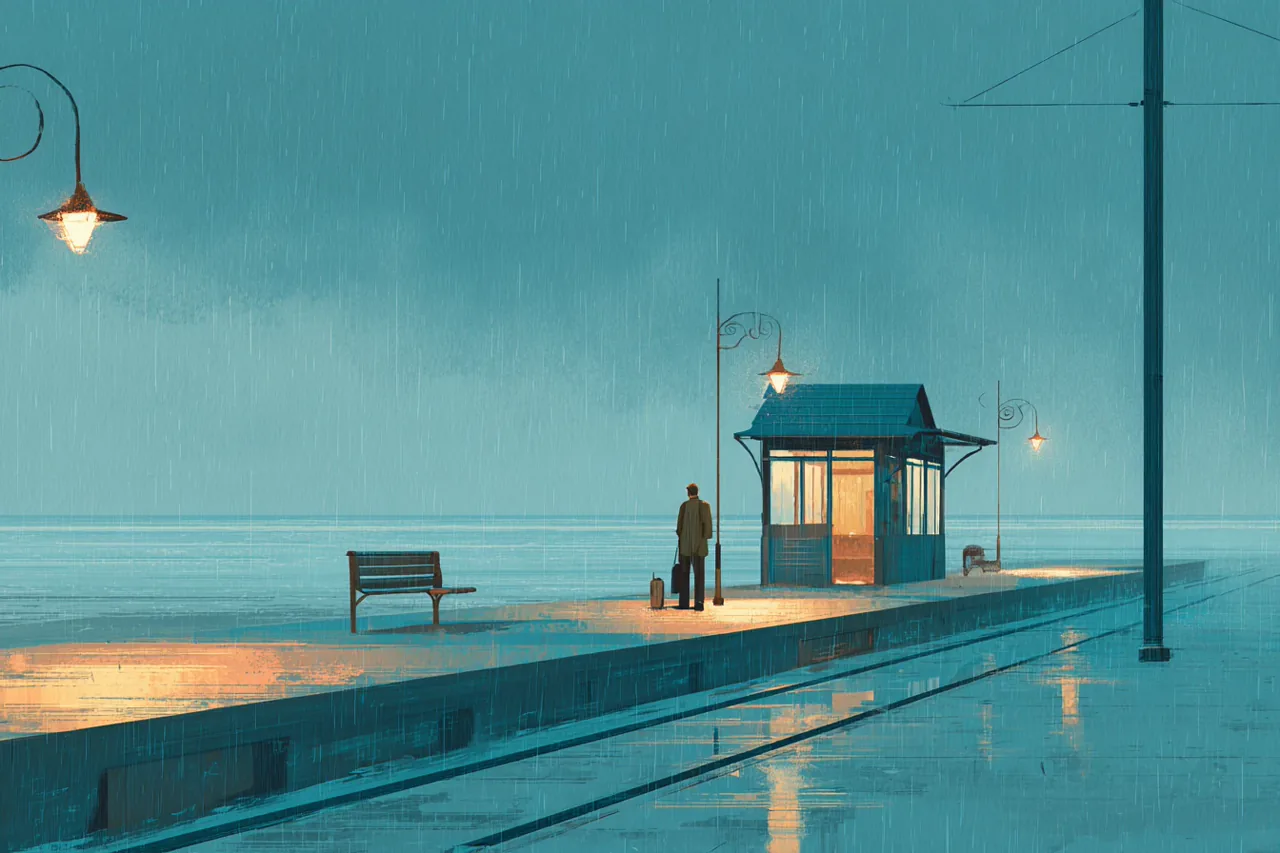
The lone traveler, wet platform, teal-and-amber palette, and painted texture stayed consistent.
Editorial illustration
Create an editorial illustration of a quiet coastal railway station at blue hour. Show one traveler waiting beneath a small shelter while the wet platform reflects warm station lamps. The distant ocean should be barely visible through the mist. Use simplified geometric shapes, hand-painted gouache texture, a muted teal and amber palette, soft paper grain, restrained detail, and generous negative space. No text, no photorealistic rendering, no crowded platform --ar 3:2
Key ingredients
Gouache texture
Geometric shapes
Teal-amber palette
Generous negative space
What the test showed
All four outputs kept one traveler, the wet platform, sea mist, and warm station light.
Gouache texture and the restrained teal-and-amber palette stayed coherent.
Observable medium, palette, subject count, and atmosphere produced stable art direction.
Children’s Book Illustration Prompt
最適合 story concepts, educational books, gentle characters, and page-layout exploration.
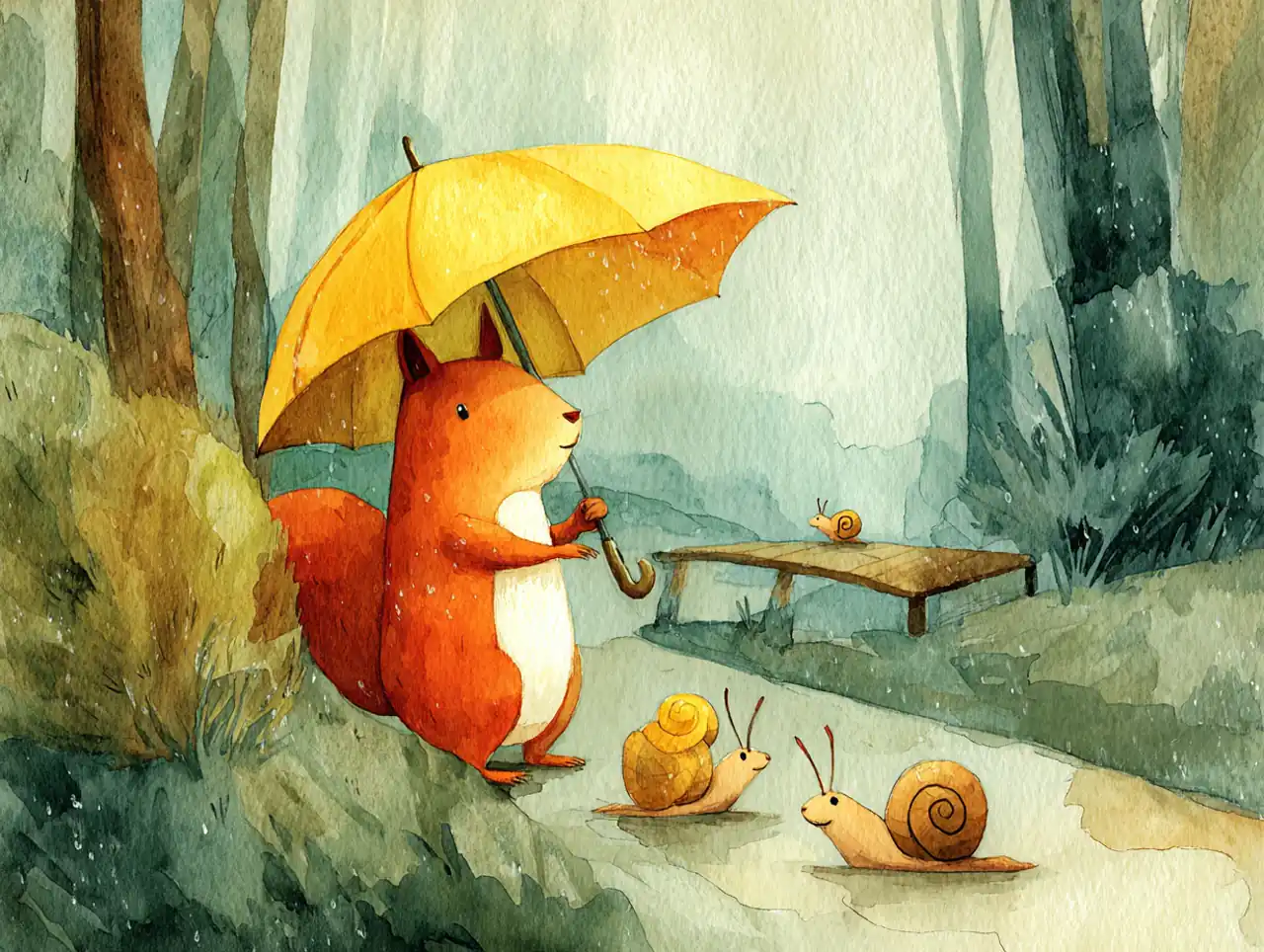
The warm watercolor mood, umbrella, woodland path, and bridge were strong; the exact count of three snails varied.
Children's book illustration
Create a warm children's book illustration of a small red squirrel carrying an oversized yellow umbrella through a rainy woodland path. Show three curious snails watching from beside the path and a tiny wooden bridge in the distance. Use soft watercolor washes, rounded friendly shapes, visible paper texture, a warm red, yellow, moss-green, and blue-gray palette, and clear foreground, middle-ground, and background separation. Gentle storybook mood, no text, no frightening expressions, no photorealism --ar 4:3
Key ingredients
Watercolor washes
Rounded friendly shapes
Three-layer depth
Gentle storybook mood
What the test showed
The squirrel, oversized yellow umbrella, rainy woodland, and distant bridge stayed clear.
Soft watercolor texture and rounded shapes created a consistent storybook mood.
The exact count of three small snails was not reliable across the set.
Anime and Game Character Prompt
最適合 original character exploration, game concepts, costume directions, and key art.
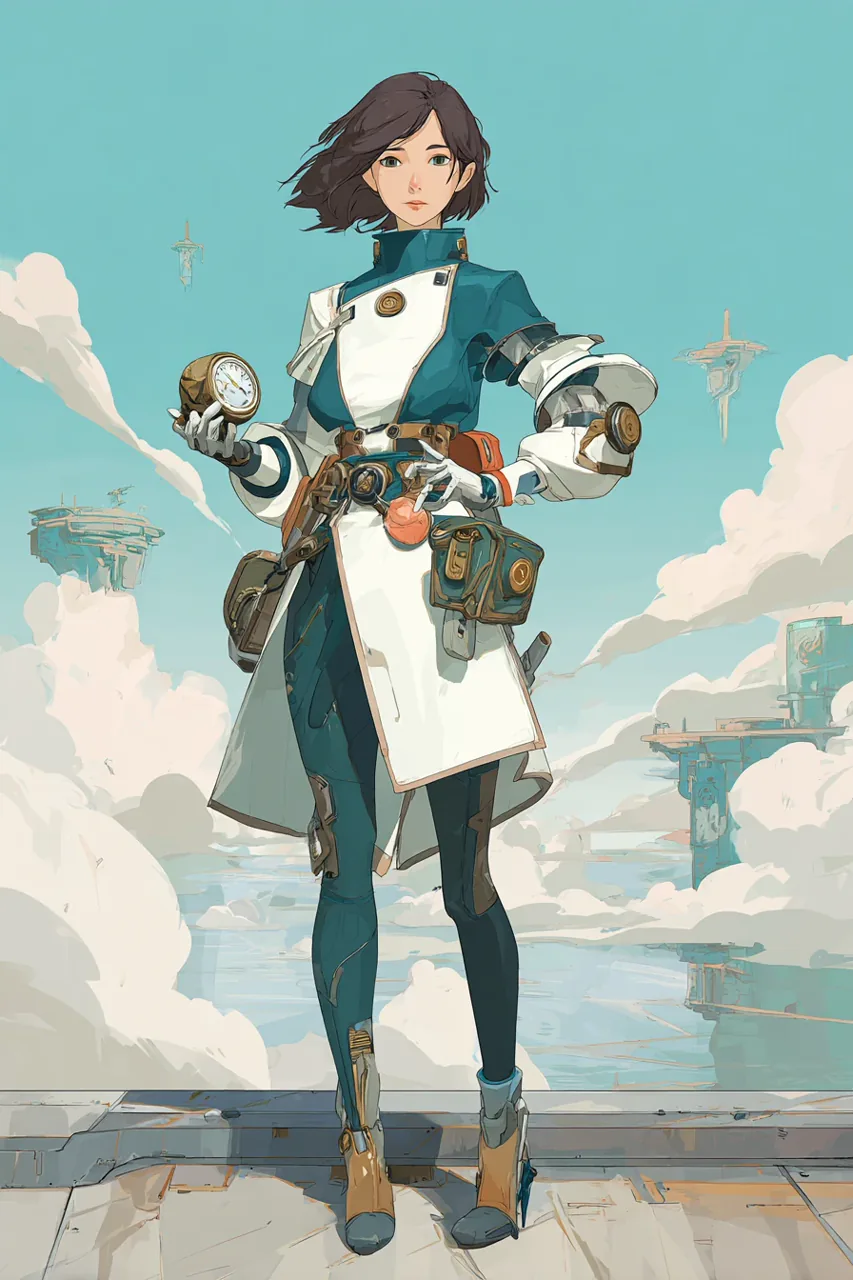
The restrained palette, mechanical compass, and floating-island setting created a clear character direction, but the hand near the waist still had awkward finger construction.
Anime and game character
Create an original adult science-fantasy navigator standing on the observation deck of a floating research vessel. She wears a practical white and deep-teal uniform with a short weatherproof cape, navigation tools on her belt, and one compact mechanical compass in her hand. Confident three-quarter pose, wind moving the cape, layered clouds and distant floating islands behind her. Clean anime-inspired character design, precise costume shapes, restrained teal, white, brass, and coral palette, detailed face and hands, no text, no logo, no oversized weapon, no revealing costume --ar 2:3
Key ingredients
Practical costume
Restricted palette
One key prop
Layered cloud background
What the test showed
The white-and-deep-teal uniform, mechanical compass, and floating islands stayed recognizable.
The restricted palette and precise costume shapes produced a clear original character direction.
Hands and the small prop still need a close check when selecting a final frame.
How to Use a Style Reference
Use a Style Reference when you want visual traits such as color, texture, medium, or lighting to carry across images. Do not treat it as proof that a character or product will remain identical. The safest test uses one base prompt, then changes only the reference so you can see what it contributes.
Midjourney Cinematic and Fantasy Prompts
Cinematic prompts work best when the scene has one readable event. Foreground, middle-ground, background, light, and color should reinforce that event instead of competing for attention.
Cinematic Scene Prompt
最適合 film concepts, pitch decks, campaign storytelling, and environmental key art.
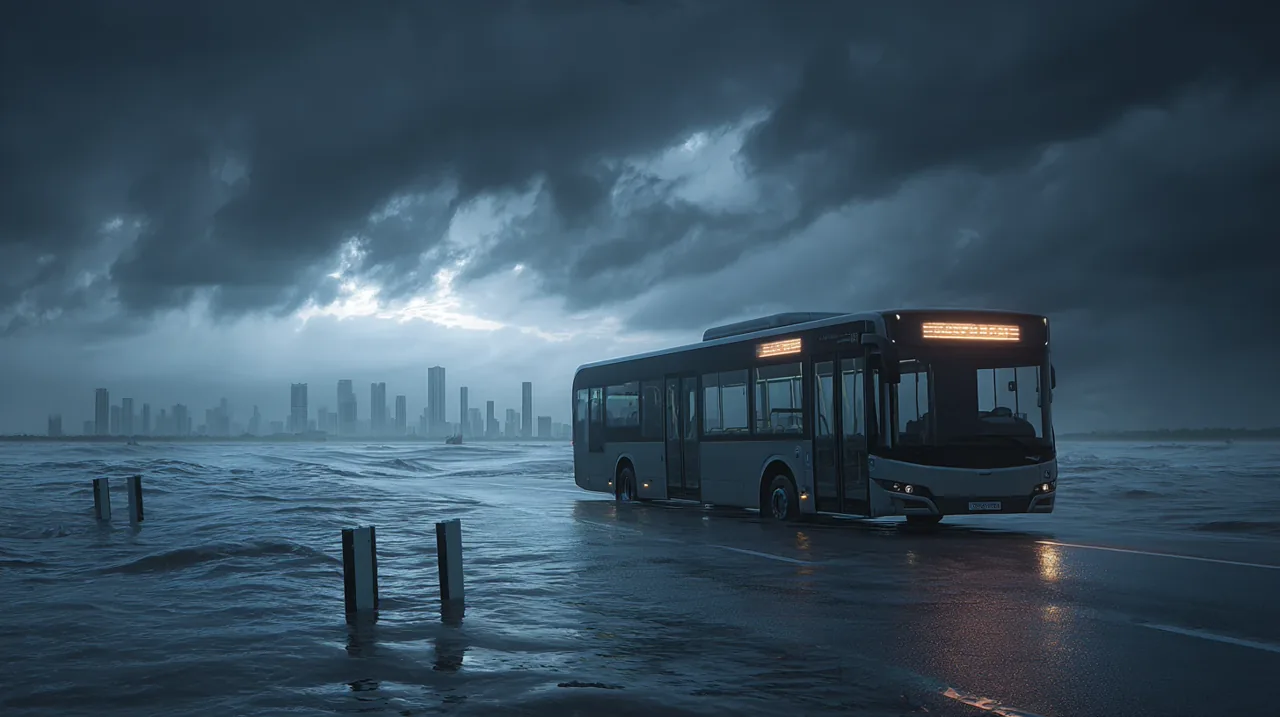
The revised run kept strong depth and lighting, but pseudo-lettering still appeared on the bus display.
Cinematic scene
Create a cinematic wide shot of one electric bus crossing a flooded coastal highway at dusk. Place the single bus in the lower-right third of the frame, with two partially submerged unlettered metal road-marker silhouettes in the foreground and a distant city skyline beneath dark storm clouds. The bus destination display must be switched off and blank. Use strong foreground, middle-ground, and background separation, cool blue-gray tones, small warm interior lights, realistic rain and water reflections, restrained film grain, and a tense but believable atmosphere. No readable letters or numbers anywhere, no logo, no fantasy creatures, no additional vehicles --ar 16:9
Key ingredients
Lower-right subject
Three depth layers
Cool-warm contrast
Water reflections
What the test showed
The foreground markers, bus, flooded road, and distant skyline created strong depth.
The bus stayed close to the lower-right target and the cool-warm lighting read clearly.
Even the revised blank-display instruction did not reliably suppress pseudo-lettering.
Fantasy Environment Prompt
最適合 worldbuilding, game environments, book covers, and atmospheric concept art.
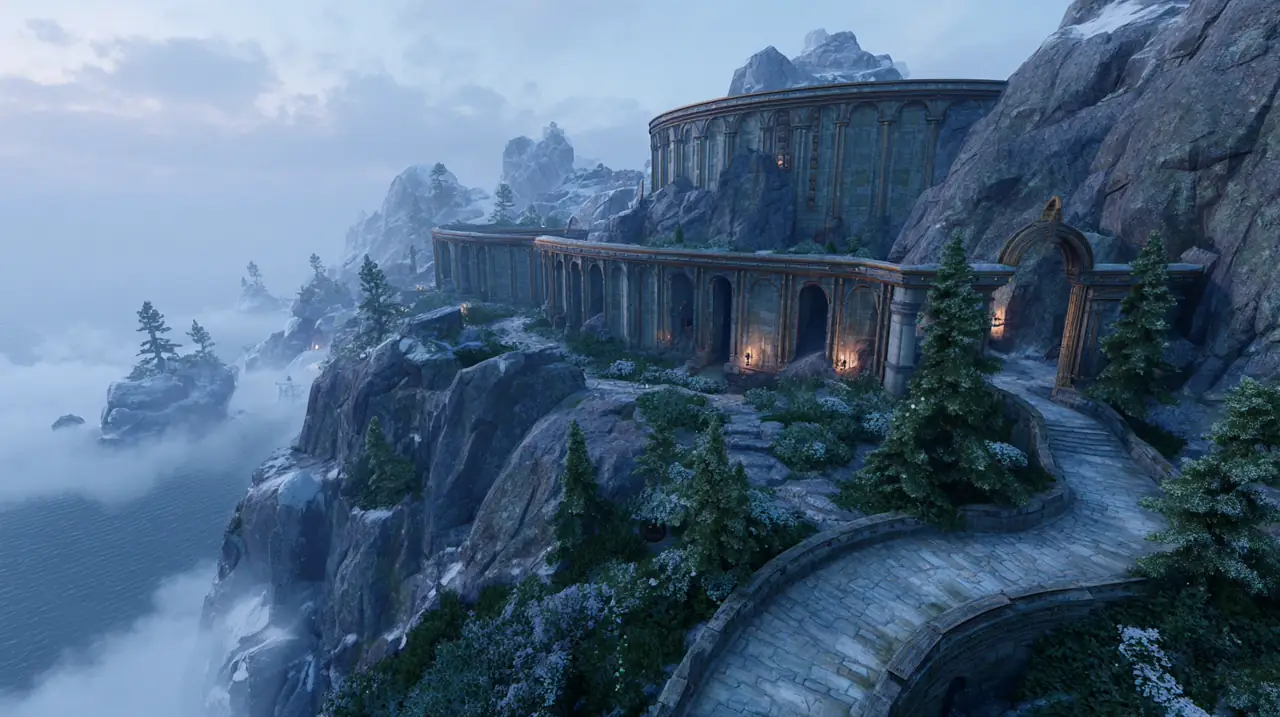
The architecture, scale, and atmospheric depth were convincing, while the requested ring-shaped cliff and narrow bridge remained loosely interpreted.
Fantasy environment
Create a vast fantasy environment showing an ancient observatory built into a ring-shaped cliff above a cloud ocean. A narrow stone bridge leads from the foreground to the observatory, while small warm windows reveal its scale. Use layered atmospheric depth, weathered pale stone, dark evergreen plants, cold morning mist, and a restrained silver, deep green, and amber palette. Epic scale but believable architecture, detailed environment concept art, no people in the foreground, no text, no logo, no floating castles --ar 16:9
Key ingredients
Leading stone bridge
Scale through windows
Atmospheric depth
Restrained palette
Test warning
The original prompt produced convincing architecture, scale, and atmospheric depth.
The ring-shaped cliff was interpreted loosely as curved architecture or a road.
An overcorrected prompt made the ring literal but weakened the observatory concept.
Science-Fiction Concept Art Prompt
最適合 futuristic environments, game pitches, film development, and technology concepts.
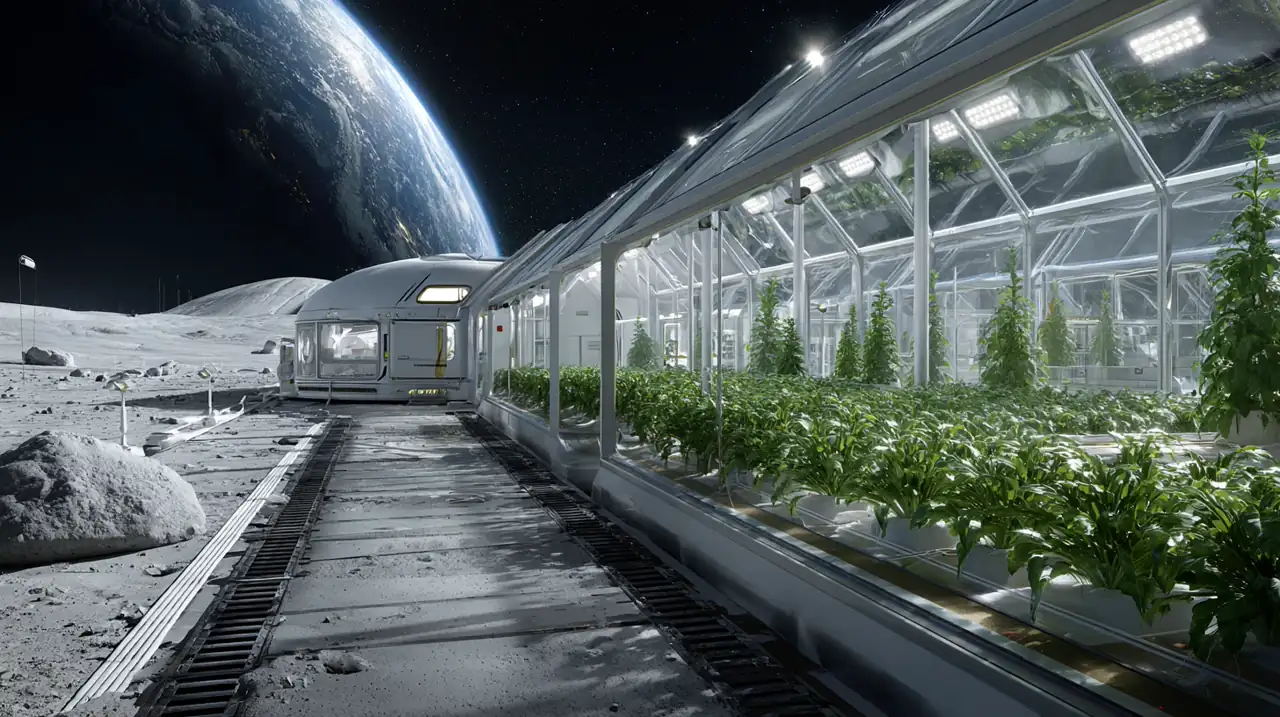
The rerun kept the selected frame’s plants inside the greenhouse and clarified the adjacent habitat, but Earth remained much larger than requested and other variations still placed crops outside.
Science-fiction concept art
Create a science-fiction concept image of one compact sealed lunar greenhouse physically connected by a short pressurized corridor to a small research habitat. Show transparent greenhouse panels, orderly rows of edible plants only inside the sealed greenhouse, and two parallel maintenance tracks crossing the bare gray lunar soil in the foreground. Place a small distant Earth low above the horizon, occupying less than one tenth of the image height. Use practical engineering details, a clear wide composition, bright sunlight with hard natural shadows, restrained white, graphite, green, and blue colors, and realistic aerospace materials. Optimistic near-future design. No plants exposed outside, no giant spacecraft, no neon signs, no text, no logo --ar 16:9
Key ingredients
Practical engineering
Hard lunar shadows
Limited aerospace palette
Near-future realism
Test warning
The selected rerun frame kept its crops inside a clear greenhouse beside the habitat.
Earth remained much larger than requested, and other variations still placed crops outside.
Negative constraints improved one frame but did not reliably control the full set.
Midjourney Parameters Used in These Prompts
Check Midjourney’s current official parameter list before publishing or reusing version-sensitive settings. Model compatibility and accepted values can change.
設定
實際應用
Important caution
--ar
Changes the canvas shape for logos, portraits, ads, and cinematic scenes.
A new ratio should lead to a new composition, not just a crop.
--stylize
Adjusts how strongly Midjourney applies its aesthetic interpretation.
Useful values and behavior depend on the model.
--生
Can reduce automatic styling when direct photographic instructions matter.
It does not mean “no style.” Confirm compatibility first.
--混沌
Changes how varied the initial set is.
It is about variation, not simply image quality.
--weird
Pushes results toward less conventional visual directions.
It is different from chaos; confirm the current range.
--seed
Makes controlled prompt experiments easier to compare.
It is not a permanent cross-version pixel-reproduction guarantee.
--no
Requests that unwanted elements be excluded.
It is a preference, not a guaranteed removal tool.
--quality
Changes the generation effort where supported.
It does not automatically change output resolution; verify supported values and cost.
If you are weighing the subscription against your expected usage, read the current breakdown of whether Midjourney is worth it before choosing higher-cost settings or a heavier plan.
Common Midjourney Prompt Problems and Quick Fixes
Visible problem
Likely prompt issue
What to change next
Logo is too detailed
No color, shape, or small-size limits
Limit colors, simplify the geometry, and name the target size.
Logo appears as a package mockup
The requested asset is ambiguous
Ask for an isolated symbol and exclude packaging and mockups.
Negative-space logo reads as two stacked objects
The relationship is described too abstractly
Name the base silhouette, the cutout, what background it exposes, and ban a separate overlaid object.
Brand text is misspelled
The task depends on exact typography
Generate the symbol separately and add verified typography later.
Product scene is cluttered
The model has too much freedom around the product
Define subject position, prop count, and prohibited objects.
Ad copy space drifts or fills up
The layout zone is only described loosely
Reserve a percentage of the frame, confine the product to another zone, and exclude props and shadows from the empty area.
Character changes between scenes
Text-only repetition is being treated as identity control
Use an appropriate subject reference and score the face, clothing, accessories, proportions, and key objects.
Signs or displays contain pseudo-text
The scene includes objects that naturally carry lettering
Avoid those objects, replace them with blank silhouettes, or plan a cleanup pass; “no text” is not a guarantee.
A geometric shape replaces the scene idea
One form was overemphasized without restating its function
Balance the required shape with what the structure is and what it must do.
Style feels generic
The prompt relies on abstract praise
Specify medium, shapes, texture, palette, and detail level.
Long prompt feels inconsistent
Several visual directions conflict
Keep one primary direction and one supporting accent.
One output is good but later runs fail
Random success is being treated as stability
Repeat the prompt with controlled settings before trusting it.
If you need a different balance of text accuracy, editing, or creative control, compare the 最佳 AI 圖片生成器 或檢視 best Midjourney alternatives before forcing one model into every job.
常見問題
Can Midjourney create logos?
Midjourney can generate logo concepts, symbols, mascots, monograms, and emblem directions. Treat the result as a concept that still needs originality checks, typography review, and professional vector cleanup before it becomes a finished brand asset.
What is the best Midjourney prompt for a logo?
Define the symbol, construction method, composition, color limit, small-size requirement, background, and exclusions. If you need a clean mark, explicitly request a symbol only and exclude words, packaging, mockups, gradients, and shadows.
Can Midjourney generate an SVG or vector logo?
A prompt can request a flat vector-style appearance, but that does not prove the returned file is an editable SVG or AI vector. Plan to redraw the selected concept in a vector design tool before production.
Why does Midjourney misspell logo text?
Exact lettering is a stricter task than generating a visual symbol. If spelling matters, generate the symbol separately, add final typography in a design tool, and verify every letter before publishing.
Can I use a Midjourney logo commercially?
Check Midjourney’s current terms and the rights attached to your plan. Commercial-use rights do not prove that a generated mark is unique, non-infringing, or registrable as a trademark.
How do I check whether an AI-generated logo is unique?
Search relevant trademark databases, review visually similar marks in your market, and involve a qualified professional before adopting a high-value identity. Do not rely on the image model to perform legal clearance.
How long should a Midjourney prompt be?
Use enough detail to remove the uncertainty that could ruin the image. Stop when additional words repeat the same visual idea or introduce conflicting directions.
How do I keep a character consistent in Midjourney?
Use Midjourney’s current subject-reference option and compare several traits across multiple outputs: face, clothing colors, accessories, proportions, and key objects. A Style Reference controls visual style, not necessarily subject identity.
Do Midjourney prompts work across different model versions?
Do not expect identical behavior across versions. Record the model, date, parameters, and reference method for any prompt you need to reproduce later.
Is Midjourney free?
Plans and trial availability can change, so check the current official offer before relying on an older tutorial. The updated Midjourney free and pricing guide explains the current cost questions in more detail.
Can Midjourney make videos?
Image prompting and video creation are related but separate tasks. If motion is your next step, see the current guide to making videos with Midjourney rather than assuming an image prompt will transfer unchanged.
Is there an official Midjourney API?
Check Midjourney’s current official documentation before choosing an API route. A third-party gateway that uses “Midjourney” in a model name is not automatically an official Midjourney API, and its supported features may differ from the web or Discord experience.
Start with the task, not the longest prompt. Copy the closest example, replace the subject and visual direction, then change one variable at a time. If the model still does not fit the job, compare supported image models on GLBGPT before spending another hour rewriting the same instructions.
Midjourney is not normally free, but one official trial still works. See who qualifies and follow five steps to claim 20 free niji・journey generations.
Узнайте, доступна ли Sora 2 в Казахстане и как пользоваться ею после закрытия официального приложения: через OpenAI API или проще — через GlobalGPT без VPN.