
若您重視編碼效能,卻不希望每次 API 呼叫都得支付旗艦機型的價格,那麼 GLM-5.3 Flash 就是我會關注的機型。. Z.AI 將其定位為原生多模態 GLM-5 系列模型,而官方定價的差距相當明顯:目前的促銷價格為每 100 萬輸入代幣 $0.075,每 100 萬輸出代幣 $0.25, 而同在 Z.AI 的定價頁面中,GLM-5.3 與 GLM-5.2 的定價則分別為每 100 萬輸入代幣 $1.40,以及每 100 萬輸出代幣 $4.40。.
這並不代表 GLM-5.3 Flash 適用於所有任務。在我們的受控 API 測試中,它看似成本低廉,但對推理和輸出設定卻相當敏感。 數個預設的 OpenAI 相容請求雖回傳了 HTTP 200 狀態碼,卻將大部分的完成代幣耗費在推理上,且產出的可見答案極少甚至完全沒有。在切換至 GLM 風格的推理設定並提高輸出上限後,編碼除錯任務才變得可實際運用。.
本指南詳細解析 GLM-5.3 閃購價, API 存取、官方規格、基準測試指標,以及實際測試結果。若您的目標是在決定採用哪一套技術堆疊之前,先比較各款模型,, GLBGPT 這是比較多個模型輸出結果最簡便的方式,而 Z.AI 自身的文件和定價頁面仍是獲取 GLM-5.3 Flash API 官方詳細資訊的權威來源。.
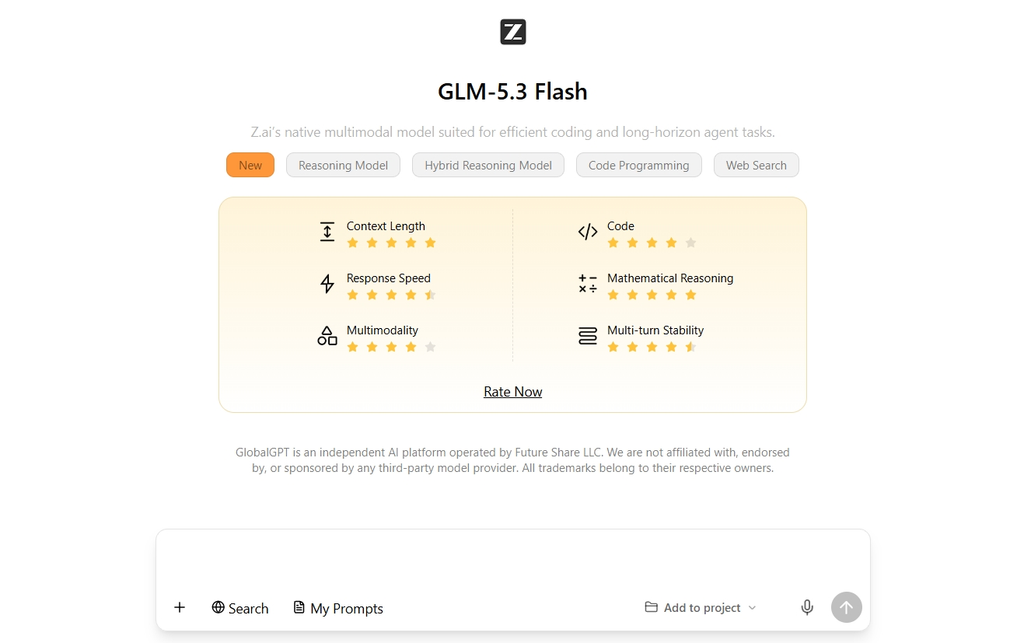
快速解答:什麼是 GLM-5.3 Flash?
GLM-5.3 Flash 是 Z.AI 推出的一款高性價比 GLM-5 模型,適用於編碼、代理任務、長上下文處理及多模態輸入。. 官方 GLM-5.3-Flash 說明文件 列出了 API 模型的程式碼如下: glm-5.3-flash, 支援 1M 代幣的上下文視窗,並透過 image_url 內容區塊。.
關鍵在於權衡取捨。GLM-5.3 Flash 並非只是在同一款模型頁面上貼上一個較小的標籤而已。 Z.AI 將其描述為 GLM-5 系列中首個原生多模態模型,總參數數達 320B,其中活躍參數為 18B。該模型基於混合架構建構,旨在降低服務成本的同時,仍能保持長上下文行為的實用性。.
我的實務觀察:GLM-5.3 Flash 對於成本敏感的編碼及代理工作負載最為適用,這些情境下您可能需要多次調用模型。若未針對 API 路徑和推理設定進行微調,它作為日常寫作模型的表現就較不盡理想,因為當輸出上限過低時,可見的輸出可能會被推理代幣的使用所掩蓋。.
GLM-5.3 閃電價
官方 Z.AI 定價頁面 是關於……最可靠的來源 GLM-5.3 閃購價. 根據 2026 年 8 月 27 日的查證結果,Z.AI 平台列出 GLM-5.3-Flash 享有 50% 的促銷折扣。 折扣價格為每 100 萬輸入代幣 $0.075,以及每 100 萬輸出代幣 $0.25。 被劃線的標價分別為每 100 萬輸入代幣 $0.15,以及每 100 萬輸出代幣 $0.50。.
Z.AI 亦指出,此項促銷活動將於 2026 年 9 月 9 日 24:00(UTC+8 新加坡時間)結束。這一點對正在比較長期成本的讀者而言至關重要:雖然上市折扣確實存在,但除非 Z.AI 延長此優惠,否則不應將其視為永久性的基準價格。.
| 模型 | 輸入 / 100 萬個代幣 | 快取輸入 | 產出 / 100萬個代幣 | 定價說明 |
|---|---|---|---|---|
| GLM-5.3-Flash | $0.075 促銷價;$0.15 定價 | $0.015 促銷價;$0.03 定價 | $0.25 促銷價;$0.50 定價 | 50% 優惠活動將持續至 2026 年 9 月 9 日(UTC+8) |
| GLM-5.3 | $1.40 | $0.26 | $4.40 | 關於 Z.AI 定價的旗艦款 GLM-5.3 相關資訊 |
| GLM-5.2 | $1.40 | $0.26 | $4.40 | 關於 Z.AI 定價的上一則 GLM 模型相關內容 |
| GLM-5.1 | $1.40 | $0.26 | $4.40 | 列於 Z.AI 文字模型之下 |
Z.AI 官方輸出價格比較
來源:Z.AI 官方定價頁面,查閱日期為 2026 年 8 月 27 日。促銷價格僅限時提供。.
因此,就官方代幣定價而言,GLM-5.3 Flash 確實比 GLM-5.3 和 GLM-5.2 更便宜。但更值得探討的問題是,當將您的提示、推理設定、工具呼叫及重試次數都計算在內後,它是否仍能維持低廉的成本。我們的實作單元將深入探討這一點。.
若想了解上一代產品的定價背景,請參閱我們另文刊載的 GLM-5.2 價格 指南。我會讓該頁面專注於 GLM-5.2,並讓這篇文章負責說明 GLM-5.3 Flash 的價格、API 以及效能測試目的。.
GLM-5.3 Flash API 存取
官方 API 模型程式碼如下: glm-5.3-flash. Z.AI 表示,其文字參數與 GLM-5.3 一致,支援 100 萬個標記的上下文視窗,並支援透過 image_url 內部的方塊 messages[].content[]. 這使得 GLM-5.3 Flash 不僅僅是一個純文字編碼模型。.
這項設定說明並非可忽略的細節。文件中建議 溫度:1, top_p:0.95, 以及 推理_努力:最大. 他們還說 thinking.type 支援 已啟用, ,並建議 thinking.clear_thinking: false. 在我們自己的測試中,這類設定確實發揮了作用。.
| API 項目 | 該使用什麼 | 為何重要 |
|---|---|---|
| 範例程式碼 | glm-5.3-flash |
請使用確切的型號 ID,而非猜測變體名稱。. |
| 上下文 | 100萬枚代幣 | 適用於大型程式碼庫、長篇文件及代理程式記憶體,但仍需考量成本。. |
| 影像輸入 | image_url 內容區塊 |
支援「截圖轉程式碼」及視覺化除錯工作流程。. |
| 思考 | thinking.type:已啟用 |
推理不能被視為一個微不足道的隱藏細節;它可以主導符號的使用。. |
對於非開發者而言,這正是多模型平台能派上用場的地方。您可以使用 GLBGPT 在投入時間設定某家供應商的 API 之前,請先比較各模型的運作表現。關於官方的代幣計費及模型參數,請務必參閱 Z.AI 自身的定價資訊與文件。.
GLM-5.3 快閃記憶體基準測試與效能指標
在此情況下,基準測試雖有幫助,但前提是必須標註資料來源。Z.AI 的文件提供了官方的模型宣稱與架構細節。. 人工分析 提供第三方基準測試數據。. OpenRouter 提供醫療服務提供者市場的數據。這屬於三種不同的證據類型。.
Artificial Analysis 的報告顯示,GLM-5.3-Flash 的智慧指數為 57,在顯示的 110 個模型中排名 #3,採用 1M 的上下文視窗,每秒可輸出 50.2 個標記。報告還顯示其輸入模態為文字與圖像,輸出為文字。 對於採用 Flash 定價的模型而言,這是一個強勁的能力訊號,但這仍屬第三方基準測試結果,並非 Z.AI 官方的速度保證。.
價格與功能一覽
| 模型 | 官方售價 | 基準訊號 | 上下文 | 來源邊界 |
|---|---|---|---|---|
| GLM-5.3-Flash | 每 100 萬枚代幣可獲得 $0.075 輸入 / $0.25 輸出 促銷獎勵 | 57 智慧指數;50.2 輸出代幣/秒 | 100萬枚代幣 | 價格來源:Z.AI;基準來源:Artificial Analysis |
OpenRouter 對於查詢市場上的可用性及各供應商的特定數值相當實用,但我不會將這些數值列入官方價格表中。若 OpenRouter 顯示的供應商傳輸速率或臨時費率與實際情況不同,請標註為「供應商市場資料」。.
API 實作測試:提示、代幣使用與結果
我們針對五種可用的模型進行了一項受控的 API 測試: glm-5.3-flash, glm-5.3, glm-5.2, gpt-5.6-luna, 以及 kimi-k3. 這並非正式的基準測試,亦不應被解讀為全球模型排名。其目標更為狹窄,且對本文更具實用價值:在相同的提示下,GLM-5.3 Flash 是否能產生可用的輸出、其推理標記的表現如何,以及 API 回應中回傳了哪些成本欄位?
測試設計刻意保持簡單。我們採用了一項編碼任務、一項嚴格的結構化輸出任務,以及一項簡短寫作任務。這種組合至關重要,因為如果模型在處理編碼任務時表現優異,卻因在隱藏推理上耗盡了輸出預算,那麼在處理嚴格的 JSON 或簡短文案時,仍可能令人感到惱人。.
如何解讀測試卡
- 通過 意指該模型回傳了能解答該任務的可見輸出。.
- 格式錯誤 表示該內容雖具實用性,但並非嚴格意義上的機器可讀輸出。.
- 無法得出明確結論 表示該請求在技術上已成功,但經測試的路由返回的回應極少或幾乎沒有可見的回應。.
- 成本欄位 這些是來自此次受控 API 執行所回傳的數值,並非供應商的官方價格承諾。.
使用的預設執行方式 溫度:0.2 以及任務層級的輸出上限。每個模型/任務僅執行一次,且不進行自動重試。隨後,我們僅針對 GLM-5.3 Flash 在編碼與寫作任務上,採用 GLM 風格的思考設定進行後續測試,因為其預設的 Flash 回應顯示出大量使用推理標記,因此需要進行更公平的配置檢查。.
任務 A
程式碼除錯:模型是否發現了客戶分組的錯誤?
任務: 找出 TypeScript 函式中的錯誤,說明發生原因,並提供修正後的實作。.
確切的提示語
您正在審查一個 TypeScript 函式,該函式應根據客戶 ID 將訂單分組,並計算每位客戶的總消費金額。 請找出錯誤,說明發生原因,並提供修正後的實作。程式碼:type Order = { id: string; customerId: string; total: number }; function summarize(orders: Order[]) { const result: Record = {}; for (const order of orders) { if (!result[order.id]) result[order.id] = { count: 0, total: 0 }; result[order.id].count += 1; result[order.id].total += order.total; } return result; }
| 模型 | 輸出概覽 | 代幣/成本說明 | 結果 |
|---|---|---|---|
glm-5.3-flash |
預設執行結果返回 HTTP 200 狀態碼,但未顯示助理的回答,因為推理過程已使用了 1200 個完成代幣中的 1196 個。在「建議設定」的後續步驟中,系統正確地識別出 order.id 應為 order.customerId 並提供了一個修正後的實作版本。. |
預設:總計 1348 個代幣,成本欄位為 $0.0003111。後續:總計 2584 個代幣,成本欄位為 $0.00124007598。. | 重新執行後通過 |
glm-5.3 |
找出分組金鑰的錯誤,並說明為何唯一的訂單編號會阻礙以客戶為單位的彙總。修正後的程式碼如下: customerId 作為物件金鑰。. |
總計 1348 個代幣,成本欄位為 $0.00534128。. | 通過 |
glm-5.2 |
還發現了 order.id 與 customerId 解決了該問題,並產出了一個可用的修正版實作。. |
總計 1304 個代幣。美元成本未在同一回應欄位中返回。. | 通過 |
gpt-5.6-luna |
給出了最清晰簡潔的解釋:累加器是以訂單 ID 作為索引的,因此每筆訂單都成為一個獨立的桶。它回傳了修正後的 TypeScript 程式碼。. | 總計 509 枚代幣。美元成本待確認/尚未退還。. | 通過 |
kimi-k3 |
發現了相同的錯誤,並提供了詳細的說明以及修正後的實作方式。這個答案雖然能派上用場,但比 GPT 的答案更長。. | 總計 1423 枚代幣。美元成本待確認/尚未退還。. | 通過 |
重點摘要: 在程式碼除錯方面,GLM-5.3 Flash 只有在採用 GLM 式思維進行設定,並提高輸出上限後,表現才令人滿意。GLM-5.3、GLM-5.2、GPT-5.6 Luna 以及 Kimi K3 均在首次執行時就產生了可用的、可視化的答案。.
任務 B
嚴格的 JSON:該模型是否遵循了機器可讀的格式?
任務: 僅回傳嚴格的 JSON,且鍵名固定,不包含 Markdown 包覆。.
確切的提示語
僅回傳嚴格的 JSON 格式。針對正在選擇程式碼助理的開發者,請比較 GLM-5.3-Flash、GLM-5.3 以及 GPT 風格的旗艦模型。請使用以下關鍵字:best_for、tradeoffs、cost_warning、recommendation。請勿使用 Markdown 格式。.
| 模型 | 輸出概覽 | 代幣/成本說明 | 結果 |
|---|---|---|---|
glm-5.3-flash |
回傳了部分類似 JSON 的內容,但若未經清理,則無法嚴格解析為 JSON。這僅供人類閱讀使用,不適用於直接進行自動化處理。. | 總計 1267 個代幣,成本欄位為 $0.000305025。. | 格式錯誤 |
glm-5.3 |
在測試的輸出上限下,未產生任何可見的助手內容,且幾乎所有完成標記均被推理過程消耗殆盡。. | 總計 1267 個代幣,成本欄位為 $0.00530084。. | 無法得出明確結論 |
glm-5.2 |
回傳了一個類似 JSON 的結果,但該結果不完整/若不進行清理則無法解析。. | 總計 1268 個代幣。該回應欄位中未回傳美元金額。. | 格式錯誤 |
gpt-5.6-luna |
回傳可解析的 JSON,其中包含所請求的鍵,且不包含 Markdown 圍欄。. | 總計 541 個代幣。美元成本待定/尚未退還。. | 通過 |
kimi-k3 |
回傳的內容類似 JSON 且包含實用資訊,但在進行清理之前,並不能被嚴格解析為 JSON。. | 總計 1339 個代幣。美元成本待確認/未退還。. | 格式錯誤 |
重點摘要: 就嚴格的結構化輸出而言,在這次小規模測試中,GPT-5.6 Luna 的輸出最為整潔。GLM-5.3 Flash 或許在實施更嚴格的回應格式控制後仍能運作,但此預設請求尚不具備自動化執行條件。.
任務 C
產品簡介:該模型是否產生了可用的文字?
任務: 請撰寫一篇具體且非宣傳性質的 120 字說明,闡述在何種情況下 GLM-5.3 Flash 會比更重的旗艦機型更勝一籌。.
確切的提示語
請撰寫一篇 120 字的產品說明,闡述在何種情況下,GLM-5.3-Flash 會比更重的旗艦機型更為合適。內容應具體明確,避免宣傳口吻。.
| 模型 | 輸出概覽 | 代幣/成本說明 | 結果 |
|---|---|---|---|
glm-5.3-flash |
預設執行結果在推論使用 900 個完成令牌中的 895 個後,未顯示任何內容。採用建議設定的後續執行,在推論使用 1800 個完成令牌中的 1798 個後,同樣未顯示任何內容。. | 預設:總計 946 個代幣,成本欄位為 $0.00022845。後續:總計 1846 個代幣,成本欄位為 $0.00045345。. | 無法得出明確結論 |
glm-5.3 |
在測試的輸出上限下,未返回任何可見內容。. | 總計 946 個代幣,成本欄位為 $0.0040244。. | 無法得出明確結論 |
glm-5.2 |
在測試的路徑下未返回任何可見內容。. | 總計 947 個代幣。美元成本未在同一回應欄位中返回。. | 無法得出明確結論 |
gpt-5.6-luna |
提交了一份實用性說明,內容包含具體案例,例如高吞吐量生成、可預測的延遲、支援摘要、擷取、分類及路由。字數接近要求的 120 字。. | 總計 983 個代幣。美元成本待確認/尚未退還。. | 通過 |
kimi-k3 |
在測試的路徑下未返回任何可見內容。. | 總計 1019 個代幣。美元成本尚待確認/未退還。. | 無法得出明確結論 |
重點摘要: 就本路徑中的短篇寫入而言,儘管 GLM-5.3 Flash 所產生的成本極低,卻未能產生可用的可見副本。若僅憑價格表,我不會選擇它進行寫入;我會先測試具體的設定。.
測試結果實際顯示了什麼
- 就編碼成本而言,GLM-5.3 Flash 確實頗具吸引力。. 在採用 GLM 式思維進行設定後,編碼任務便能正常運作,且該次執行所記錄的成本依然微乎其微。.
- 預設路由並非即插即用。. 在使用推論標記時,數個 Flash 回應返回了 HTTP 200 狀態碼,同時幾乎耗盡了所有完成預算。.
- 嚴格的 JSON 需要額外的驗證。. 看似 JSON 的回覆並不等同於可解析的 JSON,尤其是當輸出結果將用於自動化流程時。.
- 短篇寫作並非我評斷《Flash》的首要標準。. 在此測試中,即使經過後續設定,該寫作題目仍未顯示任何可見的 Flash 答案。.
我的看法很簡單:GLM-5.3 Flash 在成本敏感的編碼任務上頗具潛力,但您不應將其視為在每條相容於 OpenAI 的路徑上都能「即插即用」。請設定足夠的輸出預算、檢視推理標記的行為,並在將實際工作負載移至該系統之前,先針對您計畫執行的確切任務類型進行測試。.
GLM-5.3 閃光燈的最佳應用情境
GLM-5.3 Flash 最適合用於那些能從多模態輸入、長上下文以及大量重複呼叫中受益的任務。我不會僅因價格表看起來不錯就選擇這個模型;只有當任務特性與該模型相符時,我才會選擇它。.
- 編寫包含大量工具呼叫的代理程式: 當模型在規劃、編輯、測試和修正的循環中運作時,較低的代幣定價會有所幫助。.
- 根據螢幕截圖進行的前端開發工作: 由於其著重於影像輸入與程式碼編寫,因此自然成為 UI 除錯及「截圖轉程式碼」任務的理想選擇。.
- 長上下文程式碼審查: 當您需要在單一請求中保留更多專案背景資訊時,1M 背景視窗便能派上用場。.
- 涉及大量文件的專業工作: Z.AI 闡述了其在 Office 檔案、財務研究及專業文件處理等領域的應用情境。.
- 符合預算的 API 實驗: 由於官方定價的價差,Flash 成為在升級至更重型機型之前,值得優先試用的首選機型。.
如果您主要撰寫的是短篇行銷文案,請不要僅因 Flash 成本較低,就認定它是最佳的預設選擇。 無論在預設設定或建議設定下,我們的寫作測試結果均不明確,因為在所選的輸出上限內,可見內容未能完整呈現。我建議先測試編碼和結構化工程任務,然後再決定 Flash 是否也值得納入您的寫作工具組合中。.
需留意的成本觸發條件與 API 設定
GLM-5.3 Flash 最大的風險並非官方代幣價格。官方價格本身偏低。真正的風險在於「廉價的請求」與「可用的回應」之間存在落差。.
- 推理標記: 在我們的測試中,在數次執行中,推理標記消耗了大部分的完成預算。.
- 輸出上限: 若設定了低上限,即使 HTTP 請求成功,也可能無法返回任何可見內容。.
- 代理程式迴圈: 每個「規劃-編輯-測試」週期都可能使上下文和輸出標記的數量倍增。.
- 大背景: 100 萬個代幣固然有用,但傳送超過所需的背景資訊,仍會影響成本和延遲。.
- 重試次數: 重新嘗試已失敗或無輸出的設定變更,會改變每個可用結果的實際成本。.
針對編碼任務,我的起點會是:使用官方範例程式碼、遵循 GLM 式的思考框架、為模型預留足夠的可見輸出空間,並將推理代幣與最終答案代幣分開記錄。若要比較不同路線,應以每項完成任務的成本為衡量標準,而非以每次請求的成本為準。.
GLM-5.3 快閃版值得入手嗎?
若您的工作負載以程式碼編寫為主、對成本敏感且以 API 為導向,那麼 GLM-5.3 Flash 值得一試。. 官方定價極具吸引力,第三方基準測試結果表現亮眼,且該模型具備實用的規格:原生多模態輸入、100 萬字元上下文容量,以及專為高效部署而設計的 GLM-5 系列架構。.
若您的主要使用情境是一般性寫作、嚴格結構化的輸出,或是那種若出現不可見推理輸出會造成嚴重問題的工作流程,我建議您務必更加謹慎。在這些情況下,請在將大量資料移至快閃記憶體之前,先測試確切的流程與設定。即使模型成本低廉,仍需嚴格遵守配置規範。.
對於希望在選擇 API 技術堆疊之前先探索模型行為的讀者,, GLBGPT 這為您提供了一個實用的平台,讓您無需為每個服務供應商另開一個分頁,即可比較各模型的輸出結果。一旦您確定哪個模型適合您的任務,便能更輕鬆地評估官方 API 及定價文件。.
常見問題
什麼是 GLM-5.3 Flash?
GLM-5.3 Flash 是一款 Z.AI GLM-5 系列模型,其 API 模型代碼為 glm-5.3-flash. Z.AI 將其描述為一款原生多模態模型,具備 100 萬個標記的上下文支援能力,並採用成本效益高的架構。.
GLM-5.3 Flash 的價格是多少?
根據 2026 年 8 月 27 日的查證,Z.AI 列出在 50% 促銷活動期間,GLM-5.3 Flash 的收費標準為每 100 萬輸入代幣 $0.075,每 100 萬輸出代幣 $0.25。 所列的常規價格為每 100 萬個輸入標記 $0.15,以及每 100 萬個輸出標記 $0.50。.
GLM-5.3 Flash 是免費的嗎?
官方定價頁面列出了付費 API 憑證的價格。該頁面同時顯示了限時折扣,而非永久免費模式。部分路由或方案可能會提供不同的配額規則,但這些規則應在您實際使用的存取介面上進行確認。.
GLM-5.3 Flash API 的模型程式碼是什麼?
官方模組代碼為 glm-5.3-flash.
GLM-5.3 Flash 是否支援圖像輸入?
是的。Z.AI 的文件中說明了透過 image_url 聊天訊息內容陣列中的內容區塊。.
GLM-5.3 Flash 的「上下文視窗」是什麼?
Z.AI 的文件中說明支援 100 萬個標記的上下文視窗。OpenRouter 和 Artificial Analysis 亦顯示約 100 萬個標記的上下文,但這些是獨立的第三方頁面。.
GLM-5.3 Flash 是否比 GLM-5.3 更好?
並非適用於所有情況。GLM-5.3 是專為複雜編碼和長期任務設計的較大型模型,而 GLM-5.3 Flash 則價格低廉許多,並新增了原生多模態定位功能。請根據任務類型和成本承受能力來選擇。.
GLM-5.3 Flash 適合用來編寫程式嗎?
這項技術在編碼方面似乎頗具潛力,特別是在成本敏感的編碼情境中。在我們採用 GLM 式思維設定並提高標記上限的受控 API 後續測試中,它正確修正了一個 TypeScript 分組錯誤。在較低的預設輸出限制下,由於回應內容幾乎或完全沒有可見內容,因此有幾次執行結果無法得出明確結論。.
GLM-5.3 Flash 與 GPT 模型相比如何?
以官方代幣價格來看,GLM-5.3 Flash 的價格遠低於許多旗艦級編碼模型,但價格並非唯一考量因素。在我們的小規模預設參數測試中,GPT-5.6 Luna 在三項任務中均產出了可用的輸出結果,而 GLM-5.3 Flash 則需要在編碼任務上進行一次基於推薦參數的後續測試。.
GLM-5.3 Flash 與 Kimi 相比如何?
Kimi K3 在我們的測試中通過了程式碼除錯任務,但在未進行清理的情況下未能通過嚴格的 JSON 驗證,且在受測路徑下的簡短寫作任務中未回傳任何可見內容。這並不代表 Kimi 的整體表現較差;這僅是針對這套任務與配置的描述。.
我可以在哪裡試用 GLM-5.3 Flash?
若需正式存取 API,請參閱 Z.AI 的 GLM-5.3 Flash 文件與定價頁面。若想在決定採用前進行更廣泛的模型比較,您可以使用 GLBGPT 等多模型平台,在同一個平台上比較各模型的輸出結果。.
我應該在正式生產中使用 GLM-5.3 Flash 嗎?
請務必在測試過您的具體任務、路線、設定、輸出限制及成本記錄後,才將其用於生產環境。雖然價格相當吸引人,但我們的測試顯示,配置細節將決定其回傳結果是否可用。.
最終要點
GLM-5.3 Flash 並非只是 GLM-5.3 的一個廉價附帶產品。對於注重成本的編碼、多模態輸入以及長上下文 API 工作而言,它是一項值得認真考慮的新選擇。其官方定價極具吸引力,且基準測試結果表現足夠出色,足以讓人考慮進行測試。.
我最主要的提醒是出於實務考量:請勿僅憑 HTTP 200 狀態碼來判斷。應檢視可見的輸出結果、推理代幣的使用情況,以及每個可用答案的成本。若這些指標在您的實際任務中表現良好,GLM-5.3 Flash 可能會是當前編碼堆疊中性價比更為突出的模型之一。.