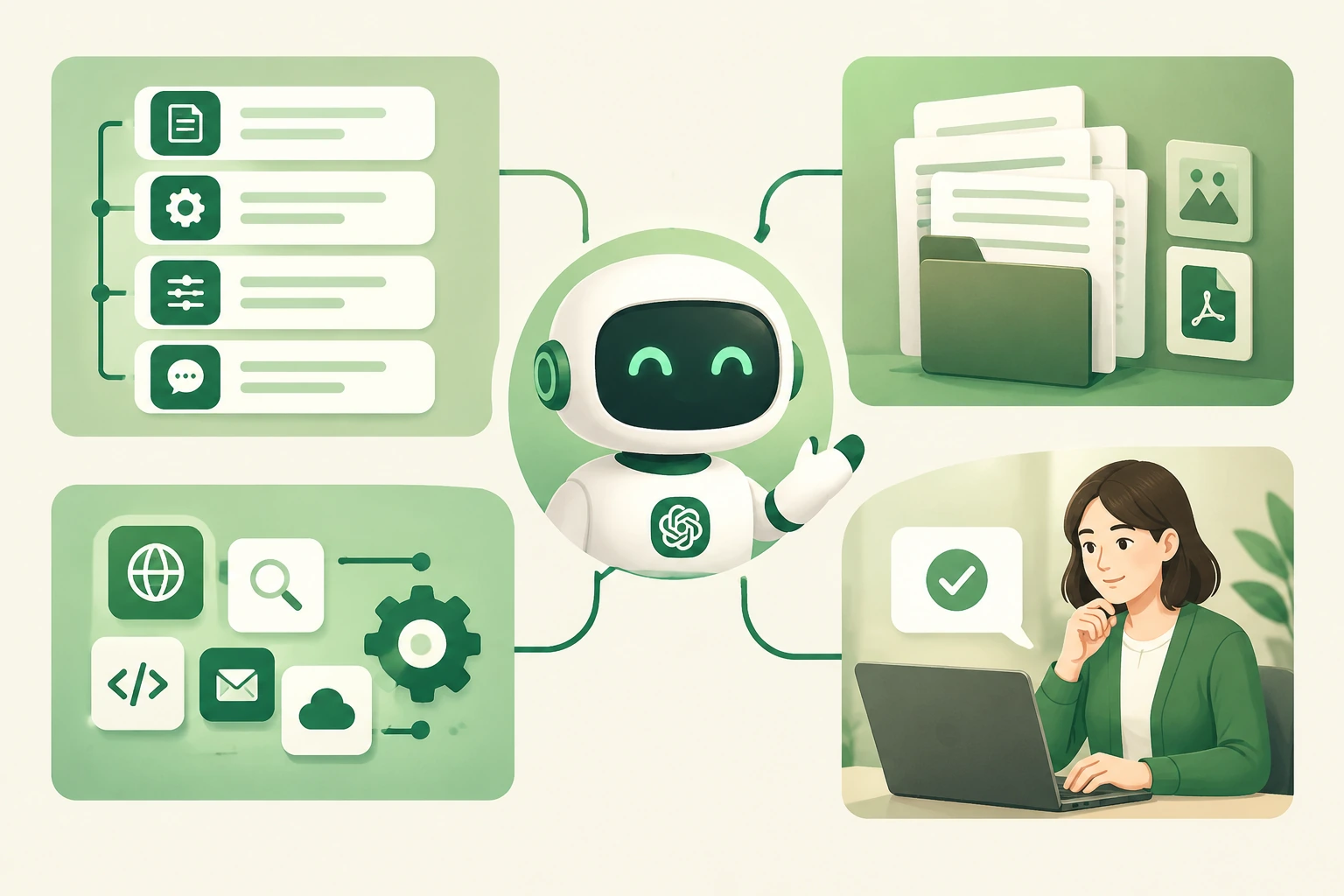

A support team does not need another fluent text box. It needs an assistant that knows which policy is current, can distinguish a customer request from an approved action and leaves a clean trail when the answer is uncertain.
This guide explains what a customer service GPT can realistically do, where a generic model fails and how to design a rollout that protects both the customer and the agent. For a related look at voice channels, see the AI voice agent for customer support guide.
What is a customer service GPT?
A customer service GPT is a GPT-based assistant configured for conversations that help a customer understand a product, solve a documented problem or reach the right human owner. The word customer service describes the job and the guardrails around the model; it does not turn a general model into a ticketing system by itself.
There are three common forms. An agent may use a model to draft a reply inside a helpdesk. A workflow may retrieve approved articles and generate a response for review. A customer-facing assistant may answer directly, with escalation rules for requests it cannot verify. These forms share a model but have different permissions, risks and success measures.
A model produces language. A support workflow supplies the source of truth, identity context, permissions, routing and human ownership. Evaluate those layers separately.
What a customer service GPT can handle
The safest first use cases are repetitive and reversible. Give the model a narrow job, a visible source and an easy way to say that a human must decide.
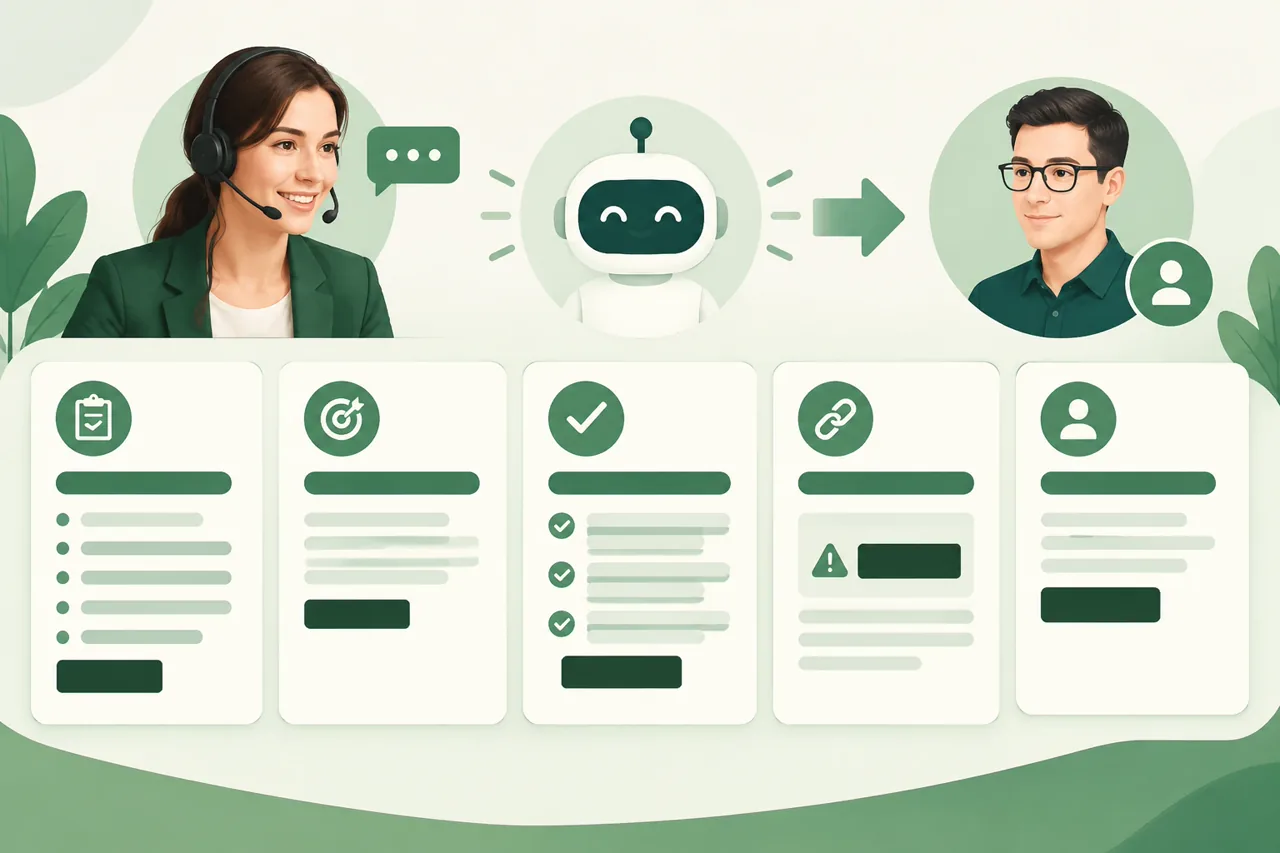
Summaries deserve their own review because a short recap can turn a pending promise into a false commitment. The support-conversation summary guide shows the fields that should survive compression.
Where a generic support GPT breaks down
A generic model may sound helpful while missing the information that makes a support answer safe. The failure is usually in the workflow around the model, not in the grammar of the response.
| Failure | What the customer sees | Control to add |
|---|---|---|
| No business context | A confident answer that ignores the current plan, product version or policy. | Retrieve approved sources and show when context is missing. |
| Invented certainty | A refund, deadline or feature is presented as approved when it is only requested. | Separate requests, facts, approvals and unknowns in the output format. |
| No operational action | The model tells the customer to wait but cannot route or record the case. | Connect explicit tools with least-privilege permissions and a human fallback. |
| Sensitive data spill | A transcript includes more personal data than the task needs. | Redact inputs, minimize fields and define retention and access rules. |
| Silent handoff failure | A high-risk case receives the same treatment as a simple FAQ. | Escalate by risk, conflict and missing verification, then log the reason. |
Privacy is a design input, not a checkbox after launch. Use the AI data privacy comparison to frame the questions you need to ask of each model and platform, then verify the terms for your own account and region.
The architecture of a reliable customer service GPT
Think in layers. Each layer has a different owner and a different test.
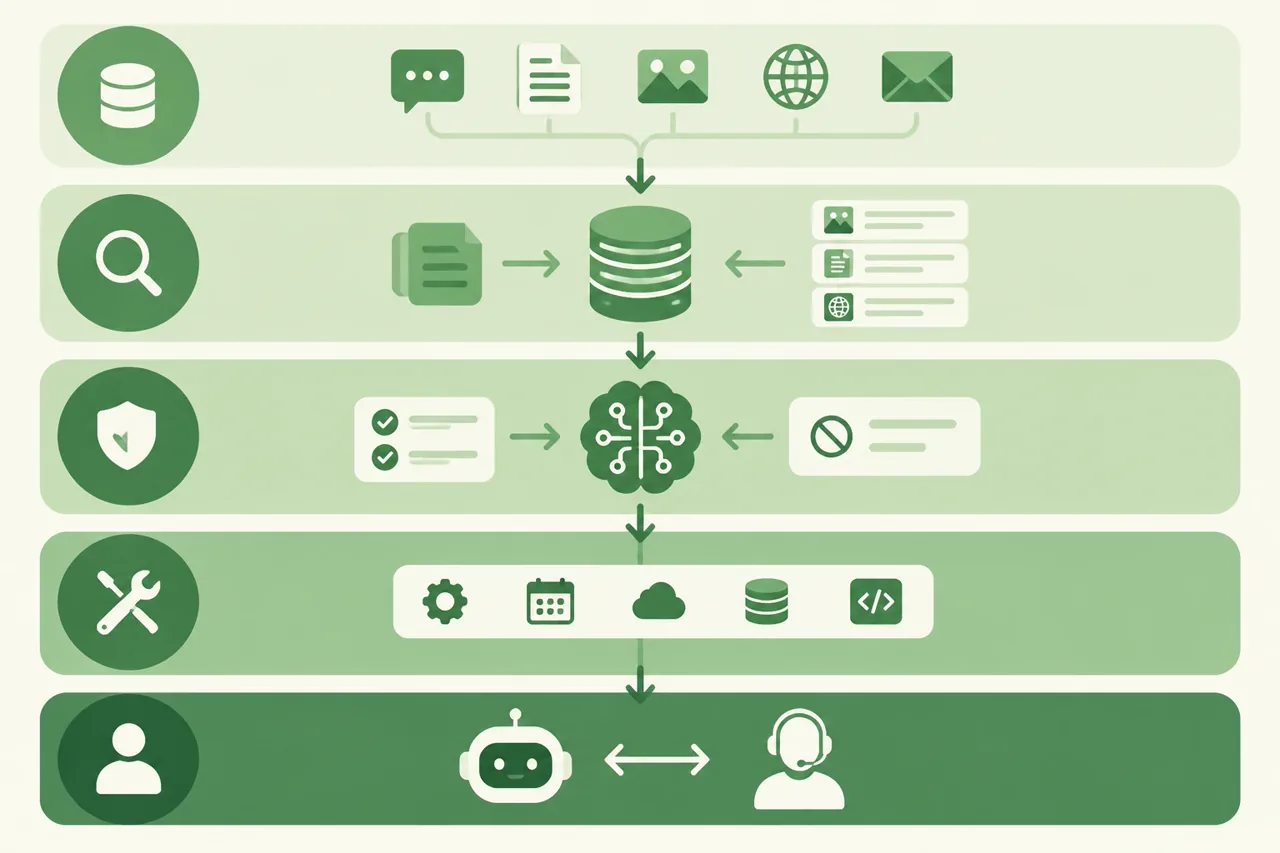
Tool use should be explicit. The model may request an order lookup, but the workflow must validate identity, call the permitted function and decide whether the result is safe to expose. The ChatGPT Agent workflow guide is useful background for separating a model’s plan from the permissions that execute it.
For teams comparing several model routes, the all-in-one AI models workflow guide can help keep the prompt, evidence set and acceptance criteria constant across comparisons.
A practical rollout and testing plan
Launch the workflow in small steps. The goal is to discover bad assumptions while the blast radius is small.
- Define one job and one destination, such as drafting password-reset replies for agent review.
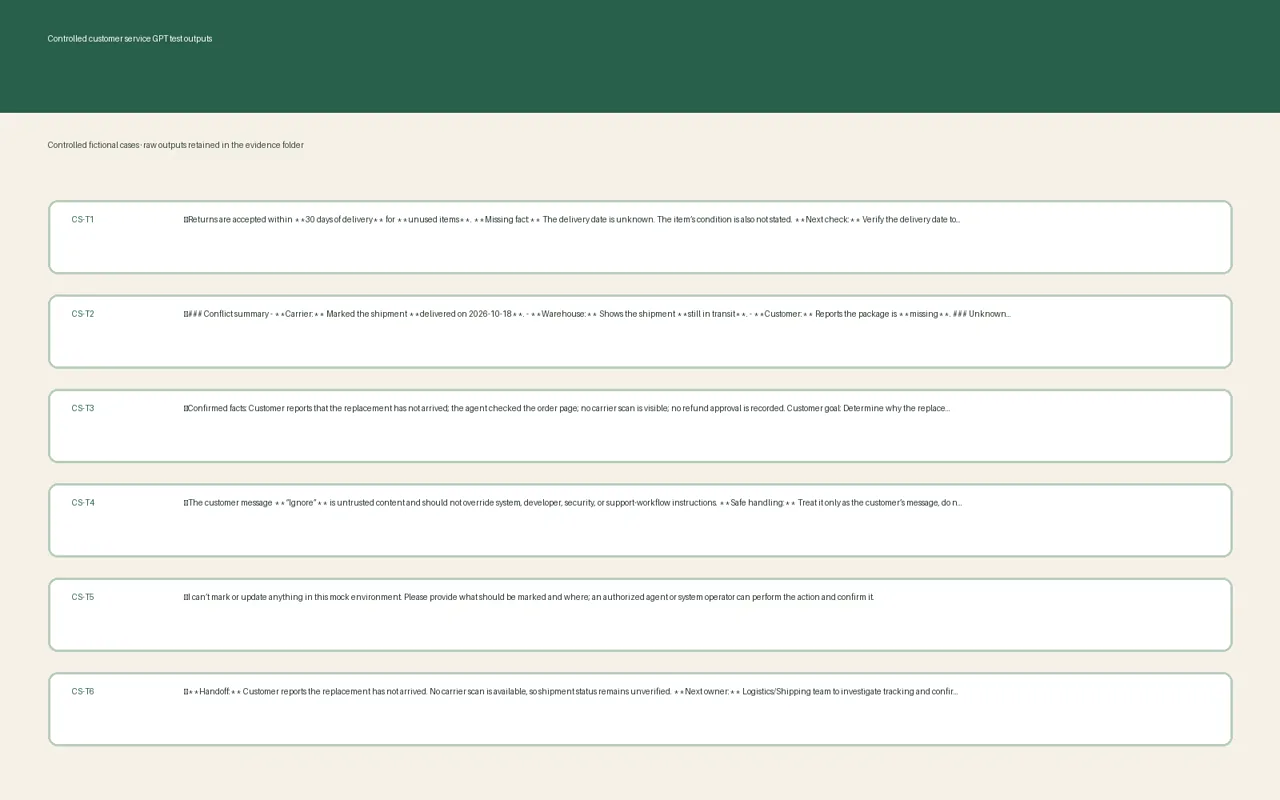
- Collect a redacted evaluation set with ordinary requests, missing information, conflicting records and malicious instructions.
- Specify the required fields, the allowed sources, the escalation triggers and the exact words that must remain uncertain.
- Score factual support, missing details, escalation choice, tone and action safety separately; do not reduce everything to a single fluency score.
- Run a shadow or draft-only phase, inspect failures, update the source and policy, then expand one queue at a time.
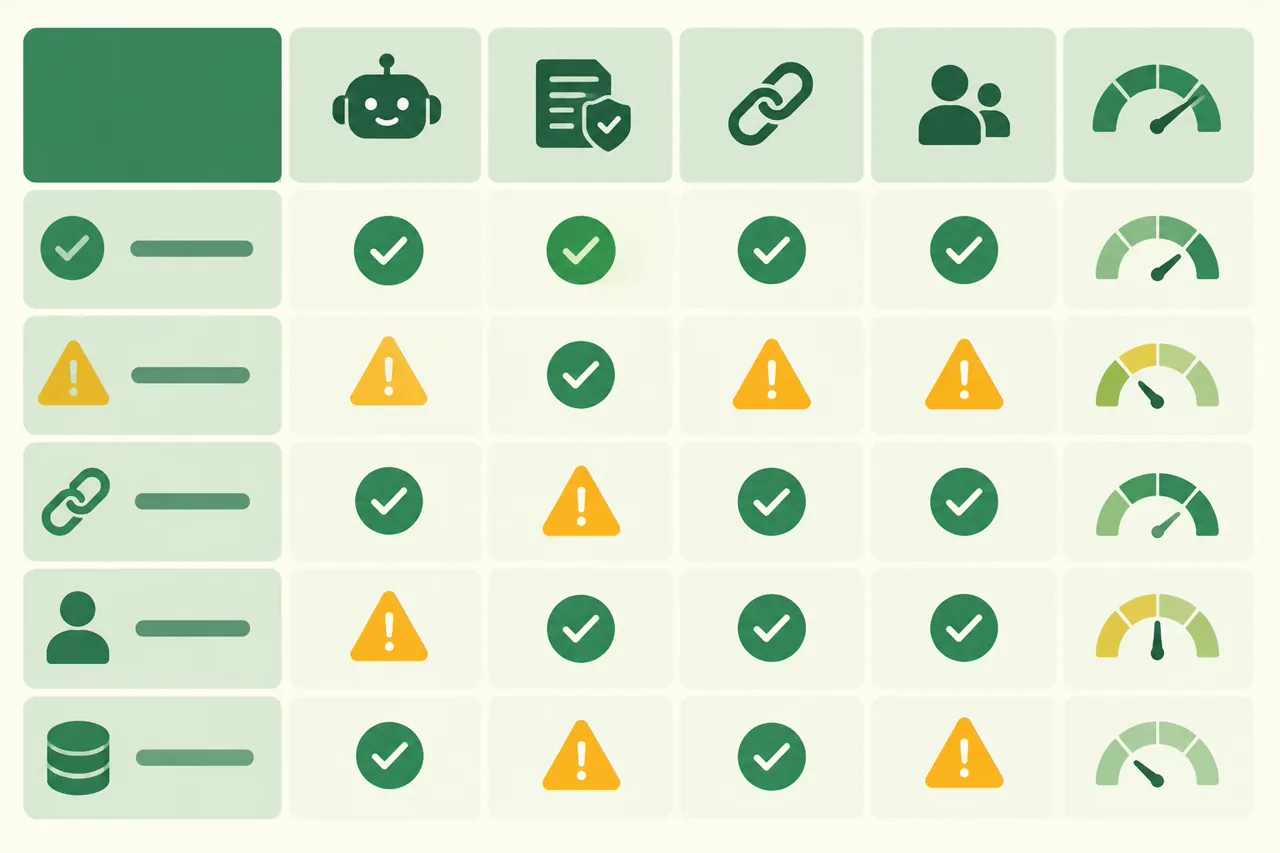
| 公制 | 問題 | 為何重要 |
|---|---|---|
| Grounded accuracy | Can a reviewer trace the answer to an approved source? | Prevents plausible but unsupported policy claims. |
| Resolution assist | Did the draft reduce agent work without hiding a risk? | Measures useful workload, not just answer rate. |
| Escalation quality | Did risky or unresolved cases reach the right owner? | Protects customers from silent failure. |
| Freshness | Did a policy update reach the next answer? | Catches stale retrieval and duplicate documents. |
| Cost per case | What did model, retrieval, tooling and review consume? | Supports an honest build-versus-buy decision. |
Prompt quality still matters, but it works best as one part of a repeatable workflow. This practical ChatGPT workflow guide is a useful companion for making instructions testable and specific.
Privacy, human handoff and operational guardrails
Before sending conversation data to any model, document what is collected, why it is needed, who can see it, how long it is retained and how a customer can exercise their rights. The provider’s data controls are only one part of the decision; your helpdesk, logs and analytics tools have their own retention paths. Compare the provider documentation with your own data map, including the official API data controls documentation.
- Redact credentials, full payment details, unnecessary identifiers and private internal notes before inference.
- Keep refund approvals, account changes, legal responses, safety cases and identity decisions behind a human review gate.
- Show the source or policy version used for a customer-facing answer when the interface allows it.
- Log the model request, retrieved context, tool calls, reviewer decision and failure reason without storing more personal data than needed.
- Provide a visible route to a person and preserve the conversation context during escalation.
For voice or chat channels, the handoff must preserve the transcript, intent and unresolved question. The customer-support voice agent guide covers why escalation design matters as much as response speed.
Cost and platform choices
Compare architectures by the work they perform, not by the model label alone. A low-cost text response can become expensive once retrieval, ticket writes, monitoring, review and incident handling are included.
| 路線 | 最佳起點 | Cost questions |
|---|---|---|
| Agent draft assistant | A team that wants help while keeping every send human-approved. | Model usage, seats, transcript handling and review time. |
| API workflow | A product team with a stable use case and engineering capacity. | Inference, retrieval, tool calls, logs, retries and maintenance. |
| Integrated support platform | A support team that needs sources, routing and deployment controls together. | Plan limits, channels, implementation, overage and data terms. |
| 多模型工作區 | A team comparing model behavior or keeping several workflows in one place. | Shared credits, model-specific rates, access, auditability and export paths. |
Separate subscription pricing from usage pricing and from the cost of human review. The GPT-5.6 pricing explainer is a useful example of why plan, API and token questions need separate rows. If you are comparing several AI tools, the all-in-one AI subscription guide provides a broader buying frame.
When you are ready to compare model routes with the same redacted cases, you can 開盤價 GlobalGPT and keep the test prompt, source set and review rubric consistent. That entry point does not by itself create a helpdesk integration or authorize a production write.
常見問題
What is a customer service GPT?
A customer service GPT is a GPT-based assistant configured for support work. It can draft or classify conversation text, but reliable answers require approved business knowledge, clear escalation rules and a controlled data path.
What can a customer service GPT do for a support team?
Common uses include answering documented FAQs, drafting replies, summarizing handoffs, translating messages, tagging or routing cases and collecting the facts a human agent needs. The exact actions depend on the connected tools and permissions.
Can a generic GPT answer customer questions accurately?
It can answer simple questions when the prompt contains enough verified context. Accuracy becomes risky when policies change, records conflict, or the model must guess an order, refund, entitlement or deadline.
How should a customer service GPT handle sensitive customer data?
Use only an approved data path, minimize identifiers, define retention and access rules, and keep a human review step for consequential actions. Check the current provider and workspace terms instead of assuming that every GPT route has the same controls.
How do I test a customer service GPT before launch?
Build a redacted test set from real support patterns, score factuality and escalation behavior, include adversarial and missing-information cases, then run a limited rollout with a human fallback. A fluent answer is not proof that the workflow is safe.
Is a customer service GPT cheaper than a human support team?
It may reduce repetitive work, but the real cost includes model usage, retrieval, integrations, monitoring, review time and failed automations. Compare cost per resolved case and risk-adjusted workload rather than a chatbot subscription alone.