AI video ad localization adapts the message, voice, captions, visuals and offer for a specific market. Translation is one part of the job. A fluent voiceover can still fail if the on-screen price is wrong, the CTA points to an English-only page, or the new narration runs beyond the final frame.
For an existing presenter video, official tools such as HeyGen’s translator and ElevenLabs Dubbing provide starting points for translated speech and review. A product montage without a visible speaker can often use a simpler workflow: adapt the script, generate narration, revise the edit and captions, then verify the destination and offer.
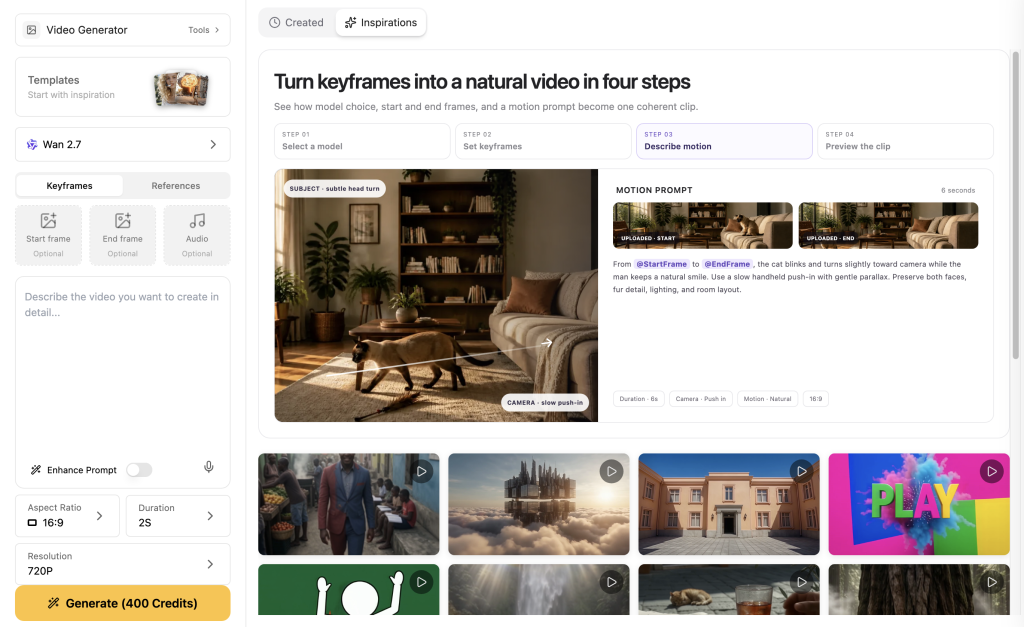
GlobalGPT can help with script adaptation, voice generation and video-related tools in the same creative workflow. Its Video Translator and Video Reframe are separate operations, not a single guarantee that every language, visual and legal detail will be fixed automatically. We show the current interface and a three-language concept below, with the exact scope of the test.
Decide what needs to change in each market
| Lapisan | Pertanyaan yang perlu dijawab | Example of a hidden failure |
|---|---|---|
| Pesan | Is the reason to care meaningful to this audience? | A seasonal reference does not fit the target market |
| Product facts | Are claims, availability and specifications still true? | A feature mentioned in speech is absent from the shown model |
| Penawaran | Are currency, price, tax, dates and shipping valid? | Spoken discount and landing-page offer differ |
| Suara | Does the language, pronunciation and pace work? | The brand name is misheard or the CTA is rushed |
| Captions and graphics | Are line length, timing and reading order suitable? | Translated captions cover the product or are cut off |
| Picture and lip-sync | Does the visual performance fit the new speech? | Mouth motion and translated wording diverge |
| Destination | Can the user complete the same action locally? | The ad promises a local offer but opens another country’s page |
“Spanish” is not a complete market brief. Specify the country or audience, preferred register, product terminology and destination. A neutral international version may be appropriate, but it should be a deliberate editorial choice. The same principle applies to English-language variants: prices, measurements and references can need localization even when no translation occurs.
Official route: translate and review an existing speaker video
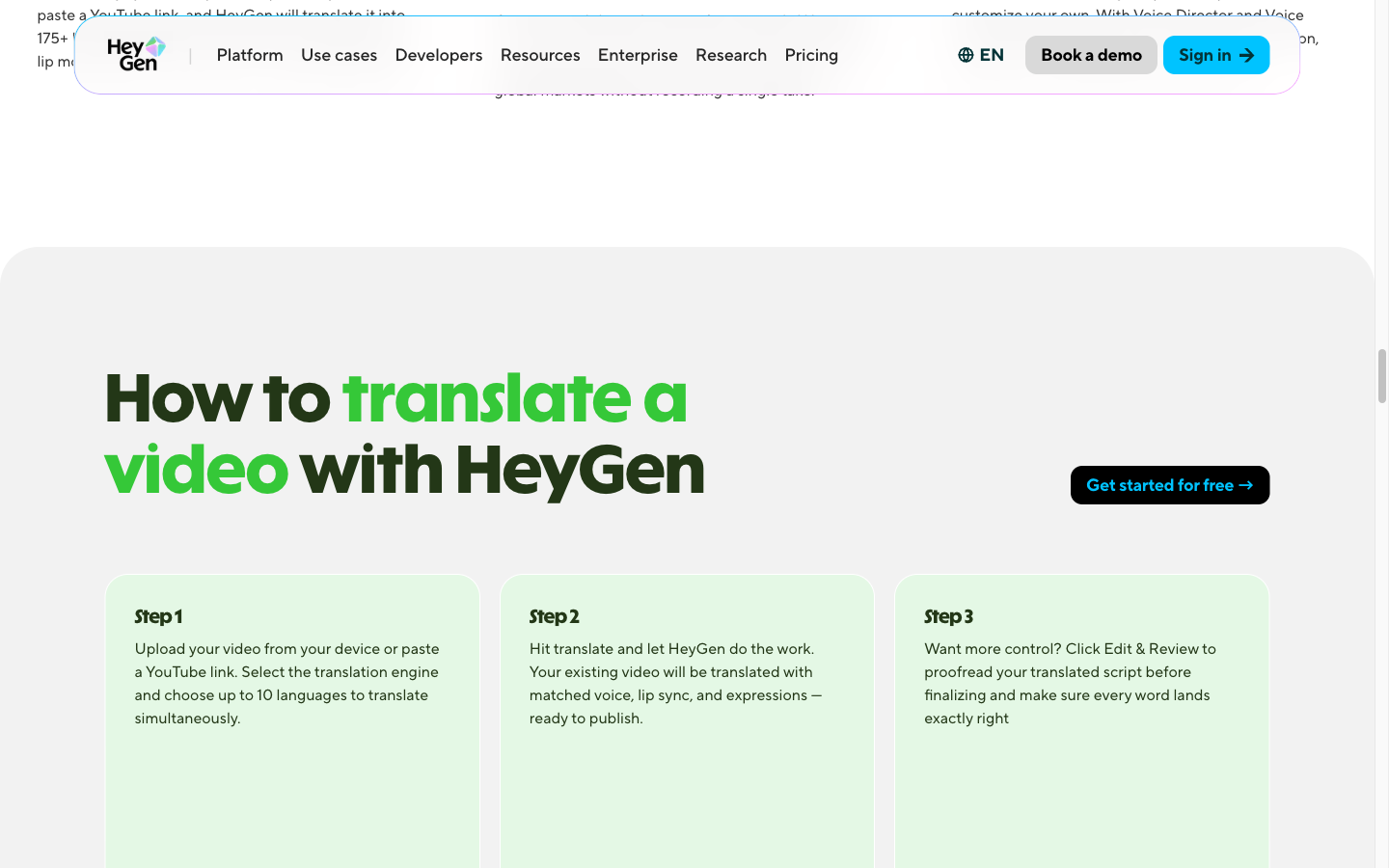
HeyGen’s official flow is to upload a video or supply a supported link, choose the target languages and translation settings, then use Edit & Review to proofread the translated script. Its glossary features can protect terms and specify translations or pronunciation. That gives you a place to correct brand vocabulary before accepting the final output.
The public page describes more than 175 languages and dialects. Treat that as catalog coverage, not a quality certificate for every accent and subject. Check the plan’s access to script review and the actual result for your target market. If the speaker is a real person, the voice and likeness permissions need to cover the intended transformation and use.
ElevenLabs Dubbing is another official route for translated audio. The current v2 documentation labels the offering Alpha and explains that a dubbed video preview is not the production master. The recommended delivery approach is to download the dubbed audio and replace the original audio track in the source edit. Do not sacrifice the clean master just because a preview is easy to download.
GlobalGPT routes: choose narration, translation or reframe deliberately
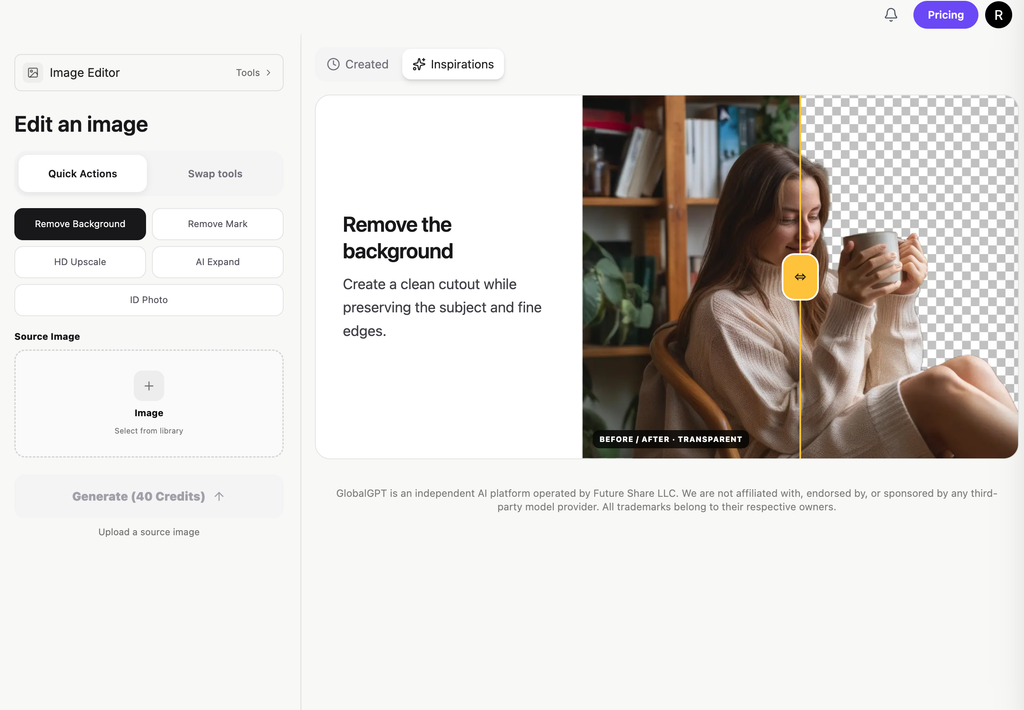
For a speaking source video, Video Translator asks for an input video and output language. The captured form displayed 222 credits per second. That quote belongs to this tool at the time of checking; it is not a general cost for all translation or a promise about every output. Review the current estimate with the actual input before generating.
For a product montage, Generator Audio is often the clearer route: prepare the translated spoken text, choose a supported speech model, and add the narration to your edit. This creates a new voiceover; it is not evidence of lip-sync correction or preservation of an original speaker’s identity.
Video Reframe addresses a different need: extending or adapting the picture for another format. A generative extension can add new visual content, so inspect it for invented objects or changed surroundings. A conventional crop avoids inventing pixels but may cut off the product. Neither operation translates embedded graphic text by itself.
Step 1: freeze the product facts and the source master
Keep a clean master with separate dialogue, music and effects where possible. Save the source script, approved product facts, price rules, offer dates and destination. If captions are burned into the only available video, plan how to remove or replace them; stacking a translation on top can create an unreadable result.
Create a terminology sheet with the product name, feature names, words not to translate and required phrasing. Separate facts from persuasive language. “Warm light” is a description that a visual can suggest; a claim about sleep, health or measured productivity needs a different level of substantiation. Do not let a creative adaptation introduce a new performance promise.
Step 2: adapt the script for speech, not just a document
A back-translation can expose changed meaning, but it is not proof that the target script sounds natural. Have a qualified reviewer check the actual target-language wording. Where the translated sentence is longer, shorten the phrasing or give it more picture time before forcing the voice to speak unnaturally fast.
| Source intention | Adaptation decision | What remains fixed |
|---|---|---|
| A calm, useful opening | Use a natural phrase for the audience | No invented personal testimonial |
| Two finish names | Check whether literal color names fit the catalog | The actual SKU and available finish |
| A general collection CTA | Use the target site’s preferred action wording | The destination and offer scope |
| An uncertain physical feature | Verify or remove before recording | Do not turn uncertainty into a confident claim |
Step 3: generate and inspect the actual recordings
We generated English, Spanish and French Cedar narration with Eleven v4 Turbo in GlobalGPT on October 24. The source scripts were fixed before submission and the first completed recordings were retained. They are shared samples with our Turbo review, not three additional hidden experiments. No native-speaker panel or advertising test was conducted.
| Bahasa | Original audio duration | Timing implication |
|---|---|---|
| Bahasa Inggris | 13.48 seconds | Baseline for this particular script and voice route |
| Bahasa Spanyol | 13.40 seconds | Similar duration does not prove identical phrasing or emphasis |
| Bahasa Prancis | 13.24 seconds | Still needs its own captions and brand-name review |
The automatic content check matched the English script and highlighted uncertainty around Cedar in the Spanish and French transcripts. A recognition mismatch can come from the recognizer or the generated speech, so we do not label it a proven pronunciation error. For real paid use, have a target-language reviewer approve the recording, not only the written translation.
Step 4: fit the edit to the message
The initial scripts included “adjust the angle” and corresponding translated phrases. Our fictional product references showed a fixed-stem design and did not establish that feature. The finished concept removes the phrase instead of allowing a plausible line to become an unsupported product claim. This is exactly the kind of mismatch that a localization checklist should catch.
The raw sand-lamp shot pushed in too far, cropping the base and cable toward the end; the forest shot kept the full product in the sampled frames but introduced new wall shadows and unwanted audio. The demonstration uses short usable sections and stable reference stills, replaces source sound with narration, and leaves room for the closing card. The assembly was performed as a conventional external edit; it was not a test of GlobalGPT’s native Video Translator or automatic lip-sync.
Original and final English scripts
ORIGINAL NARRATION
Meet the Cedar desk lamp. A warm pool of light for the work you want to finish. Choose the sand or forest finish, adjust the angle, and make room for one good idea. Explore the collection today.

FINAL CAPTION SCRIPT
Meet the Cedar desk lamp. A warm pool of light for the work you want to finish. Choose the sand or forest finish. Make room for one good idea. Explore the collection today.Original and final Spanish scripts
ORIGINAL NARRATION
Conoce la lámpara Cedar. Una luz cálida para concentrarte en lo que importa. Elige el acabado arena o bosque, ajusta el ángulo y prepara tu espacio para una nueva idea. Descubre la colección hoy.

FINAL CAPTION SCRIPT
Conoce la lámpara Cedar. Una luz cálida para concentrarte en lo que importa. Elige el acabado arena o bosque. Prepara tu espacio para una nueva idea. Descubre la colección hoy.Original and final French scripts
ORIGINAL NARRATION
Découvrez la lampe Cedar. Une lumière chaleureuse pour vous concentrer sur l’essentiel. Choisissez la finition sable ou forêt, ajustez l’angle et faites place à votre prochaine idée. Découvrez la collection dès aujourd’hui.

FINAL CAPTION SCRIPT
Découvrez la lampe Cedar. Une lumière chaleureuse pour vous concentrer sur l’essentiel. Choisissez la finition sable ou forêt. Faites place à votre prochaine idée. Découvrez la collection dès aujourd’hui.
These are inspectable concept cuts, not market-approved advertisements. The English concept disclosure, target-language captions and separate language files make their purpose clear. Before commercial use, verify the real product, language, rights and destination, and remove any wording that the actual item cannot support.
Step 5: captions, timing and safe zones
Caption timing should follow the delivered audio, not the original English script. Keep phrases together, allow a readable display time and avoid covering the mouth, product or placement controls. A subtitle file is useful for a clean master; burned-in captions are useful when the placement requires a fixed appearance. Keep both when you need flexibility.
Google’s video-ad guidance supports common 16:9, 9:16 and 1:1 formats and emphasizes safe zones. TikTok recommends a vertical, sound-aware creative approach with clear hooks and a CTA. These are placement-specific starting points, not a universal rule that every advertisement must be the same length or put text in the same location.
Watch the export on a phone with the intended platform controls in mind. A readable desktop subtitle may be too small in-feed. Check the first and last caption, the final spoken word and the closing CTA; rushed endings are easy to miss when reviewing only the opening hook.
Step 6: keep a version matrix and review the destination
| Version field | Contoh | Review responsibility |
|---|---|---|
| Market and language | France / French | Language and market reviewer |
| Master version | Cedar concept v02 | Editor checks source and approved cuts |
| Format | 16:9 or separately reviewed 9:16 | Editor checks product crop and safe area |
| Offer version | Evergreen; no price claim | Marketing checks actual offer |
| Teks Terjemahan | Matched SRT/VTT version | Reviewer checks words and timing |
| Destination | Correct localized product or collection page | Campaign owner verifies user journey |
Name files so the campaign team can identify the market, language, format and revision without opening each one. Keep expired offers out of the approved folder. When a price or availability changes, search the version matrix for every affected narration, graphic and landing page rather than editing only the newest file.
What to automate—and what to keep as a review decision
Automate repeatable packaging: naming, caption-format conversion, duration checks, missing-file detection and export variants. Use AI to propose language adaptations and generate approved voice tracks. Keep product truth, market suitability, identity rights and final approval with a responsible reviewer.
For a manageable pilot, adapt one approved concept into one target market in GlobalGPT, then inspect the complete viewer journey. Our speech-model comparison can help with the voice choice, while the product-ad examples help define the visual job. Scale the process once one version is genuinely ready, not merely translated.
Dokumentasi yang bermanfaat dan rencana terkini
- HeyGen translation
- ElevenLabs Dubbing
- Google video ad specifications
- TikTok creative practices
- GlobalGPT Video Translator
Pertanyaan yang Sering Diajukan
Is video ad localization the same as translation?
No. It also covers market phrasing, product claims, offers, captions, visuals, timing and the destination page.
Does a translated voiceover fix lip-sync automatically?
No. New narration and lip-sync correction are different operations. Check the tool and output required for a visible speaker.
Were the examples made with GlobalGPT Video Translator?
No. Their narration and visual assets were generated through GlobalGPT and assembled in an external edit. The Translator screenshot shows the current tool, not a new test result.
Can I skip a native-language review?
For a real campaign, use a qualified target-language reviewer for wording and the final recording. Automatic transcripts can flag issues but cannot certify naturalness.
Should the translated ad have the exact same duration?
Only if the placement or brief requires it. Adapt the script and picture timing deliberately; do not assume a literal translation will fit the original edit.