บทสรุปสั้นๆ
ที่ได้รับการทดสอบ ที่ไหนก็ได้ meshy-v7 Route เป็นเครื่องมือสร้างต้นแบบอย่างรวดเร็วที่มีประโยชน์ แต่ไม่ใช่ทางลัดที่เชื่อถือได้ในการสร้างรูปทรงที่พร้อมสำหรับการผลิต. สี่ในห้ากรณีทดสอบที่วางแผนไว้ได้คืนไฟล์ GLB ที่ถูกต้อง แก้วกาแฟและจักรยานยังคงรักษารูปทรงโดยรวมที่สามารถระบุได้ แต่การฉายพื้นผิวที่ซ่อนอยู่ ส่วนบางที่รวมกันเป็นหนึ่งเดียว วัตถุที่เก็บไว้เป็นเมชเดียว และแผนที่รายละเอียด PBR ที่ขาดหายไป ทำให้ต้องซ่อมแซมเมชและเท็กซ์เจอร์ด้วยมือ ในคู่หุ่นยนต์ที่จับคู่กัน ซึ่งถูกโฮสต์ โครงสร้างเครือข่ายอัจฉริยะ ไม่บรรลุเป้าหมาย 15k, ไม่คืนรูปสี่เหลี่ยมคางหมู, ไม่แสดงการปรับปรุงที่ชัดเจนในลูปขอบเมชรอบข้อต่อ และสร้างขอบเขตและขอบที่ไม่เป็นมานิโฟลด์มากกว่าเวอร์ชัน Standard ความน่าเชื่อถือของเส้นทางก็มีความไม่สม่ำเสมอเช่นกัน: กรณีทดสอบหนึ่งล้มเหลวสองครั้งก่อนการสร้างงาน และอีกกรณีหนึ่งต้องใช้การลองใหม่เพียงครั้งเดียวที่ทำงานได้.
Meshy 7 เปิดตัวในเดือนสิงหาคม 2026 พร้อมคำกล่าวอ้างที่หนักแน่นว่า: ความสอดคล้องทางเรขาคณิตที่ใกล้ชิดยิ่งขึ้นระหว่างภาพอ้างอิงและสินทรัพย์ 3D ที่สร้างขึ้น แต่การประเมินที่มีประโยชน์ต้องมองไปไกลกว่าภาพด้านหน้าที่ให้มา มือจับ ล้อซี่ องค์ประกอบควบคุมขนาดเล็ก ส่วนหลังที่ซ่อนอยู่ การฉายพื้นผิว และตัวเมชเอง คือจุดที่ตัวอย่างที่ดูน่าเชื่อถืออาจกลายเป็นโครงการที่ต้องซ่อมแซมเมชด้วยมือ.
นอกจากนี้ยังมีข้อควรระวังเกี่ยวกับเวอร์ชันด้วย. Meshy 7.1 เริ่มเปิดตัวเมื่อวันที่ 10 กันยายน 2026 การทดสอบแบบลงมือปฏิบัติในบทความนี้ใช้รุ่นที่ระบุแยกต่างหาก ที่ไหนก็ได้ รหัสเส้นทาง meshy-v7. ป้ายนั้นไม่ได้พิสูจน์ว่าทุกคำขอที่ใช้ Meshy 7, Meshy 7.1, หรือ เมชี่‘ระบบโทโพโลยี T2 ที่แยกต่างหาก ดังนั้นข้อมูลผลิตภัณฑ์อย่างเป็นทางการและผลการกำหนดเส้นทางที่โฮสต์จึงถูกเก็บไว้แยกกัน.
สำหรับผู้สร้างเนื้อหาที่กำลังพัฒนากระบวนการทำงานแบบครบวงจรจากภาพสู่ 3D, โกลบอลจีพีที เป็นวิธีที่ประหยัดค่าใช้จ่ายในการใช้โมเดลและฟังก์ชัน AI หลายตัวในแดชบอร์ดเดียว. คุณสามารถเตรียมหรือปรับแต่งภาพอ้างอิง สร้างสินทรัพย์ 3D แล้วดำเนินการต่อกับงานเขียนคำสั่ง วิจัย การเขียน หรือการพัฒนา โดยไม่ต้องย้ายโครงการไปยังบริการอื่นทุกขั้นตอน.
อะไร Meshy 7 คือ และสิ่งที่เปลี่ยนแปลงไปคือ Meshy 7.1
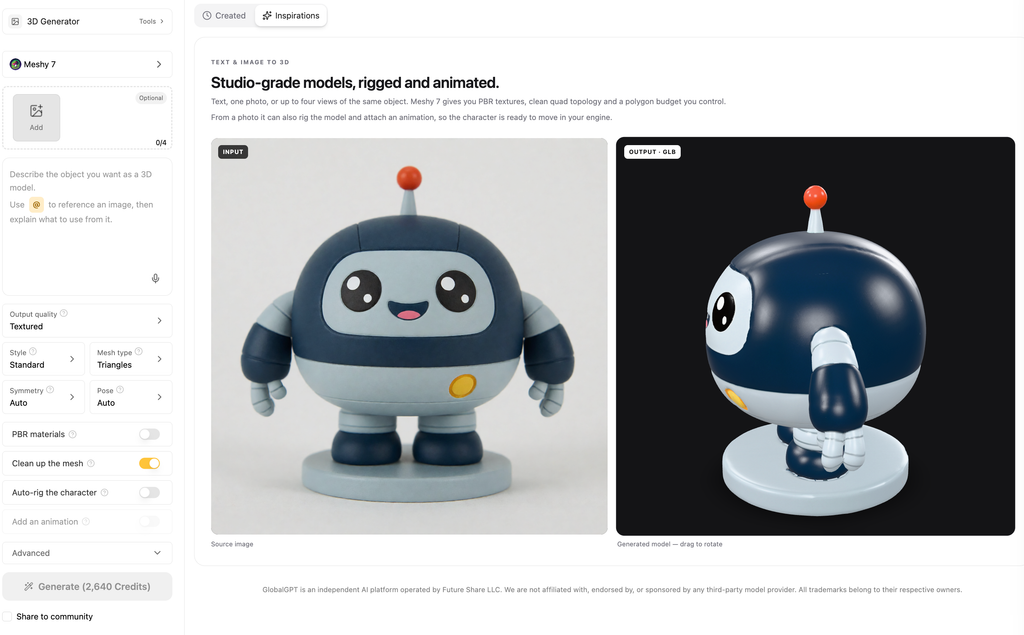
เมชี่ อธิบาย Meshy 7 ในฐานะโมเดลพื้นฐานสำหรับการแปลงภาพเป็น 3D ที่พัฒนาขึ้นเพื่อให้รูปทรงที่สร้างขึ้นสอดคล้องกับภาพอ้างอิงได้ดียิ่งขึ้น บริษัทได้ประกาศเปิดตัวโมเดลนี้ในเดือนสิงหาคม 2569 และรายงานว่าผลลัพธ์ในด้านสัดส่วนโดยรวม การกระจายตัวในพื้นที่ และรายละเอียดพื้นผิวดีขึ้น ตัวเลขดังกล่าวเป็นเกณฑ์มาตรฐานของผู้ผลิต ไม่ใช่คะแนนจากการประเมินครั้งนี้.
Meshy 7.1 เริ่มเปิดตัวเมื่อวันที่ 10 กันยายน 2569 โดยเพิ่มโหมดเรขาคณิต Ultra 4K ใน เมชี่‘ผลิตภัณฑ์ของตัวเอง การเลือกเวลาที่เหมาะสมนั้นสำคัญมาก: แบรนด์ที่ให้บริการแบบโฮสต์โดยไม่มีเวอร์ชัน เช่น meshy-v7 ไม่ควรเรียกว่าเป็นรุ่นล่าสุด เมชี่ แบบจำลอง และผลลัพธ์ที่ได้รับการโฮสต์ไม่ควรถูกระบุว่าเป็น 7.1 เว้นแต่การตอบกลับจะระบุไว้อย่างนั้น.
ข้อมูลการเผยแพร่และขอบเขตการตรวจสอบ
| ชื่อ | บริบทที่ได้รับการยืนยัน | จุดเด่นของบทรีวิวนี้ |
|---|---|---|
| Meshy 7 | ประกาศการเปิดตัว Image-to-3D ในเดือนสิงหาคม 2569 | ตำแหน่งทางการและผลการทดสอบประสิทธิภาพที่ผู้ผลิตแจ้งมา พร้อมระบุแหล่งที่มาอย่างชัดเจน |
| Meshy 7.1 | การเปิดตัวเริ่มขึ้นเมื่อวันที่ 10 กันยายน 2569 | คำเตือนเกี่ยวกับความสดใหม่; ไม่ถูกกำหนดให้แสดงในผลลัพธ์ที่โฮสต์โดยอัตโนมัติ |
ที่ไหนก็ได้ meshy-v7 | เส้นทางที่โฮสต์ได้รับการทดสอบแล้ว /v1/งาน | เพียงหลักฐานที่สังเกตได้เกี่ยวกับคำขอ คำตอบ ไฟล์ เวลา และค่าใช้จ่ายเท่านั้น |
Meshy 7, Meshy T2, และ ที่ไหนก็ได้ API: จุดต่างหลัก
เมชี่‘เอกสาร API ของบริษัทเองระบุว่า โครงสร้างเครือข่ายอัจฉริยะ เป็นโมเดลแยกต่างหากที่มีชื่อว่า meshy-t2. ใน ที่ไหนก็ได้ อินเทอร์เฟซที่ใช้ในการทดสอบเหล่านี้, โครงสร้างเครือข่ายอัจฉริยะ เป็นตัวเลือกหนึ่งใน meshy-v7 และรับการป้อนข้อความเท่านั้น นี่เป็นบริการ API ที่ต่างกัน การส่งคำขอที่สำเร็จผ่าน ที่ไหนก็ได้ ไม่ได้พิสูจน์ว่า Meshy T2 เป็นส่วนหนึ่งของ Meshy V7.
เอกสารต้นฉบับ vs เส้นทางที่โฮสต์
| ตัวเลือกผลิตภัณฑ์หรือ API | โหมดการป้อนข้อมูล | พฤติกรรมของทอพอโลยี | ขอบเขตของหลักฐาน |
|---|---|---|---|
| ทางการ Meshy 7/7.1 ผลิตภัณฑ์ | ออกแบบมาเพื่อสร้างแบบจำลอง 3D จากภาพ | คำกล่าวอ้างเกี่ยวกับผลิตภัณฑ์ตามเวอร์ชัน | เนื้อหาที่เผยแพร่อย่างเป็นทางการ ไม่ใช่คำตอบที่ผู้ดูแลเว็บไซต์ได้จัดเตรียมไว้ |
API ของระบบเดิม meshy-t2 | บันทึกไว้สำหรับการแปลงภาพเดียวเป็น 3D | แสดงผลรูปสามเหลี่ยมที่บันทึกไว้; ไม่พิจารณารูปสามเหลี่ยมทั่วไป ทอพอโลยี และสร้างตาข่ายใหม่สำหรับสนาม | ใช้สำหรับ เมชี่‘API ของตัวเอง |
ที่ไหนก็ได้ meshy-v7 โครงสร้างเครือข่ายอัจฉริยะ ป้าย | แสดงเป็นข้อความเท่านั้นในอินเทอร์เฟซที่โฮสต์และถูกจับภาพ | คำขอแบบโฮสต์รับ ทอพอโลยี สนาม; ต้องตรวจสอบไฟล์ที่ส่งมา | ใช้กับสิ่งที่ได้รับการทดสอบ ที่ไหนก็ได้ API |
คำขอที่มีเนื้อหาดังต่อไปนี้ topology=quad ไม่ใช่หลักฐานที่แสดงว่า GLB ที่ส่งกลับมาประกอบด้วยโครงสร้างควอดที่สามารถแก้ไขได้.
วิธีการทดสอบของเรา meshy-v7 ผ่านทาง ที่ไหนก็ได้ API
เราได้วางแผนกรณีทดสอบห้ากรณี และประเมินผลลัพธ์ที่ถูกต้องครั้งแรกจากแต่ละกรณีที่ประสบความสำเร็จ การทดสอบด้วยภาพเดียวสามกรณีมุ่งเน้นไปที่รูปแบบความล้มเหลวที่แตกต่างกัน ได้แก่ แก้วสีขาวเพื่อทดสอบพื้นผิวที่ซ่อนอยู่และการฉายพื้นผิว กล้องถ่ายภาพแบบวินเทจเพื่อทดสอบวัสดุผสมและชิ้นส่วนขนาดเล็ก และจักรยานถนนเพื่อทดสอบโครงสร้างบางและช่องว่างที่เปิดกว้าง นอกจากนี้ ยังมีคำสั่งสำหรับหุ่นยนต์แยกต่างหากที่เปรียบเทียบมาตรฐานที่จัดเก็บไว้และ โครงสร้างเครือข่ายอัจฉริยะ ป้ายกำกับด้วยงบประมาณ 15,000 โพลิกอน ตามที่ขอไว้.
- สำหรับแต่ละกรณีทดสอบ เราได้เก็บผลลัพธ์ที่ถูกต้องแรกไว้ รวมถึงผลลัพธ์ที่มีข้อบกพร่องที่เห็นได้ชัด.
- การล้มเหลวในการดำเนินการแต่ละครั้งจะได้รับสิทธิ์ลองใหม่ได้สูงสุดหนึ่งครั้งเท่านั้น ส่วนสินทรัพย์ที่มีคุณภาพต่ำแต่ยังใช้งานได้จะไม่ได้รับสิทธิ์นี้.
- การทดสอบนี้ไม่รวมถึงการทดสอบแบบหลายมุมมอง (multiview), Ultra, Low-poly, การจัดโครง (rigging), การสร้างแอนิเมชัน (animation), การทดสอบความเสถียร (stability runs), การทดสอบคุณภาพใหม่ (quality rerolls) และการทดสอบแบบตัวต่อตัวกับคู่แข่งที่ระบุชื่อ (named-competitor head-to-head tests).
- GLB ที่ถูกต้องแต่ละไฟล์จะถูกตรวจสอบเพื่อหาจุดยอด (vertices), สามเหลี่ยมที่เก็บไว้ (stored triangles), ขอบที่เปิด (open edges) และขอบที่ไม่เป็นมานิโฟลด์ (non-manifold edges), ส่วนประกอบ (components), UVs, วัสดุ (materials), พื้นผิว (textures) และการนำเข้าจากเบราว์เซอร์ (browser import).
- การประมาณการที่แสดงจะถูกแยกออกจากช่องข้อมูลการเรียกเก็บเงินด้านผู้ตอบแบบสอบถาม โควตาและมาร์จินจะไม่ถูกแปลงเป็นค่าใช้จ่ายที่เรียกเก็บ.
สถานะการทดสอบที่ถูกต้องครั้งแรก
ทั้งห้ากรณีทดสอบมีผลลัพธ์สุดท้ายที่บันทึกไว้แล้ว สี่กรณีสร้างไฟล์ที่ถูกต้องได้ ส่วนหนึ่งล้มเหลวก่อนการสร้างงาน ความล้มเหลวของบริการถูกรายงานแยกต่างหากจากคุณภาพของโมเดล.
| กรณีทดสอบ | สถานะงานสุดท้าย | สามารถประเมินได้อะไรบ้าง |
|---|---|---|
| T01 · แก้ว | ความสำเร็จ | GLB ที่ถูกต้องครั้งแรกได้ถูกดาวน์โหลด ตรวจสอบ แปลงเป็นภาพ และให้คะแนนแล้ว. |
| T02 · กล้อง | ไม่มีผลลัพธ์ที่ถูกต้อง | การส่งข้อมูลครั้งแรกและการลองส่งใหม่ที่ระบบอนุญาตทั้งสองครั้งล้วนได้รับรหัส HTTP 530 ก่อนที่จะมีรหัสงาน (task ID) ไม่มีการกำหนดคะแนนคุณภาพ. |
| T03 · จักรยาน | ความสำเร็จหลังการลองใหม่ในระบบ | การส่งข้อมูลครั้งแรกได้รับรหัส HTTP 502 ก่อนการสร้างงาน; การลองใหม่ที่ลงทะเบียนไว้ล่วงหน้าได้สร้าง GLB ที่ถูกต้อง ซึ่งได้รับการตรวจสอบ แสดงผล และให้คะแนน. |
| T04A · มาตรฐาน | ความสำเร็จ | GLB ที่ผ่านการตรวจสอบครั้งแรกตามคำขอ 15k ที่ตรงกัน. |
| T04B · Smart ที่ให้บริการบนแพลตฟอร์ม | ความสำเร็จ | GLB ที่ผ่านการตรวจสอบครั้งแรกได้รับการตรวจสอบเทียบกับมาตรฐานควบคุม. |
การทดสอบการแปลงภาพเป็น 3D ครั้งที่ 1: พื้นผิวที่ซ่อนอยู่บนแก้วสีขาว
แก้วธรรมดาหนึ่งใบสามารถเผยให้เห็นปัญหาการสร้างแบบจำลองที่ซับซ้อนอย่างน่าประหลาดใจ ด้ามจับต้องเปิดอยู่และติดกับตัวแก้วอย่างเรียบร้อยทั้งสองด้าน ขอบแก้วต้องมีช่องว่างจริง ส่วนด้านหลังและด้านล่างที่มองไม่เห็นต้องรวมกันเป็นวัตถุที่สมบูรณ์ แหล่งข้อมูลยังวางแถบสีโคบอลต์เพียงหนึ่งแถบไว้เฉพาะด้านหน้าที่มองเห็นได้ ทำให้การฉายพื้นผิวที่ไม่ต้องการรอบด้านหลังสามารถสังเกตเห็นได้ง่าย.
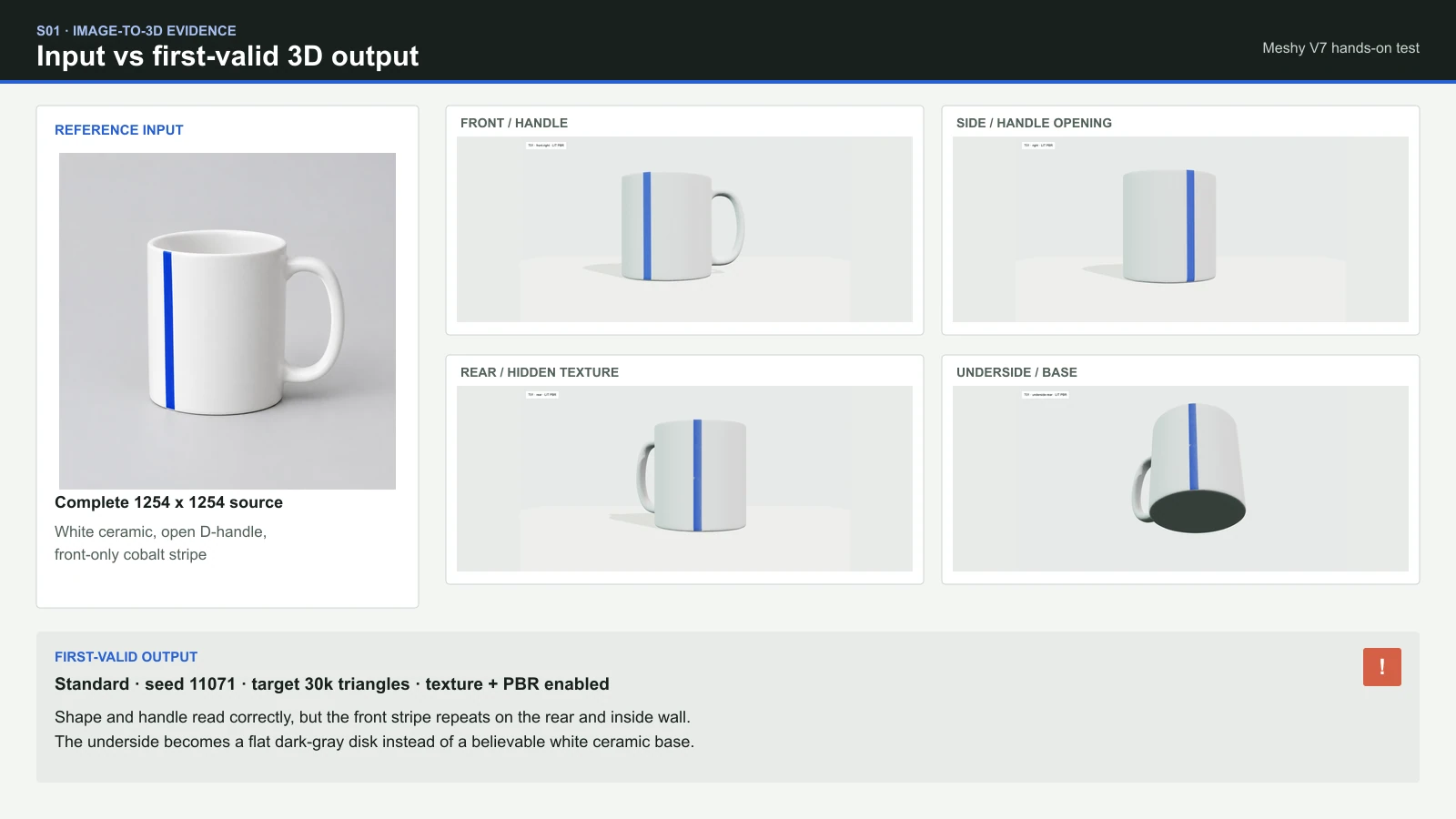
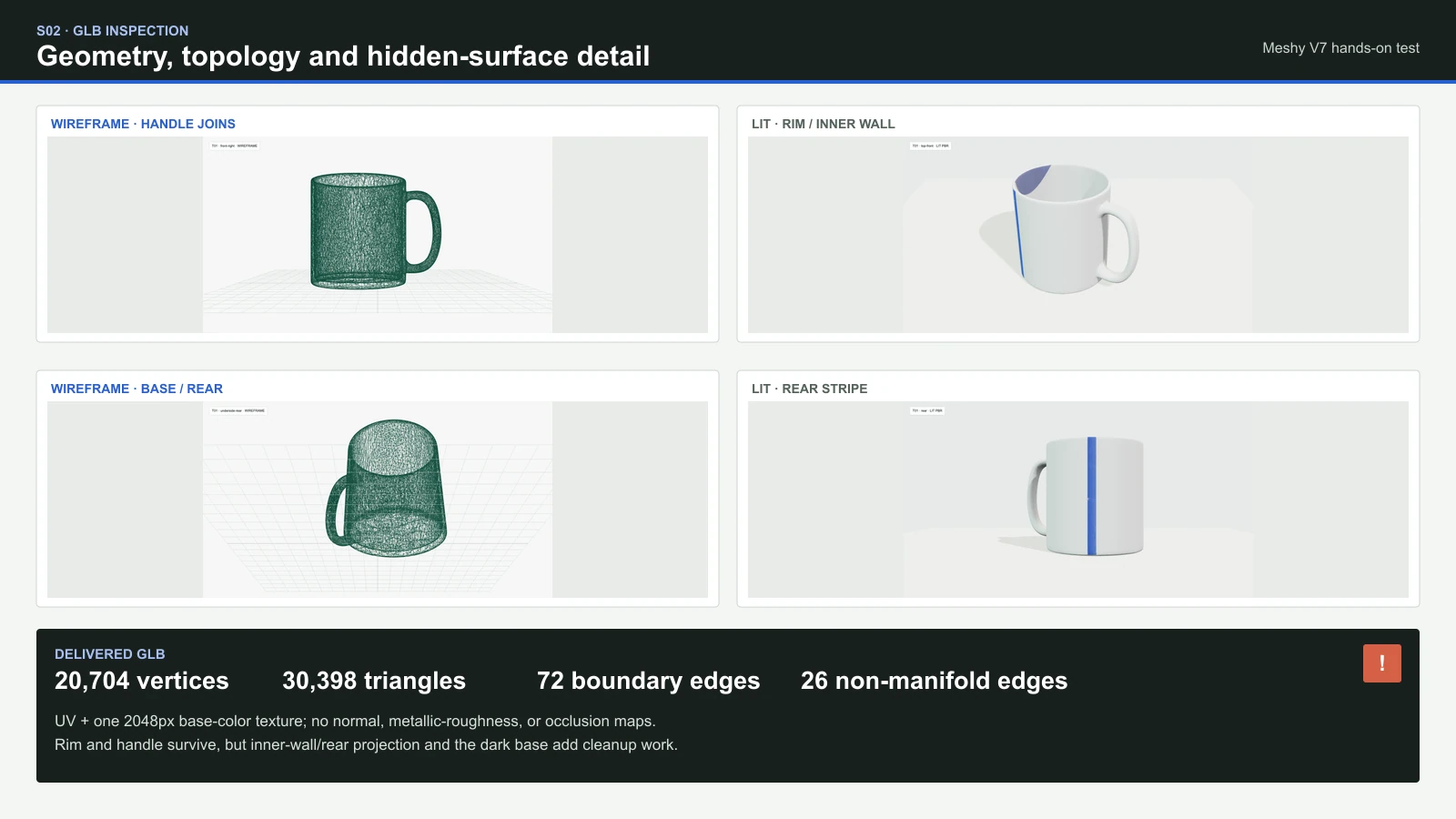
ผลลัพธ์ที่ถูกต้องครั้งแรกยังคงรักษาเส้นเงาด้านข้างที่ตรงของแก้ว ด้ามจับที่เปิด และช่องว่างที่มองเห็นได้ ผลลัพธ์นี้จะอ่อนลงอย่างมากเมื่อหมุนแก้ว แถบสีน้ำเงินที่เดิมอยู่เฉพาะด้านหน้าจะปรากฏขึ้นอีกครั้งที่ด้านหลังและต่อเนื่องไปยังผนังด้านใน ส่วนด้านล่างถูกปิดด้วยแผ่นดิสก์สีเทาเข้มที่เรียบ แทนที่จะเป็นฐานเซรามิกสีขาวที่ดูสมจริง กล่าวอีกนัยหนึ่ง แบบจำลองนี้สามารถสร้างหมวดหมู่และรูปทรงหลักได้สำเร็จมากกว่าการคาดการณ์ลักษณะพื้นผิวที่มองไม่เห็น.
ผล T01: รูปทรงที่สามารถระบุได้ แต่พื้นผิวที่ซ่อนอยู่ไม่น่าเชื่อถือ
แต่ละมิติใช้มาตราส่วนการให้คะแนนที่กำหนดไว้ล่วงหน้าตั้งแต่ 0 ถึง 5 คะแนน คะแนนที่สูงขึ้นหมายถึงผลลัพธ์ที่ดีขึ้นและงานซ่อมแซมด้วยมือที่น้อยลง เราไม่รวมคะแนนเหล่านี้เป็นคะแนนรวม.
| มิติ | การจัดอันดับ | ผลลัพธ์ที่ถูกต้องครั้งแรกที่สังเกตได้ |
|---|---|---|
| รูปเงาและสัดส่วน | 4/5 | แก้วนี้ยังคงมีรูปทรงที่จดจำได้ง่าย ด้วยสัดส่วนโดยรวมที่ใช้งานได้ดี. |
| จัดการการเปิดและจุดต่อ | 3/5 | ส่วนปากเปิดและส่วนต่อทั้งสองยังอยู่ครบ แต่พื้นผิวของมือจับและส่วนที่ติดอยู่ต้องซ่อมแซมด้วยมือ. |
| ขอบ, ช่องว่าง, ด้านหลัง และด้านล่าง | 2/5 | ช่องว่างนั้นยังคงมีอยู่ แต่ด้านใต้กลายเป็นแผ่นดิสก์สีดำที่เรียบ. |
| การฉายลายทางเฉพาะด้านหน้า | 1/5 | ลายเส้นถูกฉายลงบนผนังด้านหลังและผนังด้านในอย่างไม่ถูกต้อง. |
| UVs, วัสดุ และการซ่อมแซมเมช | 2/5 | มี UV และเท็กซ์เจอร์สีพื้นฐานอยู่แล้ว แต่การขาดแผนที่ PBR และข้อบกพร่องด้านโทโพโลยี ทำให้ต้องทำงานซ่อมแซมด้วยมือมากขึ้น. |
การทดสอบการแปลงภาพเป็น 3D ครั้งที่ 2: วัสดุและชิ้นส่วนขนาดเล็กบนกล้องถ่ายภาพแบบวินเทจ
กล้องนี้รวมตัวเลนส์แก้วรูปวงกลม โลหะขัดผิว หนังสีเข้ม ปุ่มหมุนสองตัวด้านบน และห่วงสายสะพายสองจุด การทดสอบนี้มุ่งตรวจสอบว่าส่วนประกอบวัสดุและชิ้นส่วนเล็ก ๆ เหล่านั้นจะคงอยู่เป็นโครงสร้างที่ใช้งานได้จริง หรือเพียงถูกวาดลงบนบล็อกนุ่มเท่านั้น.
ไม่มีการสร้างทรัพยากรกล้องใดๆ ทั้งสิ้น การส่งข้อมูลครั้งแรกและการส่งข้อมูลใหม่ที่ได้รับการอนุมัติเพื่อดำเนินการต่อ ต่างก็ได้รับรหัส HTTP 530 ก่อน ที่ไหนก็ได้ ได้สร้างรหัสงานแล้ว ผลลัพธ์นี้ควรถูกบันทึกไว้ในบันทึกความน่าเชื่อถือ ไม่ใช่ในคะแนนคุณภาพการแปลงภาพเป็น 3D: เนื่องจากไม่มีเลนส์ วงหน้าปัด ห่วงสายนาฬิกา วัสดุ หรือเมชที่ถูกสร้างขึ้นเพื่อประเมิน.
สถานะ T02: เกิดข้อผิดพลาดในการทำงาน ไม่มีคะแนนคุณภาพ
มีคำตอบ HTTP 530 สองครั้ง, ID งานเป็นศูนย์ และผลลัพธ์ที่ถูกต้องเป็นศูนย์ เราได้หยุดการทดสอบนี้หลังจากดำเนินการลองใหม่ครั้งเดียวตามแผนการทดสอบ.
การทดสอบการแปลงภาพเป็น 3D ครั้งที่ 3: รูปทรงบางและช่องว่างที่เปิดบนจักรยาน
จักรยานเป็นการทดสอบรูปทรงเรขาคณิตที่ท้าทายยิ่งขึ้น ล้อรูปวงกลม สายล้อ ท่อแคบ แฮนด์หน้า โซ่ แครงค์ และแป้นเหยียบสองข้าง ต่างก็แข่งขันกันเพื่อใช้พื้นที่รูปทรงเรขาคณิตที่จำกัด ในขณะที่รูปสามเหลี่ยมของเฟรมที่เปิดอยู่ต้องคงรูปเปิดไว้ แทนที่จะรวมตัวกันเป็นแผ่นเดียว.
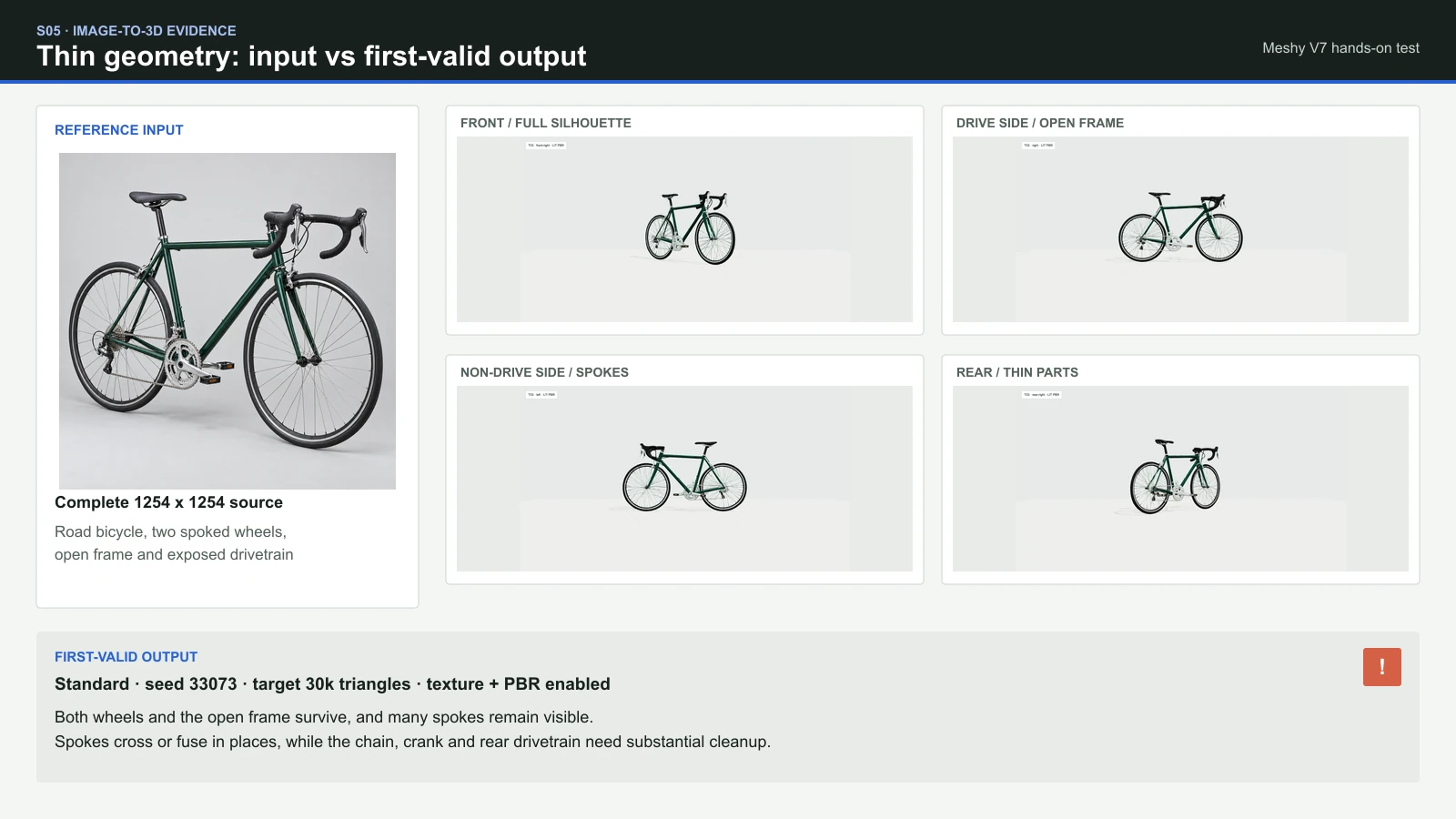
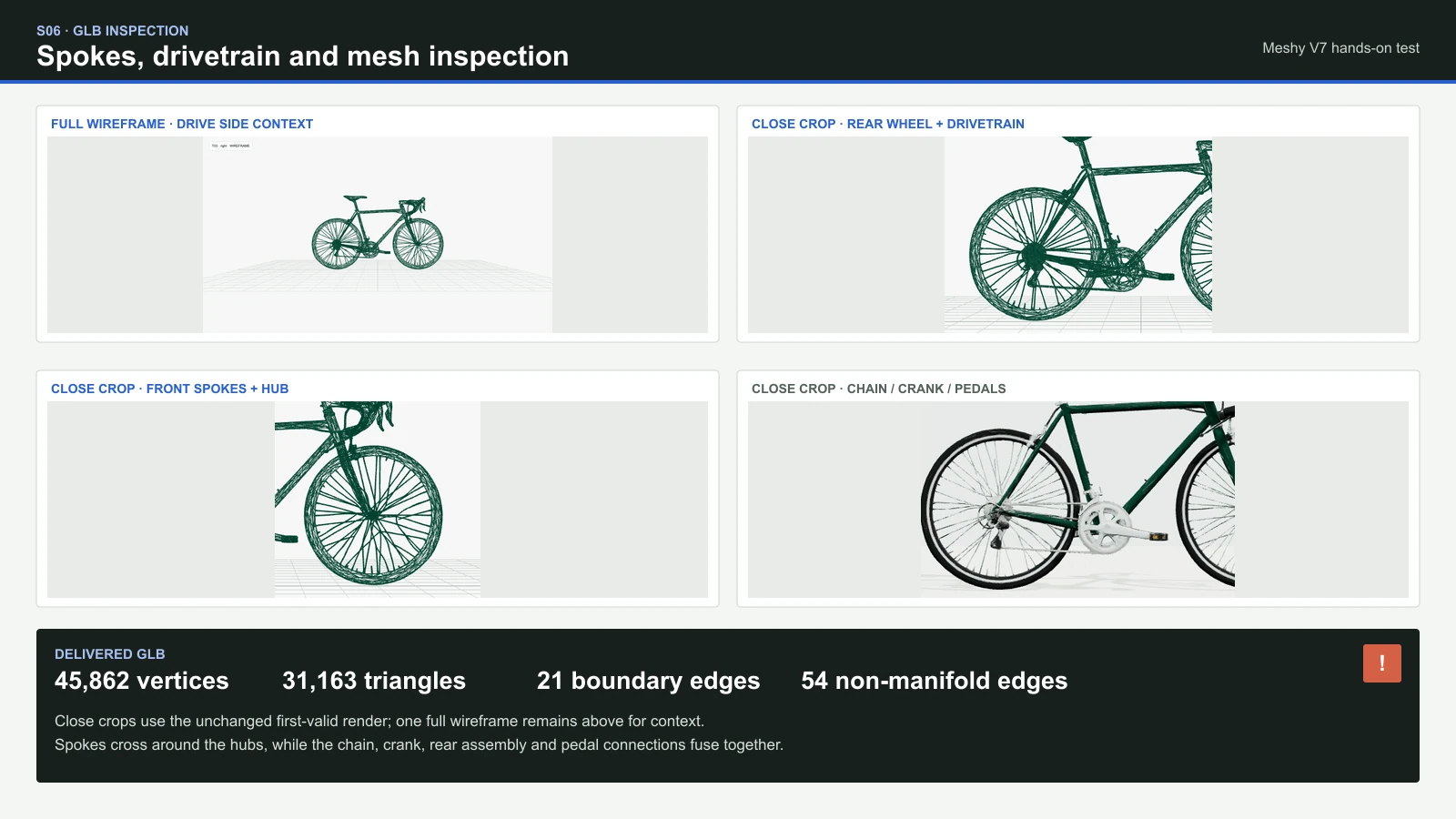
จักรยานต้นแบบที่ผ่านการตรวจสอบขั้นแรกดูน่าเชื่อถือเมื่อมองจากระยะห่างปกติ ทั้งสองล้อคงรูปทรงกลมโดยทั่วไป รูปทรงของเฟรมหลักยังคงสามารถระบุได้ชัดเจน และช่องเปิดขนาดใหญ่ของเฟรมด้านหน้าและด้านหลังไม่ถูกเติมเต็ม จุดอ่อนจะปรากฏขึ้นเมื่อตรวจสอบตาข่ายอย่างละเอียด: สายล้อหลายเส้นโค้งงอ ซ้อนทับกัน ข้ามกัน หรือรวมตัวกันรอบดุมล้อ ในขณะที่โซ่ แครงก์ จานโซ่ เดอราลเลอ และดุมล้อหลังรวมตัวกันเป็นแบบจำลองทางกลไก แทนที่จะเป็นส่วนประกอบที่แยกกันและสามารถแก้ไขได้.
ผล T03: รูปทรงจักรยานที่ชัดเจน รายละเอียดกลไกที่บอบบาง
จักรยานนี้ใช้ระบบการให้คะแนนที่กำหนดไว้ล่วงหน้าในระดับ 0-5 เช่นเดียวกับแก้วกาแฟ คะแนนที่สูงขึ้นหมายถึงผลลัพธ์ที่ดีขึ้นและงานซ่อมแซมด้วยมือที่น้อยลง เราไม่รวมคะแนนเหล่านี้เป็นคะแนนรวม.
| มิติ | การจัดอันดับ | ผลลัพธ์ที่ถูกต้องครั้งแรกที่สังเกตได้ |
|---|---|---|
| ความกลมของล้อและรูปทรงของตัวรถ | 4/5 | ทั้งล้อและรูปทรงของจักรยานทางเรียบยังคงอยู่ โดยมีการเปลี่ยนแปลงรูปทรงเพียงบางส่วนเท่านั้น. |
| การรักษาสภาพของสายล้อจักรยาน | 3/5 | มีซี่ล้อหลายซี่ที่ยังมองเห็นได้ แต่มีหลายซี่ที่โค้งงอ ซ้อนทับกัน ข้ามกัน หรือติดกันรอบจุดศูนย์กลางล้อ. |
| รูปสามเหลี่ยมและช่องว่างในโครงสร้างแบบเปิด | 4/5 | ช่องเปิดหลักของกรอบยังคงโล่งจากทั้งสองด้าน ส่วนช่องว่างที่เล็กกว่าสำหรับสายเคเบิลและชิ้นส่วนต่าง ๆ นั้นมีความน่าเชื่อถือน้อยกว่า. |
| ส้อมโซ่, โซ่, แครงค์ และแป้นเหยียบ | 2/5 | ส้อมและทั้งสองคันเหยียบยังมีอยู่ แต่ระบบส่งกำลังเป็นเพียงการประกอบแบบหลอมรวมกันมากกว่าที่จะเป็นชุดที่ทำงานร่วมกันอย่างเป็นระบบ. |
| งานซ่อมแซมด้วยมือสำหรับชิ้นส่วนที่บาง | 2/5 | ซี่ล้อที่ไขว้กัน ส่วนประกอบทางกลที่ติดกัน ขอบเขต 21 ขอบ และขอบที่ไม่เป็นมานิโฟลด์ 54 ขอบ จำเป็นต้องมีการซ่อมแซมด้วยมืออย่างละเอียด. |
บริการ Hosted โครงสร้างเครือข่ายอัจฉริยะ ตัวเลือก: ปรับปรุงสินทรัพย์ที่ตรงกันมูลค่า 15K?
การทดสอบหุ่นยนต์ทั้งสองครั้งใช้ข้อความคำสั่ง (text prompt) ค่า seed ท่า A-pose ข้อจำกัดจำนวนโพลิกอน 15,000 และตั้งค่าให้ปิดใช้เท็กซ์เจอร์ (disabled-texture) ที่เหมือนกันทั้งหมด ส่วนการตั้งค่า API อื่นๆ ทั้งหมดก็เหมือนกัน เราได้เปลี่ยนเพียง ประเภทโมเดล พารามิเตอร์: คำขอแรกที่ใช้ มาตรฐาน, และอันที่สองใช้ โครงสร้างเครือข่ายอัจฉริยะ.
การเปรียบเทียบนี้ประเมิน โครงสร้างเครือข่ายอัจฉริยะ ตัวเลือกใน ที่ไหนก็ได้ API. มันไม่ทำการทดสอบอย่างอิสระ เมชี่‘API T2 ของตัวเอง การเปรียบเทียบนี้ตรวจสอบโหมดปริมิทีฟที่ส่งมา จำนวนสามเหลี่ยมจริง ความสมบูรณ์ของส่วนต่างๆ ความหนาแน่นรอบใบหน้า มือ และข้อต่อ ความบางของส่วนแผงกว้าง ขอบที่เปิดและขอบที่ไม่เป็นแมนิโฟลด์ รวมถึงความต้องการในการซ่อมแซมเมชด้วยมือ การเรนเดอร์ที่เรียบเนียนขึ้นหรือไฟล์ที่มีขนาดเล็กกว่านั้นไม่เพียงพอที่จะถือว่าโทโพโลยีนั้นดีกว่า.
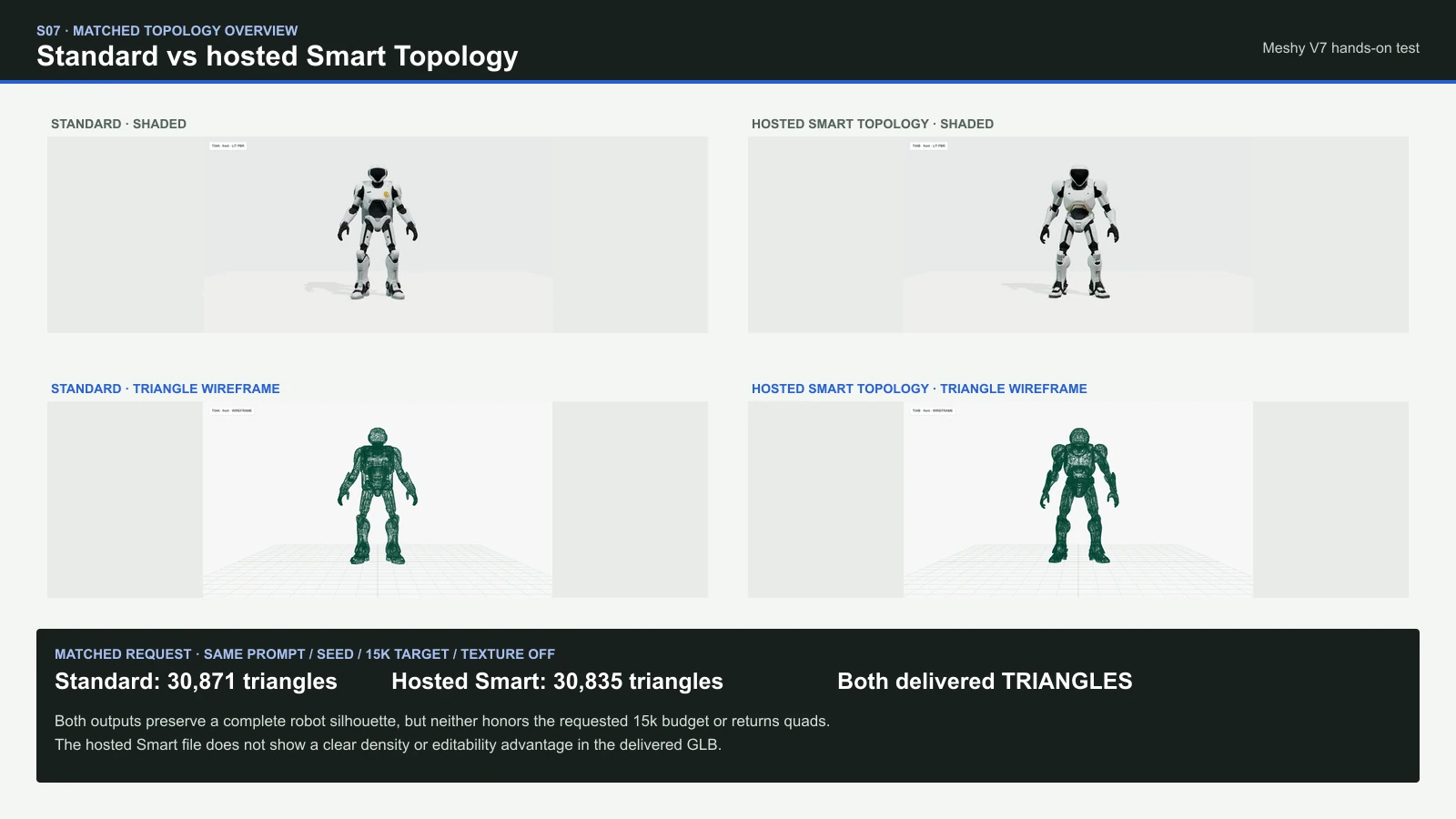
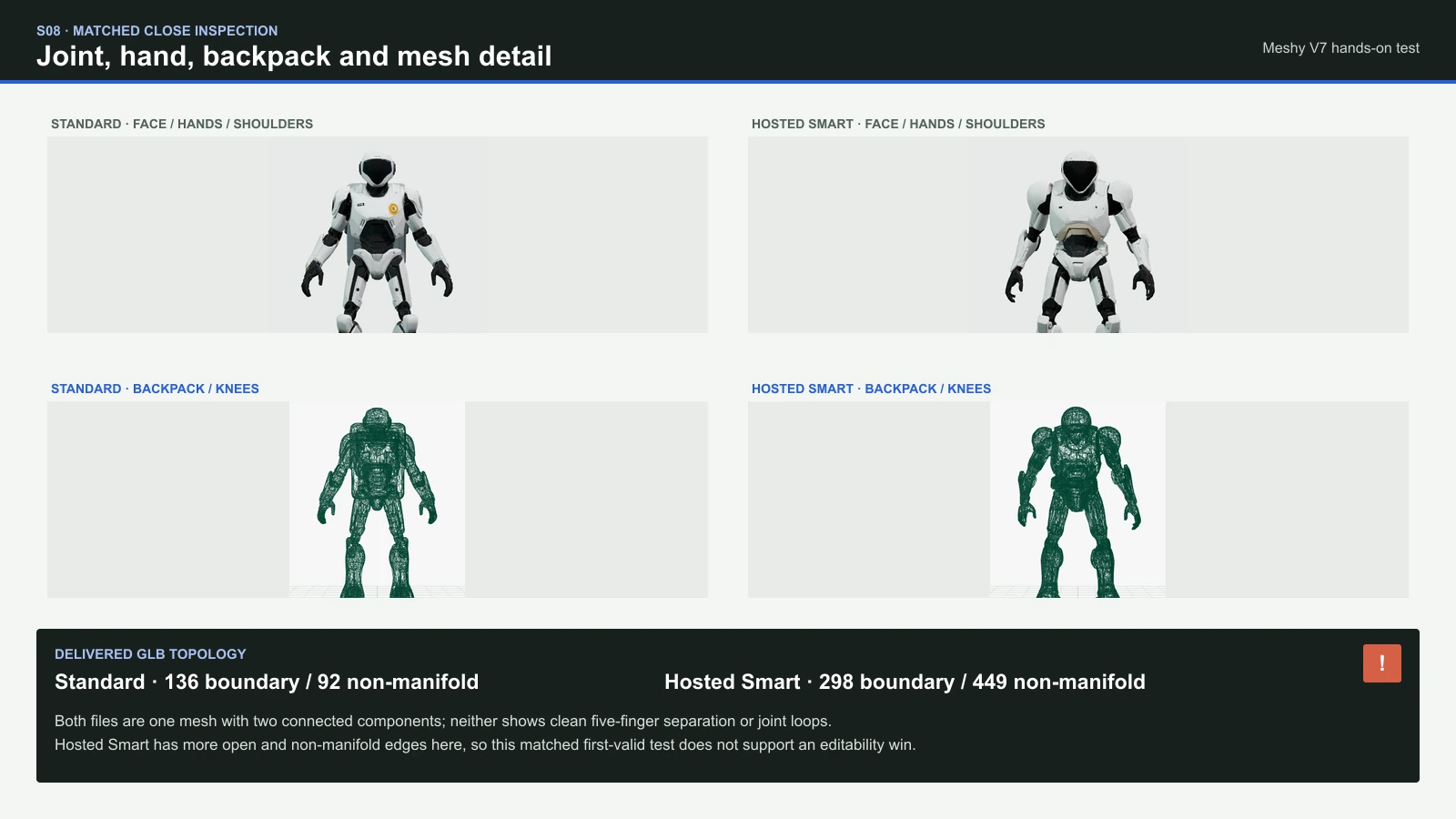
ผลลัพธ์ที่ถูกต้องทั้งสองชุดยังคงรักษาภาพเงาของหุ่นยนต์ไว้อย่างครบถ้วน แต่ไม่มีชุดใดที่ตรงกับจำนวนโพลิกอนและประเภทหน้าตามที่ต้องการ Standard มีสามเหลี่ยมที่เก็บไว้ 30,871 และ Smart ที่โฮสต์มี 30,835 ซึ่งทั้งสองกรณีมีจำนวนประมาณ 2.06 เท่าของ 15,000 ที่กำหนดไว้ ทั้งสองไฟล์ GLB เก็บ สามเหลี่ยม, ดังนั้นคู่ที่ตรงกัน topology=quad คำขอไม่ได้สร้างสินทรัพย์แบบสี่เหลี่ยม.
การเปรียบเทียบโครงสร้างเครือข่ายที่ถูกต้องครั้งแรกที่ตรงกัน
คำสั่งเดียวกัน, seed, A-pose, เป้าหมาย 15k, คำขอปิด texture, และกล้อง. เพียงแต่เวอร์ชันที่โฮสต์เท่านั้น ประเภทโมเดล เปลี่ยนแล้ว.
| หลักฐานที่ส่งมา | มาตรฐาน | จัดโดย โครงสร้างเครือข่ายอัจฉริยะ |
|---|---|---|
| สามเหลี่ยมที่เก็บไว้ | 30,871 | 30,835 |
| โหมดพื้นฐาน | สามเหลี่ยม | สามเหลี่ยม |
| จุดต้นทาง | 39,336 | 48,043 |
| ขอบเขต / ขอบที่ไม่เป็นมานิโฟลด์ | 136 / 92 | 298 / 449 |
| โครงสร้างแบบเมช | หนึ่งเมช สองส่วนที่เชื่อมต่อกัน ไม่มีผิว | หนึ่งเมช สองส่วนที่เชื่อมต่อกัน ไม่มีผิว |
| รูปทรงที่สังเกตได้ | หุ่นยนต์ที่สมบูรณ์; รูปทรงของกระเป๋าเป้แบบเปลือกแข็งที่ชัดเจนขึ้น; นิ้วมือยังไม่แยกออกจากกันอย่างชัดเจน | หุ่นยนต์ที่สมบูรณ์; ส่วนกระเป๋าหลังและลำตัวดูติดกันชัดเจนขึ้น; นิ้วมือยังไม่แยกออกจากกันอย่างชัดเจน |
| การแก้ไขหลักฐาน | ไม่มีลูปขอบตาข่ายที่กำหนดไว้อย่างชัดเจนรอบข้อต่อ; ต้องใช้ความพยายามอย่างมากในการแยกและซ่อมแซมส่วนต่าง ๆ | ไม่มีลูปขอบตาข่ายที่กำหนดไว้อย่างชัดเจนรอบข้อต่อ; มีข้อบกพร่องของขอบมากขึ้น และไม่เห็นการปรับปรุงเมื่อเทียบกับแบบมาตรฐาน |
ผลการวิจัยเชิงปฏิบัติ: Standard เป็น GLB ที่ส่งมาในสภาพที่สะอาดกว่าในคู่ที่ตรงกันนี้ ซึ่งไม่ได้หมายความว่า Standard จะดีกว่าในทุกกรณี แต่หมายความว่าการทดสอบนี้ไม่สามารถสนับสนุนข้อสรุปว่า Smart label ที่ถูกโฮสต์มีความสามารถในการแก้ไขที่ดีกว่าได้.
PBR, รูปแบบที่ส่งกลับ และความสะดวกในการใช้งานของเมชในขั้นตอนต่อไป
เมชี่‘เอกสารอ้างอิงของระบบนี้ระบุเป้าหมายการส่งออกหลายอย่าง แต่เส้นทางที่โฮสต์อาจให้ผลลัพธ์ที่จำกัดกว่า บทความนี้ระบุเพียงไฟล์เท่านั้น ที่ไหนก็ได้ หากค่าที่ส่งกลับมาจริง ๆ แล้ว จะรายงานแยกกันว่า GLB ได้ทำการวิเคราะห์ แปลงผล รวม UV และนำแผนที่วัสดุที่สามารถถอดรหัสได้มาหรือไม่.
ไฟล์และข้อมูลวัสดุที่สังเกตได้จริง
| กรณีทดสอบ | ไฟล์ที่ส่งคืน | UV / ข้อมูลเกี่ยวกับพื้นผิว | สภาพตาข่าย |
|---|---|---|---|
| T01 · แก้ว | ไฟล์ GLB แบบ glTF 2.0 ที่ถูกต้อง 1 ไฟล์ | UVs พร้อมไฟล์ JPEG สีพื้นฐานขนาด 2048 x 2048 ที่สามารถถอดรหัสได้; ไม่มีแผนที่ปกติ แผนที่ความหยาบแบบเมทัลลิก หรือแผนที่การบดบัง | เก็บสามเหลี่ยมไว้ 30,398 ชิ้น; ขอบเขต 72 เส้น และขอบที่ไม่ใช่แมนิโฟลด์ 26 เส้น; การเรนเดอร์ในเบราว์เซอร์ผ่านแล้ว |
| T02 · กล้อง | ไม่มีผลลัพธ์ | ไม่สามารถประเมินได้ | รหัส HTTP 530 ก่อนการสร้างงาน สำหรับการส่งข้อมูลทั้งสองครั้งที่ได้รับอนุญาต |
| T03 · จักรยาน | ไฟล์ GLB แบบ glTF 2.0 ที่ถูกต้อง 1 ไฟล์ | UVs พร้อมไฟล์ JPEG สีพื้นฐานขนาด 2048 x 2048 ที่สามารถถอดรหัสได้; ไม่มีแผนที่ปกติ แผนที่ความหยาบแบบเมทัลลิก หรือแผนที่การบดบัง | เก็บสามเหลี่ยมไว้ 31,163 ชิ้น; ขอบเขต 21 เส้น และขอบที่ไม่ใช่แมนิโฟลด์ 54 เส้น; การเรนเดอร์ในเบราว์เซอร์ผ่านแล้ว |
| T04A · มาตรฐาน | ไฟล์ GLB แบบ glTF 2.0 ที่ถูกต้อง 1 ไฟล์ | UVs พร้อมไฟล์ JPEG สีพื้นฐานขนาด 2048 x 2048 ที่สามารถถอดรหัสได้ แม้จะมีคำขอให้ปิดเท็กซ์เจอร์; ไม่มีแผนที่รายละเอียด PBR | 30,871 สามเหลี่ยม; 136 ขอบเขต และ 92 ขอบที่ไม่ใช่แมนิโฟลด์; สองส่วนประกอบ |
| T04B · Smart ที่ให้บริการบนแพลตฟอร์ม | ไฟล์ GLB แบบ glTF 2.0 ที่ถูกต้อง 1 ไฟล์ | UVs พร้อมไฟล์ JPEG สีพื้นฐานขนาด 2048 x 2048 ที่สามารถถอดรหัสได้ แม้จะมีคำขอให้ปิดเท็กซ์เจอร์; ไม่มีแผนที่รายละเอียด PBR | 30,835 สามเหลี่ยม; 298 ขอบเขต และ 449 ขอบที่ไม่ใช่แมนิโฟลด์; สองส่วนประกอบ |
การเปิดไฟล์ GLB ได้สำเร็จเป็นเพียงขั้นตอนการตรวจสอบขั้นแรกเท่านั้น ขอบที่เปิดอยู่ การเชื่อมต่อที่ไม่เป็นแมนิโฟลด์ ส่วนที่ติดกัน ชิ้นส่วนที่แยกออก รอยต่อของเท็กซ์เจอร์ และความหนาแน่นที่ไม่เหมาะสม ยังคงทำให้การแก้ไขสินทรัพย์นั้นใช้เวลามาก ขั้นตอนการตรวจสอบใด ๆ ในบทวิเคราะห์นี้ไม่ได้ยืนยันว่าสินทรัพย์นั้นพร้อมสำหรับการจัดริกกิ้ง การสร้างแอนิเมชัน การเปลี่ยนรูป หรือการผลิต.
ความเร็ว ความน่าเชื่อถือ และค่าใช้จ่ายที่สังเกตได้ของ Hosted-Route
เราได้บันทึกเวลาการส่งงาน, การรับรหัสงาน (ID), การตอบกลับสถานะสุดท้าย, การดาวน์โหลดไฟล์ และการนำเข้าข้อมูลในระบบท้องถิ่น ตารางนี้แยกเวลาการประมวลผลของผู้ให้บริการออกจากเวลาทั้งหมดที่ผ่านไปซึ่งเราได้สังเกตเห็น ความล่าช้าในคิวและข้อผิดพลาดในการให้บริการถูกรายงานแยกต่างหากจากคุณภาพของโมเดล การประมาณการค่าใช้จ่ายสำหรับอินเทอร์เฟซรวมเป็น $11.44 สำหรับกรณีทดสอบที่วางแผนไว้ทั้งห้ากรณี นี่เป็นงบประมาณที่ประมาณการไว้ ไม่ใช่การชำระเงินที่ยืนยันแล้ว.
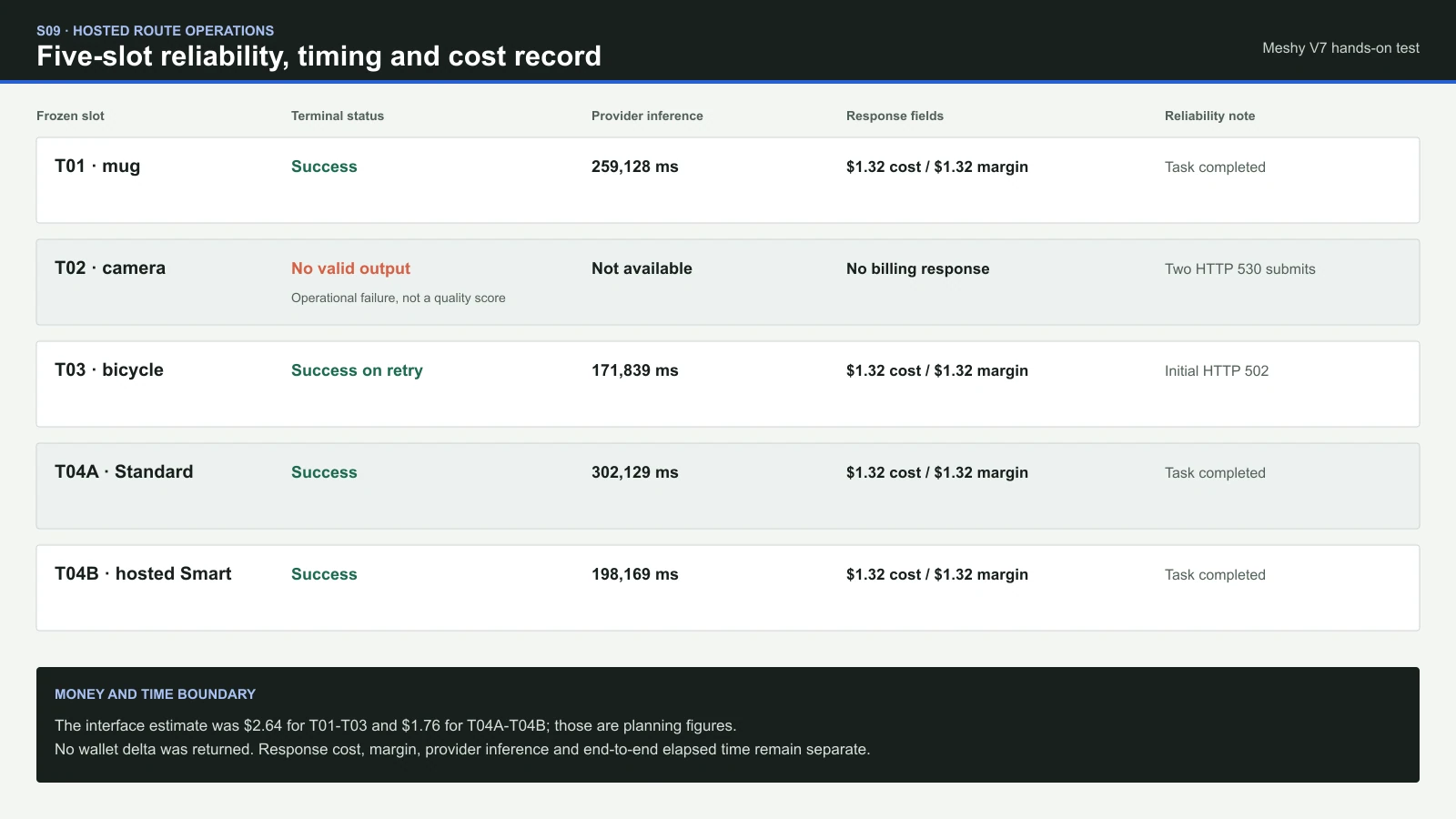
การประมวลผลข้อมูลเวลาและค่าใช้จ่ายจาก ที่ไหนก็ได้ API
การประมาณค่าอินเทอร์เฟซ, ช่องค่า API, ช่องค่าส่วนต่าง API และการหักเงินจากบัญชีจริง เป็นจำนวนเงินที่แยกกัน ตารางนี้บันทึกแต่ละจำนวนเงินเฉพาะในกรณีที่มีข้อมูลเท่านั้น.
| หลักฐาน | T01 · แก้ว | T02 · กล้อง | T03 · จักรยาน | T04A · มาตรฐาน | T04B · Smart ที่ให้บริการบนแพลตฟอร์ม |
|---|---|---|---|---|---|
| ส่งผล | ได้รับรหัสงานประมาณ 4 วินาทีหลังจากส่ง | HTTP 530 ก่อนการสร้างงาน ในทั้งสองครั้งที่ได้รับอนุญาตให้ลอง | การส่งข้อมูลครั้งแรกได้รับรหัสสถานะ HTTP 502; การส่งซ้ำที่อนุญาตได้รับรหัสงานประมาณ 5 วินาทีหลังการส่ง | ได้รับรหัสงานประมาณ 5 วินาทีหลังจากส่ง | ได้รับรหัสงานประมาณ 4 วินาทีหลังจากส่ง |
| การอนุมานผู้ให้บริการ | 259,128 มิลลิวินาที หรือประมาณ 4 นาที 19 วินาที | ไม่มีให้บริการ | 171,839 มิลลิวินาที หรือประมาณ 2 นาที 52 วินาที | 302,129 มิลลิวินาที หรือประมาณ 5 นาที 2 วินาที | 198,169 มิลลิวินาที หรือประมาณ 3 นาที 18 วินาที |
| การติดตามบริการแบบครบวงจร | คำตอบเกี่ยวกับสถานะงานสุดท้ายมาถึงประมาณ 46 นาที 25 วินาที หลังจากเวลาส่งงาน; ข้อผิดพลาดในการตรวจสอบซ้ำๆ หมายความว่านี่ไม่ใช่เวลาการประมวลผลที่แท้จริง | ไม่มีวงจรชีวิตของงานตามเวลา | ประมาณ 8 นาที 17 วินาที นับตั้งแต่ส่งคำขอใหม่จนกระทั่งการดาวน์โหลดเสร็จสิ้น รวมถึงการตรวจสอบสถานะและการโอนถ่ายไฟล์ | ประมาณ 8 นาที 49 วินาที นับจากเวลาส่งงานจนถึงเวลาดาวน์โหลดเสร็จสิ้น | ประมาณ 9 นาที 54 วินาที นับจากเวลาส่งงานจนถึงเวลาดาวน์โหลดเสร็จสิ้น |
| การประมาณค่าอินเทอร์เฟซ | $2.64 | $2.64 การประมาณการแผน; ไม่มีการตอบกลับเกี่ยวกับงานหรือการเรียกเก็บเงิน | $2.64 | $1.76 | $1.76 |
คำตอบ cost_usd | $1.32 | ไม่มีให้บริการ | $1.32 | $1.32 | $1.32 |
คำตอบ margin_usd | $1.32 | ไม่มีให้บริการ | $1.32 | $1.32 | $1.32 |
| ยอดบัญชีก่อนและหลังการทดสอบ | ไม่มีให้บริการ | ไม่มีให้บริการ | ไม่มีให้บริการ | ไม่มีให้บริการ | ไม่มีให้บริการ |
ขอบเขตการเรียกเก็บเงิน: ไม่มีข้อมูลเกี่ยวกับยอดบัญชีก่อนและหลังการทดสอบแต่ละครั้ง ดังนั้น เราจึงไม่สามารถยืนยันได้ว่า $2.64, $1.32 หรือส่วนต่างที่รายงานนั้น เท่ากับจำนวนเงินที่ถูกหักจริง.
เมชี่ การกำหนดราคาและการใช้งานเชิงพาณิชย์โดยไม่ผสมผสานระบบการเรียกเก็บเงิน
มีระบบการเงินสามระบบที่แตกต่างกันที่ควรแยกแยะให้ชัดเจน: เมชี่ การสมัครสมาชิกผ่านเว็บ, แบบเนทีฟ เมชี่ เครดิต API และค่าประมาณหรือค่าบริการในสกุลเงิน USD ที่แสดงโดยผู้ให้บริการโฮสต์ ทั้งสองอย่างนี้ไม่สามารถใช้แทนกันได้.
- เมชี่ การสมัครสมาชิก: หน้าเว็บไซต์อย่างเป็นทางการปัจจุบันแสดงแผนบริการ Free, Pro, Studio และ Enterprise แต่ระหว่างการวิจัย ไม่สามารถยืนยันราคาต่อเดือนและจำนวนเครดิตที่รวมอยู่ในแต่ละแผนได้อย่างแน่ชัด จึงไม่รวมข้อมูลจากแหล่งภายนอกที่ล้าสมัยไว้.
- เครดิต API ของระบบต้นฉบับ: เมชี่‘เอกสารของ [ชื่อบริษัท] ระบุค่าใช้จ่ายเครดิตในระดับการดำเนินการ ซึ่งเป็นการกำหนดราคาตาม API ของระบบเอง และไม่ถือเป็นราคาของเส้นทางที่โฮสต์ หรือราคา V7/7.1 ที่ได้รับการยืนยัน.
- ที่ไหนก็ได้ เส้นทางที่โฮสต์: หน้าจอที่บันทึกไว้แสดงค่า $2.64 สำหรับการทดสอบที่มีพื้นผิวแต่ละครั้ง และ $1.76 สำหรับการทดสอบที่มีเพียงรูปทรงเรขาคณิตแต่ละครั้ง การรายงานขั้นสุดท้ายจะใช้หลักฐานการเรียกเก็บเงินที่ส่งกลับมา หากมีอยู่.
เมชี่‘ในเอกสารคู่มือระบุว่า ผู้ใช้แผนบริการแบบชำระเงินเป็นเจ้าของสินทรัพย์ที่พวกเขาสร้างขึ้น โดยต้องปฏิบัติตาม เมชี่‘s Terms. สิทธิ์ในภาพที่อัปโหลดและเนื้อหาอื่น ๆ ที่ป้อนเข้ายังคงเป็นข้อกำหนดที่แยกต่างหาก การสร้างสินทรัพย์ไม่ถือเป็นการให้สิทธิ์ในการใช้เนื้อหาที่ได้รับการคุ้มครองของผู้อื่น สินทรัพย์ในแผนฟรีใช้ใบอนุญาต CC BY 4.0 ซึ่งอนุญาตให้ใช้ในเชิงพาณิชย์ได้โดยต้องระบุแหล่งที่มา ใบอนุญาตนี้ไม่ยกเลิกข้อจำกัดที่เกิดจากสิทธิ์ของฝ่ายที่สาม.
การเลือกระหว่าง เมชี่, Tripo, โรแด็ง, Hunyuan 3D, และ TRELLIS
เราไม่ได้ทดสอบโมเดลอื่น ๆ เหล่านี้ด้วยข้อมูลนำเข้าเดียวกัน ดังนั้นผลลัพธ์เหล่านี้จึงไม่สามารถกำหนดผู้ชนะโดยรวมได้ โปรดเลือกตามความต้องการด้านการสร้าง ส่งออก และแก้ไขของโครงการของคุณ สำหรับการทดสอบในโหมดเรขาคณิตแบบแยกต่างหาก โปรดดูที่ Tripo H3.1 บทวิจารณ์. สำหรับวิธีแปลงภาพเป็น 3D แบบโฮสต์ที่รวดเร็วอีกวิธีหนึ่ง ดูได้ที่ Hunyuan3D 3.1 Rapid บทวิจารณ์.
เลือกตามกระบวนการทำงาน ไม่ใช่ตามอันดับทั่วไป
| เส้นทาง | มีประโยชน์เมื่อ | ขอบเขตของหลักฐาน |
|---|---|---|
ที่ไหนก็ได้ meshy-v7 | คุณต้องการต้นแบบที่สามารถระบุได้ทันที และสามารถตรวจสอบหรือซ่อมแซม GLB ได้ในภายหลัง. | การตรวจสอบนี้ทดสอบผลลัพธ์ที่ถูกต้องครั้งแรก พื้นผิวที่ซ่อนอยู่ ส่วนที่บาง และคู่โทโพโลยีที่โฮสต์หนึ่งคู่. |
| Tripo H3.1 | คุณต้องการดูตัวอย่างแบบปฏิบัติจริงที่แยกต่างหากของกระบวนการทำงานแบบภาพสู่ 3D และโหมดเรขาคณิตอีกแบบหนึ่ง. | อ่านผลการทดสอบของตัวเอง; ไม่ได้ทำการทดสอบซ้ำด้วย เมชี่ ข้อมูลที่ป้อนเข้ามาที่นี่. |
| Hunyuan3D 3.1 Rapid | คุณต้องการศึกษาวิธีการแปลงภาพเป็น 3D แบบโฮสต์ที่รวดเร็วอีกวิธีหนึ่ง. | อ่านผลการทดสอบของบทความนี้เอง; ในบทความนี้ไม่มีการประกาศผู้ชนะที่ตรงกัน. |
| โรแด็ง หรือ TRELLIS | ตัวเลือกการส่งออก การแก้ไข หรือกระบวนการทำงานภายในองค์กรที่มีอยู่ของพวกเขานั้นเหมาะสมกับโครงการของคุณมากขึ้น. | ใช้ข้อมูลจากบริบทเท่านั้น ไม่มีการเปรียบเทียบผลการแข่งขันแบบตัวต่อตัวที่ตรงกันในปัจจุบันที่นี่. |
กระบวนการแปลงภาพเป็น 3D ผ่านแดชบอร์ดเดียว ด้วย โกลบอลจีพีที
- เริ่มด้วยภาพอ้างอิงที่ชัดเจน ซึ่งแสดงวัตถุทั้งหมด โดยเส้นขอบและช่องเปิดของวัตถุควรสามารถแยกแยะจากพื้นหลังได้อย่างชัดเจน.
- เมื่อภาพถ่ายหนึ่งภาพไม่เพียงพอสำหรับการวางแผน, สร้างภาพอ้างอิงจากหลายมุมที่สอดคล้องกัน ก่อนที่จะตัดสินใจว่าจะใช้เทคนิค 3D แบบใด การรีวิวนี้เองไม่ได้ทดสอบการสร้างภาพจากหลายมุมมอง.
- เลือกการตั้งค่าการสร้างก่อนเริ่มการทดสอบ อย่าเปลี่ยนแปลงการตั้งค่าดังกล่าว และเก็บผลลัพธ์ที่ถูกต้องครั้งแรกไว้.
- ตรวจสอบด้านหลัง ด้านล่าง โครงสร้างแบบลวด (wireframe) UV แผนที่วัสดุ (material maps) และส่วนประกอบขนาดเล็ก ก่อนที่จะดำเนินการสร้างงานในขั้นตอนต่อไปที่เกี่ยวข้องกับสินทรัพย์ดังกล่าว.
- ดำเนินการปรับปรุงคำสั่งให้ดีขึ้นอย่างต่อเนื่อง, งานอ้างอิง, การวิจัย, การเขียน หรือการพัฒนาในหัวข้อเดียวกัน โกลบอลจีพีที แดชบอร์ด ด้วยระบบที่ราคาไม่แพงและรองรับหลายโมเดลหลายฟังก์ชัน ทำให้คุณไม่จำเป็นต้องเปิดและจ่ายค่าบริการแยกต่างหากสำหรับทุกโมเดลหรือทุกขั้นตอนของกระบวนการทำงาน.
เส้นทางที่ผ่านการทดสอบนี้เหมาะสำหรับใคร
ผู้ใช้และวัตถุประสงค์การใช้งานที่แนะนำ: นักออกแบบคอนเซปต์, การคิดค้นไอเดียผลิตภัณฑ์, การสร้างภาพจำลองล่วงหน้า, การจัดวางโครงสร้างเกมหรือฉากแบบคร่าวๆ และผู้สร้างสรรค์ที่ให้ความสำคัญกับจุดเริ่มต้นที่เข้าใจได้รวดเร็วมากกว่ารายละเอียดทางกลไกที่สมบูรณ์แบบ วิธีนี้มีความเหมาะสมเป็นพิเศษเมื่อคุณคาดว่าจะต้องตรวจสอบด้านหลัง ด้านล่าง โครงสร้างพื้นผิว และวัสดุ ก่อนที่จะนำสินทรัพย์ไปใช้ในขั้นตอนต่อไป.
หากต้องการบริการดังต่อไปนี้ คุณอาจต้องทำการซ่อมแซมด้วยมือ: พื้นผิวที่ซ่อนอยู่อย่างแม่นยำ, ลวดหรือชิ้นส่วนระบบส่งกำลังที่แยกออกจากกันอย่างชัดเจน, ข้อจำกัดจำนวนโพลิกอนที่เคร่งครัด, โพลิกอนสี่เหลี่ยมที่สามารถแก้ไขได้, ลูปขอบเมชที่เหมาะสำหรับการเปลี่ยนรูปของข้อต่อ, ชิ้นส่วนการผลิตที่แยกออกจากกัน, รูปทรงเรขาคณิตที่ปิดสนิท, หรือชุดแผนที่ PBR ที่ครบถ้วน ความน่าเชื่อถือของบริการก็มีความสำคัญเช่นกัน เมื่อคำขอที่ล้มเหลวหรือการลองใหม่อาจทำให้กำหนดเวลาของคุณถูกขัดขวาง.
คำถามที่พบบ่อย
คือ Meshy 7 ยังคงเป็นเวอร์ชันล่าสุด เมชี่ ปล่อย?
ไม่. Meshy 7.1 เริ่มเปิดตัวเมื่อวันที่ 10 กันยายน 2026 เส้นทางที่ได้รับการโฮสต์และทดสอบในที่นี้ถูกระบุชื่อว่า meshy-v7, และระบบตรวจสอบนี้ไม่เปลี่ยนชื่อผลออกเป็น 7.1 โดยไม่แจ้งให้ทราบ.
คือ เมชี่ โครงสร้างเครือข่ายอัจฉริยะ ส่วนหนึ่งของ Meshy V7?
สิ่งนี้ยังไม่ได้รับการยืนยันในเอกสาร API ของผู้พัฒนาเองในปัจจุบัน. เมชี่ ระบุภาษาแม่ โครงสร้างเครือข่ายอัจฉริยะ ในฐานะที่แยกต่างหาก meshy-t2 แบบจำลอง. ที่ไหนก็ได้ เปิดเผยเซิร์ฟเวอร์ที่ได้รับการโฮสต์ โครงสร้างเครือข่ายอัจฉริยะ ตัวเลือกภายใต้ meshy-v7, แต่ป้ายกำกับอินเทอร์เฟซที่โฮสต์ไม่ได้เป็นหลักฐานว่าส่วนหลังมีความเท่าเทียมกัน.
ทำ โครงสร้างเครือข่ายอัจฉริยะ สร้างรูปสี่เหลี่ยม?
เมชี่‘เอกสาร T2 ของระบบต้นฉบับระบุว่าผลลัพธ์เป็นรูปสามเหลี่ยม และระบุว่าคำสั่งควบคุมโทโพโลยีทั่วไปจะถูกเพิกเฉย สำหรับการทดสอบแบบโฮสต์ คำขอรวมถึง topology=quad เพราะนั่นคือข้อมูลที่อินเทอร์เฟซที่ถูกจับได้เปิดเผยออกมา; บทความนี้รายงานถึงไฟล์ที่ส่งมาจริง แทนที่จะสมมติว่าคำขอได้รับการตอบสนองแล้ว.
ราคาเท่าไหร่ เมชี่ ราคาเท่าไร?
เมชี่ ค่าสมัครสมาชิก เครดิต API แบบเนทีฟ และค่าบริการจากผู้ให้บริการโฮสต์ เป็นค่าใช้จ่ายที่แยกกัน บทความนี้อธิบายแต่ละระบบในบริบทของตัวเอง และไม่ใช้การประมาณการค่าที่แสดงบนหน้าจอเป็นหลักฐานของค่าบริการสุดท้าย.
สามารถ เมชี่ ผลลัพธ์เหล่านี้สามารถนำไปใช้ในเชิงพาณิชย์ได้หรือไม่?
เมชี่‘ในเอกสารช่วยเหลือระบุว่า ผู้ใช้แผนบริการแบบชำระเงินเป็นเจ้าของสินทรัพย์ที่สร้างขึ้น โดยต้องปฏิบัติตาม เมชี่‘ตามเงื่อนไขของ [ชื่อบริการ] ผู้ใช้ต้องมีสิทธิ์หรือการอนุญาตที่จำเป็นสำหรับเนื้อหาที่ส่งเข้ามา การสร้างสินทรัพย์ไม่ทำให้ผู้ใช้ได้รับสิทธิ์ในเนื้อหาที่ส่งเข้ามาของผู้อื่น สินทรัพย์ในแผนฟรีใช้ใบอนุญาต CC BY 4.0 และต้องระบุแหล่งที่มา โปรดตรวจสอบเงื่อนไขปัจจุบันและสิทธิ์ของฝ่ายที่สามก่อนนำไปใช้ในเชิงพาณิชย์.
คือ เมชี่ ดีกว่า Tripo หรือ โรแด็ง?
การทดสอบนี้ไม่สามารถกำหนดผู้ชนะโดยรวมได้ เนื่องจากไม่ได้ดำเนินการเปรียบเทียบหลายโมเดลแบบจับคู่ การเลือกตัวเลือกที่ดีที่สุดขึ้นอยู่กับความแม่นยำของข้อมูลอ้างอิง การรักษาส่วนที่บาง ความต้องการด้านโทโพโลยี ความพร้อมในการแก้ไขเมช ความเร็ว และเส้นทางที่คุณสามารถเข้าถึงได้จริง.
คำตัดสินสุดท้าย: แบบต้นแบบ 3D ที่ผลิตได้รวดเร็ว แต่ต้องซ่อมแซมด้วยมือ
ในการทดสอบผลลัพธ์ที่ถูกต้องครั้งแรกนี้, ที่ไหนก็ได้ meshy-v7 route มีความสามารถดีในการแปลงข้อมูลอ้างอิงที่อ่านได้ให้เป็นจุดเริ่มต้น 3D ที่สามารถระบุได้ แต่ความน่าเชื่อถือของมันลดลงอย่างมากเมื่องานต้องการพื้นผิวที่ยังไม่เห็นแต่ต้องมีความแม่นยำ ส่วนประกอบทางกลที่ละเอียดอ่อน เป้าหมายโพลิกอนที่เคร่งครัด สี่เหลี่ยมที่สามารถแก้ไขได้ หรือโทโพโลยีที่สะอาดในขั้นตอนต่อไป Standard ยังเป็นไฟล์ที่มีคุณภาพดีกว่าในคู่โทโพโลยีที่โฮสต์และตรงกันหนึ่งคู่ กระบวนการทำงานที่เหมาะสมคือการใช้ เมชี่ เพื่อความรวดเร็ว ให้ตรวจสอบ GLB ทั้งหมดก่อนที่จะส่งงานไปผลิต.
หากการแลกเปลี่ยนนั้นเหมาะสมกับโครงการของคุณ, ลองใช้ขั้นตอนการทำงานจากภาพสู่ 3D ใน โกลบอลจีพีที. พื้นที่ทำงานแบบหลายโมเดลที่มีราคาไม่แพงนี้ช่วยให้การเตรียมข้อมูลอ้างอิง การสร้างแบบจำลอง 3D การปรับปรุงคำสั่งอย่างรวดเร็ว การวิจัย การเขียน และการพัฒนาสามารถดำเนินการได้ทั้งหมดในแดชบอร์ดเดียว โดยยังคงให้การตัดสินใจขั้นสุดท้ายเกี่ยวกับเมชขึ้นอยู่กับไฟล์ที่คุณได้รับจริง.