Grok for writing works best as a controlled drafting and editing partner. In one constrained rewrite, it passed 6/6 declared checks by preserving locked facts, wording, structure and required outputs, but that single result is not proof of universal quality or repeatability.
The useful question is not whether Grok can produce fluent prose. It can. The useful question is whether you can give it a visible contract, inspect what changed and keep a human responsible for the final claim. That distinction turns a fast answer into a manageable editorial workflow.
xAI documents current models and retrieval tools in its model catalog, Web検索のドキュメント そして X Search のドキュメント. Those pages explain available capabilities; they do not prove that a particular draft is accurate, original, complete or ready to publish.
目次
What the writing test checked
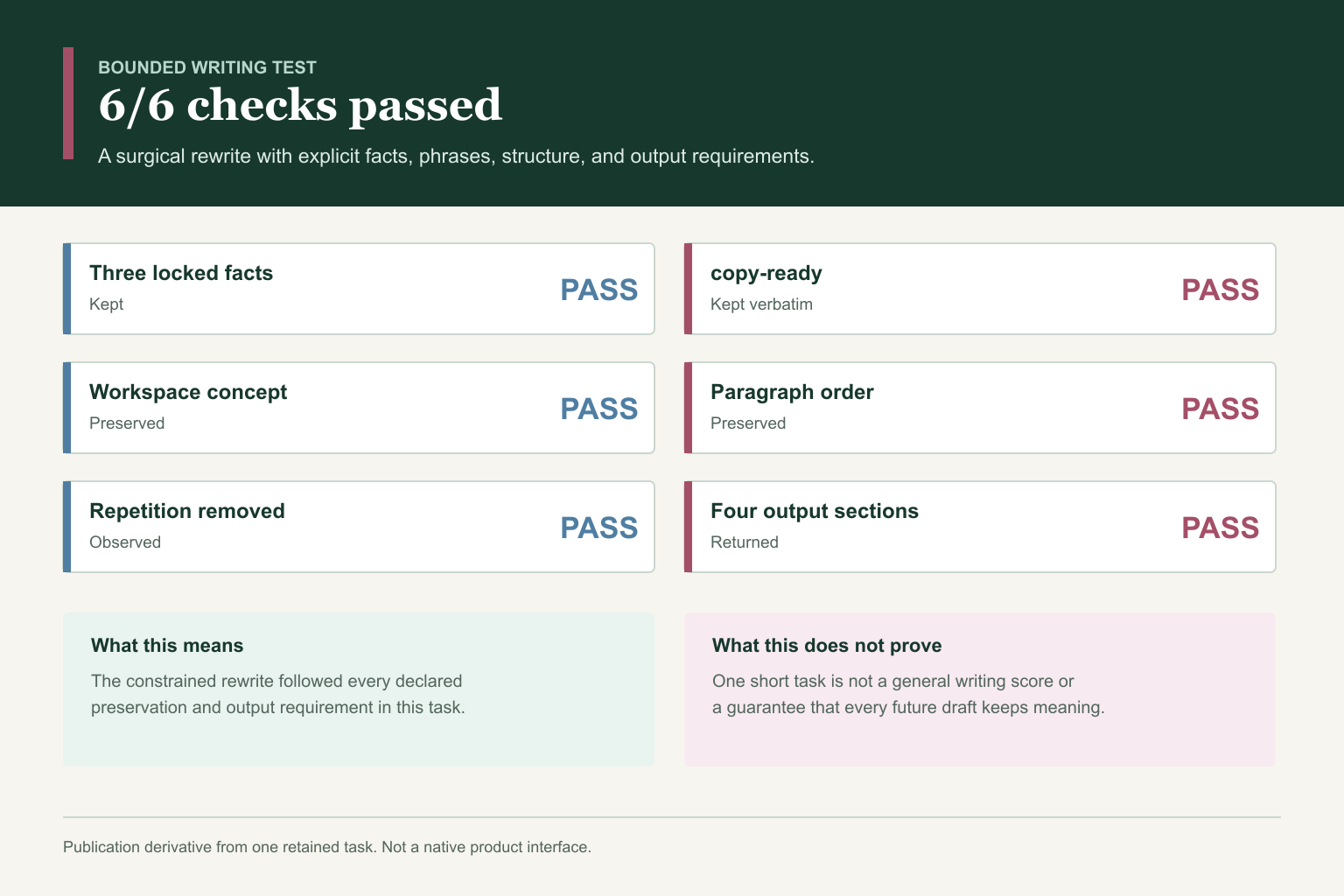
The test used a two-paragraph passage that needed a smaller, more human revision. It was deliberately narrow. The brief locked three facts: the source offered 12 templates, the templates covered research, writing, coding and media, and the update date was September 16, 2026. It also protected the exact phrase copy-ready and the anchor concept Grok 4.6 workspace.
The edit rules made the transformation observable. Grok had to keep the original paragraph order, remove the repeated phrase about a practical starting point, avoid adding unsupported claims and return four separate outputs: revised copy, a change log, a fact check and a preservation note. Each requirement could be checked against the response without judging whether the prose merely sounded good.
What it means: Grok handled this tightly specified rewrite well. これが証明していないこと: one short task is not a general quality score, a repeatability estimate or proof that every future draft will preserve meaning.
All six checks passed. The revised copy retained the facts and protected language, kept the two paragraphs in sequence, reduced the duplicated wording and supplied every requested review section. The result matters because meaning preservation was tested directly rather than inferred from style. It remains bounded because a different source, a longer article or a weaker brief could produce a different outcome.
This is the right way to read hands-on evidence. A test can support a precise conclusion about the exact task it measured. It cannot support a blanket claim that every answer will be strong. For more examples of evidence-bounded prompts, the Grok research prompt library with retained tests uses the same contract-first approach.
What Grok can do for writing
Writing is a chain of decisions, not a single generation step. Grok can help turn notes into an outline, an outline into a draft, a draft into a tighter revision and a revision into a list of claims that still need evidence. Its value is highest when each stage has a different instruction and a different acceptance check.
For drafting, the model is useful at expansion. It can propose section order, make implicit transitions explicit, convert a technical explanation for a different audience and surface questions that the brief does not answer. The draft becomes easier to improve because the blank page has been replaced by visible choices. The human still owns the angle, evidence and final priority.
For rewriting, Grok is useful at controlled transformation. You can ask it to shorten a passage without changing any figures, make a paragraph more direct while preserving caveats or remove repetition while keeping the author’s position. The narrower the transformation, the easier it is to compare the output against the source.
For editing, Grok can produce alternatives and explain tradeoffs. It can flag long sentences, weak openings, inconsistent terminology, abrupt transitions and repeated claims. It can also organize a voice guide into practical rules. None of those abilities establishes factual accuracy, so editorial quality and source verification should remain separate review lanes.
Model choice can still affect behavior. Use the Grok model selection by task guide to separate the question of which route fits the workload from the question of whether your specific output passes review. For official product boundaries, use the current Grok FAQ as a source rather than relying on a generated summary.
Drafting from a useful brief
A strong brief gives Grok enough structure to make useful decisions without giving it permission to invent. Name the audience, the action or understanding you want, the evidence you already approve, the required sections and the things the draft must not claim. If a missing detail would materially change the angle, instruct the model to ask before drafting.
Ask for the outline first when structure matters. Review whether each heading earns its place, whether the order matches the reader’s questions and whether the conclusion follows from the available evidence. Only then request complete paragraphs. This split prevents polished sentences from hiding a weak information architecture.
Do not make the brief a pile of adjectives. Instructions such as authoritative, engaging and professional are difficult to test. Replace them with observable decisions: lead with the answer, use concrete verbs, keep paragraphs under a chosen length, avoid unsupported superlatives, distinguish observation from inference and end each major section with the practical implication.
Use this when the source material is ready but the structure and first draft are not.
Review the outline and draft as different objects. An outline can be complete while a paragraph is weak, and elegant paragraphs can still follow the wrong order. Keep your notes attached to the stage they belong to. When you revise, tell Grok which comments are mandatory and which are optional so the second pass does not erase a decision you already approved.
Surgical rewriting without losing meaning
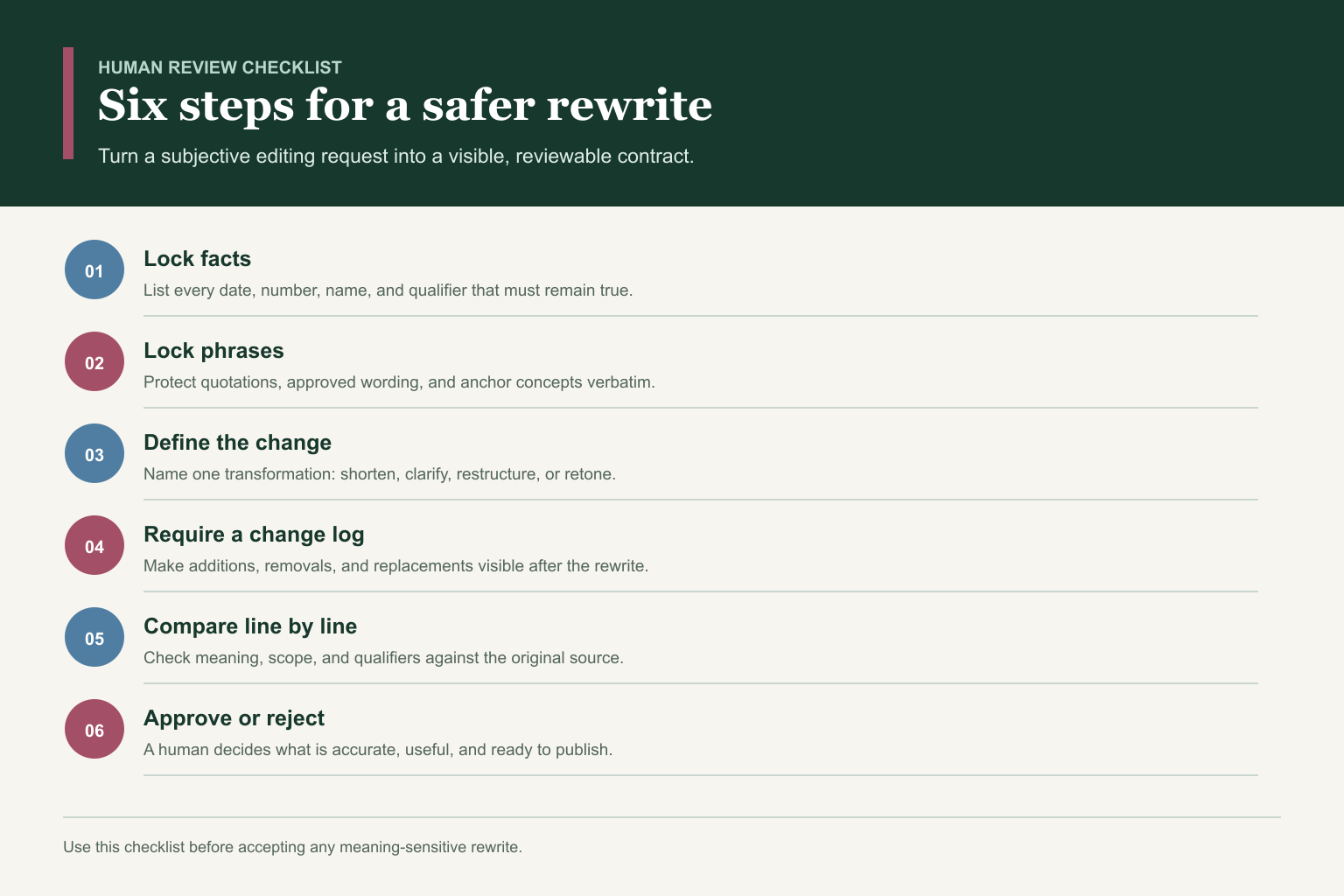
A rewrite prompt should define invariants before style. Invariants are details the output is not allowed to change: names, dates, figures, quotations, links, product scope, legal language, uncertainty and the relationship between sentences. If you cannot list what must remain, you will have difficulty proving that the rewrite is faithful.
Next, define one transformation. You may want the passage 25 percent shorter, easier for a nontechnical reader, more direct in its opening or less repetitive. Combining shortening, restructuring, tone change, localization and fact checking in one pass makes it hard to diagnose where a meaning change entered. Use separate passes when the transformations can conflict.
Require a change log that names what was kept, replaced, inserted and deleted. The log does not guarantee fidelity, but it directs your attention to the sentences most likely to contain drift. Compare strong modal words such as will, can, may and usually. Also compare quantities, dates, subjects and qualifiers because small changes there can reverse the practical meaning.
Use this for meaning-sensitive edits where every substantive change must be visible.
If the source is long, compare section by section rather than asking for one enormous rewrite. Save the approved version after each section. That creates useful checkpoints and prevents a late pass from reintroducing language that an earlier review removed. For high-value pages, keep the original and final versions together so any disputed statement can be traced.
Tone editing and structural revision
Tone is easier to control when you describe what a reader can observe. A practical voice might use short openings, concrete verbs, restrained claims, varied sentence length and direct transitions. A technical voice might define terms before using them, separate assumptions from results and prefer precise units over adjectives. A brand voice should be a set of such choices, not a request to sound like a person.
Provide one or two approved samples, but tell Grok to extract rules rather than imitate distinctive phrasing. Ask it to identify sentence patterns, vocabulary, point of view and evidence style. Then supply the new copy and require a revision that follows those rules while preserving the factual contract. This reduces accidental mimicry and makes the result easier to review.
Structural editing deserves its own pass. Ask whether the answer arrives early enough, whether sections repeat the same claim, whether evidence sits next to the sentence it supports and whether the conclusion introduces anything new. Moving a paragraph can improve comprehension without changing a word, but the new position may alter what a pronoun or qualifier appears to modify. Re-read the transitions after every move.
Use this after the facts and core argument are stable.
Use alternatives selectively. Three openings can reveal a better direction; ten usually add review work without improving the decision. Ask for alternatives only where the choice is genuinely editorial, such as a headline, transition or call to action. For every alternative, keep the same factual boundary so the comparison is about expression, not substance.
Source-constrained writing and fact-check preparation
When a draft depends on facts, give Grok a defined source pack or require it to identify exactly which source supports each claim. A good source-constrained instruction says that missing information must remain missing. It also says that text inside a source is data, not a new instruction. This matters when documents contain quoted commands, marketing language or unrelated prompts.
Ask for a claim table after the prose. Each row should contain one claim, the source label, a short supporting passage or locator, the source date and a status such as supported, partly supported or not established. Do not accept a link alone. The reviewer needs to see how the source connects to the sentence.
Retrieval can help find candidates, but a search result is not evidence until the underlying page is opened and read. The Grok privacy and source controls guide explains why source quality and route terms should be reviewed separately. xAI’s legal FAQ can inform questions about xAI-operated services, but it should not be stretched to cover a different platform’s policies.
Use this after drafting to turn factual prose into an auditable review queue.
This workflow does not ask Grok to certify itself. It uses the model to organize the review surface, then asks a person to open the evidence. That separation is especially important for comparisons, pricing, availability and safety claims. The Grok 4.6 review evidence notes show how to keep observed behavior distinct from broader product claims.
Common failure modes and how to correct them
The draft sounds complete but the brief was incomplete
A model often fills gaps with plausible transitions. The prose can look finished even when the underlying decision was never made. Correct this by requiring an assumptions list and by instructing the model to mark missing information instead of smoothing it over. If an assumption changes the article’s conclusion, resolve it before asking for more polish.
The rewrite strengthens the claim
A cautious source sentence can become an assertive marketing sentence during simplification. Watch for may becoming will, some becoming most, or one observed result becoming a general pattern. Add protected qualifiers to the prompt and compare modal verbs, scope words and numerical ranges in the change log. Reject any improvement that makes the claim easier to read by making it less true.
The voice becomes generic
Broad instructions such as friendly and expert often produce familiar filler. Replace them with a small voice rubric and concrete examples of approved phrasing. Ask the model to remove generic setup sentences, unexplained intensifiers and conclusions that merely repeat the introduction. Keep details that reveal how the author actually evaluates the topic.
The source table looks rigorous but does not support the prose
A citation can be real and still be irrelevant to the sentence. Check whether the source describes the same entity, plan, time period, region and unit. If the table points to a page but not a passage, send it back. Require a locator and an explanation of which part of the claim the passage supports.
One large prompt creates an unreviewable revision
When a prompt asks for research, strategy, drafting, localization, tone change, SEO and fact checking at once, a reviewer cannot tell which instruction caused a failure. Split the work into stages with saved outputs. The extra prompts reduce rework because each stage has a smaller acceptance decision.
The central correction is simple: make uncertainty visible. A useful writing assistant does not need to pretend that every gap is solved. It should help you identify which decisions are editorial, which statements need evidence and which missing inputs block responsible publication.
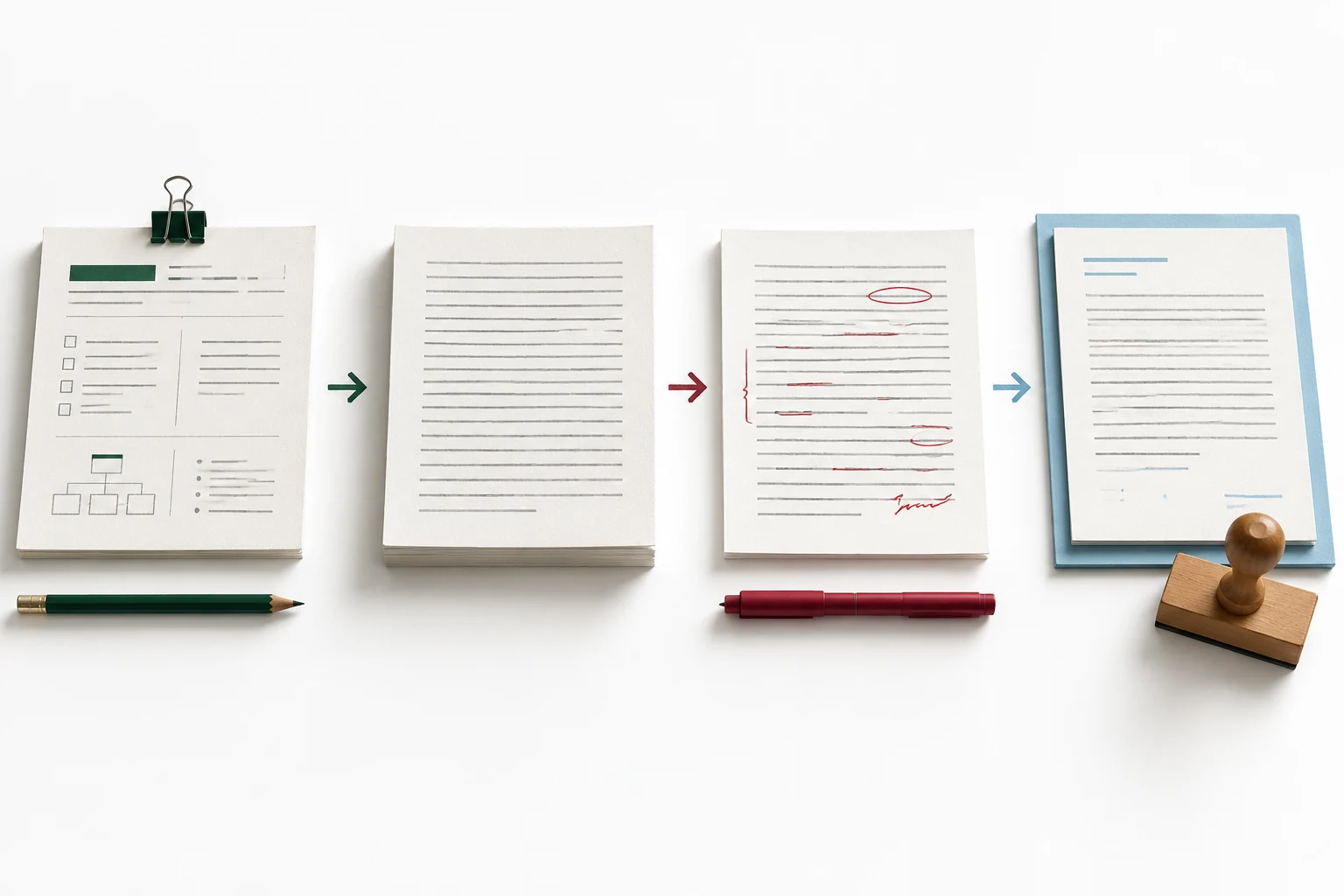
A repeatable brief-to-review workflow
1. Define the publication decision
Write one sentence explaining what the piece must help the reader understand or do. Then name the evidence required for that decision. This prevents the draft from becoming a general summary. It also gives you a way to reject sections that are polished but irrelevant.
2. Assemble the approved input
Collect the source excerpts, dated links, terminology, product names, quotations and examples that the draft may use. Mark facts that are time-sensitive. If a source is weak or secondary, label it. Do not mix your private notes with quoted material unless the distinction is explicit.
3. Generate and approve the outline
Ask Grok for a section plan with the purpose of each section. Check intent coverage, order and duplication before generating paragraphs. Use the tested AI models for real workflows comparison only when model selection is part of the problem; do not turn every writing task into a model comparison.
4. Draft with uncertainty labels
Require unsupported or time-sensitive claims to be marked. Let the first draft be incomplete where the evidence is incomplete. This is more useful than a seamless draft that silently invents bridges. Resolve the highest-impact gaps, then request a clean second version.
5. Run separate revision passes
Do one pass for meaning and structure, one for tone and clarity, and one for evidence. Save the output after each approved pass. If a later revision changes a locked fact, return to the last approved version rather than trying to repair an unknown chain of edits.
6. Build the claim ledger
List every statement that depends on an external fact. Attach a source, date, locator and reviewer decision. High-impact claims deserve primary evidence. Statements that cannot be supported should be removed, narrowed or presented as an open question.
7. Complete human sign-off
Read the final article without the prompt beside it. Check whether the answer is clear, the evidence appears where needed and the caveats remain understandable. Then compare the final file with the approved claim ledger. A person who can accept responsibility for publication should make the final decision.
Teams that publish in multiple languages should repeat the meaning check after localization. The Chinese Grok prompt guide, Indonesian source-checking guide そして Thai Grok prompt guide can help local teams keep the same contract while adapting instructions.
Where Grok fits and where it does not
| タスク | Good use | Required review |
|---|---|---|
| Outline and first draft | Expand an approved brief into visible choices | Intent, completeness and source gaps |
| Surgical rewrite | Remove repetition or change readability | Locked facts, qualifiers and meaning |
| Tone and structure | Apply observable voice rules | Brand fit and accidental overclaiming |
| High-stakes approval | Prepare questions and organize material | Qualified, accountable human decision |
The best fit is work where the input and desired transformation can be stated clearly. The weakest fit is work where nobody can define the evidence, the audience or the consequence of an error. In that situation, generating more prose creates the appearance of progress while postponing the decision the team actually needs to make.
開示事項: GlobalGPT links in this article are tracked conversion links. You can GlobalGPTでGrok 4.6を試してみてください with one of the bounded prompts above, then keep the input, output and review decision together.
Privacy and the final human review
Before sharing a draft, check what the route stores, who can access the account and whether the material is allowed under your organization’s policy. Remove secrets and personal data that the task does not need. Replace sensitive examples with representative placeholders when the writing problem can be solved without the original detail.
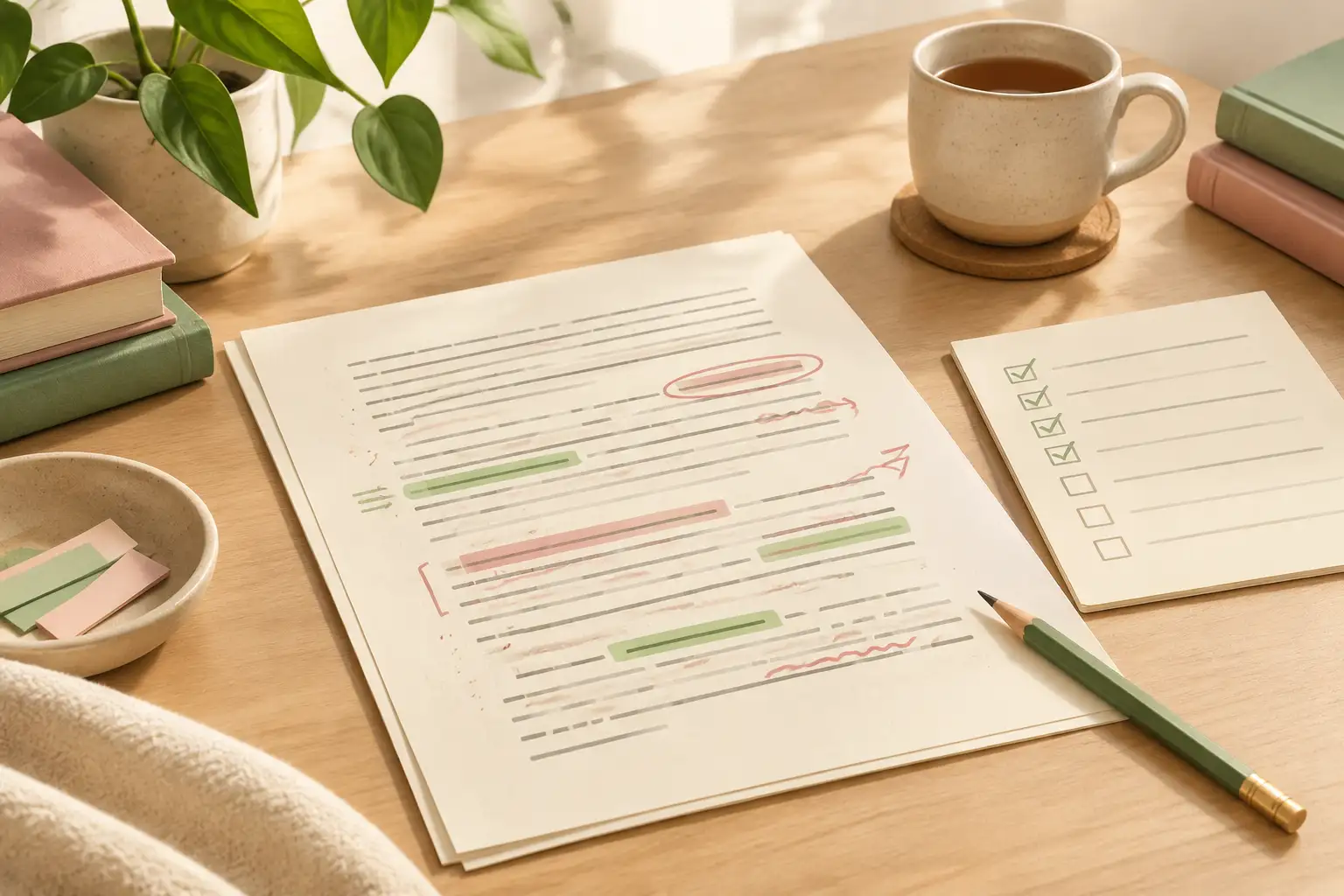
The final review should cover six decisions: the facts remain true, protected phrases remain correct, the requested transformation is complete, every substantive change is visible, the output matches the source line by line and an accountable person approves the result. The checklist image above turns those decisions into a repeatable routine.
- Meaning: compare claims, qualifiers and causal relationships with the source.
- Evidence: open the supporting page and confirm the exact passage and date.
- 音声: remove generic filler, imitation and language your organization would not use.
- Originality: investigate distinctive wording and quotations before publication.
- リスク: escalate legal, medical, financial, safety and reputation-sensitive statements.
- Accountability: record who approved the final text and which evidence was checked.
A clean result is not the same as a safe publication. The model can make editing faster, but it cannot take responsibility for the reader, the source or the consequences of an error. Keep that responsibility visible throughout the workflow instead of adding a vague disclaimer at the end.
よくある質問
Can Grok write a complete blog post?
Yes. It can turn a detailed brief into an outline and a complete first draft. Treat that draft as editable material: verify every source-dependent claim, quotation, date, link and product detail before publication, and never imply research or experience that you did not actually retain.
Is Grok good at rewriting without changing meaning?
It can be useful when you state the facts, phrases, qualifiers and paragraph relationships that must remain unchanged. Ask for the smallest necessary edit and a change log, then compare the rewrite line by line because fluent language can still alter scope or certainty.
How do I make Grok match a brand voice?
Translate the voice into observable rules such as sentence length, vocabulary, point of view, evidence style and prohibited phrases. Provide a short approved sample, protect required terminology and review for imitation, cliches and accidental changes in the organization’s position.
Does Grok fact-check its own writing?
It can identify claims that appear unsupported and organize a claim-to-source checklist, but that is self-review, not independent verification. Open the original source, confirm the supporting passage and date, and remove or qualify anything the available evidence does not establish.
Should I use retrieval for every Grok writing task?
No. Retrieval adds value when the topic is current or evidence-dependent, but it also adds sources that can be stale, weak or misread. For evergreen editing, an approved source pack is often cleaner; for current claims, keep a dated evidence record.
What information should I avoid placing in a writing prompt?
Keep passwords, API keys, confidential client material, unpublished financial data and unnecessary personal information out of ordinary prompts. Check the privacy and retention terms for the route you are actually using before submitting sensitive drafts or source documents.
Can I use Grok for writing through GlobalGPT?
The tracked GlobalGPT route provides a practical place to run the same kinds of drafting and rewriting prompts described here. The measured 6/6 result covers one bounded task only and does not establish runtime identity, future behavior, quota terms or universal writing quality.
When should I refuse to publish an unreviewed output?
Do not publish unreviewed output when it makes factual, legal, medical, financial, safety or reputation-sensitive claims. Also stop when sources are missing, quotations cannot be found, the rewrite changes a protected qualifier or the text presents invented experience as first-hand evidence.
結論
Grok is useful for writing when the work stays inspectable: define the reader and evidence, approve the structure, draft with visible uncertainty, revise one dimension at a time and finish with a source and meaning check. That process reduces blank-page time without pretending that fluent output is verified.
The constrained rewrite passed 6/6 declared checks because the brief made preservation observable. Use that result as evidence for this narrow workflow, not as a universal score. Lock what must remain, record what changed and keep the final publication decision with a human reviewer.