Vale la pena passare a GPT-6 Astra quando il tuo lavoro dipende dall'uso del computer, da operazioni di programmazione di lunga durata o da progetti professionali articolati in più fasi, in cui un errore può comportare costi elevati. Per la redazione quotidiana di documenti, la ricerca mirata e attività di ragionamento meno impegnative, GPT-5.6 Sol rimane una scelta ragionevole.
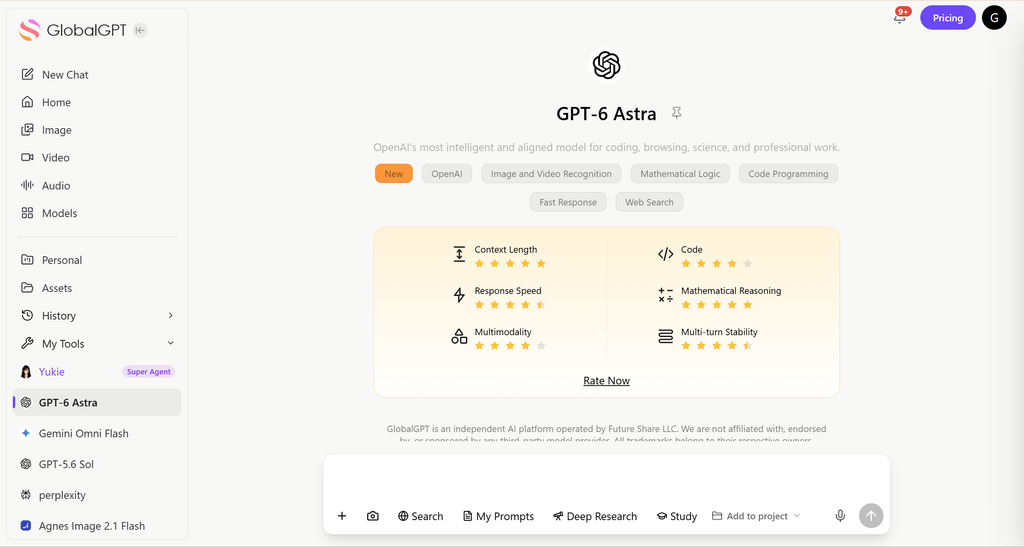
Il mio consiglio, senza giri di parole, è di utilizzare GlobalGPT Per questo confronto: GPT-6 Astra e GPT-5.6 Sol sono entrambi disponibili nello stesso spazio di lavoro, insieme a Claude, Gemini, DeepSeek e ai modelli dedicati alle immagini e ai video. Iniziate con Sol quando il compito è di portata limitata; passate ad Astra quando la profondità di esecuzione è importante.
GPT-6 Astra è un aggiornamento di tipo diverso
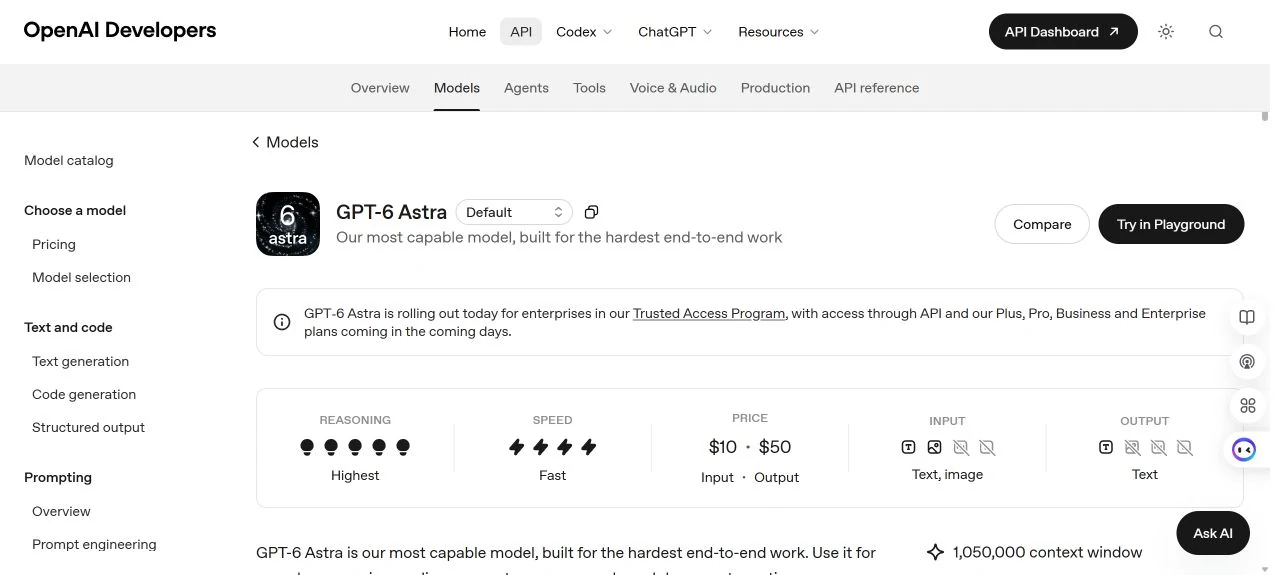
OpenAI rende GPT-6 Astra adatto a compiti end-to-end complessi: ragionamento complesso, programmazione, utilizzo del computer, ricerca e creazione di documenti. La sua distribuzione è inizialmente limitata, ma l’accesso verrà esteso ai piani ChatGPT, all’API, ad Azure e a Bedrock.
GPT-6 Astra vs GPT-5.6 Sol: una panoramica
Il rapporto OpenAI evidenzia un divario più ampio nei casi in cui le attività richiedono un'esecuzione prolungata anziché una singola risposta. Si tratta di risultati forniti dai fornitori, non di una classifica indipendente.
Punteggi riportati nel OpenAI, percentuale
| Situazione relativa all'attività | Primo percorso consigliato | Perché |
|---|---|---|
| Una breve sintesi, modifica o spiegazione circoscritta | GPT-5.6 Sol | Il risultato può essere verificato rapidamente e il flusso di lavoro ha un punto di interruzione ben definito. |
| Sequenza lunga di digitazione o di utilizzo del computer | GPT-6 Astra | Il confronto pubblicato da OpenAI è particolarmente efficace nei compiti orientati all'esecuzione. |
| Carico di lavoro misto con complessità variabile | Percorso per attività | Utilizza innanzitutto il percorso rapido già definito; ricorri a livelli superiori solo quando è necessaria un’esecuzione più approfondita. |
Quando vale la pena acquistare GPT-6 Astra
- Flussi di lavoro relativi all’uso del computer: attività che richiedono di osservare uno schermo, compiere l'azione successiva e riprendersi da una situazione imprevista.
- Codifica di lunga durata: modifiche a livello di repository e catene di debug.
- Ricerche e documenti specialistici: una sintesi che distingua i fatti accertati, le ipotesi e le azioni da intraprendere.
- Lavoro su contesti estesi: progetti che comportano numerosi documenti, vincoli o decisioni precedenti.
Per un approfondimento sulla selezione dei modelli OpenAI precedenti, si veda questa guida a GPT-5.4 Thinking.
Quando GPT-5.6 Sol rimane la scelta più intelligente
Sol rimane una valida scelta predefinita quando la velocità, un formato di prompt ben definito e un risultato circoscritto sono più importanti di un’esecuzione autonoma estesa. Tenetelo a portata di mano per la stesura di documenti di routine, spiegazioni mirate, brevi relazioni di ricerca e revisioni di codice circoscritte.
Verifica pratica dell'accesso: cosa ha effettivamente restituito l'attuale percorso Anywhere
T01: test strutturato di valutazione della prontezza decisionale
Inserimento completo
Nota sul prodotto: l’approvazione legale è in fase di attesa. Il budget potrebbe ammontare a circa $200.000. La data di lancio non è confermata.

Risultato atteso: (1) un fatto verificato, (2) un’ipotesi e (3) esattamente un’azione successiva.
Risultato completo: GPT-5.6 Sol
1. Fatto accertato: l’approvazione legale è in sospeso.
2. Ipotesi: il budget potrebbe ammontare a circa $200.000.
3. Azione successiva: confermare il budget e avviare lo studio di fattibilità prima di fissare una data di lancio.
Registro delle disponibilità
GPT-6 Astra non figurava nella stessa directory dei modelli Anywhere attivi, quindi non è stato richiamato con un alias ipotizzato. Si tratta di un risultato relativo all'accessibilità, non alla qualità.
Tre ulteriori verifiche dei primi risultati dimostrano come il percorso Sol disponibile abbia gestito input di lavoro distinti senza necessità di regolazioni immediate o tentativi ripetuti. Si tratta di prove a sostegno del flusso di lavoro, non di un benchmark né di un sostituto di un test Astra abbinato.
T02: selezione delle ricerche
GPT-5.6 Sol · primo output valido · 323 token
Ha mantenuto le note confermate, ha lasciato in sospeso il commento sulle vendite non quantificato e ha trasformato la discrepanza in una richiesta di dati.
Input e output completi
Ingresso
Stai preparando un riassunto di ricerca. Note sulle fonti: “L’adozione da parte dei clienti è aumentata nel secondo trimestre” (dashboard, data confermata); “La domanda da parte delle aziende potrebbe essere in calo” (commento del reparto vendite, non quantificato); “Un concorrente ha lanciato un nuovo piano API” (comunicato stampa, data confermata). Risultato: (1) i fatti verificati, (2) le questioni aperte e (3) esattamente una prossima azione di ricerca.

Uscita
### 1. Fatti verificati
- Secondo il dashboard, l’adozione da parte dei clienti è aumentata nel secondo trimestre; la data è confermata.
- Secondo un comunicato stampa, un concorrente ha lanciato un nuovo piano API; la data è confermata.

### 2. Domande aperte
- Di quanto è aumentata l’adozione da parte dei clienti e quali segmenti di clientela hanno determinato questo cambiamento?
- La domanda da parte delle imprese sta effettivamente rallentando e quali prove quantitative supportano o confutano questa osservazione del reparto vendite?
- Quali sono i prezzi, le funzionalità, la data di lancio e il probabile impatto del piano API del concorrente sull’adozione da parte dei clienti o sulla domanda delle imprese?

### 3. Prossima azione di ricerca
- Ottenere e analizzare i dati quantitativi sulla domanda delle imprese relativi al periodo attuale e a quelli precedenti per verificare se la domanda sta rallentando.
T03: passaggio di consegne in ambito ingegneristico
GPT-5.6 Sol · primo risultato valido · 467 token · 22,3 secondi
La diagnosi rimane provvisoria; prima di apportare una modifica al codice è necessario verificare le prove e si raccomanda di riprodurre il problema in un ambiente di test piuttosto che apportare una modifica in produzione.
Input e output completi
Ingresso
Una dashboard relativa al rilascio riporta: “Gli errori durante il checkout sono aumentati dopo l’implementazione di martedì. L’avviso indica timeout nell’autorizzazione dei pagamenti. Il rilascio ha inoltre modificato la registrazione dei log”. Risposte: (1) una diagnosi presentata come ipotesi, (2) esattamente due verifiche ordinate per priorità e (3) un unico passo successivo minimo che eviti di apportare modifiche all’ambiente di produzione.

Uscita
1. **Ipotesi:** Il rilascio di martedì ha introdotto una regressione che aumenta la latenza nell’autorizzazione dei pagamenti e causa timeout durante il checkout. Le modifiche alla registrazione potrebbero inoltre aver alterato gli avvisi o fatto apparire l’aumento più consistente di quanto non sia in realtà.

2. **Verifiche, in ordine di priorità:**
1. Confrontare la latenza di autorizzazione, il numero di timeout e le risposte dei fornitori di servizi di pagamento prima e dopo la distribuzione, utilizzando i dati grezzi delle richieste e delle tracce, non solo i nuovi log.
2. Esaminare le differenze tra le versioni per individuare modifiche relative al client di pagamento, ai timeout, ai tentativi di riprova e alla registrazione/alle metriche; verificare se il sovraccarico della registrazione o un’analisi alterata possano spiegare l’avviso.

3. **Prossimo passo minimo:** riprodurre il flusso di autorizzazione del checkout nell’ambiente di staging con la versione rilasciata martedì e una configurazione equivalente, senza modificare l’ambiente di produzione.
T04: briefing esecutivo di lancio
GPT-5.6 Sol · primo risultato valido · 278 token · 8,0 secondi
La risposta rende esplicito il compromesso in termini di portata: mantenere il lancio del nucleo, rinviare l’analisi dei dati e considerare l’approvazione legale come un vero e proprio ostacolo.
Input e output completi
Ingresso
Stato del progetto: la data prevista per il lancio è il 30 settembre; l’approvazione legale è in sospeso; il team tecnico è in grado di fornire il flusso di lavoro principale, ma non la funzionalità analitica opzionale entro tale data. Risultato atteso: (1) una decisione in una sola frase, (2) un rischio chiave e (3) esattamente tre azioni da intraprendere in ordine di priorità.

Uscita
1. **Decisione:** Procedere con il lancio del 30 settembre limitandosi al flusso di lavoro principale, rinviare le analisi opzionali e subordinare il lancio all’approvazione legale.
2. **Rischio principale:** L’approvazione legale in sospeso potrebbe ritardare o impedire il lancio del 30 settembre.
3. **Azioni:**
1. Accelerare la revisione legale e stabilire una scadenza definitiva per l’approvazione.
2. Escludere le analisi dall’ambito del lancio e comunicare l’ambito rivisto alle parti interessate.
3. Finalizzare, testare e rilasciare il flusso di lavoro principale, preparando al contempo le analisi per un aggiornamento successivo al lancio.
Calcolatore dei costi API: fai una stima di Astra prima di cambiare operatore
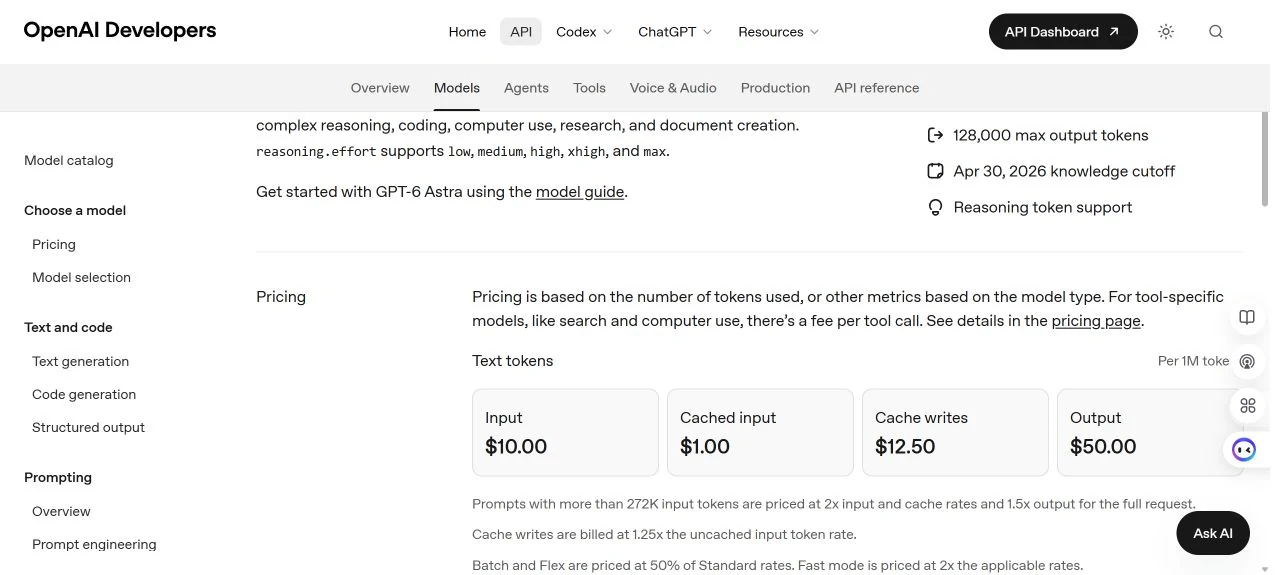
OpenAI riporta i prezzi dell'API GPT-6 Astra Standard a $10 per ogni milione di token in ingresso e $50 per ogni milione di token emessi.
Stima relativa all'API GPT-6 Astra Standard
Tariffe: token di input $10/M e token di output $50/M.
Prova il percorso di aggiornamento senza dover ricostruire il tuo flusso di lavoro
Inizia con Sol per il primo brief, conserva il prompt e il materiale di partenza, poi passa a un approccio più avanzato quando il lavoro si trasforma in una lunga serie di decisioni. GlobalGPT consente di mantenere diversi tipi di modelli in un unico spazio di lavoro, anziché costringere a creare un nuovo prodotto per ogni esperimento.

- Usa Sol per trasformare una richiesta generica in un brief strutturato, una bozza o un primo piano di ricerca.
- Quando si confronta un altro modello, mantenere invariato il contesto dell'attività.
- Inoltra immagini, video o lavori specialistici a un modello dedicato quando il prodotto finale lo richiede.
Apri GlobalGPT per lavorare con Astra, Sol e altri modelli disponibili in un unico posto, mantenendo coerenti il prompt e il materiale di partenza.
Verdetto finale: effettuare l'aggiornamento in base alle attività, non alla data di rilascio
GPT-6 Astra sembra rappresentare un aggiornamento significativo per le attività che richiedono un agente in grado di garantire affidabilità tra diversi strumenti, contesti estesi e decisioni multiple. Ciò non costituisce tuttavia un motivo automatico per abbandonare GPT-5.6 Sol. Utilizzate Sol per le attività ripetitive e ricorrete ad Astra nei casi in cui la profondità di esecuzione costituisca il collo di bottiglia.
Scegli il percorso più adatto al lavoro
Utilizzo del computer, programmazione su scala di repository, ricerca in più fasi ed errori molto costosi.
Scrittura concisa, analisi mirata, feedback tempestivo e attenta revisione da parte di un revisore.
Inizia con il percorso prestabilito; passa a un livello superiore solo quando la profondità di esecuzione diventa il collo di bottiglia.
FAQ
GPT-6 Astra è migliore di GPT-5.6 Sol?
Per le attività evidenziate da OpenAI, Astra presenta i risultati migliori, soprattutto per quanto riguarda le attività che richiedono iniziativa, l’uso del computer e i lavori di lunga durata. La scelta migliore dipende comunque dal tipo di lavoro: Sol può rivelarsi la scelta più efficiente per un’attività circoscritta che preveda una fase di revisione approfondita.
Qual è la differenza pratica più significativa tra Astra e Sol?
Astra è pensata per un'esecuzione più rigorosa dall'inizio alla fine, che coinvolge molteplici decisioni, strumenti e artefatti. Sol rimane invece adatto al ragionamento avanzato e alla scrittura quando il lavoro è di portata più limitata o più supervisionato.
Quanto costa GPT-6 Astra nell'API?
Il documento OpenAI riporta i prezzi standard dell'API: $10 per ogni milione di token in ingresso e $50 per ogni milione di token in uscita. Le chiamate specifiche per gli strumenti e le modalità alternative dell'API potrebbero comportare costi diversi.
Dovrei spostare tutti i prompt su Astra?
No. Affronta prima i compiti la cui riparazione comporta costi elevati. Una breve sintesi, una riscrittura di routine o una revisione circoscritta potrebbero non trarre vantaggi sufficienti da un approccio più impegnativo da giustificare un cambiamento del modello di lavoro.
Qui GPT-6 Astra è stato messo a confronto direttamente con Sol?
No. Il percorso autorizzato "Anywhere" indicava GPT-5.6 Sol e restituiva una sonda Sol valida, ma non riportava l'ID esatto del modello Astra. Non è stato assegnato alcun punteggio di qualità di accoppiamento.
Posso confrontare i modelli nella versione GlobalGPT?
GlobalGPT è uno spazio di lavoro multimodello che consente di conservare in un unico posto il prompt e il materiale di riferimento, confrontando al contempo i percorsi disponibili. Controlla l'elenco dei modelli in tempo reale e il pacchetto prima di affidarti a un modello specifico.