Was ist besser, Wan 3.0 oder Kling 3.0? Kurz gesagt: Keines der beiden Modelle ist in jedem Szenario überlegen. Beide sind für längere, besser steuerbare KI-Videos mit synchronisiertem Ton und größerer visueller Konsistenz ausgelegt, doch die richtige Wahl hängt davon ab, wie gut das jeweilige Modell Ihrer Eingabe folgt, Charaktere und Szenen beibehält, Bewegungen umsetzt und brauchbaren Ton erzeugt.
Dieser Vergleich unterscheidet zwischen bestätigten Spezifikationen und offiziellen Vorführungen einerseits und unabhängigen Praxistestergebnissen andererseits. Auf den Produktseiten erfahren wir zwar, wofür Wan 3.0 und Kling 3.0 konzipiert sind, doch nur ein direkter Vergleich kann zeigen, welches Modell für Ihren Arbeitsablauf besser geeignet ist. Wenn Sie nach einer einfacheren Möglichkeit suchen, mit führenden KI-Videomodellen zu arbeiten, ohne zwischen mehreren Tools wechseln zu müssen, können Sie Entdecken Sie die KI-gestützte Videogenerierung auf GlobalGPT.
Kurze Antwort: In unseren 720p-Tests mit angepasster Auflösung, Der Wan 3.0 war der stärkere Allrounder. Es folgte der gewünschten filmischen Kamerabewegung am besten, führte im Bewegungstest die deutlichste Aufwärtsbewegung der Kamera aus und unterstützt eine native 30-Sekunden-Generation. Kling 3.0 überzeugte in der entsprechenden 15-Sekunden-Geschichte durch seine Präzision bei der Antwort: Es malte die gewünschte weiße Welle auf die Vase, während Wan sie durch ein dekorativeres Muster ersetzte. Keines der beiden Modelle hielt sich an jedes gewünschte Detail, daher hängt die richtige Wahl immer noch davon ab, ob Sie den Ehrgeiz und die Dauer der Kameraarbeit oder die wörtlichen visuellen Anweisungen wertschätzen.
Was ist Wan 3.0?
Wan 3.0 ist das aktuelle multimodale Generierungsmodell von Alibaba Cloud, das auf der offizielle Wan-Website. Zu den Videotools gehören die Funktionen „Text zu Video“, „Bild zu Video“, „Referenz zu Video“ sowie die anleitungen- oder referenzbasierte Videobearbeitung.
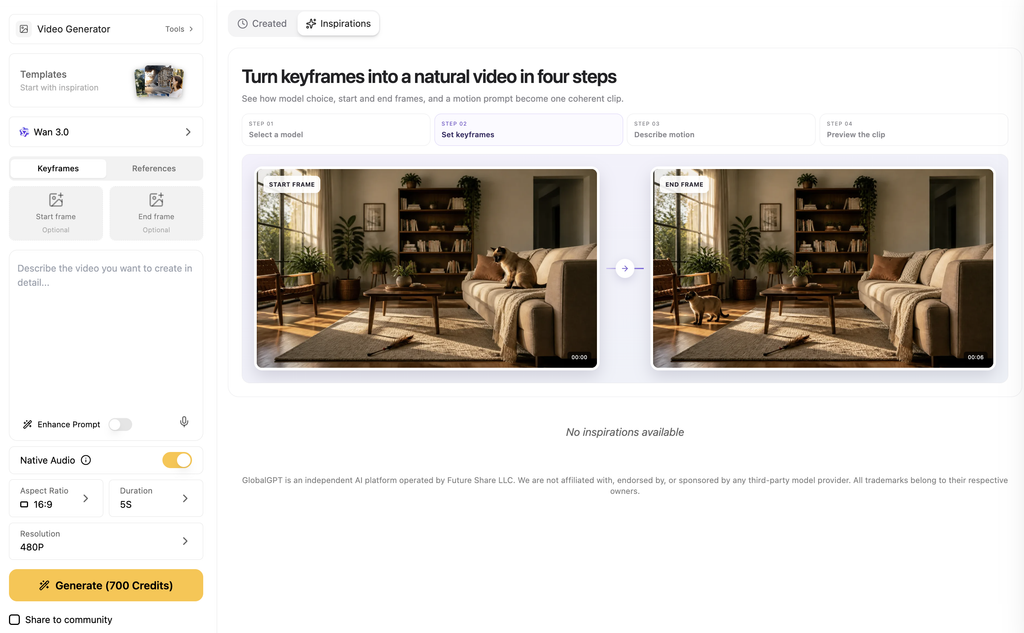
Die wichtigste Neuerung ist die native Erstellung von 30-Sekunden-Videos. Wan gibt an, dass sein Bild-zu-Video-Tool Szenen automatisch aufteilen und dabei ein Video von bis zu 30 Sekunden Länge erstellen kann, wobei Bild und Ton synchronisiert sind. Die Omni-Creation-Funktion akzeptiert bis zu 20 Referenzdateien, darunter Dokumente und Webseiten, und bietet Kreativen so mehr Material zur Definition eines Themas, einer Kulisse oder einer visuellen Ausrichtung.
Was ist Kling 3.0?
Kling Video 3.0 ist die neueste Videomodellreihe von Kling AI. Die Offizielle Kling-Video-3.0-Funktionsseite beschreibt es als einen Generator für filmreife Videos, der speziell für Videos mit Sprachausgabe, nativem Ton, Storytelling mit mehreren Einstellungen und konsistenten Charakteren entwickelt wurde.
Laut Kling kann Video 3.0 in einer Generierungsrunde durchgehende Sequenzen von bis zu 15 Sekunden Länge erzeugen. In den offiziellen Unterlagen werden zudem die Lippensynchronisation auf Charakterebene, mehrsprachige Sprache, dynamische Kamerabewegungen, native Textdarstellung sowie die Identitätsstabilität in komplexeren Szenen hervorgehoben.
Wan 3.0 vs. Kling 3.0 auf einen Blick
Die folgende Tabelle enthält ausschließlich Unterschiede, die ohne Beurteilung der Ausgabequalität überprüft werden können. “Keine Angabe” bedeutet, dass die Spezifikation auf den am 10. August 2026 überprüften offiziellen Funktionsseiten nicht eindeutig veröffentlicht wurde; dies bedeutet nicht, dass die Funktion nicht verfügbar ist.
| Feste Spezifikation | Wan 3.0 | Kling Video 3.0 |
|---|---|---|
| Entwickler / Product Owner | Wan, unterstützt von Alibaba Cloud | Kling AI |
| Text zu Video | Ja | Ja |
| Bild-zu-Video | Ja | Ja |
| Angegebene maximale native Dauer | Bis zu 30 Sekunden | Bis zu 15 Sekunden |
| Native Audio | Ja; auf der offiziellen Seite wird das native audiovisuelle Video beschrieben | Ja; auf der offiziellen Seite werden die Original-Tonspur und die Lippensynchronisation hervorgehoben |
| Erzählen in mehreren Einstellungen | Für die Umwandlung von Bildern in Videos wird eine automatische Szenenaufteilung angegeben | Im Vordergrund stehen das Erzählen von Geschichten mit mehreren Einstellungen und die Steuerung des Storyboards |
| Referenzeingänge | Bis zu 20 Referenzobjekte in Omni-Creation | Die Konsistenz von Zeichen und Elementen wird unterstützt; ein entsprechender numerischer Grenzwert wurde nicht angegeben |
| Videobearbeitung | Es wird ausdrücklich auf die befehlsbasierte und die referenzbasierte Bearbeitung hingewiesen | Auf der Seite zu den Funktionen von Video 3.0 nicht eindeutig angegeben |
| Angegebene Bildrate auf der Seite mit der Rezension | Keine Angabe | Keine Angabe |
| Direkt vergleichbare Ausgabeauflösung auf der getesteten Seite | Keine Angabe | Nicht klar genug dargelegt, um einen gleichwertigen Vergleich anzustellen |
| Offizieller Zugang für Verbraucher | Offizielle Website und App von Wan | Offizielle Website und Apps von Kling |
| Offizieller API-Eintrag | API-Eintrag, verlinkt von der offiziellen Website von Wan | API-Eintrag, verlinkt von der offiziellen Website von Kling |
Der Unterschied zwischen 30 und 15 Sekunden ist von Bedeutung, wenn eine Generation eine vollständige Sequenz transportieren muss. Das macht Wan jedoch nicht automatisch besser: Ein längerer Clip ist nur dann sinnvoll, wenn Bewegung, Identität, Ton und Handlung bis in die letzten Sekunden hinein stimmig bleiben.
Maximale native Dauer
Offiziell angegebene Höchstleistung pro nativer Generation. Die Laufzeit allein sagt nichts über die Ausgabequalität aus.
Wan 3.0 vs. Kling 3.0: Tests mit identischen Eingabeaufforderungen
TESTS ABGESCHLOSSEN Wir haben über denselben kontrollierten Weg übereinstimmende Wan 3.0- und Kling 3.0-Ausgaben generiert. Die vier Kurztests verwendeten identische Einstellungen: 5 Sekunden, 720p, 16:9. Der Story-Test verwendete denselben 15-sekündigen „Pottery“-Impuls mit aktiviertem Original-Ton. Jede Aufgabe wurde einmal übermittelt; abgelehnte oder unvollständige Ausgaben wurden nicht stillschweigend neu generiert.
Wir haben die Abdeckung der Prompts, die thematische Konsistenz, die Reihenfolge der Ereignisse, das Kameraverhalten und sichtbare Artefakte in den vollständigen Clips und den Ein-Sekunden-Kontaktabzügen verglichen. Das Vorhandensein der Tonspur wurde technisch überprüft. Für die Genauigkeit der gesprochenen Worte und die Feinabstimmung der Lippensynchronisation wird kein Sieger ermittelt, da hierfür ein separates, kontrolliertes Hörpanel erforderlich wäre.
Filmische Text-zu-Video-Umwandlung
Schwerpunkt der Aufgabe: Roter Mantel, regennasse Neon-Straße, Kamerafahrt, Drehung zur Kamera, hinter der Kamera fährt eine Straßenbahn vorbei.
- Wan: folgt der Frau, zeigt die Drehung und führt die Straßenbahn durch den Hintergrund.
- Kling: Eine reizvolle Beleuchtung bei Regen, doch das Motiv bleibt vergleichsweise statisch.
Gewinner: Wan 3.0 – bessere Kameraqualität und Action-Aufnahmen.
Konsistenz der Figuren ohne Referenzbild
Schwerpunkt der Aufgabe: Derselbe ältere Uhrmacher, mit silberner Brille, grüner Weste und einer Narbe über der linken Augenbraue, während er durch den Raum geht.
- Beides sorgt dafür, dass das Alter, die Kleidung und die Identität des Uhrmachers erkennbar bleiben.
- Bei keinem der beiden ist die gesuchte Narbe an der Augenbraue eindeutig zu erkennen.
Gewinner: Gleichstand – stabile Hauptidentität, dasselbe fehlende, entscheidende Detail.
Komplexe Bewegungs- und Kamerasteuerung
Schwerpunkt der Aufgabe: Ein Radfahrer fährt durch einen Markt; die Kamera folgt ihm aus niedriger Perspektive, schwenkt seitlich in einem Bogen und hebt sich über ihn hinweg; Menschen bewegen sich, Markisen reagieren, Orangen rollen geordnet dahin.
- Wan: zeigt die deutlichste Vorwärtsbewegung und geht in eine Draufsicht über.
- Kling: zeigt den gekippten Korb und die rollenden Orangen deutlicher.
- Keiner von beiden führt alle Ereignisse fehlerfrei in der gewünschten Reihenfolge aus.
Gewinner: Wan 3.0 für die Kamerasteuerung; Kling gewinnt den Preis für die Details zur Orange-Physik.
Dialoge und Original-Tonspur
Schwerpunkt der Aufgabe: Zwei Sprecher tauschen in einem Zug zwei identische Sätze aus, mit unterschiedlichen Stimmen, synchroner Lippenbewegung, Radgeräuschen im Hintergrund und ohne Musik.
- Beide lieferten Dateien mit einer Länge von 5,04 Sekunden und 44,1 kHz Stereo-AAC-Audio.
- Die bloße Erfassung der Tonspur reicht nicht aus, um den genauen Wortlaut, die korrekte Zuordnung der Sprecher oder eine präzise Lippensynchronisation nachzuweisen.
Gewinner: Wird erst nach dem kontrollierten Hören ermittelt.
Die Geschichte der „Matched Three-Beat“-Keramik
Schwerpunkt der Aufgabe: Derselbe Kunsthandwerker formt eine hohe blaue Vase, malt eine schmale weiße Welle darauf und stellt sie dann neben eine grüne Pflanze.
- Sowohl die vollständige Formgebung als auch die Lackierung und die endgültige Präsentation.
- Wan: behält einen einheitlichen „Blue-Vase“-Workflow bei, wandelt jedoch die gewünschte schmale Welle in ein breiteres dekoratives Muster um.
- Kling: erzeugt eine deutlich erkennbare weiße Welle und behält die rostfarbene Schürze bei.
Gewinner: Kling 3.0 – bessere Einhaltung der wörtlichen Eingabeaufforderung.
Native 30-Sekunden-Geschichten
Schwerpunkt der Aufgabe: Ein Leuchtturmwärter rettet einen Seevogel, verbindet dessen Flügel, trotzt einem Sturm und lässt ihn schließlich im goldenen Morgenlicht wieder frei.
- Der Leuchtturmwärter, der Marinemantel, der Seevogel und der Leuchtturm bleiben an allen Schauplätzen unverkennbar.
- Die Sequenz zeigt die Entdeckung, die Rettung, die Behandlung und die Rückkehr ins Freie.
- Die gewünschte Freilassung des geheilten Vogels im goldenen Morgenlicht ist nicht eindeutig vollzogen.
Fazit: Die nativen 30 Sekunden sind real, aber eine längere Dauer garantiert noch keine vollständige Einhaltung der Vorgaben.
Offenlegung abgelehnter Durchläufe: Unsere erste „Wan“-Aufgabe zum Thema „15-Sekunden-Papierboot“ wurde eingereicht content_rejected ohne Video. Wir haben dies nicht als Qualitätsfehler gewertet. Um einen aussagekräftigen Vergleich zwischen den beiden Modellen zu erhalten, haben wir diese Eingabe durch die oben genannte neutrale Keramik-Eingabe ersetzt und diese neue Eingabe jeweils einmal auf jedem Modell ausgeführt.
Was die offiziellen Spezifikationen nahelegen
- Länge des Videos: Wan veröffentlicht den längeren Maximalwert—30 Sekunden gegenüber 15 Sekunden.
- Referenzsteuerung: Wan gibt eine Obergrenze von 20 Vermögenswerte; Kling veröffentlicht auf der betreffenden Seite keine vergleichbare Zahl.
- Audio: Beide fördern die Erstellung eigener audiovisueller Inhalte; Kling hebt hervor Lippensynchronisation und mehrsprachige Sprache.
- Bearbeitung: Wan führt ausdrücklich auf: Anweisungsbasierte und referenzbasierte Bearbeitung.
- Evidenzgrenze: Dies sind offizielle Produktangaben, keine unabhängigen Qualitätsbewertungen.
Sollten Sie sich für Wan 3.0 oder Kling 3.0 entscheiden?
Beginnen Sie mit Wan 3.0, wenn Sie Folgendes benötigen:
- Mehr als 15 Sekunden innerhalb einer Generation
- Zahlreiche Referenzobjekte
- Ausführlich dokumentierte Videobearbeitung
Beginnen Sie mit Kling 3.0, wenn Sie Folgendes benötigen:
- Dialog mit mehreren Charakteren
- Lippensynchronisation und mehrsprachige Sprache
- Eine kompakte Mehrfachaufnahme-Sequenz
Wenn Ihre Arbeit auf exakten Logos, Strichzeichnungen, Mustern oder Details der künstlerischen Gestaltung basiert, ist das bessere Ergebnis von Kling im Keramiktest von Bedeutung. Wenn Sie eine anspruchsvolle Kameraführung oder eine einzelne Generation mit einer Dauer von mehr als 15 Sekunden benötigen, ist Wan auf der Grundlage dieses Testsatzes der geeignetere Ausgangspunkt.
Endgültiges Urteil
Häufig gestellte Fragen
Ist Wan 3.0 besser als Kling 3.0?
Wan 3.0 ging in unserem kontrollierten Test durch knappen Vorsprung als Gesamtsieger hervor, da es filmische Kameraanweisungen und komplexe Kamerabewegungen besser umsetzte und gleichzeitig einen nativen 30-Sekunden-Clip erzeugte. Kling 3.0 ging bei der entsprechenden 15-Sekunden-Geschichte über Töpfern wörtlicher vor, sodass es für präzise visuelle Anweisungen möglicherweise vorzuziehen ist.
Was ist der Hauptunterschied zwischen Wan 3.0 und Kling 3.0?
Der deutlichste feststehende Unterschied ist die maximale native Dauer: Wan gibt bis zu 30 Sekunden an, während Kling Video 3.0 bis zu 15 Sekunden pro fortlaufender Generierung angibt.
Welches Modell eignet sich besser für die Umwandlung von Bildern in Videos?
Beide unterstützen offiziell die Umwandlung von Bildern in Videos. Wan gibt an, dass sein Tool zur Umwandlung von Bildern in Videos mit automatischer Szenenaufteilung Videos von bis zu 30 Sekunden Länge erstellen kann. Welches Modell ein bestimmtes Bild besser wiedergibt, lässt sich nicht feststellen, ohne in beiden Fällen dasselbe Ausgangsbild zu verwenden.
Welches Modell weist eine bessere Charakterkonsistenz auf?
Bei unserem Test ohne Referenzbild erzielten sie ein Unentschieden. Beide Modelle konnten den älteren Uhrmacher über die gesamte Szene hinweg erkennbar darstellen, doch keines gab die geforderte Narbe über seiner linken Augenbraue eindeutig wieder. Die Leistung bei Referenzbildern kann abweichen und wurde in diesem Test nicht gemessen.
Unterstützen Do Wan 3.0 und Kling 3.0 natives Audio?
Ja. Auf beiden offiziellen Produktseiten wird die native Erzeugung von Bild- und Tonmaterial beschrieben. Bei Kling werden insbesondere die Lippensynchronisation auf Charakter-Ebene und die mehrsprachige Sprachausgabe hervorgehoben, während bei Wan der Schwerpunkt auf der synchronisierten Bild- und Tonausgabe sowie dem Sounddesign liegt.
Wie lang dürfen Videos im Format „Wan 3.0“ und „Kling 3.0“ sein?
Auf der offiziellen Website von Wan wird eine native Erzeugung von bis zu 30 Sekunden beworben. Auf der offiziellen „Video 3.0“-Seite von Kling wird eine kontinuierliche Ausgabe von bis zu 15 Sekunden in einem Erzeugungsvorgang beworben.
Dürfen Videos zu „Can Wan 3.0“ und „Kling 3.0“ kommerziell genutzt werden?
Die Rechte zur kommerziellen Nutzung hängen vom aktuellen Tarif und den Bedingungen für den von Ihnen genutzten Zugangsweg ab. Lesen Sie die aktuellen Nutzungsbedingungen der jeweiligen Anbieter sorgfältig durch, bevor Sie bezahlte Kundenaufträge oder Werbematerialien veröffentlichen.