Claude Opus 4.7 Price: 2026 API Rates & Subscription

Claude Opus 4.7 officially retails at $20/month for the Claude Pro plan, while API rates hold steady at $5.00 per million input tokens and $25.00 per million output tokens. However, despite these stable sticker prices, users face a critical technical hurdle: the new 2026 tokenizer produces up to 35% more tokens for identical raw text compared to version 4.6. This "tokenizer inflation," coupled with the high latency of Adaptive Thinking reasoning loops, means your effective project expenses and time-to-market can swell unexpectedly, rendering traditional AI budgeting and performance forecasts obsolete.
For professionals navigating these unpredictable billing hurdles and the high latency of adaptive reasoning, budgeting for enterprise-grade AI has never been more complex. GlobalGPT solves this volatility by offering a simplified, high-limit environment to access Claude 4.7, ChatGPT 5.4, Gemini 3.1, and Perplexity through a single dashboard. Starting at just $5.8 with our Basic Plan, you can harness the world's most powerful reasoning models without worrying about complex API metering, region blocks, or credit-tier restrictions.
Beyond solving your LLM logic needs, GlobalGPT is designed to cover your complete creative workflow from research to final production. Once you’ve used Claude 4.7 to draft your technical specs, you can seamlessly transition to visual creation using Sora 2, Seedance 2.0, Grok Imagine, Veo 3.1, Kling, Midjourney, or Nano Banana 2—all within the same dashboard. This integrated ecosystem ensures that creative professionals can complete an entire multi-modal project, from complex
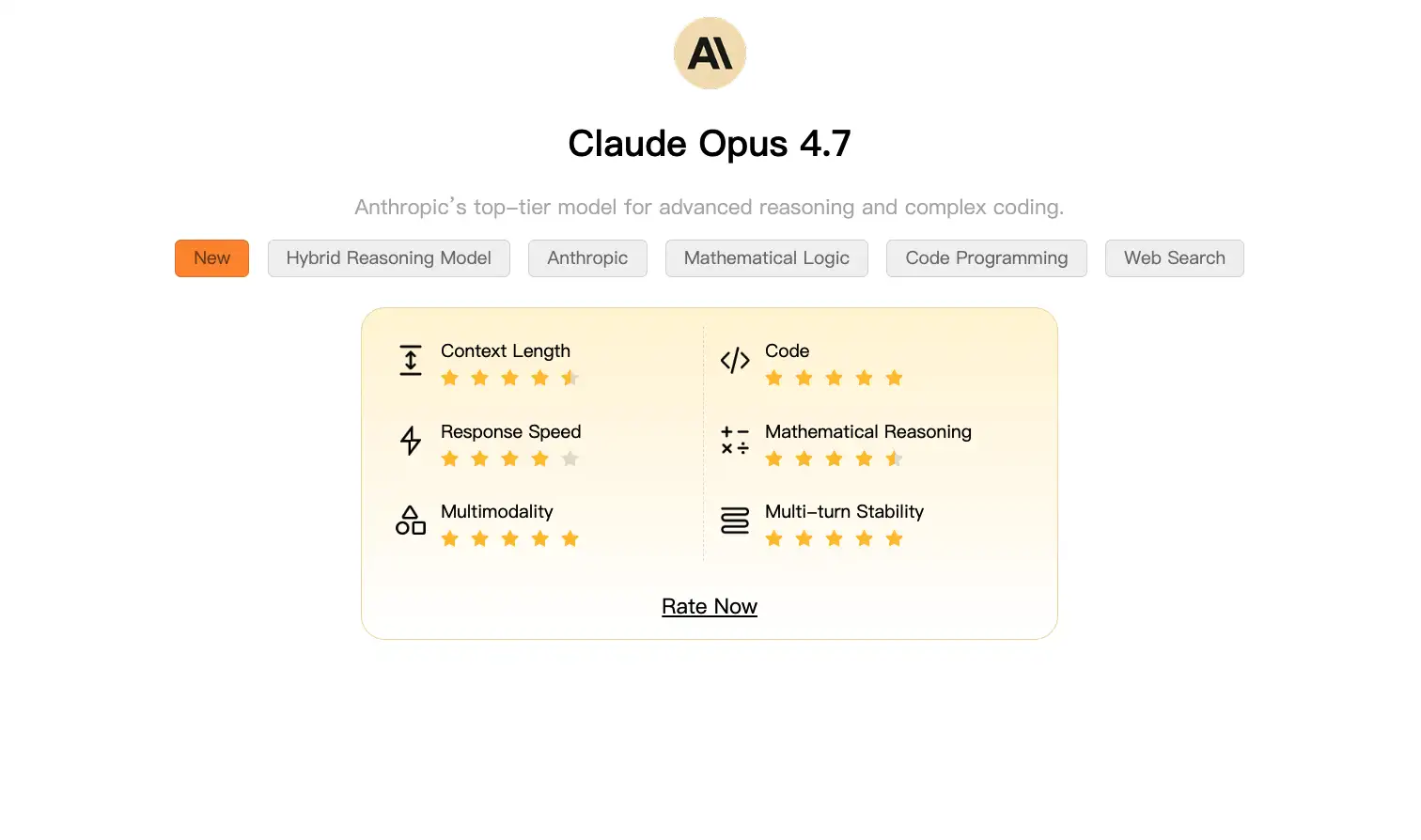
Claude Opus 4.7 Price & New Features: What’s New in the 2026 Milestone Release?
Claude Opus 4.7 marks a significant shift in Anthropic's model architecture, moving from incremental updates to a fully autonomous agentic framework. While the sticker price for API usage remains at $5/MTok (Input) and $25/MTok (Output), the underlying mechanics of how tokens are counted and how the model "thinks" have been completely overhauled for the 2026 market.
High-Resolution Vision: The 3.75MP Breakthrough
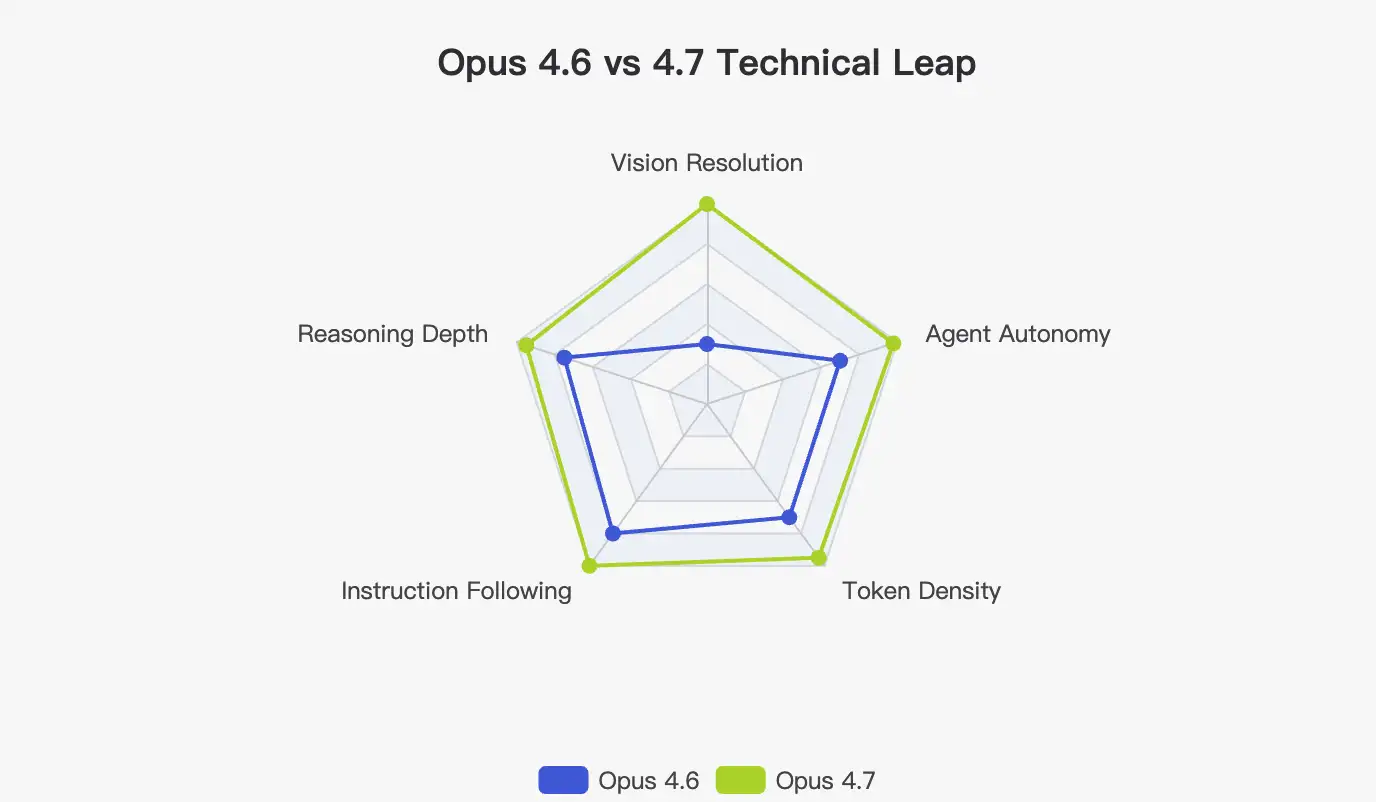
One of the most impactful upgrades in version 4.7 is the introduction of High-Resolution Image Support. Anthropic has increased the maximum resolution limit from 1.15MP to 3.75MP (2576px on the long edge). This isn't just about clearer pictures; it enables a 1:1 coordinate mapping system where the model's spatial reasoning is aligned exactly with actual pixels.
For professionals using Claude for UI/UX auditing, document redlining, or automated screenshot analysis, this removes the need for complex scale-factor math and dramatically reduces errors in "pointing" and "measuring" tasks. However, users should note that high-fidelity images consume significantly more tokens, making downsampling a critical cost-saving skill when extreme detail isn't required.
The New "X-High" Effort Level & Adaptive Thinking
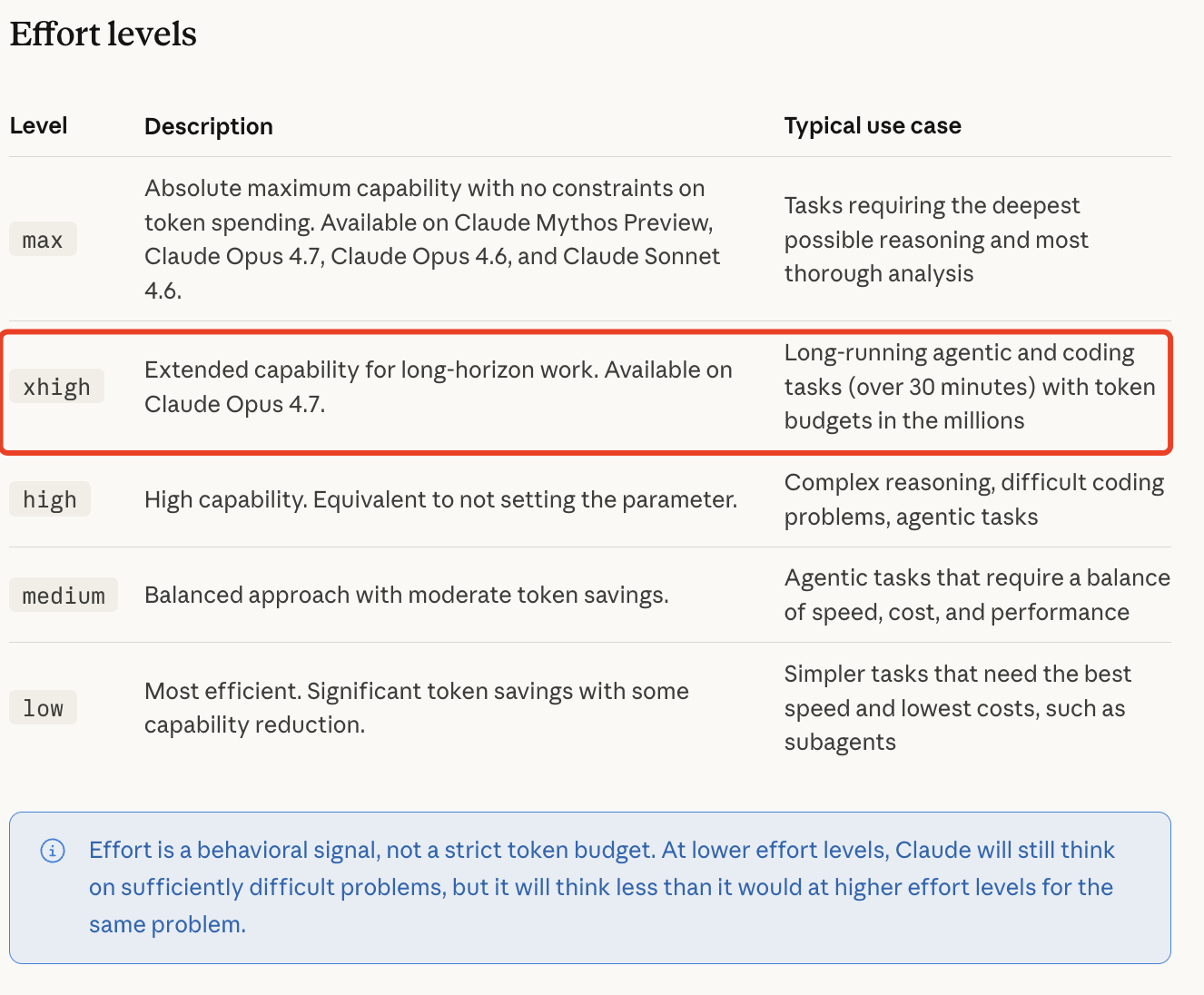
Claude Opus 4.7 officially retires the old manual "Extended Thinking" budgets. In its place, Adaptive Thinking is now the exclusive mode for reasoning tasks. To give users finer control, a new xhigh effort level has been introduced between the standard high and max tiers.
This level is specifically tuned for agentic coding and complex multi-file engineering. By setting the effort to xhigh, the model allocates more internal reasoning cycles to verify its own logic before responding. While this increases output token density, it effectively neutralizes the need for multiple "retry" prompts, saving you significant time and manual debugging effort.
Critical Breaking Changes: Sampling & Thinking Blocks
Developers migrating from 4.6 to 4.7 must be aware of several breaking API changes:
Removal of Sampling Parameters: Setting manual values for
temperature,top_p, ortop_kwill now return a 400 error. Version 4.7 relies entirely on internal calibration to maintain its more direct and opinionated tone.Omitted Thinking Content: By default, thinking blocks are now omitted from the response stream to improve latency. If your workflow requires seeing the "Chain of Thought," you must explicitly opt-in by setting
display: "summarized".Tokenizer Inflation: The new 2026 tokenizer produces 1x to 1.35x more tokens for the same raw text. This means your effective project costs could rise by 35% even though the rates on the pricing page haven't changed.
Claude Opus 4.7 Subscription Plans: How Much Does Claude Pro, Team, and Max Cost?
As of April 2026, the Claude Free Tier serves as a gateway, but it is strictly limited to the Sonnet 4.6 model. Accessing the flagship Claude Opus 4.7 requires a paid subscription. For individual power users, the Claude Pro Plan remains priced at $20/month, offering 5x more usage than the free tier and priority access during peak GPU demand.
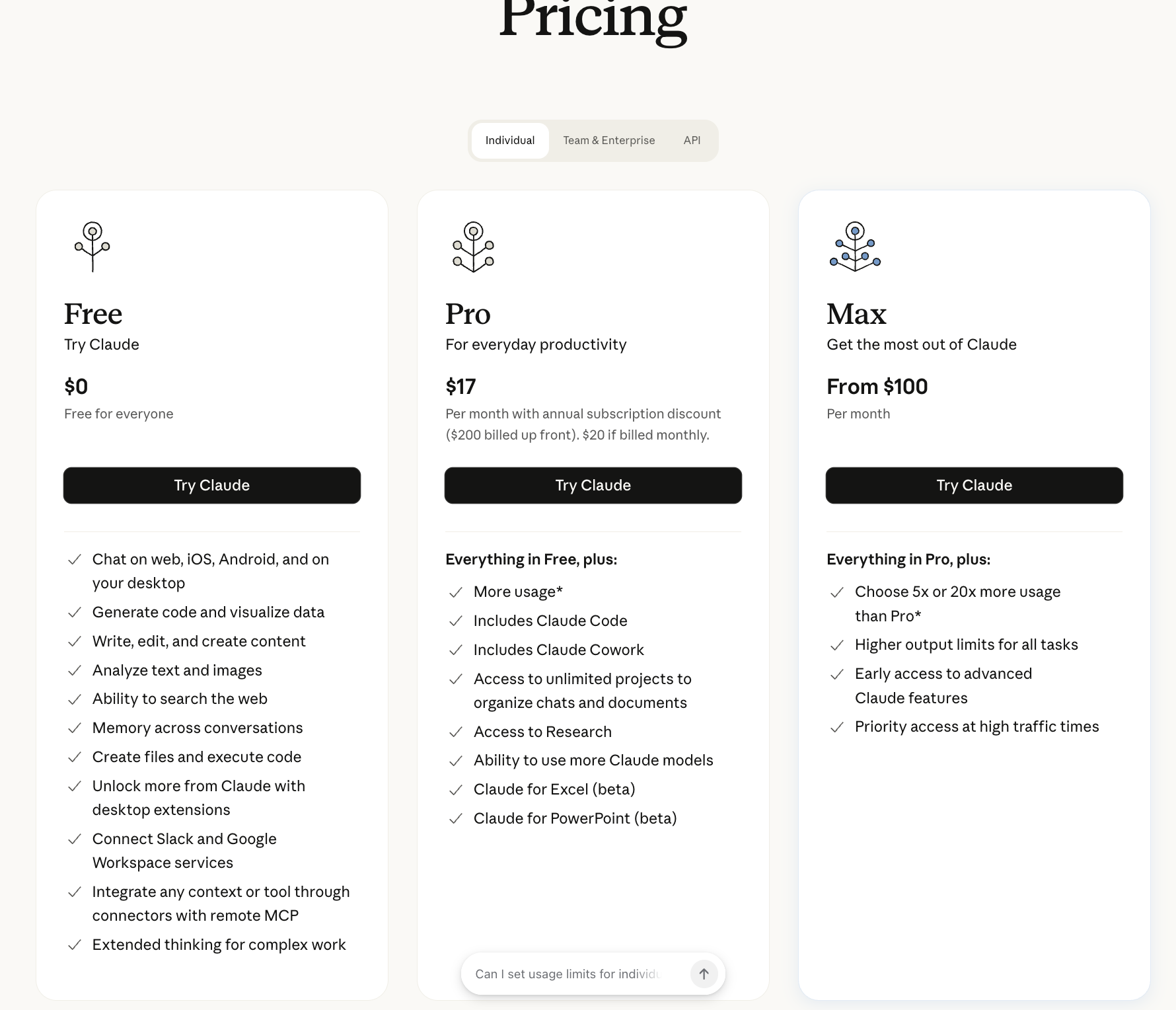
For extreme high-volume users, Anthropic has launched the Claude Max Plan. This tier is designed for developers who run complex, long-running agentic tasks directly in the browser interface. It includes higher rate limits and early access to "Project Glasswing" security features. Organizational users can opt for the Claude Team ($30/user/mo) or Enterprise tiers, which provide administrative controls and SOC 2 Type II compliance.
Claude Opus 4.7 API Pricing: Decoding the $5/$25 Rate and the 35% Tokenizer Inflation
The official API rate for Claude Opus 4.7 is $5.00 per million (MTok) input tokens and $25.00 per million output tokens. While these rates match the previous version, the true cost story lies in the 2026 Tokenizer Update. Testing across massive codebases and non-English datasets reveals a 35% tokenizer inflation.
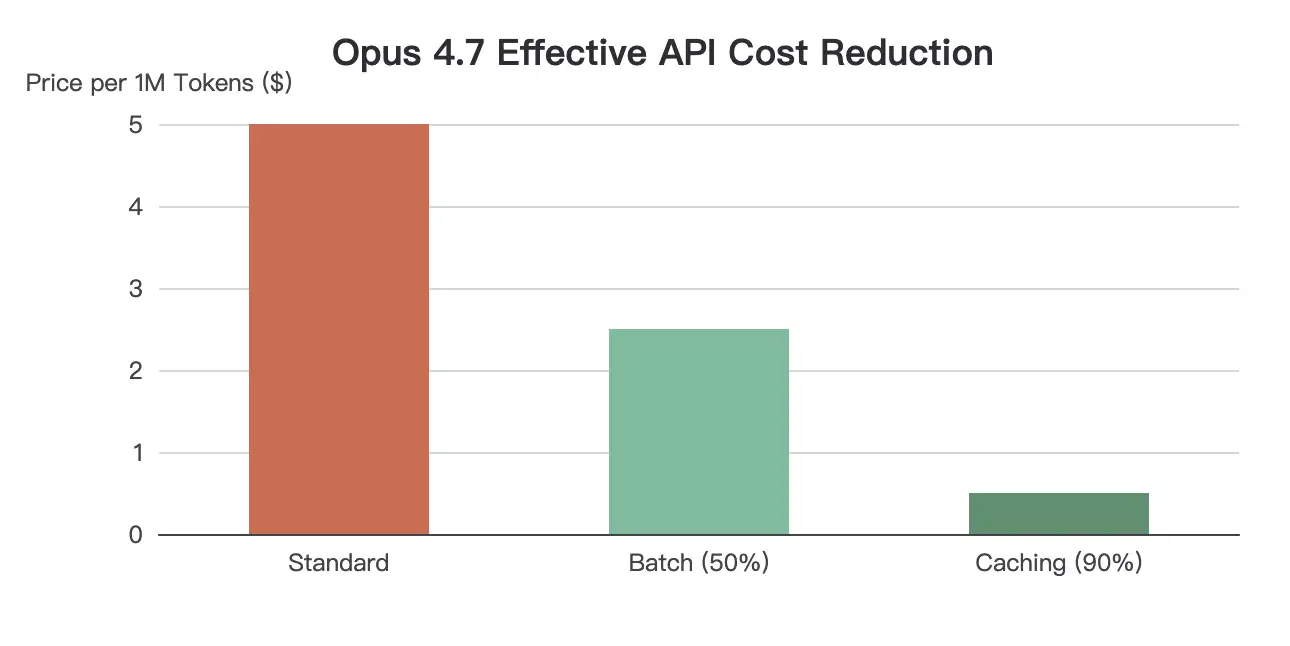
This means that a piece of text that consumed 1,000 tokens in Opus 4.6 may now consume 1,350 tokens in Opus 4.7. Consequently, your effective bill per request could increase by up to 35% even though the "sticker price" remains the same. To mitigate this, developers should leverage Prompt Caching, which offers 90% discounts for cache hits (priced at just $0.50/MTok), making it the most critical tool for managing long-context engineering budgets.
Claude 4.7 Plan vs. API: Which Delivery Method Offers the Best Performance & Value?
Choosing between a Claude Pro subscription and the Claude API depends on your technical requirements. Subscription plans offer a superior UI experience, including Artifacts for live code rendering and integrated Web Search. These features are optimized for creative brainstorming and "Vibe Coding" where instant visual feedback is necessary.
However, the API provides granular control over the model's performance via the Adaptive Thinking effort parameter. API users can set effort levels from Low (for snappy, cost-effective tasks) to X-High (for deep reasoning). While the API allows for infinite scalability, users must manage their own token credits. If your monthly usage involves sending over 200 messages per day, the fixed $20 Pro plan often becomes significantly more economical than pay-as-you-go API billing.
Escape the Claude 4.7 "Plan vs. API" Trap: Why GlobalGPT is the Definitive Middle Ground
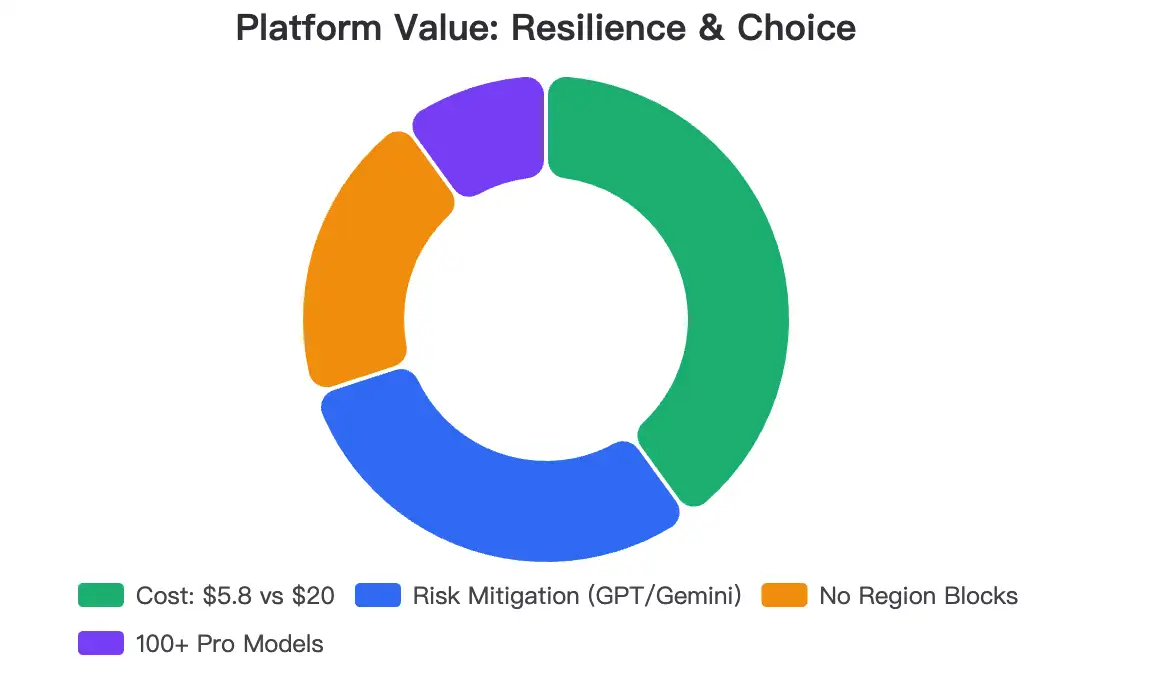
If you find yourself frustrated by the restrictive daily message caps of the official $20 Pro plan, yet remain wary of the volatile 35% "Tokenizer inflation" that makes direct API billing a financial gamble, GlobalGPT offers a high-limit, fixed-cost sanctuary starting at just $5.8/month.
Beyond cost stability, GlobalGPT eliminates the significant accessibility hurdles inherent in official platforms; we provide a borderless experience with no regional restrictions and no requirement for complex international credit cards.Our platform is not merely a gateway for Claude 4.7; it is a meticulously engineered creative ecosystem designed to transition your projects from initial "Ideation & Research" to high-end "Visual Content Creation" and "Final Video Production" within a single, unified dashboard.
Industry-Leading LLMs: Your Intelligence Hub
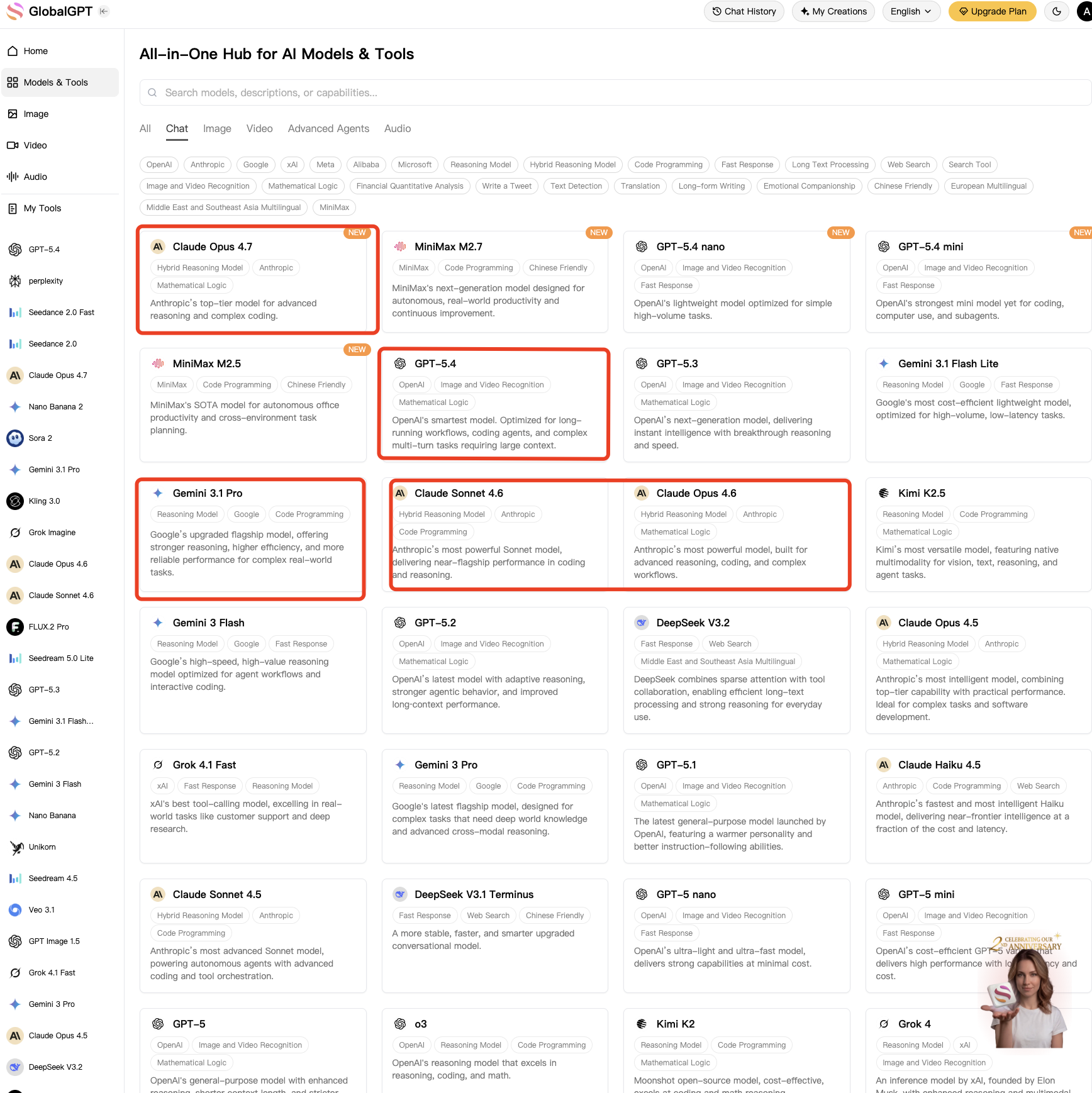
In addition to the world-class logic of Claude 4.7, GlobalGPT provides instant access to the full 2026 premier LLM lineup. This allows you to cross-reference results and choose the best tool for every sub-task:
ChatGPT 5.4: The ultimate partner for creative brainstorming and multi-modal dialogue.
Gemini 3.1 Pro: Optimized for massive data retrieval and long-context analysis.
Perplexity: Integrated real-time search for grounding your projects in the latest market facts.
Elite Image & Video Generation: From Specs to Production
For professionals looking to bridge the gap between text and visual media, the GlobalGPT Pro Plan ($10.8) is the mandatory standard. It unlocks a powerhouse of visual AI that covers the complete production cycle:
Pro Image Generation: Use Nano Banana 2, Midjourney, or Flux to transform Claude-generated technical specs into high-fidelity UI designs or marketing assets.

Cinematic Video AI: Take your workflow to the finish line with Sora 2, Seedance 2.0, Grok Imagine, Veo 3.1, Kling, or Wan. Produce realistic video sequences with synchronized audio and physically accurate movement—all within the same dashboard.

Resilience and Choice: The "No-Lock-In" Advantage
The primary advantage of GlobalGPT is multi-model redundancy. Relying on a single official site carries the risk of regional outages, account blocks, or performance limits. GlobalGPT serves as your productivity insurance: if one model experiences downtime, you can instantly pivot to another flagship model without losing a second of progress. This ensures your professional workflow remains uninterrupted and your costs remain fixed and predictable.
Technical Transparency & Boundaries
To maintain extreme cost-efficiency and multi-model stability, Claude 4.7 on GlobalGPT is optimized for professional conversational use and iterative reasoning. Please note that our platform provides a premium web interface for direct interaction; it does not support external API key generation or third-party agentic automation tools for this specific model. For users seeking an all-in-one workspace to research, draft, and produce high-end content, GlobalGPT is the most resilient gateway in 2026.
Claude Opus 4.7 Benchmarks: How Does 4.7 Rank Against GPT-5.4 and Gemini 3.1 Pro?
In the current 2026 Frontier Model Landscape, Claude Opus 4.7 has reclaimed its position as the industry benchmark for Agentic Autonomy and technical precision. The model's superiority is most evident in high-stakes environments where logical consistency and multi-step execution are paramount.
The New Standard in Autonomous Coding
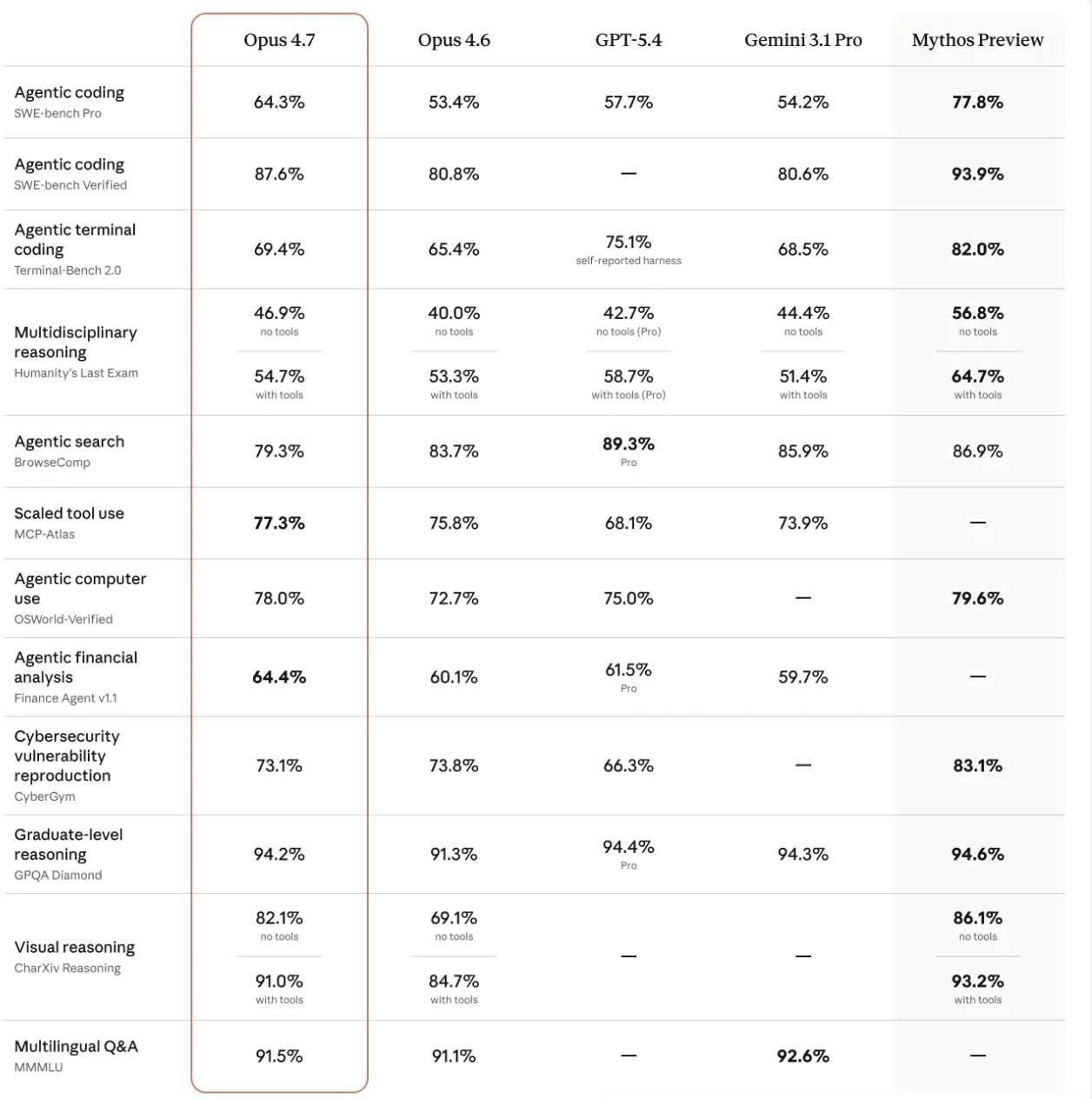
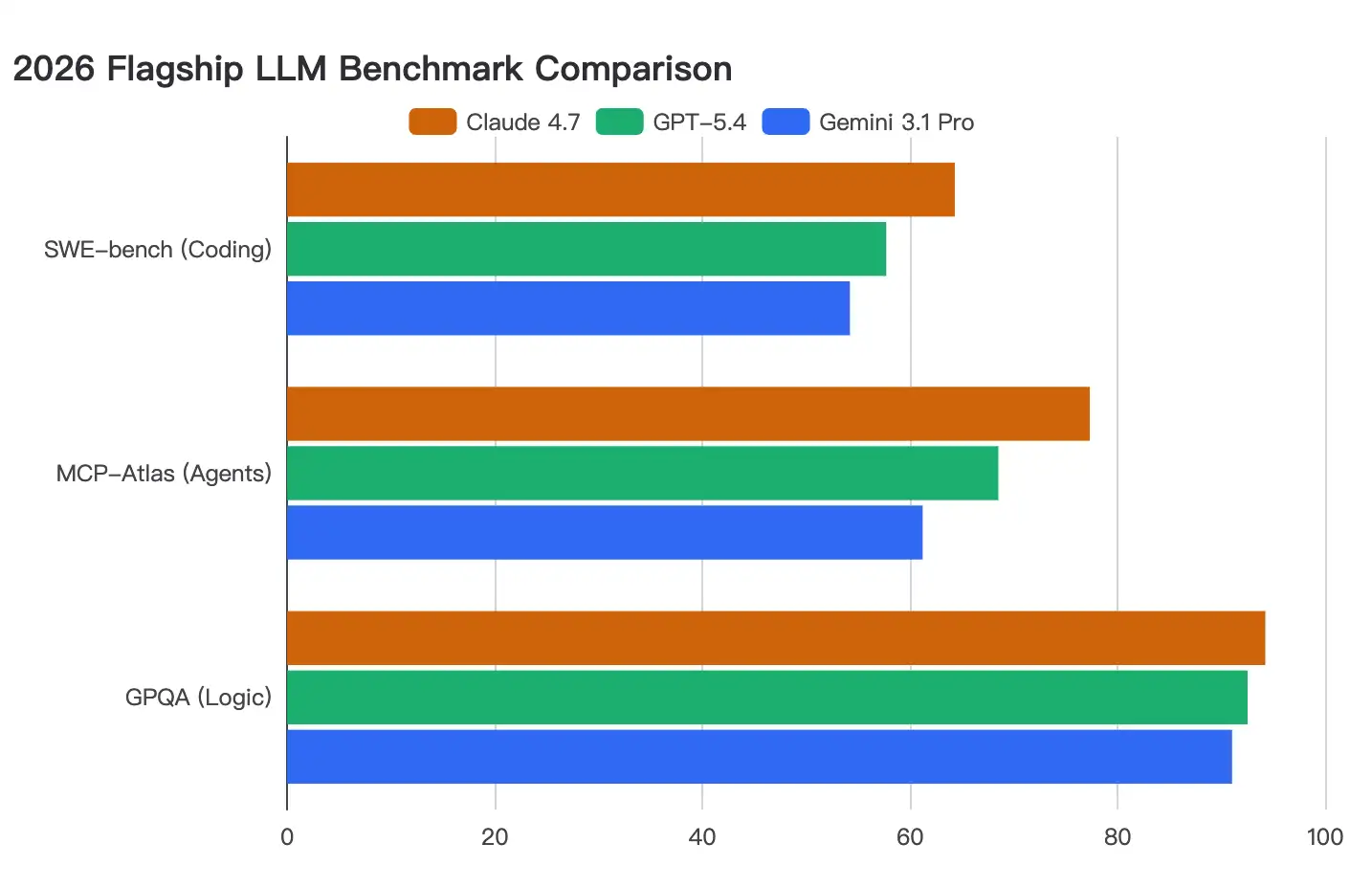
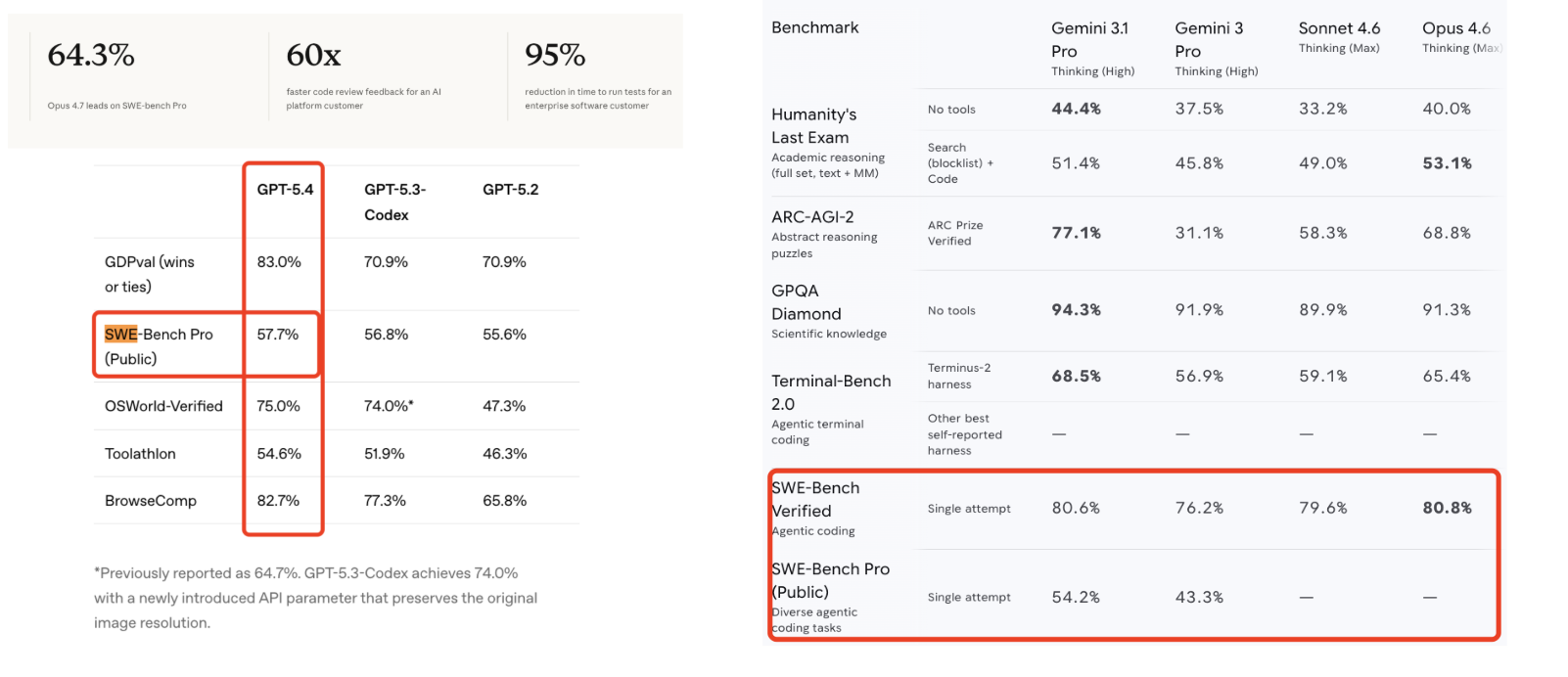
Claude Opus 4.7 currently dominates the autonomous coding SWE-bench Pro leaderboard with a 64.3% success rate, a massive leap from the 53.4% achieved by version 4.6. In comparison, OpenAI GPT-5.4 (57.7%) and Gemini 3.1 Pro (54.2%) trail significantly. This 11% generational gain represents a shift from "simple bug fixing" to "complete repository management." Users report that Opus 4.7 can independently handle multi-file refactoring and dependency resolution with a level of rigor that matches human senior engineers, a feat its competitors still struggle to replicate without constant supervision.
Agentic Intelligence & Tool Use
Beyond raw coding, Opus 4.7 has set a new record on MCP-Atlas, the definitive benchmark for agentic tool use, scoring 77.3% (a 14.6% increase over 4.6). This suggests that Claude is not just "smarter" at answering questions, but vastly more efficient at navigating complex software environments, calling APIs, and managing file systems. While GPT-5.4 focuses heavily on seamless multimodal voice interactions, Claude 4.7 is optimized for heavy-duty logical reasoning, maintaining context over its 1M token window with 3x fewer "drift" errors than its rivals.
Pixel-Perfect Vision for Knowledge Work
The vision architecture in Opus 4.7 has undergone a fundamental upgrade. By increasing the pixel budget to 3.75MP (up from 1.15MP), Anthropic has unlocked a 1:1 coordinate mapping system. On the CharXiv Reasoning benchmark (without tools), 4.7 showed a +13.4pp improvement, proving its ability to parse dense financial charts and complex engineering diagrams with surgical accuracy. For professionals analyzing UI design or high-res document scans, this means the difference between a "hallucinated estimate" and a "data-accurate transcription."
Claude Opus 4.7 Value Analysis: Is the Performance Boost Worth the "Hidden" Migration Cost?
When performing a ROI (Return on Investment) analysis, Opus 4.7 presents a compelling case for migration. Early testing from partners like Hex shows that "Low Effort" Opus 4.7 matches the quality of "Medium Effort" Opus 4.6. Because the model is more efficient per thinking cycle, you may actually end up using fewer total tokens to solve the same problem, effectively neutralizing the 35% tokenizer inflation.
The "One-Shot Success" factor is where 4.7 saves the most money. In autonomous agent workflows, every failed attempt requires a new API call and more human oversight time. By increasing the success rate from 53% to 64%, Opus 4.7 slashes the cumulative cost of re-debugging and agentic retries. For businesses where revenue per call exceeds $0.50, the marginal increase in token cost is a negligible price to pay for world-class precision.
People Also Ask: Top Questions About Claude 4.7 Pricing and Benchmarks
Is Claude Opus 4.7 free on the mobile app? No. Opus 4.7 is a premium flagship model. While the Claude app is free to download, using Opus 4.7 requires a Pro, Max, or Team subscription.
Does the new tokenizer affect coding efficiency? Technically, the tokenizer breaks code into more tokens (35% increase), but 4.7's superior logic means it can solve the task in one try, whereas older models might require three attempts.
Can I use prompt caching in the Claude Pro plan? Prompt caching is currently a feature exclusive to the Claude API. However, GlobalGPT users benefit from our platform's backend optimizations which integrate these cost-saving features into your dashboard.
Why is Claude 4.7 better than GPT-5.4 for software engineering? Claude 4.7 currently holds a higher score on SWE-bench Pro (64.3% vs 57.7%), demonstrating a superior ability to understand entire repo structures and perform self-correction.
Final Verdict: When to Upgrade to Claude Opus 4.7 and When to Stay on Sonnet.
If your workflow involves autonomous coding agents, high-resolution vision, or long-horizon reasoning where accuracy is non-negotiable, the upgrade to Claude Opus 4.7 is essential. The efficiency gains in agentic retries and human time saved far outweigh the 35% tokenizer inflation. However, for standard text classification or simple content generation, Claude Sonnet 4.6 remains the most cost-effective default.