8 generazioni V9 · agosto 2026
Brani veloci e completi. Controllo della durata carente.
La nostra recensione di Mureka AI ha evidenziato un generatore musicale caratterizzato da una rapida produzione di brani completi, prestazioni tecniche costanti e un grave problema di controllo della durata. Tutte e otto le nuove attività di Mureka V9 sono state completate con successo nell’ambiente di test e hanno restituito file MP3 stereo a 44,1 kHz. La generazione più breve è terminata in 57,62 secondi. Tuttavia, tutte e sei le richieste che prevedevano una durata di 90 secondi hanno superato il tempo previsto, a volte di oltre due minuti e mezzo.
Il verdetto in breve: Mureka V9 è utile quando si desidera un'interpretazione musicale completa e si può modificare o scegliere tra diverse registrazioni. Non è invece la soluzione ideale quando la durata finale deve corrispondere al prompt. C'è anche un importante aggiornamento di versione: l'endpoint del modello consumer di Mureka ora etichetta V9.5 come modello attuale e predefinito. Le prove pratiche riportate in questa rassegna riguardano V9, non la versione 9.5.
Questa analisi combina otto generazioni V9 appena registrate con tre linee di riferimento di ascolto precedenti. Il nuovo insieme di dati consente di trarre conclusioni oggettive riguardo alla durata dell’output, al tempo di generazione, al formato del file, al volume, al livello di picco, alla presentazione stereo e alla ripetibilità. La revisione umana relativa all’accuratezza dei testi, alla pronuncia del cinese, all’ordine delle sezioni e alla dispersione vocale è ancora in corso per questi otto file; pertanto, tali valutazioni non vengono presentate come risultati definitivi.
Mureka V9.5 è ora la versione più recente, ma questi test musicali utilizzano la versione V9
All'11 agosto 2026, Mureka’s risposta ufficiale relativa al modello di consumo identifica mureka-9.5 in quanto entrambi modello_attuale e modello predefinito. La stessa risposta riporta ancora mureka-9 come modello disponibile. Dal punto di vista degli sviluppatori, Mureka promuove la versione V9.5 come “early access” con lo slogan “Più naturale · Più espressivo · Più fedele al tuo prompt”.”
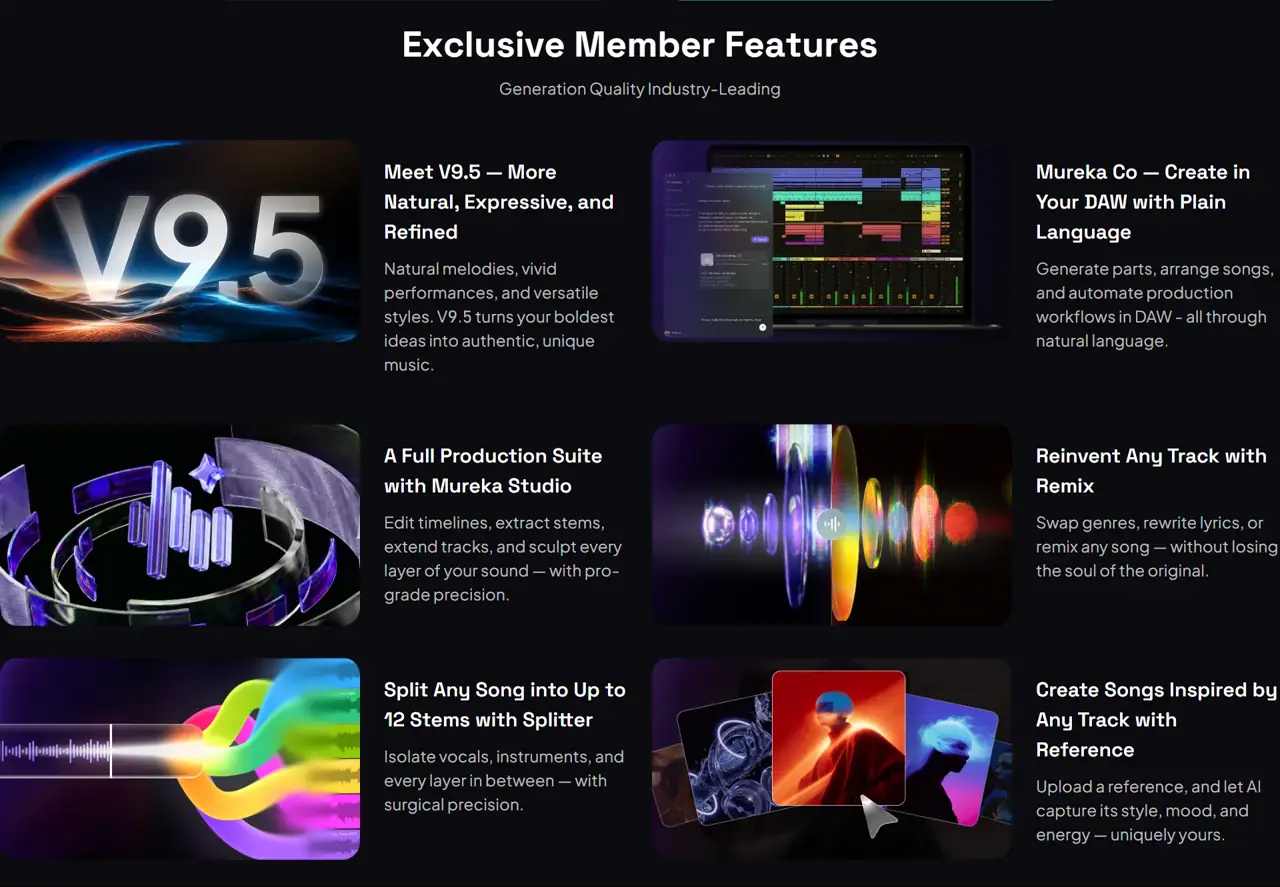
Questa distinzione è importante. Il presente articolo non si limita a rinominare silenziosamente i risultati del V9 come risultati del V9.5. Le otto nuove prove hanno utilizzato i percorsi di prova mureka-v9-canzone e mureka-v9-bgm, e anche le tre linee di riferimento per l'ascolto hanno utilizzato V9. Considerate questi risultati come una prova dell'affidabilità di V9 e come un utile punto di riferimento per valutare se la versione V9.5 risolva gli stessi punti deboli.
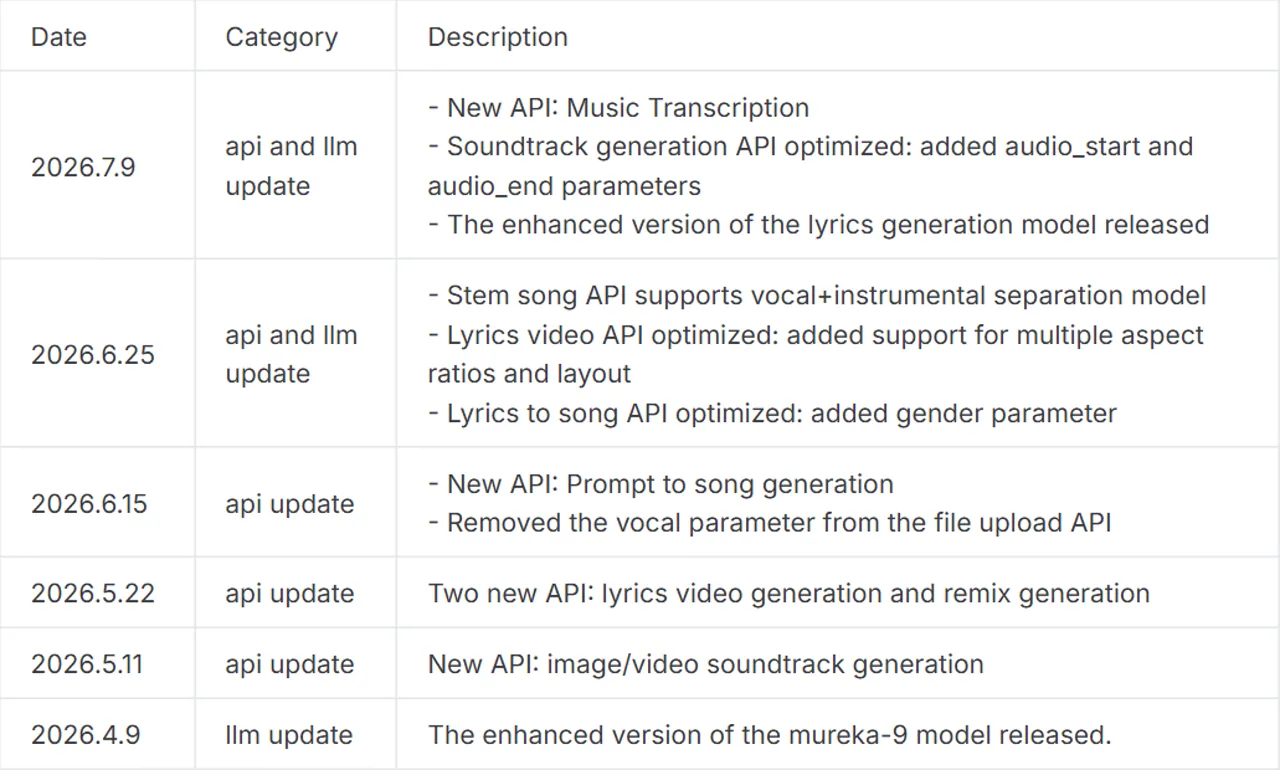
Nel log delle modifiche dell'API pubblica di Mureka non è ancora stata aggiunta una riga relativa alla versione V9.5. L'ultima voce relativa a un modello con nome rimane quella del versione migliorata di `mureka-9`, datata 9 aprile 2026. La risposta relativa al modello consumer e il banner di accesso anticipato all'API rappresentano quindi le fonti più recenti riguardo alla disponibilità della versione 9.5, mentre il changelog rimane la fonte datata più chiara per l'aggiornamento alla versione 9 qui testato.
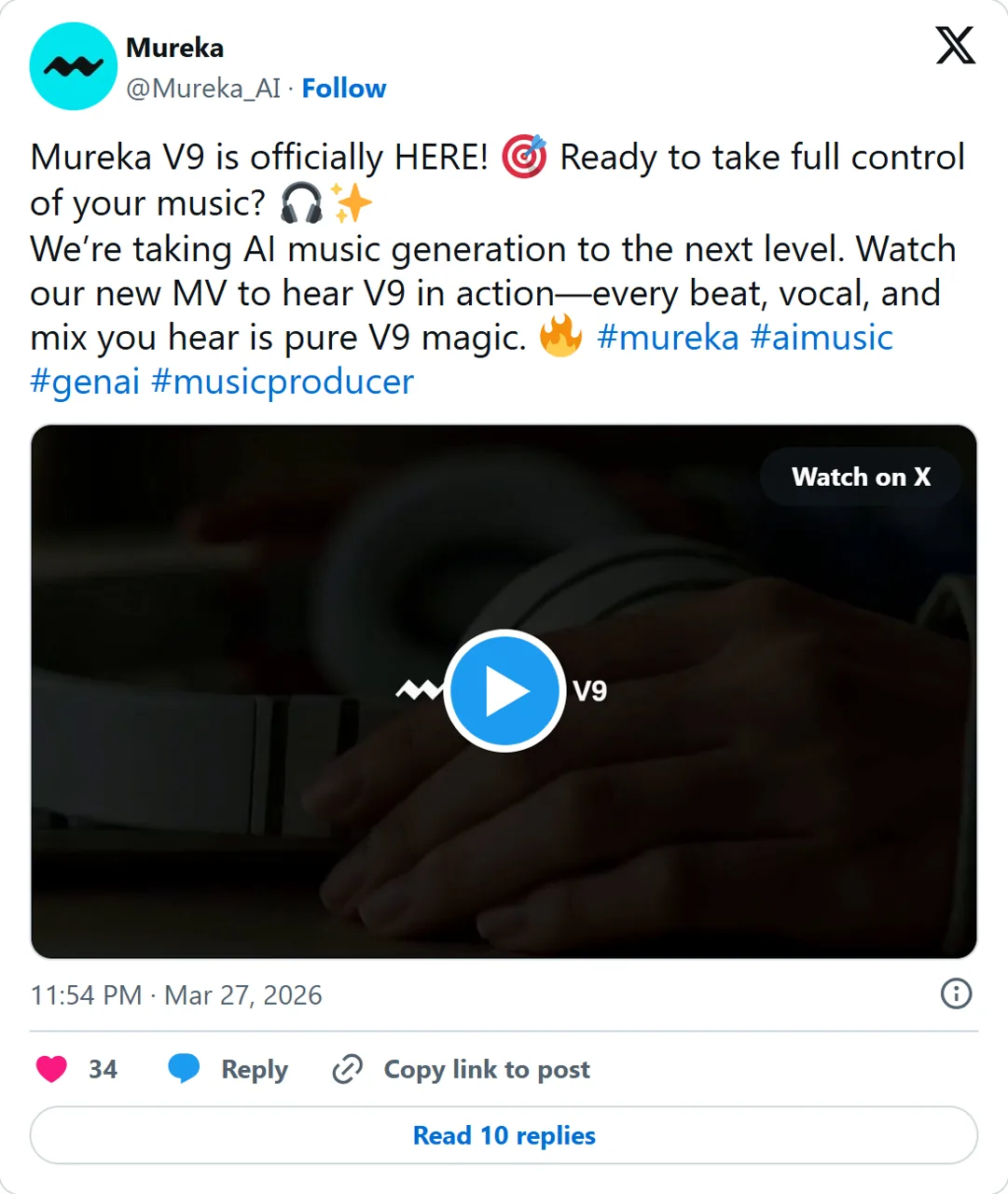
Mureka ha annunciato la versione V9 tramite il suo post ufficiale sul lancio del 27 marzo 2026. Tale data rappresenta il contesto storico del modello sottoposto a test, non una prova del fatto che il V9 rimanga l'opzione più recente per i consumatori.
Recensione di Mureka AI: giudizio a prima vista
Sì, con un’importante precisazione. Mureka è in grado di trasformare una descrizione dettagliata in una canzone completa o in una traccia di sottofondo in circa un minuto di elaborazione, e i file che abbiamo ottenuto con esito positivo erano tecnicamente coerenti. Ciò che non è riuscito a fare in modo affidabile è stato rispettare la durata richiesta di 90 secondi.
Per un confronto diretto tra le categorie, il nostro precedente ElevenLabs vs Lyria 3 Pro vs Mureka: test musicale ha utilizzato le stesse tre bozze per tutti i modelli. Mureka ha prodotto i risultati più lunghi e stilisticamente più autonomi di quel gruppo, ma ha anche comportato il maggior carico di lavoro in fase di editing.
Che cos’è Mureka AI?
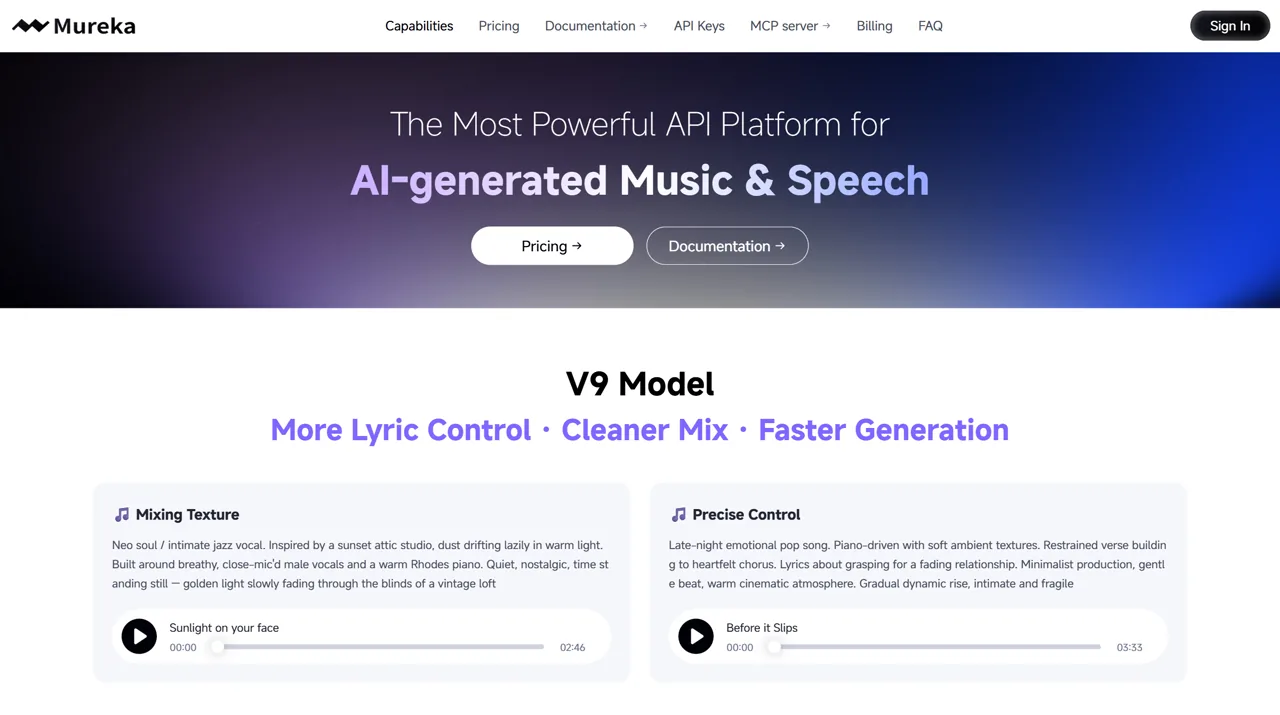
Mureka AI è una piattaforma di generazione musicale basata sull'intelligenza artificiale che offre brani completi, basi strumentali, testi, colonne sonore e strumenti di produzione. Il prodotto destinato al pubblico separa la creazione di brani dai flussi di lavoro relativi alla musica di sottofondo, mentre la piattaforma per sviluppatori mette a disposizione operazioni di generazione, ricerca, remix, estensione, separazione delle tracce, trascrizione e creazione di colonne sonore per applicazioni automatizzate.
Il prodotto offre funzionalità ben più ampie rispetto a una semplice finestra di prompt. I piani a pagamento per i consumatori includono flussi di lavoro con tracce di riferimento, remix, editing, esportazione di video con i testi e diritti commerciali per i brani appena creati. Il piano Premier aggiunge Mureka Studio, la suddivisione in un massimo di 12 tracce, l’esportazione in formato WAV, MIDI e sessioni DAW, flussi di lavoro personalizzati per i cantanti e la clonazione professionale della voce.
Questa ampiezza pone anche un dilemma. Se avete bisogno di un unico prompt che combini dialoghi, atmosfera, effetti sonori e musica, il nostro Test di Seed Audio 1.0: voci, effetti sonori e musica adottano un approccio più uniforme alla generazione delle scene. Mureka è il prodotto più incentrato sulla musica.
Come abbiamo testato Mureka V9
Il nuovo set di prove pratiche è stato eseguito nell'ambiente di test autorizzato GLBGPT/Broly Anywhere Tasks con WaveSpeed come upstream, non tramite l'app ufficiale Mureka per i consumatori e non tramite una chiamata nativa a api.mureka.ai. Abbiamo scalato due vie V9 a vista: mureka-v9-canzone per la musica vocale e mureka-v9-bgm come sottofondo musicale strumentale.
Abbiamo ideato tre attività:
- Tre ripetizioni di una canzone synth-pop contemporanea della durata di 90 secondi con testo fisso.
- Tre ripetizioni di un brief per una colonna sonora cinematografica della durata di 90 secondi, in cui erano vietate le parti vocali e le texture simili alla voce.
- Due ripetizioni di una ballata city-pop con testi in inglese e cinese identici.
Ogni attività completata con successo ha registrato 75.000 unità di quota, cost_usd: 0,045, e margin_usd: 0,105. In otto attività, sono state segnalate 600.000 unità di quota. Questi campi fanno parte del percorso Broly/WaveSpeed; si tratta di non Il prezzo dell'abbonamento per i consumatori di Mureka, Mureka Gold, oppure una fattura emessa dall'API ufficiale di Mureka.
L'ambiente di test ha inizialmente restituito un errore di quota insufficiente prima che avesse inizio la serie di esecuzioni andate a buon fine. Le richieste respinte non hanno generato attività, non hanno restituito dati audio né hanno segnalato alcun addebito per le attività. Una volta ripristinato l'accesso, le otto attività di generazione registrate sono state completate con successo.
Otto nuovi test musicali con Mureka V9
Test 1: ripetibilità delle canzoni con testo
La prima richiesta prevedeva una canzone synth-pop di 90 secondi a 112 BPM in La minore, con una voce solista calda in registro contralto, un testo preciso, un arrangiamento ben definito e un accordo finale pulito. Abbiamo inviato la stessa richiesta tre volte.
| Esegui | Richiesto | Risultato effettivo | Tempo di generazione | Loudness integrato | Picco reale |
|---|---|---|---|---|---|
| P01-R01 | gli anni '90 | 158,83 s | 58,48 s | -15,95 LUFS | -0,97 dBTP |
| P01-R02 | gli anni '90 | 164,75 s | 63,51 s | -15,28 LUFS | -0,94 dBTP |
| P01-R03 | gli anni '90 | 171,79 s | 63,44 s | -15,01 LUFS | -0,84 dBTP |
La durata media del risultato è stata di 165,12 secondi, ovvero 75,12 secondi in più rispetto a quanto richiesto. Il tempo di generazione è risultato molto più stabile rispetto alla durata del risultato, rimanendo entro un intervallo di 5,03 secondi. Ciò è utile per la pianificazione della coda, ma non risolve il problema di editing causato da un brano che è quasi il doppio della durata richiesta.
Riproduci i tre file non elaborati riportati di seguito.
Risultati grezzi del Mureka V9 ottenuti presso la sede di test di Broly Anywhere.
Risultati grezzi del Mureka V9 ottenuti presso la sede di test di Broly Anywhere.
Risultati grezzi del Mureka V9 ottenuti presso la sede di test di Broly Anywhere.
Test 2: ripetibilità della colonna sonora cinematografica senza voce
Il secondo compito richiedeva un brano di 90 secondi di ispirazione fantascientifica, a 82 BPM in re minore. Le indicazioni vietavano l’uso di voci, discorsi, sussurri, cori e suoni simili alla voce umana, specificando invece l’uso di un pianoforte dal suono ovattato, archi gravi, un impulso analogico, percussioni contenute, ottoni in entrata tardiva e un finale risolto.
| Esegui | Richiesto | Risultato effettivo | Ciclo di vita delle attività | Loudness integrato | Picco reale |
|---|---|---|---|---|---|
| P02-R01 | gli anni '90 | 241,31 s | 86,17 s | -14,89 LUFS | -0,18 dBTP |
| P02-R02 | gli anni '90 | 189,47 s | 74,55 s | -13,96 LUFS | -0,33 dBTP |
| P02-R03 | gli anni '90 | 190,79 s | 72,00 s | -15,09 LUFS | -0,70 dBTP |
Il tempo medio di output è stato di 207,19 secondi, ovvero 117,19 secondi in più rispetto al valore target. Il divario di 51,84 secondi tra la ripetizione più breve e quella più lunga rappresenta il segnale di allarme più evidente in termini di ripetibilità nei nuovi dati. Anche P02-R01 ha raggiunto -0,18 dBTP dopo un sovracampionamento quadruplo. Non ha superato lo 0 dBTP, ma ha registrato il margine di picco più ridotto tra tutti gli otto file.
Riproduci i tre file non elaborati riportati di seguito.
Risultati grezzi del Mureka V9 ottenuti presso la sede di test di Broly Anywhere.
Risultati grezzi del Mureka V9 ottenuti presso la sede di test di Broly Anywhere.
Risultati grezzi del Mureka V9 ottenuti presso la sede di test di Broly Anywhere.
Questa analisi oggettiva non ci permette di stabilire se i nuovi file BGM contengano un “ah” simile a una voce, se gli ottoni siano entrati nell’ultimo terzo del brano o se il motivo pianistico sia rimasto riconoscibile. Si tratta di questioni che si risolvono all’ascolto. Se il vostro vero obiettivo è sincronizzare il video con il suono generato, il separato Veo 3.1 Guida alla generazione del suono spiega in quali casi un modello nativo per video possa ridurre il passaggio tra immagine e audio.
Test 3: Testi in inglese e cinese
Il terzo compito prevedeva l'uso di testi esatti in inglese e cinese in una ballata city-pop. Non essendo stata specificata alcuna durata, questo test valuta la variazione piuttosto che l'accuratezza rispetto al testo di riferimento.
| Esegui | Richiesto | Risultato effettivo | Tempo di generazione | Loudness integrato | Picco reale |
|---|---|---|---|---|---|
| P03-R01 | Non specificato | 180,27 s | 75,09 s | -13,91 LUFS | -0,86 dBTP |
| P03-R02 | Non specificato | 164,87 s | 57,62 s | -14,26 LUFS | -0,93 dBTP |
La stessa richiesta ha prodotto risultati a distanza di 15,40 secondi l'uno dall'altro. Anche il P03-R02 presentava, alla fine, un intervallo di 3,35 secondi al di sotto dei -50 dBFS. Potrebbe trattarsi di uno spazio finale innocuo o di un inconveniente di montaggio, ma spetta comunque all'ascoltatore umano decidere se la conclusione musicale risulti completa.
Riproduci i due file non elaborati qui sotto.
Audio grezzo del Mureka V9 registrato presso la sede di prova di Broly Anywhere; è comunque necessario l'ascolto nella lingua originale.
Audio grezzo del Mureka V9 registrato presso la sede di prova di Broly Anywhere; è comunque necessario l'ascolto nella lingua originale.
Non abbiamo pubblicato un nuovo punteggio relativo alla fedeltà del testo o alla pronuncia per questi due video. Se l'esattezza delle parole è importante, trascrivi l'intera traccia vocale e confrontala riga per riga; la nostra panoramica su Opzioni di trascrizione audio ChatGPT illustra alcuni metodi pratici per avvicinarsi a tale controllo di qualità, ma l'ascolto nella lingua madre rimane fondamentale per la pronuncia.
Qualità tecnica del risultato
La trasmissione del percorso di prova V9 di Mureka è risultata costante anche quando la durata del contenuto creativo variava. Tutti e otto i file in uscita sono stati decodificati come file MP3 stereo a 44,1 kHz. Il percorso “canzone” ha fornito una velocità di trasmissione di circa 192 kbps, mentre il percorso “colonna sonora” ha fornito una velocità di circa 256 kbps.
Nessun campione decodificato ha superato i 0 dBFS e nessun campione ha raggiunto la soglia di quasi clipping di -0,01 dBFS. Il volume integrato variava da -15,95 a -13,91 LUFS. Ciò non dimostra che i mix siano musicalmente equilibrati, ma indica che i file sono stati consegnati a livelli utilizzabili senza un evidente clipping dei campioni.
L'ampiezza stereo variava tra una ripetizione e l'altra. I rapporti side-to-mid della musica di sottofondo variavano da -6,36 a -3,68 dB, mentre quelli delle canzoni con testo variavano da -12,09 a -9,48 dB. In pratica, gli stessi prompt non garantivano la stessa presentazione stereo. Confronta le registrazioni candidate in mono e in cuffia prima di sceglierne una per il mixaggio finale.
Tre punti di riferimento per l'ascolto: dove il V9 suonava potente e dove invece perdeva di intensità
Le seguenti osservazioni provengono dal precedente confronto tra i tre modelli, non dalla sessione di ascolto non completata sui otto nuovi file. Tale analisi si è basata su note redazionali incrociate con l’analisi audio del Gemini 3.6 Flash; non si è trattato né di un panel di ascolto umano né di uno studio MOS condotto da esseri umani.
Synth-pop vocale: interpretazione originale, controllo meno preciso
Il brano V9 è durato 170,7 secondi, a fronte di un brief di 90 secondi. Ha sviluppato un’identità elettronica distintiva, in stile nu-disco, e un lungo outro strumentale. Una trascrizione alla cieca ha evidenziato una probabile sostituzione del testo, per cui il risultato è sembrato più un’interpretazione che una riproduzione deterministica del testo fornito.
Risultati di confronto precedenti; le note di ascolto si basavano sulle osservazioni dell’editore e sull’assistenza Flash Gemini 3.6, non sul MOS umano.
Quel tipo di voce può comunque rivelarsi utile per la fase di ideazione. Se l’intonazione sintetica risulta troppo rigida, le tecniche descritte nella nostra guida a rendere la voce e lo stile di scrittura generati dall'IA più umani può aiutarti a ripensare la formulazione prima della rigenerazione, anche se la resa finale dipende comunque dal modello musicale.
Colonna sonora cinematografica: composizione avvincente, vincolo di assenza di voce non rispettato
La traccia di base V9 BGM è durata 183,9 secondi. Ha creato un’apertura malinconica guidata dal violino e si è sviluppata verso un climax successivo, ma una trama sonora simile a un “ah” vocale ha infranto l’istruzione esplicita di non utilizzare voci né suoni simili a voci umane. Diversi elementi richiesti sono stati sostituiti dall’interpretazione orchestrale propria del modello.
Risultati di confronto precedenti; le note di ascolto si basavano sulle osservazioni dell’editore e sull’assistenza Flash Gemini 3.6, non sul MOS umano.
Non si tratta solo di una divergenza stilistica. Una texture simile a quella umana può comportare un lavoro di post-produzione aggiuntivo quando la musica deve accompagnare i dialoghi. Per i progetti in cui i personaggi devono anche parlare, il Veo 3.1 Flusso di lavoro relativo a dialoghi, audio e sincronizzazione labiale spiega perché la voce, la musica e le immagini dovrebbero essere gestite come un unico sistema di sincronizzazione.
Struttura fissa: scanalatura lucida, contrasto più tenue tra le sezioni
La base musicale in stile pop alternativo, composta da otto parti, durava 167,1 secondi. Presentava un groove pop-funk ben rifinito, un ritornello vocale incisivo e un lungo outro di chitarra. Il bridge e l’outro erano meno ben definiti di quanto richiesto, e la struttura finale ha richiesto un lavoro di rifinitura maggiore rispetto alle altre proposte in gara.
Risultati di confronto precedenti; le note di ascolto si basavano sulle osservazioni dell’editore e sull’assistenza Flash Gemini 3.6, non sul MOS umano.
I punti di forza di Mureka V9
Generazione rapida di brani completi
Le otto attività portate a termine con successo sono state completate in un tempo compreso tra 57,62 e 86,17 secondi. Considerando che la durata dei risultati è di circa 2,6-4 minuti, si tratta di una velocità di ideazione davvero produttiva. Mureka è in grado di fornirti un arrangiamento completo prima ancora che tu abbia finito di abbozzare manualmente le stesse sezioni in una DAW.
Spiccata propensione a interpretare un brief
Le versioni precedenti non sembravano timide copie del prompt. La versione V9 ha introdotto caratteristiche di genere distintive, ha modificato la strumentazione e ha ampliato i finali. Tale indipendenza è preziosa quando si desidera che il modello riservi delle sorprese; diventa invece un punto debole quando è richiesta una conformità letterale.
Formato di consegna uniforme
Ogni nuovo file è stato ricevuto come file MP3 stereo riproducibile, con la stessa frequenza di campionamento di 44,1 kHz. Anche i percorsi relativi ai brani musicali e alle colonne sonore hanno mostrato andamenti costanti in termini di bitrate. Ciò semplifica la progettazione di flussi di lavoro automatizzati per il download, la catalogazione e l'anteprima.
Percorsi separati per i brani e la musica di sottofondo
L'ambiente di test ha messo a disposizione percorsi dedicati per i brani musicali e le colonne sonore, mentre l'API ufficiale di Mureka include operazioni quali "da testo a brano", "da prompt a brano", "strumentale" e "colonna sonora". Gli sviluppatori possono scegliere un flusso di lavoro adeguato al compito da svolgere, anziché far passare ogni attività attraverso un unico endpoint generico.
Limiti di Mureka V9
Le indicazioni relative alla durata non erano attendibili
Questa è la conclusione più significativa emersa dall'analisi. Tutte e tre le ripetizioni delle canzoni con testo e tutte e tre quelle della musica di sottofondo non hanno raggiunto i 90 secondi richiesti. Il gruppo delle canzoni ha registrato una media di 165,12 secondi; il gruppo della musica di sottofondo una media di 207,19 secondi.
Se un cliente richiede esattamente 15, 30, 60 o 90 secondi, prevedete del tempo per il montaggio. Non date per scontato che l’indicazione della durata nelle istruzioni creative garantisca un risultato pronto per la messa in onda.
Stessi input hanno prodotto lunghezze diverse e comportamenti stereo differenti
Le ripetizioni della musica di sottofondo presentavano una differenza di 51,84 secondi, mentre quelle della canzone bilingue di 15,40 secondi. Anche l’ampiezza stereo variava tra richieste identiche. Mureka si comporta come un generatore creativo multi-take, non come un renderizzatore deterministico.
I vincoli negativi richiedono un controllo di qualità dell'ascolto
La versione precedente della colonna sonora di sottofondo (BGM) presentava una texture vocale simile a quella umana, nonostante i divieti espliciti. Gli otto nuovi file BGM richiedono un ascolto da parte di un essere umano prima di poter stabilire se tale errore si sia ripetuto. Per ora, l’indicazione “senza voci” dovrebbe essere considerata come un’istruzione da verificare, non come una garanzia.
La clonazione della voce comporta un ulteriore obbligo in materia di privacy
Premier offre funzionalità avanzate di clonazione vocale professionale e la possibilità di utilizzare una voce personalizzata come cantante generata dall'intelligenza artificiale. Utilizza solo voci di tua proprietà o per le quali disponi dell'autorizzazione al trattamento. Il più ampio Discussione sui rischi per la privacy legati alla conversione da volto a voce In questo contesto è importante sottolineare che l'accesso a una funzionalità non sostituisce il consenso, l'informativa o la gestione dei diritti.
Prompt esatti di Mureka V9 utilizzati nei nuovi test
Questi suggerimenti sono utili come modelli di partenza, ma i risultati sopra riportati dimostrano che una formulazione dettagliata non garantisce né la lunghezza esatta né la ripetibilità.
Suggerimento 1: synth-pop contemporaneo con testi precisi
Suggerimento 2: colonna sonora cinematografica senza texture simili a voci
Suggerimento 3: Testo esatto in inglese e cinese
Prezzi di Mureka AI nel 2026
Mureka prevede sistemi di fatturazione distinti per gli abbonamenti dei consumatori e per le API degli sviluppatori. Non confrontare direttamente il credito mensile del piano Gold con il prezzo per chiamata delle API e non considerare i campi "test-route" di Broly come se fossero l'uno o l'altro.
I prezzi al consumo riportati di seguito provengono da Mureka’s Pagina ufficiale dedicata alle risposte relative ai prodotti in abbonamento e ai piani tariffari, consultato l'11 agosto 2026.
Gratuito
$0Allocazione giornaliera in oro
V7.5 - accesso illimitato, coda standard, uso non commerciale
Abbonamento mensile Pro
$10/mese5.000 monete d'oro; fino a 500 brani musicali o 250 minuti di conversazione
Modelli avanzati, download di MP3, remix, brani di riferimento, diritti commerciali per nuove canzoni
Pro annuale
$96/annoStesso importo mensile
Circa 20% con pagamento mensile per 12 mesi
Abbonamento mensile Premier
$30/mese20.000 monete d'oro; fino a 2.000 brani musicali o 1.000 minuti di conversazione
Tutte le funzionalità di Pro plus Studio, fino a 12 tracce separate, esportazioni in formato WAV/MIDI/DAW, cantante personalizzato, clonazione della voce
Edizione annuale di punta
$288/annoStesso importo mensile
Circa 20% con pagamento mensile per 12 mesi
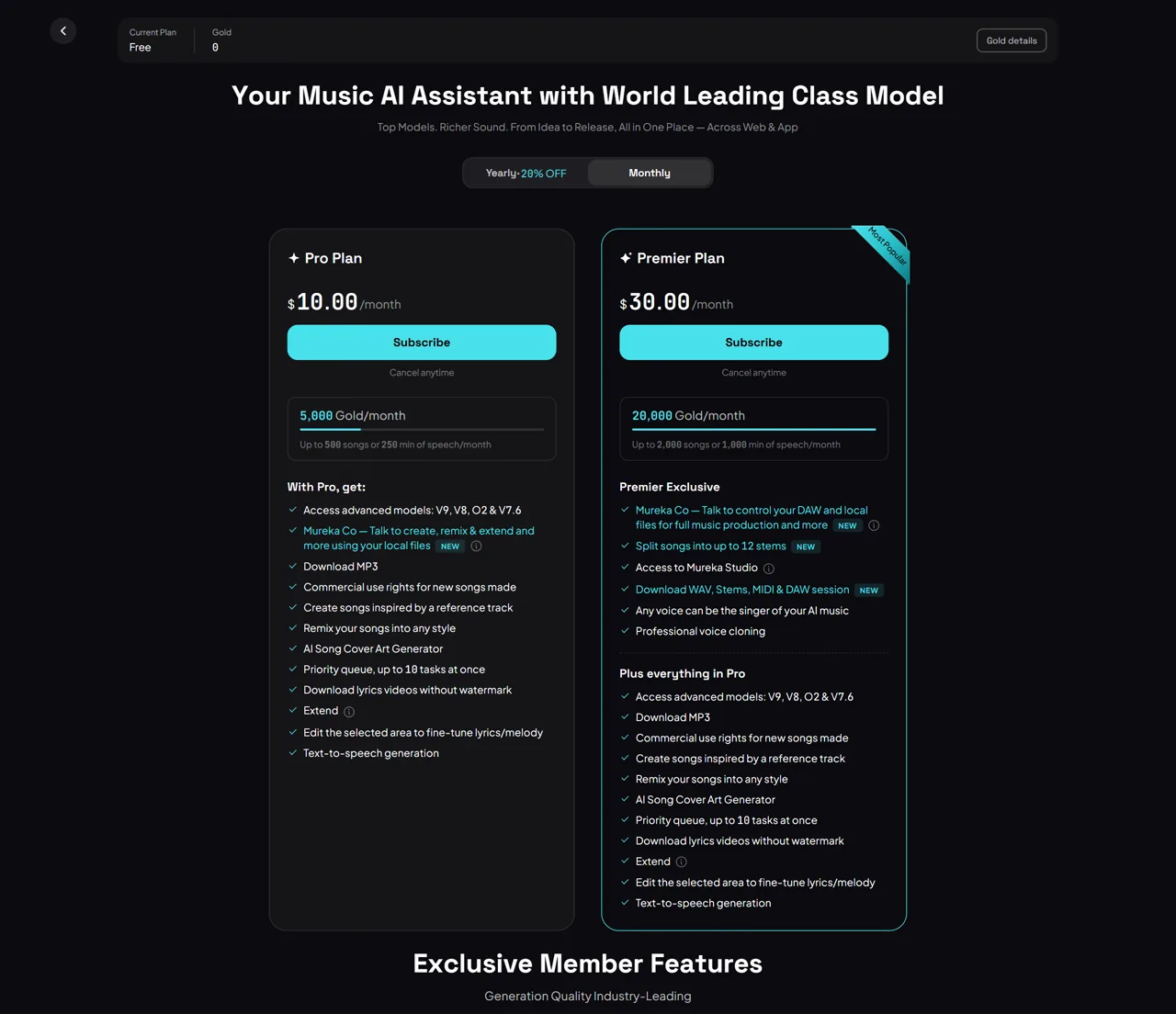
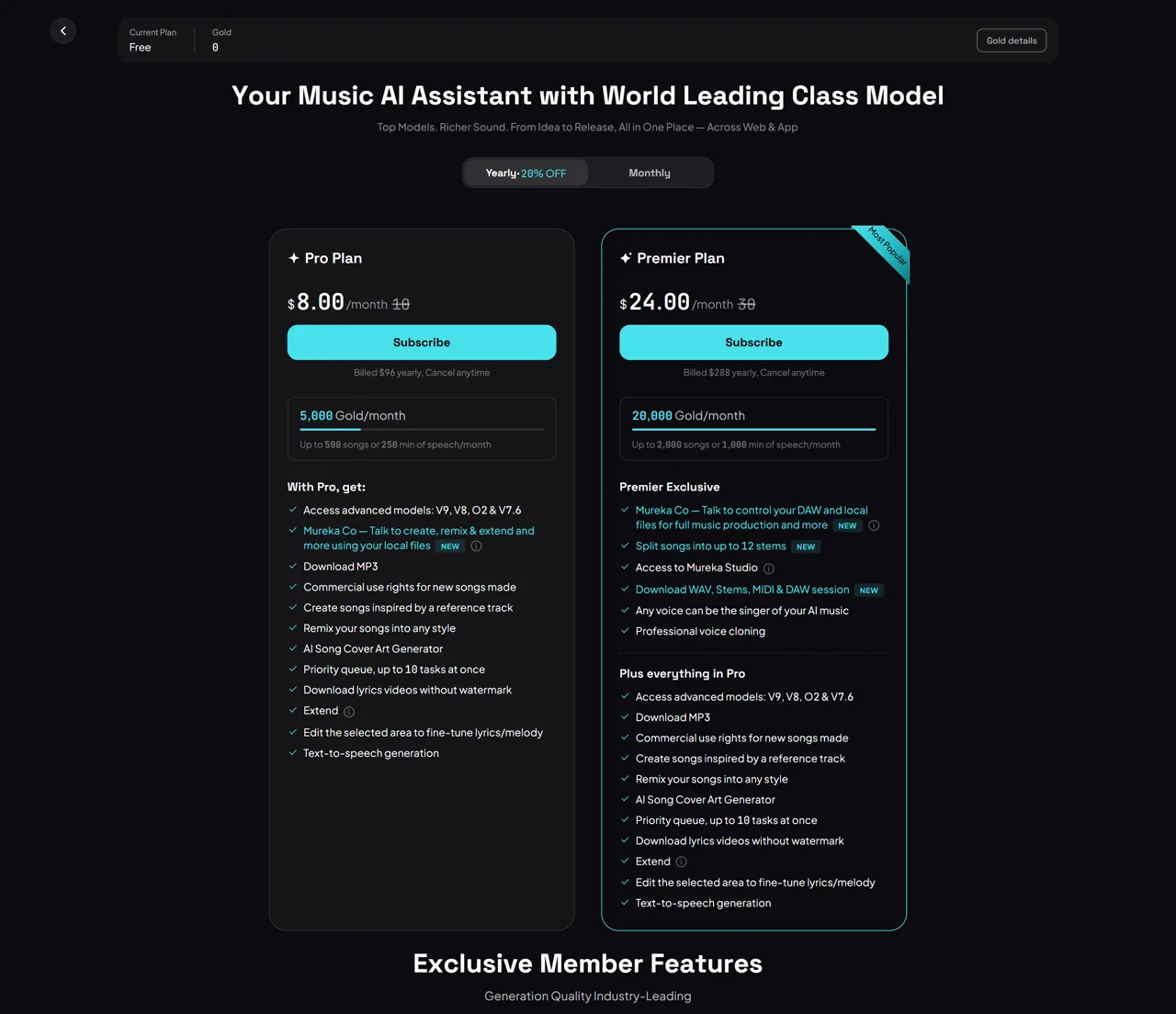
I dati in tempo reale sui prezzi di Mureka contengono informazioni incoerenti relative alla quota giornaliera di Gold per il piano gratuito, pertanto questa recensione non riporta un numero giornaliero fisso. Si consiglia di verificare la scheda "Free" in tempo reale prima di fare affidamento su una quota giornaliera. I prezzi dei piani a pagamento, le quote di 5.000/20.000 Gold e i limiti indicati per brani musicali e discorsi sono coerenti con i dati attuali del piano.
Quale piano Mureka dovresti scegliere?
Scegliere Gratuito per testare il flusso di lavoro e la versione V7.5-all senza fini commerciali. Scegli Pro se ti servono soprattutto la generazione di brani, il download di file MP3, riferimenti, il remixaggio e i diritti commerciali. Scegli Premier quando le esportazioni di produzioni, le tracce, lo Studio, i file MIDI, le sessioni DAW, i cantanti su misura o la clonazione vocale sono elementi centrali del tuo flusso di lavoro.
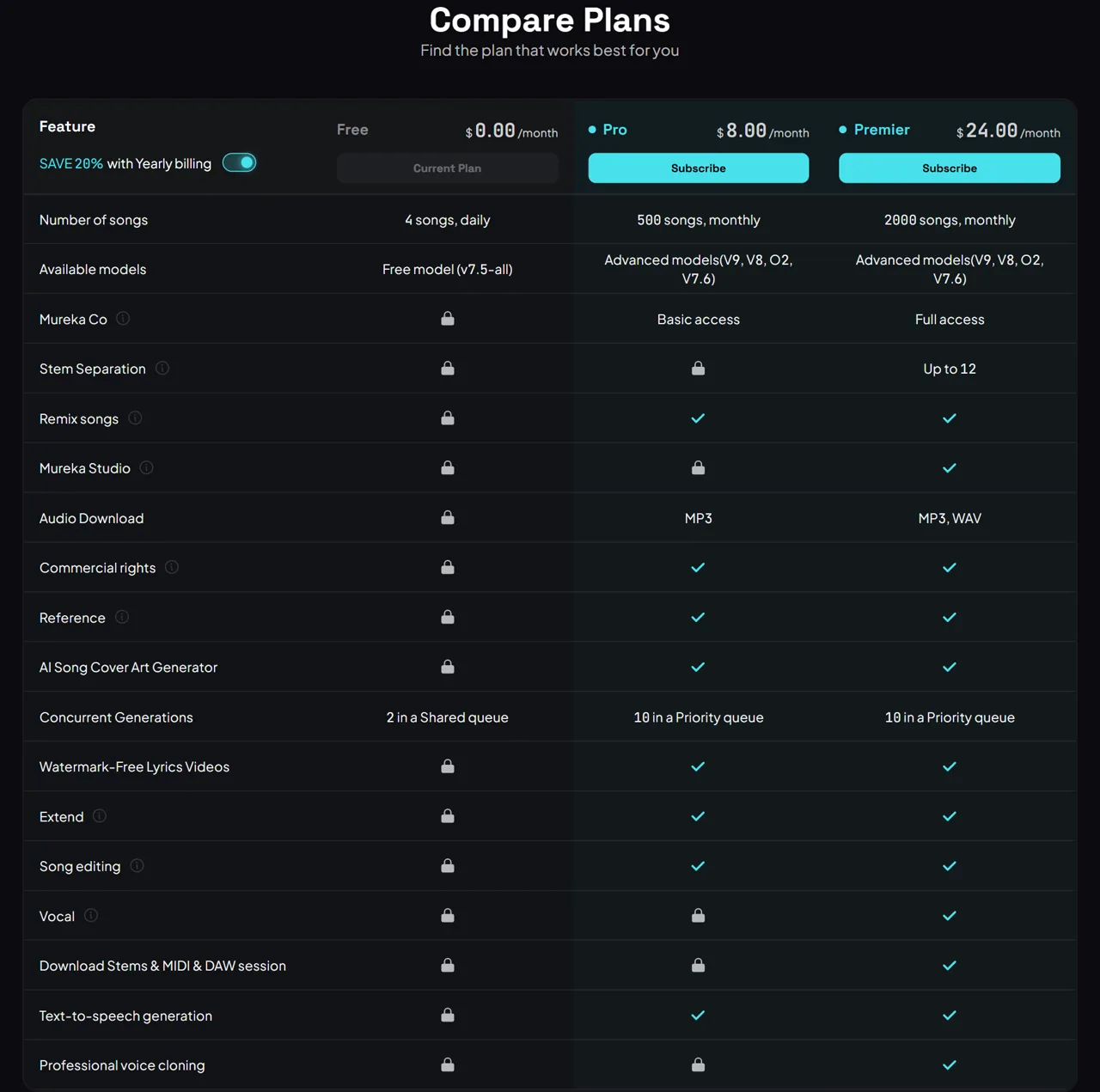
Le stime relative al numero di brani “fino a” si basano su un determinato costo in Oro per generazione. L’utilizzo effettivo può variare a seconda del modello, delle funzionalità o del numero di output selezionati; pertanto, è opportuno considerare tale quota come un limite massimo del piano piuttosto che come una garanzia che ogni progetto la raggiungerà.
Prezzi dell'API Mureka
Di Mureka feed prodotti ufficiale dell'API di checkout restituisce un Prodotto di accesso prepagato $10 con una sola richiesta in corso, mentre la parte visibile Tabella dei prezzi delle API mostra $30 come importo di ricarica per un unico accesso simultaneo. Entrambe le informazioni erano valide l'11 agosto 2026. Poiché queste due fonti ufficiali riportano dati discordanti, si prega di verificare l'importo indicato al momento del pagamento prima di procedere. Nessuna delle due cifre corrisponde a un abbonamento mensile.
L'attuale Pagina dei prezzi dell'API di Mureka di seguito sono riportate le tariffe per V9, “prompt-to-song”, BGM e colonne sonore. Quelle di Mureka Panoramica sulla piattaforma per sviluppatori pubblicizza a parte la tariffa di accesso anticipato alla versione V9.5, valida per un periodo limitato.
Testo della canzone
$0,045 per branoV9
Testo della canzone "Early Access"
$0,045 per brano fino al 28 agosto 2026; prezzo standard indicato: $0,15V9.5
Suggerimento per una canzone
$0,30 per branoV7.6, O2, V8, V9
Generazione di musica di sottofondo
$0,045 per BGMV8, V9
Colonna sonora di immagini/video
$0,10 per branoV9
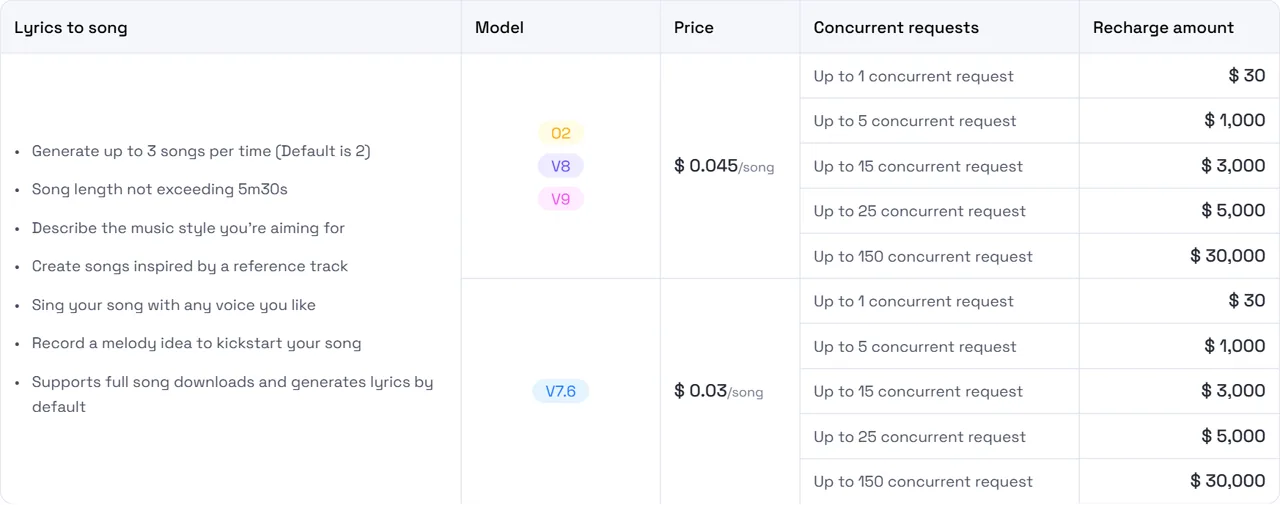
Il prezzo della versione beta V9.5 è soggetto a scadenza. Si consiglia di ricontrollare la piattaforma ufficiale dopo il 28 agosto 2026, anziché dare per scontato che la tariffa di accesso anticipato $0.045 rimanga in vigore.
Come funziona l'API di Mureka
Di Mureka Guida rapida ufficiale usi https://api.mureka.ai come server e autenticazione tramite chiave API Bearer. Il ciclo di vita di base è asincrono:
- Crea una chiave API nella dashboard dell'API di Mureka.
- Invia una richiesta POST a un endpoint di generazione, ad esempio
/v1/song/generate. - Salva l'ID dell'attività restituito e
trace_id. - Sondaggio
GET /v1/song/query/{task_id}fino a quando l'attività non raggiunge uno stato finale. - Salva gli URL dei file multimediali finali e il log
trace_idper la risoluzione dei problemi.
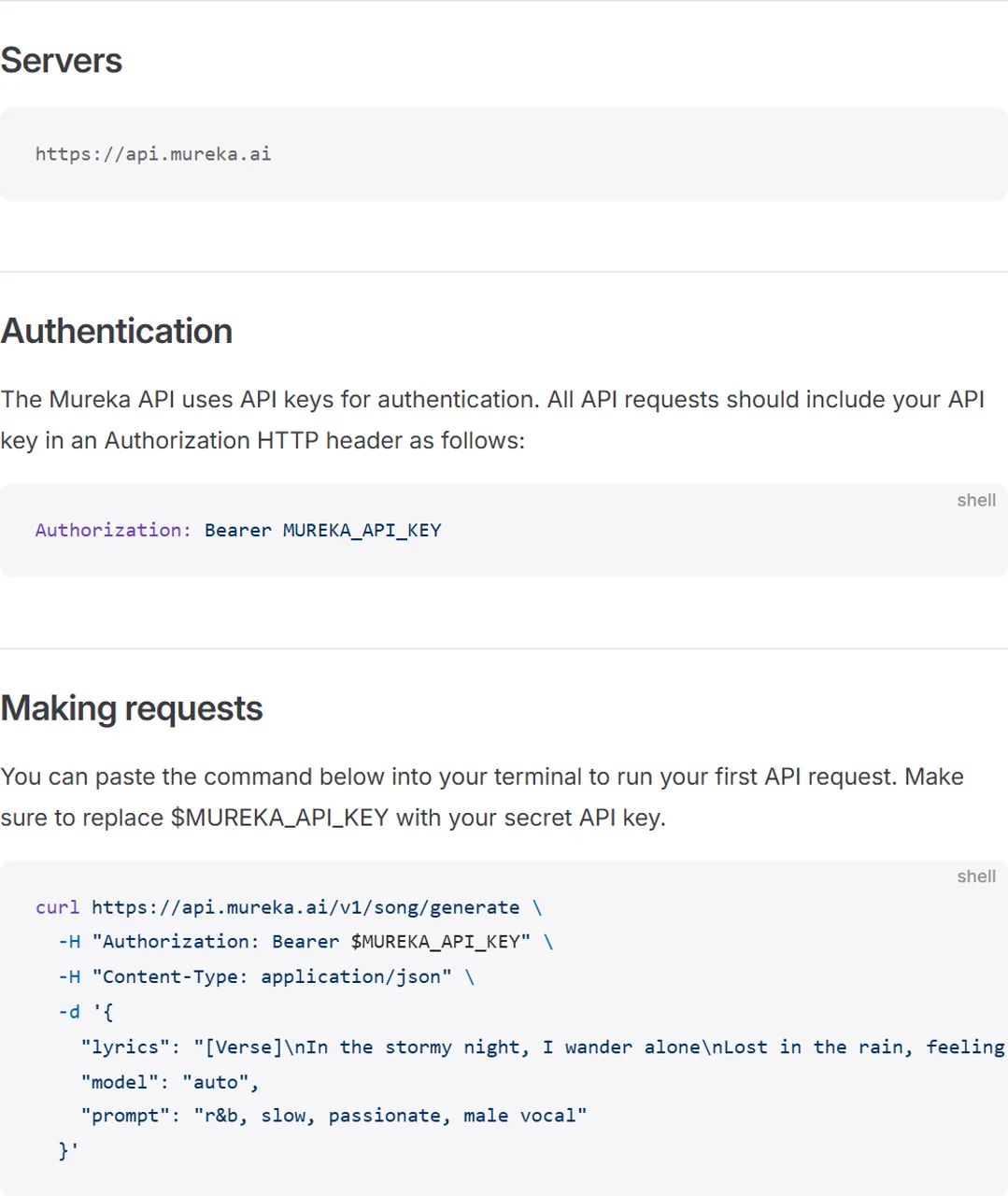
La prima richiesta della documentazione utilizza modello: "auto", che rappresenta l'impostazione predefinita più sicura quando si desidera che Mureka scelga il modello disponibile per il proprio account:
Non inserire mai la chiave API nel codice JavaScript del browser, in screenshot pubblici, nel codice HTML di un articolo o in un repository. Questa revisione ha verificato la documentazione ufficiale e le pagine relative ai prezzi, ma non ha effettuato alcuna chiamata nativa a pagamento verso api.mureka.ai. Le generazioni ottenute con il metodo pratico provengono dal percorso di test separato Broly/WaveSpeed descritto sopra.
Diritti commerciali e utilizzo a fini produttivi
Secondo l'attuale informativa sui piani tariffari di Mureka, i piani Pro e Premier includono i diritti per l'uso commerciale dei nuovi brani realizzati nell'ambito di tali piani. Il piano Free è esplicitamente indicato come non commerciale. Anche le opzioni di download e produzione differiscono: il piano Pro è incentrato sul formato MP3, mentre il piano Premier aggiunge i formati WAV, gli stem, il MIDI e l'esportazione delle sessioni DAW.
L'autorizzazione commerciale non implica che ogni input sia privo di rischi. Non imitare un artista vivente, non caricare musica di cui non detieni i diritti e non clonare una voce senza consenso. Conserva il prompt, il piano dell'account, i file sorgente, la data di generazione e la licenza o il certificato di proprietà insieme all'archivio del progetto.
Alternative a Mureka
Scegliere Mureka quando si desidera un'interpretazione musicale veloce e completa e si ha la possibilità di tagliare o scegliere tra diverse uscite. I percorsi separati per brani e musica di sottofondo sono utili, e il listino prezzi ufficiale dell'API è di facile comprensione.
Scegliere ElevenLabs Music v2 quando la precisione dei testi e una struttura delle sezioni riconoscibile assumono maggiore importanza. Nel nostro modello di riferimento a tre modelli, ElevenLabs ha preservato le parole fornite e la struttura in otto parti in modo più coerente rispetto a Mureka.
Scegliere Google Lyria 3 Pro quando la priorità è data da un brief cinematografico, dallo sviluppo dei motivi, dai cambiamenti orchestrali dell’ultimo momento e da un finale risolutivo. Nello stesso confronto, Lyria ha seguito più fedelmente le indicazioni cinematografiche.
Scegliere Seed Audio 1.0 quando il progetto combina dialoghi, atmosfera, effetti e musica all’interno di un’unica scena generata. Si tratta di un modello di scena audio più ampio piuttosto che di una piattaforma dedicata alle canzoni complete.
Se vuoi un unico posto dove confrontare i flussi di lavoro audio basati sull'intelligenza artificiale prima di sottoscrivere abbonamenti separati, il tracciato Area di lavoro del generatore audio GlobalGPT è il percorso pratico da aprire successivamente. Quel link utilizza un parametro della campagna; non modifica i risultati dei test della recensione.
Pro e contro di Mureka AI
Pro
- Genera rapidamente brani completi e lunghi brani di sottofondo.
- Gli otto test effettuati con esito positivo hanno prodotto file MP3 stereo a 44,1 kHz di qualità costante.
- Flussi di lavoro distinti per brani musicali, musica di sottofondo, transizione da prompt a brano, brani strumentali e colonne sonore.
- Il prezzo ufficiale per la conversione dei testi in brani musicali e per la musica di sottofondo nella versione V9 parte da $0,045 per risultato.
- I piani a pagamento per i consumatori includono i diritti commerciali relativi ai brani di nuova creazione.
- Premier offre potenti strumenti di produzione, tra cui l'esportazione di tracce separate, file WAV, MIDI e sessioni DAW.
- L'attuale implementazione della versione 9.5 offre agli utenti esistenti un percorso di aggiornamento chiaro da testare.
Contro
- Tutte e sei le richieste da 90 secondi non hanno raggiunto l'obiettivo, spesso con un ampio margine.
- I segmenti identici di musica di sottofondo presentavano una differenza di 51,84 secondi.
- Anche un modello di riferimento più vecchio e privo di voce produceva comunque una trama simile a quella della voce.
- Per ottenere testi esatti e risultati di pronuncia bilingue è necessaria una revisione da parte di un operatore umano.
- I risultati migliori vanno considerati come bozze, non come rendering definitivi.
- È facile confondere i campi “Consumer Gold”, “saldo API ufficiale” e “attività di terze parti”.
- I prezzi e le modalità di accesso all'API della versione 9.5 sono ancora soggetti a tempistiche specifiche nell'ambito dell'accesso anticipato.
Chi dovrebbe utilizzare Mureka AI?
Mureka è la soluzione ideale per cantautori, creatori di video, team di sviluppo di videogiochi, podcaster e sviluppatori che desiderano ottenere rapidamente una bozza musicale e prevedono già una fase di selezione o di editing. Risulta particolarmente interessante quando è utile ottenere un risultato di lunga durata, ma non è richiesta una durata esatta.
È meno adatto alla distribuzione di pubblicità, agli slot televisivi, al montaggio video con tempistiche serrate o alle pubblicazioni in cui il testo è fondamentale e che devono andare a buon fine con una sola richiesta automatica. Questi flussi di lavoro richiedono il taglio dei brani, la trascrizione completa delle canzoni, l’ascolto nella lingua originale e, spesso, l’uso di una DAW.
Domande frequenti
Il Mureka V9 è ancora il modello più recente?
No. A partire dall’11 agosto 2026, l’endpoint del modello consumer di Mureka identifica la versione V9.5 come modello attuale e predefinito. Anche la piattaforma API ufficiale pubblicizza l’accesso anticipato alla versione V9.5. I file utilizzati per questa recensione sono stati generati con i percorsi della versione V9, pertanto i risultati dei test non devono essere interpretati come prestazioni della versione V9.5.
Mureka AI è gratuita?
Mureka offre un piano gratuito per gli utenti privati che include l'accesso a V7.5-all, una coda condivisa e l'impossibilità di utilizzare il servizio per scopi commerciali. I dati aggiornati sui prezzi riportano importi giornalieri di Gold non coerenti per tale piano, pertanto si consiglia di verificare la scheda "Gratuito" prima di pianificare generazioni ripetute.
Quanto costa Mureka AI?
Il piano Pro per i consumatori costa $10 al mese o $96 all’anno e include 5.000 Gold al mese. Il piano Premier costa $30 al mese o $288 all’anno e include 20.000 Gold al mese. La fatturazione annuale è di circa 20% più conveniente rispetto al pagamento mensile per 12 mesi.
Quanto costa l'API di Mureka?
Il feed ufficiale dei prodotti alla cassa mostra un prodotto prepagato $10 con una richiesta simultanea e validità di 12 mesi, mentre la tabella dei prezzi ufficiale visibile riporta $30 per una ricarica con una richiesta simultanea. Verificare l’importo indicato al momento del pagamento prima di procedere. I servizi «lyrics-to-song» e «BGM» della versione V9 sono quotati a $0,045 per output, il servizio «prompt-to-song» a $0,30 e la generazione di colonne sonore della versione V9 a $0,10. L'accesso anticipato alla versione V9.5 costa $0.045 per brano fino al 28 agosto 2026, con un prezzo standard visualizzato di $0.15.
Mureka è in grado di generare musica strumentale?
Sì. Mureka offre flussi di lavoro per musica di sottofondo e brani strumentali, e la sua API ufficiale include anche la generazione di colonne sonore a partire da un'immagine o da un video. Nei nostri test, il percorso V9 per la musica di sottofondo ha restituito tre file MP3 stereo di lunga durata, sebbene tutti e tre superassero la durata richiesta di 90 secondi.
Mureka segue fedelmente il testo della canzone?
È in grado di accettare testi esatti, ma il nostro modello vocale precedente ha segnalato una probabile sostituzione e i otto nuovi file non sono stati ancora sottoposti a revisione umana dei testi. Genera più di una versione, trascrivi l'intera traccia vocale, confronta ogni ritornello ripetuto e ascolta attentamente per individuare eventuali parole aggiunte prima della pubblicazione.
Mureka sa cantare in cinese?
Mureka accetta testi in cinese e, con la versione V9, abbiamo generato due risultati city-pop in inglese e cinese. È ancora in corso una revisione da parte di un madrelingua per quanto riguarda l’accuratezza delle parole, la pronuncia, il cambio di codice linguistico e l’identità vocale; pertanto, questo articolo non assegna un punteggio di qualità bilingue.
Posso utilizzare i brani di Mureka a fini commerciali?
L'attuale politica di Mureka relativa ai piani per gli utenti finali concede i diritti di utilizzo commerciale per i nuovi brani creati con i piani Pro e Premier. Il piano Free è contrassegnato come non commerciale. È comunque necessario disporre dei diritti relativi ai riferimenti caricati e alle voci clonate, ed è opportuno conservare la relativa documentazione relativa alla licenza o alla titolarità.
Quanto tempo impiega Mureka a generare una canzone?
Le otto attività V9 completate con successo hanno richiesto da 57,62 a 86,17 secondi lungo il percorso di test Broly/WaveSpeed. Non si tratta di una garanzia ufficiale di latenza dell'API Mureka. Il carico della coda, il percorso, il modello, il numero di output richiesti e la piattaforma possono tutti influire sul tempo richiesto.
Mureka rispetta la durata richiesta per le canzoni?
Non in modo affidabile nei nostri test della versione V9. Tutte e tre le richieste di brani con testo della durata di 90 secondi hanno restituito tempi compresi tra 158,83 e 171,79 secondi, mentre le tre richieste di musica di sottofondo della durata di 90 secondi hanno restituito tempi compresi tra 189,47 e 241,31 secondi. Prevedere di ridurre l'output quando il tempo di esecuzione è importante.
Posso usare Mureka su GlobalGPT?
La presente recensione non pretende di fornire un percorso verificato relativo al prodotto pubblico GlobalGPT Mureka. Le versioni di prova utilizzate si basavano sull’ambiente di test Broly Anywhere Tasks con WaveSpeed come servizio a monte. Tale accesso di prova non corrisponde alla pagina pubblica del prodotto GlobalGPT, al piano di account o al flusso di lavoro per i consumatori.
Il verdetto finale
Mureka V9 è veloce, tecnicamente affidabile e in grado di trasformare un prompt dettagliato in un’interpretazione musicale completa. Gli otto nuovi test rivelano però anche il suo punto debole più evidente in termini di produzione: il controllo della durata. Una richiesta di 90 secondi può trasformarsi in una canzone o in una traccia di sottofondo della durata di ben oltre tre minuti, e prompt identici possono generare risultati significativamente diversi in termini di durata e presentazione stereo.
Questo compromesso è accettabile per la fase di ideazione, la composizione di canzoni, i concept di giochi e i progetti video che lasciano spazio alla post-produzione. È consigliabile generare diverse versioni, confrontare i file completi, verificare ogni testo e ogni vincolo negativo, quindi ritagliare il risultato migliore. È invece molto più difficile consigliarlo per una consegna “one-shot” con una durata prestabilita.
L'ultima versione disponibile è ora la V9.5. Mureka l'ha resa il modello attuale/predefinito per i consumatori e ha aperto l'accesso anticipato all'API, ma questa recensione dell'IA di Mureka non pretende che i risultati della V9 siano indicativi della qualità della V9.5. Il prossimo test significativo consisterà in una ripetizione controllata del confronto tra la versione V9 e la V9.5 utilizzando gli stessi tre prompt, con un ascolto umano incentrato sulla fedeltà del testo, la presenza di voci estranee, la moderazione nell’arrangiamento e il controllo del finale.