18 generazioni retribuite · agosto 2026
Brani completi e di grande impatto. Una vera varietà di controllo.
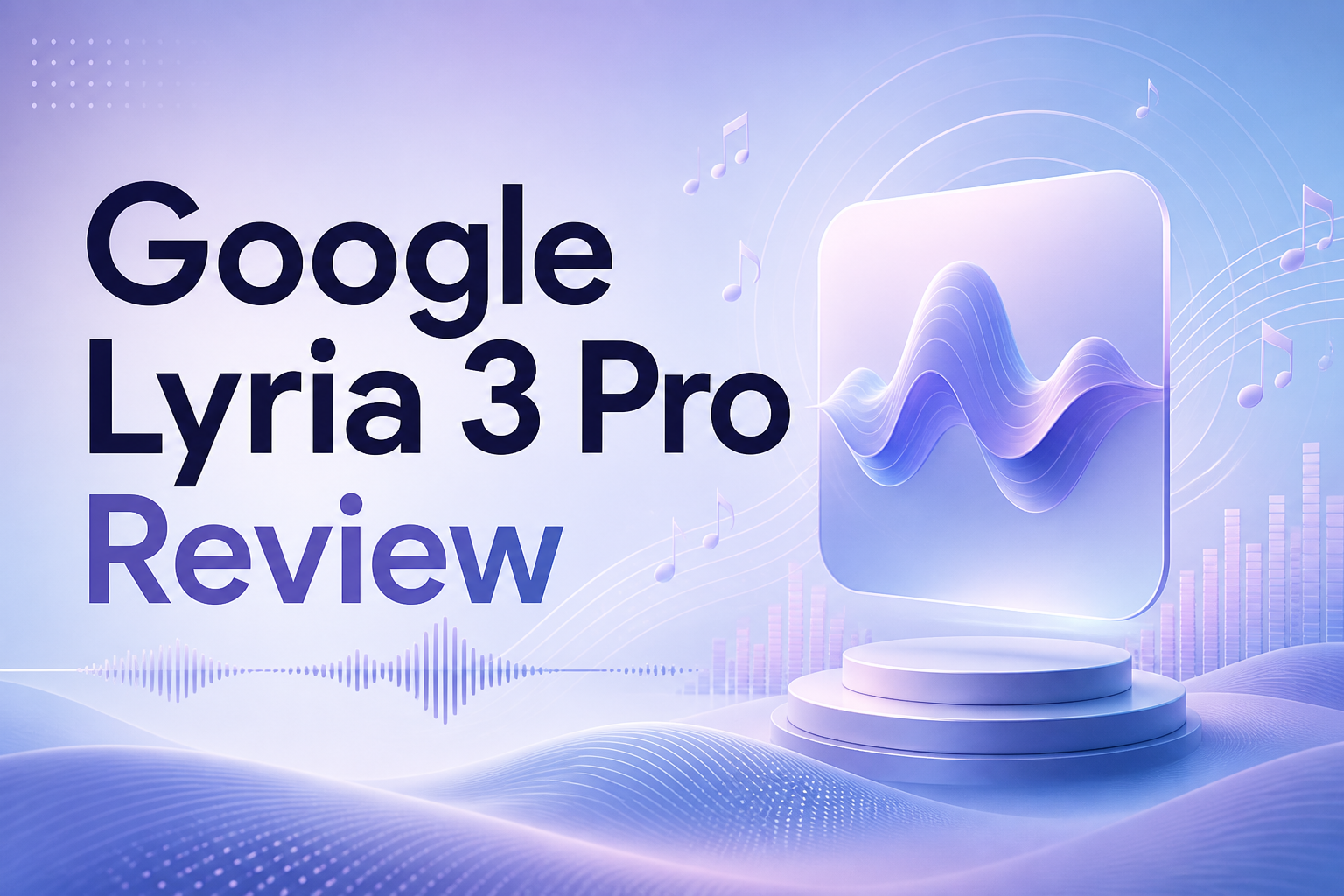
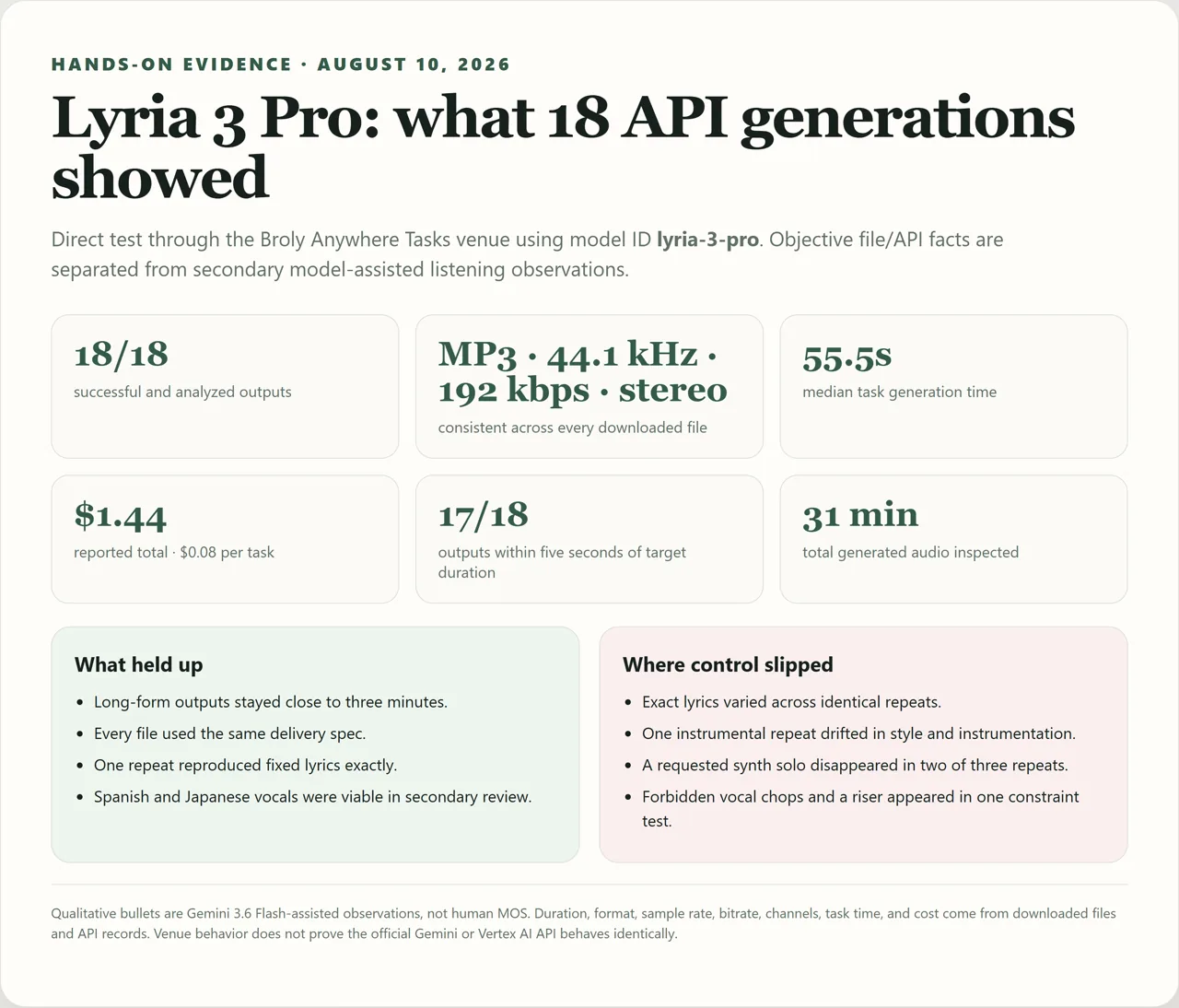
Dopo 18 generazioni a pagamento, la nostra recensione di Google Lyria 3 Pro ha rilevato che il modello è in grado di generare una canzone completa con voce, testo, strofe, ritornelli, bridge e un arrangiamento di quasi tre minuti. È inoltre meno deterministico di quanto suggeriscano le demo rifinite. Ogni compito è andato a buon fine e ogni risultato è stato fornito come file MP3 stereo a 44,1 kHz e 192 kbps, ma i prompt ripetuti hanno comunque omesso un assolo di sintetizzatore, modificato il testo esatto, deviato verso uno stile errato e ignorato i vincoli “no vocals” e “no risers”.
Il verdetto in breve: Lyria 3 Pro è un potente generatore di brani completi pensato per chi è in grado di creare diverse versioni e selezionare quella migliore. Non è uno strumento “one-click” che garantisce testi esatti, tempi precisi delle sezioni o vincoli rigidi. Con un costo di $0,08 per ogni richiesta API Gemini relativa a un brano completo, tale flusso di lavoro di selezione è conveniente, ma richiede comunque un controllo di qualità tramite ascolto e editing.

Situazione del modello Lyria 3 Pro nel 2026: il Pro non è l'ultimo modello della gamma Lyria
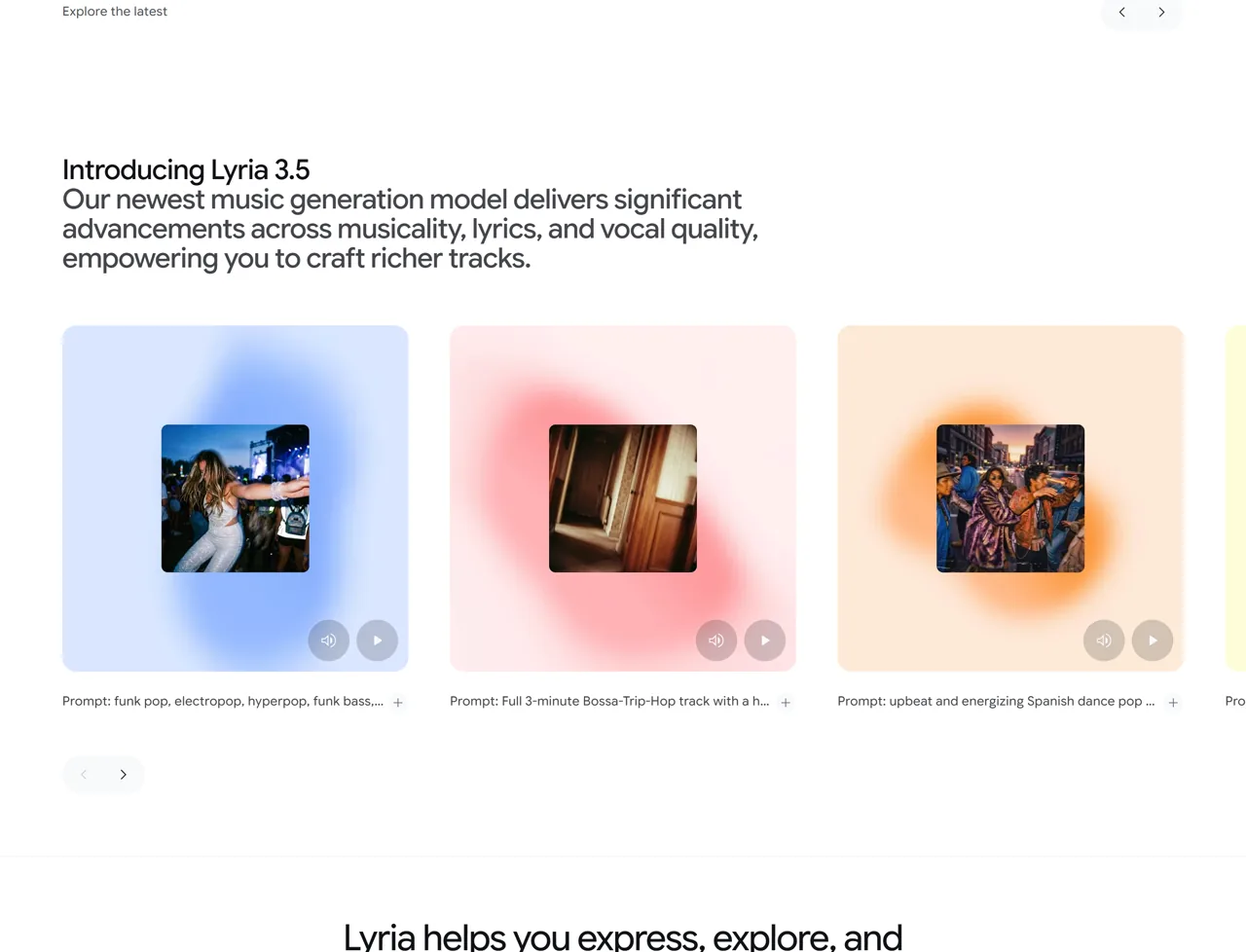
A partire dal 10 agosto 2026, Google DeepMind descrive Lyria 3.5 come il suo modello di ultima generazione nel campo della musica e lo promuove tramite Flow Music. Ciò non rende Lyria 3 Pro obsoleto.
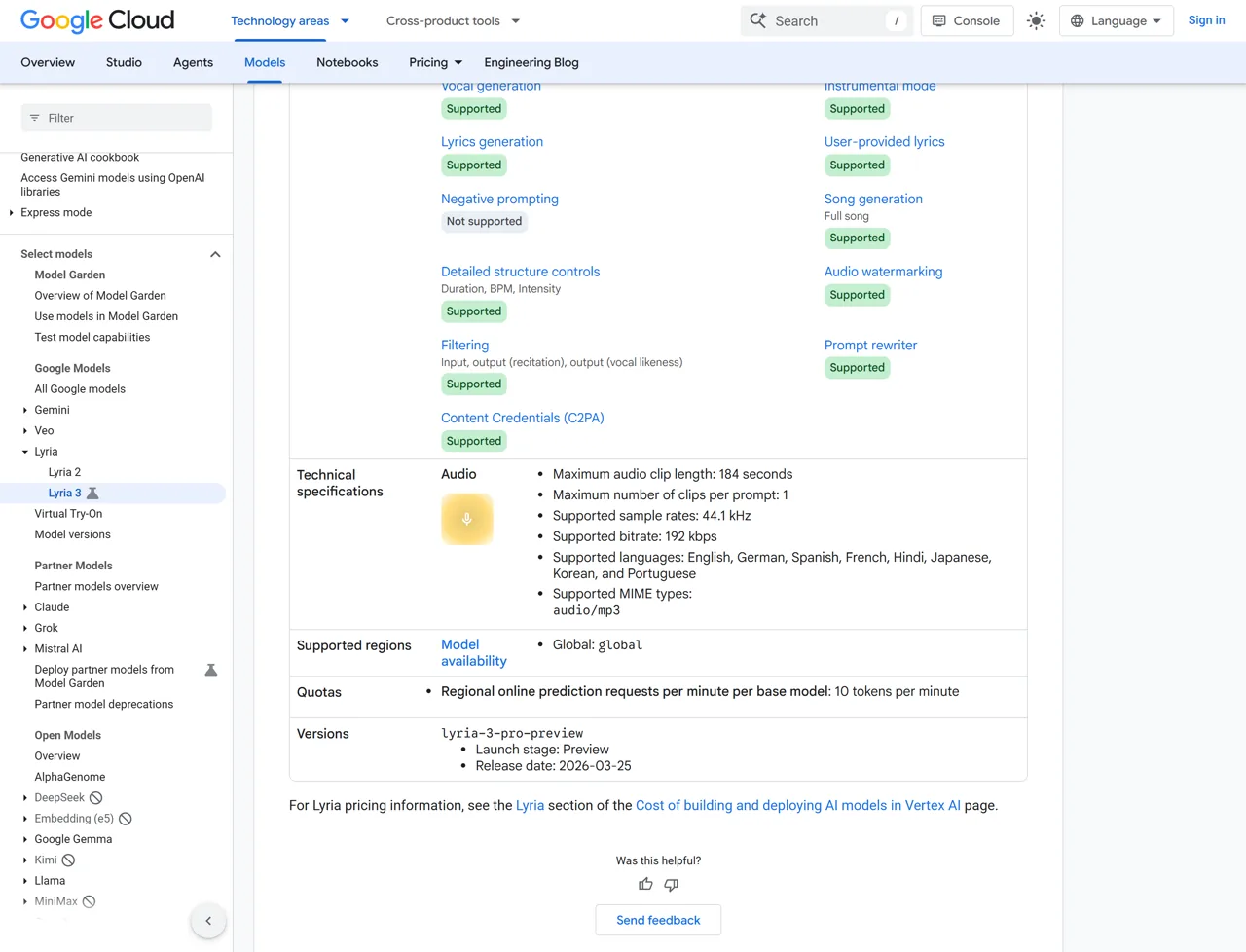
Il pagina attuale del modello Lyria 3 di Google Cloud elenca ancora Anteprima di Lyria 3 Pro con l'ID del modello lyria-3-pro-anteprima, con generazione di brani completi, testi forniti dall'utente, conversione di immagini in musica, controlli strutturali e clip della durata massima di 184 secondi.
La denominazione è importante perché le interfacce sono diverse. Utilizza Lyria 3.5 quando desideri specificatamente l’esperienza più recente di Flow Music. Utilizza Lyria 3 Pro Preview quando hai bisogno dell’API Gemini Interactions documentata o del percorso del modello Google Cloud. Questa recensione riguarda proprio quel flusso di lavoro Pro, con un percorso di test separato di Broly Anywhere utilizzato per generare i 18 campioni.
Giudizio a prima vista: Google Lyria 3 Pro è un buon prodotto?
Sì, se lo si considera un generatore dalle grandi potenzialità piuttosto che un sistema di riproduzione musicale deterministico. I risultati migliori presentavano archi narrativi coerenti, combinazioni strumentali convincenti, conclusioni pulite e una struttura sufficientemente articolata da dare l’impressione di brani composti anziché di loop. Il test di lunga durata si è rivelato particolarmente utile: entrambe le richieste da 180 secondi hanno restituito brani coerenti della durata di 176,170 e 177,006 secondi.
I punti deboli sono emersi in termini di ripetibilità. Lo stesso comando strumentale ha prodotto prima un brano di fantascienza dal tono sobrio, poi un brano classico per archi da camera in cui mancavano diversi strumenti richiesti. Il testo esatto ha funzionato perfettamente una volta, ma è cambiato nelle altre due ripetizioni. Se il vostro progetto dipende dal fatto che una battuta, un assolo o un elemento vietato non compaiano mai, prevedete di generare alternative e controllate ogni risultato.
| Il migliore per | Meno adatto a |
|---|---|
| Brani completi con un genere ben definito e un percorso emotivo chiaro | Riproduzione esatta del testo in un'unica esecuzione |
| Brani strumentali di lunga durata e sviluppi in stile cinematografico | Sincronizzazione delle sezioni con precisione al fotogramma senza controlli DAW |
| Elaborazione di idee vocali multilingue | Vincoli negativi rigidi |
| Sviluppatori che desiderano un prezzo API semplice, calcolato per singolo brano | Utenti che necessitano di una rigenerazione deterministica |
Per un confronto più ampio tra le categorie, l'attuale ElevenLabs vs Lyria 3 Pro vs Mureka: test musicale dimostra perché Lyria è la scelta più indicata quando la struttura musicale complessiva è più importante del controllo della sola voce.
Che cos’è Lyria 3 Pro?
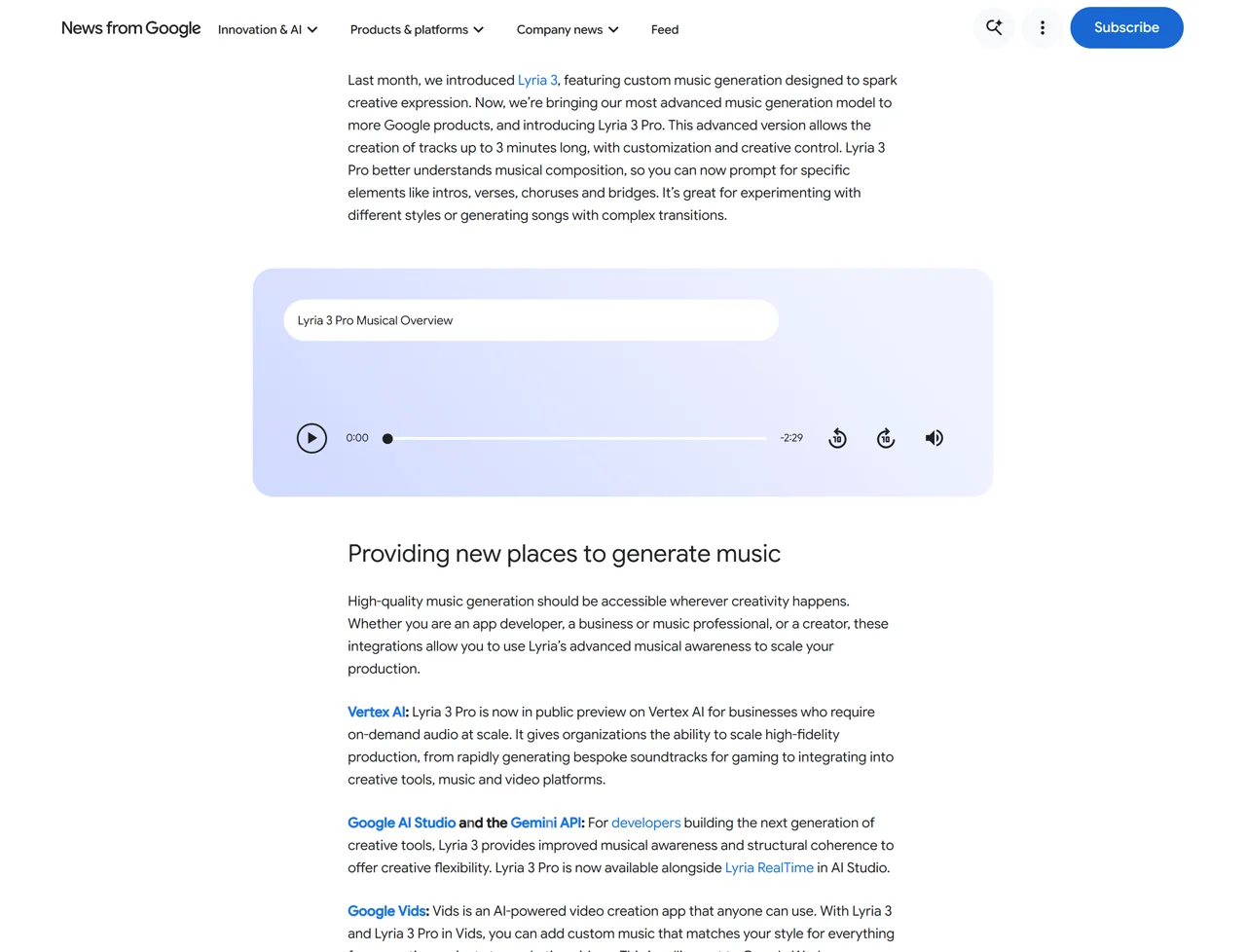
Lyria 3 Pro è il modello di generazione musicale di brani completi di Google appartenente alla famiglia di API Lyria 3. Google ha annunciato Lyria 3 Pro il 25 marzo 2026, consentendo di lavorare su brani della durata massima di tre minuti con la possibilità di gestire intro, strofe, ritornelli, bridge, testi, tempo e strumentazione. Il modello più piccolo, Lyria 3 Clip, è pensato per output fissi di 30 secondi, mentre il modello Pro è quello ideale per arrangiamenti completi.
Il Guida aggiornata alla generazione musicale Gemini afferma che entrambi i modelli Lyria 3 accettano testo e immagini e riproducono audio stereo a 44,1 kHz.
Il Guida all'uso di Google Cloud Lyria supporta una gamma più ampia di file da caricare sul cloud, inclusi i PDF e fino a 10 immagini di riferimento. Si tratta di funzionalità specifiche della piattaforma, quindi non date per scontato che ogni tipo di file sia compatibile con tutti i servizi di terze parti.
Come abbiamo testato Lyria 3 Pro
Nel test pratico è stato utilizzato l'endpoint dell'API Broly Anywhere Tasks con l'ID del modello lyria-3-pro. Si trattava della piattaforma di test autorizzata dall’utente, non dell’interfaccia utente ufficiale Gemini destinata al pubblico. Abbiamo eseguito 18 attività che riguardavano la ripetibilità con lo stesso prompt, i testi personalizzati, la struttura temporale, la fedeltà strumentale, la coerenza nei testi lunghi, il controllo di BPM/tonalità/strumenti, le parti vocali in spagnolo e giapponese e gli artefatti API.
I dati si articolano su tre livelli. Le informazioni relative ai file e alle API — durata, formato MP3, frequenza di campionamento, bitrate, canali, tempo di elaborazione e costo riportato — provengono direttamente dalle risposte e dai file audio scaricati. Un'analisi audio Gemini 3.6 Flash ha prodotto le descrizioni di ascolto e le trascrizioni dei testi "best-effort" utilizzate di seguito. Si tratta di una valutazione di ascolto assistita da modelli, non di un panel umano né di un MOS umano. Il BPM esatto, la tonalità e i timestamp delle sezioni sono considerati provvisori qualora non siano stati misurati in modo indipendente in una DAW.
| Metrica di test | Risultato misurato |
|---|---|
| Attività completate con successo | 18/18 |
| Audio generato in totale | 1.858,195 secondi |
| Consegna dei file | MP3, 44,1 kHz, 192 kbps, stereo su 18/18 |
| Tempo di generazione | 46–75 secondi; mediana di 55,5 secondi |
| Costo della sede dichiarato | $0,08 per attività; $1,44 in totale |
| Precisione della durata | 17/18 entro cinque secondi dal bersaglio |
| Errore medio assoluto di durata | 2,913 secondi |
Due operazioni di lettura dalla rete sono fallite dopo che i task erano già stati creati. Il runner ha ripreso gli ID dei task esistenti invece di inviarli nuovamente, quindi l'insieme conteneva ancora 18 task univoci e 18 output univoci.
Qualità audio di Lyria 3 Pro: suono raffinato, controllo non uniforme
Musicalità complessiva e mixaggio
La valutazione dell’ascolto ha descritto in modo coerente i brani più riusciti come raffinati, coerenti e ben mixati. I brani synth-pop di T01 hanno mantenuto i sintetizzatori arpeggiati e brillanti, la batteria elettronica, gli accenti di chitarra, la voce solista femminile e il tono pieno di speranza. I due brani post-rock di T05 hanno mantenuto una struttura riconoscibile a lungo termine, invece di ridursi a un ovvio loop breve.
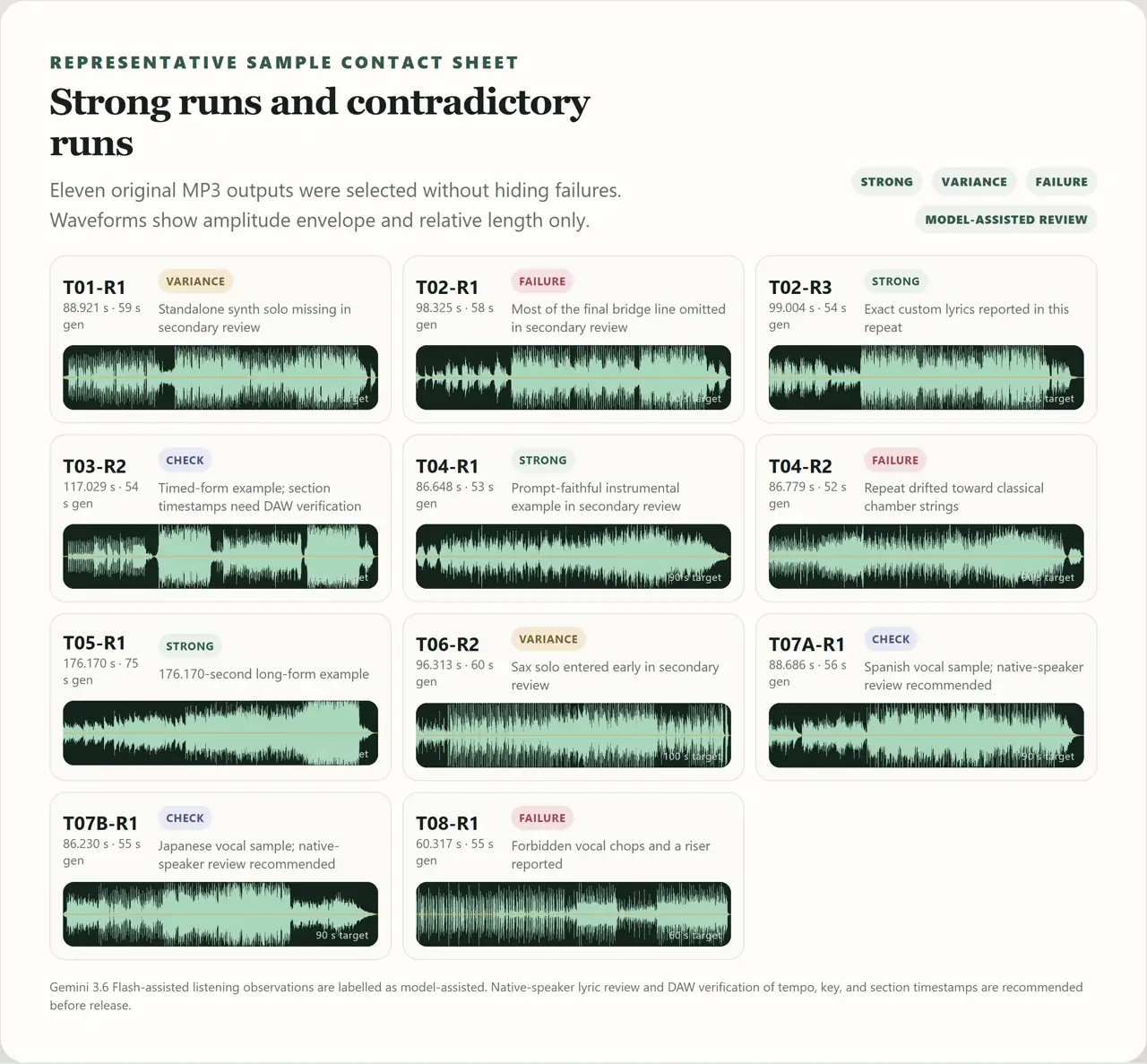
Ciò non significa che tutti i dettagli richiesti siano stati mantenuti. La versione T01-R1 ha inserito il lead di sintetizzatore richiesto nell’outro invece di creare un assolo a sé stante, mentre la versione T01-R3 ha omesso l’assolo e presentava lievi artefatti di sintesi vocale sulle note più acute. La versione T01-R2 era quella che corrispondeva meglio all’originale.
Esempi rappresentativi tratti dalla sezione "Broly Anywhere Tasks".
Testo esatto: possibile, ma non deterministico
Il test sui testi personalizzati è il motivo più evidente per cui è stato necessario realizzare più registrazioni. La versione T02-R1 ha omesso gran parte della frase finale del bridge. La versione T02-R2 ha aggiunto delle ripetizioni in eco dopo il ritornello. La versione T02-R3 ha seguito alla lettera il testo fornito nella trascrizione realizzata con la massima accuratezza possibile.
Questo rende la funzione utile, ma modifica il flusso di lavoro. Non approvare una canzone solo perché la prima strofa è corretta. Confronta la versione vocale completa con il testo originale, inclusi i ritornelli ripetuti e l'ultima riga, prima di passare al missaggio o alla distribuzione.
Esempi rappresentativi tratti dalla sezione "Broly Anywhere Tasks".
Esempi rappresentativi tratti dalla sezione "Broly Anywhere Tasks".
Struttura e sezioni a tempo
Tutte e tre le composizioni cinematico-elettroniche da 120 secondi sono state descritte come conformi alla struttura richiesta: intro filtrata, prima strofa, ritornello ampio, intermezzo con violoncello/granular, seconda strofa più incisiva, ritornello finale e conclusione a due accordi. I file effettivi avevano una durata compresa tra 115,148 e 117,029 secondi, quindi nessuno ha raggiunto l’obiettivo completo di 120 secondi.
In alcune esecuzioni, il sistema di valutazione ha inoltre generato timestamp impossibili, che andavano oltre la durata effettiva del file. La conclusione utile è quindi limitata: Lyria 3 Pro ha gestito la sequenza richiesta, ma questo test non dimostra che il posizionamento delle sezioni sia preciso al fotogramma. Utilizza una DAW se il ritornello deve essere posizionato su un punto di montaggio specifico.
Fedeltà strumentale e il principale problema di ripetibilità
Il brano T04-R1 ha saputo ricreare l'atmosfera di suspense tipica della fantascienza grazie a un ostinato di violoncello, un drone, una trama sonora simile al vetro, un picco controllato e un finale in sospeso. Il brano T04-R2 ha utilizzato lo stesso spunto, ma si è orientato verso un sound classico da archi da camera. Mancavano invece le pulsazioni smorzate del pianoforte, il drone analogico e le armoniche simili al vetro.
Esempi rappresentativi tratti dalla sezione "Broly Anywhere Tasks".
Esempi rappresentativi tratti dalla sezione "Broly Anywhere Tasks".
Questa coppia è più utile di una singola demo perfetta perché mette in luce il rischio reale legato alla produzione. Un prompt dettagliato aumenta le probabilità di successo, senza però vincolare la composizione. Genera almeno due versioni quando l’identità degli strumenti è importante.
Coerenza nei testi lunghi
Entrambe le richieste di brani post-rock della durata di tre minuti hanno mantenuto una coerenza lungo l’intero arco narrativo. Il brano T05-R1 ha raggiunto i 176,170 secondi e il brano T05-R2 i 177,006 secondi, per poi tornare al tema iniziale della chitarra. Nessuno dei due resoconti di ascolto ha segnalato un brusco cambio di genere o una conclusione troncata.
Esempi rappresentativi tratti dalla sezione "Broly Anywhere Tasks".
È proprio qui che Pro dimostra di meritare il proprio nome. Lyria 3 Clip è utile per un loop o una breve anteprima; Lyria 3 Pro è in grado di sostenere un arrangiamento abbastanza a lungo da consentire la creazione di una vera e propria bozza di brano, di una traccia per un trailer o della colonna sonora di un video.
Voci multilingue
Sia il brano spagnolo che quello giapponese sono stati descritti come comprensibili e fedeli al testo fornito. Le trascrizioni approssimative suggeriscono che in entrambe le esecuzioni la frase finale del ritornello sia stata trasformata in un gancio musicale aggiuntivo. Si tratta di una piccola licenza creativa, ma resta comunque una modifica al testo.
Esempi rappresentativi tratti dalla piattaforma Broly Anywhere Tasks; si consiglia la revisione da parte di un madrelingua.
Google Cloud indica l'inglese, il tedesco, lo spagnolo, il francese, l'hindi, il giapponese, il coreano e il portoghese come lingue supportate. Un esempio in spagnolo e uno in giapponese non bastano a garantire la stessa qualità in tutte e otto le lingue, pertanto la revisione da parte di madrelingua rimane il criterio di approvazione più ragionevole.
I vincoli negativi possono non essere soddisfatti
Il T08 richiedeva l'assenza di voci, dialoghi, cori, riser o effetti cinematografici. Il risultato finale conteneva comunque brevi frammenti vocali e un riser nella valutazione di ascolto, sebbene fossero presenti la direzione principale minimal-techno a 124 BPM e la conclusione netta.
Esempi rappresentativi tratti dalla sezione "Broly Anywhere Tasks".
La pagina dedicata ai modelli di Google Cloud indica esplicitamente che i prompt negativi non sono supportati. È comunque possibile scrivere esclusioni positive in linguaggio naturale, ma il risultato va considerato come un orientamento piuttosto che come un filtro rigido.
Suggerimenti per Lyria 3 Pro: la formula che ha funzionato meglio
La guida di Google sui prompt consiglia di combinare genere, atmosfera, strumentazione, tempo, voce e testo. I nostri prompt più efficaci hanno aggiunto altri due elementi: un ordine chiaro delle sezioni e un finale ben definito.
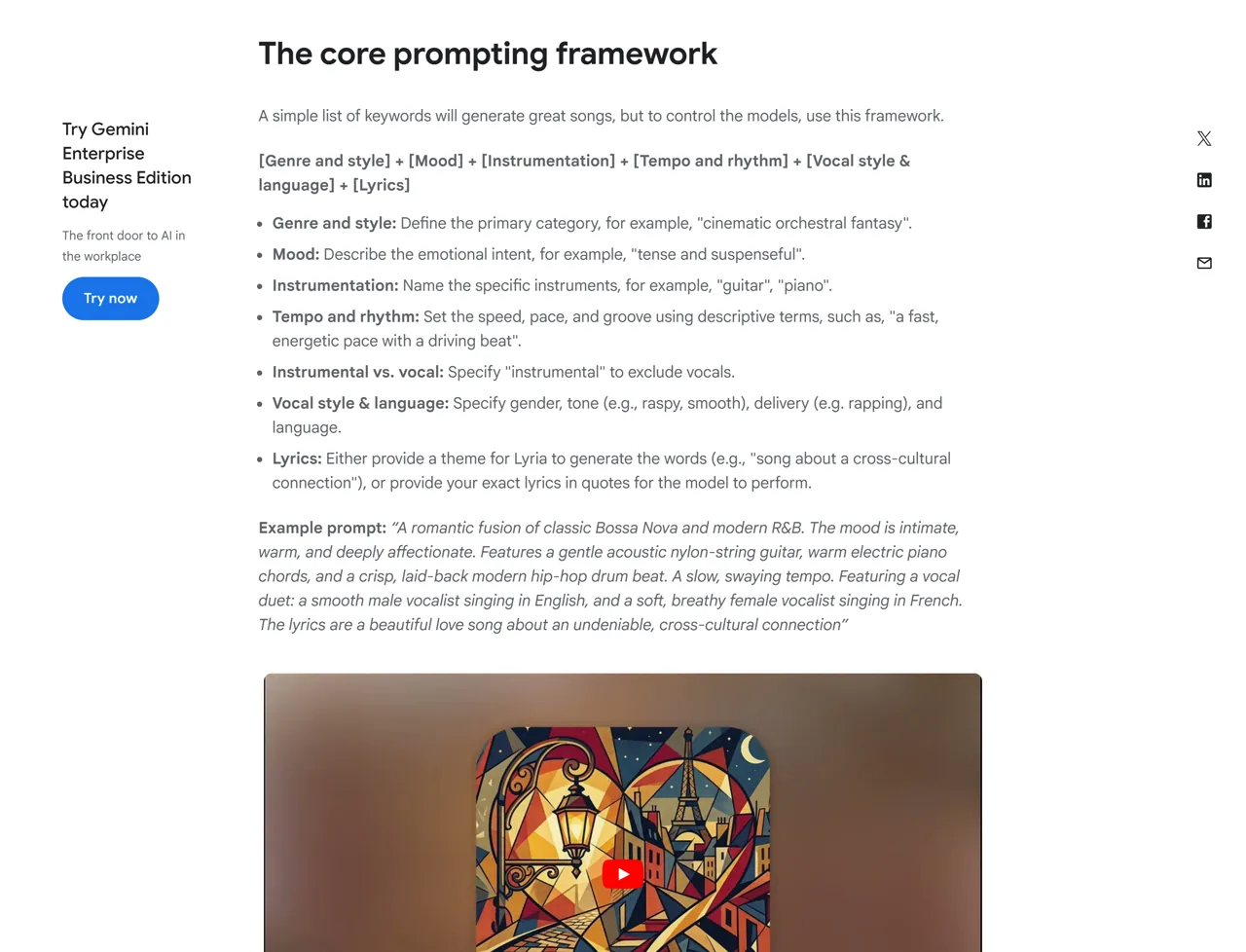
Una formula pratica per il prompt di Lyria 3 Pro è:
- Lunghezza e formato: “Crea un brano strumentale di 90 secondi.”
- Genere e atmosfera: Indica uno stile principale e una direzione emotiva.
- Tempo, tonalità e metro: utilizza valori esatti quando è importante farlo.
- Strumentazione: elenca i suoni che caratterizzano l'arrangiamento.
- Voce e testi: Specificare il tipo di voce, la lingua, la dizione e il testo esatto.
- Struttura: definire intro, strofe, ritornelli, bridge, assolo e outro.
- Conclusione: richiedere una chiusura netta, un accordo risolto, un accordo irrisolto o una dissolvenza.
L'errore più comune è quello di richiedere troppi vincoli e dare per scontato che questi costituiscano delle garanzie. Gli errori T04 e T08 dimostrano perché il prompt dovrebbe essere seguito da una fase di selezione, e non da una fase di pubblicazione alla cieca.
Istruzioni esatte utilizzate nel test
I comandi riportati di seguito sono il testo esatto inviato per le esecuzioni descritte in questa recensione.
T01 — ripetibilità del synth-pop con lo stesso prompt
Prompt utilizzato
PROMPT
Crea una canzone synth-pop in inglese della durata di 90 secondi, ben rifinita, a 112 BPM in tempo 4/4. Atmosfera: di speranza dopo una notte difficile. Strumentazione: basso sintetizzato analogico dal suono caldo, synth arpeggiato brillante, batteria elettronica precisa, accenti di chitarra elettrica puliti e un breve assolo melodico di synth. Utilizza una voce solista femminile dal timbro naturale con dizione chiara. Scrivi un testo originale che includa un’introduzione di 10 secondi, la strofa 1, il pre-ritornello, un ritornello memorabile, la strofa 2, il ritornello ripetuto, un breve assolo di synth e un finale pulito e ben definito. Mantieni il mix arioso e adatto alla radio; evita narrazioni parlate e rumori di folla.T02 — testi personalizzati esatti
Prompt utilizzato
PROMPT
Crea una canzone pop alternativa della durata di 100 secondi a 96 BPM con un pianoforte intimo, una chitarra elettrica con il silenziatore, un basso morbido, una batteria sobria e una voce solista maschile espressiva. Canta esattamente il seguente testo originale, mantenendo le etichette delle sezioni come struttura ma senza pronunciarle. Non aggiungere, omettere, riorganizzare o ripetere versi del testo oltre al ritornello ripetuto come da testo.

[Verso 1]
L’orologio nel corridoio era indietro di cinque minuti
Il mattino blu attendeva sotto la porta
Ho messo in valigia la mappa che non abbiamo mai usato
E ho lasciato una luce accesa al secondo piano

[Ritornello]
Se stanotte la strada dimentica i nostri nomi
Segui il fiume, segui la luce
Ti aspetterò dove i ponti si curvano
Stringendo la nota che non siamo riusciti a concludere

[Verso 2]
Una luna di carta attraversò il vetro del cruscotto
La città si dissolse in una pioggia d’argento
Ho sentito la tua voce nel fruscio della radio
Poi ho sintonizzato di nuovo nel silenzio

[Ritornello]
Se stanotte la strada dimentica i nostri nomi
Segui il fiume, segui la luce
Ti aspetterò dove i ponti si incurvano
Stringendo il biglietto che non siamo riusciti a finire

[Bridge]
Nessuna parola finale, nessun segno di chiusura
Solo la tua piccola bussola accanto alla mia

Concludere con una breve risoluzione strumentale dopo il bridge.
T03 — controllo della struttura temporizzata
Prompt utilizzato
PROMPT
Crea un brano elettronico dal sound cinematografico della durata di 120 secondi in mi minore a 100 BPM e segui il più fedelmente possibile questa scaletta: 0:00-0:10 intro con synth filtrato e pulsazione in lontananza; 0:10-0:35 strofa con voce femminile grave e cassa sporadica; 0:35-0:55 ritornello ampio con batteria completa e armonie sovrapposte; 0:55-1:15 pausa strumentale guidata dal violoncello e da un sintetizzatore granulare; 1:15-1:38 seconda strofa con basso più incisivo; 1:38-1:55: ritornello finale; 1:55-2:00: conclusione decisa a due accordi senza dissolvenza. Il testo originale in inglese dovrebbe descrivere l’attraversamento di una città prima dell’alba. Non includere parole parlate o suoni estranei alla musica.T04 — fedeltà strumentale
Prompt utilizzato
PROMPT
Crea un brano strumentale cinematografico della durata di 90 secondi, senza alcuna voce, sussurri, canti, dialoghi o cori. Stile: suspense fantascientifica sobria a 72 BPM. Strumentazione: ostinato di violoncello grave, pulsazioni di pianoforte con sordina, morbido drone analogico, tamburo a cornice suonato con le spazzole e occasionali armonici di vetro. Costruisci il brano partendo da un’apertura essenziale fino a un picco controllato all’1:05, per poi concludere con un accordo chiaro e irrisolto senza dissolvenza. Mantieni coerente la profondità acustica e pulita la gamma bassa.T05 — Coerenza nei testi lunghi
Prompt utilizzato
PROMPT
Crea un brano strumentale post-rock della durata di 180 secondi in Re minore, in tempo 6/8, con un BPM di circa 84. Inizia con chitarra elettrica suonata con il fingerpicking e ambiente sonoro della sala, introduci il basso e i tom dopo 30 secondi, aggiungi un quartetto d'archi discreto dopo 70 secondi, raggiungi il crescendo principale tra 2:05 e 2:35, poi torna al motivo iniziale della chitarra e concludi in modo pulito entro le 3:00. Nessuna voce, coro, parlato o effetti sonori. Mantieni un motivo riconoscibile di quattro note per l’intera composizione ed evita cambiamenti di genere bruschi, artefatti da loop o un finale troncato.T06 — BPM, tonalità, metro e tempismo dell'assolo
Prompt utilizzato
PROMPT
Crea un brano strumentale neo-soul di 100 secondi in fa diesis minore, con un tempo esatto di 92 BPM in tempo 4/4. Utilizza un pianoforte elettrico Rhodes, un basso elettrico suonato in stile fingerstyle, una batteria con clic sul bordo senza effetti, una chitarra ritmica con sordina e un assolo di sassofono tenore da circa 0:55 a 1:15. Mantieni l’armonia incentrata sul fa diesis minore, usa sincopi di buon gusto, eskludi voce e coro e concludi con un’interruzione deliberata della band piuttosto che con una dissolvenza.T07A — Voce in spagnolo
Prompt utilizzato
PROMPT
Crea una canzone pop acustica in spagnolo della durata di 90 secondi a 104 BPM con chitarra a corde di nylon, contrabbasso, percussioni a mano, pianoforte dal suono delicato e una voce solista femminile naturale. Canta chiaramente questi versi originali senza tradurli: [Strofa] Tra le luci della città, custodisco una mappa di carta. Ogni strada torna a parlare, ogni ombra sa chi sei. [Ritornello] Segui il fiume fino al mare, lascia la paura alla stazione. Se la notte torna a calare, accenderò un’altra canzone. Ripeti il ritornello una volta, aggiungi un breve interludio di chitarra e concludi in modo pulito senza narrazione parlata.T07B — Testi in giapponese
Prompt utilizzato
PROMPT
Crea una canzone dream-pop in lingua giapponese della durata di 90 secondi a 108 BPM con chitarra elettrica pulita, pad di synth caldi, basso melodico, batteria elettronica leggera e una voce solista femminile naturale. Canta chiaramente questi versi originali senza tradurli: [Strofa] 夜明け前の駅で、静かな風を待つ。忘れた地図の上、青い光が揺れる。 [Ritornello] Attraversiamo il fiume, verso un domani senza nome. Stringendo a me una piccola canzone, ricomincio a camminare. Ripeti il ritornello una volta, includi un breve bridge strumentale e concludi in modo netto senza narrazione parlata.T08 — Artefatto API e test dei vincoli negativi
Prompt utilizzato
PROMPT
Crea un brano strumentale minimal-techno della durata di 60 secondi a 124 BPM in La minore, con una cassa "dry", un charleston chiuso e preciso, un basso mono dal suono arrotondato, un motivo percussivo metallico e un sintetizzatore filtrato che si apre lentamente. Nessuna voce, parlato, coro, riser o effetti sonori cinematografici. Mantieni l’arrangiamento volutamente semplice e concludi con un’interruzione netta su un singolo battito, in modo che sia possibile verificare la durata restituita, il formato, la frequenza di campionamento, il bitrate, il numero di canali, i blocchi di metadati e il comportamento finale.Prezzi di Lyria 3 Pro
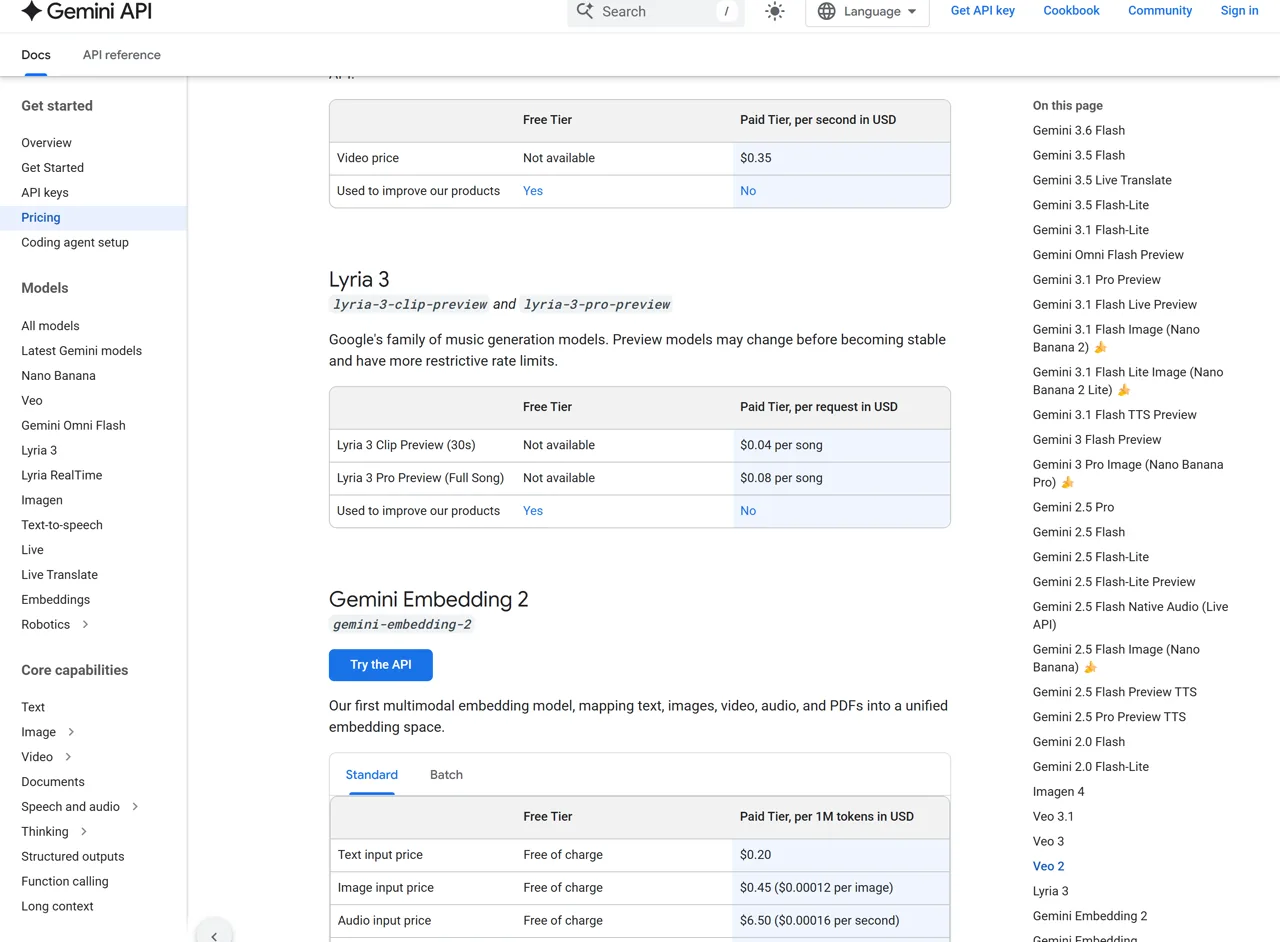
Google Pagina dei prezzi dell'API per sviluppatori Gemini elenca l'anteprima di Lyria 3 Pro su $0,08 per ogni richiesta di brano completo e l'anteprima del video di Lyria 3 su $0,04 per brano da 30 secondi. Nessuno dei due modelli Lyria offre un piano gratuito con API Gemini. Il prezzo è calcolato per richiesta, non per token.
PERCORSO
API per sviluppatori Gemini
MODELLO / PRODOTTO
lyria-3-pro-anteprima
MODELLO REVISIONATO
PREZZO DI VENDITA
$0,08 per brano completo
LIMITE IMPORTANTE
Nessun piano gratuito; modello di anteprima
PERCORSO
API per sviluppatori Gemini
MODELLO / PRODOTTO
lyria-3-clip-anteprima
PREZZO DI VENDITA
$0,04 per brano da 30 secondi
LIMITE IMPORTANTE
Ruolo in forma abbreviata corretto
PERCORSO
Google Cloud
MODELLO / PRODOTTO
Anteprima di Lyria 3 Pro
PREZZO DI VENDITA
Consulta i prezzi attuali di Lyria
LIMITE IMPORTANTE
Si applicano i termini e le quote di anteprima
PERCORSO
Prodotto di consumo Gemini
MODELLO / PRODOTTO
Generazione musicale Lyria
PREZZO DI VENDITA
L'accesso tramite abbonamento varia a seconda del piano e della regione
LIMITE IMPORTANTE
Percorso di fatturazione diverso da quello dell'API
PERCORSO
Percorso "Tested Broly Anywhere"
MODELLO / PRODOTTO
lyria-3-pro
PREZZO DI VENDITA
La risposta dell'API ha riportato un costo a monte pari a $0,08
LIMITE IMPORTANTE
Un'iniziativa legata al luogo specifico, non una promessa commerciale
Per quanto riguarda l'abbonamento, inizia con quello attuale Recensione di Google AI Plus e i suoi limiti nascosti.
Il Confronto tra i piani Google AI Plus e Pro distingue i limiti del piano che possono essere facilmente confusi con l'accesso all'API.
Per verificare esclusivamente il prezzo, consultare l'attuale Prezzi dell'abbonamento a Google AI Plus.
L'accesso a livello regionale può subire variazioni; il Google AI Plus: disponibilità negli Stati Uniti e analisi dei prezzi spiega perché un abbonamento per i consumatori non dovrebbe essere considerato come un accesso universale all'API.
Se il prezzo è il fattore determinante, il semplice calcolo è allettante: 10 generazioni Pro costano $0,80 al netto delle imposte e degli adeguamenti della piattaforma. Il costo nascosto è il tempo necessario per la selezione dei contenuti. Testi o strumentazioni precisi potrebbero richiedere più output anche quando l’API in sé è poco costosa.
API Lyria 3 Pro: ID del modello, richiesta e output
Per il percorso ufficiale Gemini, utilizzare il Flusso di lavoro musicale dell'API Interactions Gemini con ID modello lyria-3-pro-anteprima. La risposta fornisce proprietà di praticità per l'audio e il testo generati. L'audio è codificato in base64; il testo può contenere i testi delle canzoni o informazioni strutturali.
Esempio in Python basato sulla documentazione attuale di Google
PYTHON
import base64
from google import genai

client = genai.Client()

interaction = client.interactions.create(
    model="lyria-3-pro-preview",
    input=(
 "Un brano elettronico cinematografico di 90 secondi in mi minore. "
 "Inizia con un impulso filtrato, si sviluppa in un ampio ritornello, "
 "aggiungi una pausa strumentale guidata dal violoncello e termina senza dissolvenza."
    ),
)

audio_generato = interaction.output_audio
if audio_generato:
    with open("lyria-song.mp3", "wb") as file:
 file.write(base64.b64decode(audio_generato.data))

lyrics_or_structure = interaction.output_text
if lyrics_or_structure:
    print(lyrics_or_structure)
La guida di Google indica che il formato predefinito è l'MP3. Inoltre, precisa che response_format={"type": "audio"} per richiedere un'uscita audio professionale nel formato supportato da quel flusso dell'API Interactions, compresa l'opzione WAV documentata. L'attuale pagina del modello di Google Cloud è più limitata: elenca MP3, 44,1 kHz e 192 kbps. Indicare il nome della superficie quando si descrivono i formati, anziché presentare un'unica specifica universale.
Anche l'itinerario Anywhere sottoposto a test era asincrono, ma lo schema delle attività è specifico per la sede. Restituiva i campi ID attività, stato, avanzamento, URL audio, timestamp, fornitore e costo. Non incollare lo schema di quella risposta nel codice Gemini né dare per scontato che si tratti dello schema ufficiale di Google.
Lyria 3 Pro vs Lyria 3 Clip vs Lyria 3.5
| Modello | Uso ottimale | Lunghezza | Posto vacante nell'agosto 2026 |
|---|---|---|---|
| Anteprima del video di "Lyria 3" | Loop, anteprime, brevi video musicali | 30 secondi | Anteprima API Gemini; $ 0,04 per richiesta |
| Anteprima di Lyria 3 Pro | Canzoni complete, strofe, ritornelli, bridge | Fino a 184 secondi su Google Cloud | Gemini/anteprima Google Cloud; $0,08/richiesta |
| Lyria 3.5 | Qualità musicale di ultima generazione e creazione musicale con Flow Music | Fino a tre minuti nell'attuale sistema di posizionamento di DeepMind | Promuosso tramite Flow Music; non è l'ID del modello utilizzato in questo test dell'API |
Scegli Clip quando la velocità e la creazione di contenuti brevi sono fondamentali. Scegli Pro quando hai bisogno di un brano completo tramite l'API documentata. Scegli Lyria 3.5 quando l'esperienza più recente di Flow Music è più importante rispetto all'utilizzo dell'ID del modello tramite l'API Pro.
Lyria è inoltre più limitata rispetto a un modello audio generico. Se il lavoro prevede la combinazione di dialoghi, effetti sonori, rumori ambientali e musica in un’unica scena generata, il Recensione di Seed Audio 1.0: voci, effetti sonori e musica copre quel diverso flusso di lavoro.
Per la produzione video, scopri come Veo 3.1 gestisce il suono e l'audio di sottofondo.
Quando la recitazione e la sincronizzazione sono il problema più difficile, usa il metodo pratico Veo 3.1 Flusso di lavoro relativo a dialoghi, audio e sincronizzazione labiale.
Sicurezza, SynthID, uso commerciale e limitazioni
Google afferma che le uscite di Lyria 3 includono la filigranatura SynthID. Il specifiche attuali di Google Cloud Elencano inoltre le credenziali dei contenuti (C2PA), il filtraggio degli input, il filtraggio dei risultati e il filtraggio della somiglianza vocale. Questi controlli garantiscono la tracciabilità e la sicurezza; tuttavia, non esonerano dall’obbligo di ottenere le autorizzazioni relative a testi, immagini di riferimento, campioni, immagini e diritti di distribuzione per il proprio progetto.
Google Cloud definisce Lyria 3 Pro un'offerta in anteprima nell'ambito dell'IA generativa. Nella pagina dedicata si precisa che i clienti possono scegliere di utilizzare l'anteprima per scopi produttivi o commerciali e di divulgare i risultati generati a terzi, nel rispetto dei termini pre-GA e dell'accordo che ne regola l'accesso. Ciò non equivale a una promessa incondizionata che ogni brano generato sia privo di rischi o esclusivo.
I limiti pratici sono chiari:
- I modelli di anteprima possono subire modifiche prima del rilascio della versione stabile.
- Il piano tariffario Gemini API non prevede una quota gratuita per Lyria 3.
- Un prompt restituisce un clip audio nella pagina del modello Google Cloud corrente.
- Il prompting negativo non è supportato come funzionalità ufficiale.
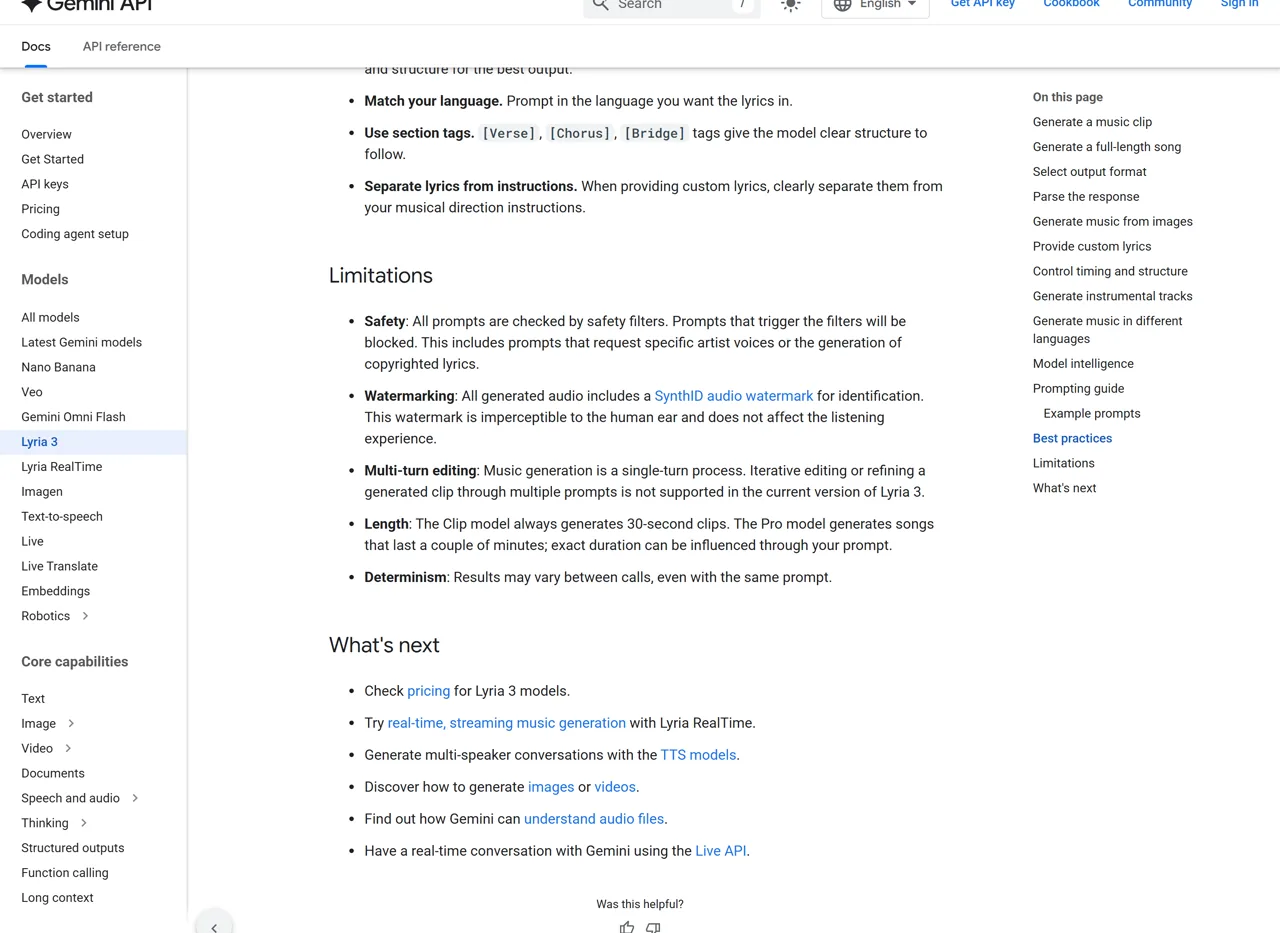
- L'attuale generazione musicale Gemini è a giro singolo, anziché un editor multigiro in loco.
- La durata e l’aderenza tempestiva sono variabili.
- Il testo esatto, i BPM, la tonalità e i timestamp devono ancora essere sottoposti a un controllo di qualità a livello di output.
A chi è indicato Lyria 3 Pro?
Utilizza Lyria 3 Pro se sei uno sviluppatore, un regista, un creatore di videogiochi, un autore di canzoni o fai parte di un team di creazione di contenuti che desidera ottenere idee musicali complete tramite un'API e ha la possibilità di valutare diverse opzioni. È particolarmente indicato per composizioni cinematografiche, strutture pop, lunghi archi strumentali e demo vocali multilingue.
Lascia perdere — oppure tieni a portata di mano un secondo strumento — se hai bisogno di stem deterministici, modifiche precise dopo la generazione, vincoli negativi garantiti o una versione finale masterizzata ottenuta con una sola richiesta. Lyria 3 Pro è più efficace nel generare una traccia di qualità che nell’obbedire a ogni istruzione come se fosse una traccia di automazione di una DAW.
GlobalGPT strumenti audio basati su browser può supportare le attività relative al riconoscimento vocale e alla trascrizione in un unico posto, ma quella pagina pubblica è una piattaforma di prodotto distinta dall’API di Lyria qui testata. La recensione non sostiene che la pagina sia un percorso verificato di Lyria 3 Pro.
Domande frequenti su Google Lyria 3 Pro
Lyria 3 Pro è l'ultimo modello di Google Music?
No. A partire dal 10 agosto 2026, Google DeepMind definisce Lyria 3.5 il suo modello più recente per la generazione di musica e lo promuove tramite Flow Music. Lyria 3 Pro rimane il modello documentato per l'anteprima di brani completi per i percorsi Gemini e Google Cloud per sviluppatori nell'ambito di lyria-3-pro-anteprima.
Quanto costa Lyria 3 Pro?
L'API per sviluppatori Gemini indica che l'anteprima di Lyria 3 Pro costa $0,08 per ogni richiesta di brano completo. L'anteprima di Lyria 3 Clip costa $0,04 per ogni brano di 30 secondi. Nessuno dei due modelli prevede un livello gratuito dell’API Gemini, mentre gli abbonamenti per i consumatori seguono regole diverse in termini di piani tariffari e aree geografiche.
Qual è la durata massima di un brano su Lyria 3 Pro?
Secondo quanto dichiarato pubblicamente da Google, la durata massima è di tre minuti. L'attuale pagina tecnica di Google Cloud indica una durata massima dei clip audio pari a 184 secondi. Nei nostri due test da 180 secondi, i file MP3 restituiti avevano una durata rispettivamente di 176,170 e 177,006 secondi.
Lyria 3 Pro è in grado di cantare testi personalizzati con precisione?
Sì, ma non in modo deterministico. Una delle tre ripetizioni del testo personalizzato corrispondeva esattamente al testo fornito nella trascrizione dell'ascolto. Un'altra ometteva gran parte della riga finale del bridge, mentre la terza aggiungeva ripetizioni in eco. Confronta sempre la traccia vocale completa con il testo originale.
Lyria 3 Pro è in grado di generare musica strumentale senza voce?
Sì, ma un'esclusione scritta non costituisce una garanzia assoluta. In un test strumentale non sono state inserite voci, mentre nel test con il vincolo “minimal-techno” sono stati aggiunti frammenti vocali nonostante l'indicazione "no vocals". Anche Google Cloud indica, nella pagina dedicata al modello attuale, che i prompt negativi non sono supportati.
Qual è l'ID del modello API di Lyria 3 Pro?
L'ID ufficiale del modello Gemini e di Google Cloud è lyria-3-pro-anteprima. Il sito dedicato alla prova pratica oggetto di questa recensione utilizzava l'ID percorso di terze parti lyria-3-pro; lo schema delle attività e la nomenclatura non devono sostituire l'API Interactions ufficiale di Google.
Quale formato di file genera Lyria 3 Pro?
La guida Gemini di Google indica che l’MP3 è il formato predefinito e descrive un’opzione di formato di output “Pro” nell’API Interactions. Google Cloud indica un MP3 a 44,1 kHz e 192 kbps. Tutti i 18 file del percorso da noi testato corrispondevano a tale specifica MP3 stereo a 44,1 kHz e 192 kbps.
Lyria 3 Pro può essere utilizzato a fini commerciali?
Google Cloud precisa che i clienti possono scegliere di utilizzare questa versione in anteprima per scopi di produzione o commerciali e di divulgare i risultati generati, nel rispetto dei termini e dell'accordo di accesso previsti per la fase pre-GA. Si raccomanda di prendere visione di tali termini e di ottenere l'autorizzazione per eventuali testi, immagini, campioni o contenuti multimediali di riferimento prima della distribuzione.
Posso usare Lyria 3 Pro su GlobalGPT?
Questa recensione non pretende di fornire un percorso pubblico verificato per GlobalGPT Lyria. Le 18 generazioni testate sono state elaborate tramite l’API Broly Anywhere Tasks, mentre la pagina audio pubblica di GlobalGPT presenta attualmente un’area di lavoro separata per il parlato e la trascrizione. Utilizza Gemini o Google Cloud per il percorso API ufficiale documentato.
Il verdetto finale
Google Lyria 3 Pro è un modello API affidabile per la generazione di brani musicali completi, caratterizzato da un costo per richiesta contenuto, da output coerenti di lunga durata e da controlli dei prompt insolitamente dettagliati. Il test condotto su 18 esecuzioni ha inoltre messo in luce un aspetto che le demo di lancio tendono a nascondere: i dettagli strutturali, i testi esatti, gli strumenti specificati e i vincoli negativi possono variare anche tra richieste identiche.
Questo compromesso è accettabile quando è possibile generare due o tre opzioni, confrontare la canzone per intero e scegliere la versione migliore. Per questo tipo di flusso di lavoro, Lyria 3 Pro è sicuramente consigliabile. Per una riproduzione deterministica dei testi o per ottenere una precisione pronta per l’editing a partire da una singola richiesta, è comunque necessaria una revisione umana e l’uso di una DAW.