Risposta rapida: FLUX 3 è il modello di base multimodale di Black Forest Labs per immagini, video, audio e previsione delle azioni. All’11 agosto 2026, BFL indica FLUX 3 Video in fase di accesso anticipato con clip fino a 20 secondi, audio nativo opzionale e prezzi pubblici al secondo. Anche GlobalGPT dispone di un percorso verificato per FLUX 3 Video. Nel nostro test condotto su tre esecuzioni, ogni attività è stata completata e ha restituito un file MP4 della durata di 5,04 secondi con un flusso audio, ma il controllo esatto della durata, la spaziatura tipografica e la coerenza degli oggetti non erano perfetti.
Tale status deve ancora essere formulato con attenzione. Il post di lancio ufficiale e pagina ufficiale del modello FLUX 3 Video viene descritto come "Early Access", mentre la pagina dei prezzi di BFL ora riporta le tariffe relative ai video. GlobalGPT mette a disposizione un percorso separato sulla piattaforma basato su tale modello. L'accesso tramite tale percorso non implica che tutte le API di BFL, l'opzione "private-weight", il modello "Image", il modello "Action" o la versione "Dev" di FLUX 3 siano disponibili al pubblico.
Questo aggiornamento introduce una piccola verifica pratica: tre generazioni l'11 agosto utilizzando l'ambiente di test flux-3-video ID del modello, inclusa una ripetizione esatta del prompt. È sufficiente per documentare il comportamento reale e i punti di errore evidenti, ma tre output non costituiscono un benchmark esaustivo.
Tre sessioni di test video FLUX 3 condotte direttamente dall'azienda: non si tratta di un benchmark su larga scala.
| Corse | Durata restituita | Risoluzione | Audio |
|---|---|---|---|
| 3/3 completato con successo | 5,04 s per clip | 1280 × 704 | Dati decodificati in tutti i file |
Che cos’è FLUX 3?
FLUX 3 è un modello di base multimodale sviluppato da Black Forest Labs. A differenza dei sistemi addestrati esclusivamente a trasformare il testo in immagini, secondo BFL questo modello apprende contemporaneamente da immagini, video e audio all’interno di un’unica architettura. L’obiettivo è quello di costruire rappresentazioni che colleghino struttura spaziale, movimento, suono, causa e azione, anziché trattare ciascun mezzo come una caratteristica isolata.
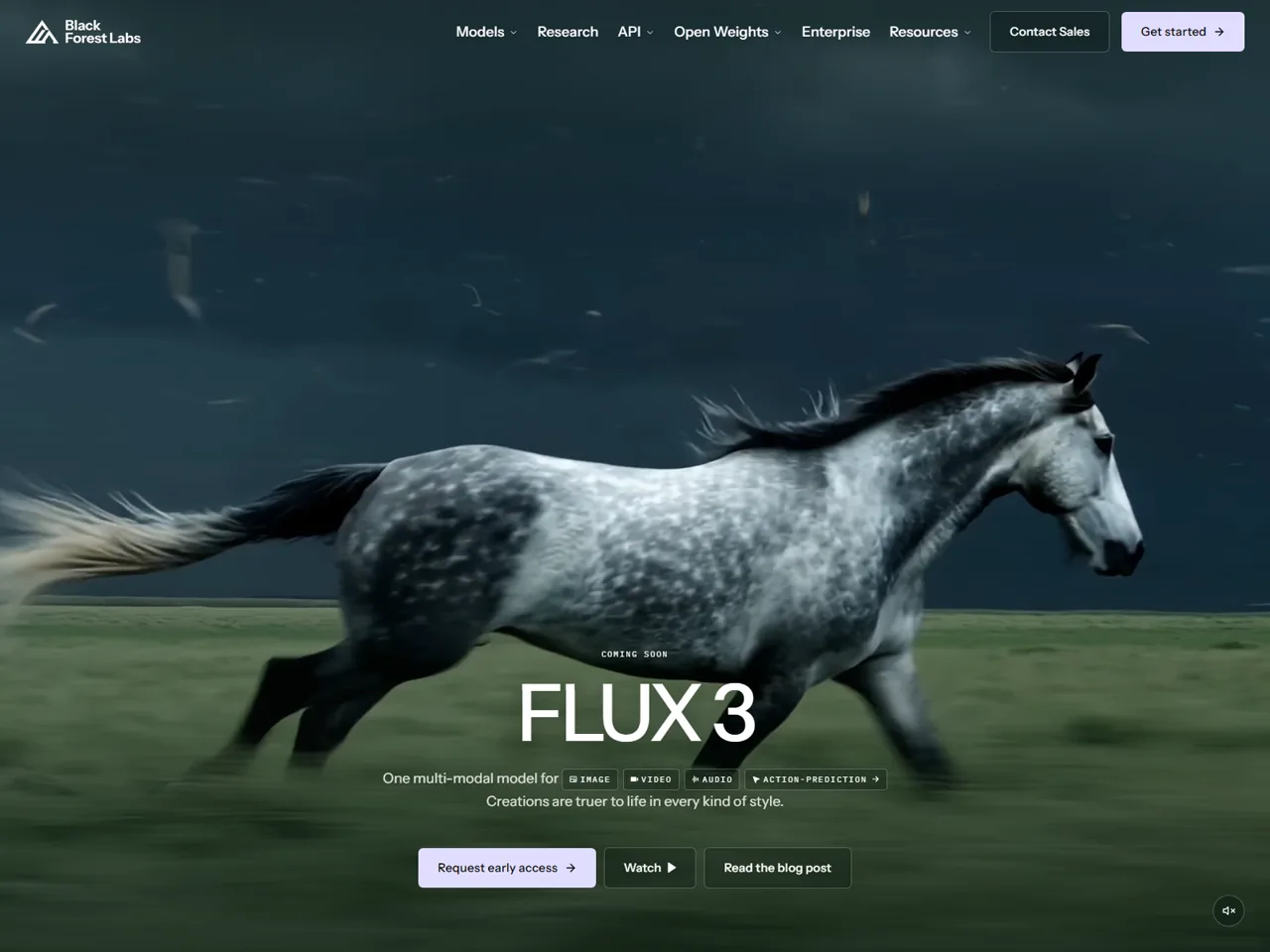
Il nome potrebbe sembrare il semplice successore di FLUX.1 e FLUX.2, ma la portata è molto più ampia. FLUX.2 rimane una famiglia di strumenti per la generazione e l'editing di immagini; il Guida a FLUX 2 Pro tratta il flusso di lavoro relativo alle immagini di quella generazione, il contesto dei prezzi e i prompt. FLUX 3 viene presentato come una struttura portante condivisa per la creazione di contenuti e la previsione delle azioni.
BFL utilizza l'espressione “modello del mondo” per descrivere questa direzione. In questo contesto, ciò non significa che l’azienda abbia annunciato l’intelligenza generale. Significa piuttosto che il modello è progettato per apprendere come gli oggetti visibili, il movimento, l’audio e le azioni siano correlati nel tempo. Questa distinzione è importante perché l’aspetto più interessante di FLUX 3 non è semplicemente la produzione di “immagini migliori”, bensì l’utilizzo di un unico modello sottostante in grado di gestire diversi tipi di generazione e controllo.
Perché FLUX 3 è molto più di un semplice generatore di immagini
La maggior parte dei prodotti di intelligenza artificiale creativa viene ancora percepita come una serie di strumenti separati: un modello genera immagini, un altro produce video e un terzo aggiunge voce o effetti sonori. FLUX 3 è stato progettato partendo da una premessa diversa. Se un’unica architettura apprende queste modalità insieme, un prompt, un’immagine di riferimento, una sequenza di movimento e una colonna sonora possono potenzialmente condividere la stessa comprensione interna.
- Le immagini offrono spazio: oggetti, composizione, texture, tipografia e relazioni visive.
- Il video aggiunge tempo: movimento, persistenza, contatto e relazione di causa-effetto tra i fotogrammi.
- L'audio aggiunge un altro segnale sincronizzato: il parlato, l’atmosfera e i suoni legati agli eventi visibili.
- La previsione dell'azione collega la percezione al controllo: La rappresentazione del modello può essere adattata per prevedere quale dovrebbe essere la prossima azione del robot.
Per i creatori, il vantaggio pratico consiste nella riduzione dei passaggi tra le diverse fasi di produzione. L’audio nativo è particolarmente importante perché consente di ridurre il divario tra la realizzazione di una clip e la produzione separata di dialoghi, effetti e sincronizzazione. Se il suono è la vostra priorità, l’attuale Veo 3.1 Guida audio mostra come un'altra importante famiglia di prodotti video affronti oggi la questione dell'audio nativo.
Panoramica delle funzionalità di FLUX 3
| Capacità | Cosa ha annunciato BFL | Situazione all'11 agosto 2026 |
|---|---|---|
| Video FLUX 3 | Creazione e montaggio di video con audio nativo opzionale, inclusi voce, effetti, stili, tipografia e flussi di lavoro con riprese multiple | Accesso anticipato a BFL; prezzi ufficiali pubblicati; percorso GlobalGPT verificato |
| Immagine FLUX 3 | Generazione e modifica di immagini tramite API e accesso ai pesi privati | Annunciato l'accesso anticipato; questo articolo non lo ha testato |
| FLUX 3 Azione | Previsione delle azioni native e modelli specializzati basati sulla struttura portante del video | A partire da alcuni partner selezionati |
| FLUX 3 Dev | Infrastruttura multimodale a peso variabile progettata per video, audio, immagini e previsione delle azioni | Annunciato; data e licenza non pubblicate |
FLUX 3 Video è il prodotto più concreto nel breve termine. Secondo BFL, supporta la conversione da testo a video e il montaggio, l’audio sincronizzato, i dialoghi multilingue, diversi formati di immagine, la tipografia e le clip concatenate. Queste caratteristiche lo collocano in un mercato sempre più affollato; il Confronto tra i migliori generatori di video basati sull'intelligenza artificiale fornisce un contesto utile su ciò che i creatori possono già utilizzare mentre l'accesso a FLUX 3 rimane limitato.
Il post di lancio descrive inoltre, nelle valutazioni preliminari, clip video da 10 secondi in 720p generate da testo con audio. BFL precisa espressamente che il modello e l’ambiente di valutazione sono ancora in fase di sviluppo. Ciò rende i dati utili come prime evidenze riportate dall’azienda, ma non sostituiscono test indipendenti e ripetibili una volta che l’accesso pubblico sarà esteso.
La pagina del modello attuale va oltre: afferma che FLUX 3 Video è in grado di generare fino a 20 secondi in un unico ciclo, con audio opzionale e voce, effetti e rumori ambientali multilingue generati insieme ai fotogrammi. Questi sono i limiti ufficiali delle funzionalità; il test pratico riportato di seguito mostra ciò che la piattaforma collegata ha effettivamente restituito in risposta ai nostri comandi.
FLUX 3 è già disponibile?
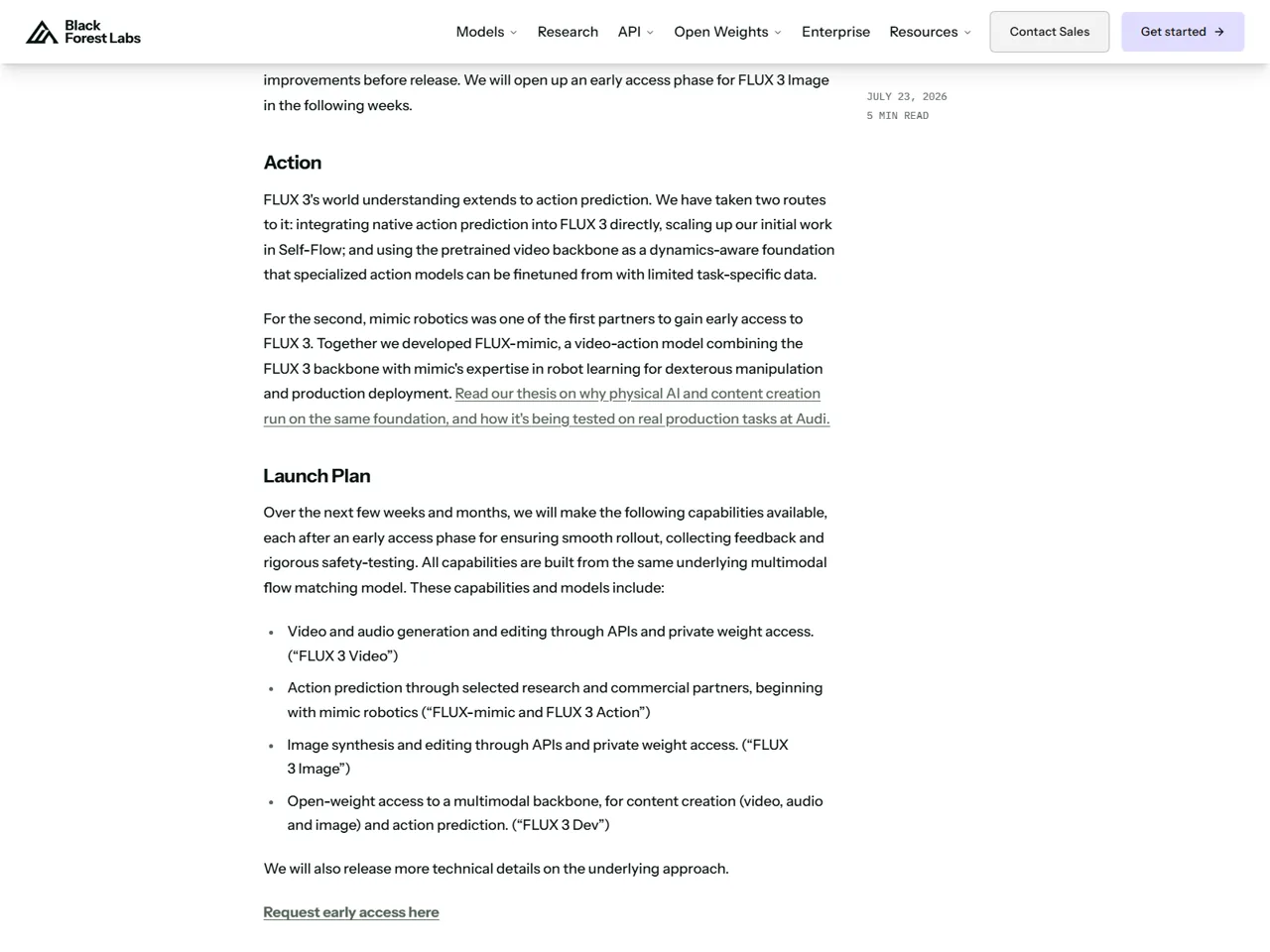
Sì, ma solo tramite un programma di accesso anticipato a tappe. BFL ha avviato una procedura di richiesta di accesso anziché un lancio su larga scala in modalità self-service. L'azienda può quindi collaborare con utenti e partner selezionati mentre i modelli, le API, le opzioni di peso privato e il processo di valutazione sono ancora in fase di evoluzione.
| Domanda | Noto | Ancora limitato o sconosciuto |
|---|---|---|
| È possibile candidarsi al programma BFL? | Sì, tramite il modulo di richiesta ufficiale | Criteri di accettazione e tempo di risposta |
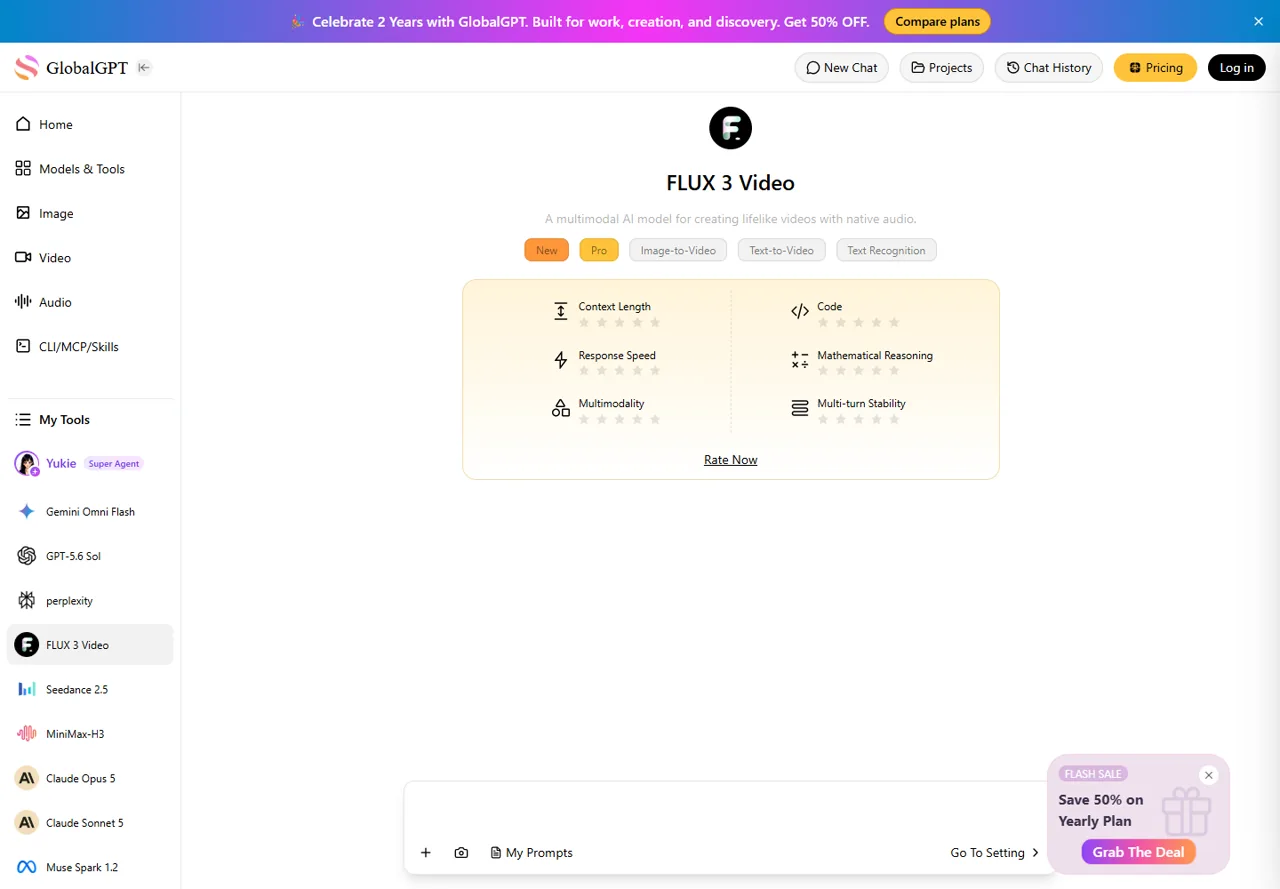
| Gli utenti possono provare FLUX 3 Video su GlobalGPT? | Sì; il link alla pagina del prodotto verificato è riportato qui sotto | I limiti di percorso e le quote dipendono dall'account della piattaforma |
| Quali sono i prezzi di BFL resi pubblici? | Tariffe per la conversione di testo/immagini in video, continuazione, bozza, HD e FHD | Condizioni relative ai piani "Private-weight" e "Enterprise" |
| Ci saranno gare a peso libero? | FLUX 3 Dev è previsto come modello a peso libero | Data di rilascio, licenza e requisiti hardware |
La conclusione più prudente è semplice: FLUX 3 è reale e il lancio è in corso, ma l’espressione “Early Access” non va interpretata come “disponibile a tutti”. Se avete bisogno di una scadenza per la produzione, attendete la conferma scritta dell’accesso e i relativi termini prima di progettare un flusso di lavoro basato su di esso.
Abbiamo testato FLUX 3 - Video: tre esecuzioni, risultati reali
Configurazione del test: Abbiamo eseguito i test l'11 agosto 2026 tramite l'ambiente di test delle attività Broly collegato alla piattaforma, utilizzando l'ID esatto del modello flux-3-video. Ogni richiesta conteneva solo l'ID del modello e il prompt. Abbiamo inviato tre attività: un prompt relativo alla pubblicità di un prodotto, un prompt relativo alla coerenza temporale e una ripetizione esatta del primo prompt. L’API delle attività ha riportato tempi di elaborazione effettivi rispettivamente di 88, 190 e 77 secondi. Poiché le esecuzioni erano simultanee e il percorso è ancora in fase di sviluppo, questi tempi non devono essere considerati come un benchmark di latenza.
Test 1: tipografia, trasformazione e audio nativo
ID attività: task_tl5xE4BIOv2ojEb0VOMFnVT56YtvzhZ8. La traccia richiedeva uno spot pubblicitario di un profumo della durata di otto secondi, con due inquadrature, il testo esatto dell’etichetta, una trasformazione dal flacone alla città, il rumore di un vetro che si rompe, un sibilo e una battuta recitata.
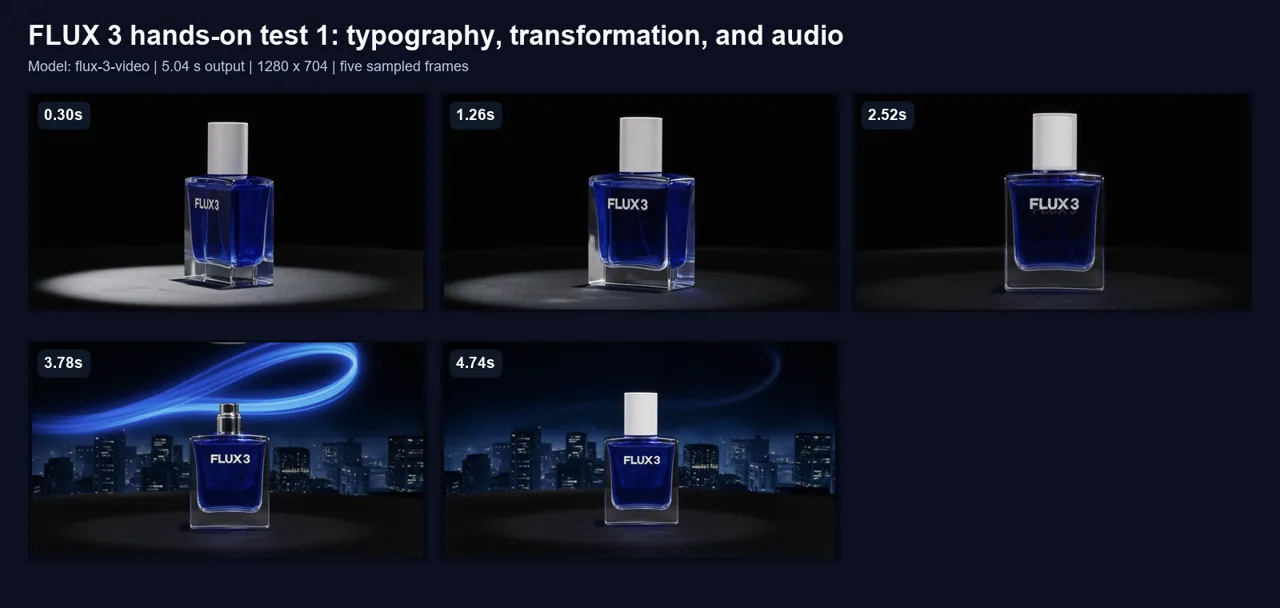
Cosa è successo: Il risultato finale ha completato l’arco visivo richiesto e ha mantenuto riconoscibile il concetto del profumo blu in entrambe le scene. L’etichetta è rimasta leggibile, ma ha visivamente ridotto lo spazio richiesto e appariva più simile a “FLUX3” che all’esatto “FLUX 3”. Durante la trasformazione, anche il flacone ha cambiato forma del tappo e del corpo. Il file MP4 conteneva dati audio decodificati, ma la nostra ispezione automatizzata non ha trascritto la battuta pronunciata, pertanto non valutiamo il dialogo parola per parola. Soprattutto, la clip restituita durava 5,04 secondi anziché gli otto secondi richiesti.
Test 2: movimento in un unico scatto e coerenza degli oggetti
ID attività: task_izFhE8RhTeA5Tb1EaESJqbb7sP6wCwoE. Questa indicazione eliminava i cambi di scena e richiedeva a un robot a molla di superare tre punti di riferimento in un ordine prestabilito, mantenendo le sue caratteristiche distintive.
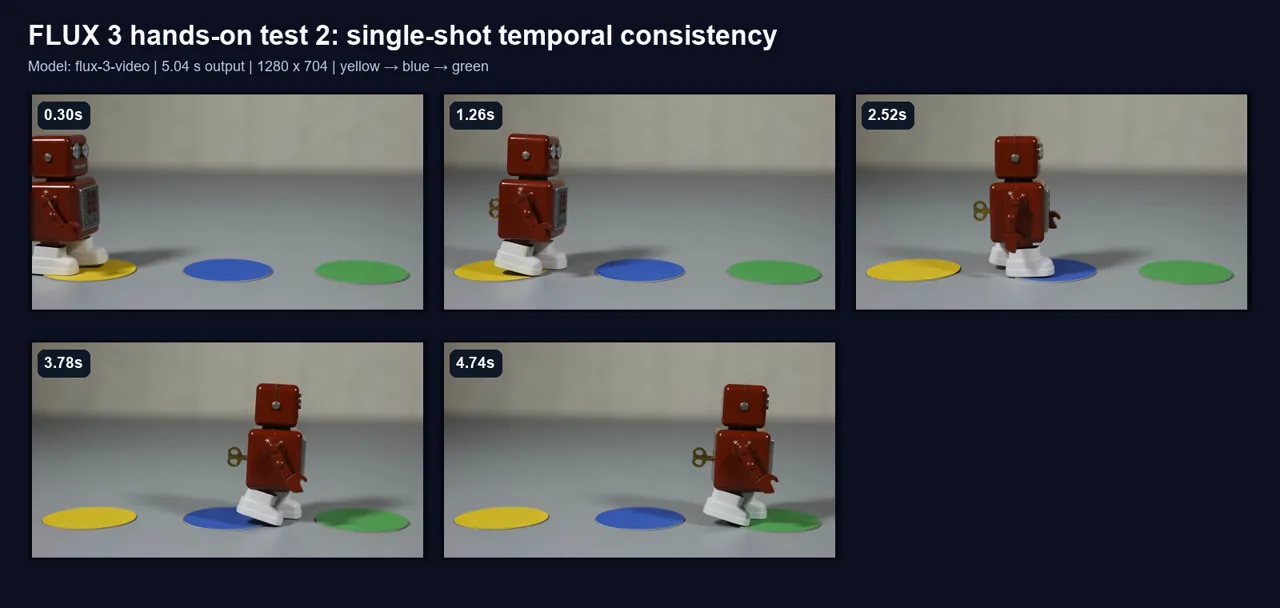
Cosa è successo: Questo è stato il risultato più pulito. Il robot si è mosso nella direzione richiesta e ha attraversato i marcatori giallo, blu e verde in ordine. I suoi principali tratti distintivi sono rimasti visibili per tutta la ripresa, senza personaggi aggiuntivi né tagli evidenti della telecamera. Il movimento appariva semplice piuttosto che cinematografico, ma proprio quella semplicità ha reso più facile valutare la coerenza. Anche in questo caso la durata del filmato è stata di 5,04 secondi e conteneva dati audio decodificati.
Test 3: ripetizione esatta del primo prompt
ID attività: task_JsnPFkB0Yqf55EwaoPU8BShBRkGLJT44. Abbiamo inviato nuovamente il primo prompt senza modificare nemmeno una parola.
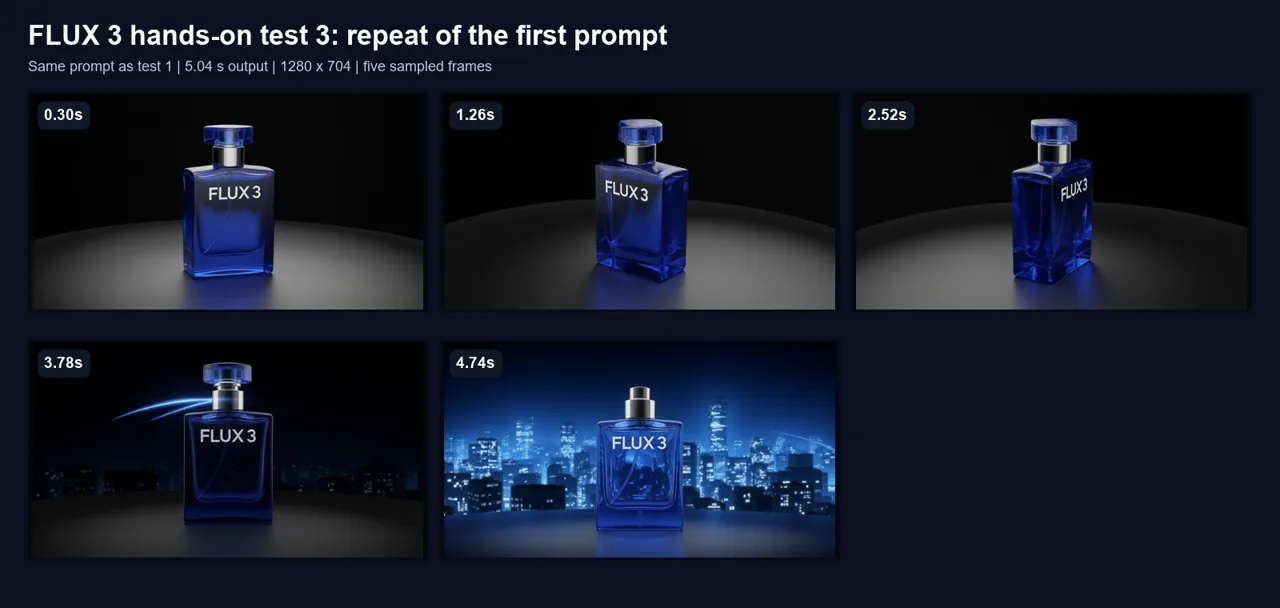
Cosa è successo: La ripetizione ha mantenuto il concetto piuttosto che il risultato esatto. Ha riprodotto nuovamente una bottiglia blu, la scritta leggibile “FLUX3”, un nastro di luce e uno skyline notturno, ma la geometria della bottiglia, il tappo, l’inquadratura e la transizione erano diversi. Ciò è normale per una generazione non inizializzata, ma diventa rilevante quando il team di un marchio si aspetta che i dettagli del prodotto siano ripetibili.
| Dimensione di prova | Risultato osservato | Conclusione pratica |
|---|---|---|
| Completamento dell'attività | 3 attività su 3 completate con successo | Il percorso collegato era operativo durante questo test |
| Controllo della durata | Tutte e tre le richieste prevedevano 8 secondi; tutte hanno restituito 5,04 secondi | Verificare i controlli relativi alla durata a livello di percorso prima della messa in produzione |
| Tipografia | L'etichetta è leggibile, ma la spaziatura esatta di “FLUX 3” non è stata mantenuta | Pianificare eventuali revisioni o interventi successivi alla produzione sul testo relativo al marchio |
| Coerenza temporale | Il robot semplice ha mantenuto le sue caratteristiche distintive e l'ordine dei marcatori | I prompt a singolo tentativo con vincoli possono dare buoni risultati |
| Ripetibilità | Stessa storia, ma con geometrie del prodotto e scelte di fotocamere diverse | Una ripetizione esatta del prompt non equivale a una ripetizione visiva esatta |
| Audio | Ogni file MP4 conteneva dati audio decodificati; i dialoghi non venivano trascritti automaticamente | Ascoltare e verificare manualmente la sincronizzazione prima dell'approvazione |
Il nostro verdetto: Il video FLUX 3 ha seguito meglio la logica generale della scena piuttosto che i vincoli esatti di produzione. La trasformazione fluida del prodotto e il movimento ordinato del robot sono stati incoraggianti. Il tempo di ritorno fisso di 5,04 secondi, la spaziatura imperfetta del testo e la deriva nella forma della bottiglia sono motivi per testare il proprio flusso di lavoro prima di procedere. Si tratta di un utile indicatore pratico, non di un punteggio valido per l’intero modello.
FLUX 3 vs FLUX.2: cosa è cambiato in realtà?
| Area | FLUX.2 | FLUX 3 |
|---|---|---|
| Identità pubblica primaria | Famiglia di prodotti per la creazione e la modifica delle immagini | Modello di base multimodale |
| Modalità | Immagini e flussi di lavoro per l'elaborazione delle immagini | Immagini, video, audio e previsione delle azioni |
| Accesso attuale | Modelli API pubblicati e prezzi | Accesso anticipato ai video BFL, prezzi ufficiali dei video e percorso GlobalGPT verificato |
| Direzione del modello aperto | Diverse varianti di FLUX.2 e endpoint documentati | FLUX 3 Dev: annunciati i pesi, dettagli in arrivo |
| Giudizio equo sulle prestazioni | Può essere testato come modello di immagine già da oggi | Il video può essere sottoposto a verifica; è ancora prematuro esprimere un giudizio generale a livello di famiglia |
Il cambiamento più significativo riguarda l'ambito di applicazione, non un miglioramento percentuale verificato. FLUX 3 non è semplicemente FLUX.2 con un nuovo punteggio di qualità dell'immagine; è concepito per unificare la generazione creativa e l'azione fisica in un'unica famiglia. Per una decisione attuale basata esclusivamente sull'immagine, il Confronto tra FLUX 2 e Nano Banana Pro è più pratico perché oggi entrambe le parti possono essere considerate strumenti di immagine.
Per un confronto completo tra FLUX 3 e FLUX.2 occorrono ancora prompt di immagini corrispondenti, modifiche di riferimento, tipografia, aderenza ai prompt, latenza e costi. Il test video in tre passaggi riportato sopra colma in parte il divario di dati, e BFL ora pubblica le tariffe di FLUX 3 Video, ma non mette a confronto il modello Image né le varianti open-weight.
Cosa rivelano le demo ufficiali e i risultati della robotica
I materiali di lancio di BFL mostrano video generati, audio sincronizzato, stili visivi, testo animato e le prime funzionalità di editing. Essi illustrano la direzione del prodotto e il tipo di risultati a cui l’azienda punta. Trattandosi di esempi ufficiali selezionati, non ci dicono con quale frequenza un utente comune potrà ottenere la stessa qualità, quanto tempo richiederà la generazione dei risultati né quale sarà il costo di ciascun risultato.
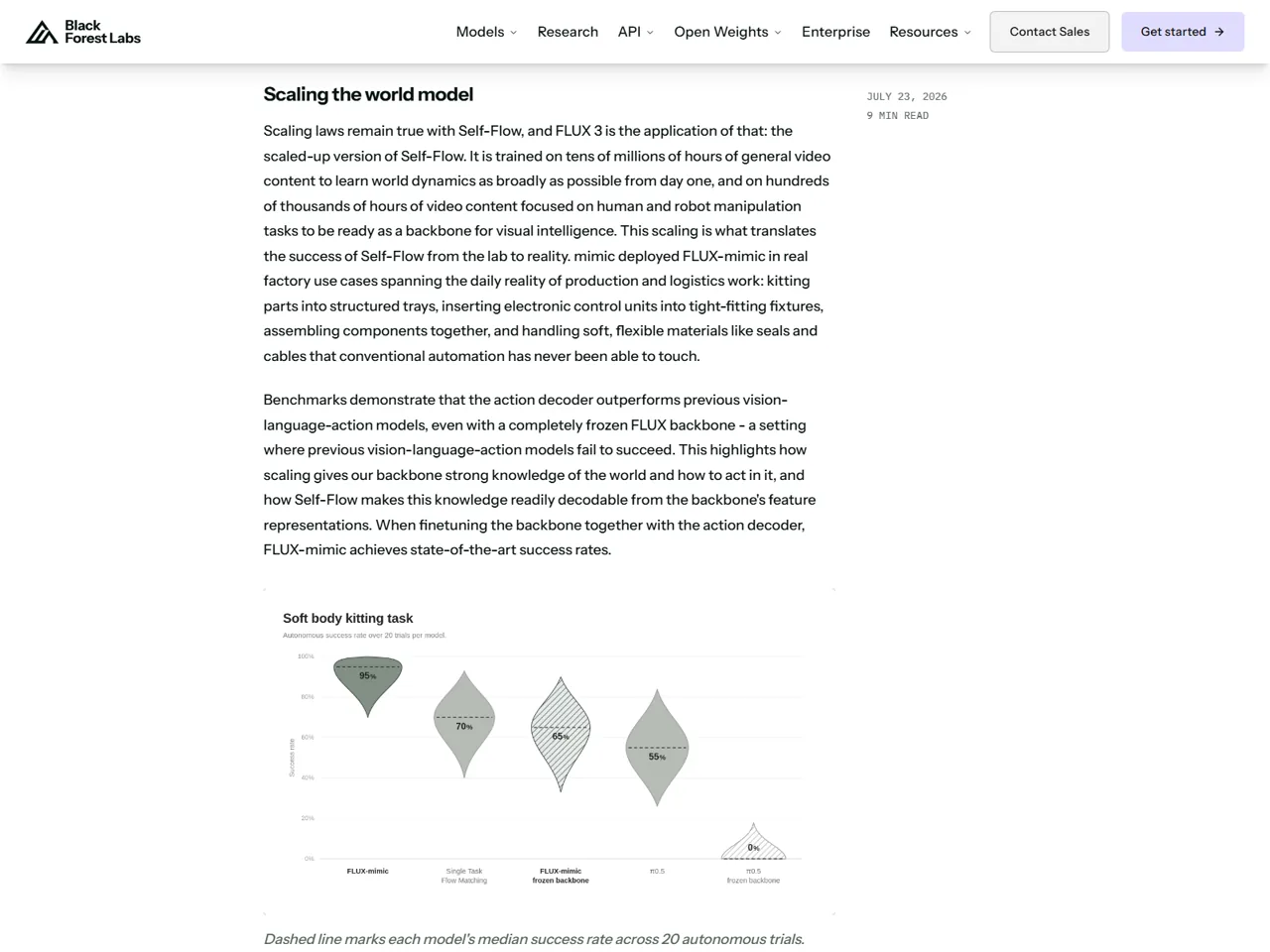
Il lavoro nel campo della robotica è più specifico. Nel FLUX 3 x rapporto Mimic, BFL e mimic robotics descrivono l'adattamento della struttura video FLUX 3 per la previsione delle azioni dei robot. Il grafico di kitting dei corpi morbidi riportato mostra un tasso di successo mediano di 95% per FLUX-mimic, dove ogni mediana tratteggiata si basa su 20 prove autonome.
Si tratta di un risultato nel campo della robotica, non di un benchmark sulla qualità delle immagini o dei video. La sua rilevanza è di natura concettuale: BFL sostiene che un backbone addestrato a modellare il movimento, il contatto, il peso e la causa possa fornire rappresentazioni utili per compiti fisici. Per stabilire se lo stesso approccio sia generalizzabile a robot, fabbriche e compiti diversi, saranno necessarie prove indipendenti più ampie.
Prime reazioni della comunità su X e Reddit
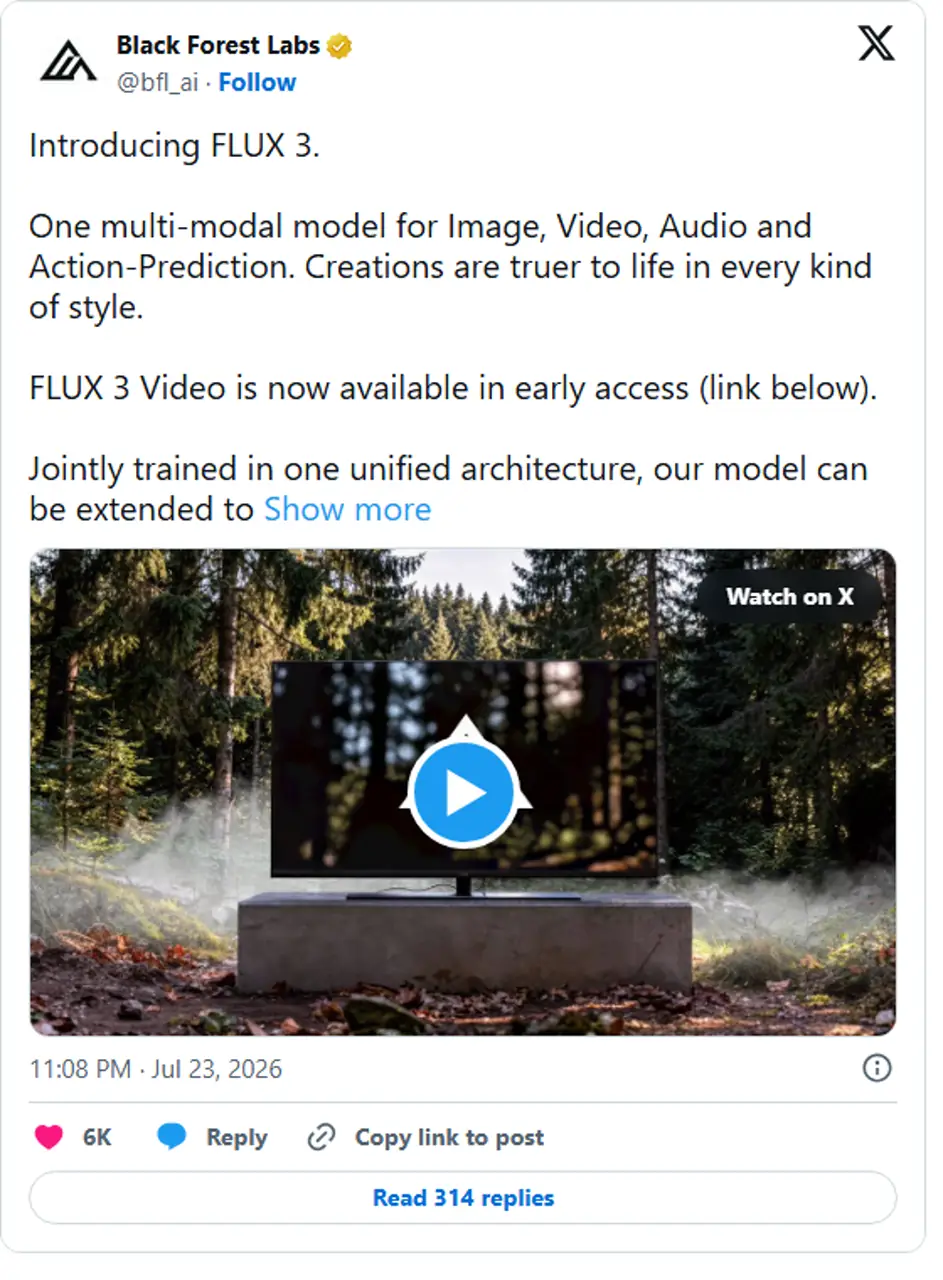
FLUX 3 ha attirato immediatamente l'attenzione. Nello snapshot di verifica del 27 luglio, il Annuncio ufficiale della BFL su X ha totalizzato 6.088 "Mi piace", 862 condivisioni, 365 citazioni e 314 risposte. Queste cifre riflettono l'interesse suscitato dal lancio, non l'affidabilità del modello, e sono destinate a cambiare nel tempo.
A Post su Reddit nella community r/StableDiffusion Il post intitolato “Flux 3 sembra pazzesco. Questo era un solo prompt” mostrava 370 voti positivi e 63 commenti nella stessa finestra di verifica. L’esempio a schermo diviso del post utilizza un prompt impegnativo, ma si tratta comunque di un singolo esempio condiviso piuttosto che di un benchmark controllato.
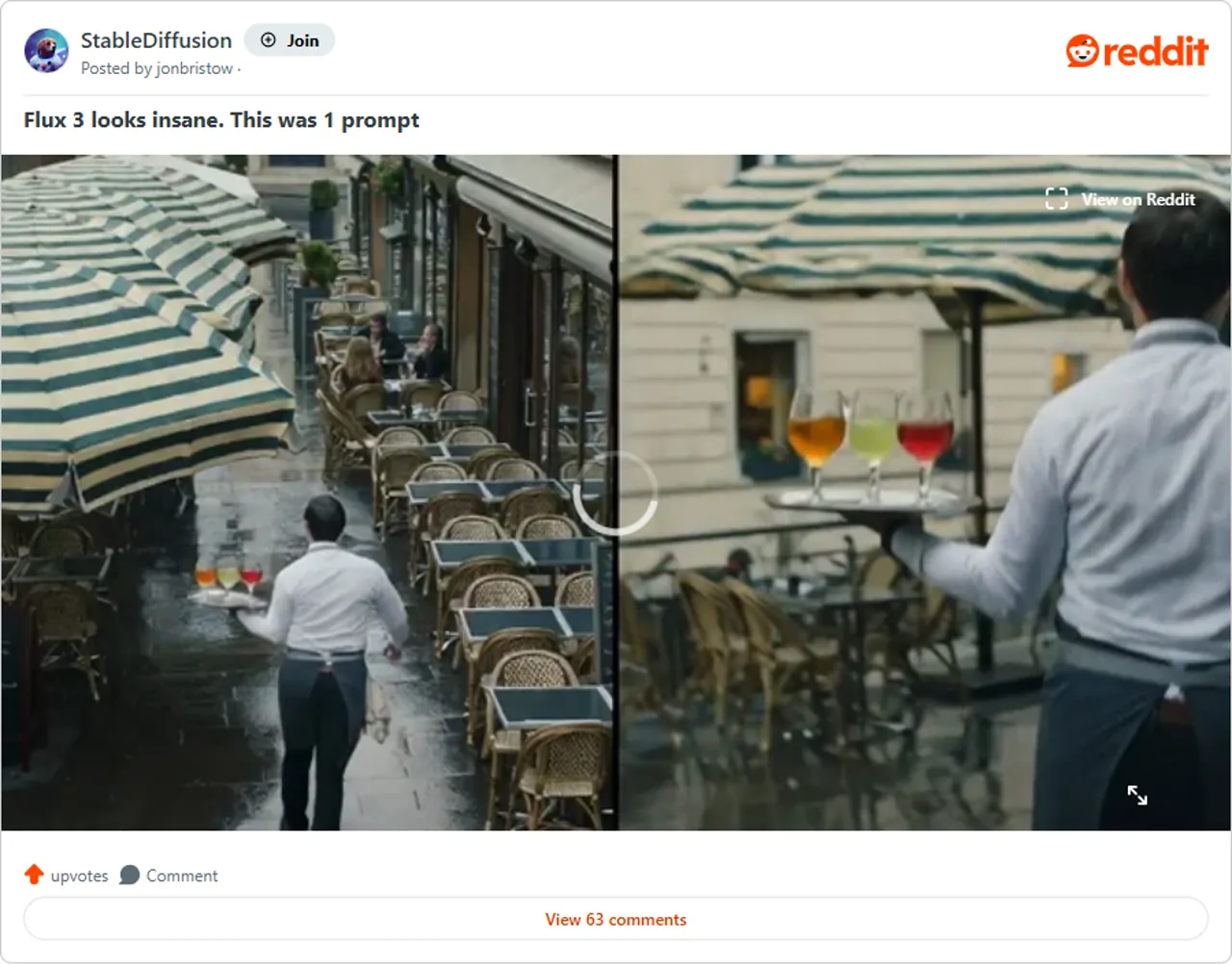
La conclusione corretta è che i creatori sono interessati alla complessità dei prompt, al movimento, al suono nativo e alla coerenza visiva. Una volta che l'accesso si sarà ampliato, la riproducibilità dei prompt dovrebbe diventare un criterio di valutazione fondamentale. Nel frattempo, il Formula di prompt Kling 3.0 è un utile punto di riferimento per la strutturazione delle scene, il comportamento della telecamera, il movimento e i vincoli negli strumenti video attualmente disponibili.
API FLUX 3, prezzi e pesi aperti
All'11 agosto, la BFL documentazione sui prezzi pubblicata include FLUX 3 Video. Un credito equivale a $0,01. La conversione da testo a video e da immagine a video costa $0.17 al secondo in HD o $0.29 al secondo in FHD, mentre le bozze in HD costano $0.06 al secondo. La continuazione del video costa $0,43 al secondo in HD o $0,54 al secondo in FHD, mentre le bozze costano $0,12 al secondo.
| Articolo | Pubblicato o verificato | Ancora limitato o sconosciuto |
|---|---|---|
| Prezzi dei video FLUX 3 | T2V/I2V: $0,17/s HD, $0,29/s FHD; bozza: $0,06/s. Continuazione: $0,43/s HD, $0,54/s FHD; bozza: $0,12/s | Condizioni relative ai piani "Private-weight" e "Enterprise" |
| Accesso a BFL | Il video sull'accesso anticipato, la panoramica del modello e i prezzi sono stati resi pubblici | Accettazione generale delle API, quote e limiti specifici per account |
| Accesso al GlobalGPT | Verifica del percorso del prodotto video FLUX 3 e superamento del test di tre esecuzioni | Le quote degli account e i controlli a livello di percorso potrebbero differire dall'offerta diretta di BFL |
| FLUX 3 Dev | Progettata come dorsale multimodale senza limiti di peso | Data di rilascio, licenza, dimensioni dei parametri e requisiti hardware |
Non confondere il concetto di “open weight” con quello di “open source”. I pesi, il codice, i dati di addestramento e la licenza possono avere condizioni di accesso diverse. Per esprimere un giudizio significativo sull’“open weight” occorrerà attendere che BFL pubblichi la versione effettiva di FLUX 3 Dev e la relativa licenza.
Come richiedere l'accesso anticipato a FLUX 3
- Aprire la sezione pagina ufficiale del modello FLUX 3 e verificare le etichette relative alle capacità attuali.
- Clicca sul pulsante "Richiedi" per andare al Modulo ufficiale per l'accesso anticipato a FLUX 3.
- Descrivi la funzionalità di cui hai bisogno — video, immagini, azioni, pesi privati o accesso per sviluppatori — e il flusso di lavoro che desideri creare.
- Indica un caso d'uso realistico, il volume previsto, i dettagli dell'organizzazione e perché l'accesso anticipato è importante per il progetto.
- Attendere una conferma scritta prima di dare per scontati l'accesso, i prezzi, i limiti o una data di consegna.
Una richiesta precisa è più efficace di un generico “Voglio provarlo”. Ad esempio, uno studio potrebbe spiegare di aver bisogno di dialoghi multilingue ed effetti sincronizzati per brevi clip promozionali, mentre un team di robotica potrebbe descrivere il proprio compito di manipolazione, la piattaforma robotica, i dati e l’ambiente di implementazione.
Se l'obiettivo è il dialogo, pianifica l'intero flusso di lavoro anziché limitarti al prompt di generazione. Il Veo 3.1 Flusso di lavoro per i dialoghi e la sincronizzazione labiale mette in evidenza gli aspetti pratici — tempistiche dei relatori, uniformità della voce, progettazione delle inquadrature e rigenerazione — che saranno importanti anche nella valutazione di FLUX 3 Video.
A chi è consigliata la visione di FLUX 3?
- Creatori di video basati sull'intelligenza artificiale È opportuno prestare attenzione all'audio originale, ai dialoghi multilingue, al montaggio, al concatenamento delle riprese, alla coerenza, alla velocità e al prezzo finale.
- Autori delle immagini bisognerebbe attendere il risultato di confronti ripetibili che prendano in esame l’aderenza alle indicazioni, la revisione dei testi di riferimento, la tipografia e i costi. Fino ad allora, il I migliori generatori di immagini basati sull'intelligenza artificiale testati nel 2026 costituiscono la rosa dei candidati più praticabile.
- Sviluppatori dovrebbe tenere sotto controllo gli ID dei modelli pubblici, i limiti di rate, il supporto SDK, i termini relativi ai pesi privati e l'eventuale licenza di FLUX 3 Dev.
- Team di robotica e di intelligenza artificiale fisica si dovrebbe verificare se l’approccio FLUX-mimic sia applicabile anche al di fuori del compito pubblicato e in che misura sia necessario un adattamento dei dati specifico per il compito.
Prima di avviare un flusso di lavoro di produzione, eseguire un controllo di idoneità FLUX 3 a quattro fasi. Una demo di lancio può superare la fase relativa alle capacità senza però superare quelle relative all’accessibilità, agli aspetti economici o alle prove.
| Cancello | Ciò che deve essere vero | Elementi di prova da raccogliere |
|---|---|---|
| Accesso | Il vostro team dispone di un'approvazione scritta relativa alla capacità richiesta | Invito all'account, condizioni, area geografica, quote e contatti per l'assistenza |
| Capacità | Il modello svolge il tuo compito reale, non è solo un prompt dimostrativo | Prompt abbinati, input di riferimento, casi di errore ed esecuzioni ripetute |
| Economia | I costi e i tempi di consegna sono in linea con il piano di produzione | Prezzo, tempo di generazione, frequenza dei tentativi, limiti di volume e infrastruttura |
| Prove | I risultati rimangono attendibili al di fuori degli esempi selezionati per il lancio | Test indipendenti, impostazioni riproducibili e risultati con indicazione della versione |
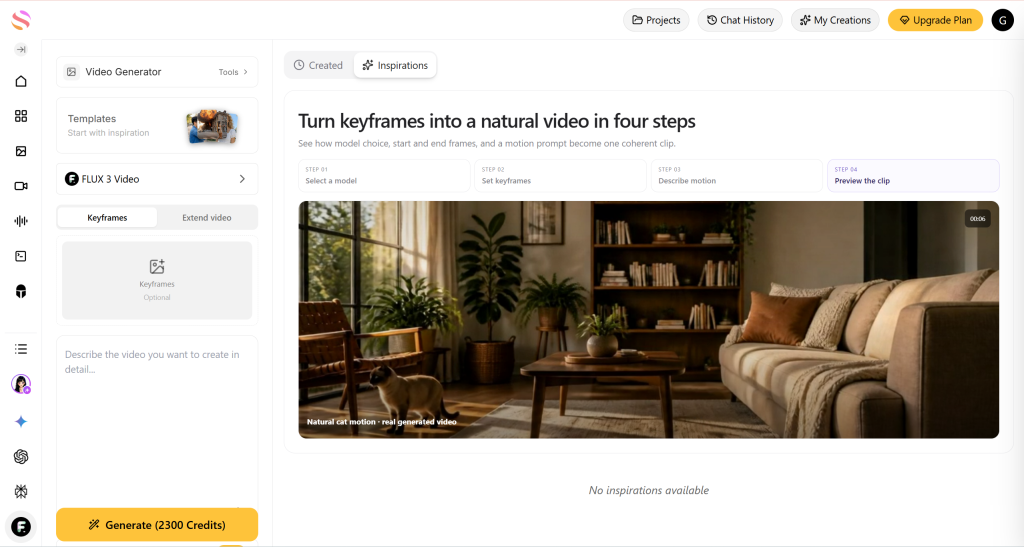
Vuoi provare il modello utilizzato nel nostro test? Aperto Video FLUX 3 su GlobalGPT. Il percorso del prodotto era attivo e l'ambiente delle attività collegate ha completato tutte e tre le esecuzioni l'11 agosto 2026. Verifica i controlli e le quote indicati nel tuo account prima di avviare un batch di produzione.
Domande frequenti su FLUX 3
Quando è stato annunciato FLUX 3?
Il 23 luglio 2026 Black Forest Labs ha annunciato FLUX 3. Il post di lancio ha presentato un modello di base multimodale che copre immagini, video, audio e previsione delle azioni, le cui funzionalità verranno rese disponibili attraverso un programma di accesso anticipato a fasi progressive, anziché con un unico rilascio pubblico su larga scala.
FLUX 3 è disponibile al pubblico?
BFL offre FLUX 3 Video tramite Early Access e ora rende noti i prezzi relativi a questo servizio. Anche GlobalGPT dispone di un percorso verificato per il prodotto FLUX 3 Video. Ciò non significa che FLUX 3 Image, Action, i pesi privati o FLUX 3 Dev siano ampiamente disponibili in modalità self-service; ogni funzionalità ha ancora un proprio percorso di implementazione e i propri termini.
FLUX 3 è in grado di generare video con audio nativo?
Sì. Secondo BFL, FLUX 3 Video è in grado di generare dialoghi, effetti e rumori di sottofondo multilingue insieme ai fotogrammi. Tutti e tre i file MP4 del nostro test dell’11 agosto contenevano dati audio decodificati. Non abbiamo trascritto automaticamente le tracce, quindi il test conferma la presenza dell’audio piuttosto che la riproduzione fedele dei dialoghi.
Anche FLUX 3 è un modello di immagine?
Sì. La generazione e la modifica delle immagini fanno parte della famiglia FLUX 3, ma BFL ha dichiarato che l’accesso anticipato a FLUX 3 Image sarebbe stato reso disponibile nelle settimane successive all’annuncio iniziale. Al momento della stesura di questo aggiornamento, i nomi degli endpoint pubblici, la disponibilità definitiva e i prezzi non erano stati ancora resi noti.
FLUX 3 è open source o open weight?
BFL ha annunciato che FLUX 3 Dev consentirà in futuro l'accesso open-weight. Non ha ancora reso noti la data di rilascio, la licenza, le dimensioni dei parametri, l'ambito del codice né i requisiti hardware. In attesa di tali dettagli, è più corretto parlare di “open-weight previsto” piuttosto che di “open source”.”
In che modo FLUX 3 si differenzia da FLUX.2?
FLUX.2 è principalmente una famiglia di modelli per la generazione e la modifica di immagini, con endpoint e prezzi già resi noti. FLUX 3 è invece una piattaforma multimodale più ampia, pensata per integrare immagini, video, audio e previsione delle azioni. Per poter effettuare un confronto equo in termini di qualità o costi, occorrerà attendere che FLUX 3 sia disponibile su scala più ampia.
Cosa ha evidenziato il test pratico di FLUX 3?
Tutte e tre le attività sono state portate a termine con successo grazie al flux-3-video ID del modello. I risultati hanno rispecchiato le scene di alto livello richieste e il test del robot ha mantenuto la sequenza dei movimenti e le caratteristiche principali. Tutti e tre i filmati duravano 5,04 secondi nonostante le indicazioni fossero di otto secondi; la spaziatura esatta delle etichette e la geometria ripetuta del prodotto non erano perfette.
Posso usare FLUX 3 su GlobalGPT?
Sì. Il percorso verificato è Video FLUX 3 su GlobalGPT. L'11 agosto 2026 abbiamo inoltre completato tre generazioni tramite l'ambiente di elaborazione connesso. L'accesso alla piattaforma è distinto dall'accesso diretto all'API BFL o ai pesi privati.
Conclusione finale
FLUX 3 non è più solo una promessa della pagina di lancio. BFL ha pubblicato le funzionalità video e i prezzi, GlobalGPT ha un percorso verificato e le nostre tre esecuzioni hanno prodotto file MP4 utilizzabili con flussi audio. Il modello ha gestito bene la logica delle scene e i movimenti vincolati, ma non ha rispettato la durata richiesta e ha attenuato la precisione del testo e la coerenza del prodotto. Provate il vostro prompt reale prima di passare alla scalabilità e continuate a seguire FLUX 3 Image, Action, i pesi privati e la licenza FLUX 3 Dev man mano che queste parti della famiglia maturano.