

Perplexity AI is good for fast, reliable information retrieval with live web data, transparent citations, and concise summaries—making it ideal for research, academic work, content creation, fact-checking, business intelligence, technical reference, and more.
However, for users who want an all-in-one solution for searching, image generation, video creation, and coding, Perplexity’s capabilities are relatively limited—and subscribing to multiple AI tools can be very expensive. Don’t worry, though. You can try GlobalGPT, which integrates over 100 top official AI models, including Perplexity, ChatGPT 5.2, Nano Banana Pro, Sora 2 Pro, and Gemini 3 Pro. It offers powerful, diverse features at a very affordable price.
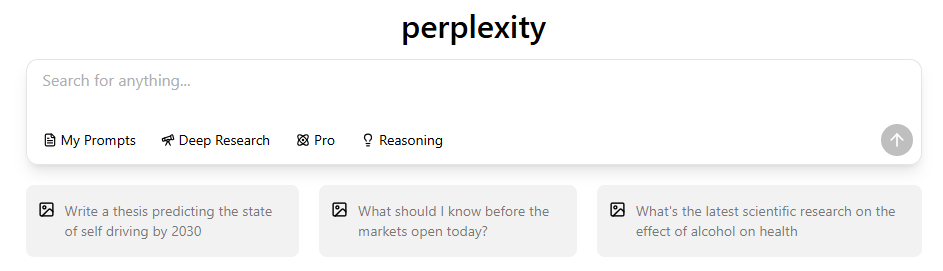
What Is Perplexity AI? Clear Definition and Core Purpose
Perplexity AI is an AI-driven search and answer tool that combines live web retrieval with language understanding to deliver factual, cited responses to user questions. Unlike traditional search engines that return lists of links, Perplexity AI synthesizes information from multiple sources and presents answers in a concise, citation-backed format.
It was founded in 2022 and has rapidly grown its query volumes (processing ~780 million queries monthly as of May 2025) with strong user engagement metrics and deep usage in knowledge-intensive fields.

How Perplexity AI Differs From Google and ChatGPT
| Feature | Perplexity AI | ChatGPT | Google Search |
| Real-Time Web Answers | ✅ Yes | ❌ Only with plugins | ✅ Yes |
| Citation-Backed Results | ✅ All responses | ❌ Not automatic | ❌ Not auto |
| Natural Summaries | ✅ Concise answers | Variable length | ❌ Links first |
| Best For | Research & facts | Creative content | Broad search |
| Average Speed* | Fast | Moderate | Variable |
This structure helps Perplexity shine in factual work and research tasks that demand sources, clarity, and transparency.
Top Real-World Use Cases of Perplexity AI
Here’s how Perplexity AI is actually used across industries and disciplines:
- Academic and Educational Research
Students, educators, and scholars use Perplexity for quick literature summaries, fact validation, and reference aggregation. Because answers come with hyperlinks and source context, it speeds up writing research papers and class assignments.
Example: A student researching climate science can input a focused question and receive a cited summary from journals, NGO reports, and reputable sources without manually scanning dozens of web pages.

- Content Creation and SEO Research
Content creators and writers leverage Perplexity to gather topic insights, extract key facts, summarize competitor sources, and verify information for articles and blog posts. This reduces the time needed to assemble accurate, trustworthy content.
Note: Some creators use Perplexity Pro to generate structures and datasets that feed into writing workflows.

- Fact-Checking and Verification
Because Perplexity includes live citations in every answer, it’s frequently used by journalists, analysts, and professionals to validate claims, cross-check stories, and ensure that information referenced in reports is backed by authoritative sources.

- Market, Business, and Competitive Intelligence
Perplexity serves business use cases like market research, competitive analysis, and trend synthesis. Teams can condense long reports, examine competitor landscapes, and extract actionable insights rapidly.
Statistic: In 2025, Perplexity saw adoption by legal researchers and financial professionals for case law and earnings summaries, with millions of domain-specific queries each month.

- Technical Reference and Developer Assistance
Developers and technical professionals use Perplexity for documentation lookup, code snippet explanations, and technical troubleshooting support. Its ability to pull fresh documentation links makes it a resource complement to tool-specific code assistants.
- Everyday Q&A and Knowledge Retrieval
For general knowledge questions—like “What is…” or “How does…”—Perplexity provides concise answers with sources, making it useful for students, curious learners, and people wanting quick factual context without link hopping.

Strengths: Why Perplexity AI Is Good for These Uses
Fast and Factual with Source Transparency
- Perplexity includes live citations with every answer, which increases trust and reduces misinformation.
- It integrates real-time web discovery, bringing the latest data (unlike static LLM training limits).
Engagement and Retention
According to usage data, users spend ~23 minutes per session, far exceeding many generic AI interactions, indicating deep engagement and value.
Perplexity AI vs ChatGPT: Which Is Better for What?
Both tools excel at different tasks:
Perplexity AI Excels At:
✔ Factual, citation-based answers
✔ Research and academic tasks
✔ Real-time web query retrieval
✔ Transparent, concise summaries

ChatGPT Excels At:
✔ Creative writing and storytelling
✔ Contextual conversation with memory
✔ Task automation and brainstorming
In comparative benchmarks, Perplexity often returns verified results faster and with transparent sourcing, whereas ChatGPT maintains an edge in narrative generation and task automation. If you want to know which one is better for you, please click this blog: Is Perplexity Really Better Than ChatGPT? We Tested Both
Limitations to Consider
- Perplexity may offer less detailed research outputs than competitors with more in-depth generative models when you demand very long narrative reports.
- It’s still less conversational than tools designed primarily for dialogue.
Conclusion: Is Perplexity AI Worth Using?
In summary, Perplexity AI is good for research-driven and fact-centric work, where users need quick, accurate, and transparent answers. It complements traditional search engines and general-purpose AI models by adding speed, real-time sourcing, and deep citation reporting—making it a valuable tool for students, professionals, writers, and anyone who demands measurable, verifiable insights.
Frequently Asked Questions About Perplexity AI
- What is Perplexity AI used for? Perplexity AI is mainly used for research, fact-checking, learning, business insights, and quick Q&A with verified sources.
- How is Perplexity AI different from ChatGPT? Perplexity focuses on real-time web results and citations, while ChatGPT is better for creative writing and conversational tasks.
- Is Perplexity AI accurate? Yes. It pulls information from live, credible web sources and includes citations so users can verify the information.
- Who should use Perplexity AI? Students, researchers, journalists, content creators, business analysts, developers, and anyone needing fast factual answers.
- Does Perplexity AI provide citations? Yes. Every response includes clickable references so users can check original sources.
- Can Perplexity AI be used for academic research? Yes. It’s widely used for summaries, topic research, and reference discovery, but users should still verify academic sources.
- Is Perplexity AI free to use? Perplexity offers a free tier, with paid plans available for advanced features like deeper research and Pro models.
- Can Perplexity AI help with SEO and content writing? Yes. It’s useful for topic research, fact validation, and competitive analysis.
- Is Perplexity AI good for everyday use? Absolutely. It works great for daily questions, learning, and quick explanations with trustworthy references.

