Resposta rápida: Em 27 de julho de 2026, de acordo com Anúncio do lançamento do Anthropic em 24 de julho, o Claude Opus 5 é o modelo oficial mais recente do Opus. As novas integrações da API Claude devem usar claude-opus-5, com uma janela de contexto de 1 milhão de tokens, até 128.000 tokens de saída em chamadas síncronas da API de Mensagens e preços padrão de $5 por milhão de tokens de entrada e $25 por milhão de tokens de saída.
Para acesso à web sem código, o catálogo da GlobalGPT lista Claude Opus 4.8 como sua mais nova rota Opus disponível na mesma data. Use a API do Anthropic quando precisar especificamente do Opus 5; use a rota GlobalGPT quando o acesso rápido pelo navegador e a alternância entre vários modelos forem mais importantes do que ter a versão mais recente do Opus de primeira mão.
A configuração do Opus 4.6 permanece abaixo para as equipes que ainda utilizam esse modelo fixado. Suas capturas de tela são referências antigas; portanto, novas solicitações devem utilizar os exemplos de código do Opus 5 adicionados ao lado delas.
Para acessar o API do Claude Opus 4.6, Se o desenvolvedor tiver uma chave de API exclusiva, ele deverá gerar uma chave de API exclusiva por meio do Anthropic Console e direcionar o claude-opus-4-6 ID do modelo usando o SDK oficial do Python. Embora isso ofereça integração direta para aplicativos, o processo exige lidar com níveis de uso rigorosos, vincular formas de pagamento e configurar ambientes de desenvolvimento locais complexos apenas para enviar uma solicitação do tipo “Hello World”.
Para ver o Guia de preços completo do Claude Opus 4.6, Confira aqui.
Essas barreiras técnicas muitas vezes impedem que os usuários testem rapidamente a nova janela de contexto de 1M do modelo e suas capacidades de raciocínio. Felizmente, o GlobalGPT oferece um alternativa imediata, permitindo que você acesse os modelos de IA mais recentes diretamente por meio de uma interface da Web, sem nenhuma configuração de API ou de codificação.
O GlobalGPT reúne as ferramentas de IA mais poderosas do mundo em uma única plataforma integrada, oferecendo acesso instantâneo ao Claude Opus 4.8, ao GPT-5.6 e ao Gemini 3.6 Flash. O Rota da Web Claude Opus 4.8 está pronto para uso, sem necessidade de configuração de API ou instalação de ambiente de desenvolvimento local.
O Plano Básico GlobalGPT a partir de $5,8 por mês, com 144.000 créditos anuais, para que você possa alternar entre famílias de modelos em tempo real, contornando os bloqueios regionais e os altos custos de manutenção de várias assinaturas individuais.
| Rota de acesso | Obra atual | Estrutura de preços | Ideal para |
|---|---|---|---|
| Aplicativo para consumidores Claude | O Opus 5 é a configuração padrão no Max e o modelo mais potente no Pro | Pró: $20 por mês ou $17 por mês (anualmente); O máximo começa em $100 por mês | Bate-papo, código Claude, Cowork e uso no dia a dia |
| API do Claude | claude-opus-5 | $5 de entrada / $25 de saída por milhão de tokens | Aplicativos, agentes e automação |
| Acesso à web GlobalGPT | Claude Opus 4.8 | O plano Básico custa a partir de $5,8 por mês, com 144.000 créditos anuais | Acesso sem código e alternância entre modelos |
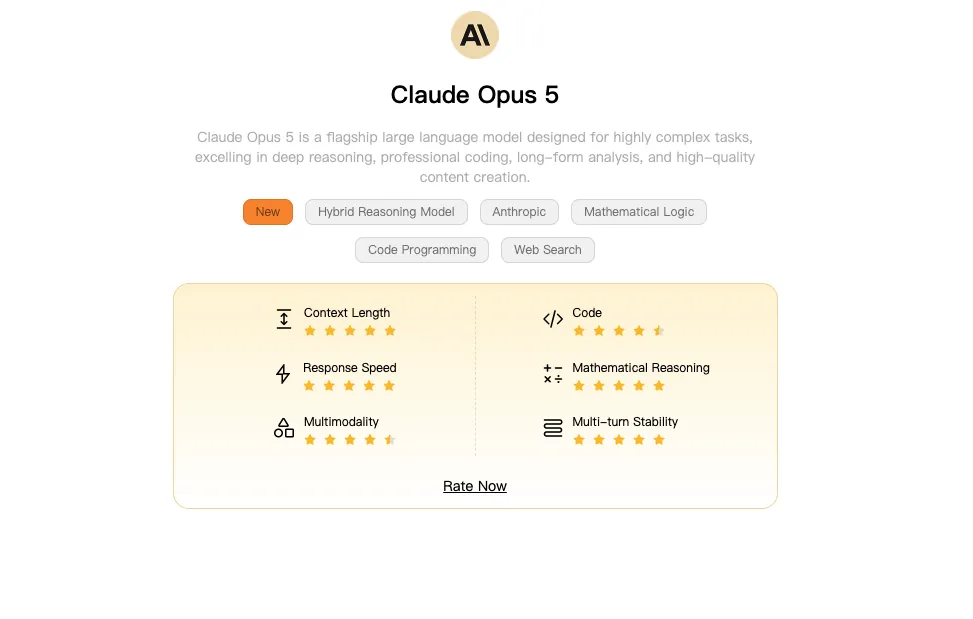
O que é o Claude Opus 4.6?
Para novas integrações, o sucessor importante é Claude Opus 5. A tabela de modelos atual do Anthropic oferece uma janela de contexto de 1 milhão de tokens, um limite de saída síncrona de 128 mil, raciocínio adaptativo e o ID da API fixado claude-opus-5.
| Claude Opus 5: Fato sobre a API | Valor atual |
|---|---|
| Comunicado oficial | 24 de julho de 2026 |
| ID da API Claude | claude-opus-5 |
| Janela de contexto | 1 milhão de tokens |
| Saída síncrona máxima | 128.000 tokens |
| Saída máxima de lotes de mensagens | Até 300.000 tokens com o saída-300k-24/03/2026 cabeçalho beta |
| Preço padrão do token | $5 de entrada / $25 de saída por milhão de tokens |
Os próximos três parágrafos descrevem o Opus 4.6 no contexto de seu lançamento em fevereiro de 2026. Eles continuam sendo úteis para integrações fixadas na versão 4.6, enquanto o Opus 5 é a opção atual para novas compilações.
O Claude Opus 4.6 representa o ápice da família de modelos “Next-Gen” da Anthropic, lançada oficialmente em fevereiro de 2026. Este modelo foi projetado especificamente para tarefas de raciocínio complexas, fluxos de trabalho “agentes” e desafios de codificação complexos. Ao contrário de suas versões anteriores, mais leves, o Opus 4.6 utiliza uma arquitetura robusta, otimizada para lidar com instruções complexas com maior precisão.
A atualização mais significativa é o Janela de contexto de token de 1M disponíveis nativamente por meio da API. Isso permite que o modelo processe bases de código inteiras, contratos legais ou romances completos em um único prompt sem perder a coerência. Para os desenvolvedores, o ID de modelo específico necessário para acessar essa versão é claude-opus-4-6.
Com relação a Preços da API, Claude Opus 4.6 permanece inalterado em $5/$25 por milhão de tokens.
| Claude Opus 5: Uso da API | Preço de entrada/cache por MTok | Preço de venda por MTok |
|---|---|---|
| Padrão | Entrada de base $5 | $25 |
| Gravação no cache em 5 minutos | $6.25 | Preços padrão de saída |
| Gravação no cache de 1 hora | $10 | Preços padrão de saída |
| Acertou no cache ou atualizou | $0.50 | Preços padrão de saída |
| Lotes de mensagens | $2.50 | $12.50 |
| Modo rápido | $10 | $50 |

claude-opus-5; o preço padrão do token Opus $5/$25 permanece o mesmo.O que você precisa antes de começar
Para engenheiros de software que integram IA em aplicativos, Acessando o Opus 4.6 requer uma configuração formal com o Anthropic. Essa rota oferece controle granular sobre parâmetros como temperatura e max_tokens mas requer proficiência técnica.
Configuração passo a passo:
- Criação de conta: Abra o Console Claude e criar uma organização de desenvolvedores. O Console é independente do login normal do Claude para consumidores.
- Configuração de cobrança: Adicione o faturamento no Console. Os níveis de uso atuais do Anthropic são Start, Build, Scale e Custom; a antiga formulação “Nível 1 com depósito mínimo de $5” não se aplica mais.
- Geração de chaves: Acesse a seção “Chaves de API”, clique em “Criar chave” e copie a sequência de caracteres que começa com
sk-ant-. Guarde-o em um local seguro; você não poderá visualizá-lo novamente.
Exemplo (macOS/Linux):
export ANTHROPIC_API_KEY="sua_chave_aqui"Os documentos do Anthropic recomendam a API Messages como a interface principal para os modelos Claude.
Se você estiver em dúvida entre o chat e o acesso para desenvolvedores, o Planos de IA Claude e detalhamento do acesso à API explica por que uma assinatura Pro ou Max não inclui créditos de API próprios.
Etapa 1 Faça sua primeira solicitação HTTP
Solicitação cURL atual Claude Opus 5
Envie novas solicitações para o Endpoint de mensagens com o ID do modelo atual:
curl https://api.anthropic.com/v1/messages \
  --header "x-api-key: $ANTHROPIC_API_KEY" \
  --header "anthropic-version: 2023-06-01" \
  --header "content-type: application/json" \
  --data '{
    "model": "claude-opus-5",
    "max_tokens": 1024,
    "messages": [{"role": "user", "content": "Olá, Claude"}]
  }'
A API do Claude está hospedada em https://api.anthropic.com, e o Opus 4.6 é chamado por meio do ponto de extremidade Messages

claude-opus-4-6 com claude-opus-5 para uma nova integração.
claude-opus-5 no campo “modelo”.Etapa 2 Python (Anthropic SDK)
Para aqueles que prosseguirem com a integração da API, será necessário instalar o SDK oficial. A partir de 2026, a biblioteca permanecerá consistente, mas o modelo deve ser atualizado para se adequar à nova versão.
Implementação do Python:
Primeiro, instale a biblioteca:
Bash

Em seguida, execute este script para enviar sua primeira mensagem:
Solicitação atual do Claude Opus 5 em Python
import os
import anthropic

client = anthropic.Anthropic(api_key=os.environ["ANTHROPIC_API_KEY"])

message = client.messages.create(
    model="claude-opus-5",
    max_tokens=2000,
    messages=[
 {"role": "user", "content": "Dê-me uma breve descrição de suas capacidades."}
    ],
)

print(message.content[0].text)
model="claude-opus-5" em novas solicitações de SDK.Para fluxos de trabalho de codificação maiores, o Guia do fluxo de trabalho de codificação Claude aborda a estrutura das solicitações, o contexto do arquivo e a seleção prática de modelos além da primeira solicitação.
A maneira eficiente (Plataforma GlobalGPT All-in-One)
Se sua meta for simplesmente comece a usar o Claude imediatamente-Para redação, brainstorming, tradução, resumos ou trabalho cotidiano, a configuração da API pode ser um exagero. O GlobalGPT oferece uma interface da Web simplificada que elimina as barreiras técnicas.
Em vez de gerenciar chaves de API e níveis de uso, basta fazer login e selecionar “Claude Opus 4,8” no menu suspenso de modelos. Esse método permite que você aproveite imediatamente toda a janela de contexto de 1M e os recursos de raciocínio.
Por que escolher a interface da Web?
- Não é necessário um console de desenvolvedor (sem integração do Anthropic Console, sem gerenciamento de chave de API)
- Sem código (abra o aplicativo da Web, selecione Claude, inicie a solicitação)
- Eficiência de custos: O Plano Básico GlobalGPT ($5,8/mês com 144.000 créditos anuais) oferece acesso ao Opus 4.8, enquanto a utilização direta da API é cobrada por milhão de tokens, o que pode exceder rapidamente os orçamentos mensais durante testes pesados.
- Agilidade multimodelo: Você pode criar um prompt no Claude Opus 4.8 e, com um clique, executá-lo novamente no GPT-5.6 ou no Gemini 3.6 Flash para comparar os resultados.
Se você quiser uma comparação atualizada dentro da mesma família de modelos, o Guia comparativo entre Claude Fable 5 e Opus 4.8 explica as compensações entre velocidade, raciocínio e custo.
Como funciona (fluxo de trabalho simples)
- Aberto GlobalGPT em seu navegador
- Escolha Claude Opus 4.8 no seletor de modelos
- Comece a conversar - use seus prompts normais, carregue o contexto, repita
Comparação: API Integração vs. Acesso à Web do GlobalGPT
A escolha entre a API e a interface da Web depende de seu caso de uso específico. A tabela abaixo detalha as principais diferenças para ajudá-lo a decidir.
| Recurso | API oficial (antrópica) | Acesso à Web do GlobalGPT |
| Modelo atual da Opus | Claude Opus 5 | Claude Opus 4.8 |
| Caso de uso principal | Desenvolvimento e automação de aplicativos | Criação de conteúdo, ajuda com a codificação, pesquisa |
| Tempo de configuração | 15 a 30 minutos (configuração do ambiente) | Instantâneo (login e bate-papo) |
| Modelo de Custos | $5 de entrada / $25 de saída por MTok | Assinatura com valor fixo (a partir de $5,8/mês com créditos anuais) |
| Variedade de modelos | Somente modelos Claude | Mais de 100 modelos (Claude, GPT, Gemini, Sora) |
| Habilidades técnicas | Cliente da API ou Workbench; código para integração | Não é necessário |
Quando escolher o GlobalGPT ou o Anthropic API
- Escolha GlobalGPT se você quiser uso instantâneo Claude Opus 4,8, fluxos de trabalho fáceis e configuração mínima.
- Escolha o API Antrópica se você estiver criando recursos de produtos, automações, pipelines de agentes ou precisar de um controle rigoroso da infraestrutura.
- Escolha o aplicativo oficial Claude para consumidores se você quiser usar o Opus 5 no chat sem precisar escrever código de API e se uma assinatura Pro ou Max for adequada ao seu uso.
Para uma decisão específica para cada carga de trabalho, o Comparação entre as codificações Claude e ChatGPT mostra onde os pontos fortes do Claude — o contexto amplo e o fluxo de trabalho agênico — são mais importantes.
Referências e fontes oficiais
As informações atuais sobre o Opus 5 apresentadas nesta página foram extraídas das páginas oficiais da Anthropic sobre lançamento, modelo, preços, API e planos para consumidores:
- Versão atual: Apresentando o Claude Opus 5
- ID do modelo e limites: Visão geral dos modelos Claude
- Preços da API, cache, processamento em lote e modo rápido: Preços da API Claude
- Acesso oficial à API: Como acessar a API Claude
- Assinaturas para consumidores: Planos e preços do Claude
Conjunto de códigos-fonte do Legacy Opus 4.6
Este guia foi sintetizado com base na documentação técnica oficial mais recente e nos anúncios de produtos lançados em fevereiro de 2026. Para obter mais detalhes técnicos, você pode visitar as seguintes fontes primárias:
- Lançamento oficial do Anthropic: Apresentando o Claude Opus 4.6: Nosso modelo mais inteligente até o momento - Análise detalhada dos recursos do modelo e benchmarks de desempenho.
- Documentação técnica: O que há de novo no Claude 4.6 - Guia oficial de implementação da API, incluindo o novo
pensamento adaptativoeesforçoparâmetros. - Competição OpenAI: Apresentando o GPT-5.3 Codex – Especificações comparativas para o lançamento simultâneo do mais recente modelo da OpenAI, voltado para a codificação.
- Estudo de caso de engenharia: Criação de um compilador C com equipes de agentes Claude - Uma olhada em como o Opus 4.6 lida com mais de 100.000 linhas de código de forma autônoma.
- Demonstrações ao vivo: Revelação do lançamento do Claude 4.6 (X.com) - Demonstrações em vídeo do mundo real do Adaptive Thinking em ação.
Perguntas frequentes
Qual é o modelo Claude Opus mais recente em 27 de julho de 2026?
Em 27 de julho de 2026, o Claude Opus 5 era o modelo Opus mais recente da Anthropic. A Anthropic o lançou em 24 de julho de 2026, substituindo o Opus 4.8 como a opção oficial atual da Opus.
Qual ID de modelo as novas integrações da API Claude devem usar?
Utilize o claude-opus-5 para novas integrações com a API Claude de primeira mão. Os IDs de modelo a partir da geração 4.6 são instantâneos fixos; portanto, o ID não muda automaticamente para um modelo posterior.
Quais são a janela de contexto e a saída máxima do Claude Opus 5?
O Claude Opus 5 possui uma janela de contexto de 1 milhão de tokens e suporta até 128.000 tokens de saída em chamadas síncronas da API de Mensagens. Os lotes de mensagens elegíveis podem atingir 300.000 tokens de saída com o cabeçalho beta necessário.
Quanto custa o Claude Opus 5 API?
O preço padrão da API Claude é de $5 por milhão de tokens de entrada e $25 por milhão de tokens de saída. As assinaturas do Consumer Claude são separadas e não incluem créditos de API.
Como os lotes de mensagens e o armazenamento em cache de prompts reduzem os custos do Opus 5?
Os lotes de mensagens reduzem os preços de entrada e saída em 50%, passando para $2,50 e $12,50 por milhão de tokens. As gravações no cache de prompt custam $6,25 por 5 minutos ou $10 por 1 hora, enquanto os acertos no cache custam $0,50 por milhão de tokens.
Posso usar o Claude Opus 5 sem a API?
Sim. O Anthropic indica que o Opus 5 é o modelo padrão no Claude Max e o modelo mais potente no Claude Pro. O Pro custa $20 por mês ou $17 por mês com cobrança anual; o Max começa em $100 por mês.
Posso usar o Claude Opus 5 no GlobalGPT agora?
Até o dia 27 de julho de 2026, não havia uma rota verificada para o Opus 5. Atualmente, o GlobalGPT apresenta o Claude Opus 4.8 como sua opção mais recente do Opus, juntamente com outros modelos atuais no mesmo espaço de trabalho na web.
Devo usar a API do Anthropic ou a do GlobalGPT?
Escolha a API do Anthropic para integração de aplicativos, automação e controle de infraestrutura. Escolha o GlobalGPT quando desejar acesso rápido à web sem necessidade de programação e alternância fácil entre várias famílias de modelos.
Conclusão final
Uso claude-opus-5 quando você precisar do modelo oficial mais recente do Opus dentro de um aplicativo, agente ou fluxo de trabalho automatizado. Se você quiser uma opção imediata sem código, a versão atual do GlobalGPT, a Claude Opus 4.8, mantém a vantagem original de acesso rápido e permite comparar outros modelos de ponta sem o emaranhado de assinaturas.