

Perplexity AI is a real-time “answer engine” that blends web search with AI reasoning to deliver concise, sourced answers. In 2025, it performs well for fast factual queries and research tasks but remains less reliable for deep reasoning and niche academic topics. It’s highly useful for quick, verified information, though not a full replacement for advanced LLMs.
Because of these strengths and gaps, many users treat Perplexity as a research tool rather than a standalone assistant and end up pairing Perplexity with a more versatile AI tool for deeper reasoning or creative tasks.
Here is a good news that GlobalGPT brings Perplexity’s strengths into a broader workflow by letting you switch seamlessly between GPT-5.1, Claude 4.5, Sora 2 Pro,Veo 3.1, and over a hundred integrated AI models with a Basic plan starting around $5.75 instead of juggling multiple subscriptions.
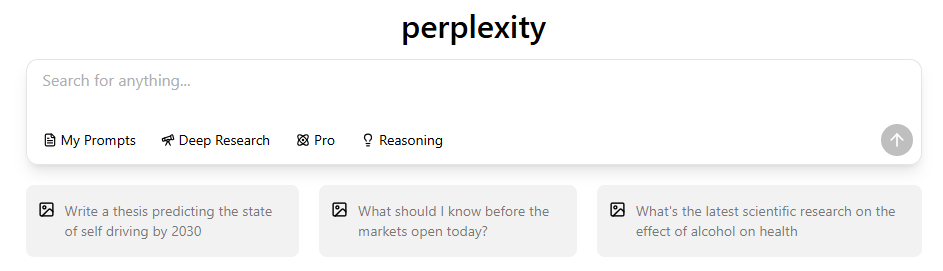
What Is Perplexity AI and Why Is It Called an “AI Answer Engine”?
| Criterion | Traditional Search (e.g., Google) | Perplexity AI (Answer Engine) | LLM-only Models (e.g., ChatGPT, Claude without browsing) |
| Response Type | List of links | Direct synthesized answers with citations | Generated text based on training data |
| Data Freshness | Real-time crawling of the web | Real-time retrieval + AI synthesis | Limited by model’s training cutoff unless browsing enabled |
| Source Visibility | Fully transparent (all sources shown as links) | High transparency (inline citations) | Low transparency (no citations unless browsing) |
| Reasoning Depth | None — user must interpret results | Moderate — depends on quality of retrieved sources | High — deep reasoning, logic, creativity |
| Output Speed | Fast | Fast to moderate (retrieval + generation) | Fast, but may miss recent facts |
| Strengths | Comprehensive coverage | Fresh, sourced, concise answers | Strong reasoning, creativity, writing quality |
| Weaknesses | Requires manual reading | Source-dependent accuracy; limited deep reasoning | Lacks real-time knowledge; possible hallucinations |
Perplexity AI positions itself as an “answer engine”—a tool that retrieves real-time web data, ranks relevant sources, and generates concise responses with citations. Instead of returning a list of links, it synthesizes information into an instant explanation. In 2025, Perplexity’s workflow relies on retrieval-augmented generation (RAG), meaning answers are grounded in public web pages rather than purely model-generated text.
How Perplexity’s retrieval-augmented system works
Perplexity crawls the web, selects top-ranked sources, and constructs an aggregated response. The system emphasizes citation visibility, allowing users to check each referenced source.
What sources Perplexity uses
Based on public documentation, Perplexity pulls from openly available web content, news articles, blogs, documentation, and structured data pages. It does not rely on a static knowledge cutoff, making it strong for up-to-date queries.
Common user questions
- “Is Perplexity better than Google for quick answers?”
- “Does Perplexity copy content from websites or violate robots.txt?”
These concerns highlight why Perplexity’s retrieval method remains under public scrutiny.
How Perplexity AI Works Compared to ChatGPT and Google Search
Perplexity stands between a search engine and an AI assistant. It retrieves live information like Google but formats it into natural-language summaries like ChatGPT. This hybrid design allows faster onboarding but introduces trade-offs: it is clearer and fresher than ChatGPT, but less deep; more convenient than Google, but less comprehensive.
Real-time search vs static model reasoning
ChatGPT’s outputs depend on training-set knowledge and optional browsing. Perplexity defaults to real-time retrieval, reducing outdated responses but increasing dependency on source quality.
Citation-first interface
Every answer includes visible citations. This transparency appeals to students and analysts who need traceable evidence.
When Perplexity underperforms
Tasks requiring long chains of reasoning, nuanced interpretation, or technical creativity still favor ChatGPT or Claude.
Deep Look at Perplexity’s Key Features (with 2025 Updates)

Perplexity has evolved beyond simple Q&A. Its 2025 toolset includes Copilot for guided search, Labs for data visualization and report-like outputs, and improved file processing for PDFs and research materials.
Copilot
Copilot guides multi-step reasoning by proposing follow-up questions and narrowing topics. It’s useful when users don’t know what to ask next.
Perplexity Labs
Labs can generate charts, dashboards, slides, and structured reports. While not a full data-analysis engine, it helps users package findings quickly.
File uploads
Users can upload PDFs, documents, and articles for summarization and cross-referencing.
Perplexity AI Accuracy: What It Gets Right (and Where It Still Fails)
Perplexity performs well on fact-based and trending topics. It aggregates sources directly, reducing outdated results. But accuracy varies based on what the web provides—and misleading citations remain a problem.
Strengths
Perplexity is strongest on fact-based, time-sensitive topics. It handles news, quick definitions, and structured subjects like tech, science, and finance with speed and clear citations. Its answers are often more up-to-date than LLMs relying on older training data.
Weaknesses
It weakens in niche academic areas or questions requiring deep logic. When reliable sources are limited, its responses can become shallow or misleading even if citations are provided. Perplexity also struggles with multi-step reasoning compared to advanced LLMs.
Citation issues
Despite its transparency, citations sometimes point to irrelevant or overly general articles.

Perplexity AI vs ChatGPT: Which Tool Should You Use in 2025?
Perplexity focuses on real-time, sourced information, while ChatGPT is built for reasoning, long-form structure, and creativity. They solve different problems, and most users benefit from using both depending on the task.
Research tasks
Perplexity is stronger here thanks to fresh information, citations, and quick synthesis of multiple sources.

Writing tasks
ChatGPT still produces more coherent, structured, and stylistically consistent writing.
Coding
ChatGPT handles complex debugging and multi-step logic better; Perplexity Labs is mainly useful for quick examples or short snippets.
Using GlobalGPT makes this combination easier by letting you switch between Perplexity-style search models and reasoning-focused models like GPT-5.1 or Claude 4.5 in one workspace.
Perplexity AI vs Google Search: A 2025 Reality Check
Perplexity converts search results into direct answers, while Google still delivers a list of links ranked by relevance and authority. Perplexity is faster for quick facts and summaries, but Google remains more comprehensive, especially for deep research, academic sources, and niche topics.
Hirect answers vs link retrieval
Perplexity summarizes; Google exposes the full landscape. One is efficient, the other is exhaustive.

Freshness and reliability
Perplexity performs well with trending topics but may misrepresent complex or ambiguous subjects if its sources are weak.
Can Perplexity replace Google?
For everyday questions—simple facts, quick definitions, news checks—Perplexity can often replace Google because it pulls real-time sources and delivers a direct, concise answer.
For deeper, specialized, or academic research—no, because Google still provides far broader coverage, more authoritative sources, and full control over which links you explore.
Perplexity Free vs Perplexity Pro Pricing: Is It Worth It?

The free version covers everyday questions, browsing, and basic Labs usage, while Pro unlocks more powerful models, higher limits, file uploads, and advanced Labs tools. Whether the upgrade is worthwhile depends on how often you use Perplexity for research-heavy tasks.
HWhat the free plan includes
Basic search, citations, shorter answers, and limited access to Labs features.
What Pro adds
Larger model context windows, more accurate multi-source summaries, PDF and document analysis, and richer Labs outputs for visualization and structured reporting.
Cost vs value
| Feature / Limit | Perplexity Free | Perplexity Pro — $20/mo | GlobalGPT — From $5.75/mo |
| Real-time search | ✔️ | ✔️ | ✔️ (multiple search models) |
| Citation transparency | ✔️ | ✔️ | ✔️ |
| Labs access | ✖️ Limited | ✔️ Full | ✖️ (uses native model tools) |
| Advanced model reasoning | ✖️ | ✖️ / Limited | ✔️ GPT-5.1 & Claude 4.5 |
| File uploads (PDF/doc) | ✖️ | ✔️ | ✔️ |
| Multi-model switching | ✖️ | ✖️ | ✔️ 100+ AI models |
| Long-form writing | ✖️ Weak | ✔️ Better | ✔️ Strong (GPT-5.1 / Claude 4.5) |
| Coding assistance | ✖️ Basic | ✔️ Improved | ✔️ Advanced |
| Daily usage limits | Strict | Higher | Flexible per model |
| Best for | Casual users | Frequent researchers | Users needing search + reasoning |
Pricing is competitive with other AI assistants, but it delivers the most value for frequent researchers, analysts, or students who rely on real-time information.
Using GlobalGPT can also shift the cost-benefit equation, since it bundles Perplexity-style search models with advanced reasoning models like GPT-5.1 and Claude 4.5, reducing the need to pay for multiple standalone tools.
Best Real-World Use Cases for Perplexity AI (With Workflows)
Perplexity is most effective when speed, citation transparency, and multi-source synthesis matter. It works best in workflows where users need verified information quickly rather than deep reasoning or long-form creativity.
Academic research

Perplexity can summarize papers, break down complex concepts, and provide citations that link directly back to original sources. This makes it helpful for students reviewing literature, preparing reading notes, or quickly understanding unfamiliar topics.
Market and competitive analysis

It can pull together analyst commentary, financial news, company profiles, and sector updates into concise briefings. For early-stage research—such as scanning competitors, identifying trends, or preparing a quick market overview—Perplexity dramatically reduces manual reading time.
Fact-checking for content creators
Creators can verify claims, confirm data points, check statistics, or cross-reference sources before publishing. Perplexity’s inline citations make it easy to answer “Is this true?” in seconds.
News and timeline generation
Perplexity excels at summarizing developing stories. It can compile updates, outline event sequences, and generate clear timelines from multiple news outlets—especially useful for breaking news, tech announcements, or policy changes.
Privacy, Security, and Ethical Concerns Around Perplexity AI
Interest in Perplexity’s privacy practices has grown as it expands its data-processing capabilities. Public discussions often focus on how it handles web content, user data, and citation correctness.

robots.txt and crawling controversy
Reports show conflicting views on whether Perplexity respects robots.txt. Public documentation remains limited.
Copyright and fair-use concerns
Like any AI search engine, Perplexity raises questions about training data, reproduction of text, and citation fidelity.
User data handling
Based on Perplexity’s official statements, uploaded files and chat history are used to improve responses but may be processed by servers unless the user opts out (if available).
Real Limitations You Should Know Before Relying on Perplexity
Despite its strengths, Perplexity remains limited by the quality of public web data. It does not perform as well in areas requiring deep reasoning, multi-step logic, or substantial domain expertise.
Overconfidence errors
Perplexity may state incorrect claims with confidence when its sources are weak.
Limited reasoning
LLMs still outperform it at long-form reasoning and conceptual analysis.
Citation problems
Sometimes citations appear correct but are contextually inaccurate or too broad.
Final Verdict: Is Perplexity AI Worth It in 2025?
Perplexity delivers fast, sourced, real-time answers that outperform traditional search for everyday questions and simple research. But it cannot replace full-scale reasoning models or specialized academic tools. In most workflows, Perplexity shines as a component—not the entire stack.
However, with GlobalGPT, it fits even more naturally into a balanced workflow because you can pair Perplexity-style search with stronger reasoning and writing models like GPT-5.1 or Claude 4.5 without juggling multiple platforms.

