

What Does “GPT Live 1” Actually Mean?
Searchers using this phrase commonly want one of four things:
- A voice assistant that listens and replies naturally in real time.
- A multimodal assistant that can receive audio, images, or screen context.
- A live AI avatar that talks on a website, in training, or during a sales interaction.
- A fast text-to-video or image-to-video model for content production.
Those requirements sound adjacent, but their technical and commercial constraints are different. The ChatGPT voice rollout illustrates consumer voice interaction, not a complete production phone stack. A telephone support agent must handle barge-in, noisy audio, transfers, recording consent, and tool calls. A live avatar adds rendering and lip-sync delay. A video generator can take minutes and still be suitable for an ad campaign. Define the interaction loop first.
Use this practical rule:
- Elija una realtime speech model when a person expects an immediate conversational reply.
- Elija una voice-agent platform when you need phone numbers, routing, CRM actions, monitoring, and operational controls.
- Elija una streaming avatar platform when a visible digital presenter matters.
- Elige un Generador de vídeo AI when the output is an edited asset rather than a live session.
Quick Decision Table
| Necesita | Best-fit category | What to measure first | Common hidden cost |
|---|---|---|---|
| Natural browser voice assistant | Realtime multimodal API | turn latency and barge-in | audio-token usage and engineering |
| Phone support automation | Managed voice-agent platform | transfer reliability and tool success | telephony, concurrency, QA, compliance |
| On-screen interactive host | Streaming avatar API | glass-to-glass latency and lip sync | avatar minutes, resolution, concurrency |
| Marketing clips and b-roll | Generative video platform | usable-output rate | retries, upscaling, downloads, rights |
| Compara varios modelos creativos | Multi-model workspace such as GlobalGPT | model access and observed task cost | credits consumed by failed or repeated runs |
The Main Alternatives Worth Evaluating
Five alternative categories and their tradeoffs
1. OpenAI Realtime API: Best When Tool-Using Conversation Comes First
OpenAI official Realtime API guide documents low-latency multimodal sessions, including native audio interaction. Its appeal is not simply synthetic speech. A developer can combine conversational audio with instructions, application state, and function or tool calls. That makes it relevant to tutoring, customer support, guided workflows, and hands-free interfaces.
The buyer should verify the current model name, modalities, region support, session limits, and pricing units in OpenAI’s Página de tarifas de la API. Do not assume that a demonstration’s responsiveness will reproduce under mobile networks, telephone bridges, long system prompts, or slow downstream tools. End-to-end latency includes capture, transport, inference, text or tool execution, speech synthesis, and playback.
Best for: teams building a custom product with engineers and a clear tool layer.
Watch for: token and audio billing, guardrails, observability, prompt-injection exposure, and the work required to connect telephony.
2. Google Live Multimodal Models: Best for a Broader Real-Time Context
Google official Live API guide is relevant when audio interaction must coexist with visual or screen context. The practical attraction is a session in which the system can respond to more than a transcript. Names, preview status, quotas, supported inputs, and rates must be rechecked against Google’s current API pricing on the deployment date.
Best for: multimodal prototypes, assistants that reason over a camera or screen stream, and teams already operating in Google Cloud.
Watch for: preview-to-production changes, supported regions, data residency, session duration, and the difference between model capability and a complete voice-agent product.
3. Managed Voice-Agent Platforms: Best for Telephone Operations
Platforms in this category assemble speech recognition, language models, text-to-speech, phone infrastructure, call transfers, analytics, and integrations. Their value is operational. A contact-center team may care more about verified transfers, deterministic workflows, audit trails, and escalation rules than about selecting a particular foundation model.
Audio-model quality still matters inside that stack. The Seed Audio voice, SFX, and music tests show the kind of dated evidence to preserve, while the Higgsfield Audio review helps separate creative audio generation from live telephony operations.
Compare platforms using your own call set. Include interruptions, silence, accents, account lookup, tool failure, voicemail, angry callers, and transfer requests. Ask whether you can choose the underlying speech or language models, export transcripts and recordings, set retention, and cap spend.
Best for: production inbound or outbound calling without building the complete orchestration layer.
Watch for: per-minute stacking, telephony charges, minimum commitments, concurrency limits, and vendor lock-in around workflows.
4. Streaming Avatar Services: Best When the Agent Must Be Seen
A streaming avatar adds a face and body to a conversational system. This can be effective for guided onboarding, kiosks, language practice, and training. It also adds another failure surface: render delay, lip-sync mismatch, uncanny facial movement, identity restrictions, and substantially higher bandwidth.
Use a focused Comparativa de generadores de avatares parlantes to shortlist visual-presenter tools, then test the shortlist on the actual network and device mix.
The test should measure time from the end of the user’s turn to audible response and visible mouth movement. Test mobile hardware, packet loss, background tabs, and a long session. Confirm consent and likeness policies for custom avatars.
Best for: branded presenters and interactive learning where visible delivery has clear value.
Watch for: concurrency pricing, custom-avatar approval, resolution limits, commercial rights, and accessibility alternatives.
5. Asynchronous AI Video Models: Best for Produced Content
Text-to-video and image-to-video models are not live conversational systems, even when generation is relatively fast. They are alternatives only when the searcher’s actual goal is to produce a finished clip. In that case, quality, controllability, duration, audio support, and the number of retries matter more than conversational latency.
The workflow for generating AI videos from ChatGPT is relevant to produced assets, not proof of a live conversational loop.
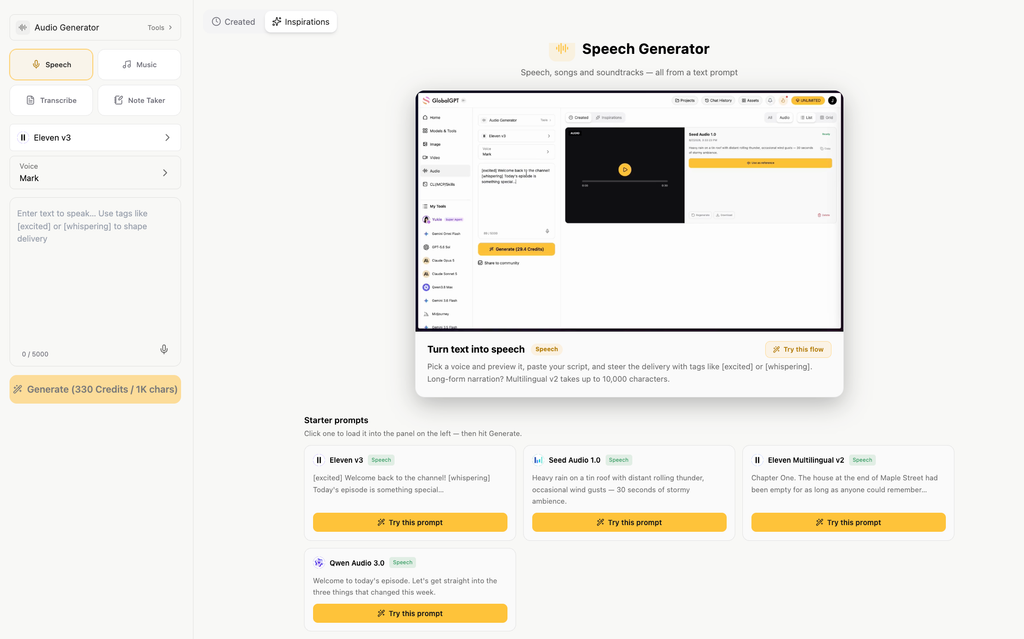
GlobalGPT can help here by exposing multiple creative model routes in one workspace. The Resumen de los modelos de IA «todo en uno» explains that comparison layer. The useful question is not “Which model wins?” after one prompt, but whether a route produces an acceptable clip for a defined brief at a tolerable observed cost.
Best for: social clips, concept shots, ad variants, b-roll, and previsualization.
Watch for: credit pricing, queue time, failed-task policy, watermarks, output rights, and the cost of repeated generations.
A Better Evaluation Framework
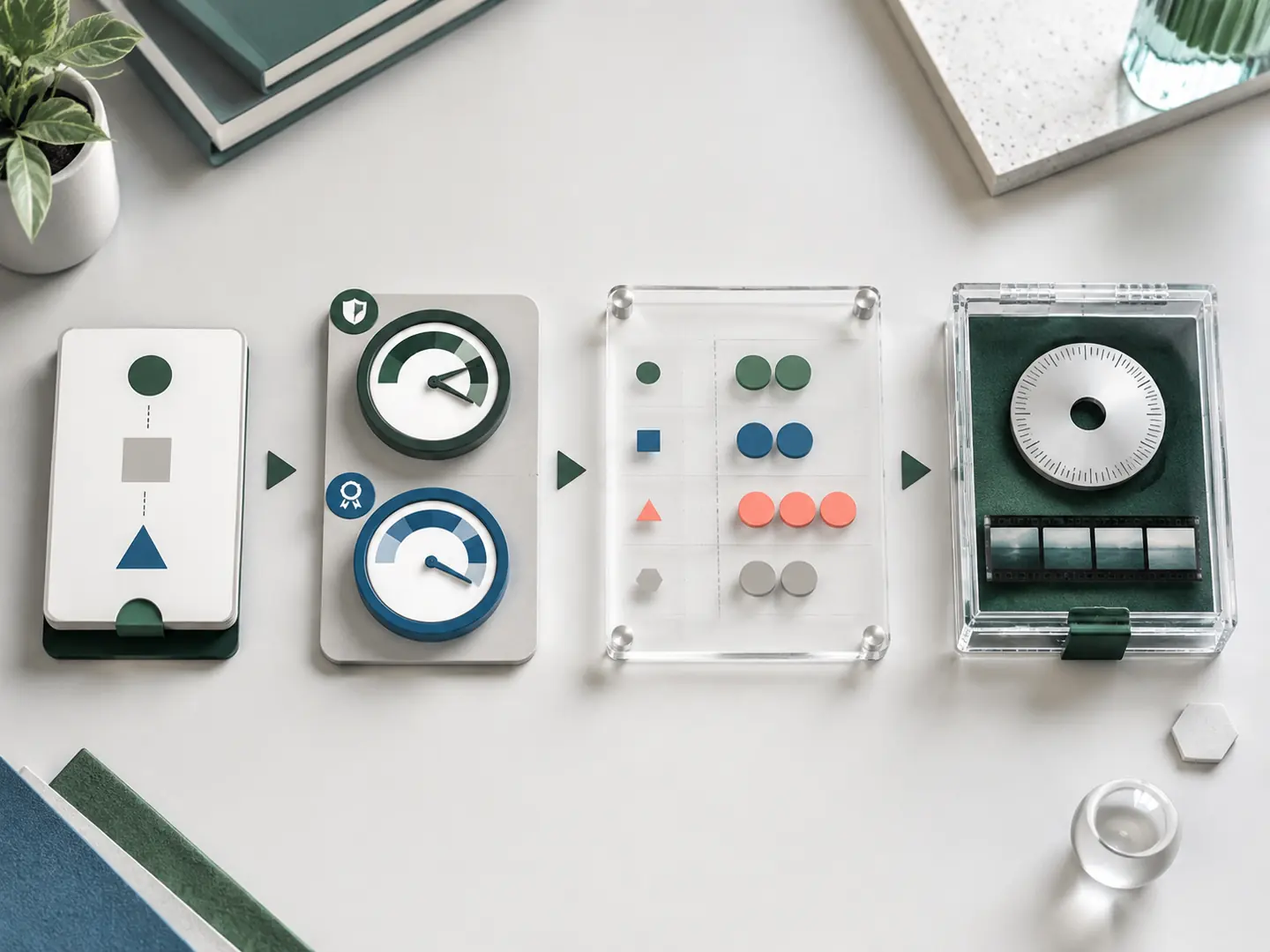
A four-step evaluation that survives demos
Step 1: Write One Narrow Job Statement
Avoid “We need an AI agent.” Write: “A customer calls to change a delivery date; the agent authenticates them, reads two available slots from our API, confirms one, and transfers on failure.” For video, write: “Create a six-second 16:9 establishing shot with one person, one camera move, and no dialogue.”
Step 2: Separate Quality From Reliability
A beautiful demo does not prove operational reliability. Score conversational naturalness, task completion, tool accuracy, recovery, and policy compliance separately. For video, score prompt adherence, temporal coherence, anatomy, identity, motion, and technical validity separately.
Step 3: Measure End-to-End Cost
Provider list price is only one component. Include telephony, speech services, model usage, orchestration, monitoring, storage, retries, human review, and engineering. For generated video, calculate cost per usable output, not only cost per generation.
Step 4: Preserve an Evidence Log
Record the date, model identifier, settings, prompt, task ID, duration, output metadata, observed spend, and failure state. This turns anecdotal testing into reproducible internal evidence without pretending it is a universal benchmark.
If real audio, transcripts, or customer content enter the trial, define the boundary before testing. The Guía sobre la privacidad de los datos en la IA is a useful checklist alongside each provider’s official retention and security terms.
Copyable Evaluation Prompt
This script tests interruption, authentication, grounding, tool failure, and reversal. Replace fictional fields with synthetic data until legal and security review is complete.
Copyable Scoring Schema
A Low-Cost GlobalGPT Test Plan
For a creative-video interpretation of the keyword, use one fixed source image and one constrained prompt across two available low-cost video routes. Generate the shortest supported duration at standard resolution. Do not rerun merely to obtain a prettier result. Save the exact CLI command, model route, task ID, output duration, file metadata, and transaction delta.
Sugerencia de mensaje:
The result can support a first-person section such as “What we observed in one controlled run.” It cannot support claims that one model is fastest, cheapest, or best in the market. A single run is a workflow check, not a benchmark.
Dónde encaja GlobalGPT
GlobalGPT is a practical option for creators who want access to multiple AI image and video routes without opening and maintaining several separate creative-tool subscriptions. It can shorten model comparison and asset production. The evidence boundary remains important: current availability and cost should be read from the account and CLI at test time, and every generation should be logged.
Prueba GlobalGPT with one fixed brief and a pre-approved test budget, then keep the task IDs, transactions, outputs, and failures together.
It is less appropriate when the core requirement is live telephony, deterministic business workflows, or a custom streaming avatar infrastructure. In those cases, use a dedicated platform and treat generated media as a separate content workflow.
Recomendación final
Start with the interaction, not the model name. Choose OpenAI or another realtime API when you are building a conversational product; choose a managed voice platform for phone operations; choose streaming avatars only when visible presence creates measurable value; choose video generators when the deliverable is a clip. For creative comparison, GlobalGPT reduces account fragmentation and makes controlled multi-model trials easier.
The winning alternative is the one that completes your representative task repeatedly, within your latency, risk, and cost constraints. A polished sample is useful evidence. It is not a production guarantee.
Before signing a contract, ask the provider to identify the exact models behind the product, the units used for billing, the handling of failed sessions, and the retention policy for audio, transcripts, images, and tool payloads. Confirm concurrency, rate limits, support response times, export options, and the procedure for deleting customer data. For regulated or high-risk workflows, involve security, privacy, and legal reviewers before sending real customer information. A capable model does not remove the organization’s responsibility for consent, access control, logging, human escalation, and incident response.
Preguntas frecuentes
What is the best GPT Live 1 alternative?
There is no single best alternative because the phrase can refer to realtime voice, multimodal interaction, avatars, or generated video. Match the category to the job, then test representative scenarios.
Is OpenAI Realtime the same as a complete voice-agent platform?
No. A realtime model provides core conversational capabilities, while a production platform may also supply phone numbers, routing, transfers, monitoring, integrations, and compliance controls.
Can a text-to-video model power a live conversation?
Usually not. Most generative video systems create asynchronous clips. A live avatar requires a streaming render stack connected to a conversational model and speech system.
How should I compare latency?
Measure end-to-end time on realistic networks, from the end of the user’s turn to audible and, where relevant, visible response. Report median and tail latency across many turns.
Is one test enough to rank providers?
No. One run can verify a workflow and reveal failure modes, but it cannot establish general quality, speed, or price leadership.
What should I log during a trial?
Record date, model, settings, prompts, network, task or session IDs, latency, tool results, output metadata, failures, and observed cost.