

Water as Light
The sea is a reflector, not a backdrop. Say what the light is doing on the surface, such as backlit spray at golden hour, and the animal sits inside the scene.
Prompt Guide
Model
Reference Image
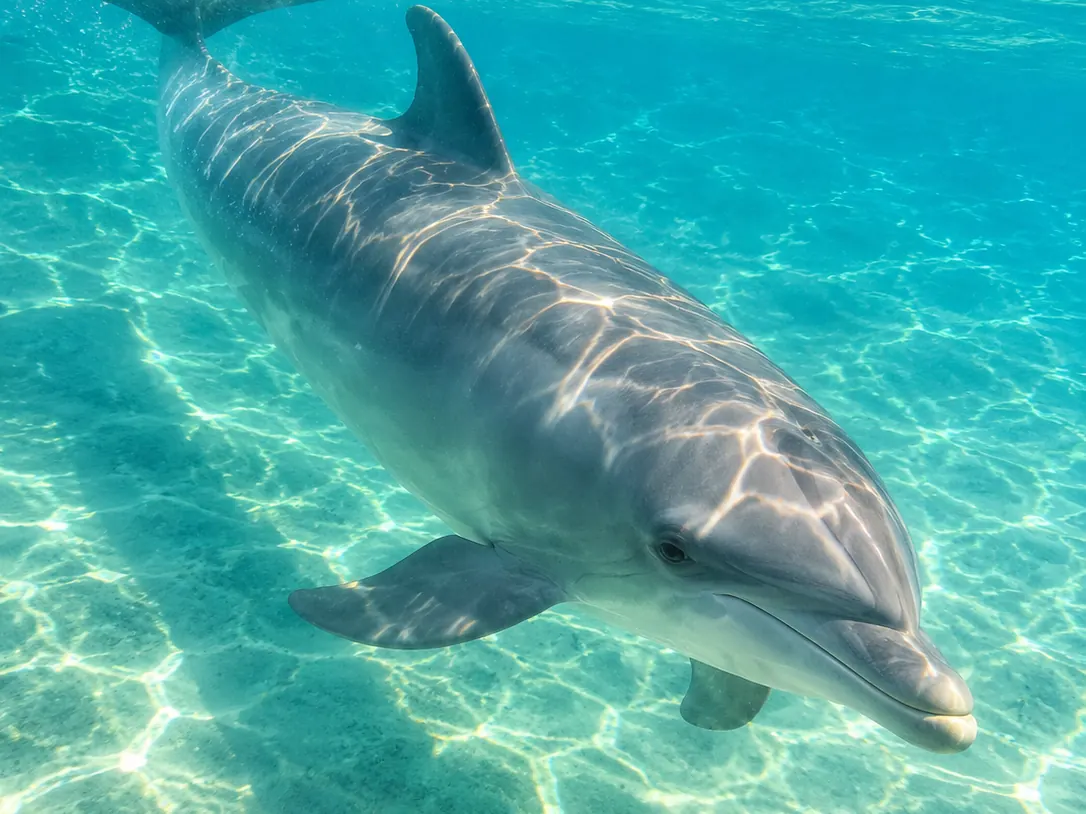
Set the water, the hour and the pose, and get a dolphin image for a poster or a wallpaper, from a wild pod in turquoise water to a chrome emblem.
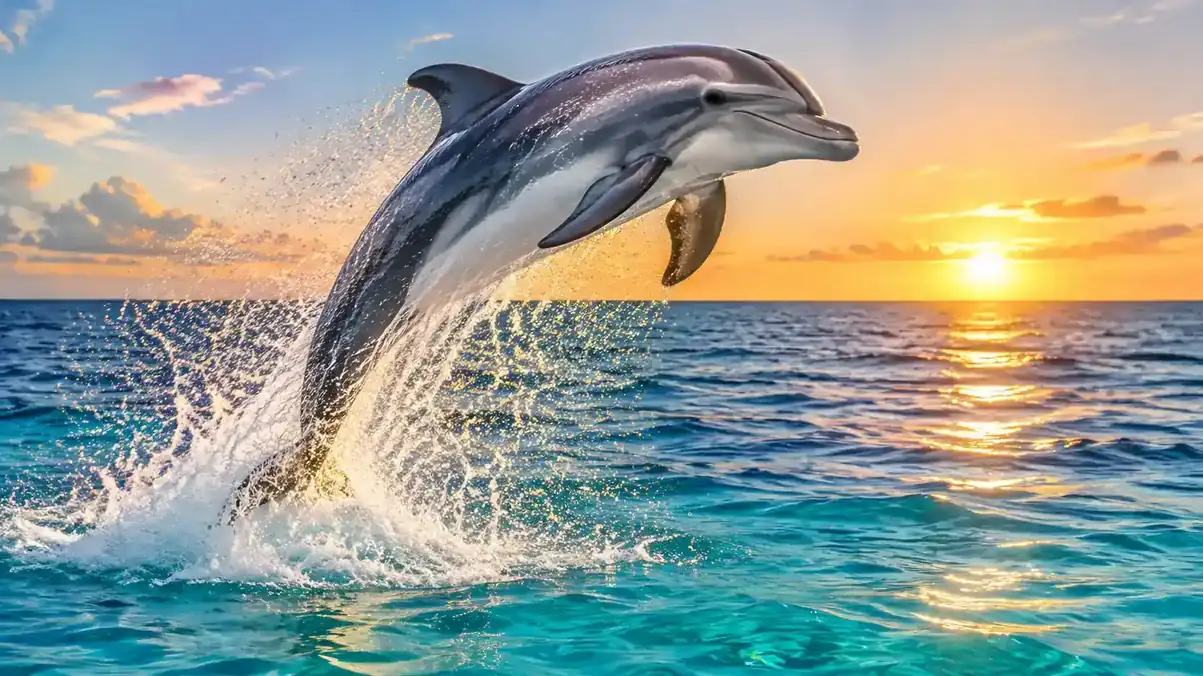
Turquoise shallows, deep blue swell, grey rain. The colour of the water is the colour of the light, and it changes the whole frame more than the animal does.
A full breach, a dorsal fin at dusk, a pass under the boat. Name the body angle as well as the action, or the animal comes back bent in the middle.
Wildlife photograph, poster silhouette, ink line or neon emblem. Each needs a different amount of detail, and a poster wants less than a wildlife frame does.
Leave the upper third quiet if a title is going on top. Lettering inside the render is unreliable, so the type goes in afterwards over deliberately empty water or sky.
Ten ocean frames across four registers, from a wild pod in turquoise water to a chrome emblem.
 Studio
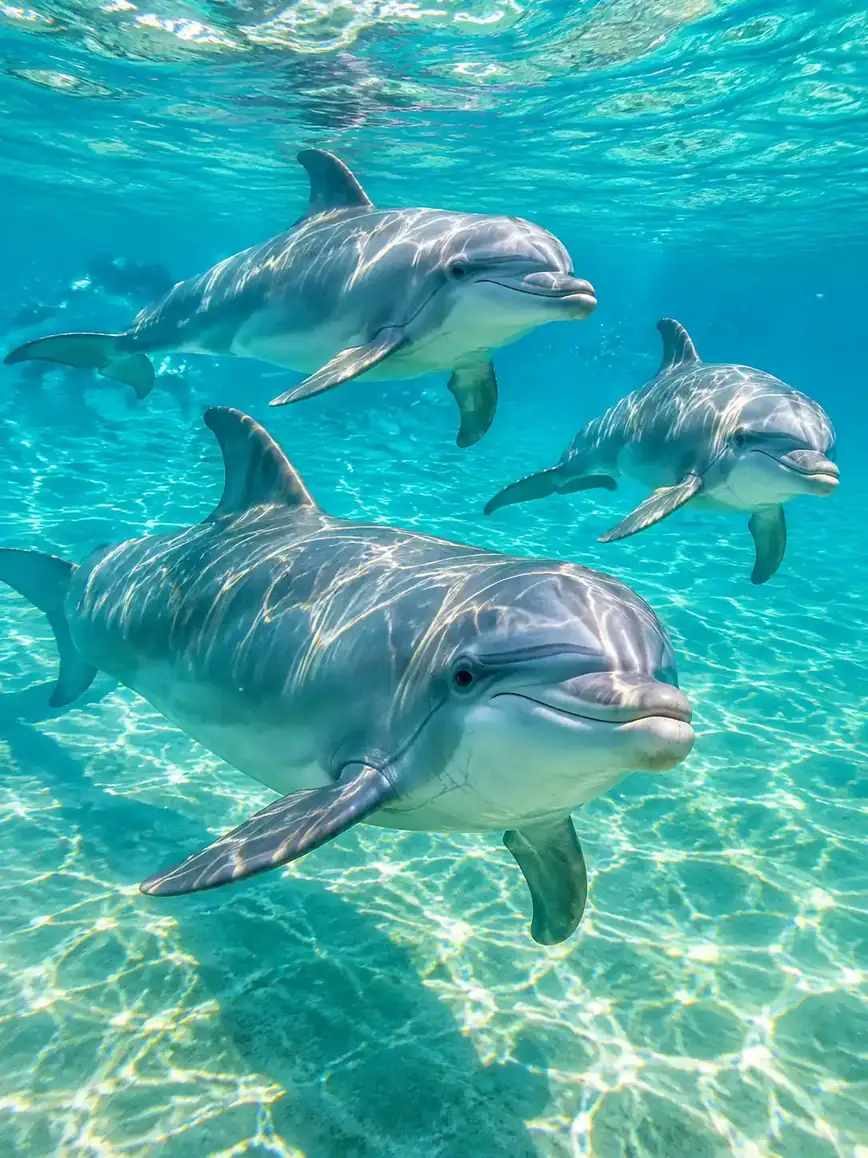
Three dolphins under turquoise shallows, light bands across their backs, 3:4
Try This Style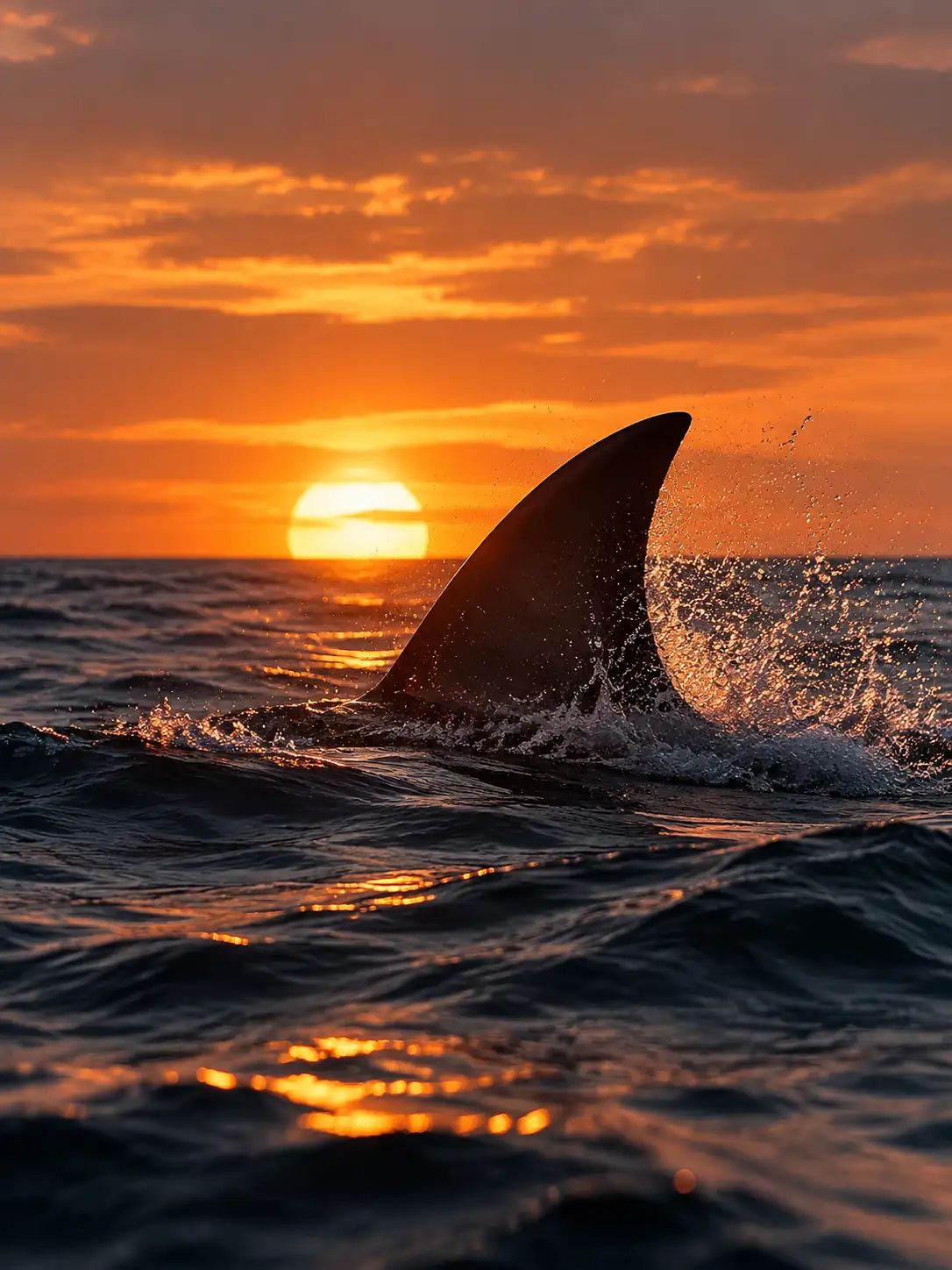 Studio
A dorsal fin breaking a dark sea at dusk, low sun behind, spray, 3:4
Try This Style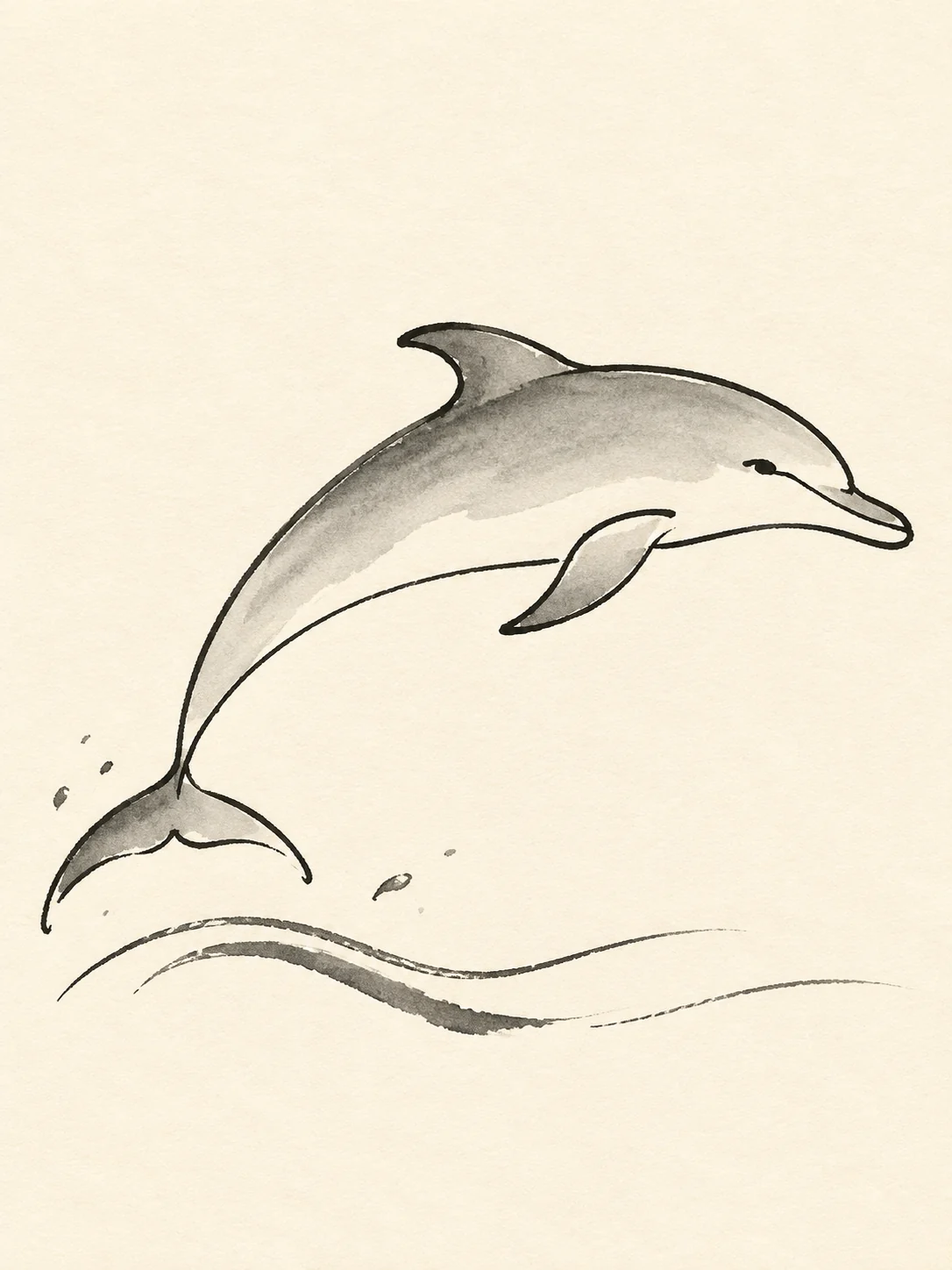 Studio
Single line ink dolphin on cream, one grey wash, poster crop, 3:4
Try This Style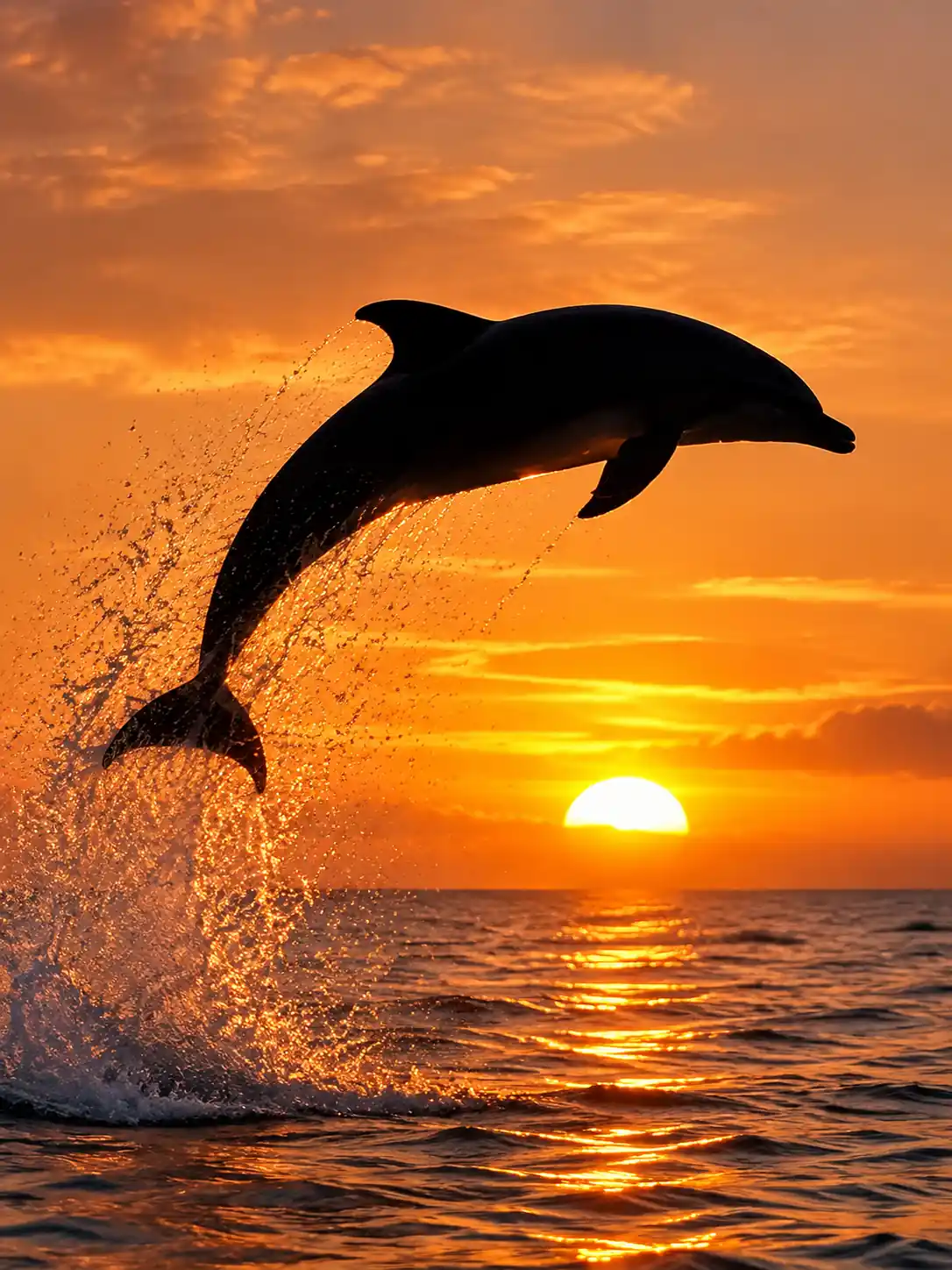 Character
Black dolphin silhouette arcing across a warm sunset sky, spray, 3:4
Try This Style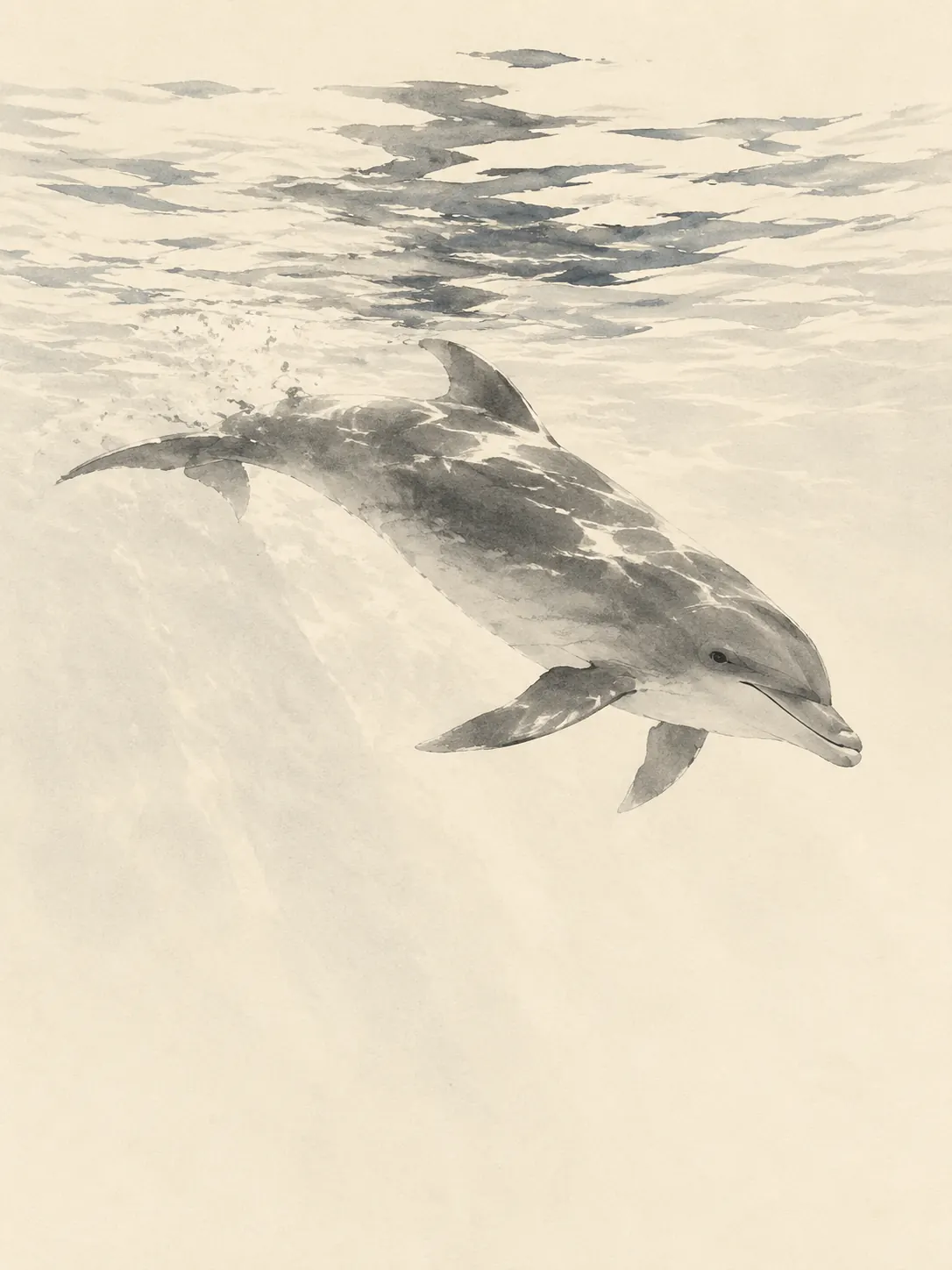 Character
Ink wash dolphin gliding under a still surface, grey on cream, 3:4
Try This Style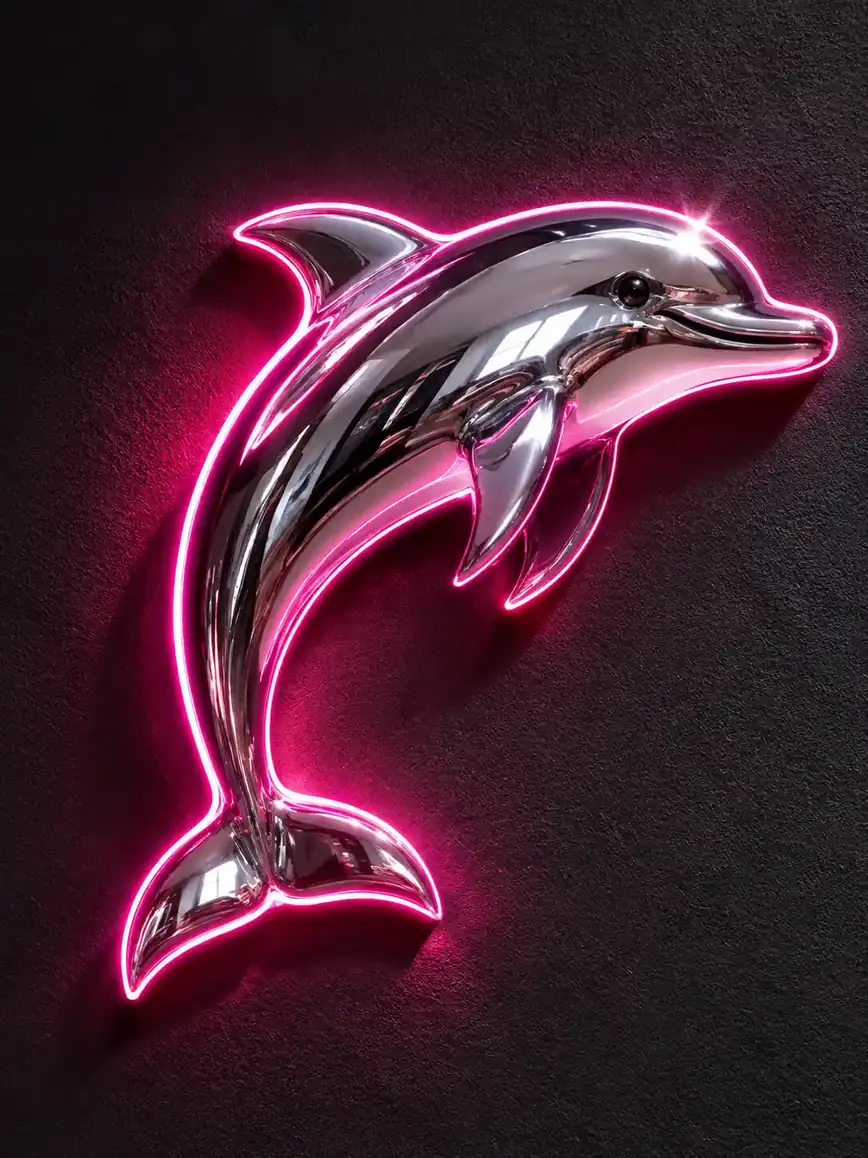 Character
Chrome dolphin with pink neon rim on a dark wall, hard highlight, 3:4
Try This Style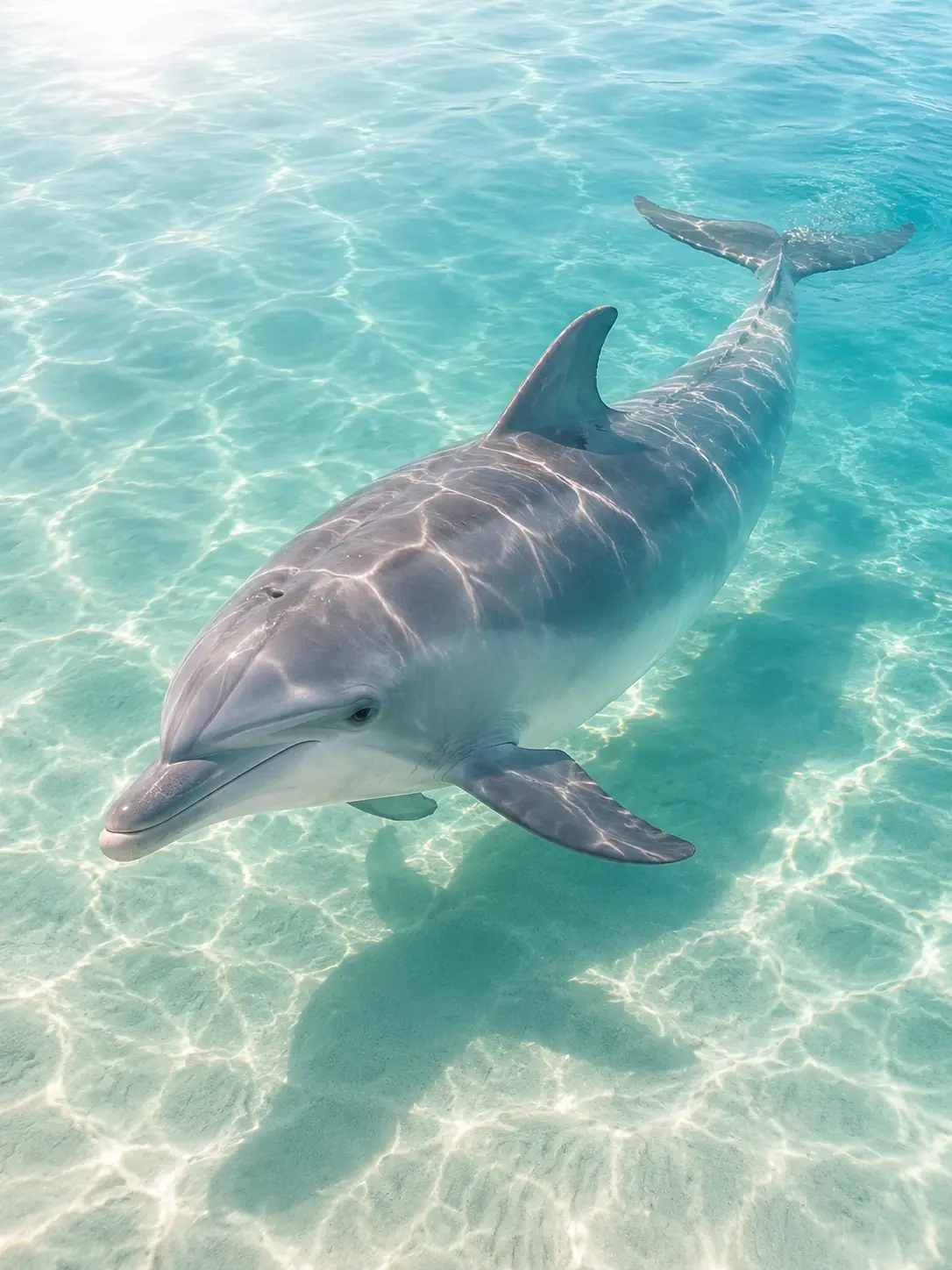 Scene
Dolphin in flat morning haze, pale water, soft horizon, 3:4
Try This Style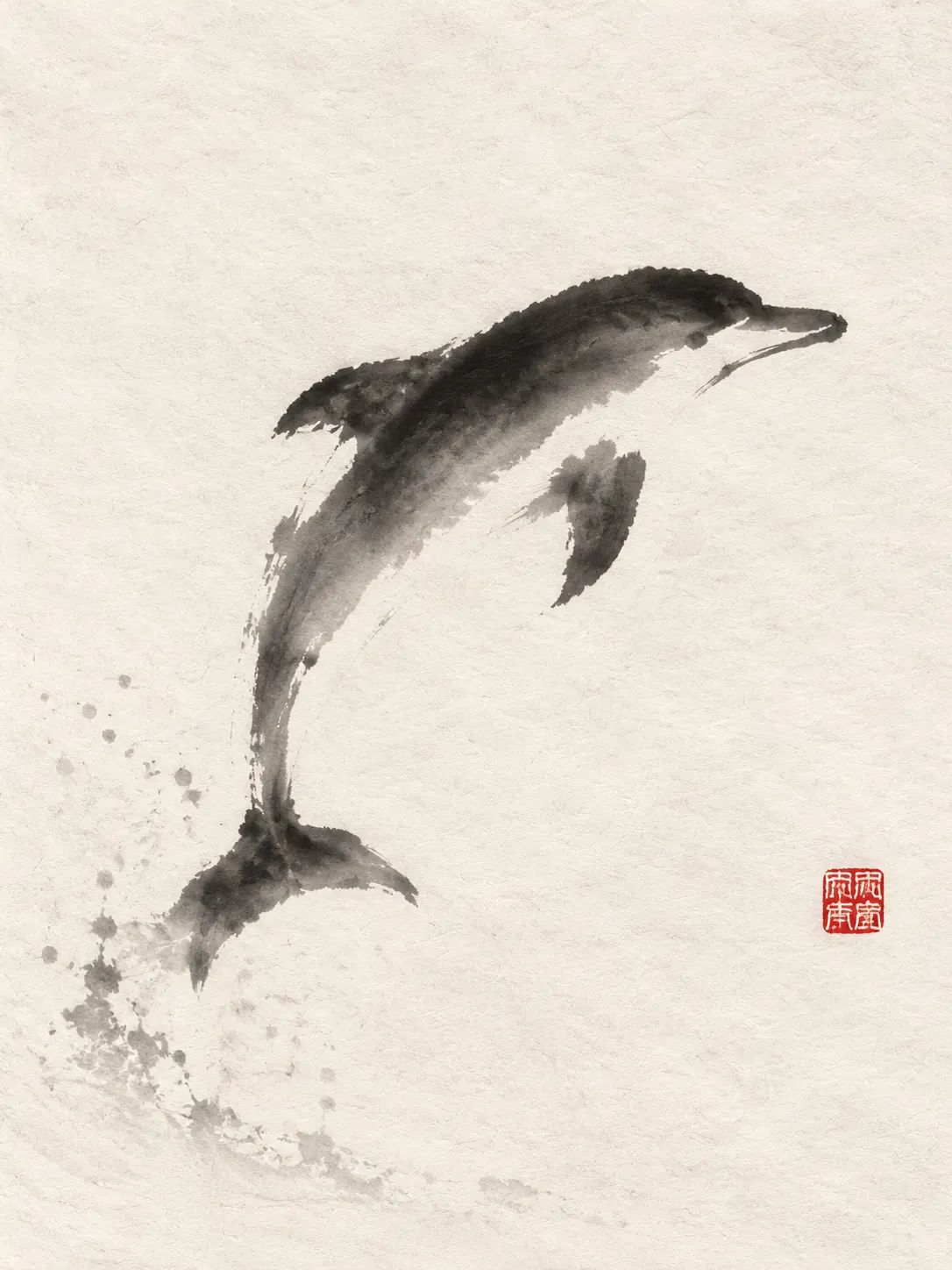 Scene
One-stroke ink dolphin on textured paper, visible brush edge, 3:4
Try This Style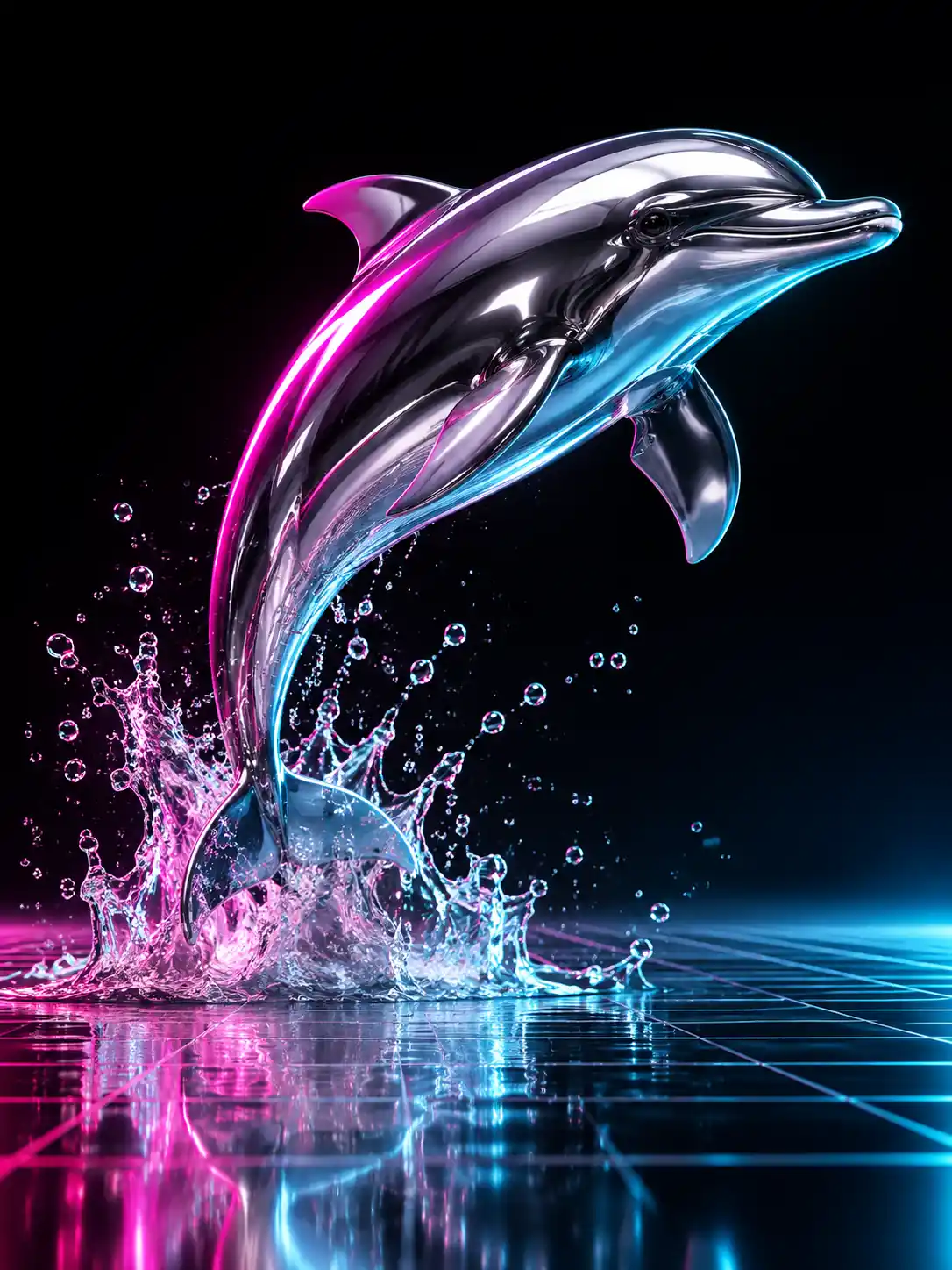 Detail
Chrome dolphin leaping, studio reflection, dark seamless backdrop, 3:4
Try This Style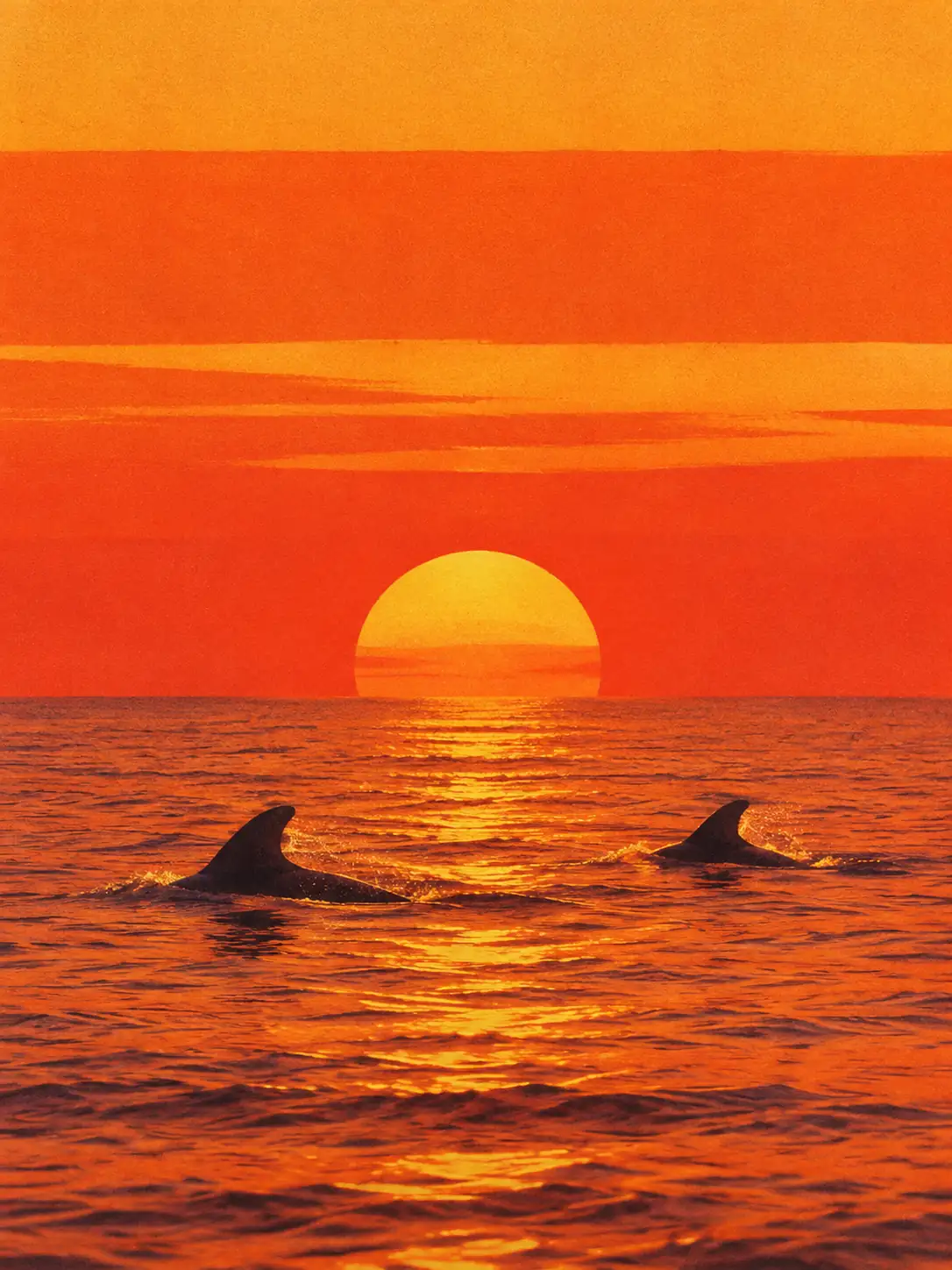 Detail
Two dolphins at golden hour, backlit spray, warm water, 3:4
Try This StyleThe sea is a reflector, not a backdrop. Say what the light is doing on the surface, such as backlit spray at golden hour, and the animal sits inside the scene.
A wildlife frame needs skin texture and spray. A poster wants a solid silhouette. Asking for both in one prompt returns a sticker of a dolphin on a photograph.
3:4 leaves room for a title above the arc. 16:9 suits a wallpaper but crowds the type. Decide the shape before you describe the jump.
Say nose up at forty degrees, or level with the surface. An unnamed jump comes back vertical and stiff, like a fish on a hook rather than an animal mid-arc.
A half-above, half-below frame explains where the animal is in the water. It is the one composition that shows both the surface and the body at once.
A dolphin in a marine campaign should be labelled as AI artwork. Presenting it as a photograph of a real pod misrepresents wildlife photography and the people who do it.
I needed a hero image for a swimming school flyer and had no budget for a marine photographer. The morning haze group did the job on the second try, once I said the water was flat and the sun was behind the animal instead of in front.
My breaches looked like a dolphin suspended on a wire. Naming the arc fixed it: nose at forty degrees, tail still in the water, spray trailing. That one sentence did more than an hour of adding adjectives.
I use the neon and poster groups for club flyers, where realism is not the point. For a conservation client I would not use it at all, because a generated pod cannot show actual behaviour and the claim would be false.
Yes. Ask for 3:4, name the water and the hour, and leave the upper third quiet for a title. The result is a generated illustration, so a poster is a fair use and a wildlife documentary is not.
Pose needs a body angle as well as an action. Say the tail flexes, the body arcs from nose to fluke, or the animal turns at the surface. A named angle gives the model a skeleton to follow.
No. The scene comes from your description. That also keeps you clear of using a photographer's picture of a real animal, which would carry its own licence and credit requirements.
You can render a first image on the free trial. Sets, larger sizes and the faster models require a paid plan, and the model picker marks which one is free before you run anything. Compare the available AI image models before choosing a model for this image.
That depends on the model and your plan terms. Check the licence for the model you used before selling a print, and keep the image described as AI generated artwork rather than a photograph.