

A Single Source
A single named source — a bulb, a window, or a farm light — gives the frame direction and warmth. Scenes lit evenly from nowhere just look like underexposed photographs.
Generate cinematic horror by combining atmospheric lighting with a single, wrong detail.

Prompt Guide
Model
Reference Image
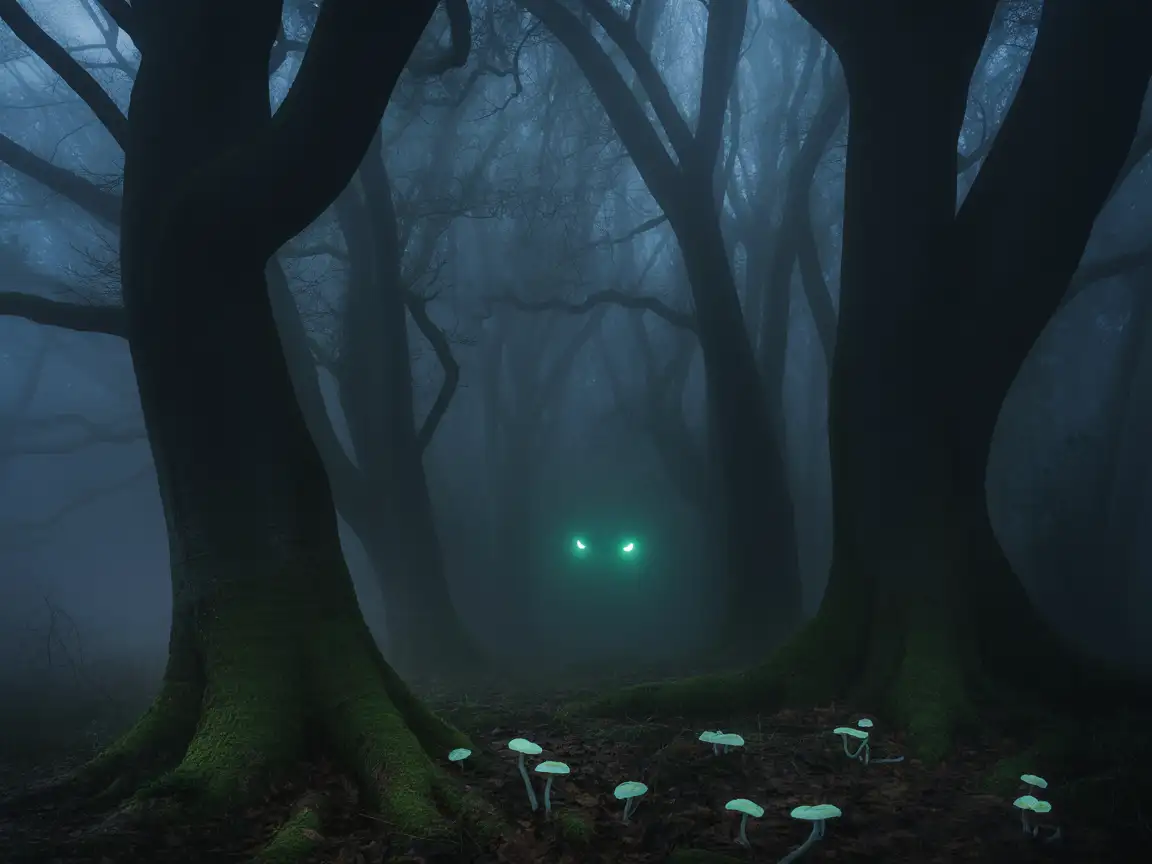
Master the five rules of atmospheric horror composition.
A hallway, a stairwell, or a lakeshore carries its own expectation. By starting with a familiar place, you only need to break one rule to create dread, rather than inventing it from scratch.
Keep the light single and warm. A lone bulb, a lit window, or a farm light against a cold exterior makes the surrounding darkness feel like it is pressing in.
Leave the threat unresolved. Two eyes in the treeline, a silhouette behind frosted glass, or a shape under the water — the viewer finishes the picture, and that is what unsettles them.
A readable floor, grass, or water gives the eye a sense of scale and a way in. Thick fog over the whole frame just reads as a grey rectangle at thumbnail size.
No wounds, no blood, no bodies on the floor. Unease travels further in a thumbnail than shock, and keeping it mild makes the image shareable on social media and in print.
Ten frames across four kinds of dread, each lit so you can still read the room.
 Ritual
Attic under a vaulted timber roof, hanging cobwebs, stacked leather trunks, one shuttered window throwing a hard shaft of light, a glowing circular sigil on the floorboards, 3:4 vertical crop.
Try This Style Places
Gothic mansion at dusk behind a fog-soaked lawn, three windows lit on the upper floor, bare branches against a bruised sky, wet gravel drive, no figures anywhere, 3:4 vertical crop.
Try This Style Apparitions
Spiral stone staircase in a tower, pale translucent figures standing on the steps above, one weak wall lamp, dust hanging in the air, cool grey palette, quiet and still, 3:4 vertical crop.
Try This Style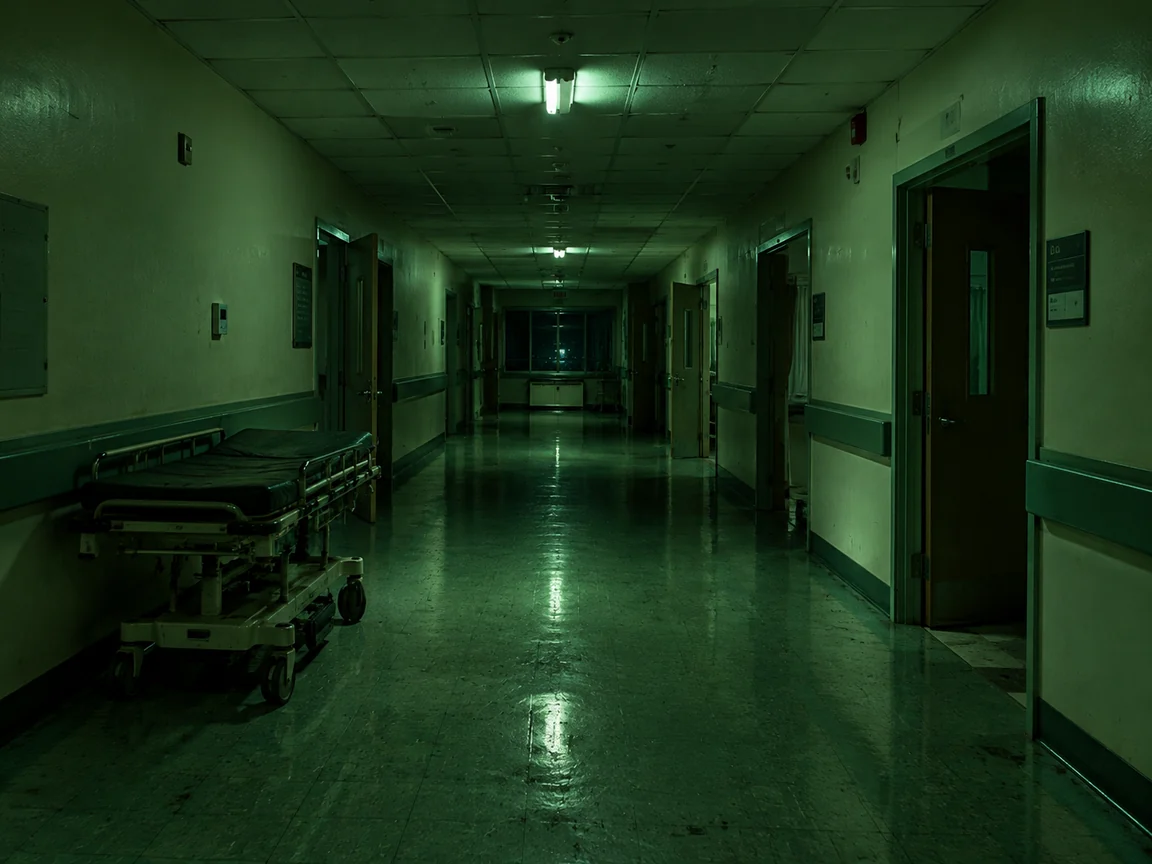 Places
Empty hospital corridor at night, one flickering fluorescent tube, an abandoned gurney against the wall, scuffed lino, doors left ajar, flat green light, everything in focus, 3:4 vertical crop.
Try This Style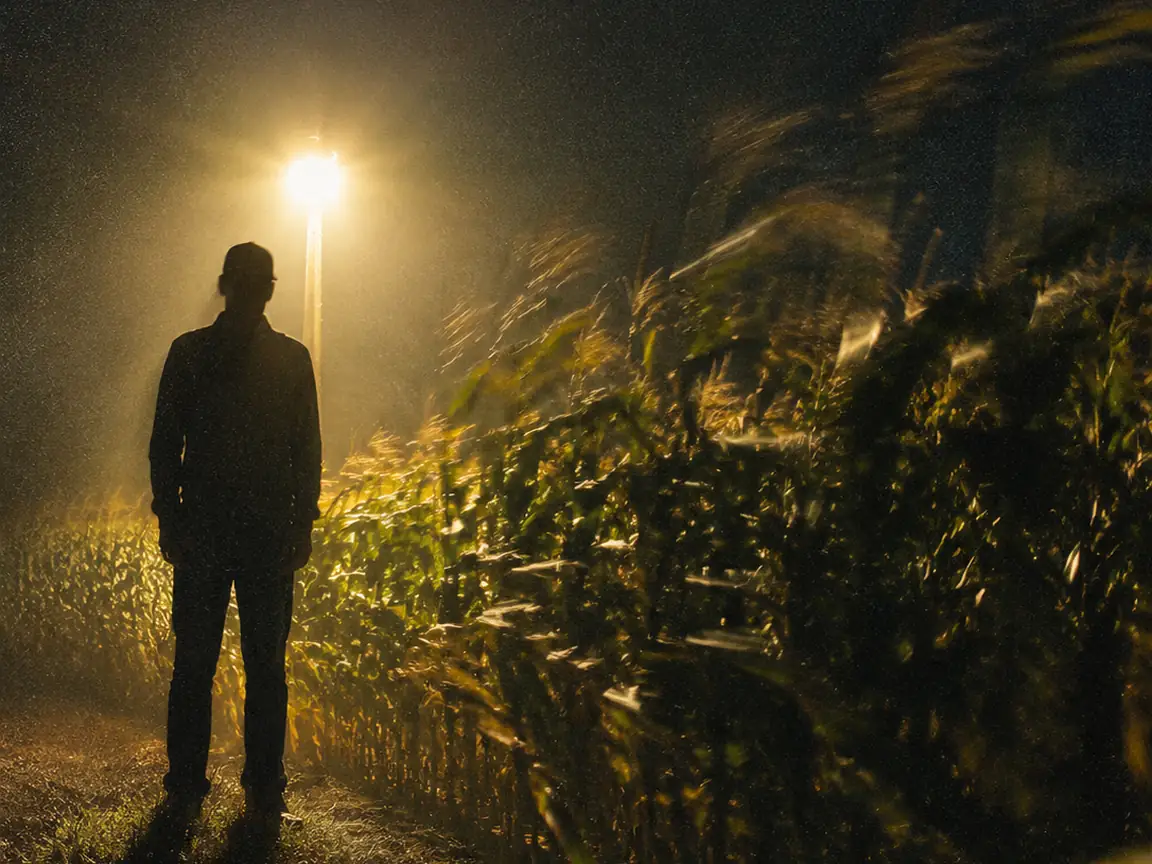 Apparitions
A tall figure standing at the edge of a cornfield, backlit by a single farm light, face lost in shadow, the corn bending away from it, long-exposure grain, 3:4 vertical crop.
Try This Style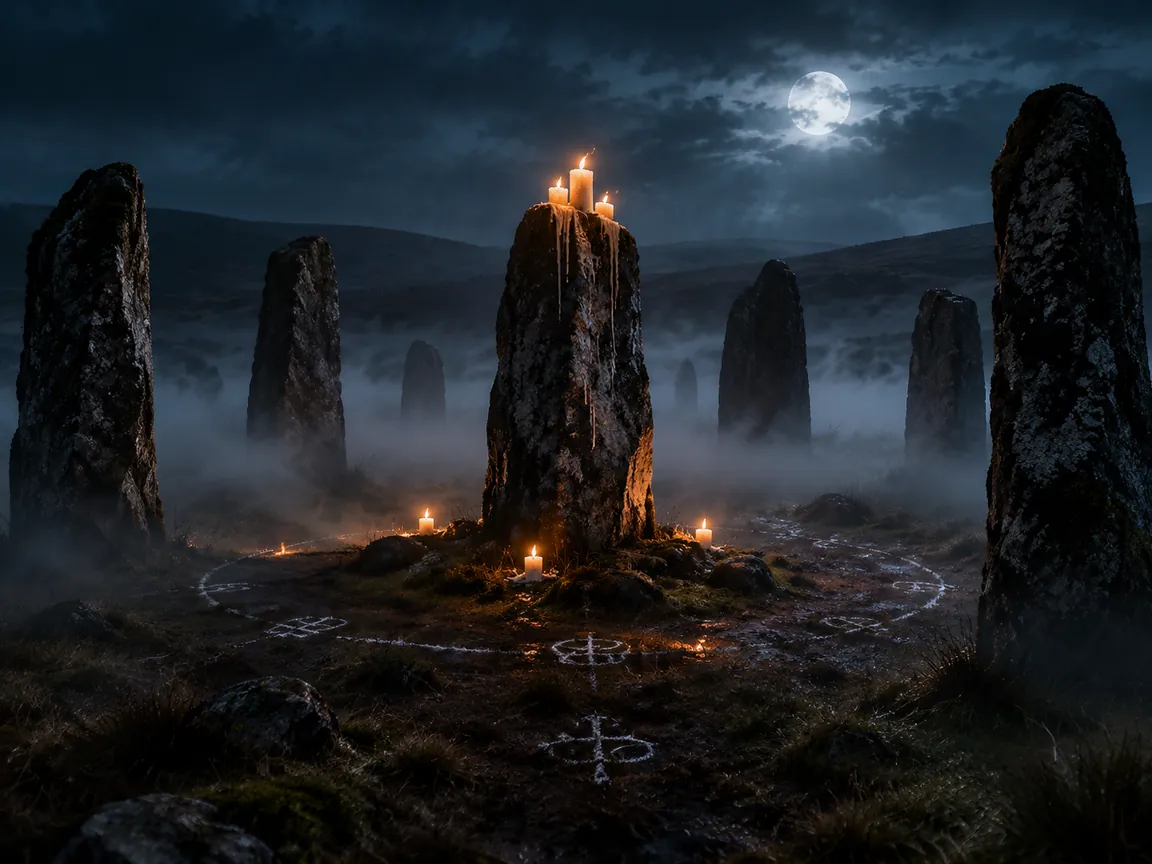 Ritual
Ring of standing stones on a moor at night, tallow candles guttering on the middle stone, chalk marks on the ground, mist at knee height, low moonlight behind the circle, 3:4 vertical crop.
Try This Style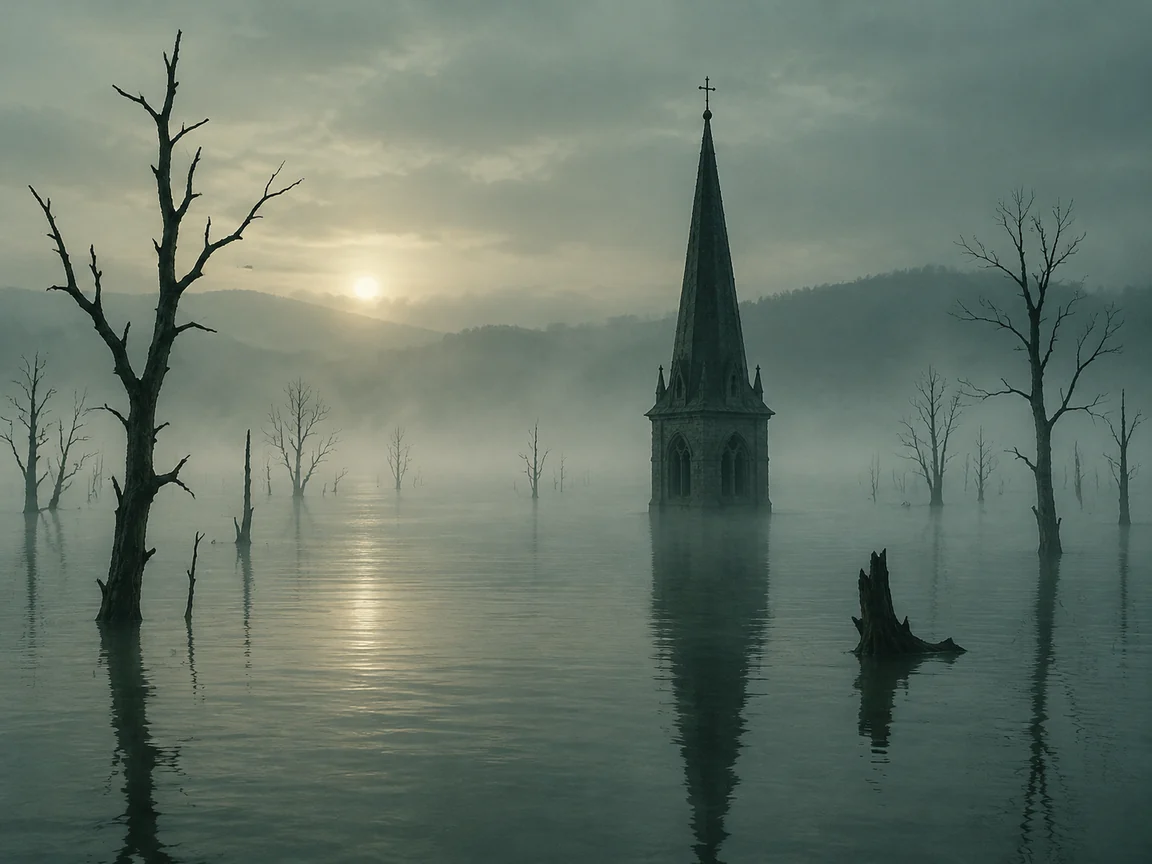 Nature
Church spire breaking the surface of a reservoir at first light, dead trees standing in the water, flat mist, cold green-grey light, no boat, no wind, quiet dread, 3:4 vertical crop.
Try This Style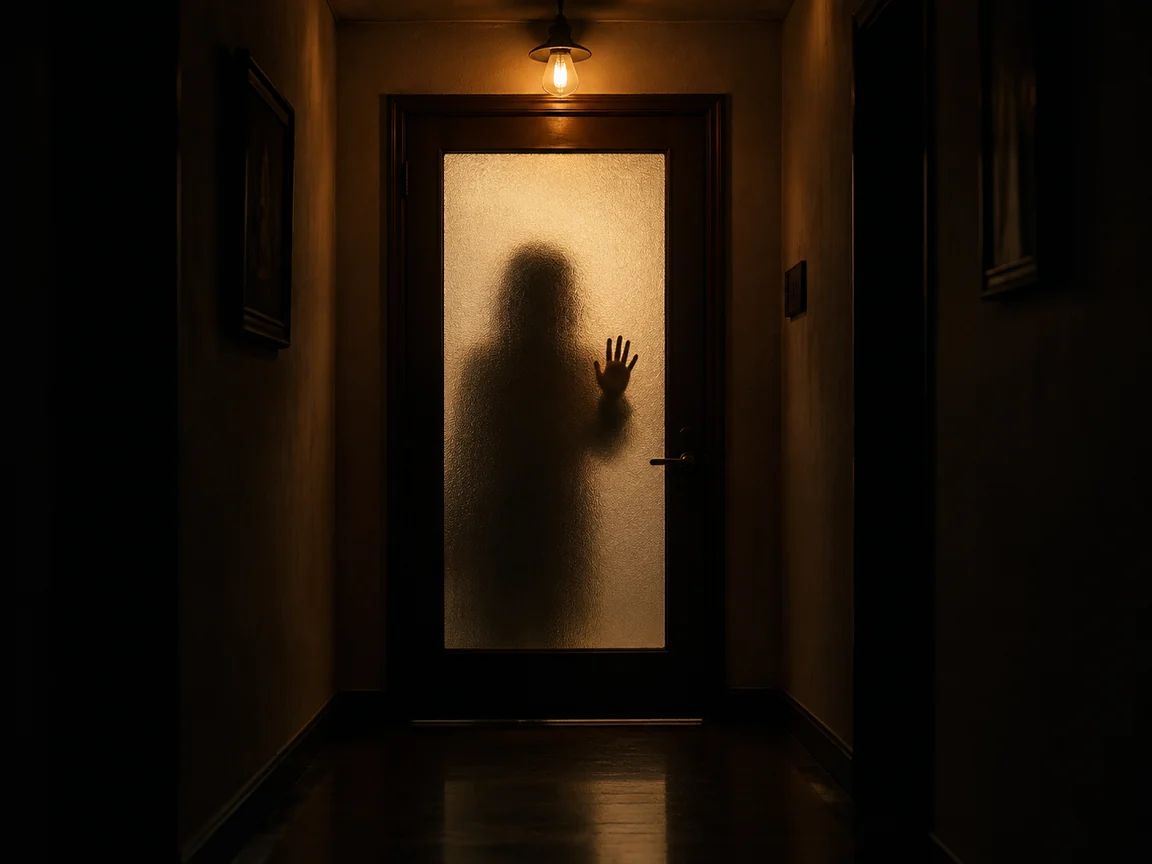 Apparitions
Silhouette standing behind a frosted glass door in a dim hallway, one hand flat against the glass, warm bulb above, the rest of the corridor in shadow, 3:4 vertical crop.
Try This Style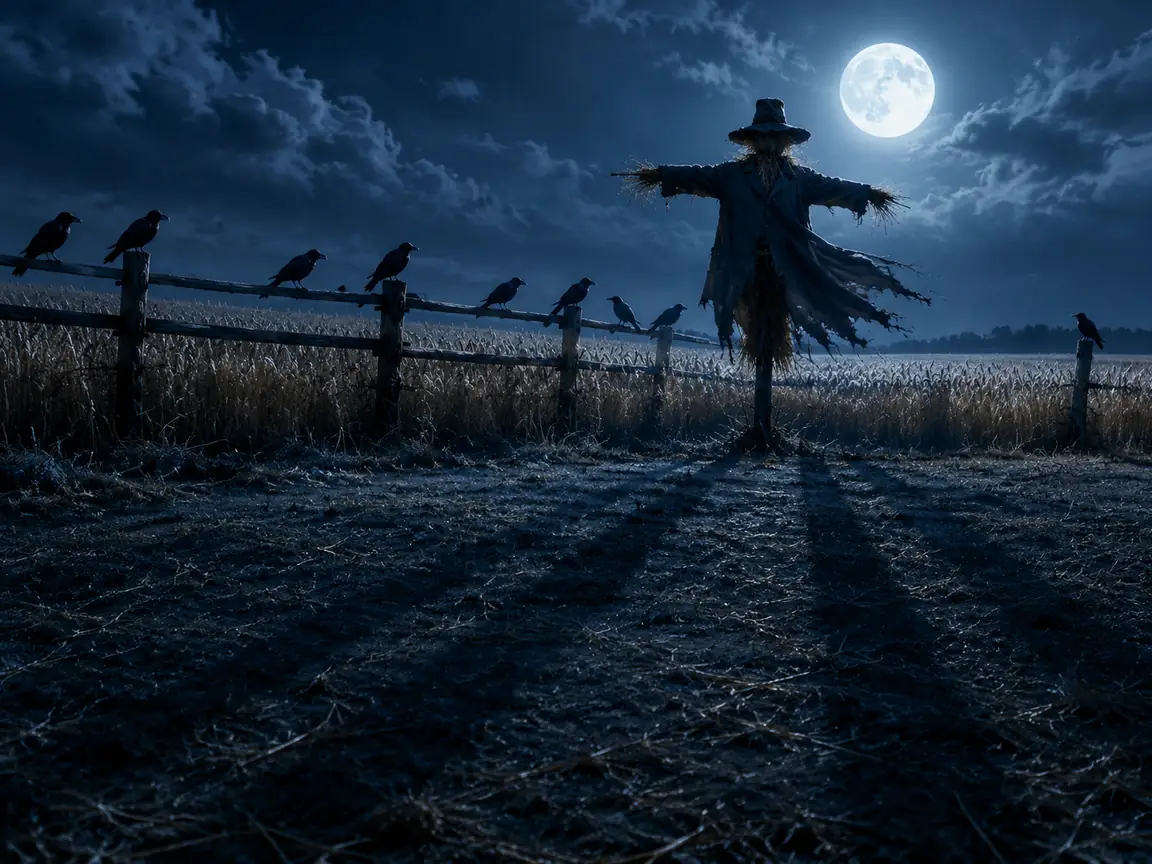 Nature
Scarecrow in a moonlit wheat field, coat flapping in the wind, crows lined along a fence, long shadows toward camera, cold blue light, wide empty foreground, 3:4 vertical crop.
Try This Style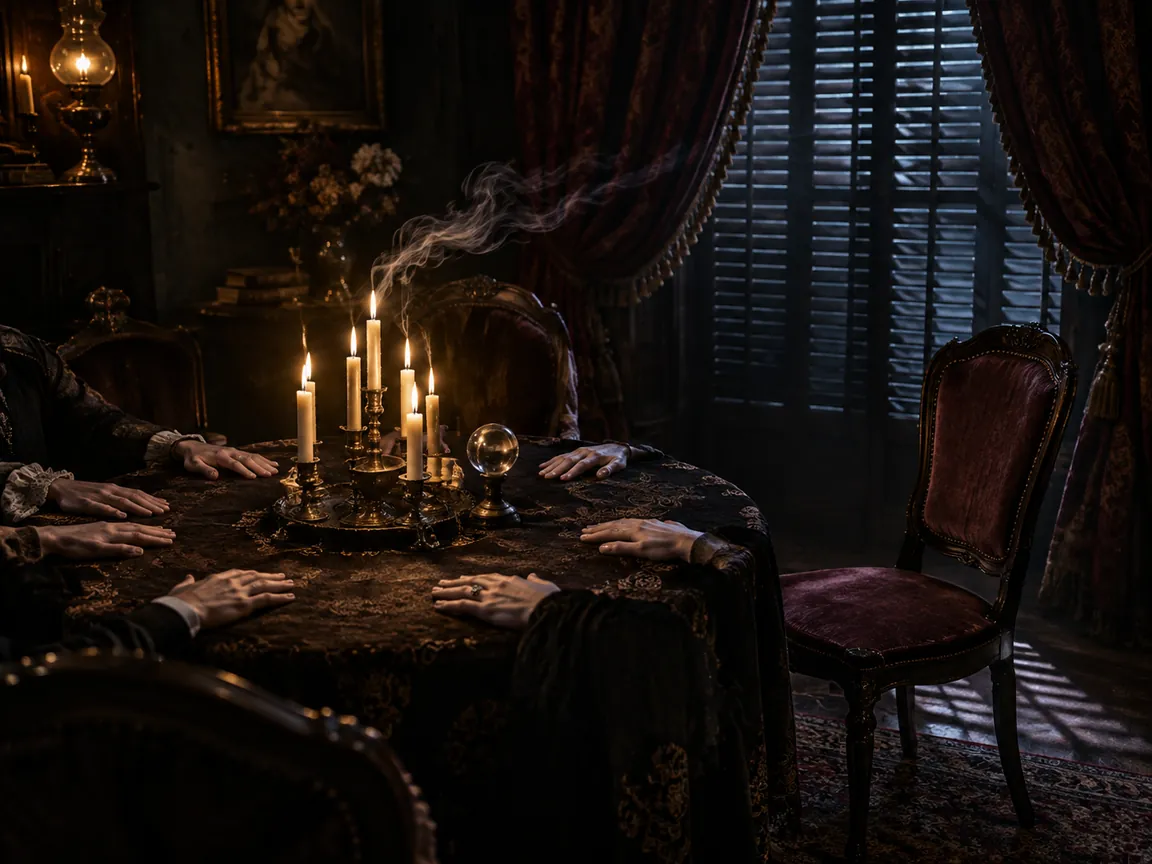 Ritual
Seance table in a shuttered parlour, ring of hands resting near but not touching, candle smoke bending sideways, heavy curtains, one chair pulled back from the table, 3:4 vertical crop.
Try This StyleSix essential rules for making horror imagery that works perfectly on mobile screens.
A single named source — a bulb, a window, or a farm light — gives the frame direction and warmth. Scenes lit evenly from nowhere just look like underexposed photographs.
Wet gravel, grass, or still water tells the eye where it is standing. Without a surface, the image collapses into meaningless fog on a small phone screen.
Eyes in the treeline, a hand on frosted glass. Showing a fraction of the subject is far stronger than revealing the whole thing, and it keeps the horror mild instead of gory.
A still-lit lamp, a chair pulled back, a strange sigil on clean floorboards. The object is completely normal; only its state is off. That is what defines the uncanny.
Blue, cold exteriors with one warm window read as both inhabited and unwelcoming. It is a subtle way to add story without adding a single figure.
No gore, no violence. Mild atmospheric horror keeps the image usable across social feeds, print, and client decks without the need for content warnings.
I needed a ritual concept the same afternoon I found this page. I typed what I wanted for "Sigil in the attic", ran it twice, then changed only the light and the palette on the second pass. The version I kept went straight into a client deck and saved me a stock-photo search.
My first try for "Something at the cornline" came back too polished, more advertising than real photograph. I rewrote the sentence to describe the surface and the actual light in the room, and the third attempt looked like something I could have shot myself. That is the one I still use for scary AI generated images mockups.
I use it the way I use a sketchbook: one prompt for "Spire under water", one for "Hand on frosted glass", then I pick the half that works and iterate from there. Two of those frames ended up in a package for a client who could not decide between the two directions, and seeing them side by side settled it in a minute.
Work with atmosphere and one wrong detail: an empty corridor lit from below, a door that opens onto a wall, a figure facing the corner. Gore triggers safety reviewers and usually reads as cheap.
Words about blood, injury or violence trip the safety layer. Describe unease instead, using light, space and something out of place, and the same scene will go through.
Ask for grain, low light, on-camera flash, slightly off framing and a timestamp-free frame. Polished comes from the words cinematic and 8k, so leave them out.
Check the platform's rules on disturbing imagery and on synthetic media disclosure. Some monetisation programmes throttle graphic thumbnails even when the video itself is fine.
You can generate on the free allowance; paid models start around $5.80 a month and downloads carry no watermark.