

Evidence-First Personalization
Match real experience to the opportunity's most important requirements and keep unsupported claims visible as [add detail] instead of filling gaps with fiction.
Choose an application type, paste the opportunity or recipient details, add your relevant experience and goals, and select a voice. The ChatGPT Cover Letter Generator structures a tailored first draft while marking missing proof as [add detail] instead of inventing it.
Prompt Guide
Model
Use the ChatGPT Cover Letter Generator to match opportunity details with your evidence, explore multiple application formats, and produce an editable draft with missing facts clearly marked for review.

Use the ChatGPT Cover Letter Generator to move from scattered source material to a reviewed letter in three clear steps.
Select a job, internship, academic, freelance, creative, partnership, or community template. Paste the real listing, program description, brief, or recipient context.
Provide relevant experience, projects, outcomes, goals, portfolio or research notes, constraints, preferred voice, and target length. Leave unknown facts unknown.
Review every name, date, claim, requirement, and [add detail] marker. Rewrite the final voice in your own words and follow any applicable AI-use or disclosure rules.
Start with a complete prompt for work, study, freelance, creative, community, or business applications, plus a small chatgpt prompt for photo editing collection. Replace the bracketed details and review every result before use.
 Career
Act as an evidence-focused application editor. Write a one-page cover letter for [role] at [organization] using the pasted job description and my supplied background. Identify the three most important requirements, connect each to a specific example I provided, and keep the tone [professional / warm / concise]. Mark unsupported points as [add detail]. Do not invent employers, titles, dates, achievements, metrics, skills, credentials, motivations, or relationships.
Try This Prompt Career
Write an internship cover letter for [internship] at [organization]. Use only my real coursework, projects, part-time work, volunteer experience, and interests. Show learning ability and connect two examples to the stated responsibilities without apologizing for limited experience. Mark missing proof as [add detail]. Do not invent grades, awards, leadership roles, skills, credentials, employers, or results.
Try This Prompt Career
Draft a career-change cover letter from [current field] to [target role]. Use only my supplied training, projects, motivations, and transferable evidence. Translate past outcomes into the target role's language, explain the transition once, and focus the rest on fit. Add [add detail] where evidence is missing. Do not invent certifications, projects, employers, achievements, metrics, or reasons for leaving.
Try This Prompt Academic
Write a scholarship application letter for [scholarship] using only my real academic preparation, financial or access context I choose to disclose, community contribution, goals, and the published selection criteria. Match evidence to the criteria and mark missing details as [add detail]. Do not invent grades, hardship, awards, service, identity claims, recommendations, credentials, or future outcomes.
Try This Prompt Academic
Draft a research application letter to [supervisor or laboratory] for [role or opportunity]. Use my supplied coursework, methods, projects, questions, and reasons for fit. Connect my preparation to the group's verified research areas and identify one honest learning goal. Mark unsupported claims as [add detail]. Do not invent publications, techniques, supervisors, findings, grades, awards, credentials, or relationships.
Try This Prompt Academic
Draft a statement of purpose for [program] using only my real preparation, research or professional questions, projects, goals, and verified program details. Build a coherent narrative from preparation to current focus to program fit to future direction. Mark missing program or evidence details as [add detail]. Do not invent grades, publications, faculty relationships, awards, research results, credentials, motivations, or life events.
Try This Prompt Freelance & Partnership
Write a concise proposal cover letter for [project] using the client's brief and my supplied services, portfolio evidence, process, availability, and constraints. Open with the client's need, include one or two relevant proof points, outline a realistic approach, and ask one useful scope question. Mark unknowns as [add detail]. Do not invent clients, case studies, revenue, timelines, testimonials, certifications, availability, or guaranteed results.
Try This Prompt Freelance & Partnership
Write a collaboration letter to [person or organization] about [shared project or partnership]. Use only my real work, audience or community information, resources, proposed contribution, boundaries, and reason for fit. Define a small next step and keep claims mutual and specific. Mark unconfirmed details as [add detail]. Do not invent relationships, audience numbers, endorsements, budgets, access, outcomes, commitments, or prior conversations.
Try This Prompt Creative
Write a portfolio introduction letter for [reviewer, client, school, or opportunity]. Use only my supplied practice, selected works, methods, themes, roles, and goals. Describe two works concretely, connect them to the recipient's context, and keep the voice distinctive but readable. Mark missing context as [add detail]. Do not invent exhibitions, publications, awards, commissions, collaborators, clients, audience figures, or endorsements.
Try This Prompt Creative
Draft an artist residency application letter for [residency]. Use my real practice, proposed project, methods, schedule, resource needs, community approach, and verified residency details. Explain why the place and program matter to the project and what I can contribute. Mark unresolved logistics as [add detail]. Do not invent exhibitions, grants, awards, partners, community relationships, facilities, budgets, outcomes, or endorsements.
Try This Prompt Community
Write an application letter for [volunteer role, nonprofit position, committee, or community program]. Use only my real motivation, availability, lived or professional experience, skills, and relationship to the mission. Respect the community served, show practical contribution, and mark missing evidence as [add detail]. Do not invent affiliations, service hours, identity claims, credentials, achievements, personal relationships, or community authority.
Try This Prompt Business & Funding
Write a grant application cover letter for [grant or funder] using only the project need, objectives, team background, budget context, timeline, evidence, and eligibility details I provide. Connect the proposed work to the published funding priorities, state the request clearly, and mark missing proof as [add detail]. Do not invent credentials, partners, community relationships, outcomes, metrics, endorsements, matching funds, commitments, or prior awards.
Try This Prompt Business & Funding
Write a vendor or RFP response cover letter for [buyer and opportunity] using only the stated requirements, our verified capabilities, team credentials, delivery approach, relevant evidence, pricing context, risks, and exceptions I provide. Summarize compliance without replacing the full proposal and mark missing support as [add detail]. Do not invent credentials, clients, case studies, metrics, certifications, endorsements, relationships, commitments, capacity, pricing, or guaranteed outcomes.
Try This Prompt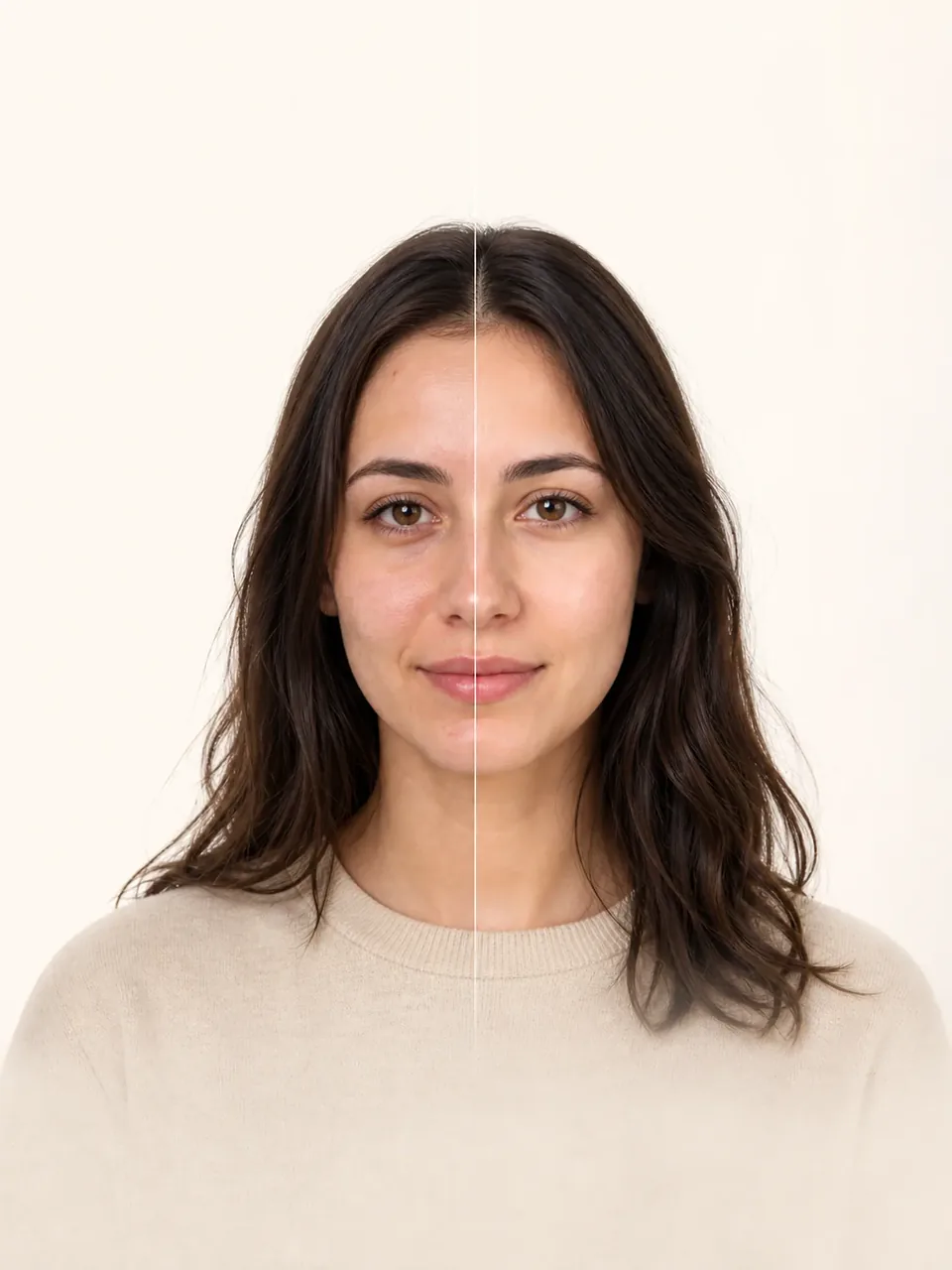 ChatGPT Photo Editing Prompts
Edit the uploaded portrait with natural, realistic retouching. Reduce temporary blemishes and mild under-eye shadows, balance exposure and white balance, preserve real skin texture, facial structure, hair detail, age, expression, and identity. Do not reshape the face or body, change eye color, whiten skin unnaturally, add makeup that was not present, or create a plastic-looking result. Keep the background and clothing unchanged unless I specify otherwise.
Try This Prompt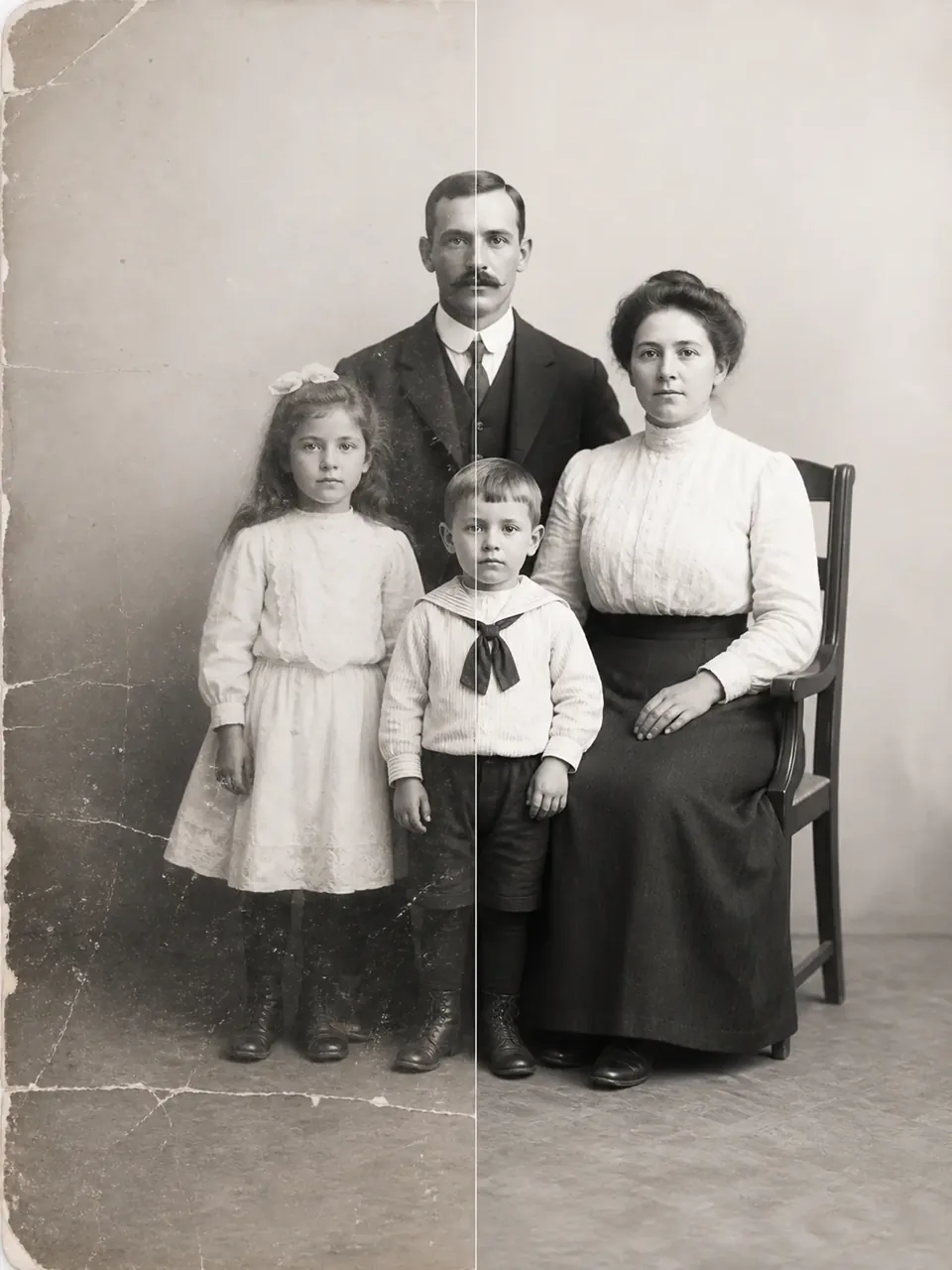 ChatGPT Photo Editing Prompts
Restore the uploaded old photo while preserving the people, setting, period details, composition, and original identity. Repair scratches, dust, folds, fading, mild blur, and missing edge damage; recover balanced contrast and natural detail without over-sharpening. If colorizing, use restrained historically plausible colors and keep a monochrome version available. Do not invent facial features, clothing details, objects, text, or background elements that cannot be supported by the source.
Try This PromptEach part of the ChatGPT Cover Letter Generator reduces a different source of weak, generic, or unsupported writing.
Match real experience to the opportunity's most important requirements and keep unsupported claims visible as [add detail] instead of filling gaps with fiction.
Move from job and internship letters to academic, freelance, creative, partnership, and community applications without losing the document-first workflow.
Generate a structured first draft, preserve the source details for revisions, and use clear verification prompts before the document leaves your hands.
Fictional UI personas show how different applicants might use the workflow; these are not verified customer testimonials.
The career-change preset helped me connect project work to a new role without pretending I had experience I did not have. The [add detail] markers made the final review straightforward.
I used the academic structure to organize my research interests, program fit, and evidence. It gave me a usable outline while keeping every factual claim under my control.
The freelance prompt started with the client's actual brief and helped me ask a useful scope question instead of producing a generic sales message.
A ChatGPT Cover Letter Generator is a prompt-guided document workflow that turns opportunity details and user-supplied evidence into an editable application draft. This GLB GPT page is an independent tool, not an official OpenAI product.
Yes. The presets cover jobs and internships as well as scholarships, research applications, statements of purpose, personal statements, freelance proposals, partnerships, portfolios, residencies, submissions, and community roles. Always follow the target organization's format and AI-use rules.
The approved workflow instructs the model to use only the facts you provide and to mark missing evidence as [add detail]. AI can still make mistakes, so verify every claim and remove anything unsupported before use.
No. This is an independent GLB GPT feature page and is not affiliated with or endorsed by OpenAI. ChatGPT is a trademark of OpenAI.
Yes. Treat the output as a first draft. Verify names, dates, requirements, credentials, achievements, tone, originality, and any required AI disclosure. The tool does not guarantee an interview, admission, funding, approval, publication, selection, or acceptance.