

A smooth shell
Scutes and ridges are the texture. Ask for visible plate edges and a slightly uneven surface, or the shell turns into a helmet.
Describe the species, the reef and the depth, and get a photographic turtle image for prints, education and conservation pages.
Prompt Guide
Model
Reference Image
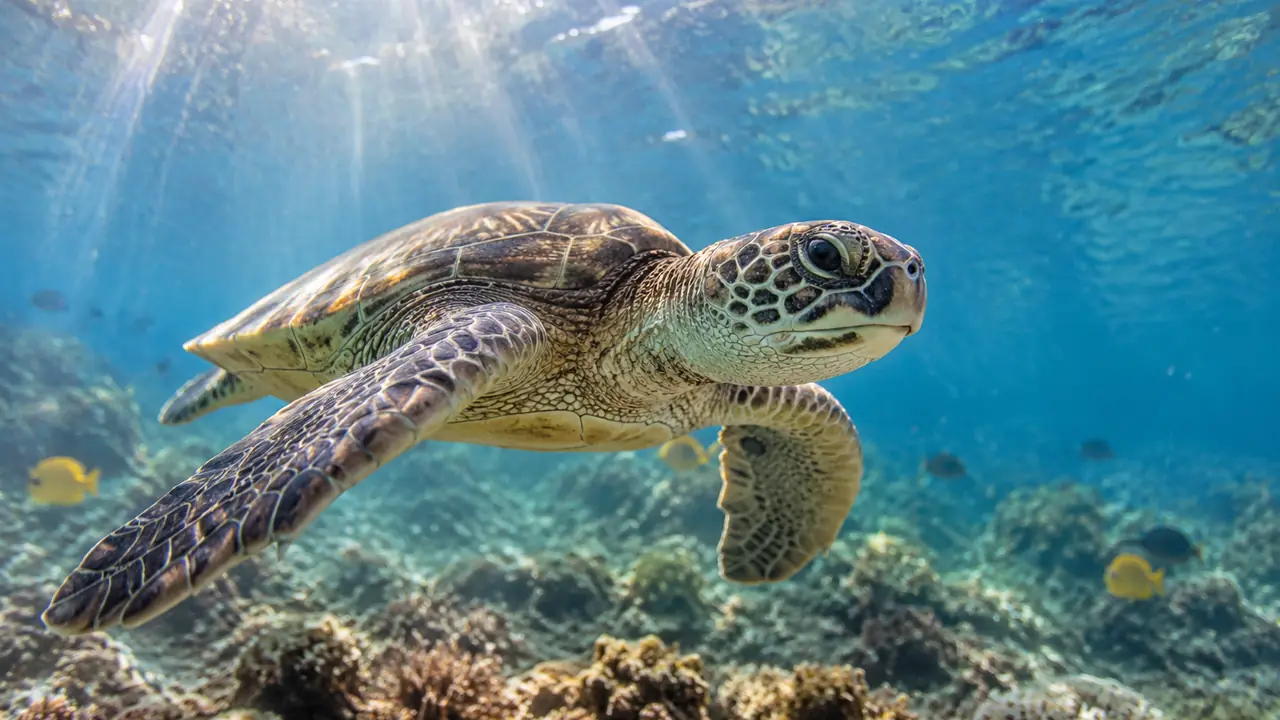
Shell pattern, scale texture and underwater light carry the whole image.
Green, hawksbill, leatherback, box turtle. Shell shape and flipper proportion differ enough that a species name fixes the anatomy in one word.
Scutes, ridges, mottling. A shell described as patterned comes back as a shell; an undescribed one comes back as a smooth dome.
Sun shafts, surface caustics, blue falloff with depth. Underwater realism is mostly a lighting problem.
A remora, a school of small fish, a cleaner wrasse. Scale in the ocean needs a reference, and a second animal gives it.
Wet sand darkens, coral has texture. A dry, even surface is what makes an ocean render look like a diorama.
Ten turtle images across reefs, beaches and open water, each a prompt you can retype.
 Reef
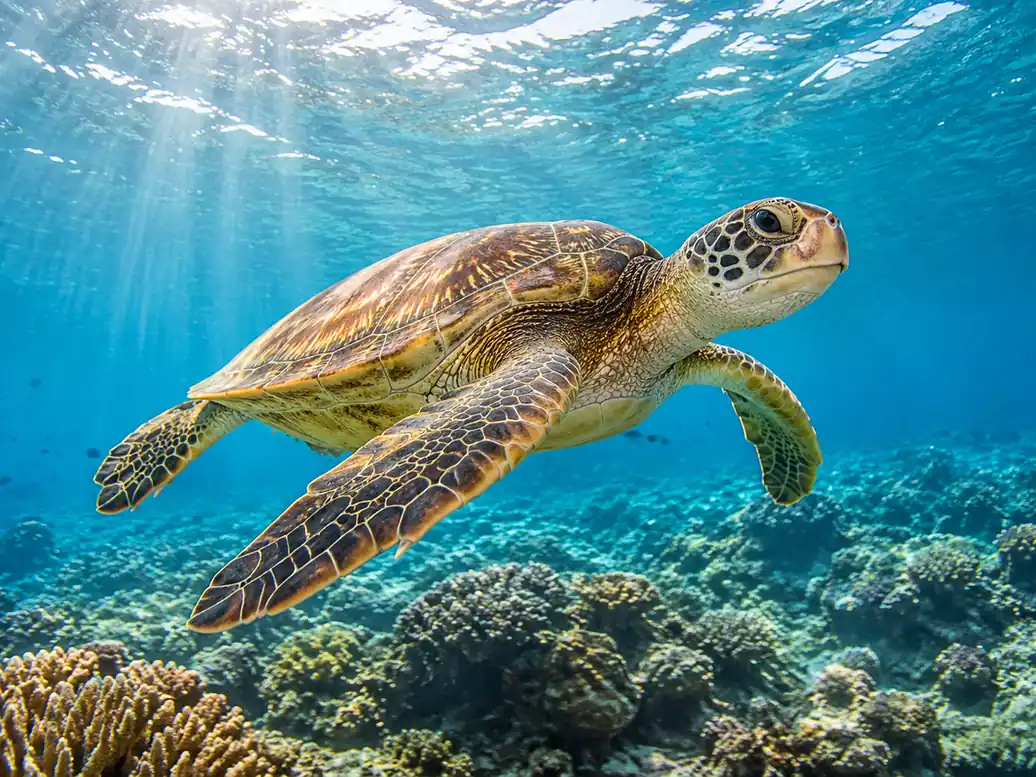
Green turtle over a shallow reef, sun shafts, small fish real photograph, shot on a 50mm lens at f2.8, natural directional light, true skin and material texture, shallow depth of field, no text, no watermark, no illustration, no 3d render
Try This Prompt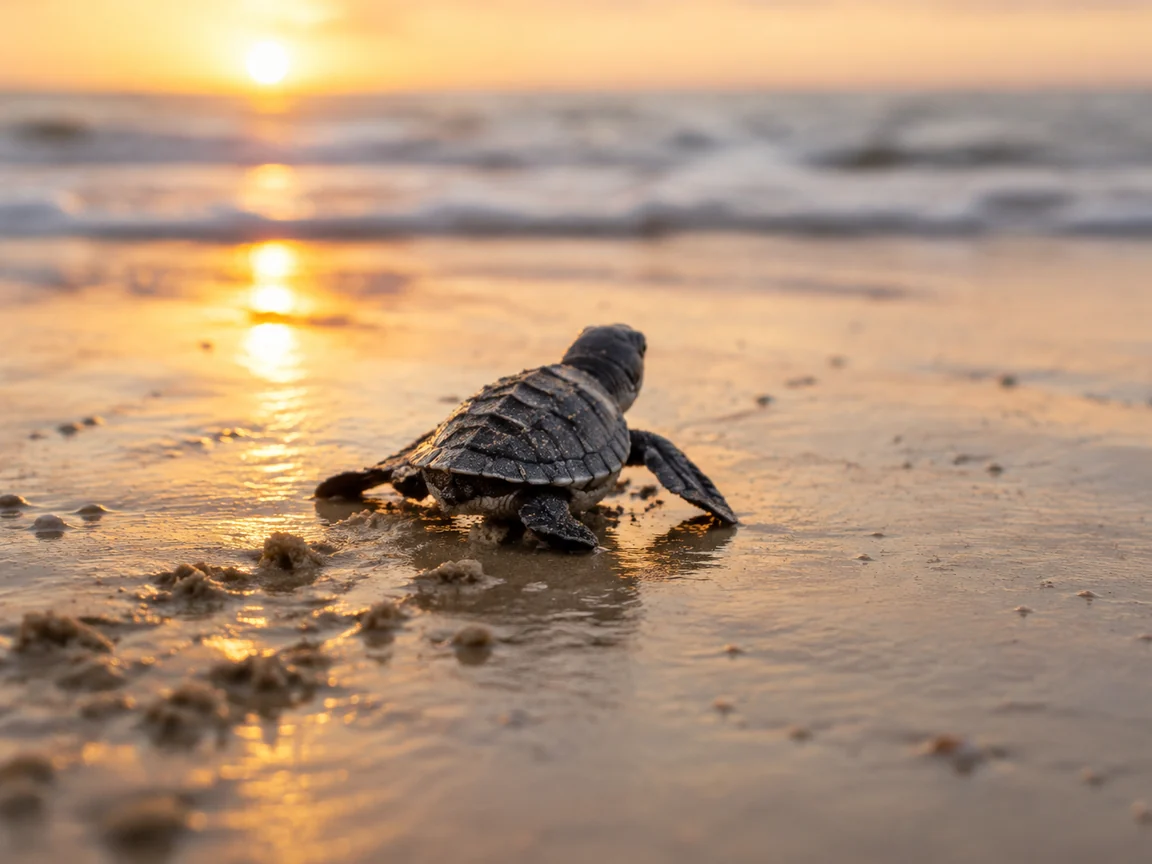 Beach
Hatchling on wet sand at dawn, tracks behind, low warm light real photograph, shot on a 50mm lens at f2.8, natural directional light, true skin and material texture, shallow depth of field, no text, no watermark, no illustration, no 3d render
Try This Prompt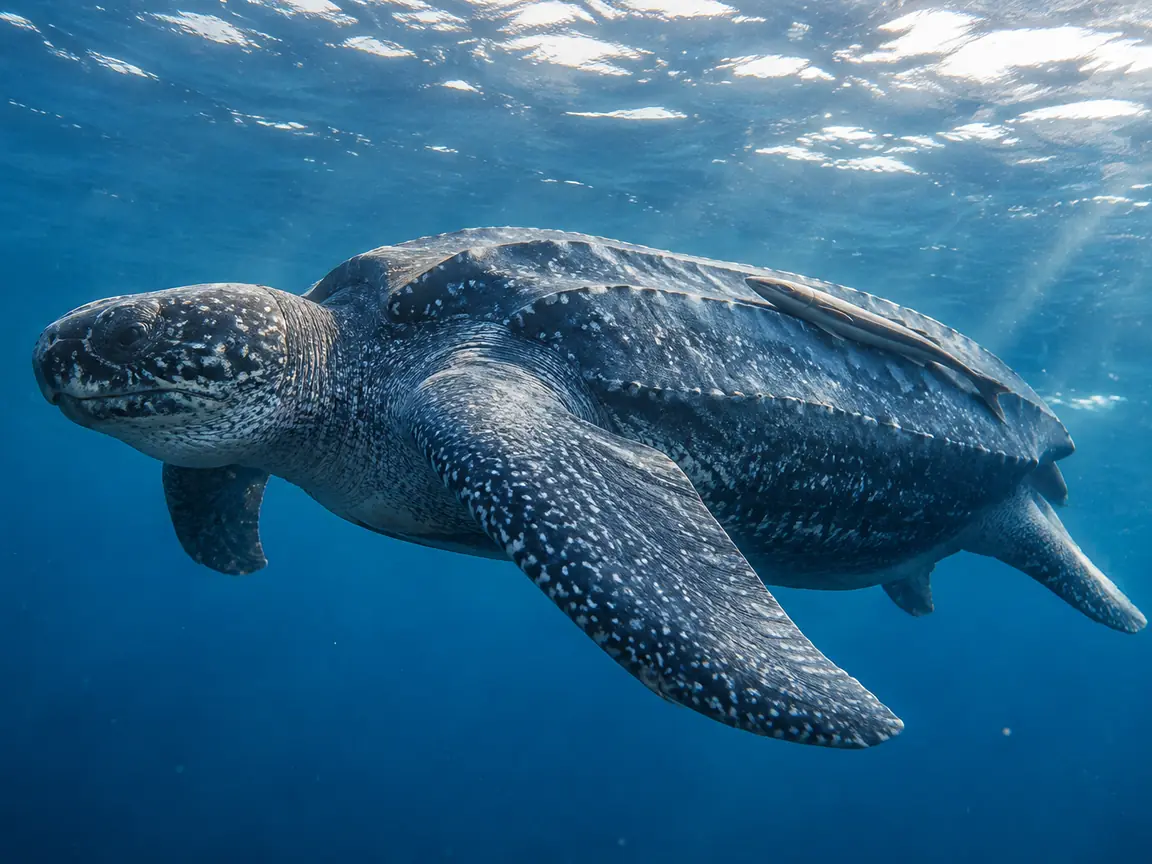 Open ocean
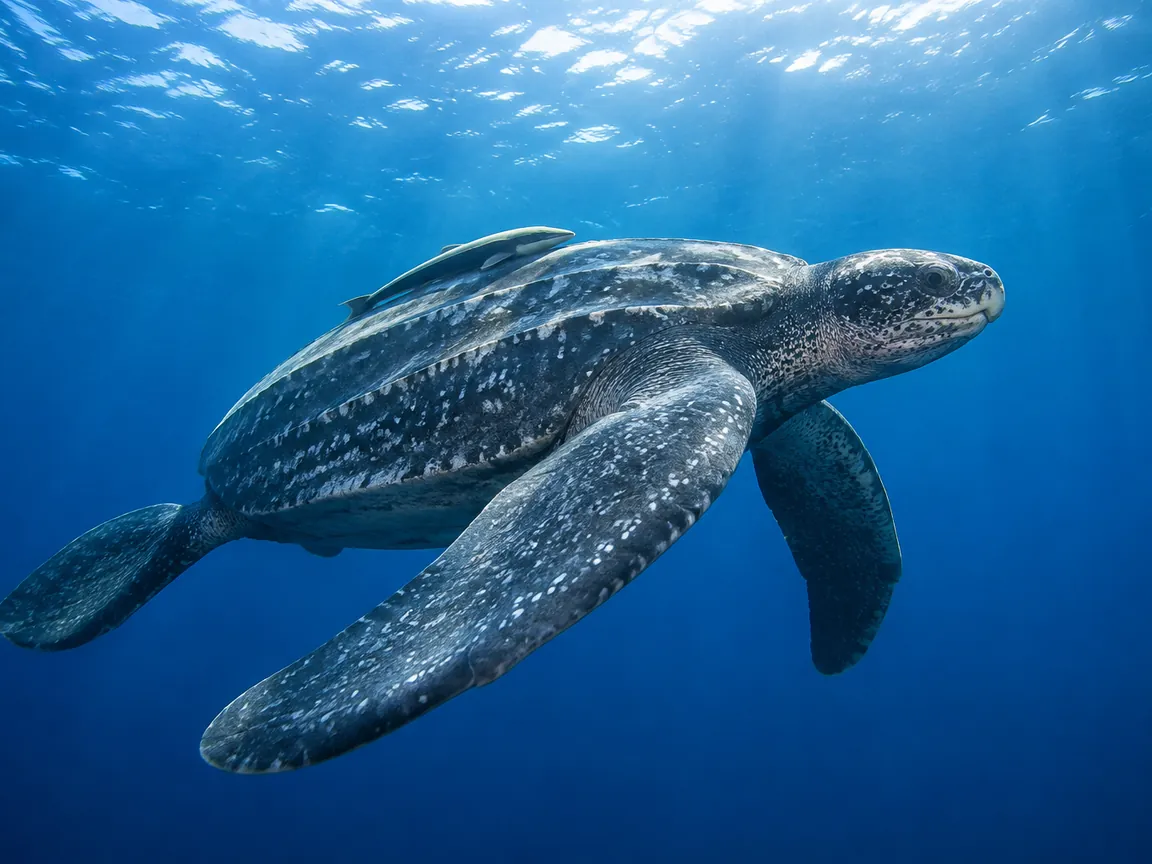
Leatherback in deep blue water, surface light above, remora real photograph, shot on a 50mm lens at f2.8, natural directional light, true skin and material texture, shallow depth of field, no text, no watermark, no illustration, no 3d render
Try This Prompt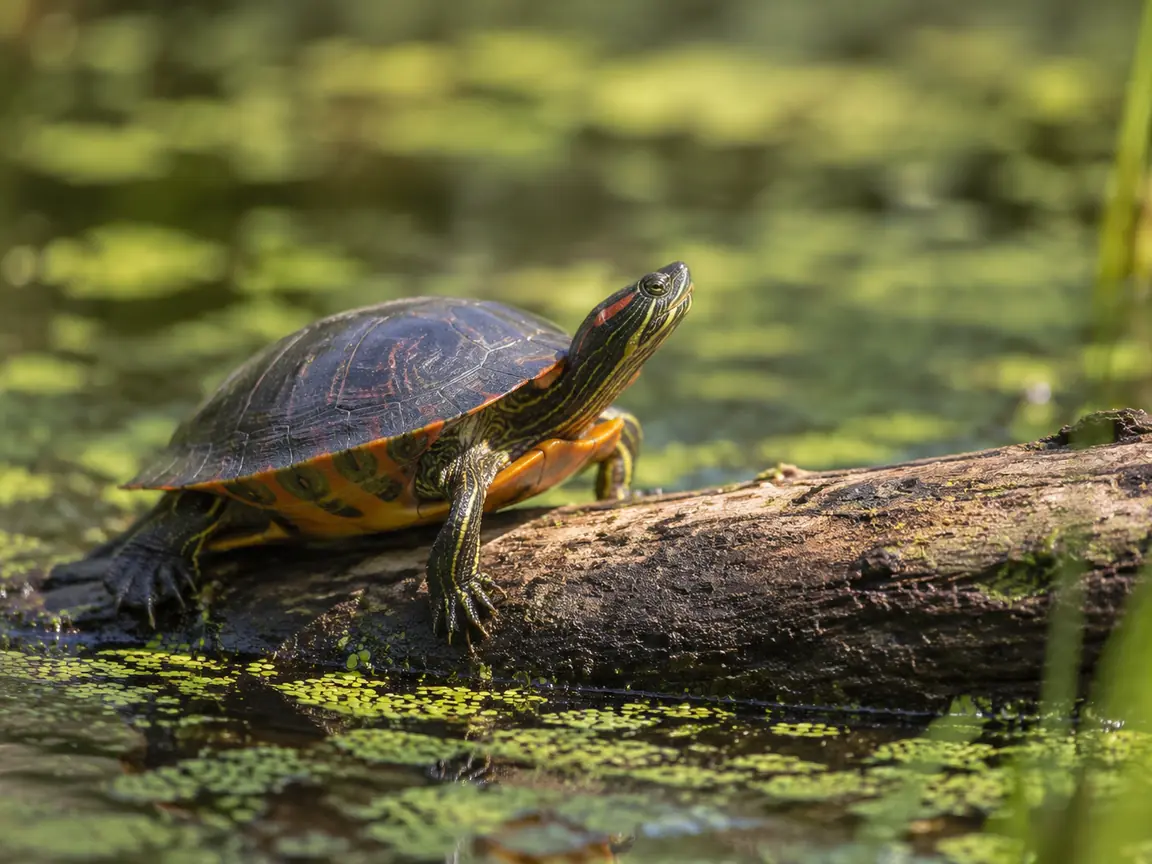 Freshwater
Painted terrapin on a log in a pond, duckweed, still water real photograph, shot on a 50mm lens at f2.8, natural directional light, true skin and material texture, shallow depth of field, no text, no watermark, no illustration, no 3d render
Try This Prompt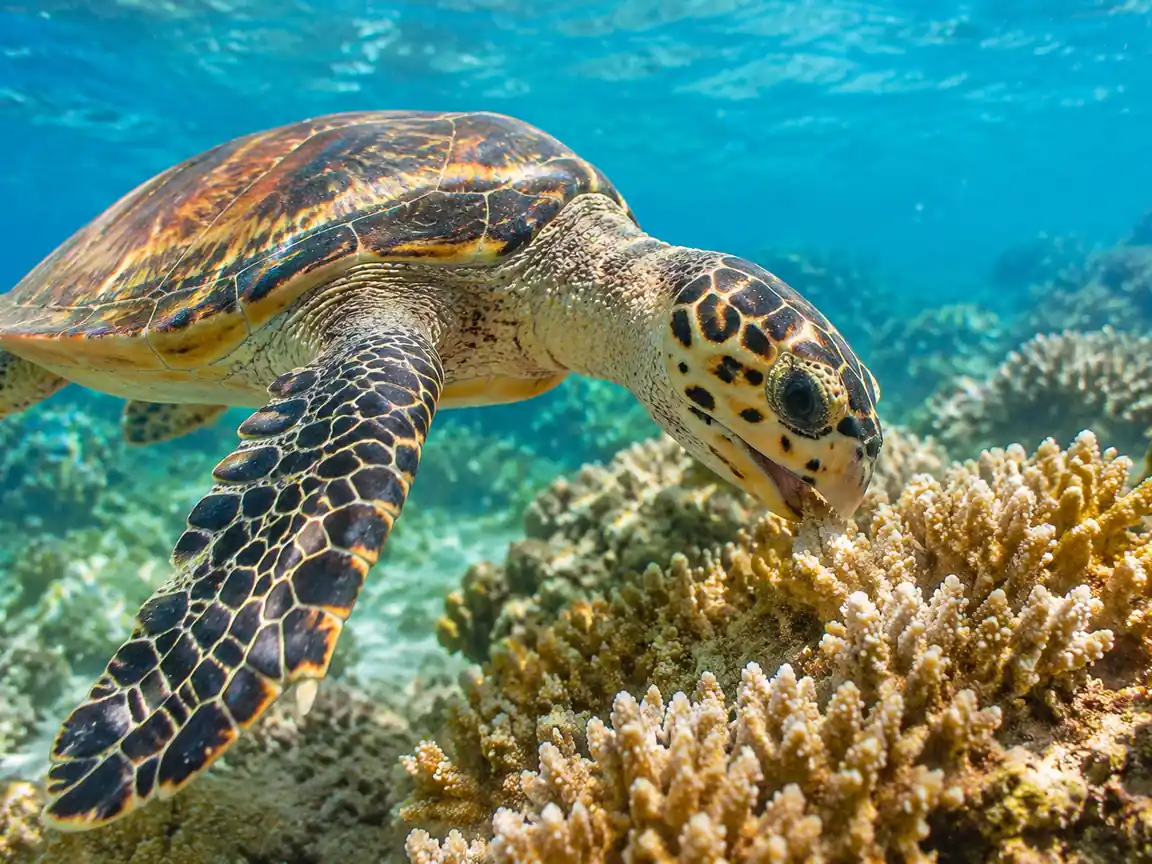 Freshwater
Hawksbill turtle feeding on coral, clear tropical water, dappled light real photograph, shot on a 50mm lens at f2.8, natural directional light, true skin and material texture, shallow depth of field, no text, no watermark, no illustration, no 3d render
Try This Prompt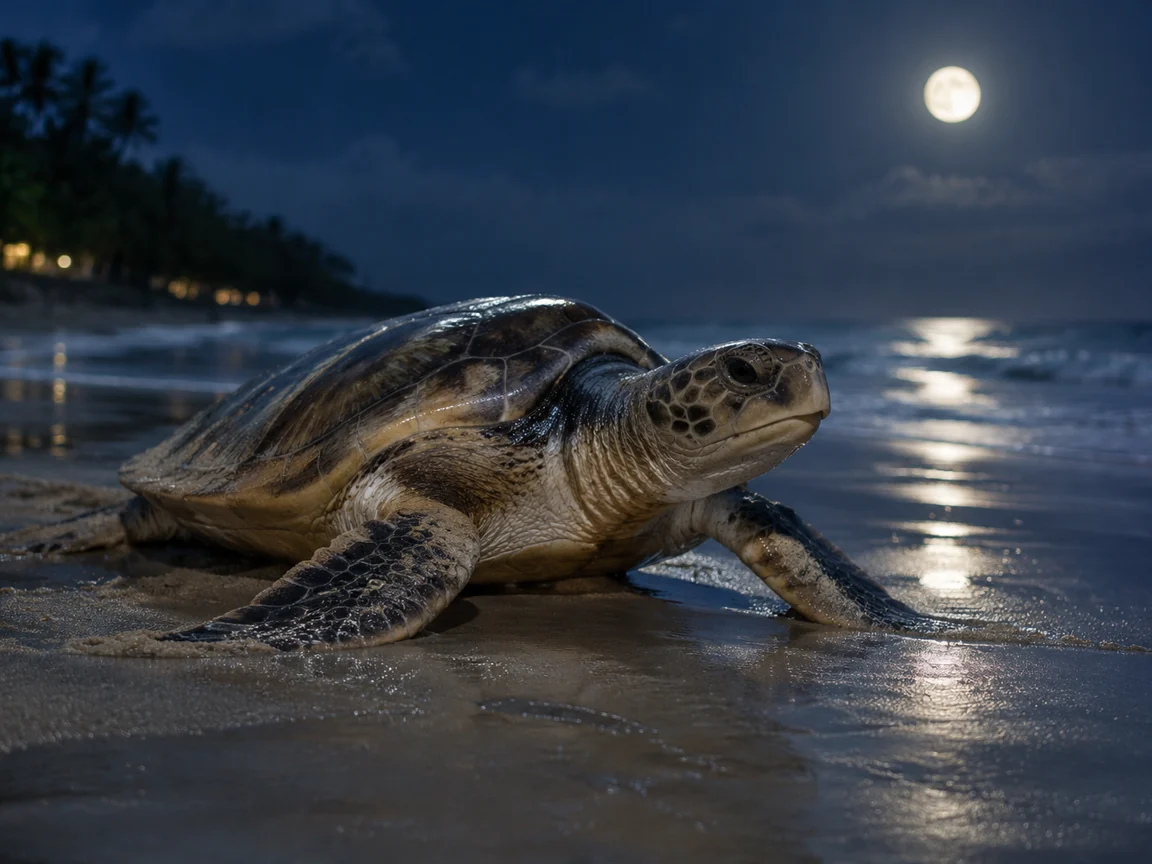 Freshwater
Adult turtle on a night beach, moonlight, wet sand tracks real photograph, shot on a 50mm lens at f2.8, natural directional light, true skin and material texture, shallow depth of field, no text, no watermark, no illustration, no 3d render
Try This Prompt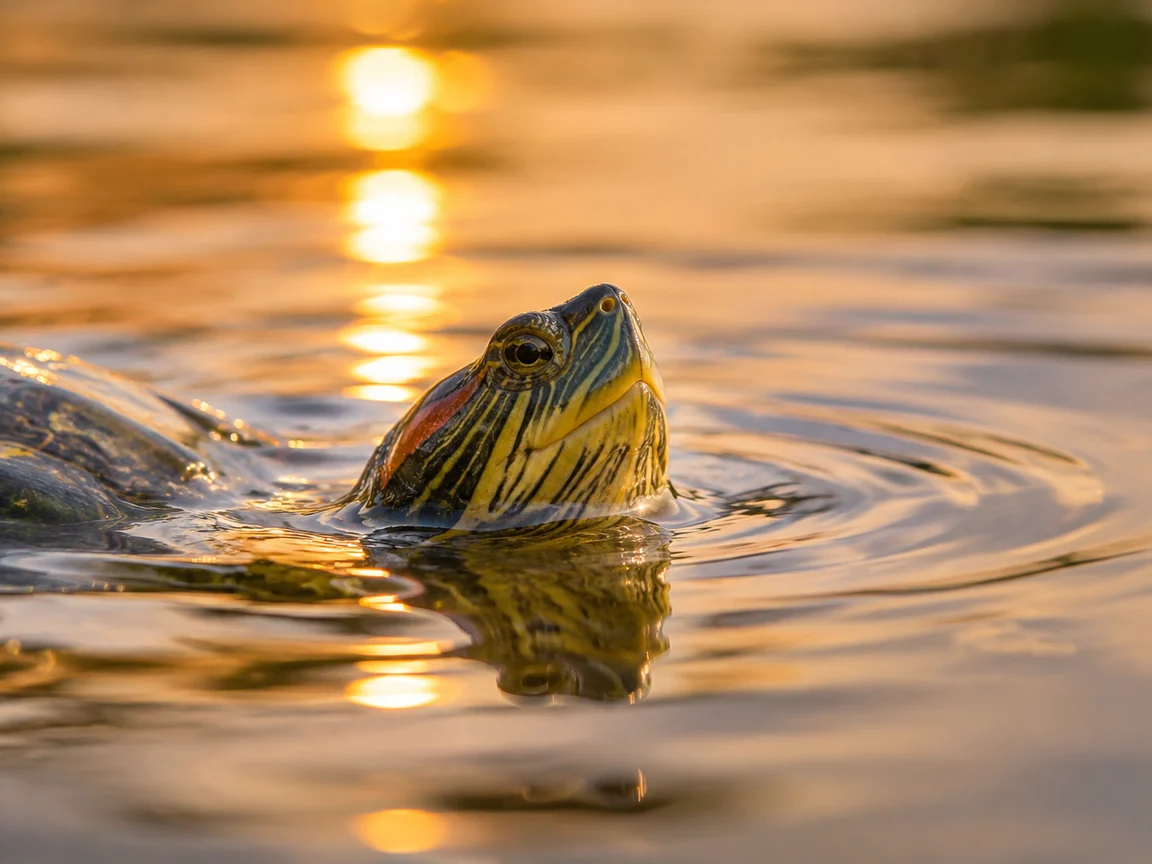 Freshwater
Turtle head breaking the surface to breathe, ripples, low sun real photograph, shot on a 50mm lens at f2.8, natural directional light, true skin and material texture, shallow depth of field, no text, no watermark, no illustration, no 3d render
Try This Prompt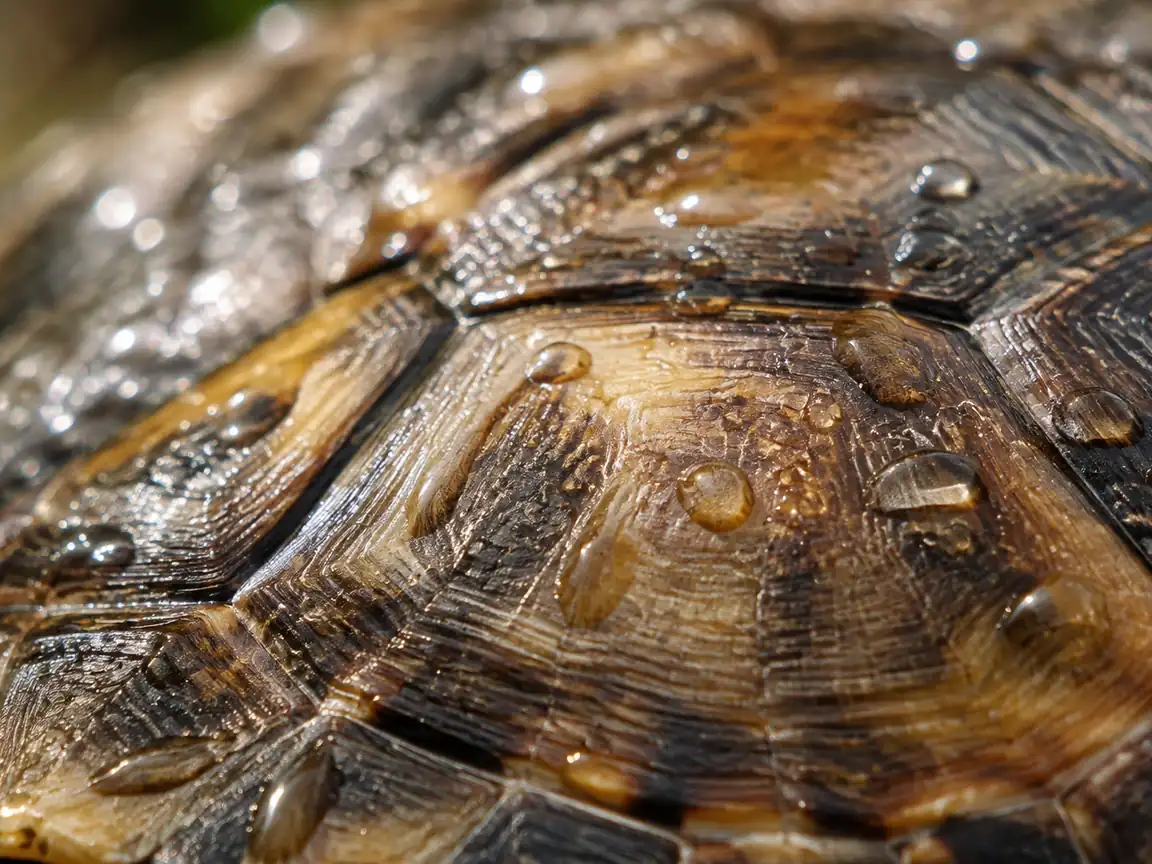 Freshwater
Macro of shell scutes, water droplets, shallow focus real photograph, shot on a 50mm lens at f2.8, natural directional light, true skin and material texture, shallow depth of field, no text, no watermark, no illustration, no 3d render
Try This Prompt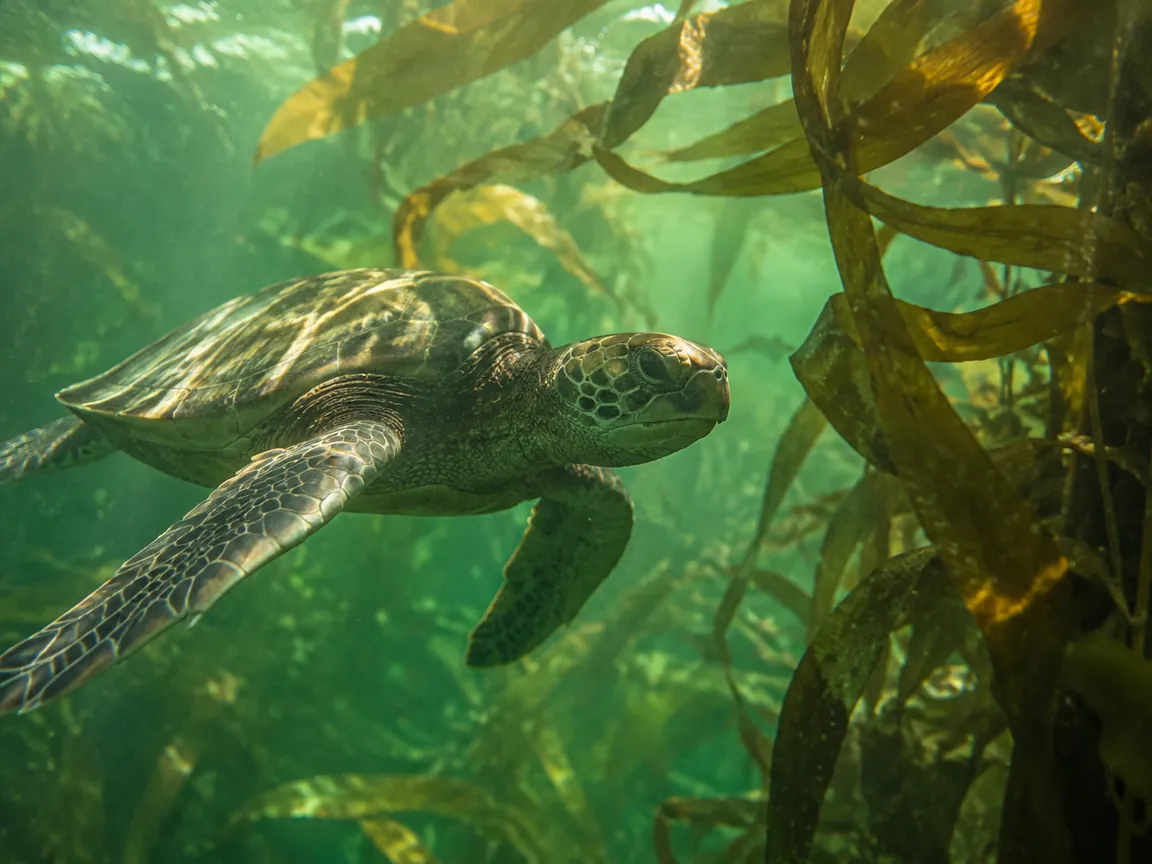 Freshwater
Turtle passing through kelp shadow, green water, particles real photograph, shot on a 50mm lens at f2.8, natural directional light, true skin and material texture, shallow depth of field, no text, no watermark, no illustration, no 3d render
Try This Prompt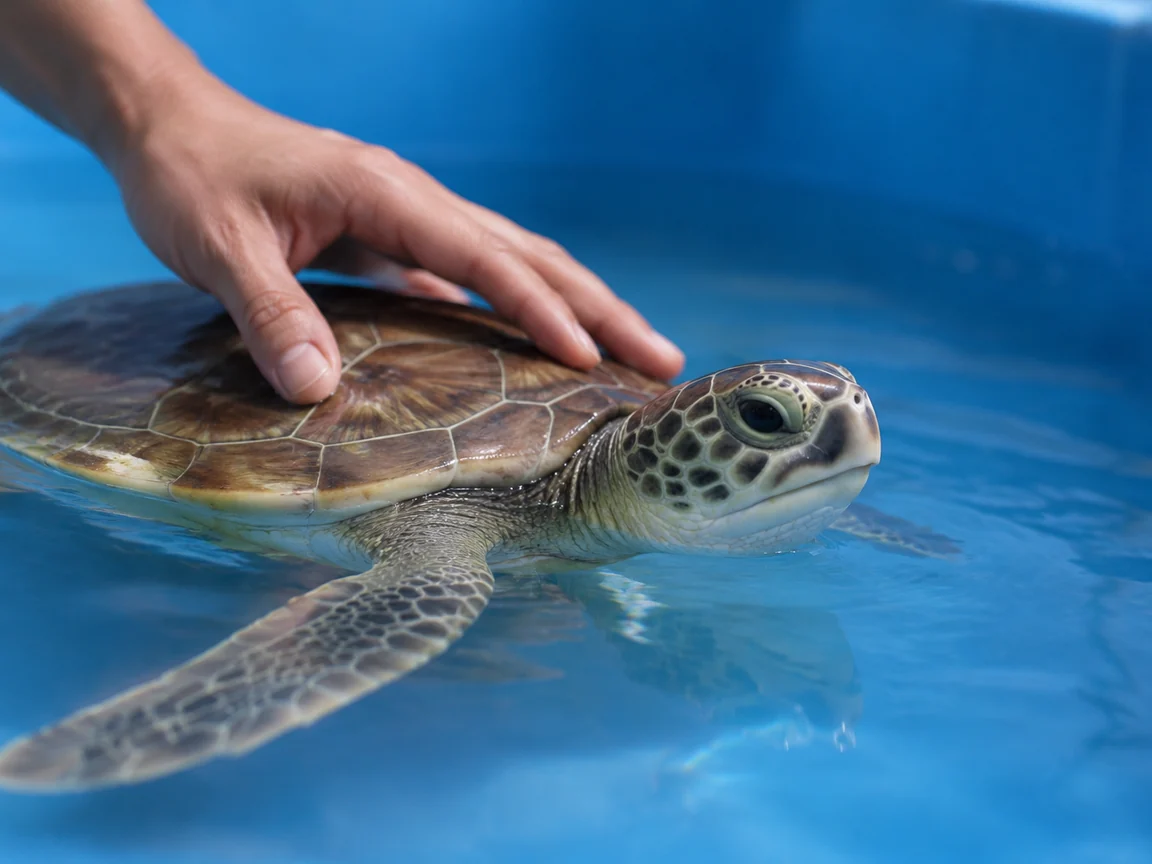 Freshwater
Turtle in a rescue centre tank, blue light, hand of a keeper real photograph, shot on a 50mm lens at f2.8, natural directional light, true skin and material texture, shallow depth of field, no text, no watermark, no illustration, no 3d render
Try This PromptFive details that decide whether it reads as an animal in water.
Scutes and ridges are the texture. Ask for visible plate edges and a slightly uneven surface, or the shell turns into a helmet.
Real underwater frames have particles and haze. Clean water reads as a render, especially in the light shafts.
Sea turtles are wet. Ask for sheen on the head and flippers and small bubbles near the shell.
Front flippers are long and swept; back flippers are short paddles. Naming the species keeps them from turning into fins.
Depth needs falloff from turquoise to navy. A single flat blue makes the animal look pasted on a backdrop.
Sand, algae, a broken coral branch. Cleanliness is the fastest way to lose the sense of a living reef.
I illustrate a marine education pack. Naming each species meant the flippers and shells were right, so a teacher could use the images without correcting the biology.
The particle line made the difference. My first reef shots looked like a screensaver; adding suspended particles and a blue gradient gave the water depth.
We needed a poster for a beach clean-up. A hatchling on wet sand at dawn, labelled as an illustration, and the whole committee approved it in one meeting.
Yes when you name the species and describe the shell pattern, the water clarity and the sun shafts. A species name fixes flipper length and shell shape, which is where most renders drift.
Smooth shells and clean water. Ask for visible scute edges, damp skin, particles in the water and a gradient from turquoise to navy behind the animal.
Yes as illustration, but label it as AI-generated. Campaigns about real populations should not present a generated animal as a photograph of a specific rescue or nesting event.
Give the common name and one distinctive feature, such as a hawksbill beak or leatherback ridges. Two specifics keep the anatomy close to the species you are teaching.
Prompt testing runs on the free allowance in the picker. Larger renders for print or a poster are paid, and the price per image is displayed before you generate.