

Crust Reads First
Char, blisters and an uneven rim are what make a frame look baked, so the prompt names them before it names a single topping.
Describe the crust, the cheese pull and the light, and get a photographic frame you can crop straight into a menu, an ad or a post.

Prompt Guide
Model
Reference Image
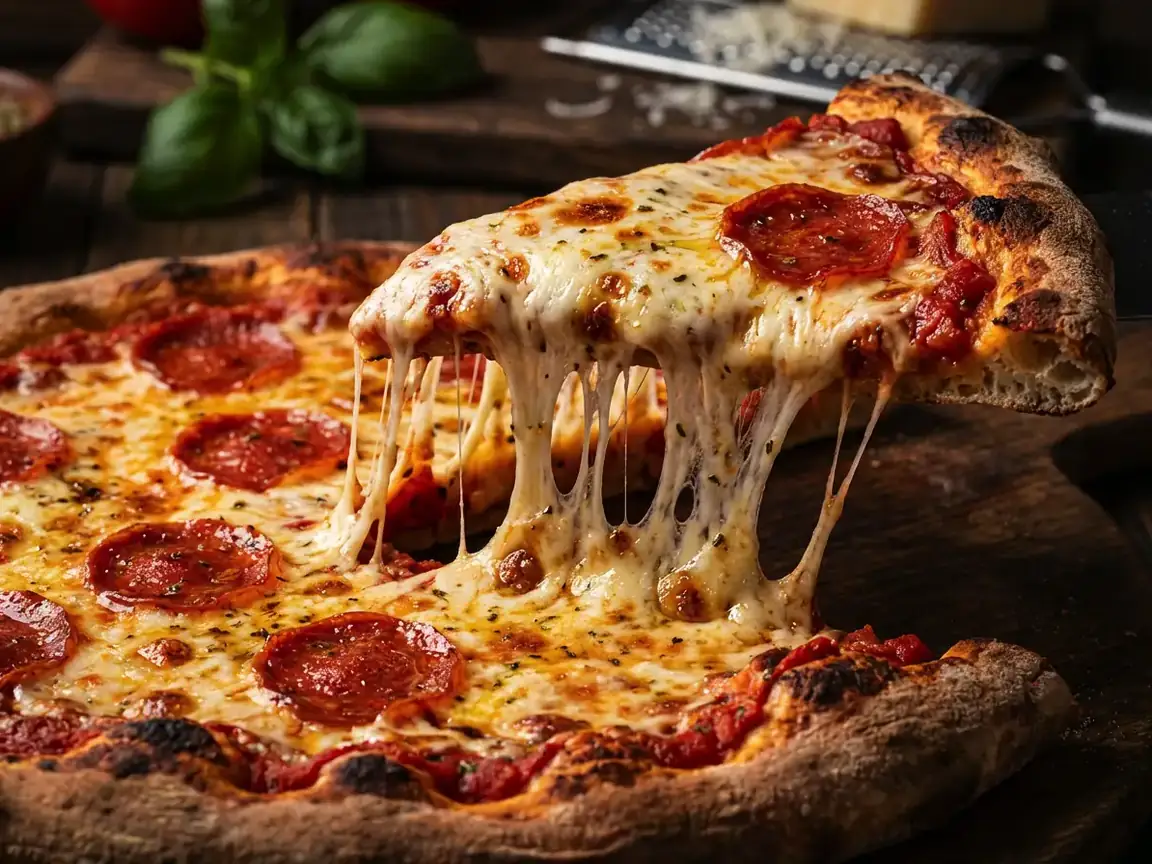
One prompt, one light, one crop.
State the style, the toppings and the crust in plain nouns. Vague words like gourmet or loaded are what return olives you never wanted.
Add the setting and a single source: window daylight, oven glow, one overhead lamp. Two lights flatten the cheese and make it read as plastic.
Already have a phone photo of the pie? Upload it, describe the fault (cold light, dull cheese, cluttered table) and rebuild the frame around your own pizza.
Choose 3:4 for menu cards and vertical feeds, 16:9 for a banner or a website hero, then download before you overlay any type of your own.
Every frame is a prompt you can edit one topping at a time.
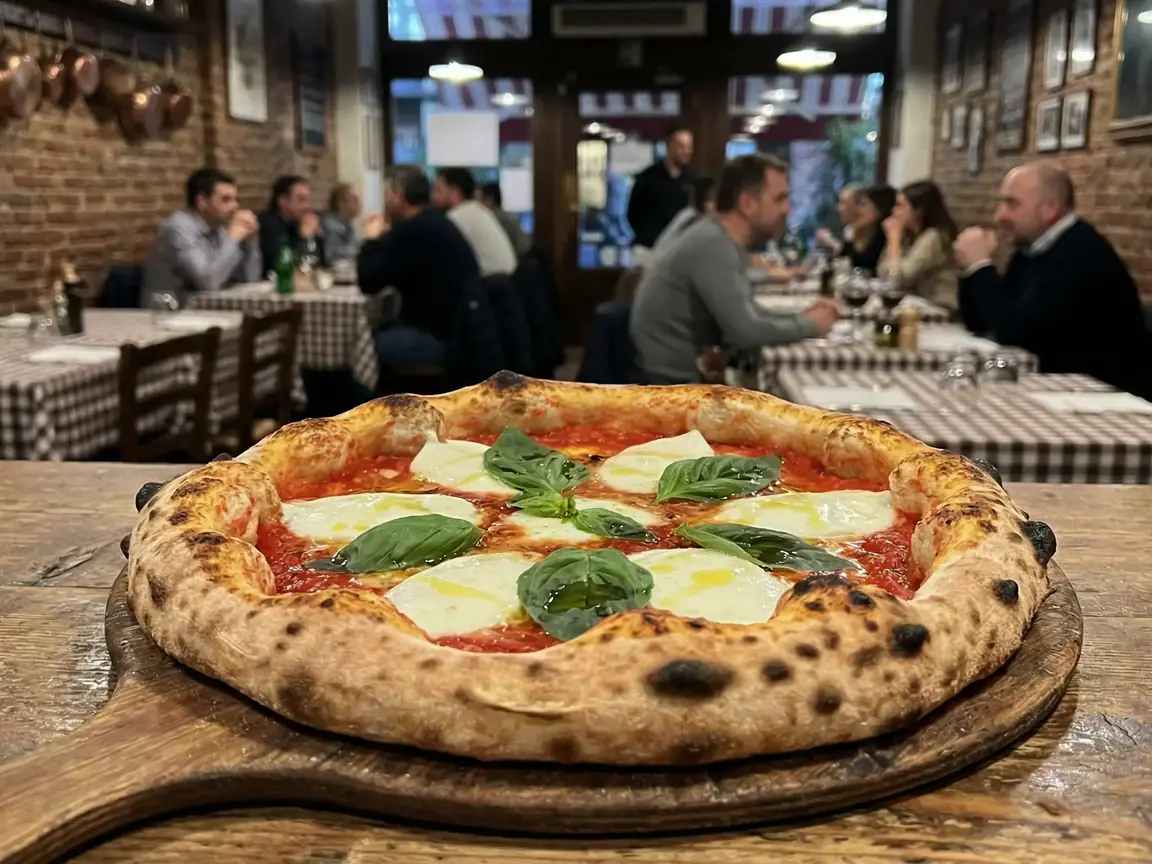 Photo Real
A margherita on a wooden peel at the pass of a busy trattoria, brick walls, checkered cloths and blurred diners behind, warm tungsten glow, the pie filling the lower half of a tall frame, 3:4
Try This Style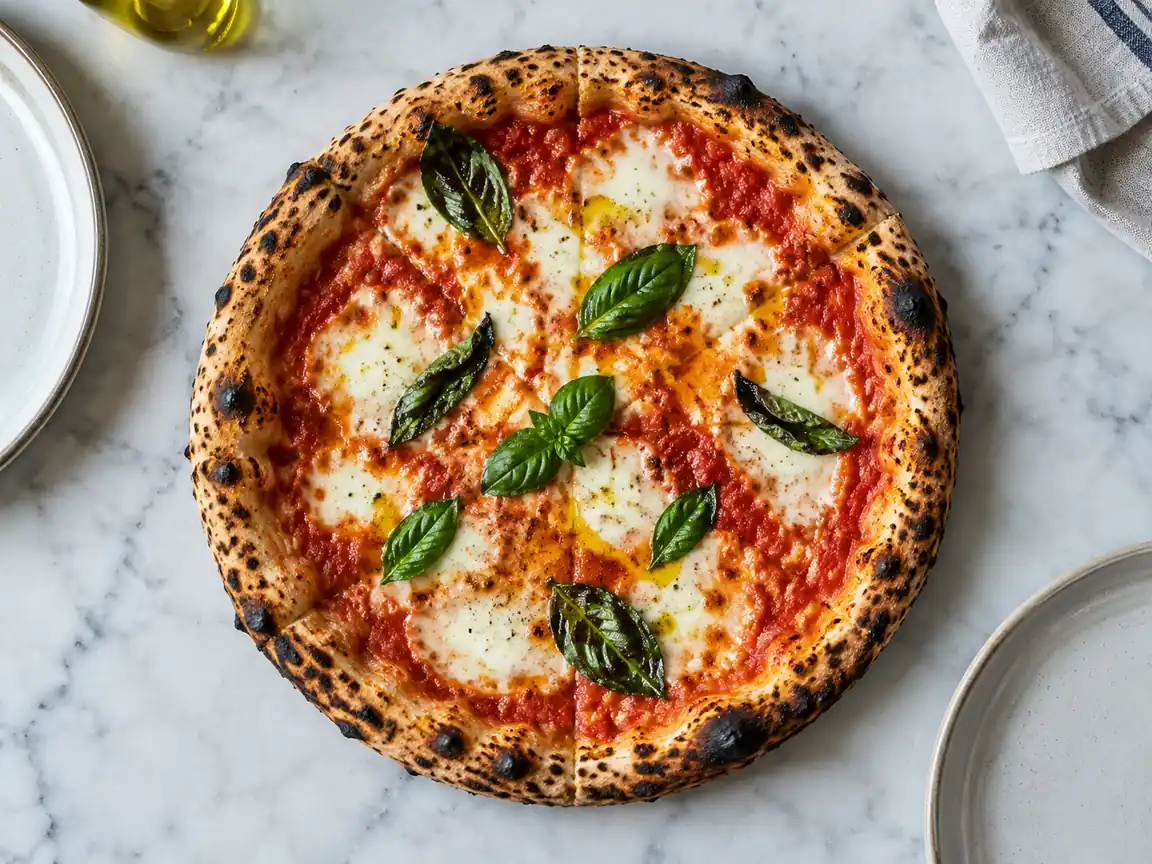 Photo Real
A whole margherita shot straight down on a pale marble counter, charred rim, basil leaves and an olive oil sheen, two empty plates at the edge, cool window daylight, flat lay, 3:4
Try This Style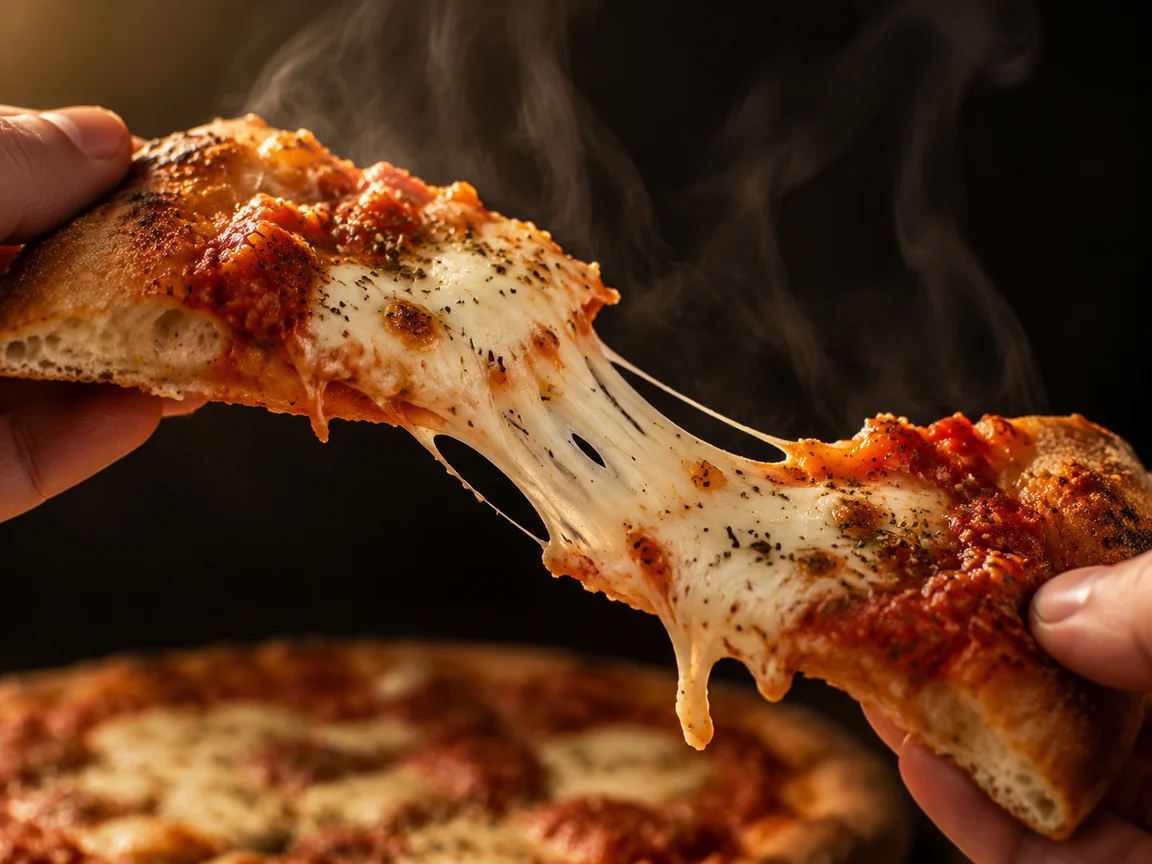 Close-Up
A mozzarella strand breaking between two fingers holding a hot slice, steam curling, tomato sauce and oregano visible, dark background, one warm light from the left, shallow focus, 3:4
Try This Style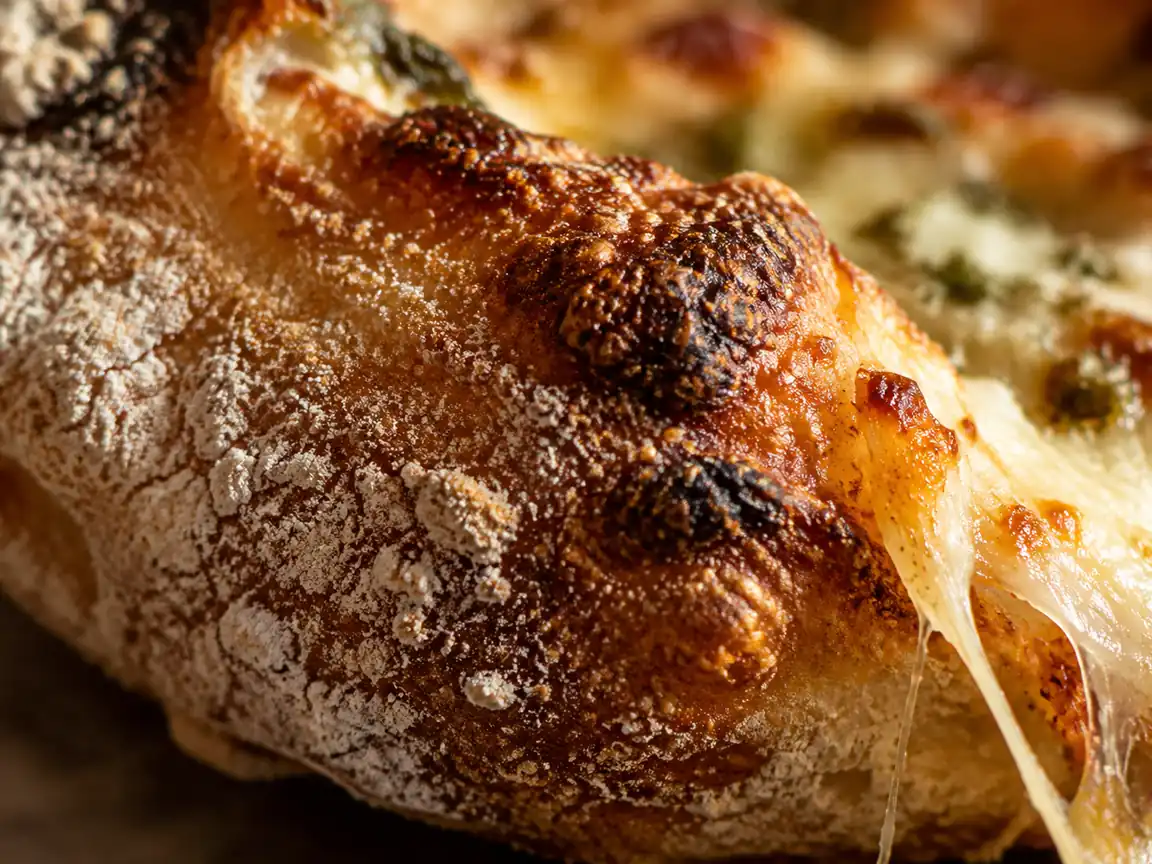 Close-Up
Extreme close-up of a blistered sourdough crust edge, flour dust, char spots and a thread of melted cheese, side light raking across the texture, very shallow depth of field, 3:4
Try This Style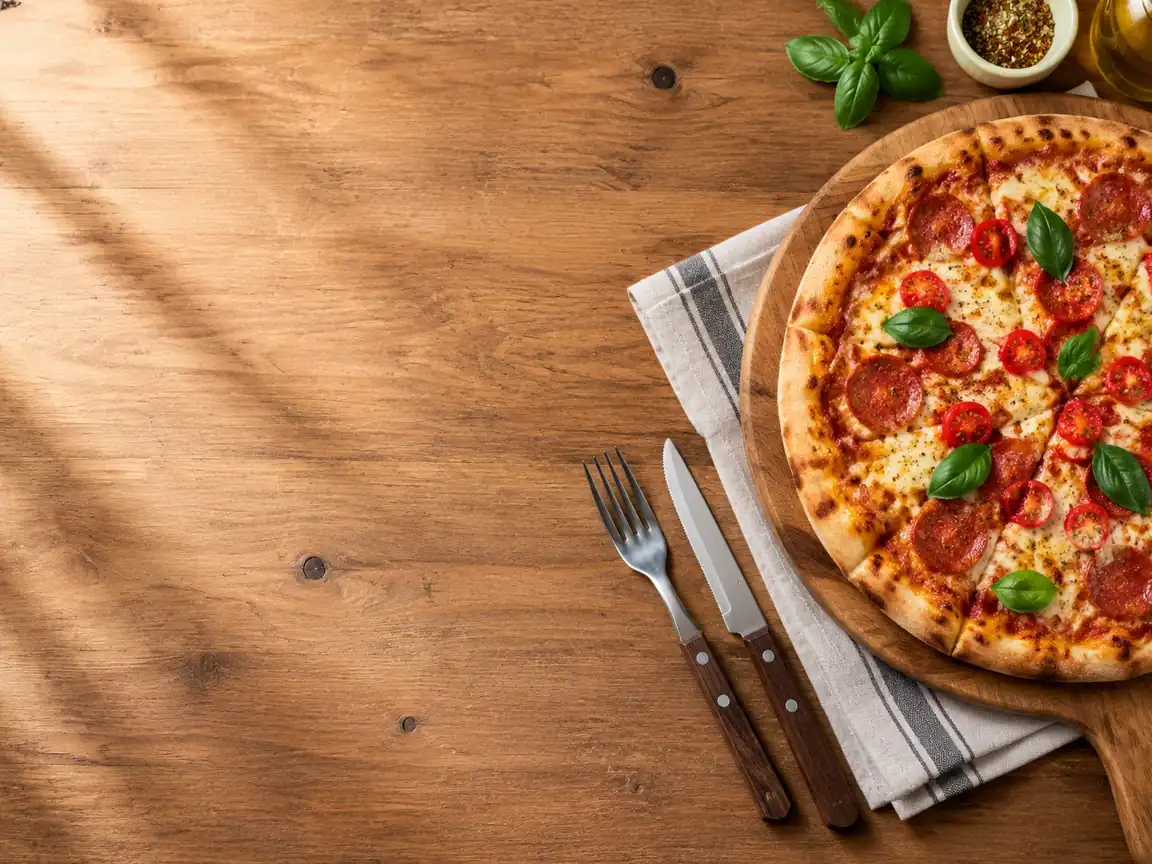 Menu Plays
A pizza angled on the right of a wooden board with generous empty surface at the left, linen and cutlery beside it, soft window light, overhead composition built for a price card, 3:4
Try This Style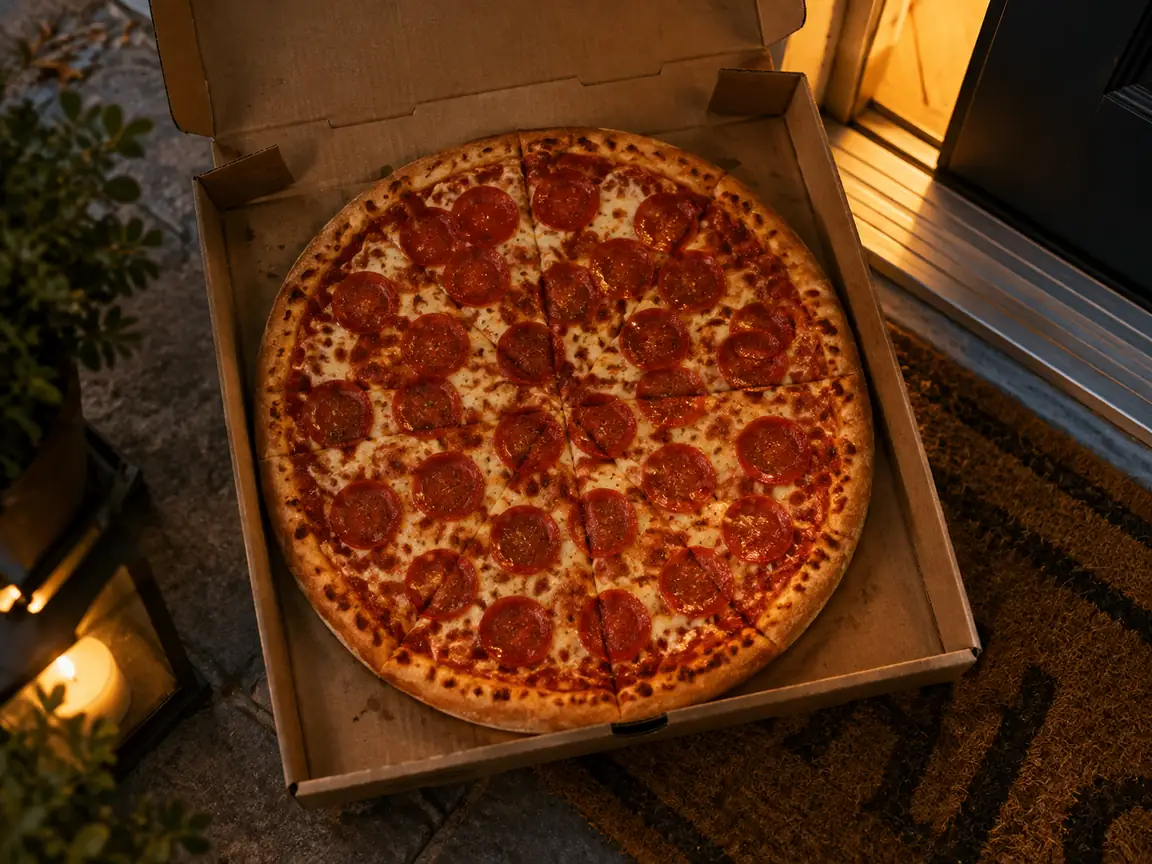 Menu Plays
A top-down pepperoni pizza in an open kraft box on a doorstep, evening light through the doorframe, tight crop so the pie still reads at thumbnail size, 3:4
Try This Style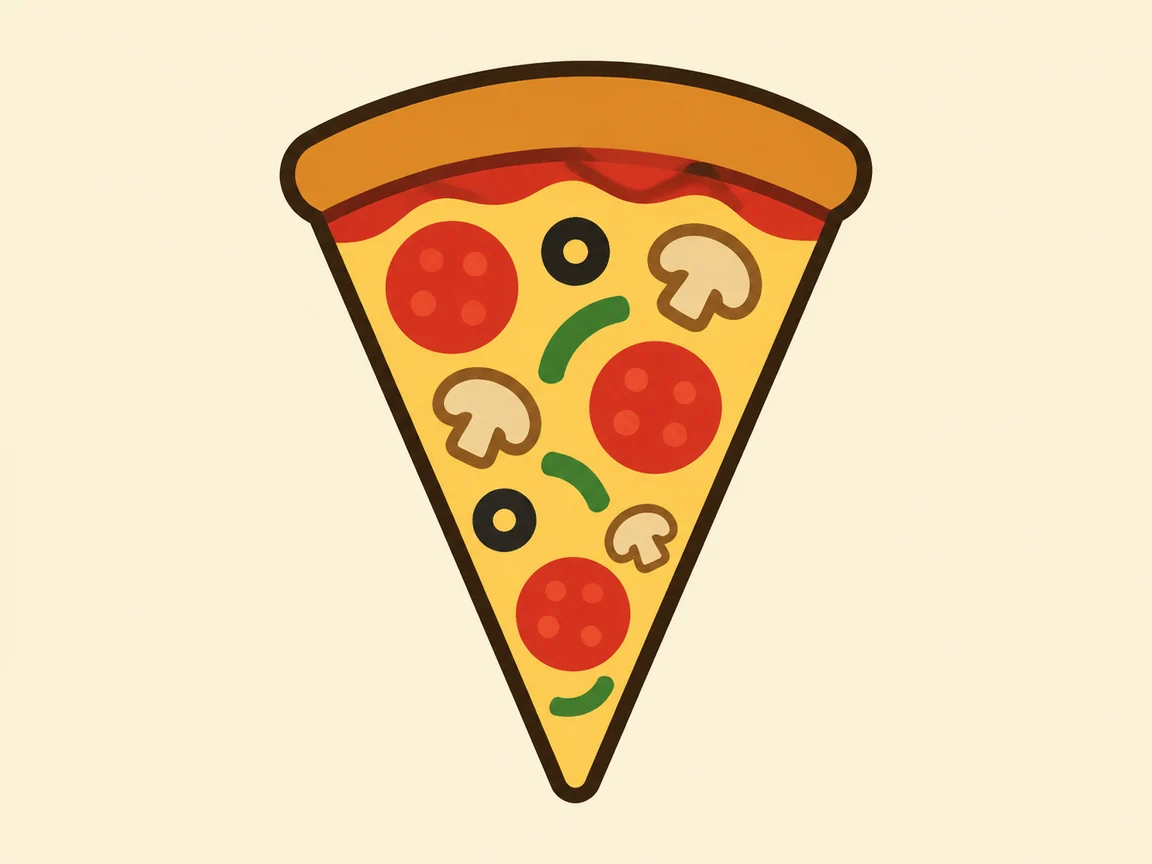 Illustrated
A flat vector illustration of a pizza slice with simple geometric toppings, thick even outlines and a warm cream background, poster-flat shapes, centred with even margins, 3:4
Try This Style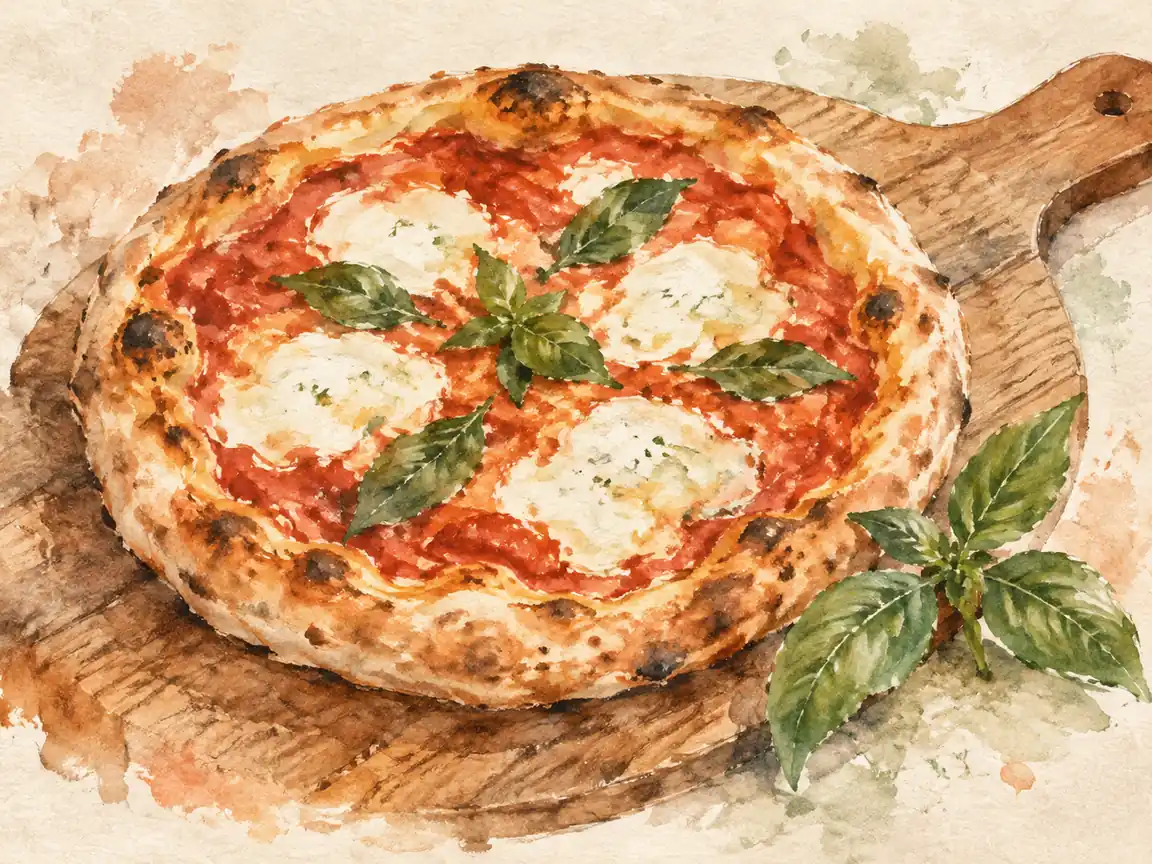 Illustrated
A loose watercolor painting of a margherita on a wooden board with a basil sprig, bleeding edges, visible paper grain, muted terracotta and green palette, 3:4
Try This Style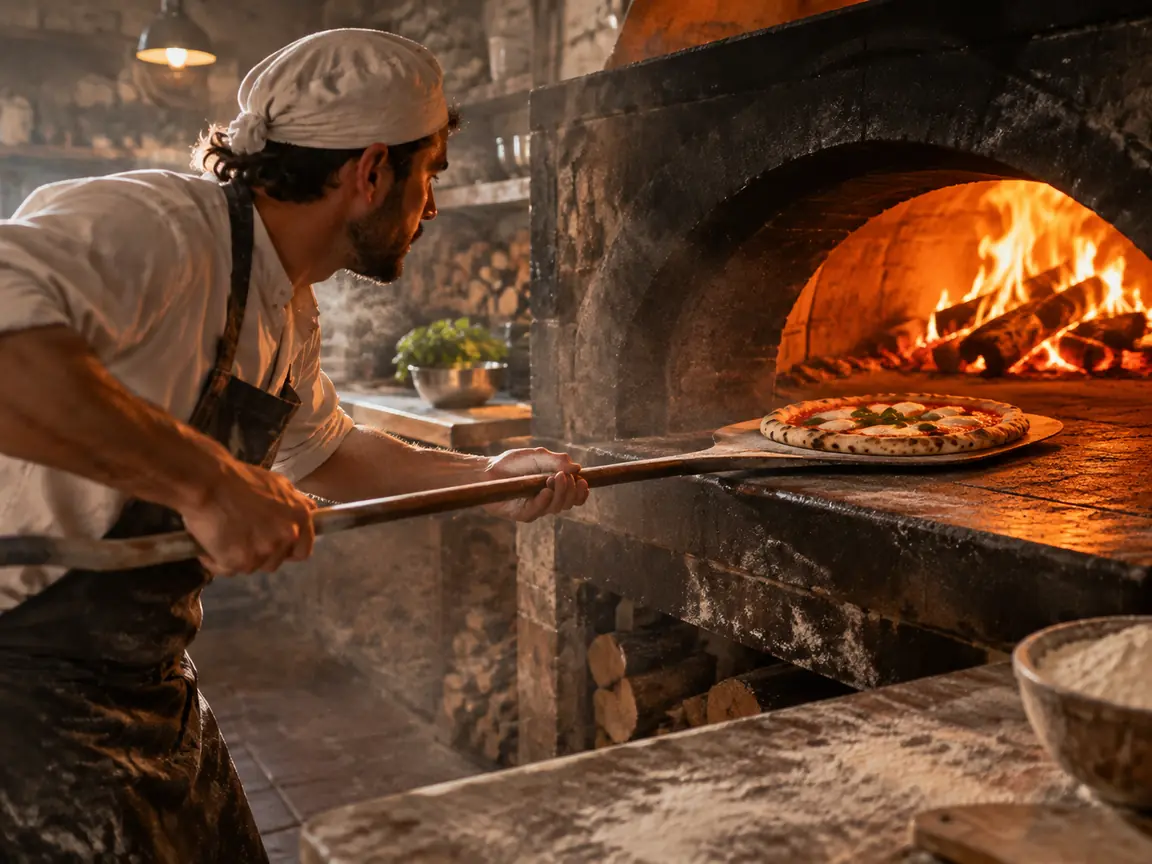 Photo Real
A baker sliding a margherita into a wood-fired oven on a long peel, flames at the back, flour haze in the air, firelight on hands and forearms, wide angle from the side, 3:4
Try This Style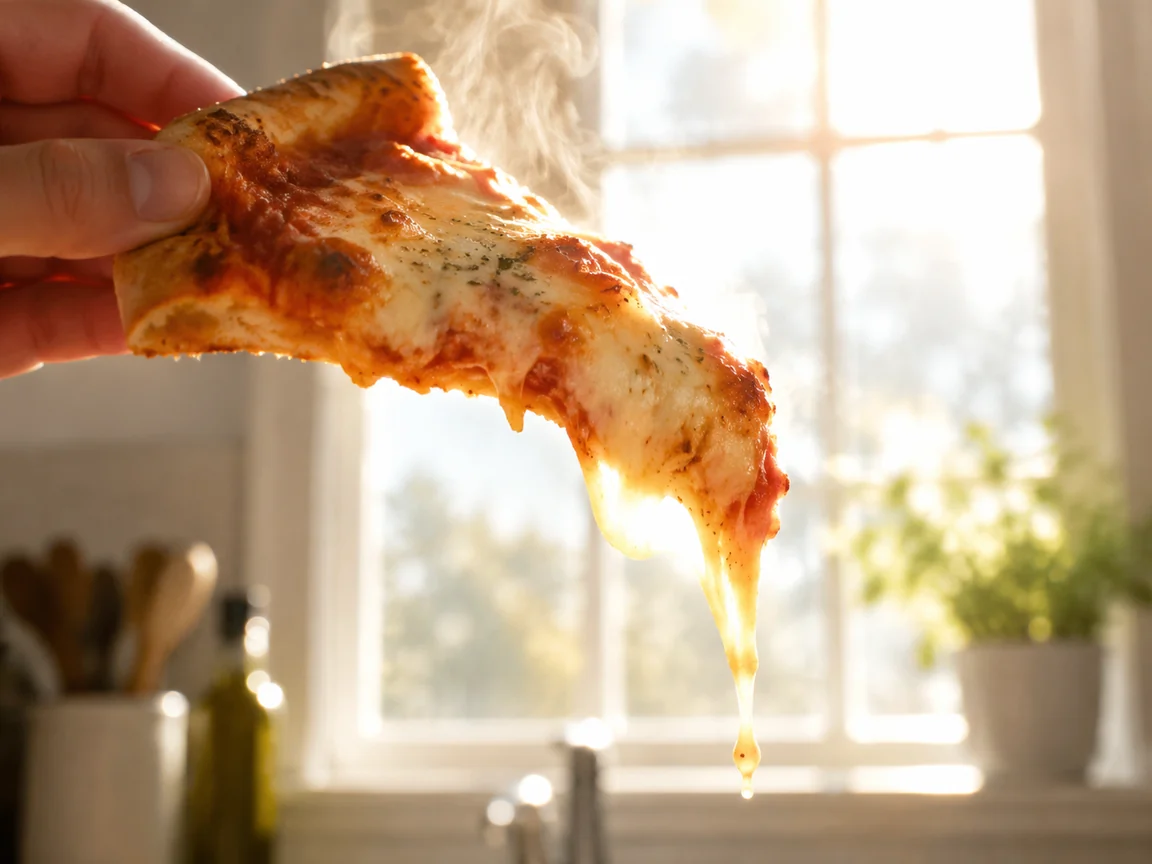 Close-Up
A slice held up against a bright kitchen window, cheese sagging from the tip, fingers gripping the crust, steam silhouetted, backlit and blown out at the edges, 3:4
Try This StyleThe six decisions that separate a menu shot from a stock render.
Char, blisters and an uneven rim are what make a frame look baked, so the prompt names them before it names a single topping.
Glossy mozzarella needs one warm source and a short depth of field. Asking for steam everywhere is what turns cheese into plastic.
3:4 for menu cards and vertical feeds, 16:9 for a banner, 1:1 for a delivery tile. Decide before you generate, not after.
Frames come back without lettering, so a price card or a poster line is added in your own editor where it stays legible.
Edit the topping sentence and regenerate instead of rewriting the whole prompt. The crust and the light stay where you put them.
Reuse the same light and angle sentences across six pies so a printed menu looks like one shoot rather than six stock images.
I needed a photo real concept the same afternoon I found this page. I typed what I wanted for "Trattoria Dinner Service", ran it twice, then changed only the light and the palette on the second pass. The version I kept went straight into a client deck and saved me a stock-photo search.
My first try for "Menu Card Space" came back too polished, more advertising than real photograph. I rewrote the sentence to describe the surface and the actual light in the room, and the third attempt looked like something I could have shot myself. That is the one I still use for ai pizza image generator mockups.
I use it the way I use a sketchbook: one prompt for "Flat Slice Vector", one for "Watercolor Pizza Board", then I pick the half that works and iterate from there. Two of those frames ended up in a package for a client who could not decide between the two directions, and seeing them side by side settled it in a minute.
Careful. DoorDash's merchant rules reject evidently AI-generated or misleading item images, and a render that does not match the pizza you ship is a refund problem. Use it for concepts and ads, photograph the real pie for the menu.
Cheese pull, crumbs, a scorched edge and one real surface do most of the work. Add a named light, such as overhead tungsten in a dark kitchen, and ask for a slightly imperfect slice cut.
DoorDash asks for at least 1400x800 pixels, 16:9, under 2 MB, with the item filling most of the frame. Generate 16:9 here, then crop and check file size before uploading.
Yes, on the free allowance in the picker; paid models start around $5.80 a month and nothing is watermarked.
Models fill gaps with plausible detail. List each topping with a count, say nothing else on the pie, and expect one or two retries before the composition holds.