

Age stated in decades
A decade gives the model a target for skin, hairline and posture. Between the sixties, seventies and eighties the differences are visible in the neck, the hands and how the shoulders sit.
Set the age, the gaze, and the room to generate a portrait that reads as a real person with a past.

Prompt Guide
Model
Reference Image
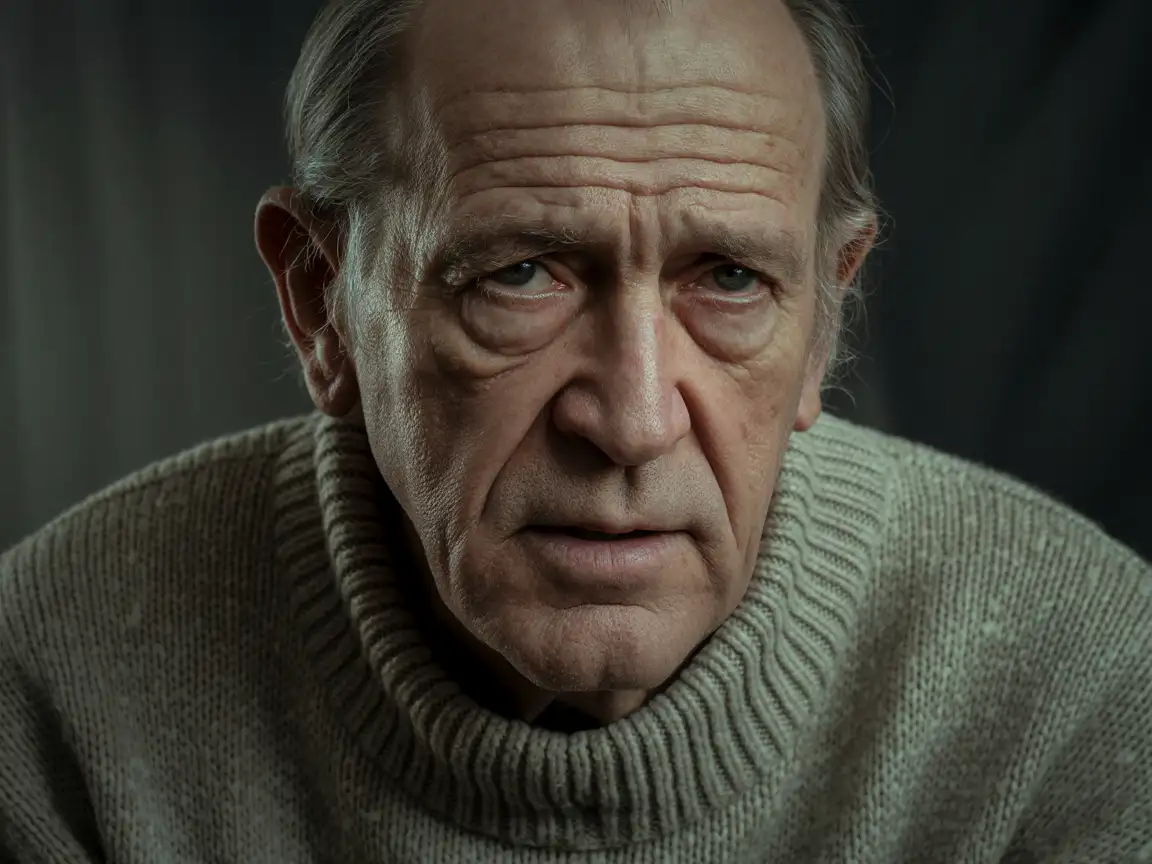
Five rules to keep your portrait specific, textured, and real.
Use precise ages. "Man in his seventies" and "man in his nineties" produce completely different skin textures, postures, and hairlines. The word "old" collapses both into a default wrinkled face.
A window at morning, a single candle, or a softbox will sculpt the same face entirely differently. Skin texture and deep wrinkles only read under a strong, directional source.
Reading, mending a net, or holding a mug. Giving the hands an object to hold gives the pose somewhere to go and stops that dead stare at the lens.
Keep it quiet but specific. A boat deck, a greenhouse, or a library says different things about him. Two or three background objects are enough; clutter hides the face.
Photographic wording, oil painting wording, and storybook wording do not mix. Choose the medium first, then describe the man inside it.
Ten stagings across ages and light, from a plain studio crop to a fisherman on a grey morning.
 Studio
White-bearded painter in a navy apron over a white tee, working at an easel with an orange-loaded brush, paint on his fingers, jar of brushes to the right, canvases stacked behind, soft daylight, 3:4 vertical crop.
Try This Style Outdoors
Silver-haired man in an olive tweed blazer seated on a park bench among fallen leaves, cane across his knee, low golden backlight through the trees, warm bokeh behind, relaxed half-smile, 3:4 vertical crop.
Try This Style Interiors
Elderly bearded man in a dark waistcoat and suit seated in a leather armchair by a library fireplace, hands raised mid-gesture, mug and stacked books on the side table, warm firelight, 3:4 vertical crop.
Try This Style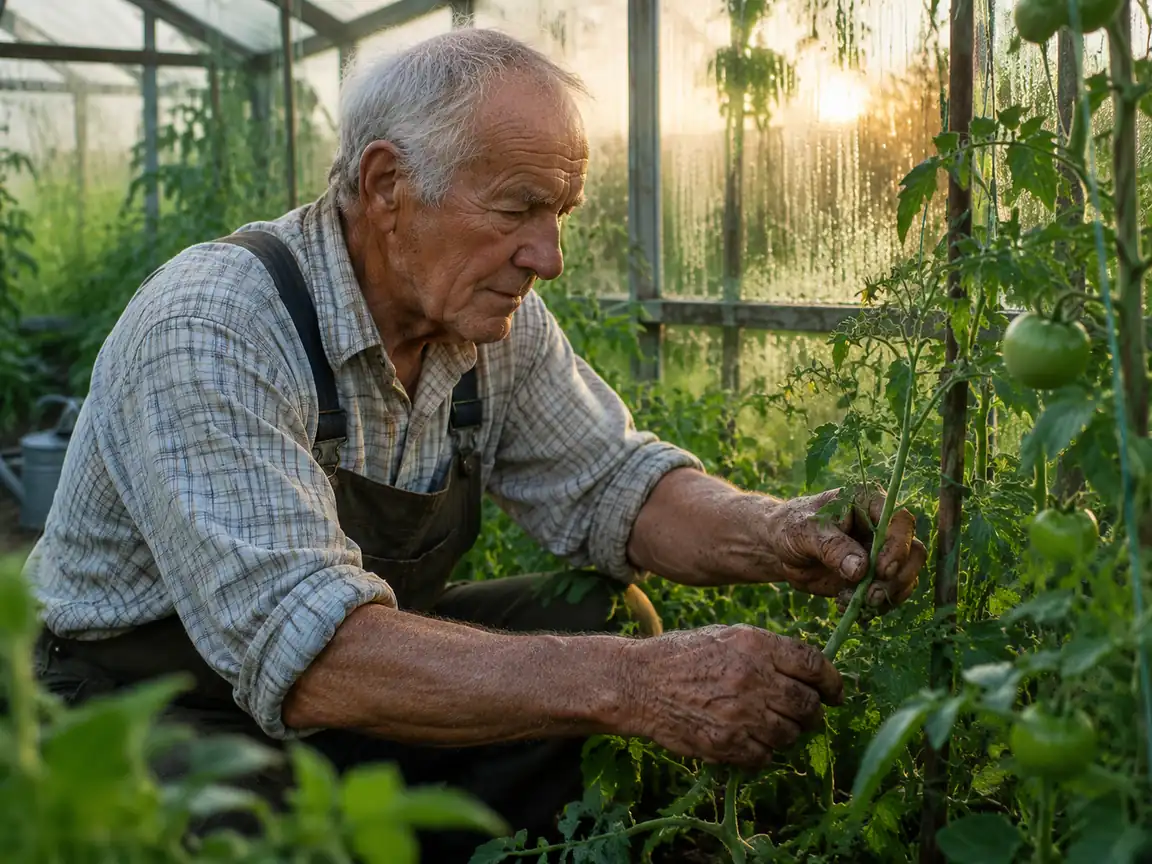 Outdoors
Man in his eighties thinning tomato vines in a steamy greenhouse at dawn, rolled shirtsleeves, soil under his nails, condensation running down the glass, green filtered light, documentary portrait, 3:4 vertical crop.
Try This Style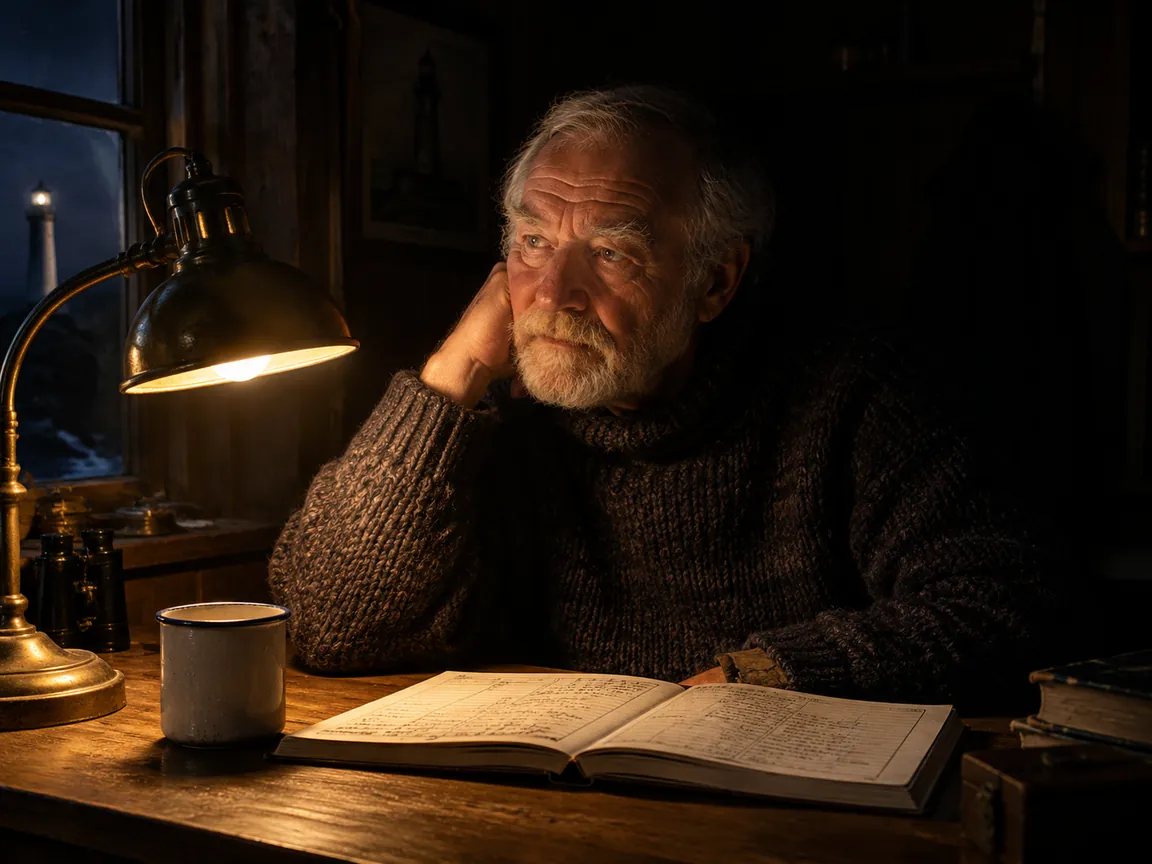 Interiors
Lighthouse keeper in his seventies at a night desk, brass lamp lighting one cheek, thick wool jumper, open logbook and a cold mug, deep shadow behind him, still and quiet, 3:4 vertical crop.
Try This Style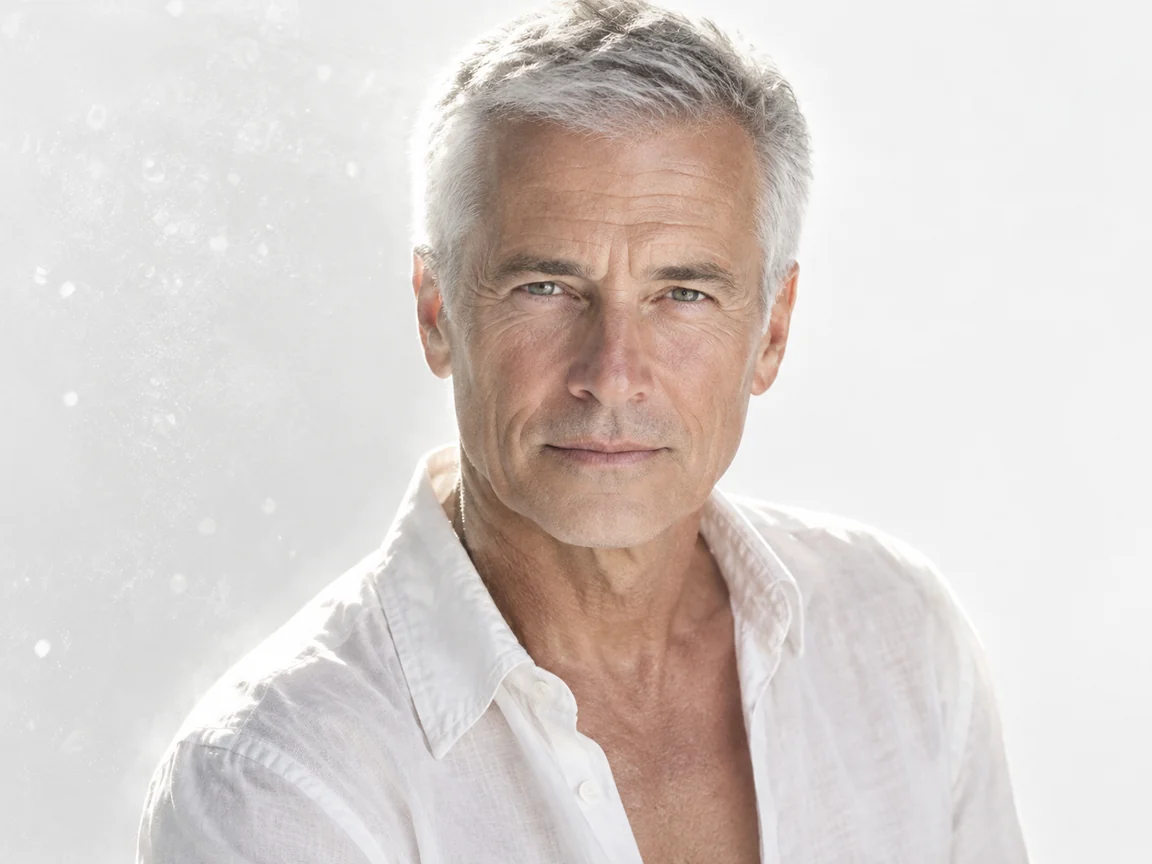 Studio
High-key studio portrait of a man in his sixties with cropped silver hair, pale open shirt, white background, dust drifting through a backlight, calm direct gaze, minimal styling, fine skin texture, 3:4 vertical crop.
Try This Style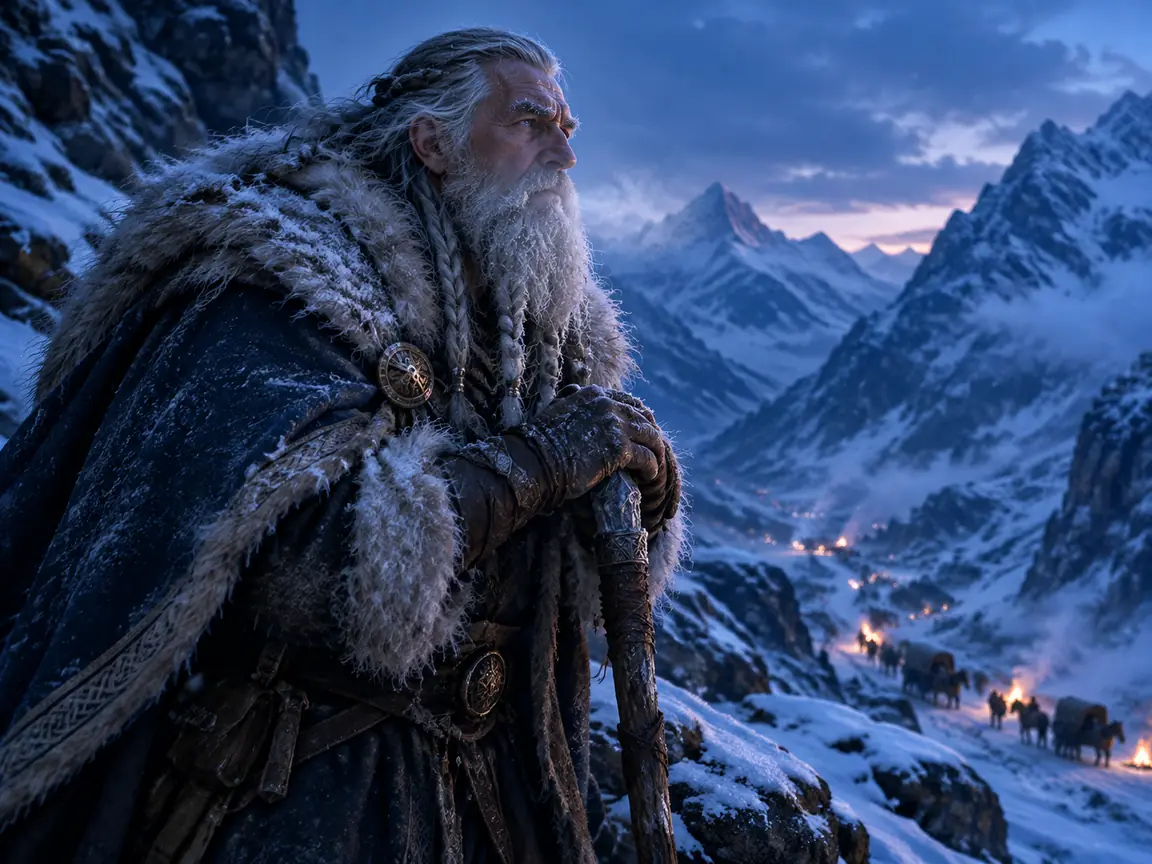 Character
Fantasy elder in a fur-trimmed cloak leaning on a staff in a snowy mountain pass, frost in his braided beard, blue-hour light, breath vapour, small caravan fires below, cinematic fantasy illustration, 3:4 vertical crop.
Try This Style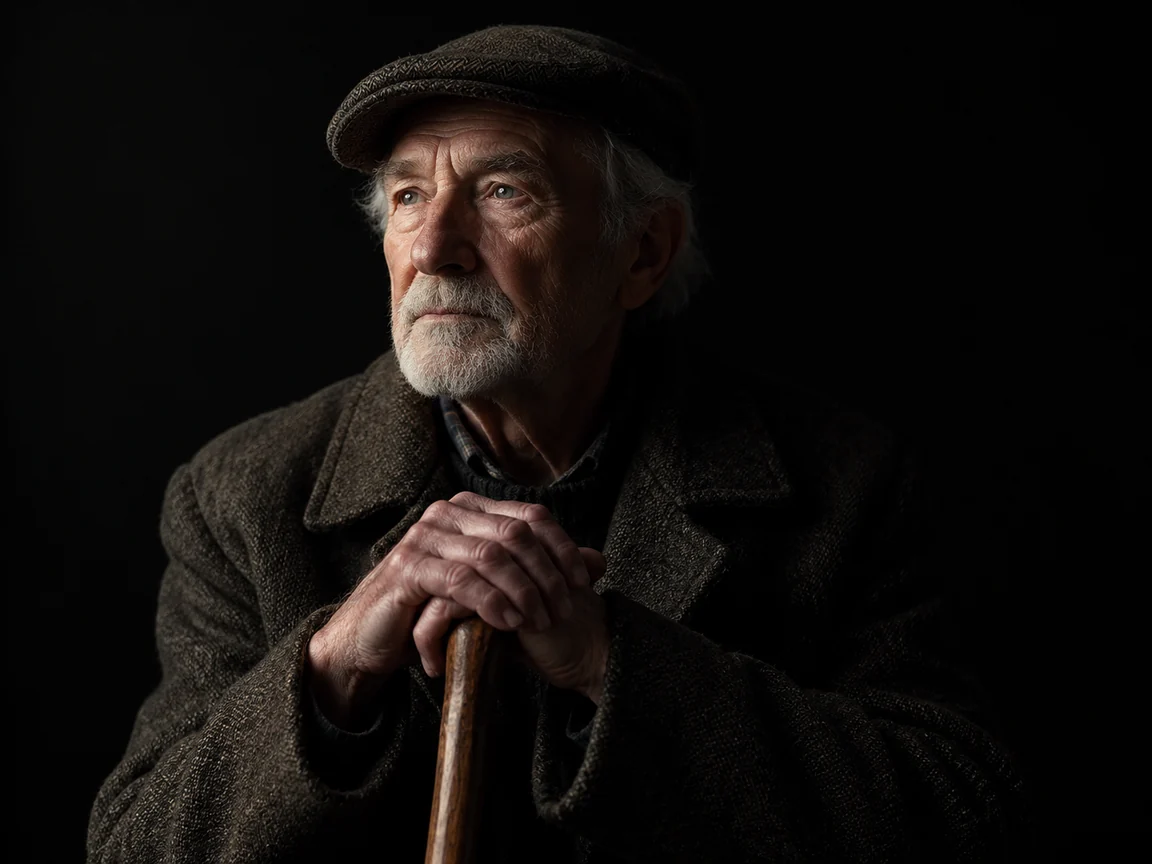 Studio
Low-key portrait of a man in his seventies, hands clasped over a walking stick, black backdrop, one softbox from the left carving his cheekbone, worn wool coat, quiet dignity, 3:4 vertical crop.
Try This Style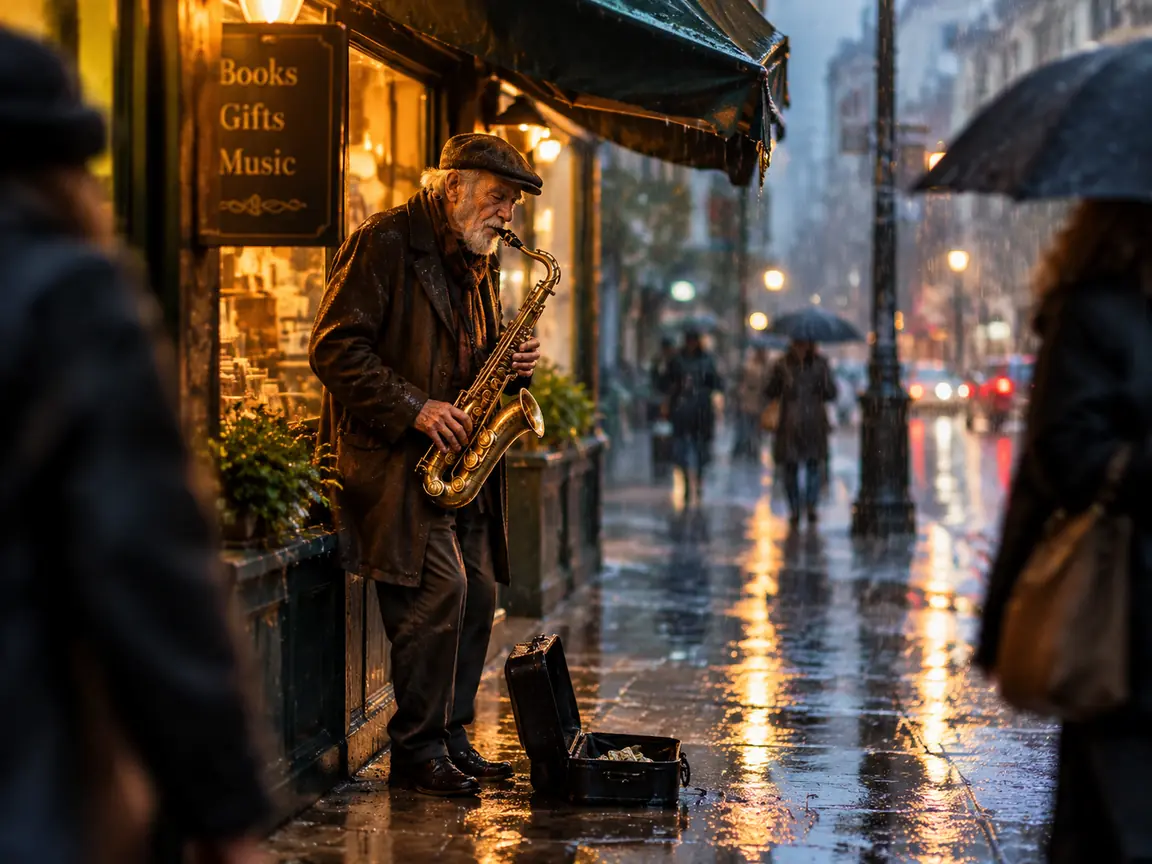 Outdoors
Street musician in his seventies playing a saxophone under a shop awning in the rain, wet pavement reflections, warm sign light across his face, passers-by blurred at the frame edge, 3:4 vertical crop.
Try This Style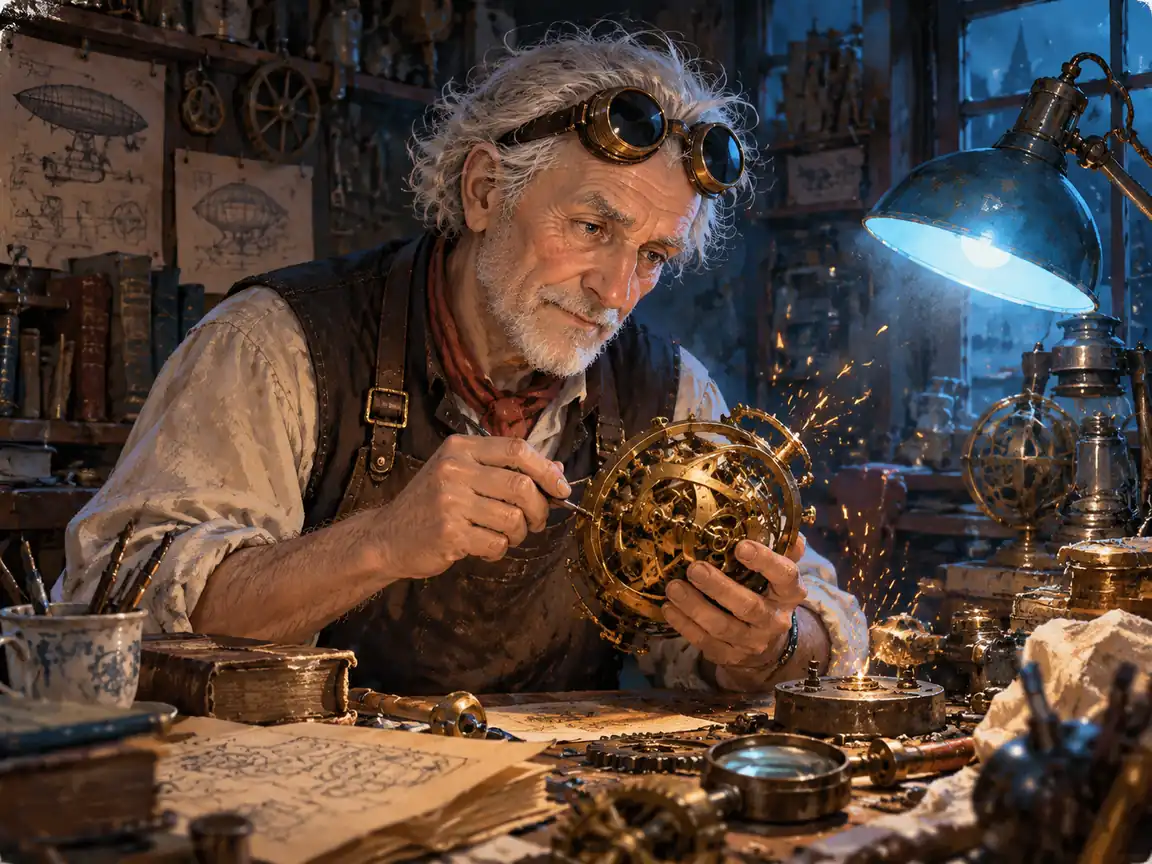 Character
Old inventor in a cluttered workshop, goggles pushed up on his forehead, silver stubble, holding a brass mechanism, blue work-lamp glow and a scatter of sparks, storybook illustration style, 3:4 vertical crop.
Try This StyleSix decisions that keep an elderly face from going rubbery.
A decade gives the model a target for skin, hairline and posture. Between the sixties, seventies and eighties the differences are visible in the neck, the hands and how the shoulders sit.
A single bright point in each eye is what makes the gaze feel alive. It comes from a named light source, not from asking for 'expressive eyes', which mostly changes the eyebrows.
Holding a net float, a book or a stick keeps the fingers occupied and out of that flat, splayed pose. It also tells you at a glance what the man does.
A fireplace and a mug, a bench and fallen leaves, an easel and a brush jar. Two objects place him; five objects bury him, and the face loses the frame.
Photographic skin, oil glazing and storybook rendering are separate briefs. Fixing the medium before the description keeps the pores, the brushwork or the linework consistent across a set.
Every frame here changes at least two of these: age, room, light, pose. Ten portraits in the same three-quarter studio pose would show the tool's weakness, not its range.
I needed a studio concept the same afternoon I found this page. I typed what I wanted for "Painter at the easel", ran it twice, then changed only the light and the palette on the second pass. The version I kept went straight into a client deck and saved me a stock-photo search.
My first try for "Keeper's night desk" came back too polished, more advertising than real photograph. I rewrote the sentence to describe the surface and the actual light in the room, and the third attempt looked like something I could have shot myself. That is the one I still use for AI old man generator mockups.
I use it the way I use a sketchbook: one prompt for "Elder on a snow pass", one for "Low-key, hands clasped", then I pick the half that works and iterate from there. Two of those frames ended up in a package for a client who could not decide between the two directions, and seeing them side by side settled it in a minute.
Yes, with a reference photo. Keep the face fixed and change only the age cues: skin laxity, hairline, neck, hands. Asking for an older version of the whole person is what loses the likeness.
Too much smoothing. Ask for deep wrinkles, visible veins, uneven pigment and sun damage, and drop any word about smooth or flawless skin. Age reads through texture and light, not through grey hair.
Use one reference block, or better a reference image, and change only the age line in each prompt. Then keep the images in one folder so you can compare what drifted.
You can try it on the free allowance; paid models start around $5.80 a month, with no watermark on downloads.
Yes, as original characters, if the model licence allows commercial use. Avoid making a portrait that resembles a real, identifiable person without permission.