

Four Ready-Made Art Directions
Start with pencil, watercolor, comic ink, or storybook art instead of a blank prompt.
Move from expressive pencil studies to watercolor, graphic ink, adventure posters, and polished storybook scenes with prompt-ready examples.
Create a Monkey Drawing







Prompt Guide
Model
Reference Image
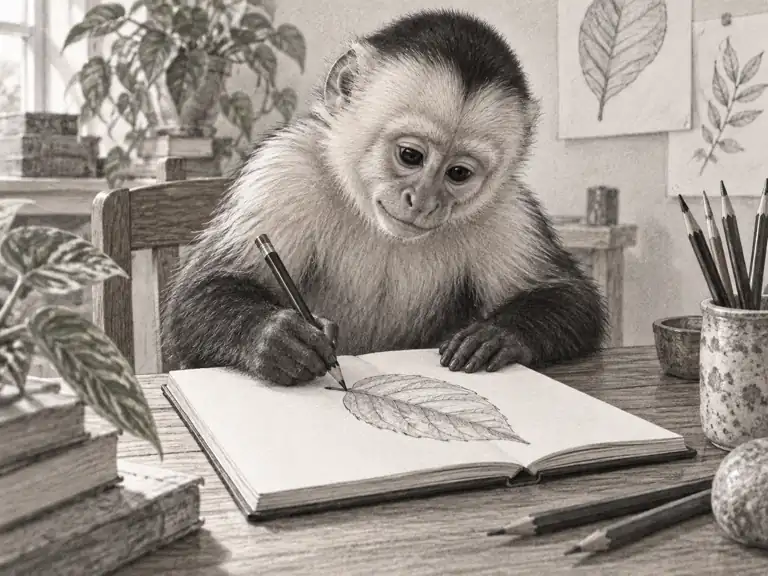
Define the animal, action, and medium before adding decorative detail.
Start with graphite, watercolor, ink, gouache, colored pencil, poster art, or another clear visual medium.
Specify the species, expression, pose, activity, wardrobe or props, setting, palette, lighting, and composition.
Review the face, paws, limbs, tail, props, and style consistency, then change one prompt detail at a time.
Explore science fiction, botanical art, music posters, sports illustration, adventure, and storybook food scenes.
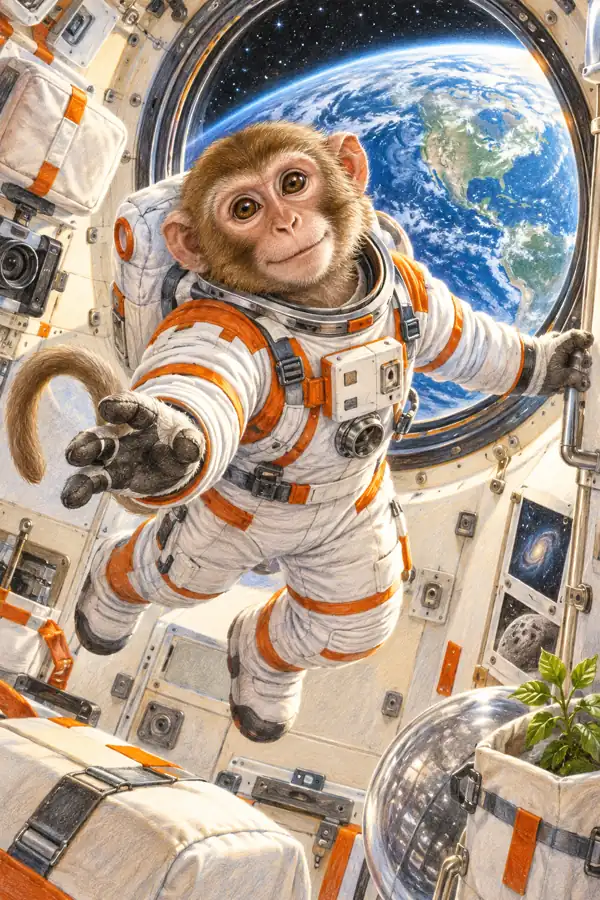 Science Fiction
Vertical 2:3 colored-pencil illustration of one original rhesus monkey astronaut floating inside a bright spacecraft observatory, full white-and-orange suit, Earth visible through a round window, charming intelligent expression, detailed paws, no humans, no text, no logo, no watermark.
Try This Prompt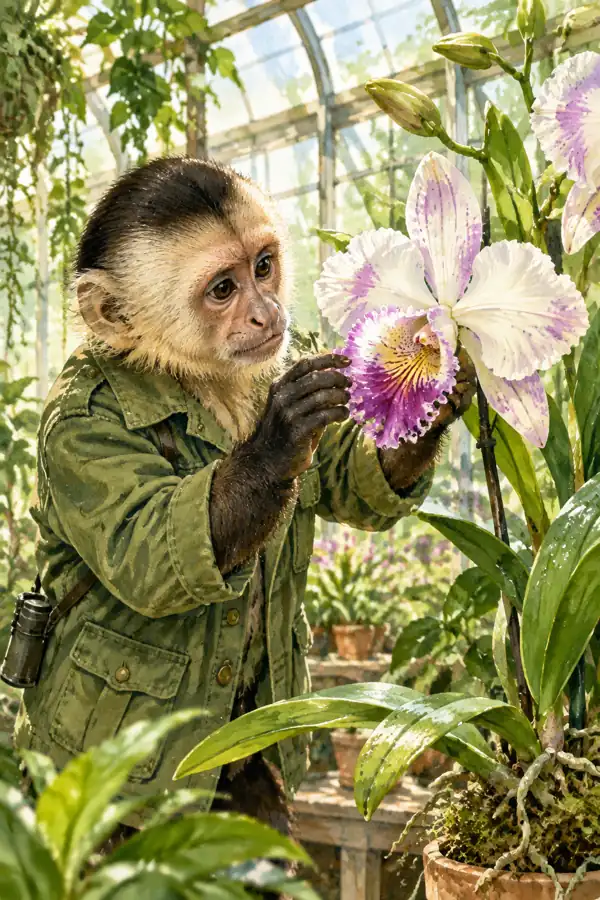 Botanical
Vertical 2:3 watercolor-and-ink illustration of one original capuchin monkey botanist in a tasteful green field jacket, examining an oversized orchid in a sunlit greenhouse, elegant botanical details, expressive face, stable paws, no humans, no labels, no text, no logo, no watermark.
Try This Prompt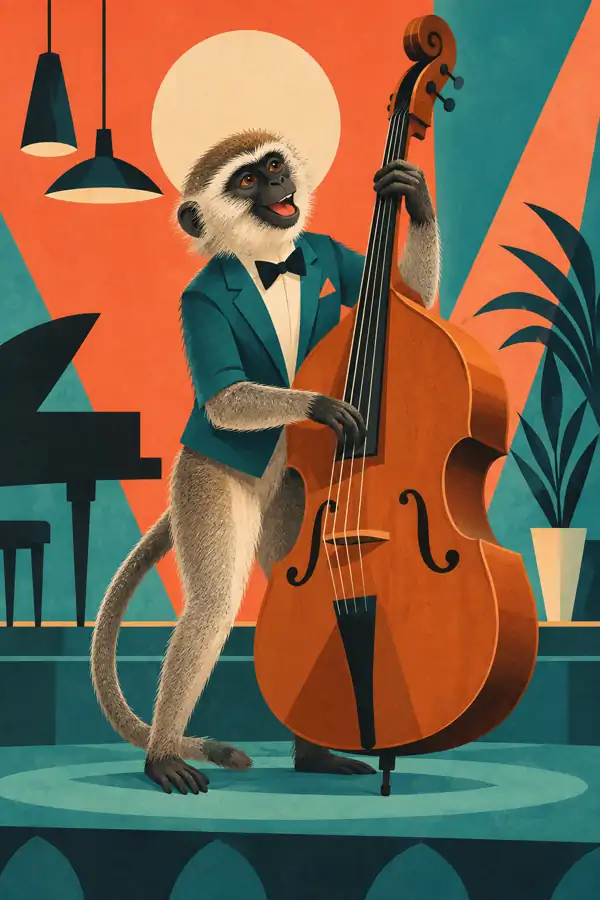 Music
MusicVertical 2:3 mid-century poster illustration of one original vervet monkey jazz musician playing a small upright bass on a bright coral-and-teal stage, sophisticated geometric shapes, expressive joyful face, stable paws and instrument, no humans, no lettering, no logo, no watermark.
Try This Prompt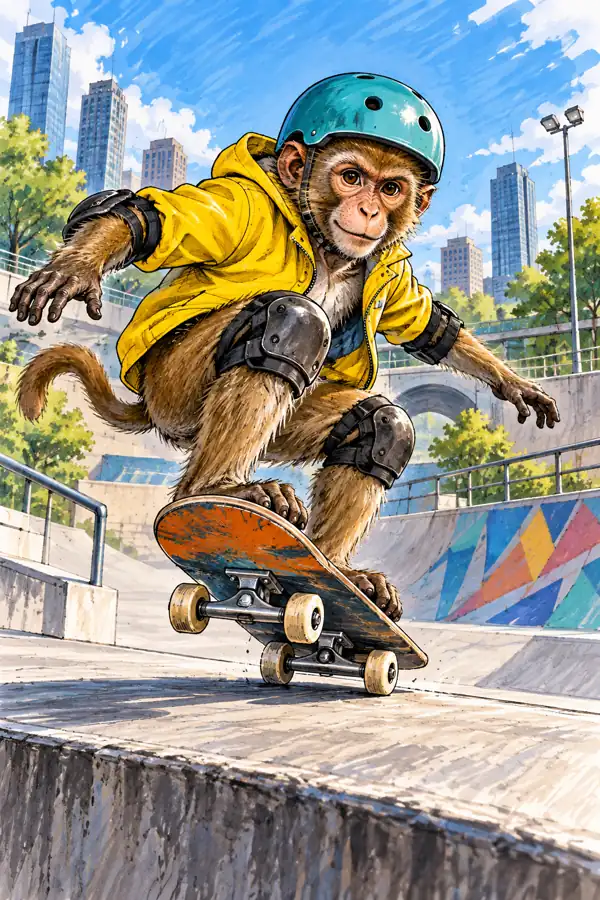 Sports
Vertical 2:3 dynamic marker-and-ink drawing of one original macaque skateboarder wearing a teal helmet and yellow jacket, landing a small safe trick in a bright urban skate park, energetic perspective, clean anatomy, no humans, no readable graffiti, no text, no logo, no watermark.
Try This Prompt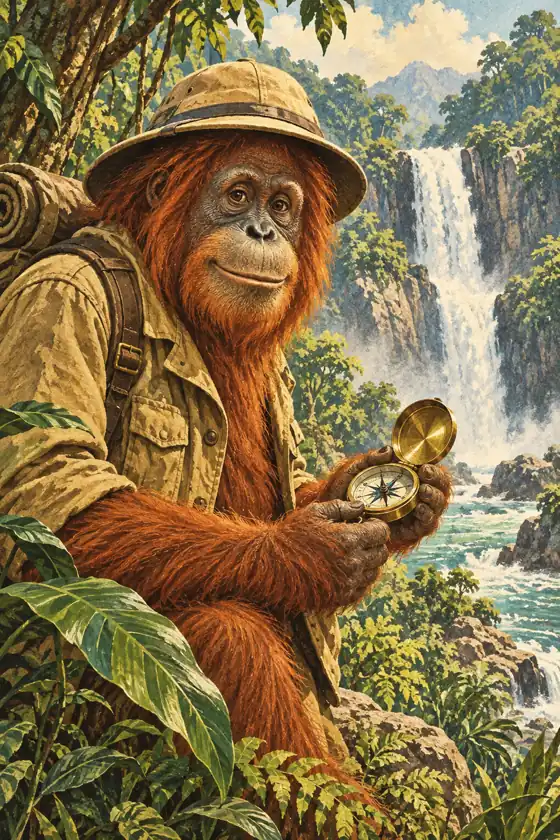 Adventure
Vertical 2:3 vintage adventure illustration of one original orangutan explorer in a khaki jacket and round hat, holding a brass compass beside a bright jungle waterfall, warm screen-print texture, intelligent friendly expression, stable hands, no humans, no text, no logo, no watermark.
Try This Prompt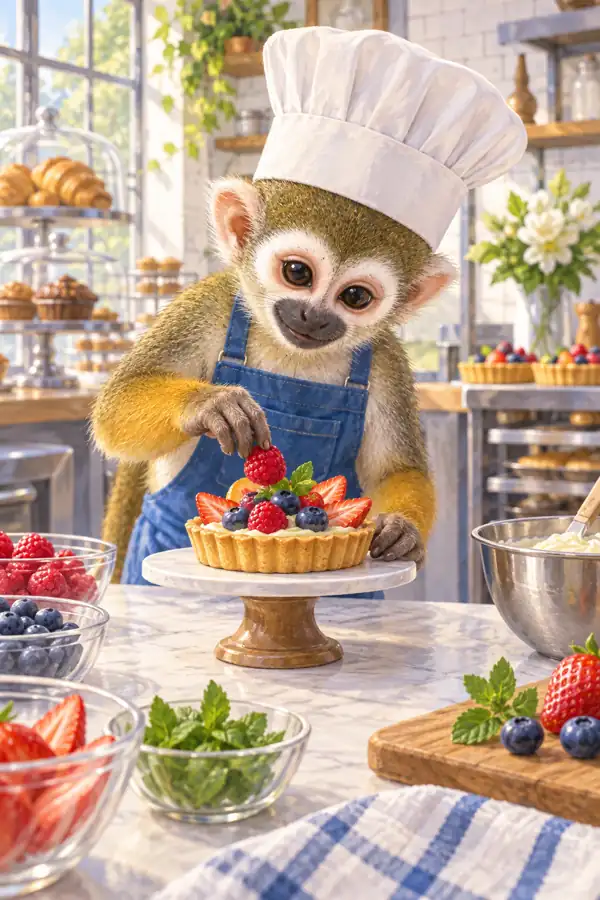 Storybook
Vertical 2:3 soft-gouache illustration of one original squirrel monkey pastry chef in a clean white toque and blue apron, decorating a small fruit tart in a bright bakery kitchen, precise stable paws, wholesome cheerful expression, no humans, no readable packaging, no text, no logo, no watermark.
Try This PromptStart with pencil, watercolor, comic ink, or storybook art instead of a blank prompt.
Name the monkey species, pose, expression, paws, tail, and props for a more deliberate result.
Choose among enabled image models when linework, texture, illustration, or realism needs a different strength.
Create classic 4:3 compositions, portrait illustrations, square cards, or vertical artwork.
Adapt astronaut, botanist, musician, athlete, explorer, and chef concepts without repeating a scene.
Prompts exclude text, logos, watermarks, and unstable anatomy for easier review and reuse.
Illustrative copy only; not verified user reviews.
The pencil and watercolor presets gave me two genuinely different directions for an animal illustration brief.
I could compare storybook, poster, and graphic-novel looks without reusing the same monkey pose.
The prompts made species, paws, props, and composition much easier to specify clearly.
It creates original monkey illustrations from a text prompt or supported reference workflow, with styles ranging from pencil and watercolor to posters and storybooks.
Eligible accounts can receive one trial use for each enabled image model shown in the workspace. Current availability, credit cost, and plan limits appear before generation.
Name one medium, such as graphite, watercolor, ink, gouache, colored pencil, or screen print, then specify paper texture, palette, line quality, and lighting.
Use one clear pose and ask for stable face, paws, limbs, tail, and props. Review these details closely and simplify the action if anatomy drifts.
Usage rights depend on the selected model and your plan. Review the applicable terms and avoid protected characters, logos, or misleading endorsements.