

Authentic Process Vocabulary
Every prompt names Prussian blue, pale exposure forms, paper fibers, coated edges, and chemical bloom so the result reads like a cyanotype print.
Use an AI cyanotype photo prompt that already understands Prussian blue, negative exposure, paper grain, contact-print edges, and chemical bloom. Start with a portrait, plant, coast, building, or found object and generate a finished image instead of guessing at process vocabulary.
Create Cyanotype Art







Prompt Guide
Model
Reference Image
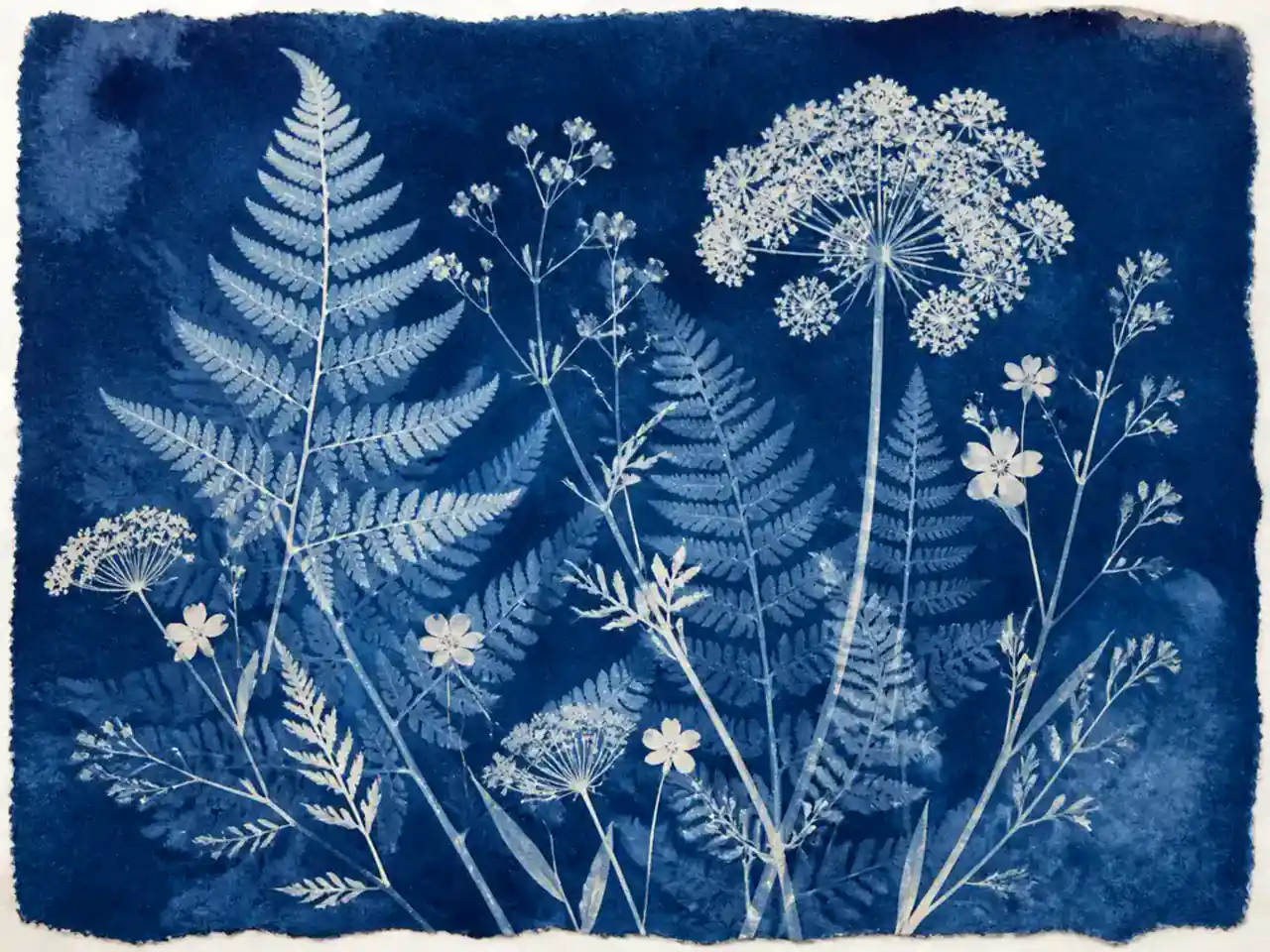
Each example pairs a finished result with reusable prompt structure. Keep the analog-process cues and replace the subject, pose, or arrangement.
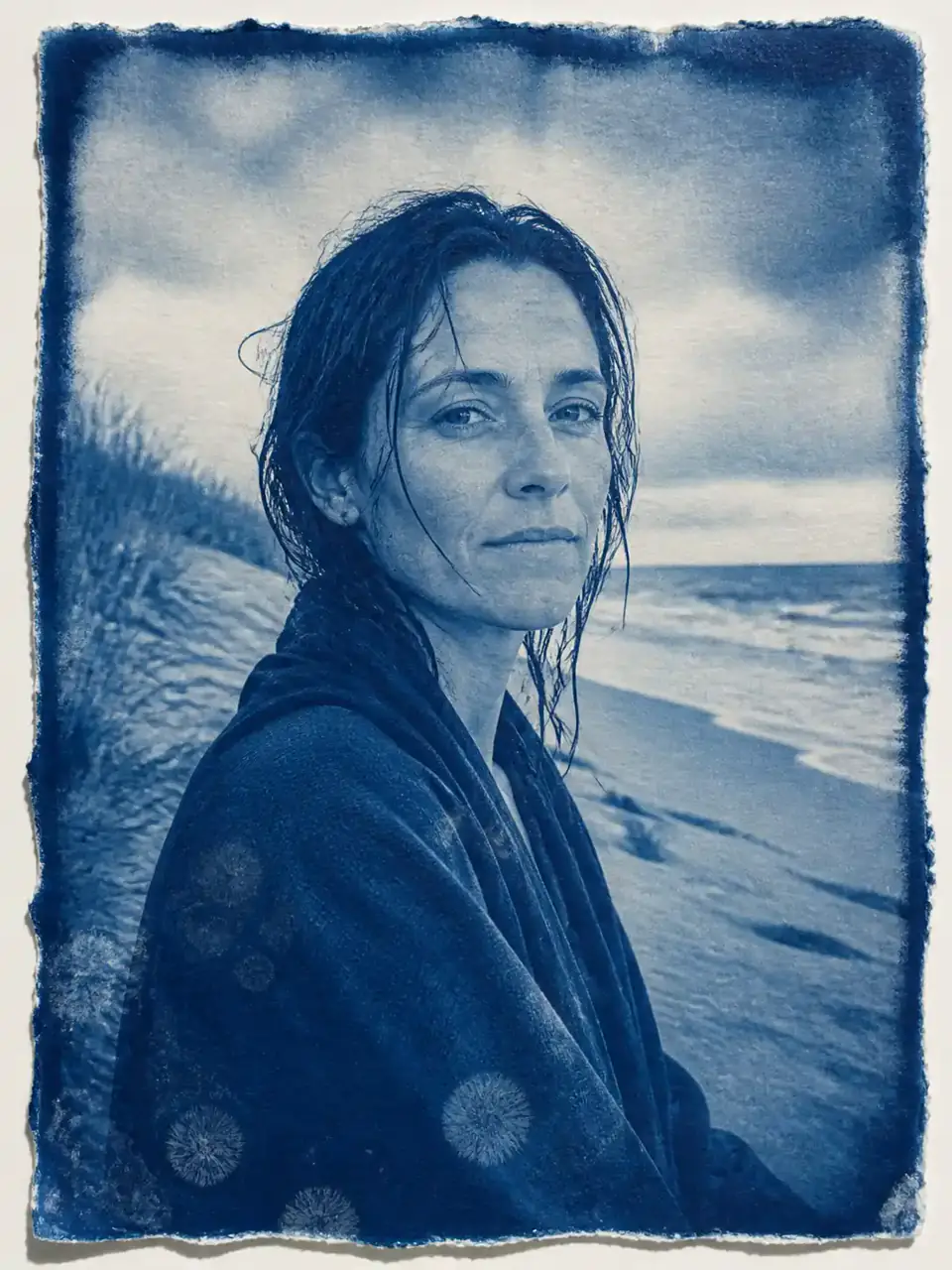 Portraits
Authentic cyanotype portrait of an adult woman on a windswept beach, wet hair, calm gaze, dune grass and soft surf behind her. Deep Prussian blue, pale exposure highlights, visible watercolor-paper fibers, hand-coated deckled edge, subtle chemical bloom, readable facial structure, no text, no logo, vertical 3:4 print.
Try This Prompt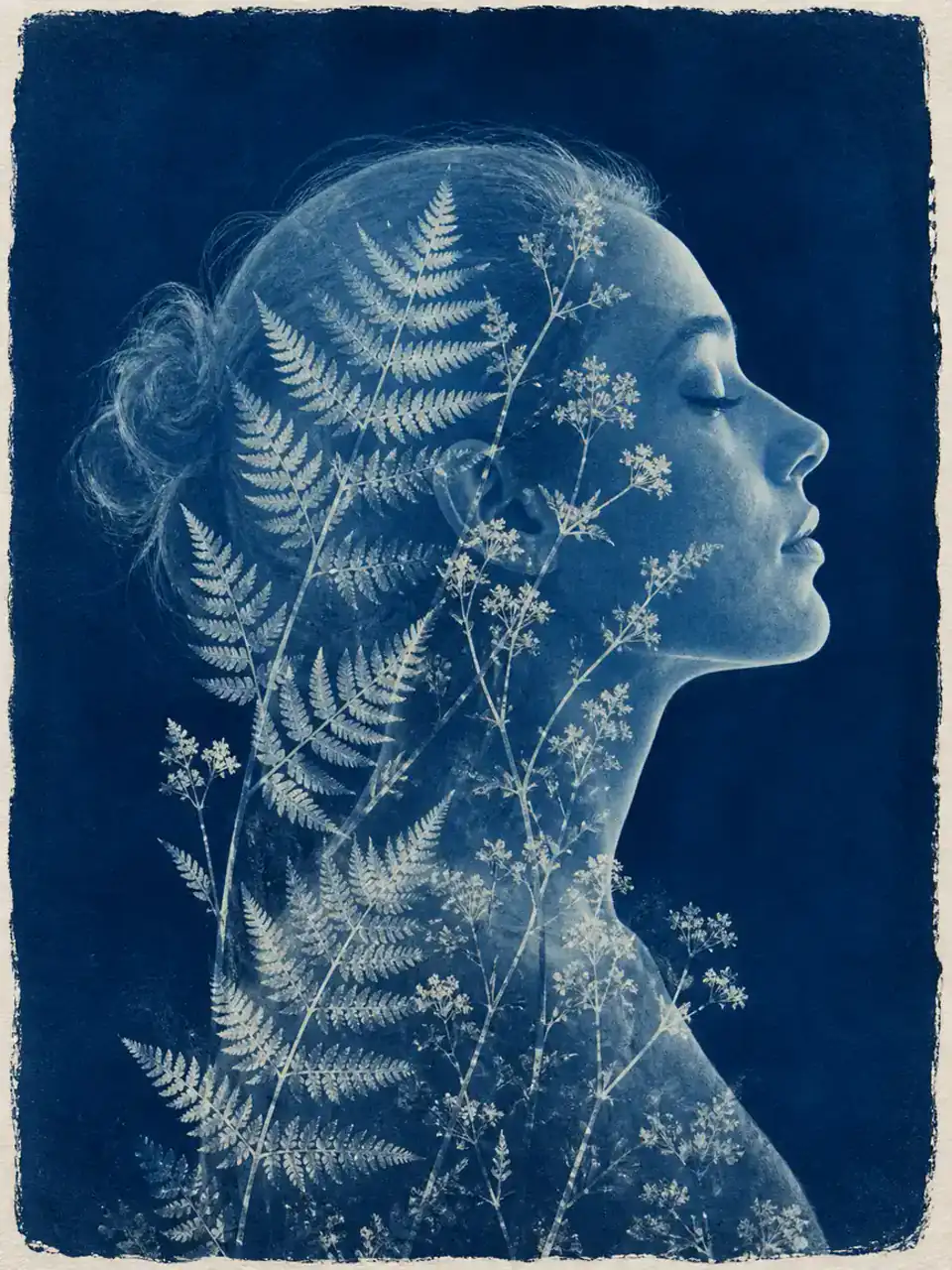 Portraits
Fine-art cyanotype profile portrait of an adult woman, her clean silhouette layered with translucent fern leaves and small wildflowers. Deep Prussian blue background, pale cyan-white facial outline, delicate contact-print botanical detail, textured cotton paper, hand-coated edges, no text, no logo, vertical 3:4 print.
Try This Prompt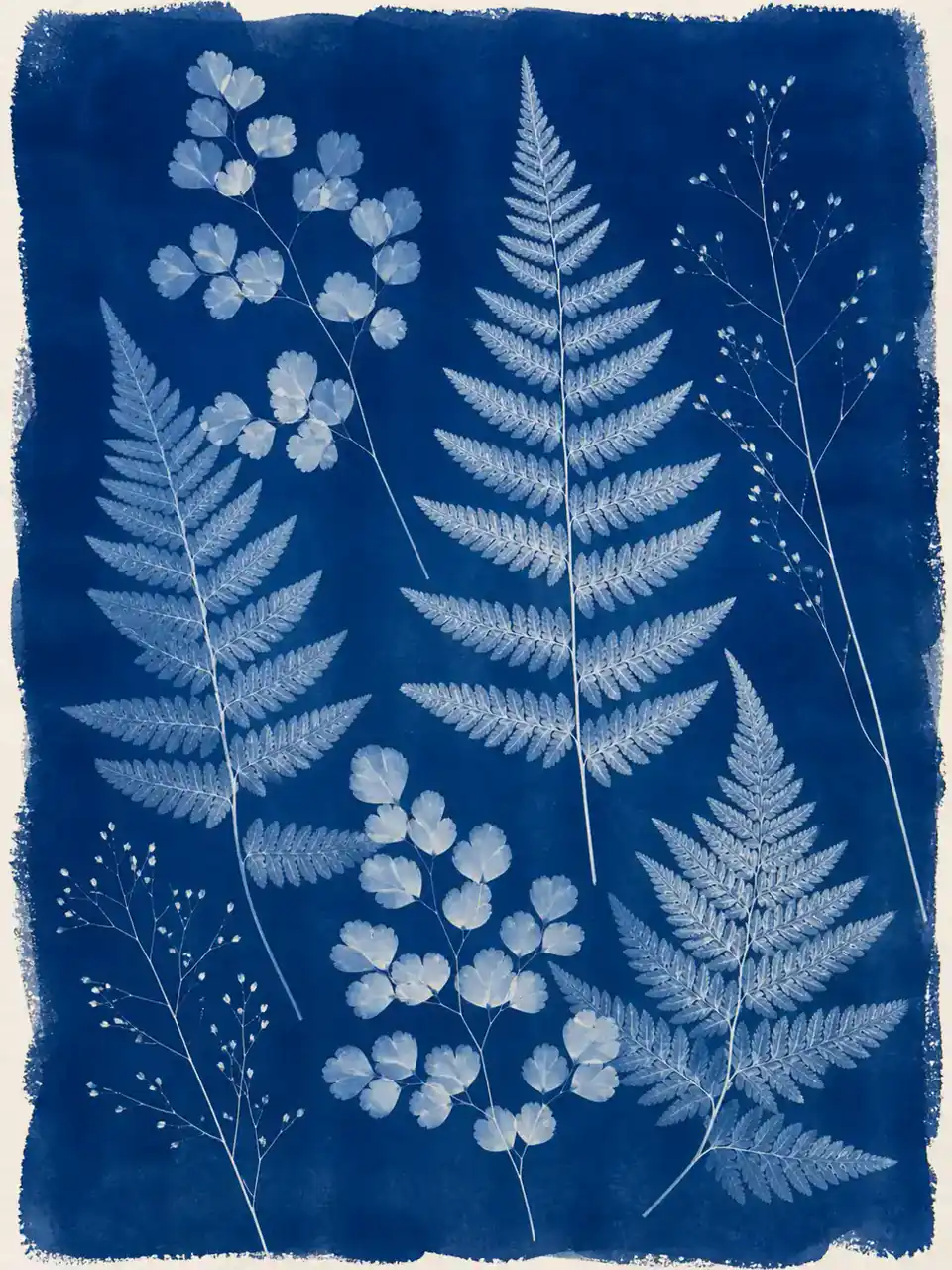 Botanical Prints
Authentic cyanotype herbarium composition of fern fronds, maidenhair leaves, and tiny seed heads arranged with generous negative space. Crisp pale contact silhouettes on saturated Prussian blue, layered translucency, watercolor-paper fibers, imperfect brushed edge, no specimen labels, no text, no logo, vertical 3:4 print.
Try This Prompt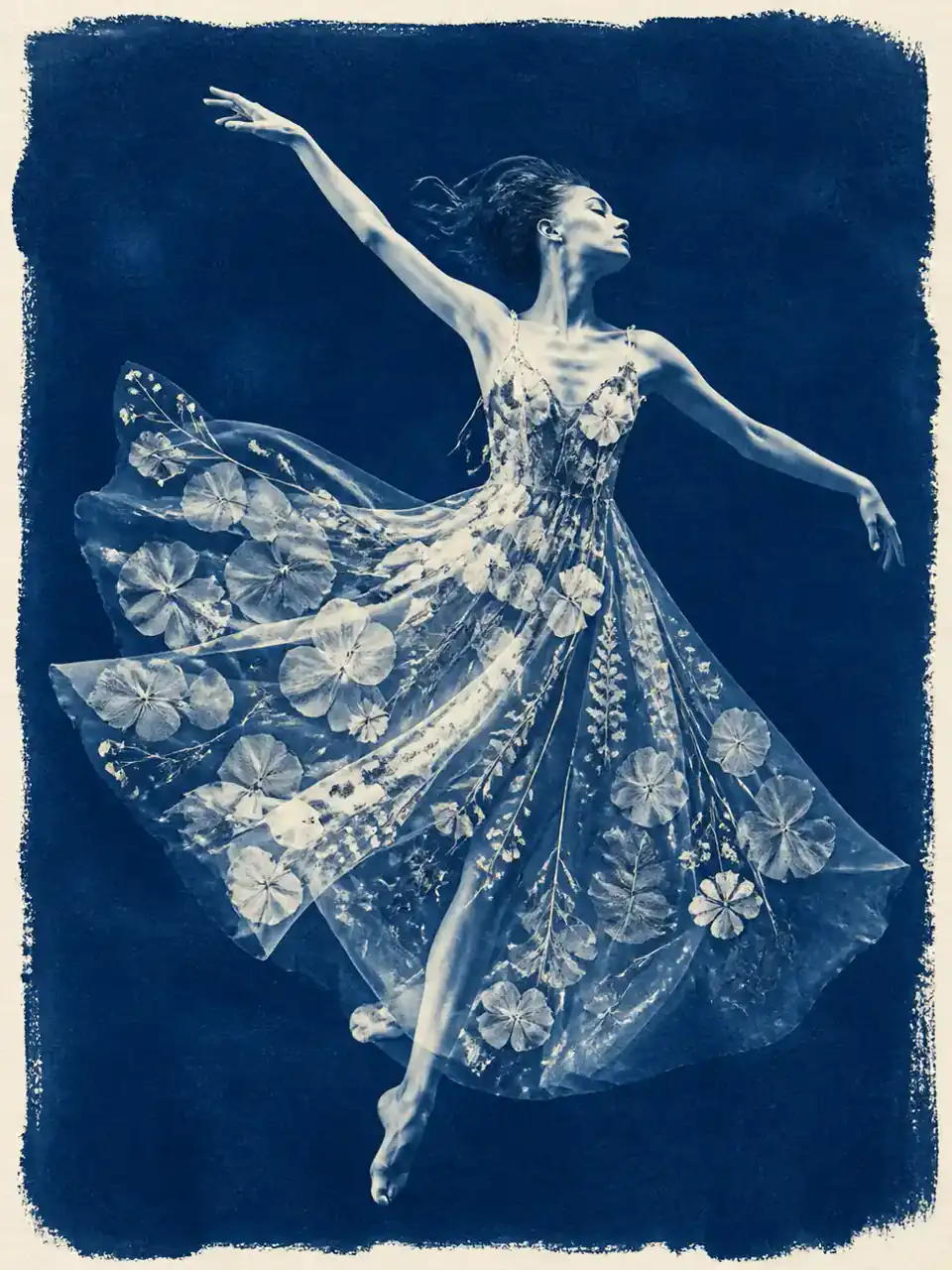 Fashion & Motion
Editorial cyanotype image of an adult dancer in a flowing dress formed from pressed wildflowers and translucent petals, elegant full-body motion, deep Prussian blue field, pale contact-print fabric, visible paper grain, hand-coated edge, bright tonal separation, no text, no logo, vertical 3:4 print.
Try This Prompt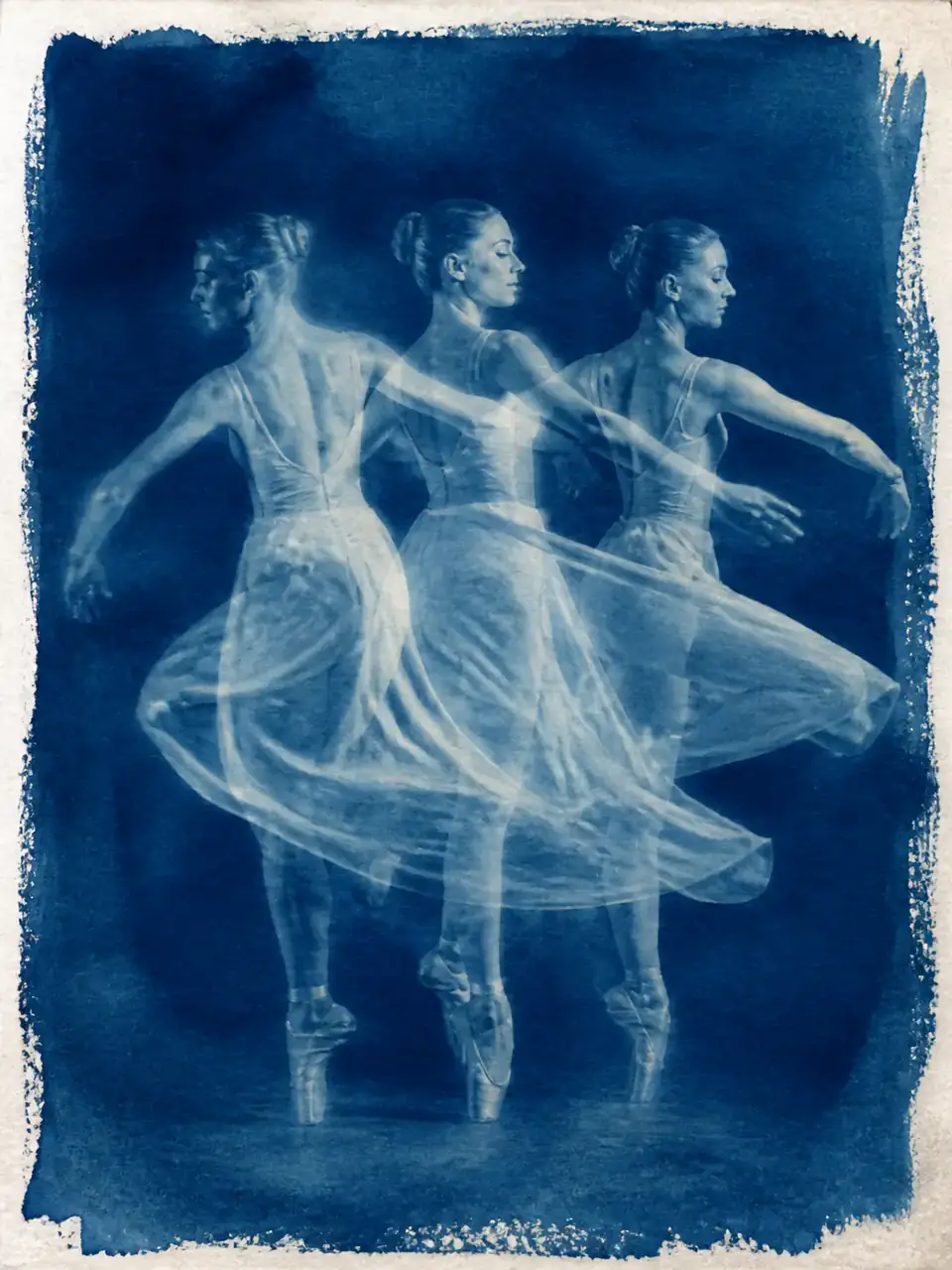 Fashion & Motion
Experimental cyanotype motion study of an adult ballet dancer turning through three softly overlapping positions, graceful anatomy, translucent pale-cyan fabric trails, deep Prussian blue, tactile watercolor paper, hand-coated edges, subtle exposure bloom, no text, no logo, vertical 3:4 print.
Try This Prompt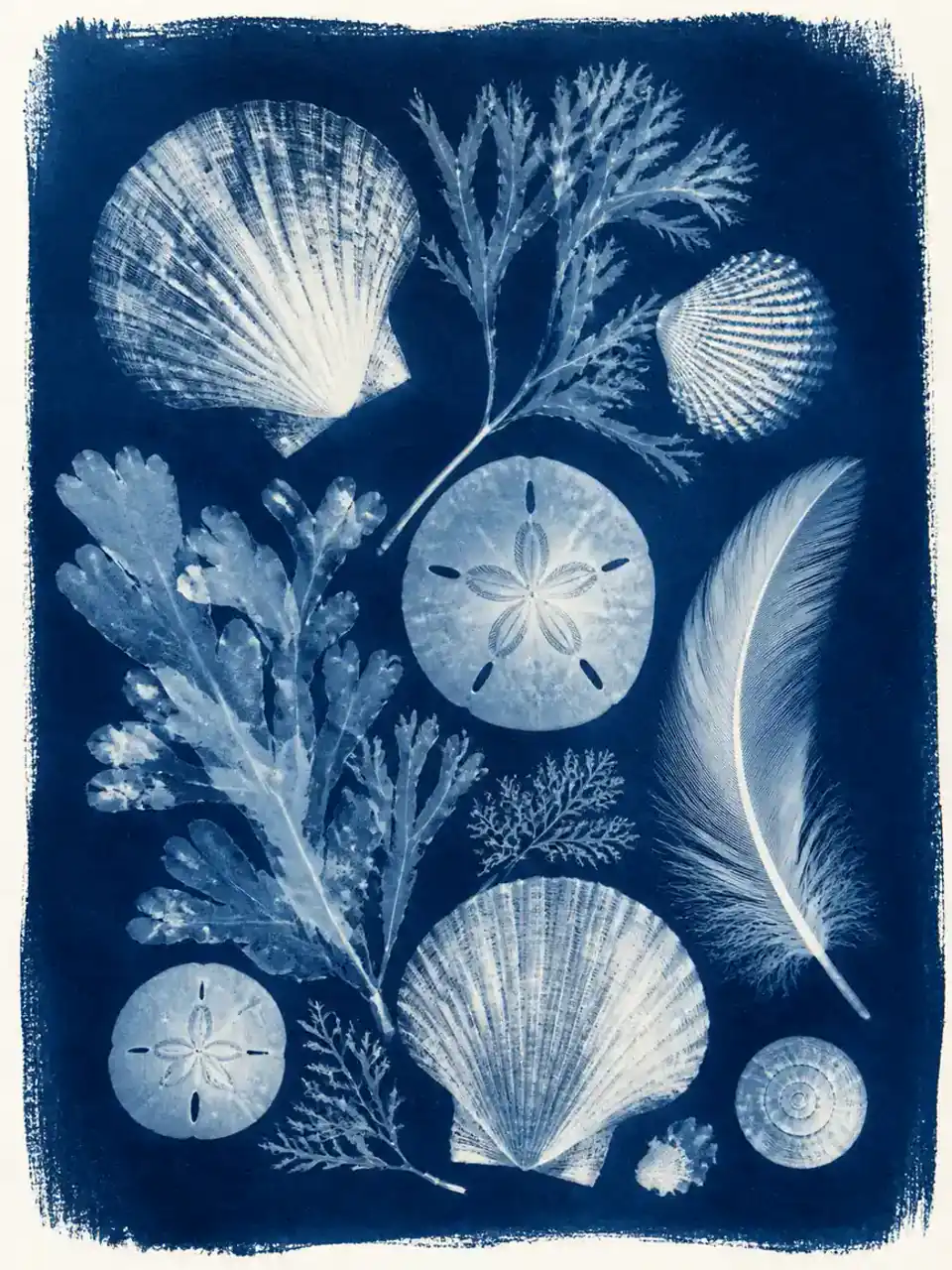 Coast & Nature
Authentic cyanotype photogram of scallop shells, seaweed, sand dollars, and a curved feather arranged like a tide-pool collection. Crisp white contact forms, translucent pale-cyan overlaps, deep Prussian blue, visible paper fibers, hand-brushed edge, no labels, no text, no logo, vertical 3:4 print.
Try This Prompt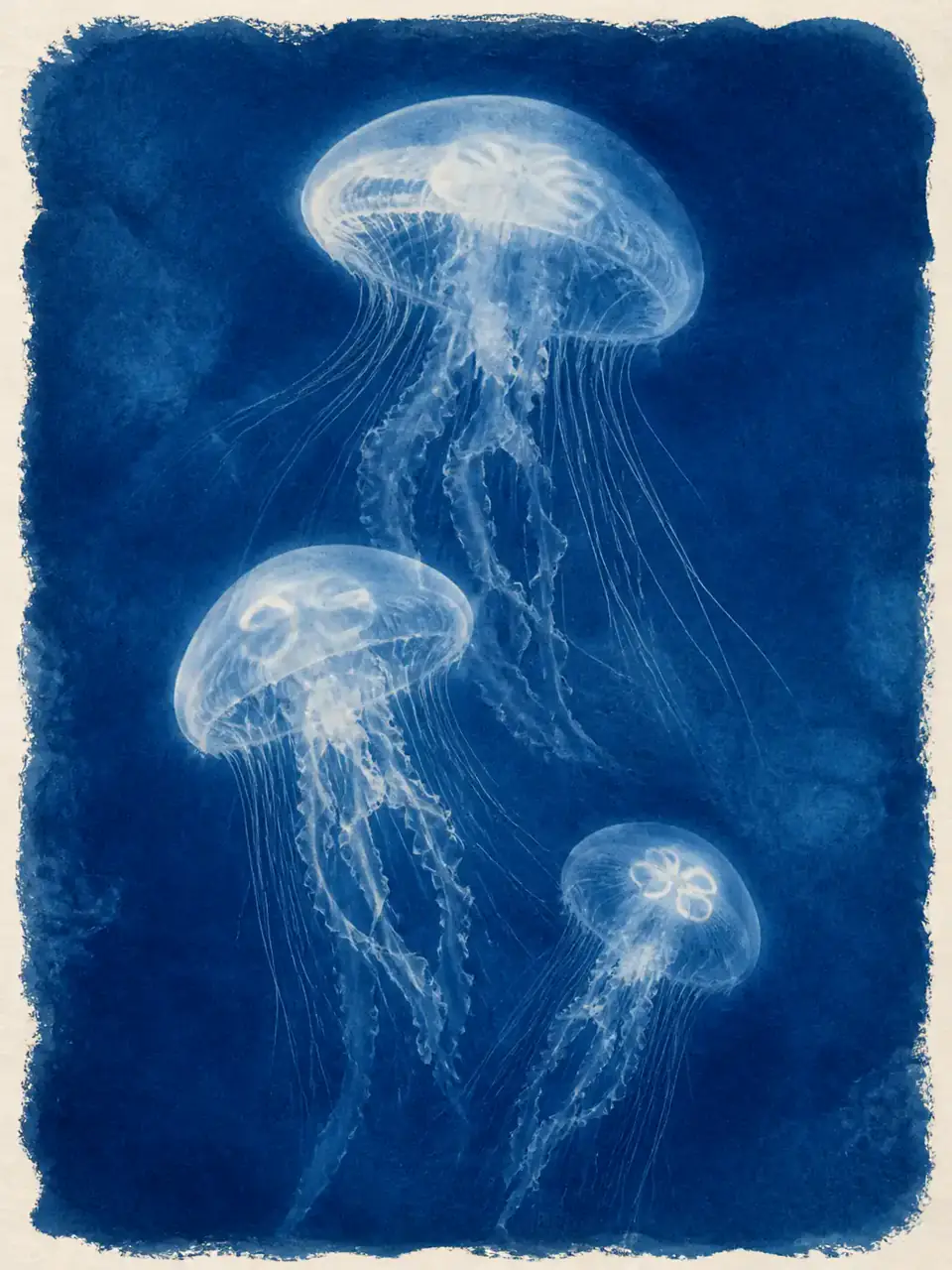 Coast & Nature
Dreamlike cyanotype of three translucent jellyfish drifting upward, delicate tentacles rendered as pale contact lines, layered exposure halos, saturated Prussian blue water, fibrous handmade paper, softly irregular coated edges, luminous and uncluttered, no text, no logo, vertical 3:4 print.
Try This Prompt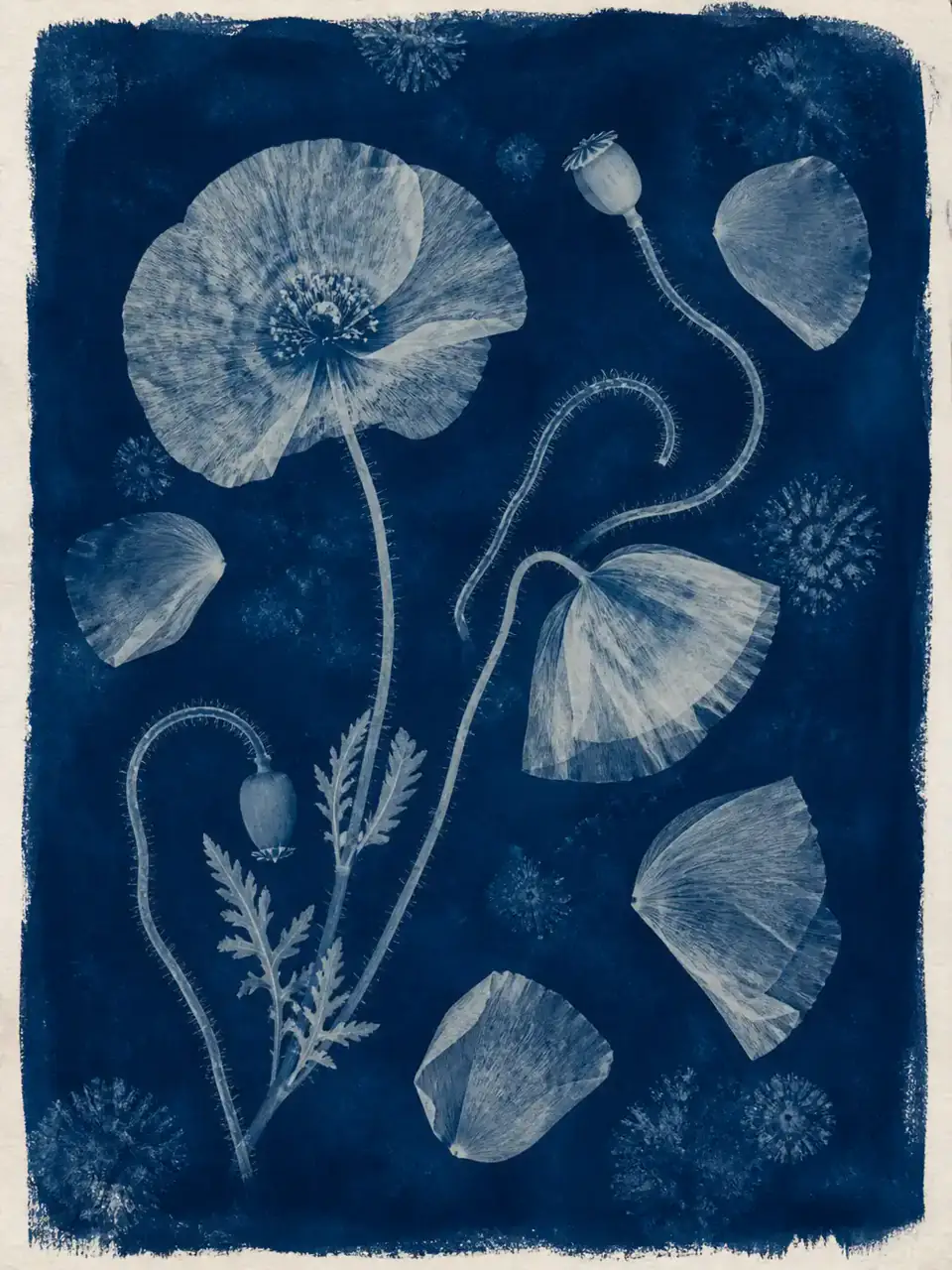 Botanical Prints
Minimal cyanotype contact print of pressed poppies, curling stems, and loose petals arranged diagonally across textured paper. Deep Prussian blue wash, pale cyan-white silhouettes, subtle transparency in petals, small chemical blooms, hand-coated border, no text, no logo, vertical 3:4 print.
Try This Prompt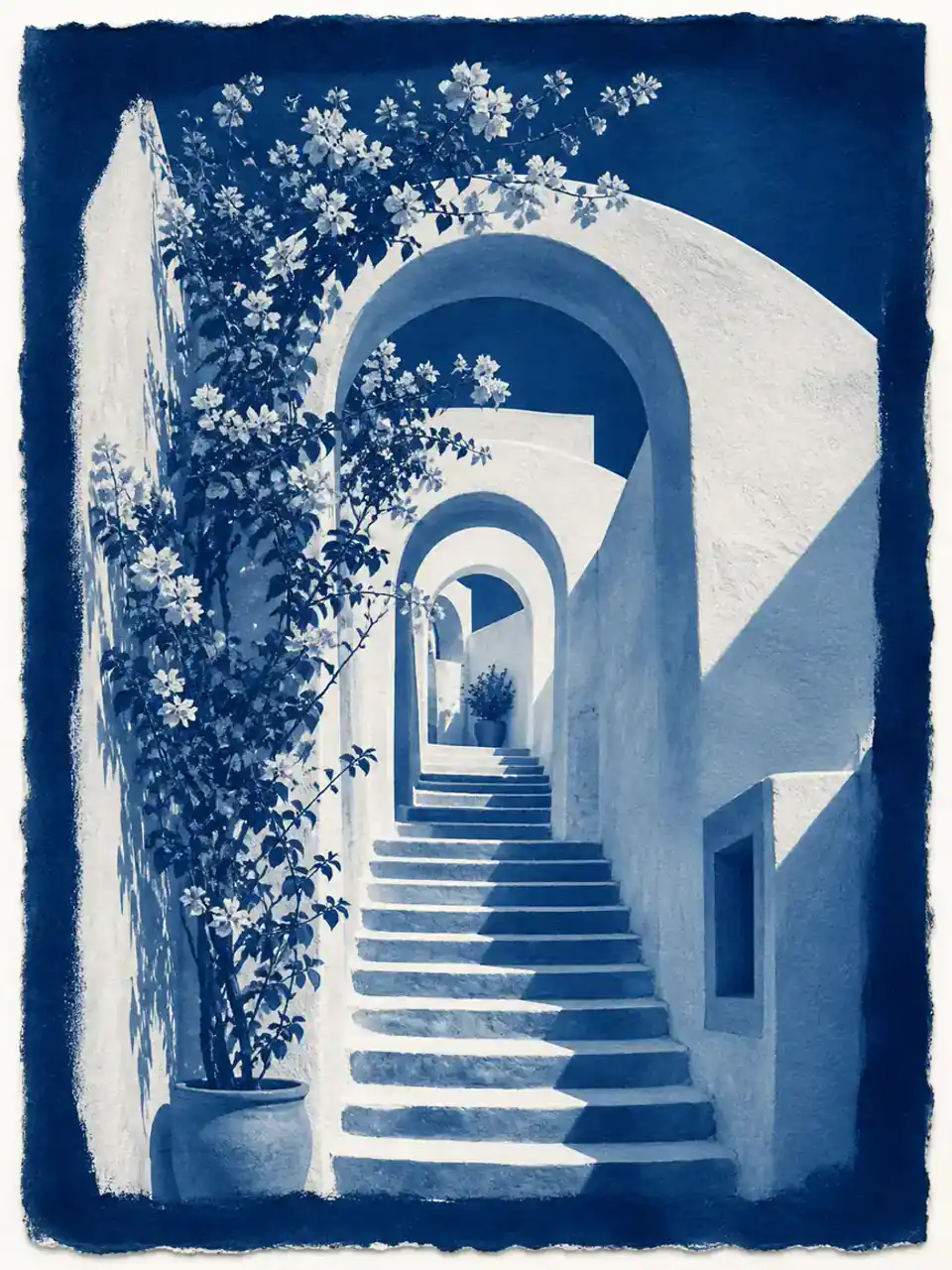 Objects & Architecture
Architectural cyanotype print of a whitewashed Mediterranean stairway, repeated arches, climbing bougainvillea, and strong midday geometry translated into pale exposure shapes. Deep Prussian blue, watercolor-paper grain, irregular coated edge, crisp rhythm, no labels, no text, no logo, vertical 3:4 print.
Try This Prompt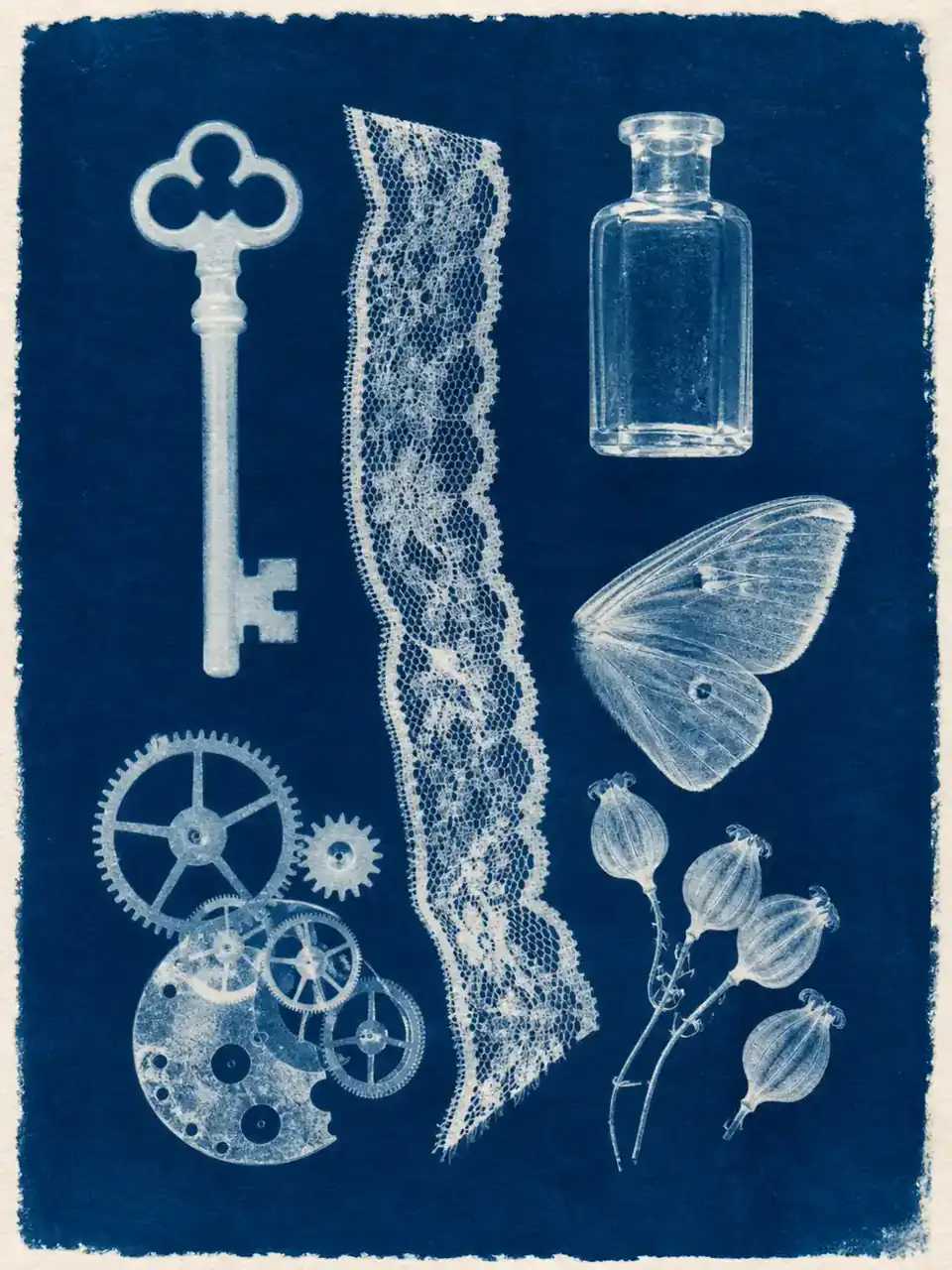 Objects & Architecture
Museum-like cyanotype photogram of a vintage key, lace ribbon, glass vial, moth wing, pocket-watch gears, and dried seed pods arranged with clean spacing. White and pale-cyan contact shapes on deep Prussian blue, paper fibers, hand-coated edge, no captions, no text, no logo, vertical 3:4 print.
Try This PromptMove beyond a generic blue filter with prompts that control the actual visual language of sun printing.
Every prompt names Prussian blue, pale exposure forms, paper fibers, coated edges, and chemical bloom so the result reads like a cyanotype print.
See the finished portrait, botanical, coastal, fashion, or photogram result before adapting the same structure to your own subject.
Choose portrait, square, landscape, or classic ratios and refine one variable at a time instead of rewriting the whole prompt.
Describe the subject, name the analog process, and control exposure texture in three quick steps.
Start with a portrait, botanical arrangement, shoreline, building, or found-object still life. One strong focal idea produces cleaner silhouettes than a crowded list.
Name deep Prussian blue, pale exposed forms, watercolor-paper fibers, contact-print edges, and subtle chemical bloom. These details separate a real sun-print look from a basic blue filter.
Inspect the silhouette, midtone detail, paper edge, and blue range. If the image is muddy, brighten the exposure; if it looks digital, strengthen paper texture and hand-coated imperfections.
Fictional illustrative personas show practical workflows; these are not verified customer testimonials.
I kept the botanical prompt structure and swapped in plants from my own garden. The paper-edge and exposure details stopped the result from looking like a basic blue filter.
The coastal portrait prompt gave me a useful starting composition. I only had to adjust the face detail and blue range instead of rebuilding the style from scratch.
I used the object photogram layout for a museum workshop concept. The clean spacing and translucent overlaps made the cyanotype effect easy to recognize.
Name one clear subject, then specify authentic cyanotype sun print, deep Prussian blue, pale exposed forms, textured watercolor or cotton paper, hand-coated edges, and subtle chemical bloom. Add the intended aspect ratio and prohibit text or logos when you want clean artwork.
Describe the person's pose, expression, hair, and background first. Then add cyanotype process cues and ask for readable facial structure through pale exposure tones rather than crushed navy shadows. A clear reference photo can help when the selected model supports image input.
A blue filter changes color but does not create contact-print behavior. Strengthen the prompt with paper fibers, pale silhouettes, layered translucency, coated-edge irregularity, chemical bloom, and a limited Prussian-blue tonal range.
Botanical specimens and flat objects produce the clearest contact-print look, while portraits, dancers, coastlines, and architecture work well when the prompt preserves strong silhouettes and controlled midtone detail.
You can use the output in mockups, social posts, editorial concepts, and personal art workflows, subject to the selected model's current terms and any rights attached to reference images. Review those terms before commercial use.