

Faces drift apart
A second retry quietly changes who the first person was, so the pair stops looking like the same two people. Reuse the exact same two descriptive sentences and change only the scene.
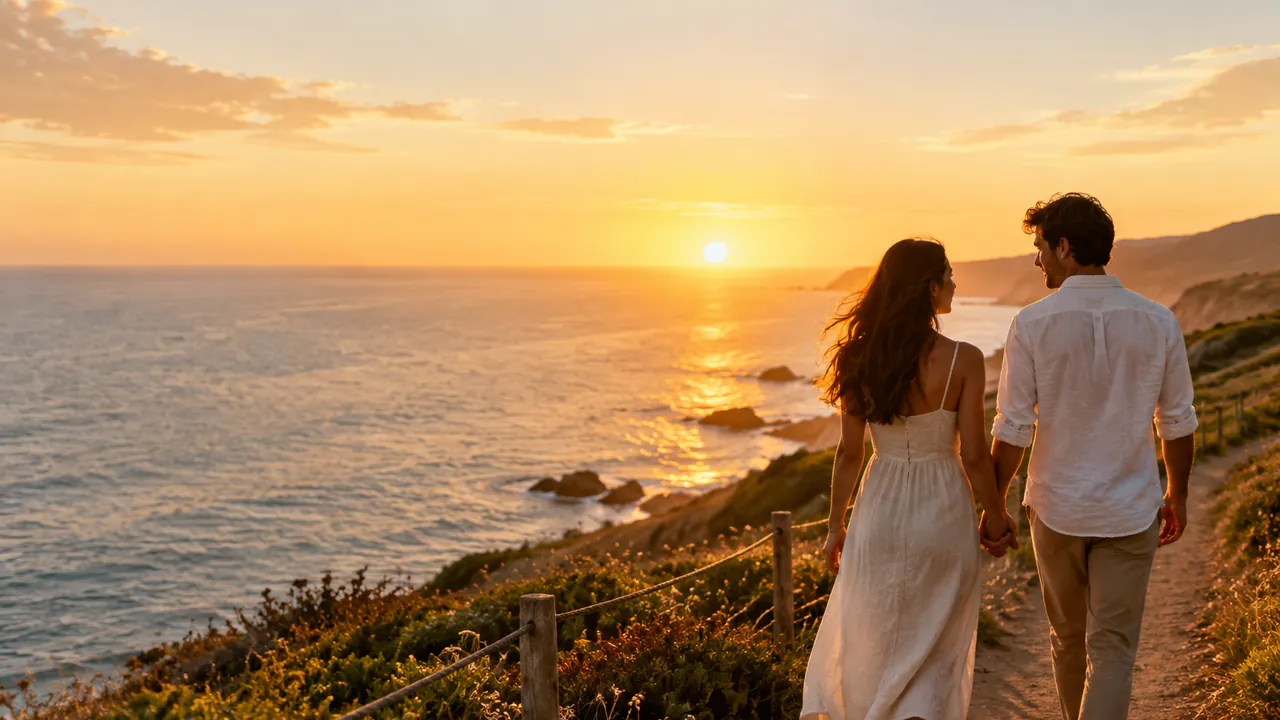
Set the place, the hour and the wardrobe once, and get a couple portrait for a save-the-date, a post or a client moodboard, with both faces and both hands in the same light.
Prompt Guide
Model
Reference Image
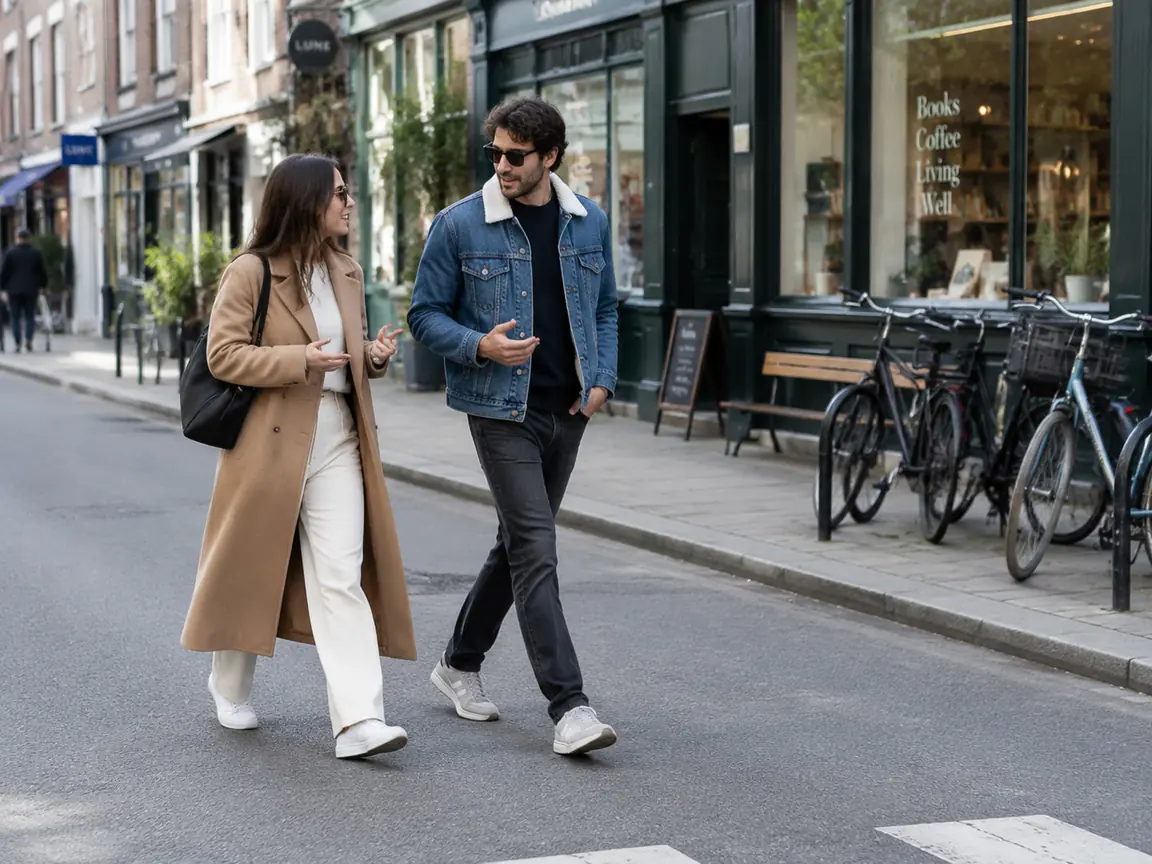
Three moves that keep two generated people in one believable frame.
Give each one a hair colour, a build and an item of clothing. Leaving the second subject vague is how you get the same face twice, or a stranger appearing at the edge of the frame.
Window, low sun, or a single soft box. Two competing sources give each person their own shadow direction, and the image stops reading as one moment.
Standing close, walking, one hand on a shoulder. Complex hand contact is where the anatomy breaks, so build the pose from what the shoulders are doing, not the fingers.
Same two-person brief, four different moods.
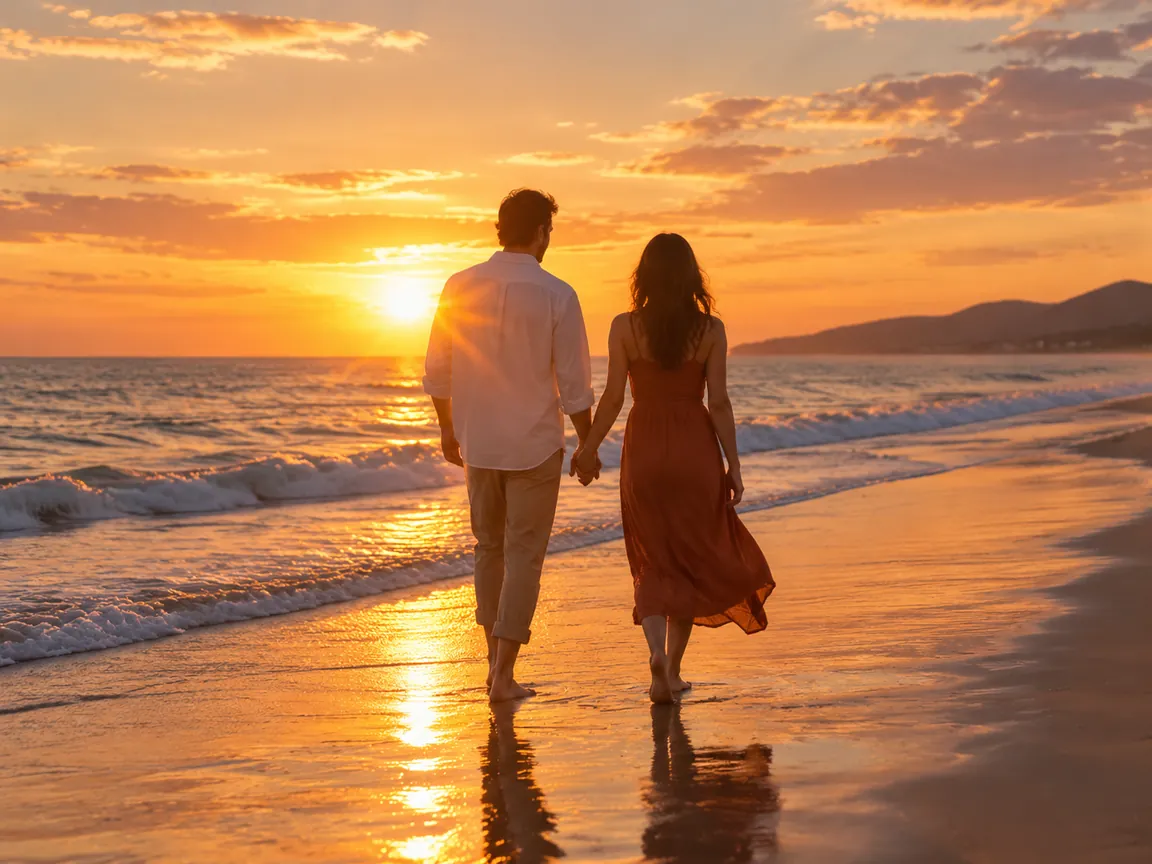 Golden Hour
Two adults walking barefoot along a wet shoreline at sunset, one in a white shirt and one in a rust dress, holding hands and looking at the water, low sun flaring behind their shoulders, wide shot from behind, 3:4.
Try This Style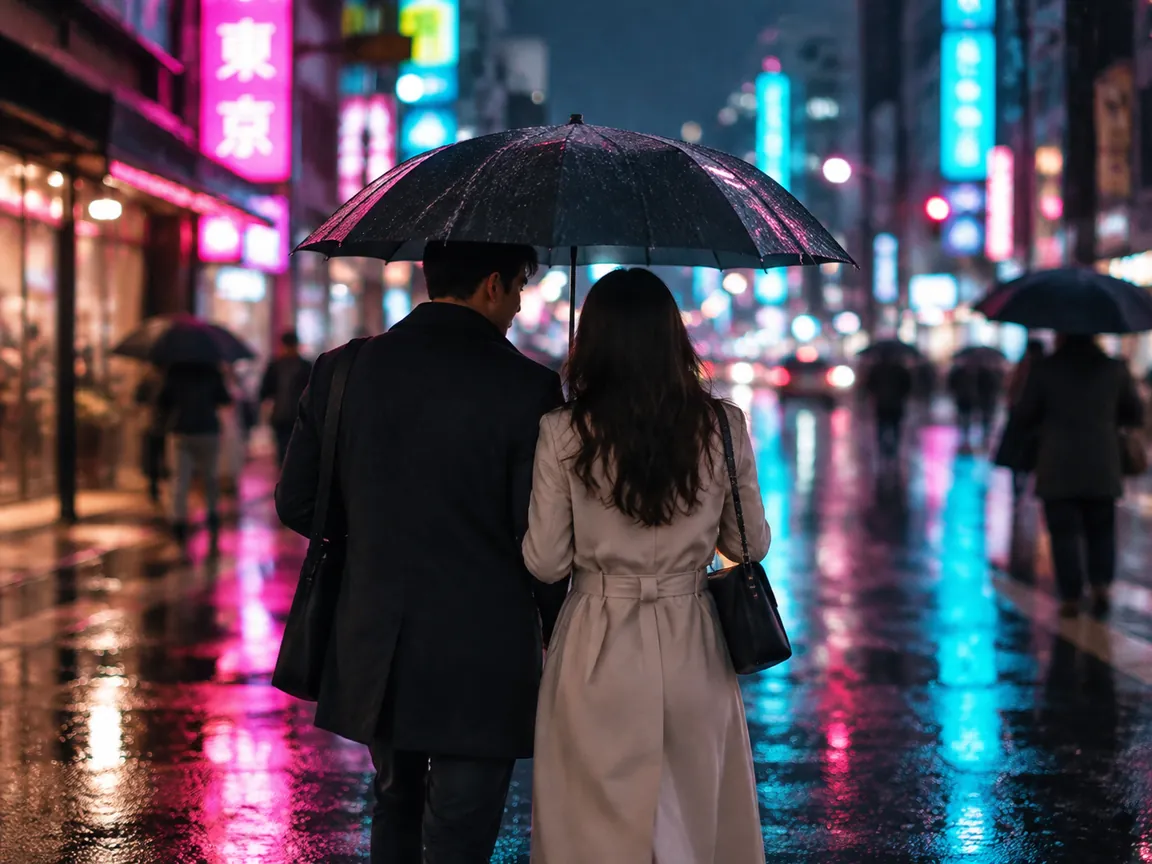 Night & Neon
Two adults sharing one umbrella on a wet city street at night, one in a dark coat and one in a cream trench, wet asphalt reflecting pink and cyan signs, shallow focus with blurred passers-by, 3:4.
Try This Style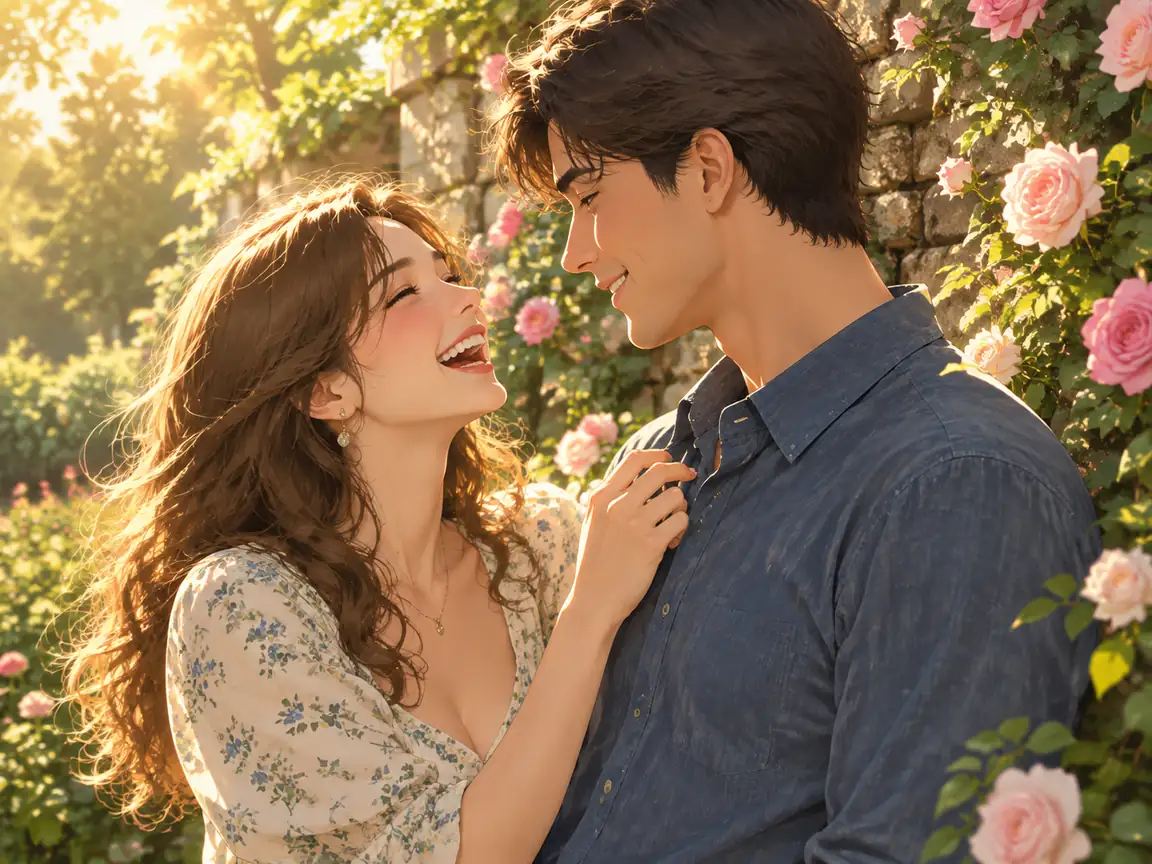 Milestones
Two adults standing close in a late summer garden, one laughing with a hand near the other's collar, climbing roses and a stone wall behind, warm backlight through leaves, waist-up frame at eye level, 3:4.
Try This Style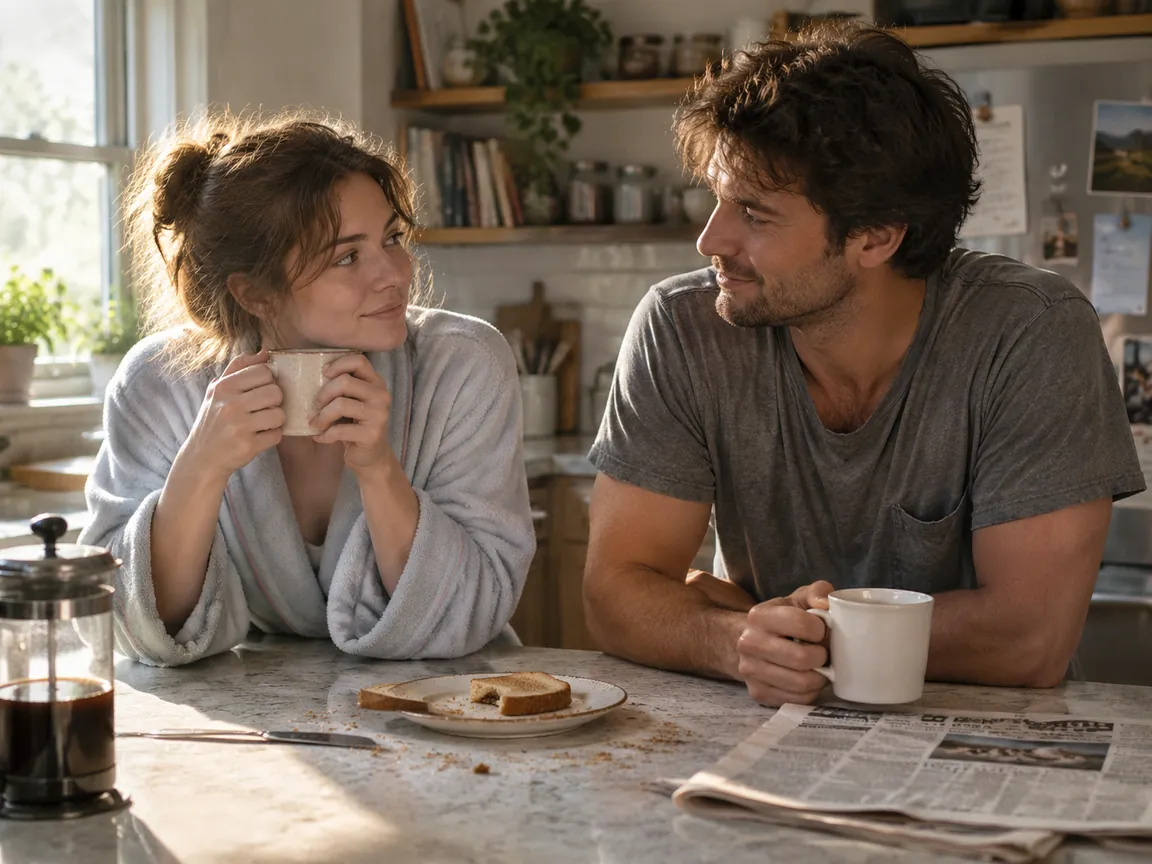 Everyday
Two adults leaning on a kitchen counter with coffee, one still in a dressing gown and one in a worn t-shirt, toast crumbs and a newspaper between them, soft morning light from a side window, candid medium shot, 3:4.
Try This Style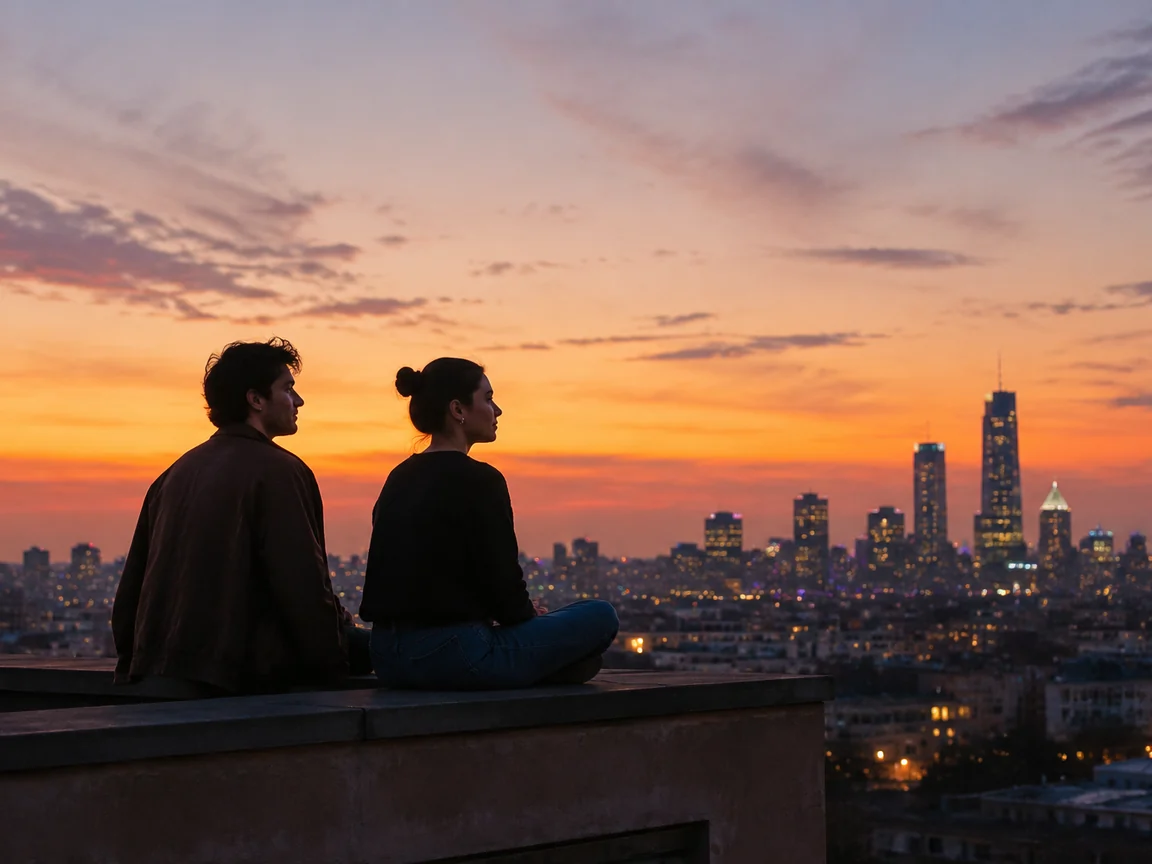 Golden Hour
Two adults sitting on a rooftop ledge above a city at dusk, one with a jacket over the shoulders, warm sky behind and a skyline starting to light up, side view with both in profile, calm wide framing, 3:4.
Try This Style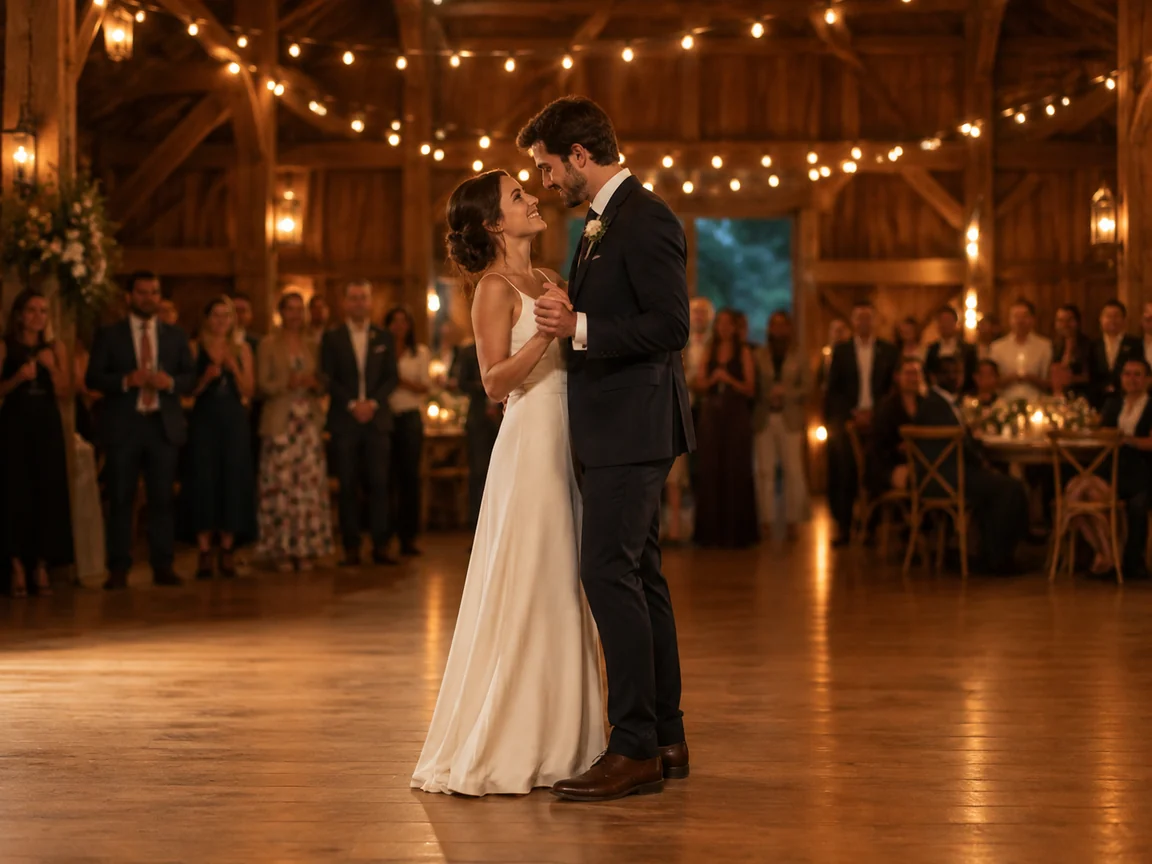 Milestones
Two adults in the middle of a first dance in a converted barn, one in a simple ivory dress and one in a dark suit, string lights and blurred guests around them, warm practical light, full-length frame, 3:4.
Try This Style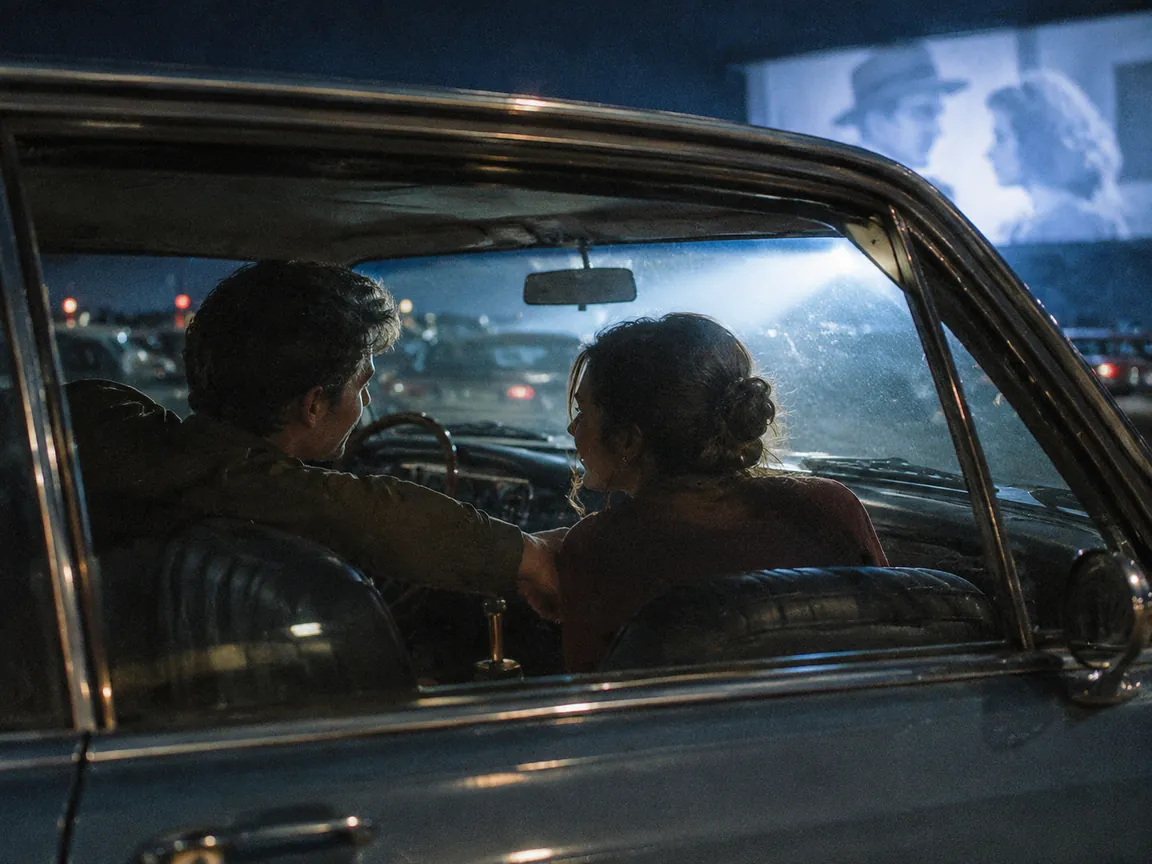 Night & Neon
Two adults in the front seats of an old car at a drive-in cinema, one leaning across the handbrake, the windscreen glowing with projected light and the night behind, film-grain colour, shot through the side window, 3:4.
Try This Style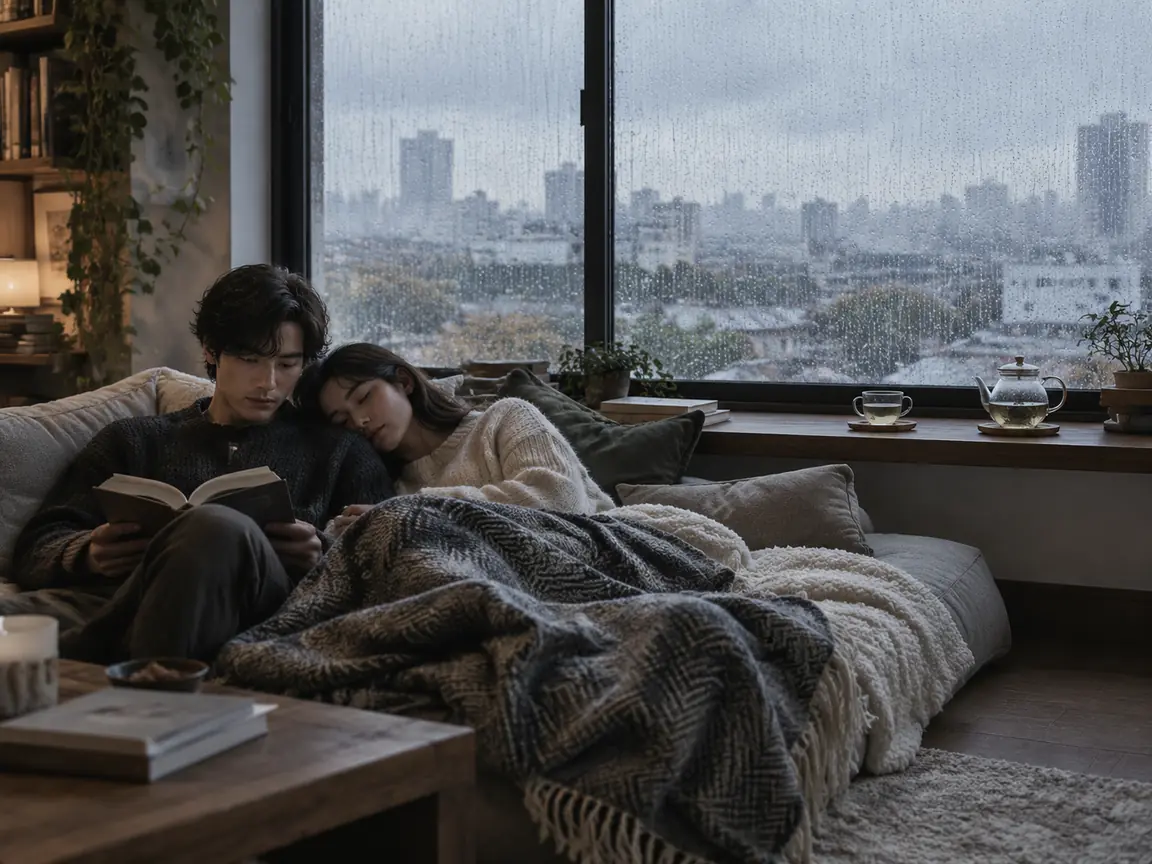 Everyday
Two adults on a low sofa by a rain-streaked window, one reading and one asleep on the other's shoulder, blankets and cooling tea on the sill, grey afternoon light, quiet wide interior shot, 3:4.
Try This Style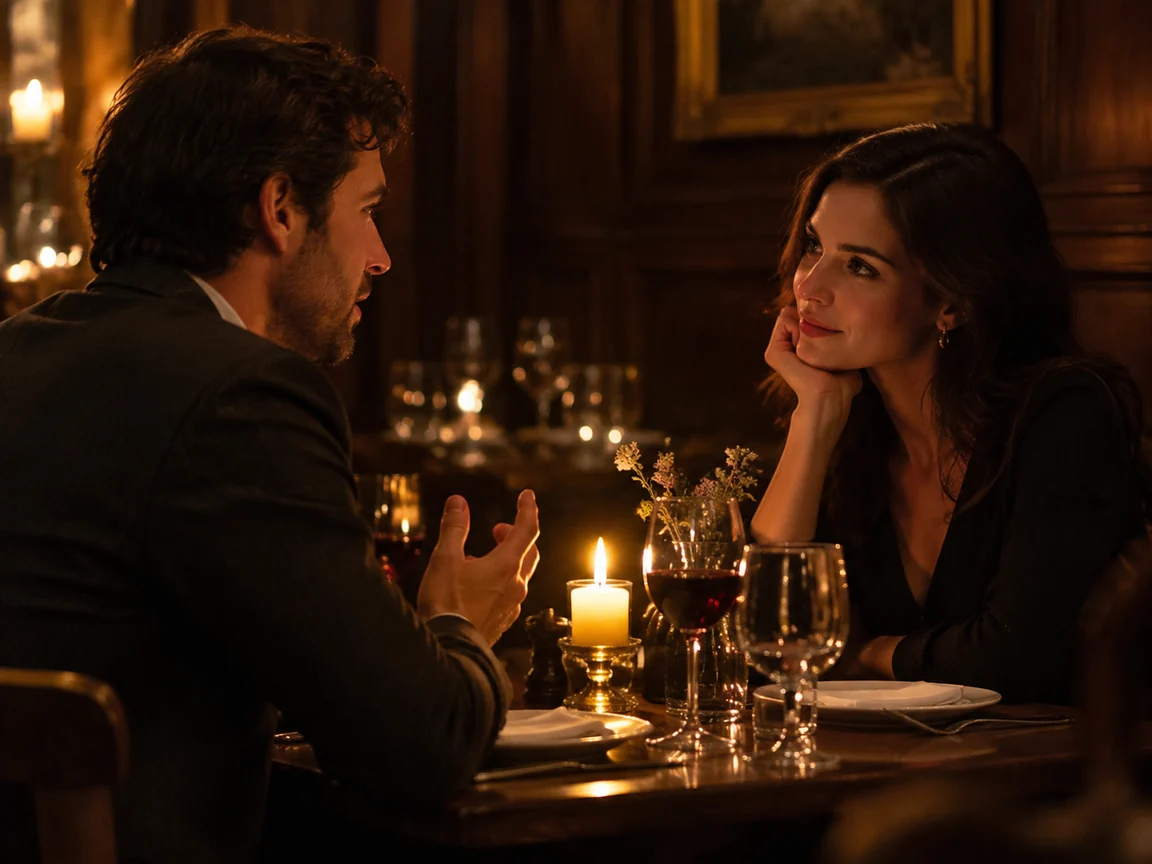 Milestones
Two adults across a small restaurant table lit by one candle, one mid-sentence and one listening, dark wood panelling and glassware softly out of focus, warm low light, intimate three-quarter view, 3:4.
Try This Style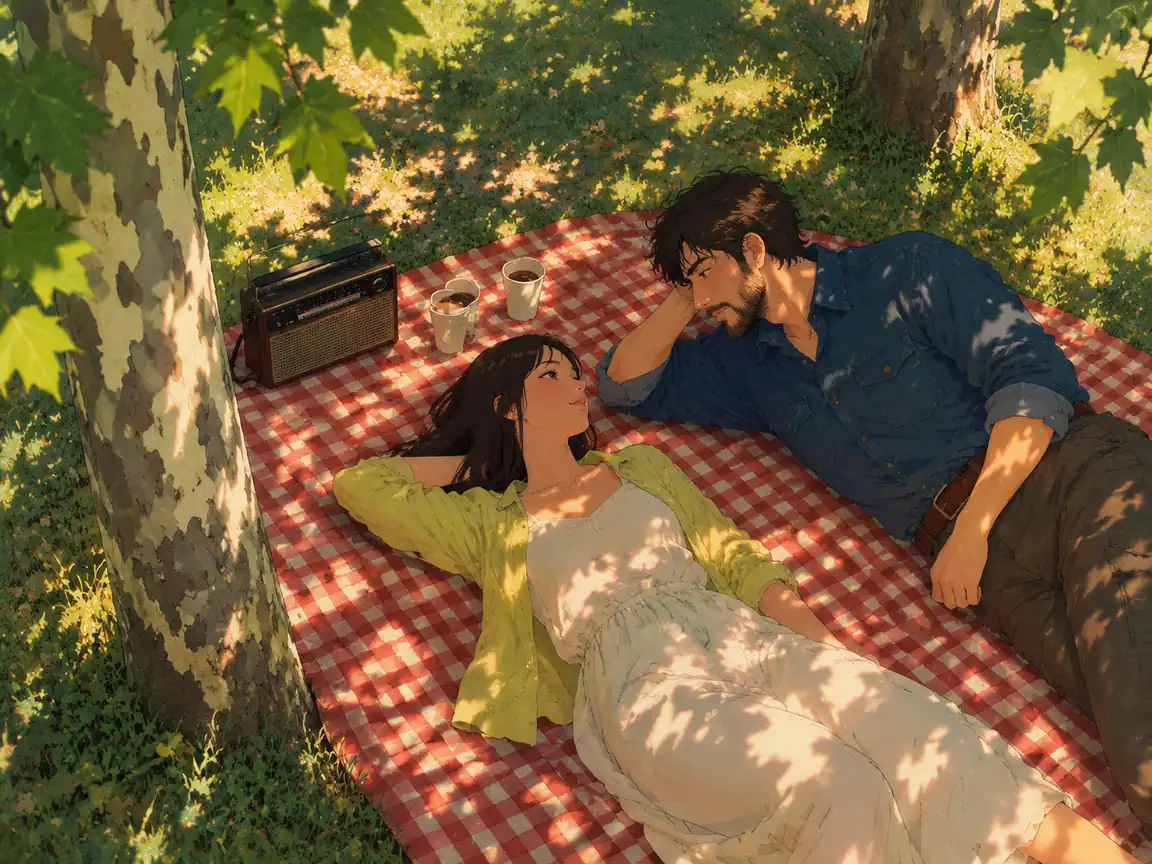 Everyday
Two adults lying on a checked picnic blanket in a park, one on their back and one propped on an elbow, dappled summer light through plane trees, paper cups and a radio beside them, overhead three-quarter view, 3:4.
Try This StyleThe six failures worth designing around.
A second retry quietly changes who the first person was, so the pair stops looking like the same two people. Reuse the exact same two descriptive sentences and change only the scene.
Crowded backgrounds grow extra heads and half-bodies. Keep the setting simple, name the number of people as two, and put crowds out of focus rather than in the frame.
Interlaced fingers and rings are the first thing to melt. Write poses as shoulders, distance and where the arms rest, then let the hands fall out of frame or stay relaxed.
Say the light once, in one direction, with one hour attached. Mixed light is what makes a couple look pasted into the same picture instead of standing in it.
Two strong patterns fight for attention and lose the faces. Keep one person in a solid tone and describe the second in a colour that sits next to it.
Save the wide, airy compositions for feed images and the tighter waist-up frames for announcements. Cropping a wide shot down to a card removes the room it needed.
I needed a golden hour concept the same afternoon I found this page. I typed what I wanted for "Shoreline at Sunset", ran it twice, then changed only the light and the palette on the second pass. The version I kept went straight into a client deck and saved me a stock-photo search.
My first try for "Rooftop After Work" came back too polished, more advertising than real photograph. I rewrote the sentence to describe the surface and the actual light in the room, and the third attempt looked like something I could have shot myself. That is the one I still use for ai couple generator mockups.
I use it the way I use a sketchbook: one prompt for "Drive-In Back Seat", one for "Rain on the Window", then I pick the half that works and iterate from there. Two of those frames ended up in a package for a client who could not decide between the two directions, and seeing them side by side settled it in a minute.
Yes, and the reliable way is a reference image of each of you. A written prompt gives a believable couple, not two specific people, so plan on uploads if the faces have to be yours.
One description usually wins and gets applied to both faces. Give each person two different anchors, such as short dark hair against long auburn or a heavier build against a lean one, and repeat them unchanged on every retry.
You can test prompts on the free allowance shown in the model picker, and paid models start around $5.80 a month. There is no watermark on the download either way.
Yes. Keep lettering out of the image, because names and dates render badly. Generate the photo clean, then set the type in Canva or your printer's template on top of it.
Treat the first two sentences as a fixed block: ages, hair, build and one garment each. Paste that block into every new prompt and change only what comes after it. Without it the faces drift within two or three images.